
Blog
Damascus Steel vs Stainless Steel: Which Blade Should You Buy?

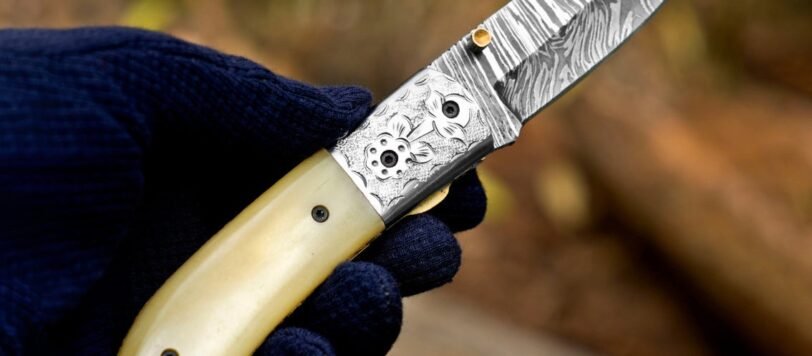
If you are choosing between a Damascus steel blade and a stainless steel blade, the honest answer is that neither is “better”, they are built for different owners. Damascus rewards people who enjoy caring for a knife and want a blade nobody else owns. Stainless rewards people who want to use the knife hard, rinse it, and throw it in a drawer. This guide explains the real differences, edge retention, rust, sharpening, price, and how to spot fake Damascus, so you can pick the right steel for how you actually live.
What Damascus steel actually is
Modern Damascus (more accurately called pattern-welded steel) is made by forge-welding two different steels, typically 1095 high-carbon and 15N20 nickel steel, into a single billet, then folding and hammering it through 150 to 400+ layers. When the finished blade is etched in acid, the two steels darken at different rates, revealing the flowing water-like pattern Damascus is famous for. Every billet folds differently, which is why no two hand-forged Damascus blades carry the same pattern.
Historical Damascus, the legendary wootz steel of Damascus city, was a crucible steel whose exact recipe was lost around the 18th century. What forges produce today is a different process that honours the same idea: a blade where the steel itself is the decoration.
What stainless steel brings
Stainless steel contains at least 10.5% chromium, which forms an invisible oxide layer that blocks rust. A stainless blade will survive fish guts, citrus, blood and rain with nothing more than a rinse. That is why fillet knives, kitchen knives used in wet environments, and display swords that get handled are so often stainless.
Damascus vs stainless: the five differences that matter
1. Edge retention
A properly heat-treated 1095/15N20 Damascus blade runs around 58 to 62 HRC and holds an aggressive working edge longer than budget stainless (420/440A). Premium stainless steels close the gap, but at the price point of most hunting and camp knives, high-carbon Damascus takes the edge, literally.
2. Rust resistance
This one goes entirely to stainless. Damascus is high-carbon steel: leave it wet overnight and it will spot. A Damascus owner wipes the blade dry after use and oils it monthly. If that ritual sounds like a chore rather than a pleasure, buy stainless.
3. Sharpening
High-carbon Damascus is noticeably easier to sharpen on a whetstone than hard stainless. Ten minutes on a 1000-grit stone brings a dull Damascus edge back to shaving sharp. Many stainless alloys fight the stone and need diamond abrasives.
4. Toughness
The layered structure of pattern-welded steel, combined with a full-tang build, handles chopping and batoning well. Cheap stainless can be brittle at high hardness; good stainless is tough but usually softer, so it rolls edges rather than chipping.
5. Looks and character
No contest: Damascus. The pattern is in the steel, not printed on it, and it deepens with age and use. A stainless blade looks the same on day one and day one thousand.
Quick comparison table
| Factor | Damascus (1095/15N20) | Stainless steel |
|---|---|---|
| Edge retention | Excellent at working hardness | Good; varies by alloy |
| Rust resistance | Needs drying + oil | Near maintenance-free |
| Sharpening | Easy on a whetstone | Harder; may need diamond stones |
| Appearance | Unique layered pattern | Uniform polish |
| Best for | Hunting, camping, collecting, gifts | Fishing, kitchen, display swords, low maintenance |
How to spot fake Damascus
A lot of cheap “Damascus” is plain steel with a laser-etched or acid-printed surface pattern. Three checks expose it. First, look at the spine and the edge bevel: on real pattern-welded steel the layers run through the whole blade, so the pattern continues over the spine and changes where the bevel is ground. A printed pattern stops or repeats. Second, real Damascus patterns never repeat exactly, if two knives from the same listing show identical swirls, it is printed. Third, a light resharpening removes a printed pattern at the edge; forged layers only get more visible.
So which should you buy?
Choose Damascus for a hunting or camp knife you will maintain and eventually hand down, or as a gift that feels one-of-a-kind, especially engraved. Choose stainless for a fillet knife that lives around water, or a display sword that gets handled at parties. If you cook, a hand-forged chef knife in either steel will outcut a stamped factory blade, pick Damascus if you enjoy the wipe-and-oil ritual, stainless if you do not.
Damascus vs stainless steel FAQ
Is Damascus steel stronger than stainless steel?
At typical knife hardness, high-carbon Damascus holds an edge longer and is easier to resharpen, while stainless resists rust far better. Strength in use depends more on heat treatment and blade geometry than on the label.
Does Damascus steel rust?
Yes. Modern Damascus made from 1095/15N20 is high-carbon steel and will spot if left wet. Wipe it dry after use and apply a thin coat of mineral oil monthly and it will stay clean for decades.
Is Damascus steel good for hunting knives?
Very good. It takes an aggressive edge for skinning and field dressing, resharpens quickly in the field, and a full-tang forged blade stands up to hard use. Dry it before it goes back in the leather sheath.
How can I tell if Damascus is real?
Check that the pattern continues across the spine and edge bevel, that no two blades share an identical pattern, and that the pattern survives sharpening. Printed “Damascus” fails all three.
Is stainless steel better for beginners?
If you do not want any maintenance routine, yes, stainless forgives neglect. If you are happy to spend thirty seconds drying and oiling a blade, Damascus gives you more edge and more character for the same money.
3 thoughts on “Damascus Steel vs Stainless Steel: Which Blade Should You Buy?”
Comments are closed.