
A fillet knife is a long thin flexible blade for taking meat off bone. The flex is the whole design. A stiff blade rides over the ribcage and leaves half the fish behind, while a blade that bends follows the bone as you push it along, so the cut stays flat and the yield stays high. The narrow profile also means you are pushing very little steel through soft flesh, which is why a good fillet knife feels like it is doing the work for you, and why flex and length matter.
The knives here run 11 to 13 inches overall with blades of 7 to 8 inches and handles of 4 to 5 inches. Every blade is hand forged Damascus of 1095 and 15N20, forge welded and acid etched, hardened to 58 to 60 HRC, in 352 or 393 layer counts with a wind and mix twist pattern on several. Handles run to stag horn, natural bone, buffalo bone and horn, hardwood and blue resin, some with mosaic pins, a brass spacer or a stainless bolster. Each one ships in a leather sheath.
Take a 7 inch blade for panfish and trout, and 8 inches for salmon and anything larger.
Free US shipping
On most pieces. Heavier and oversized ones carry a flat charge.
Hand Forged
Heated, hammered and ground by hand.
Engraving available
Names, dates or Norse runes on most pieces.
Ships from Chicago
Inspected and dispatched from our Chicago warehouse. No import duty, no customs delay on US orders.
Fish Fillet Knives
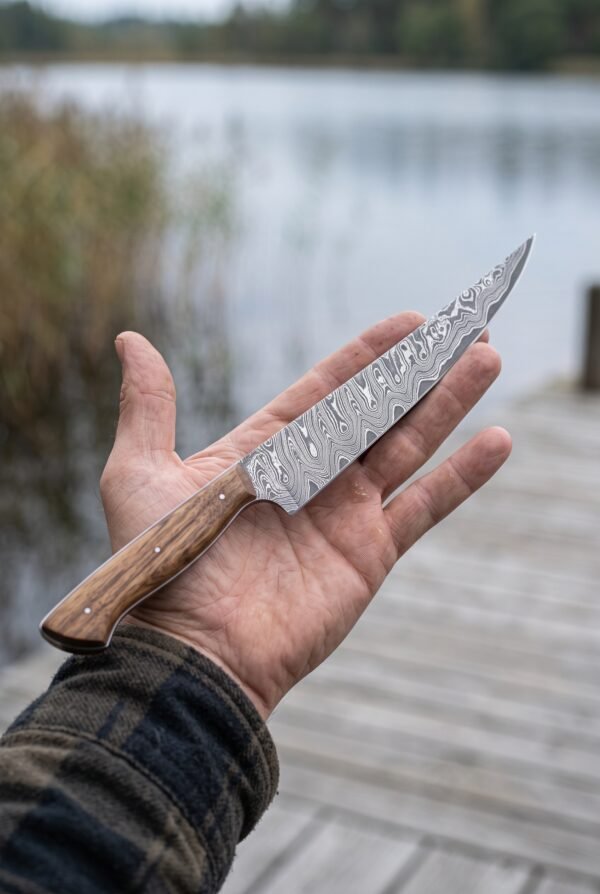
Streamwood Hand Forged Damascus Fish Fillet Knife with Wood Handle & Leather Sheath | Fishing Camping and Anglers Gift | RK-480
Original price was: $119.00.$95.20Current price is: $95.20.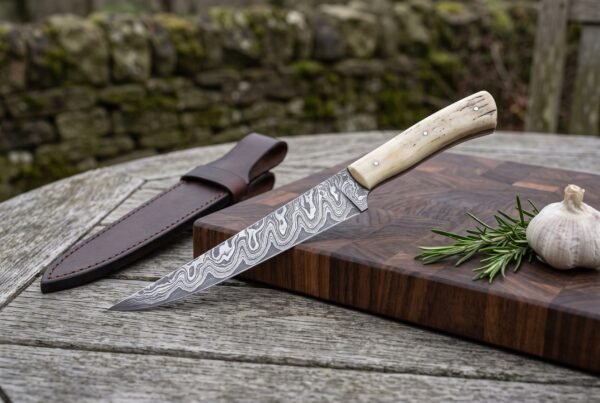
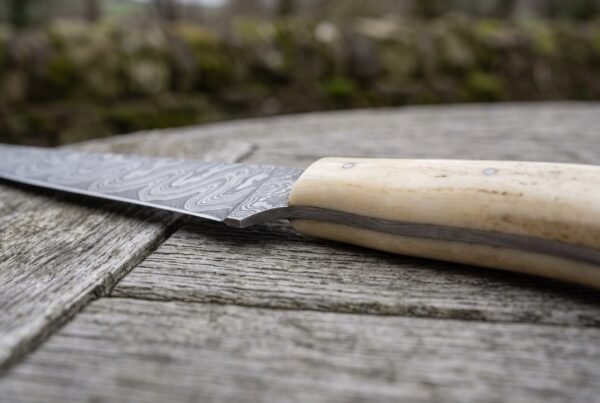
Palebone Hand Forged Damascus Fish Fillet Knife with Natural Bone Handle & Leather Sheath | Fishing Camping and Anglers Gift | RK-422
Original price was: $119.00.$95.20Current price is: $95.20.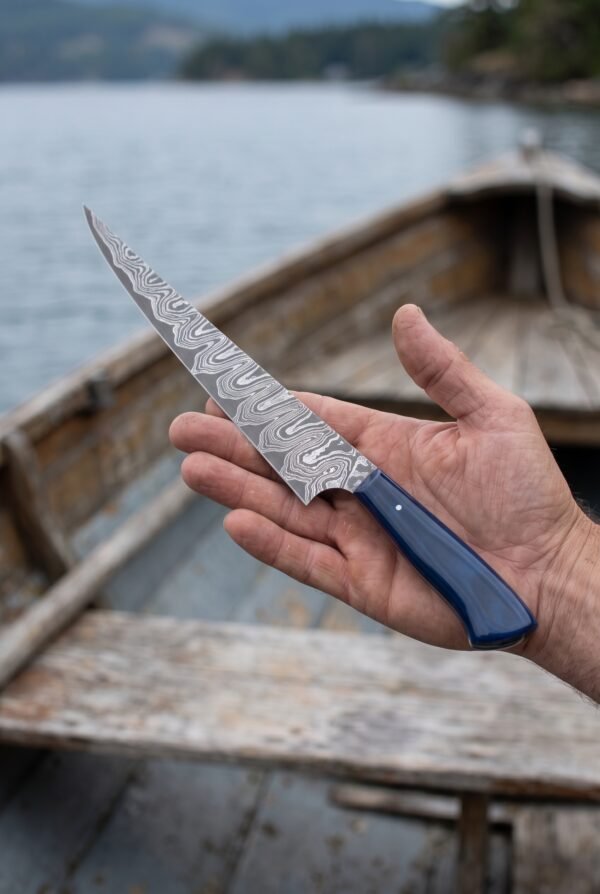
Bluetide Hand Forged Damascus Fish Fillet Knife with Blue Resin Handle & Leather Sheath | Fishing and Anglers Collector Gift | RK-481
Original price was: $119.00.$95.20Current price is: $95.20.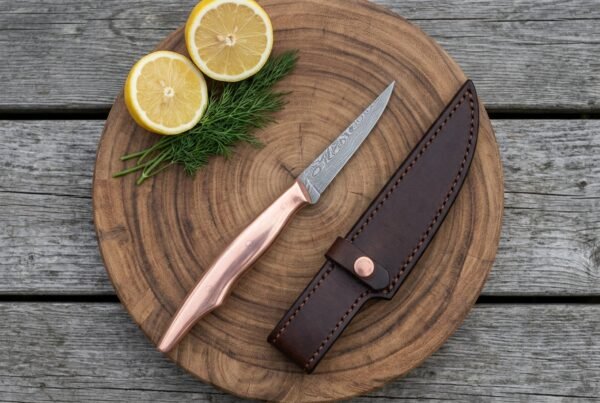
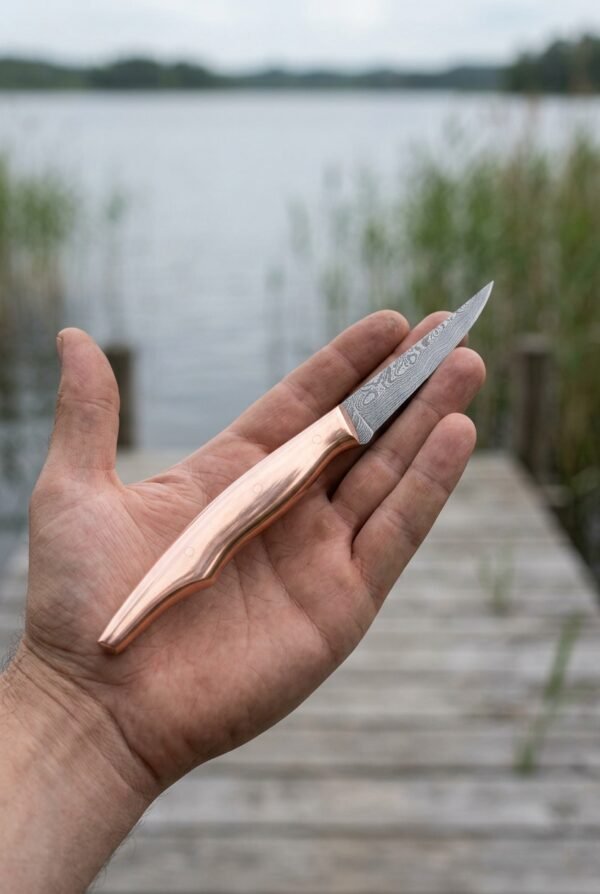
Copperfin Hand Forged Damascus Fish Fillet Knife with Polished Copper Handle & Cowhide Leather Sheath | Fishing Camping and Collector Gift | RK-1011
Original price was: $180.00.$144.00Current price is: $144.00.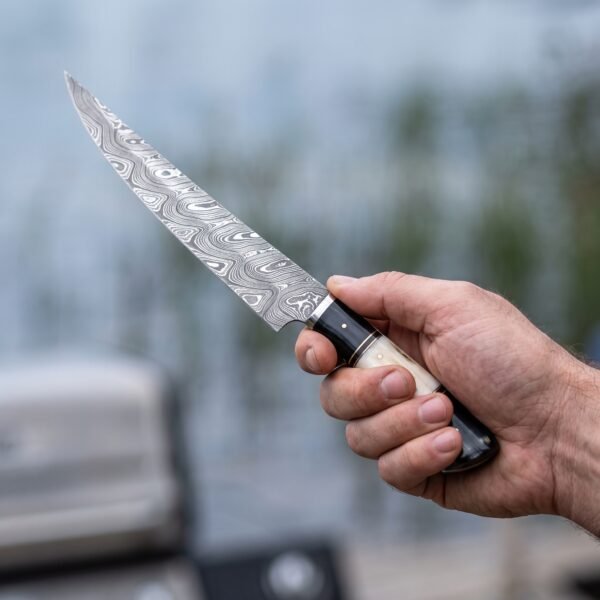
Riverstag Hand Forged Damascus Fish Fillet Knife with Stag Horn Handle and Bone and Acrylic & Leather Sheath | Fishing and Anglers Gift | RK-421
Original price was: $119.00.$95.20Current price is: $95.20.Why a fillet blade bends
Every other knife in a kitchen is built to resist bending. A fillet knife is built to give. Lay one flat on a board and press the tip and the blade curves in a smooth arc rather than hinging at one point. That is the property you are buying, and it is the reason this shape exists.
The job is to separate flesh from a curved skeleton without cutting into either. A fish ribcage is a shallow dome, and a rigid blade run along it either lifts off the bone and leaves meat behind or digs in and fills your fillet with pin bones and grit. A flexible blade follows the arc. You keep the edge in contact with the bone, apply light pressure, and let the steel bend around the shape rather than fighting it.
The second design decision is width. A fillet blade is narrow because the resistance a knife meets is roughly proportional to how much steel is passing through the cut. Take the width down and the blade slips through flesh with almost no force, which is what lets you make one long draw cut down a side of salmon instead of sawing at it.
The third is length. The blade should be longer than the fish is wide, so one stroke clears the whole side. Sawing back and forth tears the flesh and leaves a ragged surface. One pass leaves a clean face that looks like it came off a slab.
The fillet knives in this collection
Every blade on this page is hand forged Damascus of 1095 and 15N20, forge welded, folded and acid etched, hardened to 58 to 60 HRC. What separates them is length, layer count and handle.
Seven inch blades
The shorter group runs 11 to 12 inches overall with a 7 inch flexible blade and a handle of 4 to 5 inches. This is the size for trout, panfish, perch and small bass, and it is also the easier one to control if you have not filleted much. Handles in this group include stag horn set with bone and acrylic, natural bone, and bone with bull horn. Layer counts are 352 and 393.
Eight inch blades
The longer group runs 12.5 to 13 inches overall with an 8 inch blade and a handle of 4.5 to 5 inches. Take this if you are working salmon, larger bass, pike or anything where the side of the fish is wider than a hand span. Handles run to hardwood, wood with horn, buffalo bone with horn on a stainless bolster, and blue resin. Several of these carry a wind and mix twist pattern in the Damascus, which shows as tight swirling figure along the flat rather than the straight ladder you see on simpler billets.
Handles and fittings
Stag horn and natural bone are the traditional choices and both take a patina from handling. Buffalo bone and horn together give a two tone handle with the horn dark and the bone pale. Hardwood is the plainest and the least slippery when wet. Blue resin is stabilised and effectively waterproof, which makes it the sensible pick for a knife that will live in a tackle box. Some pieces carry mosaic pins and a brass spacer, one has a stainless bolster, and every knife ships with a leather sheath.
Lengths, layers and handles across the range
Every figure below is taken from the specification panel of a knife on this page. Blades are forged and ground by hand, so read the numbers as what to expect rather than as a guarantee to the millimetre.
| Handle and fittings | Overall length | Blade length | Handle length | Damascus layers | Steel and hardness |
|---|---|---|---|---|---|
| Stag horn with bone and acrylic | 11 in | 7 in, flexible | 4 in | 393 | 1095 and 15N20 at 58 to 60 HRC |
| Natural bone | 11 in | 7 in, flexible | 4 in | 393 | 1095 and 15N20 at 58 to 60 HRC |
| Bone and bull horn with brass file work | 12 in | 7 in | 5 in | 352 | 1095 and 15N20 at 58 to 60 HRC |
| Buffalo bone and horn with a stainless bolster | 12.5 in | 8 in | 4.5 in | 352 | 1095 and 15N20 at 58 to 60 HRC |
| Hardwood | 13 in | 8 in | 5 in | 352 | 1095 and 15N20 at 58 to 60 HRC |
| Wood | 13 in | 8 in | 5 in | 352 | 1095 and 15N20 at 58 to 60 HRC |
| Wood, wind and mix twist pattern | 13 in | 8 in, flexible | 5 in | 393 | 1095 and 15N20 at 58 to 60 HRC |
| Blue resin, wind and mix twist pattern | 13 in | 8 in, flexible | 5 in | 393 | 1095 and 15N20 at 58 to 60 HRC |
| Wood and horn with mosaic pins and a brass spacer | Not listed | Not listed | Not listed | Not listed | 1095 and 15N20 at 58 to 60 HRC |
One figure needs care. Handle length plus blade length does not always equal the overall length, because the overall is measured to the extreme end of the butt and the handle is measured to the front of the scales. The difference is a bolster or a spacer, not a mistake.
Choosing a length
Match the blade to the widest fish you handle regularly, not to the biggest one you have ever caught. A 7 inch blade covers trout, panfish, perch, crappie and small bass comfortably. An 8 inch blade covers salmon, larger bass, walleye and pike, and it will still do a trout, just with more blade hanging past the work than you strictly need.
If you only buy one, take 8 inches. A slightly long blade on a small fish is an inconvenience. A short blade on a big fish means sawing, and sawing is what ruins a fillet.
Handle length matters more than people expect. A 5 inch handle suits a large hand and a full grip. A 4 inch handle sits better if you pinch the blade between thumb and forefinger ahead of the scales, which is the grip most people end up using for close work near the ribs.
Damascus, layers and what the figures mean
Every blade here is 1095 and 15N20 forge welded together. The 1095 is a plain high carbon steel and the 15N20 carries nickel, which resists the acid etch and comes out bright while the 1095 goes dark. That contrast is the pattern. It is a consequence of the two steels, not a coating, and it goes all the way through the blade.
Layer counts here are 352 and 393. A higher count means the billet was folded more times, which makes the pattern finer rather than the steel stronger. Past a certain point the count is about appearance. What actually decides how the blade cuts is the heat treatment, and both groups are hardened to 58 to 60 HRC, which for a fillet knife is a sensible place to sit. Hard enough to hold a fine edge through a morning of fish, soft enough that a flexible blade bends and comes back rather than snapping.
The wind and mix twist pattern on several of these is made by twisting the billet before drawing it out, which is why the figure swirls rather than running in straight bands.
Sharpening a thin flexible blade
A fillet edge wants to be thin and it wants a shallow angle, somewhere around fifteen degrees per side. That is finer than a chef knife and much finer than a hunting knife, and it is what gives you the effortless entry into flesh.
Support the blade while you sharpen it. A flexible blade pressed onto a stone will bow away from the abrasive in the middle, so you end up sharpening the tip and the heel and missing the belly. Use light pressure, keep the spine low, and if the blade is flexing under your fingers you are pressing too hard.
A 1000 grit stone restores a working edge in a couple of minutes on steel at 58 to 60 HRC, and 3000 grit polishes it. Finish with a few passes on a smooth steel or a strop to stand the edge up. A ceramic rod between fish is enough to keep it going through a long session, and it beats stopping to reset the whole edge halfway through a cooler of salmon.
Rust, cleaning and storage
This is carbon steel. It will rust, and fish, brine and lake water are the worst possible environment for it. That is the trade you accept for an edge that takes and holds this kind of geometry.
Rinse the blade in fresh water as soon as you finish, dry it completely, and put a light film of food safe oil on it before it goes away. Never leave a wet blade in a leather sheath. Leather holds moisture against steel and a damp sheath is the single most common reason a well kept knife comes out spotted a month later. Store the knife out of the sheath if it will sit for a season.
A grey patina will develop on the dark bands over time and it is stable and harmless. Orange spotting is not, and it lifts with fine abrasive and oil before it has time to pit. Do not put any of these in a dishwasher. Heat and detergent will strip the etch, dry out a bone or horn handle and take the temper out of nothing but your patience.
Handles, hygiene and grip when wet
Natural bone, stag horn and buffalo horn all look better with age and all dislike dry heat, so keep them out of a hot car and away from a radiator, because horn and bone shrink as they dry and can crack or pull away from a pin. Hardwood wants a wipe of oil once or twice a year. Blue resin is stabilised and effectively waterproof, which is why it is the easiest of the lot to keep clean.
Grip matters more on a fillet knife than on anything else in the kitchen, because your hands will be wet and covered in slime for the whole job. Wood and textured horn hold better than a polished surface. Wash the handle with warm soapy water and a brush, rinse it and dry it, and do not soak it.
Engraving and gifting
Engraving is added in the United States after the knives arrive. A name, a date, a boat name or a short line of runes goes onto the flat of the blade or onto a bolster. Text engraving is 19 dollars, a symbol is 39 dollars and a family crest is 49 dollars.
Elder Futhark is a phonetic alphabet rather than a cipher, so a name is transliterated by sound and there is no rune for the letter C. Read the rune guide before you send a spelling.
Engraving is permanent and an engraved knife cannot be returned, so send the exact spelling and read it twice. A fillet knife makes a better gift than most blades, because it is one of the few that gets used every season rather than hung on a wall.
Where these come from and how they ship
Ransack Viking is a US company based in Chicago, Illinois. The pieces are handmade in the Czech Republic, then imported, inspected and shipped from Chicago. Engraving is done in the US after arrival.
Because each billet is forged and etched by hand, two knives of the same name will differ in the exact figure of the pattern and in the colour of a natural handle. Two people made them on two different days. The dimensions and the hardness stay the same.
How to choose
If you fish rivers and lakes for trout and panfish, take a 7 inch blade with a natural handle. If you work salmon or anything large, take 8 inches. If the knife lives in a boat or a tackle box, take the blue resin handle, because it is the one material here that does not care about water.
If you want the knife to look like something as well as cut like something, take one with a wind and mix twist pattern and stag or mosaic bone, and keep it for the kitchen bench rather than the dock.
Browse related collections
- Chef knives in the same forge welded Damascus
- Damascus knives across every blade shape
- Hunting knives for field dressing
- Skinner knives with a deep sweeping belly
- Folding pocket knives for everyday carry
- Leather sheaths and replacement scabbards
- Engraved and personalised pieces across the range
Guides worth reading first
- The best Damascus fillet knives and what to look for
- Choosing a fillet knife for the water you fish
- How to sharpen a knife on a whetstone
- Damascus vs high carbon steel, which blade should you buy
- The complete knife care guide, blade, handle and sheath
- Knife blade shapes and what each one is good at
Frequently asked questions
What length fillet knife do I need?
Match it to the widest fish you handle regularly. Seven inches covers trout, panfish, perch and small bass. Eight inches covers salmon, pike, walleye and larger bass. If you buy one only, take eight, because a long blade on a small fish is an inconvenience and a short blade on a big fish means sawing.
How flexible are these blades?
Flexible enough to follow a ribcage under light pressure and return straight. Several are listed specifically as flexible blades. At 58 to 60 HRC the steel bends and comes back rather than taking a set, which is the balance you want in a thin blade.
Will a Damascus fillet knife rust?
Yes. These are 1095 and 15N20, both carbon steels, and neither is stainless. Rinse in fresh water straight after use, dry the blade completely, and leave a light film of food safe oil on it. Never store a wet blade in a leather sheath.
What do the layer counts mean?
The blades here are 352 or 393 layer. A higher count means the billet was folded more times, which makes the pattern finer. It does not make the steel stronger. Hardness and heat treatment decide how the blade cuts, and both groups sit at 58 to 60 HRC.
What angle should I sharpen a fillet knife to?
Around fifteen degrees per side, which is finer than a chef knife. Use light pressure and support the blade, because a flexible blade pressed hard onto a stone bows away in the middle and you end up sharpening only the tip and the heel.
Can these go in the dishwasher?
No. Heat and detergent will strip the acid etch off the blade, dry out a bone, horn or wooden handle and start rust in the same wash. Warm soapy water, a brush, a rinse and a full dry is all any of them need.
Which handle is best for a boat?
Blue resin. It is stabilised and effectively waterproof, so it does not care about spray, slime or being left damp. Bone, stag and horn all look better but they dislike prolonged wet and dry heat, and wood wants oiling once or twice a year.
Where are these knives made?
They are handmade in the Czech Republic, then imported, inspected and shipped by Ransack Viking from Chicago, Illinois. Engraving is added in the US after arrival.
Featured pieces
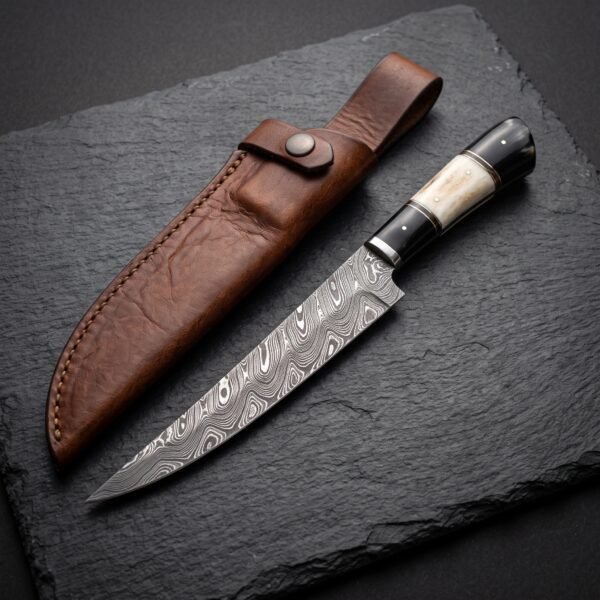 Riverstag Hand Forged Damascus Fish Fillet Knife with Stag Horn Handle and Bone and Acrylic & Leather Sheath
Original price was: $119.00.$95.20Current price is: $95.20.
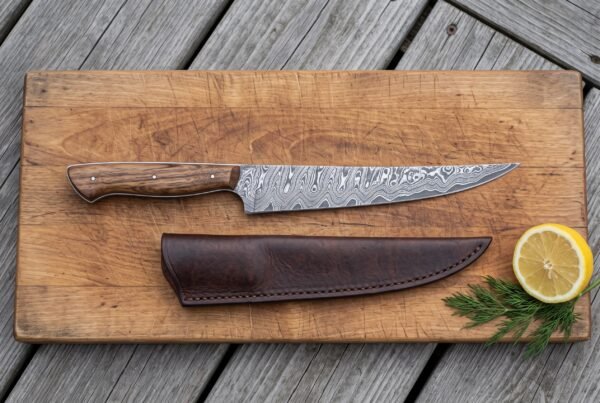 Streamwood Hand Forged Damascus Fish Fillet Knife with Wood Handle & Leather Sheath
Original price was: $119.00.$95.20Current price is: $95.20.
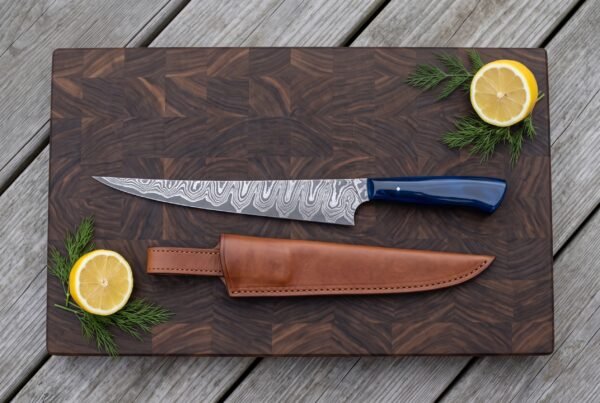 Bluetide Hand Forged Damascus Fish Fillet Knife with Blue Resin Handle & Leather Sheath
Original price was: $119.00.$95.20Current price is: $95.20.
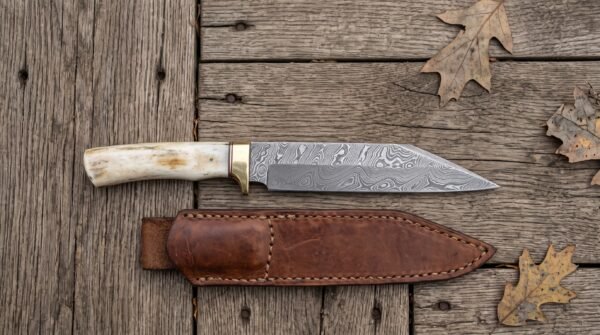 Mosaicsax Hand Forged Damascus Viking Seax Knife with Natural Bone Handle and Brass Bolster & Leather Sheath
Original price was: $149.00.$119.20Current price is: $119.20.