
A feder is not a blunt longsword with a funny profile. It is a purpose built fencing tool, and every part of the shape follows from that job. The blade is narrow so it bends, a widened plate called the schilt stands above the cross to catch a sliding blade, a long flat ricasso sits under it, and the hilt carries enough mass to make a thin blade handle like a sword. The name comes from the German for feather.
Four feders sit in this category, all 51CrV4 spring steel hardened to 49 to 52 HRC, all between about 48 and 50 inches overall, all in the medium flex tier most clubs put a first feder in. What separates them is the schilt and the tip. One schilt is rounded, one shield shaped, one triangular, and one sits as a discrete lobe on a flat parallel ricasso.
If you are choosing between one of these and a blunt longsword, read what a feder actually is first, then the flex guide. Many longsword tournaments accept only purpose built feders, so the choice is not cosmetic. None of these ships with a scabbard, because no feder is made with one. The rest of the range sits in the HEMA sword hub.
Every feder here takes a custom engraving on the ricasso, the schilt or the grip, chosen on the product page.
If you would rather have one built to your own reach, start with the sword builder and set the blade length, the cross, the pommel and the grip wrap.
Free US shipping
On most pieces. Heavier and oversized ones carry a flat charge.
Hand Forged
Heated, hammered and ground by hand.
Engraving available
Names, dates or Norse runes on most pieces.
Ships from New York
Inspected and dispatched from our New York warehouse. No import duty, no customs delay on US orders.
HEMA Feders
What a feder is, and why it exists
German fencing schools of the fifteenth and sixteenth centuries needed a way to fence longsword at speed without killing each other, and the answer was a dedicated training sword rather than a blunted sharp. The Federschwert, shortened to feder, is that answer. The name is the German word for feather, and it is a fair description of what the blade does under load.
The design problem is a real one. A sword shaped blunt keeps the mass distribution of a sharp, which is the point of it, but that mass has to go somewhere when the point lands on a partner. A feder solves it by taking steel out of the blade and putting it back into the hilt. The blade narrows hard above the ricasso and stays thin, so it bows under a thrust and absorbs the load. The cross gets longer, the pommel gets heavier, and the balance point stays close to the hand. The result handles like a longsword while carrying far less blade mass into a hit.
That is why a feder is the standard tool of the sport rather than a compromise. It was its own thing in period, and the sources describing fencing school practice describe fencing with it. All four pieces in this category are built to that pattern in 51CrV4 spring steel at 49 to 52 HRC.
The schilt and the ricasso
Two features tell a feder apart from anything else at a glance, and both of them exist for the hands.
The schilt
The schilt is the widened plate of steel that flares out of the blade just above the cross. Its job is to stop an opposing blade running down yours and into your fingers, and it does that by presenting a step that a sliding edge cannot get past. In a hard bind the other blade meets the schilt instead of the hand.
Schilt shapes differ and the difference is felt rather than seen. A rounded schilt, as on the Vindlaur feder here, sheds a blade smoothly in either direction. A shield shaped schilt like the one on the Brimhalt has flatter shoulders and catches harder, which some fencers prefer in the bind and others find grabby. The Vandrekt runs a triangular schilt that flares straight out of the blade with no long separate ricasso beneath it. The Ravnstad takes the opposite approach with a flat parallel ricasso and a small discrete schilt lobe sitting on it. There is no correct answer among those four, only a preference, and it is worth handling a club mate's feder before deciding you have one.
The ricasso
Below the schilt the blade runs as a flat unsharpened bar rather than as a blade. That is the ricasso, and it is there so you can put a hand on it. Half swording, where the off hand grips the blade for leverage and for a precise thrust, is core material in the German sources, and a proper ricasso makes it safe to do at speed in a glove. A broad flat ricasso also gives the blade somewhere to keep its stiffness while the rest of it stays thin.
The length of the ricasso is part of the character of the sword. A long flat one gives more hand room and moves the balance a little further back. A short one keeps the sword feeling more like a sharp. It is also the flattest surface on the piece, which makes it the natural place for an engraved name or rune line.
Flex tiers, and which one you want
Flex is the property people buy a feder for and it is the one that is invisible in a photograph. It describes how far the blade bows when the point is loaded against a target, and it decides both how safe the sword is to thrust with and how it behaves in the bind.
The market sells four tiers. Light flex sits around 15 to 21 lb of load and suits coaching drills and controlled sparring, where a soft blade is a kindness. Medium sits around 25 to 29 lb and is the daily training band. Strong or tournament flex runs from about 30 lb upward, is what full speed events expect, and is a harder tool on a partner. Stiff blades with almost no give exist for harnischfechten, armoured fighting where a bending blade is no use against plate.
All four feders in this category are medium tier, which is deliberate. Medium is where a first feder belongs and where most club sparring happens. It bows enough through the middle of the blade to make a thrust land softly, and it stays stiff enough through the forte that the bind still feels like a sword rather than a rod. Every listing here states the tier rather than a measured pound figure, because nothing in this range has been put on a test rig and a number nobody measured is worse than no number at all.
Tip rules and what gets checked at the gear table
The tip is the part of a feder that a gear check actually looks at. A thin or spread point can find the gap between a mask bib and a gorget, so tournaments write rules about it and enforce them at the table rather than on trust.
Two shapes are accepted at most events. A rolled tip is the end of the blade turned back on itself and widened. A flared or spatulated tip is the last inch worked out into a broad flat head. The Berlin HEMA Cup gear requirements ask for spatulated or rolled tips with a minimum diameter of 1.5 cm across all four of its tournament categories, do not allow rounded tips on rapier or sabre, and supply their own tip caps rather than accepting personal ones. Longsword blades at that event also have to show a clearly distinguishable edge, back and flats.
The four feders here carry three different tips. The Vandrekt has a flared safety knob, broad and thick across the head. The Ravnstad has a broad rolled tip, turned over and widened rather than knobbed. The Vindlaur and the Brimhalt are blunted and turned over. Every one of those is stated plainly in the specification panel, and none of them is sold as tournament legal, because legality belongs to a named ruleset rather than to a product page. Measure the tip against the requirements of the event you are entering, and if the rules are ambiguous, ask the organisers before you travel.
A feder against a blunt longsword
These two get treated as the same purchase and they are not. A blunt longsword is a sword shape with the edge left as an unground flat land and the point turned over. It keeps the real profile taper, the fuller and the mass distribution of a sharp, so it teaches you what a sword does in a bind and what it takes to move one. It is the better tool for drill, for pair work and for preparing to cut.
A feder gives that up in exchange for safety and hand protection. The blade is thinner, the point loads softer, the schilt covers the fingers and the cross is usually longer. That is why it is the standard sparring tool and why many longsword events allow only purpose built feders or sword shaped feders, and ban blunt longswords outright. If you intend to compete under a German longsword ruleset, buy the feder first.
Most people who stay in the sport own both eventually. The feder lives in the kit bag and gets used every week, and the blunt comes out for slow work and for cutting preparation. The blunt longsword group covers eight pieces.
Sizing a feder to you
Length is a fitting question rather than a spec question. Stand the feder with the point on the floor and look at where the cross falls. Around the sternum is the usual answer, and a sword whose cross reaches your chin is one you will not train with for long. These run from about 48 to 50 inches overall with blades of about 37 to 39 inches.
Grip length matters more than total length for how the sword works. Every one of these takes two hands with room to slide the rear hand onto or behind the pommel, which is what the German sources assume. A shorty feder with a hand and a half grip exists in the wider market and suits smaller fencers or tight halls, but it changes the leverage and is not what a first feder should be.
The last piece of sizing is your own strength rather than your height. If the point wanders after twenty minutes of drill you are holding too much sword, and the fix is a lighter one rather than a stronger grip. Handle two or three at your club before you order if you can.
The four feders on this page
Every figure in the table below is taken from the specification panel of a product on this page. Nothing is estimated. Sizes vary piece to piece because each blade is forged and ground by hand, so read a stated length as nominal rather than exact.
| Piece | Overall length | Blade type | Steel and hardness | Flex | Guard or tip note |
|---|---|---|---|---|---|
| Vindlaur feder | About 50 inches | Feder blade, no fuller, rounded schilt above the cross, narrowing through the middle | 51CrV4 at 49 to 52 HRC | Medium tier, the bow runs through the middle of the blade | Straight cross with the schilt standing above it, tip blunted and turned over |
| Brimhalt feder | About 50 inches | Flat feder blade with a narrow fuller low in the blade | 51CrV4 at 49 to 52 HRC | Medium, the tier most clubs put a first feder in | Curved cross tapering to rounded ends, shield shaped schilt, tip blunted and rounded |
| Vandrekt feder | About 49 inches | Narrow feder blade flaring smoothly into a triangular schilt, no long separate ricasso | 51CrV4 at 49 to 52 HRC | Medium tier | Wide straight cross drawn well out past the hand, flared safety knob tip |
| Ravnstad feder | About 48 inches | Flat parallel ricasso, discrete schilt lobe, then a narrow blade to the tip | 51CrV4 at 49 to 52 HRC | Medium tier | Straight cross above the ricasso, broad rolled tip turned over and widened |
Care
Spring steel rusts exactly as high carbon does. Wipe the blade after every session, because sweat comes through a glove and hand oil marks steel overnight. Keep a light film of mineral oil on the flats, the schilt and the ricasso, and store the feder flat or hanging rather than standing on its point in a corner. Never leave one in a kit bag with a damp jacket.
Check the hilt before a session rather than after. A peened pommel loosens slowly and the first sign is a faint rattle at the cross. Tips are the other wear item: a blunt tip spreads over months of thrusting into a mask and a spread lip is sharper than a fresh tip, so dress it back with a file and measure the diameter again. A bend in the blade is normal on spring steel and usually comes out over a knee with steady pressure rather than a hammer. The care guide covers rust, oil and storage in more detail.
Where these are made
All four feders are made by hand in the Czech Republic and imported by Ransack Viking. Each is checked for hilt tightness, pommel seating and blade straightness at the North Babylon, New York warehouse and ships from there. Shipping inside the United States is free and returns run for seven days.
The lifetime warranty covers defects in the forging, the grind, the heat treat and the fittings, with no end date and no receipt needed. It does not cover a blade bent in normal sparring, because bending is the job. Engraving is carried out in the United States after the feder arrives, so send the exact spelling with the order, and an engraved piece cannot be returned.
Browse related sword categories
- The full HEMA sword range across every family
- Blunt longsword trainers with real fullers and profile taper
- Single handed arming sword trainers for sword and buckler
- Messers and kriegsmessers with riveted scale grips
- Bolognese sideswords with finger rings and knuckle bows
- Rapier trainers with shell, dish and cup hilts
- Sharp longswords for cutting and for display
Guides worth reading first
- What a feder is and why it is not a blunt longsword
- HEMA sword flex explained, tier by tier
- What HEMA is and how a club actually trains
- How to choose your first HEMA sword without wasting money
- HEMA tournament gear rules and what gets checked
- Blunt against sharp training swords, and which you need
- Synthetic against steel trainers for a first year fencer
Frequently asked questions
What is a feder sword?
A feder is a purpose built longsword training tool from the German fencing schools. The blade is narrow so it bends under a thrust, a widened plate called the schilt stands above the cross to protect the hands, a flat ricasso sits below the schilt for half swording, and the hilt carries extra mass so a thin blade still handles like a sword. The name is the German word for feather.
Is a feder the same as a blunt longsword?
No. A blunt longsword is a sword shape with the edge left unground, so it keeps the profile taper, the fuller and the mass distribution of a sharp. A feder gives up that mass in the blade and adds it to the hilt, which makes it safer to thrust with and better at protecting the fingers. Many longsword events accept feders and ban blunts, so the difference matters.
What flex should a first feder have?
Medium, which is the band around 25 to 29 lb of load. All four feders in this category are medium tier for that reason. Light flex around 15 to 21 lb is a coaching and drill blade. Strong or tournament flex from about 30 lb upward is what full speed events expect and it hits a partner harder. Stiff blades belong to armoured fighting.
What is the schilt for?
It stops an opposing blade sliding down yours into your fingers. The step it makes above the cross catches the other edge before it reaches the hands. Rounded schilts shed a blade smoothly, flatter shield shapes catch harder in the bind, and a discrete schilt lobe on a long flat ricasso sits between the two. It is a matter of feel rather than a matter of better and worse.
Are these feders tournament legal?
No listing here makes that claim, because legality belongs to a named ruleset. Read the requirements of the event you are entering and check them against the tip shape, edge land and flex tier in the specification panel. As a worked example, the Berlin HEMA Cup asks for spatulated or rolled tips of at least 1.5 cm across its categories and supplies its own tip caps.
Do feders come with a scabbard?
No, and none is made for them. A feder is a fencing school tool and was never carried in a scabbard, so nothing here ships with one. The specification panel on each listing states exactly what is in the box, which is the feder itself and on two of the four a cloth wrap and a care card.
How long should my feder be?
Stand it with the point on the floor and look at where the cross falls. Somewhere around the sternum is right for most fencers. These four run from about 48 to 50 inches overall with blades of about 37 to 39 inches, which suits most adults. If the point starts wandering after twenty minutes of drill, the sword is too much for you rather than the other way round.
Can I have a name or runes engraved on a feder?
Yes. The ricasso and the schilt are the flattest surfaces on the piece and take an engraving well, and the grip can be marked instead. Engraving is carried out in the United States after the feder arrives, so send the exact spelling with the order. Elder Futhark transliterates by sound rather than letter for letter, and an engraved piece cannot be returned.
Featured pieces
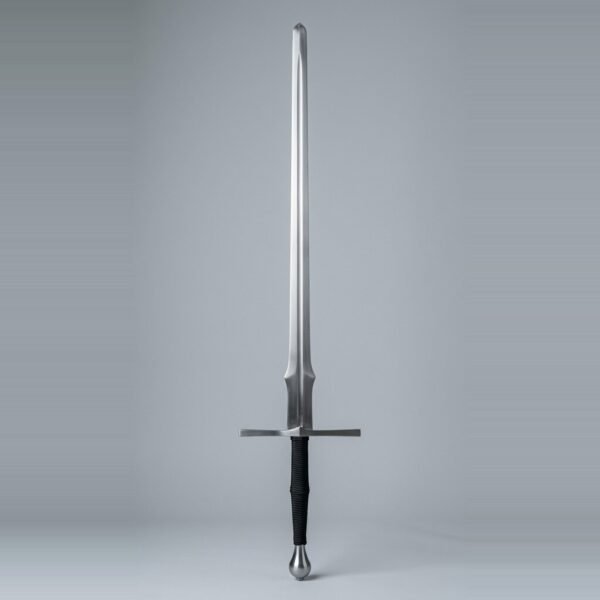 Ravnstad Hand Forged 51CrV4 Feder Trainer with Flat Parallel Ricasso & Discrete Schilt Lobe
$409.00
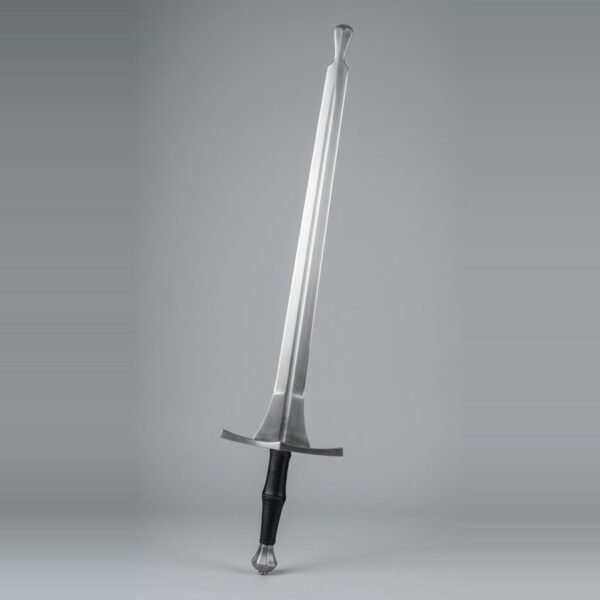 Vandrekt Hand Forged 51CrV4 Feder with Triangular Schilt & Flared Safety Knob Tip
$429.00
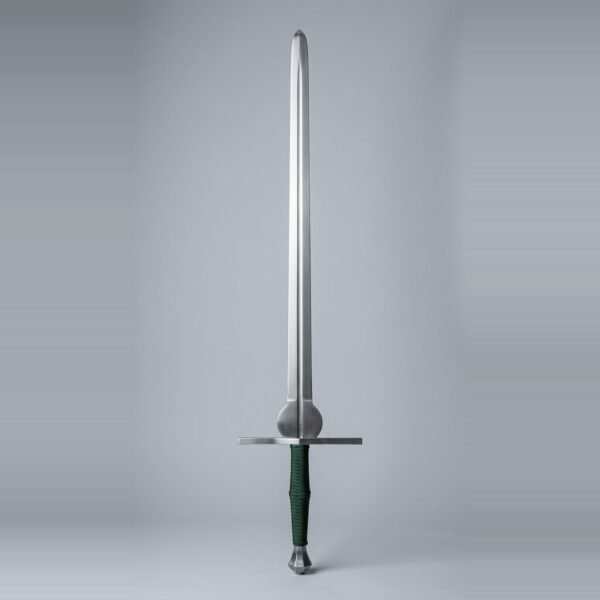 Vindlaur Hand Forged 51CrV4 Spring Steel Feder Sword with Rounded Schilt & Scent Stopper Pommel
$399.00
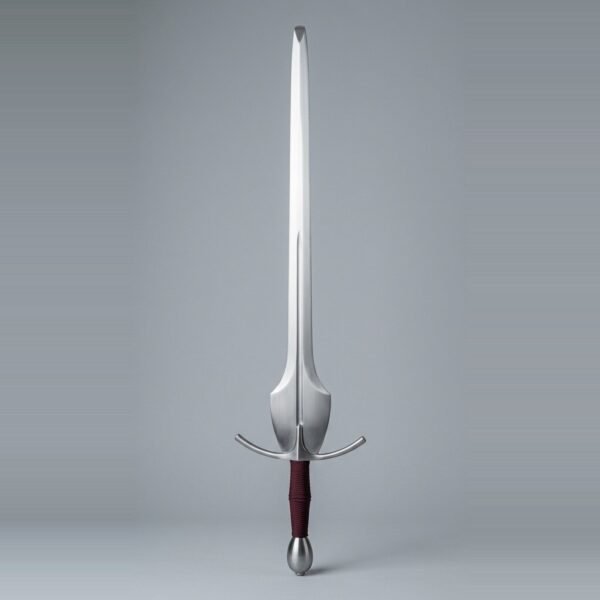 Brimhalt Hand Forged 51CrV4 Spring Steel Feder with Shield Schilt & Narrow Lower Fuller
$419.00