
A forging hammer is a lump of hardened steel on a stick, and almost every part of that description is doing something deliberate. The face is crowned so its edges never dig a mark into hot metal. The pein is the narrow end that moves steel in one direction. The eye is punched and drifted rather than drilled, so the grain of the steel wraps around the hole instead of being cut through it, and it is left soft on purpose while the face is hardened.
The heads here are 1095 high carbon steel hardened to 54 to 58 HRC at the face and pein, or pattern welded Damascus of 1095 and 15N20 at 58 to 60 HRC on the display pieces. Listed weights run from about 2 lb to about 3 lb at the head, with handles of 14 to 17 inches in American ash, hickory or dark hardwood, wedged into the eye. Cheeks carry cut Valknut, Mjolnir, Vegvisir and knotwork panels.
If you are buying one hammer to actually forge with, take the 3 lb rounding hammer.
Free US shipping
On most pieces. Heavier and oversized ones carry a flat charge.
Hand Forged
Heated, hammered and ground by hand.
Engraving available
Names, dates or Norse runes on most pieces.
Ships from Chicago
Inspected and dispatched from our Chicago warehouse. No import duty, no customs delay on US orders.
Blacksmith Tools

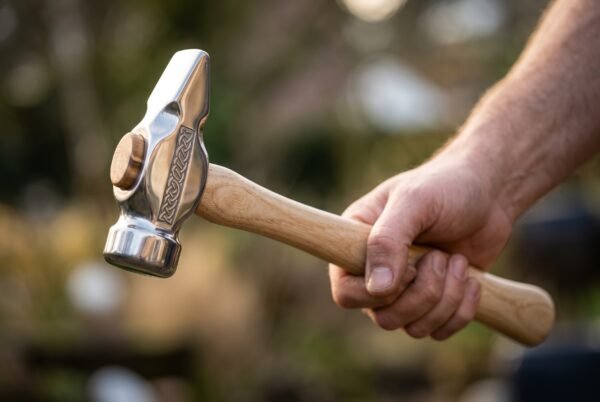
Knotpein Hand Forged 1095 Steel Cross Pein Forging Hammer with Mirror Polished Head & Knotwork Cheek | Blacksmith Shop Gift | RK-1541
Original price was: $199.00.$159.20Current price is: $159.20.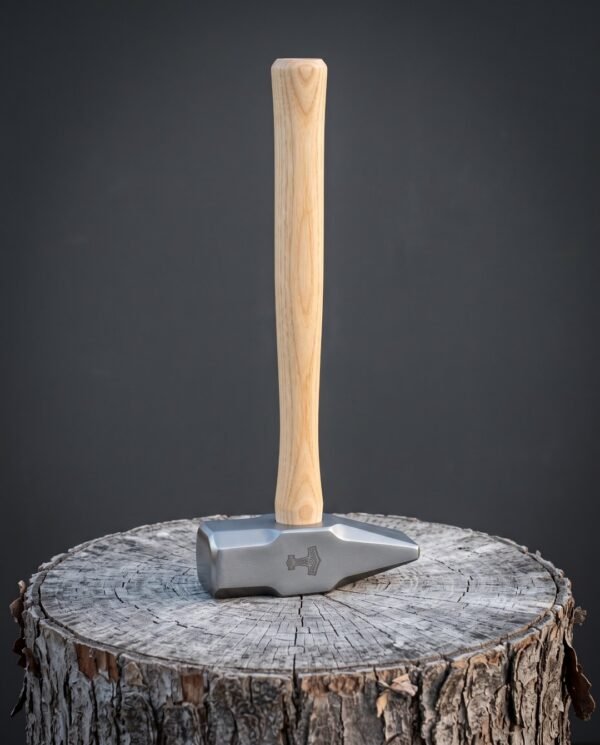
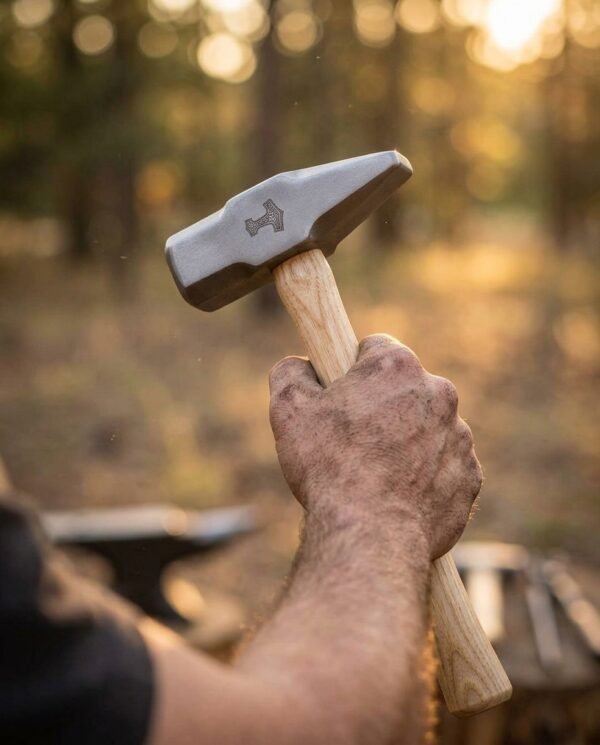
Thunderpein Hand Forged 1095 Steel Cross Pein Blacksmith Hammer with Mjolnir Engraving & Ash Handle | Forge and Anvil Gift | RK-1536
Original price was: $229.00.$183.20Current price is: $183.20.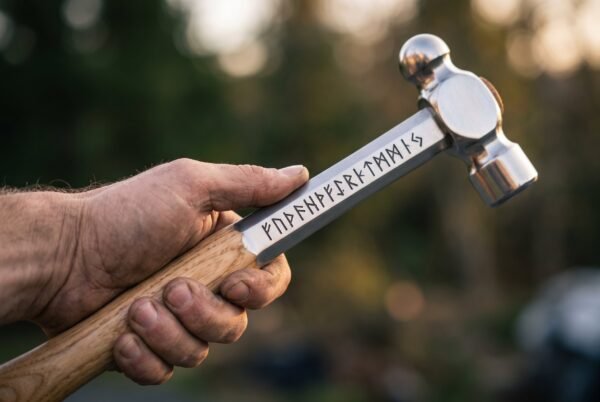
Runepein Hand Forged 1095 Steel Ball Pein Blacksmith Hammer with Elder Futhark Rune Shank & Ash Grip | Forge and Anvil Gift | RK-1533
Original price was: $189.00.$151.20Current price is: $151.20.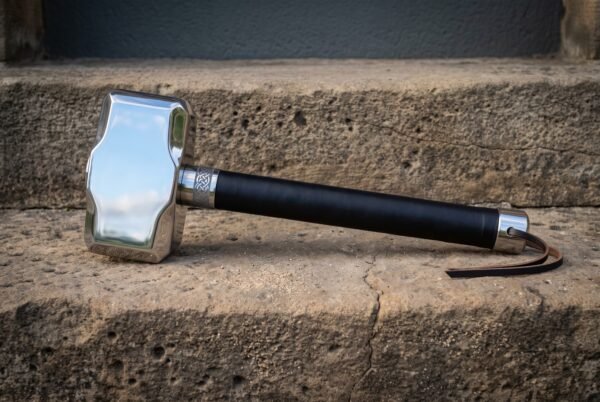
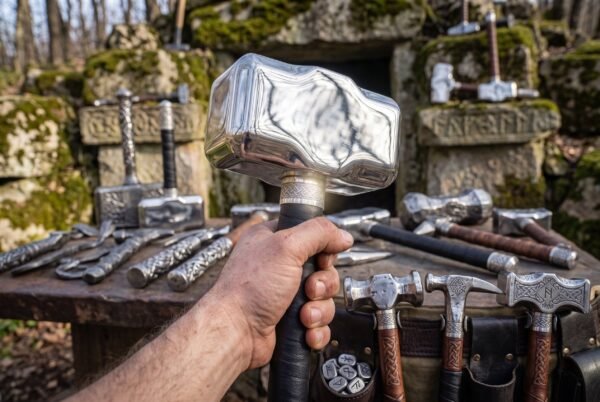
Emberfall Hand Forged Steel Blacksmith Hammer with Mjolnir Shaped Head & Wrapped Leather Grip | Forge and Anvil Gift | RK-1454
Original price was: $179.00.$143.20Current price is: $143.20.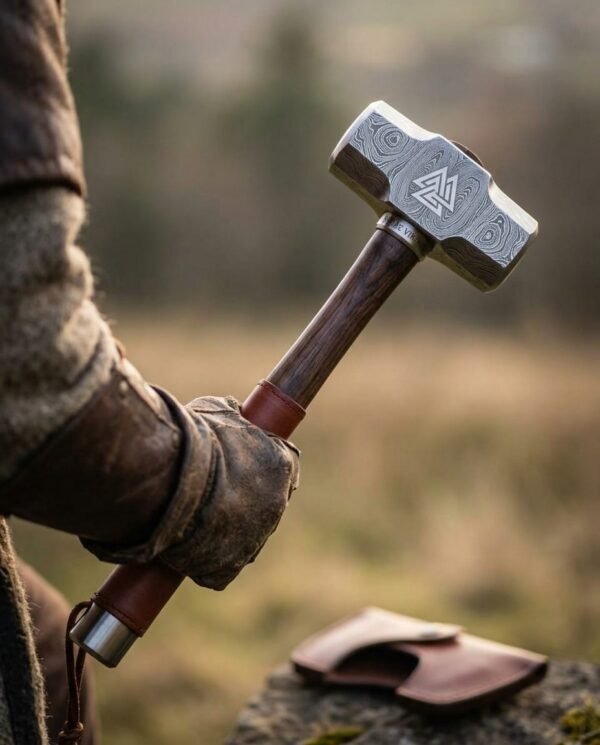
Anvilsong Hand Forged Damascus Blacksmith Sledge Hammer with Valknut Engraved Head & Leather Wrapped Handle | Forge Workshop Gift | RK-1444
Original price was: $269.00.$215.20Current price is: $215.20.Emberfall Hand Forged 1095 Carbon Steel Blacksmith Rounding Hammer with Valknut Engraved Cheek & American Ash Handle | Forge and Anvil Gift | RK-1494
Original price was: $189.00.$151.20Current price is: $151.20.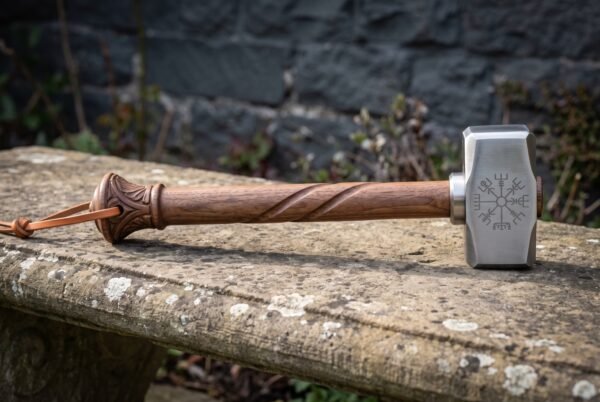
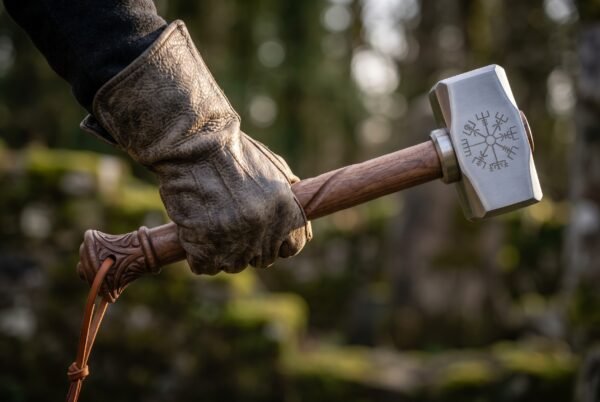
Wayrune Hand Forged 1095 Steel Blacksmith Hammer with Vegvisir Engraving & Carved Rosewood Handle | Forge Bench Gift | RK-1580
Original price was: $199.00.$159.20Current price is: $159.20.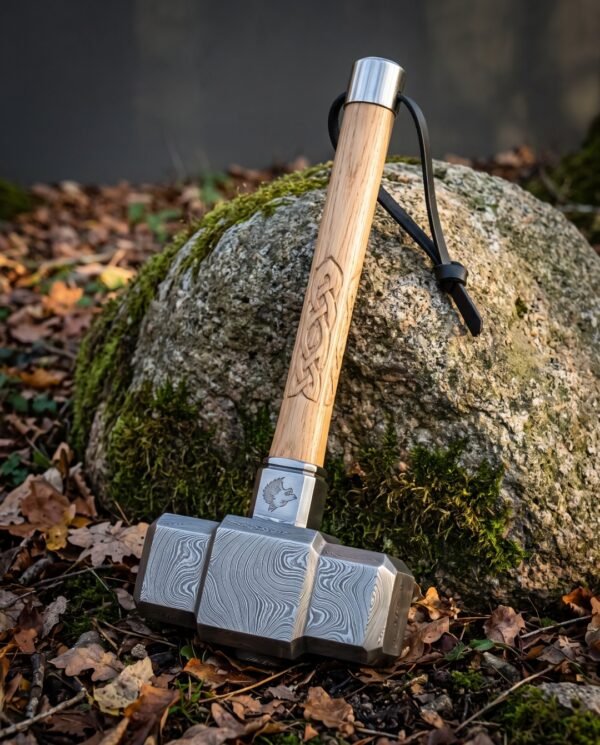
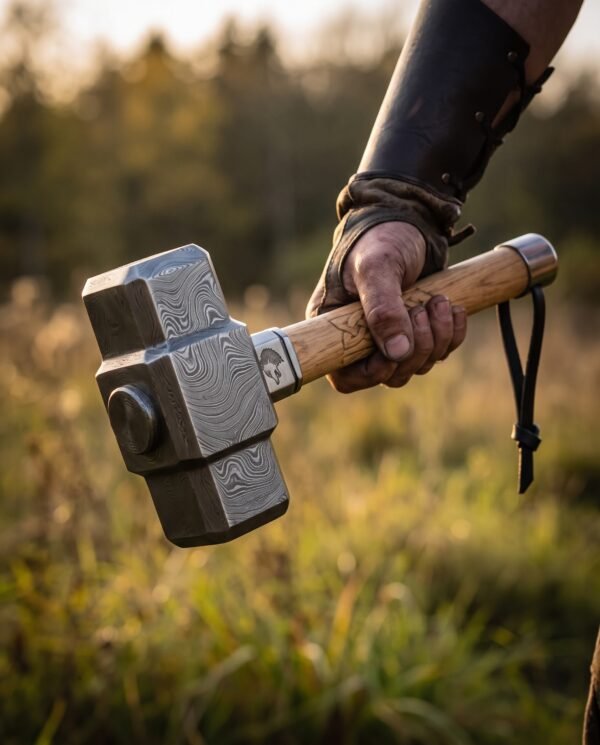
Thundergrain Hand Forged Damascus Mjolnir Style Hammer with Carved Ash Handle & Norse Knotwork Panel | Norse Display Gift | RK-1572
Original price was: $279.00.$223.20Current price is: $223.20.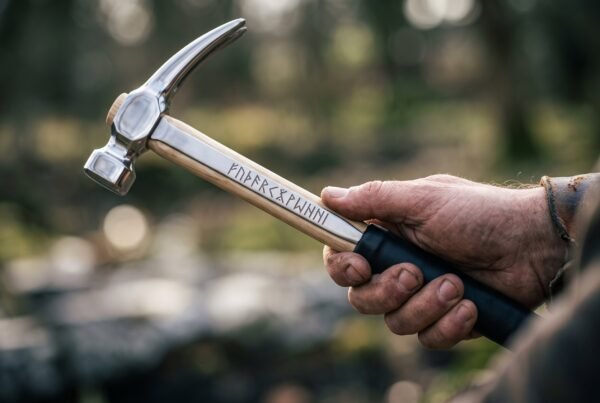
Nailward Hand Forged Steel Rip Claw Hammer with Hickory Handle & Elder Futhark Rune Line | Carpenter Workshop Gift | RK-1436
Original price was: $149.00.$119.20Current price is: $119.20.Why a hammer head is shaped the way it is
Every feature on a forging hammer exists because someone got tired of a problem. The face is not flat. It is crowned, meaning slightly domed, and the corners are eased or broken back. A truly flat face with sharp corners leaves a crescent shaped dent in hot steel every time you land slightly off square, and you will land slightly off square, so the crown removes the problem instead of asking you to be perfect.
The pein is the other end, and it is the reason a blacksmith hammer looks nothing like a carpentry hammer. A cross pein is a blunt wedge set across the handle. Hit hot steel with it and the metal spreads at right angles to the pein, which is how you draw a bar longer without making it wider. A ball pein is a hemisphere, and it moves metal in every direction at once, which is what you want for riveting and for dishing sheet.
The eye is the hole. On a good hammer it is punched through hot and then opened with a drift, so the steel flows around the hole and the grain follows the shape. Drilling it would cut straight through that grain and leave a weak ring around the opening. The eye is also left soft. A hardened eye cracks under the vibration of a wedged handle, which is why the heat treatment on these heads is local, hard at the face and pein and tough everywhere else.
The last thing worth knowing is that a hammer works through mass and speed, not through your arm. Grip it loosely and let the weight land. Forcing the blow buys you nothing and ruins your elbow.
The hammers in this collection
Nine pieces, and they do not all do the same job. Read the group headings first, because two of these are display pieces and one is a carpenter's hammer.
Forging hammers for the anvil
The rounding hammer is the one to buy if you want a hammer that will spend its life on hot steel. Hand forged 1095 with the face hardened to 54 to 58 HRC, about 3 pounds at the head, which is the standard general purpose forging weight for an adult working alone. The body is octagonal, the striking face is crowned with broken edges, and the handle is American ash of roughly 14 inches, wedged and oil finished. A Valknut is cut into the cheek and a brass ring is set at the eye.
The Mjolnir profile hammer is a working piece as well, forged carbon steel with the faces hardened and drawn back and two crowned working faces rather than a pein. Faces are dressed and corners eased from new, so it does not need the hour of filing that a raw hammer usually wants. The grip is wrapped, with a polished steel end cap and a leather wrist loop through it.
Pein hammers
Three pein hammers. The difference between them is the shape of the pein and the weight of the head.
The cross pein at about 2.5 pounds, roughly 15 inches overall, is the heaviest of the three. The eye is drifted, hardness is 54 to 58 HRC at the face and pein and softer at the eye, and the head carries a cut Mjolnir on the cheek. The broad crowned face planishes and the cross pein draws out. Handle is straight ash, turned and wedged.
The mirror polished cross pein is lighter at about 2 pounds and about 14 inches overall, on shaped hickory with a swelled butt so the hammer stays in your hand without being gripped. An interlaced knotwork band runs down the cheek. The lighter head suits longer sessions and smaller stock.
The ball pein is built differently. Instead of a drifted eye, the head sits on a forged flat steel shank that is wedged through and carries a turned ash grip over it. About 2 pounds at the head, about 15 inches overall, mirror polished, crowned and chamfered face, with an Elder Futhark rune line cut along the shank.
Display and ceremonial hammers
Two pieces here are made to be looked at and handled rather than worked hard, and both listings say so plainly.
The Damascus sledge is pattern welded 1095 and 15N20, forge welded and etched, hardened to 58 to 60 HRC. It is a double faced sledge form with slightly domed faces and a cut Valknut, on a hardwood handle with a hand stitched leather wrap and a steel collar, and it ships with a fitted leather head cover. Fine for light bench work. Not a hammer for daily heavy forging.
The Damascus Mjolnir hammer is squarely a display and ceremonial piece, used for mantels and handfastings. Acid etched pattern welded head in a squat Mjolnir profile with chamfered corners and two flat faces, ash handle with a hand carved knotwork panel, polished steel butt collar, wedged eye, engraved bolster and a leather wrist thong. Around 17 inches long and 3 lb 8 oz complete.
The Vegvisir hammer sits between the two groups. The face is hardened and drawn back with the eye and body left soft and tough, the eye is punched and drifted rather than drilled, and the handle is dark hardwood with a carved spiral shaft, a shaped pommel, a steel collar and a leather thong. Around 15 inches with a 2 lb 4 oz head and roughly 3 lb complete. Light bench work, presentation and display, and the listing is honest that it is not a production forging hammer.
The carpentry hammer
One piece here is not a blacksmith hammer at all. The rip claw hammer has a 1095 head at 54 to 58 HRC, a curved rip claw and a slightly domed striking face, on a straight grained hickory handle with a wedged hang, a rubber over grip and a steel end cap. An Elder Futhark rune line is cut into the handle shoulder. It drives and pulls nails. It is not for masonry, and it is not for striking hardened steel, because a high carbon face against another hardened surface chips.
Weights, lengths and heads across the range
Every figure below is taken from a listing on this page. Heads are forged and dressed by hand, so weights are close rather than exact.
| Head type | Steel and hardness | Weight | Length | Handle | Cheek detail |
|---|---|---|---|---|---|
| Rounding hammer, octagonal body | 1095 at 54 to 58 HRC | About 3 lb head | Handle about 14 in | American ash, wedged and oil finished | Cut Valknut, brass ring at the eye |
| Cross pein, drifted eye | 1095 at 54 to 58 HRC, soft eye | About 2.5 lb head | About 15 in overall | Straight ash, turned and wedged | Cut Mjolnir |
| Cross pein, mirror polished | 1095 at 54 to 58 HRC | About 2 lb head | About 14 in overall | Shaped hickory with a swelled butt | Interlaced knotwork band |
| Ball pein on a forged shank | 1095 at 54 to 58 HRC | About 2 lb head | About 15 in overall | Turned ash grip over the shank | Rune line along the shank |
| Mjolnir profile, two working faces | Forged carbon steel, faces hardened and drawn back | Not listed | Not listed | Wrapped grip, steel end cap, wrist loop | Engraved knotwork collar |
| Blacksmith hammer, punched and drifted eye | 1095, face hardened, eye and body left soft | 2 lb 4 oz head, about 3 lb complete | About 15 in overall | Carved spiral hardwood, steel collar, thong | Engraved Vegvisir |
| Double faced sledge | Damascus at 58 to 60 HRC | Not listed | Not listed | Hardwood, stitched leather wrap, steel collar | Cut Valknut |
| Mjolnir display hammer | Damascus, acid etched | 3 lb 8 oz complete | About 17 in overall | Ash with carved knotwork, steel butt collar | Engraved bolster |
| Rip claw carpentry hammer | 1095 at 54 to 58 HRC | Not listed | Not listed | Straight grained hickory, rubber over grip | Rune line on the handle shoulder |
Two weights in that table are for the finished hammer and the rest are for the head alone. A 3 lb 8 oz complete hammer is much lighter in the head than a 3 lb head on a 14 inch handle, and it swings differently.
Choosing a weight
Weight is the decision people get wrong most often. Heavier is not better. A head that is too heavy slows your rhythm, drops your accuracy and ends the session early.
Around 2 pounds is a comfortable all day hammer for smaller stock, jewellery scale work, riveting and finishing. Around 2.5 pounds is a general bar hammer for most hobby work. Around 3 pounds is the standard for a smith working alone at an anvil on stock of half an inch and up, and it is heavy enough that most beginners should build up to it rather than start there.
Handle length changes the same head. A 14 inch handle gives control. A 15 inch handle gives speed at the face and slightly less precision. If you are between two hammers, take the lighter head on the shorter handle and learn to let it fall properly.
Steel, hardness and the soft eye
The working steel here is 1095 high carbon, hardened to 54 to 58 HRC at the face and the pein. That is deliberately softer than a knife blade. A hammer face at knife hardness would be brittle and would spall chips off under repeated impact, and chips off a hammer face travel fast. At 54 to 58 the face resists deforming but still absorbs a shock without shattering.
The Damascus pieces are 1095 and 15N20 forge welded and acid etched, hardened to 58 to 60 HRC. That is harder still, which is fine on a display piece and part of why those two listings are honest about not being production forging tools.
Whatever the hardness, never strike another hardened surface. Hammer against hammer, hammer against a hardened anvil face on an empty blow, hammer against masonry or concrete. All three risk taking a piece out of the face, and all three are avoidable. Read our notes on steel and hardness if you want the longer version, and what Damascus steel actually is for the pattern welded pieces.
Handles, eyes and hangs
Ash and hickory are used here for the same reason they have always been used. Both are ring porous hardwoods with long straight fibres that flex slightly under impact instead of transmitting the whole shock into your wrist. Hickory is denser and takes abuse better. Ash is springier and lighter for the same section.
A wedged hang means the handle is fitted through the eye and then split from the top with a wedge that spreads it tight against the walls of the eye. It is a friction fit under compression, and like every friction fit it can loosen if the wood dries out. Keep the hammer out of dry heat and out of a hot car. If a head ever moves on the handle, stop and rewedge it before it comes off mid swing.
Care and storage
These heads are carbon steel and they rust. Wipe the head after use, keep a light film of oil on the polished faces, and store the hammer dry. A garage in a humid summer will fog a mirror polish in a fortnight if you leave it bare.
Dress the face when it needs it. Over time a working face picks up small marks and the crown flattens at the centre. A fine file followed by abrasive paper restores the dome and eases the corners back. A dressed face leaves a clean surface on hot steel and a neglected one prints every one of its own dings into your work.
Oil the wooden handles once or twice a year with boiled linseed or a similar finishing oil. Do not varnish them. A varnished handle gets slippery when your hands are damp and blisters your palm where the coating has worn through.
The Damascus sledge ships with a fitted leather head cover. Use it for transport, not for long storage, since leather holds moisture against steel.
Engraving
Several heads already carry a cut Valknut, Mjolnir, Vegvisir or knotwork band on the cheek, and two handles carry an Elder Futhark rune line. Those are worked into the piece during making.
Additional personalisation is done in the United States after the hammer arrives. Text engraving is 19 dollars, symbol engraving is 39 dollars and a family crest is 49 dollars. Elder Futhark is a phonetic alphabet rather than a cipher, so a name is transliterated by sound and there is no rune for the letter C. Our Elder Futhark guide covers the transliteration, and the meaning of Mjolnir is worth a read before you pick a symbol.
Engraving is permanent and an engraved piece cannot be returned. Send the exact spelling and check it before you order.
Where these come from and how they ship
Ransack Viking is a US company based in Chicago, Illinois. The pieces are handmade in the Czech Republic, then imported, inspected and shipped from Chicago. Engraving is done in the US after arrival.
Because every head is forged and dressed by hand, two hammers of the same model differ slightly in the profile of the crown, the depth of the cut cheek and the figure of the etch. Weights are given to the nearest quarter pound and small variation is normal.
How to choose
If you have an anvil and you want one hammer, take the 3 pound rounding hammer. It is the general purpose weight, the face is dressed and ready from new, and the octagonal body makes it easy to index in the dark.
If you already have a rounding hammer and want to draw stock out faster, add a cross pein. Take the 2.5 pound version for bar work or the 2 pound polished one if you work small and work long.
If you rivet, dish or work sheet, the ball pein is the right shape and the forged shank build takes a lot of abuse.
If the hammer is going on a wall, a mantel or into a handfasting, take one of the two Damascus pieces or the Vegvisir hammer.
Browse related categories
- Viking hammers and Norse hammer pieces
- Thor's hammers and Mjolnir forms
- Maces and war hammers
- Bearded axes in 1095 and Damascus
- Replacement axe handles and hafts
- Wedding and groomsmen gifts
- Everything that can be engraved
Guides worth reading first
- Steel and hardness explained
- What Damascus steel actually is
- Mjolnir and what the hammer meant
- The Vegvisir and its real history
- Elder Futhark runes and how names transliterate
- Care for hafted tools: heads, hafts and edges
Frequently asked questions
What weight blacksmith hammer should I start with?
Around 2 to 2.5 pounds at the head for most people learning. The 3 pound rounding hammer is the standard general purpose weight for someone already working at an anvil on stock of half an inch and up. Too heavy and your accuracy drops and the session ends early.
What is the difference between a cross pein and a ball pein?
A cross pein is a blunt wedge set across the handle and it spreads hot metal at right angles to itself, which is how you draw a bar longer without widening it. A ball pein is a hemisphere and it moves metal in all directions, which suits riveting and dishing sheet.
Why is the eye softer than the face?
Because a hardened eye cracks. The wedge puts the walls of the eye under constant tension and every blow adds vibration to that. The heat treatment on these heads is local, hard at the face and pein where it needs to resist deforming and tough everywhere else.
Can I forge with the Damascus hammers?
Light bench work, yes. Daily heavy forging, no, and both listings say so. They are hardened to 58 to 60 HRC and built as display and ceremonial pieces. If you want a hammer for hot steel every day, take the 1095 rounding hammer or one of the peins.
Do I need to dress the face before using it?
No. The faces here are crowned and the corners eased from new, so they are ready to work. Over time the crown flattens and picks up marks, and then a fine file and abrasive paper restores it. A neglected face prints its own dings into your work.
How do I stop the head coming loose?
Keep the hammer out of dry heat and out of a hot car, because the hang is a friction fit and it depends on the wood keeping its size. If a head does move, rewedge it. Never soak it in water to swell the wood, because the wood dries smaller afterwards and the head ends up looser than it started.
Will these rust?
Yes. Both steels here are carbon steel, not stainless. Wipe the head after use, keep a light film of oil on the polished faces and store the hammer somewhere dry. A bare mirror polish will fog in a humid garage inside a fortnight.
Where are these hammers made?
Ransack Viking is a US company based in Chicago, Illinois. The pieces are handmade in the Czech Republic, then imported, inspected and shipped from Chicago. Engraving is done in the US after arrival.
Featured pieces
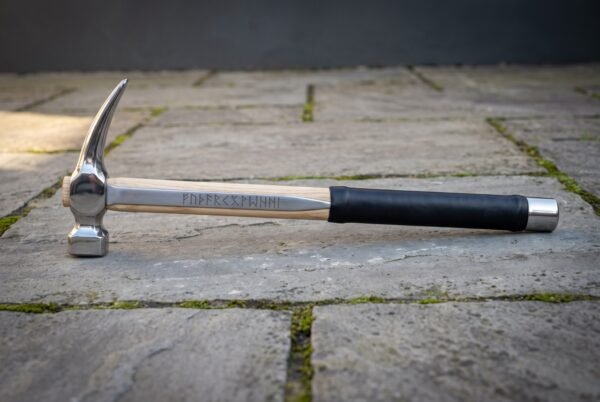 Nailward Hand Forged Steel Rip Claw Hammer with Hickory Handle & Elder Futhark Rune Line
Original price was: $149.00.$119.20Current price is: $119.20.
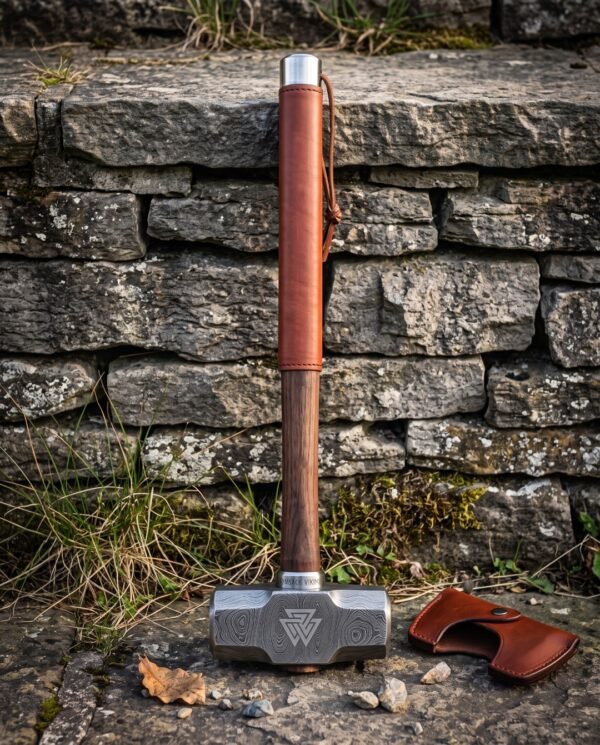 Anvilsong Hand Forged Damascus Blacksmith Sledge Hammer with Valknut Engraved Head & Leather Wrapped Handle
Original price was: $269.00.$215.20Current price is: $215.20.
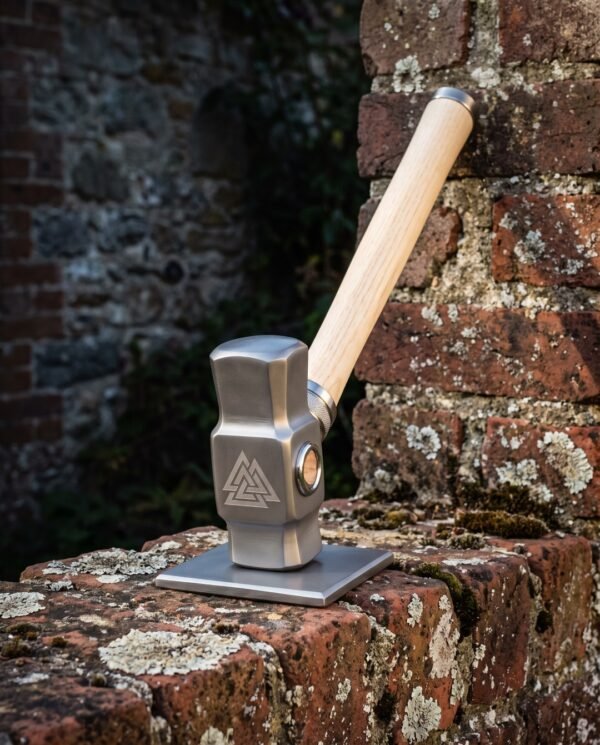 Emberfall Hand Forged 1095 Carbon Steel Blacksmith Rounding Hammer with Valknut Engraved Cheek & American Ash Handle
Original price was: $189.00.$151.20Current price is: $151.20.
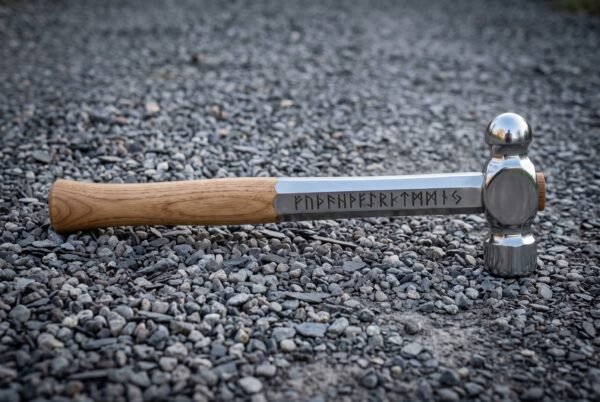 Runepein Hand Forged 1095 Steel Ball Pein Blacksmith Hammer with Elder Futhark Rune Shank & Ash Grip
Original price was: $189.00.$151.20Current price is: $151.20.