
A brigandine is body armour built inside out. Small plates sit on the inside of a cloth or leather shell and the rivets that hold them are what you see from the outside, which is why the surface reads as rows of studs rather than as a breastplate. A gambeson is the quilted garment underneath, cloth stuffed with wool and stitched into channels so the padding cannot migrate. One stops the edge. The other stops the shock, and without it the first one hurts a great deal more than people expect. Wear one under mail as well.
This page carries both halves. The two gambesons are wool filled, channel quilted, and weigh about 4 pounds to 4 pounds 8 ounces. The two leather pieces are cut from vegetable tanned cowhide of roughly 8 to 9 ounce weight and run about 7 to 12 pounds depending on size, one studded and one with overlapping steel bands riveted inside. Everything is built to a stated chest measurement.
Buy the padding first. It is the piece that makes the rest of the armour wearable.
Free US shipping
On most pieces. Heavier and oversized ones carry a flat charge.
Hand Forged
Heated, hammered and ground by hand.
Engraving available
Names, dates or Norse runes on most pieces.
Ships from Chicago
Inspected and dispatched from our Chicago warehouse. No import duty, no customs delay on US orders.
Brigandine & Gambeson
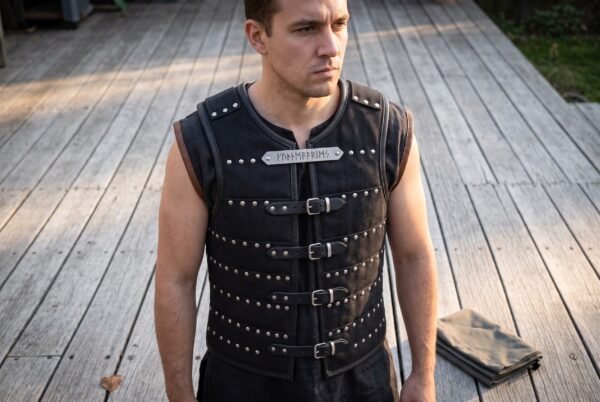
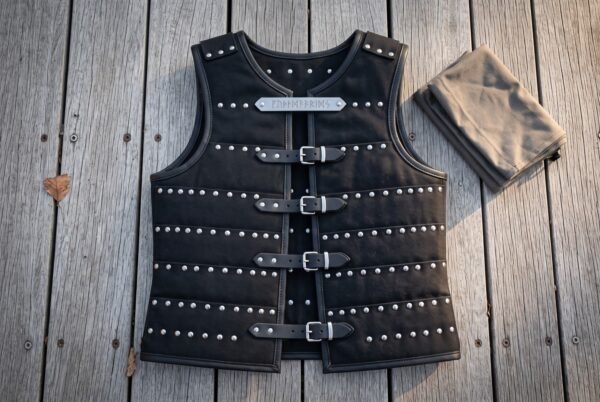
Rivetward Hand Made Riveted Canvas Brigandine Body Armour | Chest Sized to Order | Steel Buckles and Rune Cut Chest Plaque | Norse LARP Gift | RK-1516
Original price was: $349.00.$279.20Current price is: $279.20.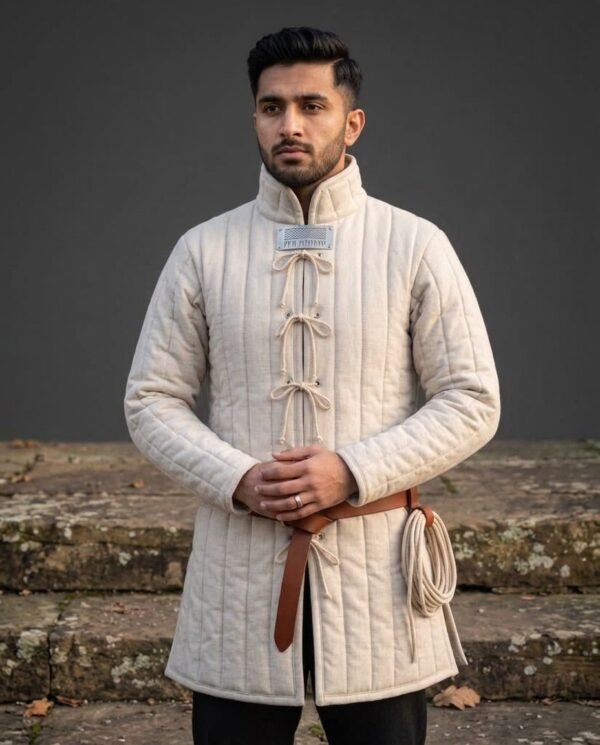
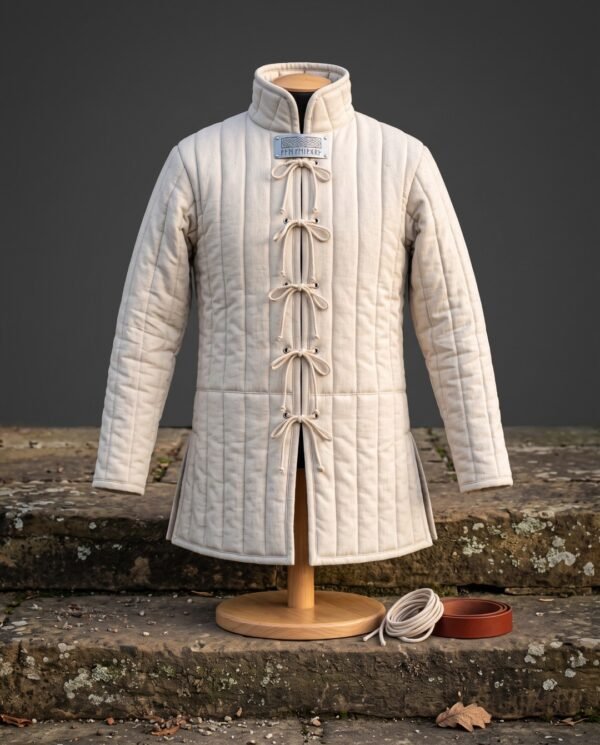
Palewarden Hand Made Linen Gambeson | Natural Undyed Cloth Over Wool | Channel Quilted Body, Tall Standing Collar and Cord Loop Lacing | Viking Gift | RK-1475
Original price was: $269.00.$215.20Current price is: $215.20.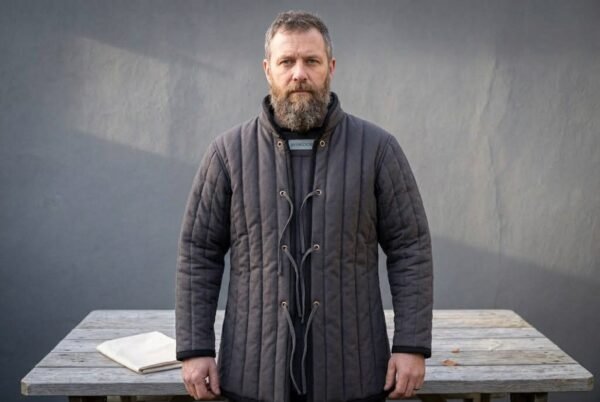
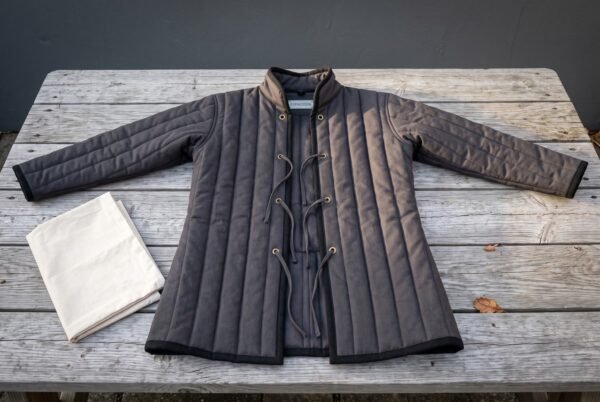
Stormquilt Hand Made Padded Gambeson | Charcoal Cotton Canvas Over Wool | Channel Quilted Body, Standing Collar and Brass Grommet Lacing | Medieval Gift | RK-1474
Original price was: $249.00.$199.20Current price is: $199.20.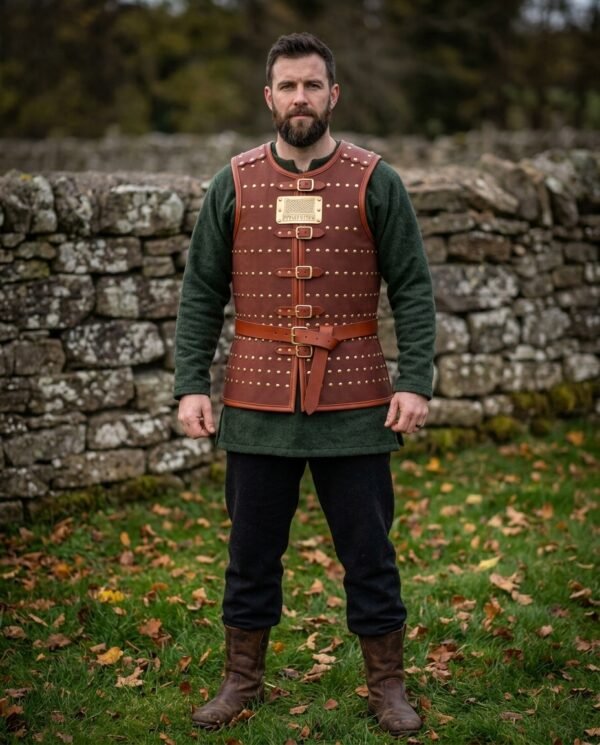
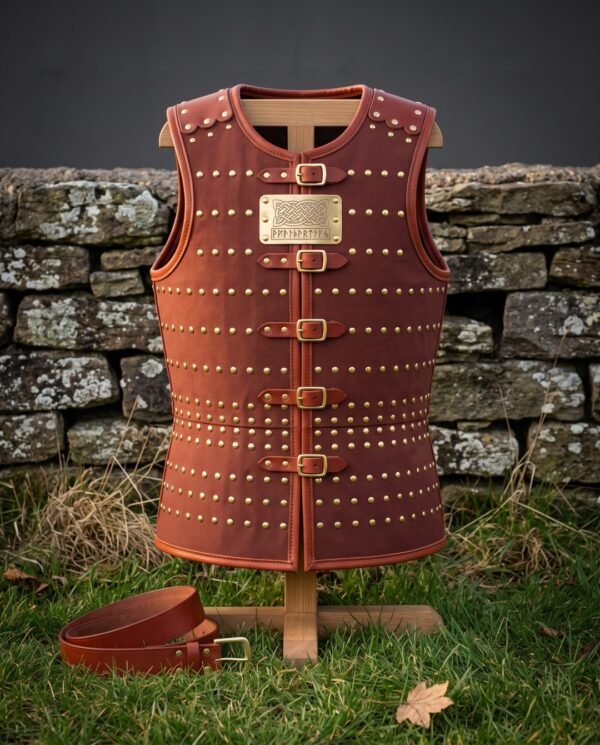
Roanward Hand Made Studded Leather Cuirass Body Armour | Fits 44 Inch Chest | Brass Domed Rivets Buckle Straps and Engraved Rune Plaque | Viking Reenactment Gift | RK-1501
Original price was: $429.00.$343.20Current price is: $343.20.Padding, plates and what each one is for
Armour has two separate jobs and most people only think about the first. The obvious job is stopping an edge or a point from reaching skin. The second job, and the one that decides whether you can keep standing, is dealing with the force that arrives whether or not the edge gets through. A blade that fails to cut a mail shirt still delivers everything it had into the body underneath. Mail spreads that load across a few links. It does not absorb it.
That is what the padded garment is for. Wool batting compresses, and compressing takes time. Extending the duration of an impact by even a fraction of a second cuts the peak force dramatically, which is the same principle behind every crumple zone and every helmet liner made since. A gambeson worn alone is real protection against a blunt strike. Worn under mail or plate it is what turns a shirt of rings from a slashing guard into something you can take a hit in.
The brigandine sits at the other end of the problem. Rather than one large plate, it uses many small overlapping plates riveted to the inside of a leather or cloth shell. Each plate is small enough to stay rigid without being heavy, and because they overlap and can slide against each other the whole assembly bends with the body. You get most of the resistance of plate with something closer to the flexibility of a coat. The rivet heads on the outside are structural. They are not decoration that happens to look martial.
Studded leather is the odd one out and it is worth being honest about it. Thick vegetable tanned hide is genuinely tough and resists a draw cut well. The domed rivets add local hardness where they sit and hold the panels together. What it is not is a plated defence, and nobody should confuse the two.
The armour in this collection
Four pieces, split evenly between padding and leather. Two are worn under everything else and two are worn over.
The gambesons
Both are quilted in narrow vertical channels rather than a diamond grid, and both are filled with wool batting. The charcoal one has a cotton canvas shell, a natural cotton lining that shows at the collar, a standing quilted collar about three inches high, brass grommets with cotton cord lacing down the centre front, contrast black binding at the cuffs, hem and collar, and a hip length skirt with side vents for walking and mounting. It weighs about 4 pounds.
The natural one is cut from an undyed cotton and linen blend, quilted the same way, with a taller standing collar of about four inches, cord loops through metal eyelets down the front, full length quilted sleeves with a plain cuff, and a mid thigh length with side vents. A stamped rune tab sits at the throat. It weighs about 4 pounds 8 ounces and is cut deliberately to be worn under mail or plate.
The channel quilting matters more than it looks. Vertical channels hold the wool in a column that cannot shift downward and pool at the hem, which is exactly what happens to a badly quilted garment after a season of use. A diamond grid looks busier and traps the filling in pockets that compress unevenly.
The studded leather cuirass
Vegetable tanned cowhide, oil dyed russet, at roughly 8 to 9 ounce weight, which works out at about 3.2 to 3.6 mm through the body panels. It is built as a two piece front and back, edge bound, with hand set brass domed rivets in rows. Five brass buckles on leather straps close it down the centre front. It fits a chest of up to about 44 inches over a padded garment, covers sternum to hip on most wearers, and weighs about 7 to 9 pounds. Brass fittings throughout, including an engraved brass sternum plaque.
The listing is clear about intent and so are we. This is built for display, costume, film and light reenactment. It is not rated for full contact combat and should not be bought as if it were.
The riveted brigandine
Black vegetable tanned cowhide of the same 8 to 9 ounce weight, with overlapping mild steel bands of about 18 gauge riveted inside the shell. Steel dome rivets run in banded rows front and back, and four steel roller buckles on leather billets close the centre front. It is built to a stated chest measurement with roughly three inches of adjustment at the buckles, covers chest, back and flanks, and weighs about 9 to 12 pounds depending on the size built. The interior is leather backed and left unlined for airflow, which means it is designed to go over a padded garment rather than over a shirt. An engraved plaque with an Elder Futhark line sits at the chest.
Materials, fit and weight across the range
Every figure below is taken from the specification panel of a piece on this page. These are cut and stitched by hand to order, so treat them as what to expect rather than as a guarantee.
| Piece | Shell | Filling or plates | Closure | Length and coverage | Fit | Weight | Price |
|---|---|---|---|---|---|---|---|
| Charcoal canvas gambeson | Charcoal cotton canvas, natural cotton lining | Wool batting, narrow vertical channels | Brass grommets, cotton cord lacing | Hip length, side vents, three inch standing collar | Made to a stated chest size, room for a shirt | About 4 lb | 249 dollars |
| Natural linen gambeson | Undyed cotton and linen blend | Wool batting, narrow vertical channels | Cord loops through metal eyelets | Mid thigh, side vents, four inch standing collar | Made to a stated chest size, cut to go under mail | About 4 lb 8 oz | 269 dollars |
| Studded leather cuirass | Russet vegetable tanned cowhide, 8 to 9 oz, 3.2 to 3.6 mm | Brass domed rivets in rows, two piece front and back | Five brass buckles on leather straps | Sternum to hip | Chest up to about 44 in over padding | About 7 to 9 lb | 429 dollars |
| Riveted leather brigandine | Black vegetable tanned cowhide, 8 to 9 oz | Overlapping mild steel bands, about 18 gauge, riveted inside | Four steel roller buckles on leather billets | Chest, back and flanks | Built to a stated chest, about three inches of adjustment | About 9 to 12 lb | 349 dollars |
Two figures deserve attention. Leather weight in ounces is a thickness measure and not a mass, so 8 to 9 ounce hide means roughly 3.2 to 3.6 mm and nothing about how heavy the finished piece will be. Steel gauge runs backwards, so 18 gauge is thinner than 16 gauge, not thicker.
Sizing and fit
Measure over what you will actually wear. This is the single mistake that ruins more armour orders than anything else. If the brigandine is going over a gambeson, measure your chest with the gambeson on, because a padded garment adds two to four inches of circumference on its own. Ordering a leather piece to your bare chest measurement means it will not close over the padding it was designed to sit on.
The gambesons are made to a stated chest size and cut with room for a shirt underneath. The natural one is cut fuller because it is meant to disappear under mail. Neither should be ordered tight. Padding that is compressed by the fit is padding that is not doing its job, and a gambeson you cannot raise your arms in is a gambeson you will stop wearing.
The leather pieces adjust at the buckles, but only within a range. The studded cuirass fits a chest of up to about 44 inches over padding. The brigandine is built to your stated measurement with roughly three inches of buckle travel either way. Beyond that you are into a different size, not a tighter strap.
Length matters for anyone who rides or fights on foot in a line. The hip length gambeson with side vents moves better and is cooler. The mid thigh version covers more of the leg and is the one to take if it is going under a mail shirt of similar length.
Fastenings, rivets and fittings
Front closures split the collection cleanly. The gambesons lace, one through brass grommets with a cotton cord and one through cord loops on metal eyelets. Lacing gives infinite adjustment and no hard points, which is what you want against the body. The leather pieces buckle, five brass buckles on the cuirass and four steel roller buckles on the brigandine, because a rigid shell needs a fastening that holds a set position under load.
Roller buckles are the better of the two designs and they are on the piece that needs them. The roller lets a thick leather billet turn through the frame instead of dragging across it, which means less wear on the strap and a great deal less swearing when you are doing it up over padding on your own.
The dome rivets are set by hand in banded rows. On the brigandine they are structural, holding the internal steel bands to the shell. On the studded cuirass they hold the panels and add local hardness at the surface. Brass darkens over months and comes back with a metal polish on a cloth. Steel rivets want the same light oil the buckles get.
Care and storage
Leather and quilted cloth want opposite things, so treat them separately.
The gambesons can be aired and spot cleaned. Do not put a wool filled quilted garment through a machine, because the batting will felt, migrate and never recover its loft, and once that has happened the padding is finished. Hang it to dry after use, indoors and out of direct sun, and let sweat evaporate before it goes into a bag. A gambeson stuffed damp into a tote is how you learn what wool smells like after a fortnight.
The leather pieces want a light conditioner once or twice a year and nothing else. Do not soak vegetable tanned hide, do not dry it near a heater, and do not store it folded, because a crease that sets in oiled hide tends to stay. Hang both leather pieces on a broad hanger or a torso form so the shoulders carry the weight. The internal steel bands on the brigandine should be checked for spots when you condition the shell, and a wipe of oil through the openings deals with any that appear.
Everything here should be stored dry and with airflow. Sealed plastic containers hold moisture against both leather and wool and are the fastest route to mildew. See caring for mail and armour for the routine that applies to the metal parts.
Engraving
Both leather pieces carry an engraved plaque at the chest, brass on the cuirass and a rune cut plate on the brigandine, and either can be replaced with your own design after the piece arrives in the United States. The natural gambeson carries a stamped rune tab at the throat.
Text engraving is 19 dollars, a symbol is 39 dollars and a family crest is 49 dollars. Elder Futhark is a phonetic alphabet rather than a code, so a name is transliterated by sound and there is no rune for the letter C. Where a piece already carries an engraved design, your chosen engraving replaces it rather than sitting beside it. Engraving is permanent and an engraved piece cannot be returned, so check the spelling before you commit.
Where these come from and how they ship
Ransack Viking is a US company based in Chicago, Illinois. The pieces are handmade in the Czech Republic, then imported, inspected and shipped from Chicago. Engraving is done in the US after arrival.
Because these are cut and stitched to a stated measurement by hand, expect small variation in quilt spacing, hide colour and rivet spacing between two pieces of the same model. Armour is bulky, so it ships in a large box and takes longer to make than an item off a shelf. Order with time in hand if it is for a specific event.
How to choose
If you own nothing yet, buy a gambeson. It is the foundation of every other layer, it is the cheapest piece here, and it is the only one that is genuinely comfortable worn on its own. Take the charcoal canvas one at 249 dollars if it will be your outer layer, because it is finished to be seen. Take the natural linen one at 269 dollars if mail or plate is going over it, because it is cut fuller and the taller collar protects the neck under a mail coif.
If you want the look above all, the studded leather cuirass at 429 dollars is the most striking piece on the page and the one that photographs best. Buy it knowing what it is for, which is display, costume, film and light reenactment.
If you want actual plated protection with movement, the riveted brigandine at 349 dollars is the piece to have. Overlapping steel bands inside a leather shell is the historically correct answer to the problem and it still is. Order it over a gambeson, measure over the padding, and accept that 9 to 12 pounds is what real defence weighs.
Browse related categories
- Chainmail shirts, coifs and riveted mail
- Leather armour, bracers and body pieces
- Plate armour and rigid body defences
- Scale and lamellar, the other small plate systems
- Medieval helmets to finish the kit
- Round shields in the Norse pattern
- Kite shields and bucklers
- The full Viking armour collection
Guides worth reading first
- Viking armour explained: what they actually wore
- Mail, plate or lamellar: how the three systems differ
- Caring for mail and metal armour
- Buying a helmet that fits over a coif
- Gifts for reenactors who already own everything
Frequently asked questions
What is the difference between a brigandine and a gambeson?
A gambeson is a padded cloth garment filled with wool and quilted so the filling stays put. A brigandine is a leather or cloth shell with small steel plates riveted to the inside. The gambeson absorbs shock. The brigandine resists penetration. They are designed to be worn together, padding first.
Do I need a gambeson under leather or mail?
Yes, if you want either one to do its job. Mail and plate stop an edge but pass the force straight through. The brigandine on this page is unlined specifically because it expects a padded garment underneath, and wearing it over a shirt is uncomfortable within minutes.
What size should I order?
Measure your chest over whatever you will actually wear underneath. If a leather piece is going over a gambeson, measure with the gambeson on, because padding adds two to four inches of circumference. Ordering to a bare chest measurement is the most common way an armour order goes wrong.
Are these safe for full contact combat?
No. The studded leather cuirass is listed for display, costume, film and light reenactment and is not rated for full contact. Full contact groups have their own certification requirements and you should buy to those rules rather than to a product photograph.
How heavy are they?
The gambesons run about 4 pounds and 4 pounds 8 ounces. The studded cuirass is about 7 to 9 pounds. The brigandine is about 9 to 12 pounds depending on the size built. Weight on the shoulders feels heavier than the same weight in your hands, so try a shorter session first.
Can I wash a gambeson?
Air it and spot clean it. Do not put it in a machine. Wool batting felts and migrates once it is agitated wet, and a gambeson whose filling has pooled at the hem has lost the thing you paid for. Hang it to dry indoors after every use and let sweat evaporate before it goes in a bag.
What does 8 to 9 ounce leather mean?
It is a thickness measure, not a weight. Eight to nine ounce hide is roughly 3.2 to 3.6 mm through the panel. It says nothing about how heavy the finished piece is, which depends on how much of that hide the pattern uses.
Where is this armour made?
Ransack Viking is a US company based in Chicago, Illinois. The pieces are handmade in the Czech Republic, then imported, inspected and shipped from Chicago. Engraving is done in the US after arrival.
Featured pieces
 Rivetward Hand Made Riveted Canvas Brigandine Body Armour
Original price was: $349.00.$279.20Current price is: $279.20.
 Stormquilt Hand Made Padded Gambeson
Original price was: $249.00.$199.20Current price is: $199.20.
 Palewarden Hand Made Linen Gambeson
Original price was: $269.00.$215.20Current price is: $215.20.
 Roanward Hand Made Studded Leather Cuirass Body Armour
Original price was: $429.00.$343.20Current price is: $343.20.