
A bowie is a big fixed blade with a clip point, a guard and enough belly to skin with. The clip is the part that gives it away: the top of the blade is cut away in a long concave sweep toward the tip, which drops the point down onto the centreline and thins it enough to pierce, while the belly below stays deep and curved for slicing. That combination is why one knife can field dress a deer in the morning and split kindling in the afternoon.
The bowies here run 8.7 to 15 inches overall with blades from 4.6 to 10 inches, and prices from 99 to 349 dollars. Most carry a hand forged Damascus blade of 1095 and 15N20, forge welded and acid etched, hardened to 58 to 60 HRC. Several are plain 1095 high carbon at 54 to 58 HRC. Every one is full tang or through tang. Handles run to stacked leather washers, stag horn, buffalo horn, ram horn, bone, rosewood, wenge and cord wrap, with brass or steel guards.
For a first bowie, 8 to 9 inches of blade covers almost everything.
A name, date or short line fits on most blades here through custom engraving, added on the product page.
Buying for a wedding party? The groomsmen sets come as six matched knives, 15% less than buying them singly, and each one can carry its own engraved name.
Free US shipping
On most pieces. Heavier and oversized ones carry a flat charge.
Hand Forged
Heated, hammered and ground by hand.
Engraving available
Names, dates or Norse runes on most pieces.
Ships from Chicago
Inspected and dispatched from our Chicago warehouse. No import duty, no customs delay on US orders.
Bowie Knives
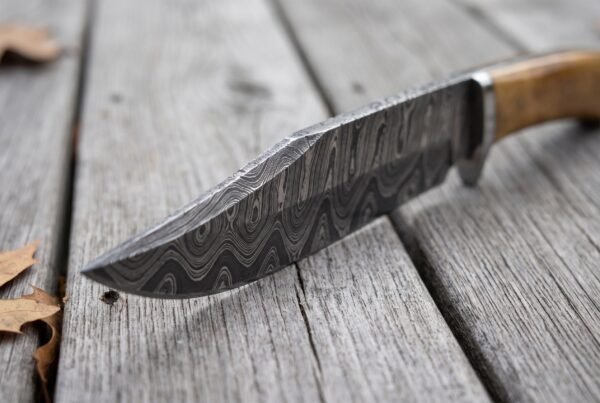
Sandbone Hand Forged Damascus Bowie Knife with Dyed Camel Bone Handle & Leather Sheath | Hunting and Camping Bowie Gift | RK-488
Original price was: $179.00.$152.15Current price is: $152.15.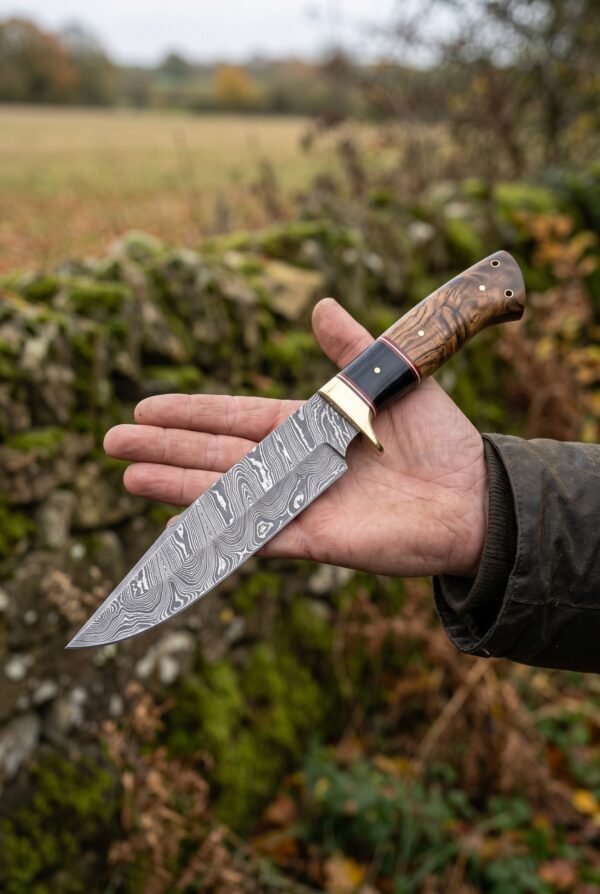
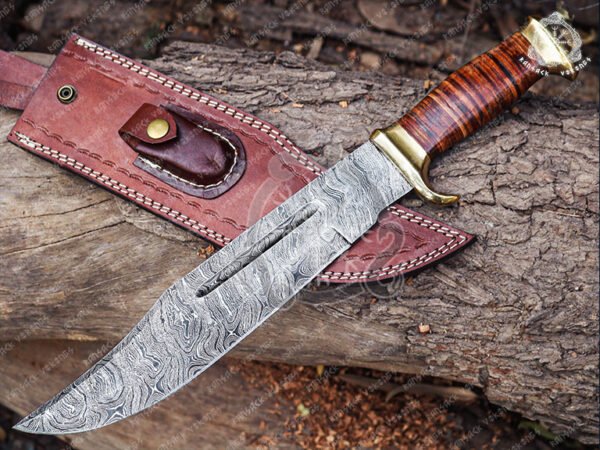
Hornreach Hand Forged Damascus Bowie Knife with Buffalo Horn and Stabilized Wood Handle and Brass Guard and Fiber Spacers | Hunting Bowie Gift | RK-394
Original price was: $149.00.$126.65Current price is: $126.65.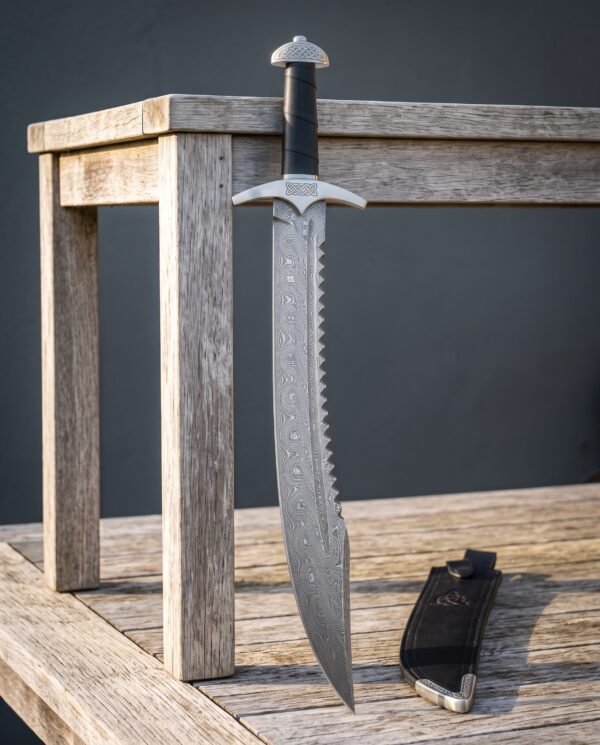
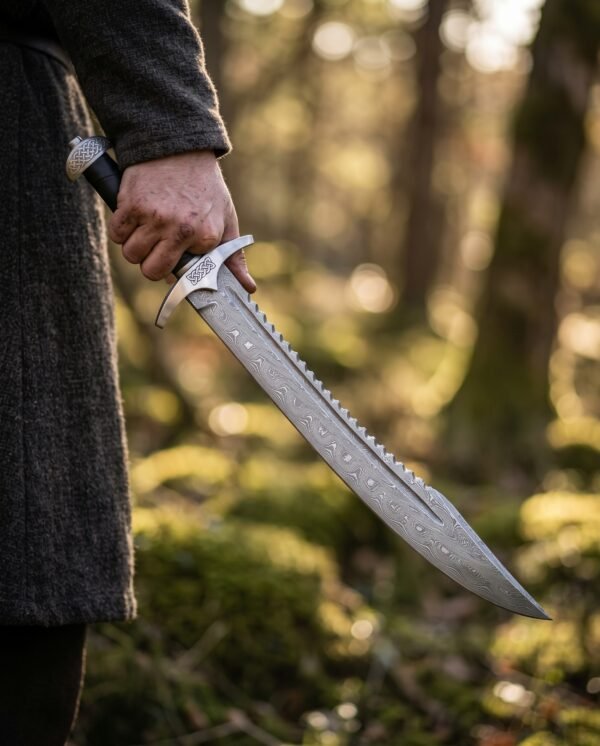
Sawthane Hand Forged Damascus Sawback Sword | 25 Inch Overall Length | Serrated Spine and Knotwork Guard with Black Leather Sheath | Collector Bowie Gift | RK-1923
Original price was: $349.00.$296.65Current price is: $296.65.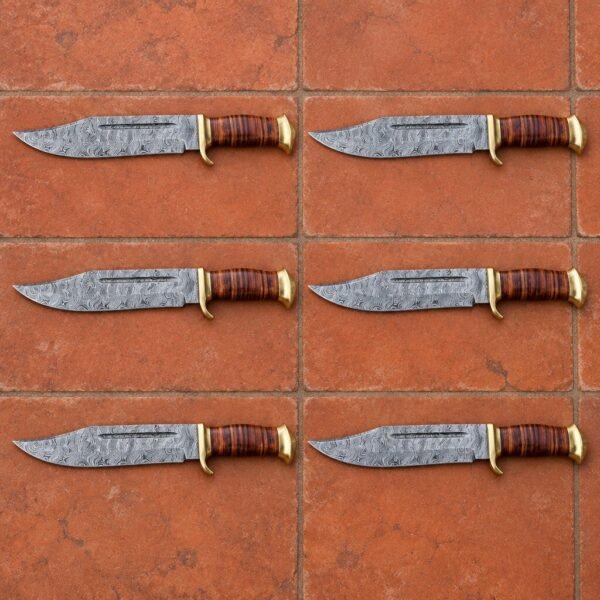
Set of 6 Hornreach Hand Forged Damascus Bowie Knife with Buffalo Horn | Groomsmen Gift Set | RK-394-S6
Original price was: $894.00.$759.90Current price is: $759.90.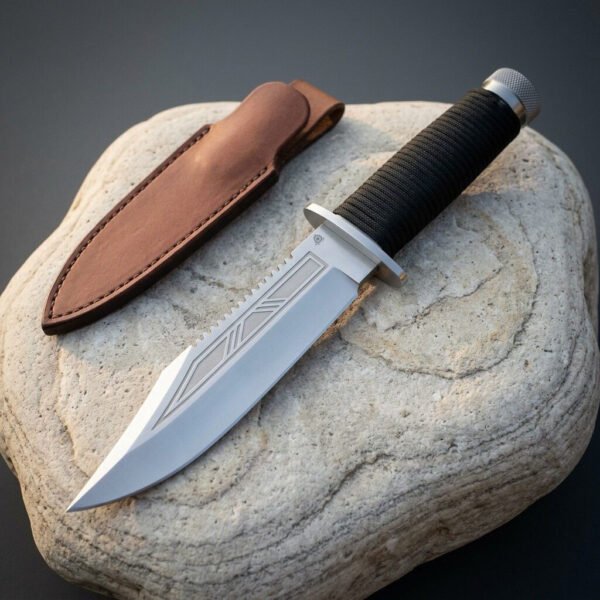
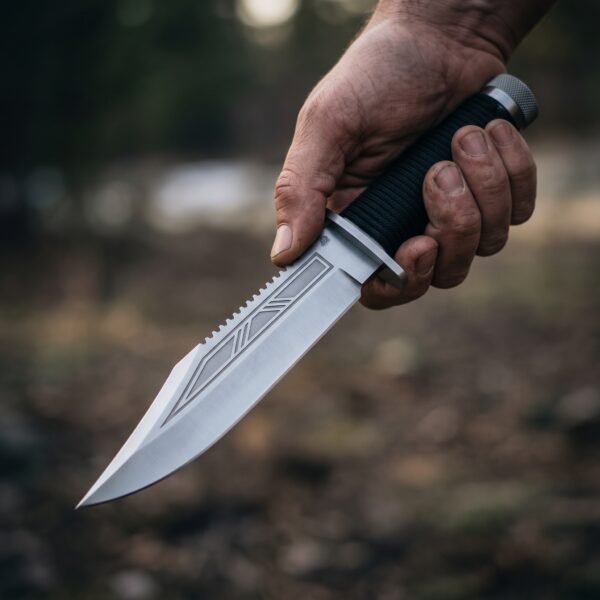
Sawcrest Hand Forged 1095 Steel Sawback Bowie Knife | Clip Point Blade with Etched Panel | Cord Wrapped Grip and Leather Sheath | Survival Gift | RK-1880
Original price was: $199.00.$169.15Current price is: $169.15.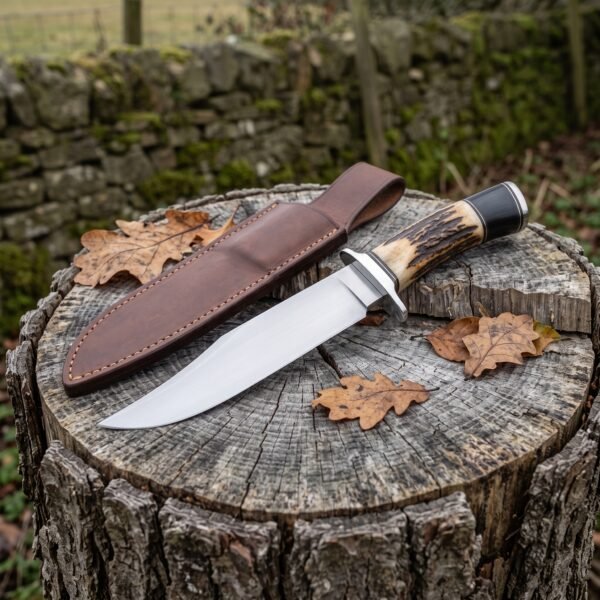
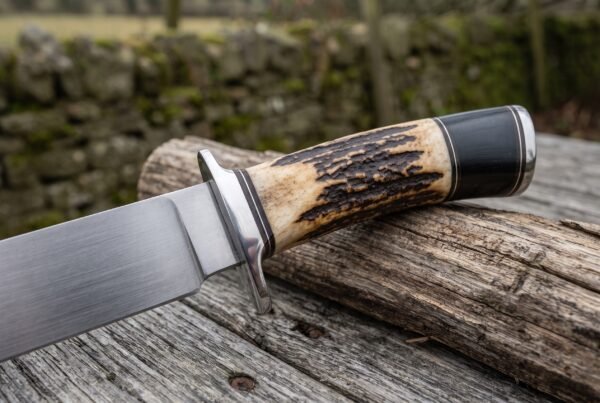
Blackguard Hand Forged 1095 High Carbon Steel Bowie Knife with Stag Horn and Black Micarta Handle and Steel Guard and Butt Cap | Hunting Bowie Gift | RK-574
Original price was: $199.00.$169.15Current price is: $169.15.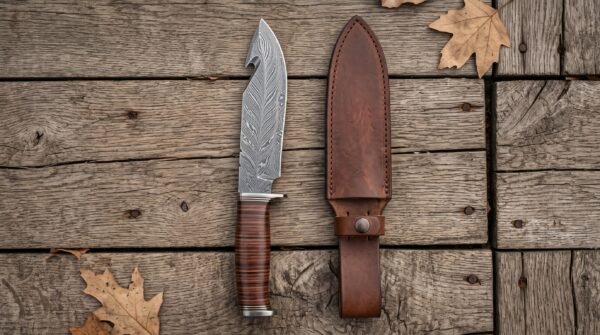
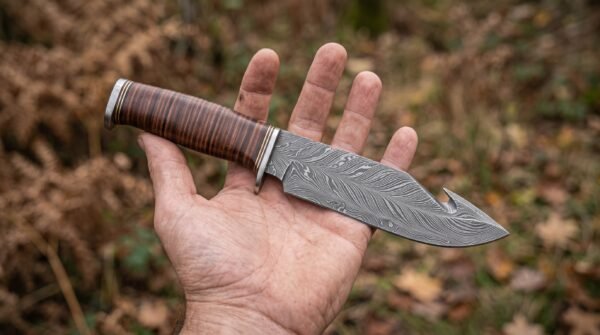
Gutwarden Hand Forged Damascus Gut Hook Hunting Knife with Stacked Leather Handle & Cowhide Leather Sheath | Deer Field Dressing Gift | RK-365
Original price was: $149.00.$126.65Current price is: $126.65.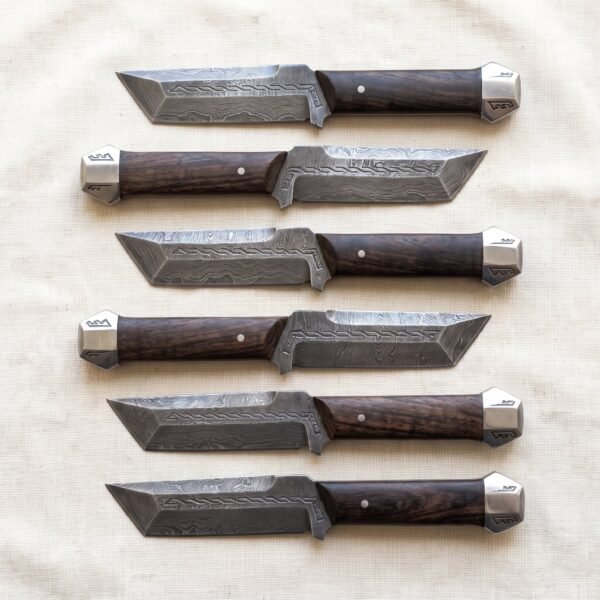
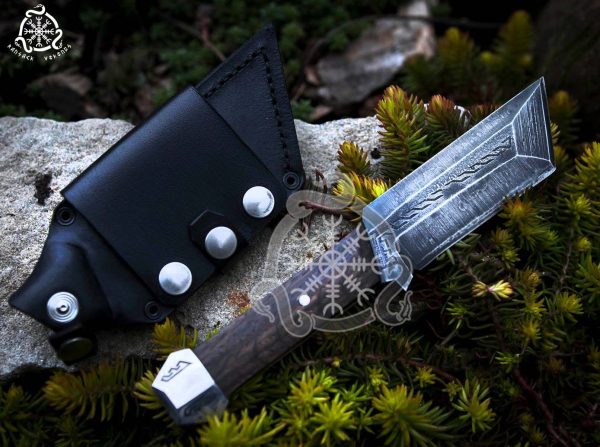
Set of 6 Woodsax Hand Forged High Carbon Steel Viking Seax Knife | Groomsmen Gift Set | RK-662-S6
Original price was: $1,074.00.$912.90Current price is: $912.90.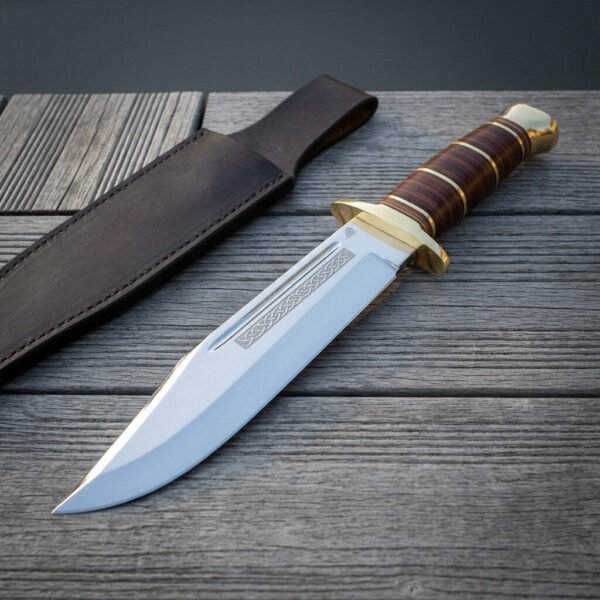
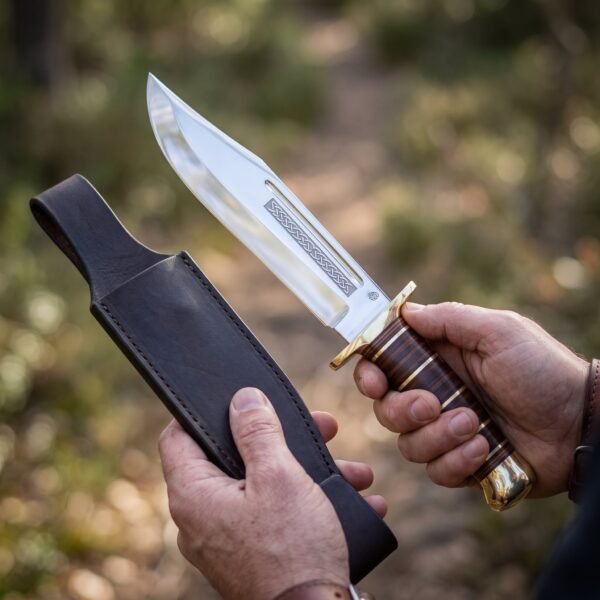
Brasscliff Hand Forged 1095 Steel Bowie Knife | 15 Inch Overall | Brass Double Guard and Stacked Leather Handle with Brown Leather Belt Sheath | Hunting Gift | RK-1896
Original price was: $239.00.$203.15Current price is: $203.15.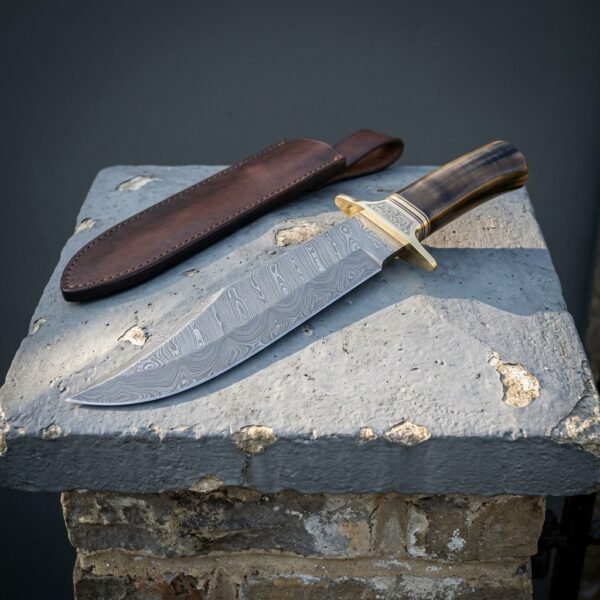
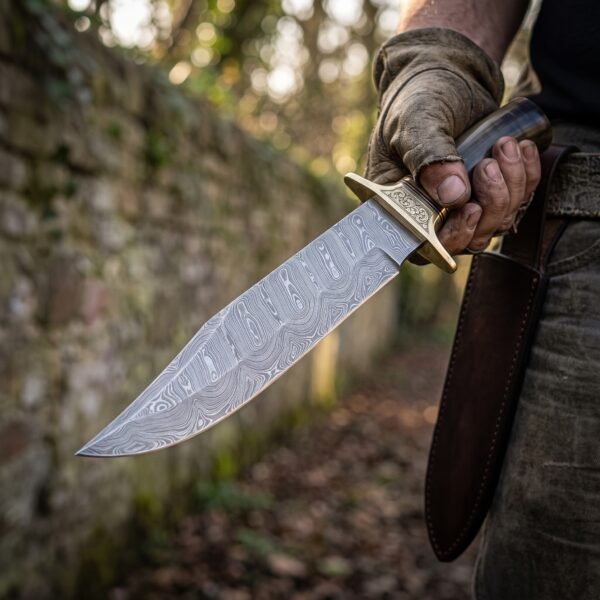
Ramwhorl Hand Forged Damascus Ram Horn Bowie Knife | 13 Inch Overall | Brass Guard and Engraved Bolster with Leather Sheath | Hunting Gift | RK-1853
Original price was: $289.00.$245.65Current price is: $245.65.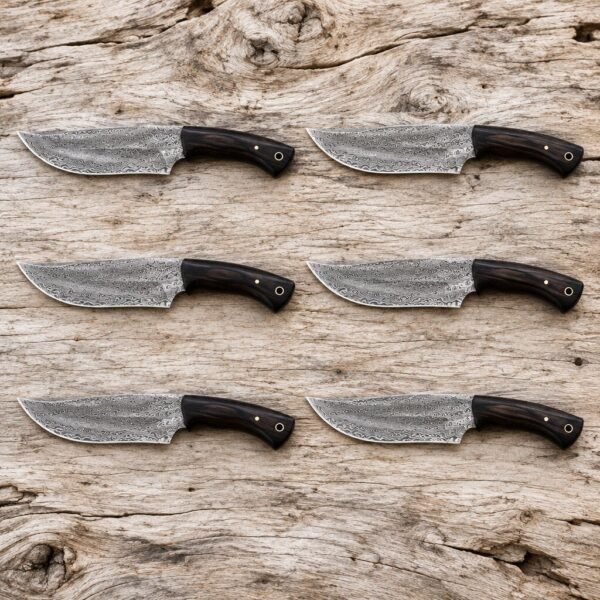

Set of 6 Wengehook Hand Forged Damascus Gut Hook Hunting Knife | Groomsmen Gift Set | RK-350-S6
Original price was: $714.00.$606.90Current price is: $606.90.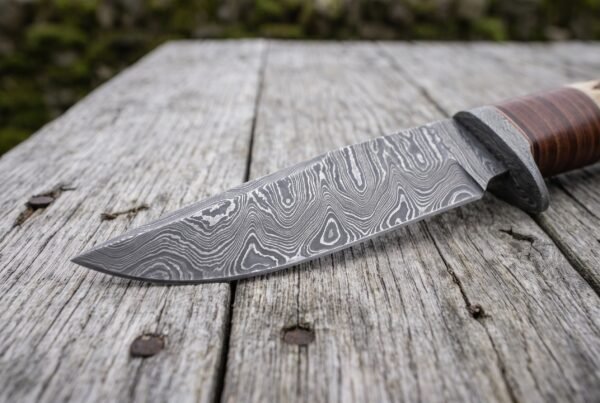
Staghide Hand Forged Damascus Bowie Knife with Stag Horn and Stacked Leather Handle and Damascus Guard & Leather Sheath | Hunting and Camping Bowie Gift | RK-385
Original price was: $149.00.$126.65Current price is: $126.65.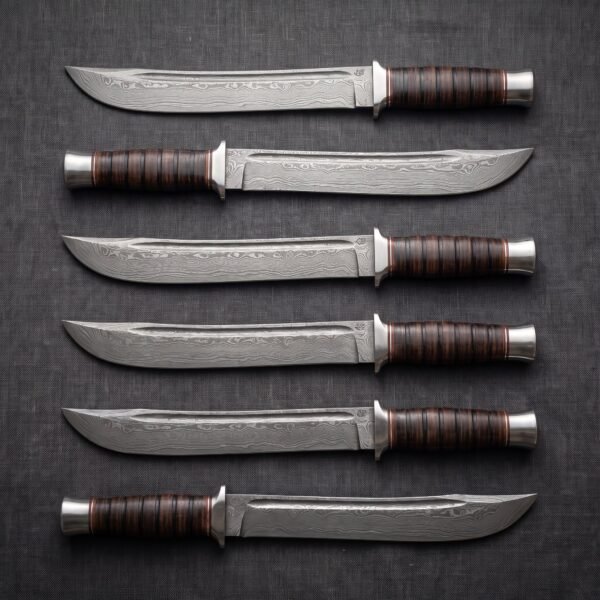
Set of 6 Emberstack Hand Forged Damascus Bowie Knife with Stacked Leather | Groomsmen Gift Set | RK-2178-S6
Original price was: $1,614.00.$1,371.90Current price is: $1,371.90.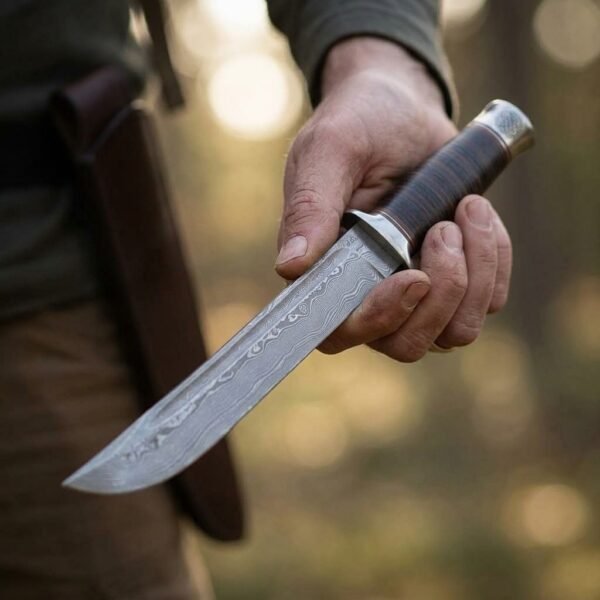
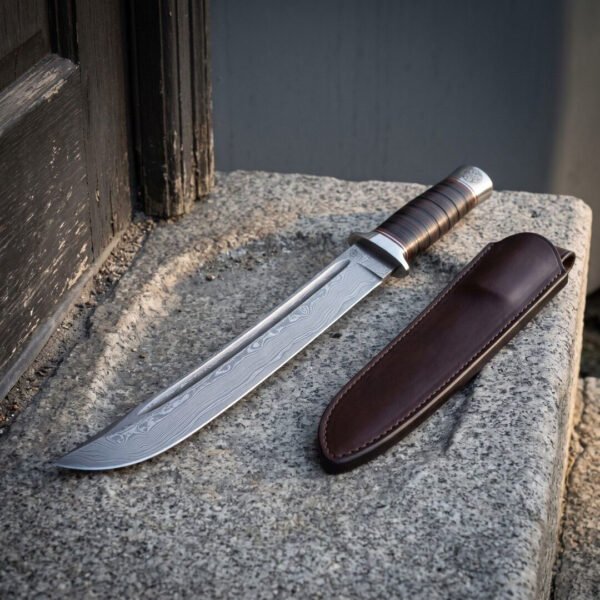
Emberstack Hand Forged Damascus Bowie Knife with Stacked Leather Washer Handle | Straight Back Fullered Blade | Engraved Steel Pommel Cap | Leather Sheath | Hunting Gift | RK-2178
Original price was: $269.00.$228.65Current price is: $228.65.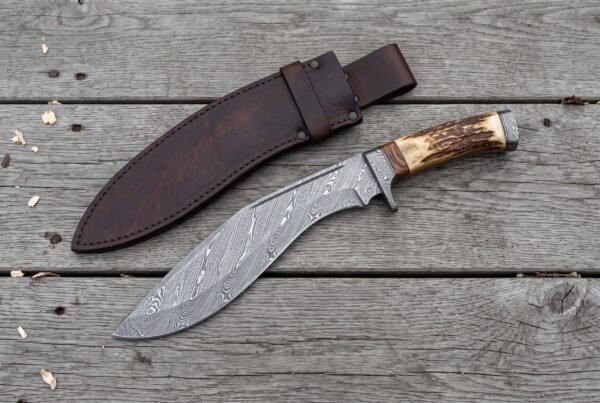
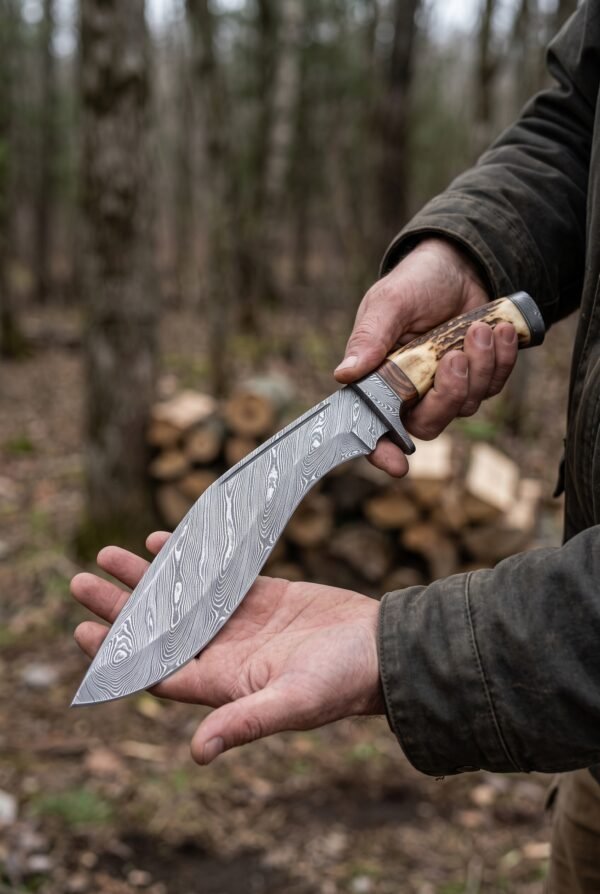
Gurkhastag Hand Forged Damascus Kukri Knife with Stag Horn and Wood Handle and Damascus Guard and Butt Cap & Leather Sheath | Machete Camping Gift | RK-561
Original price was: $159.00.$135.15Current price is: $135.15.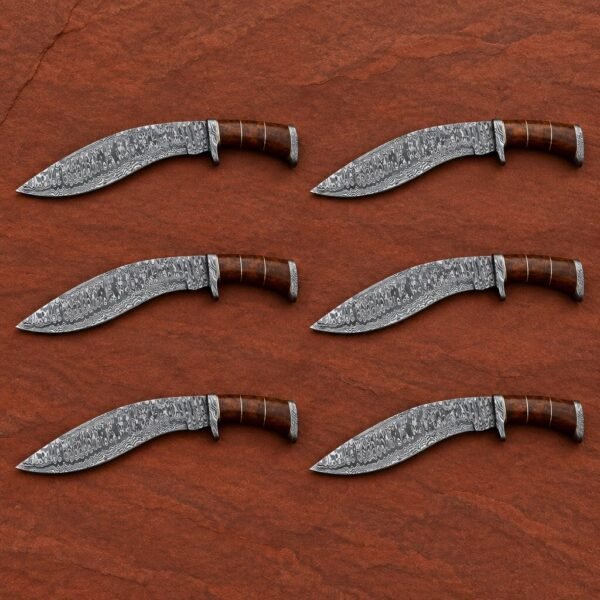

Set of 6 Gurkhastag Hand Forged Damascus Kukri Knife with Stag Horn | Groomsmen Gift Set | RK-561-S6
Original price was: $954.00.$810.90Current price is: $810.90.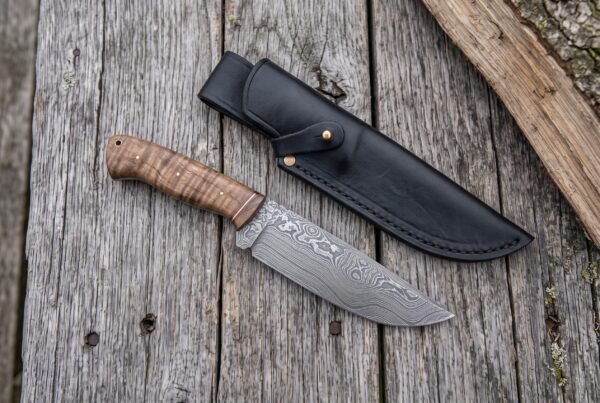
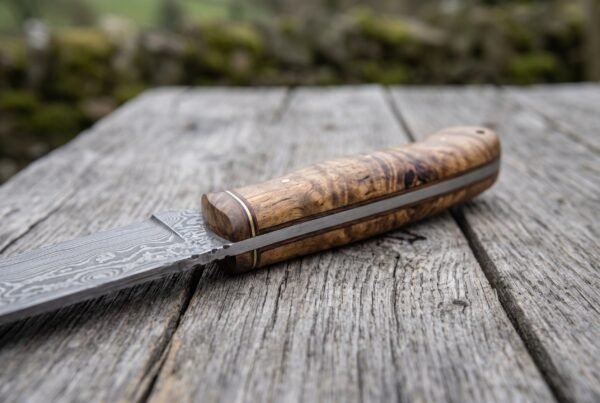
Vampire Hand Forged Damascus Skinner Knife with Stabilized Wood Handle and Fiber and Brass Spacers & Leather Sheath | Full Tang Hunting Camping and Anniversary Gift | RK-330
Original price was: $109.00.$92.65Current price is: $92.65.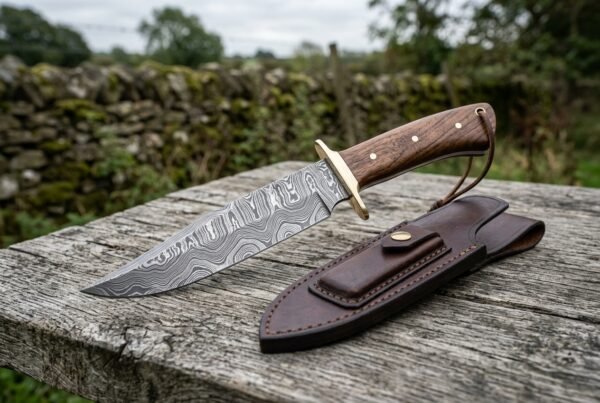
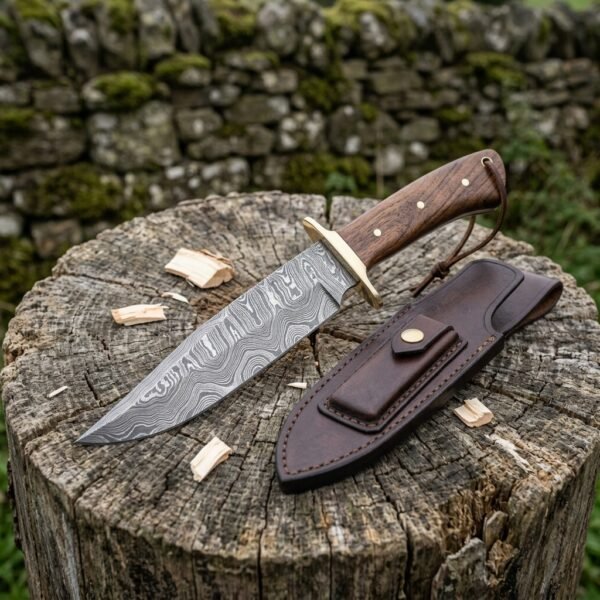
Timberedge Hand Forged Damascus Bowie Knife with Wood Handle & Leather Sheath | Hunting Camping and Fathers Day Gift | RK-492
Original price was: $169.00.$143.65Current price is: $143.65.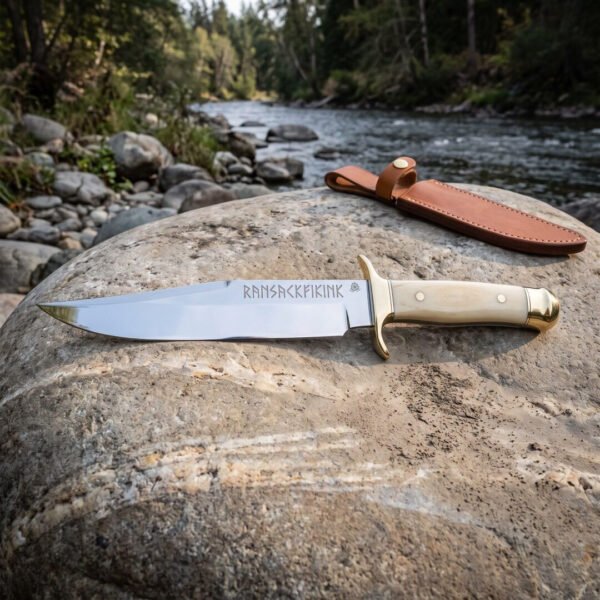
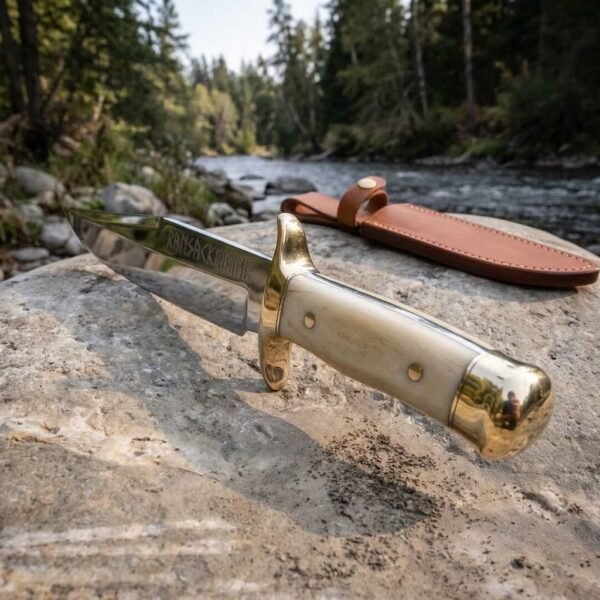
Bonecliff Hand Forged 1095 Carbon Steel Viking Bowie Knife with Bone Handle & Brass Guard | 13 Inch Overall | Clip Point Blade and Leather Belt Sheath | Hunting Gift | RK-1704
Original price was: $229.00.$194.65Current price is: $194.65.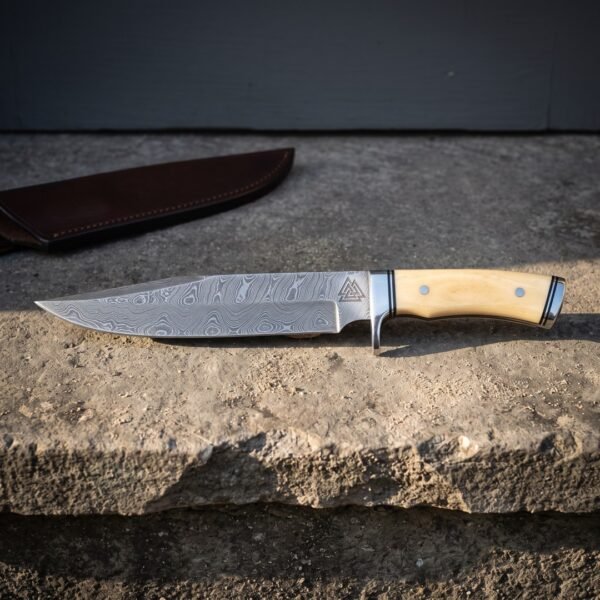
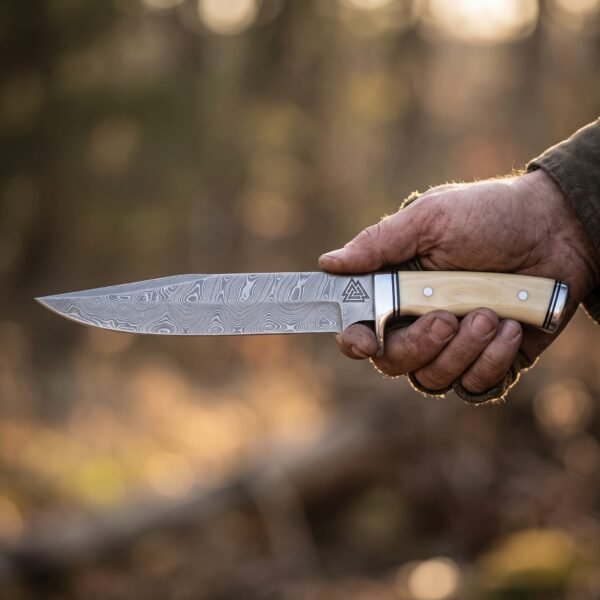
Bonecreek Hand Forged Damascus Bowie Knife with Bone Handle Scales and Valknut Etched Blade | 7.5 Inch Blade and 12 Inch Overall | Oxblood Leather Belt Sheath | Hunting Gift | RK-1718
Original price was: $289.00.$245.65Current price is: $245.65.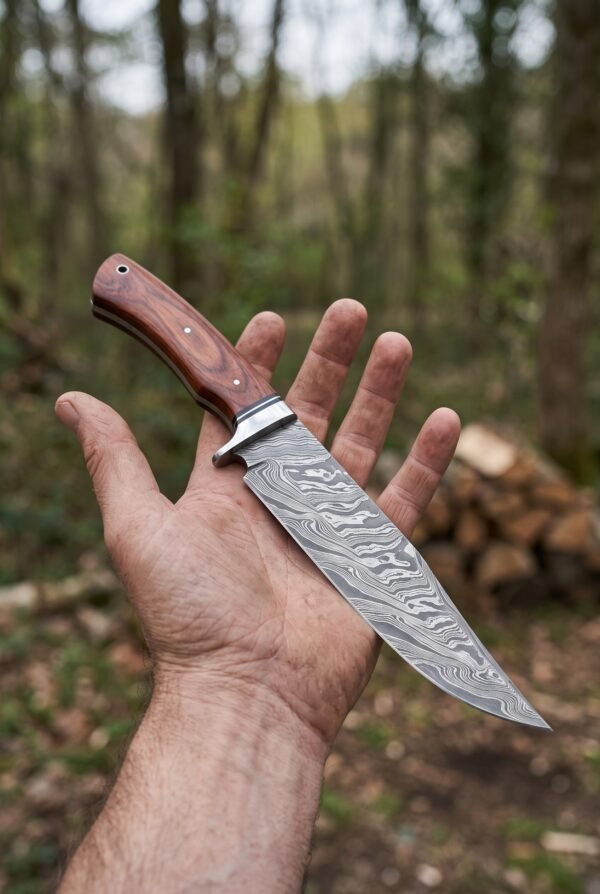
Longrose Hand Forged Damascus Bowie Knife with Rosewood Handle and Steel Bolster and Black Fiber Spacer & Leather Sheath | Hunting Bowie Collector Gift | RK-473
Original price was: $209.00.$177.65Current price is: $177.65.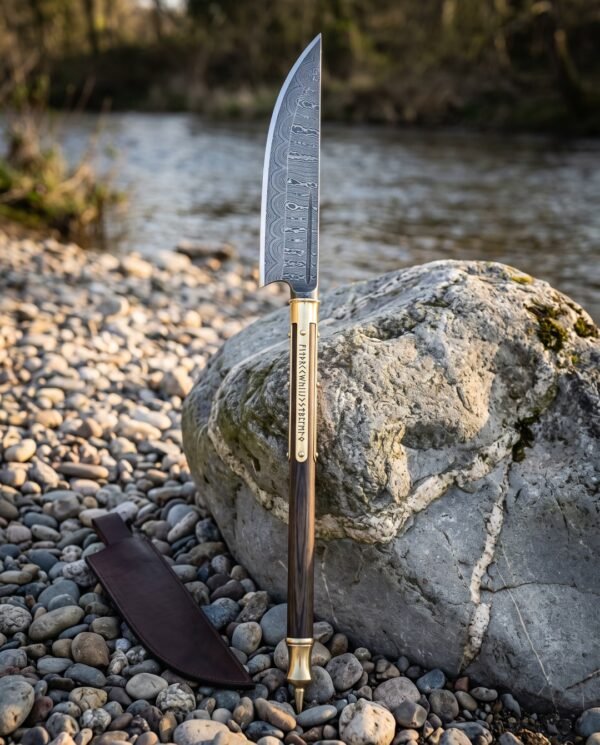
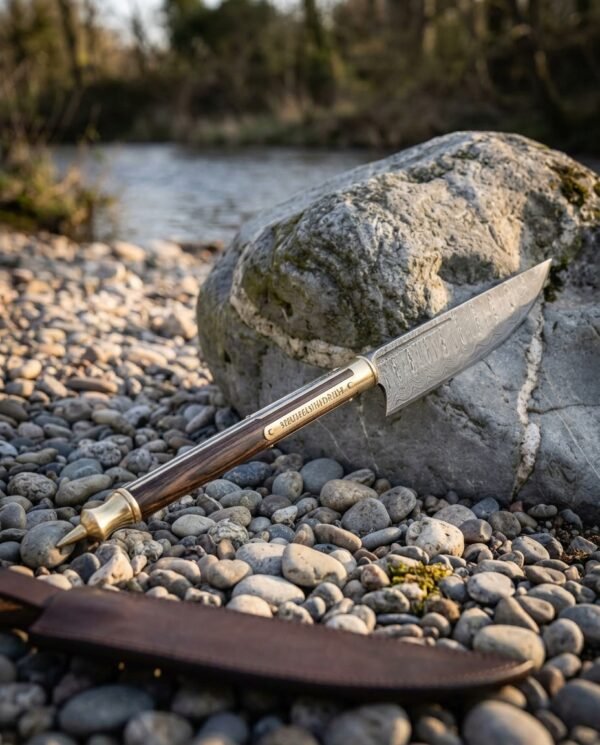
Riverclaw Hand Forged Damascus Viking Bowie Knife | 14 Inch Overall with a 9 Inch Blade | Rosewood Handle, Rune Cut Brass Bolster and Leather Sheath | Hunting Camp Gift | RK-1736
Original price was: $289.00.$245.65Current price is: $245.65.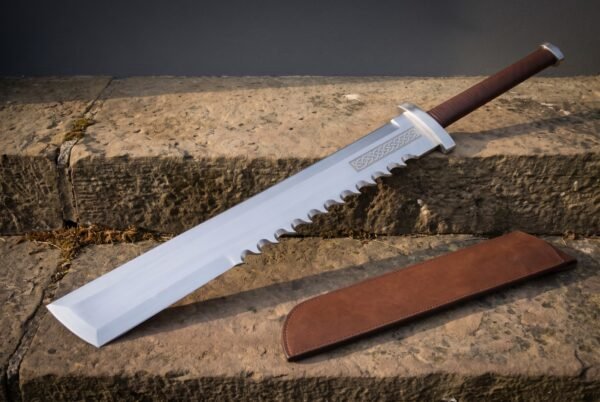
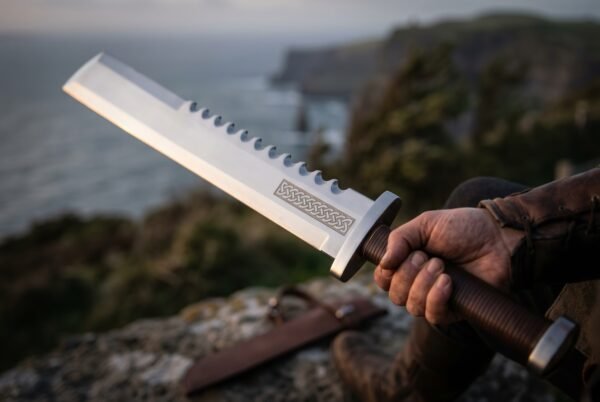
Sawmarch Hand Forged 1095 Steel Sawback Machete | 26 Inch Overall | Etched Knotwork Panel and Leather Wrapped Grip with Brown Leather Sheath | Bushcraft Camp Gift | RK-1938
Original price was: $269.00.$228.65Current price is: $228.65.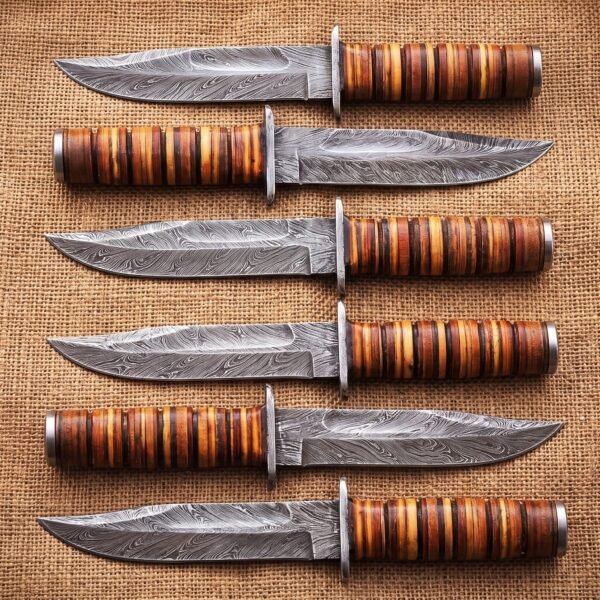

Set of 6 Gutwarden Hand Forged Damascus Gut Hook Hunting Knife | Groomsmen Gift Set | RK-365-S6
Original price was: $894.00.$759.90Current price is: $759.90.What the clip point actually does
Take a straight backed knife and you have a strong spine, a heavy tip and a point that sits high above the centre of the blade. It will chop and it will pry, and it will be awkward at anything needing the tip. Cut a long concave scoop out of the top of that spine and two things change. The point drops toward the centreline, so it goes where your hand aims it, and the steel behind the point gets thinner, so it enters material instead of pushing it aside.
That scoop is the clip, and the knife it defines is the bowie. Below it the edge stays deep and curved, giving a long sweeping belly that keeps contact with a hide or a rope through the whole stroke. On several blades here the clip itself is sharpened into a false edge, turning the last few inches of spine into a second cutting surface.
The rest of the pattern follows the size. A guard exists because a knife this heavy will slide forward under a hard thrust, and a stopped hand is better than a cut one. A pommel or butt cap exists because the tang has to be held under compression at the back end, and because a bowie gets used as a hammer more often than anyone admits. The handle is long, usually around 5 inches, because the blade in front of it needs a counterweight. The shape settled in the 1830s, and almost every large sheath knife made since is either a bowie or an argument with one.
The bowies in this collection
Twenty two pieces are on this page. They separate by steel, by size and by what has been done to the spine.
Bowies in hand forged Damascus
Most of the range. The billet is 1095 high carbon and 15N20 nickel bearing steel, forge welded in alternating layers, drawn out and folded, then ground and acid etched so the layers read as light and dark bands. Hardness is 58 to 60 HRC. On a blade this long there is a lot of flat for the pattern to show on, and raindrop, ladder and flowing figures all appear. Prices start at 99 dollars for a 6 inch blade and run to 349 dollars for the longest piece here.
Bowies in plain 1095 high carbon
Four pieces carry a plain high carbon blade at 54 to 58 HRC, finished bright, satin or mirror polished. It comes back on a stone faster than the Damascus specification and is more forgiving if you hit something you should not have. One of them, a 15 inch bowie with a brass double quillon and a stacked leather grip, lists a blade width of one and three quarter inches at the widest point of the belly, which tells you what kind of knife it is.
Sawback blades
Three pieces carry cut teeth along the rear half of the spine. A sawback will not cut a board and was never meant to. It notches, strips bark and saws through cord at a pinch. Two of these are knives at 12 and 14 inches overall, and one is a 26 inch machete in plain 1095 with a leather wrapped grip and an etched knotwork panel.
The larger pieces
Two blades run past the length of a normal bowie. A 25 inch Damascus sawback with a knotwork guard sits at 349 dollars and is closer to a short sword than a belt knife. A 26 inch 1095 machete at 269 dollars is a camp and brush tool. Both wear the bowie clip point, which is why they live here.
Hunting variants
Three gut hook knives sit alongside the straight bowies, with blades from 4.6 to 7 inches, in wenge wood, buffalo horn with ram horn, and stacked leather. The hook on the spine opens a hide from the inside without cutting into what is underneath. There is also a Damascus skinner with a stabilised wood handle and a Damascus kukri sharing the same fittings as the bowies.
Sizes, steel and fittings across the range
Every figure below comes from the specification panel of a piece on this page. These are forged and ground by hand, so read the numbers as what to expect rather than a guarantee to the millimetre. A blank means the product page does not list that figure.
| Handle and fittings | Blade length | Overall length | Steel and hardness | Sheath | Price |
|---|---|---|---|---|---|
| Buffalo horn and ram horn, turquoise and brass spacers | 4.6 in | 8.7 in | Damascus at 58 to 60 HRC | Included | 129 dollars |
| Wenge wood, gut hook | 5 in | 9 in | Damascus at 58 to 60 HRC | Included | 119 dollars |
| Stag horn and stacked leather, Damascus bolster | 6 in | 10.5 in | Damascus at 58 to 60 HRC | Included | 99 dollars |
| Dyed camel bone | 6 in | 11 in | Damascus at 58 to 60 HRC | Included | 159 dollars |
| Buffalo horn and stabilised wood, brass bolster | 7 in | 12 in | Damascus at 58 to 60 HRC | Included | 149 dollars |
| Black cord wrap, steel guard cut with Norse interlace | 7 in | 12 in | Damascus at 58 to 60 HRC | Included | 299 dollars |
| Pale bone scales, brass guard and butt cap | 8 in | 13 in | 1095 at 54 to 58 HRC | Included | 229 dollars |
| Banded ram horn, brass double guard and cut bolster | 8 in | 13 in | Damascus at 58 to 60 HRC | Included | 289 dollars |
| Rosewood on a through tang, brass bolster and pommel cap | 9 in | 14 in | Damascus at 58 to 60 HRC | Included | 289 dollars |
| Black cord wrap, steel double guard, knurled steel pommel | 9 in | 14 in | 1095, sawback spine | Included | 199 dollars |
| Pale bone scales over dark liners, steel guard | 10 in | 15 in | Damascus at 58 to 60 HRC | Included | 289 dollars |
| Stacked leather with brass spacers, brass double quillon | 10 in | 15 in | 1095 at 54 to 58 HRC | Included | 239 dollars |
| Leather wrapped grip, sawback machete | Not listed | 26 in | 1095 at 54 to 58 HRC | Included | 269 dollars |
Overall length on a fixed blade is measured from the point to the back of the pommel, so a 13 inch bowie needs a sheath of roughly that length hanging off a belt. Measure your own torso before you buy a 15 inch knife and expect to wear it comfortably while sitting down.
Sizing and fit
Blade length is the first decision. Under 6 inches is a hunting knife with a bowie profile, and it goes almost anywhere. Six to eight inches is the working middle, big enough to chop light wood and still controllable at the tip. Eight to ten inches is a full sized bowie, which is where the pattern earns its reputation and stops being convenient.
Handle length matters more than people expect. The pieces here run around 5 inches of grip, which fills an adult hand with the little finger on the butt. Stacked leather compresses very slightly under a hard grip and is the most comfortable over a long session. Cord wrap is grippiest when wet and least kind to soft hands.
Balance is the last thing to check. A bowie with a heavy brass guard and a solid butt cap balances near the guard and feels alive in the hand. Lighter fittings push the balance forward and chop harder. Neither is better and both are here.
Fixed blade carry in the United States is governed by state law and very often by city ordinance on top of it, and blade length is the usual limit. Read our state by state summary of knife laws before you wear anything of this size, and treat it as a starting point rather than legal advice.
Steel and hardness
Two house specifications run through Ransack Viking blades. Plain 1095 high carbon is hardened to 54 to 58 HRC. Damascus of 1095 and 15N20 is forge welded, acid etched and hardened to 58 to 60 HRC. Both appear on this page and the choice between them is genuine rather than cosmetic.
Plain 1095 at the lower hardness bends before it breaks, takes a screaming edge quickly and loses it a little sooner. That is the right trade on a knife you will use hard, and it is why the specification survived so long on field knives. Damascus at 58 to 60 HRC holds an edge longer and is more willing to chip if you twist it in a bind. On a blade this long, treat that as a reason to be careful about prying rather than a reason to avoid the steel.
The 15N20 in the Damascus mix contains nickel, which resists the acid etch and produces the bright bands. It does not make the blade stainless. Neither specification is stainless and both will rust if you let them. If you want the longer version, read Damascus versus high carbon steel and the steel and hardness page.
Handles, guards and tangs
Every bowie here is full tang or through tang. On the full tang pieces the steel runs the whole outline of the handle with scales pinned either side. On the through tang pieces a narrower tang runs through stacked material and is compressed under a peened pommel or a threaded cap. What matters is that the steel goes all the way to the back, and here it always does. Our guide to full tang versus partial tang explains why that is worth checking on any big knife.
Stacked leather washers are the traditional bowie handle. They are turned and sanded after compression, take hand oil and darken over years, and on one piece here run in alternating light and dark bands because the washers came from different hides. Horn and bone are dense, polish well and shrink in dry heat, so keep them away from radiators and hot cars. Rosewood is oily and looks after itself. Wenge is dark and very hard.
Guards are brass or steel. Brass darkens into a warm brown over months and comes back with a metal polish if that bothers you. Several guards here are double quillon, projecting both forward toward the edge and back toward the hand, and several are cut with scrollwork or Norse interlace.
Care and storage
Both steels here are carbon steel and both will rust. Wipe the blade dry after use, particularly after anything acidic or salty, and keep a thin film of mineral, camellia or food safe oil on it. Grey patina is stable and does no harm. Orange spotting is early rust and lifts with fine abrasive and oil before it pits.
Store the knife out of the sheath if it is going to sit for months. Leather is tanned with salts and holds moisture against steel, which is the most common reason a well kept blade still ends up marked.
Sharpen on a stone rather than a powered wheel, which will overheat a thin edge and pull the temper out of it. A 1000 grit stone restores a working edge on either steel. On a long belly, sweep the blade so the contact point travels along the curve instead of pushing it straight across. The knife care guide and the Damascus care page cover the detail.
Engraving and gifting
A bowie has more flat than almost any other knife, which makes it the easiest thing in the catalogue to engrave. Names and dates go on the blade flat or along the guard. Several pieces here already carry cut work: an Elder Futhark line across the flat, a Valknut at the ricasso, a framed band of Celtic interlace above the bolster, a circular knot medallion in the pommel cap.
Text engraving is 19 dollars, a symbol is 39 dollars and a family crest is 49 dollars, cut in the United States after the piece arrives. Elder Futhark is a phonetic alphabet rather than a code, so a name is transliterated by sound and there is no rune for the letter C. See the symbol guide and the engraving page before you decide.
Engraving is permanent and an engraved piece cannot be returned, so send the exact spelling and read it twice before you order.
Where these come from and how they ship
Ransack Viking is a US company based in Chicago, Illinois. The pieces are handmade in the Czech Republic, then imported, inspected and shipped from Chicago. Engraving is done in the US after arrival.
Because every billet is drawn out by hand, small differences in etch figure, handle colour and the exact line of a clip between two bowies of the same name are normal. Two people made them on two different days. Every knife here ships in a fitted leather sheath unless the product page says otherwise. Timelines are on the shipping information page and returns on the returns and warranty policy.
How to choose
Decide first whether this is a knife you will carry or a knife you will keep. A carried bowie wants 6 to 8 inches of blade, a stacked leather or cord handle that does not care about weather, and plain 1095 so sharpening is quick. A kept bowie can go to 10 inches, take horn or bone scales, and carry the etched Damascus and cut brass that make it worth looking at. Then decide what the spine does: plain for prying leverage, false edge for a knife used point first, sawback if you want the notching. Pick the handle for how it feels rather than how it photographs.
Browse related categories
- Hunting knives for field dressing and skinning
- Damascus knives in forge welded 1095 and 15N20
- Skinner knives with deep sweeping bellies
- Viking seax knives, the single edged belt blade
- Kukri knives, the forward angled chopper
- Double edged daggers and Norse dagger shapes
- Folding pocket knives for everyday carry
- Leather sheaths and replacement scabbards
Guides worth reading first
- How to pick the best bowie knife
- Seax versus bowie, two big single edged blades compared
- Knife blade shapes and what each one is good at
- What a gut hook is for and when to use one
- How to sharpen a knife with a whetstone
Frequently asked questions
What size bowie should I buy?
Six to eight inches of blade for a knife you will actually carry and use. Under six inches is a hunting knife with a bowie profile. Eight to ten inches is a full sized bowie, which is more impressive and less convenient, and worth it only if you know why you want the length.
What is the clip on a bowie for?
It lowers the point onto the centreline so the knife goes where you aim it, and it thins the steel behind the tip so the point enters material rather than pushing it aside. Several blades here have the clip sharpened into a false edge, which gives a second cutting surface on the backhand.
Do these bowies come with a sheath?
Almost all of them ship with a fitted leather belt sheath, and the product page states it in the specification panel. Sheaths are stitched cowhide, stiff for the first few weeks, and settle to the shape of the blade over a month of wear.
Which steel should I pick, 1095 or Damascus?
Plain 1095 at 54 to 58 HRC if the knife will be used hard and sharpened often, because it comes back on a stone quickly and is forgiving. Damascus at 58 to 60 HRC for the pattern and slightly longer edge retention on a piece that will be handled and cleaned rather than abused. Neither is stainless and both need oil.
Are these full tang?
Yes. Every bowie on this page is either full tang, with the steel running the whole outline of the handle under pinned scales, or through tang, with the tang compressed under a peened pommel or a threaded cap. There are no glued in stub tangs here.
What is a sawback spine actually good for?
Notching wood, stripping bark, biting into green limbs and cutting cord or bone at a pinch. It will not cut a board and it was never meant to. Three pieces on this page carry cut teeth along the rear half of the spine.
Can a bowie be engraved?
Yes, and it is the easiest shape in the catalogue to engrave because there is so much flat. Text is 19 dollars, a symbol is 39 dollars and a family crest is 49 dollars, cut in the United States after the piece arrives. Engraved pieces cannot be returned, so check your spelling.
Where are these bowie knives made?
They are handmade in the Czech Republic, then imported, inspected and shipped by Ransack Viking from Chicago, Illinois. Engraving is done in the US after arrival.
Featured pieces
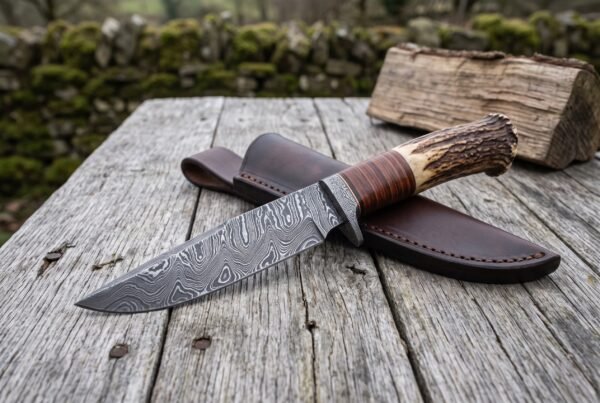 Staghide Hand Forged Damascus Bowie Knife with Stag Horn and Stacked Leather Handle and Damascus Guard & Leather Sheath
Original price was: $149.00.$126.65Current price is: $126.65.
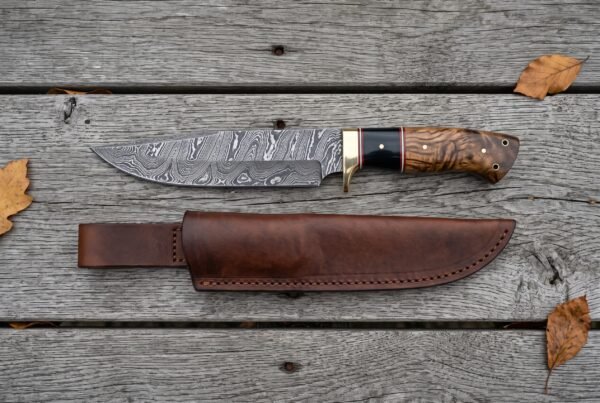 Hornreach Hand Forged Damascus Bowie Knife with Buffalo Horn and Stabilized Wood Handle and Brass Guard and Fiber Spacers
Original price was: $149.00.$126.65Current price is: $126.65.
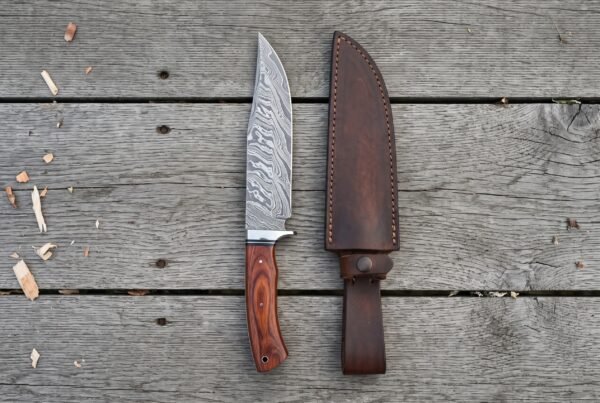 Longrose Hand Forged Damascus Bowie Knife with Rosewood Handle and Steel Bolster and Black Fiber Spacer & Leather Sheath
Original price was: $209.00.$177.65Current price is: $177.65.
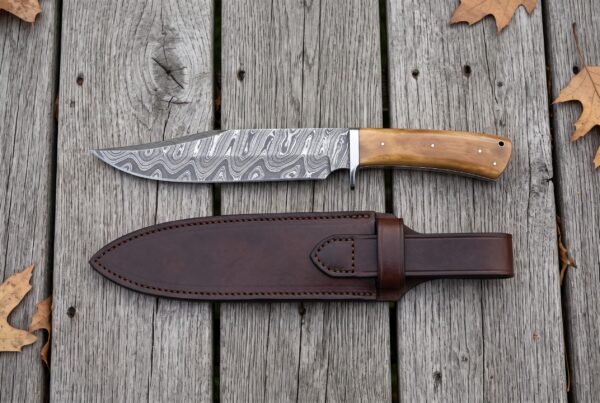 Sandbone Hand Forged Damascus Bowie Knife with Dyed Camel Bone Handle & Leather Sheath
Original price was: $179.00.$152.15Current price is: $152.15.