
A kite shield is the tall board the Normans carried, rounded across the top and drawn down into a long point. The shape exists because of the horse. A round shield covers a man on foot well enough and leaves his left leg bare in the saddle, so somebody pulled the bottom into a tail and the leg was covered without adding width that would foul the reins. On foot the same shield becomes a wall you can crouch behind, which is why infantry kept it long after the cavalry moved on.
The boards here run 34 to 40 inches tall and 20 to 24 inches across the shoulder, in planked or laminated wood about 12 mm thick, canvas or linen faced, hand painted and bound at the rim with riveted rawhide, at roughly 9 to 11 lb complete. Two heater shields at 26 and 30 inches sit alongside them, with two curved Roman scutums, a dished steel round at 20 inches, and a conical boss supplied with a full strapping kit for anyone building a board of their own.
If it is going on a wall, buy the tallest one the wall will take.
Free US shipping
On most pieces. Heavier and oversized ones carry a flat charge.
Hand Forged
Heated, hammered and ground by hand.
Engraving available
Names, dates or Norse runes on most pieces.
Ships from Chicago
Inspected and dispatched from our Chicago warehouse. No import duty, no customs delay on US orders.
Kite Shields & Bucklers
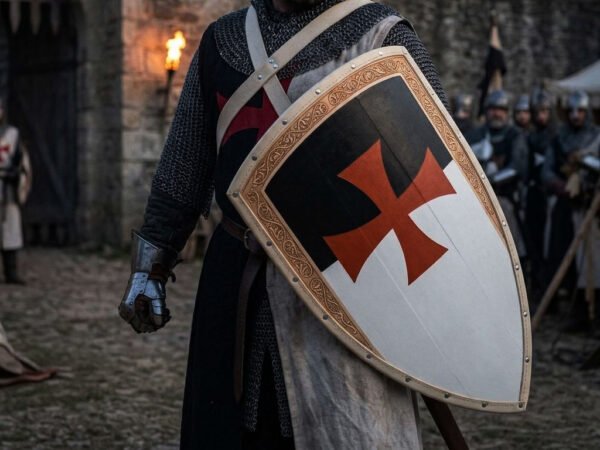
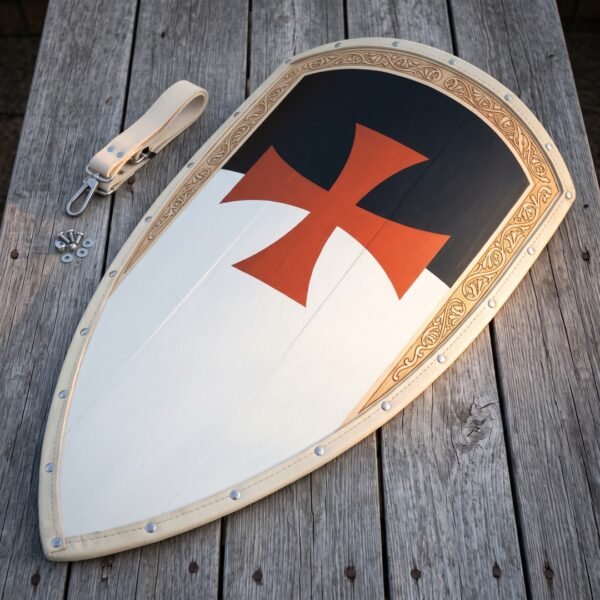
Crossmarch Hand Made Wooden Templar Kite Shield | Black and White Field | Red Cross Pattee and Tooled Leather Border | Crusader Reenactment Gift | RK-1439
Original price was: $419.00.$335.20Current price is: $335.20.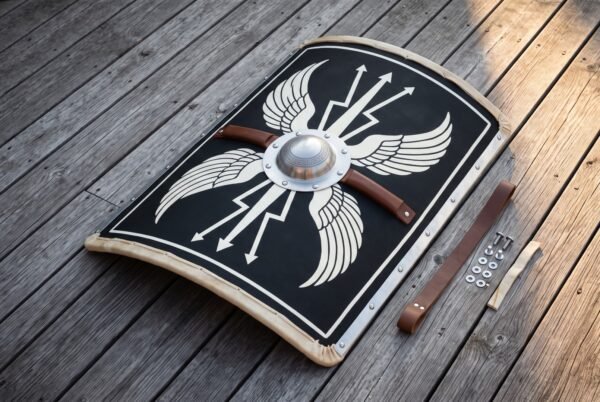

Legionwall Hand Made Curved Roman Scutum Shield | 37 Inch Tall | Steel Boss, Painted Wings and Rawhide Edge with Fitting Kit | Legionary Reenactment Gift | RK-1456
Original price was: $449.00.$359.20Current price is: $359.20.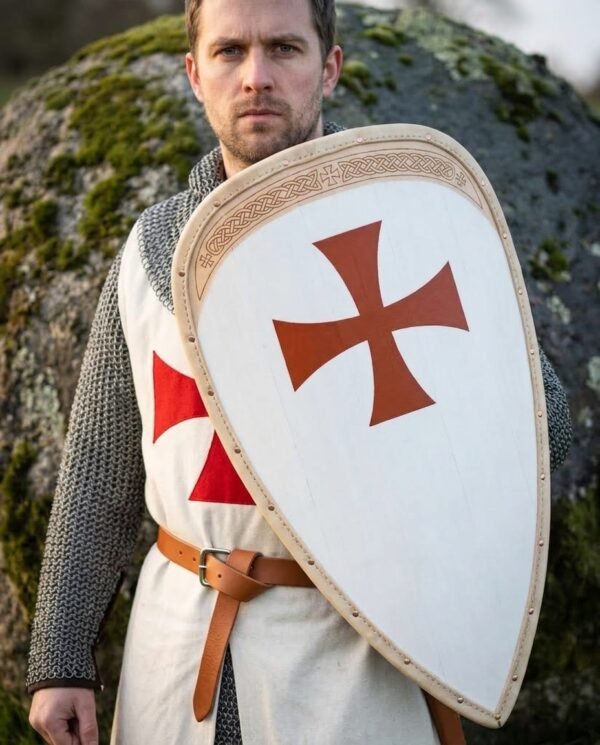
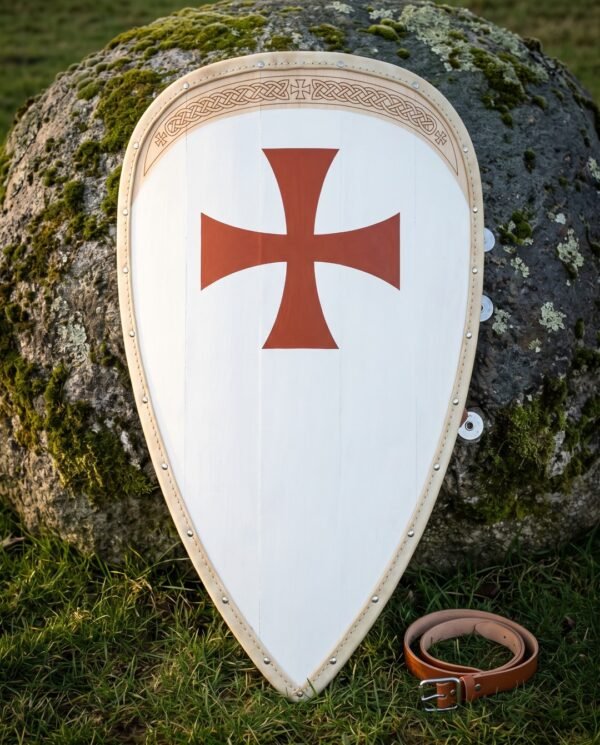
Palecross Hand Made Wooden Templar Kite Shield | Rawhide Bound Edge | Red Cross Pattee on a White Field | Crusader Reenactment Gift | RK-1440
Original price was: $389.00.$311.20Current price is: $311.20.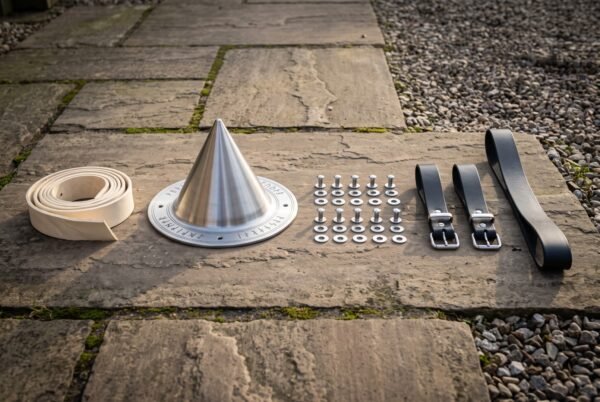
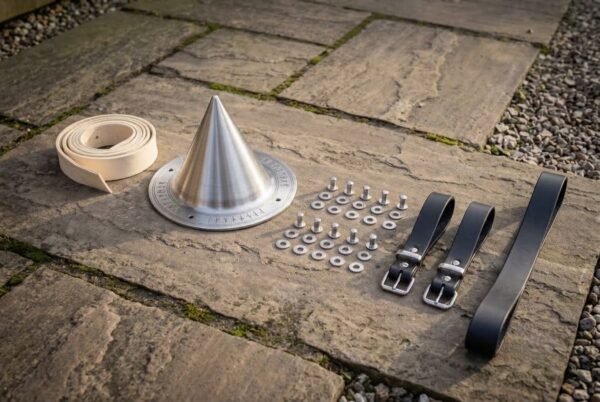
Spikerim Hand Forged Steel Conical Viking Shield Boss and Fitting Kit with Rune Ring Engraving & Black Leather Straps | Shield Building Gift | RK-1544
Original price was: $179.00.$143.20Current price is: $143.20.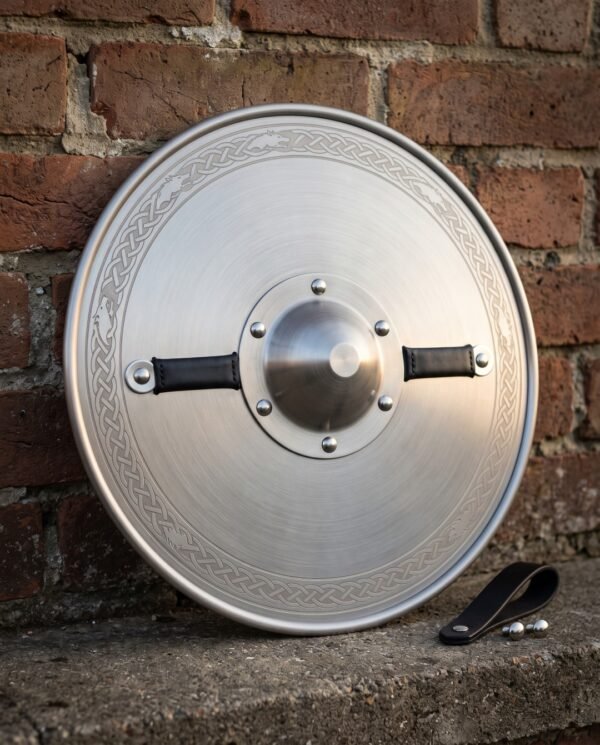
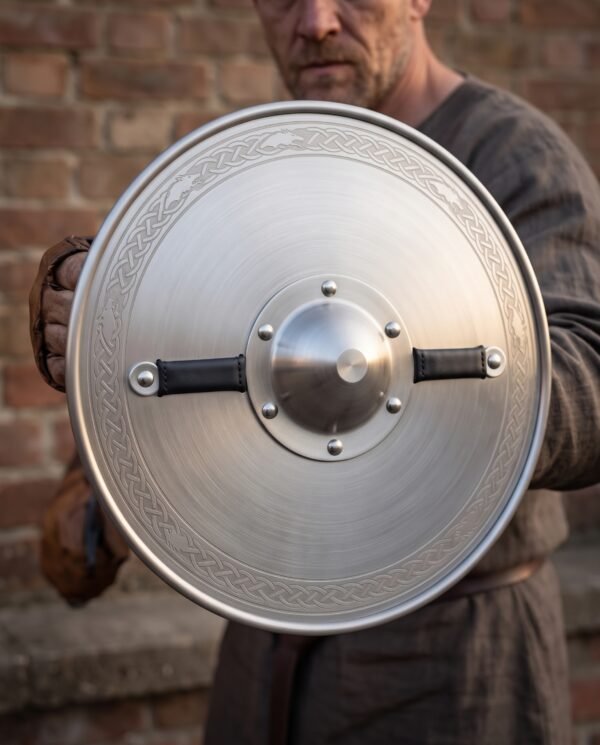
Silverward Hand Forged Steel Round Shield | 20 Inch Dished Face | Etched Knotwork Border with Riveted Centre Boss | Norse Display Gift | RK-1522
Original price was: $449.00.$359.20Current price is: $359.20.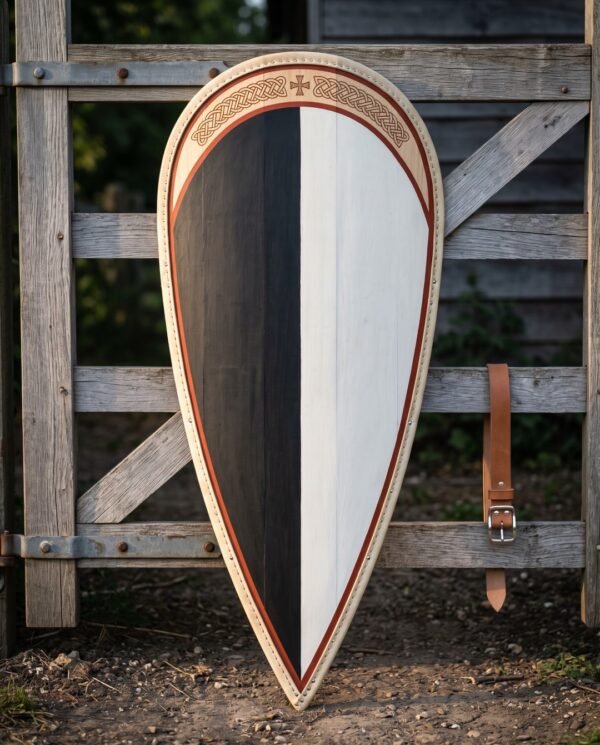
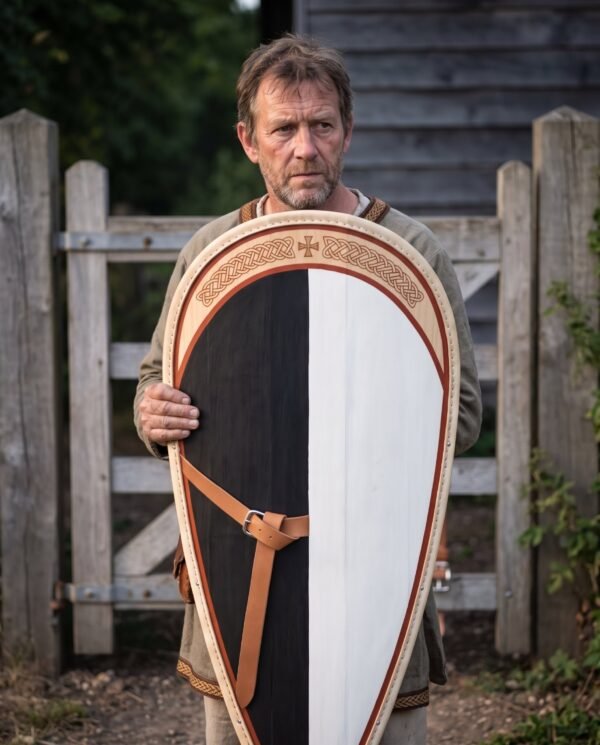
Palewing Hand Made Norman Kite Shield | 40 Inch Height | Black and White Per Pale with Engraved Knotwork Panel and Riveted Rawhide Rim | Medieval Reenactment Gift | RK-1561
Original price was: $399.00.$319.20Current price is: $319.20.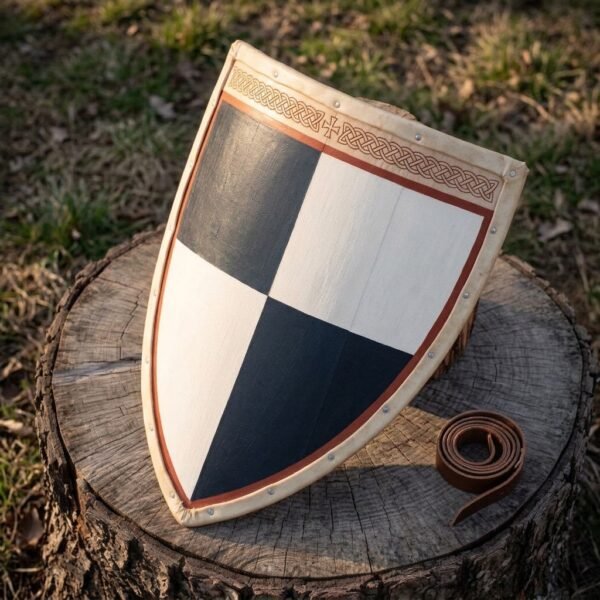
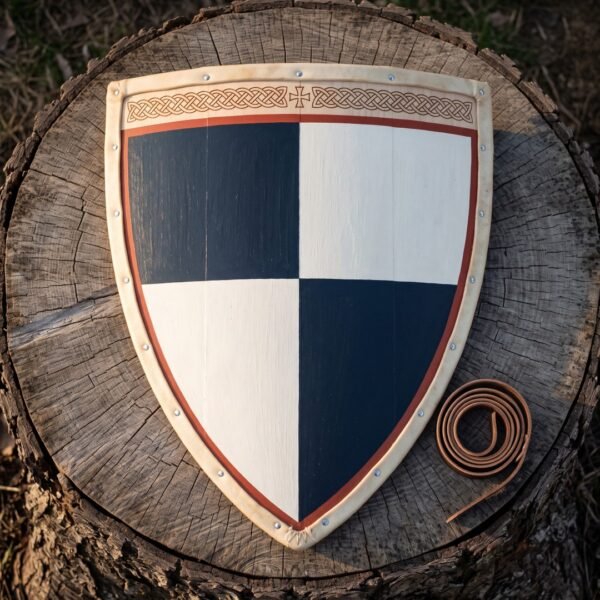
Quarterfell Hand Made Wooden Heater Shield | Quartered Navy and White | Rawhide Edge and Knotwork Border | Medieval Reenactment Gift | RK-1442
Original price was: $349.00.$279.20Current price is: $279.20.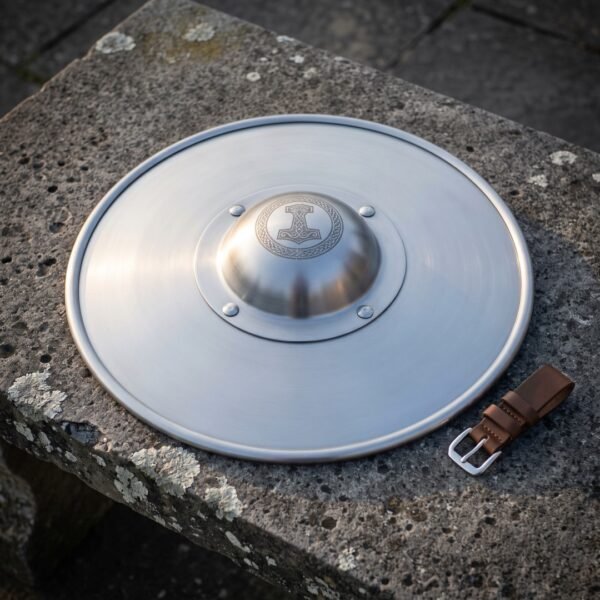
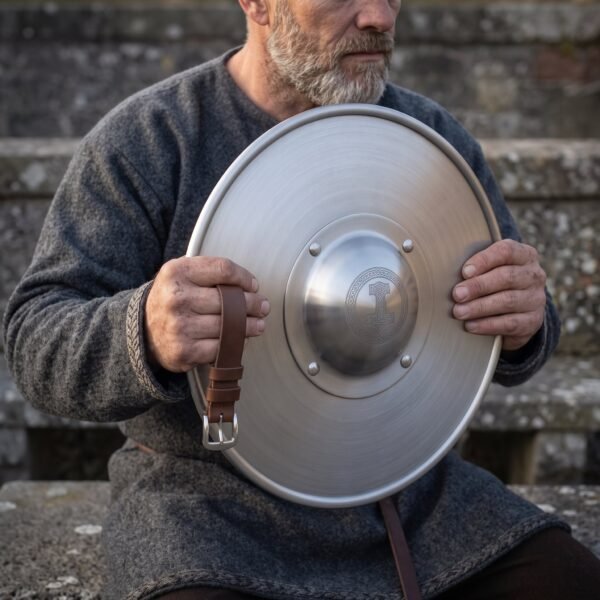
Domewarden Hand Forged 14 Gauge Steel Viking Buckler with Mjolnir Engraved Boss & Rolled Rim | Norse Reenactment Gift | RK-1577
Original price was: $149.00.$119.20Current price is: $119.20.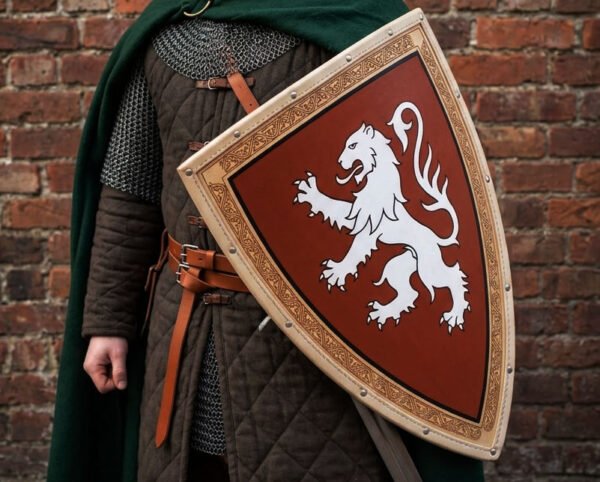
Lionward Hand Made Wooden Heater Shield | 30 Inch Tall | Painted Rampant Lion, Knotwork Border and Leather Arm Strap | Medieval Reenactment Gift | RK-1452
Original price was: $329.00.$263.20Current price is: $263.20.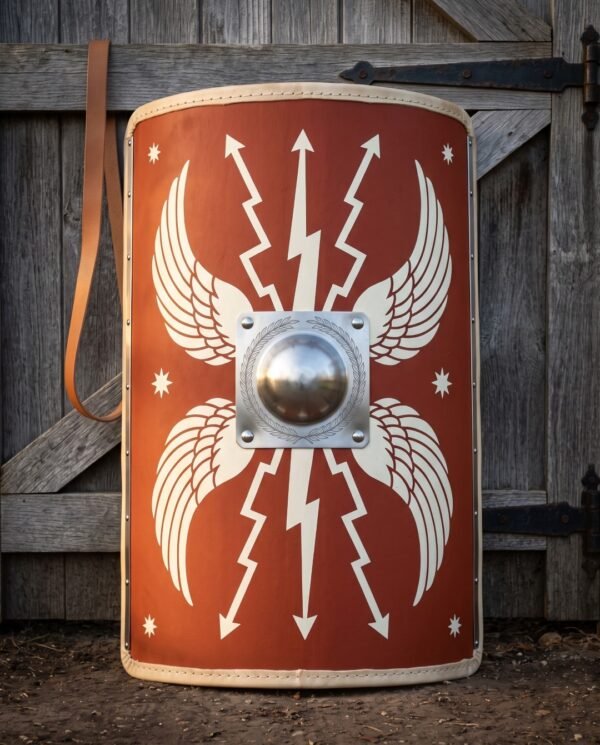
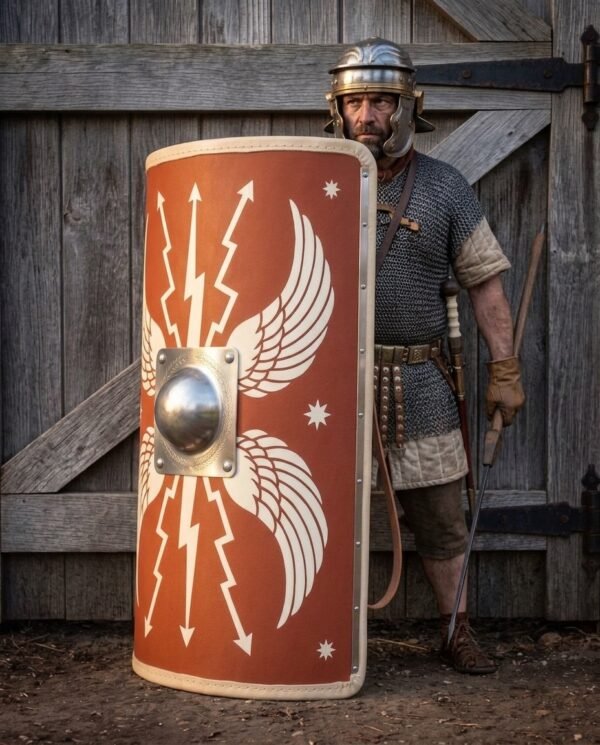
Stormwing Hand Made Roman Legionary Scutum Shield | 48 Inch Curved Laminated Body | Rawhide Edging and Steel Dome Boss | Legion Reenactment Gift | RK-1491
Original price was: $459.00.$367.20Current price is: $367.20.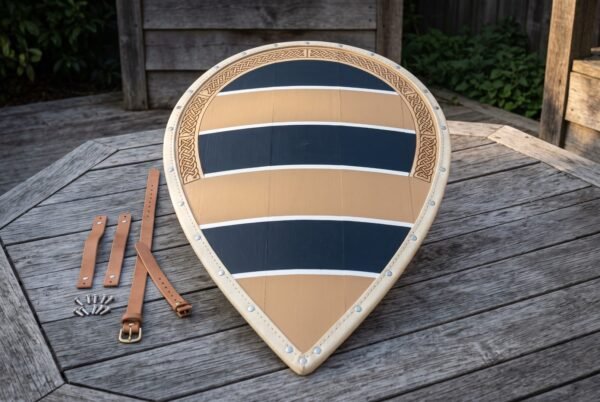
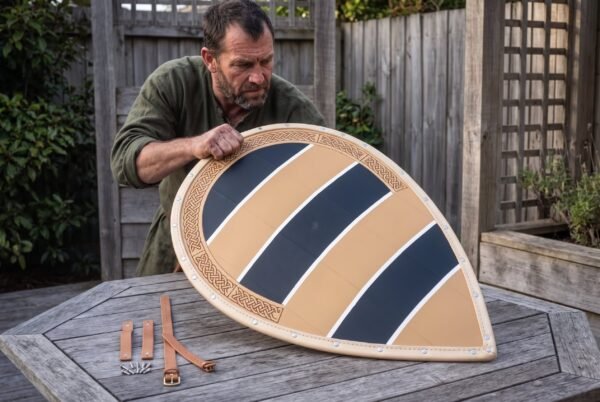
Wavewarden Hand Made Wooden Kite Shield | 34 Inch Teardrop Board | Painted Bands with Rawhide Edge and Leather Strap Set | Norman Reenactment Gift | RK-1573
Original price was: $379.00.$303.20Current price is: $303.20.Why a shield gets pulled into a point
Every shield is a compromise between coverage and weight. Make it bigger and more of you is behind it. Make it bigger and your arm tires, your vision narrows and the thing catches on everything. The kite is one answer to that argument. Keep the top wide and round so it covers the shoulder and the side of the head, then taper the lower half into a tail that guards the thigh without carrying the weight a full width board would.
It was a cavalry idea first. A rider sits with his left leg exposed along the flank of the horse and a round board leaves it in the open. The long tail solves that while staying narrow enough not to tangle the reins. Foot soldiers kept it, because a tall board planted on the ground and leaned into is a small piece of wall.
The heater is what happened next. Armour got better through the twelfth and thirteenth centuries, mail gave way to plate on the legs, and the long tail stopped earning its weight. The bottom half was cut away and the top squared off, and the result is the flat topped board with curved sides that everyone now draws on a coat of arms. Lighter, easier to see over, much easier to fight with on foot.
The Roman scutum here is the odd one out and the oldest idea of the three. It is not flat. It is bent around the body on a cylinder section, so the edges come forward past the shoulders and the board covers you sideways as well as in front. Curved ply is also far stiffer than the same thickness laid flat, which is why a scutum can be enormous and still survive being hit.
The shields in this collection
Ten pieces sit here and the name of the page undersells them. Four kite boards, two heaters, two Roman scutums, one dished steel round and one boss supplied as a kit. The wooden boards are built much the same way underneath and differ in outline, size and paint.
Norman and Templar kite boards
Two are Templar patterns at about 40 inches by 20 inches, one with a red cross pattee on a plain white field under a cut knotwork band, the other black and white with the same cross and a wide gilt border carrying hand cut running scrollwork. A Norman board runs about 40 inches by 22 inches at the shoulder, divided black and off white down the middle with rust red trim, an engraved knotwork band and a cross, at about 11 lb with the straps on. The shortest is a 34 inch teardrop by 24 inches across the shoulder, three painted bands over a cream ground with a tooled knotwork panel, about 9 lb complete.
Heater shields
Two, and they are the practical choice if you want something you can hold up for an hour. The smaller is 26 inches tall by 22 inches across the flat top, quartered navy and white with a red fillet inside the rim and a cut knotwork band along the top. The larger is 30 inches on a laminated hardwood plank core, faced and sealed, with a hand painted rampant lion on a rust field and a bone coloured outer band carrying a painted knotwork line. Domed rivets run around the edge and the reverse carries a buckle adjusted arm strap and hand grip.
Roman scutum
Two curved boards, both on laminated timber bent to the curve before painting. One is 37 inches tall with white wings, thunderbolts and arrows on a black field, a domed steel umbo riveted through the centre and a horizontal leather grip behind it. The other is the heaviest thing on the page at about 13 to 15 lb, roughly 40 inches tall and 26 inches across the curve, cross laminated ply around 12 mm thick, linen faced and hand painted on a red ground, with a raised steel dome on a square plate and an engraved wreath border. Its grip is a leather wrapped timber bar behind the boss cut out, which is how the original was done.
Steel round shield and the boss kit
The steel round is dished from a single disc of mild steel at 16 gauge, about 1.6 mm, 20 inches across with a rolled edge, an etched interlaced knotwork band with beast head terminals, and a raised dome boss on a flanged plate riveted through the face. It weighs about 9 to 11 lb, which is heavy for its size because steel is heavy.
The last item is not a shield at all. It is a hand raised conical boss in 16 gauge mild steel on a wide flat flange with six rivet holes and an Elder Futhark rune line around the flange, supplied with ten rivets and washers, a coil of undyed veg tan leather rim strip, two buckled arm straps and a wide grip strap. If you have ever wanted to plank up your own board, this is the part that is annoying to make and easy to buy.
Sizes, weights and construction across the range
Every figure below is taken from the specification panel of a piece on this page. These are made by hand, so read them as what to expect rather than as a guarantee to the millimetre.
| Shield | Height | Width | Body | Rim and boss | Listed weight | Price |
|---|---|---|---|---|---|---|
| Templar kite, gilt border | 40 in | 20 in | Planked wood, painted face | Riveted rawhide, no boss | Not listed | 419 dollars |
| Templar kite, white field | 40 in | 20 in | Planked wood, painted face | Riveted rawhide, no boss | Not listed | 389 dollars |
| Norman kite, per pale | 40 in | 22 in | Glued plank softwood, about 12 mm | Riveted rawhide, no boss | About 11 lb | 399 dollars |
| Kite, painted bands | 34 in | 24 in | Glued and pegged planks, canvas faced | Nailed and riveted rawhide | About 9 lb | 379 dollars |
| Heater, quartered | 26 in | 22 in | Planked wood, painted face | Riveted rawhide, no boss | Not listed | 349 dollars |
| Heater, rampant lion | 30 in | In proportion | Laminated hardwood plank core | Domed rivets around the edge | Not listed | 329 dollars |
| Roman scutum, black field | 37 in | In proportion | Laminated timber, bent to the curve | Rawhide style edge, steel umbo | Not listed | 449 dollars |
| Roman scutum, red field | 40 in | 26 in | Cross laminated ply, about 12 mm | Stitched rawhide, steel dome boss | About 13 to 15 lb | 459 dollars |
| Steel round, dished | 20 in | 20 in | Mild steel, 16 gauge | Rolled edge, riveted dome boss | About 9 to 11 lb | 449 dollars |
| Conical boss and fitting kit | Not applicable | Not applicable | Mild steel, 16 gauge, hand raised | Leather rim strip, ten rivets | Not listed | 179 dollars |
Only four of these listings state a weight, so use those as your guide. A 40 inch planked board with rawhide and straps lands near 11 lb, a 34 inch one near 9 lb, and the big curved scutum sits well above both because there is more timber in it and a steel plate through the middle.
Sizing, fit and what you can actually hold
For display, the only measurement that matters is your wall. A 40 inch board wants about four feet of clear height once it is on a hanger and looks wrong crowded into a gap. Measure before you order, because these arrive bigger than people expect.
For wearing, a kite should reach from just below your chin to somewhere around the knee with the strap on your forearm. Most adults land on the 34 inch board rather than the 40. Under about five foot eight, a 40 inch kite drags on the ground when you stand relaxed.
Heaters are easier. At 26 to 30 inches they cover the torso and upper thigh and you can hold one at guard for far longer than a kite. If the shield will be in your hand rather than on a bracket, start there.
Boards, laminate and thickness
The wooden shields here are built two ways. Some are planked, meaning individual boards edge glued and pegged into a panel, which is how it was done historically and gives a board stiff along the grain and slightly springy across it. Others are laminated ply, layers cross bonded so the grain runs both ways, which is stronger for its thickness and holds a curve. The scutums have to be laminated for that reason.
Thickness sits around 12 mm on the boards that list it, with one tapering from the centre toward the rim. That taper is not decoration. It puts timber where the grip is and takes it out of the edge, where you want the board light and where the rawhide is doing the work anyway.
Faces are canvas or linen laid over the wood before painting. The cloth ties the planks together, stops a split running across the whole face and gives the paint a ground. Every face here is hand laid paint rather than a printed transfer, so expect brush marks and small variations.
Rims, bosses and rivets
Rawhide edging is the traditional binding and nearly every wooden board here has it, wrapped over the rim and riveted at intervals all the way round. Wet rawhide shrinks hard as it dries and grips the edge like a clamp, which protects the most vulnerable part of the board. The one thing it hates is being soaked and left, so keep a bound rim out of the rain.
A boss is a steel dome over a hole cut through the board, and it exists so the hand can sit in the middle of the shield holding a bar rather than strapped to the back. That is centre grip construction, and it is what the scutums and the steel round use. The kite and heater boards here have no boss and no hole, because they are strapped to the forearm instead.
Rivets are set through the face with the burr peened over on the reverse, domed heads where they show. If one works loose it can be reset with a hammer and a bucking block, which is why shields have been repaired this way for two thousand years.
Straps, enarmes and the guige
Some boards arrive with the strapping fitted. The others come with the leather loose, which sounds like an inconvenience and is the right way to do it. Where the straps sit depends on your forearm and on whether you are wearing armour, and nobody can set that for you from a warehouse. Hold the board against your arm, mark the positions, then rivet.
The forearm loops are the enarmes, one at the elbow and one at the hand, set at an angle rather than square so the board sits across the body instead of flat on. The long strap is the guige. It goes over the shoulder and takes the weight when the shield is slung on your back, and on a rider it stops the whole thing sliding off the arm.
The centre grip pieces work differently. One hand around a bar behind the boss, no straps on the arm, and the board is moved by punching it around rather than by turning your body. Faster and more tiring.
Paint, care and storage
Hand painted faces want the same treatment as any painted wood. Keep them out of direct sun, because pigment fades and a red field goes pink over a couple of years in a south facing window. Keep them away from damp, because the timber moves and the paint crazes.
Dust with a soft dry brush. No household cleaners on a painted face and nothing with solvent in it. Leather straps take a wipe of conditioner once a year and the rawhide rim wants nothing at all.
The steel round and the bosses are mild steel and will rust if left wet. Wipe them dry and put a light film of oil on the bare metal. Storing a shield flat on its face is fine. Leaning it against a wall on one point of the rim for a year is how a board goes out of true.
Engraving
Several boards already carry cut or engraved detail, from knotwork bands to the rune line running around the flange of the conical boss. Further engraving is done in the United States after the piece arrives, and metal takes it better than a painted wooden face, so a boss or a steel round is the usual place for a name or a date. Text engraving is 19 dollars, a symbol is 39 dollars and a family crest is 49 dollars.
Elder Futhark is a phonetic alphabet rather than a code, so a name is transliterated by sound and there is no rune for the letter C. Engraving is permanent and an engraved piece cannot be returned, so send the exact spelling and read it twice before you order.
Where these come from and how they ship
Ransack Viking is a US company based in Chicago, Illinois. The pieces are handmade in the Czech Republic, then imported, inspected and shipped from Chicago. Engraving is done in the US after arrival.
Shields ship boxed and flat, with any loose strapping and fittings bagged inside. Two boards of the same name will differ slightly in paint, grain and rivet spacing, because two people made them on two different days. None of these are rated for full contact steel combat, and the listings say so. They are built for display, living history, film, photography and light reenactment.
How to choose
Hanging it on a wall above a fireplace or a bed? Take a 40 inch kite. It is the shape people recognise, the tail fills vertical space that nothing else fills well, and the painted heraldry reads from across a room.
Actually carrying it at an event? Take the 34 inch kite or one of the heaters. Your arm will thank you by the middle of the afternoon.
Building a Norse round board from scratch? Buy the conical boss kit at 179 dollars, because the boss and the strap hardware are the parts that are genuinely difficult to make at home. The planking is a weekend.
Related collections
- Round shields, the Norse board this one replaced
- Viking shields across the whole range
- Roman and Greek shields
- Shield bosses and fitting hardware
- Medieval helmets to match a heater board
- Roman and Greek helmets
- Chainmail armour
- Leather armour and body protection
Guides worth reading first
- Round shield or kite shield: which one you actually want
- Choosing a shield for display
- Viking shields explained
- Viking armour explained
- Chainmail, plate and lamellar compared
- How to display swords, axes and shields
Frequently asked questions
What is a kite shield?
A tall shield rounded across the top and tapering to a point, carried from roughly the tenth to the thirteenth century. It covered a rider's left leg without the width of a round board, and foot soldiers kept it because a tall board is easy to shelter behind.
What is the difference between a kite and a heater shield?
The heater is a kite with the bottom half cut off and the top squared flat. It came later, once leg armour made the tail unnecessary. Heaters here are 26 to 30 inches tall against 34 to 40 for the kites, and far easier to hold up.
How heavy are these shields?
The listings that give a weight say about 9 lb for the 34 inch kite, about 11 lb for the 40 inch Norman board, about 9 to 11 lb for the dished steel round and about 13 to 15 lb for the large curved scutum.
Are the straps already fitted?
On some, yes. On others the leather is supplied loose so you can set it to your own forearm. Positions that suit a person in a shirt are wrong for the same person in mail, which is why it ships that way.
Can I use these for full contact combat?
No. They are built for display, living history, film and light reenactment, and the listings say so. Full contact steel fighting destroys painted boards, which is why fighters use plain shields they expect to replace.
What is a shield boss for?
It is a steel dome covering a hole cut through the board, so the hand can grip a bar in the centre. That gives a faster, punchier shield than arm straps do. The scutums and the steel round are built that way, and the conical boss is sold as a kit for building your own.
How do I hang one on a wall?
Take the weight through the rim or a bracket rather than through the straps, and put the fixing into a stud or a proper wall anchor. A 40 inch board at 11 lb hanging off a drywall screw will come down eventually, and it will take a chunk of the wall with it.
Where are these made?
Ransack Viking is a US company based in Chicago, Illinois. The pieces are handmade in the Czech Republic, then imported, inspected and shipped from Chicago, with engraving added in the US after arrival.
Featured pieces
 Crossmarch Hand Made Wooden Templar Kite Shield
Original price was: $419.00.$335.20Current price is: $335.20.
 Palecross Hand Made Wooden Templar Kite Shield
Original price was: $389.00.$311.20Current price is: $311.20.
 Quarterfell Hand Made Wooden Heater Shield
Original price was: $349.00.$279.20Current price is: $279.20.
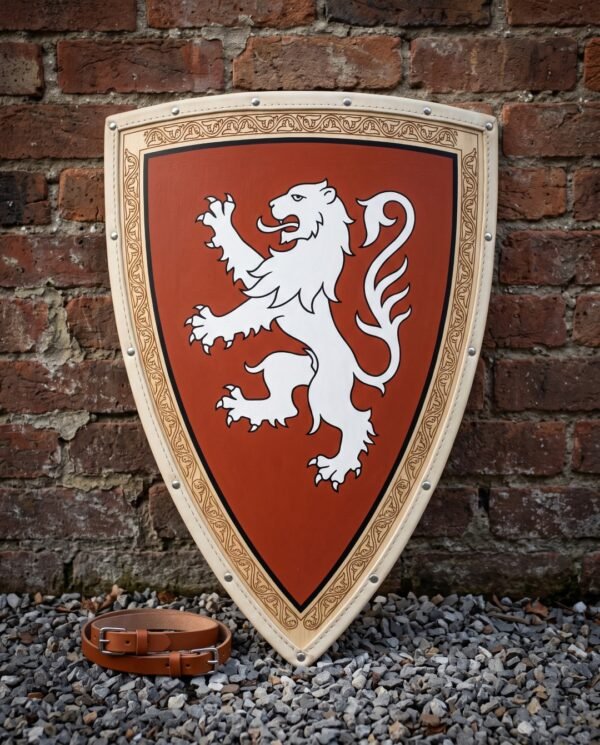 Lionward Hand Made Wooden Heater Shield
Original price was: $329.00.$263.20Current price is: $263.20.