
The HEMA sabre is the single edged side of the art, and it is the most fragmented family in the whole HEMA sword range. Under one word sit the military patterns of 1796, 1821 and 1845, the gymnasium sabres, the Italian sabre of Radaelli and the Polish szabla. Five pieces are grouped here: a hanger with a D knuckle bow, a three bar hilt, a stirrup hilt, and both dussacks, one in steel and one in leather.
Three of the five are curved single edged trainers in 51CrV4 spring steel hardened to 49 to 52 HRC, running about 36 to 37 inches overall with blades near 30 to 31 inches. Flex sits in the light to medium band, which is what fast single sword drill wants. The sabre guide sets out the patterns properly.
The dussack is its own thing and it gets its own section below. It came out of the Hussite Wars through the Czech tesak, and the practice form has no pommel and no upper guard at all. Read the dussack guide before you choose between the leather and the steel. Rounded tips are not allowed on sabre under the Berlin HEMA Cup gear requirements, so check the tip row against your own ruleset, and compare with HEMA messers if you want a longer single edged blade.
Most pieces here take a custom engraving on the blade, the guard or the grip, chosen on the product page.
If you would rather have a sword built to your own reach, start with the sword builder and set the blade, the guard, the pommel and the grip wrap yourself.
Free US shipping
On most pieces. Heavier and oversized ones carry a flat charge.
Hand Forged
Heated, hammered and ground by hand.
Engraving available
Names, dates or Norse runes on most pieces.
Ships from New York
Inspected and dispatched from our New York warehouse. No import duty, no customs delay on US orders.
HEMA Sabres
Why the sabre is the hardest family to shop for
Ask ten fencers what a sabre is and you will get ten answers, all of them correct. The word covers a curved cavalry blade, a straight backsword in a basket, a light gymnasium blade used indoors, an Italian duelling sabre and a Polish szabla, and it stretches far enough to take in the hanger and the dussack as well. No other type in the art carries that much ground.
The common thread is a single edge, a guard that wraps the hand, and a body of technique built around the cut rather than the thrust. Sabre is fought at a fast tempo with the sword hand forward and exposed, which is why the hilt matters more here than on almost anything else. A sabre without a proper guard is a sabre you will not want to fence with twice.
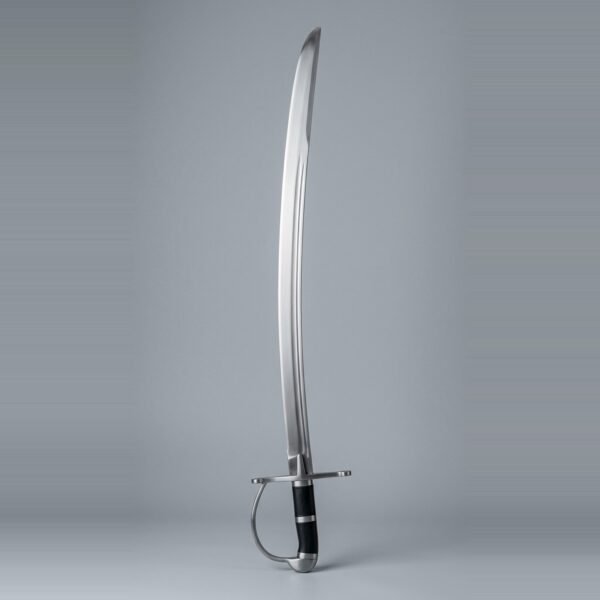
The five pieces in this group cover the ground a club actually uses. A hanger with a simple cross and a D knuckle bow, a three bar hilt, a stirrup hilt, and two dussacks, one cut from steel and one from a single slab of leather.
The military patterns, and what each one means
Most modern sabre study runs through the British military patterns, because the drill manuals survive, they are written in English, and they are specific about what the sword is meant to do.
The 1796
The 1796 light cavalry sabre is the broad, heavily curved, wide at the tip blade that everyone pictures when they hear cavalry sabre. It is a cutting sword and very little else. The guard is a stirrup, a single bar running from the quillon block to the pommel cap, which gives knuckle protection and almost nothing else.
The 1821
The 1821 patterns move towards a straighter, narrower blade with a pipe backed or fullered section and a three bar guard. The thinking had shifted. A cavalry sword that could also thrust was considered more useful than one that could only cut, and the three bar hilt gave far better hand cover than the bare stirrup did.
The 1845
The 1845 infantry officer pattern brings in the folding or fixed half basket, a Gothic shaped guard pierced with a royal cypher, and a straighter blade again. It is a sword carried on foot rather than from the saddle, and the guard reflects that, because a man on foot has his hand in reach for longer.
The gymnasium sabre
The gymnasium or practice sabre is the ancestor of modern sport fencing sabre. Lighter, blunt, often with a wide flat blade and a full or half basket, built to be used indoors against another person at speed rather than against a target. If you are training the military patterns from the drill manuals, a gymnasium form is the safe way to do it. The sabres on this page sit in that tradition: real steel, real hilts, blunted edges and blunted or rolled tips.
Radaelli, the szabla and the continental schools
Giuseppe Radaelli taught at the Milan military fencing school in the second half of the nineteenth century and his method is the backbone of the Italian sabre tradition. The Radaelli cut is driven from the elbow rather than the wrist, which produces a heavier, more committed blow. Italian sabres of this period are light, curved only slightly and guarded with a full bow.
The Polish szabla is a separate line entirely. It is a curved single edged sword with a closed or open hilt, sometimes with a thumb ring, and the Polish tradition around it is old, deep and in the middle of a serious modern revival. A szabla handles differently from a British pattern sabre because the grip and the curve throw the point in a different arc.
Hungarian and German academic sabre, the duelling sabre of the fencing salle and the various national gymnasium forms all sit in the same broad family. What they share is that the sword is an extension of one arm, worked fast, with the hand always the closest target.
Hilt forms, and what to buy
The stirrup hilt
The simplest useful sabre guard. One bar sweeps from the quillon block around the knuckles and joins the backstrap or the pommel cap, and there is usually a single short quillon on the opposite side. It is light, it is fast, and it leaves the back and the sides of the hand open. Good for drill, good for solo work, and it asks for a proper glove in sparring.
The three bar hilt
The knuckle bow plus two branching side bars, a form taken straight from the 1821 patterns. Three bars is the point at which sabre hand protection starts to be genuinely sufficient. It adds a little mass out at the hand, which most people find improves the balance rather than harming it, and it is the guard most clubs recommend for a first steel sabre.
The hanger and the cross with a D bow
The hanger is the short, broad, curved sidearm carried by infantry, sailors and huntsmen for centuries before the cavalry patterns were standardised. Its hilt is often a simple cross with a D shaped knuckle bow carried back to the cap, which is exactly the arrangement on the hanger in this group. It is the plainest of the sabre hilts and the closest in feel to a messer or a dussack.
The dussack, from the Czech tesak to Joachim Meyer
The dussack is where sellers get the history wrong most often, so this is worth setting out properly.
It begins as the tesak, a Czech single edged sidearm. It entered German usage during the Hussite Wars in the early fifteenth century, and by the late sixteenth century the dussack was an established military sidearm across the German lands and the Habsburg monarchy. That Czech origin is not a marketing flourish. It is simply true, and it happens to sit neatly alongside the fact that every blade on this page is made by hand in the Czech Republic.
The fighting form is short and broad. A single edged blade of roughly 25 to 38 inches, thick in section, with a straight or slightly curved spine. The distinctive feature is the grip. On the practice dussack there is no separate handle at all: a hole is cut clean through the wide end of the blade and the hand passes through it. No pommel, no upper guard, no cross. The thickness of the material around that hole is the only hand cover you get.
Meyer and the 1570 treatise
Joachim Meyer's fencing book of 1570 is the single most important source for the dussack, and it is one of the reasons the type is alive again. Meyer treats it as a teaching tool as much as a fighting tool. The dussack section of his book is where a student learns the cuts, the guards and the tempo of single sword play before moving to anything longer, and modern clubs use it in exactly that way. If you fence longsword, the dussack will teach your hand things the longsword will not.
Wood, leather, synthetic and steel
The historical practice dussack was wooden. Modern clubs use four materials and they are not interchangeable.
Wooden dussacks are cheap, period correct and unforgiving, because wood does not flex and a hard blow lands hard. Leather dussacks are cut from thick vegetable tanned hide, they bend under a blow and come back, and they are the safest thing you can put in a beginner's hand. Synthetic dussacks in moulded nylon sit between the two and survive outdoor training better than either. Steel dussacks are the serious end. They handle like the real object, they teach the bind properly, and they demand a mask, gloves and a partner who knows what they are doing.
Both ends of that range are in this group. The leather dussack is a single slab of vegetable tanned leather with the hand hole cut clean through, a raised rolled rim around it, two lines of stitching along the rim and no steel anywhere in the piece. The steel dussack is 51CrV4 spring steel with a nagel peened straight through the blade and finished flush on both faces, no cross of any kind, wooden scales on three steel rivets, and a rounded blunt tip with no point at all.
The tip rule on sabre
The Berlin HEMA Cup gear requirements are the clearest published statement of the standard most European events work to. Permitted tip shapes are spatulated or rolled with a minimum diameter of 1.5 cm, and rounded tips are explicitly not allowed on rapier and sabre.
That line catches buyers out, because a smoothly rounded blade end looks harmless. The problem is that it concentrates force on a small area and it can find a gap in a mask that a broad flared button cannot. Two of the sabres here carry a rolled and flared tip about 15 mm across. The hanger is rounded off and blunted rather than flared, and the product page says so plainly, because it is a drill and club sparring piece rather than an event entry. The steel dussack has no point whatsoever. Read the tip row against the ruleset of your own event, and never accept a claim of tournament legality from any seller without the name of the ruleset attached. The gear rules guide goes through the rest of the kit.
Steel, hardness and flex
The four steel pieces here use 51CrV4 spring steel hardened to 49 to 52 HRC. That is softer than the 1095 at 54 to 58 HRC used for the sharps and the display swords elsewhere on this site, and the reason is simple. Hard steel does not bend, it breaks. Spring steel at this hardness bends under a hard bind and returns straight.
Flex on the three bar and the stirrup sabres sits in the light tier, on the hanger in the medium tier, and on the steel dussack in the medium range that dussack drill wants. Light flex on a single handed curved blade is not a weakness. A sabre is swung fast with one arm, and a blade that gives a little on contact is easier on the person receiving the cut and easier on your own elbow over a long session. The flex guide explains how the tiers are measured and why makers publish different numbers.
The five pieces on this page compared
Every figure in the table below is taken from the specification panel of a product on this page. Nothing is estimated. Sizes vary piece to piece because each blade is forged and ground by hand, so read a stated length as nominal rather than exact.
| Piece | Overall length | Blade type | Steel and hardness | Flex | Guard or tip note |
|---|---|---|---|---|---|
| Kaldrast hanger sabre trainer, RK-3001 | About 36 inches | Curved single edged hanger blade, broad through the forte and tapering through the foible | 51CrV4 spring steel, 49 to 52 HRC | Medium tier, the give sits in the last third of the blade | Steel cross with a D shaped knuckle bow carried back to the cap. Tip rounded off and blunted, not spatulated and not flared |
| Ostrevak steel dussack, RK-3035 | About 31 inches | Broad single edged dussack blade, straight spine, no fuller | 51CrV4 spring steel, 49 to 52 HRC | Medium, the range dussack drill wants | No guard and no cross of any kind. Steel nagel peened through the blade. Rounded blunt tip, no point on the piece |
| Sturvang three bar sabre trainer, RK-3038 | About 37 inches | Curved and single edged, fuller from the hilt that stops well short of the point | 51CrV4 spring steel, 49 to 52 HRC | Light tier | Three bar hilt, knuckle bow with two branching side bars. Rolled and flared tip, about 15 mm across |
| Kjeldhar stirrup hilt sabre trainer, RK-3040 | About 36 inches | Curved and single edged, fuller from the hilt that stops well short of the point | 51CrV4 spring steel, 49 to 52 HRC | Light tier | Stirrup hilt, one D shaped knuckle bow and one straight quillon. Rolled and flared tip, about 15 mm across |
| Reifholm leather dussack, RK-3044 | About 26 inches | Curved single edged profile cut from the slab, flat section | Thick vegetable tanned leather, one slab, no steel | Leather flex. It bends under a hard blow and comes back | No guard. The rolled rim around the cut through hand hole is the only hand cover. Rounded leather point, soft to the touch |
Browse related sword categories
- HEMA messers, the longer single edged blades with a nagel
- Smallswords and spadroons, including the straight single edged spadroon
- HEMA rapiers in swept, dish and cup hilts
- HEMA sideswords for cut and thrust play with a complex hilt
- HEMA feders built for longsword sparring and tournament entry
- The full HEMA sword range, all forty nine pieces in one place
- The wider sabre collection, including display and collector pieces
- Engraved and personalised blades, runes, symbols and crests
Guides worth reading first
- The HEMA sabre guide, patterns, hilts and schools
- The dussack guide, from the Czech tesak to Meyer
- What is HEMA, and what a club night actually looks like
- How to choose your first HEMA sword without wasting money
- Synthetic against steel trainers, and when to move up
- HEMA sword flex explained, tier by tier
- HEMA tournament gear rules, tips, edges and masks
- The messer guide, nagel, clipped points and grosses messer
Frequently asked questions
What is a dussack?
A short broad single edged practice sword with no pommel and no upper guard, where the grip is a hole cut clean through the wide end of the blade. It comes from the Czech tesak, entered German use during the Hussite Wars and became a standard military sidearm by the late sixteenth century.
Should I buy the leather dussack or the steel one?
Leather first if you are new or if your club runs mixed ability sessions, because it bends under a blow and comes back and it is the safest thing to learn the cuts with. Steel once you are masked, gloved and working with a partner who knows the drill, because only steel teaches the bind honestly.
Which sabre hilt should a beginner choose?
The three bar hilt. It gives real hand cover from the front and the sides, it is the form taken from the 1821 patterns, and the small amount of mass it puts at the hand tends to improve the balance rather than spoil it. A stirrup hilt is lighter and faster but leaves more of the hand open.
Are these sabres legal for tournament entry?
Read the tip row on each product page against the ruleset of the event you are entering. Rounded tips are not allowed on sabre under the Berlin HEMA Cup gear requirements, which ask for a spatulated or rolled shape at least 1.5 cm across. Two of these carry a rolled and flared tip, one is rounded off, and the steel dussack has no point at all.
Why is the trainer steel softer than the steel on your sharps?
Because hard steel does not bend, it breaks. Spring steel at 49 to 52 HRC bends under a hard bind and comes back, which is what a blade needs when it will be struck by another blade thousands of times a year. The 1095 at 54 to 58 HRC used on the sharps is for cutting targets, not for people.
Do any of these come with a scabbard?
No. Nothing in this group ships with a scabbard and none is offered. The specification panel on each product page lists what is in the box, which is the piece itself, a cloth wrap on some of them and a care card.
Can a dussack be engraved?
The steel dussack can, on the blade or the scales. The leather dussack cannot take steel engraving, and nothing is stamped into it. Engraving on the steel pieces is done in the United States after arrival, with text and runes at 19 dollars, a symbol at 39 dollars and a family crest at 49 dollars.
Is a sabre the right first sword for HEMA?
It is one of the best, and the dussack is better still. Single sword play teaches measure, timing and edge alignment with one hand and one blade, which is far less to think about than a longsword. Many clubs teach dussack or sabre first for exactly that reason.
Featured pieces
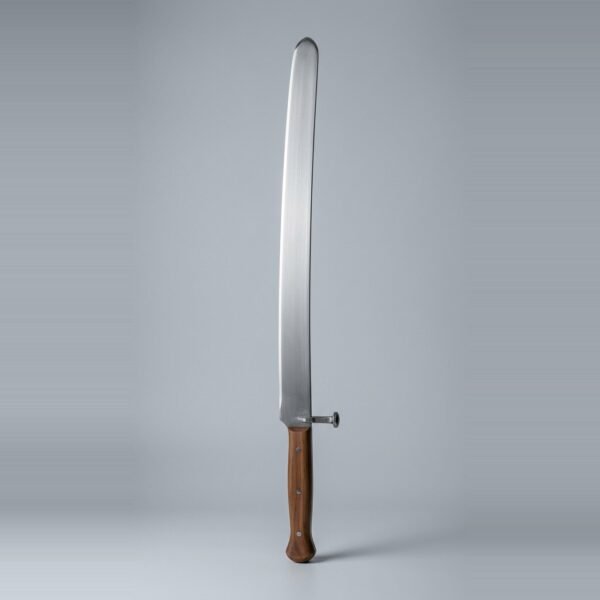 Ostrevak Hand Forged 51CrV4 Steel Dussack with Peened Through Nagel & Rounded Blunt Tip
$249.00
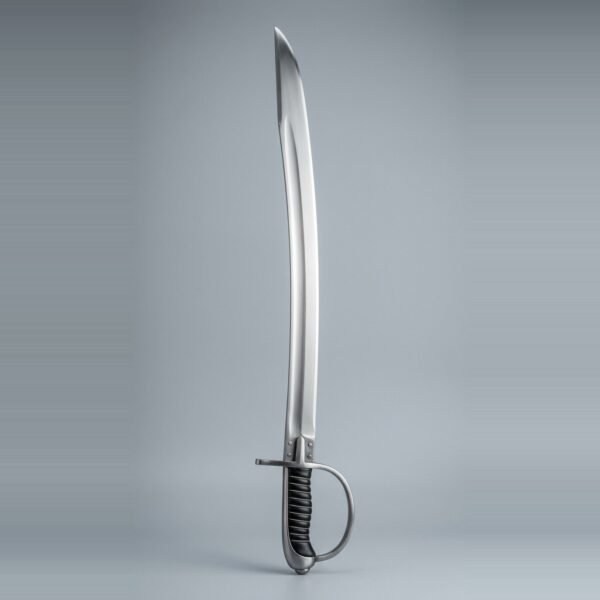 Kjeldhar Hand Forged 51CrV4 Sabre Trainer with Stirrup Hilt & Single Straight Quillon
$369.00
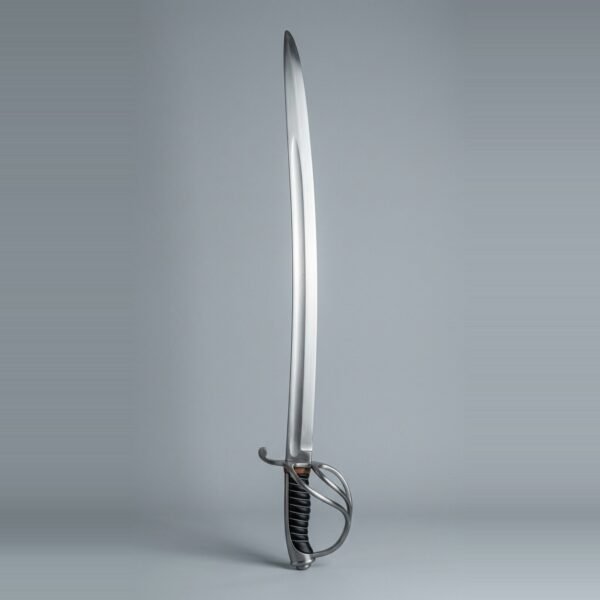 Sturvang Hand Forged 51CrV4 Sabre Trainer with Three Bar Guard & Rolled Safety Tip
$399.00
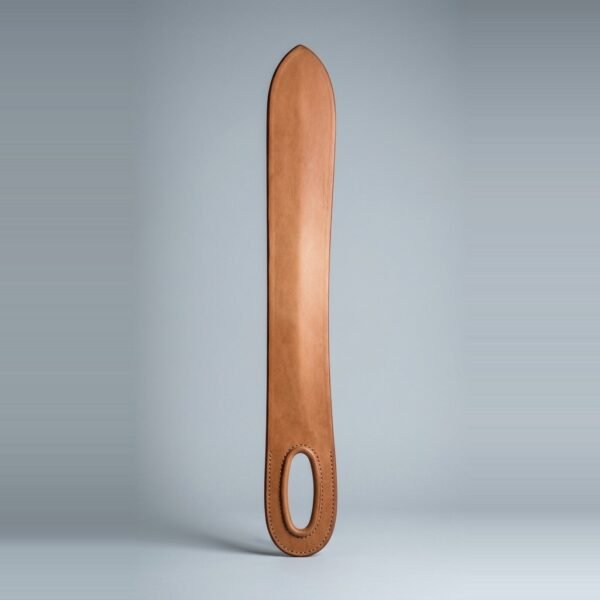 Reifholm Hand Made Vegetable Tanned Leather Dussack with Cut Through Hand Hole & Rolled Rim
$89.00