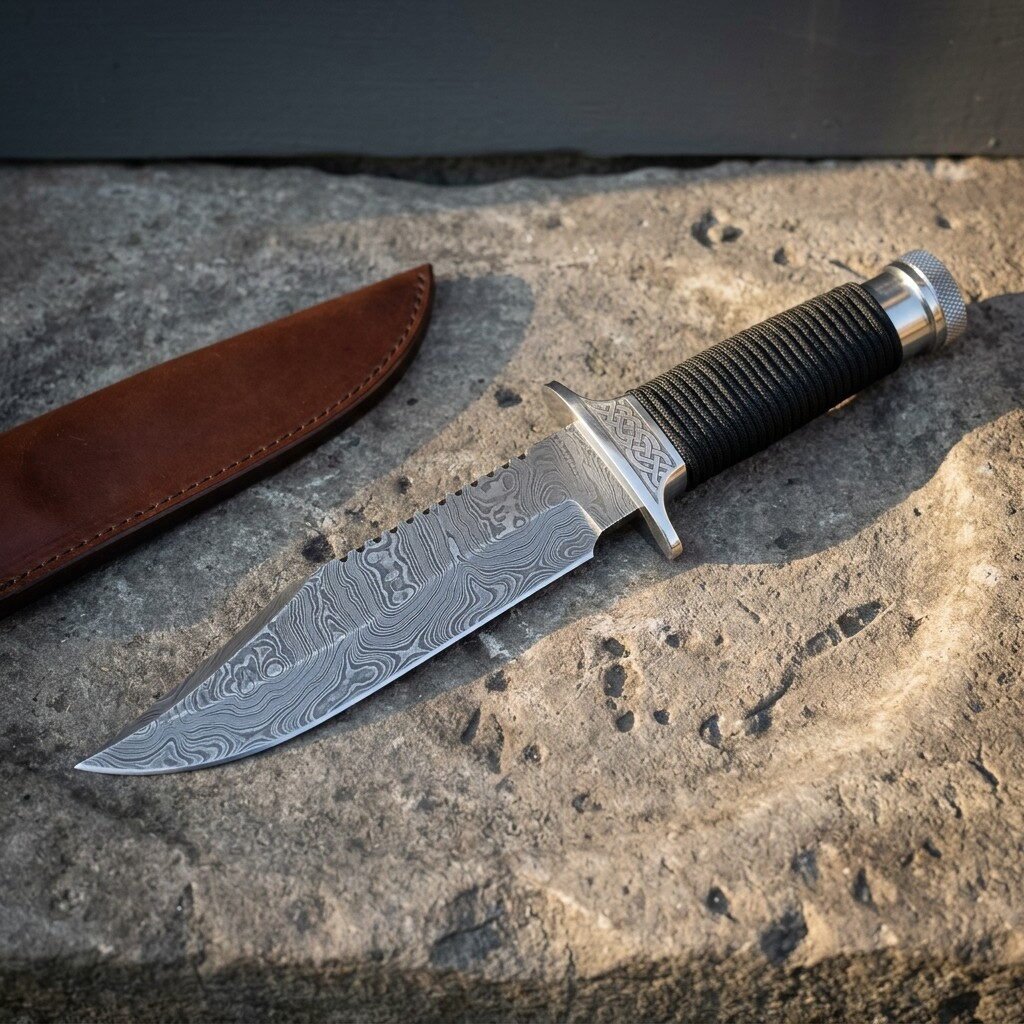
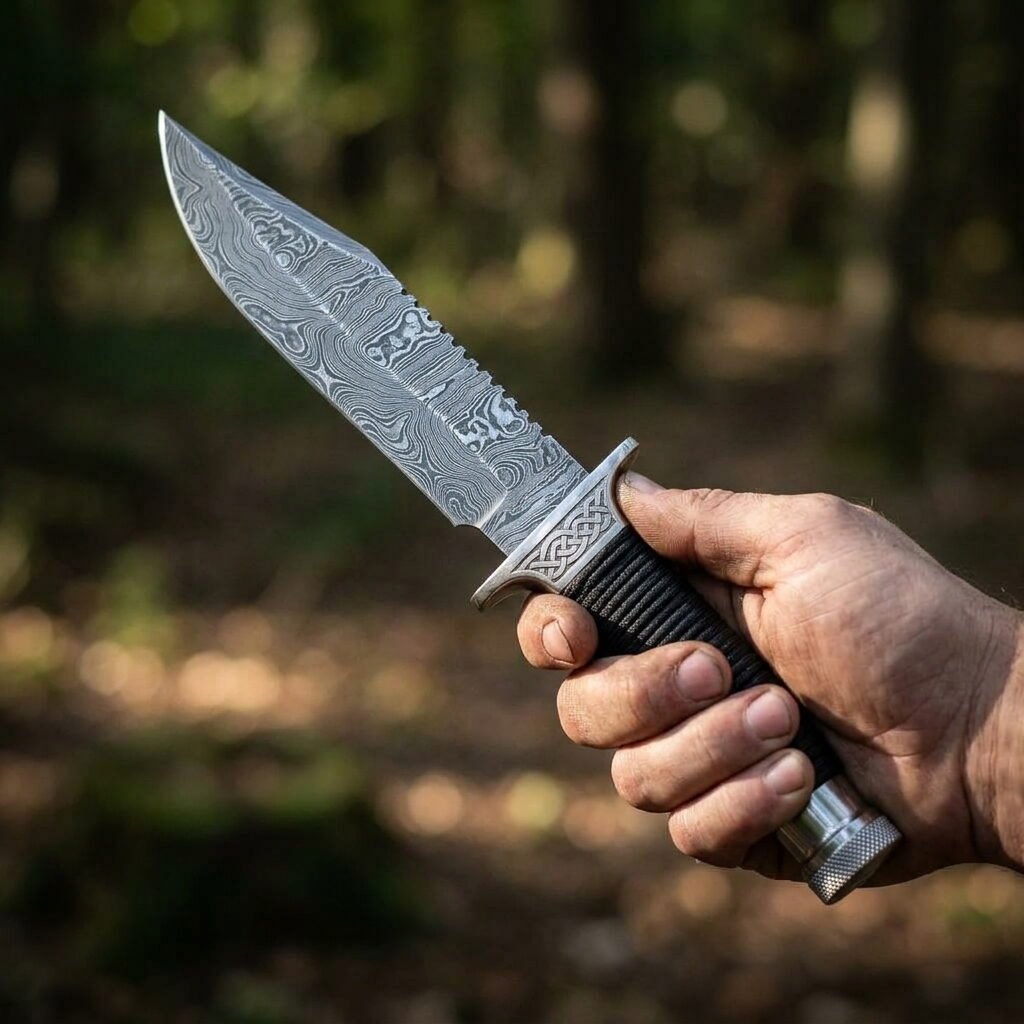
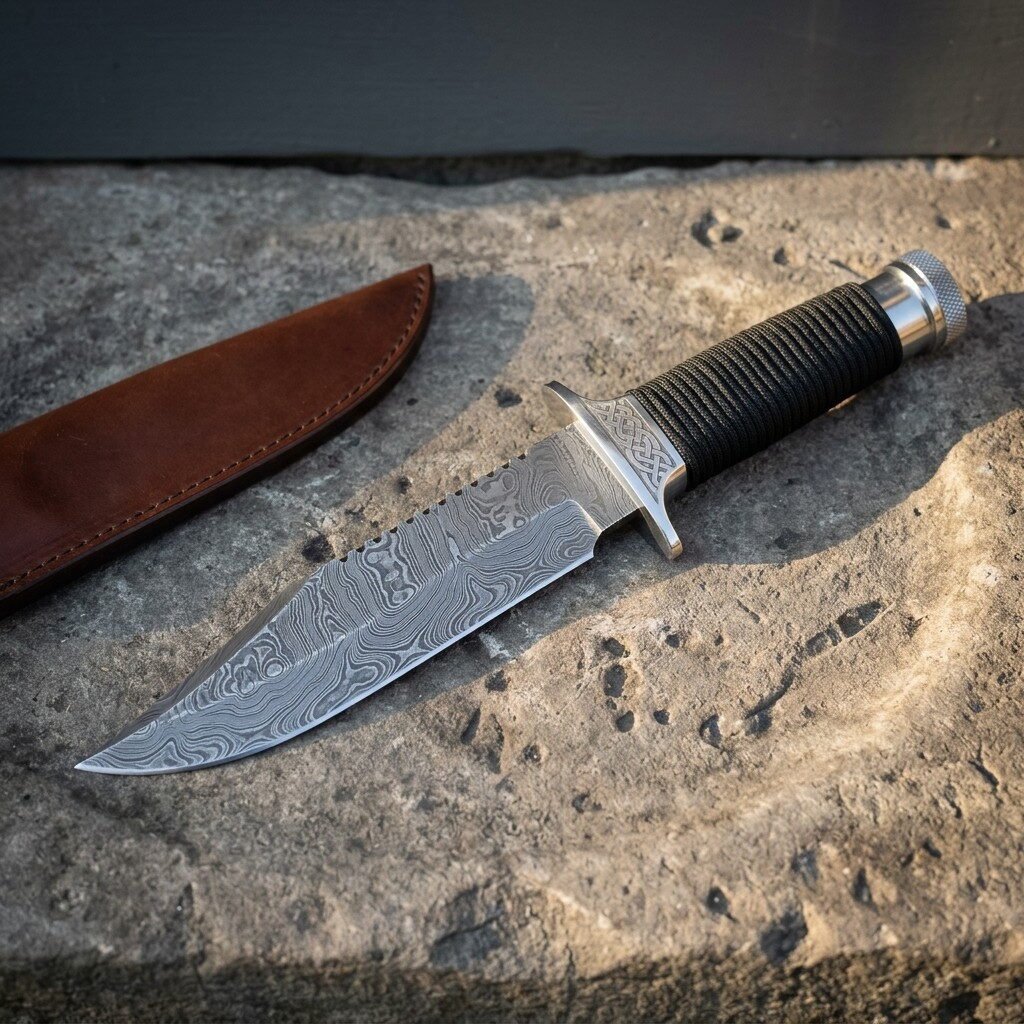
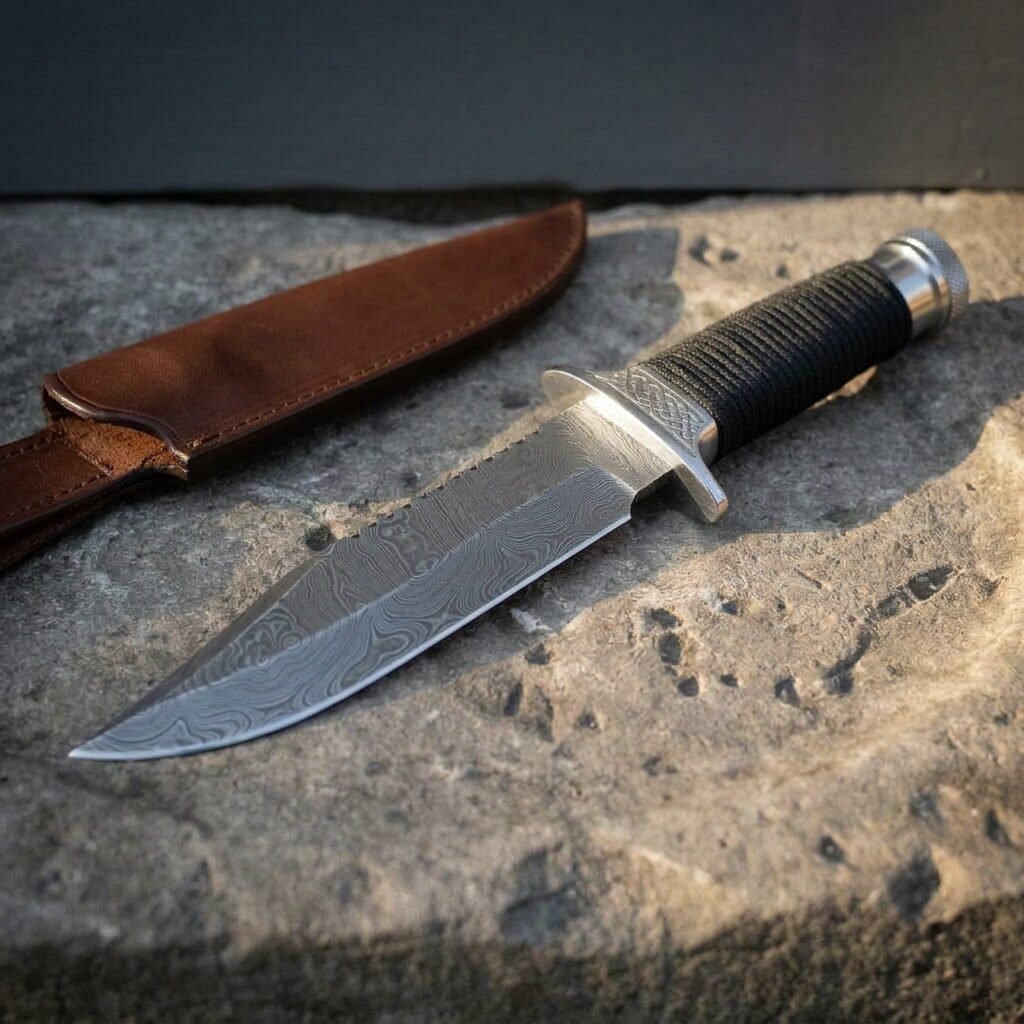
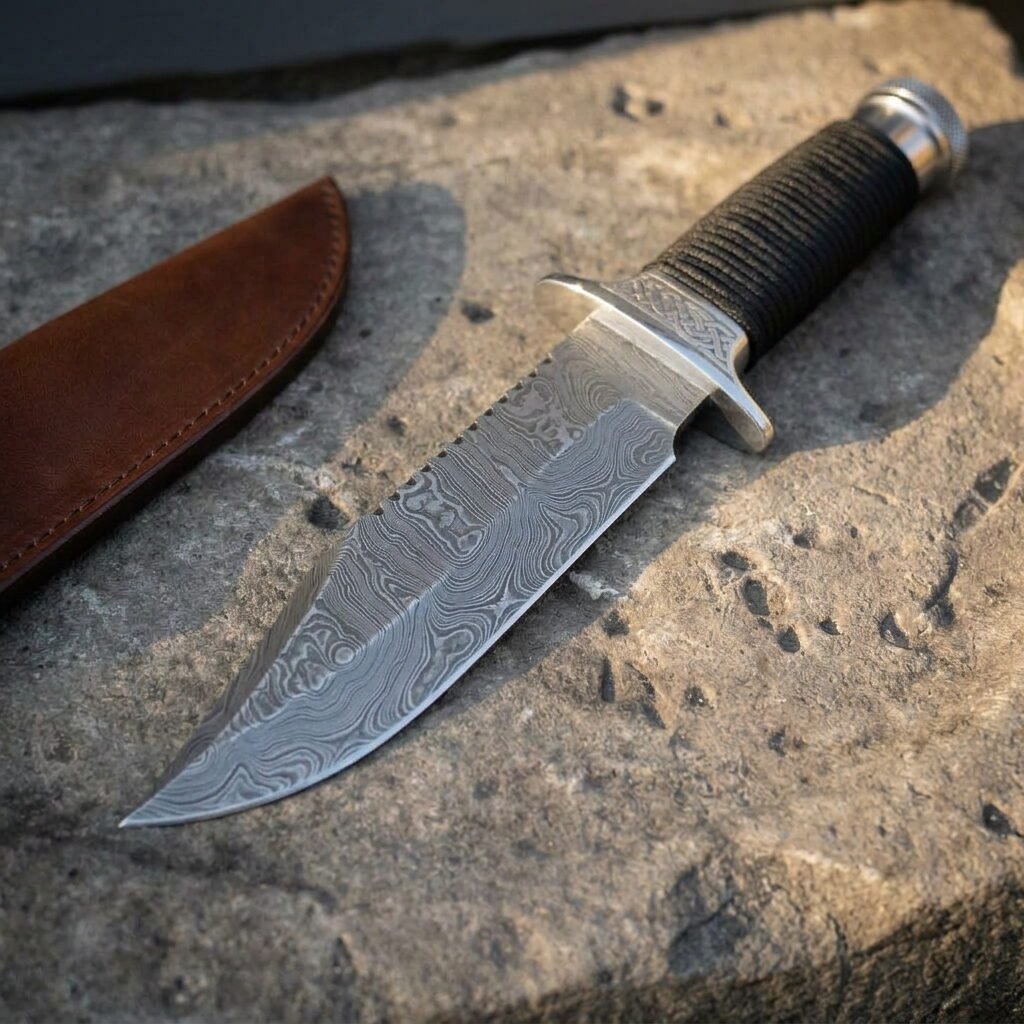
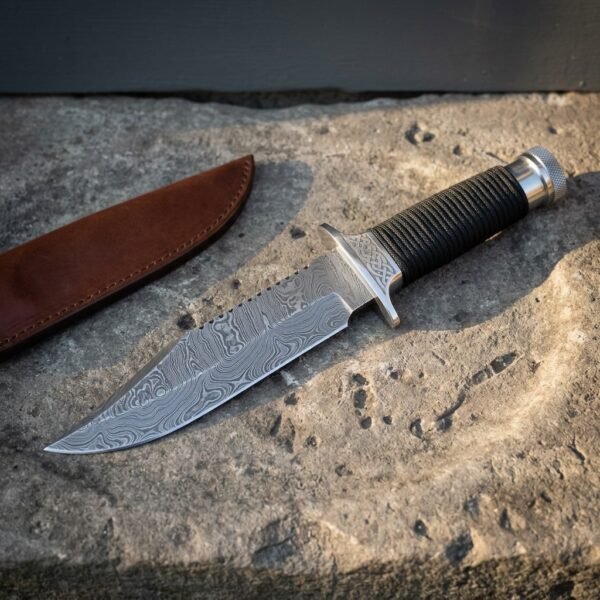
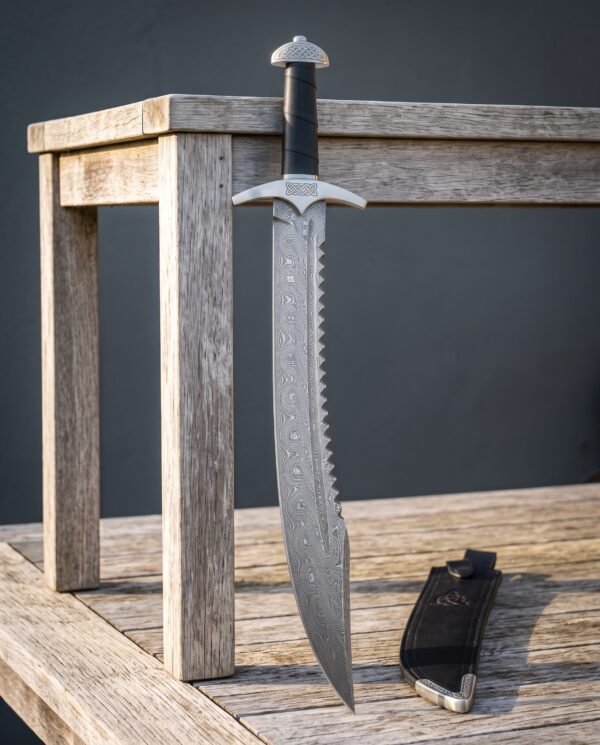
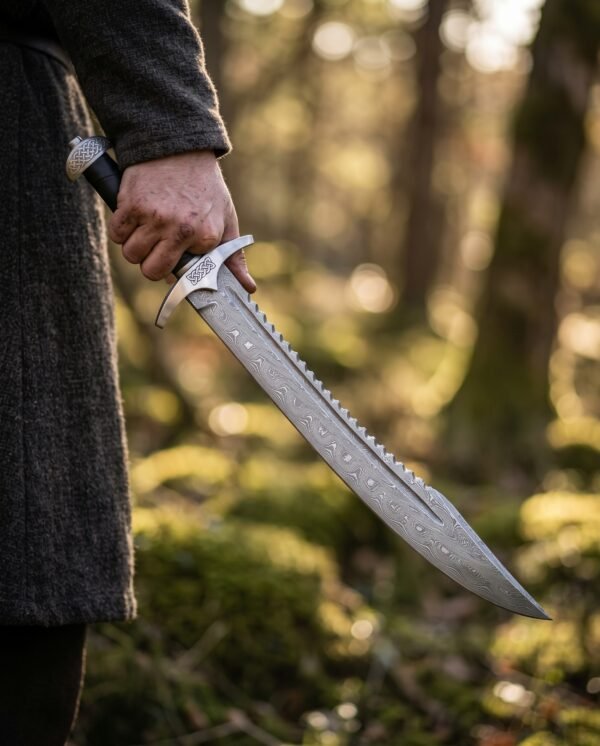
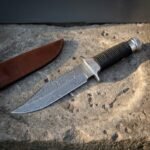
The Cordfang is a heavy clip point fixed blade in pattern welded 1095 and 15N20, with a row of sawback teeth cut into the spine, a steel guard carrying a band of hand cut Norse interlace, a black cord wrapped grip and a knurled steel butt cap. It comes with a stitched brown leather belt sheath. This is the classic late twentieth century survival knife shape rendered in Damascus rather than bead blasted stainless.
The sawback is the part everyone asks about and the part most often misunderstood. Teeth on a knife spine did not appear so you could fell trees with a seven inch blade. They came out of aircrew survival kits, where the job was cutting through a fuselage skin or a canopy frame to get out, and they carried over into general issue survival knives afterward because a toothed spine is genuinely useful for notching, scoring and rasping even though it makes a poor saw. This knife is welded, forged, ground, etched, hardened and fitted in the Czech Republic.
Tang, steel and handle decide whether a knife lasts, and how to choose a Norse knife works through all three. Damascus here means 1095 and 15N20 forge welded and etched, and what Damascus steel actually is covers how the layers get there. For dressing game the skinner knives have the shorter belly you want.
Specifications
| Blade steel | Pattern welded 1095 and 15N20 Damascus, hardened to 58 to 60 HRC |
|---|
| Blade finish | Acid etched flowing pattern |
|---|
| Blade length | Approximately 7 inches |
|---|
| Overall length | Approximately 12 inches |
|---|
| Blade shape | Clip point with a long belly and a sawback spine |
|---|
| Sawback | Cut teeth along roughly the rear half of the spine |
|---|
| Guard | Double steel guard |
|---|
| Bolster | Single steel bolster behind the guard, hand cut with Norse interlace |
|---|
| Grip | Black cord wound tight over a shaped core |
|---|
| Butt cap | Polished steel collar with a knurled steel cap |
|---|
| Sheath | Brown vegetable tanned leather, stitched, with a belt loop |
|---|
| Included | Knife and leather sheath |
|---|
| SKU | RK-1866 |
|---|
What a sawback spine is actually good for
Set expectations first. A row of teeth three or four inches long on a rigid knife spine will not saw firewood, and anyone who tells you otherwise has not tried it. A real saw needs a long stroke, set teeth that cut a kerf wider than the blade, and a thin flexible plate. A sawback has none of those things.
What it does well is a shorter list and a genuinely useful one. It notches. Score a groove across a green sapling and you can snap it cleanly, which is how you make tent pegs, pot hangers and trap triggers. It rasps. Drawn sideways across wood or bone it removes material fast, which is how you fit one piece into another. It scores. Run along a line on plastic, bark or thin sheet material and it will start a break where you want it. And it cuts fibrous material that a plain edge slides off, particularly wet rope and webbing under tension.
The teeth on this one are cut rather than stamped, filed to consistent depth along the rear half of the spine, and left with the forward half of the spine plain so you still have somewhere safe to put a thumb.
Damascus, cord and knurled steel
The blade is 1095 and 15N20 forge welded, drawn and folded, then etched so the nickel bearing layers stay bright while the plain carbon layers go dark. Both harden together in one quench and the finished blade sits at 58 to 60 HRC, which for a fixed blade this size means real edge retention with enough temper behind it to survive being used as a lever when nothing better is to hand.
The grip is cord wound tight over a shaped core rather than slabs or a moulded polymer. Cord has three advantages worth having in the field. It grips hard when wet, it can be replaced anywhere with a length of line and forty minutes, and it never cracks the way a synthetic scale eventually does. The knurled steel butt cap is not just a cap either. It gives you a hard striking surface at the back of the knife and it takes the wear when the knife is set down butt first.
Engraving, runes and your own design
Use the rune converter on this page to turn a name, a date or a short phrase into Elder Futhark and we will cut it into the steel or the leather. If you would rather have a Viking pattern than a rune line, choose your own design in the engraving option above the add to cart button and tell us where it goes. Where a piece already carries an engraved design, your chosen engraving replaces it rather than sitting alongside it. On this knife the interlace across the guard is that design, so a rune line cut there replaces it. A short line can also be tooled into the leather sheath instead. See the engraving page.
Handling and balance
The balance sits just forward of the guard, so the knife has enough mass out front to chop and baton small wood without becoming clumsy in the hand. The guard is deep enough on both sides that a wet hand will not run onto the edge, and the cord under the palm swells slightly toward the rear so the hand indexes in the same place every draw. The knurled butt gives your little finger something to hook against on a hard pull.
Care
Neither steel in the billet is stainless, so dry the blade after use and keep a light film of mineral oil on it. Pay attention to the sawback, because the gullets between the teeth trap moisture and debris. A stiff brush and a drop of oil clear them. Get oil into the cut interlace on the guard as well. Cord holds water, so let the grip dry properly before the knife goes back in the sheath, and do not store the knife sheathed long term. Feed the leather once or twice a year. Our steel care page covers oiling, spotting and refreshing a tired etch.
Damascus wants oil more than plain steel does, because the etch that shows the pattern also opens the surface, and caring for a Damascus pattern covers what to use.
Made in the Czech Republic
This piece is made by hand in the Czech Republic, in a workshop that still works the old way. The steel is forged, ground, heat treated and finished by smiths who learned the trade from the people before them, and the wood, horn and leather are cut and fitted by hand rather than pressed out on a line. That is also why no two pieces come out exactly the same.
Ransack Viking is a United States company. We import these pieces ourselves, check every one when it lands and ship from our warehouse in Chicago, Illinois. Engraving is done here in the United States after the piece arrives, so your runes or your own design go on before it leaves for you.
A note on handmade variation
This is hand made rather than machine made or bulk produced, so what arrives will not be a pixel for pixel copy of the photograph. No Damascus billet draws out twice the same way, so the figure on your blade will be its own. The exact spacing of the filed teeth, the depth of the cut interlace, the tension of the cord wrap and the tone of the leather all vary. The steel, the dimensions and the build are the same every time. The character is not.
Frequently asked questions
Will the sawback actually cut wood?
It will notch, score and rasp wood very well. It will not saw through a log, and no knife spine saw ever has.
Is the knife sharp out of the box?
Yes, shaving sharp along the main edge. The clip is left with a thin unsharpened swage unless you ask otherwise.
Can I re wrap the handle myself?
Yes. The cord is wound over a shaped core and can be stripped and rewound with a length of paracord.
Will the Damascus rust?
It can. Both steels are carbon steels with no meaningful chromium. Keep it dry and oiled, especially in the tooth gullets.
Is it full tang?
The tang runs the length of the grip and is captured by the knurled butt cap, which is what lets the knife take hard use.
How long until it ships?
One to two weeks of processing, then free shipping inside the United States.
What is in the box
- One Cordfang Damascus combat knife in 1095 and 15N20
- One stitched brown leather belt sheath
- A light protective oil film on the blade
- Forged and finished in the Czech Republic
Explore the range
More in bowie knives, hunting knives and Viking knives, with field and sharpening notes in the guides.
Close to this one
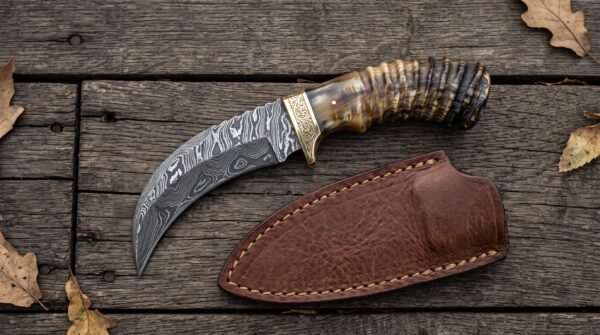
In the same category sits the Ramwhorl bowie knife, 13 inches overall. A near match for this one is the Brasscliff bowie knife, 15 inches overall. Closest to this in the range is the Ebonknot tanto knife, pattern welded Damascus.
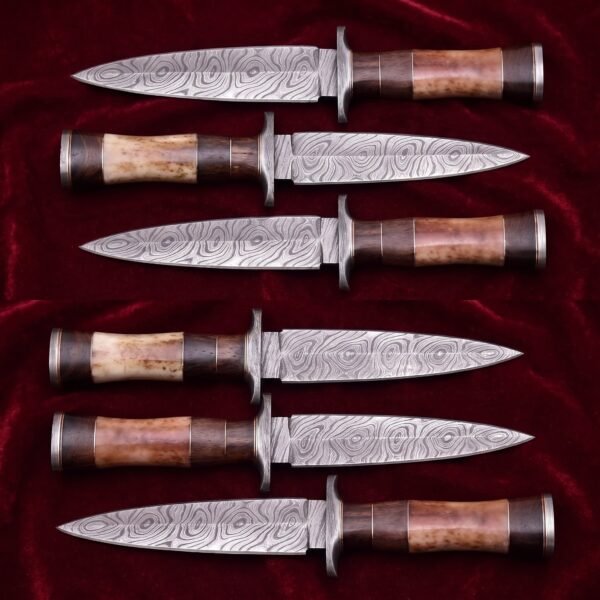
Fitting out further, the Bonewhorl dagger knife belongs with it. Nothing here exactly right, build one to your own spec on the custom Damascus knife page.

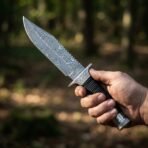
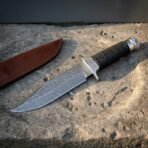
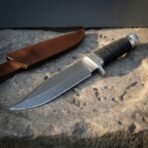
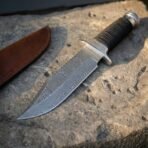
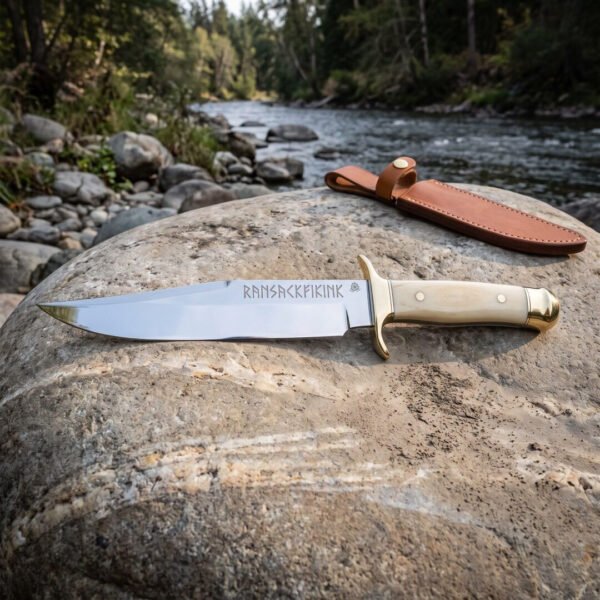
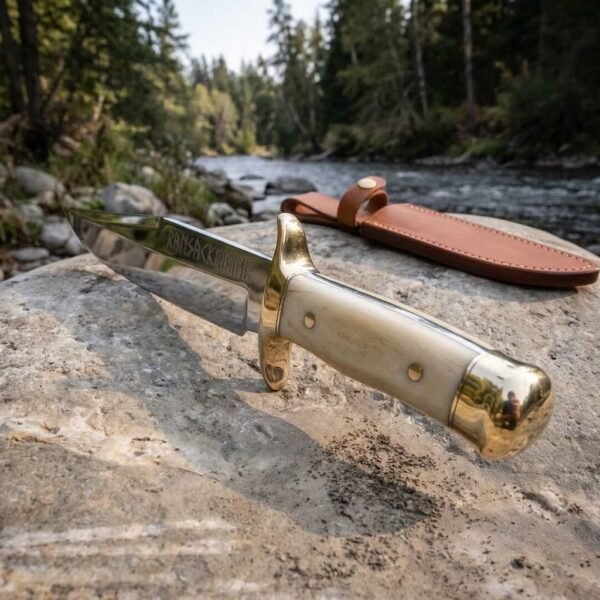
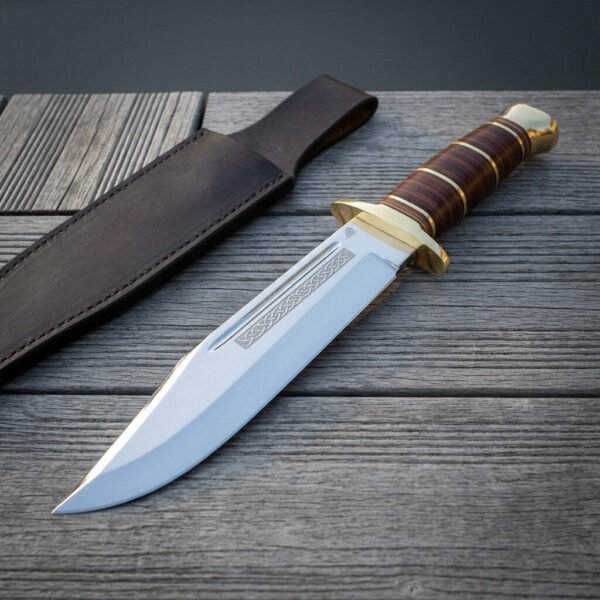
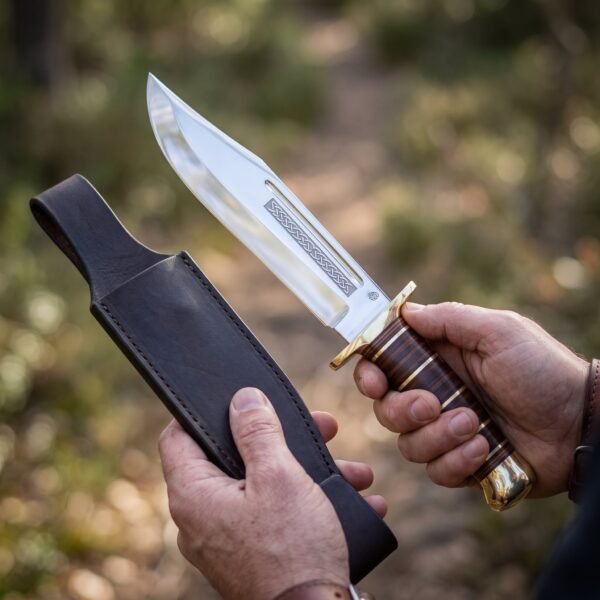
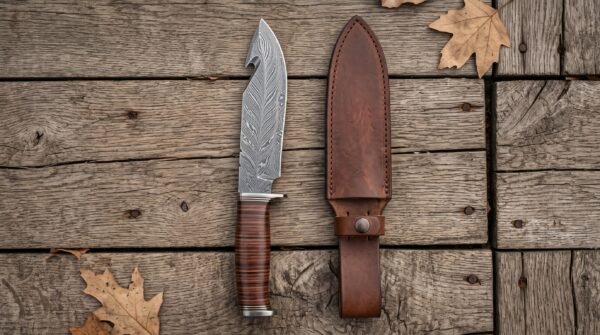
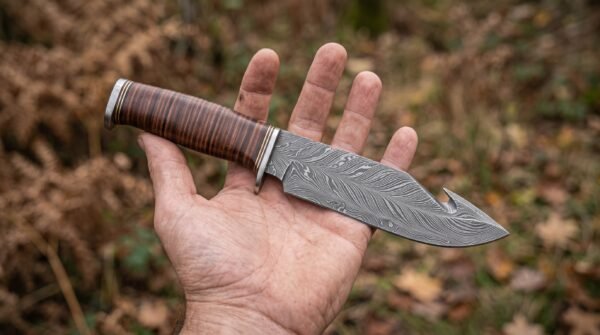
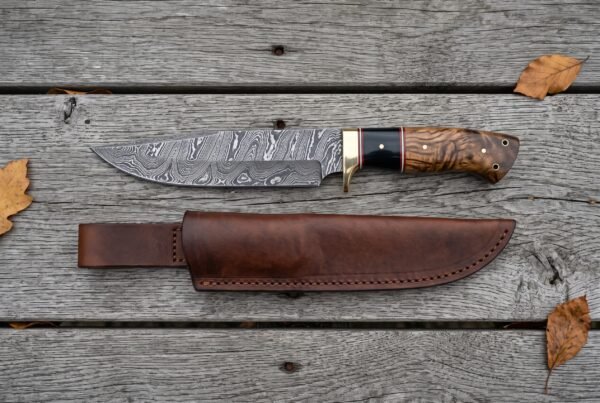
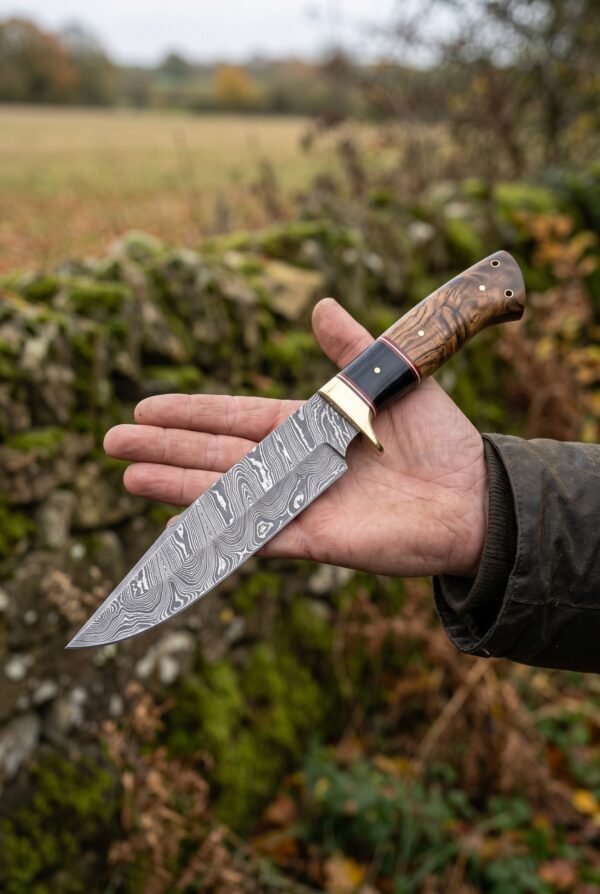
This knife beat every expectation I had. Came in a nice gift box which made it feel even more special. 10/10 would buy again.