
Mail is a fabric made of steel. Each ring passes through four others in the European four in one pattern, so the sheet moves like cloth, drapes over a shoulder and stops a cutting edge from reaching skin. It was the dominant body armour across Europe and Scandinavia for well over a thousand years, and it stayed in use long after plate arrived because nothing else covered an armpit or an elbow so well.
Everything on this page is hand woven from mild steel round wire, 16 gauge, with rings of roughly 9 mm inside diameter, closed one at a time. The rings are butted, not riveted. That is the important line: butted rings open under a thrust, so these are built for display, living history, costume, film and light reenactment, and none of them is safe for full contact combat. Shirts run about 16 to 28 pounds depending on cut, in bright or blackened finishes, alongside coifs and gauntlets.
Wear it over a padded gambeson and belt it at the waist, or your shoulders will carry the lot.
Free US shipping
On most pieces. Heavier and oversized ones carry a flat charge.
Hand Forged
Heated, hammered and ground by hand.
Engraving available
Names, dates or Norse runes on most pieces.
Ships from Chicago
Inspected and dispatched from our Chicago warehouse. No import duty, no customs delay on US orders.
Chainmail Armor
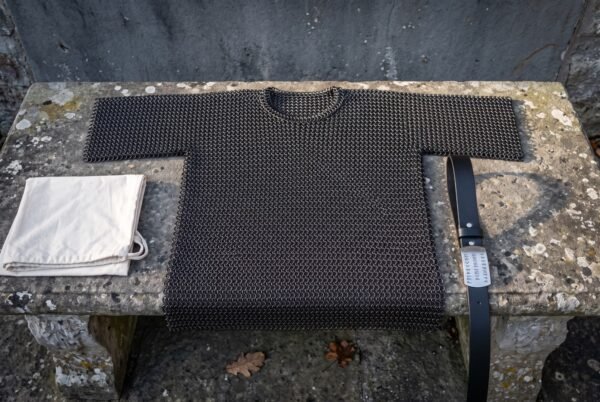
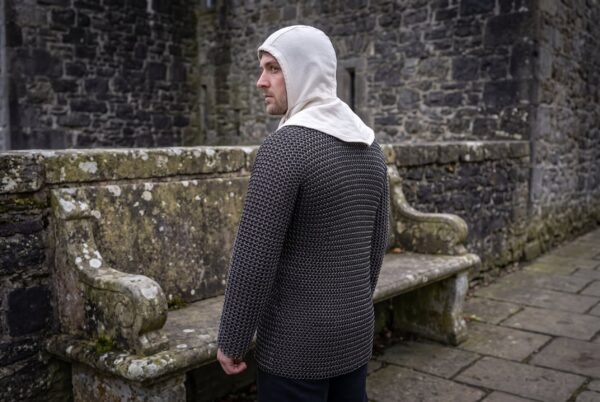
Ringmantle Hand Woven Butted Chainmail Shirt | Chest 46 Inch Short Sleeve | Blackened Mild Steel Rings with 4 in 1 European Weave | Norse Reenactment Gift | RK-1581
Original price was: $289.00.$231.20Current price is: $231.20.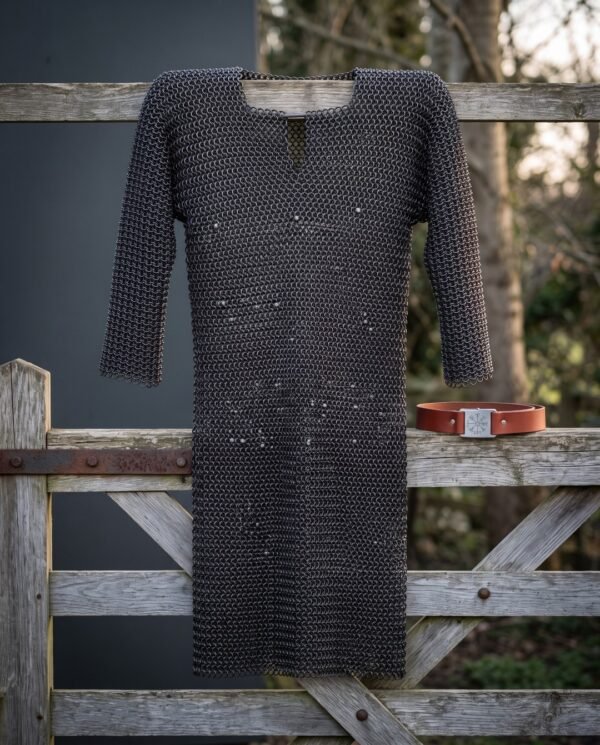
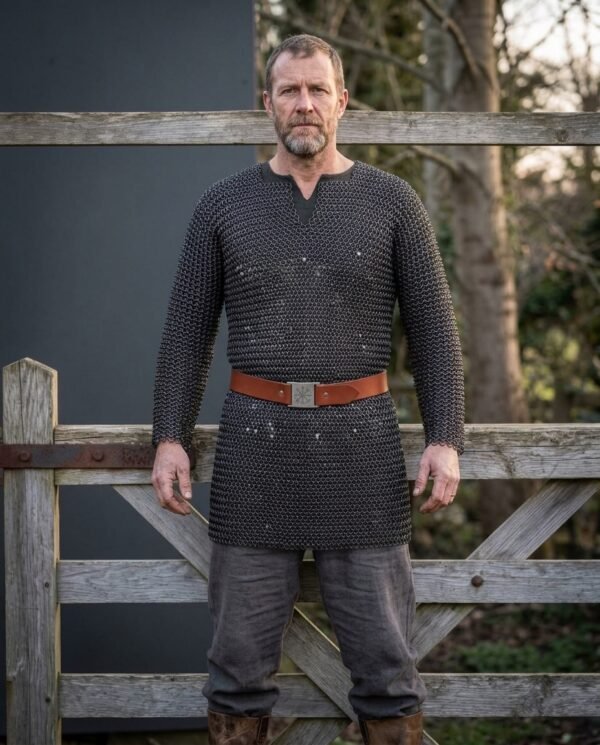
Nightweave Hand Made Blackened Mild Steel Chainmail Hauberk | 48 Inch Chest Knee Length | 9 mm Butted Rings in a 4 in 1 Weave | Viking Reenactment Gift | RK-1492
Original price was: $349.00.$279.20Current price is: $279.20.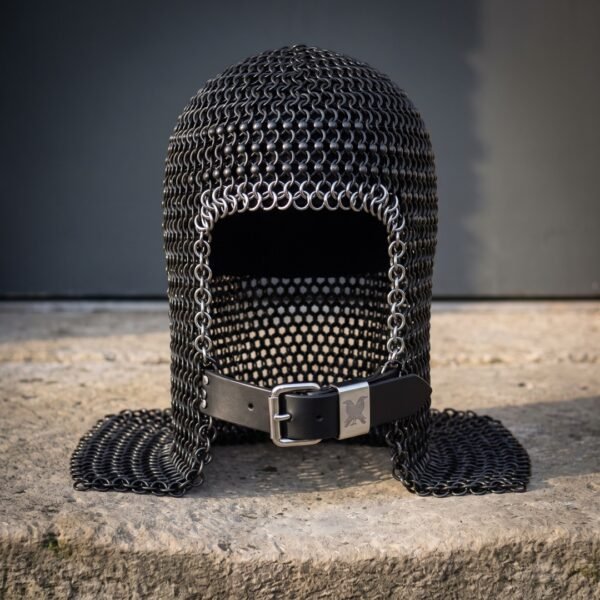
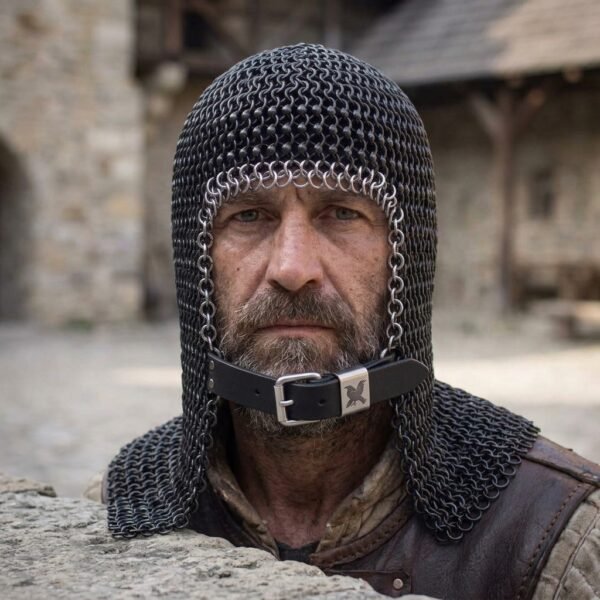
Ravenmail Hand Forged Blackened Chainmail Coif | Butted Mild Steel Mail | Integral Ventail, Bright Ring Face Course and Raven Strap | Viking Gift | RK-1480
Original price was: $229.00.$183.20Current price is: $183.20.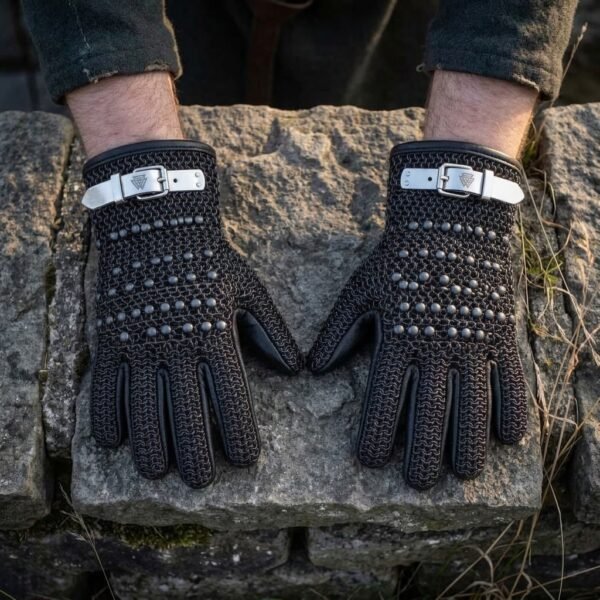
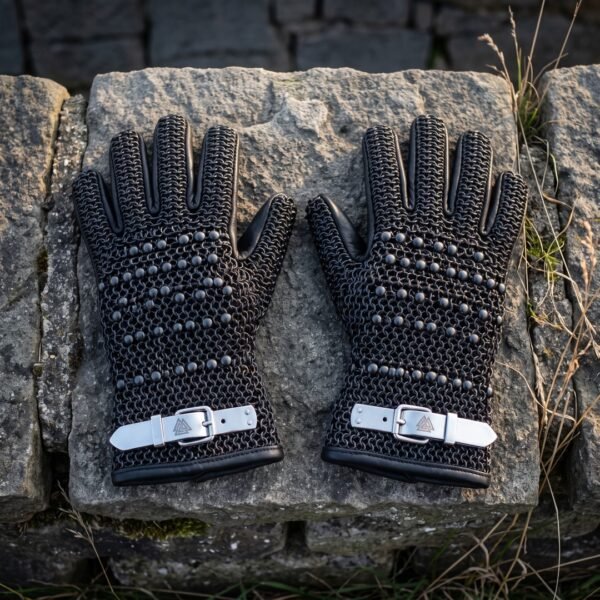
Grimhold Hand Forged Chainmail and Leather Gauntlets with Domed Steel Studs & Buckled Cuffs | Norse Reenactment Gift | RK-1450
Original price was: $219.00.$175.20Current price is: $175.20.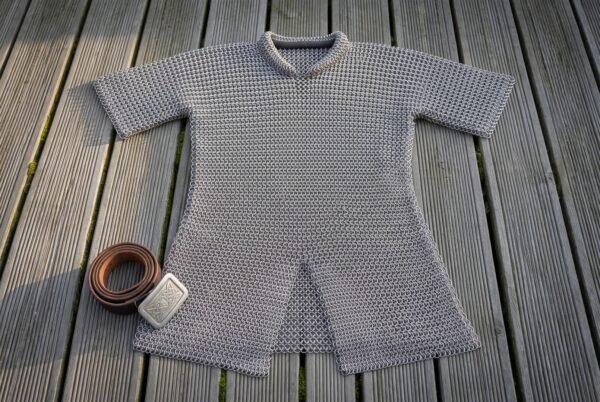
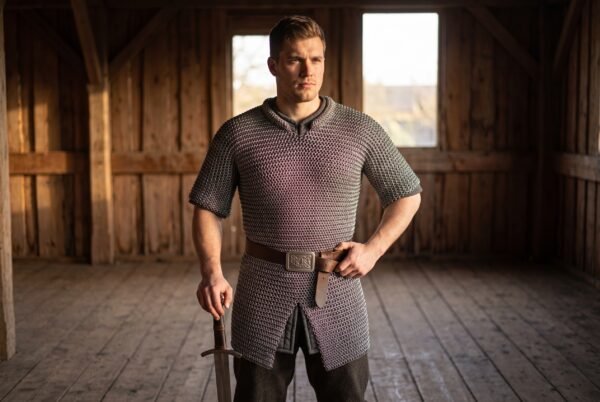
Ringwarden Hand Made Butted Chainmail Hauberk | Thigh Length with Short Sleeves | 9 mm Mild Steel Rings and Split Skirt | Norse Reenactment Gift | RK-1519
Original price was: $329.00.$263.20Current price is: $263.20.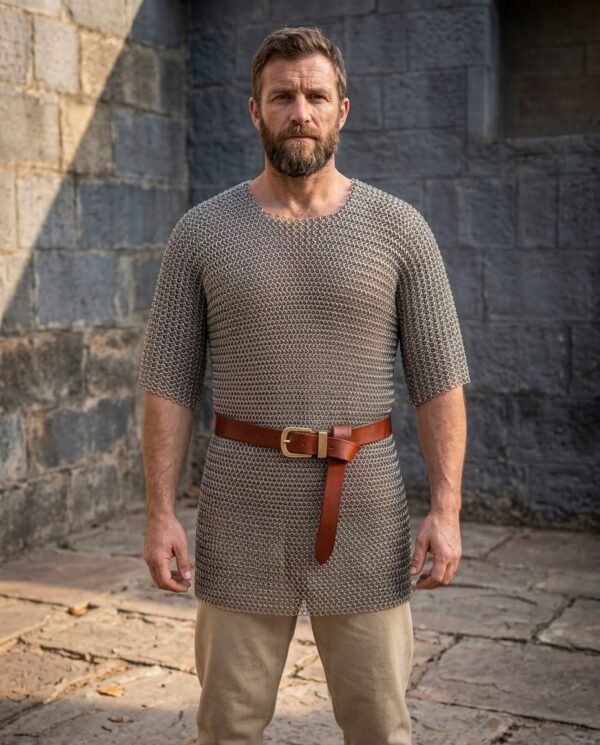
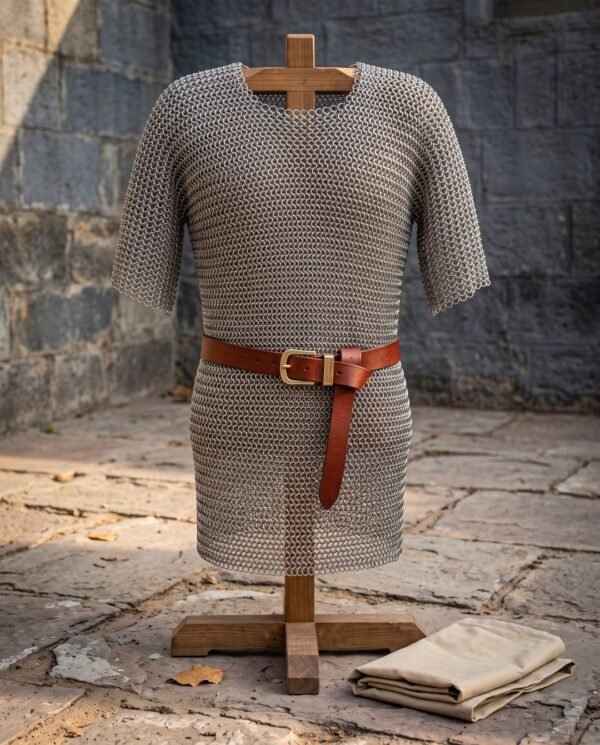
Ringmantle Hand Made Mild Steel Chainmail Hauberk | Butted Round Wire Rings | Short Sleeves and Thigh Length Skirt | Norse Reenactment Gift | RK-1435
Original price was: $389.00.$311.20Current price is: $311.20.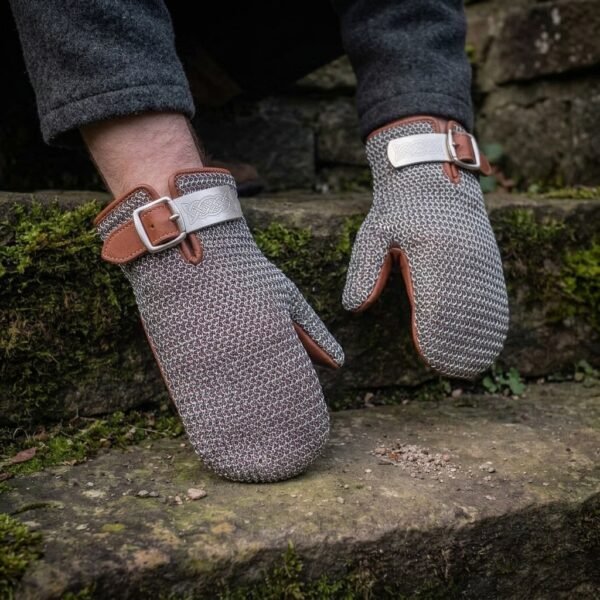
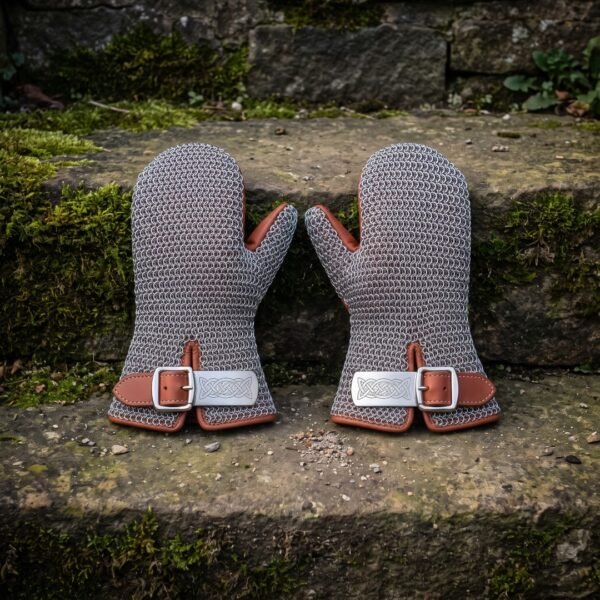
Ringward Hand Forged Chainmail Mitten Gauntlets with Leather Bound Cuffs & Knotwork Buckle Plates | Norse Reenactment Gift | RK-1470
Original price was: $189.00.$151.20Current price is: $151.20.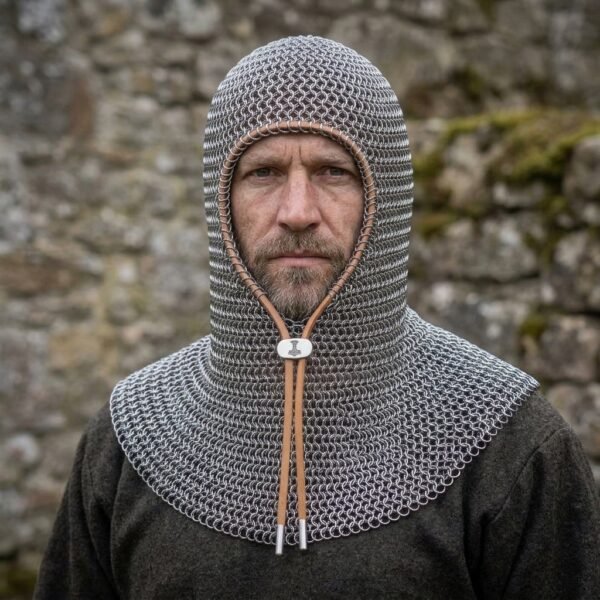
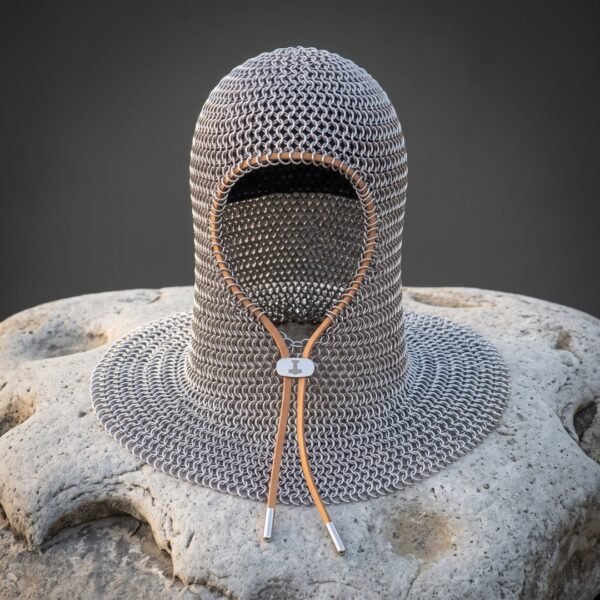
Hoodwarden Hand Forged Chainmail Coif | Butted Mild Steel Mail | Leather Bound Face Opening, Drawstring Throat and Shoulder Mantle | Viking Gift | RK-1473
Original price was: $199.00.$159.20Current price is: $159.20.How mail works, and where it stops working
A mail shirt is not a shell. It is a flexible sheet built from thousands of small rings, each one linked through four neighbours, and that structure is what makes it useful. A cutting edge landing on mail cannot part the rings, because the load spreads instantly across dozens of them and the whole sheet slides and bunches rather than splitting. Against a draw cut, mail is close to perfect.
Against a thrust it is a different story, and this is where ring construction decides everything. A narrow point arriving at speed does not try to cut the sheet. It tries to push two ring ends apart and slip between them. On riveted mail, every ring is closed with a rivet through overlapping ends, so forcing it open means shearing steel. On butted mail, the ends are simply pushed together, and a hard thrust will spring them.
All the mail on this page is butted, and every listing says so. That is why the intended use on every one of them reads display, living history, costume, film and light reenactment, and why none of it is offered for full contact combat. It is an honest limit rather than a defect, and butted mail has been the standard for display and film work for decades because it looks correct, drapes correctly and costs a fraction of riveted.
The other thing mail does not do is absorb impact. It stops a blade parting your skin, but the force still arrives. That is what the padded garment underneath is for. Mail without a gambeson is uncomfortable, colder, noisier and pinches the skin under the rings, and it is also the fastest way to make a 20 pound shirt feel like 40.
The mail in this collection
Eight pieces. Four cover the body, two cover the head, two cover the hands. All are hand wound, cut and closed ring by ring.
Hauberks and mail shirts
The bright hauberk with short sleeves and a thigh length skirt uses 16 gauge round wire at roughly 9 mm internal diameter in the four in one weave, with the skirt split front and back so you can sit down and, historically, ride. It fits a chest of roughly 40 to 50 inches over a gambeson and weighs around 18 to 24 pounds. It also carries the option of a rune engraved neck plaque.
The made to measure hauberk is the same 9 mm ring in 16 gauge, bright finish, cut thigh length with short sleeves, a standing collar and a split skirt, and it is built to your chest measurement and chosen body length. Roughly 18 to 24 pounds depending on size. The standing collar is the practical difference, since it keeps the mail off the back of your neck when you turn your head.
The blackened knee length hauberk is the largest piece here. Approximately 9 mm rings in 16 gauge, four in one, cut to fit up to a 48 inch chest over padding, about 40 inches long with three quarter sleeves, and approximately 24 to 28 pounds. The neck is a keyhole slit with a rounded collar so your head goes through without a fight, which sounds trivial until you have wrestled with a shirt that has a plain round neck.
The blackened short sleeved shirt is the lightest of the four at around 16 pounds, hip length, built as standard for a 46 inch chest. If you want mail for costume or for a long day on your feet, this is the sensible weight to start at.
Coifs
Two coifs, both butted mild steel in 16 gauge with a wide shoulder mantle that spreads the weight across your shoulders instead of hanging off your skull.
The open faced coif is four in one throughout, with russet vegetable tanned leather binding around the face opening so the ring ends are not sitting against your cheek, and a leather drawstring with a slider and metal tipped ends at the throat. One adult size, cut roomy to go over a padded arming cap.
The blackened coif has an integral ventail, the flap of mail that comes across the lower face and fastens on the far side, and a course of bright polished rings framing the face opening so the shape reads clearly against the black. It closes with a black leather strap, a steel roller buckle and a raven stamped keeper. The blackening is an oxide grown on the steel rather than a coating, so it will not chip off.
Gauntlets
Two pairs, and they take opposite approaches.
The fingered pair is butted mild steel mail over a full grain leather glove, with domed steel studs set through the leather across the knuckles and the cuff, a leather strap and roller buckle at each cuff, and plain leather palms and finger fronts so you keep feel in your hands. Blackened mail over matt black leather.
The mitten pair is mail in 16 gauge round wire on vegetable tanned leather cuffs, saddle stitched, with steel roller buckles and engraved Celtic knotwork strap plates. One adult size with a generous palm, meant to go over a padded glove, sold as a matched pair and oiled before packing.
Rings, weave and weight across the range
Every figure below comes from a listing on this page. Mail is wound, cut and closed by hand, so ring counts and finished weights vary a little between two shirts of the same cut.
| Piece | Rings and weave | Cut | Fit | Weight | Finish and fittings |
|---|---|---|---|---|---|
| Hauberk, bright | 16 gauge, about 9 mm, four in one butted | Short sleeves, thigh length, split front and back | Chest roughly 40 to 50 in over a gambeson | About 18 to 24 lb | Bright mild steel, rune plaque option |
| Hauberk, bright, made to measure | 16 gauge, about 9 mm, four in one butted | Thigh length, short sleeves, standing collar, split skirt | Built to your chest and chosen body length | Roughly 18 to 24 lb | Bright mild steel |
| Hauberk, blackened | 16 gauge, about 9 mm, four in one butted | Knee length, about 40 in long, three quarter sleeves | Up to a 48 in chest over padding | About 24 to 28 lb | Blackened steel, keyhole neck with rounded collar |
| Mail shirt, blackened | 16 gauge, about 9 mm, four in one butted | Short sleeves, hip length | Standard build for a 46 in chest | Around 16 lb | Blackened steel |
| Coif, open face | 16 gauge, four in one butted | Full coif with a wide shoulder mantle | One adult size, roomy over an arming cap | Not listed | Russet leather face binding, drawstring with slider |
| Coif, blackened with ventail | 16 gauge butted | Full coif, wide mantle, integral ventail | One adult size | Not listed | Grown black oxide, bright ring face course, raven keeper |
| Gauntlets, fingered | Butted mild steel mail | Mail over a full grain leather glove | Leather palms and finger fronts for feel | Not listed | Domed studs, strap and roller buckle at each cuff |
| Gauntlets, mitten | 16 gauge round wire butted | Mitten cut on leather cuffs | One adult size, generous palm, over a padded glove | Not listed | Saddle stitched cuffs, knotwork strap plates |
Ring size is doing more work in that table than it looks. At 9 mm inside diameter in 16 gauge wire, the sheet is dense enough to read as proper mail at arm's length and light enough that a shirt does not become unwearable. Larger rings drop the weight and look coarse. Smaller rings look superb and add a great deal of weight and cost.
Sizing and what goes underneath
Chest measurements on mail are always measured over the padding, not over a shirt. A gambeson adds a genuine two to four inches to your chest, so ordering to your bare measurement gives you a shirt that will not close over the padding you actually need.
Length is the other decision. Hip length is the lightest and the easiest to move in. Thigh length is the classic Viking Age and early medieval cut. Knee length is the most imposing and the heaviest, and it needs a split skirt or you cannot take a full stride.
Belt it. A mail shirt hanging free puts all of its weight on your shoulders and trapezius, and after an hour you will know about it. A belt at the waist transfers roughly half that load to your hips. This single habit is the difference between mail being wearable all day and being abandoned by lunchtime.
Sleeve length is a genuine trade. Short sleeves are lighter and let you move your arms freely. Longer sleeves cover more and add weight where it costs you most, at the end of a lever.
Blackened and bright
Four pieces here are bright mild steel and four are blackened. The blackening used on the coif is described as an oxide grown on the steel rather than a coating, which is the important distinction. A grown oxide is part of the surface, so it cannot chip or flake the way paint or a lacquer does. It also darkens the metal without hiding the shape of the rings.
Practically, black hides handling marks and looks heavier and older on camera. Bright steel reads as mail from further away and photographs with more life, especially outdoors. Bright also shows rust sooner, which is arguably an advantage because you deal with it earlier.
Neither finish is rustproof. Mild steel is mild steel.
Care and storage, where all the work is
Rust is the entire maintenance story with mail, and it is worse than with a blade because a shirt has thousands of contact points where two rings touch and hold moisture between them.
After wearing, hang the shirt somewhere airy and let it dry completely before it goes away. Never fold a damp shirt into a bag. If it has been out in rain or you have sweated through the gambeson, it needs oiling before storage, not after you find the orange.
The classic method still works and is still the fastest. Put the mail in a sturdy sack or a barrel with a few handfuls of clean dry sand, close it, and roll or shake it for several minutes. The sand scours every ring against its neighbours and takes surface rust off in a way no cloth ever will. Shake it out, then oil it.
To oil, work a light machine or mineral oil through the whole garment with your hands or a cloth, then hang it and let the excess drain. Too much oil transfers onto clothing. Too little and you are back where you started. Store it hanging on a broad shouldered hanger or laid flat, never crushed in a box, and never in a sealed plastic bag where condensation collects. Our full guide to caring for chainmail goes through it step by step.
Repairing a ring
Rings will open. On butted mail that is normal wear rather than a failure, and it is the easy part of owning it. You need two pairs of flat nosed pliers and nothing else.
Grip the ring either side of the opening, twist the ends past each other laterally to open it, thread it through its four neighbours, then twist back and squeeze the ends closed until they meet flush. Never open a butted ring by pulling the ends apart in the plane of the ring, because that distorts it into an oval and it will never close properly again.
Keep a few spare rings from the same wire. A shirt of this size will shed one occasionally and a five minute repair on the day is better than a hole that grows.
Engraving
Mail itself cannot be engraved, so personalisation is done on the fittings. The bright thigh length hauberk offers a rune engraved neck plaque, and the leather strap plates, buckles and cuffs on the coifs and gauntlets all take engraving.
Work is done in the United States after the piece arrives. Text engraving is 19 dollars, symbol engraving is 39 dollars and a family crest is 49 dollars. Elder Futhark is a phonetic alphabet rather than a cipher, so a name transliterates by sound and there is no rune for the letter C. See our Elder Futhark guide.
Engraving is permanent and an engraved piece cannot be returned. Check the spelling before you order.
Where these come from and how they ship
Ransack Viking is a US company based in Chicago, Illinois. The pieces are handmade in the Czech Republic, then imported, inspected and shipped from Chicago. Engraving is done in the US after arrival.
Mail is heavy and ships in a substantial carton, so allow for that and make sure someone can take delivery. Because every ring is wound, cut and closed by hand, no two shirts have exactly the same ring count or the same finished weight, and quoted weights are ranges for that reason. The made to measure hauberk takes longer than the standard cuts because it is built to your figures.
How to choose
If this is your first mail and you want to wear it, take the blackened hip length shirt at around 16 pounds. It is the lightest thing here and the one you will actually keep wearing.
If you want the classic early medieval silhouette, take a thigh length hauberk. Choose the made to measure one if your chest or torso length sits outside the usual range, because a shirt cut to your figures hangs completely differently to one that nearly fits.
If the piece is going on a stand or a mannequin and presence is the point, take the blackened knee length hauberk and pair it with a helmet and a coif.
And whichever you take, buy or borrow a gambeson. It is not optional padding, it is the thing that makes mail work.
Browse related categories
- The full Viking armour collection
- Gambesons and brigandines to wear underneath
- Medieval helmets to go over a coif
- Plate armour and harness
- Scale and lamellar armour
- Leather armour and bracers
- Round shields for the same kit
- Belts to take the weight at your waist
Guides worth reading first
- Caring for chainmail: rust, sand and oil
- Chainmail, plate and lamellar compared
- Viking armour explained
- Buying a Viking helmet
- Gifts for reenactors
Frequently asked questions
What is the difference between butted and riveted mail?
Butted rings are closed by pushing the ends together. Riveted rings are closed with a rivet through overlapping ends. A hard thrust can spring a butted ring open, while opening a riveted one means shearing steel. Everything on this page is butted, which is why it is sold for display and light reenactment rather than full contact.
Can I fight in this?
No. Every listing here states that these are for display, living history, costume, film and light reenactment, and not safe for full contact combat. Butted rings open under a thrust. If you need combat rated mail, you need riveted.
What size should I order?
Measure your chest over the padded gambeson you will actually wear, not over a shirt. A gambeson adds a real two to four inches. One hauberk here is made to your own chest measurement and chosen body length, which is the answer if you fall outside the standard cuts.
How heavy is a mail shirt?
The pieces here run from around 16 pounds for the hip length shirt to approximately 24 to 28 pounds for the blackened knee length hauberk. Belt it at the waist and roughly half that weight moves off your shoulders and onto your hips.
Do I need a gambeson underneath?
Yes. Mail stops an edge, it does not absorb impact, and the padded garment does that job. It also stops the rings pinching your skin, cuts the noise and makes the whole shirt feel considerably lighter. Gambesons are sold separately.
How do I stop it rusting?
Dry it fully before storing, then oil it. To clean off surface rust, tumble the mail in a sack with clean dry sand for a few minutes, shake it out and re oil. Store it hanging or laid flat, never crushed in a box or sealed in plastic where condensation collects.
What happens if a ring breaks?
You close it again with two pairs of flat nosed pliers. Twist the ends past each other laterally to open the ring, thread it through its four neighbours, then twist back and squeeze it flush. Never pull the ends apart in the plane of the ring, because that ovals it permanently.
Where is this mail made?
Ransack Viking is a US company based in Chicago, Illinois. The pieces are handmade in the Czech Republic, then imported, inspected and shipped from Chicago. Engraving is done in the US after arrival.
Featured pieces
 Ringmantle Hand Made Mild Steel Chainmail Hauberk
Original price was: $389.00.$311.20Current price is: $311.20.
 Grimhold Hand Forged Chainmail and Leather Gauntlets with Domed Steel Studs & Buckled Cuffs
Original price was: $219.00.$175.20Current price is: $175.20.
 Ringward Hand Forged Chainmail Mitten Gauntlets with Leather Bound Cuffs & Knotwork Buckle Plates
Original price was: $189.00.$151.20Current price is: $151.20.
 Hoodwarden Hand Forged Chainmail Coif
Original price was: $199.00.$159.20Current price is: $159.20.