
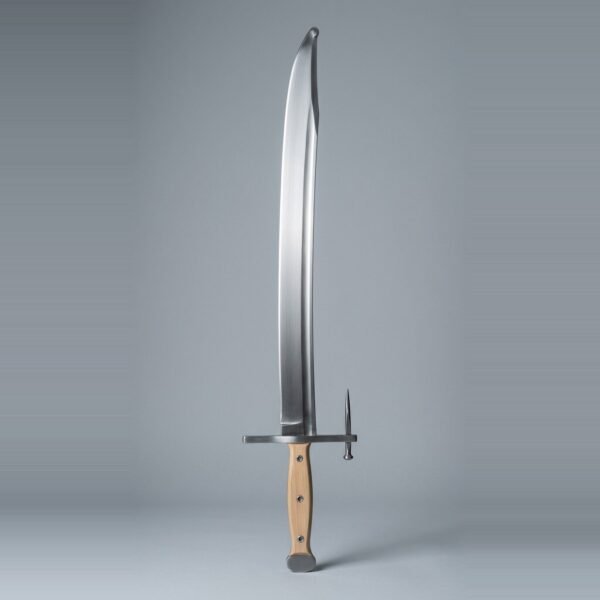
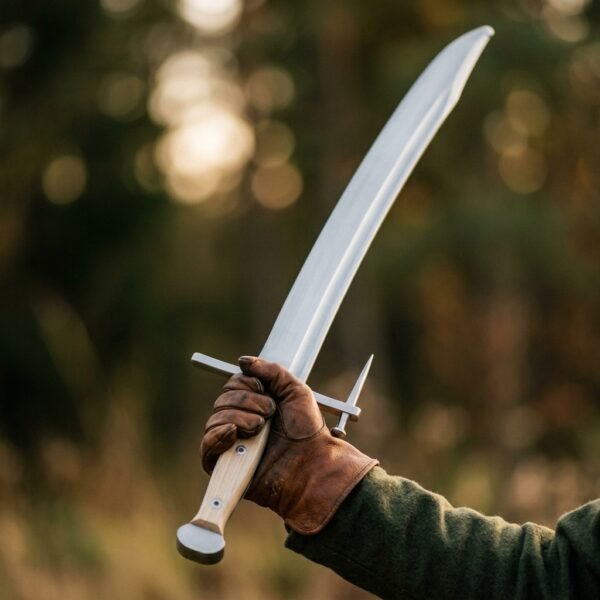
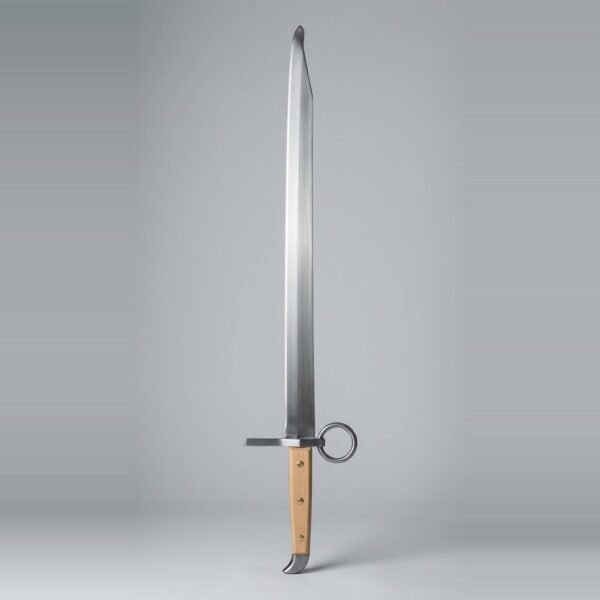
A messer is a single edged sword that a medieval German lawyer would have called a knife. The word means knife, and the construction is knife construction: a straight or slightly curved blade with one edge, a grip built up around the tang rather than through a hole in a pommel, and no pretence of being a knightly sword. It was carried by townsmen, huntsmen and soldiers, and it cuts with the confidence of something that started life as a working tool, much like the falchion beside it.
The five one handed pieces here run 31 to 33 inches overall on blades of 24.5 to 26 inches, with blade widths of 1.6 to 1.9 inches and listed weights from 2 pounds to 2 pounds 9 ounces. The two handed kriegsmesser is a different animal at 44 inches overall, a 33 inch blade 2 inches at its widest, and 3 pounds 12 ounces. Five are plain 1095 high carbon at 54 to 58 HRC, one is forge welded Damascus of 1095 and 15N20 at 58 to 60 HRC, and every piece comes with a leather sheath.
Start with a 32 inch one hander, which is where the first sword guide lands too. The kriegsmesser needs both hands and a lot more room.
Free US shipping
On most pieces. Heavier and oversized ones carry a flat charge.
Hand Forged
Heated, hammered and ground by hand.
Engraving available
Names, dates or Norse runes on most pieces.
Ships from Chicago
Inspected and dispatched from our Chicago warehouse. No import duty, no customs delay on US orders.
Messers
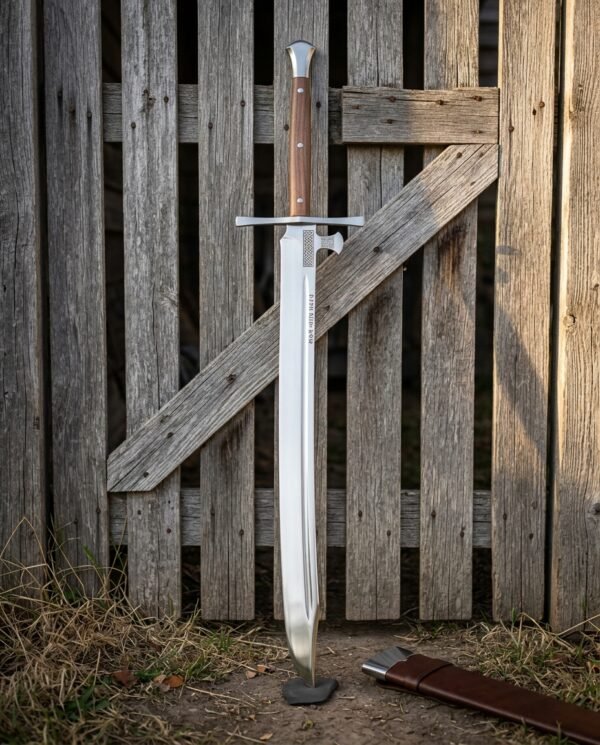
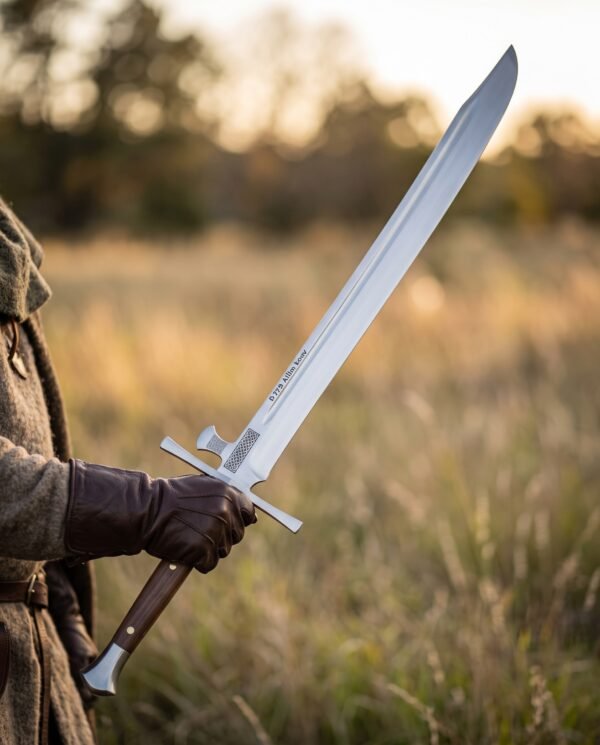
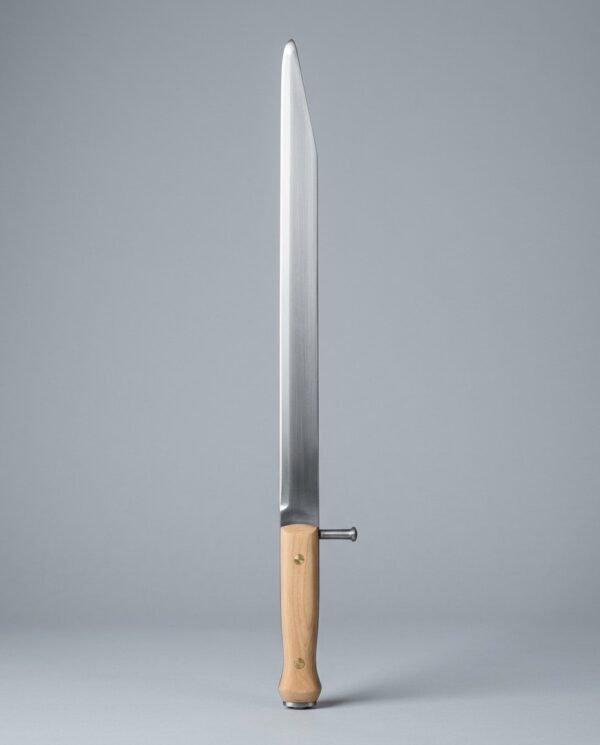
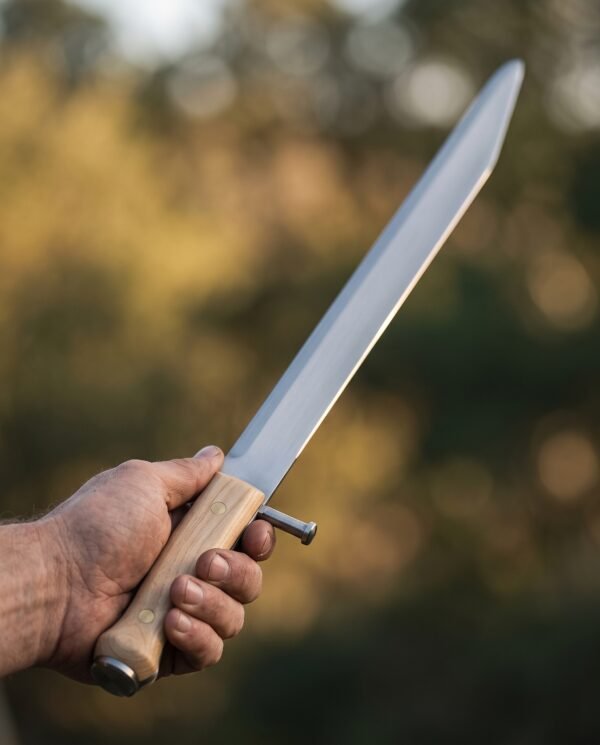
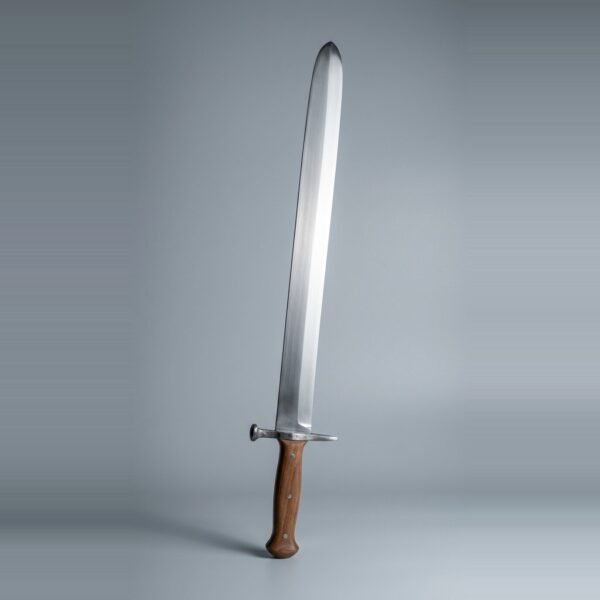
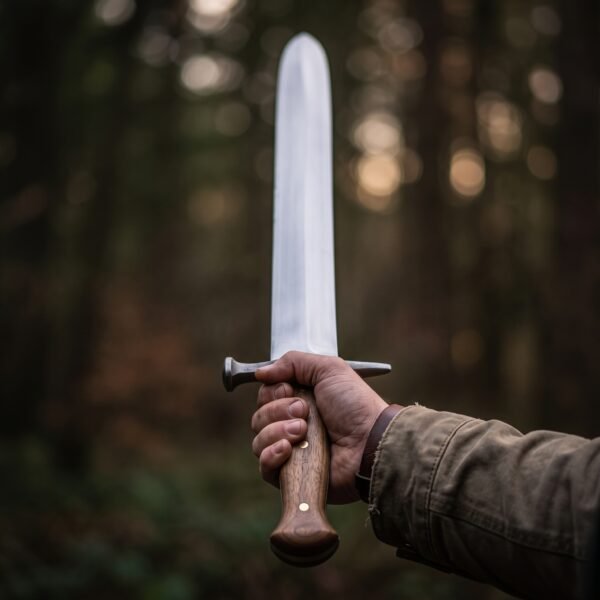
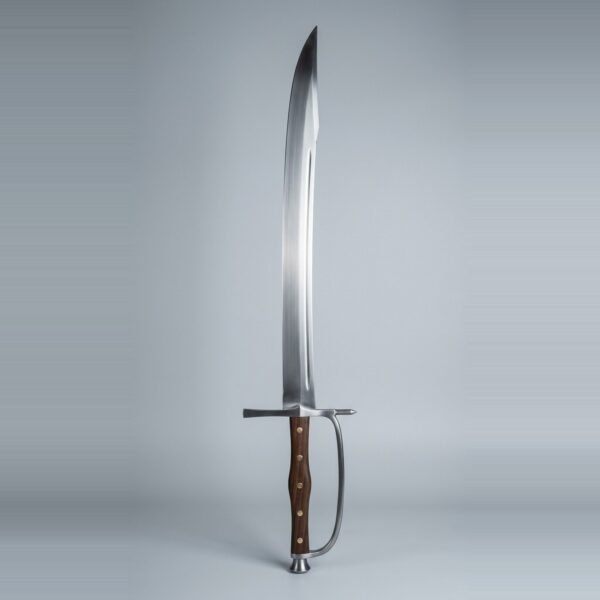
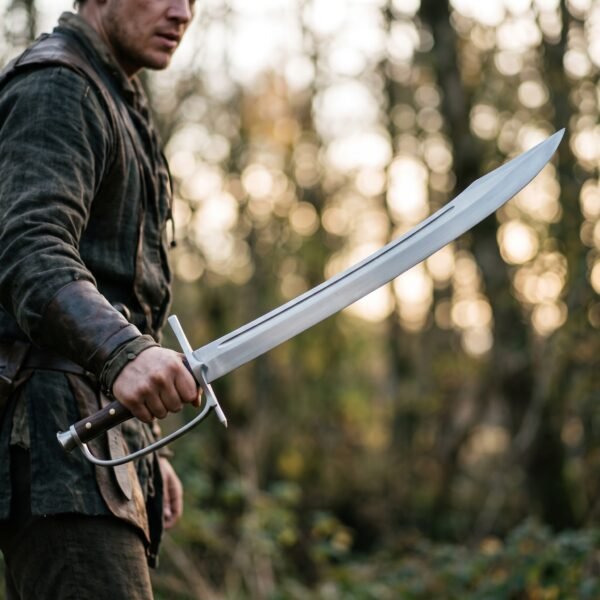
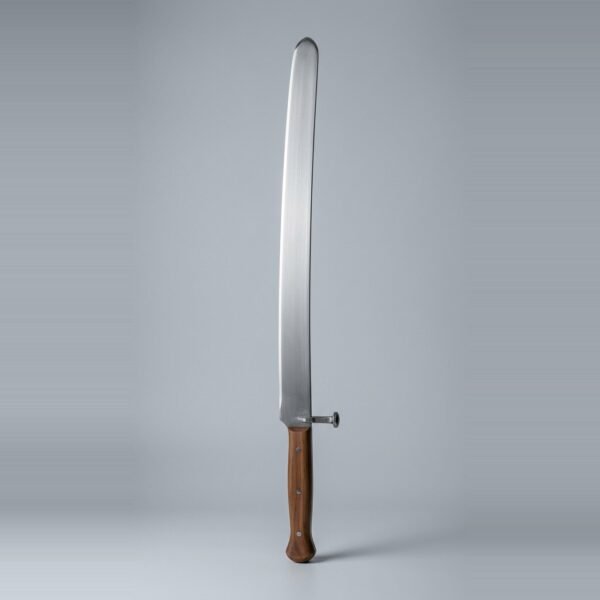
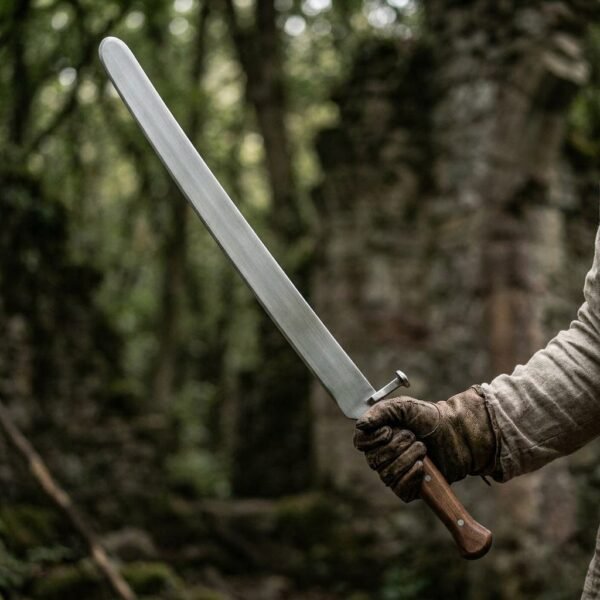
A sword that calls itself a knife
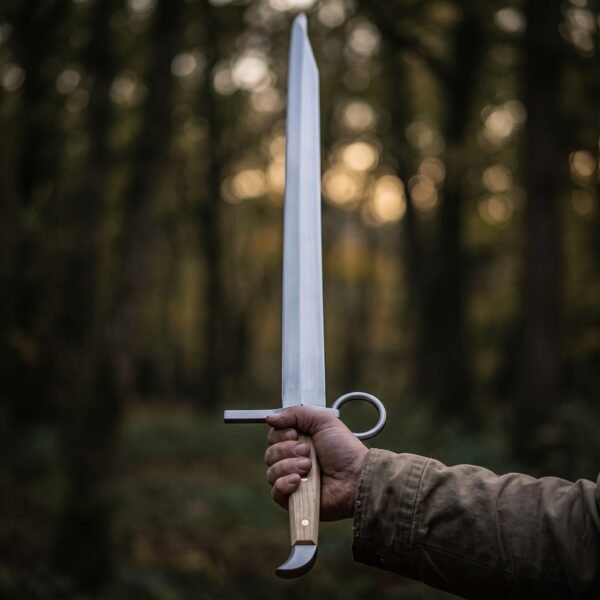
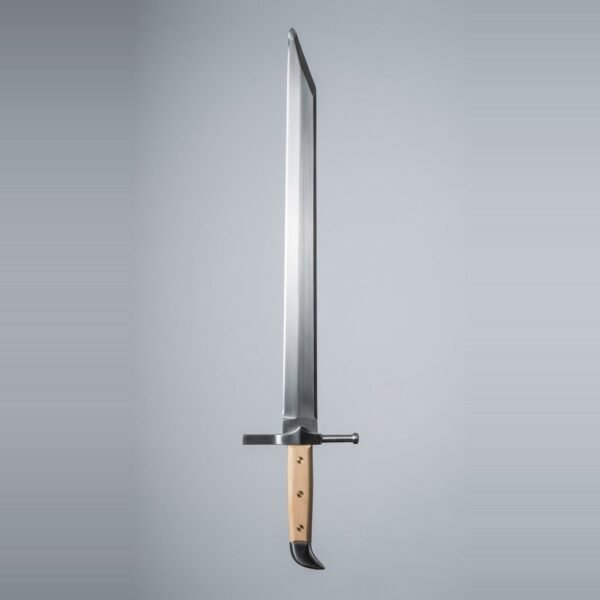
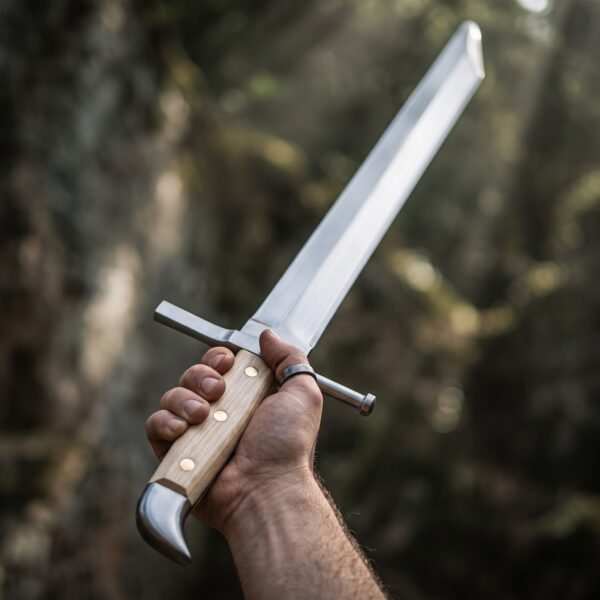
Messer is German for knife, and the name is not a joke or a euphemism. It is a description of how the thing is built. A knightly sword has a blade with a narrow tang running through a grip and peened over a pommel that clamps the whole assembly together. A messer is built the way a large kitchen knife is built. The tang runs the full width and length of the grip, the grip material is fixed to the sides of that tang, and the whole thing is a knife that happens to be over two feet long.
That construction has a consequence you can feel. The blade and the grip are one continuous piece of steel with wood or bone on the outside, so the sword is stiff through the hand and transmits everything the edge does straight into your palm. It is direct in a way a hilted sword is not, and it is why messer fencing manuals read more like knife work scaled up than like longsword play.
The blade follows the same logic. One edge, a spine you can put your other hand on, a broad flat and often a slight curve toward the point. Nothing about it is designed for a duel with rules. It cuts, it hacks, and the wide flat of the spine gives you something to push against for a controlled cut in a way a double edged blade cannot offer.
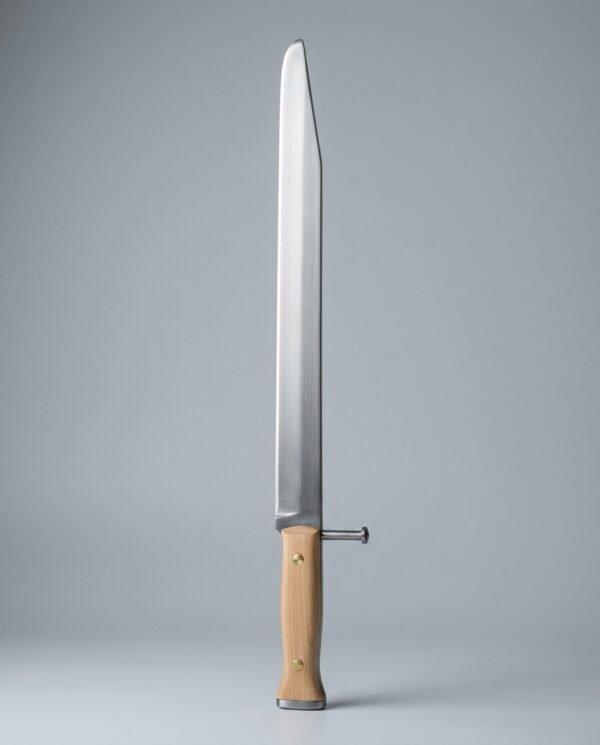
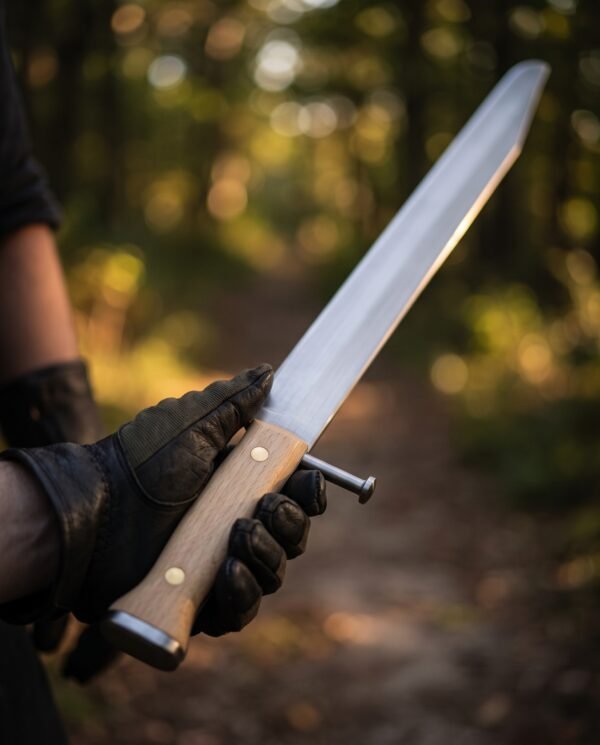
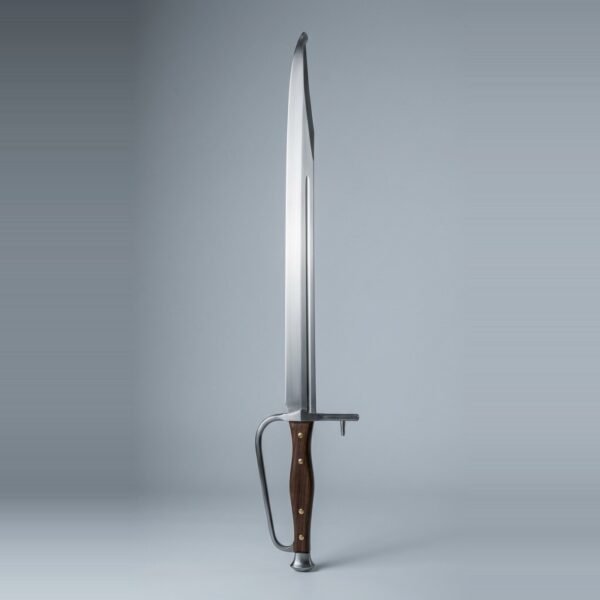
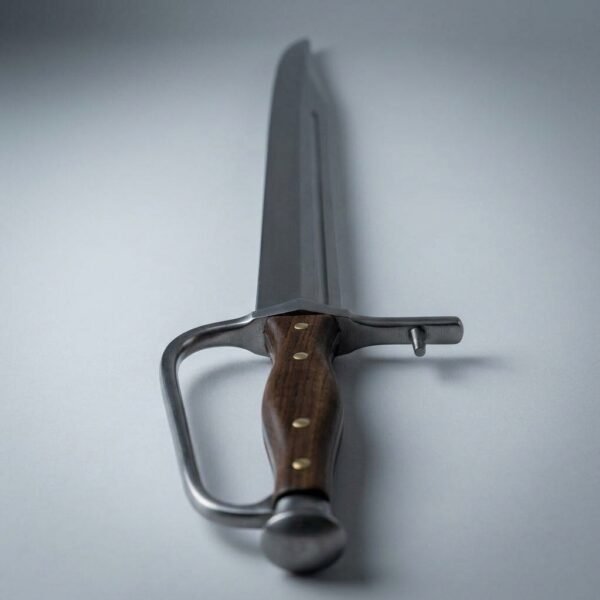
Historically most messers carry a nagel, a short steel nail standing out from the guard on the outside to shield the hand. The pieces on this page use a straight steel cross guard instead, which is the plainer arrangement and the one that hangs and displays more cleanly. If a nagel is essential to your impression, check each listing rather than assuming.
The messers in this collection
Six blades. Five are one handed and cluster tightly around 32 inches overall, and one is a two handed kriegsmesser that dwarfs the rest of them.
One handed messers in 1095
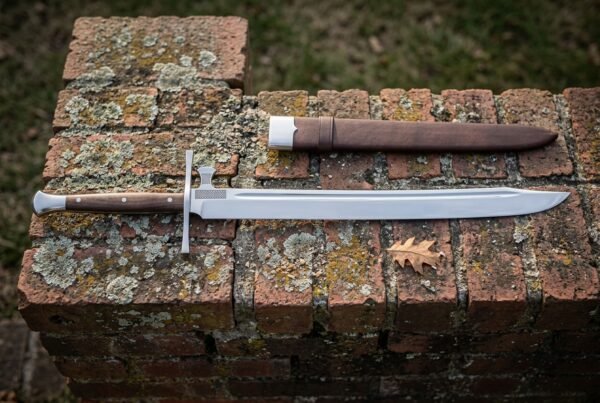
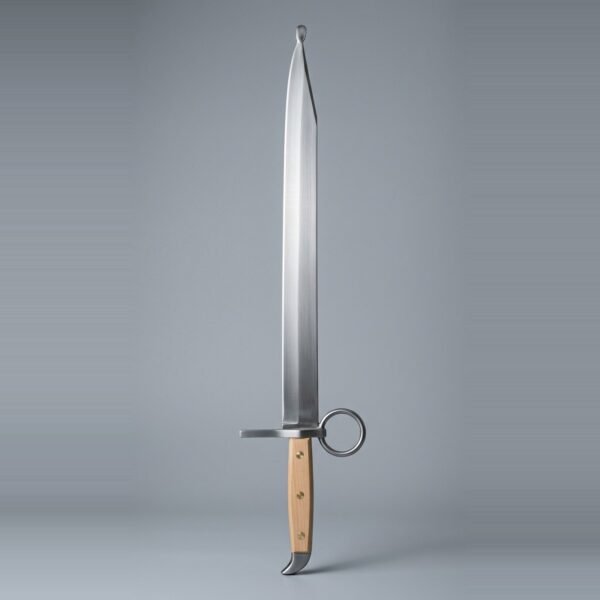
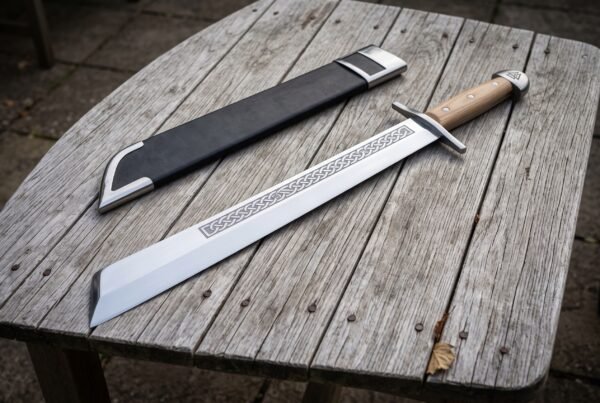
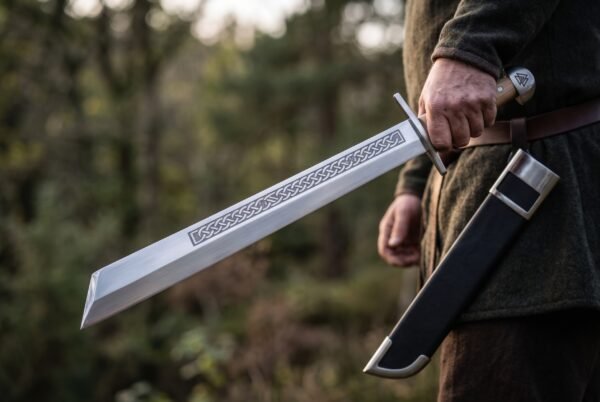
The plainest is 31 inches overall on a 24.5 inch blade, 1.6 inches wide, with a cream bone toned grip 6.5 inches long between a steel cross guard and a pale pommel cap. Listed at about 2 pounds, it is the lightest sword on this page and the easiest to hold at arm's length. Brown leather sheath with a pale chape.
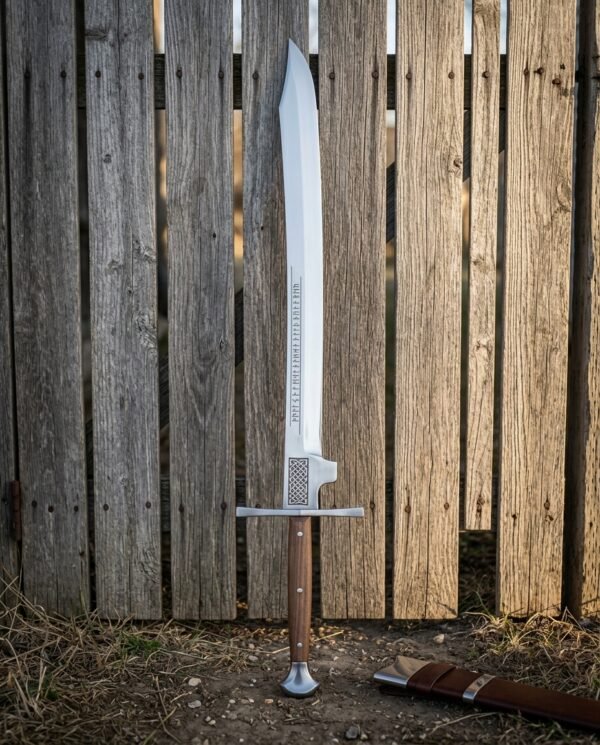
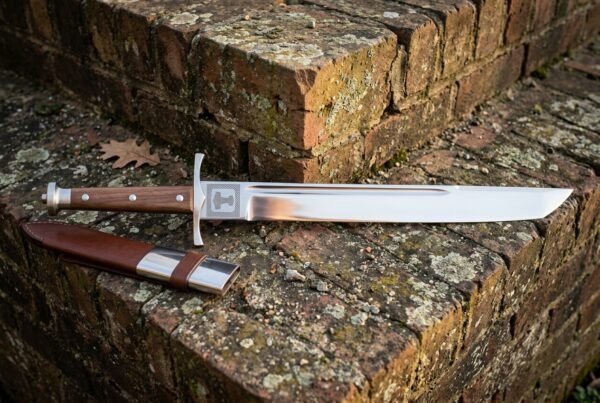
Next up is 32 inches overall on a 25.5 inch blade at 1.7 inches wide, with a rosewood grip of 6.5 inches, a straight steel cross guard and a steel pommel cap, listed at about 2 pounds 2 ounces. Alongside it sits a langes messer at 32 inches overall on a 25 inch blade, 1.65 inches wide, with a dark hardwood grip of 7 inches and a steel pommel cap, at about 2 pounds 3 ounces. Half an inch of grip does not sound like much until you have both in your hand.
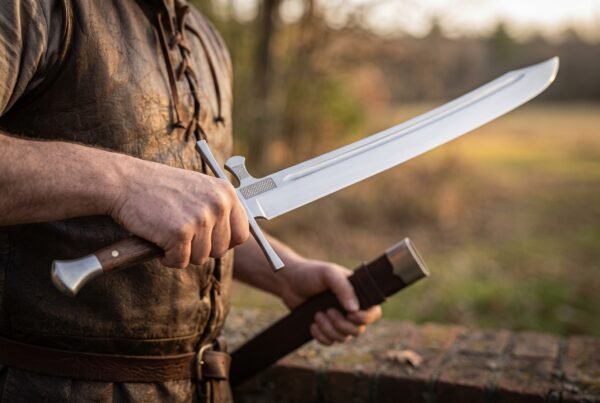
The largest one hander is 33 inches overall on a 26 inch blade, 1.9 inches wide, with a pale hardwood grip of 7 inches and a black leather sheath with a steel throat and chape. At about 2 pounds 9 ounces it is the heaviest of the one handed group by a clear margin, and that extra width and weight is all in the cut.
The Damascus messer
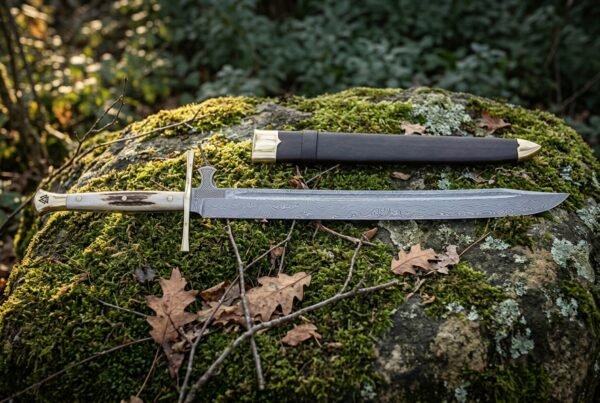
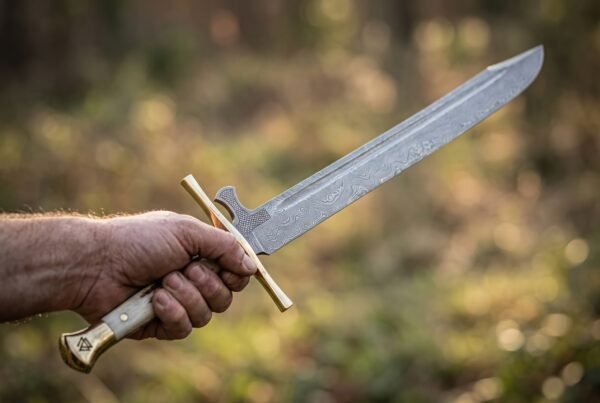
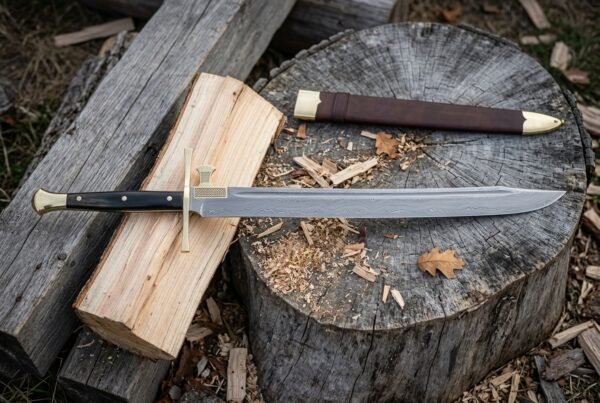
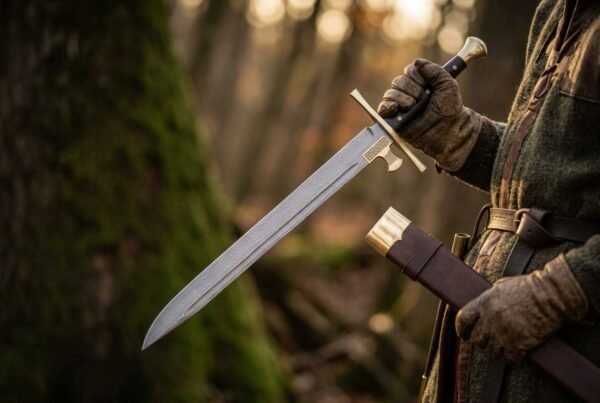
One blade is forge welded Damascus of 1095 and 15N20, hardened to 58 to 60 HRC. It runs 32 inches overall on a 25 inch blade at 1.8 inches wide, with a dark hardwood grip of 7 inches, a brass ferrule and a brass pommel cap, and a brown leather sheath with a brass chape. Listed at about 2 pounds 6 ounces. The brass against dark wood and a layered blade is the most finished piece here, and at 445 dollars it is priced accordingly.
The two handed kriegsmesser
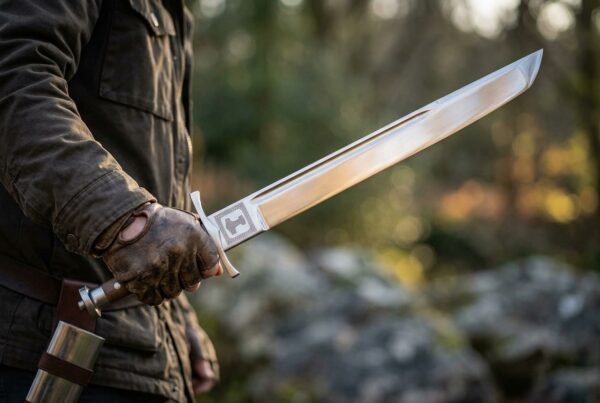
The kriegsmesser is what happens when the messer idea is scaled up for the battlefield. This one is 44 inches overall on a 33 inch blade, 2 inches wide at its widest point, with an 11 inch two hand grip, a straight steel cross guard and a domed pommel, in a leather scabbard. Listed at about 3 pounds 12 ounces.
Those numbers deserve a moment. It is a foot longer than the one handers and a pound heavier, with three times the grip length. Two hands on a long grip give you leverage the one handers cannot match, so a kriegsmesser cuts through what a messer would stick in, and it holds a longer line. It also needs a clear metre and a half of space to swing and a bigger stretch of wall to hang on.
Lengths, widths and weights across the range
Every figure below is taken from the specification panel of a piece on this page. These are forged and ground by hand, so read the numbers as what to expect rather than a promise to the millimetre. Unusually for a sword category, every listing here gives a weight, so the table is complete.
| Pattern | Steel and hardness | Overall length | Blade length and width | Grip and fittings | Listed weight |
|---|---|---|---|---|---|
| Messer, bone toned grip | 1095 at 54 to 58 HRC | 31 in | 24.5 in long, 1.6 in wide | 6.5 in grip, steel cross guard, pale pommel cap | About 2 lb |
| Grosse messer, rosewood grip | 1095 at 54 to 58 HRC | 32 in | 25.5 in long, 1.7 in wide | 6.5 in grip, straight steel cross guard and pommel cap | About 2 lb 2 oz |
| Langes messer, dark hardwood | 1095 at 54 to 58 HRC | 32 in | 25 in long, 1.65 in wide | 7 in grip, straight steel cross guard, steel pommel cap | About 2 lb 3 oz |
| Grosse messer, pale hardwood | 1095 at 54 to 58 HRC | 33 in | 26 in long, 1.9 in wide | 7 in grip, steel cross guard and pommel cap | About 2 lb 9 oz |
| Messer in Damascus | Damascus of 1095 and 15N20 at 58 to 60 HRC | 32 in | 25 in long, 1.8 in wide | 7 in grip, brass ferrule and brass pommel cap | About 2 lb 6 oz |
| Two handed kriegsmesser | 1095 at 54 to 58 HRC | 44 in | 33 in long, 2 in at the widest | 11 in two hand grip, cross guard, domed pommel | About 3 lb 12 oz |
How they handle
Two pounds sounds heavier than it feels. A one handed messer at 31 to 33 inches carries its weight fairly evenly along a broad blade rather than hanging it out at the tip, so it turns more readily than the number suggests. The wide flat also means the sword tells you where its edge is pointing, which is the single most useful property a cutting blade can have.
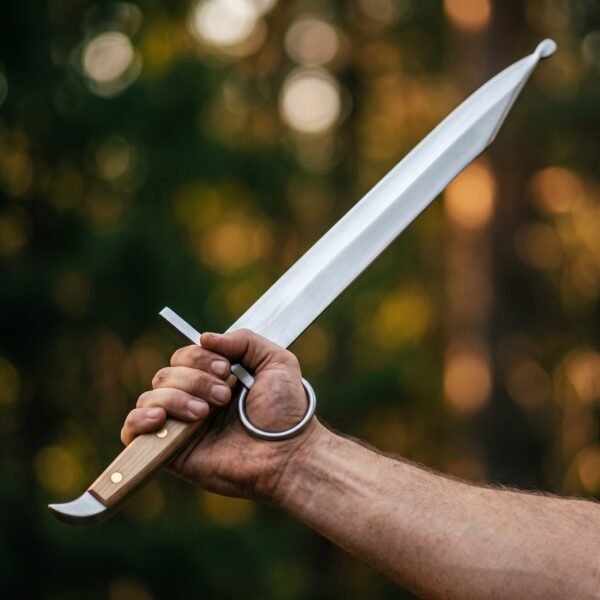
Grip length is the variable people ignore and then notice immediately. The 6.5 inch grips give you one hand and a little room to shift. The 7 inch grips let you put the heel of the second hand on the pommel for a heavier cut, which is a real technique and not just a way of holding a big sword. The 11 inch grip on the kriegsmesser is a proper two hand arrangement with room to slide your hands apart for leverage.
For a wall, the one handers need about a metre of clear space on a horizontal rack once you allow for the sheath and mounts. The kriegsmesser at 44 inches needs closer to a metre and a half, and it wants to be hung high enough that nobody walks into the point.
Steel and hardness
Five blades here are plain 1095 high carbon hardened to 54 to 58 HRC. It sharpens quickly, takes a clean satin or bright finish, and is the sensible steel for a broad cutting blade because a slightly softer edge rolls instead of chipping when it hits something it should not have.
One blade is forge welded Damascus of 1095 and 15N20, hardened to 58 to 60 HRC. The two alloys hold carbon differently, so the etch bites one more deeply than the other and the layers read as light and dark bands across the flat. That pattern is the steel itself rather than a print on the surface, though hard polishing will flatten the contrast over years.
Neither steel is stainless. Both rust if left wet and both take a grey patina that does no harm at all. Blades ship with a working edge.
Grips, guards and sheaths
Grip materials here run to rosewood, dark hardwood, pale hardwood and a cream bone tone, all fitted around the tang in the knife manner rather than threaded onto it. Wood grips want a wipe of oil once or twice a year, especially if the sword lives in a dry heated room, and none of them like being left in a hot car.
Guards are straight steel crosses on five of the six, with a steel or brass pommel cap closing the top of the grip. The Damascus piece uses a brass ferrule at the base of the grip and a brass pommel cap to match, which is the only warm metal on this page and the reason it reads differently on a wall.
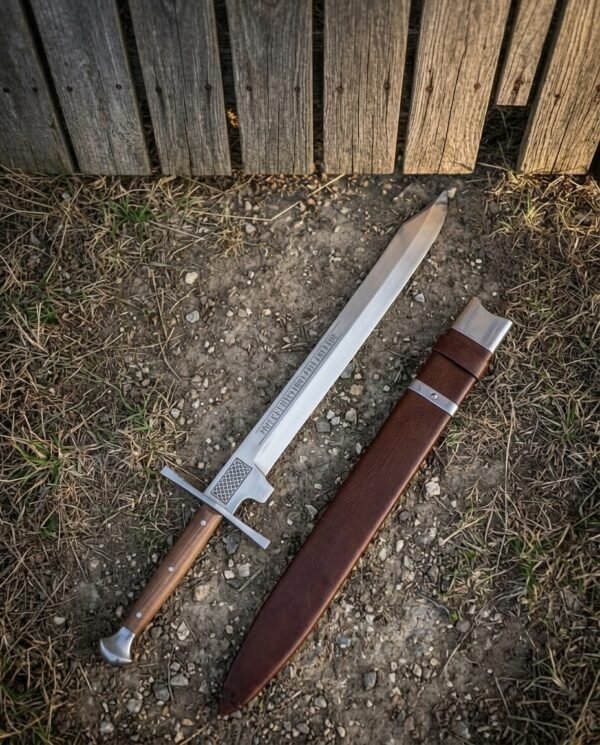
Sheaths are leather, with chapes in pale metal, steel or brass depending on the sword, and one with a steel throat as well. Leather is stiff at first and takes the shape of its blade over a few weeks. Do not leave a carbon steel blade in a leather sheath for months, because leather holds moisture against steel and that is the usual reason a carefully kept blade comes out spotted.
Sharpening a single edge
A messer is easier to sharpen than most swords on this site, because there is one edge, it is mostly straight, and the wide flat gives you a reliable reference for the angle. Lay the flat down, tilt to the bevel you can already see on the steel, and work in sections rather than trying to run the whole edge in one pass.
For 1095 at 54 to 58 HRC a 1000 grit stone restores a working edge in a few minutes and a 3000 grit polishes it. The Damascus blade at 58 to 60 HRC takes longer on the coarse stone and holds the result longer. Keep count of your strokes on each side and stop when you can feel a burr running the whole length of the edge.
Rust, oil and storage
Wipe the blade down after handling. Fingerprints etch into a polished surface within days, and on a broad flat there is a lot of surface for them to sit on. Leave a light film of oil on the steel and keep it topped up. Camellia, mineral or any food safe oil will do.
Store the sword out of its sheath if it is going away for months, on a rack, a stand or flat in a drawer with a cloth between it and anything else. Grey patina is stable and harmless. Orange spotting lifts with fine abrasive and oil if you catch it early and pits if you do not.
Engraving and gifting
These can be engraved after they arrive in the United States. Names, dates and rune lines go along the ricasso, onto the cross guard or onto the pommel cap, where the flat is broad enough to take a line cleanly. Text engraving is 19 dollars, a symbol is 39 dollars and a family crest is 49 dollars.
Elder Futhark is a phonetic alphabet rather than a cipher, so a name is written by sound rather than letter for letter, and there is no rune for the letter C. Engraving is permanent and an engraved piece cannot be returned, so send the exact spelling and read it back before you order.
Where these messers come from and how they ship
Ransack Viking is a US company based in Chicago, Illinois. The pieces are handmade in the Czech Republic, then imported, inspected and shipped from Chicago. Engraving is done in the US after arrival.
Blades are forged and ground by hand, so grind lines, etch figure and the colour of a wooden grip vary between two swords of the same name. Swords ship in a long box with the blade in its sheath and the grip wrapped. Check the guard is tight and the pommel cap is seated before you hang anything.
How to choose
For a first messer, take one of the 32 inch pieces in 1095. They sit in the middle of the range on length, width and weight, and the steel is forgiving if you sharpen it yourself.
For the strongest cut in one hand, the 33 inch messer at 1.9 inches wide and about 2 pounds 9 ounces is the one. It is the heaviest of the one handers and you will know it after ten minutes.
For a display piece, the Damascus messer earns its price. Brass fittings against dark hardwood and a layered blade read from across a room in a way a polished blade does not.
Browse related categories
- Falchions, the other broad single edged sword
- Cutlasses, short and heavy with a full guard
- Sabres, the longer curved cavalry blade
- Arming swords, the one handed knightly pattern
- Longswords for two handed work
- Short swords across the wider range
- Viking seax knives, the single edged belt blade
- Damascus swords across the whole range
- Sword stands and wall displays
- HEMA messers, blunt langes messer and grosses messer trainers
Guides worth reading first
- How to buy your first sword
- Display sword vs battle ready, what the terms mean
- Damascus vs high carbon steel, and which to buy
- Full tang vs partial tang and why it matters
- Blade shapes and what each one is good at
- How to display swords and axes at home
Frequently asked questions
What is a messer?
A single edged medieval European sword built like a knife. The word is German for knife, and the construction is the giveaway: the tang runs the full width of the grip with the grip material fixed to its sides, rather than a narrow tang threaded through a pommel as on a knightly sword.
What is the difference between a messer and a falchion?
Both are broad single edged swords and the shapes overlap. The reliable difference is construction. A falchion is hilted like a sword with a pommel through the tang. A messer is hilted like a knife, with the grip built onto the sides of a full width tang.
What do grosse, langes and kriegsmesser mean?
Big knife, long knife and war knife. In practice they describe a scale rather than three sharply separate patterns. The one handers here are grosse or langes messers at 31 to 33 inches overall, and the kriegsmesser is the two handed version at 44 inches.
Do these have a nagel on the guard?
The pieces here use a straight steel cross guard rather than the historical nagel, the short nail that stands out from the guard to shield the hand. If a nagel matters for your impression, read each listing before ordering rather than assuming one is fitted.
How heavy are they?
Listed weights run from about 2 pounds for the lightest one hander to about 2 pounds 9 ounces for the widest, with the Damascus at about 2 pounds 6 ounces. The two handed kriegsmesser is about 3 pounds 12 ounces. Every listing on this page gives a weight.
Can a messer be used in two hands?
The 7 inch grips give you room to put the heel of a second hand onto the pommel for a heavier cut, which is a real technique. Full two handed work wants the kriegsmesser, whose 11 inch grip lets you slide your hands apart for leverage.
Do they arrive sharp?
Blades ship with a working edge. They are not razors out of the box, because a very fine edge on a broad blade chips during handling and shipping. A few passes on a 1000 grit stone will take any of them further if you want more.
Where are these messers made?
They are handmade in the Czech Republic, then imported, inspected and shipped by Ransack Viking from Chicago, Illinois. Any engraving is added in the United States after arrival.
If you plan to fence with one
A sharp messer is not something to bring to a club night. For that, our messer trainers in the HEMA line are blunt 51CrV4 spring steel, and our messer guide sorts out the langes and grosses names. The Brunhak langes messer trainer is an easy first pick.