
A mace is a metal head on a stick, and the reason it lasted for a thousand years is armour. Against mail and plate an edge does very little. It skates, it catches on a rivet, it blunts. A concentrated blow does not care what the outside of the armour is made of, because it drives the shock straight through to the arm or the ribs underneath. So the head grew flanges, flutes or spikes, each one a ridge that cuts the contact area down to a line or a point and multiplies the pressure at the moment it lands.
The pieces here run 26 to 29 inches overall with heads of 4.5 to 7 inches, weighing 2.4 to 3.6 lb. Heads are plain 1095 high carbon hardened to 54 to 58 HRC, or forge welded Damascus of 1095 and 15N20 at 58 to 60 HRC, hand etched so the layers show. Hafts are American walnut, ash, rosewood or blackened steel, with polished steel ferrules or turned brass collars, and every one arrives with a leather wrist strap.
Buy by head shape rather than by steel, or take a war axe for a beak. Every head here lands the same way and none of them look alike.
Free US shipping
On most pieces. Heavier and oversized ones carry a flat charge.
Hand Forged
Heated, hammered and ground by hand.
Engraving available
Names, dates or Norse runes on most pieces.
Ships from Chicago
Inspected and dispatched from our Chicago warehouse. No import duty, no customs delay on US orders.
Maces
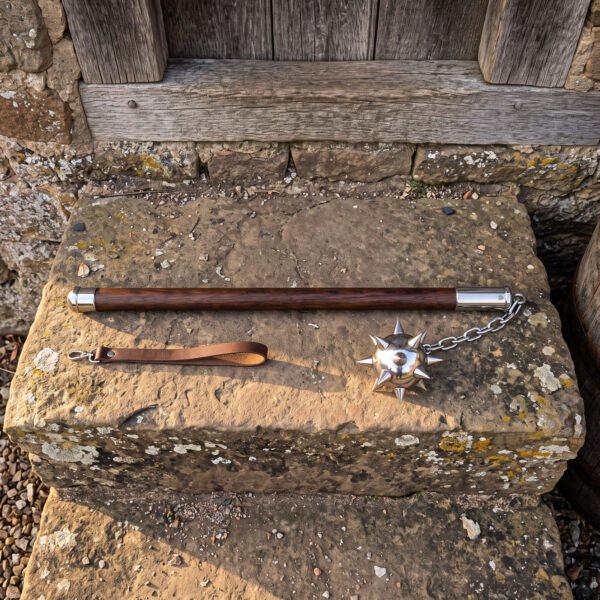
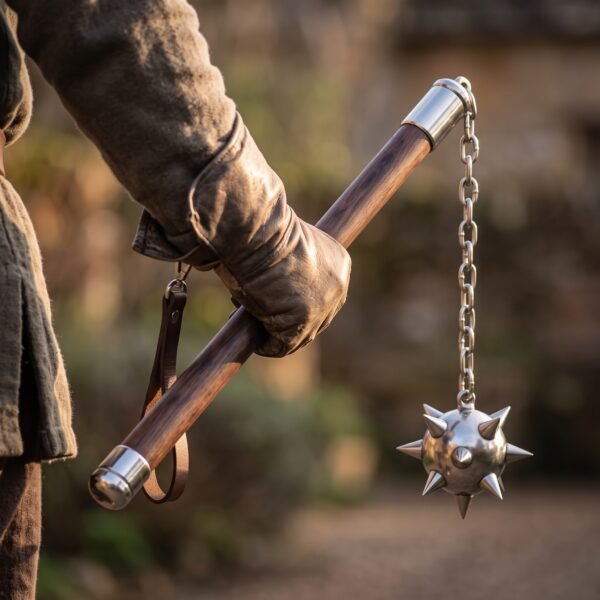
Chainmaw Hand Forged High Carbon Steel Medieval Flail | 27 Inch Overall with a 20 Inch Haft | American Walnut Haft and Polished Steel Ferrules | Reenactment Collector Gift | RK-1356
Original price was: $225.00.$180.00Current price is: $180.00.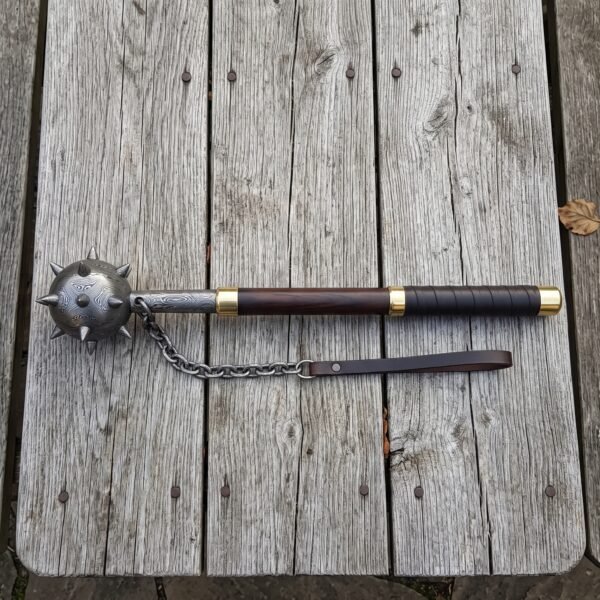
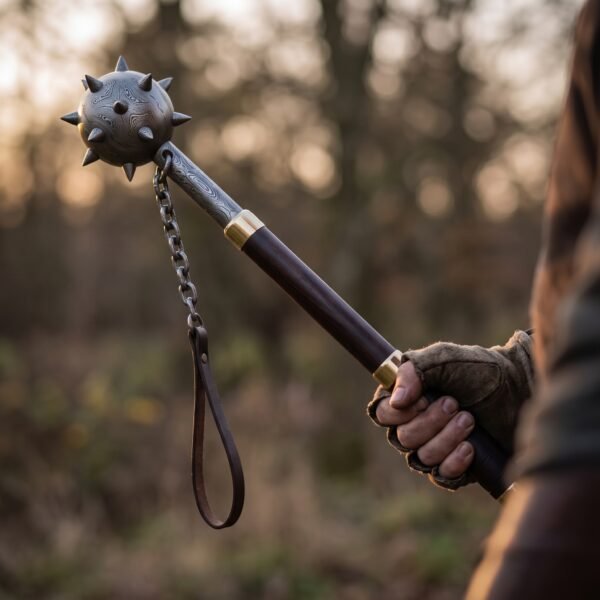
Stormlink Hand Forged Damascus Steel Flail | 29 Inch Overall with a 3 Inch Head | Damascus Spiked Ball Head on a Patterned Fore Shaft | Reenactment Collector Gift | RK-1357
Original price was: $295.00.$236.00Current price is: $236.00.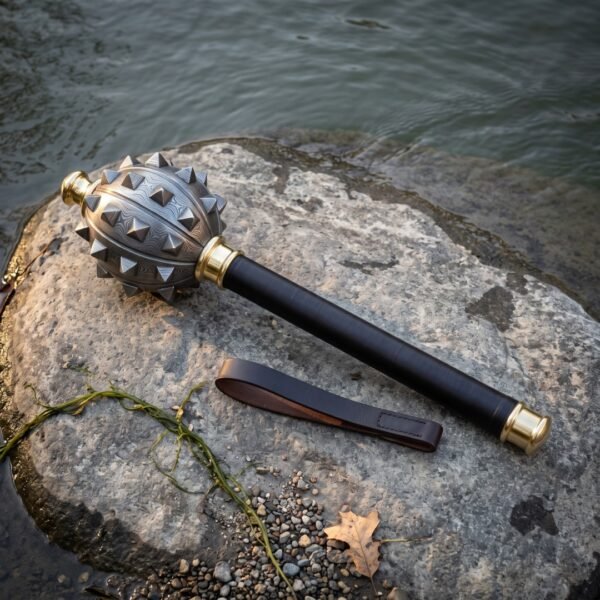
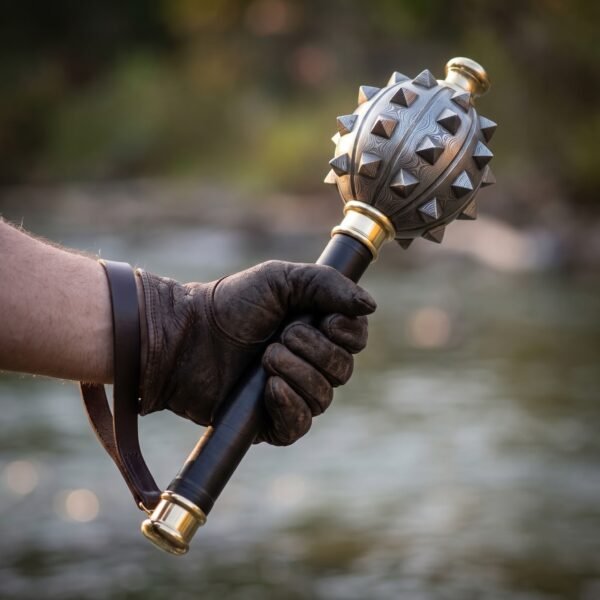
Nightthorn Hand Forged Damascus Steel Morning Star Mace | 15 Inch Overall with 5 Inch Head | Black Leather Wrapped Haft and Turned Brass Collars and Butt Cap | Reenactment Collector Gift | RK-1355
Original price was: $309.00.$247.20Current price is: $247.20.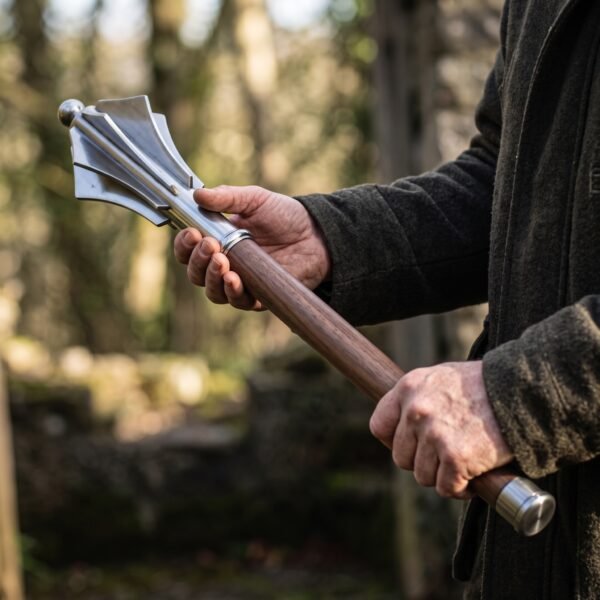
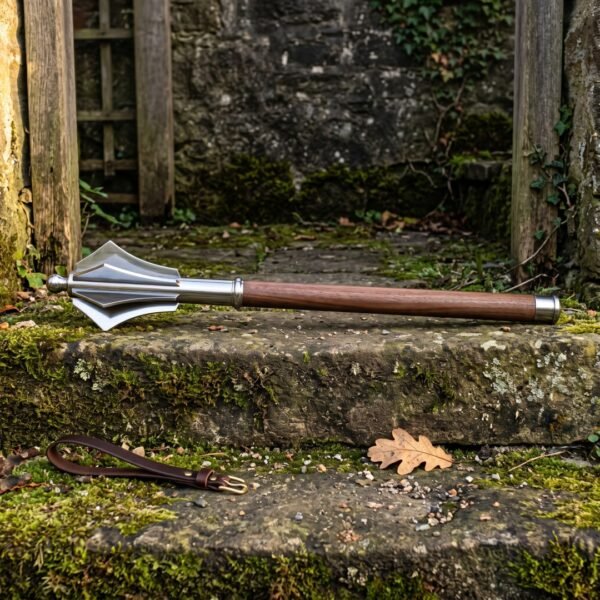
Ironpetal Hand Forged High Carbon Steel Flanged Mace | 26 Inch Overall with 5.5 Inch Head | American Walnut Haft and Polished Steel Ferrules | Reenactment Collector Gift | RK-1350
Original price was: $215.00.$172.00Current price is: $172.00.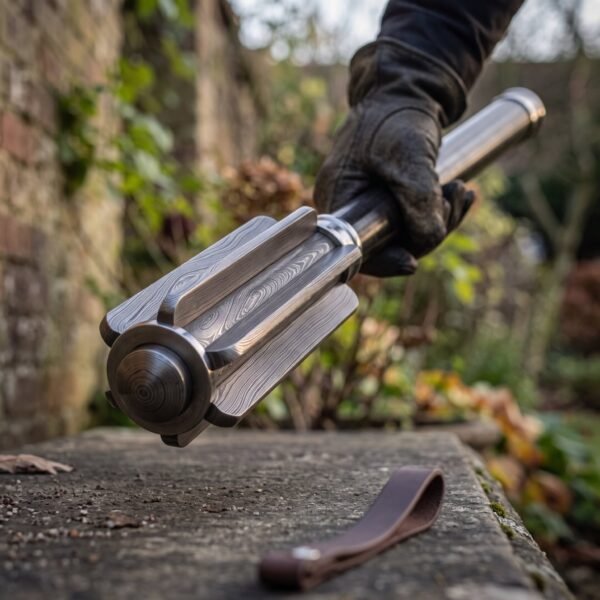
Stormflute Hand Forged Damascus Steel Bar Mace | 28 Inch Overall with 7 Inch Head | All Steel Blackened Haft and Polished Collars | Reenactment Collector Gift | RK-1353
Original price was: $255.00.$204.00Current price is: $204.00.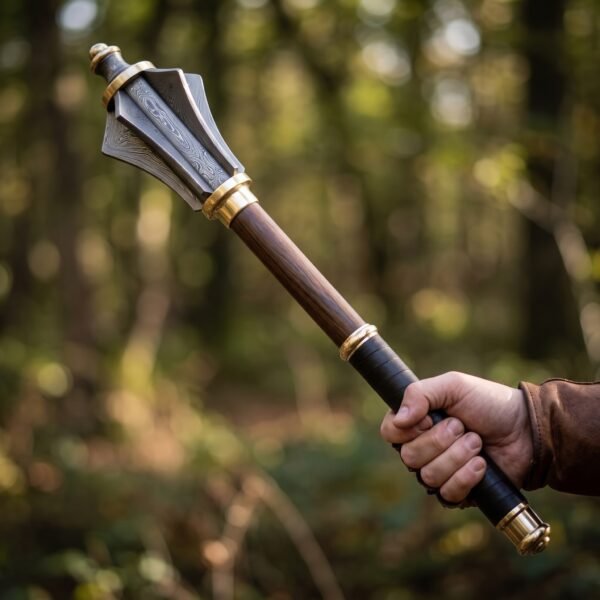
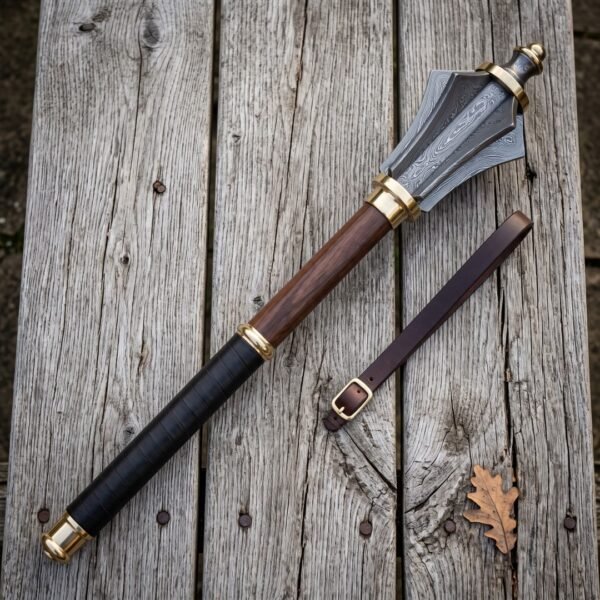
Emberflange Hand Forged Damascus Steel Flanged Mace | 27 Inch Overall with 6 Inch Head | Rosewood Haft and Leather Wrapped Grip and Brass Butt Cap | Reenactment Collector Gift | RK-1351
Original price was: $279.00.$223.20Current price is: $223.20.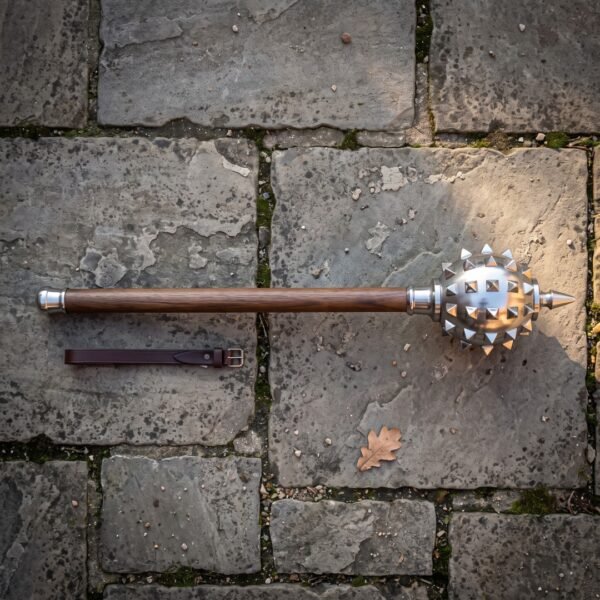
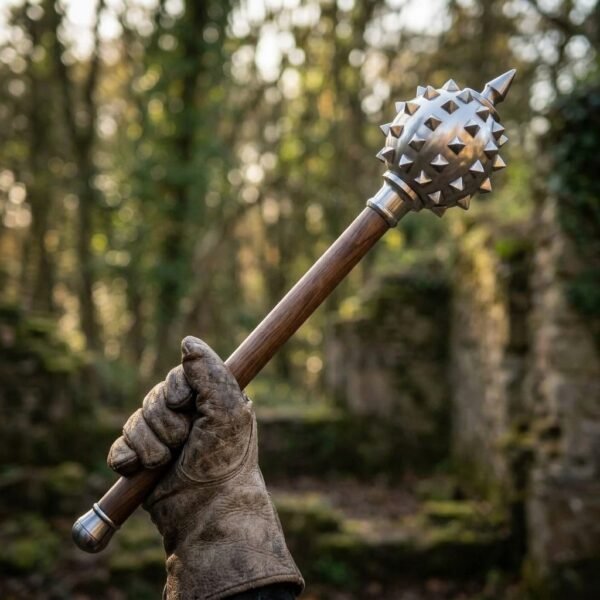
Starthorn Hand Forged High Carbon Steel Gothic Spiked Mace | 26 Inch Overall with 4.5 Inch Head | American Walnut Haft and Polished Steel Collars | Reenactment Collector Gift | RK-1354
Original price was: $235.00.$188.00Current price is: $188.00.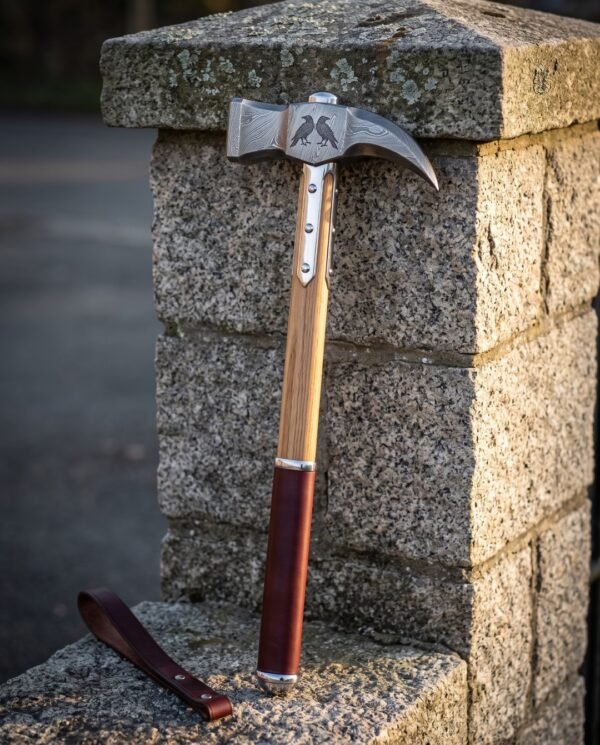
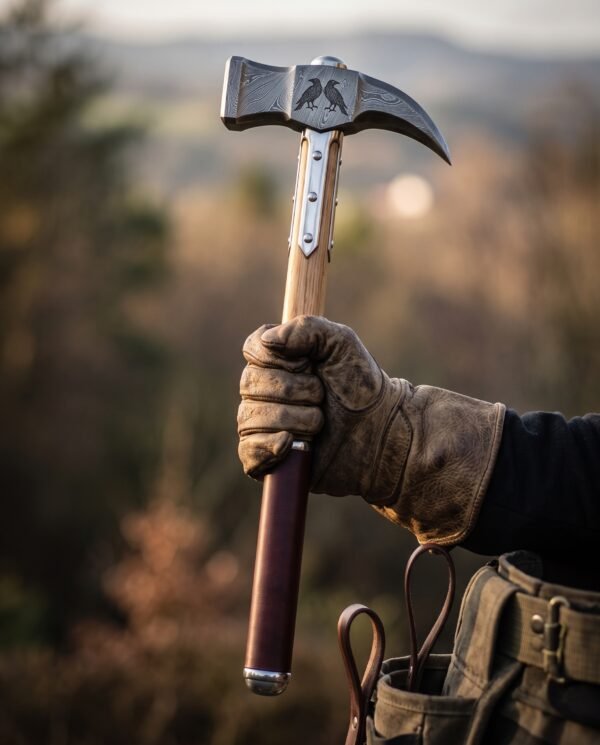
Ravenbeak Hand Forged Damascus Steel War Hammer | 1095 and 15N20 Head | Ash Haft with Steel Langets Leather Grip and Raven Etch | Norse Display Gift | RK-1563
Original price was: $279.00.$223.20Current price is: $223.20.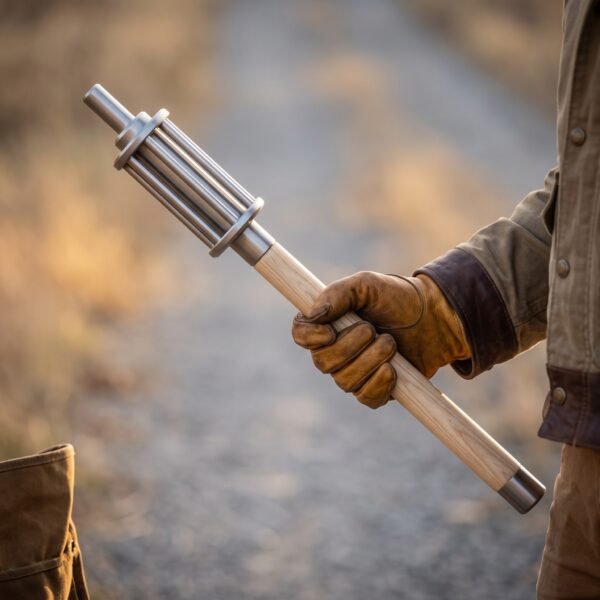
Ashcudgel Hand Forged High Carbon Steel Bar Mace | 27 Inch Overall with 6 Inch Head | American Ash Haft and Polished Steel Ferrules | Reenactment Collector Gift | RK-1352
Original price was: $195.00.$156.00Current price is: $156.00.Why a blunt head worked
Armour is very good at stopping edges. A mail shirt turns a cut because the rings spread the force along a line the blade cannot bite into. Plate turns a cut because it is smooth, curved and harder than most edges. Neither of them does much about a heavy lump of steel arriving at speed. The force goes through the armour rather than into it, and what stops on the far side is the person.
That is the entire argument for a mace, and it is why the head grew ridges. A smooth ball spreads its energy over a wide contact patch. Put six flanges on it and the same swing lands on six narrow edges, so the pressure at the point of contact goes up several times over without the head weighing any more. Flutes do the same thing with rounded bars. Spikes take it furthest, cutting the contact down to points and concentrating everything at the tips.
The other half of the appeal is that a mace is simple. There is no edge to keep, no point to protect and nothing that gets ruined by hitting the wrong thing. It needs no skill to use badly and a fair amount to use well, and it can be made by any smith with a fire, which is why versions of it turn up in every armoured culture that ever existed.
A note on the flails. The one handed ball on a chain is a real object and it is also the most exaggerated piece in the popular picture of medieval fighting. The two handed threshing flail, the farm tool turned to fighting, is very well attested. The short spiked ball on a chain shows up far less often in period sources than in Victorian collections and films. The two on this page are handsome objects and honest reproductions of that later idea, and it is worth knowing which is which.
The maces in this collection
Nine pieces, all built the same way underneath: a forged head, a haft, and metal collars where the two meet. They differ in what the head does and what the haft is made of.
Flanged maces
Two, and they are the classic outline. The plain steel one is 26 inches overall with a 5.5 inch head carrying six flanges, 3 inches across, in polished 1095 at 54 to 58 HRC on an American walnut haft with polished steel ferrules, at about 2.6 lb. The Damascus version is 27 inches with a 6 inch head including a brass finial, 3.25 inches across the flanges, at 58 to 60 HRC, on a rosewood haft with a leather wrapped grip, brass collars and a brass butt cap, at about 2.9 lb.
Fluted bar maces
Two, and they are the cleanest looking things on the page. One is 27 inches with a 6 inch head of eight fluted bars, 2.5 inches in diameter, in polished 1095 on an American ash haft with steel ferrules, at about 2.8 lb. The other goes all steel: a 28 inch piece with a 7 inch Damascus head including a domed finial, 2.75 inches across the flutes, on a blackened steel shaft with polished steel collars. At about 3.6 lb it is the heaviest thing here, and a steel shaft is why.
Spiked and morning star heads
Two, and both are exactly as subtle as they sound. The gothic mace is 26 inches with a 4.5 inch head, 3.5 inches across, carrying 34 pyramidal spikes and a turned conical spike finial on top, mirror polished 1095 on an American walnut haft with polished steel collars and a ferrule, at about 2.7 lb. The morning star is the Damascus answer, 26 inches with a 5 inch head 3.5 inches across, staggered pyramidal spikes, turned brass collars above and below the head, a brass butt cap and a dark stained oil finished hardwood haft, at about 2.9 lb.
Flails
Two. The plain steel one is 27 inches overall with the chain hanging straight, on a 20 inch American walnut haft with steel ferrules, a 2.5 inch spiked ball on a 5 inch forged chain, at about 2.4 lb, which makes it the lightest piece here. The Damascus flail is 29 inches with a 3 inch Damascus spiked ball on a patterned fore shaft, hand forged links running from the head collar back to a leather wrist loop, on a rosewood haft with a leather wrapped rear grip, brass collars and a brass butt cap, at about 3.1 lb.
The Damascus war hammer
One outlier and a good one. A forge welded 1095 and 15N20 head at 58 to 60 HRC weighing about 2 lb on its own, acid etched to bring up the pattern, with a pair of ravens etched into the cheek. The haft is straight grain ash with steel langets and a steel butt cap, and an oxblood leather wrap over the lower half. About 26 inches overall and about 3 lb 8 oz complete.
Sizes, steel and weights across the range
Every figure below is taken from the specification panel of a piece on this page. These are forged and finished by hand, so read them as what to expect rather than as a guarantee to the millimetre.
| Head type | Overall length | Head size | Steel and hardness | Haft | Listed weight | Price |
|---|---|---|---|---|---|---|
| Eight fluted bars | 27 in | 6 in long, 2.5 in across | 1095 at 54 to 58 HRC | American ash, steel ferrules | About 2.8 lb | 195 dollars |
| Six flanges | 26 in | 5.5 in long, 3 in across | 1095 at 54 to 58 HRC | American walnut, steel ferrules | About 2.6 lb | 215 dollars |
| Spiked ball on a chain | 27 in | 2.5 in ball, 5 in chain | 1095 at 54 to 58 HRC | American walnut, 20 in haft | About 2.4 lb | 225 dollars |
| Gothic spiked, 34 spikes | 26 in | 4.5 in long, 3.5 in across | 1095 at 54 to 58 HRC | American walnut, steel collars | About 2.7 lb | 235 dollars |
| Fluted bars, domed finial | 28 in | 7 in long, 2.75 in across | Damascus at 58 to 60 HRC | Blackened steel shaft | About 3.6 lb | 255 dollars |
| Six flanges, brass finial | 27 in | 6 in long, 3.25 in across | Damascus at 58 to 60 HRC | Rosewood, leather grip, brass | About 2.9 lb | 279 dollars |
| Hammer head with raven etch | 26 in | Head about 2 lb | Damascus at 58 to 60 HRC | Ash with steel langets | About 3 lb 8 oz | 279 dollars |
| Spiked ball on forged links | 29 in | 3 in ball | Damascus at 58 to 60 HRC | Rosewood, leather grip, brass | About 3.1 lb | 295 dollars |
| Morning star, staggered spikes | 26 in | 5 in long, 3.5 in across | Damascus at 58 to 60 HRC | Dark stained hardwood, brass | About 2.9 lb | 309 dollars |
Every listing on this page gives a weight, which is unusual and useful. The spread is 2.4 to 3.6 lb, and the single biggest factor is the haft rather than the head. The all steel shaft adds most of a pound over a timber one of the same length.
Weight, balance and how these swing
All of these are head heavy, and that is the point. The balance sits well forward, so the head does the work and your hand mostly steers. A mace does not need a long backswing. It needs a loose grip until the last moment and a short arc, and the mass arrives on its own.
Under three pounds on a 26 inch haft is comfortable to hold out at arm's length, which matters more than it sounds if you are handing a piece round or standing in it for photographs. The 3.6 lb steel shafted mace is a different animal. It feels solid rather than lively and it is the one that makes people say something when they pick it up.
The flails behave unlike everything else. A chain stores nothing and forgives nothing, so the head keeps going after your hand stops. That is the reason they were never common, and it is the reason you swing one away from your own knuckles and never indoors.
Steel and hardness
Two house steels run through the range. Plain 1095 high carbon is hardened to 54 to 58 HRC, polished or mirror polished depending on the piece. It is tough, it takes a bright finish, and on a blunt head it will never need sharpening.
Damascus is forge welded 1095 and 15N20, folded, ground and hand etched so the two steels read as light and dark bands, hardened to 58 to 60 HRC. On a mace the pattern does something a blade cannot. It wraps around flanges and flutes and follows the curve of a spike, so the figure moves as you turn the head under a light.
Neither steel is stainless. Both rust if left wet, and both take a grey patina over years that does no harm at all.
Hafts, collars and how the head stays on
American walnut and American ash carry most of these. Ash is springy along the grain and takes shock without putting all of it into your wrist. Walnut is denser, darker and holds a ferrule tightly. Rosewood is oily and close grained, polishes deep and needs almost no upkeep, and it turns up on the two pieces with brass fittings. One haft is not timber at all, but blackened steel with polished collars, which is why that piece is the heaviest here.
Steel ferrules and turned brass collars sit above and below the head. They squeeze the timber where the stress is highest and stop it splitting out of the eye, and on the brass fitted pieces they are also the visual join between a dark haft and a bright head. The war hammer goes further with langets, steel straps riveted down the sides of the haft that carry shock past the eye entirely.
Leather wraps appear on the lower half or the rear grip of several pieces, in plain brown or oxblood. They warm the hand, grip better with damp palms and darken with use.
Wrist straps and handling
Every mace here ships with a leather wrist strap, and on the Damascus flanged mace it is buckled. This is not packaging. A head heavy piece on a smooth haft can leave your hand at the end of a swing, and the strap is what stops that. Put your hand through it before you pick the piece up rather than after.
Hold the haft near the butt for reach and slide up toward the collar for control. Do not use any of these as tools. Driving stakes, breaking concrete or hitting anything harder than the head will mark a polished finish, flatten the tips of the spikes and eventually loosen the head. They are made for display, collection and reenactment, and the listings say so.
Care and storage
Carbon steel rusts. Wipe the head dry, put a light film of mineral or camellia oil on it, and pay attention to the awkward places, because a flanged or spiked head has far more surface and far more corners than a blade does. The gaps between flutes and the roots of spikes are where damp sits.
Etched Damascus wants a light touch. Hard polishing flattens the contrast between the two steels and the pattern fades, so oil it and leave it alone. Mirror polished steel shows every fingerprint and skin is salty, so handle the polished pieces with a cloth or wipe them down afterwards. Grey patina is stable and harmless. Orange spotting lifts with a fine abrasive and oil before it pits.
Timber hafts want a wipe of oil once or twice a year. Keep them out of dry heat, because a haft that shrinks in a hot room loosens under the ferrule. Brass darkens over months and comes back with metal polish on a cloth, or leave it and let it age. Store a mace hung or lying flat rather than standing on its butt for years.
Engraving
Engraving is done in the United States after the piece arrives. On a mace the obvious places are the flat of a flange, the collar above the head and the butt cap, and the war hammer here already carries a pair of ravens etched into the cheek of the head to show how it reads.
Text engraving is 19 dollars, a symbol is 39 dollars and a family crest is 49 dollars. Elder Futhark is a phonetic alphabet rather than a code, so a name is transliterated by sound and there is no rune for the letter C. Engraving is permanent and an engraved piece cannot be returned, so send the exact spelling and read it twice.
Where these come from and how they ship
Ransack Viking is a US company based in Chicago, Illinois. The pieces are handmade in the Czech Republic, then imported, inspected and shipped from Chicago. Engraving is done in the US after arrival.
Maces ship boxed with the wrist strap. None of them come with a sheath, because a blunt head does not need one. Two pieces of the same name will differ slightly in etch figure, polish and haft colour, because two people made them on two different days.
How to choose
First one, and you want the shape everybody pictures? Take the six flanged mace in polished 1095 on a walnut haft at 215 dollars. It is the cheapest way onto this page that still looks exactly right.
Buying for a display case where the metal is the point? Go to Damascus. The pattern wrapping around flanges or flutes is something a flat blade cannot show, and the fluted bar head under a light is the best of them.
Want the piece that gets picked up first at a table? The gothic spiked head with 34 pyramidal spikes and a conical finial. Nobody walks past it.
Related collections
- Viking hammers and Mjolnir heads
- Thor's hammers
- Battle axes
- Poleaxes, the two handed answer
- Halberds
- Glaives and polearms
- Medieval helmets
- Stands and display fittings
Guides worth reading first
- Mace, war hammer and flail compared
- The war hammer and the mace explained
- Chainmail, plate and lamellar compared
- Damascus or high carbon steel: which should you buy
- Steel and hardness: what HRC numbers mean
- How to display swords, axes and maces
Frequently asked questions
Why does a mace have flanges?
To concentrate the blow. A smooth head spreads its energy over a wide patch. Six flanges land the same swing on six narrow edges, so the pressure at contact goes up several times over without the head weighing any more. Flutes and spikes do the same job in different ways.
How heavy are these?
Between about 2.4 and 3.6 lb, and every listing on this page states its weight. The lightest is the walnut hafted flail. The heaviest is the fluted Damascus mace on an all steel shaft, and the shaft is why.
What is the difference between a mace and a morning star?
Usage varies, but on this page the flanged and fluted heads are maces and the spiked heads are the morning star family. The word is also used for the spiked ball on a chain, which is really a flail.
Were flails actually used?
The two handed threshing flail, yes, well attested. The short spiked ball on a chain appears far more often in Victorian collections and in films than in period sources. The two here are honest reproductions of that later idea rather than of a common medieval piece.
Do these come with a sheath?
No, and they do not need one. Every piece ships with a leather wrist strap instead, buckled on one of them. Put your hand through it before you lift a head heavy piece rather than after.
Which steel should I choose?
Plain 1095 at 54 to 58 HRC takes a bright polish and costs less. Damascus at 58 to 60 HRC gives you a pattern that wraps around the flanges and flutes, which is something a flat blade cannot do. Neither is stainless and both want oil.
Can I use one of these?
They are made for display, collection and reenactment, and the listings say so. Hitting anything harder than the head will mark the finish, flatten spike tips and eventually loosen the head on the haft.
Where are these made?
Ransack Viking is a US company based in Chicago, Illinois. The pieces are handmade in the Czech Republic, then imported, inspected and shipped from Chicago, with engraving added in the US after arrival.
Featured pieces
 Ironpetal Hand Forged High Carbon Steel Flanged Mace
Original price was: $215.00.$172.00Current price is: $172.00.
 Emberflange Hand Forged Damascus Steel Flanged Mace
Original price was: $279.00.$223.20Current price is: $223.20.
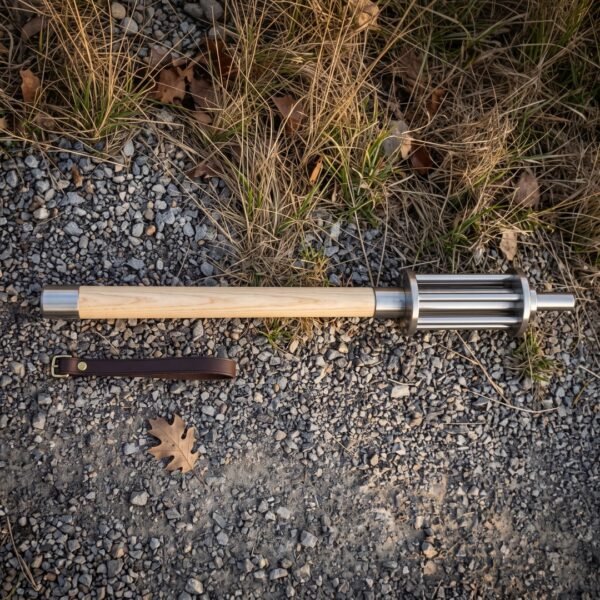 Ashcudgel Hand Forged High Carbon Steel Bar Mace
Original price was: $195.00.$156.00Current price is: $156.00.
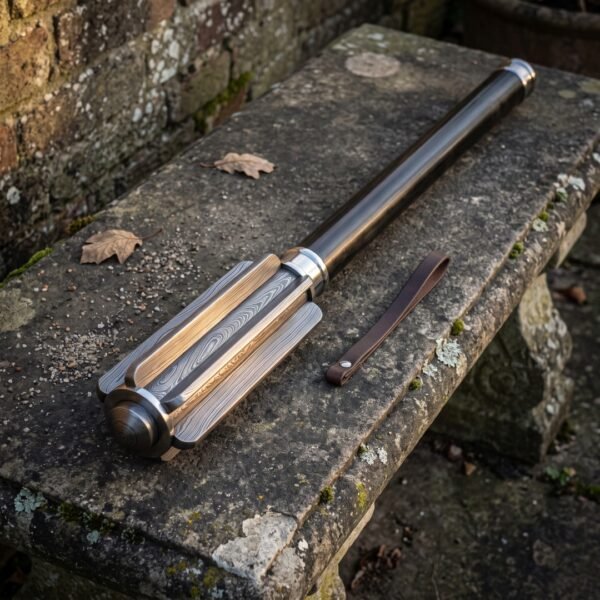 Stormflute Hand Forged Damascus Steel Bar Mace
Original price was: $255.00.$204.00Current price is: $204.00.