
Blog
Mace vs War Hammer vs Flail: What Each One Actually Did

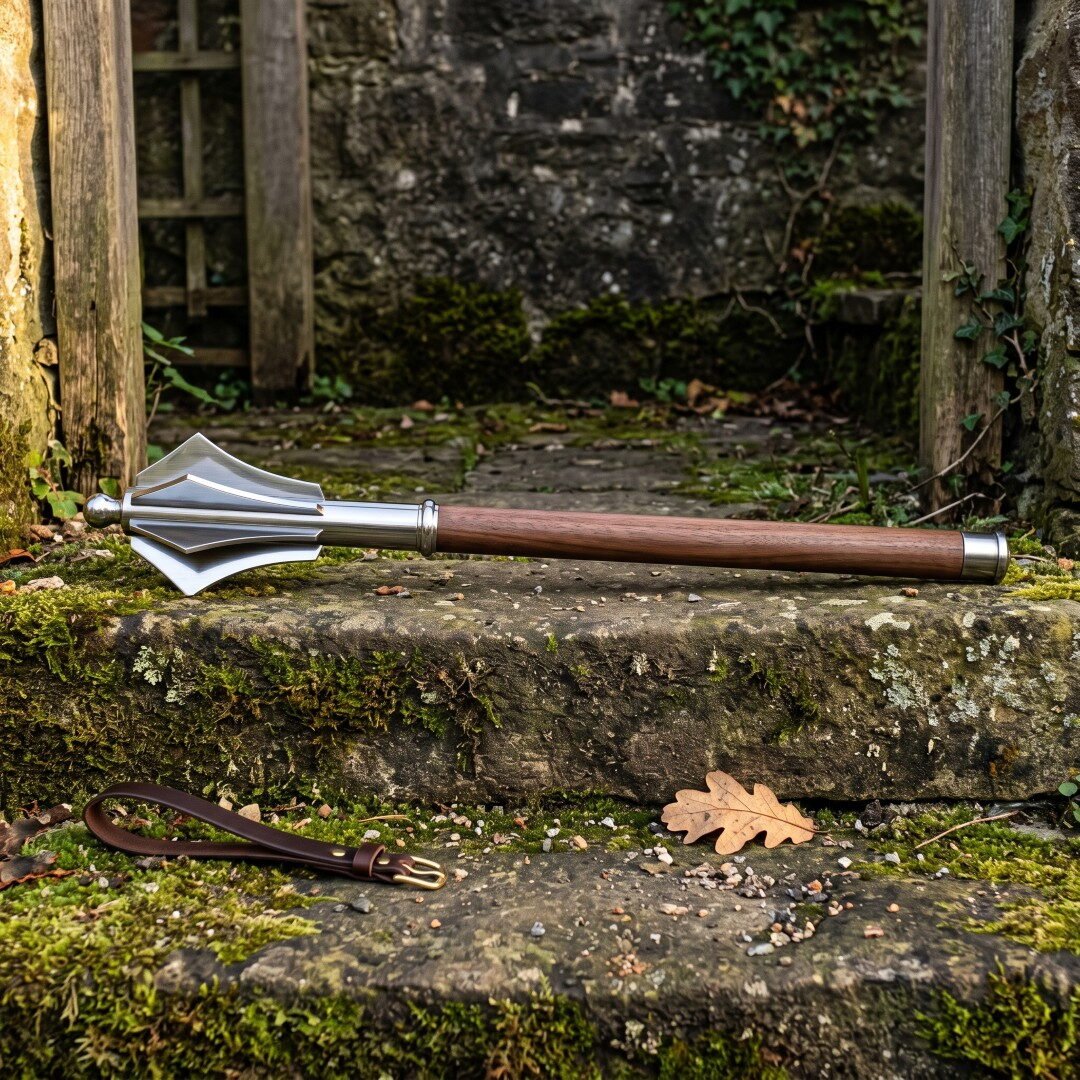
A mace is a weighted head on a rigid shaft that beats through armour by impact. A war hammer concentrates that impact into a small face, usually with a spike on the reverse for punching through plate. A flail hangs the head on a chain and trades away your control for a little extra tip speed. Of the three, the mace is the one most people should buy, and the flail is the one most people want to.
All three belong to the same family: pieces designed for a battlefield where the other side was wearing steel. A sword edge is close to useless against a well made cuirass. A blunt head does not care. Below is what separates them, what each one actually did in period, and which is worth owning.
Quick comparison
| Mace | War hammer | Flail | |
|---|---|---|---|
| Head | Flanged, knobbed or plain bar | Small striking face plus rear spike | Head on a chain or cord |
| How it works | Spreads heavy impact over a small area | Concentrates impact into a point | Adds tip speed, wraps around guards |
| Control | Excellent, the head goes where the hand sends it | Excellent | Poor once the head is moving |
| Against mail | Very effective, transmits shock through rings | Very effective | Effective but unpredictable |
| Against plate | Dents and stuns | The best of the three, the spike bites | Can reach past a shield rim |
| Risk to the user | Low | Low | Real, the head can come back at you |
| Historical record | Abundant across Europe and Asia | Abundant from the late medieval period | Two handed type well attested, one handed type thin |
| Best for | First purchase, display, reenactment | Late medieval kit, collectors | Display and curiosity |
The mace
A mace is the simplest idea in armed combat: put mass at the end of a stick and swing it. What makes a medieval mace different from a club is the head, which was engineered rather than picked up. Flanged maces carry vertical fins that cut into a curved surface instead of skating off it. Knobbed and gothic heads use raised bosses for the same reason. A plain bar mace relies on mass alone and is the older and cruder form.
 Ironpetal Hand Forged High Carbon Steel Flanged Mace | 26 Inch Overall with 5.5 Inch Head | American Walnut Haft and Polished Steel Ferrules | Reenactment Collector Gift | RK-1350
 Ashcudgel Hand Forged High Carbon Steel Bar Mace | 27 Inch Overall with 6 Inch Head | American Ash Haft and Polished Steel Ferrules | Reenactment Collector Gift | RK-1352
 Starthorn Hand Forged High Carbon Steel Gothic Spiked Mace | 26 Inch Overall with 4.5 Inch Head | American Walnut Haft and Polished Steel Collars | Reenactment Collector Gift | RK-1354
What it does well
Control is the mace’s real advantage, and it is the one nobody puts on the box. The head sits on a rigid haft, so it arrives where you aimed it, and you can stop, redirect or shorten a swing at any point. That matters far more than raw power in a press of bodies. It is also close to indestructible. There is no edge to roll, no point to bend, and a mace that has been used hard looks much the same as one that has not.
Against mail it is the obvious answer, because mail transmits blunt shock straight to the body underneath. Against plate a good flanged head will dent, stun and eventually deform the steel. It was carried by knights, by clergy who preferred not to draw blood by the edge, and by anyone who expected to meet armour.
Where it falls down
A mace has no reach. Everything happens at arm’s length plus the haft, and a spear or a long sword will keep you outside that range all day, and enjoy doing it. It also does very little against an unarmoured, mobile opponent that a cheaper and lighter piece could not do better. The head weight that makes it useful is the same weight that makes it slow to recover after a miss.
The war hammer
The war hammer is the mace’s specialist cousin. Instead of spreading impact across a flanged head, it puts it through a face the size of a large coin, usually with a curved spike or beak on the opposite side. Some carry a short spike on top as well. The horseman’s hammer with a long haft and the shorter foot version were both in use through the fourteenth and fifteenth centuries, and the shape appears everywhere plate armour did.
What it does well
Concentrated force is the whole point. The same swing that a mace spreads across a flanged head goes through a much smaller area on a hammer, which means higher pressure at the point of contact. The rear spike does something no mace can: it bites and holds, so it can be used to hook a shield edge, catch an ankle or drag a rider down. Against articulated plate, where the mace stuns, the hammer opens.
Where it falls down
A spike that bites can also stick. A hammer buried in a shield or in armour has to be pulled free before the next swing, and that pause is dangerous. The narrow face is less forgiving of a poor angle than a broad flanged head, so a glancing hammer blow achieves less than a glancing mace blow. For a display piece, the spike also makes it the most awkward of the three to mount safely on a wall.
The flail
The flail puts the head on a chain instead of a shaft. Because the head is free to accelerate independently of the hand, it can reach higher tip speed than a rigid piece of the same length, and it can bend around a shield or a raised guard rather than being stopped by it.
What the record actually supports
Two different things get called a flail, and they are not equally well documented. The two handed military flail, a long haft with a shorter striking bar on a chain, comes directly from the agricultural threshing flail and is solidly attested, most famously among Hussite forces in fifteenth century Bohemia. The one handed ball and chain, a spiked sphere on a short chain and a short handle, is a much thinner case. It appears in later artwork and in a small number of surviving pieces of contested date, and a good many museum examples have been reassessed as nineteenth century romantic productions. Historians disagree about how common it ever was on a real battlefield. Anyone telling you flatly that it never existed is overstating, and anyone presenting it as standard knightly kit is overstating in the other direction.
What it does well
Reach past a guard is the genuine trick. A shield stops a rigid head; a chain lets the head continue over or around it. The chain also removes almost all shock from the user’s hands, because the impact is absorbed by the linkage rather than travelling up a haft into the wrists.
Where it falls down
You cannot stop it. Once the head is moving there is no way to abort the swing, which is a serious problem in a formation where friends stand at your shoulders. A missed swing can also bring the head back into your own arm or head. Combine that with the thin historical record for the one handed type and the flail becomes a piece you own for its looks, which is a fine reason as long as you know it is the reason.
Why all three appeared when they did
These are answers to armour, not alternatives to swords. Through the early medieval period, mail was the standard and a sword could still do useful work against it. As plate spread through the fourteenth century, the cutting edge lost most of its value against a properly harnessed opponent, and impact pieces moved from the margins to the centre of the kit. The same pressure produced the armour piercing sword point and the poleaxe. Our piece on the war hammer and mace goes into that development in more detail, and Viking armour explained sets out what defenders were actually wearing before plate arrived.
Haft length and how it changes the piece
Haft length does more to the handling than head shape does. Under about two feet you have a one handed piece for use with a shield, quick to recover and limited in power. Between two and three feet is the common mace and foot hammer range, usable in one hand with real authority. Beyond that you are into two handed territory, where the piece becomes closer to a poleaxe: more power, more reach, no free hand. Read the overall length on any listing before you read anything else, because a 26 inch haft and a 34 inch haft are different tools with the same head on them.
What we carry
Our mace range covers flanged, bar and gothic spiked heads on walnut, ash and rosewood hafts, with steel or brass collars, in both plain 1095 high carbon steel and 1095 and 15N20 Damascus. The Viking hammer section holds heavier hammer style pieces built around the Mjolnir shape rather than the late medieval war hammer, and Thor’s hammers covers the same theme at a smaller scale. If you are building a kit around impact, the battle axes are the natural companion, and a helmet from the medieval helmets range completes the picture. Plain heads are 1095 hardened to 54 to 58 HRC, Damascus is 1095 and 15N20 forge welded at 58 to 60 HRC. Each piece is handmade in the Czech Republic the old way, then imported, inspected and shipped from Chicago, Illinois, with engraving done in the US after arrival.
Choose this if
Choose a mace if you want one impact piece and only one, you are building an early or high medieval impression, you want something that displays well on a stand or a wall, or you want a piece a beginner can handle safely.
Choose a war hammer if your interest is the late medieval period, you already own a mace, or the spike and beak are what drew you to the category in the first place.
Choose a flail if you want the piece for its look and its story, you have wall space where nothing can be knocked into, and you accept that the one handed form is a romantic image at least as much as a battlefield reality.
The recommendation
Buy the mace. A flanged head on a hardwood haft between 26 and 28 inches is the most usable, most historically defensible and best displaying piece of the three, and it is the one you will still be glad of in five years. It looks right beside almost any European kit from the tenth century to the sixteenth, it needs almost no upkeep beyond a wipe and a light oil, and there is nothing on it to break.
Take the war hammer second if the late medieval period is your thing. Take the flail last, and take it knowing what you are buying. If you want a fuller picture of what a Norse or medieval fighter actually carried, battle axe against bearded axe covers the piece that did most of the real work.
The hammer on its own is dealt with in our piece on the war hammer, and the shafted arm that outnumbered all of them is covered in the spear in Norse hands.
Questions people ask
Could a mace really break plate armour?
It would rarely split a good breastplate open, and it never needed to. A heavy flanged head dents the steel, drives it into the body underneath and transmits enough shock to stun or break bone through the plate. Against mail the effect is worse still, because rings pass blunt force almost undiminished. Denting and stunning were the goal, not cutting through.
Were flails actually used in battle?
The two handed military flail was, particularly in fifteenth century Bohemia, where it grew directly out of the threshing flail used on farms. The one handed ball and chain is far less certain. It shows up in later art, several museum pieces have been redated to the nineteenth century, and specialists still argue about how common it was. Treat it as a display piece with a debated past.
What is the difference between a mace and a war hammer?
A mace spreads its impact across a broad head, usually flanged or knobbed, and relies on mass. A war hammer drives the same energy through a small striking face, and almost always carries a spike or beak on the reverse for punching and hooking. The mace is more forgiving of a poor angle; the hammer does more damage when it lands square.
How heavy should a mace be?
Lighter than people expect. Historical heads were built to be swung repeatedly by a tiring arm, not to be as heavy as possible, and a piece you cannot recover after a miss is worse than a lighter one you can. Judge it by how it balances in the hand rather than by the number on the listing, which is the least useful figure there.
Is a mace or a war hammer better for display?
A mace, in most rooms. It mounts flat against a wall, it has no spike to catch a sleeve, and the flanged head reads clearly from across a room. A war hammer needs more clearance and more thought about mounting height, because the rear spike sits proud of the wall and is the part people walk into.
Do these pieces need any maintenance?
Very little, which is part of the appeal. Wipe the head dry after handling, since fingerprints hold moisture and will spot carbon steel, and put a light film of oil on it a few times a year. Check the haft where it enters the head for any movement, and keep the piece out of a damp basement or garage. There is no edge to maintain.
If you would rather have one made to your own spec, build a custom spear, hammer or polearm and choose the head, the steel, the shaft timber and the shaft length.
If you are buying
Closest to this in the shop, the Emberflange flanged mace and the Crowfell war hammer. Alongside them, the Chainmaw Medieval flail and the Stormlink flail.
Shop the range
Ironpetal Hand Forged High Carbon Steel Flanged Mace | 26 Inch Overall with 5.5 Inch Head | American Walnut Haft and Polished Steel Ferrules | Reenactment Collector Gift | RK-1350Ashcudgel Hand Forged High Carbon Steel Bar Mace | 27 Inch Overall with 6 Inch Head | American Ash Haft and Polished Steel Ferrules | Reenactment Collector Gift | RK-1352Starthorn Hand Forged High Carbon Steel Gothic Spiked Mace | 26 Inch Overall with 4.5 Inch Head | American Walnut Haft and Polished Steel Collars | Reenactment Collector Gift | RK-1354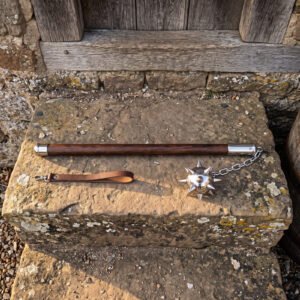 Chainmaw Hand Forged High Carbon Steel Medieval Flail | 27 Inch Overall with a 20 Inch Haft | American Walnut Haft and Polished Steel Ferrules | Reenactment Collector Gift | RK-1356
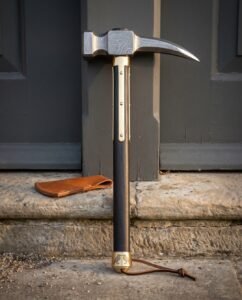 Crowfell Hand Forged Damascus War Hammer with Crow Beak Pick | 14 Inch Hardwood Haft | Brass Langets and Ferrule | Norse Reenactment Gift | RK-1692
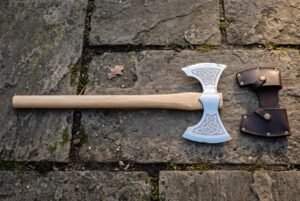 Twinbite Hand Forged 1095 Steel Double Bit Axe | 26 Inch Ash Haft | Etched Celtic Knotwork on Both Bits with Leather Head Cover | Fantasy Display Gift | RK-1557