The spear was the ordinary Norse arm. A sword took a smith weeks and cost a farm. A spear took a day, used a fraction of the steel, and put a point at the end of six feet of ash where it could be used by someone who had practised for an afternoon rather than a decade. That is why the sagas are full of them and why Odin carries one.
The spears here run 30 to 84 inches overall with heads from 11 to 14 inches including the socket, and prices from 239 to 449 dollars. Hafts are straight grained ash, oiled or sealed, with one in ebony and one in olive and walnut. Heads are socketed and riveted through the haft, in plain 1095 high carbon at 54 to 58 HRC or Damascus of 1095 and 15N20 at 58 to 60. Leaf, winged, lugged and three prong forms are all here, with the longer polearms on their own page, and every complete spear ships with a leather head cover.
Measure your ceiling before you buy anything over six feet.
Free US shipping
On most pieces. Heavier and oversized ones carry a flat charge.
Hand Forged
Heated, hammered and ground by hand.
Engraving available
Names, dates or Norse runes on most pieces.
Ships from Chicago
Inspected and dispatched from our Chicago warehouse. No import duty, no customs delay on US orders.
Viking Spears
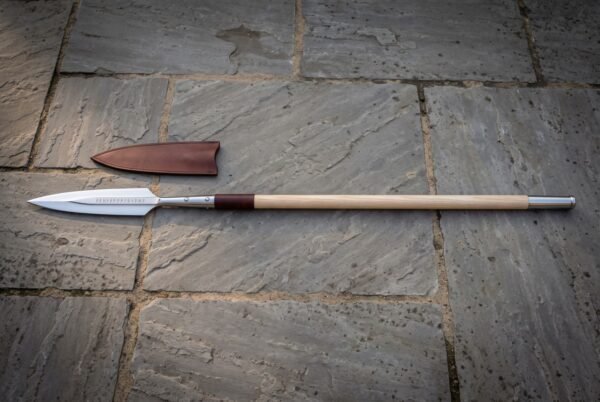
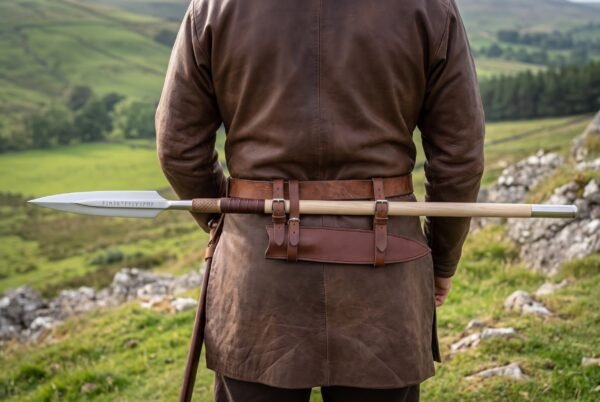
Runeleaf Hand Forged Elder Futhark Spear | 44 Inch Overall with 11 Inch Head | Ash Haft, Red Leather Grip and Brown Leather Head Sheath | Norse Reenactment Gift | RK-1981
Original price was: $279.00.$223.20Current price is: $223.20.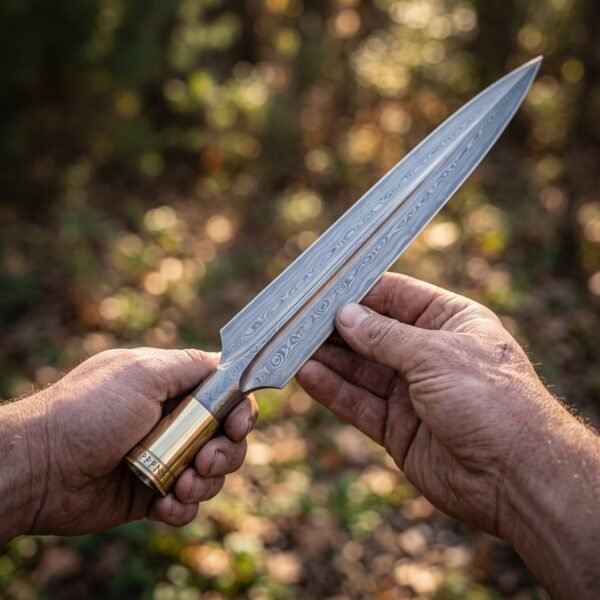
Wyrmfang Hand Forged Damascus Steel Spearhead with Brass Socket Collar & Leather Blade Sheath | Norse Reenactment Gift | RK-1511
Original price was: $239.00.$191.20Current price is: $191.20.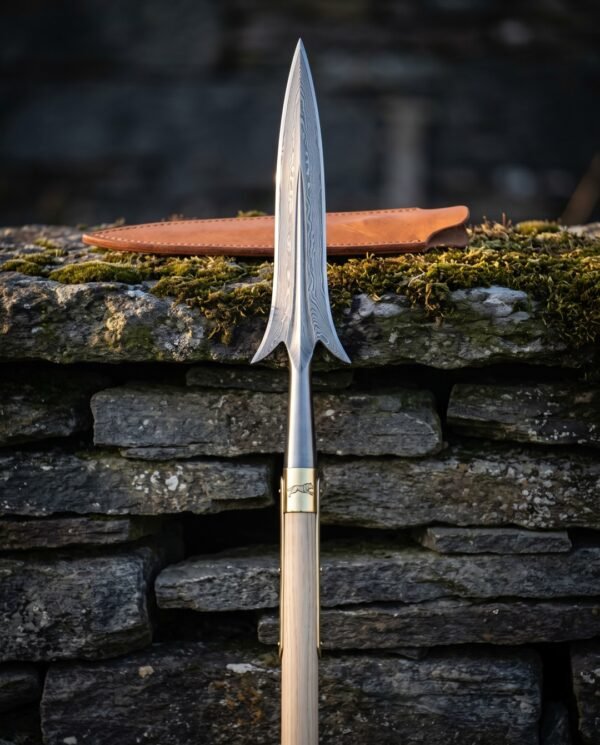
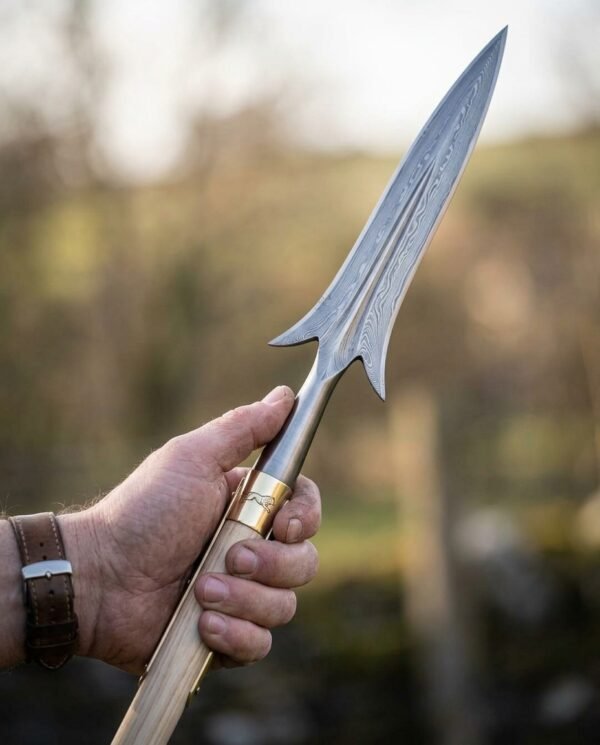
Thornwake Hand Forged Damascus Winged Spear | 12 Inch Head on a 72 Inch Ash Haft | Brass Ferrule and Leather Head Sheath | Norse Reenactment Gift | RK-1591
Original price was: $429.00.$343.20Current price is: $343.20.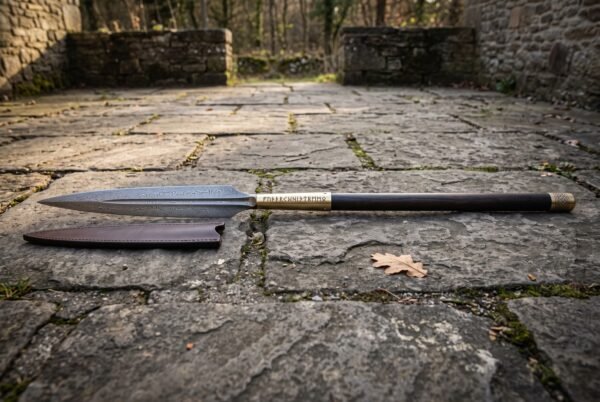
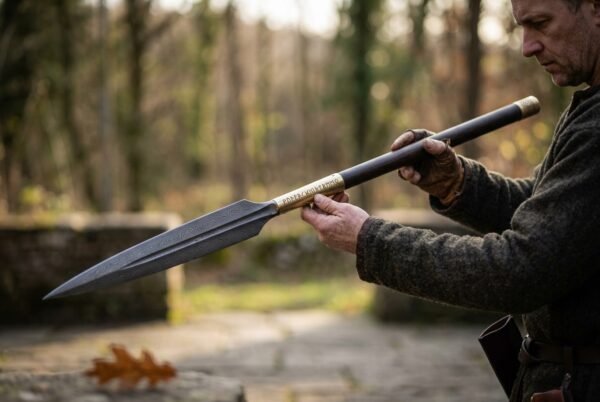
Skyrend Hand Forged Damascus Viking Spear | 1095 and 15N20 Leaf Blade | Rune Cut Brass Socket, Ash Shaft and Leather Sheath | Norse Reenactment Gift | RK-1481
Original price was: $289.00.$231.20Current price is: $231.20.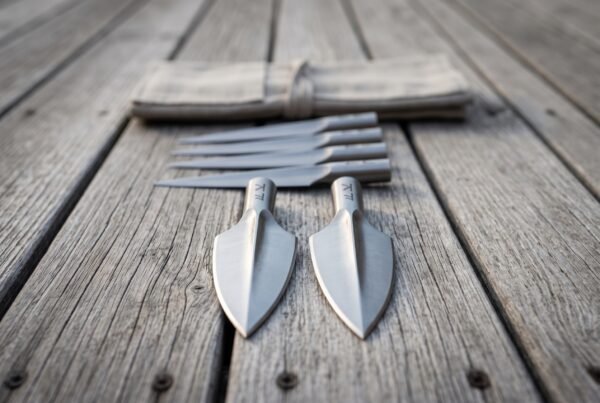
Ashpoint Hand Forged Viking Spearhead Set of Six | Matched 9 Inch Heads | Socketed 1095 High Carbon Steel with Rune Marked Collars and Canvas Roll | Norse Reenactment Gift | RK-1655
Original price was: $299.00.$239.20Current price is: $239.20.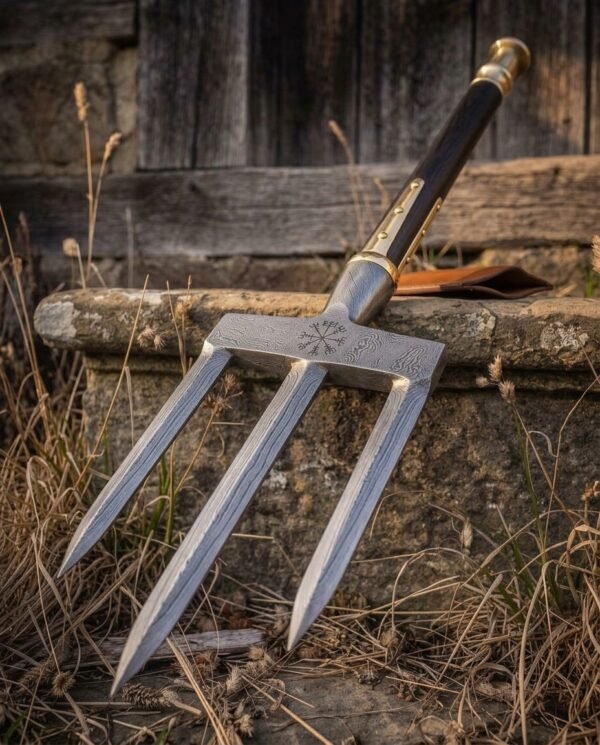
Tidefork Hand Forged Damascus War Trident | 14 Inch Three Prong Head | Ebony Haft with Brass Collar and Butt Cap | Norse Display Gift | RK-1592
Original price was: $449.00.$359.20Current price is: $359.20.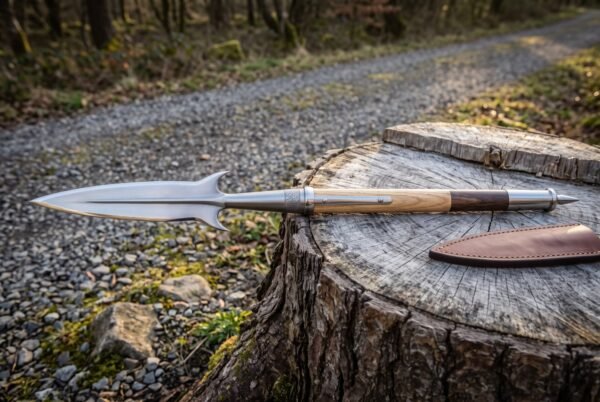
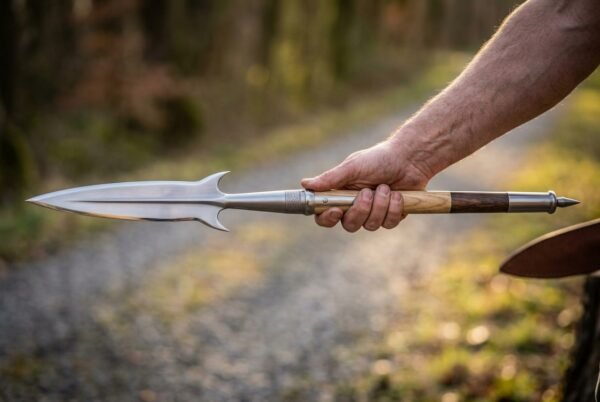
Boarhelm Hand Forged 1095 Boar Spear | 24 Inch Overall with 13 Inch Lugged Head on an Olive and Walnut Haft | Steel Butt Spike and Leather Sheath | Hunting Gift | RK-1593
Original price was: $349.00.$279.20Current price is: $279.20.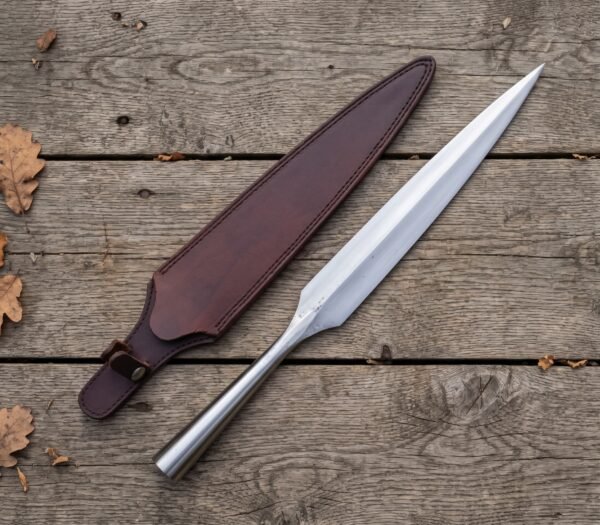
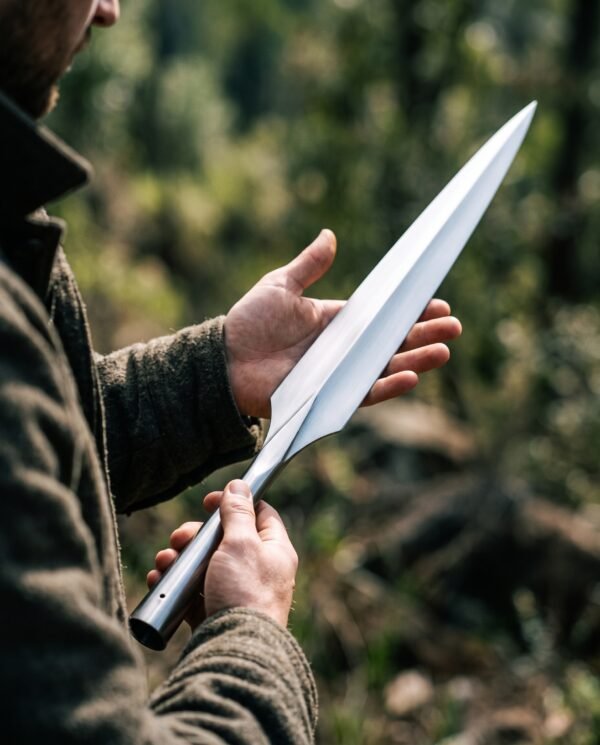
Spearward Hand Forged High Carbon Steel Viking Spear Head | Hollow Shaft at 1.1 Inch Diameter | Collector and Display Gift | RK-657
Original price was: $249.00.$199.20Current price is: $199.20.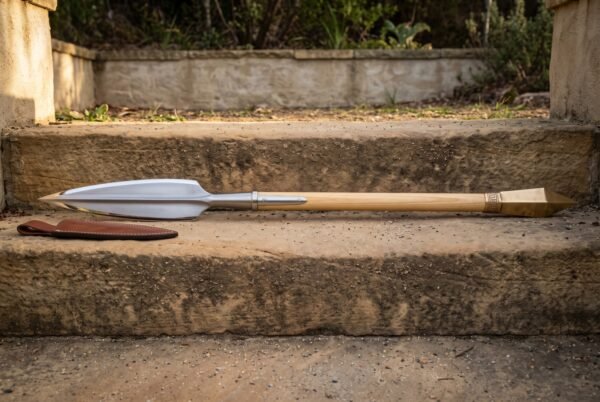
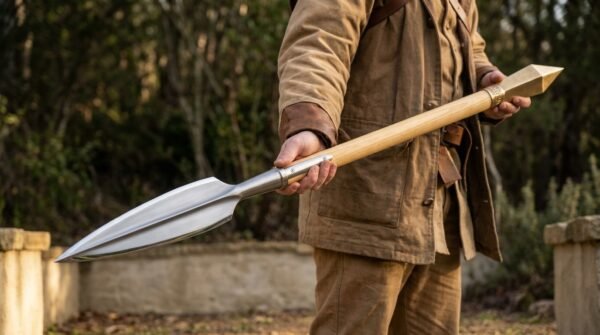
Ashfang Hand Forged 1095 Steel Viking Spear | 40 Inch Overall Length | Broad Leaf Head on an Ash Haft with Brass Butt Spike | Norse Reenactment Gift | RK-1773
Original price was: $279.00.$223.20Current price is: $223.20.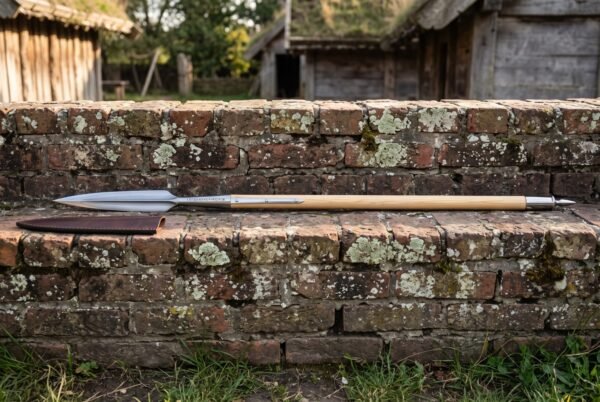
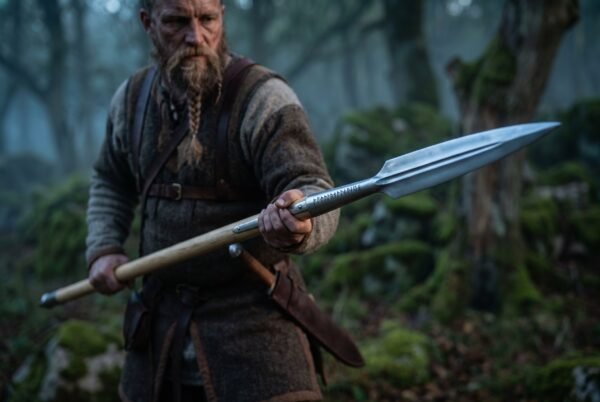
Ashgleam Hand Forged 1095 Viking Spear | 11 Inch Leaf Blade on a 76 Inch Ash Haft | Rune Engraved Socket and Leather Head Sheath | Reenactment Gift | RK-1594
Original price was: $279.00.$223.20Current price is: $223.20.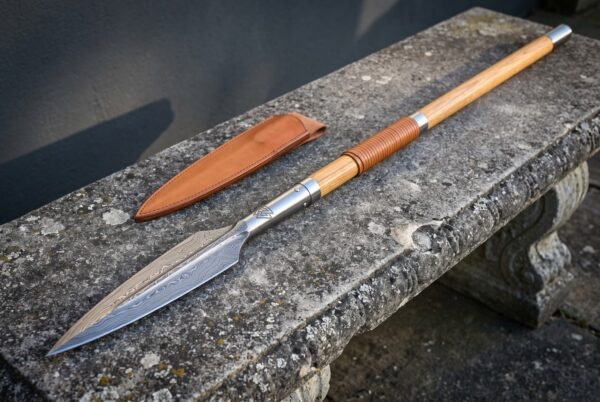
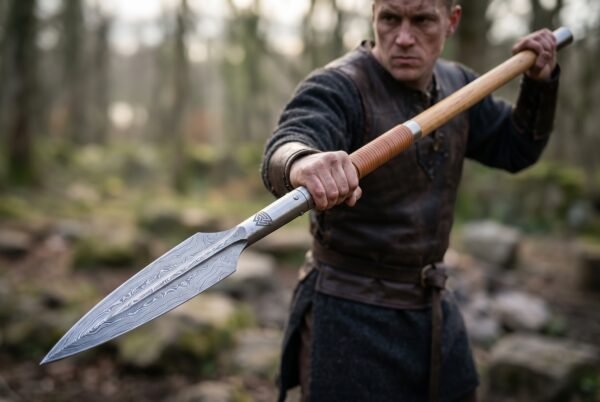
Serpentcast Hand Forged Damascus Spear | 42 Inch Overall with 12 Inch Head | Ash Haft, Leather Grip Wrap and Brown Leather Head Sheath | Norse Reenactment Gift | RK-1976
Original price was: $369.00.$295.20Current price is: $295.20.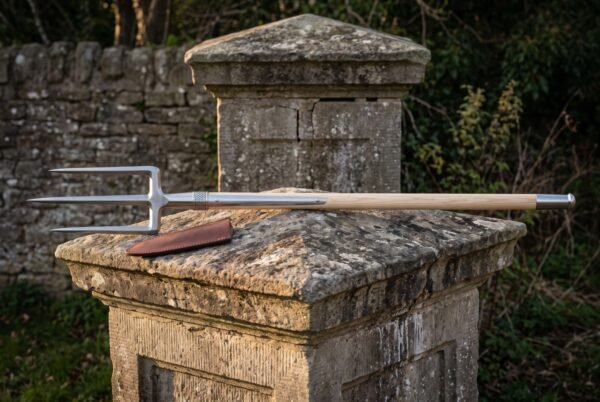
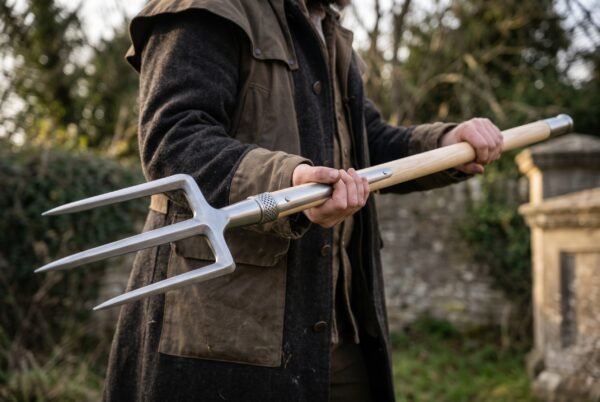
Reedfork Hand Forged 1095 Viking Trident | 12 Inch Three Prong Head on a 66 Inch Ash Haft | Knotwork Collar and Leather Sheath | Norse Fishing Gift | RK-1595
Original price was: $319.00.$255.20Current price is: $255.20.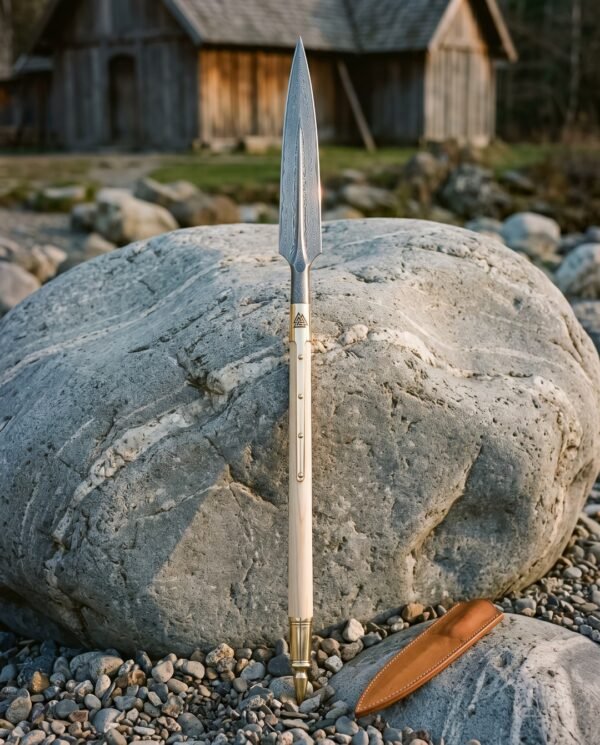
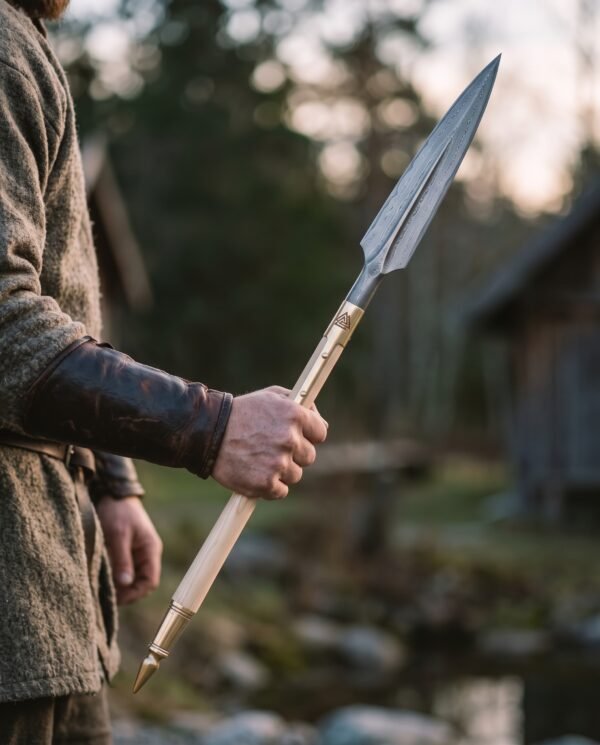
Ashreach Hand Forged Damascus Viking Spear with Leaf Shaped Head | Brass Valknut Ferrule and Ash Wood Haft | Leather Point Cover Included | Norse Reenactment Gift | RK-1614
Original price was: $349.00.$279.20Current price is: $279.20.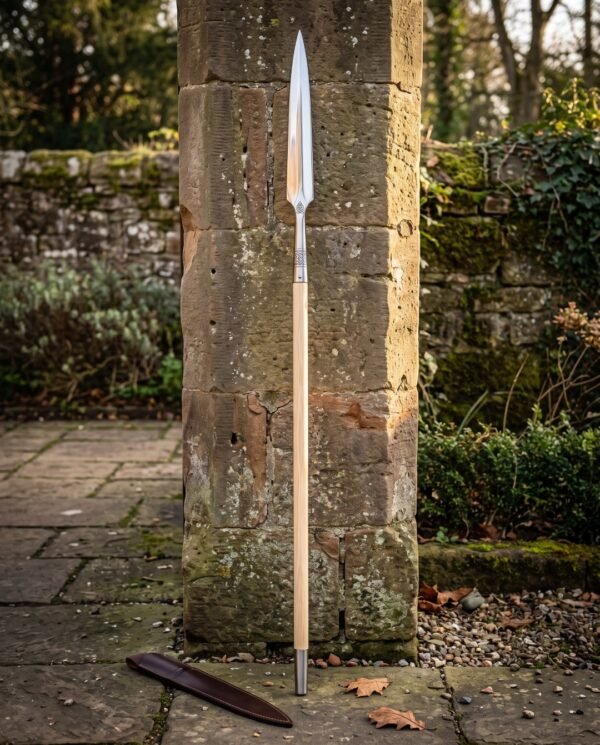
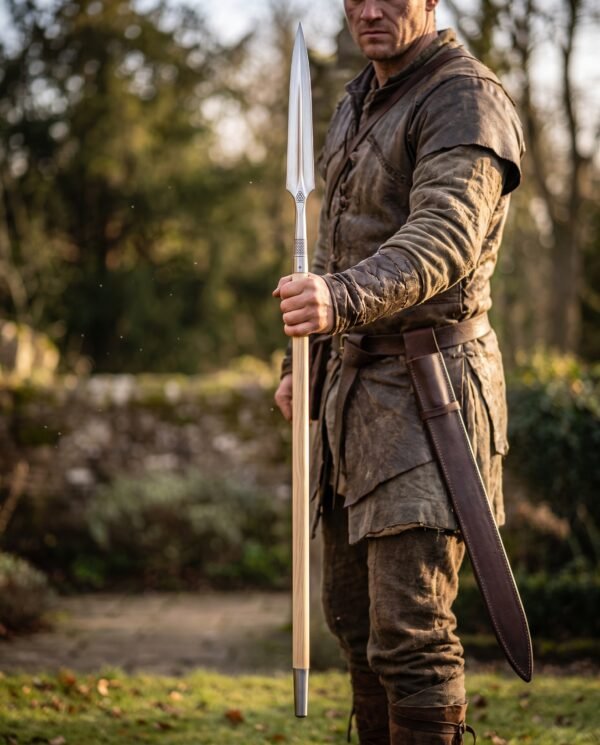
Ashreaver Hand Forged 1095 Steel Viking Spear | 6 Foot Overall on an Ash Shaft | Knotwork Cut Socket and Steel Butt Ferrule | Norse Reenactment Gift | RK-1518
Original price was: $289.00.$231.20Current price is: $231.20.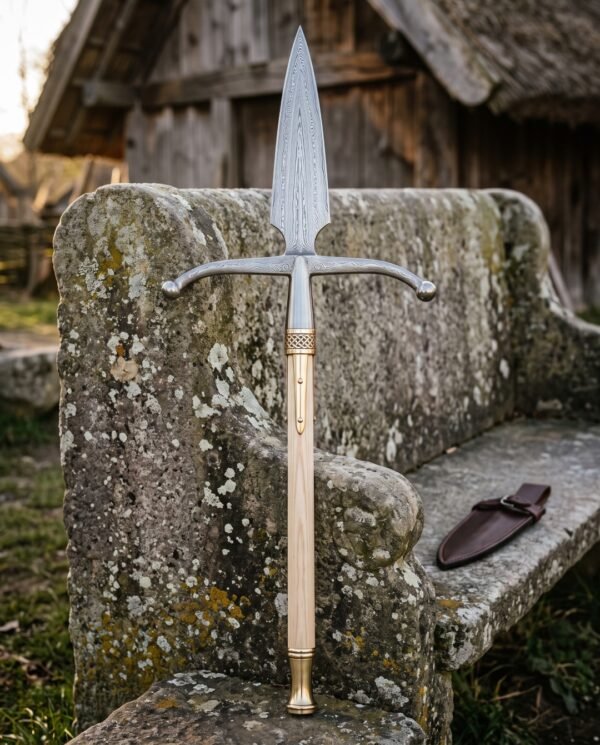
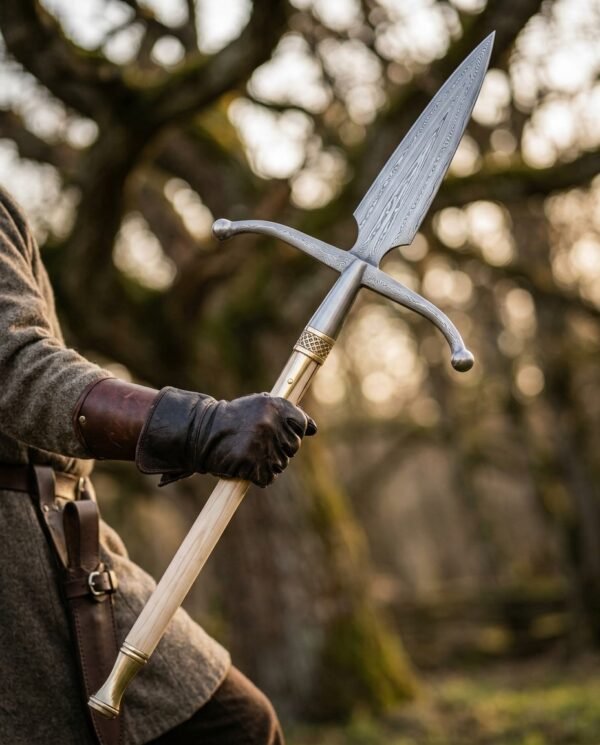
Boarcleft Hand Forged Damascus Winged Boar Spear with Ash Haft | Swept Crossbar and Brass Knotwork Ferrule | Leather Blade Cover Included | Norse Hunting Gift | RK-1612
Original price was: $399.00.$319.20Current price is: $319.20.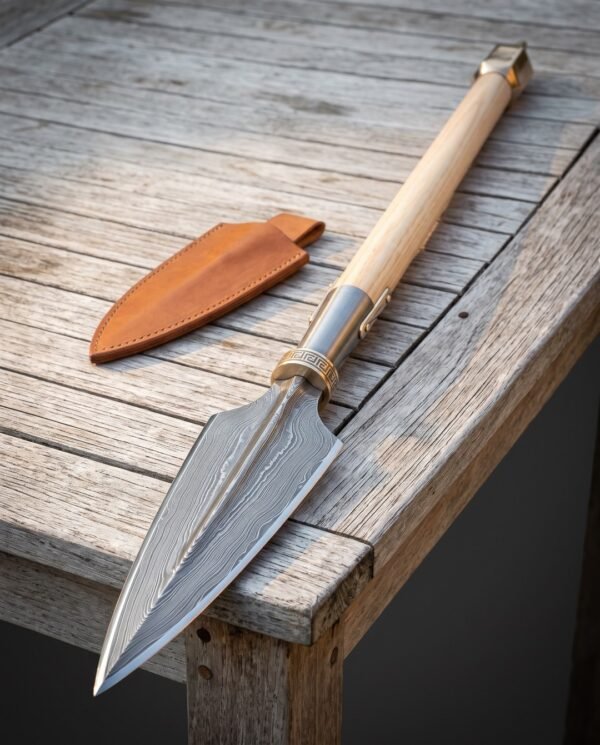
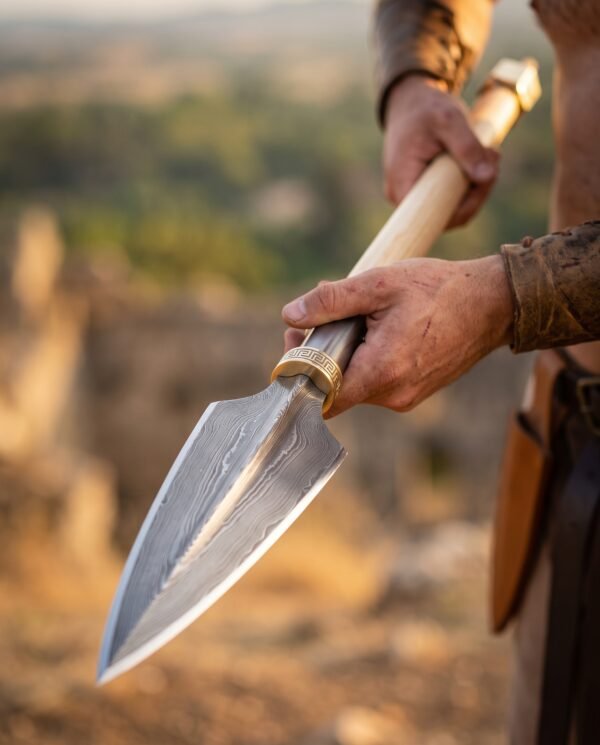
Dawnleaf Hand Forged Damascus Viking Spear | 28 Inch Overall with a 12 Inch Leaf Blade | Ash Shaft, Riveted Socket, Brass Collar and Leather Blade Cover | Norse Collector Gift | RK-1744
Original price was: $399.00.$319.20Current price is: $319.20.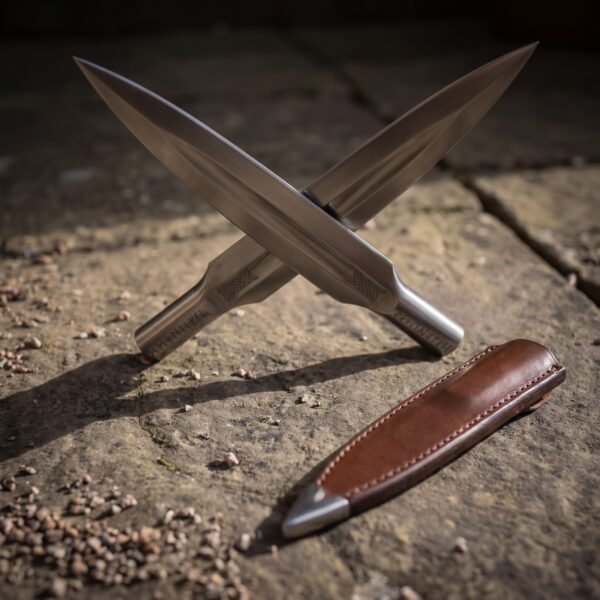
Twinfang Hand Forged Carbon Steel Spearhead Pair with Rune Cut Sockets & Leather Blade Sheath | Viking Reenactment Gift | RK-1513
Original price was: $269.00.$215.20Current price is: $215.20.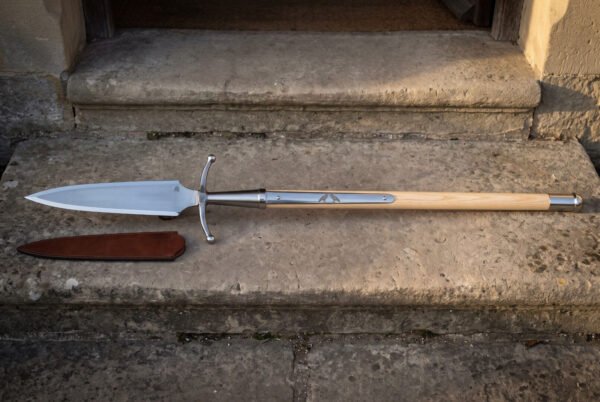
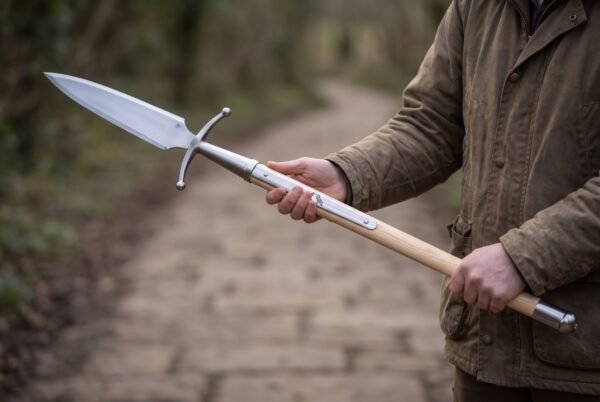
Tuskward Hand Forged 1095 Steel Boar Spear | Broad Leaf Blade with Curved Steel Crossbar | Ash Haft, Riveted Socket and Leather Blade Sheath | Norse Hunting Gift | RK-1636
Original price was: $349.00.$279.20Current price is: $279.20.Why the spear was the ordinary Norse arm
Take the amount of steel in a sword blade and divide it by six. That is roughly what a spearhead costs, and it is the whole reason the spear outnumbered everything else in the Norse world. The difficult part of the object is a foot of forged steel. The rest is a length of ash that anyone could cut, and that could be replaced without touching the head.
Reach is the second reason. A spear puts the point four or five feet beyond your hands, so the person holding one controls the ground in front of them. In a shield wall that is decisive, because a line of spears can strike over the top of the shields. It is also why the spear survived into the pike and the bayonet long after the sword had become a badge.
The construction is the same everywhere. The head is forged with a socket at the base, a cone of steel wrapped around and welded down the seam, and the haft is fitted into that socket and riveted through. That joint is the only part of a spear that can fail, which is why it gets a rivet rather than glue and why every head here is socketed rather than tanged. The head shape is the only place a spear gets to have opinions.
The spears in this collection
Seventeen products are on this page. Fourteen are complete spears, and three are heads sold on their own for anyone hafting their own.
Leaf blade spears
The standard Norse form and the largest group here. A broad or narrow leaf with a raised central rib running to the point, sharpened both edges, socketed and riveted through the haft. Heads run 11 to 12 inches including the socket, on hafts from 60 to 84 inches. The rib stiffens the blade so the point does not fold when it meets something solid, which is why a leaf head is thick down the middle and thin at the edges. Several carry a rune cut socket, a knotwork collar or an Elder Futhark row etched along the face.
Winged and lugged spears
Two pieces carry wings or lugs at the base of the blade, a pair of projections that stop the head burying itself past a certain depth. That matters if the thing you have just hit is heavy, angry and coming down the shaft toward you. One is a Damascus winged spear with a 12 inch head on a 72 inch ash haft and a turned brass ferrule with copper rivets. The other is a boar spear with a 13 inch lugged head, 2.5 inches wide, on a 30 inch haft of olive wood forward and walnut behind.
Boar spears with crossbars
Two pieces use a crossbar rather than wings, a curved forged steel bar with rounded finials set across the base of the blade. Same idea, more of it. One is plain 1095 with a broad leaf blade, a long riveted steel socket and a pale ash haft. The other is Damascus with a swept crossbar and a brass knotwork ferrule. Both come with a leather blade cover, which on a piece like this is not optional.
Tridents
Two three prong heads. One is a 12 inch head in plain 1095 on a 66 inch ash haft with a knotwork collar, closer to a fishing fork than anything else. The other is a 14 inch Damascus head, about 6 inches across the outer prongs, on a 36 inch ebony haft with a turned brass collar and butt cap. That one is a display piece and makes no pretence otherwise.
Spearheads sold on their own
Three products for anyone fitting their own haft. A single broad leaf head in Damascus with a raised central rib and a brass socket collar, about 14 to 15 inches from point to socket mouth. A matched pair of carbon steel heads with rune cut sockets. And a set of six socketed 1095 heads in graduated sizes, 5 to 9 inches long and 1 to 2.5 inches wide, from a narrow lozenge to a broad leaf, in a canvas roll with rune marked collars.
Heads, hafts and fittings across the range
Every figure below comes from the specification panel of a piece on this page. These are forged and fitted by hand, so read the numbers as what to expect rather than a guarantee to the millimetre.
| Type | Head | Overall length | Steel and hardness | Haft and fittings | Price |
|---|---|---|---|---|---|
| Spearhead | Broad leaf, raised central rib | 14 to 15 in head only | Damascus at 58 to 60 HRC | Brass socket collar, leather sheath | 239 dollars |
| Spearhead pair | Two heads, rune cut sockets | Heads only | Carbon steel | Leather blade sheath | 269 dollars |
| Spear | 11 in lozenge leaf, rune etched face | 72 in | 1095 at 54 to 58 HRC | Ash about 1.1 in, red leather grip | 279 dollars |
| Spear | 11 in leaf, rune engraved socket | 76 in | 1095 at 54 to 58 HRC | Ash haft, leather head sheath | 279 dollars |
| Spear | Leaf blade, rune cut brass socket | Not listed | Damascus at 58 to 60 HRC | Ash shaft, leather sheath | 289 dollars |
| Spearhead set of six | 5 to 9 in heads, 1 to 2.5 in wide | Heads only | 1095 at 54 to 58 HRC | Rune marked collars, canvas roll | 299 dollars |
| Trident | 12 in three prong head | 66 in | 1095 at 54 to 58 HRC | Ash haft, knotwork collar | 319 dollars |
| Boar spear | 13 in lugged head, 2.5 in wide | 30 in | 1095 at 54 to 58 HRC | Olive and walnut haft, steel butt spike | 349 dollars |
| Boar spear | Broad leaf with curved steel crossbar | Not listed | 1095 at 54 to 58 HRC | Pale ash, riveted socket, steel ferrule | 349 dollars |
| Spear | Narrow leaf, raised central spine | Not listed | Damascus at 58 to 60 HRC | Ash haft, brass Valknut ferrule | 349 dollars |
| Spear | 12 in head, leather grip wrap | 74 in | Damascus at 58 to 60 HRC | Ash haft, leather head sheath | 369 dollars |
| Spear | 12 in broad leaf, double edged | 68 in | Damascus at 58 to 60 HRC | Ash, riveted socket, brass collar | 399 dollars |
| Boar spear | Winged head with swept crossbar | Not listed | Damascus at 58 to 60 HRC | Ash haft, brass knotwork ferrule | 399 dollars |
| Winged spear | 12 in head, 8 in blade from wings to point | 72 in | Damascus at 58 to 60 HRC | American ash, brass ferrule, copper rivets | 429 dollars |
| Trident | 14 in head, 6 in across the prongs | 36 in | Damascus at 58 to 60 HRC | Ebony haft, brass collar and butt cap | 449 dollars |
Head length is quoted including the socket on most of these, so a 12 inch head has roughly 8 inches of blade in front of the collar. Compare like with like before deciding one head is bigger than another.
Sizing, fit and the ceiling problem
The complete spears run from 30 inches up to 7 feet, which covers three genuinely different objects. A 30 to 36 inch piece is a short hunting or display spear you can hold in one hand and hang anywhere. A 60 to 68 inch spear is a working length, long enough for reach and short enough to carry through a doorway. Past 72 inches you have a full length shafted piece that will not stand upright in a room with an eight foot ceiling once you allow for the butt spike.
Haft diameter on the pieces that list it sits around 1.1 inches, which fills an adult hand without being a broom handle. Ash is the right timber and the one the originals used, because it is springy along the grain and absorbs shock rather than transmitting it.
Balance sits well forward of centre on any spear. That is normal and is what makes the point go where you aim it. If you want a piece that feels lively rather than authoritative, look at the shorter hunting lengths.
These are reenactment and display pieces rather than certified sports equipment. A leather head cover is supplied with every complete spear for a reason. Keep it on unless the spear is on a wall.
Steel and hardness
Two house specifications run through Ransack Viking blades. Plain 1095 high carbon is hardened to 54 to 58 HRC. Damascus of 1095 and 15N20 is forge welded, acid etched and hardened to 58 to 60 HRC. This page is split fairly evenly between them.
On a spearhead the argument tilts slightly toward plain 1095. A point takes shock along its length rather than across an edge, and the softer specification bends and recovers where a harder one is more willing to chip at the tip.
Damascus at 58 to 60 HRC is the choice when you want the pattern, and on a leaf blade with a raised rib there is a lot of surface for it to show on. The pieces here are described with layered wave and raindrop figures, hand etched to raise the contrast. Neither steel is stainless and both will rust. Read Damascus versus high carbon steel and the steel and hardness page if you want the longer version.
Sockets, hafts and ferrules
The socket is where a spear lives or dies. Sockets here are forge wrapped and seam welded, fitted over the shaped end of the haft and riveted through, often with a brass or steel collar over the joint. A riveted socket can be knocked out and refitted. A glued one cannot, and there are none here.
Hafts are straight grained ash on almost everything, oiled or sealed. Straight grain matters more than species, because a haft with run out, where the grain exits the side of the shaft, will snap at that point. Two pieces use something else, ebony on the display trident and olive wood with a walnut rear section on the short boar spear.
The butt end gets a ferrule, a spike or a cap. A steel or brass butt spike lets the spear be planted in ground and gives a second point at the back. A plain ferrule protects the end grain from splitting. Several here carry engraved brass fittings: a Valknut on one ferrule, knotwork on another, cut runes around a socket.
Care and storage
Both steels are carbon steel and both rust. Wipe the head after handling, keep a thin film of mineral or camellia oil on it, and never leave it in the leather cover damp. Leather holds moisture against steel, which is the most common reason a well kept point ends up marked. Grey patina is stable. Orange spotting is early rust and lifts with fine abrasive and oil.
Ash hafts want a wipe of oil once or twice a year and nothing else. Keep them out of direct sun, which dries and greys the surface, and away from radiators. Check the rivet at the socket occasionally, because a haft that has dried and shrunk slightly will let the head work loose, and a loose head on a long shaft is the one genuinely dangerous fault a spear can develop.
Store a long spear horizontally on two brackets rather than standing it in a corner, where it will lean, bow over years and eventually fall on someone. Our guide to displaying swords and axes covers the hardware.
Engraving and gifting
Spearheads take engraving well on the blade face and on the socket collar, and several pieces here already carry cut work: an Elder Futhark row etched along a blade, a Valknut in a brass ferrule, knotwork around a collar, rune cut sockets on a matched pair of heads.
Text engraving is 19 dollars, a symbol is 39 dollars and a family crest is 49 dollars, cut in the United States after the piece arrives. Elder Futhark is a phonetic alphabet rather than a code, so a name is transliterated by sound and there is no rune for the letter C. See the Elder Futhark guide and the engraving page.
Engraving is permanent and an engraved piece cannot be returned, so send the exact spelling and read it twice before you order.
Where these come from and how they ship
Ransack Viking is a US company based in Chicago, Illinois. The pieces are handmade in the Czech Republic, then imported, inspected and shipped from Chicago. Engraving is done in the US after arrival.
Long spears ship in a long box and cost more to send than anything else in the catalogue, so allow extra time. Small differences in grain, etch figure and the exact sweep of a wing between two spears of the same name are normal. Timelines are on the shipping information page and returns on the returns and warranty policy.
How to choose
Start with the length, because it decides where the spear can live. Measure the wall or the ceiling first, then pick the head. A plain leaf in 1095 is the historically correct answer and the one that reads as a Norse spear to anyone who knows. A winged or crossbarred head reads as a hunting piece. A trident reads as a display object, and there is nothing wrong with that.
Then pick the steel. Plain 1095 for a piece that will be handled and carried, Damascus for one that will be looked at. Then check the leather head cover, which almost all of these have, because you will want it the first time you carry the thing through a door.
Browse related categories
- Glaives and other polearms
- Halberds
- Poleaxes
- Bearded axes
- Dane axes, the other long shafted Norse piece
- Viking swords
- Round shields to go with a spear
- Stands and display hardware
Guides worth reading first
- The Viking spear, from Gungnir to the shield wall
- Viking armour explained
- Norse gods and the arms they carry
- How to display swords, axes and shafted pieces
- Norse symbols and what they mean
Frequently asked questions
What length spear should I buy?
Sixty to 68 inches if you want something you can carry through a doorway and still have reach. Thirty to 36 inches for a short hunting or display piece. Past 72 inches you are into full length shafted territory, so measure your wall and your ceiling before you order, and remember the butt spike adds to the total.
Why is the head socketed rather than tanged?
Because that is how spearheads have always been made and because it is stronger. A cone of steel wrapped around the shaped end of the haft and riveted through spreads load along several inches of timber rather than concentrating it at one point. It also means a broken haft can be replaced without touching the head.
What are the wings and crossbars for?
They stop the head burying itself past a certain depth. On a hunting spear that matters, because whatever you have just hit is heavy and still moving. Four pieces on this page carry wings, lugs or a curved steel crossbar set at the base of the blade.
Are the hafts ash?
Almost all of them, straight grained and oiled or sealed. Ash is springy along the grain, absorbs shock rather than transmitting it into your hands and does not shatter when it fails. Two pieces use something else, an ebony haft on the display trident and an olive and walnut haft on the short boar spear.
Do these arrive sharp?
Yes. Heads are forged and ground by hand and arrive with a working point and edge. Every complete spear ships with a fitted leather head cover, and it is worth keeping on whenever the piece is not on a wall, because a spear point is easy to swing and easy to forget about.
Can I buy just the head and fit my own haft?
Yes. Three products here are heads on their own: a single broad leaf head in Damascus, a matched pair with rune cut sockets, and a set of six 1095 heads in graduated sizes from 5 to 9 inches in a canvas roll. Shape the haft to the socket, fit it dry and rivet through.
Which steel should I pick for a spear?
Plain 1095 at 54 to 58 HRC if the spear will be handled and used, because a point takes shock along its length and the softer specification bends and recovers rather than chipping. Damascus at 58 to 60 HRC for the pattern on a piece that will mainly be looked at. Neither is stainless.
Where are these spears made?
They are handmade in the Czech Republic, then imported, inspected and shipped by Ransack Viking from Chicago, Illinois. Engraving is done in the US after arrival.
Featured pieces
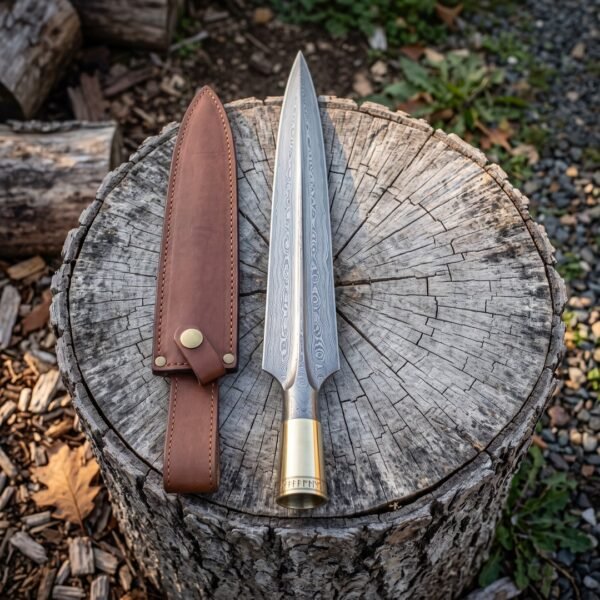 Wyrmfang Hand Forged Damascus Steel Spearhead with Brass Socket Collar & Leather Blade Sheath
Original price was: $239.00.$191.20Current price is: $191.20.
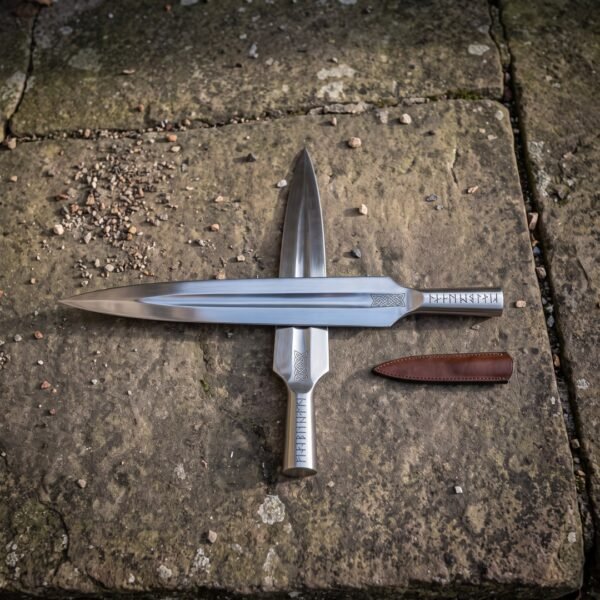 Twinfang Hand Forged Carbon Steel Spearhead Pair with Rune Cut Sockets & Leather Blade Sheath
Original price was: $269.00.$215.20Current price is: $215.20.
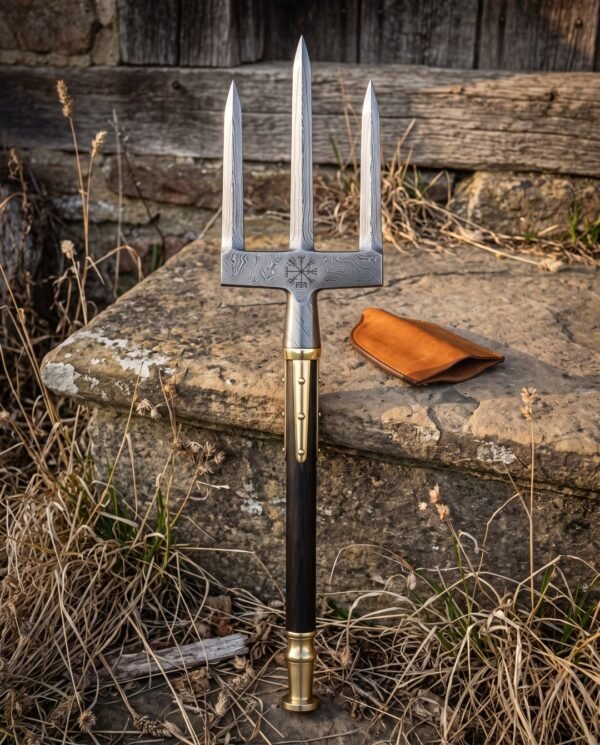 Tidefork Hand Forged Damascus War Trident
Original price was: $449.00.$359.20Current price is: $359.20.
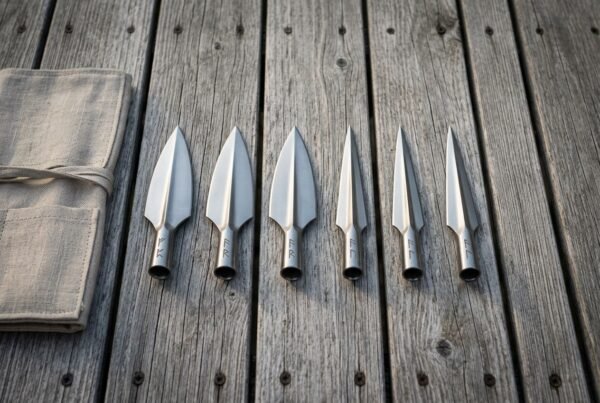 Ashpoint Hand Forged Viking Spearhead Set of Six
Original price was: $299.00.$239.20Current price is: $239.20.