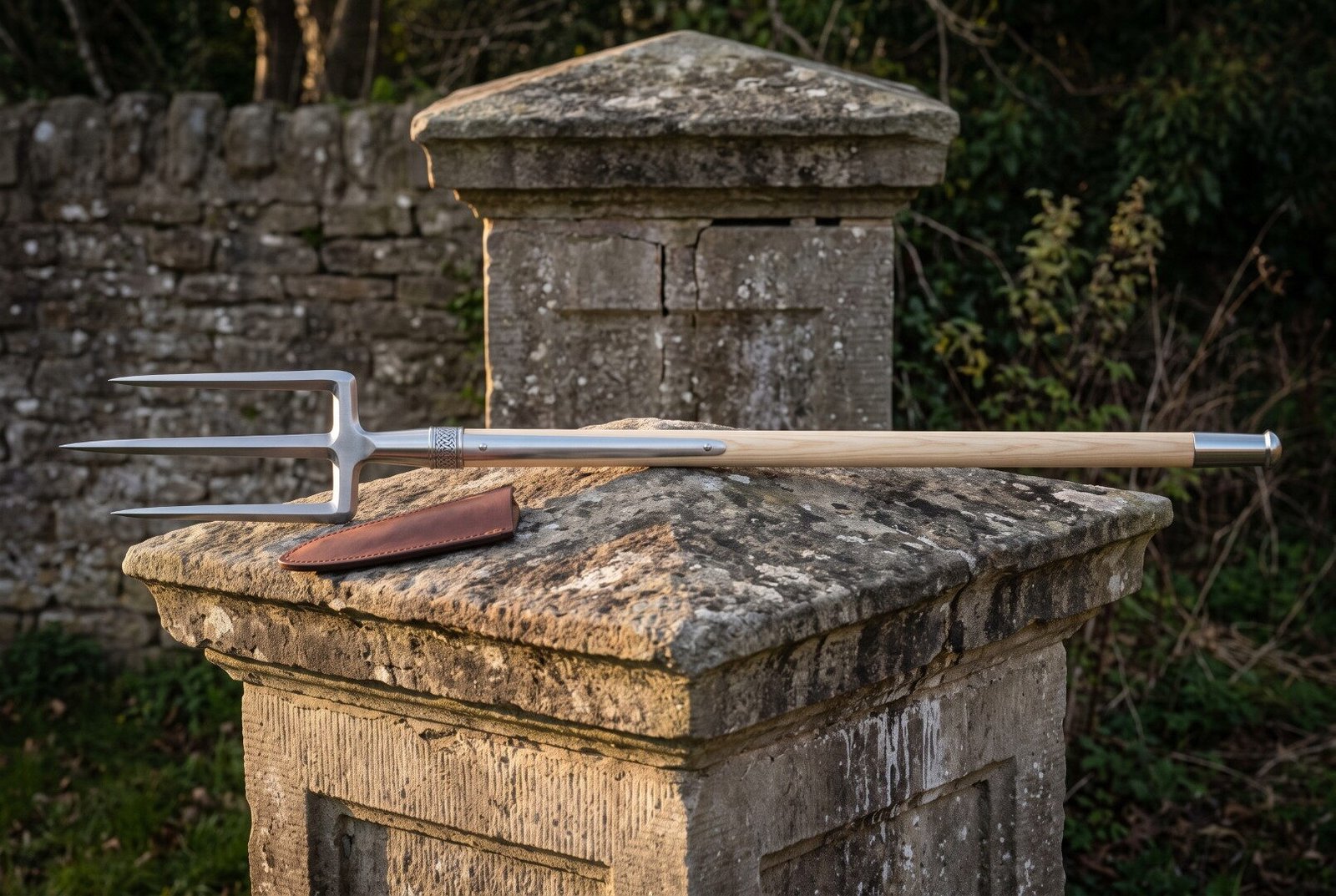
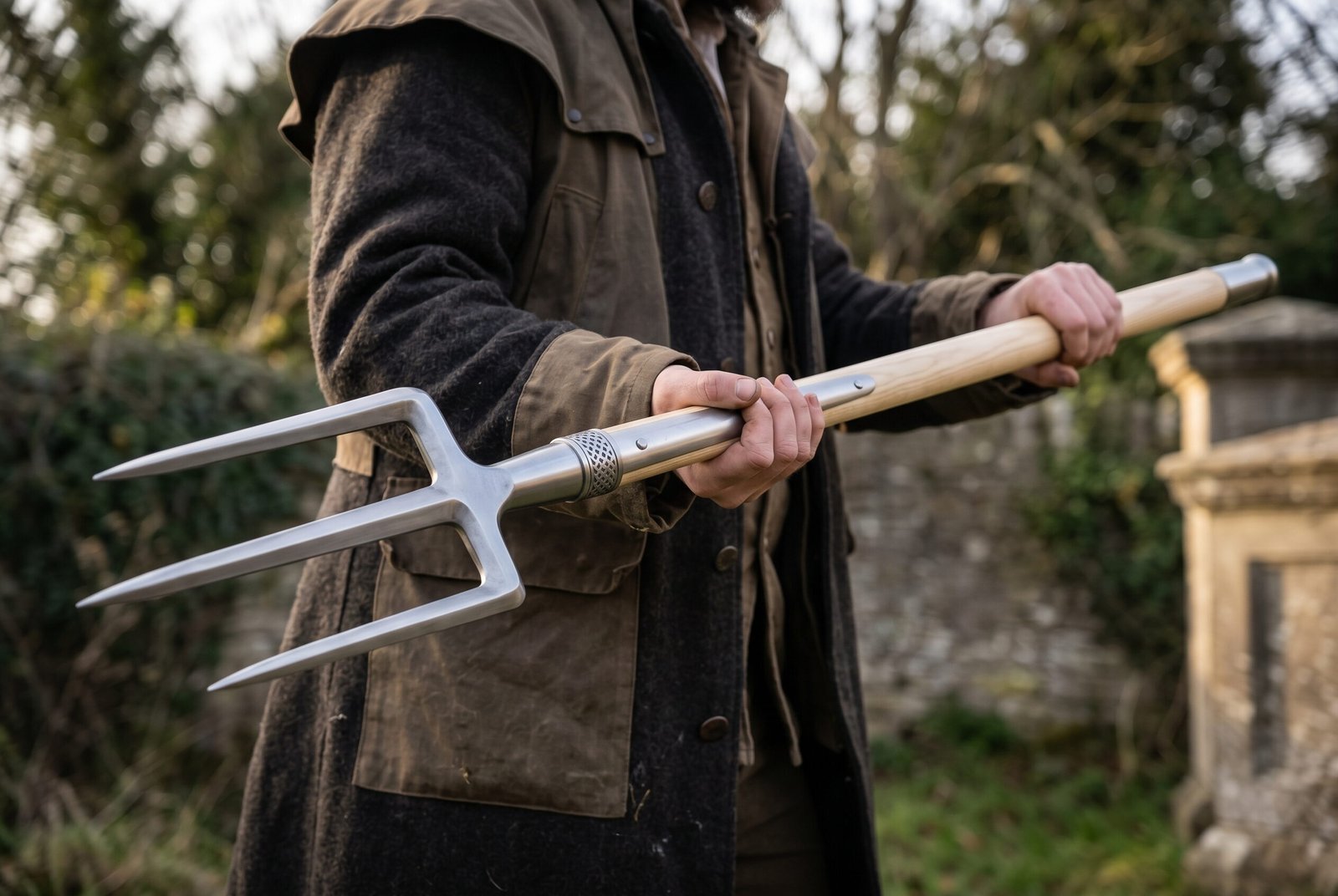
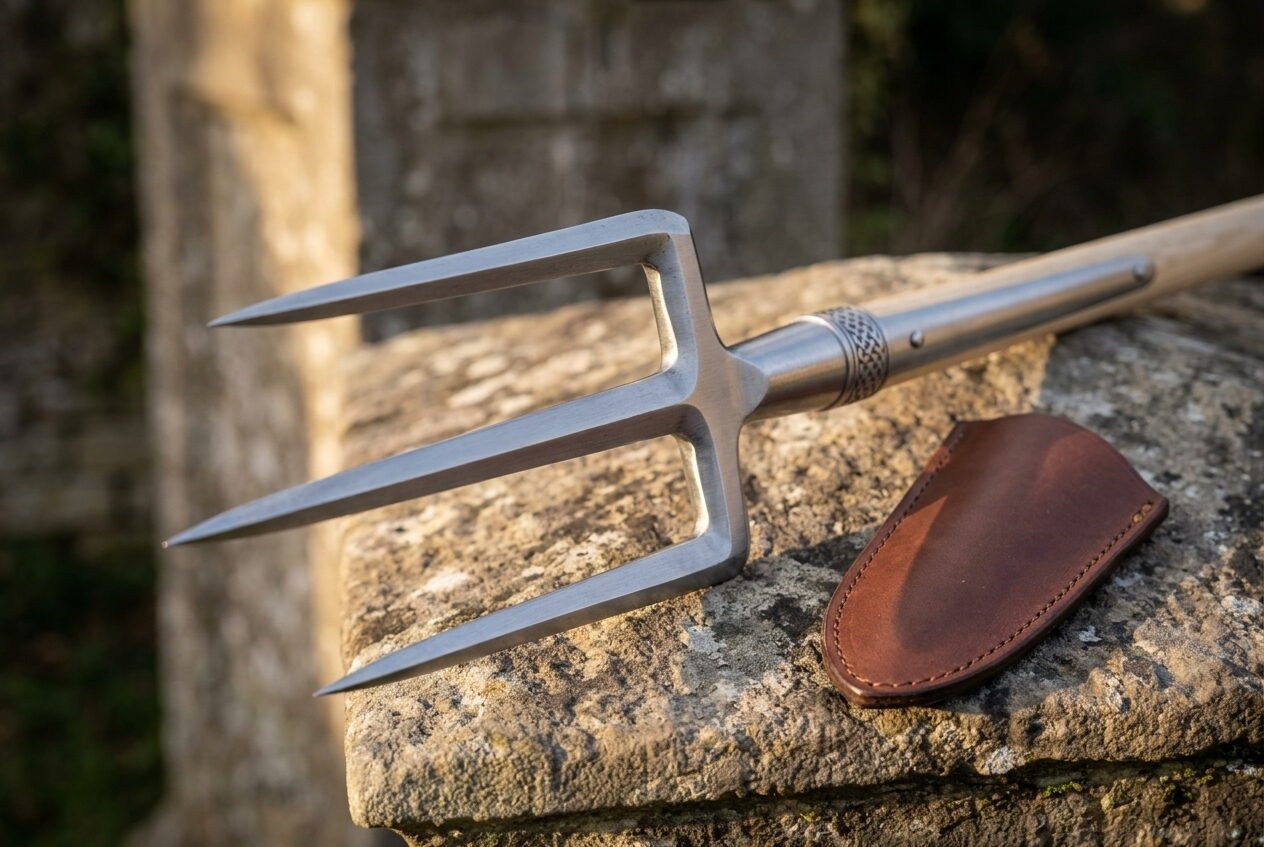
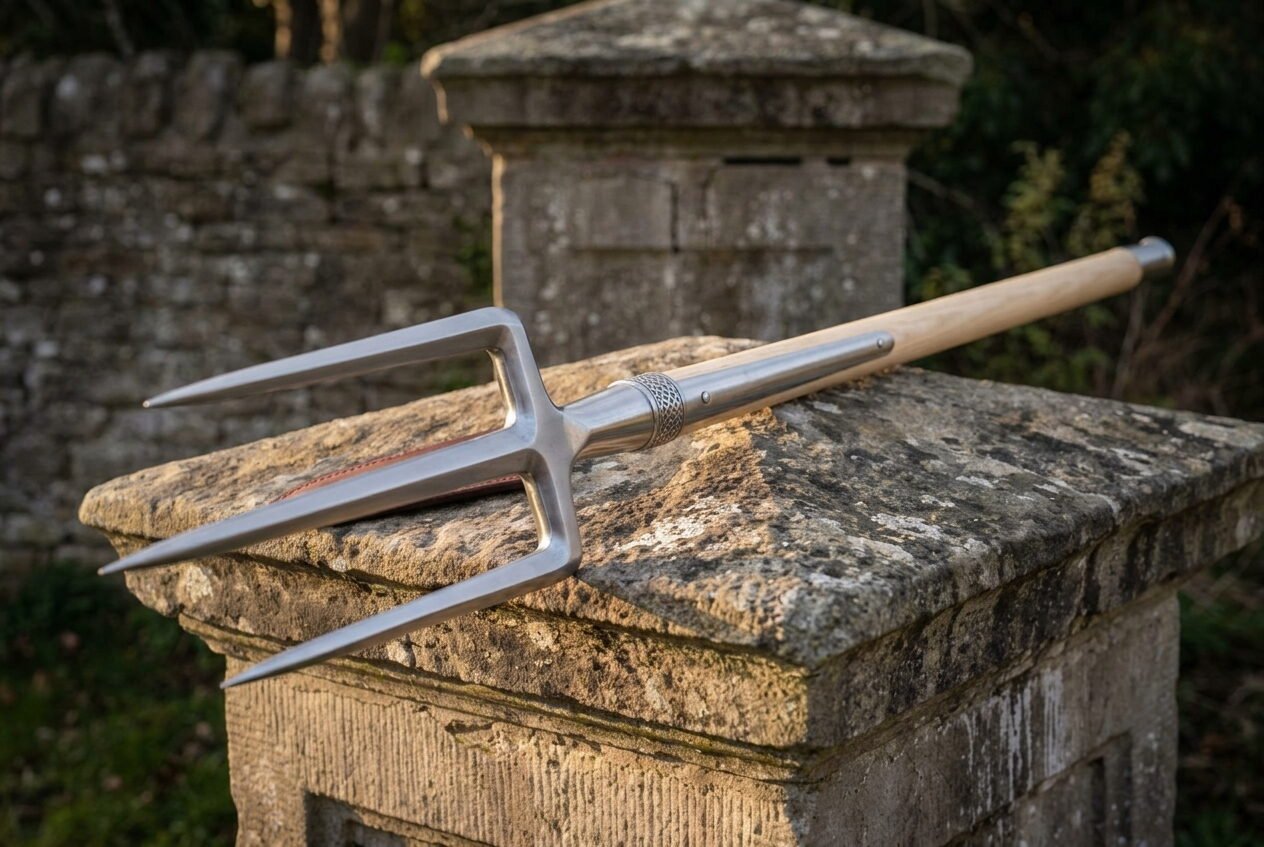
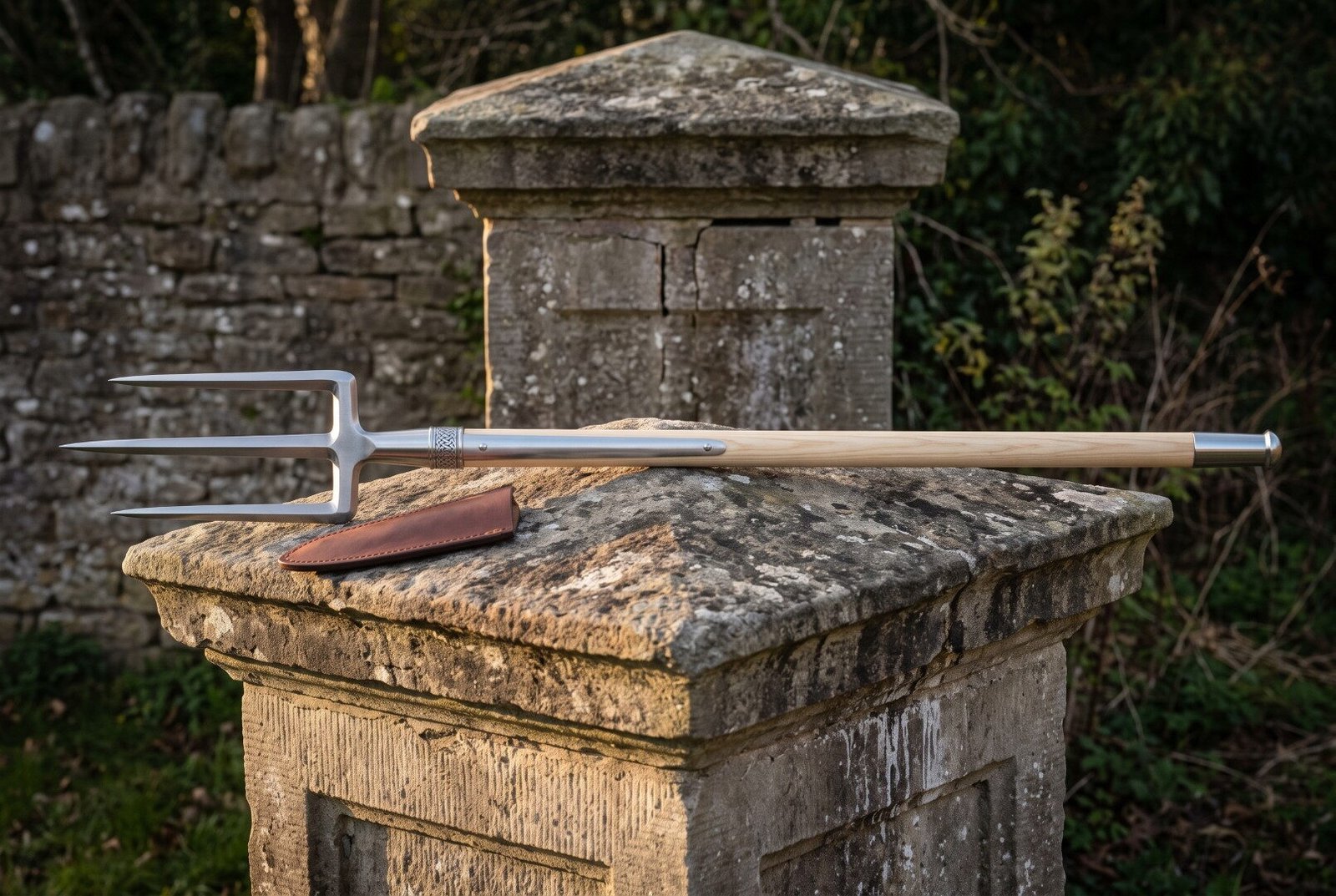
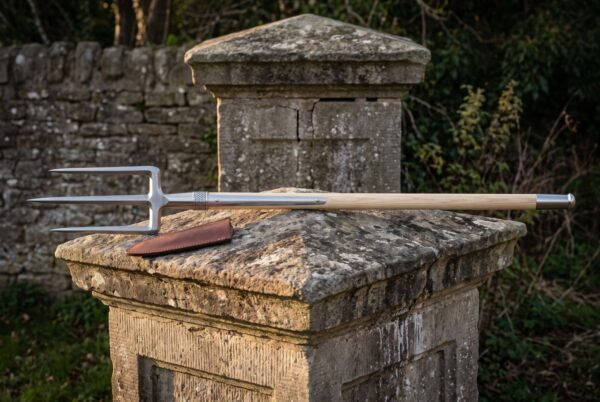
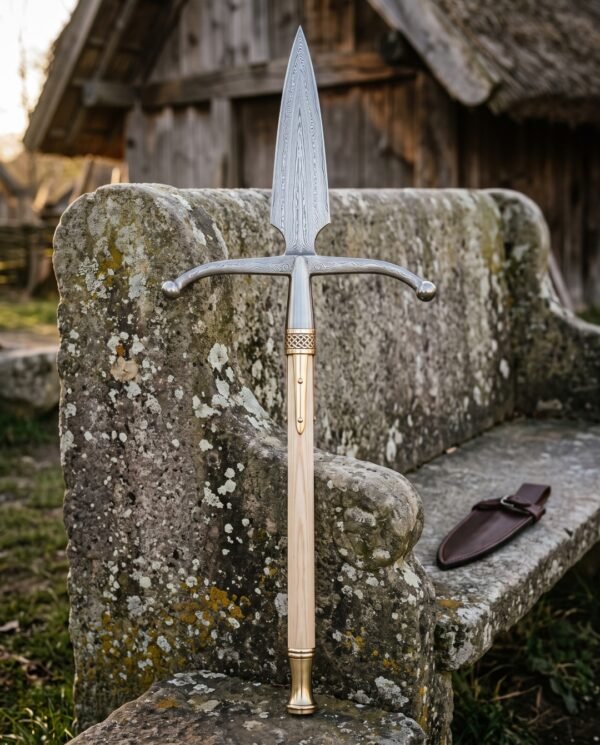
The Reedfork is a long hafted Viking trident with a three prong head forged from a single plate of 1095 high carbon steel. The prongs are drawn out square at the shoulders and taken round toward the points, all three finished to the same length so the head sits flat when it is laid down. Below the head a steel collar carries a band of cut Norse knotwork and a single rivet, and from there a pale ash shaft runs six feet to a steel butt cap.
In the Norse world this shape was a working tool long before it was anything else. The leister, a fish spear with a centre point and flanking tines, was used across Scandinavia and the north Atlantic for salmon and for fish taken at holes in the ice. Outer tines that flex slightly outward and spring back are what make it work, because the fish is pinched rather than skewered. The Reedfork is forged, ground, engraved and hafted by hand in the Czech Republic, and it carries our lifetime warranty against defects in forging, grind, heat treat and fittings, with no end date and no receipt needed. It belongs with the glaives and polearms. If the shape is not quite right, the war axes run close to it.
Specifications
| Head material | 1095 high carbon steel, 54 to 58 HRC |
|---|
| Head shape | Three straight prongs from one plate, square shoulders |
|---|
| Head length | Approximately 12 inches from the collar to the points |
|---|
| Head width | Approximately 5.5 inches across the outer prongs |
|---|
| Overall length | Approximately 66 inches |
|---|
| Socket | Steel socket with a patterned collar band and long langets riveted down the haft |
|---|
| Engraving | Cut Norse knotwork band around the collar |
|---|
| Haft | Straight grained ash, oil finished |
|---|
| Butt | Steel butt cap |
|---|
| Finish | Hand polished prongs with satin shoulders |
|---|
| Weight | Approximately 2 lb 14 oz assembled |
|---|
| Included | Stitched brown leather head sheath |
|---|
| SKU | RK-1595 |
|---|
Prong spacing is the whole design
Every fork head is really a decision about one number, which is the gap between the tines. Set the prongs close and the head grips small, hard targets and skips off anything larger. Set them wide and big targets go in easily but nothing is held. Traditional salmon leisters settled at roughly two inches of clear gap, which is enough to swallow a fish and narrow enough that the barbed or roughened inner faces hold it while the shaft is lifted.
The Reedfork sits at about that spacing. It is also why the outer prongs on this head are not perfectly parallel. They stand very slightly proud of vertical, so that something forced between them pushes them apart a fraction and the steel’s own spring closes them again. That is a property of the heat treat as much as the geometry. A head tempered too hard would crack instead of flexing, which is one reason we run the trident softer than we run a knife.
The third detail is the square shoulder where the three prongs meet the base. Rounding that corner would look tidier and would be considerably weaker. A square internal corner spreads load into the plate. A sharp radius concentrates it, and concentrated load at the root of a prong is exactly how a fork head fails.
One plate of 1095, not three welded prongs
The whole head starts as a single flat plate of 1095. The gaps are cut, then each prong is drawn out under the hammer, tapered, trued against its neighbours and finally ground. Doing it that way is slower than forging three points and welding them to a base, and it is the only way to get continuous grain running from the collar into every tip. A welded fork has three joints sitting at the highest stress point in the piece.
1095 is a plain high carbon steel with roughly one percent carbon and very little else. It hardens deeply in oil and it is honest about what it is doing under the hammer, which is why it has been a smith’s default for a very long time. We temper this head to 54 to 58 HRC, on the tough side rather than the hard side, because a trident takes bending loads across three thin prongs. The prongs are hand polished and the shoulders left satin, so the light picks out the geometry. The knotwork on the collar is cut after heat treat with a graver, then the collar is riveted through the ash.
Engraving, runes and your own design
Use the rune converter on this page to turn a name, a date or a short phrase into Elder Futhark and we will cut it into the steel, the leather or the wood. If you would rather have a Viking pattern than a rune line, choose your own design in the engraving option above the add to cart button and tell us where it goes. Where a piece already carries an engraved design, your chosen engraving replaces it rather than sitting alongside it. On the Reedfork the collar band is the obvious place, and the ash just below it takes a longer line if you want more room. See the engraving page for what fits.
Balance and handling
Five and a half feet is long enough to reach into water from a bank or a boat and short enough to control indoors. The balance sits roughly twenty six inches from the butt, which is further forward than the Viking spear in our range because a three prong head carries more steel out front. Two hands is the natural grip, with the rear hand at the butt cap and the forward hand sliding.
Each prong is ground to a working point. This is a forged piece with real edges, not a costume prop, and it is not sold for battle ready or full contact sparring. It should never be used against another person. Fishing with a spear is legal in some states and seasons and not in others, so check your local rules before you take it near water. Most of these go on a wall, and the head cover keeps the points safe while it is being moved.
Care
1095 is not stainless. Salt water is particularly hard on it, so if this ever goes near the coast, rinse the head in fresh water, dry it and oil it the same day. In normal use, wipe the prongs down after handling and keep a thin film of mineral oil, camellia oil or paste wax on the steel, working a cotton bud into the two inner corners where a cloth cannot reach. Do not store the head inside the leather sheath for long periods. Surface rust lifts with oil on a green pad. Our steel care page covers it properly. The ash haft takes boiled linseed or Danish oil once or twice a year.
Made in the Czech Republic
Every piece we sell is made by hand in the Czech Republic. The smiths there work the way the trade has been worked for a long time, heating and hammering the steel, taking the bevels down by eye, and fitting the handle and the leather one at a time. There is no automated line anywhere in it, so small differences from one piece to the next are normal and expected.
Ransack Viking is a United States company based in Chicago, Illinois. We bring the pieces in ourselves, inspect them on arrival and ship them from our own warehouse. If you add engraving, that is carried out here in the United States before your order goes out.
A note on handmade variation
This is hand made, not machine made or bulk produced, so what arrives will not be a pixel for pixel copy of the photograph. Prongs drawn under a hammer are never identical twins, so the taper on yours will be its own, and the knotwork is cut freehand so the interlace will differ slightly line by line. Ash ranges from near white to warm honey with darker streaks. The dimensions, the material and the build are the same every time. The character is not. If that is the part you care about, carry on with how to hang a blade on a wall, then the Viking spear.
Frequently asked questions
Can I actually fish with this
It is built on the working leister pattern and it will do the job, but spear fishing and gigging rules vary widely by state, species and season. Check before you use it.
Are the prongs sharp
Each one is ground to a point with the leading edges bevelled. It is not a razor edge but it will go into things easily, hence the leather cover.
Is this Damascus steel
No. This head is plain 1095 with a polished finish. Our Damascus trident is a separate piece with a pattern welded head and an ebony haft.
Will it rust if it gets wet
It will if you leave it wet. Carbon steel needs drying and a wipe of oil after any contact with water, and that goes double for salt water.
Can I get a shorter haft
You can cut the ash at the butt end yourself and refit the cap, or ask us before ordering and we will haft it at the length you want.
How long is the wait
One to two weeks of processing, then free shipping inside the United States. Engraved orders sit at the longer end of that window.
What is in the box
- One Reedfork 1095 Viking trident, head collared and riveted to the ash haft
- One stitched vegetable tanned leather head sheath
- Care card and lifetime warranty note
- Forged and finished in the Czech Republic
Explore the range
See the glaives and polearms, the Viking spears, the wider Norse arms range, or read the guides.
Near neighbours in the shop
If this one is not quite right, there is the Reaphook polearm, 72 inches overall. Also in this group is the Harrowsweep polearm, forged from 1095. Sitting beside it in the catalogue is the Moonreave polearm, 54 inches overall.
From the same corner of the shop, there is the Ashcudgel mace. You can have this made your way instead on the custom Norse arms page.

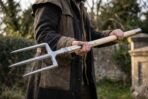
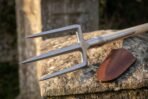
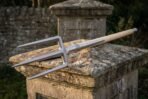
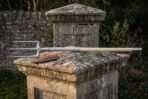
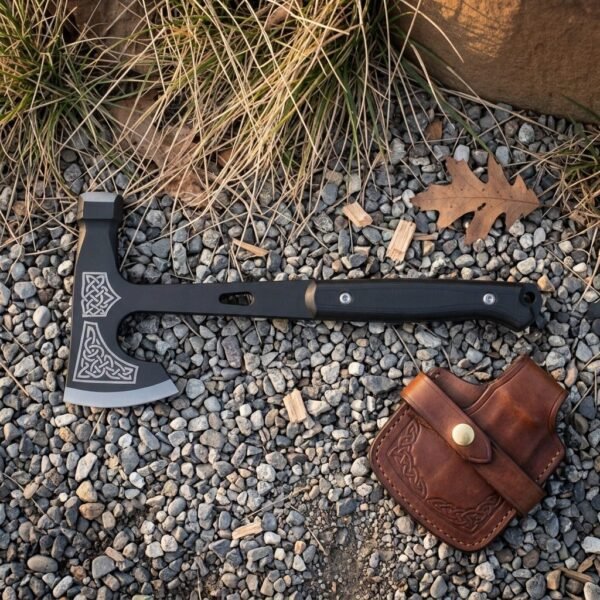
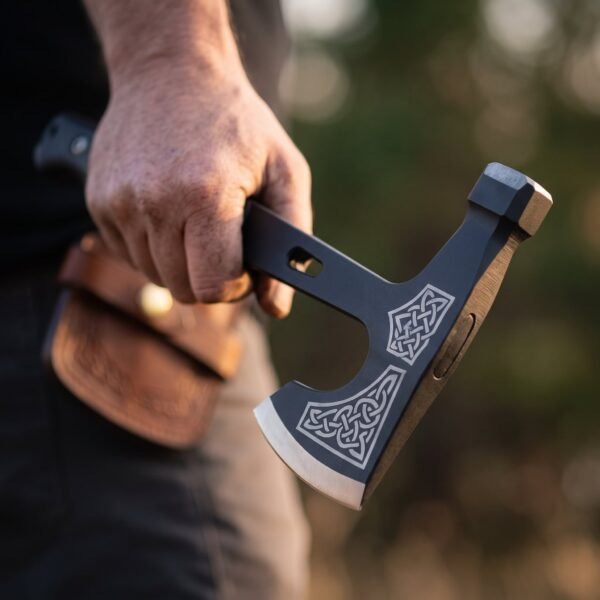
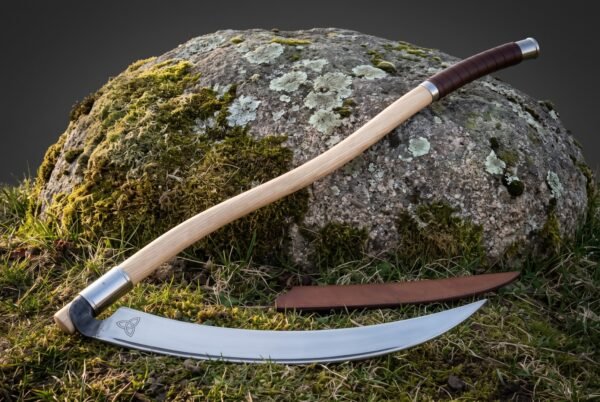

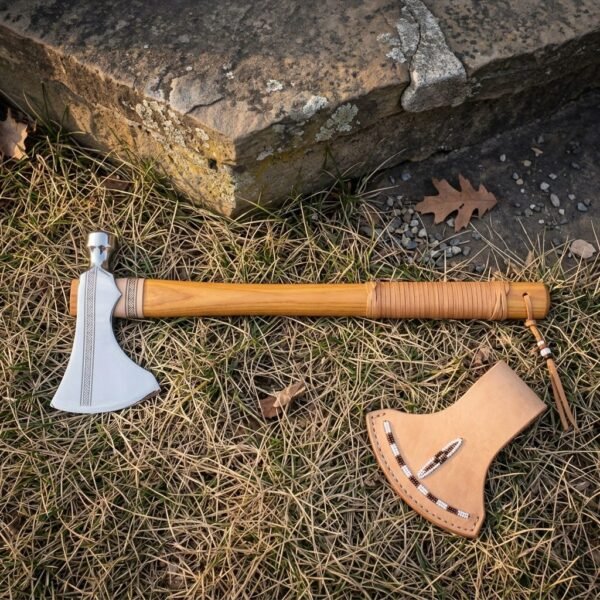
Showed up right on time and looked even better than the photos. Packaging was excellent and it arrived in perfect condition. Highly recommend this one.
Feels way more premium than the price suggests. Packaging was excellent and it arrived in perfect condition. Exactly as described and clearly made with care. The craftsmanship really shows in the small details. Already telling my friends to check this out.
Knew this piece was special the second I opened the box. This is going straight into my display case.