Bulk set discount: 15% off. Buying this set of 6 costs 15% less than buying the same pieces one at a time.
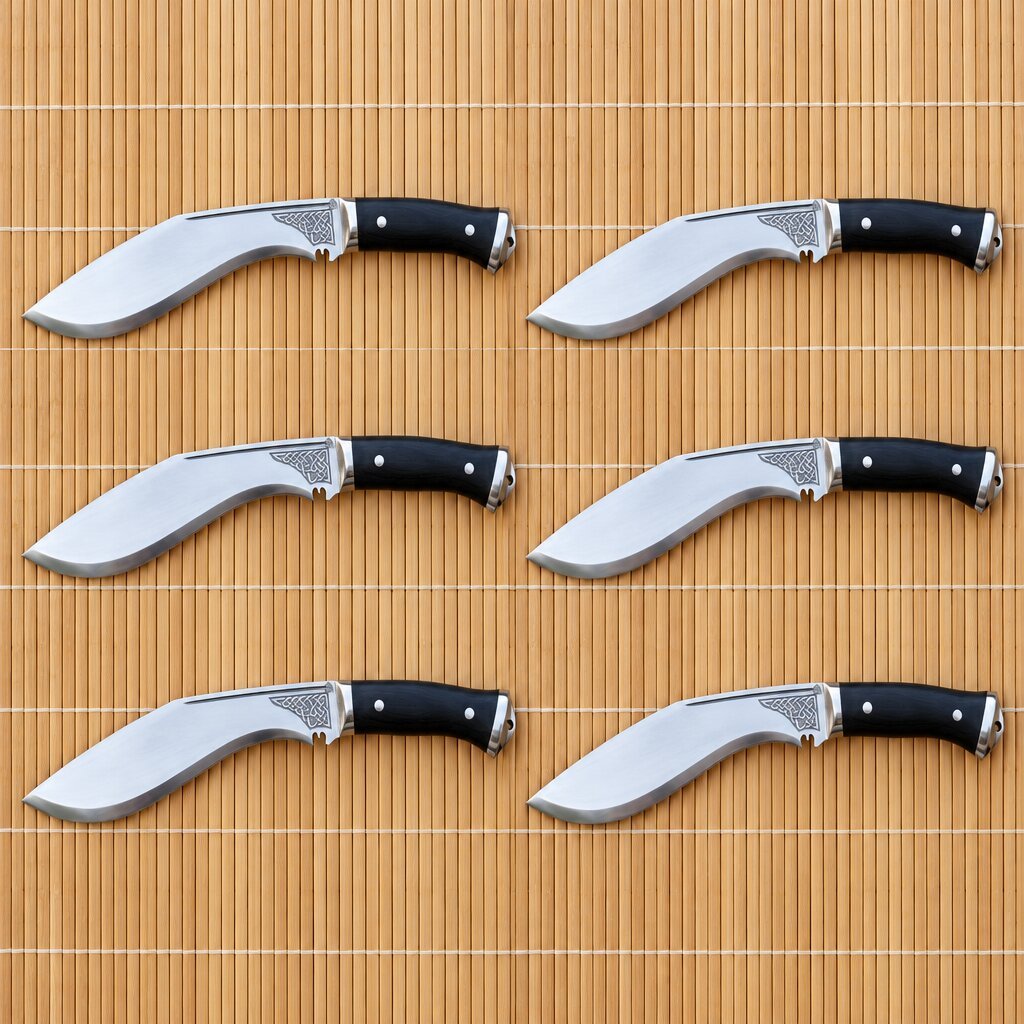
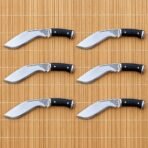
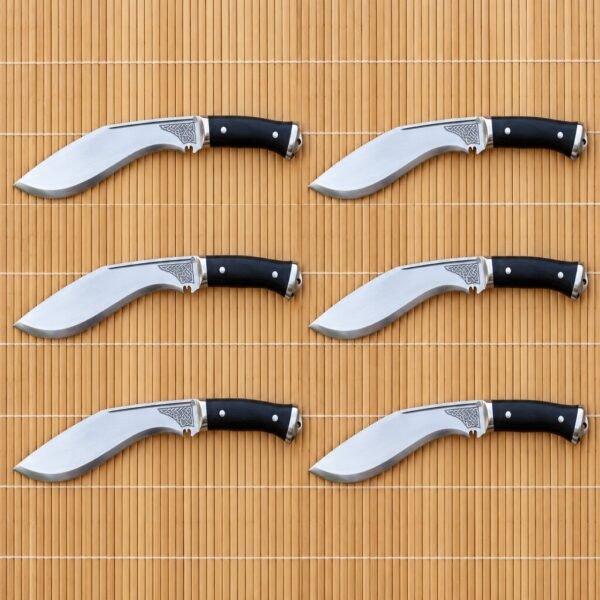
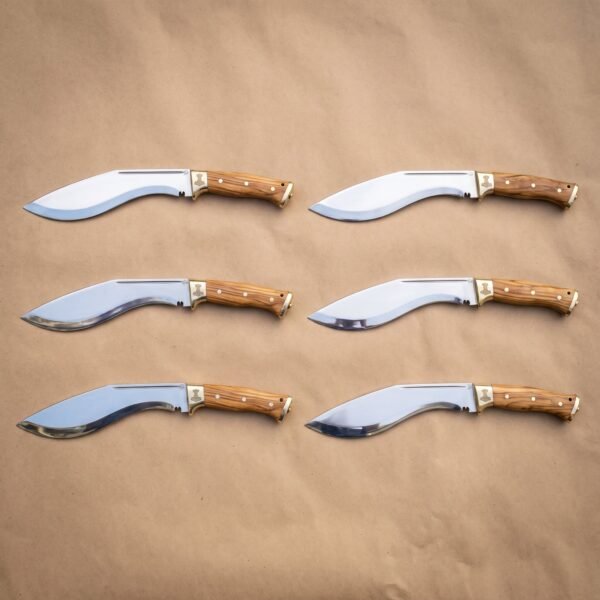
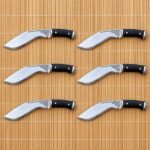
This set is 6 of the same piece: Pitchgrove Hand Forged 1095 Steel Kukri Knife with Black Micarta. It is the same item sold on its own single listing, packed together for groomsmen or a wedding party. Every piece in the set is the same model. Each one is handmade, so small differences in grain or pattern from one piece to the next are normal.
Buying the set costs 15% less than buying 6 single pieces. For names, choose Text engraving, type one name per line and each name goes on its own piece. Engraving is done here in the United States before the set ships.
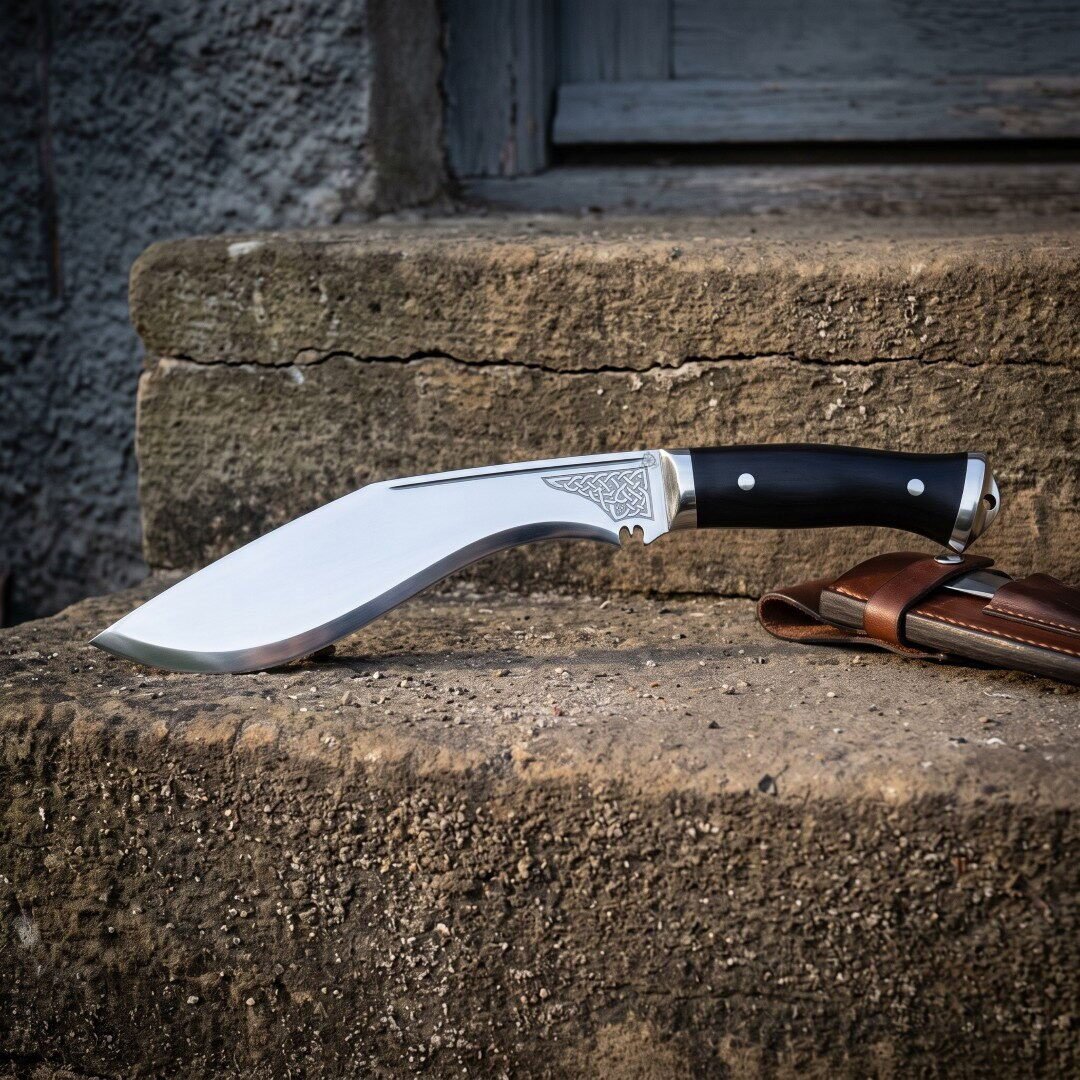
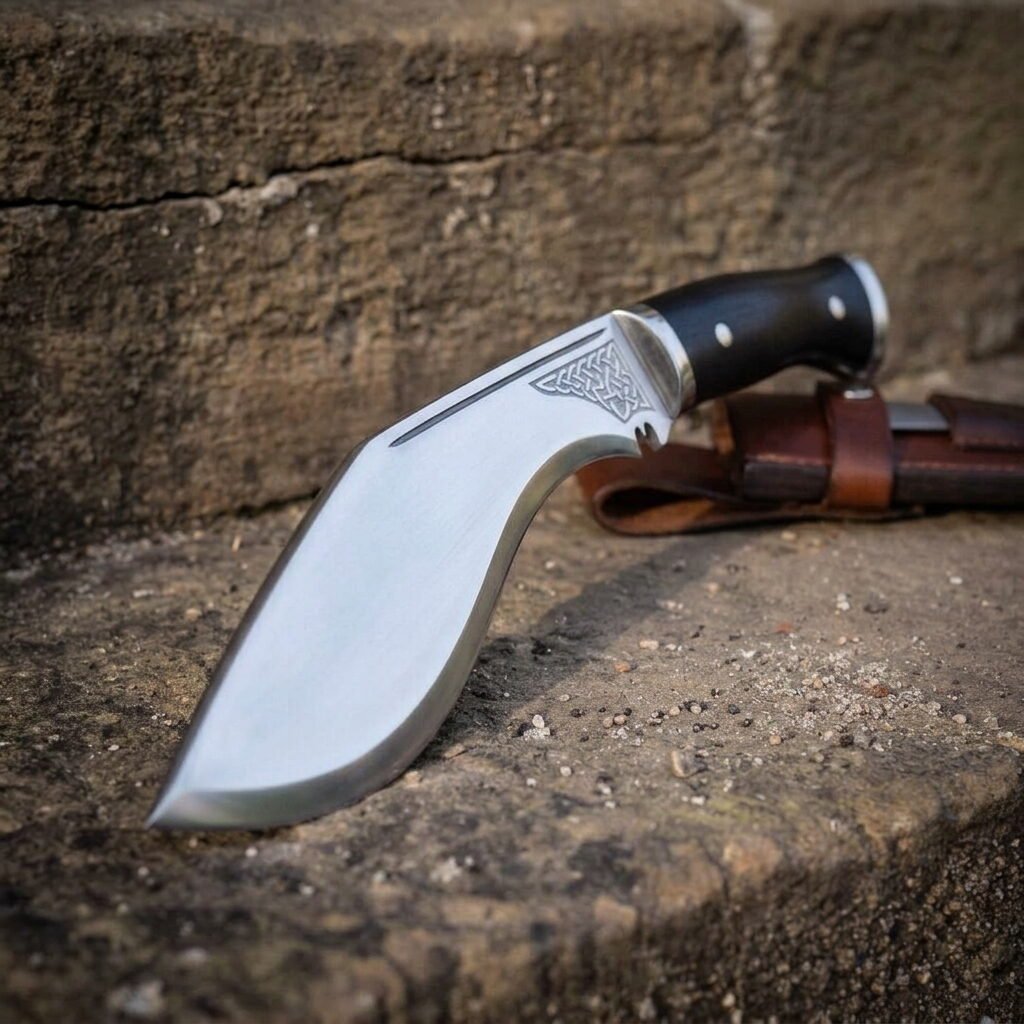
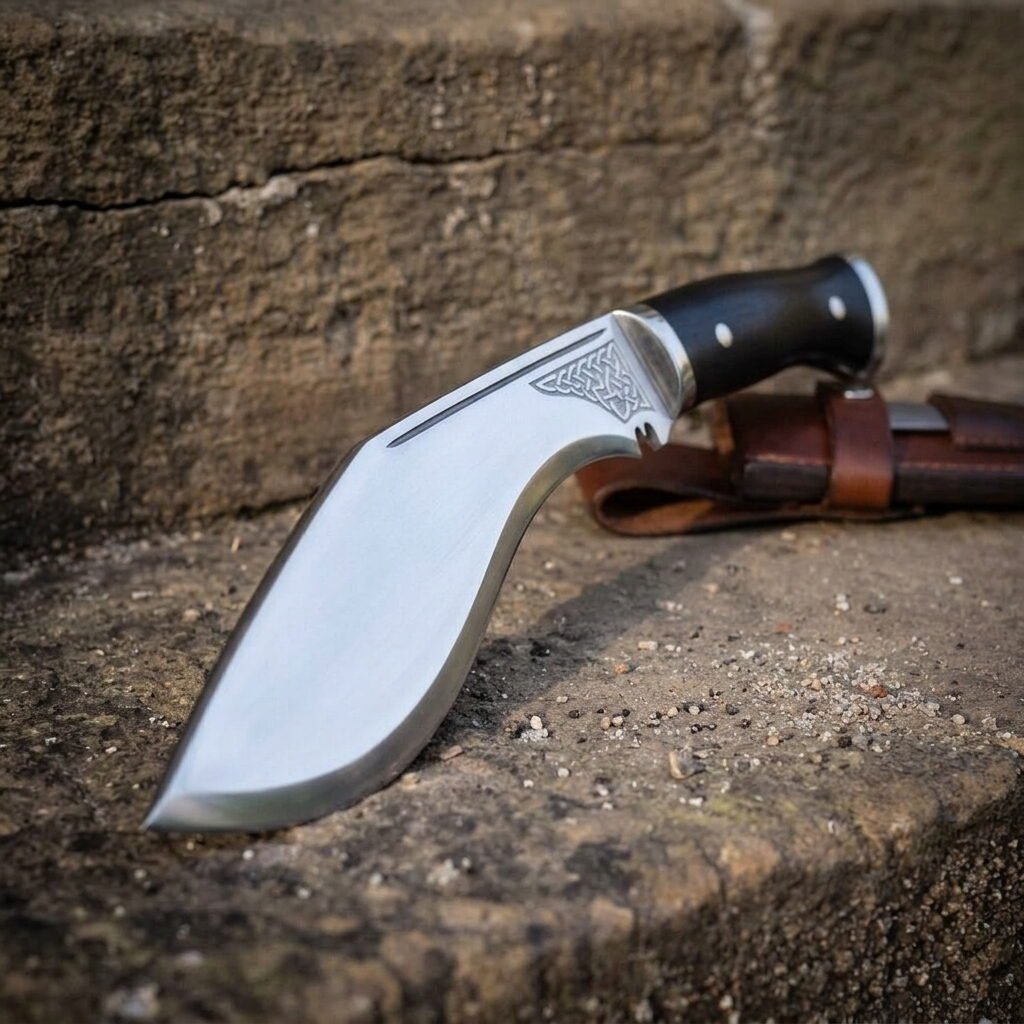
The Pitchgrove is a full size kukri in plain 1095 high carbon steel with black micarta handle scales. The blade is polished, deeply forward swept, and carries a narrow swedge line along the spine and a cut cho notch where the edge meets the bolster. The bolster is polished steel with a Celtic knotwork panel engraved into its outer face, the scales are pinned with two visible steel pins, and the butt is capped in steel with a lanyard hole. It ships in a stitched brown leather sheath with a companion knife carried alongside it.
People often file the kukri next to the machete, and the two are not really related. A machete is a thin, light, springy blade meant to slice through green vegetation with speed. A kukri is thick, heavy and forward balanced, and it works by delivering mass. Put them both against a seasoned hardwood limb and the machete bounces while the kukri bites. That difference in thinking is why the kukri survived as a military sidearm long after most edged tools were retired. This one is made by hand in the Czech Republic. Ransack Viking imports it, checks the grind, the pin fit and the sheath stitching, and ships it from our North Babylon, New York warehouse.
A kukri cuts on the belly rather than the tip, which is the argument the kukri explained makes at length. Knotwork carried meaning as often as it was pure decoration, and our note on Norse symbols works through the recurring shapes. If you want a shorter belly for dressing game, the skinner knives cover that job.
Specifications
| Blade | 1095 high carbon steel, 54 to 58 HRC, polished finish |
|---|
| Overall length | Approximately 16 inches |
|---|
| Blade length | Approximately 11 inches along the curve |
|---|
| Blade profile | Forward swept kukri with a deep belly, spine swedge and cut cho notch |
|---|
| Handle | Black micarta scales on a full tang, two steel pins |
|---|
| Bolster | Polished steel with an engraved knotwork panel |
|---|
| Pommel | Steel cap with lanyard hole |
|---|
| Included | Stitched brown leather sheath with companion knife |
|---|
| SKU | RK-2128 |
|---|
Why the edge is convex rather than flat ground
Run a fingertip across the bevel of a kukri and you will feel it curve rather than meeting the flat of the blade at a hard line. That is a convex grind, sometimes called an appleseed, and it is the correct geometry for a chopping blade for one simple reason. A flat or hollow ground edge is thinner behind the cutting line, which makes it slice better and makes it far more likely to chip or roll when it hits a knot at speed. A convex edge puts more steel immediately behind the apex, so the edge is supported all the way down.
The trade off is that it sheds material rather than parting it cleanly, so a convex edge is a poor choice on a fillet knife and an excellent one on anything you swing. It also sharpens differently. You do not lay a convex edge flat on a bench stone, because that will grind the curve into a facet. You strop it on abrasive laid over something with a little give, such as a mouse mat or a folded leather belt, and the curve maintains itself.
The cho notch cut at the base of the edge does two practical jobs. It stops a cut travelling back into the handle, and it gives sap, water or anything else running down the edge a place to drip clear rather than tracking onto the grip.
The steel and the micarta
The blade is 1095 high carbon steel, hardened and tempered to 54 to 58 HRC. On a chopper that hardness range matters more than it does on a small knife. Run 1095 harder and the edge holds longer but chips when it meets a knot. Run it softer and it rolls. This range sits where a heavy blade should sit, taking impact without fracturing and coming back to an edge quickly on a stone.
Micarta is layers of fabric set in resin and cured under pressure. It is not plastic in any meaningful sense and it behaves quite differently. It is dimensionally stable, so it does not swell, shrink or crack with humidity the way natural wood or horn can, and it becomes grippier when wet rather than more slippery, because the surface texture is fabric rather than a polished skin. On a blade this heavy that matters, and it is why micarta is the standard choice on hard use knives.
Engraving, runes and your own design
Use the rune converter on this page to turn a name, a date or a short phrase into Elder Futhark and we will cut it into the steel, the leather or the wood. If you would rather have a Viking pattern than a rune line, choose your own design in the engraving option above the add to cart button and tell us where it goes. Where a piece already carries an engraved design, your chosen engraving replaces it rather than sitting alongside it, so a chosen mark on the bolster takes the place of the knotwork panel. The polished flat of the blade and the leather sheath are the alternatives if you want the knotwork left as it is. See the engraving page for placement and character counts.
Handling and use
Grip it toward the back of the handle rather than choking up on the bolster. The entire point of the forward sweep is rotational leverage, and holding it too far forward throws that away and turns a chopper into an awkward knife. Keep the wrist loose and let the weight of the blade do the work rather than muscling it. For finer jobs, come forward behind the bolster and use the straighter section near the cho.
This is a working knife and it arrives sharp. Keep it sheathed when it is not in your hand, keep your other hand well clear of the arc, and be aware that a heavy blade glancing off a hard surface goes somewhere you did not plan. It is not a throwing knife.
Care
1095 is high carbon steel and it will rust if it is left wet or dirty. Wipe it down after use, dry it fully and put a light film of mineral oil on the blade, especially after cutting green wood or anything acidic. Do not store it long term inside the leather sheath in a damp place, because vegetable tanned leather draws moisture and holds it against steel. Micarta needs nothing beyond soap and water. Feed the sheath with leather balm once or twice a year. Our steel care guide covers rust removal and edge maintenance.
A curve like this does not sharpen the way a straight edge does, and sharpening a curved blade works through the stroke.
Made in the Czech Republic
This kukri is made by hand in the Czech Republic and imported by Ransack Viking. It is not drop shipped from an importer catalogue. Every piece is unpacked, checked and photographed here before it goes on the site, then shipped from our warehouse in North Babylon, New York. Processing runs one to two weeks because these are made in small batches. US shipping is free, returns are accepted within seven days, and the lifetime warranty against defects in forging, grind, heat treat and fittings has no end date and needs no receipt.
A note on handmade variation
This kukri is made by hand, not machine made or bulk produced, so what arrives will not be a pixel for pixel copy of the photograph. The sweep of the blade is forged and ground by eye, so the curve sits fractionally differently on every one. Micarta comes off the block with its own layer lines, the knotwork panel is cut by hand and varies a hair in line weight, and the leather sheath takes its own tone. The length, the steel, the heat treat and the build stay the same. The character does not.
Frequently asked questions
Is it sharp when it arrives
Yes. This is a working chopper and it ships with a proper convex cutting edge. Treat the box with respect when you open it.
Is the blade Damascus
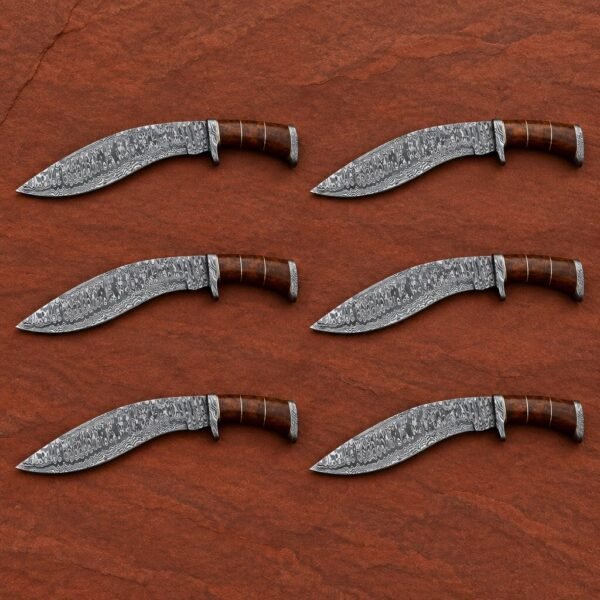
No. This one is plain polished 1095 high carbon steel. If you want a pattern welded kukri, look under kukri knives for the Damascus versions.
What is micarta and will it crack
It is layered fabric set in resin and cured under pressure. It is dimensionally stable, does not swell or shrink with humidity, and grips better wet than dry. It will not crack the way a natural wood scale can.
How do I sharpen the curve
Use abrasive over something with a little give, such as a mouse mat or a folded belt, and strop rather than grinding on a flat bench stone. A flat stone will facet a convex edge.
Is the small knife included
Yes. The companion knife sits in the back of the sheath and ships with the kukri.
How quickly does it ship
One to two weeks of processing, then free US shipping. You get a tracking number when it leaves New York.
What is in the box
- One Pitchgrove 1095 steel kukri with black micarta scales
- Stitched brown leather sheath
- Companion utility knife
- Protective oil film on the blade for transit
- Hand made in the Czech Republic, shipped from our North Babylon, New York warehouse
Explore the range
Browse more in kukri knives, hunting knives and Viking knives, or read the guides on what a kukri is and how to sharpen a curved blade.
Others in the same line
Worth putting side by side with this is the Stavehelm kukri knife, forged from 1095. In the same category sits the Hammergrove kukri knife, 16 inches overall. A near match for this one is the Stagvane kukri knife, 15 inches overall.
For a different piece from the same family, look at the Beltsax Viking seax. You can have this made your way instead on the custom hunting knife page.
Matched sets for the whole wedding party are in Wedding & Groomsmen Gifts. Want just one? See the single piece listing.



Reviews
There are no reviews yet