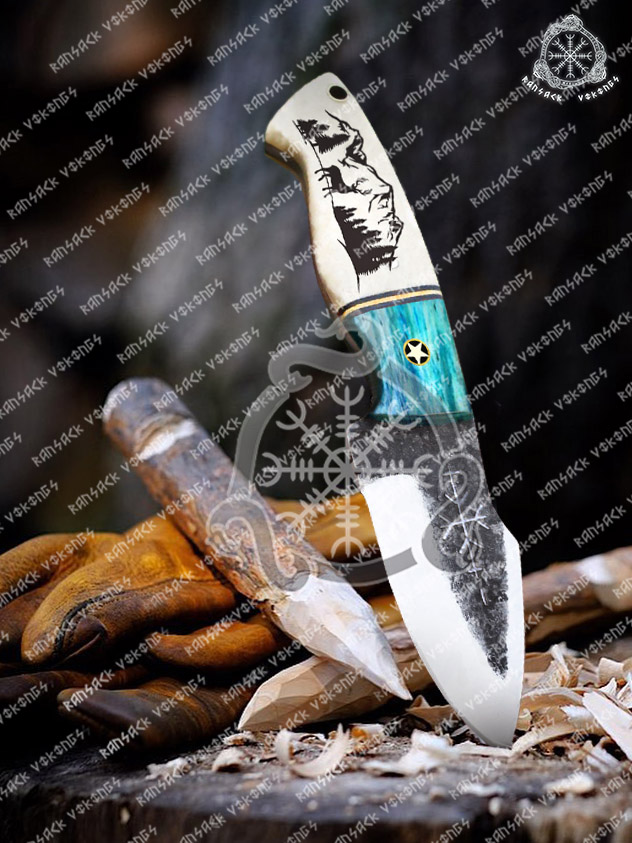
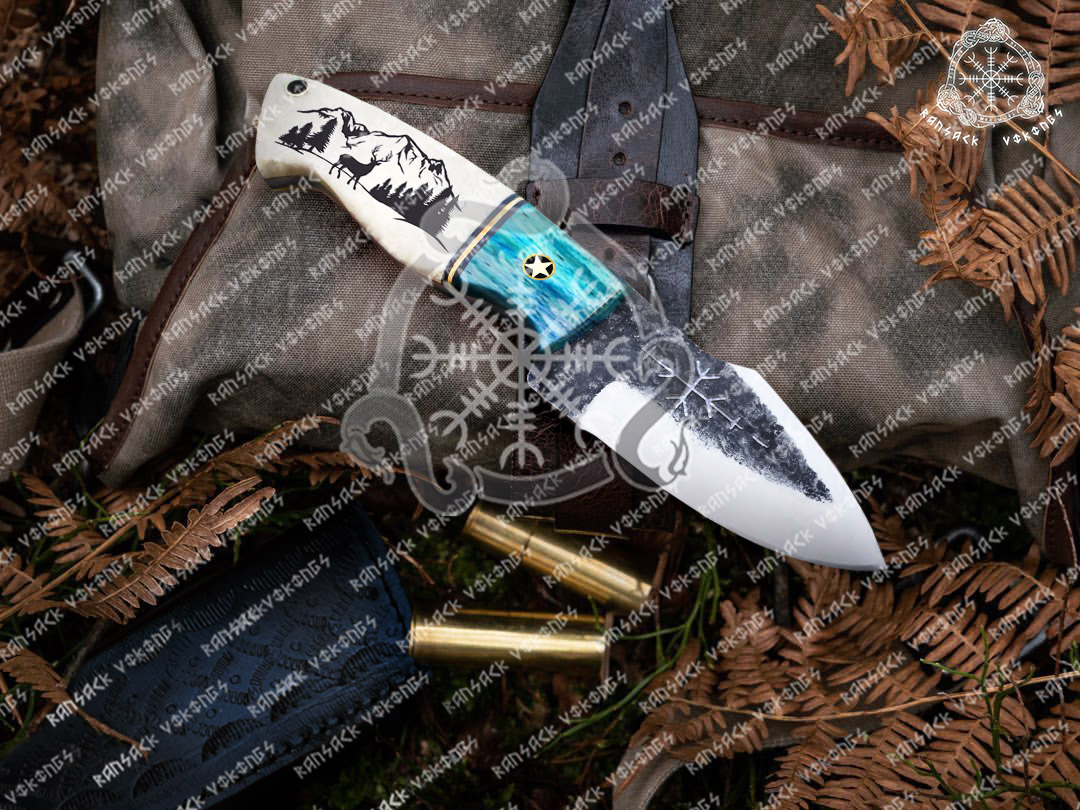
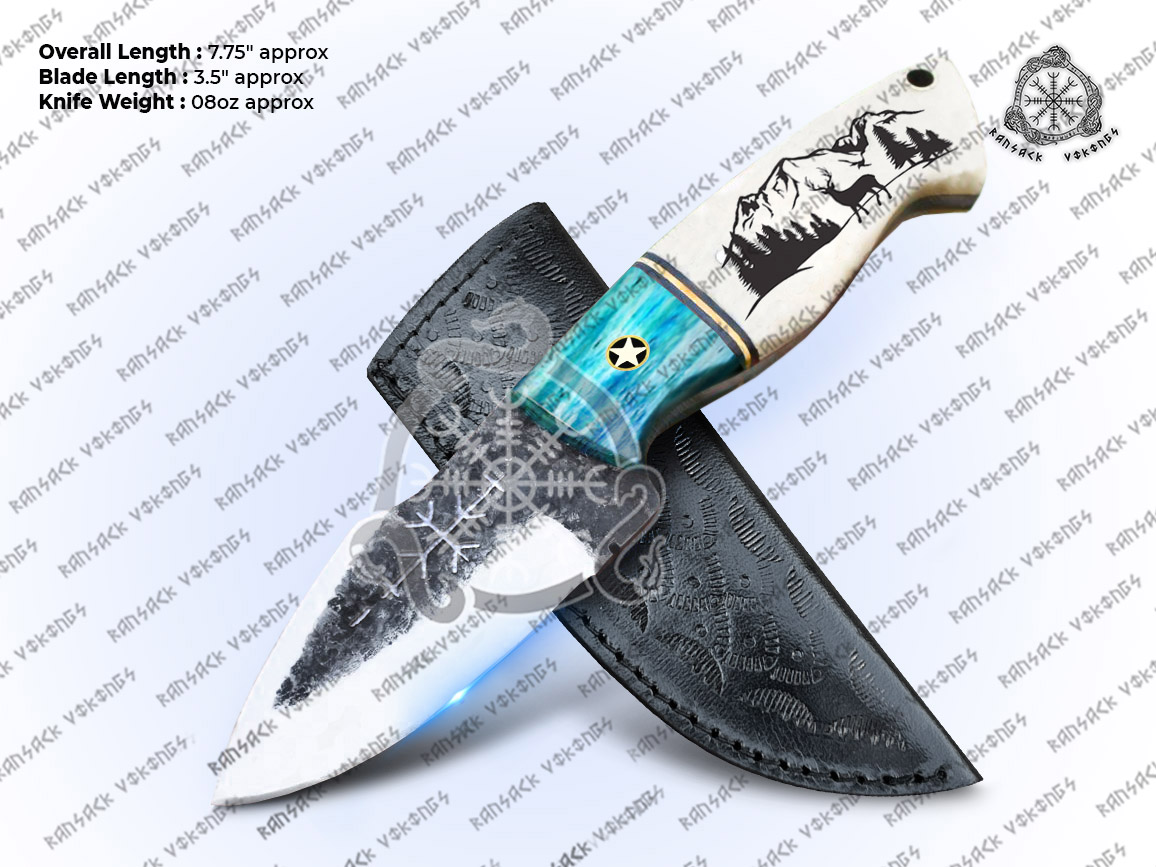
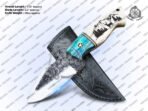
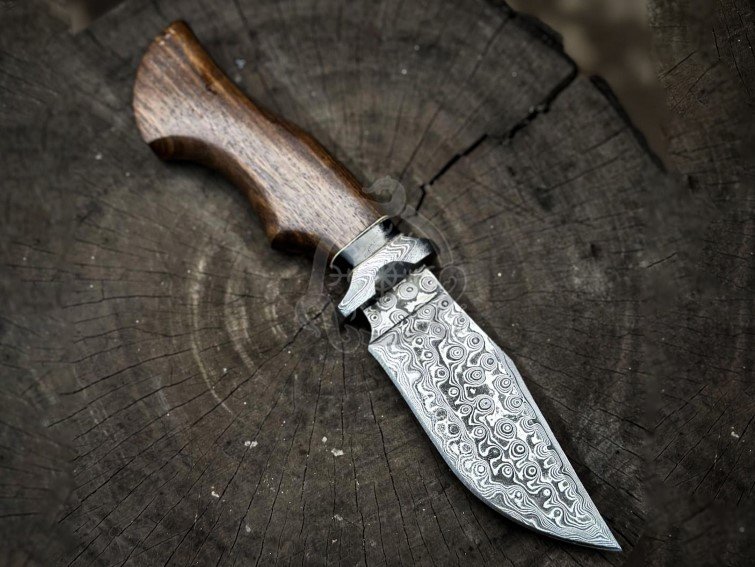
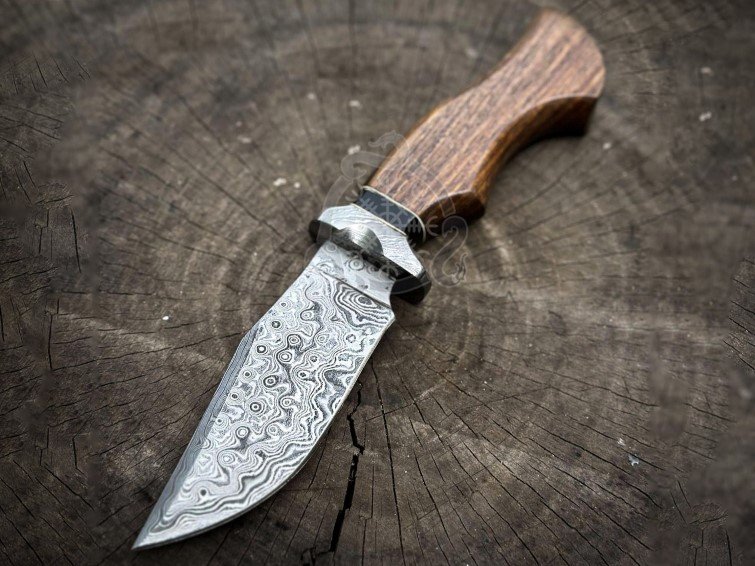
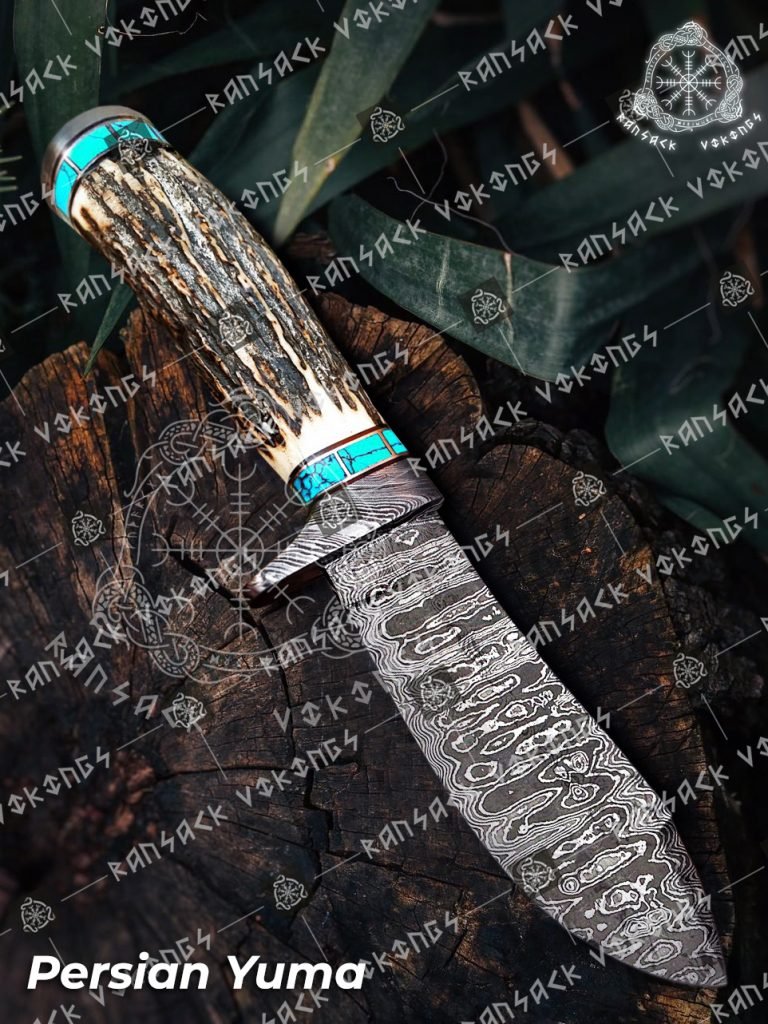
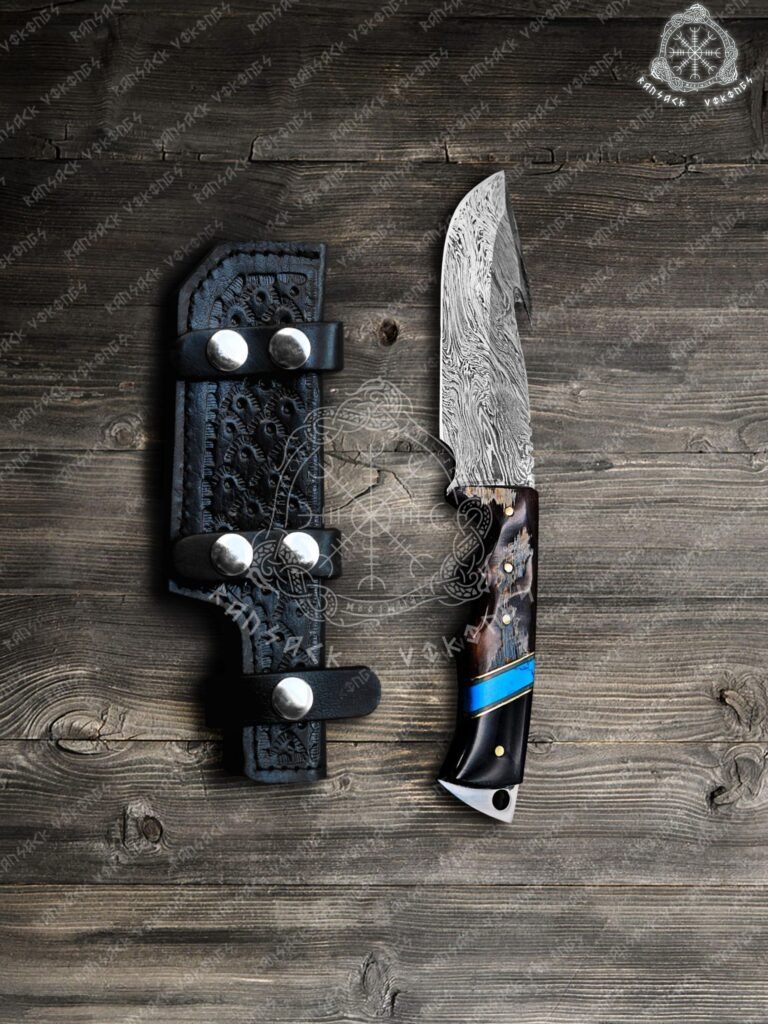
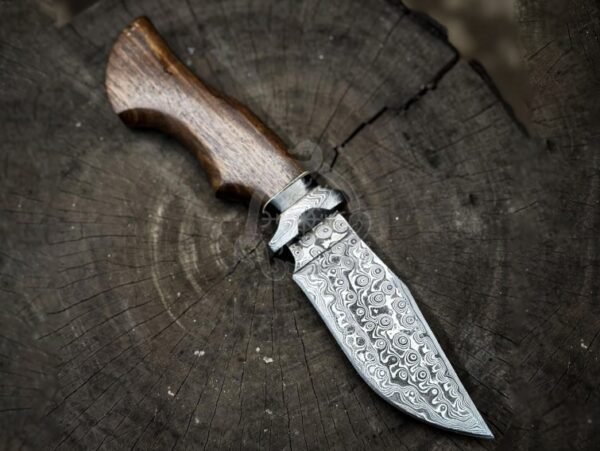
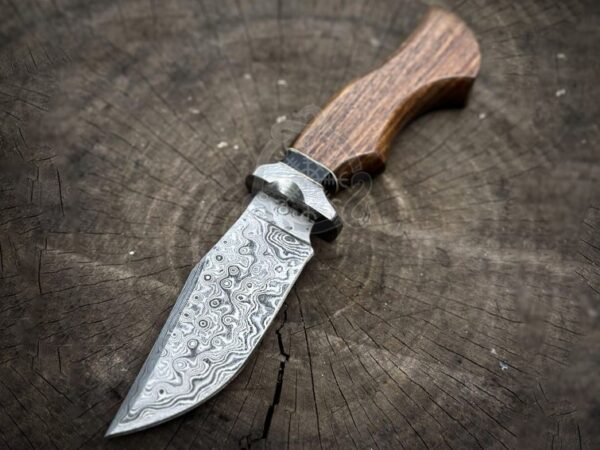
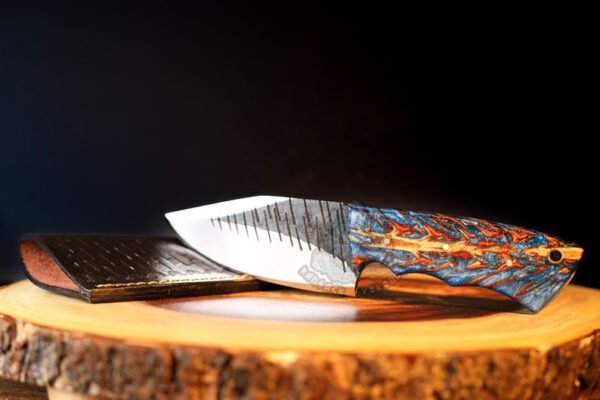
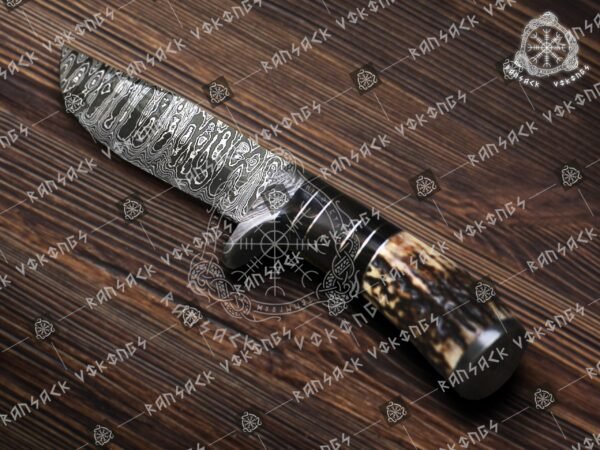
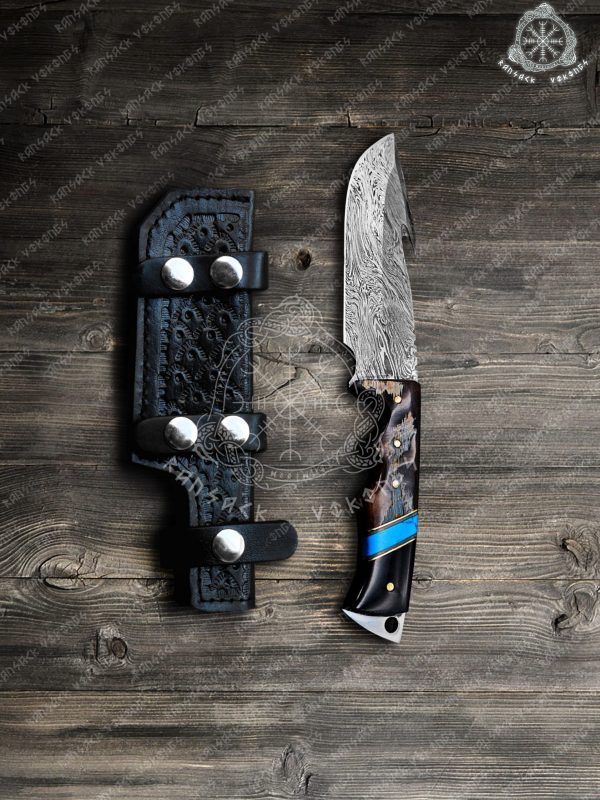
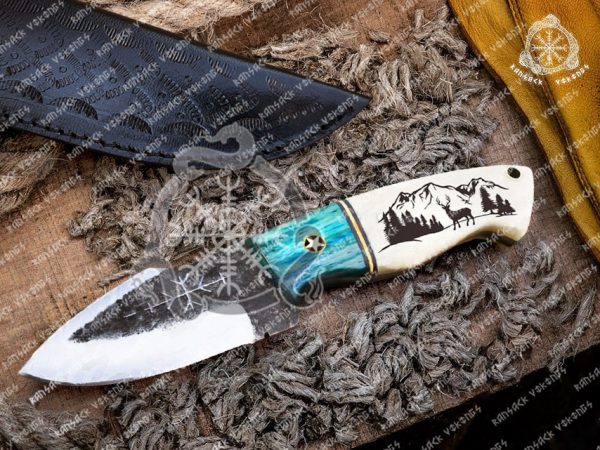
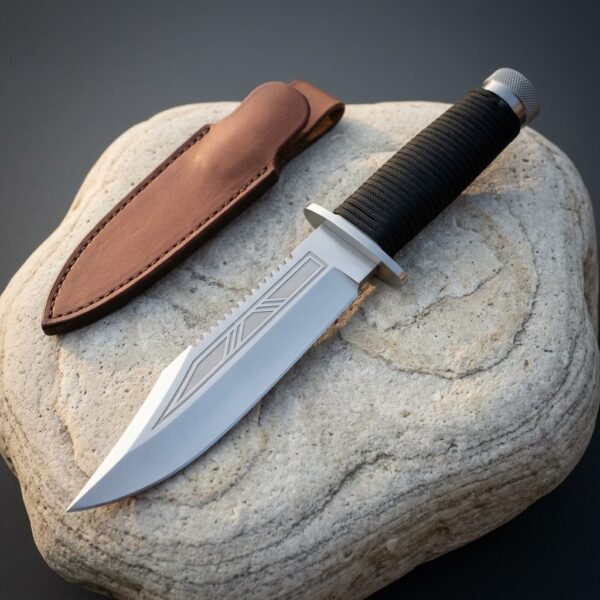
The Bonewarden is a compact Damascus skinner built around a 3.5 inch blade with a deep sweeping belly, a white bone handle and hardwood bolsters at either end. At 7.75 inches overall and eight ounces it is short enough to work close to the carcass and heavy enough that you are not forcing it. This is a hunting knife rather than a display piece, and it comes out of the shop with the edge already set. The method matters more than the knife, and how to skin a deer walks through it.
The shape has a documented American history. When the commercial hide trade was at its height on the southern plains in the 1870s, professional skinners were getting through animals at a rate that made blade geometry a livelihood question, and the knives they carried came overwhelmingly from the John Russell works on the Green River in Massachusetts. Those knives had exactly this profile: a modest blade with an upswept belly and a point that stayed out of the way. They were so common in the trade that the phrase up to Green River, meaning driven in as far as the maker mark, entered plainsmen slang. The pattern did not survive because it looks good in a photograph; it survived because it is the fastest way to separate hide from meat without cutting through either.
Forged and finished in the Czech Republic. It ships with a cowhide leather belt pouch, protective packaging and a working edge.
Specifications
| Steel | Hand forged Damascus, 1095 and 15N20 |
|---|
| Hardness | 58 to 60 HRC |
|---|
| Pattern | Fire pattern Damascus, ready for engraving |
|---|
| Overall length | 7.75 inches |
|---|
| Blade length | 3.5 inches |
|---|
| Weight | 8 oz |
|---|
| Handle | White bone with hardwood bolsters |
|---|
| Sheath | Cowhide leather belt pouch |
|---|
| SKU | RK-376 |
|---|
Why a skinner has that curve
Take a straight edged knife to a hide and you will find the problem within a minute. A straight edge only touches the work at one point at a time, so you end up sawing, and the tip is always the leading part of the blade, which means it is always the part most likely to go through the hide or into the meat.
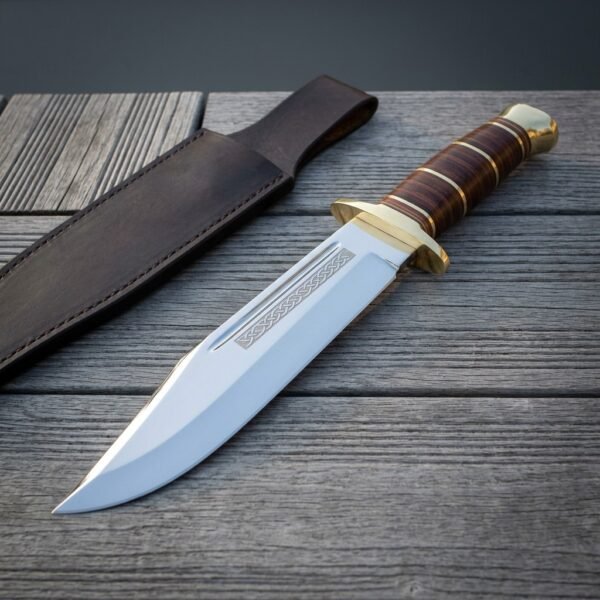
The skinner solves both at once. The belly sweeps upward so that a long arc of edge lies against the membrane at any moment, which lets you pull rather than saw, and the point sits high above the cutting line so it rides clear of everything you are not trying to cut. The tip on a skinner is for starting a cut and for detail work at the joints. The belly is for the metres of separation that follow. At 3.5 inches this blade is on the short side of the type, which is deliberate: a short skinner turns tightly around a leg or a shoulder blade and does not fight you in a confined space. Longer blades cover more ground per stroke on a big animal but they are clumsier at the ends. If you want a single knife that also does camp work, pair this with a drop point rather than asking a skinner to be one.
Why Damascus and not stainless
The blade is pattern welded from 1095 and 15N20, forge welded into one billet, folded, drawn out and etched at the end so the light and dark bands appear. The 1095 supplies hardness and edge retention, the 15N20 supplies toughness and the bright layers. The pattern is the structure of the steel, so it will not wear off and it does not sit on the surface as a print.
For skinning specifically, the hardness is the point. At 58 to 60 HRC this edge stays keen through a whole animal, where soft stainless will start to slip and drag partway through and leave you stopping to strop. The trade is that carbon steel corrodes if you leave blood, fat or salt sitting on it, so this is a blade that gets wiped in the field rather than at the end of the day. That is the whole cost of it, and the comparison is set out in Damascus versus stainless.
Bone, hardwood and grip in the wet
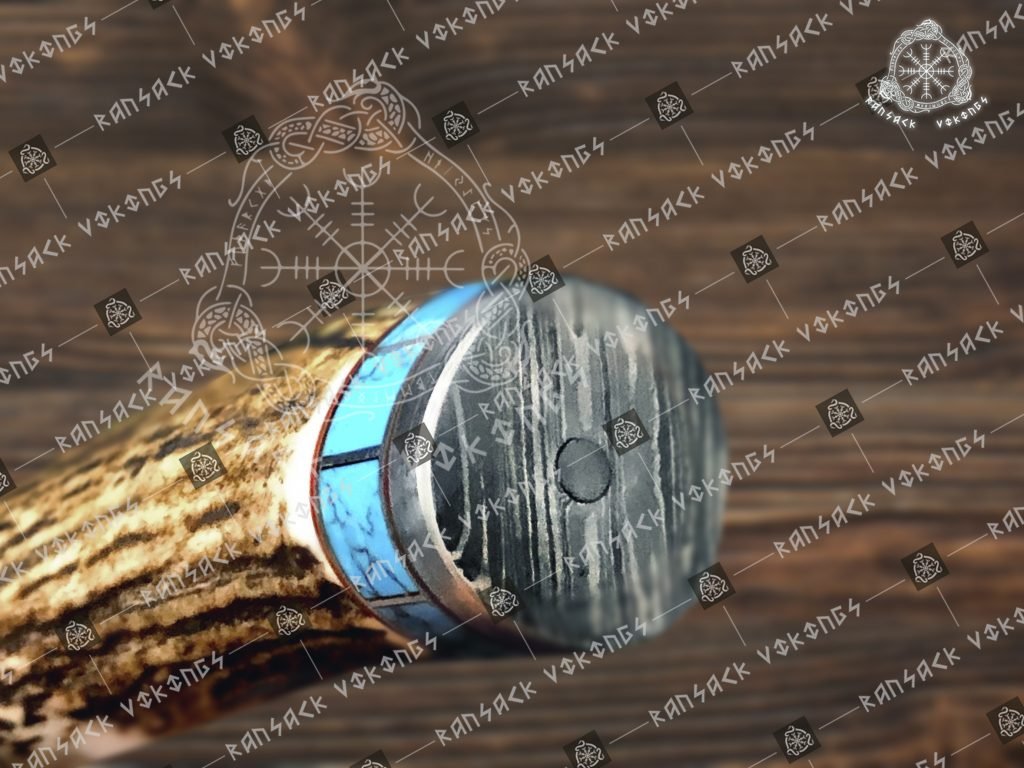
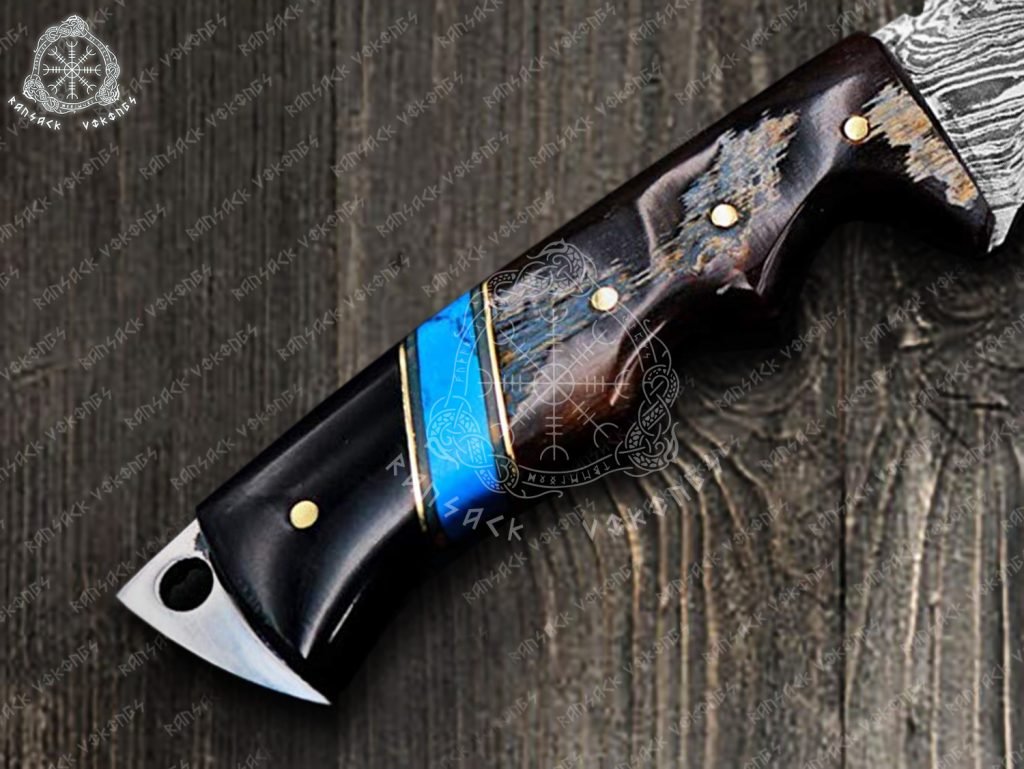
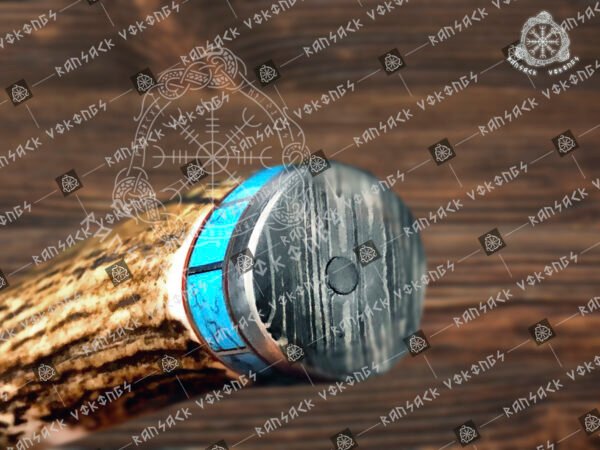
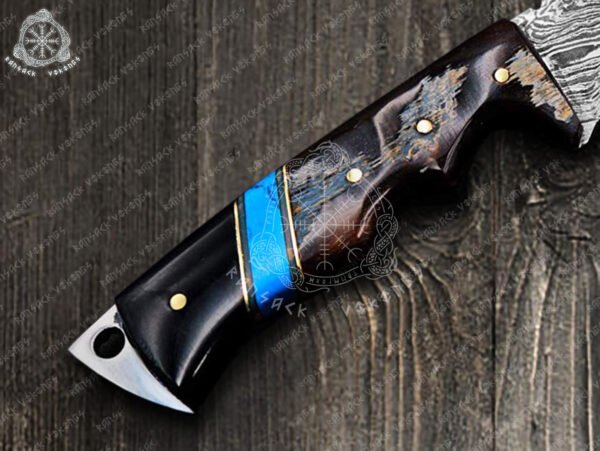
The handle is white bone with hardwood bolsters top and tail. Bone was chosen because it holds grip when your hands are wet, which is the condition a skinner actually gets used in. Polished synthetics get greasy fast; bone has enough tooth in the surface to stay put, and it warms to hand temperature within a few seconds where steel and plastic do not.
Both bone and the hardwood bolsters are natural materials and they want the same treatment. Keep them out of prolonged soaking, keep them away from radiators and direct sun, and give them a light coat of mineral oil or a soft wax once or twice a year so they do not dry, shrink and loosen around the pins. Colour, grain and streaking vary from piece to piece because these came from an animal and a tree rather than a mould. The method is in wooden handle care.
Engraving, runes and your own design
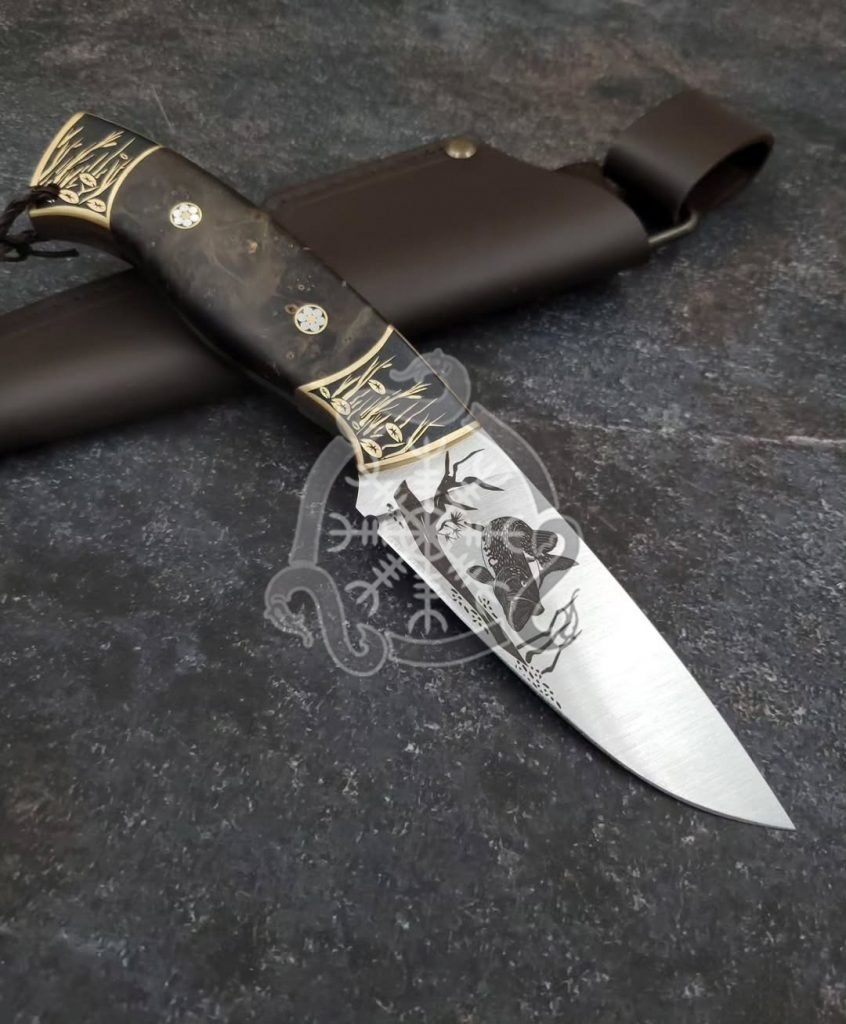
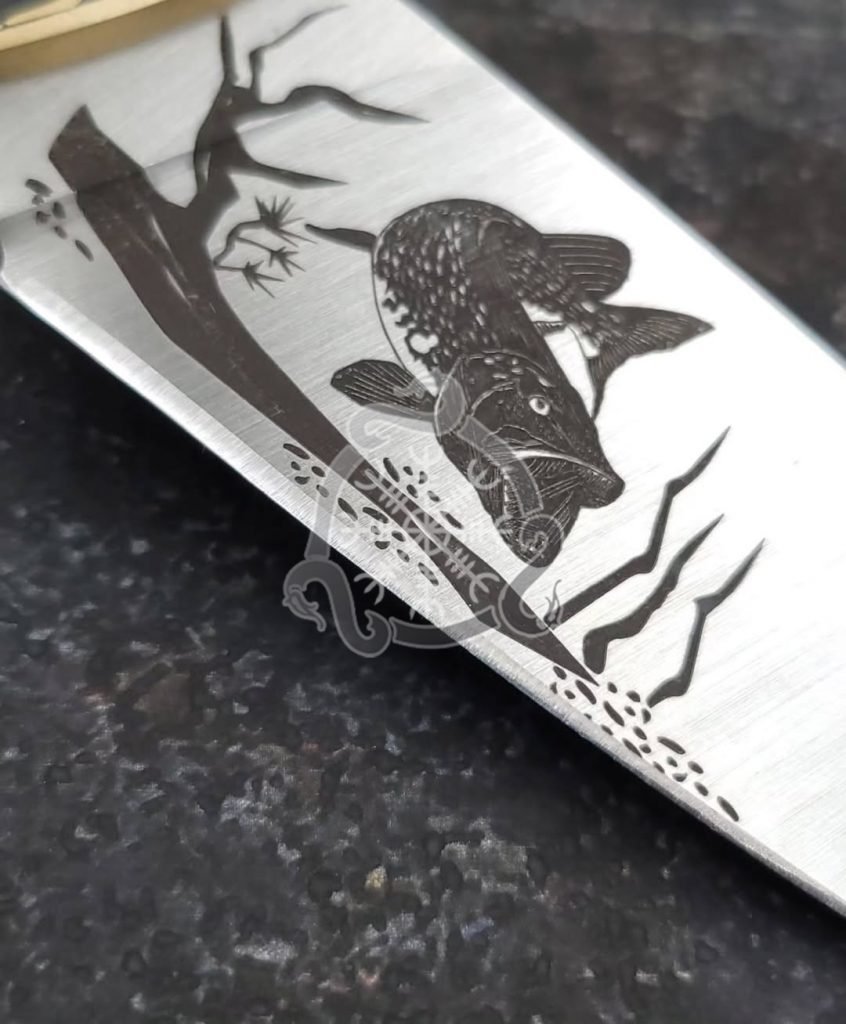
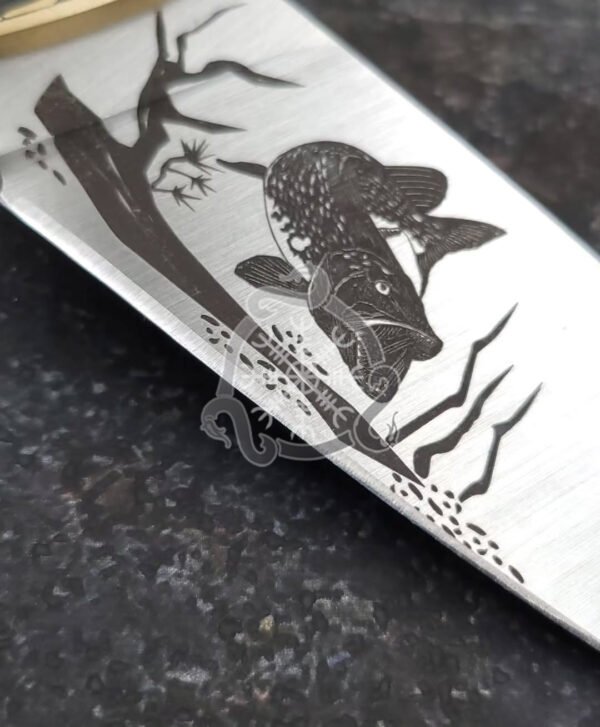
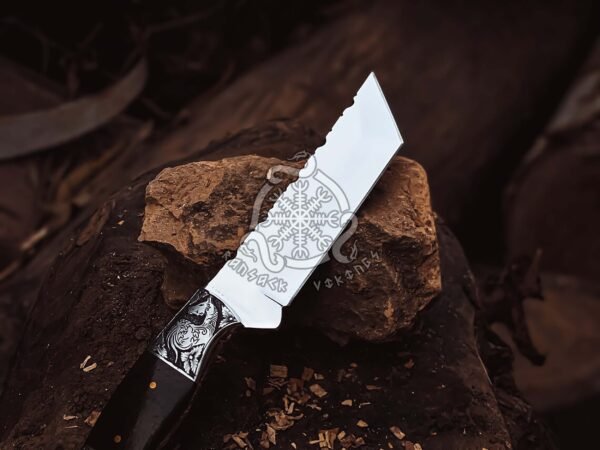
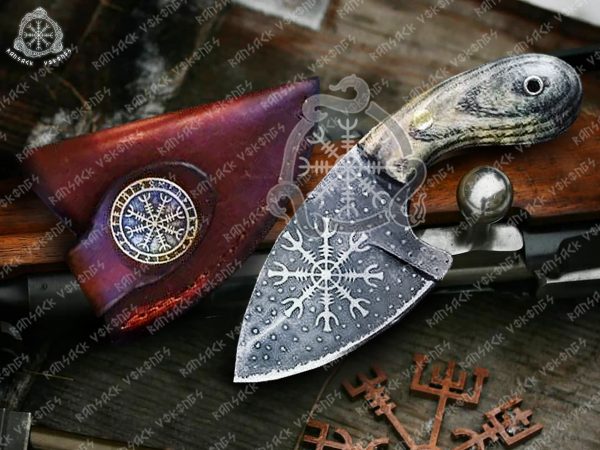
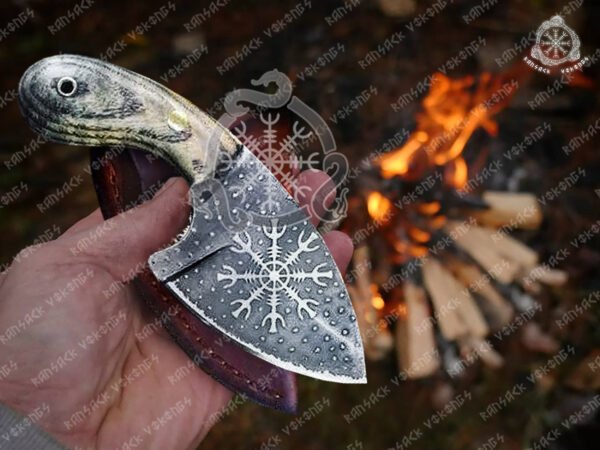
Use the rune converter on this page to turn a name, a date or a short phrase into Elder Futhark and we will cut it into the steel or the handle. If you would rather have a Viking pattern than a rune line, choose your own design in the engraving option above the add to cart button and tell us whether it goes on the blade or the handle. Where a piece already carries an engraved design, your chosen engraving replaces it rather than sitting alongside it. Hunting knives get engraved more than anything else we make, usually with a name and a date, and it is all cut here before packing. Layouts are on the engraving page.
Care and sharpening
In the field, wipe the blade as you go rather than letting blood dry on it. At home, wash with warm water and mild soap, dry it completely including the area where the blade meets the bolster, and put a thin film of mineral or camellia oil on the steel. Do not put it in a dishwasher, which will ruin both the steel and the bone.
Sharpening a skinner is done on the belly as much as the flat. Use a 1000 grit stone with a rocking motion that follows the curve rather than dragging a curved edge straight across, then finish on a 3000 or a strop. Keep the existing angle. Store the knife out of the leather pouch for long periods, since vegetable tanned leather holds moisture and salts against steel. Detail on both jobs is in steel care and sharpening with a whetstone.
Made in the Czech Republic
The work behind this piece happens in a Czech Republic workshop that has kept to the old methods. Steel is forged and heat treated by hand, the grind is taken down by eye rather than by machine, and the handle, fittings and sheath are cut and finished one at a time. Because of that, every piece carries small marks of the hand that made it.
Ransack Viking is a United States company. We import direct, check each piece when it reaches us, and ship from our Memphis, Tennessee warehouse. Engraving is added here in the United States after arrival, so the piece you receive is finished to your order.
A note on handmade variation
This knife is hand forged. It is not machine made and it is not bulk produced, so what arrives will not be a pixel for pixel copy of the photograph. The Damascus pattern falls differently on every blade, the bone carries its own tone and grain, the hardwood bolsters have their own figure, and the exact line of the belly moves a fraction from one piece to the next because a person ground it.
The dimensions, the steel, the hardness and the build are the same every time. The character is not. That is what you are buying when you buy from a forge rather than from a factory.
Frequently asked questions
Is the Bonewarden full tang
Yes. The steel runs the full length of the handle between the bone scales and is pinned through, which is the only construction that survives the twisting loads skinning puts on a knife.
Is 3.5 inches enough blade for a whitetail
More than enough. Most experienced deer hunters end up preferring a blade between three and four inches, because the work is close and controlled rather than long reaching. Larger game such as elk is where a longer skinner starts to pay.
Can I use it for caping
Yes, within reason. The point is fine enough for careful work around the head and the shoulder, though a dedicated caping knife with a narrower blade will be easier in the tightest areas around the eyes and lips.
Will blood and fat stain the Damascus
They will darken it if left, and over time that becomes a patina rather than damage. Wiping the blade during the job and oiling it afterwards keeps the etched pattern crisp and bright.
Does the belt pouch carry on either side
The pouch is made with a belt loop and carries in the standard right hand position. Tell us at the time of order if you need it set up for left hand carry.
How long before it ships
One to two weeks of processing while it is made and finished, then free shipping inside the US. Engraving does not normally extend that.
What is in the box
- One Bonewarden Damascus skinner knife
- Cowhide leather belt pouch
- Protective packaging
- Care notes for carbon steel and natural handles
- Forged and finished in the Czech Republic
Explore the range
Compare it against the rest of the Damascus skinner knives, the wider hunting knives and the Bowie knives if you want more blade. Field technique and steel background sit in the guides.










This knife is a genuine work of art.