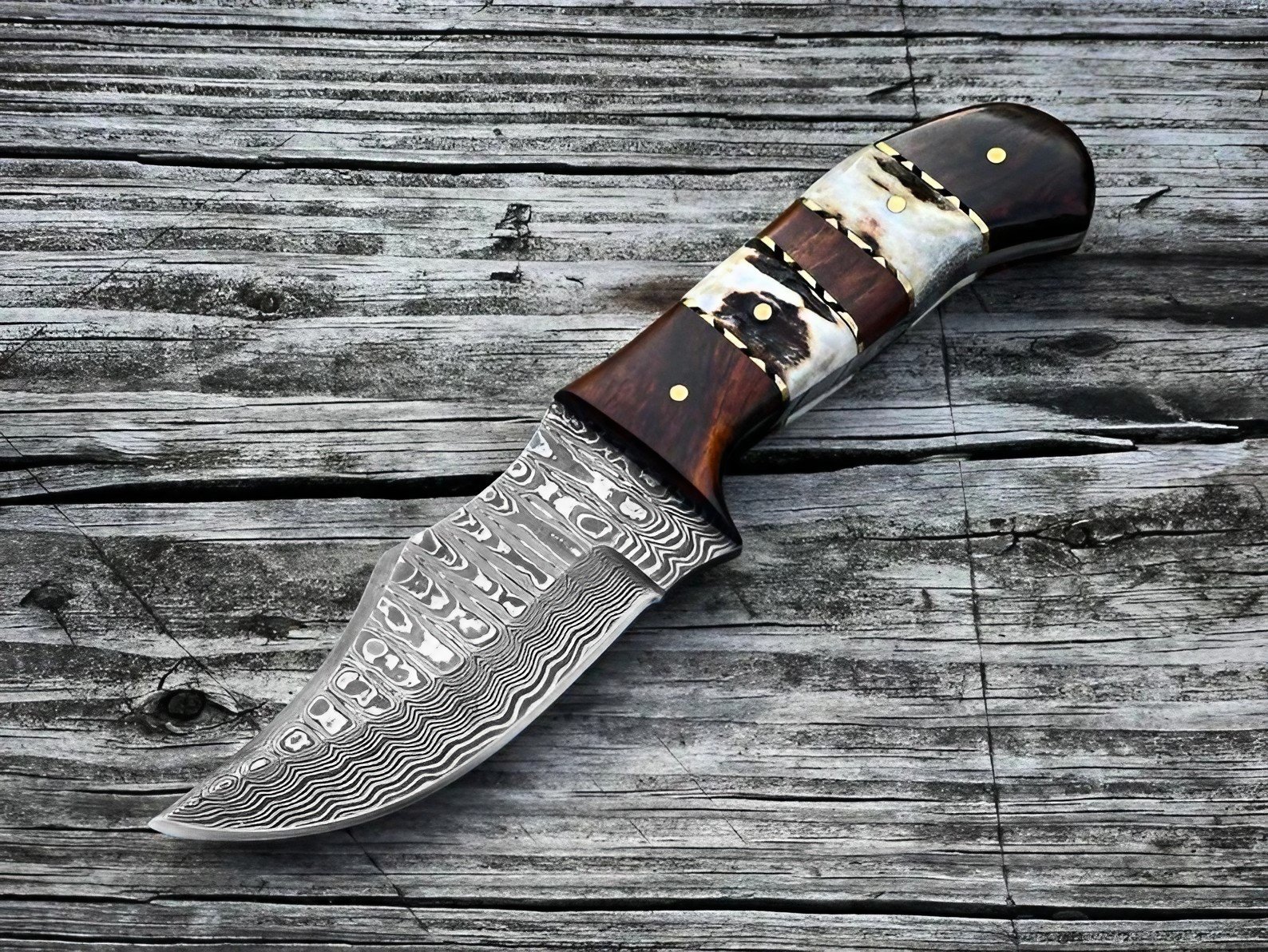
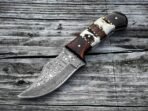
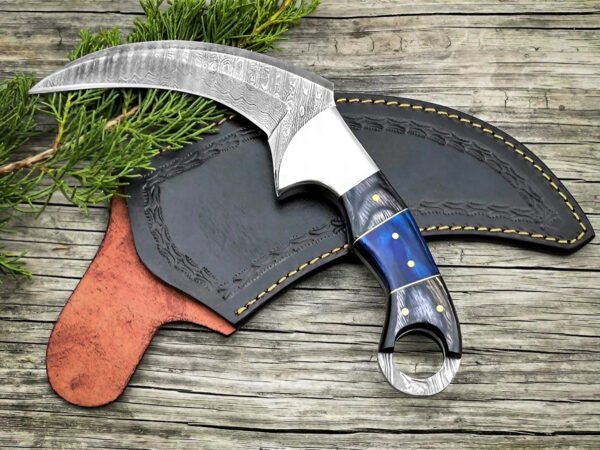
This Stagrose is a working skinner rather than a drawer piece, and the first thing worth saying about it is what it does not have. There is no gut hook on this blade, and that is a choice rather than an omission. A gut hook is a small sharpened notch cut into the spine, and it exists for exactly one job: opening the belly of an animal without pushing the point into the stomach wall. Used for that it is genuinely useful. Used for anything else it is a liability, because it catches on hair, it clogs, and it is difficult to sharpen without a round file. A clean skinner profile with a good sweeping belly does the same opening cut safely once you have learned to run the blade edge up with two fingers guiding it, which is why most working hunters end up preferring one.
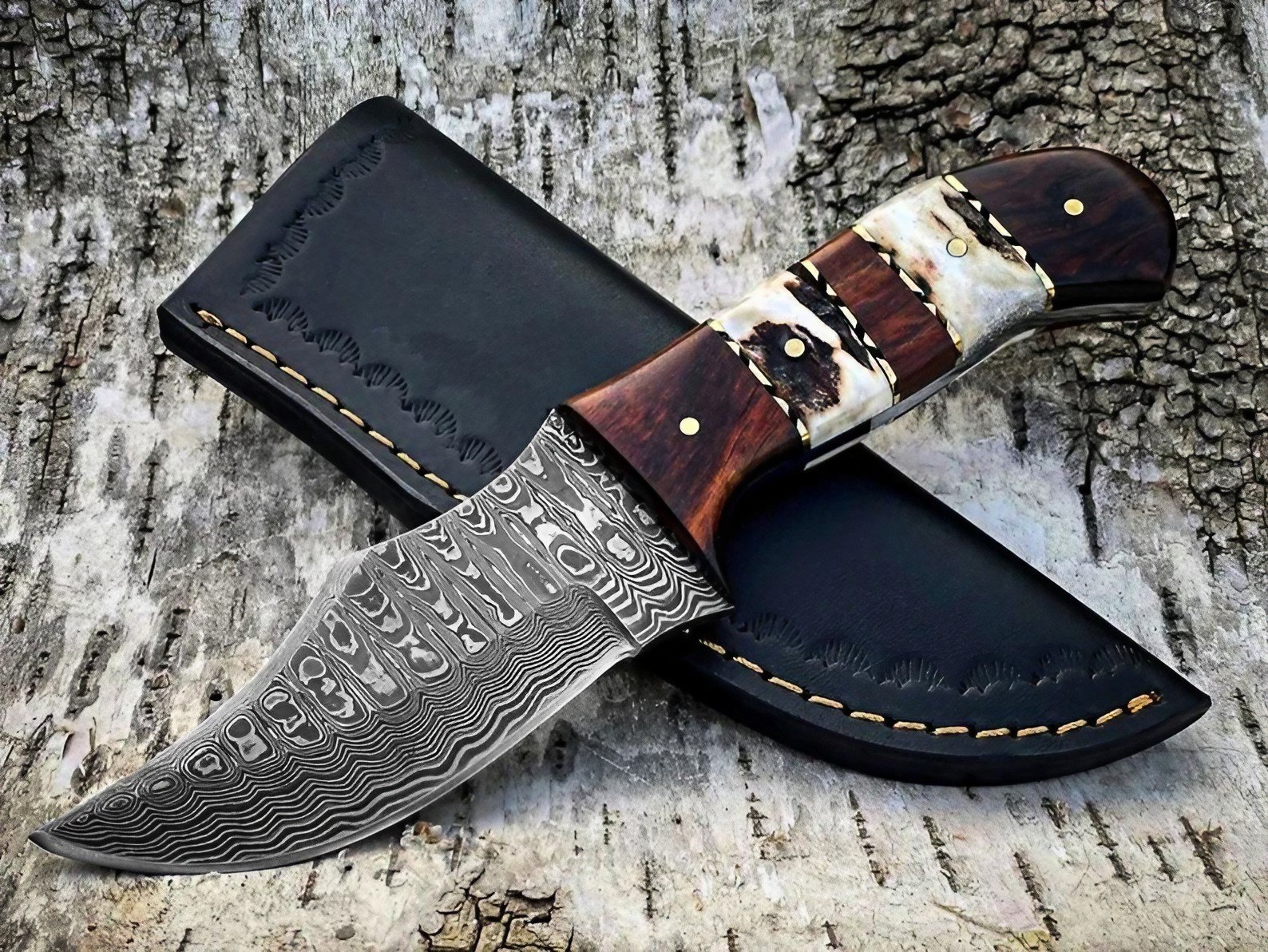
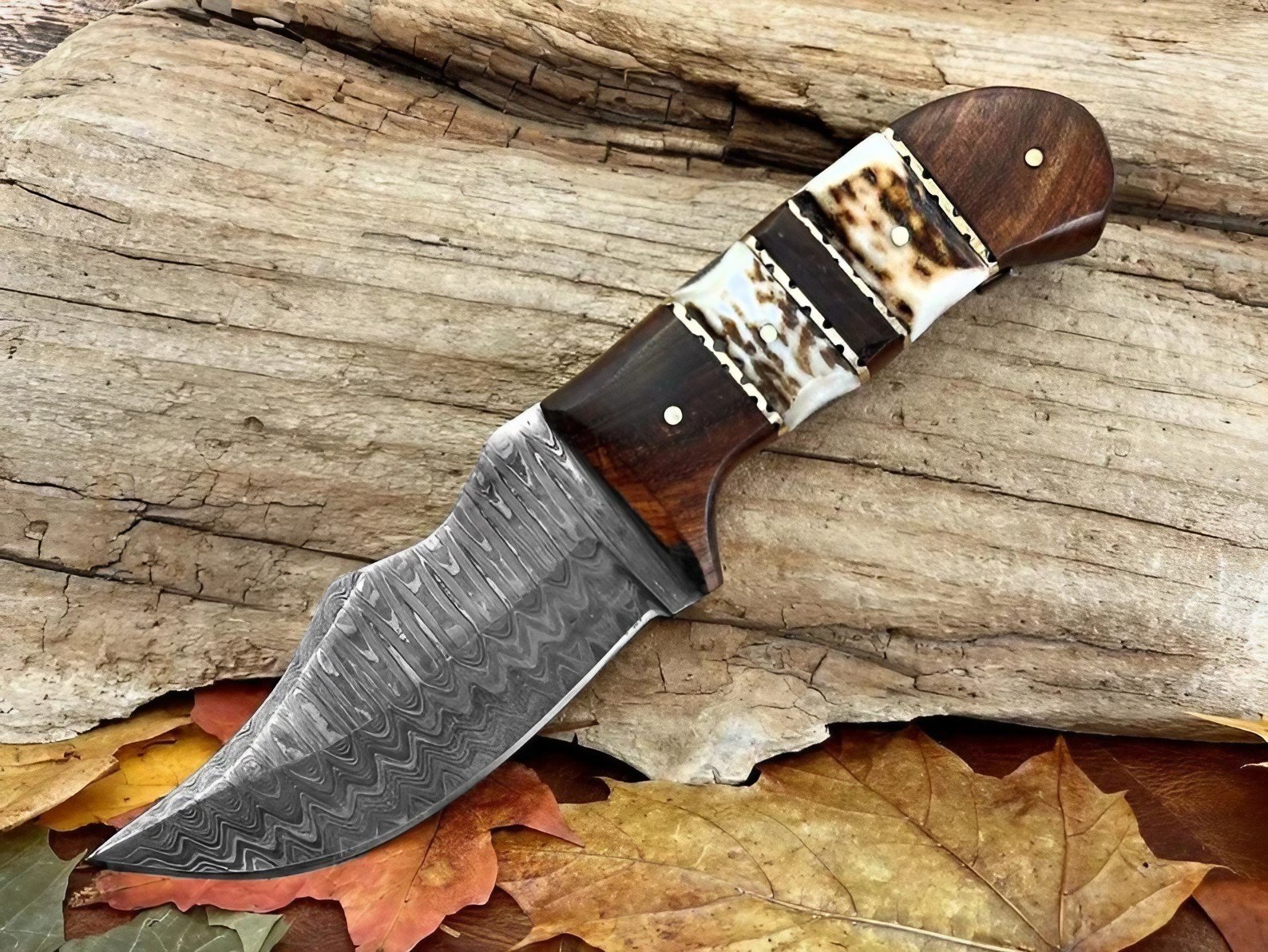
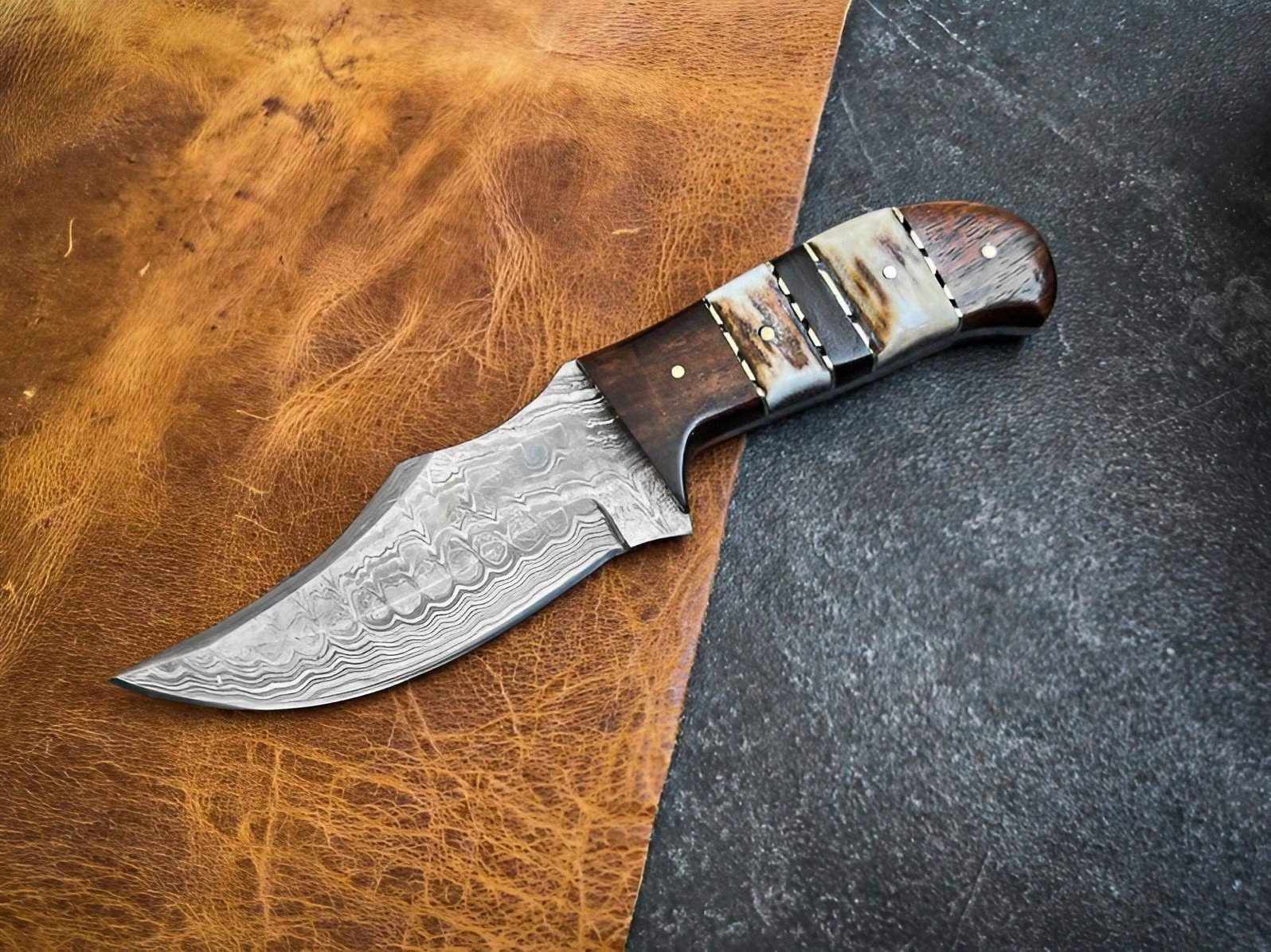
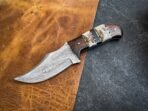
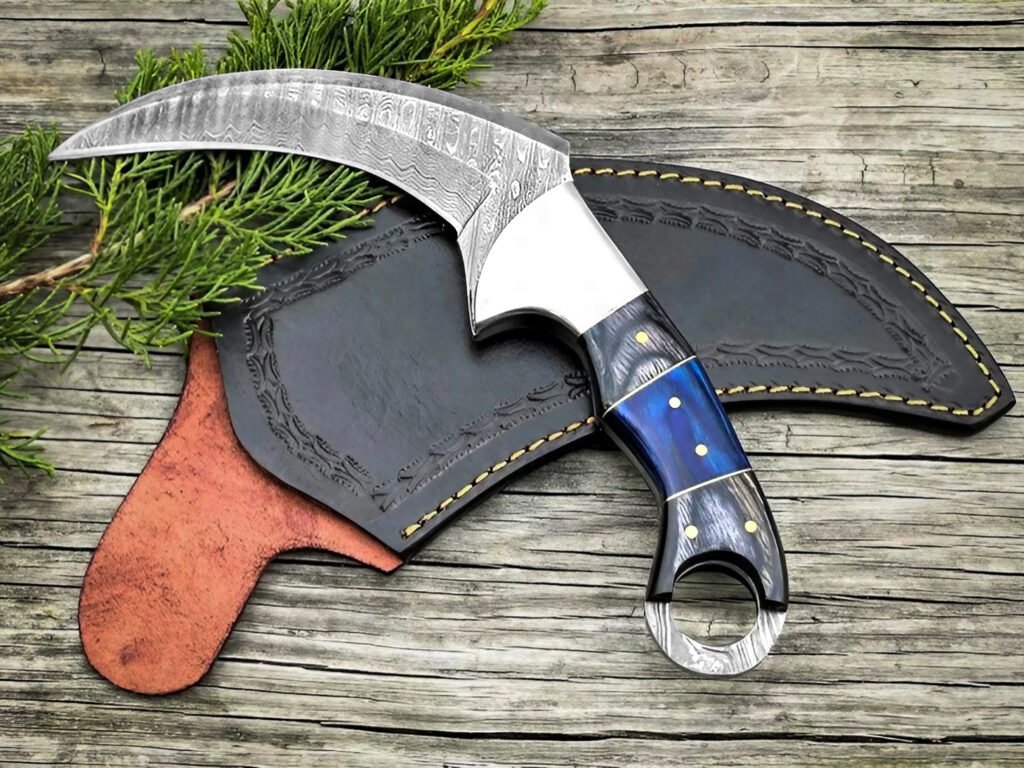
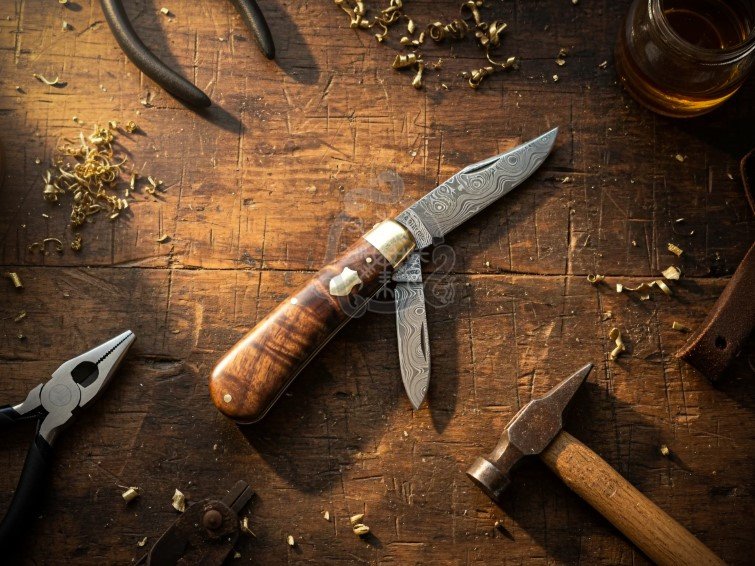
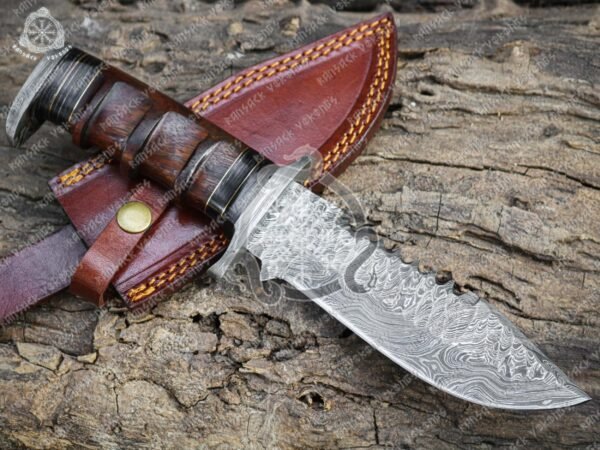
The blade here is hand forged Damascus from 1095 and 15N20 at 58 to 60 HRC, 3.5 inches long on a knife that runs 7.5 inches overall, with a 4 inch handle in rosewood and stag over a rosewood bolster. The Damascus is hand polished rather than left rough from the etch, and the edge arrives ready to cut.
It is forged and finished in the Czech Republic, and ships with a hand stitched genuine leather sheath and protective packaging.
Specifications
| Steel | Hand forged Damascus, 1095 and 15N20, hand polished finish |
|---|
| Hardness | 58 to 60 HRC |
|---|
| Overall length | 7.5 inches |
|---|
| Blade length | 3.5 inches |
|---|
| Handle length | 4 inches |
|---|
| Handle | Rosewood and stag with a rosewood bolster |
|---|
| Sheath | Hand stitched genuine leather |
|---|
| SKU | RK-1102 |
|---|
The curve is the whole point
A skinner is one of the few knife shapes where the geometry is doing something you can feel immediately. On a straight edge, the same short section of blade is in contact with the material the whole way through the cut, so it stalls and you end up sawing. On a curved edge the contact point travels continuously along the belly as you draw the knife, which means fresh edge is always meeting the work and the cut keeps moving. That is the entire reason a skinner opens a hide faster and cleaner than a straight bladed knife.
The second half of the design is where the tip sits. On a skinner the point is swept up and away from the working edge, so that while the belly is cutting, the tip is riding clear of the membrane and the meat underneath. Combine those two things and you get a knife that separates hide from carcass in long confident strokes instead of short nervous ones. Three and a half inches is the traditional size for deer and hogs, short enough to work around a joint and long enough to keep a rhythm going. Blade length, steel and technique for different animals are covered in the skinning knife guide for deer.
Why Damascus and not stainless
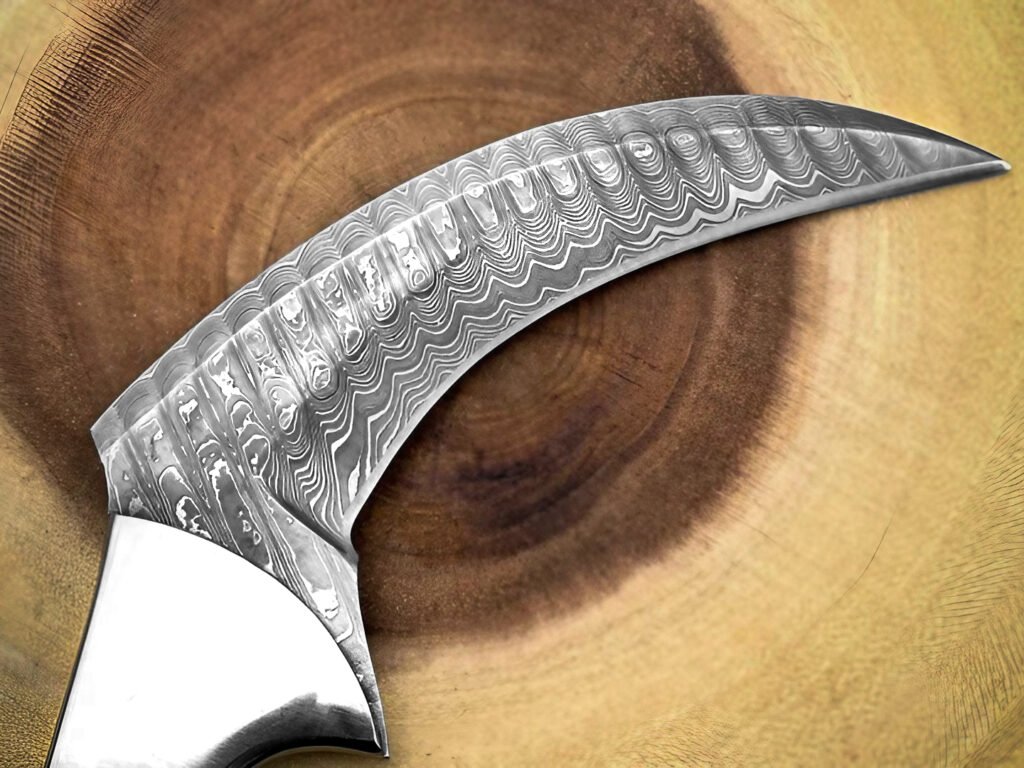
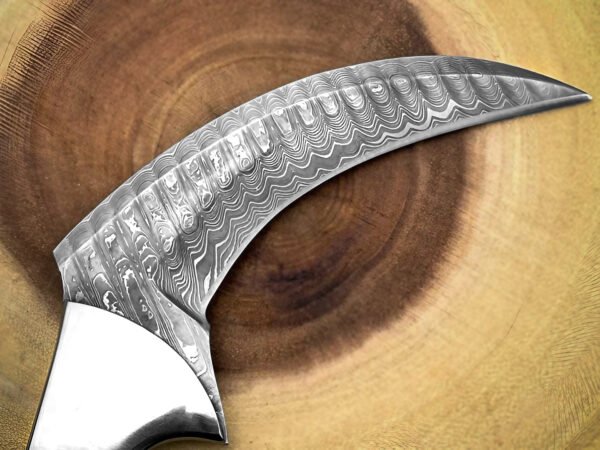
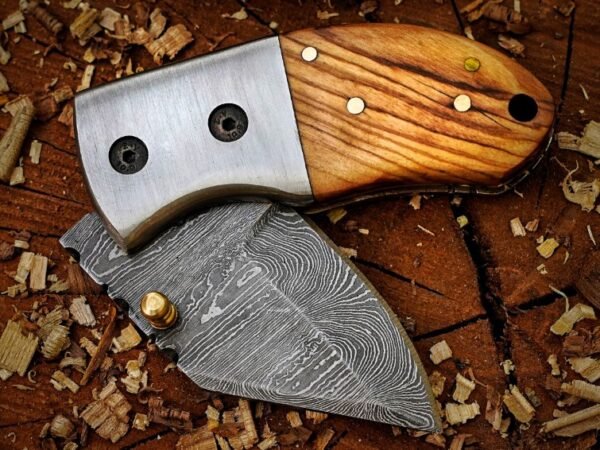
This is real pattern welded Damascus, not an etched print. Layers of 1095 high carbon and 15N20 nickel steel are forge welded, folded and drawn out, so the pattern runs through the blade rather than sitting on the surface. The two steels take the etchant at different rates, which is what makes the bands, and because they are structural the grind reveals more of the pattern rather than removing it. Here the surface is hand polished afterwards, which gives a brighter finish and a softer contrast than a deep etch left as it comes out of the acid. The pairing is explained in 1095 and 15N20.
The argument against stainless on a skinner is about the edge. Hide, hair and connective tissue are abrasive, and a day of skinning will take the edge off a soft stainless blade long before it touches this one. At 58 to 60 HRC this steel holds through the work and sharpens back quickly when it does dull. In return it is high carbon underneath and will spot if you put it away wet, which on this kind of work means wiping it down before you drive home rather than after. The full case is in Damascus versus stainless.
The rosewood and stag handle
Two natural materials with two different personalities. The stag is deer antler, which is not horn at all: horn is keratin that stays on the animal, antler is solid bone that is grown from scratch and shed every year. The outer wall of an antler is dense and hard while the core is spongy, so scales are cut from that outer wall, which is why the bark texture on the surface is never repeated. It gives a grip that stays secure when your hands are wet and greasy, which is the whole problem with skinning.
The rosewood carries the weight and balances the blade, and the rosewood bolster ties the two ends of the handle together. Of the two materials it is the wood that asks for anything: a light coat of oil once or twice a year keeps the grain tight, stops it drying at the pins and deepens the colour rather than building a film that flakes. The antler needs nothing beyond a wipe and keeping away from sustained heat. Both are covered in wooden handle care.
Engraving, runes and your own design
Use the rune converter on this page to turn a name, a date or a short phrase into Elder Futhark and we will cut it into the steel or the handle. If you would rather have a Viking pattern than a rune line, choose your own design in the engraving option above the add to cart button and tell us whether it goes on the blade or the handle. Where a piece already carries an engraved design, your chosen engraving replaces it rather than sitting alongside it. On a skinner we set a line behind the ricasso rather than out along the belly, because anything forward of that will eventually be worked over by years of sharpening. Rosewood takes a crisp cut; antler takes a shallower one because of how it is layered. It is all done here. See the engraving page.
Care and sharpening
Left wet it will spot. Dried and oiled it will look the same in twenty years. Wipe the blade after use, put a thin film of mineral or camellia oil on it before storage, and take the knife out of the sheath for long spells because vegetable tanned leather holds moisture against steel. Blood and stomach contents are acidic, so a quick wipe in the field is worth more than a thorough clean the following week. Detail in steel care and sheath care in leather sheath care.
Sharpening is straightforward on any stone, with one adjustment for the curve. Work an inch or two of edge at a time and rotate the knife so the contact point travels round the belly toward the tip, rather than trying to drag the whole edge along in a single pass. Raise a burr along one side, match it on the other, then finish on a fine stone or a strop. The whole method is in sharpening with a whetstone.
Made in the Czech Republic
Every piece we sell is made by hand in the Czech Republic. The smiths there work the way the trade has been worked for a long time, heating and hammering the steel, taking the bevels down by eye, and fitting the handle and the leather one at a time. There is no automated line anywhere in it, so small differences from one piece to the next are normal and expected.
Ransack Viking is a United States company based in Memphis, Tennessee. We bring the pieces in ourselves, inspect them on arrival and ship them from our own warehouse. If you add engraving, that is carried out here in the United States before your order goes out.
A note on handmade variation
This skinner is hand forged, not machine made and not bulk produced, so what arrives will not be a pixel for pixel copy of the photograph on this page. The Damascus is drawn out under a hammer, and the hand polished finish means the contrast in the pattern varies with how the light falls and how deeply that particular blade was etched. The stag comes off a different antler every time, so the bark texture, the colour and the ridges are never repeated. The rosewood is cut from a different board each time. The dimensions, the steel, the hardness and the build are the same on every one. The character is not.
Frequently asked questions
Why does this skinner not have a gut hook?
Because a clean belly does the same job once you know the technique, and a gut hook catches hair, clogs, and needs a round file to sharpen. If you specifically want a hook, look at the pieces in the range that carry one rather than expecting this profile to do it.
Is stag the same thing as horn?
No. Stag is deer antler, which is bone grown fresh each year and shed. Horn is keratin, the same protein as a fingernail, and it stays on the animal. They look similar and behave differently, and antler is the harder of the two.
Is 3.5 inches enough blade for a deer?
It is the traditional size for exactly that. A shorter blade is easier to steer around joints and less likely to punch through a hide. Larger animals such as elk are where you start wanting four inches or more.
Does the rosewood bolster need looking after?
Yes, the same as the scales. Give the whole handle a light coat of oil once or twice a year and the wood and the bolster will stay tight and dark together.
Will the Damascus pattern be identical to the photograph?
No. Each billet is drawn out by hand, so the banding differs on every blade, and the hand polished finish changes how strongly the contrast reads. It will be the same style of pattern from the same forge.
Can it be engraved, and how long does that add?
It can, on the blade behind the ricasso or on the rosewood. Processing is one to two weeks and engraved orders sit at the longer end of that. US shipping is free.
What is in the box
- One Stagrose Damascus skinner knife
- Hand stitched genuine leather sheath
- Protective packaging for storage or gifting
- Forged and finished in the Czech Republic
Explore the range
More from the forge in Damascus Skinner Knives, Hunting Knives, Damascus Tracker Knives and New Arrivals. The background reading lives in the guides.



I collect stuff like this and this knife is on another level. Edge retention has been great even after regular use. Even the small engravings are crisp and clean. Highly recommend this one.
This thing is a beast in the best way. Leather sheath is thick and well stitched. Not the cheap stuff you usually get. Weight and balance make it feel like a real functional piece not some cheap replica. Can’t recommend this enough.
This thing is a beast in the best way. Couldn’t be happier with this.