
A Norse pendant is a symbol you can carry, cut or cast into a disc of metal small enough to sit under a shirt. The forms on this page are the ones that survive in the archaeology and in the manuscripts: the Valknut of three interlocked triangles, Thor’s hammer, the eight armed Helm of Awe, the runic compass called the Vegvisir, the rainbow bridge and the ringed cross. Nearly all of them were made as small metal objects in the first place, so the shapes read properly at an inch and a half in a way that a lot of borrowed symbolism does not.
These run 1.2 to 2 inches across, in polished steel, stainless steel and cast alloy with a bright silver tone or a warm bronze tone finish. None of them is sterling silver and the listings say so plainly. Faces are mirror polished, brushed or blackened, with cut detail rather than surface stamping, and each piece comes on a leather cord or a box or curb chain at 20 to 24 inches, with a pouch or a wooden box.
Buy the symbol you can explain to somebody. It is a better test than the price. If the symbol you are drawn to is one of Odins, what the sources say about the All Father explains where it comes from.
Free US shipping
On most pieces. Heavier and oversized ones carry a flat charge.
Hand Forged
Heated, hammered and ground by hand.
Engraving available
Names, dates or Norse runes on most pieces.
Ships from Chicago
Inspected and dispatched from our Chicago warehouse. No import duty, no customs delay on US orders.
Norse Pendants
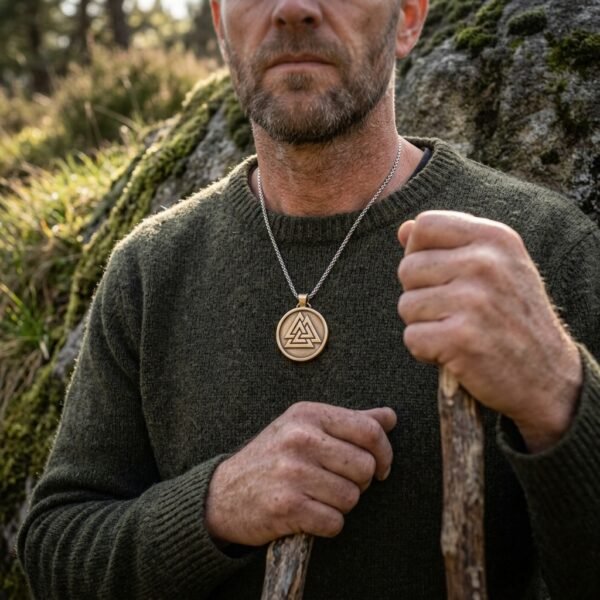
Kinbound Hand Made Bronze Tone Valknut Pendant with Raised Triple Triangle & 22 Inch Box Chain | Norse Memorial Gift | RK-1601
Original price was: $149.00.$119.20Current price is: $119.20.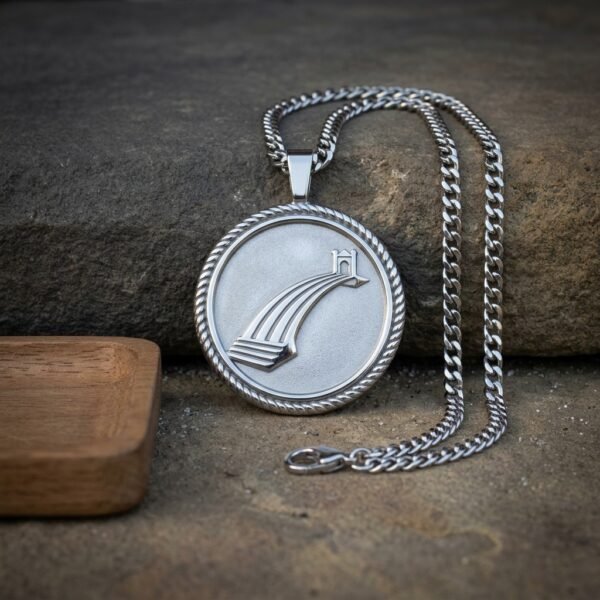
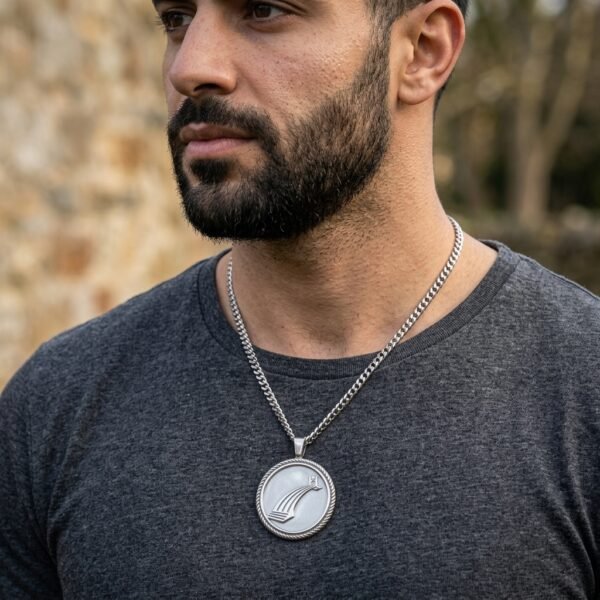
Skybridge Hand Made Silver Tone Bifrost Pendant with a Rope Twist Border & Heavy Curb Chain | Norse Necklace Gift | RK-1664
Original price was: $149.00.$119.20Current price is: $119.20.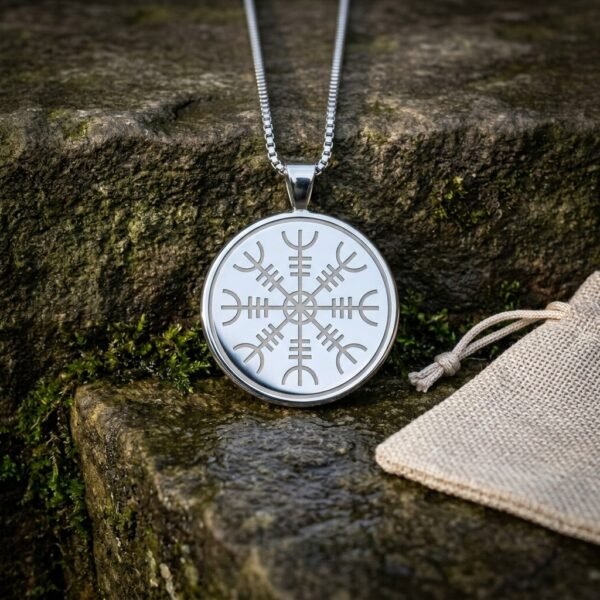
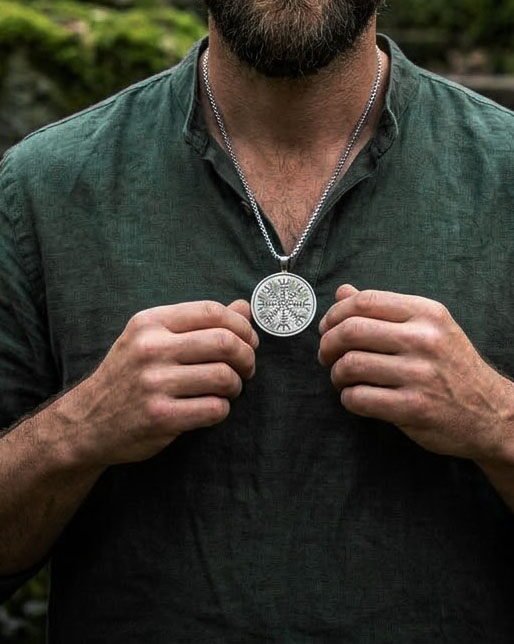
Wardstave Hand Made Helm of Awe Pendant with an Engraved Aegishjalmur Stave & Box Chain | Norse Protection Gift | RK-1665
Original price was: $119.00.$95.20Current price is: $95.20.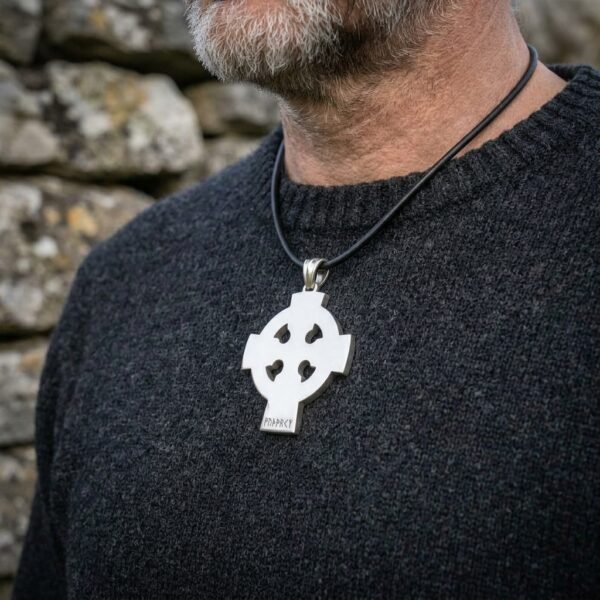
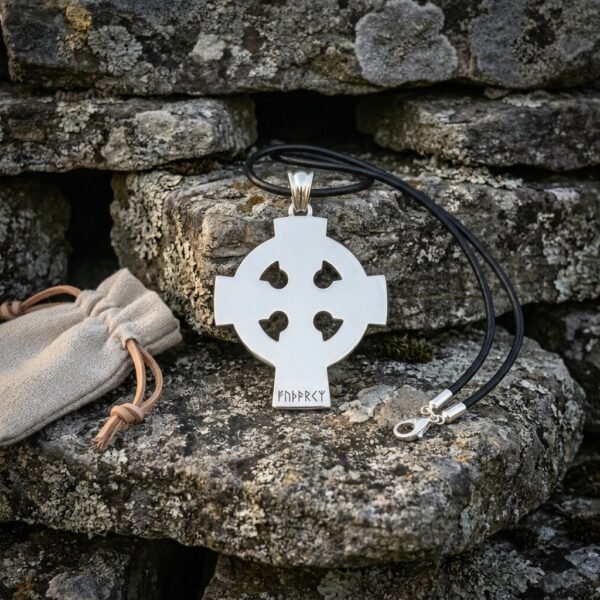
Stonecross Hand Made Steel Tone Celtic Cross Pendant with Rune Stamped Arm & Black Leather Cord | Norse Necklace Gift | RK-1620
Original price was: $139.00.$111.20Current price is: $111.20.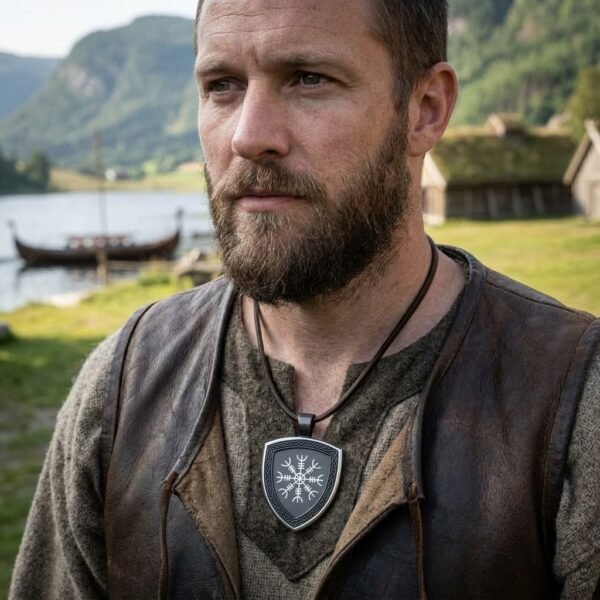
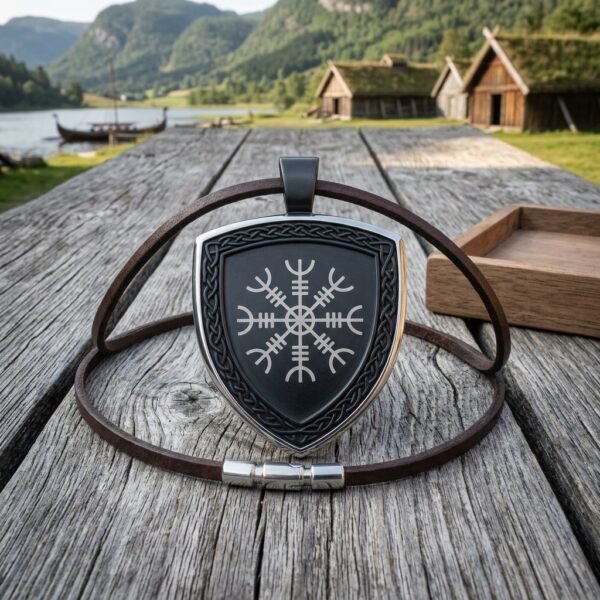
Awestave Hand Made Steel Helm of Awe Pendant with Blackened Shield Face, Knotwork Border & Brown Leather Cord | Norse Gift | RK-1640
Original price was: $159.00.$127.20Current price is: $127.20.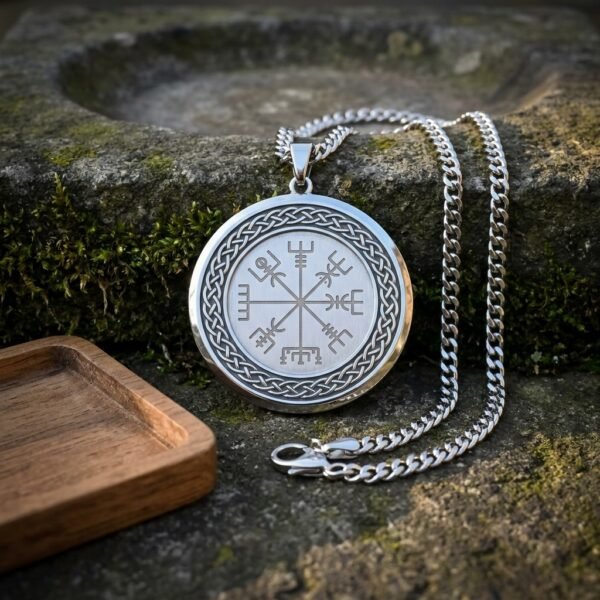
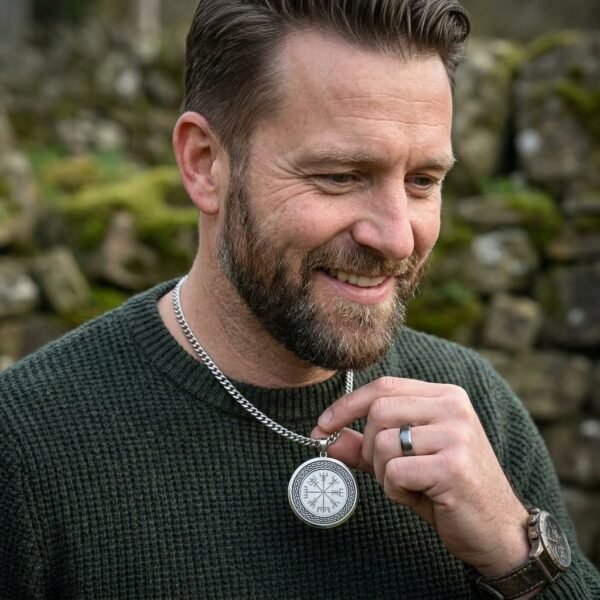
Wayrune Hand Made Silver Finish Vegvisir Pendant with Knotwork Border & 24 Inch Curb Chain | Norse Wayfinder Gift | RK-1784
Original price was: $129.00.$103.20Current price is: $103.20.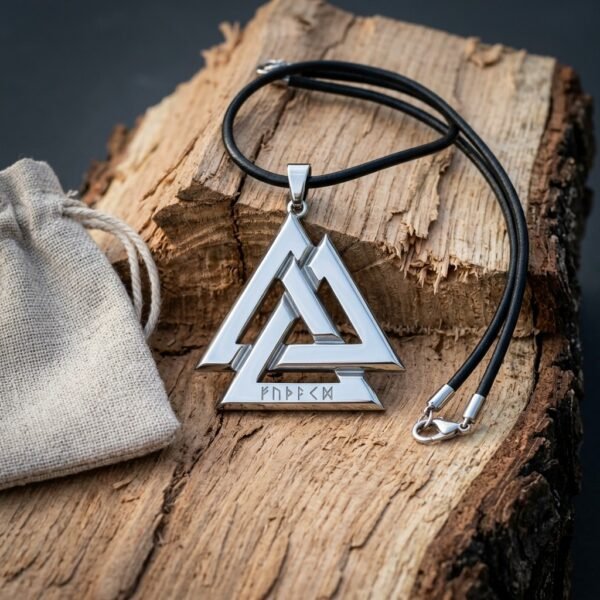
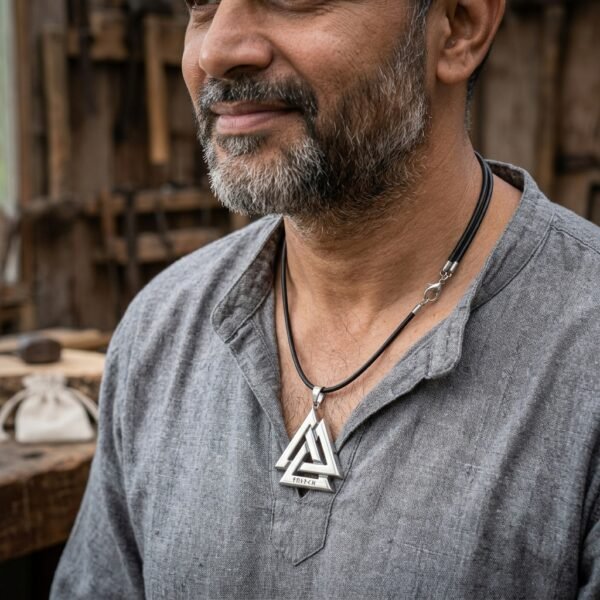
Thricebound Hand Made Polished Steel Valknut Pendant with Elder Futhark Rune Band & Black Leather Cord | Norse Gift | RK-1634
Original price was: $129.00.$103.20Current price is: $103.20.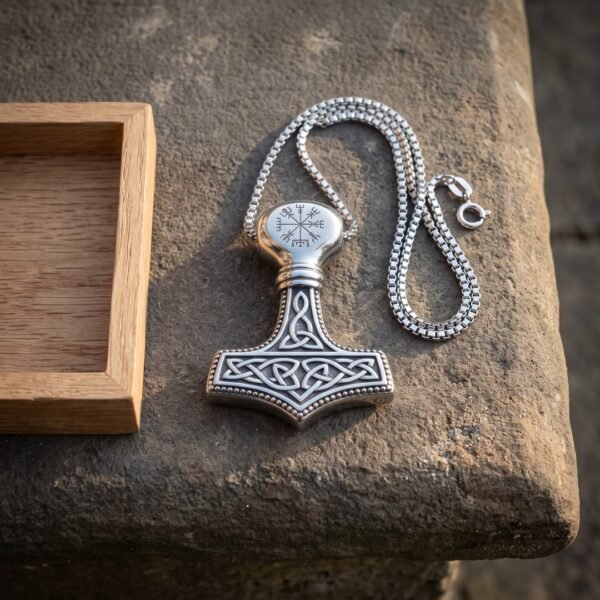
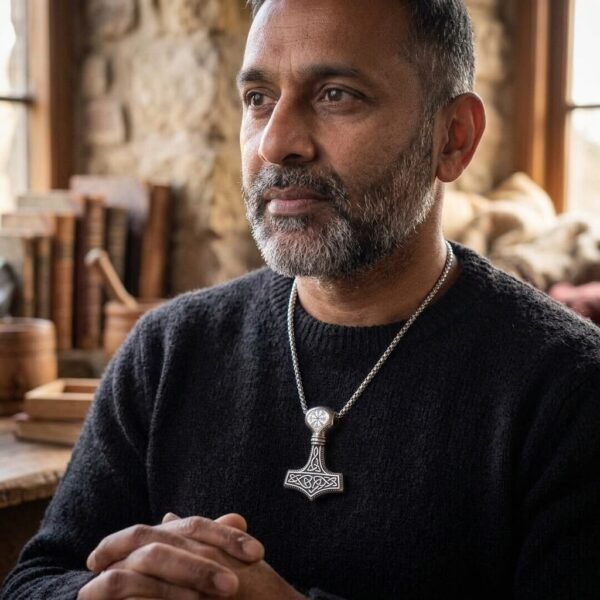
Thunderknot Hand Made Silver Finish Mjolnir Pendant with Celtic Knotwork & Vegvisir Crown | 24 Inch Box Chain | Norse Gift | RK-1754
Original price was: $159.00.$127.20Current price is: $127.20.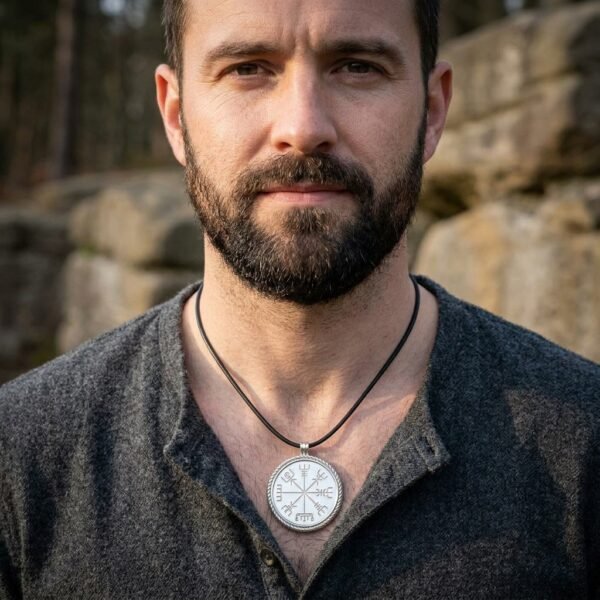
Wayfinder Hand Made Silver Tone Vegvisir Pendant with Twisted Rope Bezel & 20 Inch Black Leather Cord | Norse Runic Gift | RK-1600
Original price was: $129.00.$103.20Current price is: $103.20.Why these shapes and not others
Norse jewellery is not decorative in the way modern jewellery is. Almost everything worn around the neck was either a fastening that had to work or a mark that meant something to the wearer. Brooches held cloaks shut. Amulets were carried because the wearer wanted the thing the symbol stood for, not because it matched an outfit.
That is why the surviving forms are so small and so graphic. A hammer amulet from a tenth century grave is usually under two inches, cast or beaten in silver, bronze or iron, with the design cut deep enough to survive a lifetime of being rubbed against a shirt. It had to be legible at a glance and it had to be tough. Those two constraints produced shapes that still work now, which is the reason a Valknut looks correct on a chest and most invented runic logos do not.
One point of honesty before the descriptions. Some marks here are genuinely Viking age and turn up in the ground and on carved stone. Others are Icelandic, from manuscripts written down centuries after the Norse period ended. Both are worth wearing. They are simply not the same age, and anyone who tells you the Vegvisir was carved on a longship is guessing.
The pendants in this collection
Nine pieces covering six symbols. They divide by what the mark is rather than by price, because the range here is narrow and the metal is similar across the page.
Valknut
Two, and they are very different objects. One is polished steel in the unicursal open form, drawn as a single continuous band, about 1.5 inches across the widest point, with an Elder Futhark rune band cut into the lower bar and a flat soldered bail on a black leather cord. The other is a round pendant 35 mm across in a warm bronze tone, the three triangles standing in relief out of a recessed field under a raised rim, on a 22 inch steel box chain. The bronze one is what people buy as a memorial, and the reason is in the archaeology below.
Thor's hammer
One Mjolnir, and it is the largest pendant on the page at about 2 inches tall including the domed crown and 1.8 inches across the hammer head. It is polished stainless steel with deep cut interlace, a beaded border and a Vegvisir engraved into the crown, finished bright on the raised surfaces with the recesses darkened so the knotwork reads at arm's length. It comes on a 24 inch box chain in a wooden box.
Helm of Awe
Two, taking opposite approaches. The first is built as a small heater shield with a shaped point, about 1.75 inches tall, the face blackened so the eight armed stave and its knotwork border stand pale against the dark field, inside a bright polished bezel, on a brown leather cord. The second is a plain disc, 30 mm across and 2.5 mm thick with a bevelled rim, the stave engraved into a mirror polished face with the cut lines darkened, on a fine 24 inch box chain. It weighs about 0.9 oz complete and is the lightest thing here.
Vegvisir
Two runic compasses. One is 38 mm across with the eight spoked stave cut into a pale matte face inside a twisted rope bezel, on a 20 inch black leather cord. The other is 1.5 inches nominal, the stave sunk into a recessed panel with a raised knotwork border, high polished, on a 24 inch curb chain. On both, the detail is cut into the metal rather than stamped onto the surface, which matters because a stamped line wears through and a cut one does not.
Bifrost and the ringed cross
The Bifrost piece is the heaviest on the page at about 1.9 oz with its chain, a 35 mm disc about 3 mm thick at the rim, the rainbow bridge and its gate tower raised out of a stippled matt field inside a polished rope twist border, on a 22 inch heavy curb link. The ringed cross is sheet metal in a brushed steel tone, a Celtic cross with four pierced openings around the centre and flared arm ends, an Elder Futhark rune line stamped into the foot, satin faced with polished edges and the rune line left dark, on a black leather cord.
Sizes, metal and chains across the range
Every figure below comes from the specification panel of a piece on this page. These are cast or formed and then hand finished, so treat them as what to expect rather than as a guarantee to the millimetre.
| Symbol | Size | Metal and finish | Chain or cord | Listed weight | In the box | Price |
|---|---|---|---|---|---|---|
| Helm of Awe, engraved disc | 1.2 in, about 30 mm | Silver tone, mirror polished | 24 in fine box chain | About 0.9 oz | Pouch | 119 dollars |
| Valknut, unicursal | 1.5 in across | Polished steel, silver tone | Black leather cord | Not listed | Cotton pouch | 129 dollars |
| Vegvisir, rope bezel | About 38 mm | Silver tone alloy, matte face | 20 in black leather cord | Not listed | Cotton pouch | 129 dollars |
| Vegvisir, knotwork border | 1.5 in nominal | Silver finish, high polish | 24 in curb chain | Not listed | Pouch and polishing cloth | 129 dollars |
| Ringed Celtic cross | Not listed | Brushed steel tone sheet | Black leather cord | Not listed | Linen pouch | 139 dollars |
| Valknut, raised triangles | About 35 mm | Bronze tone, cast | 22 in box chain | Not listed | Not listed | 149 dollars |
| Bifrost bridge | 1.4 in, about 35 mm | Silver tone, polished and matt | 22 in heavy curb chain | About 1.9 oz | Not listed | 149 dollars |
| Helm of Awe, shield form | 1.75 in tall | Steel, blackened face | Brown leather cord | Not listed | Wooden box | 159 dollars |
| Mjolnir with Vegvisir crown | 2 in tall, 1.8 in wide | Stainless steel, silver finish | 24 in box chain | Not listed | Wooden box | 159 dollars |
Two pieces state a weight, at about 0.9 oz and about 1.9 oz complete with chain. That is the useful spread to hold in your head. Under an ounce disappears under a shirt. Approaching two ounces you know it is there all day, which some people want and some people find annoying by the evening.
What the metal is, and what it is not
None of these is sterling silver, and every listing says so in the first line of its specification. They are polished steel, stainless steel and cast alloy finished to a bright silver tone or a warm bronze tone. That is worth being blunt about, because a lot of Norse jewellery online is sold with silver in the name and steel in the box.
What you get instead is a harder, heavier piece that keeps a crisp edge. Silver is soft. A cut stave in sterling rounds off over years of being knocked against buttons and zips, where the same cut in steel stays sharp. Stainless will not tarnish at all. The plain steel and the plated alloy pieces can dull, which is what the polishing cloth is for.
The finishes on this page do different jobs. A mirror polish throws light and hides fine scratches badly. A matte or stippled field kills reflection so the raised work reads clearly, which is why the Bifrost and one of the Vegvisir discs use it. Blackening is the strongest contrast of the lot, and on the shield shaped Helm of Awe it is the reason you can read an eight armed stave on a piece under two inches tall.
Chains, cords and bails
Four of these come on leather cord and five on a metal chain. Leather sits softer against the skin and suits the larger flat pendants, and it will stretch a little and darken with wear. Cords here are round black or brown with a lobster or barrel clasp.
A box chain is square section links, dense and quiet, and the fine one on the engraved Helm of Awe is the most discreet option here. A curb chain is flattened oval links lying in one plane, heavier and more visible, and the Bifrost uses a heavy version to balance a thick disc. The Mjolnir takes a 24 inch box chain because a 2 inch hammer needs a chain that will not look like thread against it.
Bails matter more than people think. A flat soldered bail, which most of these use, holds the pendant square to the chest instead of letting it spin. A fixed loop cast as part of the piece is stronger again. Both are sized here to take a heavy cord or a thick chain, so you can change the hanging without hunting for a jump ring that fits.
Length and how it sits
Chain length decides everything about how a pendant reads. On most adults a 20 inch chain sits at the collarbone and shows above an open collar. A 22 inch sits just below, on the upper chest, and is the safest general choice. A 24 inch drops to mid chest and disappears under a crew neck, which is what you want if the piece is for you rather than for showing.
Match the length to the pendant. Small discs at 30 to 35 mm look right high on the chest, so 20 to 22 inches. The 2 inch Mjolnir wants the 24 inch chain it ships with, because a large pendant riding high on the throat looks like it is choking you.
If you are buying as a gift and cannot ask, take 22 inches. It works on nearly everybody and it is short enough to shorten with a jump ring if it does not.
Care, tarnish and storage
Take it off before a shower, the sea and the gym. Soap film dulls a polish, chlorine and salt attack plated finishes, and sweat gets into cut lines and sits there. None of that destroys a piece overnight and all of it shortens the life of a finish.
Clean with a dry soft cloth, working with the grain on a brushed face rather than in circles. For a mirror polish, the polishing cloth supplied with one of the pieces here does the job on any of them. Do not use silver dip on these, because they are not silver and dip strips plating and eats blackened detail.
Leather cord wants the opposite treatment to metal. Keep it dry, let it dry slowly away from heat if it does get wet, and expect it to soften and darken. It is the part that will need replacing first, and replacing it is a two minute job because every bail here takes a standard cord.
Store the pendant flat in its pouch or box rather than dropped in a drawer with keys. Most scratches on jewellery happen in storage rather than on the wearer.
Engraving
Pendants can be engraved after they arrive in the United States. The reverse of a disc is the usual place, which keeps the face of the symbol clean and puts a name, a date or a short line where only the wearer sees it. Text engraving is 19 dollars, a symbol is 39 dollars and a family crest is 49 dollars.
Elder Futhark is a phonetic alphabet rather than a cipher, so a name is transliterated by sound and there is no rune for the letter C. Two pieces here already carry a cut rune line, so if you want runes and nothing else, they are done for you. Engraving is permanent and an engraved piece cannot be returned, so send the exact spelling and read it twice before you order.
Where the symbols come from
The Valknut is the most solidly attested mark on this page. It appears on the Gotland picture stones and it is cut into a wooden bedpost from the Oseberg ship burial, and in almost every context it sits beside death, a horse or a man being given to Odin. That is why it works as a memorial piece and why the bronze one gets bought for that.
Thor's hammer is the best documented amulet of the Viking age. Hundreds have been excavated across Scandinavia, England and the Baltic, most small, most silver or bronze, and the numbers rise sharply as Christianity spread north. People wore it to say what they were.
The Helm of Awe and the Vegvisir are Icelandic and later. The Vegvisir appears in the Huld manuscript, a compilation of Icelandic magical signs written out by Geir Vigfusson in 1860, with a note saying the carrier of the sign will not lose their way. The Aegishjalmur turns up in similar grimoires. They are real pieces of Icelandic tradition and they are not Viking age, whatever the internet says.
Bifrost is the burning rainbow bridge between the world of men and Asgard, guarded by Heimdall, and it is a story rather than an excavated amulet form. The ringed cross belongs to the Insular Celtic and Norse Christian world, where a wheel head cross carved with interlace is what stands on the stones of Ireland, Scotland and the Isle of Man.
Where these come from and how they ship
Ransack Viking is a US company based in Chicago, Illinois. The pieces are handmade in the Czech Republic, then imported, inspected and shipped from Chicago. Engraving is done in the US after arrival.
Every piece ships with its cord or chain fitted, most in a drawstring pouch or a wooden box, and the listings say which. Two pendants of the same name will differ slightly in polish and in how the blackening sits, because they were finished by hand.
How to choose
Buying your first one? Take the Valknut or the hammer. They are the two marks that are unambiguously Viking age, and both are legible to anybody who knows the period.
Buying for somebody who has lost someone? The bronze Valknut. It is the piece on this page with the clearest meaning attached to it, and the recessed field and raised triangles make it feel older than it is.
Buying something to wear every day under a shirt? Take the engraved Helm of Awe disc at 30 mm and under an ounce. You will forget it is there, which is the highest compliment a pendant gets.
Related collections
- Mjolnir pendants, Thor's hammer on its own
- Damascus steel jewellery across the range
- Viking rings and bracelets
- Arm rings and torcs
- Beard rings and beads
- Thor's hammers in full size
- Runestones and rune sets
- Wedding and groomsmen gifts
Guides worth reading first
- Viking symbols and what they actually mean
- The Valknut: the knot of the slain
- Mjolnir: the meaning of Thor's hammer
- The Vegvisir and where it really comes from
- Elder Futhark runes explained
- A guide to the Norse gods
- Odin the All Father, what the sources actually say
Frequently asked questions
Are these pendants solid silver?
No. They are polished steel, stainless steel and cast alloy with a bright silver tone or bronze tone finish, and every listing states that in its first specification line. Steel holds a cut line better than sterling does, and stainless will not tarnish at all.
What does the Valknut mean?
Three interlocked triangles, carved on the Gotland picture stones and on the Oseberg bedpost, and almost always found beside death or beside Odin. It is read as a mark of being bound to a fate, which is why it is the piece most often bought as a memorial.
Is the Vegvisir a real Viking symbol?
It is real and Icelandic, but it is not Viking age. It appears in the Huld manuscript, written out in 1860, with a note saying the carrier will not lose their way in bad weather. Anyone selling it as a longship carving is guessing.
What chain length should I buy?
Twenty inches sits at the collarbone, twenty two just below on the upper chest, and twenty four drops to mid chest and hides under a crew neck. If you are buying blind, twenty two works on nearly everybody. Match a large pendant to a longer chain.
Will these tarnish or turn my skin green?
Stainless will not tarnish. The plain steel and plated alloy pieces can dull over time and come back with a dry polishing cloth. Keep them out of the shower, the sea and the gym, because soap film, chlorine and sweat are what shorten a finish.
Can the pendant be engraved?
Yes, in the United States after it arrives. The reverse of a disc is the usual place. Text is 19 dollars, a symbol is 39 dollars and a family crest is 49 dollars. Engraved pieces cannot be returned, so check the spelling carefully.
Can I put one of these on a different chain?
Yes. The bails here are flat soldered or cast fixed loops, sized to take a heavy cord or a thick chain, so swapping a leather cord for a chain is simple. A replacement cord is the cheapest way to refresh a piece that has been worn for years.
Where are these made?
Ransack Viking is a US company based in Chicago, Illinois. The pieces are handmade in the Czech Republic, then imported, inspected and shipped from Chicago, with engraving added in the US after arrival.
Featured pieces
 Stonecross Hand Made Steel Tone Celtic Cross Pendant with Rune Stamped Arm & Black Leather Cord
Original price was: $139.00.$111.20Current price is: $111.20.
 Awestave Hand Made Steel Helm of Awe Pendant with Blackened Shield Face, Knotwork Border & Brown Leather Cord
Original price was: $159.00.$127.20Current price is: $127.20.
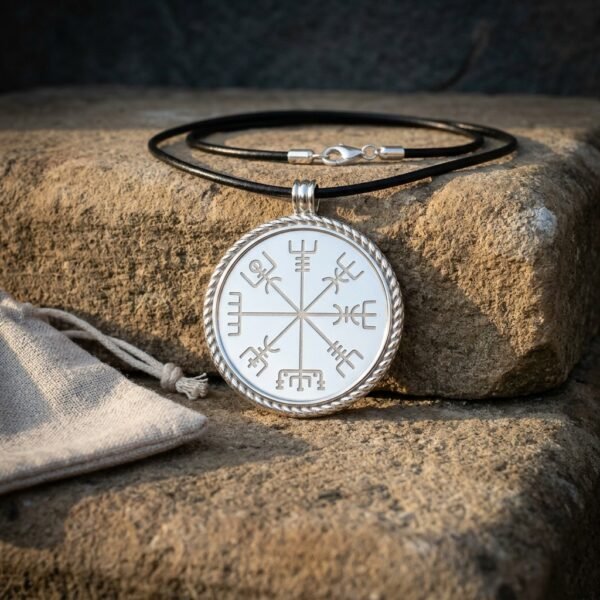 Wayfinder Hand Made Silver Tone Vegvisir Pendant with Twisted Rope Bezel & 20 Inch Black Leather Cord
Original price was: $129.00.$103.20Current price is: $103.20.
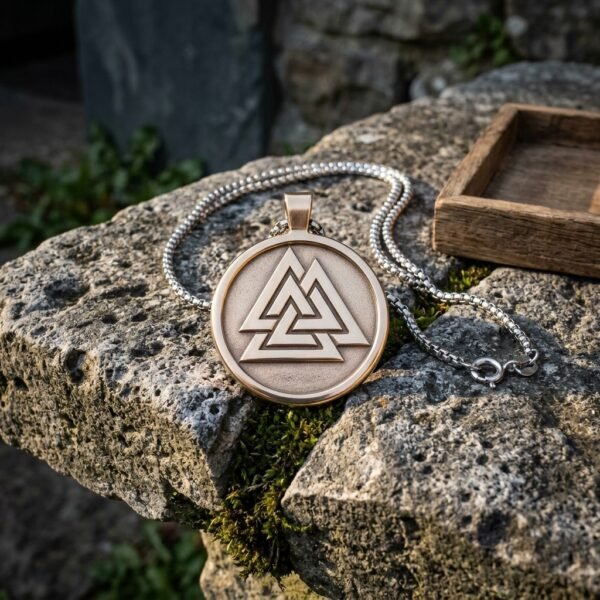 Kinbound Hand Made Bronze Tone Valknut Pendant with Raised Triple Triangle & 22 Inch Box Chain
Original price was: $149.00.$119.20Current price is: $119.20.