
Blog
Odin the All Father: What the Sources Actually Say

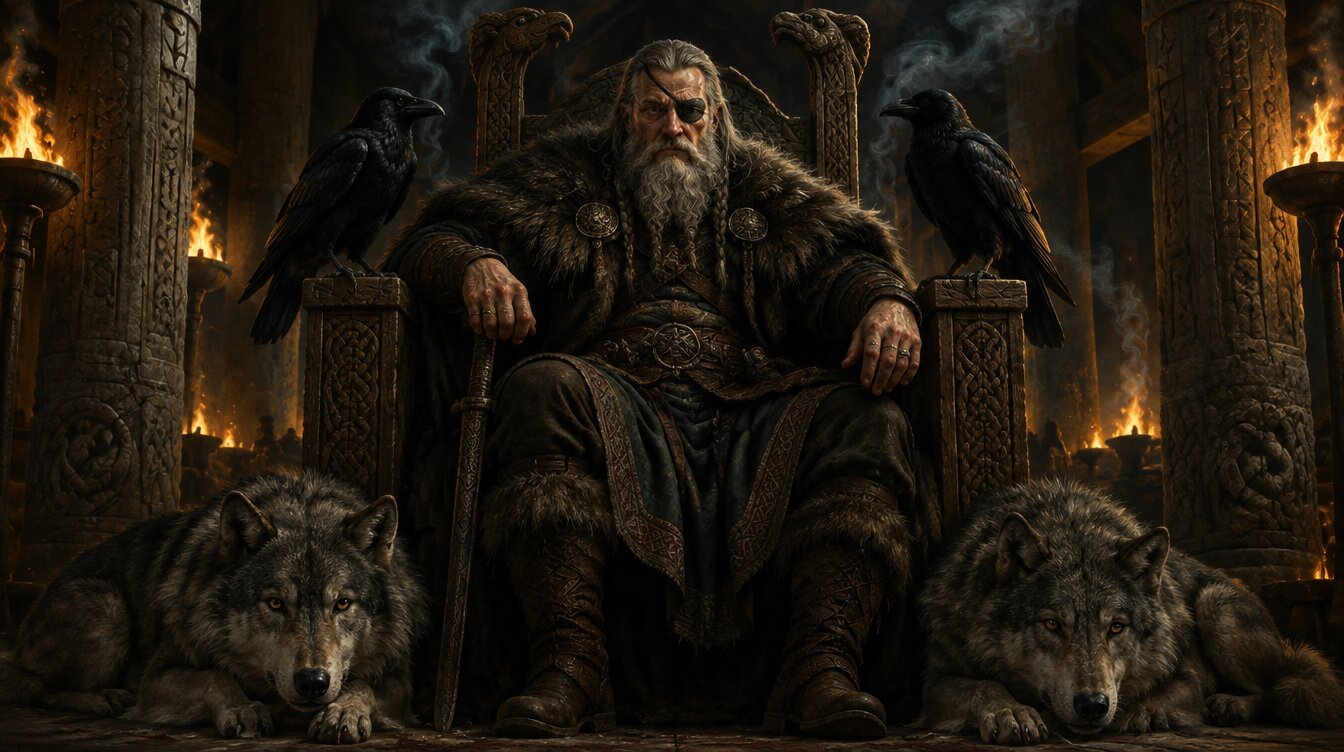
Odin is the hardest of the Norse gods to like and the most interesting to read about. He is a god of poetry and of the gallows, of wisdom bought at a price and of oaths that do not hold. He starts wars for the pleasure of watching them, takes the best fighters for his own hall, and then loses anyway at the end of the world. Whoever assembled this character was not trying to make a comforting one.
What follows is what the surviving sources say, which is a narrower thing than what the internet says. The bulk of it comes from the Poetic Edda, the thirteenth century Prose Edda of Snorri Sturluson, the sagas, and the archaeology of place names and small objects. Where those disagree, or where the evidence simply runs out, this page says so.
The Names Come First
Odin has more names than any other figure in the mythology, well over a hundred recorded across the poems and Snorri’s lists. Grimnismal alone ends with the god reeling off dozens of them. They are not decoration. Each one is a job description.
Grimnir is the masked or hooded one. Yggr is the terrible one, and Yggdrasil, the world tree, carries that name inside it: Yggr’s horse, a kenning for the gallows. Vegtam is way-tame, the wanderer. Bolverk is evil-worker, the alias he uses when stealing the mead of poetry. Alfodr, All Father, is the one that has stuck in English. Har, Jafnhar and Thridi, High, Just as High and Third, are the three figures who answer questions in the Prose Edda and turn out to be the same god three times over.
The pattern is a god who is never quite present under one identity. That matters when people try to describe him in a sentence.
What He Was Actually the God Of
Battle, but not as a soldier. Odin decides who wins and who dies, and the deciding is the point. Poetry, because he stole the mead that makes poets and he gives it out. Wisdom, obtained by trade rather than granted. Magic, particularly seidr, the kind that sees and shapes rather than the kind that throws. Kingship, since he is the ancestor royal lines claimed. And the dead, which is where the hall comes in.
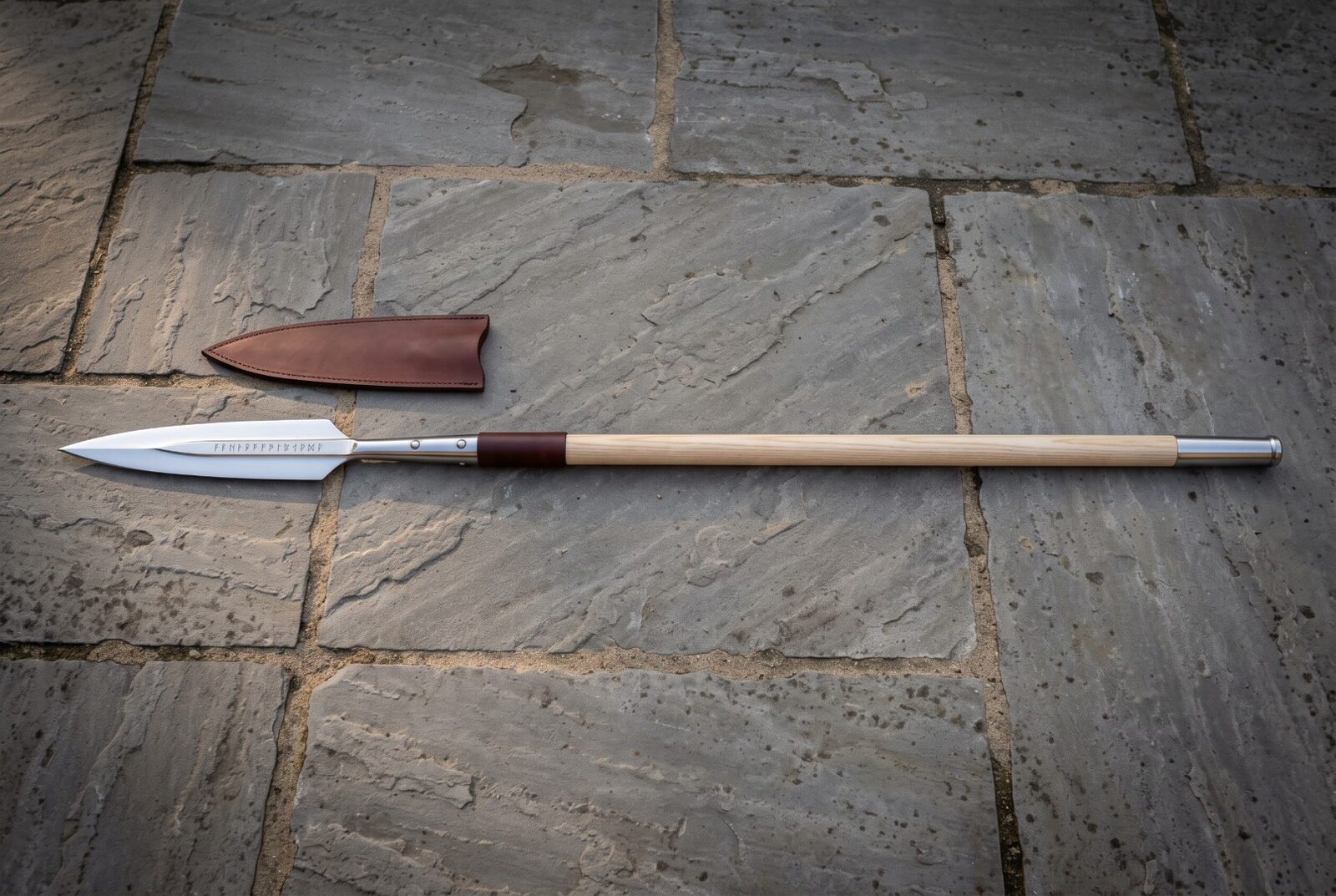
 Runeleaf Hand Forged Elder Futhark Spear | 44 Inch Overall with 11 Inch Head | Ash Haft, Red Leather Grip and Brown Leather Head Sheath | Norse Reenactment Gift | RK-1981
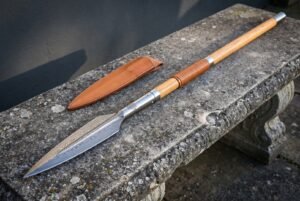 Serpentcast Hand Forged Damascus Spear | 42 Inch Overall with 12 Inch Head | Ash Haft, Leather Grip Wrap and Brown Leather Head Sheath | Norse Reenactment Gift | RK-1976
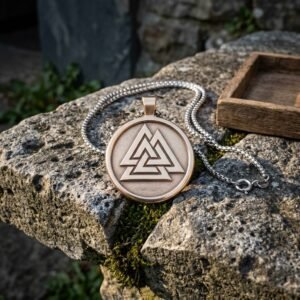 Kinbound Hand Made Bronze Tone Valknut Pendant with Raised Triple Triangle & 22 Inch Box Chain | Norse Memorial Gift | RK-1601
He is not a god of harvests, weather, marriage or good order. Those belong elsewhere in the pantheon, which is set out in the guide to the Norse gods. Odin’s field is what happens when order fails.
The Tree
The most quoted passage about Odin is a first person account in Havamal. He hung on a windy tree for nine full nights, wounded with a spear, given to Odin, himself to himself. No one gave him bread or drink. He looked down, took up the runes screaming, and fell back.
Read it slowly and it is a sacrifice made by the god to the god, with no external recipient. Nothing else in the corpus quite matches it. Scholars have argued for a century about whether it is influenced by Christian imagery of crucifixion or is an independent northern initiation motif, and the argument is not settled. What is clear is what he gets for it: the runes, and the knowledge of eighteen charms that Havamal goes on to list. The alphabet itself, and what its letters actually meant, is covered in the Elder Futhark, and the tree in Yggdrasil and the nine worlds.
The Eye
Voluspa says Odin’s eye lies hidden in Mimir’s well, and Snorri explains the transaction: he gave the eye for a single drink from the water of wisdom. It is the second time he pays a piece of himself for knowledge, and the sources treat the exchange as sensible rather than tragic. Later he keeps Mimir’s severed head and consults it, which is a very Odin solution to losing an adviser.
What Travels With Him
Two ravens
Huginn and Muninn, usually rendered thought and memory, fly over the world each day and report back. Snorri has Odin admit he fears for their return, which is either a joke about the fragility of thought or a genuine anxiety, depending on which scholar you read. Their fuller story is in Huginn and Muninn.
Two wolves
Geri and Freki, both names meaning something close to greedy or ravenous. Grimnismal says Odin feeds them everything set before him and lives on wine alone. A god who does not eat, at a feast, is a striking image and one the poem does not explain.
An eight legged horse
Sleipnir, the best of horses, born of Loki in mare form and the stallion Svadilfari during the affair of the wall builder. Sleipnir carries Odin between worlds, including down to Hel in Baldrs draumar. The eight legs have been compared to funeral biers carried by four men, which is a neat idea and not proof of anything.
A spear
Gungnir, which never misses. Voluspa has Odin cast a spear over an enemy host at the start of the first war, and later Norse sources describe the same gesture as a dedication: the army the spear flies over belongs to Odin now. That is a battlefield practice, not a myth, which is one of the rare places where cult and story visibly touch.
Odin and the Dead
Odin gathers fighters for the hall, the einherjar, who train each day and feast each night until the end. Valkyries choose them. It is worth being precise here, because popular retellings are not: Grimnismal says Freyja takes half of the slain each day at Folkvangr and Odin has the other half. Valhalla was never the destination of everyone who died with a blade in hand. The details, and the places where the two sources contradict each other, are in Valhalla and what the sources actually say. The goddess who takes the other half is covered on the page for Freya and the half of the slain she chooses, and the rest of the female half of the pantheon under the Norse goddesses.
Seidr, and the Insult That Comes With It
Ynglinga saga credits Odin with seidr, the magic of seeing and shaping fate, and notes that its practice carried such shame that it was left to women. In Lokasenna, Loki throws exactly that at him: that Odin beat on a drum like a seeress and travelled the world as a witch. Odin’s reply is to accuse Loki of having borne children.
This is a god who breaks the gender rules of his own society to get what he wants, and the sources are perfectly aware of it. Any modern account that turns Odin into a straightforward patriarch has quietly dropped the most distinctive thing about him.
Was Odin Actually Worshipped?
Yes, but not the way Thor was. The evidence splits neatly. Place names containing his name are real and spread across Scandinavia, with Odense in Denmark, from Odins ve, the sanctuary of Odin, as the best known, along with a scatter of Swedish and Norwegian names. Adam of Bremen, writing in the eleventh century about the temple at Uppsala, lists Wodan second and glosses him bluntly: Wodan, that is, fury.
Against that, personal names built on Thor are everywhere and names built on Odin are rare. Hammer amulets survive in quantity; nothing comparable survives for Odin. A small silver figure found at Lejre in Denmark in 2009, seated on a throne with a bird at each shoulder, is often read as Odin on his high seat, though the figure’s dress has led several scholars to argue it is female. That single object carrying so much weight tells you how thin the material is.
The honest summary is that Odin looks like a god of kings, poets and professional fighters rather than of farming households. If you want the same comparison made across the whole pantheon, using place names, personal names and objects, it is laid out in the Norse gods guide.
The End
Odin knows how it finishes and cannot change it. At Ragnarok he goes against the wolf Fenrir and is swallowed. His son Vidar avenges him by tearing the wolf apart, which is the closest the story comes to a consolation. The whole sequence, and the argument over how much of it Snorri shaped, is in Ragnarok explained, and Fenrir’s own history is in the children of Loki. The wolf now has a page to himself at Fenrir, the wolf who waits, and the god who paid a hand to bind him at Tyr, the god who gave his hand.
Odin in the Calendar
Wednesday is Woden’s day in Old English, the same god under the West Germanic form of the name. The Romans matched their gods to local ones and paired this one with Mercury, which is why Wednesday is mercredi in French and Odin’s day across most of Scandinavia. Iceland dropped the god names in a burst of Christian tidiness and calls it midweek day instead. Small details like that are the fossil record of a religion.
Wearing the Name
Most modern Odin pieces are not Odin pieces at all. The Valknut is the closest thing to an attested Odinic symbol, appearing on picture stones and ship burials in contexts connected with death, and what can and cannot be claimed for it is set out in the Valknut. Ravens, spears and a single eye are the other honest visual shorthand. The Helm of Awe and the Vegvisir, which get sold as Odin symbols constantly, are Icelandic magical staves from centuries after the Viking Age, and Viking symbols and their meanings sorts out which is which.
Ransack Viking is a US company in Chicago, Illinois. The pieces are made by hand in the Czech Republic, then imported, inspected and shipped from Chicago, where engraving is cut after arrival. US orders ship free and tracked, with no import duty, and everything carries a lifetime warranty against defects. The relevant ranges are Viking spears, Norse pendants and runestones and rune sets. The rest of the writing is in the guides.
Questions people ask
Who is Odin in Norse mythology?
The chief of the Aesir and the god of poetry, wisdom, magic, kingship and the battle dead. He gathers slain fighters into Valhalla, trades pieces of himself for knowledge, travels in disguise, and is killed by the wolf Fenrir at Ragnarok. He is a god of crisis rather than of daily life.
Why does Odin have one eye?
He gave the other for a drink from Mimir’s well, the water of wisdom. Voluspa says the eye lies hidden there still. It is the second sacrifice he makes for knowledge, the first being the nine nights on the tree, and the sources present both as a fair price rather than a misfortune.
Why is Odin called the All Father?
Alfodr is one of his many names, used by Snorri in the Prose Edda for Odin as the oldest of the gods and the father of the divine line. Whether the title is genuinely old or was shaped by a Christian author writing about a single high god is one of the standing arguments in the field.
How many names does Odin have?
Well over a hundred are recorded, and Grimnismal ends with a long recital of them. They work as descriptions rather than aliases: Grimnir the hooded one, Yggr the terrible one, Vegtam the wanderer, Bolverk the evil worker. No other figure in the mythology comes close.
Was Odin or Thor more popular with ordinary Vikings?
Thor, by a wide margin. Personal names built on Thor are extremely common, hammer amulets survive in quantity, and place names naming Thor are widespread. Odin appears in place names and in poetry associated with rulers and poets, which points to a cult of the powerful rather than of the farm.
What does Odin’s spear do?
Gungnir never misses. In Voluspa Odin throws a spear over an enemy host to begin the first war, and later sources describe the same act as dedicating an army to him. It is one of the few points where a story and a recorded battlefield practice line up.
Did Odin practise magic that was considered unmanly?
Yes, and the sources are open about it. Ynglinga saga says seidr carried so much shame that men left it to women, and in Lokasenna Loki taunts Odin with having worked it. Odin’s own answer is an insult rather than a denial.
Is Wednesday named after Odin?
It is. Old English Wodnesdaeg is the day of Woden, the same god under the West Germanic form of the name, assigned to the day the Romans gave to Mercury. Most Scandinavian languages kept the name, and Icelandic replaced it with a plain midweek term.
Things you can actually hold
On the shelf in the same spirit, the Odin Viking bearded axe and the Odin handcrafted Viking hammer. Next to those, the Ashgleam Viking spear and the Plumescale raven pommel sword.
Shop the range
Runeleaf Hand Forged Elder Futhark Spear | 44 Inch Overall with 11 Inch Head | Ash Haft, Red Leather Grip and Brown Leather Head Sheath | Norse Reenactment Gift | RK-1981Serpentcast Hand Forged Damascus Spear | 42 Inch Overall with 12 Inch Head | Ash Haft, Leather Grip Wrap and Brown Leather Head Sheath | Norse Reenactment Gift | RK-1976Kinbound Hand Made Bronze Tone Valknut Pendant with Raised Triple Triangle & 22 Inch Box Chain | Norse Memorial Gift | RK-1601 Slatestave Hand Made Engraved Pale Grey Rune Stone with Full Elder Futhark Row & Knotwork Arch | 10 Inch Standing Height | Solid Oak Display Base | Norse Home Decor Gift | RK-1705
 Stonecast Hand Made Elder Futhark Rune Set | 24 Engraved Casting Stones | Tumbled Stone with Tan Leather Drawstring Pouch | Norse Divination Gift | RK-1780
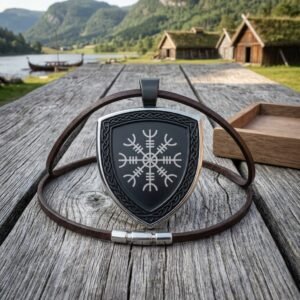 Awestave Hand Made Steel Helm of Awe Pendant with Blackened Shield Face, Knotwork Border & Brown Leather Cord | Norse Gift | RK-1640