Blog
Yggdrasil: The World Tree and the Nine Worlds

Yggdrasil is the great tree at the centre of Norse cosmology, an ash whose roots and branches hold the worlds together. It is described in two Poetic Edda poems, Voluspa and Grimnismal, and tidied into order by Snorri Sturluson in the Prose Edda around 1220. The number nine is given for the worlds. A list of all nine by name is not, which has never once stopped anybody printing one.
Almost every article on this subject prints a neat diagram with nine labelled realms stacked around a tree. That diagram is a modern construction, and it quietly invents a great deal. The medieval sources are stranger, more fragmentary and more interesting than the diagram, and they disagree with each other on basic points. This post works through what they actually say.
Where the tree is described
Three texts carry most of it. Voluspa, the opening poem of the Poetic Edda, has a seeress recounting the world from its beginning to its end, and she names the tree. Grimnismal, also in the Poetic Edda, is the fullest single description: Odin, disguised and tortured between two fires, recites a torrent of cosmological detail including the roots, the animals and the tree’s suffering. Then Snorri’s Prose Edda, written around 1220 as a handbook for poets, gathers the eddic material into ordered prose.
Snorri is the reason we can talk about Norse cosmology as a system at all, and he is also the reason to be careful. He was a Christian Icelander working two centuries after conversion, arranging older poetry into something coherent. Where he goes beyond his verse sources, we are reading a thirteenth century scholar tidying up, not a Viking Age belief.
What the poems describe
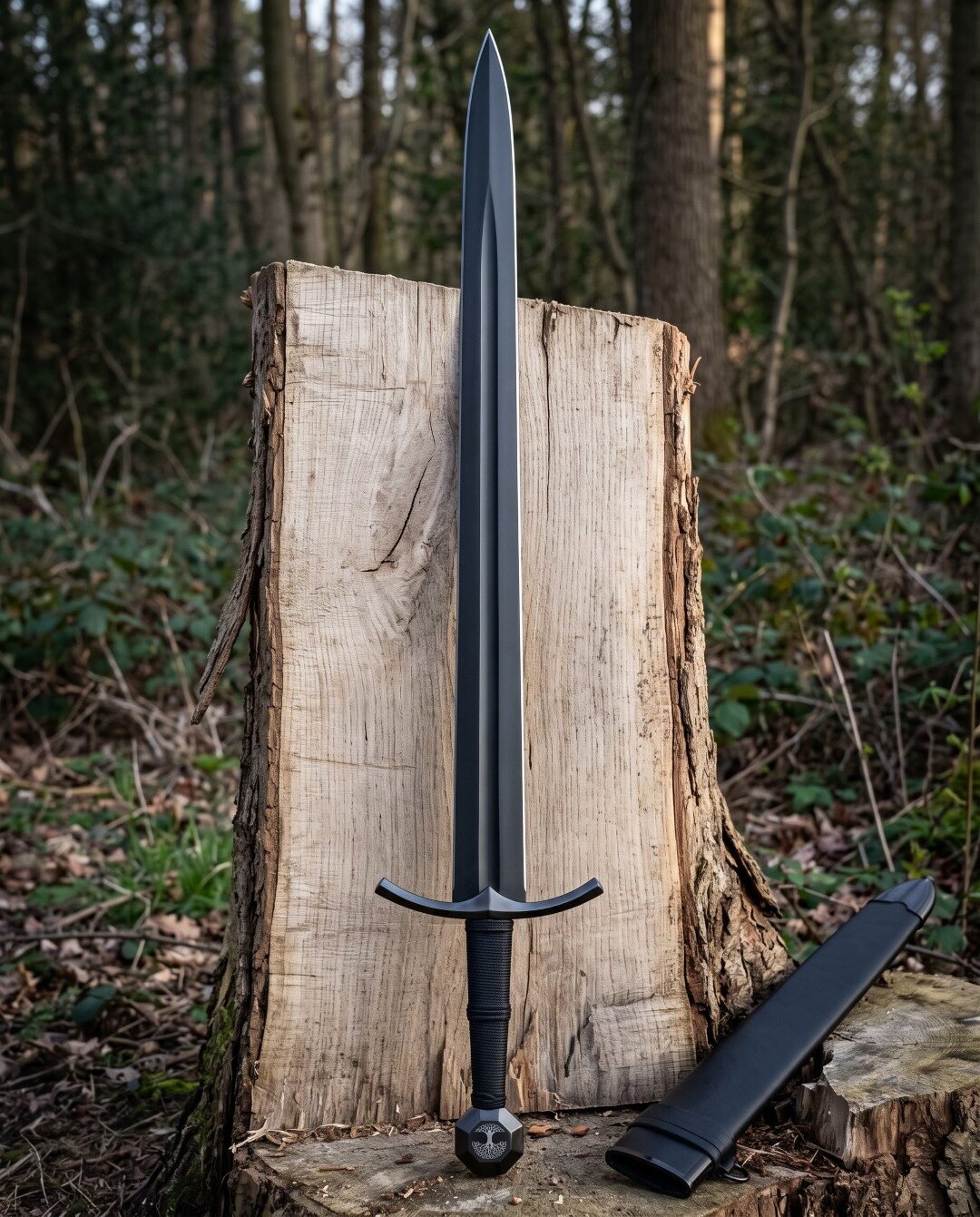
 Ashenroot Hand Forged Blackened Yggdrasil Sword | 36 Inch Overall with 29 Inch Blade | Tree of Life Pommel, Cord Grip and Black Leather Scabbard | Norse Gift | RK-1974
 Nightbough Hand Forged 1095 Steel Blackened Arming Sword with Yggdrasil Tree Pommel & Cord Wrapped Grip | 37 Inch Overall | Downswept Guard and Black Scabbard | Norse Collector Gift | RK-1993
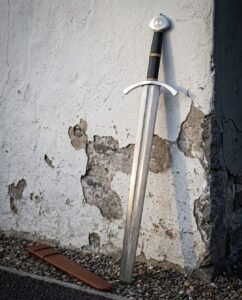 Rootcrown Hand Forged Damascus Arming Sword | 37 Inch Overall | Black Leather Grip and Brass Wire Bands with Yggdrasil Pommel Medallion and Brown Leather Scabbard | Norse Gift | RK-2103
Three roots, arranged two different ways
Grimnismal says the tree has three roots: one reaching down to Hel, one to the frost giants, one to mankind. Snorri also gives three roots, but he sends them elsewhere: one to the Aesir in the sky, one to the frost giants where Mimir’s well lies, one over Niflheim where the spring Hvergelmir bubbles and the serpent Nidhogg gnaws.
Those two lists do not match. This is a good example of what the material is really like. Two of our best sources describe the same structure differently, and no amount of diagramming makes them agree. Most modern accounts silently follow Snorri because his version is tidier, and tidier is easier to sell.
The wells
Three springs are attached to the tree. The Well of Urd sits beneath one root, and the gods ride to it daily to hold their court. The three Norns dwell there, named in Voluspa as Urd, Verdandi and Skuld, and Snorri says they draw water and white clay from the well and pour it over the tree so its branches do not rot. Mimir’s well holds wisdom, and Odin gave an eye for a single drink from it. Hvergelmir is the source of the rivers, and it is the least described of the three.
The animals
An eagle sits in the branches. Snorri adds that a hawk called Vedrfolnir sits between the eagle’s eyes. Below, the serpent Nidhogg chews at the root. Between them runs the squirrel Ratatoskr, carrying spiteful messages up and down the trunk so that the eagle and the serpent stay at each other. It is the one job in the whole cosmology that never lets up. Four harts named Dainn, Dvalinn, Duneyrr and Durathror browse the branches, and Grimnismal names a whole list of serpents beneath: Goinn, Moinn, Grabak, Grafvollud, Ofnir and Svafnir among them.
The picture that emerges is not a serene cosmic tree. Grimnismal puts it bluntly: the ash suffers more hardship than anyone knows, with a hart biting it above, its trunk rotting at the side and Nidhogg tearing it below. The tree that holds the worlds together is being eaten alive from three directions at once.
What the name means
Yggdrasill breaks into two parts. Yggr is a name of Odin, roughly the terrible one. Drasill is a horse. So the tree is Ygg’s horse, which sounds odd until you know that horse of the gallows is a standard Old Norse kenning for the gallows itself. Odin hangs nine nights on a windswept tree in Havamal, wounded by a spear, given to himself, and takes up the runes. Read that way, the name means Odin’s gallows and the tree is named for what happened on it. That reading is the standard one. Alternative proposals exist, including a derivation that would give something like yew pillar, so it is not unanimous.
The nine worlds, and why the tidy list is modern
What the sources actually give
Voluspa says the seeress remembers nine worlds. That is the number, plainly stated. What no surviving source does is list those nine and stop. Instead, world names are scattered across different texts: Asgard, Midgard, Jotunheim, Alfheim, Vanaheim, Niflheim, Muspell, Svartalfaheim, Nidavellir, Hel. Count that list and you are already past nine, and several entries may be alternative names for the same place rather than separate realms.
The arguments nobody has settled
Are Svartalfaheim and Nidavellir two names for one place, the home of the dwarves? Are dark elves and dwarves the same beings, or two kinds? Is Hel a world in its own right or a region inside Niflheim? Is Muspell a place at all in the older poetry, or a people, with Snorri turning it into Muspellsheim? Specialists disagree on all of these, which means any nine item list is somebody’s editorial choice about which questions to answer, published without the working.
Where the diagram came from
The familiar chart with Asgard on top, Midgard in the middle and Helheim at the bottom is a modern teaching aid, refined through nineteenth century handbooks and then hardened by twentieth century popular writing, fantasy fiction and games. It is a fine way to introduce the material to a beginner. It is not a Norse diagram, and Helheim in particular is a modern coinage that appears in no source at all. They say Hel.
Ash, yew, or something else
Voluspa calls the tree an ash and also says it stands forever green. Ash trees are deciduous, so that combination has bothered readers for a long time, and some scholars have suggested the original image was a yew, which is evergreen and was significant in Germanic tradition. Other tree names float nearby in the poetry. Laerad stands over Valhalla in Grimnismal, and Mimameid appears in the later poem Fjolsvinnsmal. Whether those are Yggdrasil under other names or separate trees is another open question.
The tree at Ragnarok
Yggdrasil is not destroyed. It shakes. Voluspa has the standing ash of Yggdrasil trembling as the end begins, and Snorri writes that the tree shudders and nothing in heaven or earth is without fear. Afterwards, two humans called Lif and Lifthrasir come out of a place called Hoddmimir’s holt, where they had sheltered and fed on the morning dew, and from them the world is peopled again. Many scholars identify that holt with the tree itself. The sources do not say so outright, which is worth remembering before repeating it as fact. Our guide to Viking symbols and their meanings takes the same approach to the wider symbol set, and the piece on the Valknut shows how thin the recorded meaning of even a genuinely Viking Age symbol can be.
Pieces that carry the tree
The world tree is one of the most common motifs we are asked to cut, partly because it fills a round or a long space so well. It appears etched down the blades in our swords range and across the heads and hafts of the axes and spears in Norse arms. It suits shields and wall pieces, which sit in Viking home decor, and it works small as well, on the discs and rings in our Norse pendants. If you want a name, a date or a line of runes worked into the roots or the canopy, that goes through our engraved and personalised range. How that works in practice: Ransack Viking is a US company in Chicago, Illinois, every piece is handmade in the Czech Republic the old way, then imported, inspected and shipped from Chicago, and engraving is done in the US after the piece arrives, so your wording is added at the end rather than at the start. Blade steel is plain 1095 at 54 to 58 HRC, or Damascus of 1095 and 15N20 forge welded at 58 to 60 HRC, and the difference is set out on our steel and hardness page.
Judging a Yggdrasil design
The weak point in most world tree engravings is the join between roots and branches. In a good design the two mirror each other with the same line weight and the same rhythm of branching, so the eye reads one continuous system. In a poor one the canopy is dense and the roots are three lazy squiggles. On a blade, check that the trunk runs true along the centre line rather than wandering, because a wandering trunk on a polished surface is obvious under a light. If the design includes the animals, the squirrel and the serpent should be small enough to stay legible after the etch has been polished back. For a sense of what period smiths could actually achieve with inlaid and etched lettering on steel, the post on the Ulfberht sword is a useful comparison.
The gods who live in its branches are introduced in the Norse gods and where they live, and the three who bring the whole thing down are covered in Fenrir, Jormungandr and Hel.
Questions people ask
What is Yggdrasil?
The great tree at the centre of Norse cosmology, called an ash in Voluspa, whose roots and branches connect the worlds. It is described in the Poetic Edda poems Voluspa and Grimnismal and organised into prose by Snorri Sturluson around 1220. Beneath it lie three wells, and its roots and leaves are constantly eaten by a serpent, four harts and rot.
What are the nine worlds of Norse mythology?
The honest answer is that no source lists them. Voluspa says nine worlds, giving the number and nothing more. World names appear scattered across different texts, including Asgard, Midgard, Jotunheim, Alfheim, Vanaheim, Niflheim, Muspell, Svartalfaheim, Nidavellir and Hel. That is more than nine candidates, and some may be alternative names for one place. Every tidy list is a modern editorial choice presented as a finding.
Why do the sources disagree about the roots?
Because they were composed separately and were never meant as a single system. Grimnismal sends the three roots to Hel, the frost giants and mankind. Snorri sends them to the Aesir, the frost giants and Niflheim. Most modern retellings follow Snorri because his arrangement is neater. That is a preference, not a correction, and the older poem is still sitting there saying something else.
What does the name Yggdrasil mean?
Most likely Odin’s horse. Yggr is a name of Odin and drasill means horse, and horse of the gallows is a normal Old Norse kenning for a gallows. Since Odin hangs himself on a windswept tree in Havamal to win the runes, the name reads as Odin’s gallows. Other derivations have been proposed, so it is the leading reading rather than the only one.
Is Yggdrasil destroyed at Ragnarok?
No. It shakes. Voluspa describes the standing ash trembling as the end begins, and Snorri says the tree shudders and nothing is without fear. Two people called Lif and Lifthrasir shelter in Hoddmimir’s holt and survive to repopulate the world. Scholars often identify that wood with the tree itself. The sources stop short of saying so, which is a distinction most retellings drop on the way past.
Was Yggdrasil an ash or a yew?
Voluspa says ash and also says the tree stands forever green, which does not describe an ash. That contradiction has led some scholars to argue the original image was a yew, an evergreen with a strong place in Germanic tradition. There is no way to settle it from the texts. Ash is what the poem says, so ash is what we call it.
Where to see these
If you want a piece that carries this, the shop has the Yggdrasil handcrafted Viking shield and the Ashenroot Yggdrasil sword. The Nightbough arming sword and the Rootspire sword are in the same corner.
Shop the range
Ashenroot Hand Forged Blackened Yggdrasil Sword | 36 Inch Overall with 29 Inch Blade | Tree of Life Pommel, Cord Grip and Black Leather Scabbard | Norse Gift | RK-1974Nightbough Hand Forged 1095 Steel Blackened Arming Sword with Yggdrasil Tree Pommel & Cord Wrapped Grip | 37 Inch Overall | Downswept Guard and Black Scabbard | Norse Collector Gift | RK-1993Rootcrown Hand Forged Damascus Arming Sword | 37 Inch Overall | Black Leather Grip and Brass Wire Bands with Yggdrasil Pommel Medallion and Brown Leather Scabbard | Norse Gift | RK-2103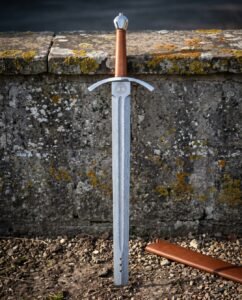 Rootspire Hand Forged Damascus Sword with Engraved Tree of Life Roundel & Faceted Pommel | About 38 Inches Overall | Leather Grip and Tan Scabbard | Display Gift | RK-2205
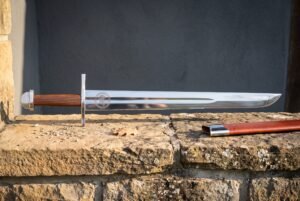 Rustwarden Hand Forged High Carbon Steel Medieval Falchion | 31 Inch Overall with 25 Inch Blade | Medieval Collector Gift | RK-1291
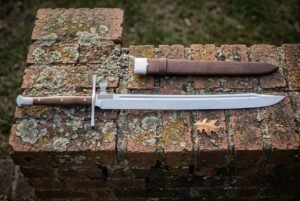 Palebriar Hand Forged High Carbon Steel Messer Sword | 31 Inch Overall with 24.5 Inch Blade | Medieval Collector Gift | RK-1295