
A seax is the single edged belt knife the Germanic and Norse world carried for six hundred years. The spine is straight and heavy, the edge is flat ground with no guard in the way, and on the classic broken back version the spine runs level and then drops at a sharp angle to meet the point. It is the least decorated shape in Norse metalwork and the most used. If a man in ninth century York owned one blade, it was this.
The seaxes here run 7.9 to 30 inches overall, with blades from 3.5 to 23 inches, and prices from 149 to 399 dollars. Both house steels appear. Plain 1095 high carbon is hardened to 54 to 58 HRC. Damascus of 1095 and 15N20 is forge welded and acid etched, hardened to 58 to 60 HRC. Every blade is full length tang. Handles run to buffalo horn, stag antler, bone, rosewood, olive wood, stacked leather and leather wrap, with brass or steel bolsters.
For a belt knife you will actually use, look at 12 to 14 inches overall, or at the wider Viking knife range.
Free US shipping
On most pieces. Heavier and oversized ones carry a flat charge.
Hand Forged
Heated, hammered and ground by hand.
Engraving available
Names, dates or Norse runes on most pieces.
Ships from Memphis
Inspected and dispatched from our Tennessee warehouse. No import duty, no customs delay on US orders.
Viking Seax
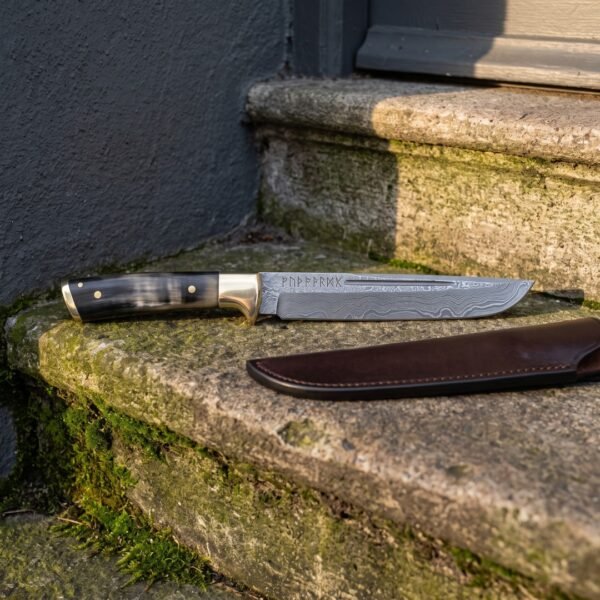
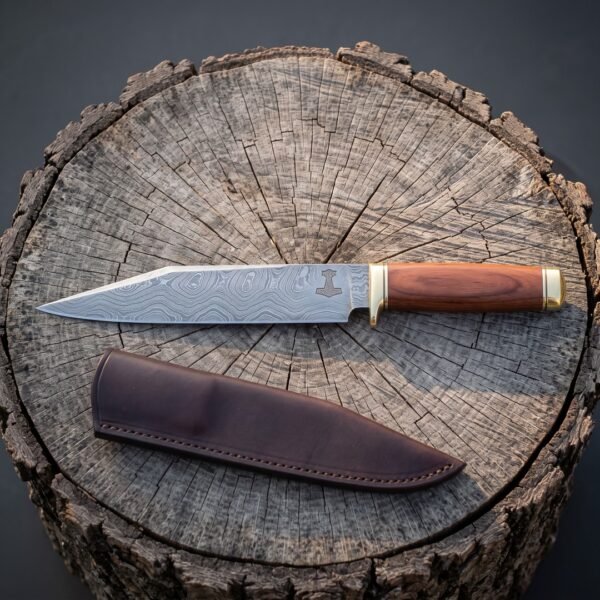
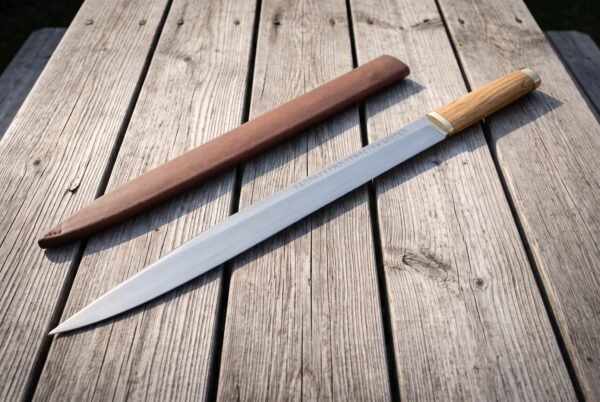
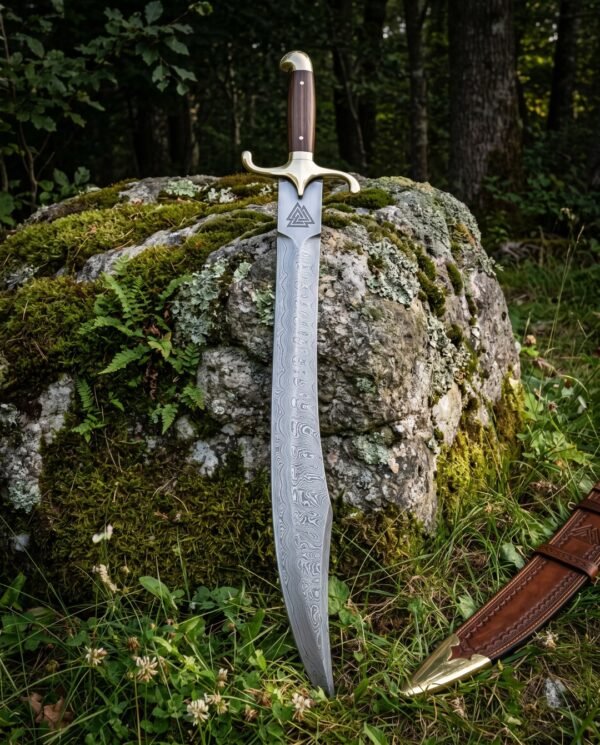
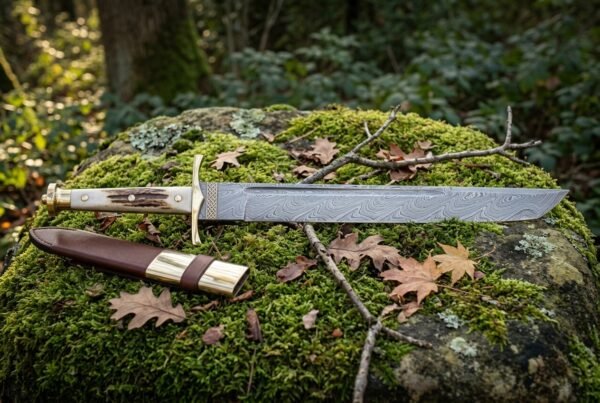
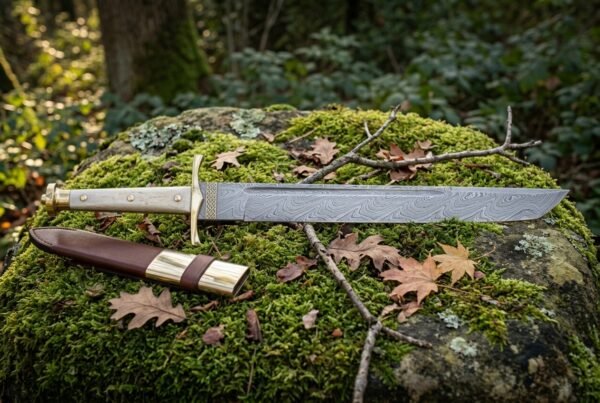

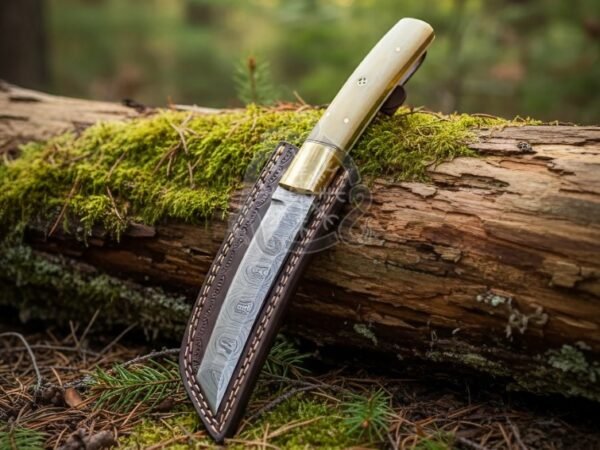
Mosaicsax Hand Forged Damascus Viking Seax Knife with Mosaic Bone Handle and Brass Bolster & Leather Sheath | Norse Collector Gift | RK-1029
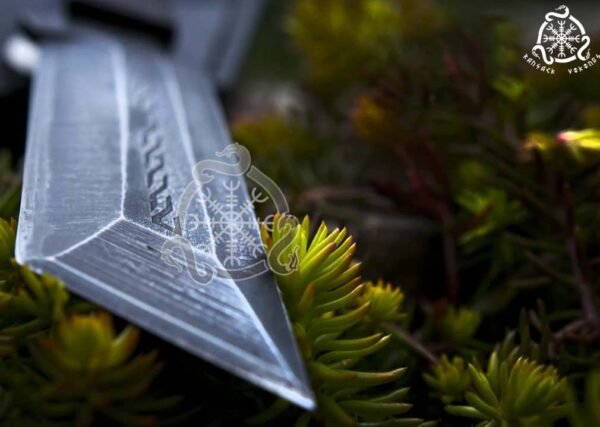
Price range: $149.00 through $199.00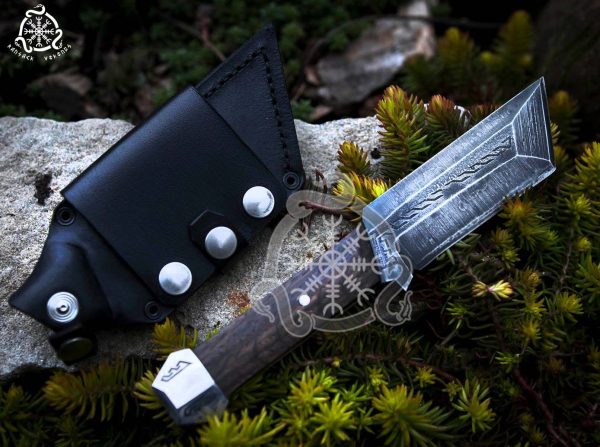
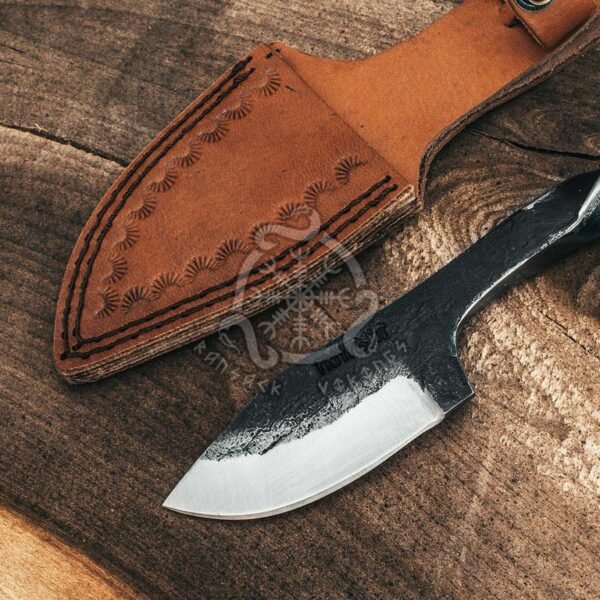
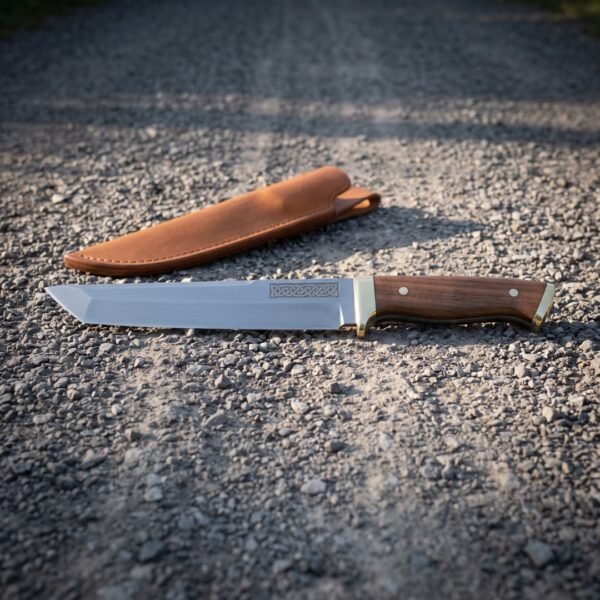
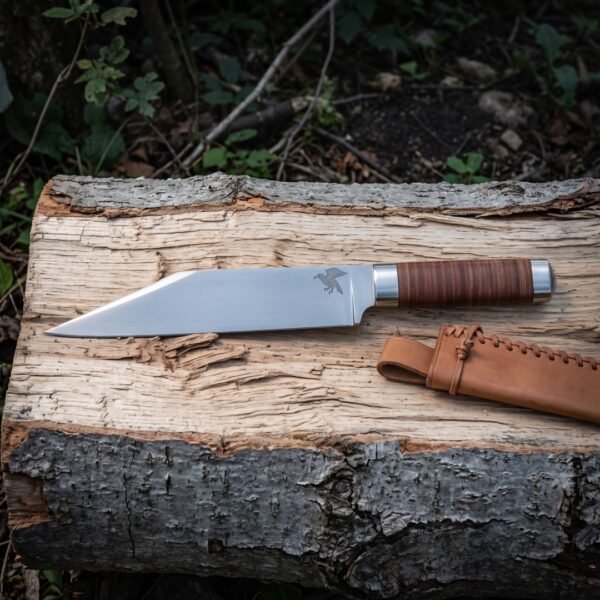
Beltsax Hand Forged High Carbon Steel Viking Seax Knife with Premium Cowhide Sheath | Compact Norse Belt Knife and Collector Gift | RK-656
$149.00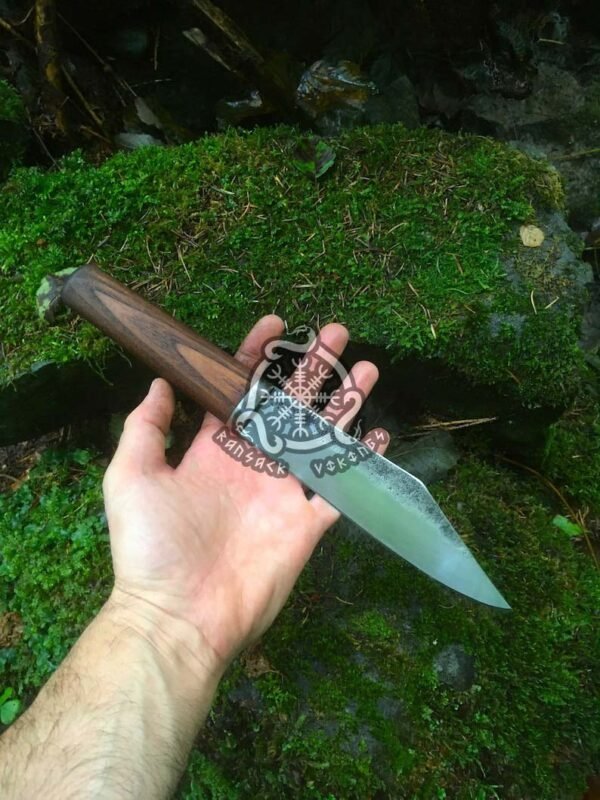


The broken back and why it exists
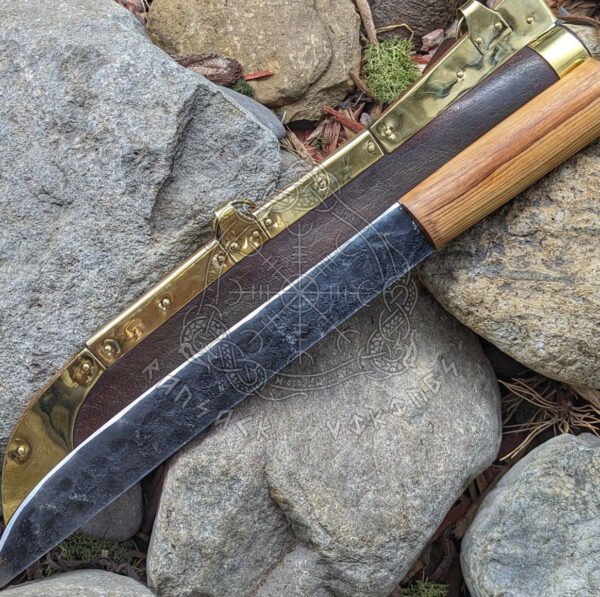
Look at the spine of a classic seax and it does something no other knife does. It runs dead straight and level from the handle for most of the blade, then breaks downward at a distinct angle and runs straight again to the point. There is no curve in it. That is the broken back profile, and it is the most recognisable thing about the type.
The reason is structural. A single edged knife with a thick straight spine is stiff, and stiffness is what you want in a blade used for cutting and splitting rather than fencing. But a straight spine carried all the way to the end gives you a squared off blade with no point, so the last third is cut away at an angle to make one. That angled cut is the break. It is the cheapest way to get a usable point out of a stiff bar of steel, which is exactly the sort of decision a working smith makes.
The rest of the pattern follows the same logic. There is usually no guard, because a working knife does not need one and a guard gets in the way of choking up on the blade. The tang runs the full length of the handle. The edge is flat ground with a broad bevel, easy to make and easy to resharpen with a stone in a field. Size is where the type gets confusing: the word covers everything from a small belt knife to a langseax with a blade of two feet that fought as a short sword. All of them are on this page.
The seaxes in this collection
Twenty pieces. They split by steel and then very sharply by size.
Seaxes in plain 1095 high carbon
The larger part of the range. Plain 1095 hardened to 54 to 58 HRC, finished satin, bright or polished, several with an etched panel of knotwork, a raven, or an Elder Futhark rune line along the flat. This is the historically correct choice, and the practical one: at this hardness the edge comes back on a stone in minutes and the blade bends rather than chips if you lever with it.
Seaxes in hand forged Damascus
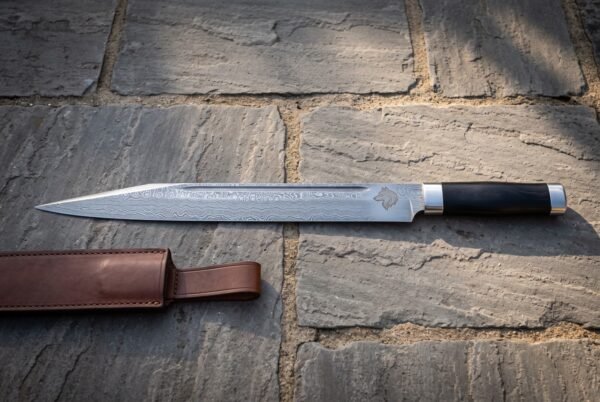
Seven pieces carry a Damascus blade of 1095 and 15N20, forge welded in alternating layers and acid etched, hardened to 58 to 60 HRC. On a seax the pattern has an unusually large flat to sit on, and the two largest pieces here are described in their own specifications as deeply etched. Handles in this group include buffalo horn, stag antler, polished bone, mosaic bone and rosewood, with brass bolsters or a brass cross guard.
Belt seaxes, 8 to 14 inches overall
Eight pieces sit in belt knife territory, from a compact 7.9 inch piece with a 3.5 inch blade up to a 14 inch seax with a 9 inch blade and rosewood scales. This is the group that does what the original type did, cutting cord, food, leather and wood all day with no ceremony. A 12 inch seax with a 7 inch blade and a stacked leather handle sits at the centre of it.
Long seaxes and langseaxes
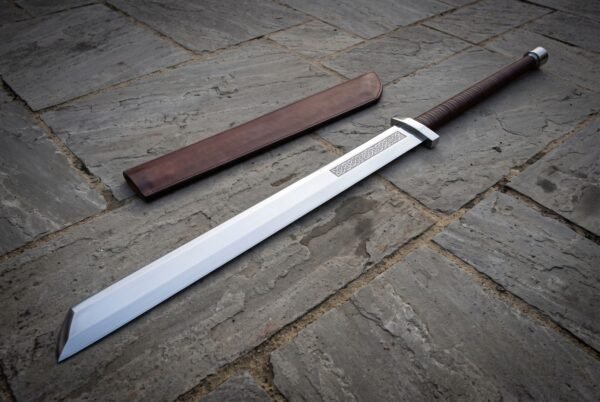
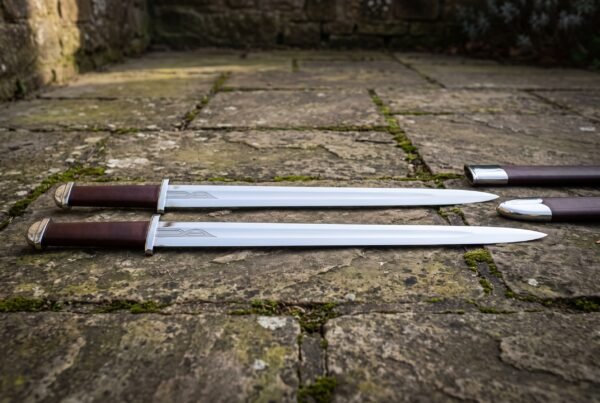
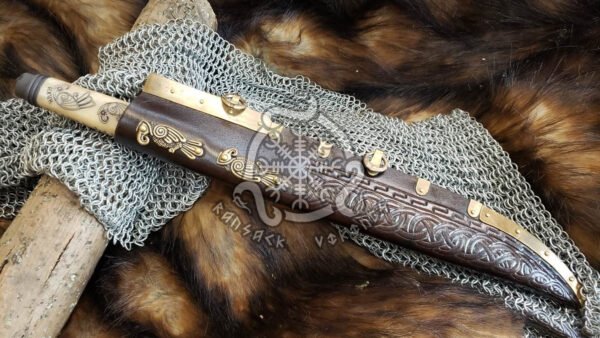
Six pieces run from 16 to 30 inches overall. At 15 to 18 inches of blade you have something that is no longer a knife in any practical sense. It chops, it reaches, and it needs a scabbard rather than a sheath. The two largest are a 28 inch langseax with a 22 inch broken back blade, and a matched pair of 30 inch langseaxes with 23 inch blades and two fitted scabbards at 399 dollars.
Matched pairs
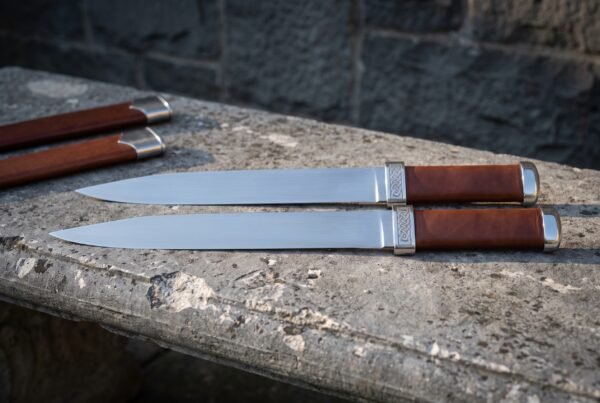
Two products here are two piece sets rather than single knives. One is a pair of 15 inch seaxes with 10 inch blades, leather grips and knotwork engraved bolsters, supplied with two sheaths. The other is the pair of 30 inch langseaxes. Both are aimed at reenactment, and at anyone who has wanted to hand a friend the second one.
Sizes, steel and fittings across the range
Every figure below comes from the specification panel of a piece on this page. These are forged and ground by hand, so read the numbers as what to expect rather than a guarantee to the millimetre. A blank means the product page does not list that figure.
| Handle and fittings | Blade length | Overall length | Steel and hardness | Sheath | Price |
|---|---|---|---|---|---|
| Bare, compact belt seax | 3.5 in | 7.9 in | 1095 at 54 to 58 HRC | Included | 149 dollars |
| Mosaic bone with brass bolster | 5 in | 9.5 in | Damascus at 58 to 60 HRC | Included | 149 dollars |
| Engraved rosewood, wooden cover | 5 in | 10 in | 1095 at 54 to 58 HRC | Wooden cover | 149 dollars |
| Mottled horn, polished steel bolster | 7 in | 12 in | Damascus at 58 to 60 HRC | Included | 259 dollars |
| Stacked leather, steel bolster and butt cap | 7.5 in | 12 in | 1095 at 54 to 58 HRC | Hand stitched | 259 dollars |
| Rosewood, brass front bolster and butt band | 8 in | 13 in | Damascus at 58 to 60 HRC | Included | 269 dollars |
| Rosewood scales on a full tang, brass bolster | 9 in | 14 in | 1095 at 54 to 58 HRC | Tan leather | 189 dollars |
| Leather grips, knotwork bolsters, two piece set | 10 in each | 15 in each | 1095 at 54 to 58 HRC | Two sheaths | 289 dollars |
| Wood with brass bolster | 11 in | 16 in | 1095 at 54 to 58 HRC | Not listed | 199 dollars |
| Buffalo horn, blade 1.5 in wide at the ricasso | 13 in | 18 in | Damascus at 58 to 60 HRC | Belt sheath | 319 dollars |
| Olive wood, blade 1.6 in wide, rune line | 15 in | 20 in | 1095 at 54 to 58 HRC | Included | 269 dollars |
| Polished bone, brass cross guard | 18 in | 24 in | Damascus at 58 to 60 HRC | Included | 285 dollars |
| Stag antler, brass cross guard | 18 in | 24.5 in | Damascus at 58 to 60 HRC | Included | 320 dollars |
| Leather wrapped, 6 in grip, steel guard and pommel | 22 in | 28 in | 1095 at 54 to 58 HRC | Fitted scabbard | 299 dollars |
| Leather grips, steel bolster and pommel, matched pair | 23 in each | 30 in each | 1095 at 54 to 58 HRC | Two scabbards | 399 dollars |
Blade width is the figure people forget. Two seaxes here list it, at 1.5 and 1.6 inches at the widest part. A wide blade is stiffer, carries more mass behind the edge and slices better than a narrow one of the same length.
Sizing and fit
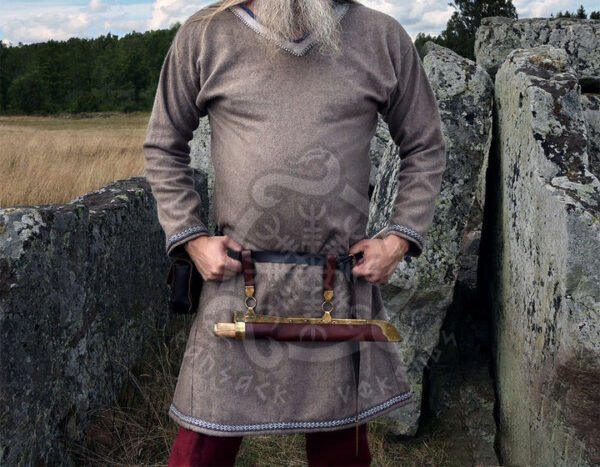
Decide first whether you want a knife or a short sword, because the same word covers both. Under 10 inches overall is a small belt knife, easy to wear all day and legal in far more places. Twelve to 16 inches is the classic seax, worn horizontally across the front of the belt, edge upward, which is how the original scabbard fittings were arranged. Twenty inches and up is a langseax, worn on a hanger like a sword.
Handle length here runs about 4.5 to 6 inches. Anything at or above 5 inches gives a full four finger grip with room to shift your hand back for a chop.
Most seaxes here have no guard, which is correct for the type and worth knowing before you buy. Your hand is stopped by the bolster and the shape of the handle, so keep your grip dry and do not treat a seax like a dagger. If you want a cross guard, two of the Damascus langseaxes carry one in brass.
Fixed blade carry in the United States is governed by state law and very often by city ordinance, and blade length is the usual limit. Read our state by state summary of knife laws before you wear anything from this page, and treat it as a starting point rather than legal advice.
Steel and hardness
Two house specifications run through Ransack Viking blades. Plain 1095 high carbon is hardened to 54 to 58 HRC. Damascus of 1095 and 15N20 is forge welded, acid etched and hardened to 58 to 60 HRC. On this page the split runs roughly two thirds plain 1095 to one third Damascus.
Plain 1095 at 54 to 58 HRC is the right steel for a seax. The type was a working knife, and a slightly softer blade bends rather than chips, comes back on a stone quickly and forgives being used to split kindling. On a long blade that ductility matters more than it does on a small knife.
Damascus at 58 to 60 HRC holds an edge longer and looks like nothing else on a wide flat blade. It is more willing to chip if you twist it in a bind, which on a 22 inch blade is worth remembering. Neither steel is stainless and both will rust. If you want the longer version, read Damascus versus high carbon steel and the steel and hardness page.
Handles, tangs and fittings
Every seax here runs a full length tang, which on this type usually means a tapered bar of steel running the whole length of the grip with the handle material fitted over it and peened or capped at the back. That is how the originals were built, and it is why a seax handle can be a single block of horn rather than a pair of scales.
Horn, antler and bone are dense, polish beautifully and shrink in dry heat, so keep them away from radiators and hot cars. One piece here is mottled grey and black horn, and no two pieces of horn are alike. Rosewood is oily and looks after itself. Olive wood is drier and takes a wipe of oil once or twice a year. Stacked leather and leather wrap take hand oil and darken, and are the most comfortable on a long blade because they give very slightly under a hard grip.
Bolsters and butt caps are brass or steel. Brass darkens into a warm brown over months and comes back with a metal polish if that bothers you. Two of the largest Damascus pieces carry a brass cross guard, which is a later fitting on the type and reads as sword rather than knife.
Care and storage
Both steels are carbon steel and both will rust. Wipe the blade dry after use, particularly after anything acidic or salty, and keep a thin film of mineral, camellia or food safe oil on it. Grey patina is stable and does no harm. Orange spotting is early rust and lifts with a fine abrasive and oil before it pits.
Store the blade out of its sheath if it is going to sit for months. Leather is tanned with salts and holds moisture against steel, which is the most common reason a well kept blade still ends up marked.
Sharpen on a stone rather than a powered wheel, which will overheat a thin edge and pull the temper out. A broad flat bevel is one of the easiest grinds to maintain: lay the whole bevel on the stone, keep it flat, and work along the length until you feel a burr the full way. The knife care guide and the Damascus care page cover the detail.
Engraving and gifting
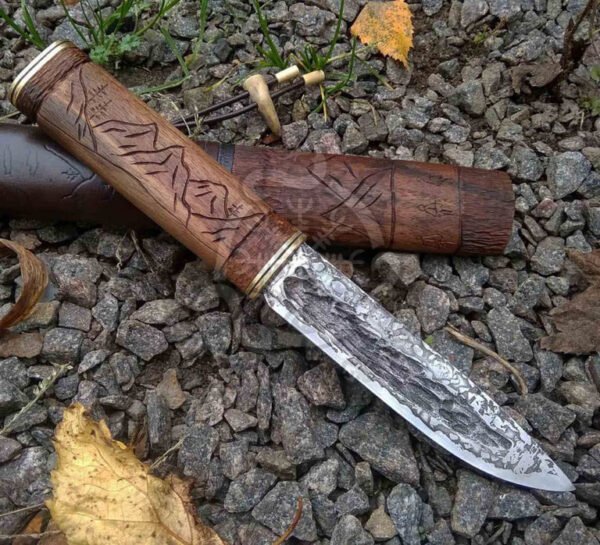
A seax has more usable flat than almost any other knife shape, which makes it easy to engrave. Rune lines run along the spine or across the flat below the bolster. Several pieces already carry cut work: an Elder Futhark line, a knotwork panel, a raven, a wolf head, a Valknut below the guard, a stamped Mjolnir on the flat.
Text engraving is 19 dollars, a symbol is 39 dollars and a family crest is 49 dollars, cut in the United States after the piece arrives. Elder Futhark is a phonetic alphabet rather than a code, so a name is transliterated by sound and there is no rune for the letter C. See the Elder Futhark guide and the engraving page.
Engraving is permanent and an engraved piece cannot be returned, so send the exact spelling and read it twice before you order.
Where these come from and how they ship
Ransack Viking is a US company based in Memphis, Tennessee. The pieces are handmade in the Czech Republic, then imported, inspected and shipped from Memphis. Engraving is done in the US after arrival.
Because each blade is forged and ground by hand, small differences in the angle of the broken back, in etch figure and in handle colour between two seaxes of the same name are normal. Two people made them on two different days. Timelines are on the shipping information page and returns on the returns and warranty policy.
How to choose
Answer one question first: is this going on a belt or on a wall. A belt seax wants 12 to 14 inches overall, plain 1095 so sharpening is quick, and a handle that does not mind weather. A display or reenactment piece can go long, take the Damascus and the brass cross guard, and hang on a fitted scabbard where the etch is visible. Then decide about the spine. A true broken back is the historically distinctive profile. A straight spine with a long clip is easier to live with at the tip. Both are here, and each product page says which it is.
Browse related categories
- Viking knives, the wider range of Norse working blades
- Damascus knives in forge welded 1095 and 15N20
- Bowie knives with long clip points and deep bellies
- Viking swords, the double edged pattern
- Short swords, where the langseax ends up
- Bearded axes, the other Norse belt tool
- Hunting knives for field dressing and skinning
- Leather sheaths and replacement scabbards
Guides worth reading first
- The history of the seax, from Frankish belt knife to langseax
- How to choose a Viking seax
- Seax versus bowie, two big single edged blades compared
- How to choose a Viking knife
- Knife blade shapes and what each one is good at
Frequently asked questions
What is a seax?
A single edged knife with a straight heavy spine, carried across northern Europe from roughly the fifth to the eleventh century. The best known version has a broken back spine, running level and then dropping at a sharp angle to the point. Sizes ran from a small belt knife to a langseax with a blade of two feet.
What size seax should I buy?
Twelve to 14 inches overall for a knife you will carry and use. Under 10 inches is a compact belt knife. Sixteen inches and up is a long seax that needs a scabbard and a reason. The two 30 inch langseaxes on this page are reenactment and display pieces rather than tools.
Why does the spine break downward?
Because it is the simplest way to get a point out of a stiff bar of steel. Leaving the spine straight and full thickness keeps the blade rigid, and cutting the last section away at an angle produces a usable point without thinning the whole blade. It is a working smith's answer rather than a decorative one.
Do seaxes have a guard?
Most do not, and that is correct for the type. Your hand is stopped by the bolster and the shape of the grip. Two of the large Damascus pieces here carry a brass cross guard, which is a later fitting and reads more like a sword. Keep your grip dry and do not treat a guardless knife like a dagger.
Which steel is more historically correct?
Plain 1095 high carbon at 54 to 58 HRC. Originals were carbon steel, often with pattern welding only in the core and a hardened edge welded on. Damascus at 58 to 60 HRC is the choice for pattern and edge retention rather than for accuracy. Neither is stainless and both need oil.
How were these worn?
Horizontally across the front of the belt, edge upward, suspended from two or more points on the scabbard. That is what the surviving scabbard fittings show. It keeps a long blade out of the way of your legs and puts the handle where either hand can reach it.
Can a seax be engraved?
Yes, and it takes engraving better than most shapes because the flat is wide and undecorated. Text is 19 dollars, a symbol is 39 dollars and a family crest is 49 dollars, cut in the United States after the piece arrives. Engraved pieces cannot be returned, so check your spelling.
Where are these seaxes made?
They are handmade in the Czech Republic, then imported, inspected and shipped by Ransack Viking from Memphis, Tennessee. Engraving is done in the US after arrival.
Featured pieces
 Deepgrove Hand Forged High Carbon Steel Viking Seax Knife with Engraved Rosewood Handle & Wooden Cover
$149.00
 Brassward Hand Forged High Carbon Steel Viking Seax Knife with Wooden Handle and Brass Bolster
$199.00
 Anglosaxon Hand Forged Viking Seax Knife
$149.00
 Beltsax Hand Forged High Carbon Steel Viking Seax Knife with Premium Cowhide Sheath
$149.00