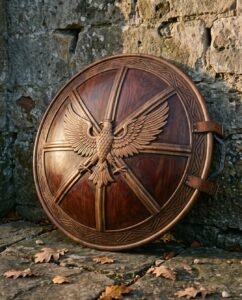
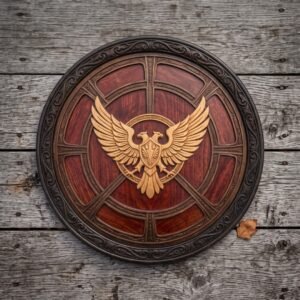
A shield is a board with a hole in the middle. Your fist goes through the hole, a crossbar behind it takes your grip, and a steel dome riveted over the front covers your knuckles. That is the Norse round shield, and it is a genuinely clever piece of design: the board is expendable, the boss is not, and the whole thing is held out at arm’s length where it can move rather than strapped flat to your forearm.
This collection runs from 119 to 449 dollars and covers 24 and 30 inch planked wooden rounds, formed steel rounds from 20 to 24 inches, Norman kite shields from 34 to 48 inches tall, a 30 inch heater, and five shield bosses with fitting kits for anyone building a board from scratch. Wooden boards are glued planks about 12mm thick with rawhide bound rims. Steel pieces are mild steel, most at 16 gauge, riveted rather than welded.
If the shield is for a wall, buy the one you like looking at. If it is for an event, weigh it first. If it is for an event, the renaissance faire and reenactment kit guide sets out what to carry alongside a shield and what site rules usually ask for.
Free US shipping
On most pieces. Heavier and oversized ones carry a flat charge.
Hand Forged
Heated, hammered and ground by hand.
Engraving available
Names, dates or Norse runes on most pieces.
Ships from Chicago
Inspected and dispatched from our Chicago warehouse. No import duty, no customs delay on US orders.
Viking Shields
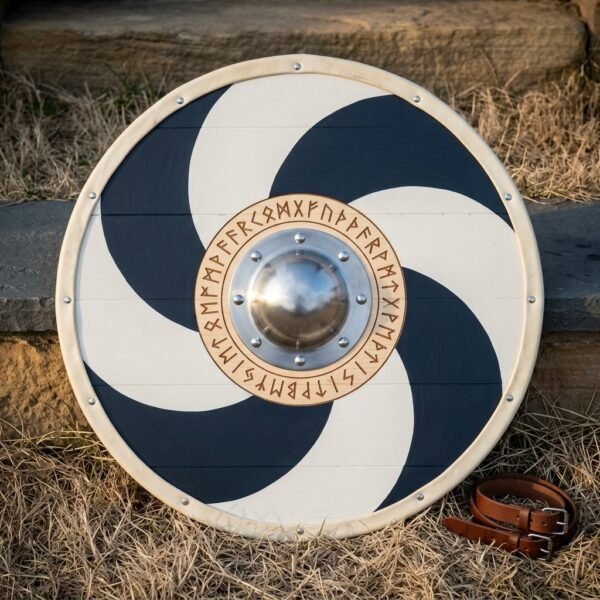
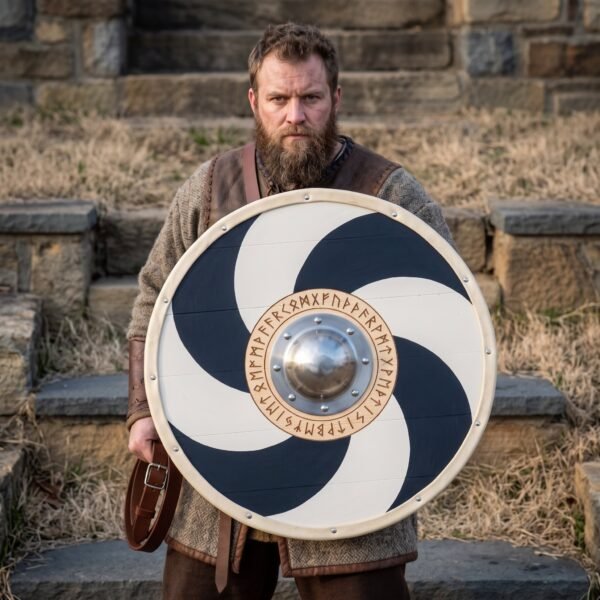
Stormwheel Hand Made Viking Round Shield | 24 Inch Diameter | Navy and White Pinwheel with Steel Boss and Elder Futhark Rune Ring | Norse Reenactment Gift | RK-1553
Original price was: $329.00.$279.65Current price is: $279.65.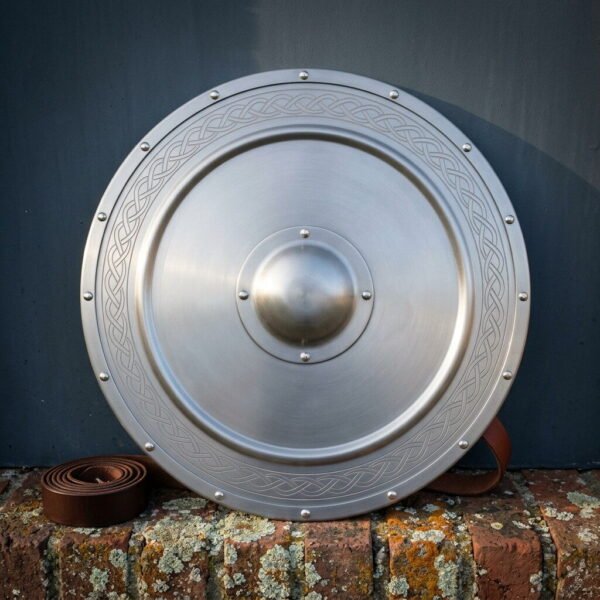
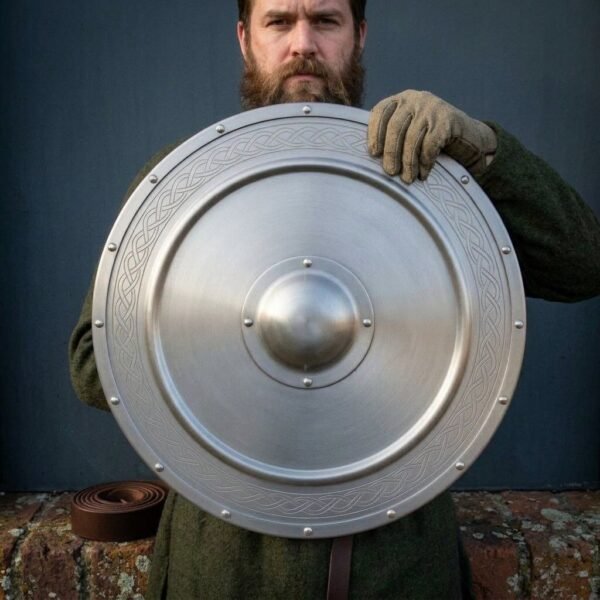
Ringwall Hand Made Steel Round Shield with Engraved Celtic Knotwork Border | 24 Inch Diameter | Riveted Rim, Domed Centre Boss and Leather Strap | Norse Reenactment Gift | RK-1818
Original price was: $279.00.$237.15Current price is: $237.15.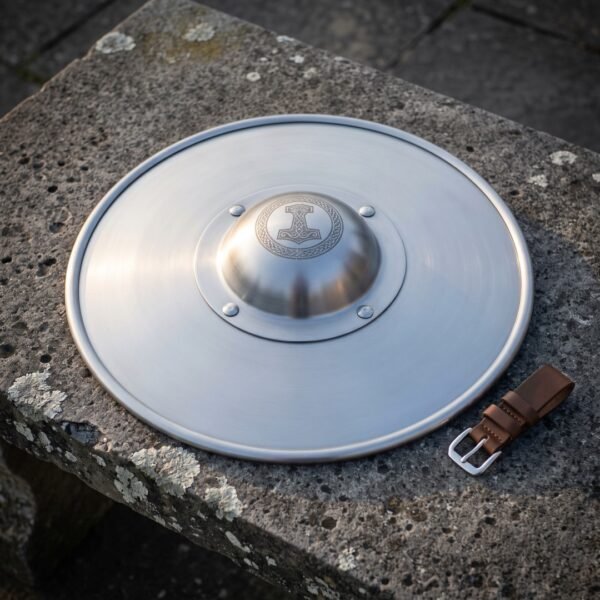
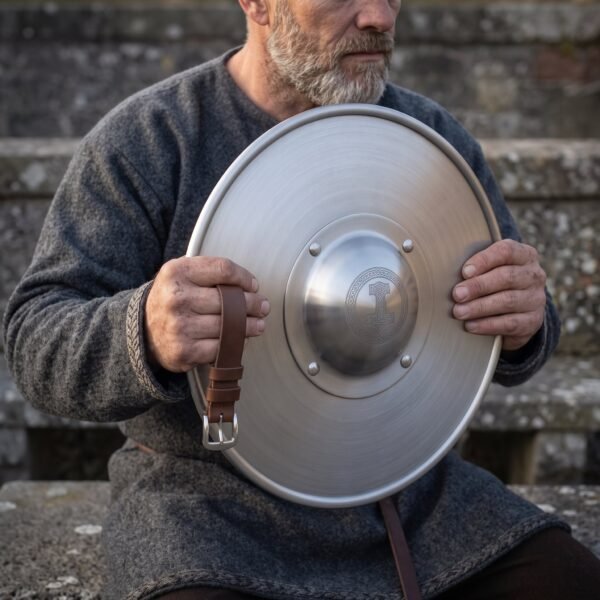
Domewarden Hand Forged 14 Gauge Steel Viking Buckler with Mjolnir Engraved Boss & Rolled Rim | Norse Reenactment Gift | RK-1577
Original price was: $149.00.$126.65Current price is: $126.65.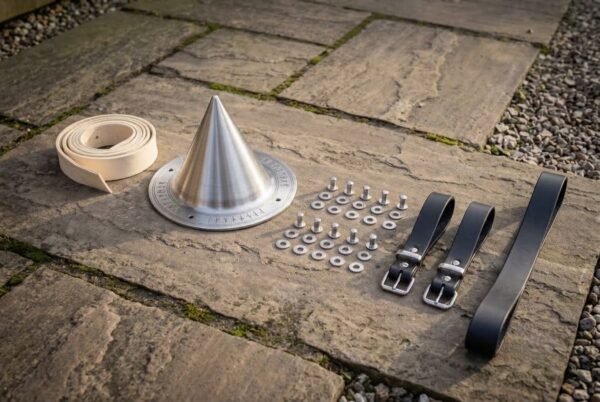
Spikerim Hand Forged Steel Conical Viking Shield Boss and Fitting Kit with Rune Ring Engraving & Black Leather Straps | Shield Building Gift | RK-1544
Original price was: $179.00.$152.15Current price is: $152.15.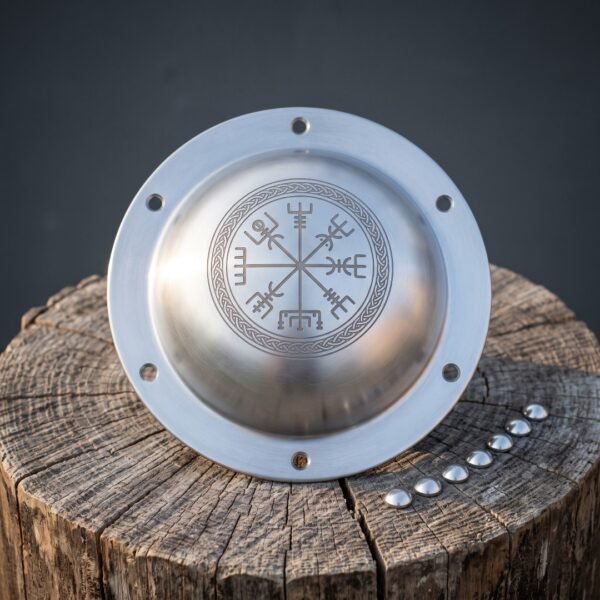
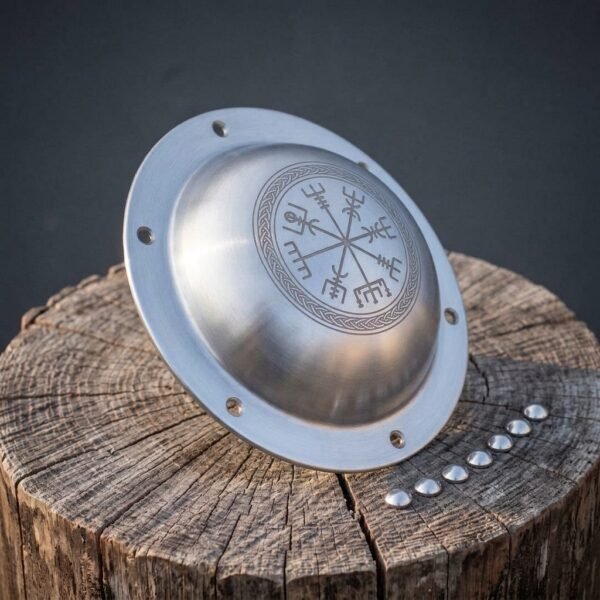
Pathmark Hand Forged Steel Shield Boss with Vegvisir Engraved Dome & Eight Hole Rivet Flange | Shield Building Gift | RK-1441
Original price was: $119.00.$101.15Current price is: $101.15.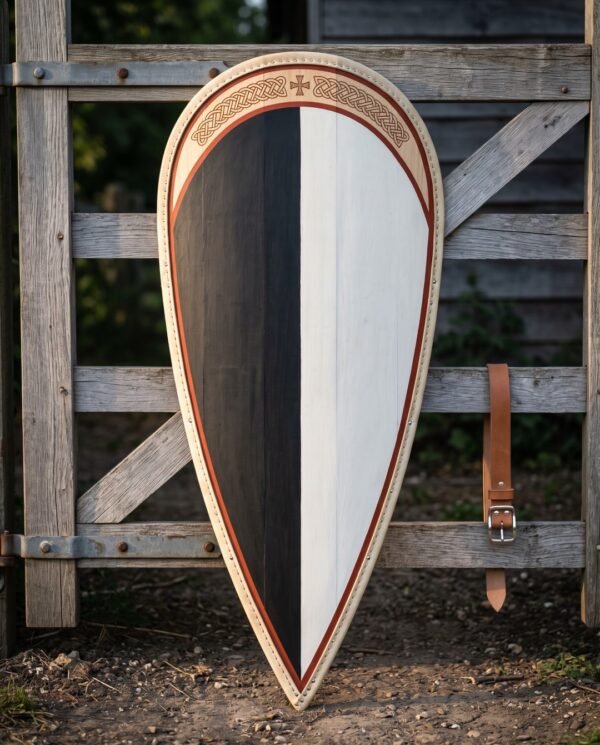
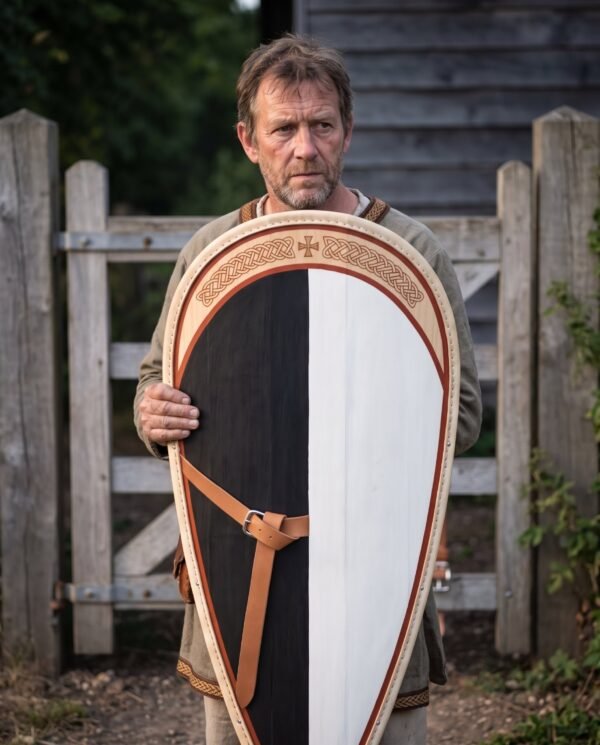
Palewing Hand Made Norman Kite Shield | 40 Inch Height | Black and White Per Pale with Engraved Knotwork Panel and Riveted Rawhide Rim | Medieval Reenactment Gift | RK-1561
Original price was: $399.00.$339.15Current price is: $339.15.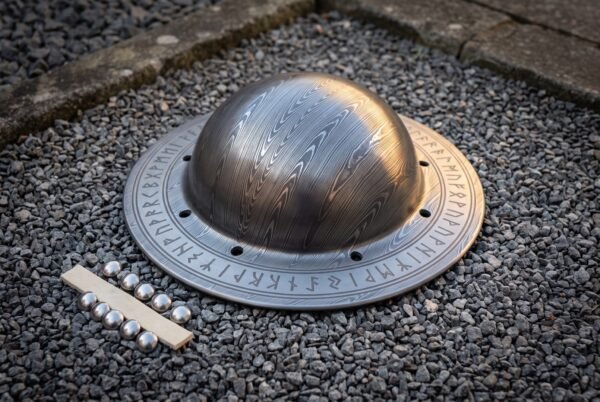
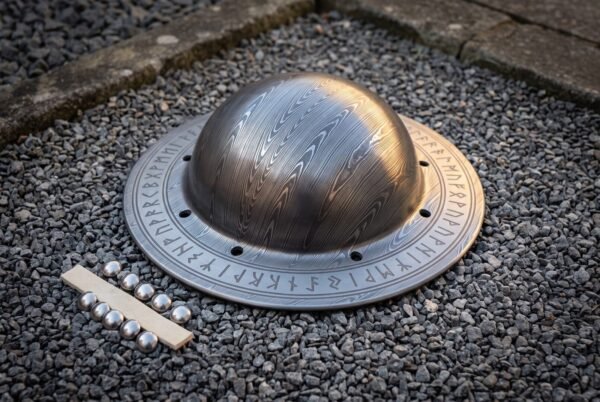
Stormeye Hand Forged Steel Viking Shield Boss with Pattern Etched Dome & Rune Cut Flange | Shield Building Gift | RK-1437
Original price was: $139.00.$118.15Current price is: $118.15.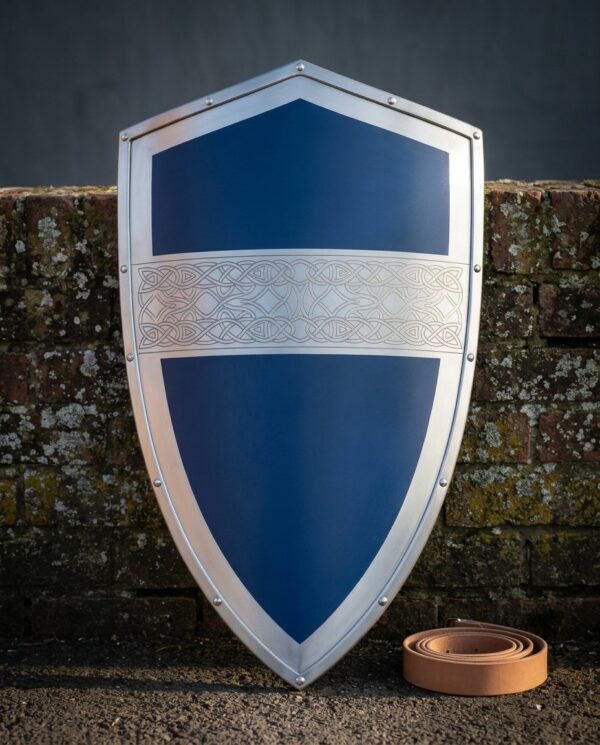
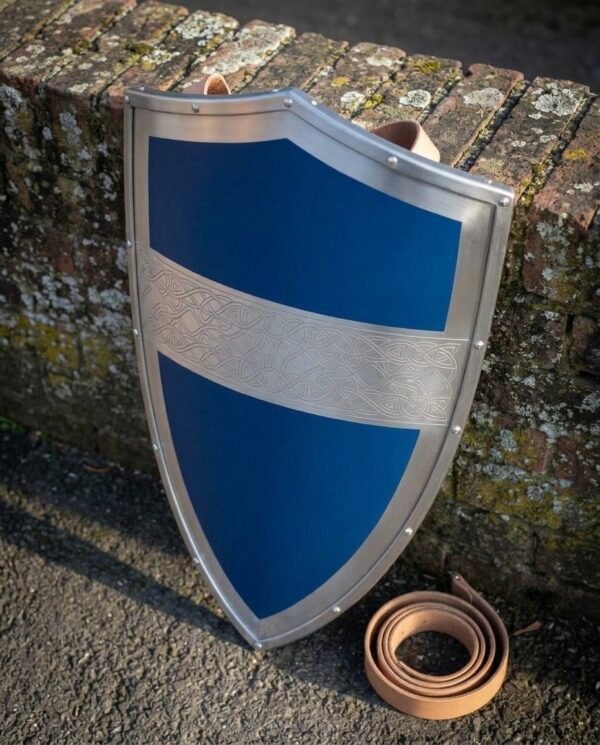
Cobaltward Hand Made Steel Heater Shield | 30 Inch Height | Blue Painted Face and Riveted Polished Border with Engraved Celtic Knot Band | Reenactment Gift | RK-1901
Original price was: $289.00.$245.65Current price is: $245.65.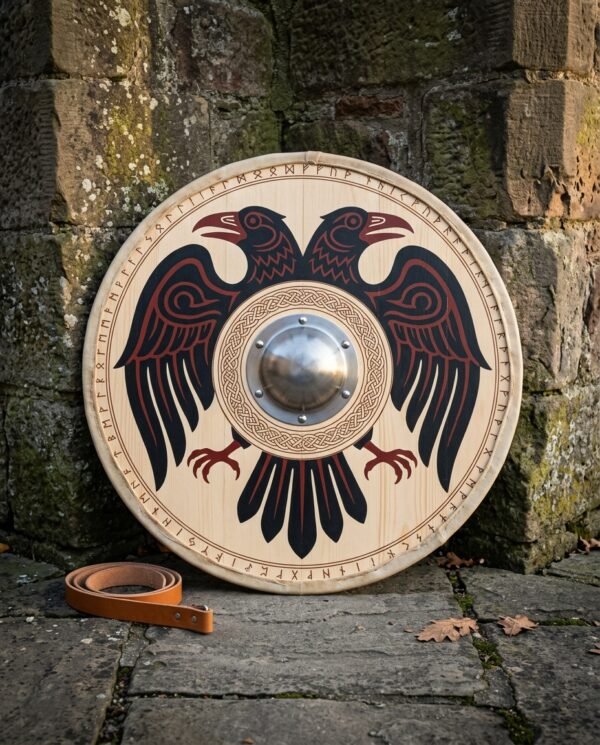
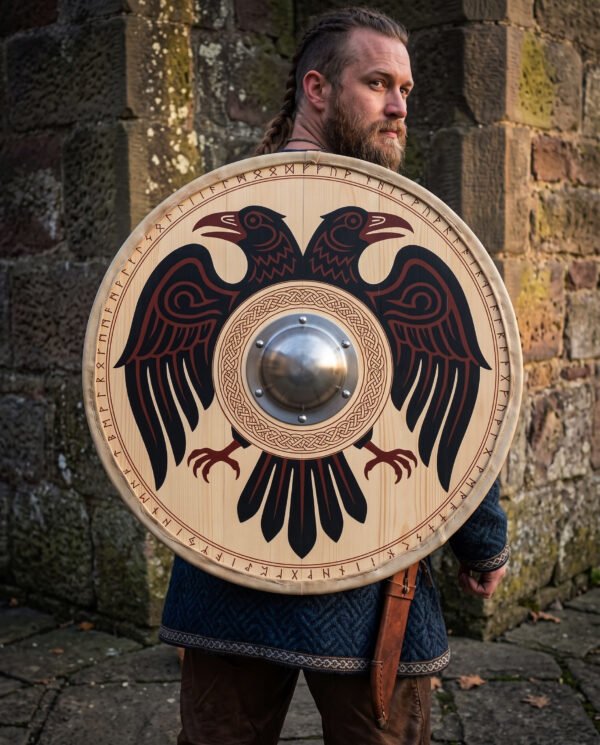
Ravenward Hand Made Viking Round Shield | 24 Inch Diameter | Leather Arm Strap and Hand Grip | Norse Reenactment Gift | RK-1203
Original price was: $395.00.$335.75Current price is: $335.75.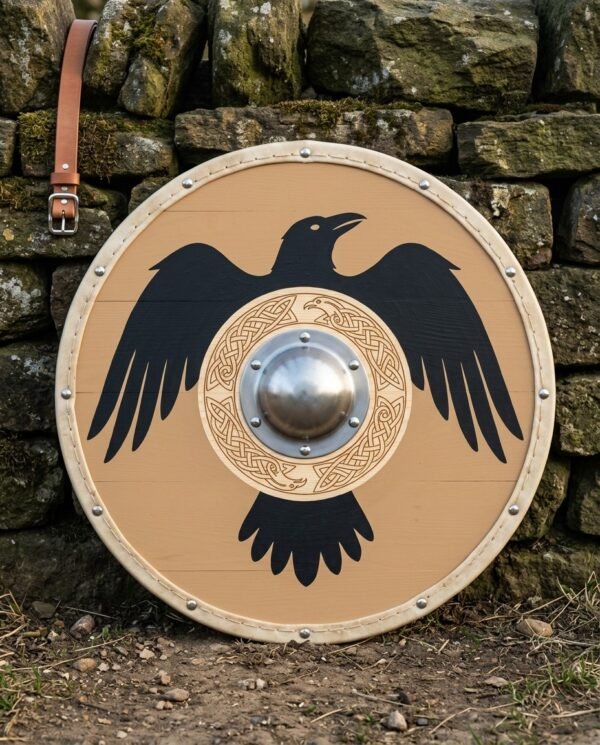
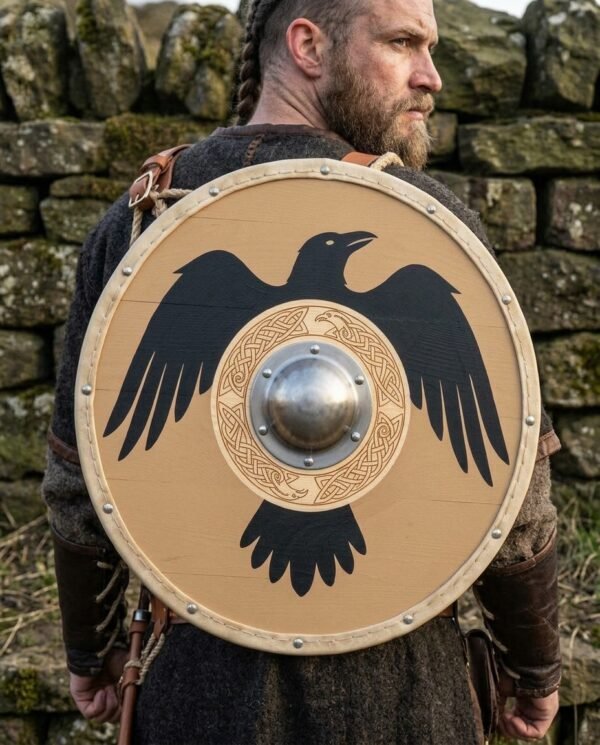
Huginward Hand Made Viking Round Shield | 30 Inch Planked Body | Steel Dome Boss with Engraved Knotwork Roundel and Rawhide Rim | Norse Reenactment Gift | RK-1498
Original price was: $379.00.$322.15Current price is: $322.15.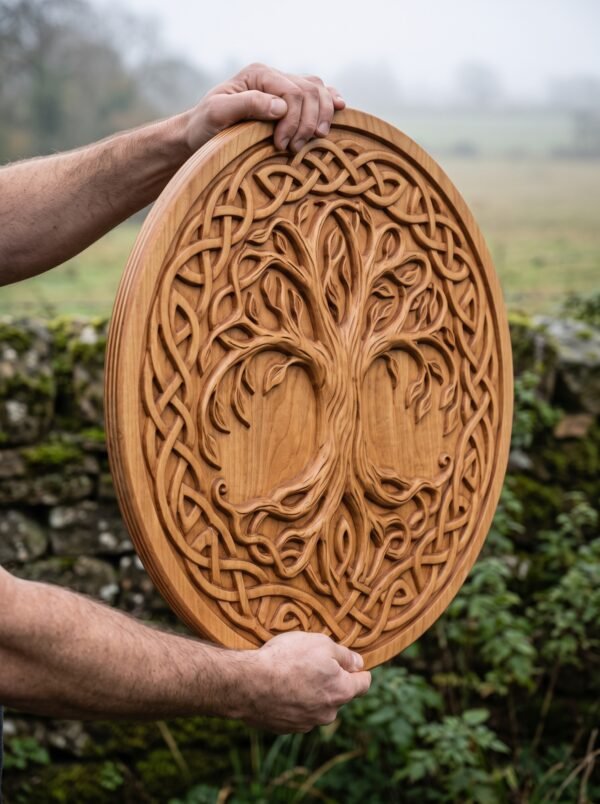
Yggdrasil Handcrafted Viking Shield | 24 Inch Diameter | Plywood Body | Wall Display for Home Bar and Man Cave | RK-636
Original price was: $299.00.$254.15Current price is: $254.15.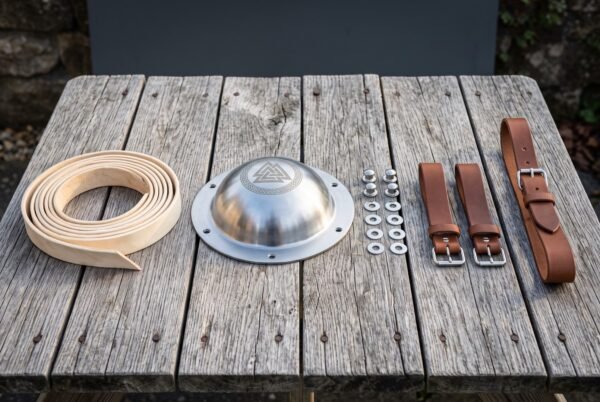
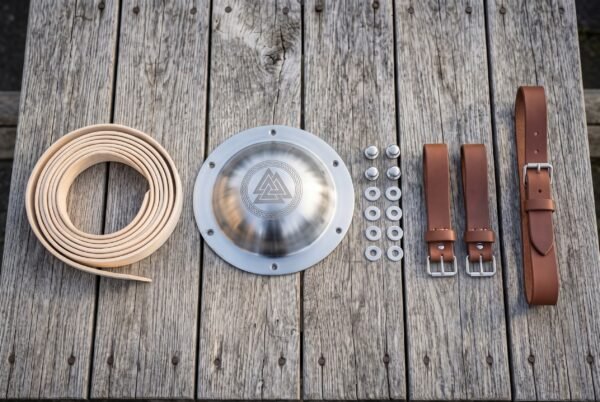
Rimbind Hand Forged Steel Viking Shield Boss and Fitting Kit with Valknut Engraving & Full Leather Strap Set | Shield Building Gift | RK-1532
Original price was: $169.00.$143.65Current price is: $143.65.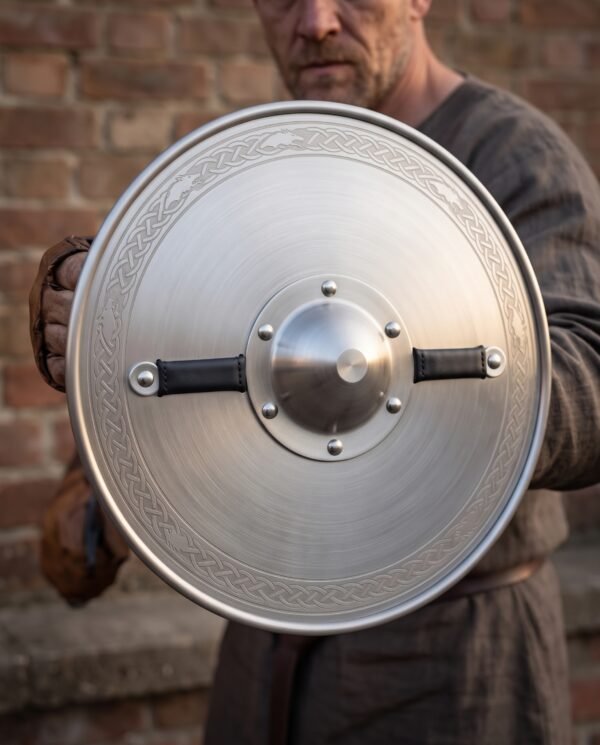
Silverward Hand Forged Steel Round Shield | 20 Inch Dished Face | Etched Knotwork Border with Riveted Centre Boss | Norse Display Gift | RK-1522
Original price was: $449.00.$381.65Current price is: $381.65.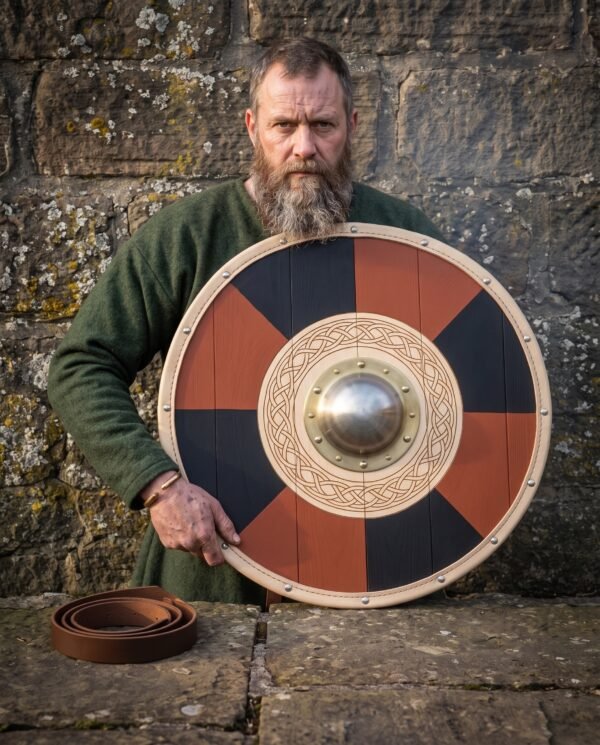
Emberward Hand Made Viking Round Shield | 30 Inch Planked Linden Face | Steel Boss with Carved Knotwork and Rawhide Rim | Norse Reenactment Gift | RK-1521
Original price was: $399.00.$339.15Current price is: $339.15.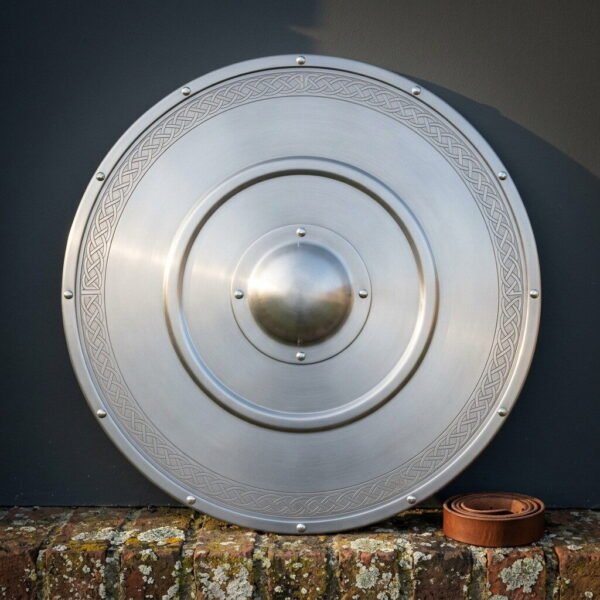
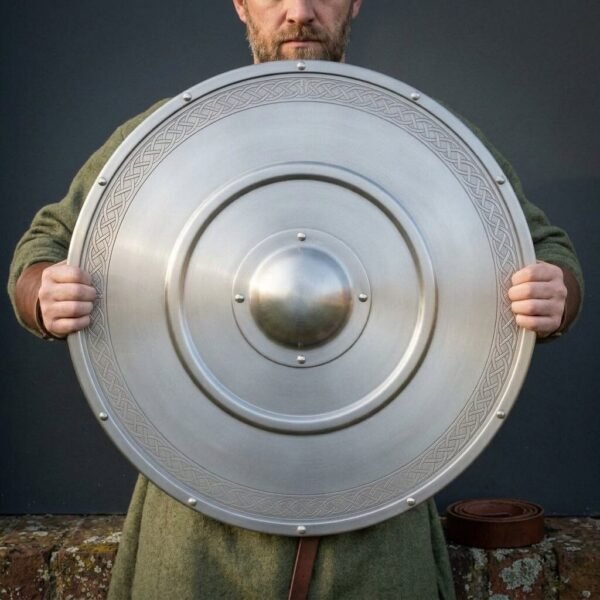
Ringward Hand Made Steel Viking Round Shield | Domed Centre Boss and Riveted Rim | Engraved Norse Knotwork Band with Leather Arm Strap | Norse Display Gift | RK-1797
Original price was: $329.00.$279.65Current price is: $279.65.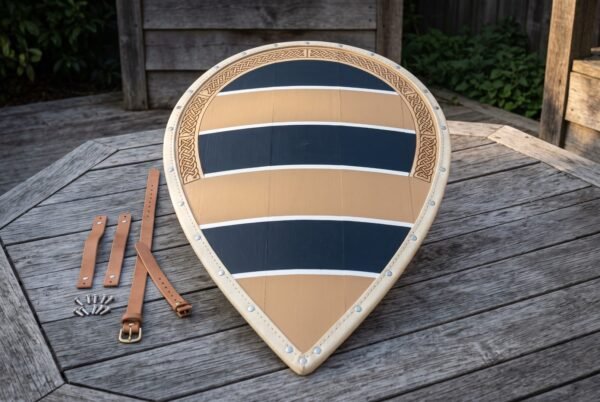
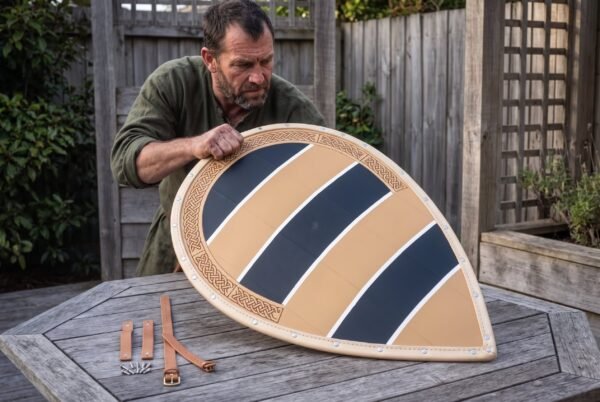
Wavewarden Hand Made Wooden Kite Shield | 34 Inch Teardrop Board | Painted Bands with Rawhide Edge and Leather Strap Set | Norman Reenactment Gift | RK-1573
Original price was: $379.00.$322.15Current price is: $322.15.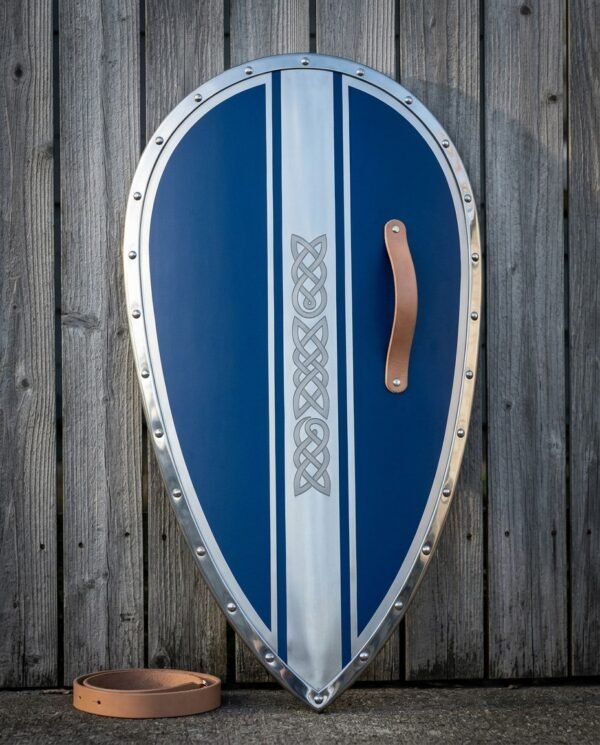
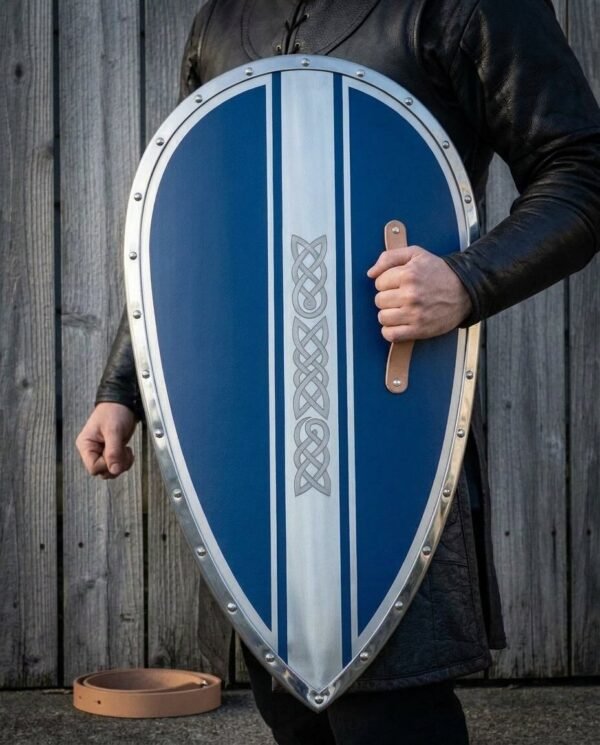
Kiteward Hand Made Norman Kite Shield | 48 Inch Tall Teardrop Face | Riveted Steel Rim with Celtic Knotwork Band and Leather Guige | Reenactment Gift | RK-1875
Original price was: $279.00.$237.15Current price is: $237.15.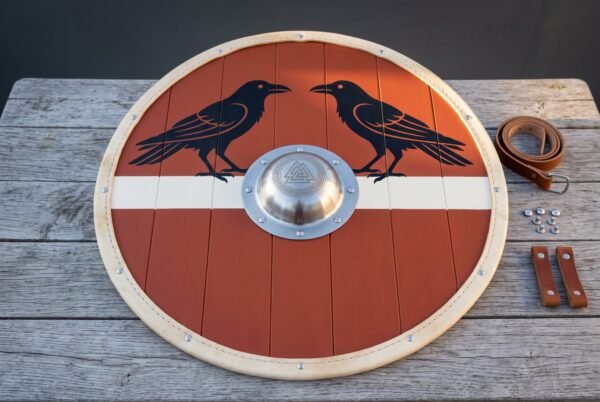
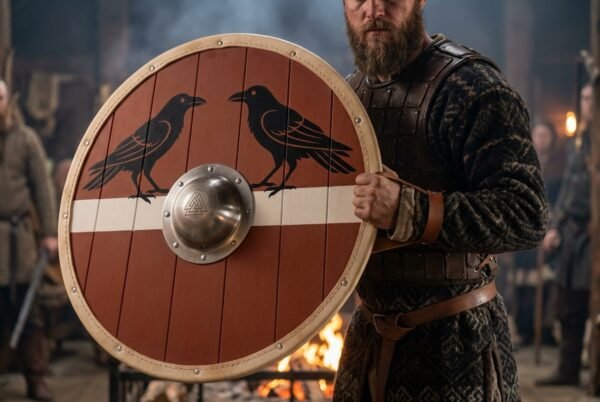
Ravenhold Hand Made Viking Round Shield | 24 Inch Diameter | Twin Ravens on Red and White with Steel Valknut Boss | Norse Reenactment Gift | RK-1433
Original price was: $339.00.$288.15Current price is: $288.15.How a Norse shield is put together
Start at the middle and work out. A hole is cut through the centre of the board, big enough for a closed fist, and a crossbar runs across the back of it, riveted through the board. That bar is the handle. Over the front goes the boss, a raised steel dome on a flat flange, riveted through the face so the flange spreads the load into the timber and the dome covers your hand. Everything else is secondary.
The consequence is that a Norse shield is held at the end of your arm rather than strapped to it. You can punch with it, angle it, catch a blow on the boss and let it slide off, and drop it instantly. A kite shield does the opposite, strapping to the forearm and hanging from a guige over the shoulder, which trades mobility for the ability to hold a large board up all day.
Board thickness is the part people get wrong. Everything here runs about 12mm at the centre, which is thicker than the historical finds and deliberately so, because a modern shield gets carried, propped, dropped and hung on walls rather than replaced after every fight. Original boards were thinner and were expected to split. The rim binding is what holds a split board together, which is why every wooden piece here has one.
Most of what is known about Norse shields comes from two archaeological finds, the Gokstad ship burial and the Trelleborg fortress, and both point the same way: thin planked boards, a central iron boss, a simple grip, and paint.
The shields in this collection
Eighteen pieces, divided into wooden boards, formed steel, kite shields and bosses sold on their own.
Planked wooden round shields
Six pieces, at 24 and 30 inches across. Bodies are solid planks glued edge to edge at about 12mm thick, linden on one piece and softwood on the others, with one plywood board built for wall display. Faces are hand painted: quartered oxide red and charcoal black, a navy and off white pinwheel, twin ravens on red and white, a raven device on a natural ground. Rims are rawhide, riveted or hand stitched. Bosses are domed steel or brass, several engraved with a Valknut or a knotwork roundel. One piece lists about 7 pounds and another about 10 to 12, so check that figure before you commit.
Formed steel round shields
Three pieces, at 20 and 24 inches. One is dished from a single disc of 16 gauge mild steel with a rolled edge and an etched knotwork band with beast head terminals. The other two are sheet steel formed and riveted, one with a stepped field rising to a hemispherical boss, one with raised concentric steps and a band of Norse plait worked just inside the rim. These are display pieces first, heavier than they look, finished brushed satin rather than mirror.
Kite shields
Three Norman kites, at 34, 40 and 48 inches tall. The largest has a shaped wooden core, a steel rim riveted around the full edge, a deep blue face with a polished steel centre band and a leather guige. The 40 inch board is glued plank softwood, black and off white per pale with rust red trim and a riveted rawhide rim. The 34 inch board is glued and pegged solid wood, canvas faced and hand painted, tapering toward the rim, listed at about 9 pounds complete.
Heater shield
One piece, 30 inches tall by 22 at the widest point, sheet steel slightly dished along the vertical axis, deep blue paint over a sealed steel ground, with a polished steel border folded over the rim and set with domed rivets. This is the classic later medieval outline, the one everyone draws when they draw a shield.
Bosses and fitting kits
Five pieces, from 119 to 179 dollars, for anyone building a board or replacing a boss. Four are 16 gauge mild steel, hand raised, with a deep round dome or a tall cone on a wide flat flange and six or eight rivet holes. The fifth is heavier, 14 gauge at about 2mm, roughly 12 inches across the flange with a dome about 6 inches across and 2.5 inches deep, listed at about 1 lb 14 oz. Engraving includes a Mjolnir, a Valknut in a knotwork ring, a Vegvisir stave and cut rune lines. Two ship as complete kits with coiled veg tan rim binding, rivets, washers and a full strap set.
Sizes, materials and fittings across the range
Every figure below comes from the specification panel of a piece on this page. These are built and finished by hand, so read the numbers as what to expect rather than a guarantee to the millimetre.
| Type | Size | Body | Rim and boss | Face | Price |
|---|---|---|---|---|---|
| Shield boss | Dome on a wide flange, eight rivet holes | 16 gauge mild steel | Bright polished | Vegvisir in a knotwork ring | 119 dollars |
| Shield boss | Deep dome, wide flange, eight rivet holes | 16 gauge mild steel | Cut runes around the flange | Etched flowing pattern | 139 dollars |
| Shield boss | 12 in flange, dome 6 in across by 2.5 in deep | 14 gauge, about 2mm | Riveted flange, about 1 lb 14 oz | Mjolnir engraving | 149 dollars |
| Boss and fitting kit | Deep hemispherical dome, six rivet holes | 16 gauge mild steel | Veg tan rim strip, rivets and straps | Valknut in a knotwork ring | 169 dollars |
| Boss and fitting kit | Tall cone, six rivet holes, ten rivets | 16 gauge mild steel | Veg tan rim strip, black leather straps | Elder Futhark around the flange | 179 dollars |
| Steel round shield | 24 in diameter | Sheet steel, formed and riveted | Domed rivets through the rim, riveted boss | Plaited Celtic border, brushed satin | 279 dollars |
| Kite shield | 48 in tall by 30 in wide | Shaped wooden core | Steel rim, domed rivets, leather guige | Deep blue with a polished centre band | 279 dollars |
| Heater shield | 30 in tall by 22 in wide | Sheet steel, dished vertically | Polished steel border, domed rivets | Blue paint, cut Celtic knotwork | 289 dollars |
| Wooden round shield | 24 in diameter | Glued plank softwood, about 12mm | Rawhide rim, domed steel boss | Navy and off white pinwheel, rune ring | 329 dollars |
| Wooden round shield | 24 in diameter | Planked wood, painted | Rawhide rim, spun steel boss | Twin ravens on red and white | 339 dollars |
| Wooden round shield | 30 in diameter | Butted planks, about 12mm, 10 to 12 lb | Rawhide rim, raised steel dome | Painted raven, knotwork roundel | 379 dollars |
| Kite shield | 34 in tall by 24 in at the shoulder | Glued and pegged planks, canvas faced | Nailed and riveted rawhide, about 9 lb | Hand painted bands | 379 dollars |
| Wooden round shield | 30 in diameter | Linden planks, about 12mm | Rawhide rim, domed brass boss | Quartered oxide red and charcoal | 399 dollars |
| Kite shield | 40 in tall by 22 in at the shoulder | Glued plank softwood, about 12mm | Riveted rawhide rim | Black and off white per pale | 399 dollars |
| Wooden round shield | 24 in diameter | Edge glued planks, about 12mm, about 7 lb | Hand stitched rawhide, forged steel boss | Painted raven, Elder Futhark border | 395 dollars |
| Steel round shield | 20 in dished face | 16 gauge, dished from one disc | Rolled edge, riveted centre boss | Etched knotwork with beast head ends | 449 dollars |
Weight is the figure to read first. A 24 inch wooden board sits around 7 pounds and a 30 inch board can reach 10 to 12. That is the difference between holding a shield up for an afternoon and putting it down after ten minutes.
Sizing and fit
Round shield diameter is a compromise between coverage and control. Twenty four inches is fast and easy to hold at arm's length all day. Thirty inches covers you from chin to thigh and you will feel it in your shoulder within the hour. The historical finds sit closer to the larger end, but on much thinner boards.
Kite shields are measured by height and by width at the shoulder, and the height is what matters. A 34 inch board covers your torso. A 48 inch board covers you from shoulder to ankle. Check the height against your own body first, because a kite shield that is too long catches the ground every time you move.
Grip arrangements differ by type. Round shields here use a centre grip behind the boss, with a leather arm strap on several pieces so the shield can be slung. Kite shields use straps on the forearm and a guige over the shoulder. A centre grip is more versatile and more tiring.
These are reenactment and display pieces rather than certified sports equipment. If your group has a safety standard for construction, edge treatment or boss depth, check the piece against it first.
Timber, steel and rawhide
Linden, which is lime or basswood, is the historically correct timber and the one named in the Norse sources, because it is light, splits along the grain rather than shattering and holds a nail without cracking. One board here is linden and the rest are softwood.
The rawhide rim is not decoration. Untanned hide is applied damp and shrinks tight as it dries, clamping the board edge and holding the planks together when the face takes a hit. A steel rim, used on two pieces here, does the same job with more weight.
Steel components are mild steel, hand raised and planished, mostly 16 gauge with one heavier boss at 14 gauge. Mild steel is not hardened, which means it can be dished, riveted, drilled and repaired. It also means it rusts, so it wants oil or wax.
Painted faces are hand applied over a sealed ground, in oxide red, charcoal black, off white, navy and rust red. Expect small variation between two shields of the same name, because a person painted them.
Building your own board
The five bosses on this page exist because building a shield is a genuinely satisfying weekend. You need a disc of glued planks, a hole cut for your fist, a crossbar riveted across the back, the boss riveted over the front through its flange, and a rim shrunk on around the edge.
Two kits ship with everything except the board: the boss, a coiled strip of undyed veg tan leather, the rivets and washers, and a full strap set. The others are the boss alone. Check the dome measurement before you cut your hand hole, because the dome has to clear a closed fist sitting on the crossbar and there is no fixing that afterward.
Rivet through the face rather than just into the timber, and put a washer or a rove on the back of each one. A boss that is nailed rather than riveted will pull out the first time the shield takes a real knock.
Care, hanging and storage
Keep wooden boards out of direct sun and away from radiators. Glued plank boards move with humidity, and heat and dry air are what open a glue line. A hairline gap on the back is normal seasonal movement rather than a fault.
Rawhide dries out over years. A wipe of leather conditioner once a year keeps it flexible and stops it cracking at the rivets. Do not soak it, because rawhide that gets thoroughly wet goes soft and shrinks unevenly as it dries.
Steel bosses and steel shields rust. Wipe them down, keep a thin film of oil or wax on the surface, and dry the piece if it has been out. Surface rust lifts with fine abrasive and oil before it pits.
Hang a shield on two points rather than one, taking the load on the rim rather than through the boss. Our guide to displaying swords and axes covers the hanging hardware.
Engraving and gifting
Steel bosses, steel shields and steel rim bands all take engraving well, and several pieces already carry cut work: a Mjolnir on a boss dome, a Valknut in a knotwork ring, a Vegvisir stave, an Elder Futhark line around a flange.
Text engraving is 19 dollars, a symbol is 39 dollars and a family crest is 49 dollars, cut in the United States after the piece arrives. A crest cut into a boss is the most effective thing you can do to a shield, because that is the part people look at. Elder Futhark is phonetic rather than a code, so a name is transliterated by sound and there is no rune for the letter C. See the symbol guide and the engraving page.
Engraving is permanent and an engraved piece cannot be returned, so send the exact spelling and read it twice before you order.
Where these come from and how they ship
Ransack Viking is a US company based in Chicago, Illinois. The pieces are handmade in the Czech Republic, then imported, inspected and shipped from Chicago. Engraving is done in the US after arrival.
Shields are large and awkward, so they ship boxed with the straps fitted and delivery takes longer than it does for a knife. Small differences in paint edges, rawhide colour and rivet spacing between two shields of the same name are normal. Timelines are on the shipping information page and returns on the returns and warranty policy.
How to choose
Decide whether it is going on a wall or on an arm. For a wall, weight does not matter and the formed steel pieces photograph best. For an event, take a 24 inch planked round with a centre grip and an arm strap, because you can hold it all day. Then pick the period: round shields with a central boss are Norse and early medieval, kite shields eleventh and twelfth century, heater shields thirteenth and later. Then pick the paint, which is the only part anyone will comment on.
Browse related categories
- Round shields across the whole range
- Kite shields and bucklers
- Shield bosses and fitting kits
- Roman and Greek shields
- Medieval and Norse helmets
- Chainmail hauberks and coifs
- Everything in Viking armour
- Stands and display hardware
Guides worth reading first
- Viking shields explained, from Gokstad to your wall
- Round shield versus kite shield
- Choosing a shield for display
- Viking armour explained
- Norse symbols and what they mean
- Renaissance faire and reenactment kit, what to actually bring
Frequently asked questions
What size Viking shield should I buy?
Twenty four inches if you are going to hold it, thirty if it is going on a wall. A 24 inch board sits around 7 pounds and stays comfortable at arm's length. A 30 inch board can reach 10 to 12 pounds, covers far more of you, and will find your shoulder inside an hour.
What are these shields made of?
The wooden boards are solid planks glued edge to edge at about 12mm thick, one in linden and the rest in softwood, plus a single plywood board built for wall display. The steel pieces are mild steel, mostly 16 gauge at about 1.6mm. Rims are rawhide or riveted steel.
What is the boss for?
It covers your fist. The hand hole is cut through the centre of the board and a crossbar behind it takes your grip, so the raised steel dome riveted over the front is what stops a blow reaching your knuckles. Its flange also spreads that impact into the timber.
Can I use these for combat reenactment?
They are reenactment and display pieces rather than certified sports equipment. If your group has a construction standard covering board thickness, edge treatment or boss depth, check the piece against it before you take it to an event.
Why is the rim wrapped in rawhide?
Because untanned hide is applied damp and shrinks tight as it dries, clamping the board edge and holding the planks together when the face takes a hit. It is a structural part rather than trim, which is why every wooden board here has one.
Can I build my own shield with one of these bosses?
Yes, and two of the five ship as complete kits with the boss, a coiled veg tan leather rim strip, rivets, washers and a full strap set. You supply the board. Check the dome measurement before cutting your hand hole, because the dome has to clear a closed fist on the crossbar.
How do I hang a shield on a wall?
On two points rather than one, taking the load on the rim rather than through the boss, with the face sitting slightly proud of the wall so air can move behind it. Keep it out of direct sun and away from a radiator, because heat and dry air are what open a glue line.
Where are these shields made?
They are handmade in the Czech Republic, then imported, inspected and shipped by Ransack Viking from Chicago, Illinois. Engraving is done in the US after arrival.
Featured pieces
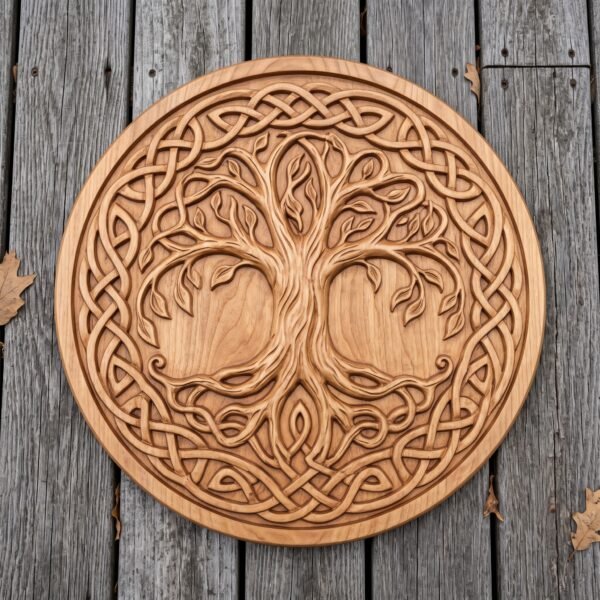 Yggdrasil Handcrafted Viking Shield
Original price was: $299.00.$254.15Current price is: $254.15.
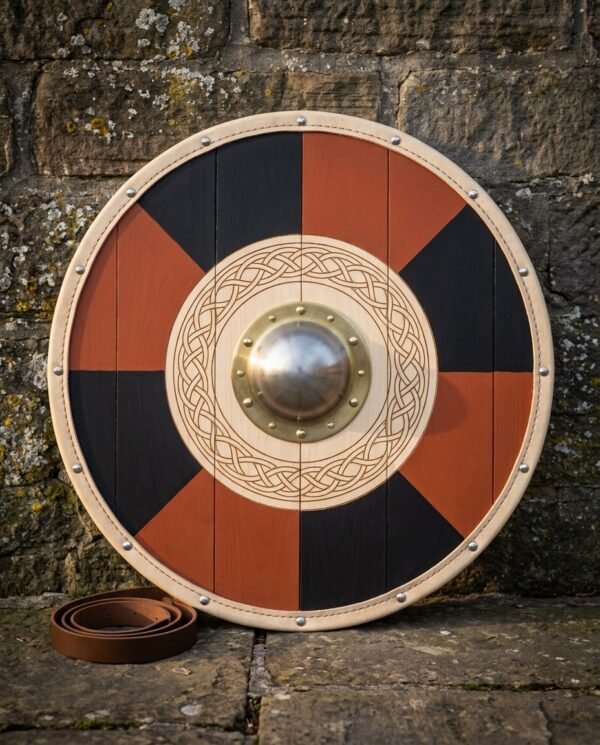 Emberward Hand Made Viking Round Shield
Original price was: $399.00.$339.15Current price is: $339.15.
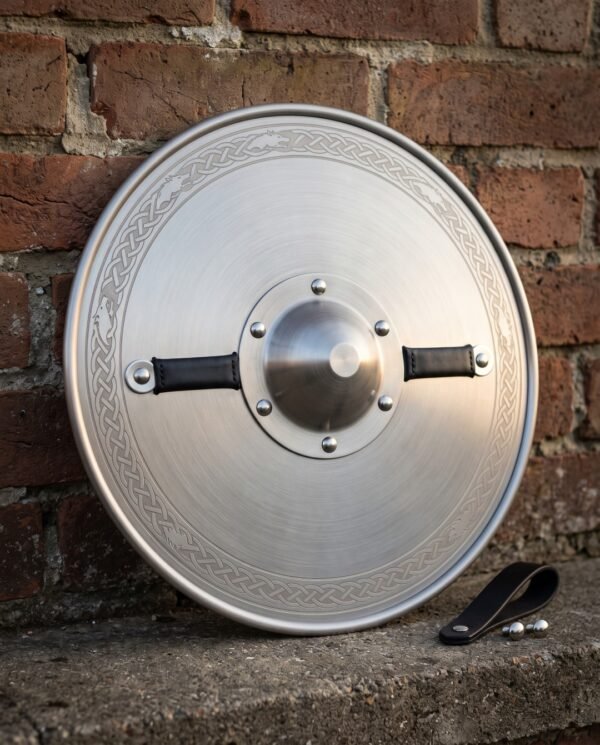 Silverward Hand Forged Steel Round Shield
Original price was: $449.00.$381.65Current price is: $381.65.
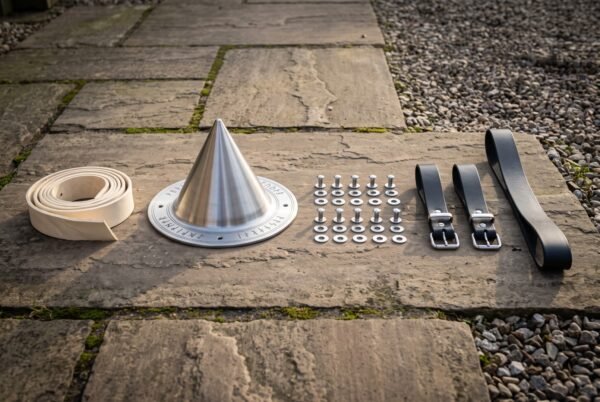 Spikerim Hand Forged Steel Conical Viking Shield Boss and Fitting Kit with Rune Ring Engraving & Black Leather Straps
Original price was: $179.00.$152.15Current price is: $152.15.