
A skinner is the knife you use once the animal is down. The blade is short, the belly is deep and the point sweeps up and out of the way, because the job is separating hide from muscle in a long sliding cut rather than stabbing anything. Push a drop point or a bowie at that work and you will put holes in the hide.
The knives on this page run 6 to 10.5 inches overall with 3 to 5 inches of blade, and listed weights sit at 5.5 to 10.5 ounces. Most are forge welded Damascus of 1095 and 15N20 hardened to 58 to 60 HRC, etched so the layers show, with counts listed from 256 to 393 layers. A few are plain high carbon at 54 to 58 HRC. Handles run to stag horn, ram horn, camel bone, white bone, walnut, rosewood, pakka wood, micarta and resin, and almost all ship in a leather sheath.
If you skin more than a couple of deer a season, buy the 4 inch blade with a full tang and a grip you can hold wet.
Free US shipping
On most pieces. Heavier and oversized ones carry a flat charge.
Hand Forged
Heated, hammered and ground by hand.
Engraving available
Names, dates or Norse runes on most pieces.
Ships from Memphis
Inspected and dispatched from our Tennessee warehouse. No import duty, no customs delay on US orders.
Damascus Skinner Knives

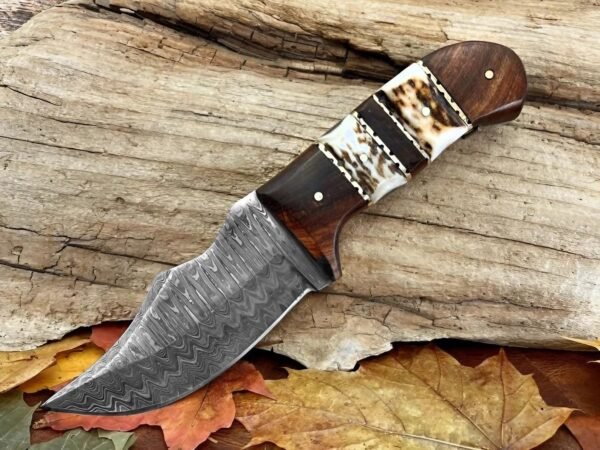
Stagrose Hand Forged Damascus Skinner Knife with Rosewood and Stag Handle & Hand Stitched Leather Sheath | Hunting Skinning Gift | RK-1102
Price range: $129.00 through $169.00
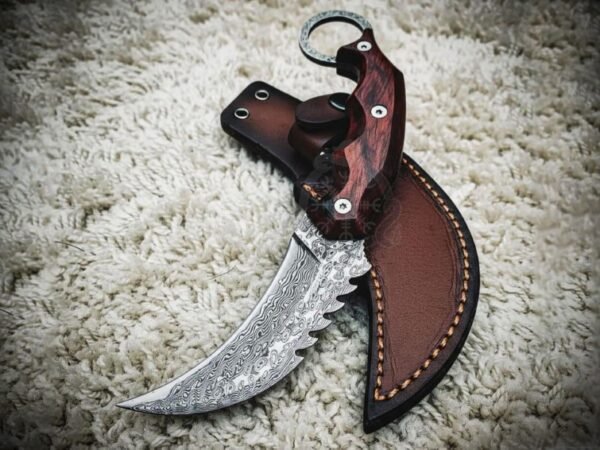
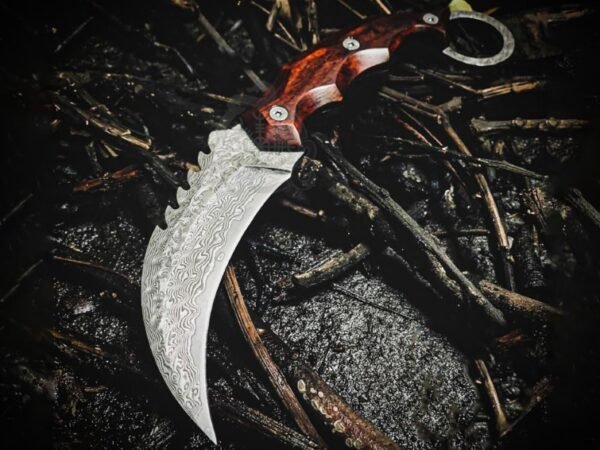
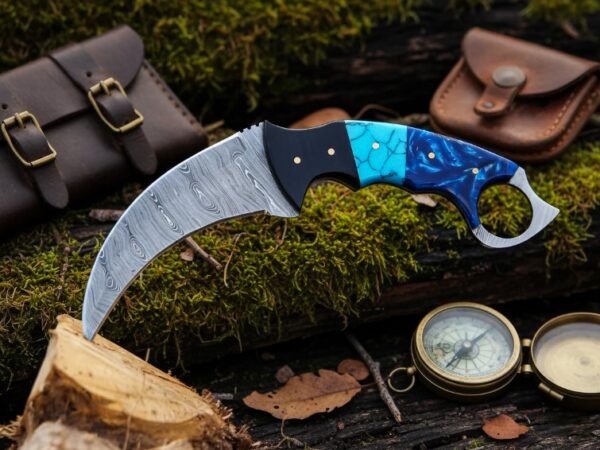
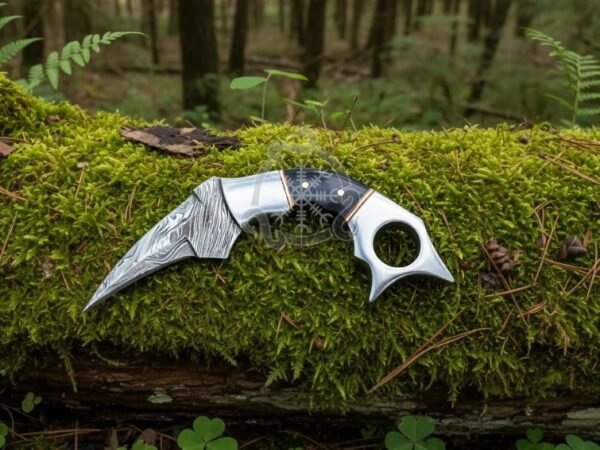
Roseclaw Hand Forged Damascus Karambit Knife with Rosewood Handle & Handmade Leather Sheath | Tactical Everyday Carry and Collector Gift | RK-1068
$189.00
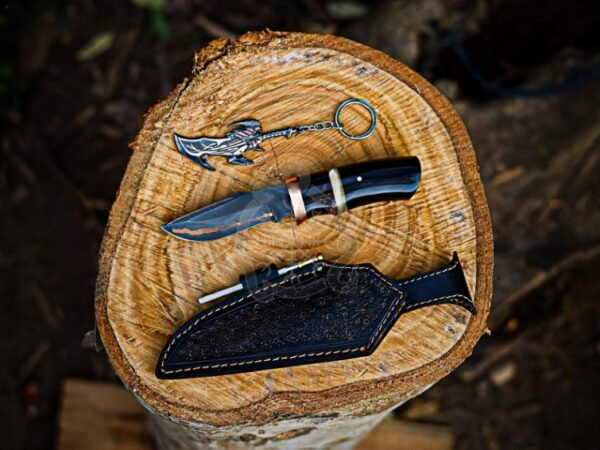
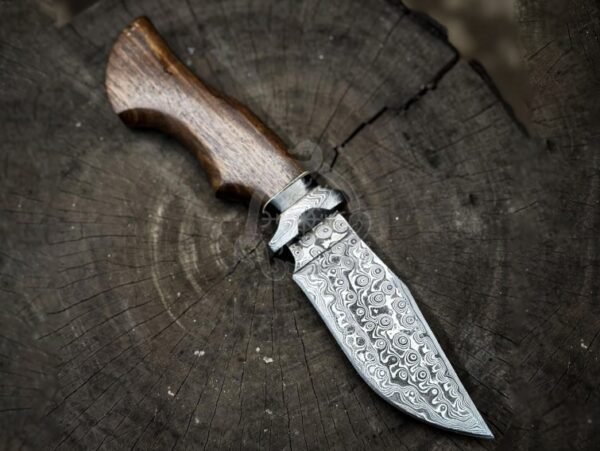
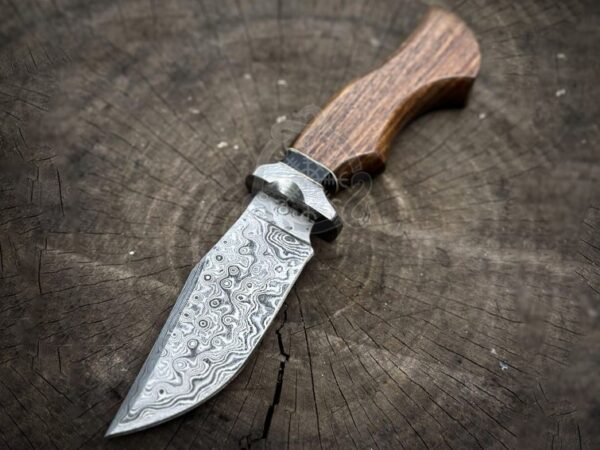
Rosecamp Hand Forged Damascus Camp Knife with Rosewood Handle and Damascus Guard and Black Spacer & Leather Sheath | Camping Outdoor Gift | RK-1053
Price range: $99.00 through $159.00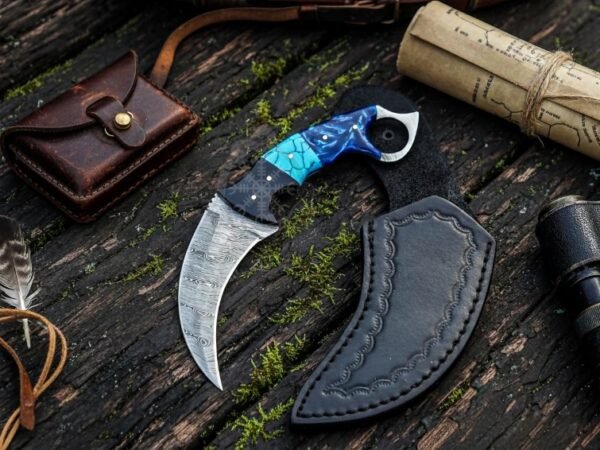


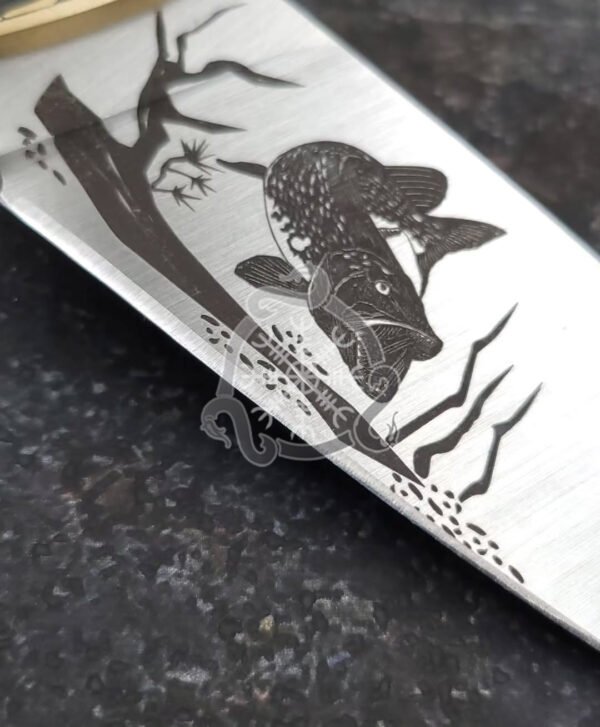
Brasscamp Hand Forged Damascus Camp Knife with Walnut Wood Handle and Engraved Brass Bolster & Leather Sheath | Camping Outdoor Gift | RK-704
Price range: $169.00 through $179.00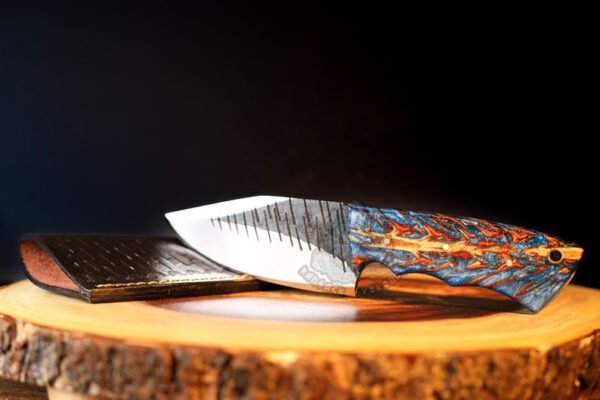

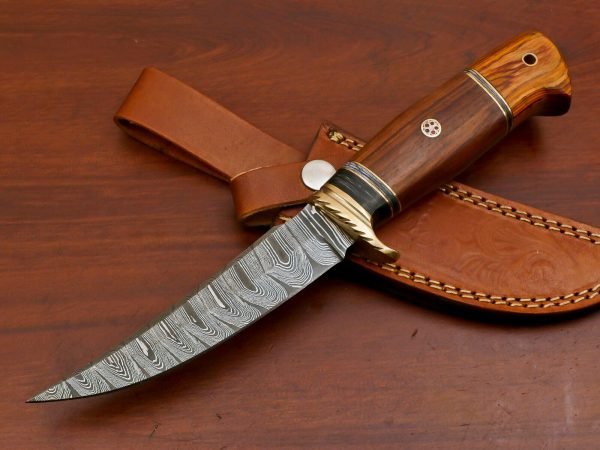
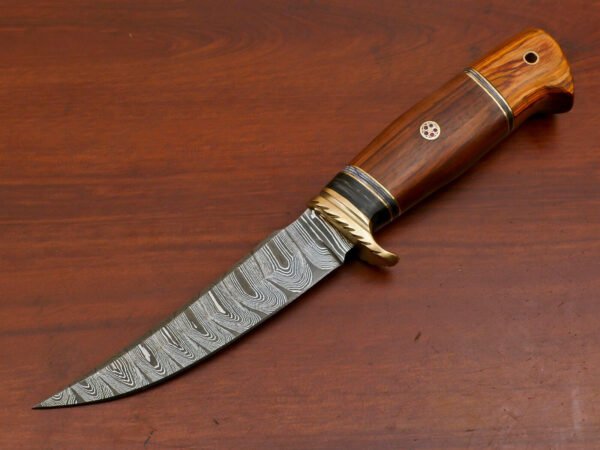
Woodgrain Hand Forged Damascus Skinner Knife with Wood Handle & Leather Sheath | Hunting Skinning and Camping Gift | RK-454
Price range: $89.00 through $109.00
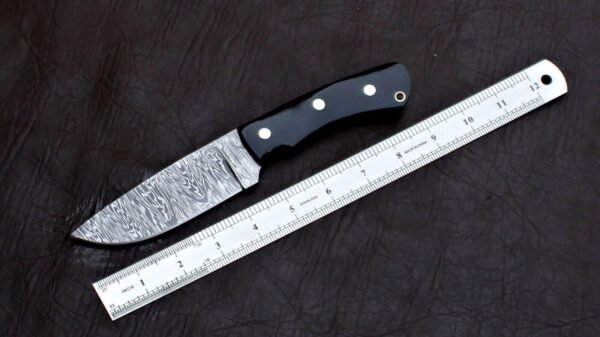
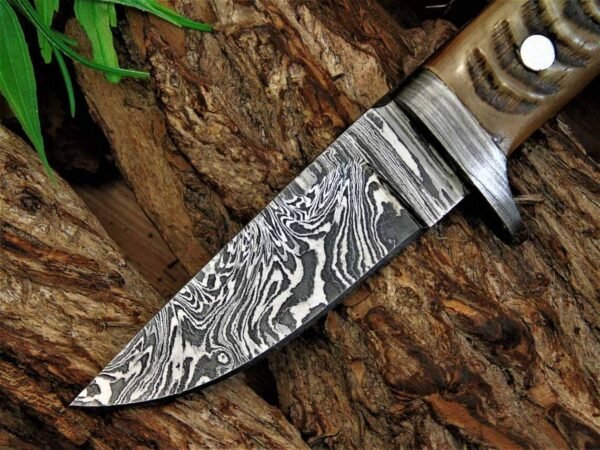
Ramcrest Hand Forged Damascus Skinner Knife with Ram Horn Handle & Leather Sheath | Compact Hunting and Collector Gift | RK-408
$99.00
Why a skinning blade is shaped like that
Skinning is not cutting. It is separating. The hide is attached to the carcass by a thin layer of connective tissue, and the whole job is running an edge along that layer without going through the hide on one side or into the meat on the other. A blade built for that has three features. It is short, so the point stays under control near your other hand. It has a deep continuous belly, so the cutting happens along a curve that stays in contact as you sweep. And the point sweeps upward away from the cutting line, so it rides over the hide instead of catching in it.
That last part is where most general purpose knives fail. A drop point or a clip point puts the tip roughly in line with the edge, which is what you want for piercing and detail work and exactly what you do not want when the tip is travelling under a hide at speed. Every hole you put through a skin costs you at the tannery, and it costs you time patching the mistake.
The trade is that a skinner is bad at other things. The short blade limits reach, the upswept point is clumsy for detail cuts around joints, and the deep belly makes a poor slicer for kitchen work. This is a specialist. Most people who own one also own a drop point for the rest of the job.
The skinners in this collection
Sixteen knives sit on this page and they cover more ground than the category name suggests. Two things separate them. The first is steel. The second is what the handle is made of, which matters more here than on most knives because you will be holding it with wet hands.
Skinners in Damascus
Most of the page. Forge welded 1095 and 15N20 hardened to 58 to 60 HRC, folded, drawn and acid etched so the layers read as light and dark bands. Listed layer counts run 256, 393 and a range of 280 to 350 depending on the piece. Patterns include fire pattern and one described as a wind and mix twist with brass file work along the spine. Sizes run 6 to 10.5 inches overall with 3 to 5 inches of blade, and listed weights are 5.5 oz, 8 oz and 10.5 oz across the pieces that carry a figure.
Skinners in plain high carbon
Two knives here are ground from plain high carbon steel at 54 to 58 HRC rather than pattern welded. One is an upswept skinner at 8 inches overall with a stag horn and pine cone handle and a hand made steel guard and bolster. The other pairs a 4 inch blade with an exotic wood handle, a full tang and a tooled leather sheath with a belt loop and a snap closure. It weighs 280 grams. Plain carbon steel sharpens faster than Damascus and costs less to replace if the knife lives in a pack.
Handles for wet hands
Handle material is the practical decision on a skinner. The collection runs to stag horn, ram horn, camel bone, white bone, walnut, rosewood, pakka wood, exotic hardwood, micarta and dual resin with a turquoise accent. Several carry bolsters in hardwood, engraved brass or Damascus, and one has file work cut into the ram horn. Micarta and resin stay grippy when wet and shrug off blood and water. Horn and bone look better and need more care. Wood sits in between.
The other blades on this page
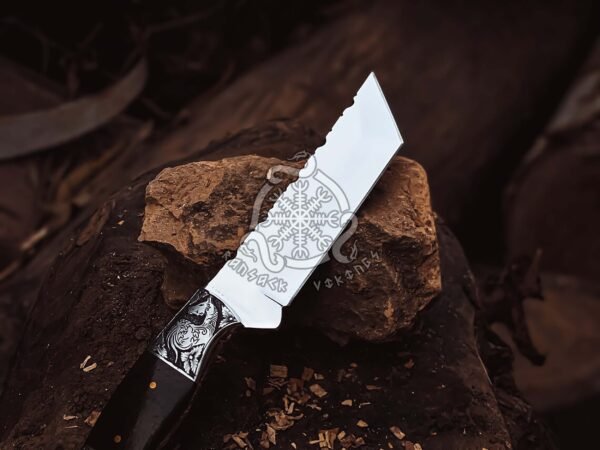
Three karambits sit in this category, curved claw shaped blades at 7.5 to 9.5 inches overall, one with a Damascus finger ring worked into the handle. Two camp knives run 9.5 and 10 inches overall with 5 inch blades, one with an engraved brass bolster on walnut and one with a Damascus guard and a black spacer on rosewood. There is one tanto pointed knife at 10 inches overall with an engraved stag horn and bull horn handle, a hand made steel guard and a right hand cowhide pouch. And there is a copper Damascus skinner at 7.5 inches with a dual resin handle and a sheath with a sharpener built into it.
Sizes, steel and handles across the range
Every figure below comes from the specification panel of a knife on this page. These are forged and ground by hand, so read the numbers as what to expect rather than as a guarantee to the millimetre.
| Handle | Overall length | Blade length | Steel and hardness | Listed weight or layers | Sheath |
|---|---|---|---|---|---|
| Walnut and pakka wood, full tang | 6 in | 3 in | Damascus at 58 to 60 HRC | 5.5 oz | Not listed |
| Ram horn | 7 in | 3 in | Damascus at 58 to 60 HRC | 393 layers | Leather |
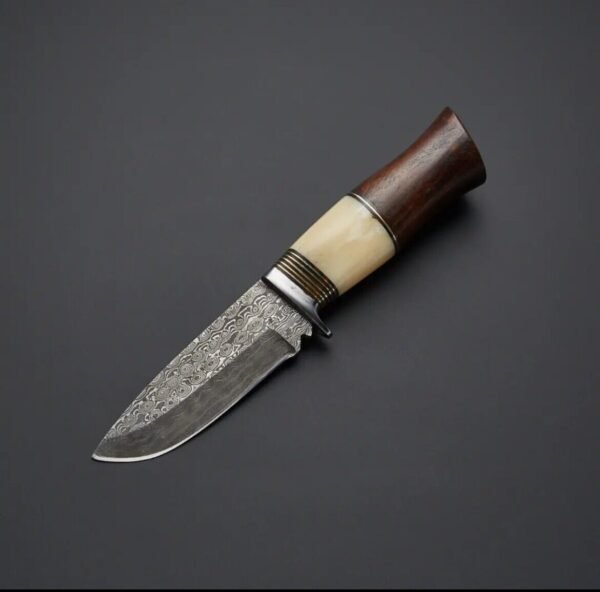
| White bone with hardwood bolsters | 7.75 in | 3.5 in | Damascus at 58 to 60 HRC | 8 oz | Cowhide belt pouch |
| Rosewood and stag with rosewood bolster | 7.5 in | 3.5 in | Damascus at 58 to 60 HRC | Not listed | Hand stitched leather |
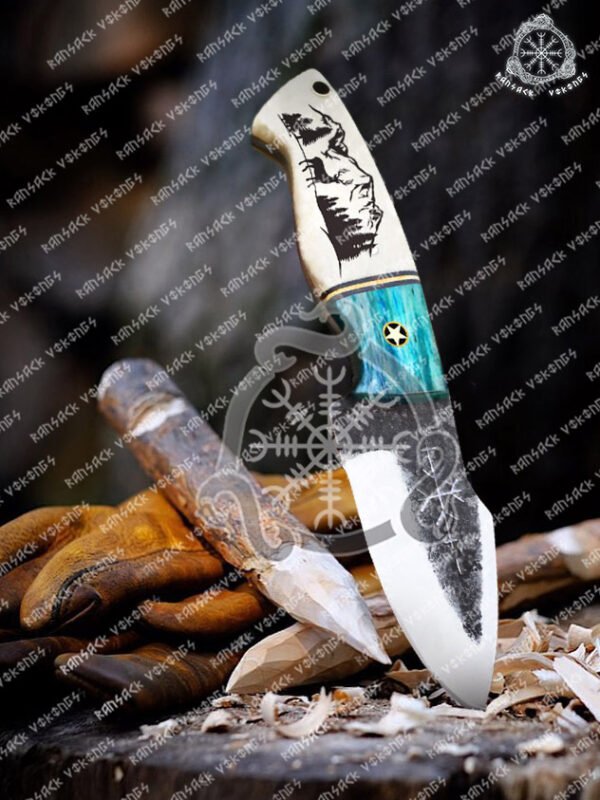
| Dual resin with turquoise accent | 7.5 in | 3.5 in | Copper Damascus over carbon steel | Not listed | Leather with a built in sharpener |
| Ram horn with file work, brass bolster | 7.5 in | 3.5 in | Damascus at 58 to 60 HRC | 256 layers | Extra thick stitched cowhide |
| Wood | 8 in | 4 in | Damascus at 58 to 60 HRC | 393 layers | Leather |
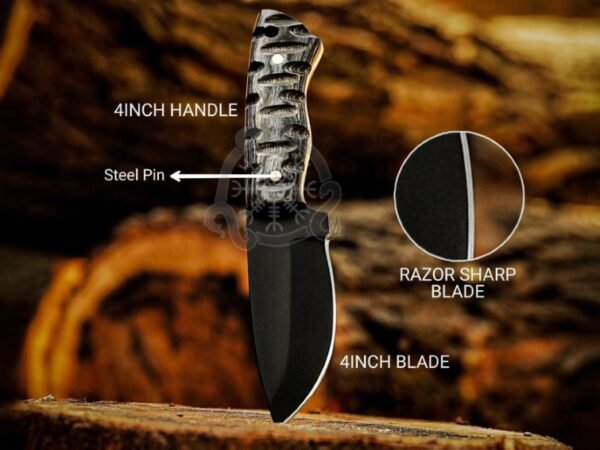
| Exotic wood, full tang | 8 in | 4 in | 1095 and 15N20 layered | 280 grams | Tooled leather with belt loop |
| Stag horn and pine cone, steel guard | 8 in | 4 in | High carbon at 54 to 58 HRC | Not listed | Cowhide pouch, right hand carry |
| Turquoise, bull horn and resin, ring | 9 in | 4 in | Damascus at 58 to 60 HRC | Not listed | Leather |
| Micarta | 9.5 in | 4.5 in | Damascus at 58 to 60 HRC | 393 layers | Leather |
| Rosewood, full tang | 9.5 in | 4.75 in | Damascus at 58 to 60 HRC | Not listed | Handmade leather |
| Walnut with engraved brass bolster | 9.5 in | 5 in | Damascus at 58 to 60 HRC | Not listed | Leather |
| Rosewood with Damascus guard and spacer | 10 in | 5 in | Damascus at 58 to 60 HRC | Not listed | Leather |
| Camel bone and hardwood | 10.5 in | 5 in | Damascus at 58 to 60 HRC | 10.5 oz, 393 layers | Leather |
Layer counts are worth reading with a flat eye. More layers means a finer pattern, not a better knife. A 256 layer billet and a 393 layer billet made from the same two steels will cut the same. What changes is how tight the figure looks once it comes out of the acid.
Blade length and why short wins
The blades here run 3 to 5 inches. On a skinner that is the whole useful range, and the short end of it is more capable than it looks. A 3 inch blade with a deep belly gives you more curved cutting edge in contact with the work than a 5 inch straight blade does, and it keeps the point where you can see it. Working around a hind leg with your off hand pulling the hide, you want the tip close.
Go to 4 or 5 inches when the animal is bigger, or when the knife has to do camp work as well as skinning. The 5 inch pieces here sit closer to a camp knife in feel, with more spine weight and enough length to break down a shoulder. Under 3 inches you are into detail territory, which is fine for caping but slow across a whole carcass.
Handle length matters as much as blade length and nobody talks about it. Most of these list 4 to 5.5 inches of grip. Anything under 4 inches will pinch a large hand after twenty minutes of work, and cold wet hands need more grip than dry ones.
Steel, hardness and edge behaviour
The Damascus here is 1095 and 15N20 forge welded, folded and etched. The 15N20 carries nickel, so it resists the acid and stays bright while the 1095 darkens. That is what makes the pattern, and it runs through the steel rather than sitting on the surface. Hardened to 58 to 60 HRC it holds an edge through a whole animal and takes a little patience to bring back on a stone.
Plain 1095 at 54 to 58 HRC does the opposite. It gives up its edge sooner and it comes back in a couple of minutes on a medium stone, which is why a lot of people who use a knife hard prefer it. Neither steel is stainless. Both will spot if you leave them wet, and blood is worse than water because it is slightly acidic.
For skinning specifically, edge geometry beats edge hardness. A thin flat ground blade with a shallow bevel slides between hide and tissue. A thick saber ground blade wedges. All the knives here are ground thin behind the edge, which is standard for the pattern and part of why they are poor at chopping.
Care, blood and the sheath
Clean the knife in the field before the blood dries. Warm water and a cloth is enough, and drying it properly matters more than what you clean it with. Once it is dry, put a light film of oil on the steel. Mineral oil, camellia oil or food safe oil all work.
Do not store a carbon steel blade in a leather sheath for months. Vegetable tanned leather holds moisture and traces of tanning acid against the steel, and a knife left in one over a damp winter comes out spotted even if it went in clean. Keep the sheath for carrying and store the knife in a drawer with a wipe of oil on it.
Grey patina is not rust and does no harm. It is a stable oxide layer and on a working knife it will build on its own. Orange or red spotting is rust, and it lifts with a fine abrasive pad and oil before it has time to pit.
Sharpening a curved belly
A skinner cannot be sharpened by pushing it straight down a stone. The belly is the part doing the work, and a straight push only contacts the flattest section of it. Sweep instead, so the point of contact travels along the curve from the ricasso to the tip as the stroke runs. Lift the handle slightly as you reach the upswept section, which keeps the angle constant as the curve tightens.
Match the angle already on the blade rather than imposing your own. On these that is a fairly acute bevel, which is what makes them slide. For Damascus at 58 to 60 HRC a 1000 grit stone will restore a working edge and a 3000 grit will polish it. Plain carbon at 54 to 58 HRC gets there faster. Stop when you can feel a burr along the entire edge, then strop it off.
Engraving and gifting
Most knives here can be engraved after they arrive in the United States. Names, dates and short lines go along the flat of the blade or onto a bolster where there is room. Text engraving is 19 dollars, a symbol is 39 dollars and a family crest is 49 dollars. One piece on this page is listed by the maker as ready for engraving, with a clear flat panel left in the pattern.
Engraving is permanent and an engraved knife cannot be returned. Send the exact spelling and read it back twice before you order.
Where these come from and how they ship
Ransack Viking is a US company based in Memphis, Tennessee. The pieces are handmade in the Czech Republic, then imported, inspected and shipped from Memphis. Engraving is done in the US after arrival. Almost every knife on this page ships in a leather sheath, and the product page says which style.
No two Damascus blades come out of the acid identically. Pattern, contrast and depth of etch vary between pieces with the same name, and so does the colour of horn and bone. If you want two matching knives, order them together and say so.
How to choose
Start with what the knife will actually do. For deer sized game and nothing else, take a 3.5 to 4 inch blade with a deep belly and a handle you can grip wet. For a knife that skins and then does camp work, take one of the 5 inch pieces. For a gift, take Damascus, because the pattern is the point and it photographs well.
Then pick the handle for honesty rather than looks. Micarta and resin are the working choices. Stag, ram horn and camel bone are the ones people actually buy, and they are fine as long as you keep them out of dry heat and off a radiator, because horn shrinks as it dries and can pull away from a pin.
Browse related categories
- Damascus knives across every pattern we stock
- Hunting knives, including drop points and gut hooks
- Damascus tracker knives for heavier field work
- Karambit knives with the curved claw blade
- Bowie knives with long clip points and deep bellies
- Leather sheaths and replacements
Guides worth reading first
- Choosing the best skinning knife for deer
- Hunting knife or skinning knife: what the difference buys you
- How to skin a deer without wrecking the hide
- Damascus steel care, oiling and rust removal
Frequently asked questions
What is a skinning knife used for?
Separating hide from carcass. The short deep bellied blade rides along the connective tissue in a sweeping cut, and the upswept point stays clear of the skin so you do not put holes through it. It is a specialist and it is poor at detail work around joints.
How long should a skinning blade be?
Three to four inches covers deer sized game and gives you the most curved edge in contact with the work. Five inches suits larger animals and doubles as a camp knife. The blades on this page run 3 to 5 inches, with overall lengths of 6 to 10.5 inches.
Do these knives arrive sharp?
Yes. Every blade is ground and finished by hand and arrives with a working edge under a light coat of oil. A few passes on a fine stone will take one further if you want a sharper edge for caping.
Is Damascus better than plain carbon steel for skinning?
Not in a way you will feel in the field. Damascus at 58 to 60 HRC holds an edge slightly longer. Plain high carbon at 54 to 58 HRC comes back on a stone faster and costs less. Buy Damascus for the pattern and buy plain carbon if the knife lives in a pack.
Will these knives rust?
Yes, if you let them. Neither steel is stainless. Wipe the blade down after use, dry it properly and leave a film of oil on it. Grey patina is harmless and builds on its own. Orange spotting lifts with a fine abrasive pad and oil.
What handle material is best for wet work?
Micarta and resin. Both stay grippy when wet and neither cares about blood or water. Stag horn, ram horn and camel bone look better and hold up well, but they dislike dry heat and can shrink away from a pin if you store the knife next to a radiator.
Can I put a name on the blade?
Yes, on most of them. Engraving is done in the United States after the knife arrives. Text is 19 dollars, a symbol is 39 dollars and a family crest is 49 dollars. Engraved knives cannot be returned, so check the spelling before you order.
Where are these knives made?
They are handmade in the Czech Republic, then imported, inspected and shipped by Ransack Viking from Memphis, Tennessee. Engraving is added in the United States after arrival.
Featured pieces
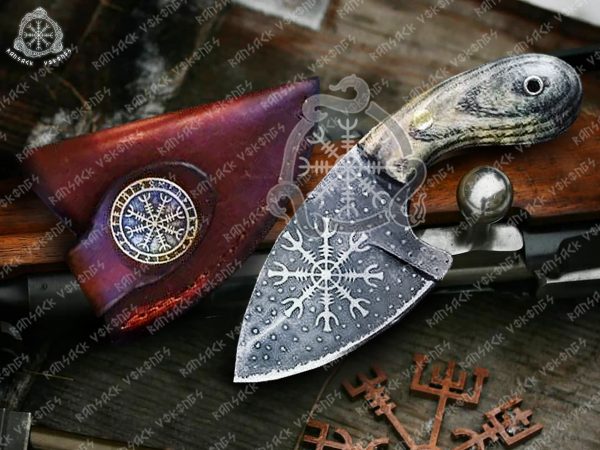 Littlewalnut Hand Forged Damascus Skinner Knife with Walnut and Pakka Wood Handle
$99.00
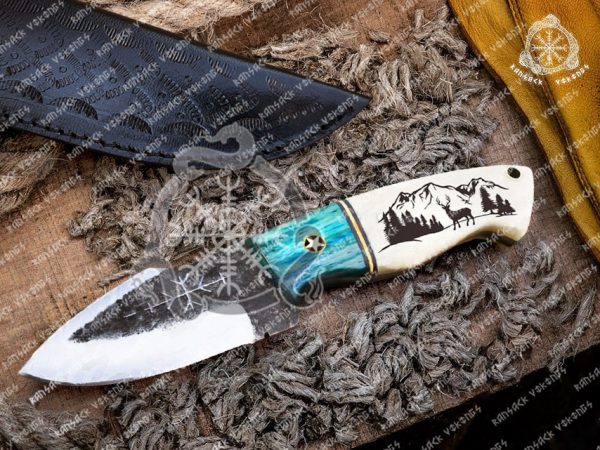 Bonewarden Hand Forged Damascus Skinner Knife with White Bone Handle and Hardwood Bolsters
$159.00
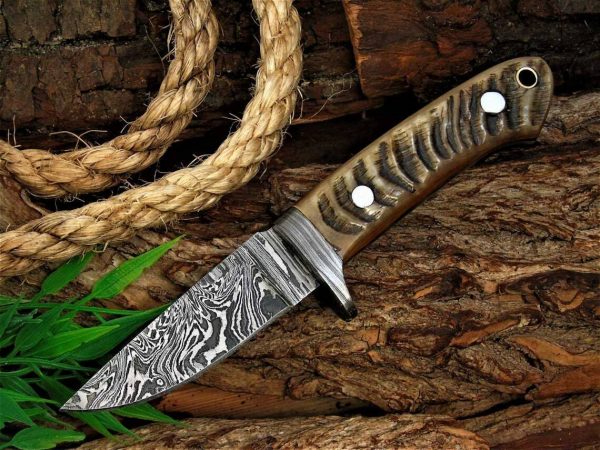 Ramcrest Hand Forged Damascus Skinner Knife with Ram Horn Handle & Leather Sheath
$99.00
 Pinecrest Hand Forged High Carbon Steel Skinner Knife with Stag Horn and Pine Cone Handle and Steel Guard and Bolster
$109.00