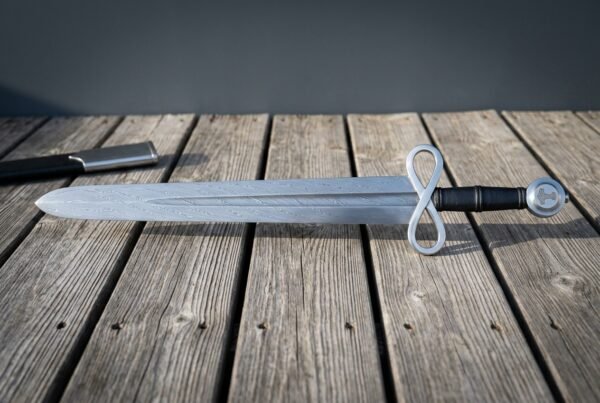
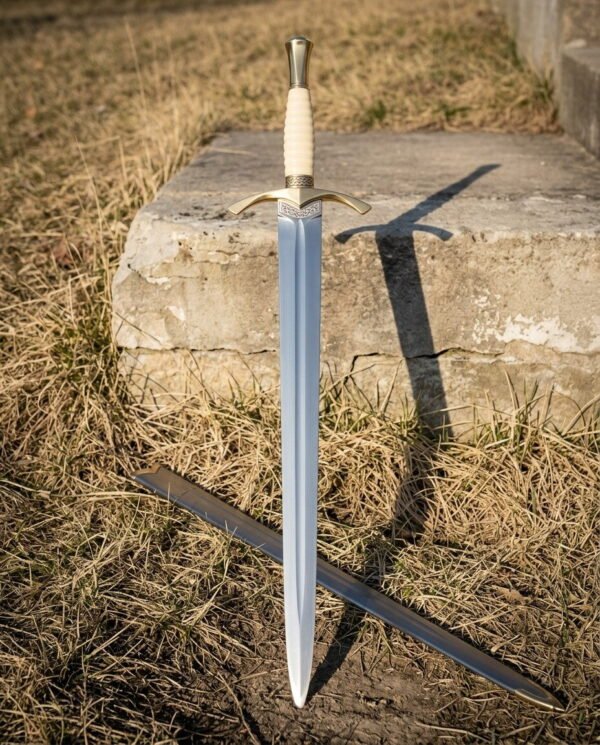
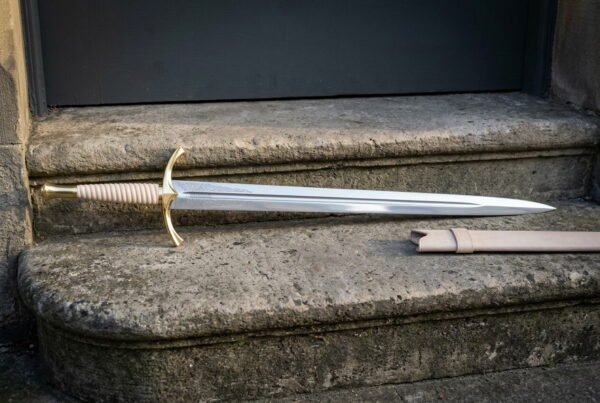
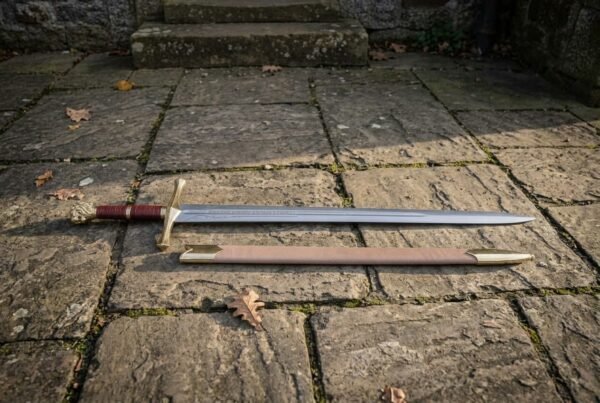
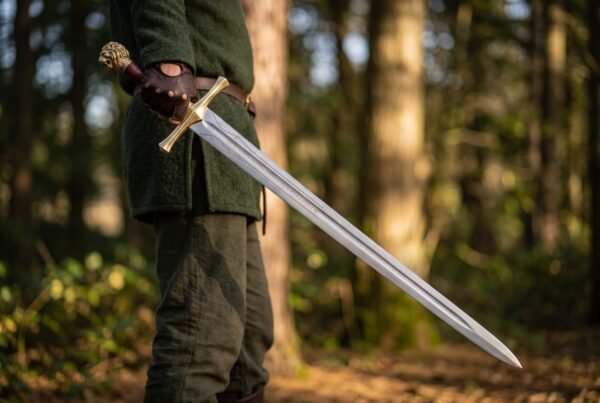
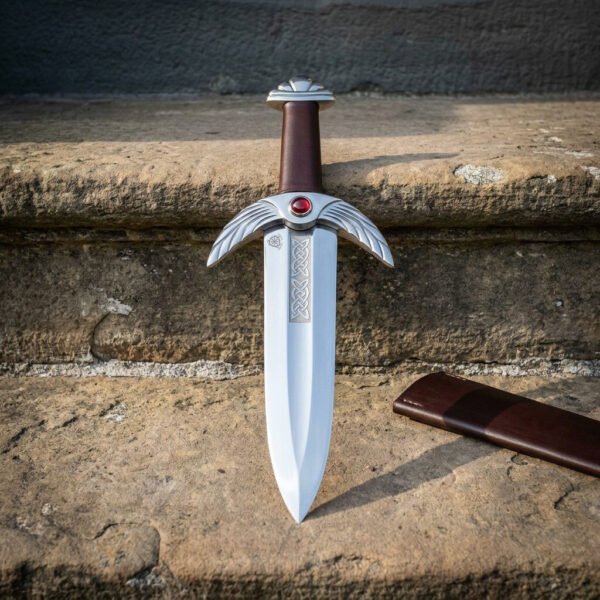
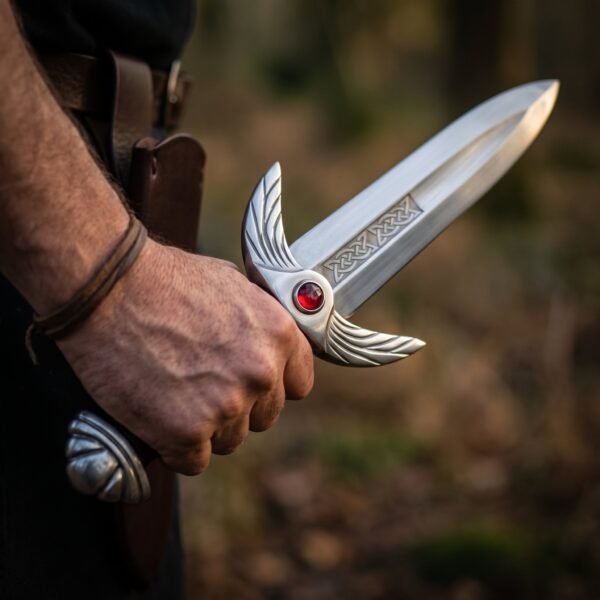
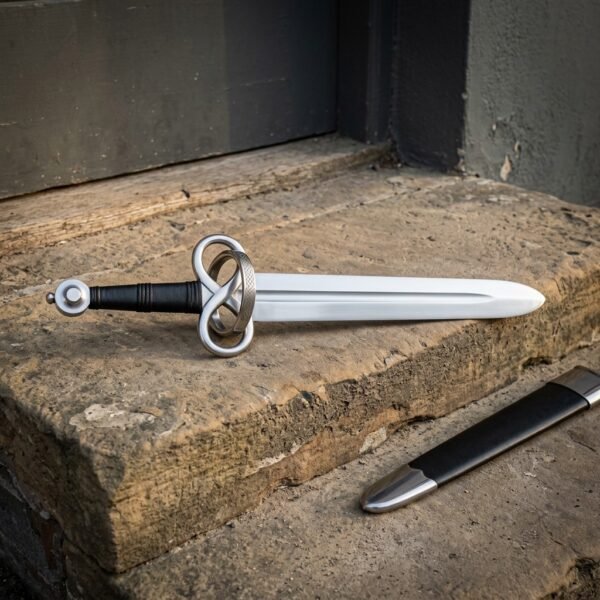
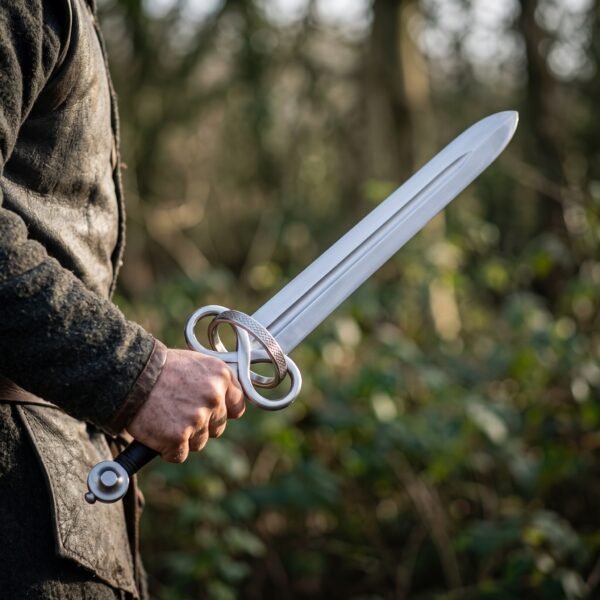
This is the part of the sword range built for looks first. The shapes here are drawn from illustration and screen design rather than from surviving archaeology, so you will find flame bladed swords, barbed and clawed guards, skull hilts with horn quillons, slim tapering longswords with leaf shaped guards and a five inch wide greatsword. Nothing on this page is a copy of a historical find, and none of it pretends to be.
What is real is the construction. Blades are hand forged 1095 high carbon steel hardened between 52 and 58 HRC depending on the piece, or Damascus of 1095 and 15N20 at 58 to 60 HRC. Grips are leather or cord over shaped hardwood cores, guards and pommels are steel or brass, and tangs are peened over the pommel. Overall lengths run from 30 inches on the short pieces to 50 inches on the greatsword, and most carry a fitted leather scabbard.
Pick the silhouette you want on the wall, then read the hardness line on the product page and the note on display against battle ready.
Free US shipping
On most pieces. Heavier and oversized ones carry a flat charge.
Hand Forged
Heated, hammered and ground by hand.
Engraving available
Names, dates or Norse runes on most pieces.
Ships from Chicago
Inspected and dispatched from our Chicago warehouse. No import duty, no customs delay on US orders.
Fantasy & Movie Swords

What this collection is
Every other sword category on this site is organised around a historical type. Arming swords, longswords, katana and gladius all describe a documented shape with a date range and a place of origin. This page is organised around a look instead.
That distinction matters when you are buying. A historical type has a specification behind it, so a 33 inch arming sword handles a certain way because the original did. A fantasy shape has no such constraint. The designer decided where the mass sits, how many barbs are on the guard and how wide the blade is, and the smith then forged that. Some of the pieces here handle very much like the historical shapes they are loosely based on. Others are deliberately heavier or broader than any period sword would have been, because that is what makes the outline read across a room.
So buy these for the silhouette. Then check the blade thickness, the hardness and the overall length on the product page to know what you are actually getting.
The shapes on this page
Seven groups cover the collection. Several pieces sit in more than one.
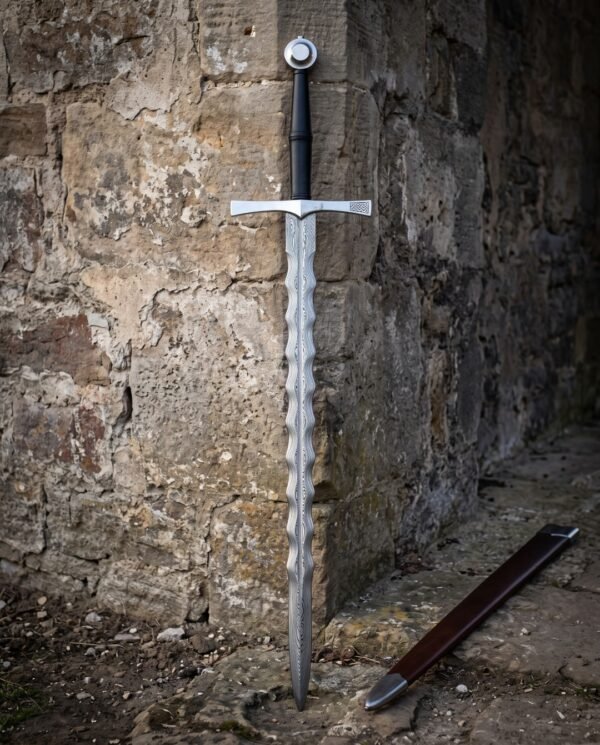
Flame bladed swords
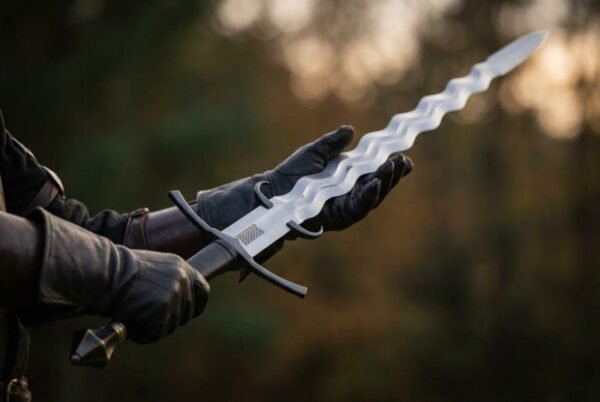
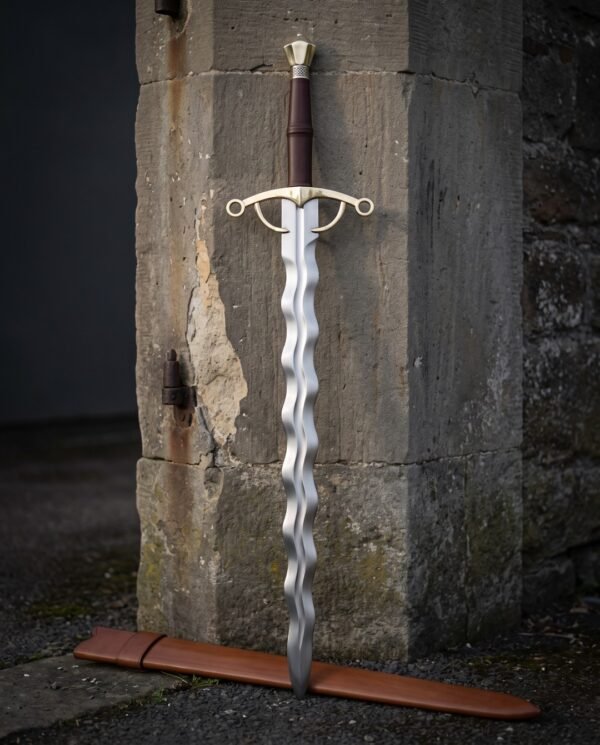
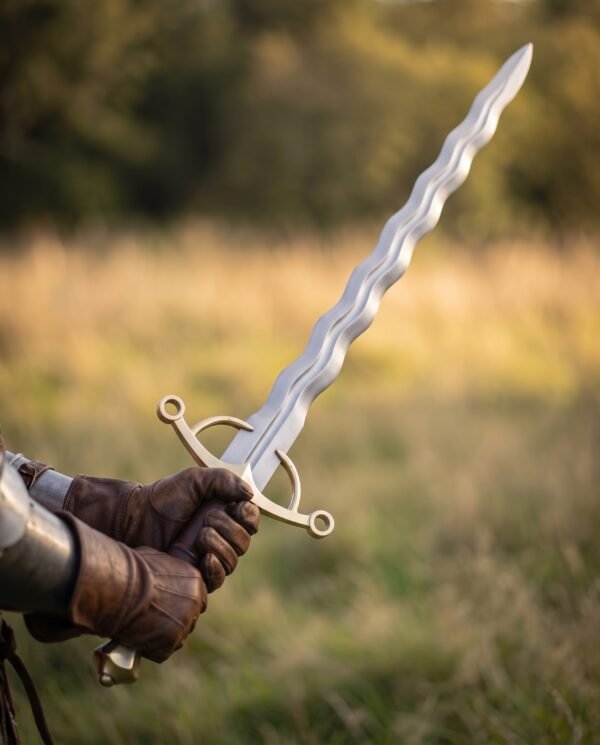
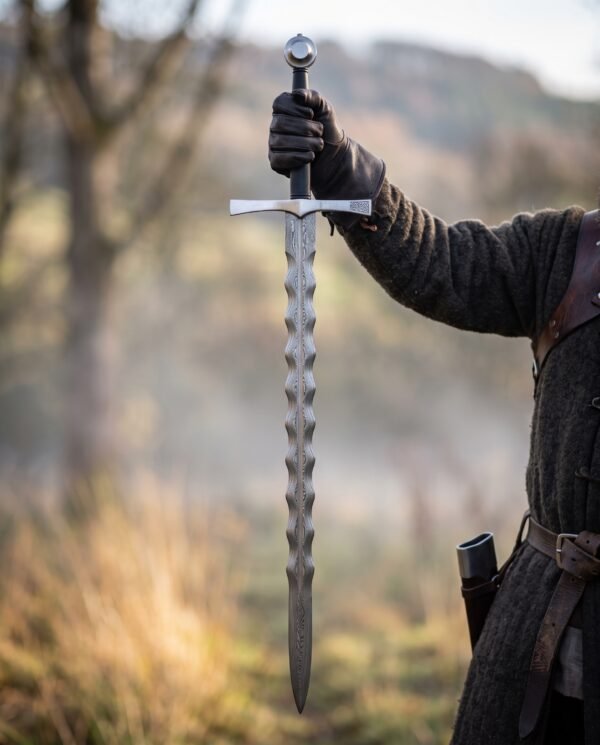
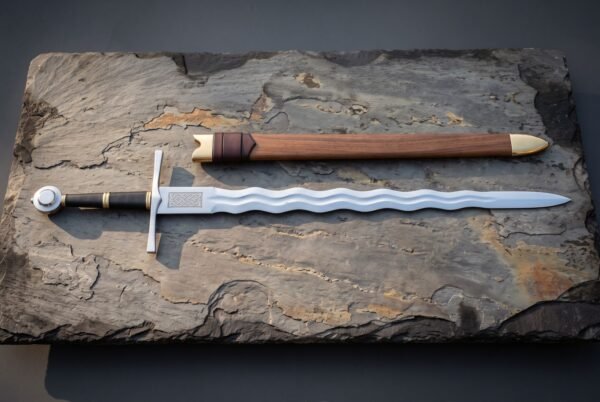
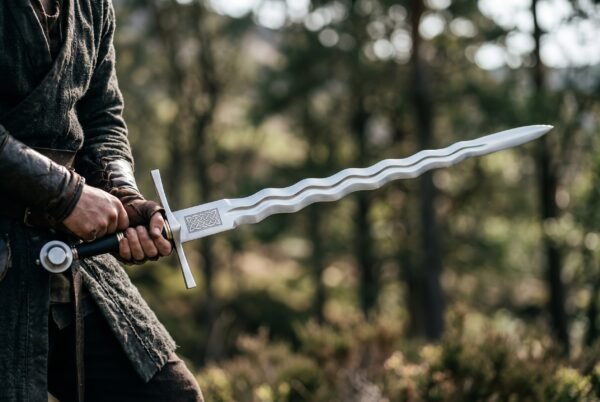
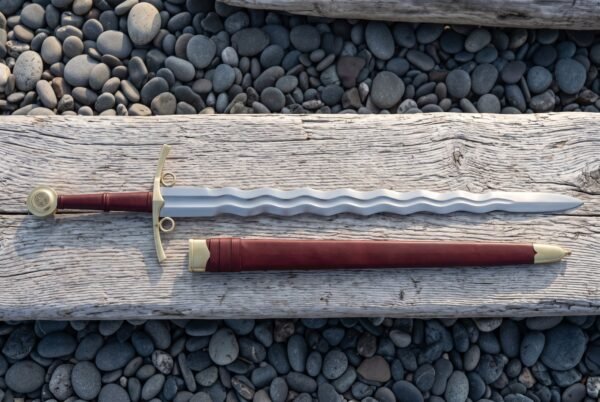
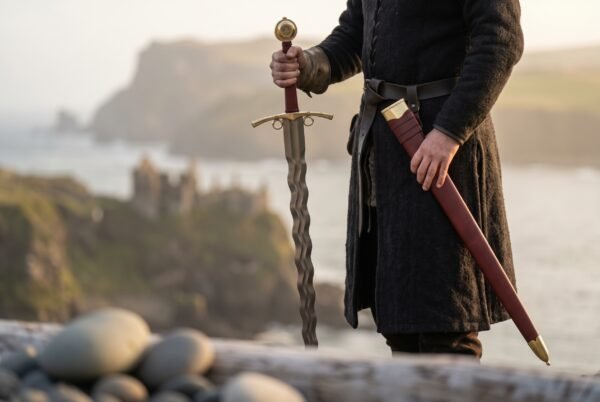
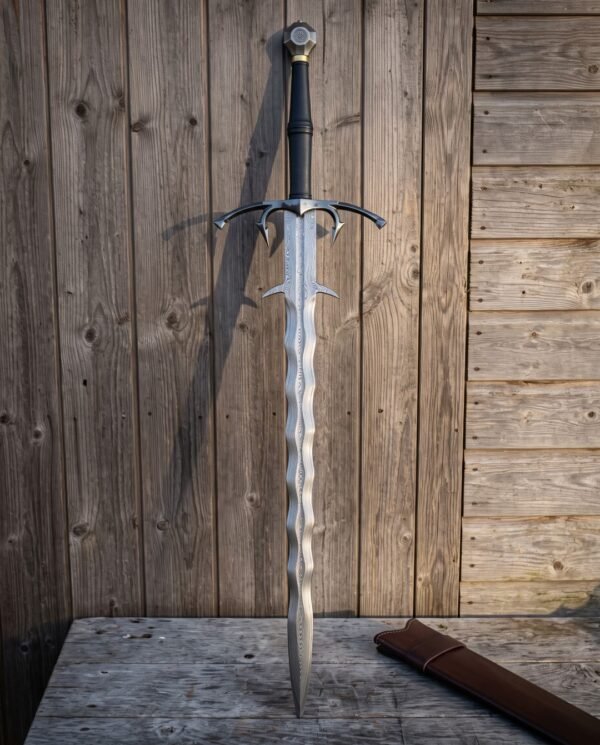
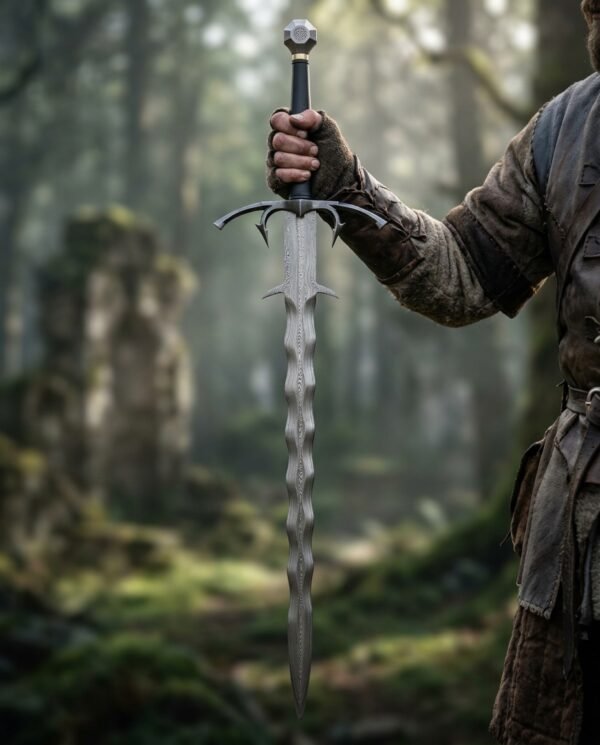
The largest single group, and the one people recognise first. The blade undulates in matched waves down both edges, a real European form called a flamberge, revived here at fantasy scale. Sizes run 33 to 38 inches overall with 26 to 31 inch blades, in both 1095 at 54 to 58 HRC and Damascus at 58 to 60 HRC. Guards vary from a plain steel bar to brass ring hilts with a finger loop, blackened arms with hanging parrying hooks, and cut knotwork panels.
Barbed and clawed hilts
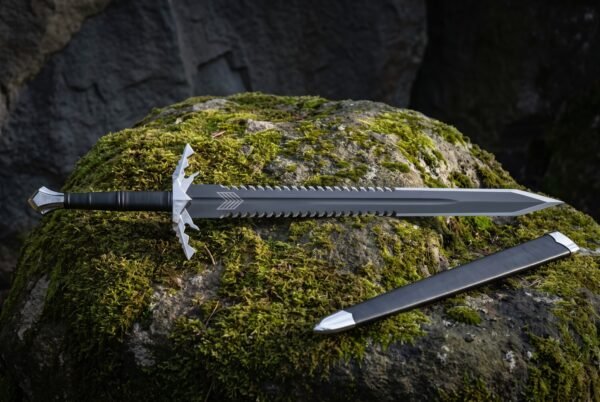
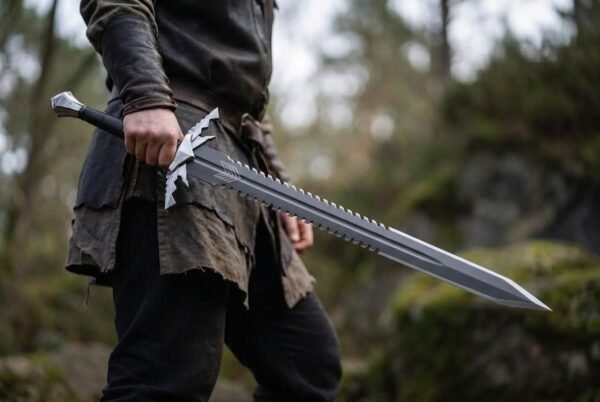
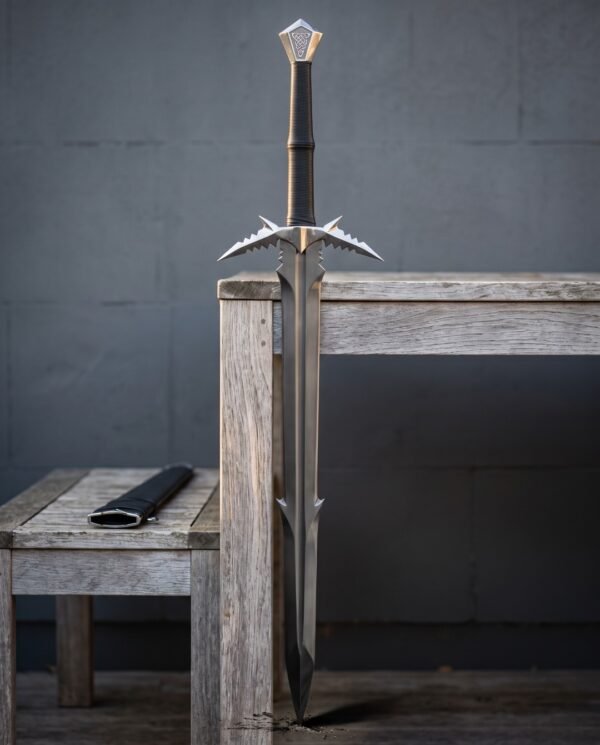
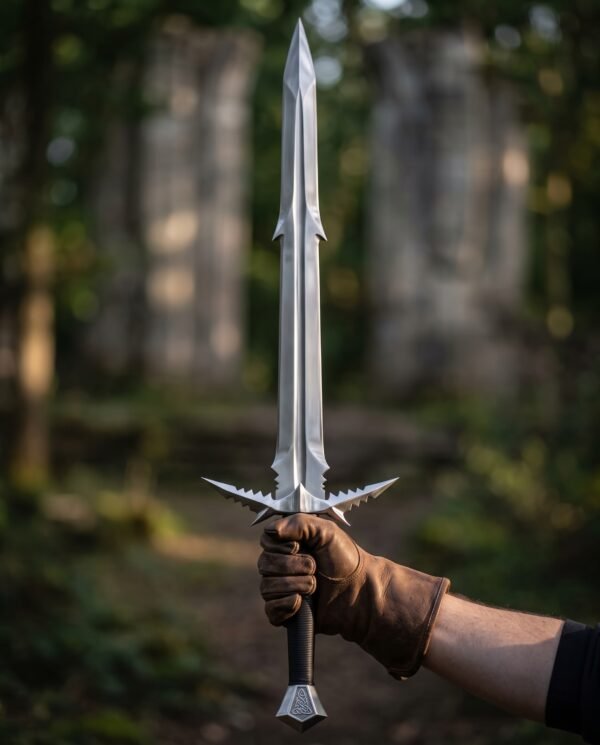
Swept guards drawn to spikes and points, saw toothed on the trailing edge, several with a pair of rear facing barbs standing off the base of the blade. These are the heaviest looking pieces in the collection. Lengths run 38 to 42 inches overall on 29 to 32 inch blades, with cord bound grips and faceted pommels.
Skull and horn hilts
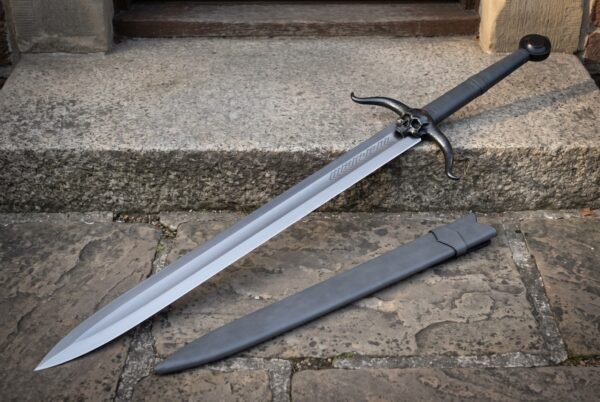
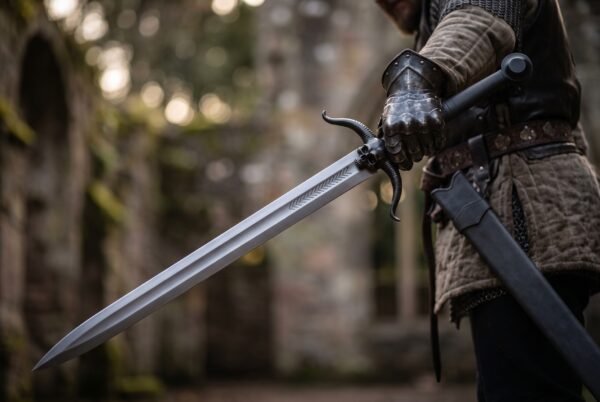
Cast guards in the shape of a skull with curled ram horn or downswept horn quillons, finished blackened against a bright polished blade. One is 36 inches overall on a 28 inch fullered blade, the other 32 inches overall on a 24 inch blade with a listed weight of about 2 lb 6 oz for the sword alone. Both ship with black leather scabbards over timber cores.
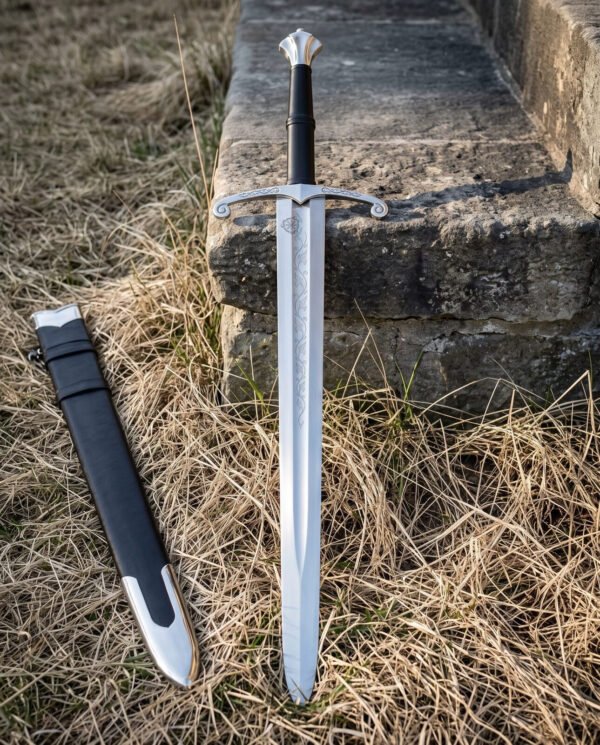
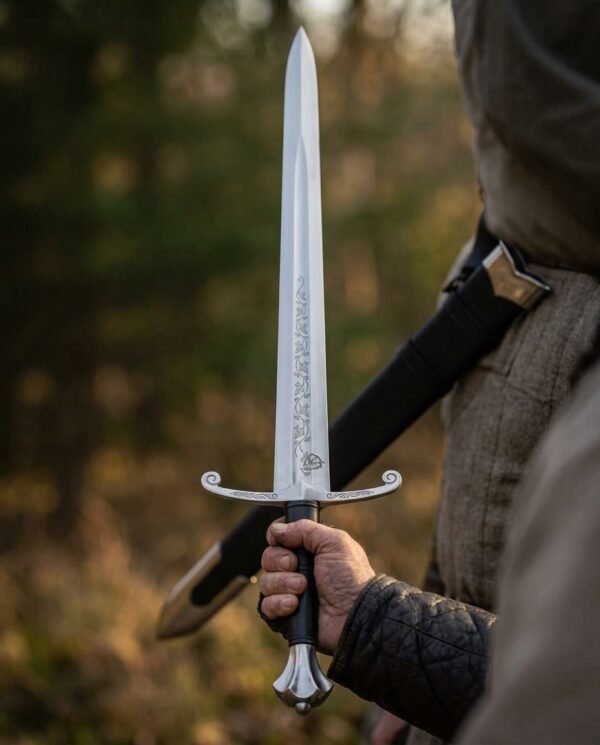
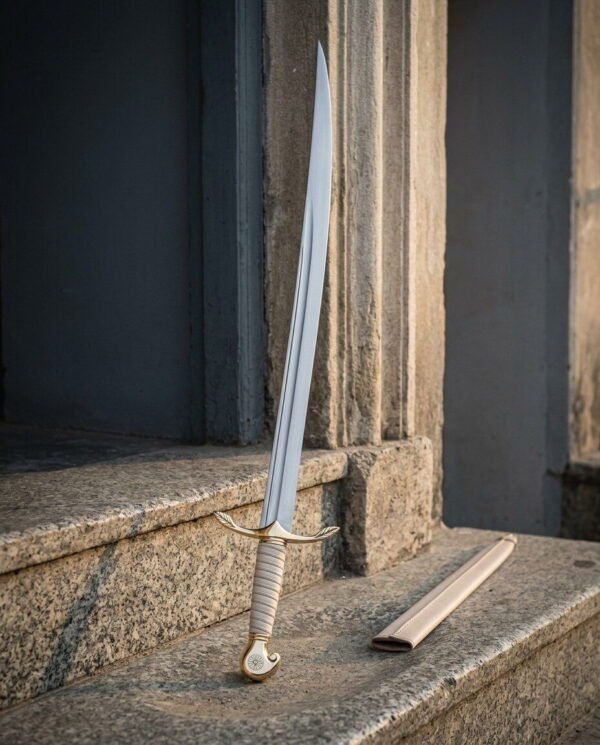
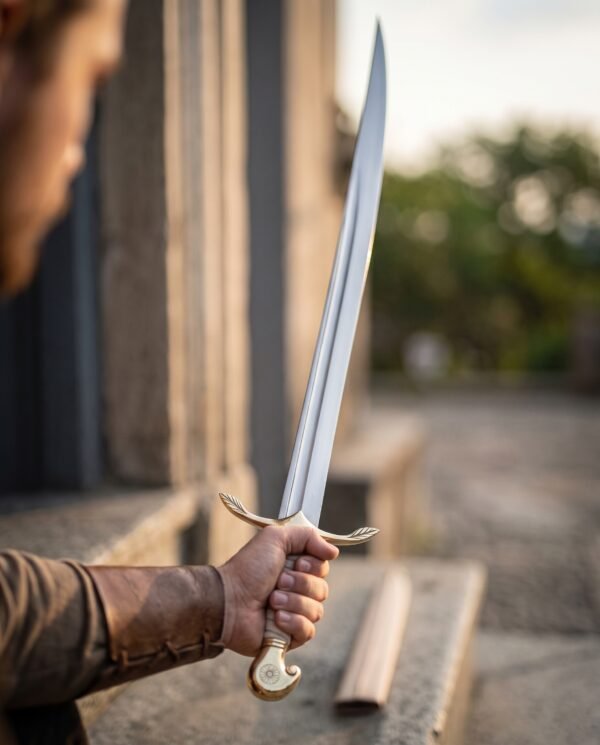
Slim tapering longswords
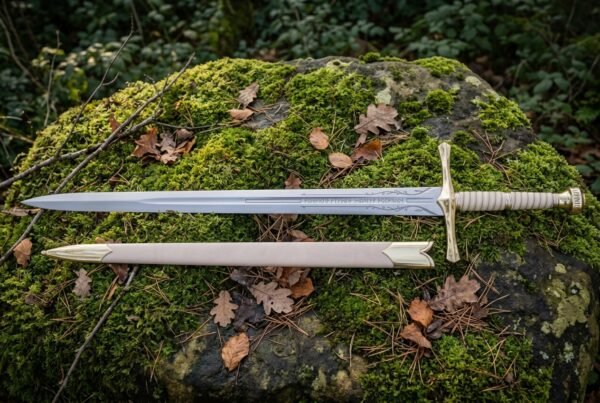
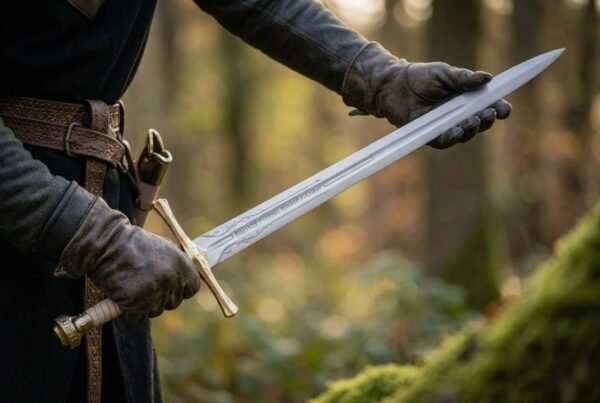
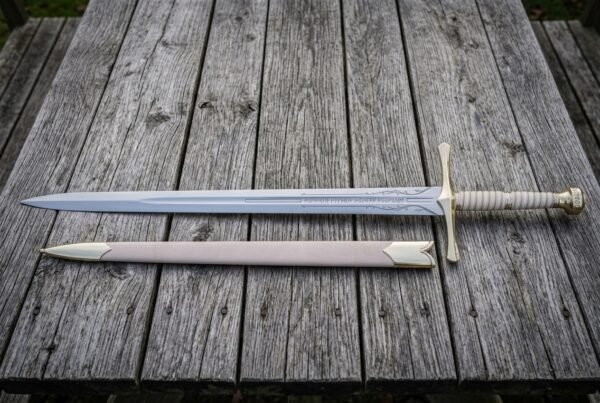
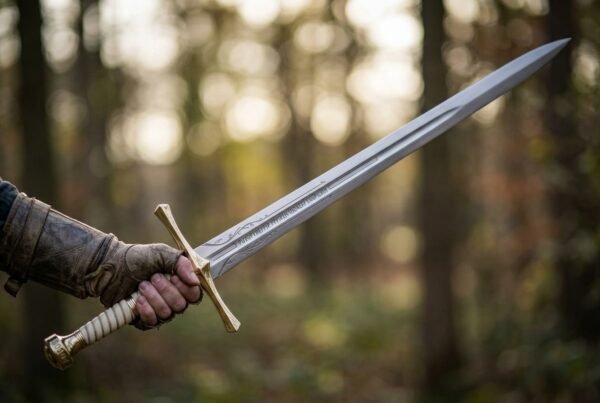
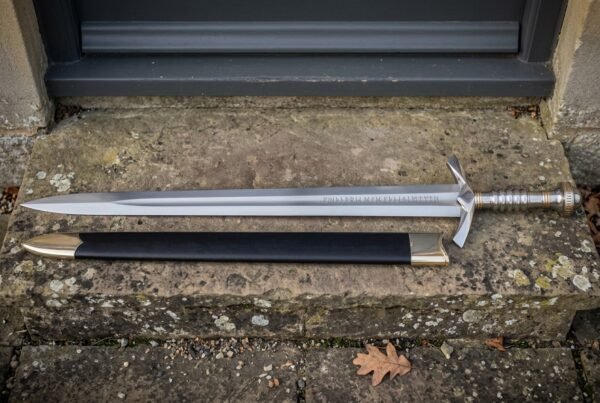
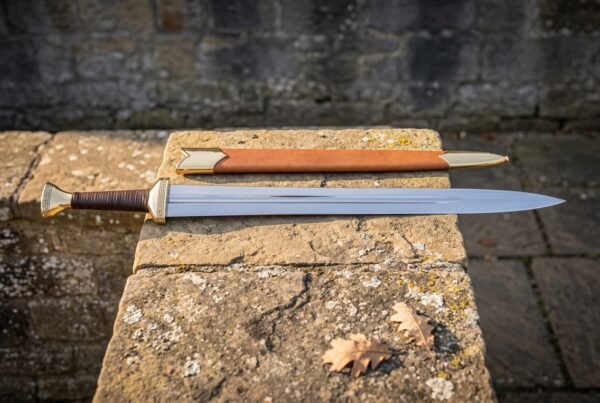
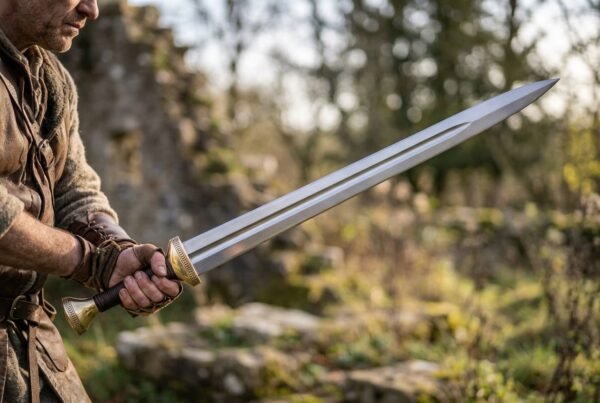
The elven look, and the most restrained group here. Long narrow blades of 33 to 35 inches on 42 to 44 inch swords, 1.75 to 1.9 inches wide at the shoulder and 4.8 to 5 mm thick at the guard, distally tapered toward the point. Cores are ribbed hardwood under cord and leather, with leaf shaped or straight guards and tapered pommels. Hardness on this group is 52 to 56 HRC, tempered softer so a long thin blade flexes rather than chips.
Runic broadswords and longswords
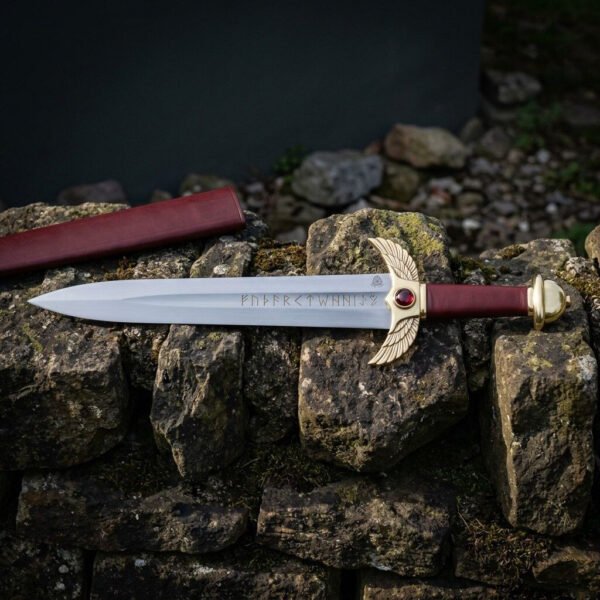
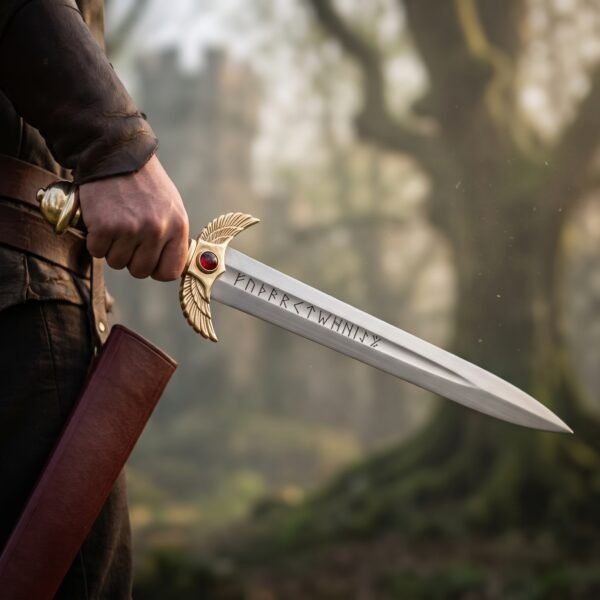
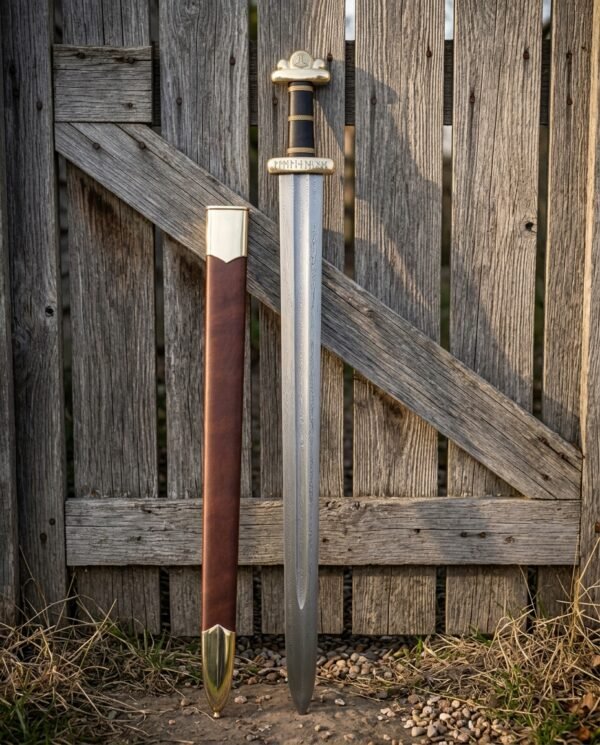
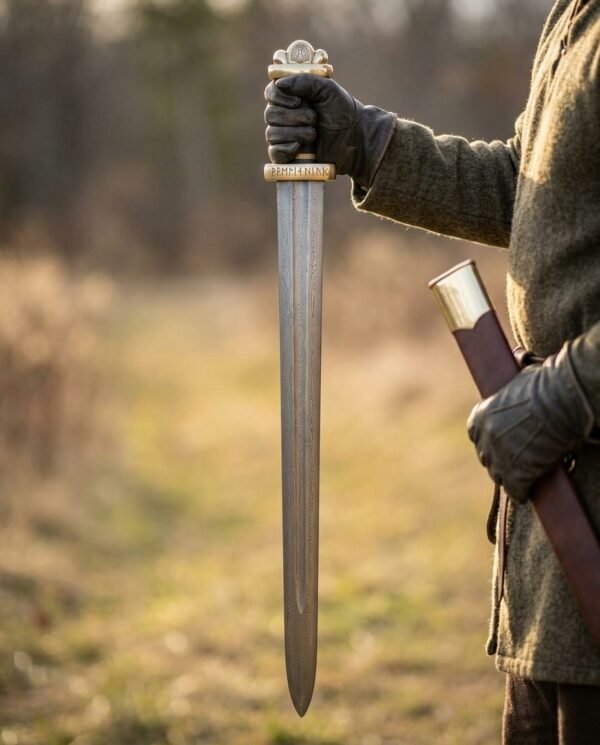
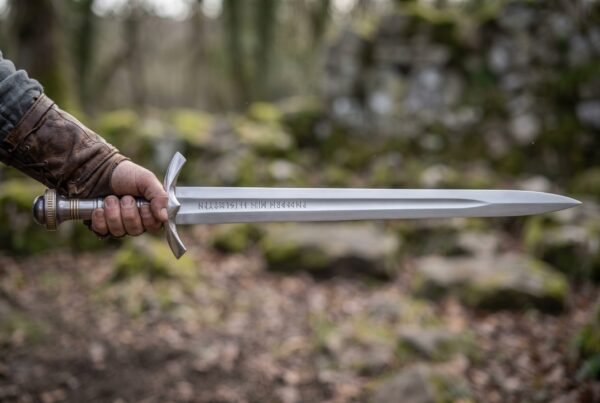
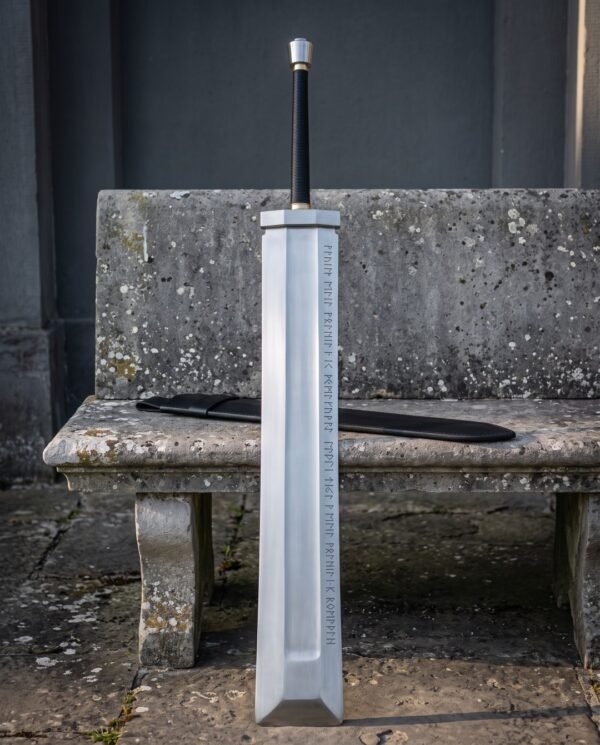
Broad blades carrying an engraved and darkened Elder Futhark inscription along the fuller. Lengths run 43 to 44 inches overall on 34 to 35 inch blades, up to 2.2 inches wide at the shoulder and 5.5 mm thick at the guard. Grips are deep red leather over hardwood with straight steel guards and peened pommels.
Leaf blades and short swords
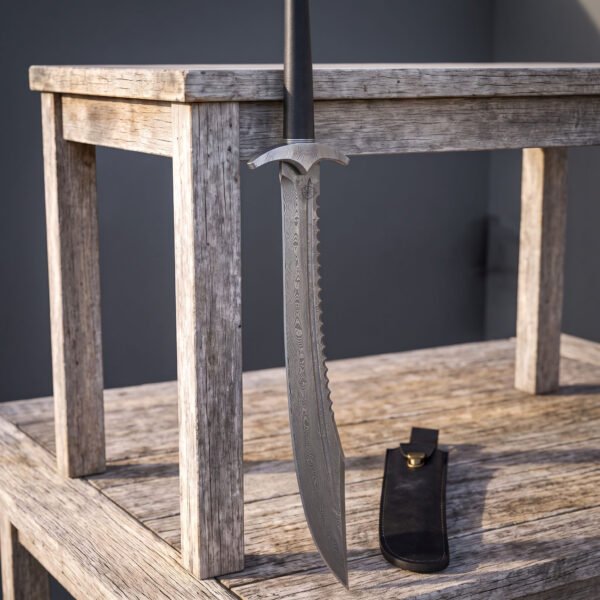
The compact end. Double edged leaf profiles with a raised central ridge, single edged falchion shapes with a saw toothed spine, and a 30 inch sawback piece on a 21 inch blade. These are the pieces that fit a shelf or a small wall rather than needing a full length stand.
Greatswords and double ended pieces
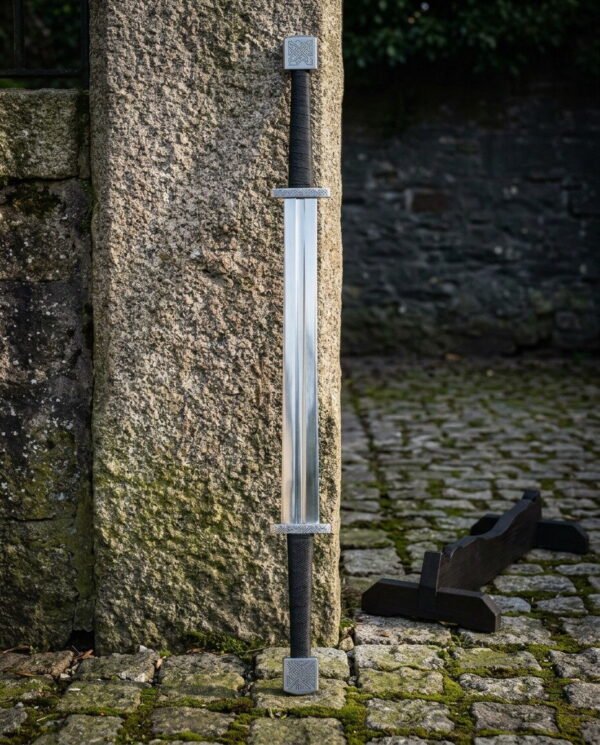
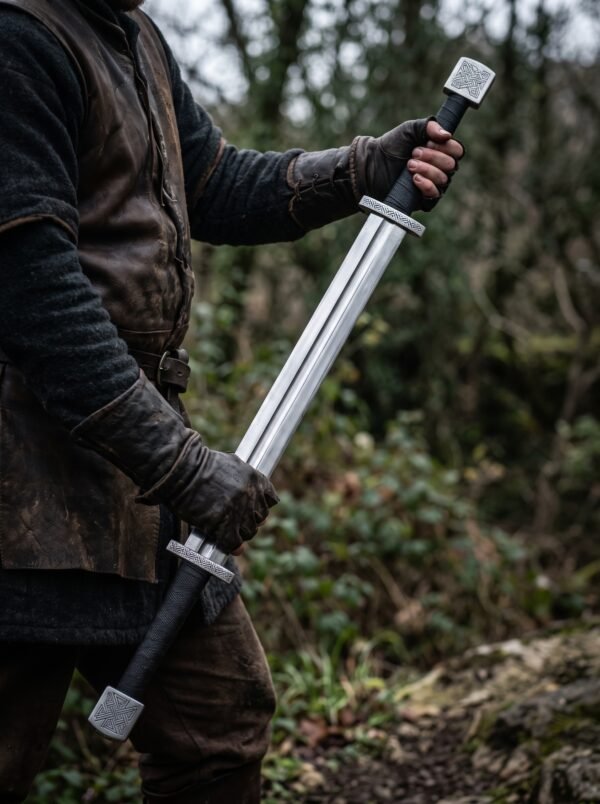
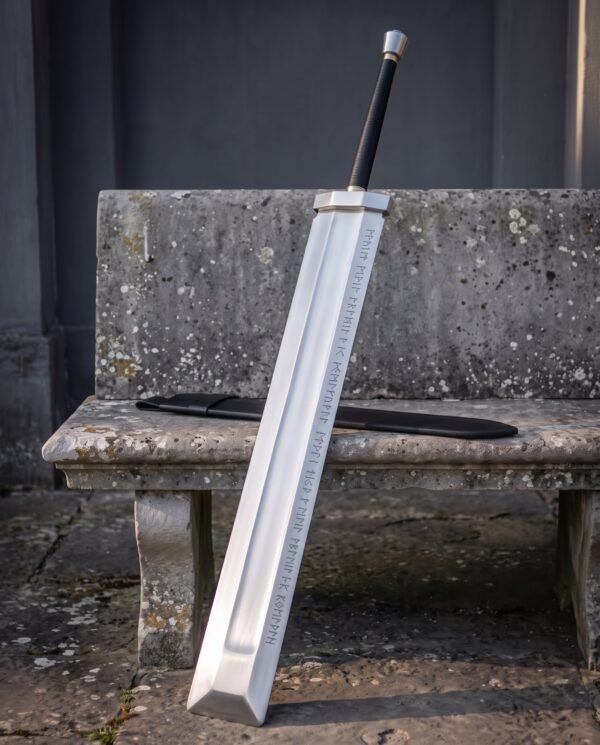
Two outliers worth knowing about. The greatsword runs 50 inches overall on a 39 inch blade about five inches across the flat, a satin polished slab with two lines of cut runes down it. The double ended piece is 44 inches overall with 22 inches of fullered blade between two guards and two cord wrapped grips, supplied with a dark wooden display stand.
Sizes and steel across the range
Every figure below is taken from the specification panel of a piece on this page. Blades are forged and ground by hand, so read the numbers as what to expect rather than as a guarantee to the millimetre.
| Shape | Overall length | Blade length | Steel and hardness | Grip | Supplied with |
|---|---|---|---|---|---|
| Flame blade, brass ring hilt | 33 in | 26 in | 1095 at 54 to 58 HRC | Brown leather over wood with a wire wrapped section | Not listed |
| Flame blade, straight steel guard | 35 in | 28 in | 1095 at 54 to 58 HRC | Black leather over a shaped core with brass collars | Leather scabbard |
| Flame blade in Damascus | 38 in | 31 in | Damascus at 58 to 60 HRC | Black leather over a wooden core | Leather scabbard with a steel chape |
| Barbed wave blade in Damascus | 40 in | 32 in | Damascus at 58 to 60 HRC | Wooden core with a brass ferrule | Brown leather scabbard |
| Barbed and toothed guard | 42 in | 32 in | 1095 at 54 to 58 HRC | Wound cord over a tapered core, 7 in | Black leather scabbard |
| Skull hilt with ram horn quillons | 36 in | 28 in | 1095 at 54 to 58 HRC | Black ribbed wrap over timber, 6 in | Black leather scabbard |
| Sawback short sword | 30 in | 21 in | 1095 at 54 to 58 HRC | Black cord wrap over a full tang, 5 in | Not listed |
| Slim tapering longsword | 43.5 in | 34.5 in | 1095 at 52 to 54 HRC | Cord under leather on a ribbed hardwood core | Cream leather scabbard |
| Runic broadsword | 43 in | 34 in | 1095 at 53 to 55 HRC | Deep red leather over a hardwood core | Not listed |
| Greatsword | 50 in | 39 in | 1095 at 54 to 58 HRC | Bound wrap over timber with a brass collar, 9 in | Not listed |
Blade width and thickness are the figures that tell you how a sword will feel. The slim longswords sit at 1.75 to 1.9 inches wide and about 5 mm thick at the guard, and the runic broadswords go to 2.2 inches and 5.5 mm. Half a millimetre at the guard is a real difference in a 34 inch blade once distal taper is applied along its length.
Steel, hardness and what those numbers mean
Two steels are presented as a house standard across this site and no others. Plain 1095 high carbon is the base for most of this page. Damascus of 1095 and 15N20 is used on the pattern welded pieces. A few listings here state a slightly different grade or a lower hardness in their own specification table, and where they do, that table is the accurate answer for that piece.
Hardness on this page runs wider than anywhere else on the site, from 52 to 60 HRC, and that spread is deliberate. A long slim blade tempered to 52 to 54 HRC will bend and spring back rather than crack. The same blade at 60 HRC would hold an edge longer and snap under a load a softer blade would shrug off. The broad greatsword and the shorter pieces sit at 54 to 58 HRC because the geometry supports it. Read the figure before you assume harder is better.
Both steels rust. Damascus here is mostly 1095 with 15N20 layers, so the etched pattern needs the same care as a plain blade. A wipe with an oiled cloth after handling prevents all of it.
Hilts, grips and how these are put together
Construction is the same across the collection. A tang runs the length of the grip and is peened over the pommel, so the guard, grip and pommel are held as a stack under compression. That is the historical method and it is what stops a hilt rattling loose after a year on a wall.
Grips are shaped hardwood cores wrapped in leather, cord, or cord under leather. The cord layer under a leather wrap gives a risered surface that the hand locates on, which is why the slim longswords use it. Guards and pommels are steel or brass, hand filed and polished, several cast and chased on the more decorative hilts. Where a stone is set into a guard it is a polished synthetic cabochon rather than a natural gem, and the product pages say so.
Bright brass darkens over months. A metal polish on a cloth brings it back, or leave it alone if the aged look suits the piece.
Sharp, blunt and what display means
Some pieces here arrive with a cutting edge and some are ground as display edges, and the product page is the only reliable place to find out which. Do not assume from the photographs. A polished bevel looks the same at arm's length whether it is sharp or not.
Nothing on this page is intended for contact use. Reenactment and stage combat need blunt rebated blades built to a federation standard, with rolled edges and a specified minimum thickness, and none of these are made to those rules. A hand forged carbon steel sword swung against another sword chips, and the chip is where a crack starts. If you want to cut, cut soft targets like water bottles and pool noodles with a piece the product page describes as sharpened, and read our guide on the difference before you buy for that purpose.
The helmet and the shield that appear in this collection are display and costume replicas rather than protective equipment, which their own specification tables state plainly.
Scabbards, stands and hanging
Most swords here ship with a leather scabbard over a shaped wooden core, several with a fitted throat and a steel chape. A scabbard is for transport and for storage on a hook. It is not a good long term home for a carbon steel blade, because the liner holds moisture against the steel and that is the usual cause of rust on a sword that was otherwise looked after.
For a wall, use a mount with felt lined cradles and fix into a stud or a proper anchor. A 50 inch greatsword is a real load on a plasterboard fixing. For a table or a mantel, a tiered stand holds one piece per tier and keeps the edges off the timber. We stock both.
Care and rust
One habit covers it. Wipe the blade dry, leave a light film of oil on the steel, and handle the blade with a cloth rather than bare fingers, because skin salts etch a print into a polished surface within days. Camellia, mineral or food safe oil all work.
If spotting has started, fine abrasive and oil lift it. Grey patina is stable and does no harm. On an etched Damascus blade, avoid aggressive polishing, since the pattern is a surface effect and heavy abrasive will dull the contrast between the layers.
Engraving
Most pieces here can be engraved after they arrive in the United States, onto the flat of the blade above the ricasso or onto the guard. Several already carry cut rune lines, knotwork panels or etched inscriptions from the maker. Elder Futhark is a phonetic alphabet rather than a cipher, so a name is transliterated by sound, and there is no rune for the letter C. Engraving is permanent and an engraved piece cannot be returned, so send the exact spelling and read it twice.
Where these swords are made
Every blade on this page is made by hand in the Czech Republic. Finished pieces are imported to the United States, inspected by Ransack Viking in Chicago, Illinois, and shipped from there, with engraving added after arrival. Small differences in grind, etch figure and leather colour between two swords of the same name are normal, because two people made them on two different days.
Browse related sword categories
- Flamberges with undulating flame blades
- Longswords with hand and a half grips
- Arming swords, the single handed knightly blade
- Short swords for shelf and close display
- Zweihanders and two handed greatswords
- Damascus swords in forge welded 1095 and 15N20
- The full sword range across every type
- Sword stands and wall displays
Guides worth reading first
- How to buy your first sword without wasting money
- Display sword vs battle ready: what the words actually mean
- How to display swords and axes safely on a wall
- The steel glossary: hardness, tempering and blade terms
- Damascus vs high carbon steel: which blade should you buy
Frequently asked questions
Are these swords sharp?
Some are and some are ground as display edges. The specification table on each product page states the edge, and that is the only reliable place to check. Do not judge it from a photograph, because a polished bevel looks the same either way.
Can I use one of these for reenactment or sparring?
No. Contact use needs blunt rebated blades built to a federation standard with rolled edges and a minimum thickness, and nothing here is made to those rules. A hand forged carbon steel blade chips when it strikes another blade, and a chip is where a crack starts.
What steel are the blades?
Hand forged 1095 high carbon on most of the page, hardened between 52 and 58 HRC depending on the piece, and Damascus of 1095 and 15N20 at 58 to 60 HRC on the pattern welded swords. A few listings state a slightly different grade in their own table, and that table is correct for that piece.
Why are some blades softer than others?
Because of the geometry. A long slim blade is tempered to 52 to 54 HRC so it bends and springs back rather than cracking. A broader, shorter blade can sit at 54 to 58 HRC and hold an edge longer without the same risk. Harder is not automatically better in a sword.
Does the sword come with a scabbard?
Most do, in leather over a shaped wooden core, several with a fitted throat and a steel chape. The included line on each product page lists what ships with that piece. Store the sword out of the scabbard if it will sit for months, because the liner traps moisture against the steel.
What is a flame blade for?
Historically the undulating flamberge blade was a European form, and the waves were said to make a cut bite rather than glance and to slow a blade running along an opponent's edge. On this page it is chosen for the outline rather than for that effect.
Will the blade rust?
Yes, if you let it. These are carbon steels, not stainless, and Damascus here is mostly 1095 with 15N20 layers. Wipe the blade dry, keep a light film of oil on it, and handle it with a cloth rather than bare fingers, because skin salts etch a print into a polished surface within days.
Where are these swords made?
They are made by hand in the Czech Republic, then imported, inspected and shipped by Ransack Viking from Chicago, Illinois, with engraving added in the United States after arrival.
When the films make you want to fence
Watching a screen duel is one thing and trying it at a club is another, and our HEMA longswords are the blunt way to find out. If you are not sure about steel yet, synthetic or steel trainers weighs up both. The Tevrand nylon waster longsword is an easy way in.