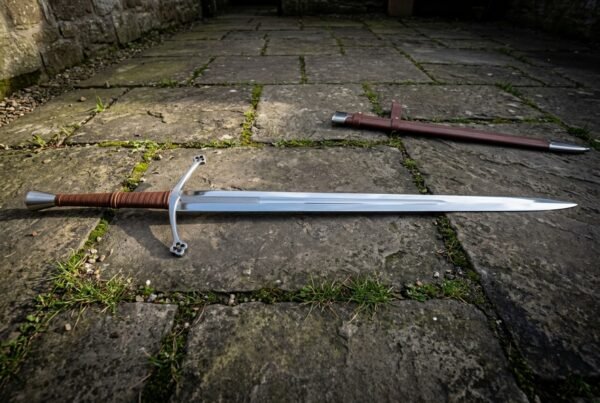
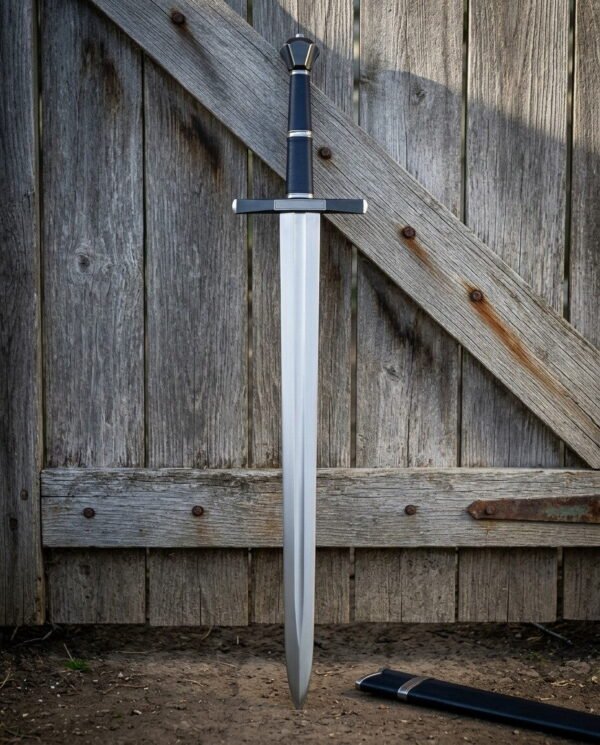
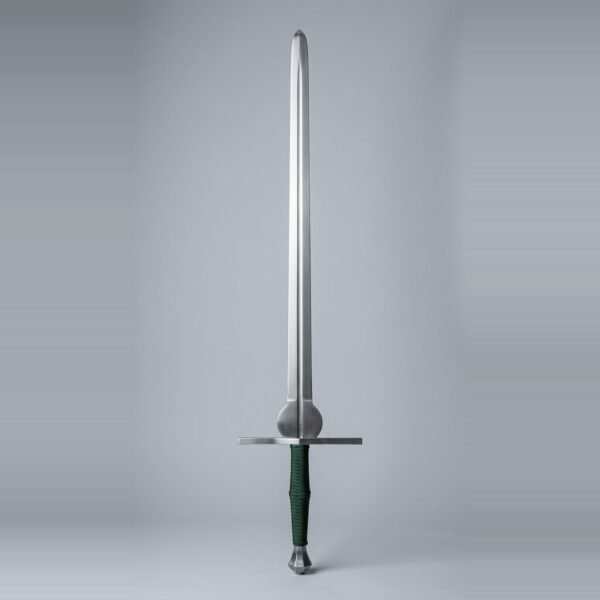
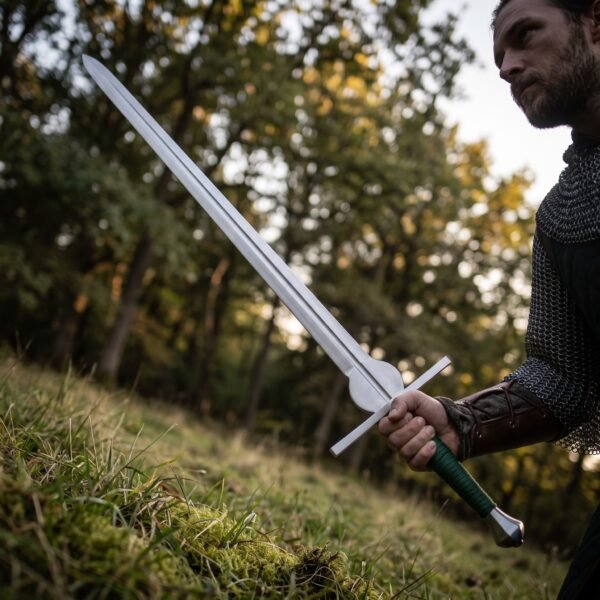
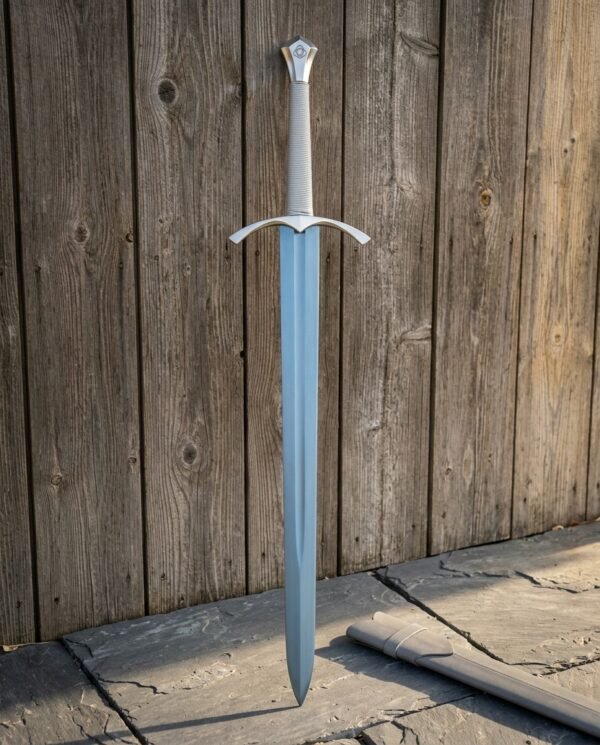
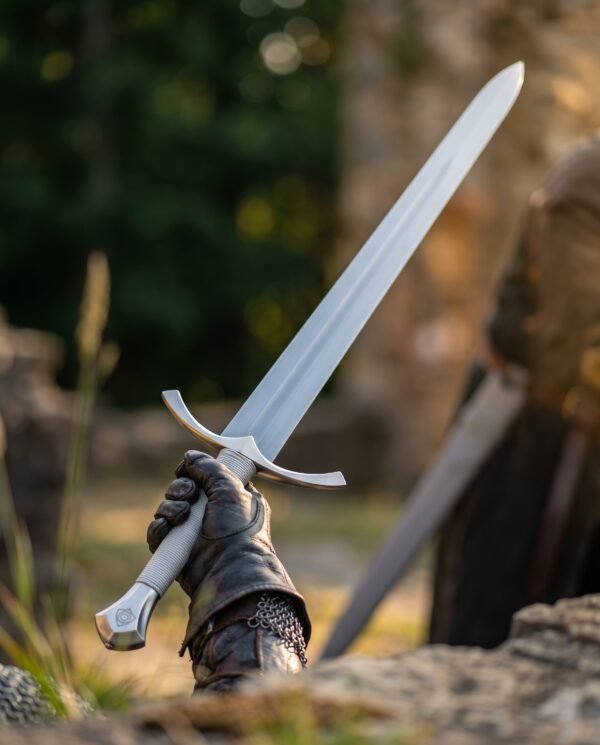
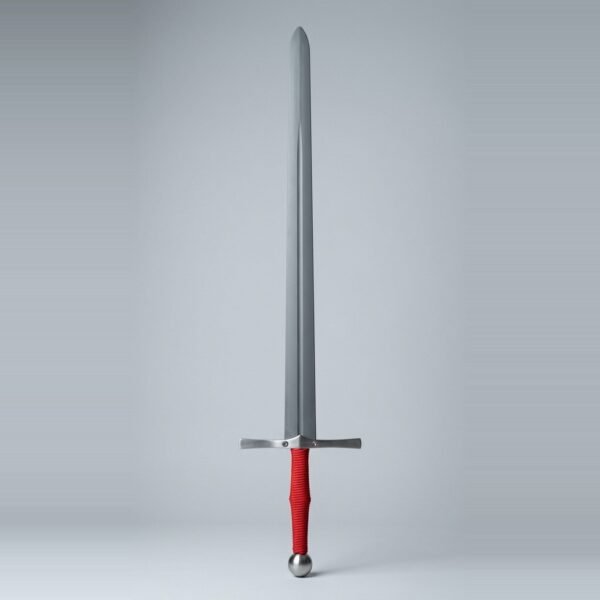
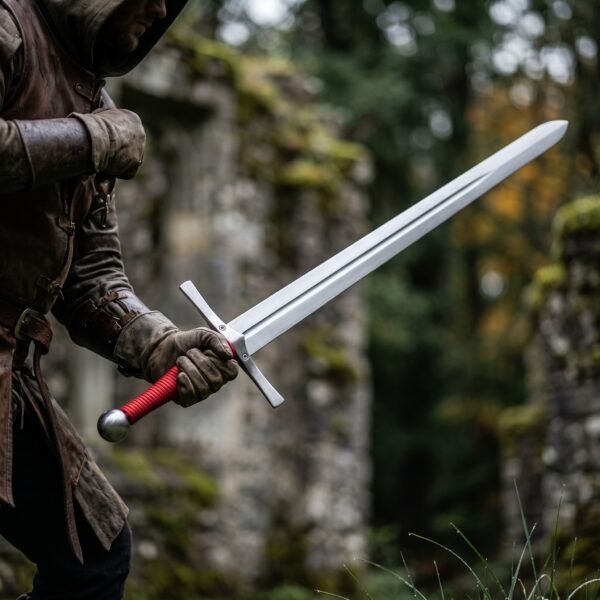
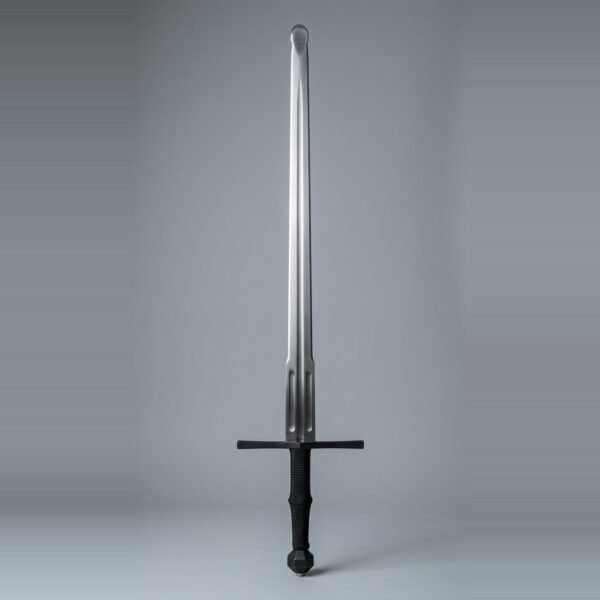
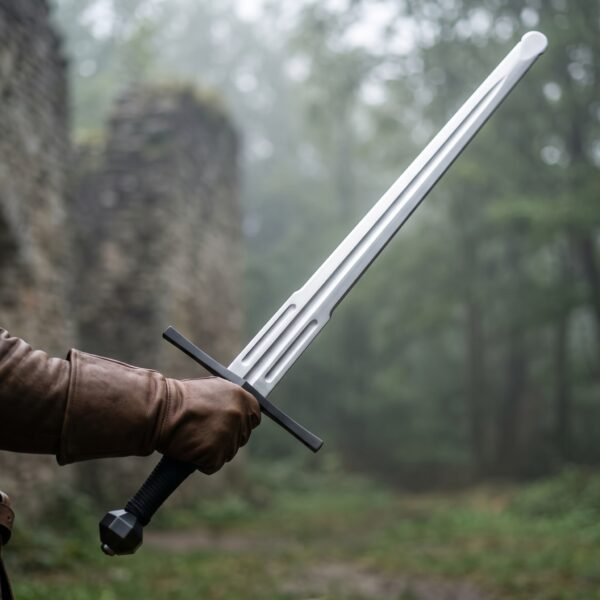
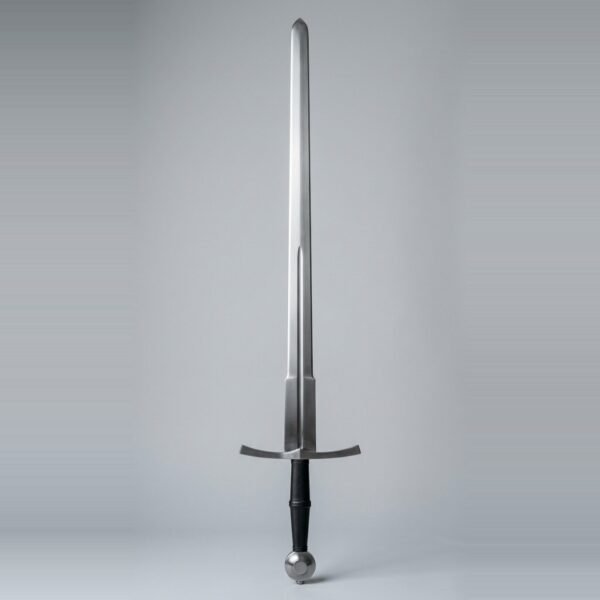
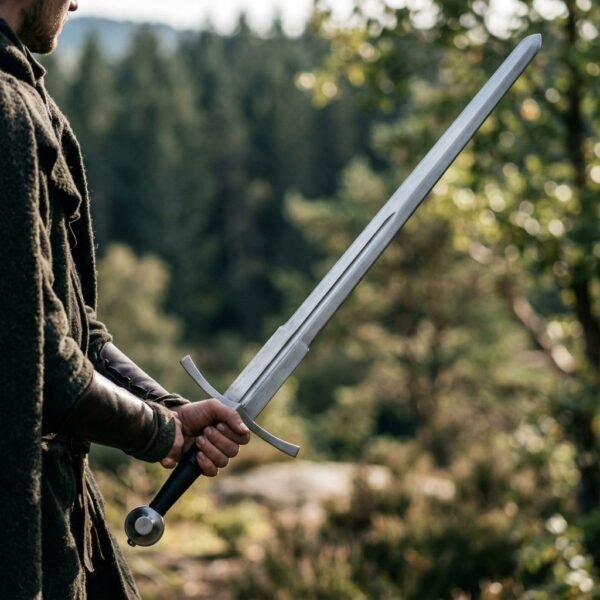
Longswords are the two handed cutting and thrusting swords of the late medieval period, and this collection runs 38 to 48 inches overall with 28 to 36 inches of blade. Grips measure 6 to 10 inches between guard and pommel, which is a full two handed hold on the longer pieces and a hand and a half on the shorter ones. Below the grip is a crossguard, sometimes straight, sometimes S curved or fitted with parrying hooks. Above it sits a wheel, disc, scent stopper or fluted crown pommel. Bastard swords, war swords, flame bladed longswords and knightly replicas all share the page.
Two steels run through the group. Plain 1095 high carbon is hardened to 54 to 58 HRC. Damascus of 1095 and 15N20 is forge welded, folded and acid etched at 58 to 60 HRC. Listed bare weights sit between about 2 lb 15 oz and 3 lb 12 oz, which is where a longsword of this size belongs.
Choose the grip length first, because a 6 inch grip and a 10 inch grip handle like two different swords whatever the blade measures. That is the first thing the buying guide checks.
Free US shipping
On most pieces. Heavier and oversized ones carry a flat charge.
Hand Forged
Heated, hammered and ground by hand.
Engraving available
Names, dates or Norse runes on most pieces.
Ships from Chicago
Inspected and dispatched from our Chicago warehouse. No import duty, no customs delay on US orders.
Longswords
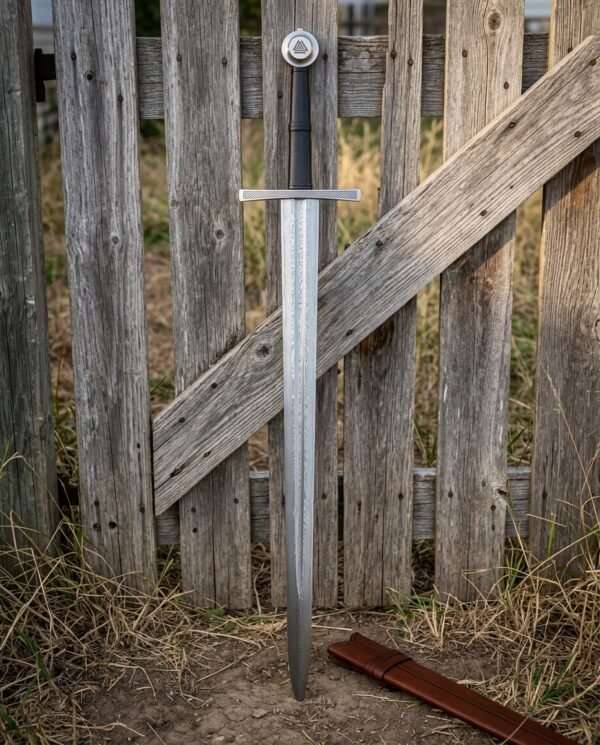
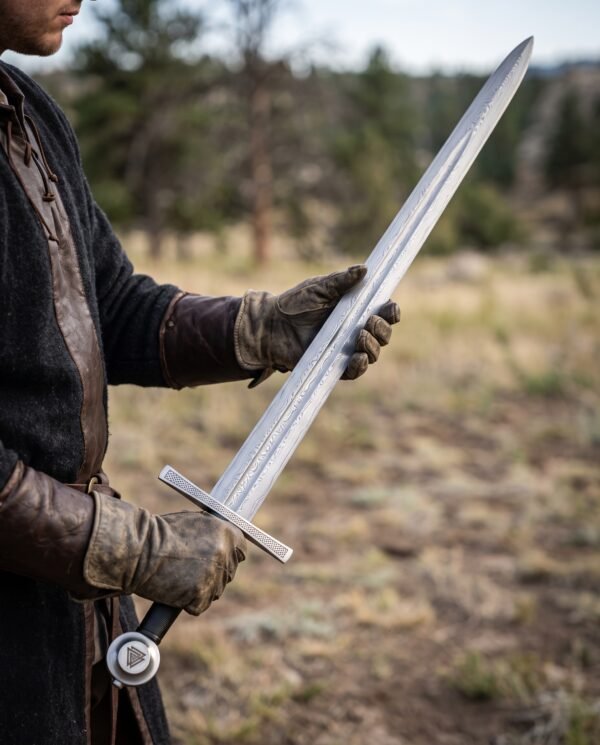
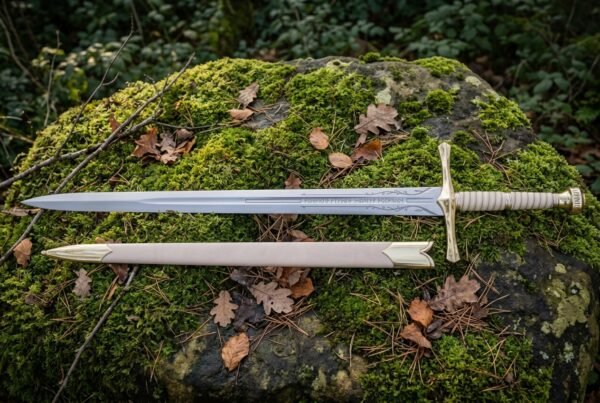
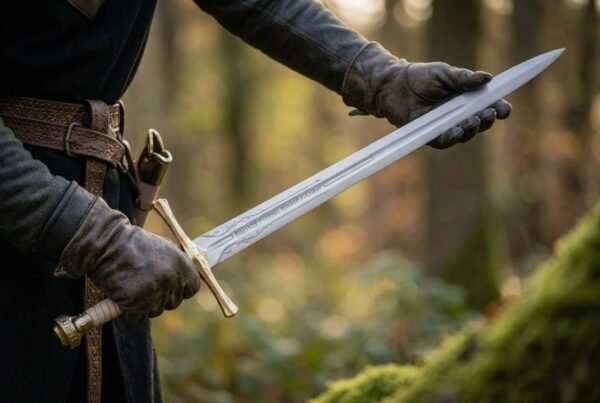
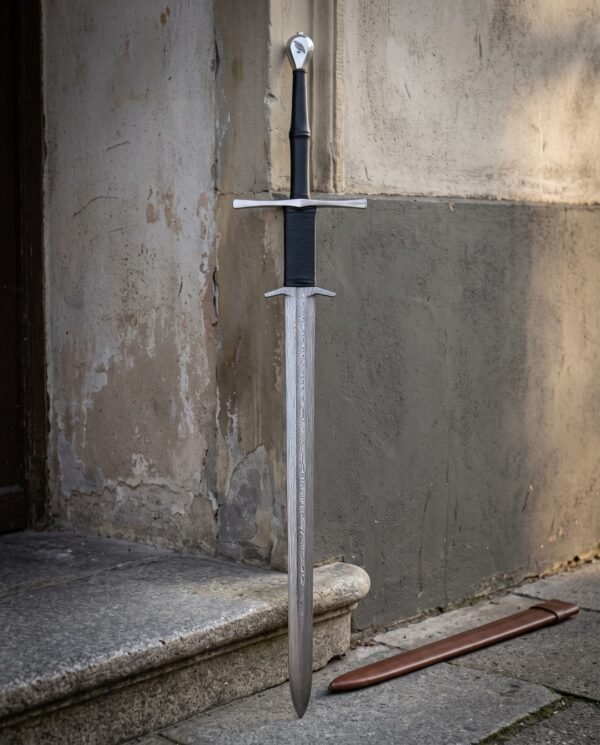
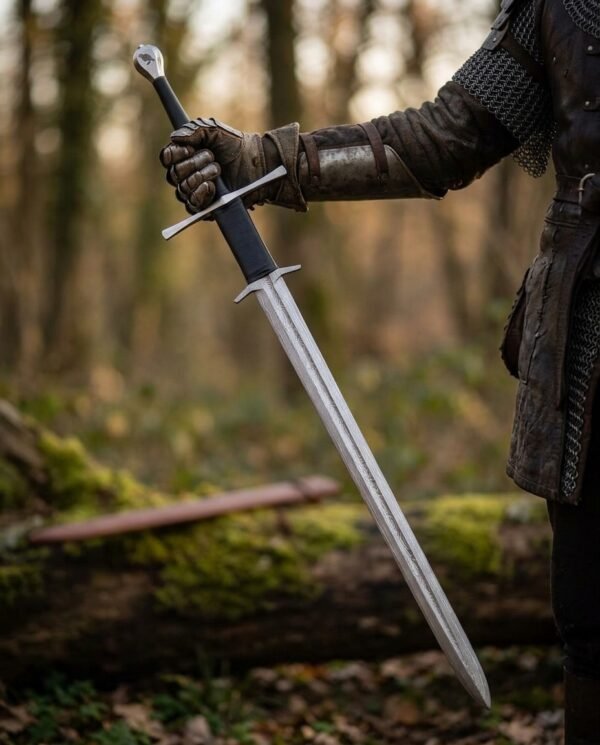
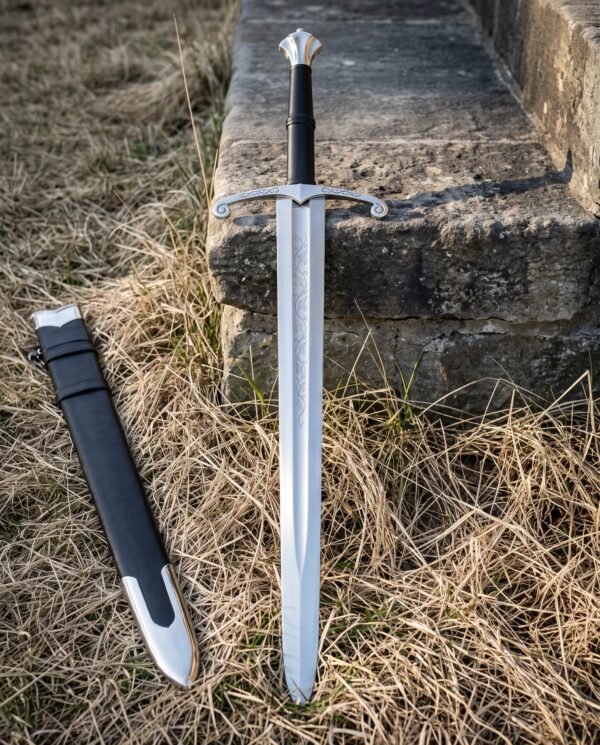
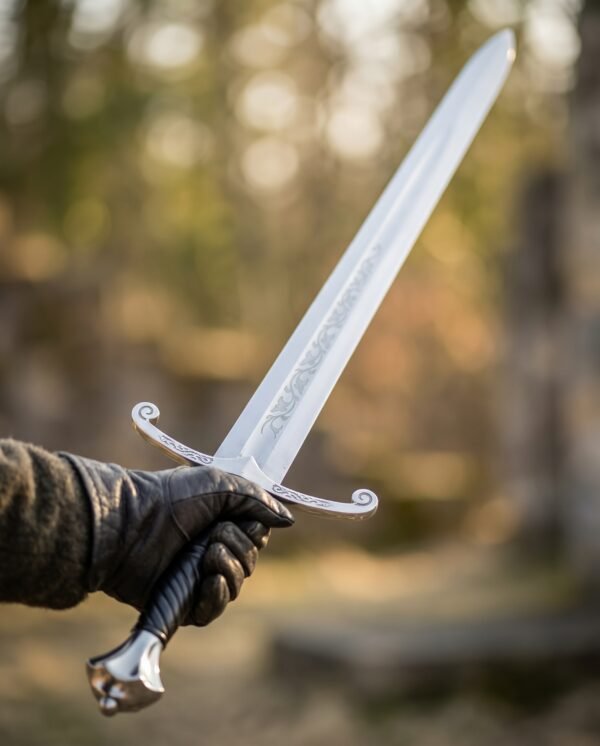
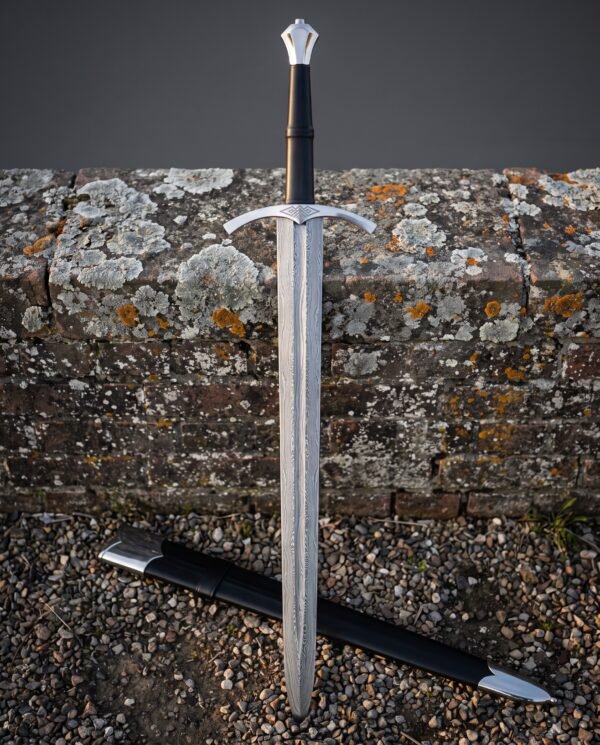
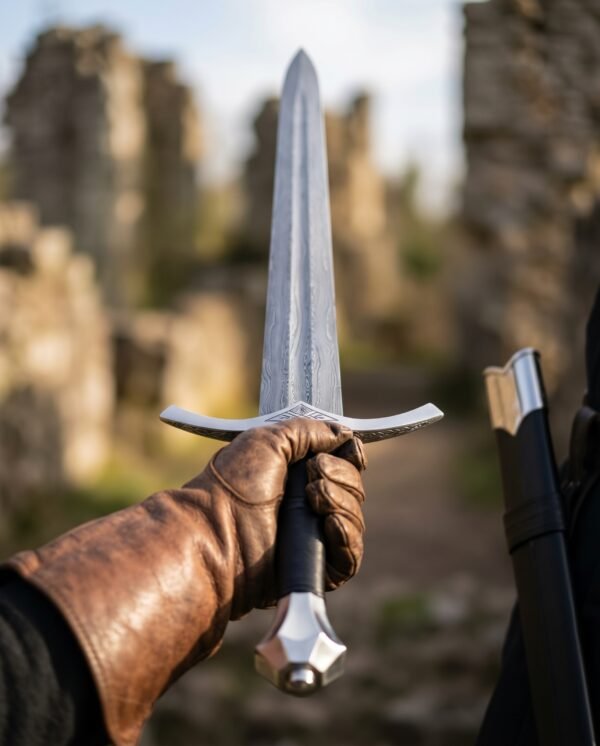
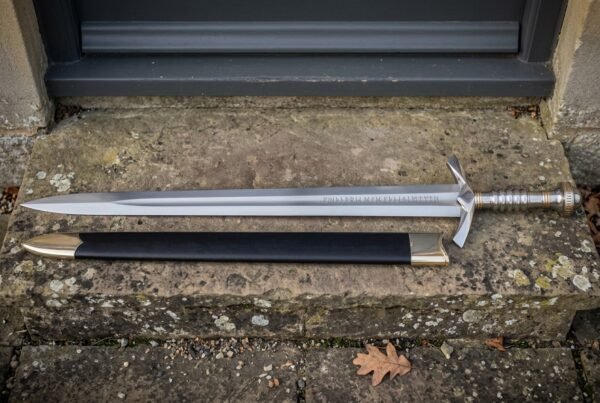
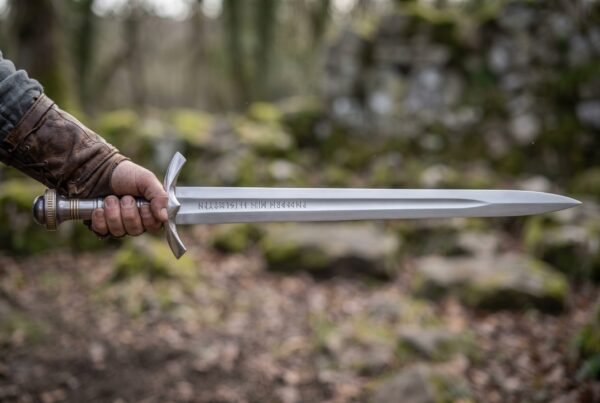
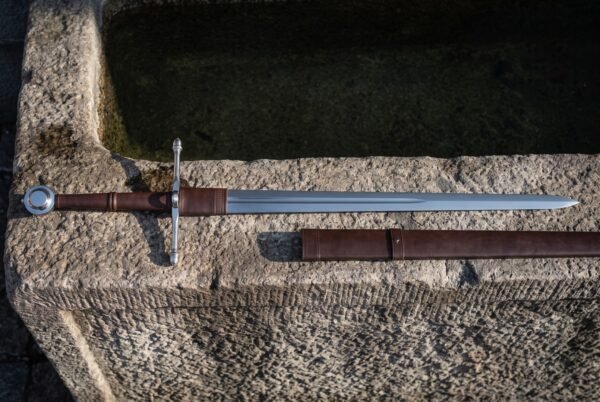
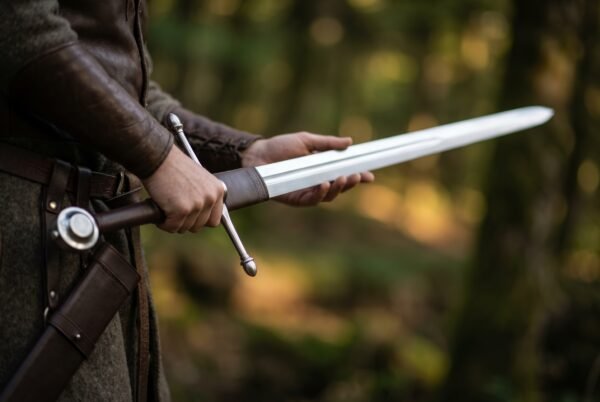
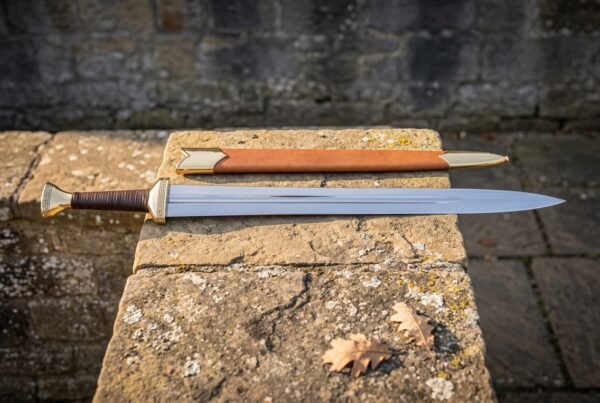
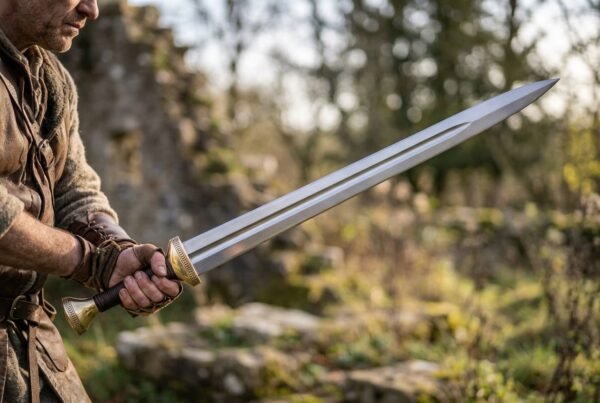
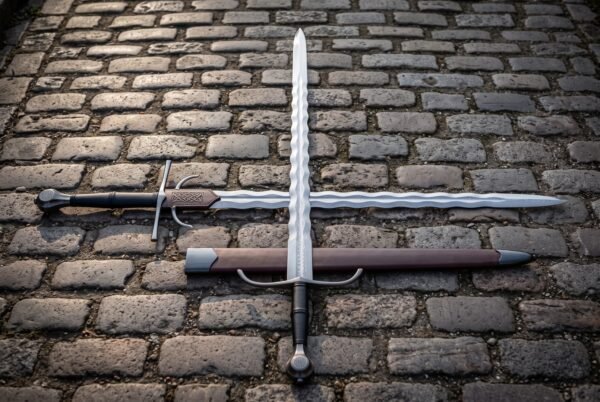
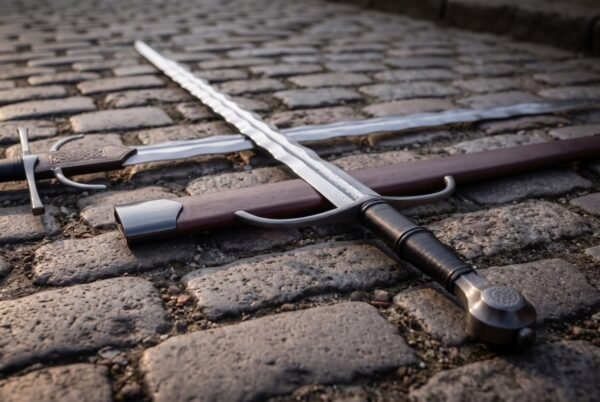
What a longsword is, and what it is not
A longsword is defined by its grip rather than by its blade. If the handle is long enough that the second hand has real work to do, it is a longsword. If the second hand can only crowd onto the pommel, it is an arming sword with a generous handle. Every other distinction people draw follows from that one.
The form appears in Europe around the late thirteenth century and stays in serious use for roughly two hundred and fifty years. It arrives because armour improves. Once a fighter is inside mail with plate over the vulnerable parts, cutting at him with a broad Viking style blade stops paying, and the answer is a longer sword with a stiffer, more acutely tapered blade that can be gripped in two hands and driven into a gap. The blades on this page reflect that: diamond sections, central fullers that stop well short of the point, and tips that come to a genuine point rather than a rounded end.
What a longsword is not is heavy. The persistent idea that a medieval two hander weighed eight or twelve pounds comes from Victorian writers rather than from surviving swords. The pieces here that state a weight run from 2 lb 15 oz to 3 lb 12 oz, and original longswords in museum collections sit in the same band. Anything genuinely heavier than about four pounds is either a ceremonial bearing sword or a modern piece built without regard to how a sword works.
It is also not a greatsword. A zweihander or claymore is a different category with a longer grip, a longer blade and often a ricasso to grip above the guard, and those live on their own pages.
Hand and a half, bastard sword and war sword
Three names get used for overlapping things and the overlap is genuine rather than sloppy. A hand and a half sword has a grip of roughly 5 to 7 inches, long enough to add a second hand for a heavy blow and short enough to use one handed with a shield. Bastard sword is a period term for the same idea, so called because the sword belonged to neither the single handed nor the two handed family. War sword, or grosse messer of the sword world, generally means the larger end of the same group, with a longer blade meant for the field rather than the street.
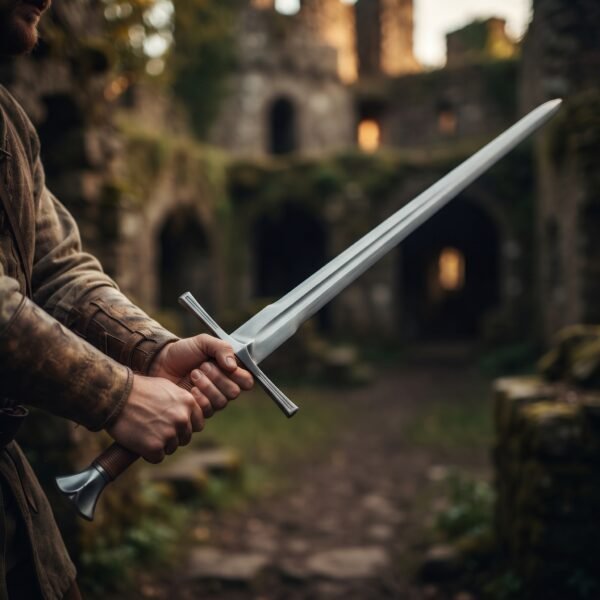
On this page the practical guide is the stated grip length. Pieces with 6 to 7 inch grips are hand and a half swords, whatever the title says, and will handle in one hand at a pinch. Pieces with 8 to 10 inch grips are true two handers and feel wrong with one hand on them. A 48 inch war sword with a 10 inch grip and parrying hooks above the guard is a different tool from a 41 inch knightly sword with a 6 inch grip, even though both are sold as longswords.
If you are buying for a wall, this matters less than the blade profile. If you are buying to handle, it is the first number to check.
The shapes on this page
Five families cover the collection. The differences are in blade section and guard rather than in overall length, which varies less than you might expect.
Knightly longswords
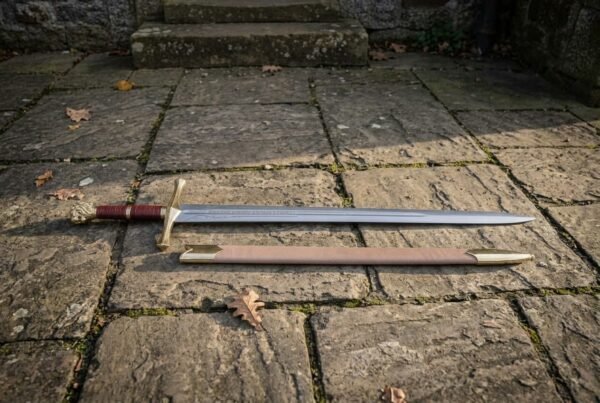
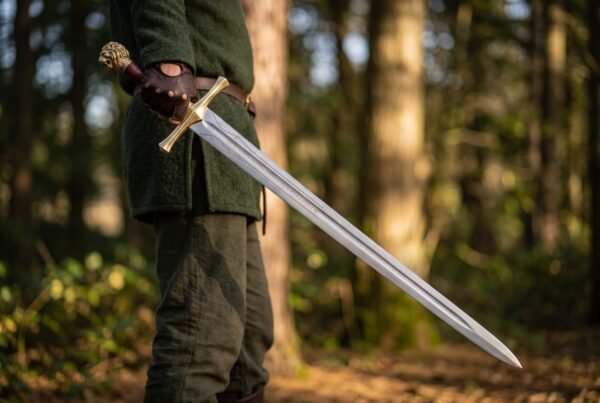
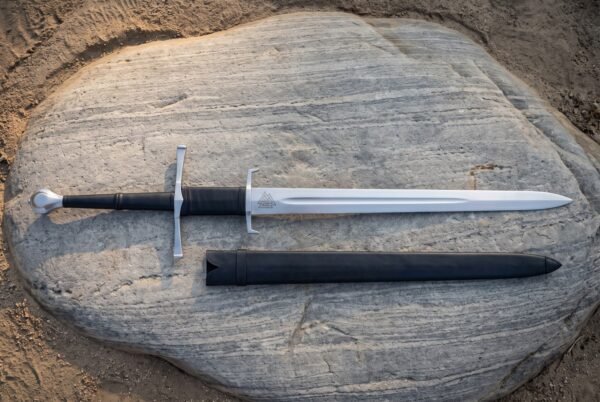
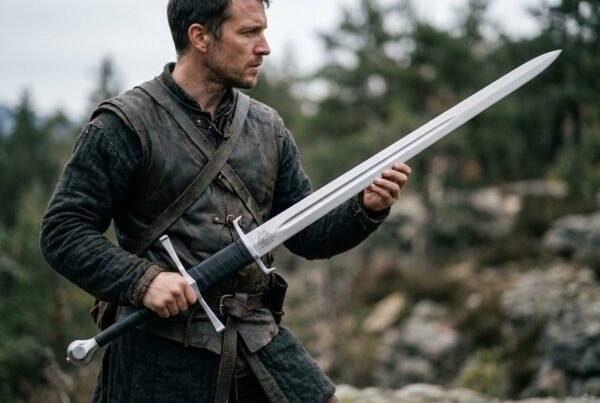
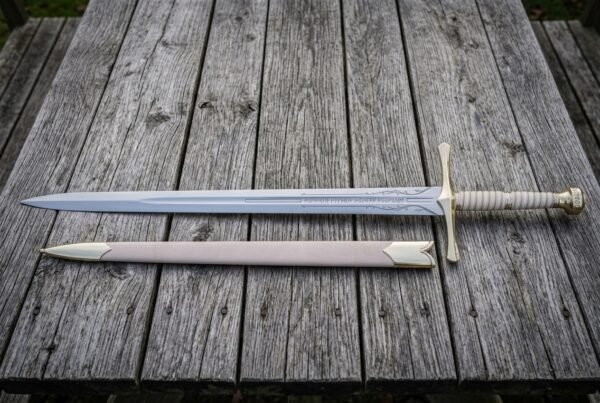
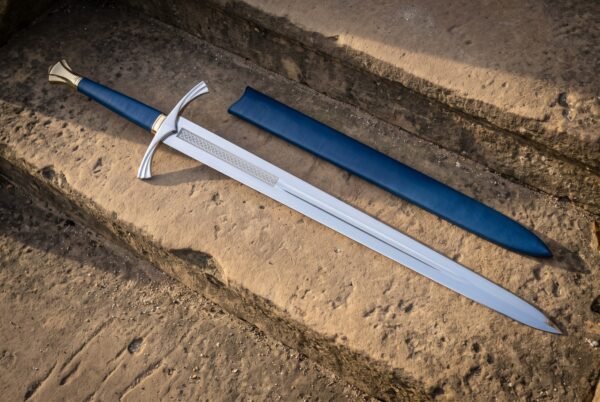
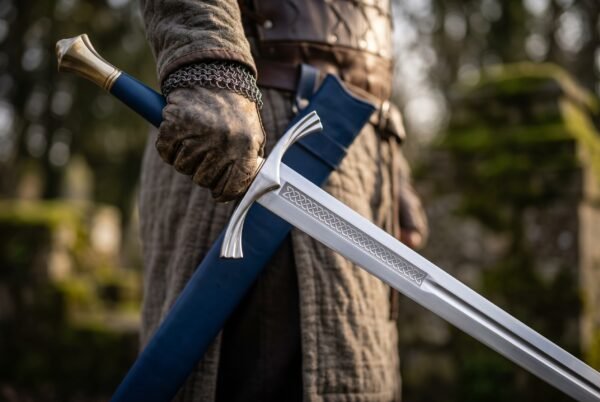
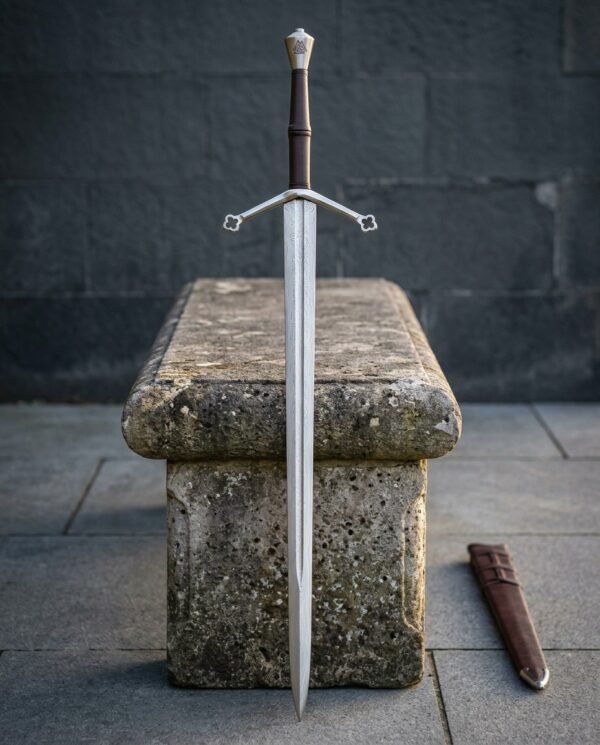
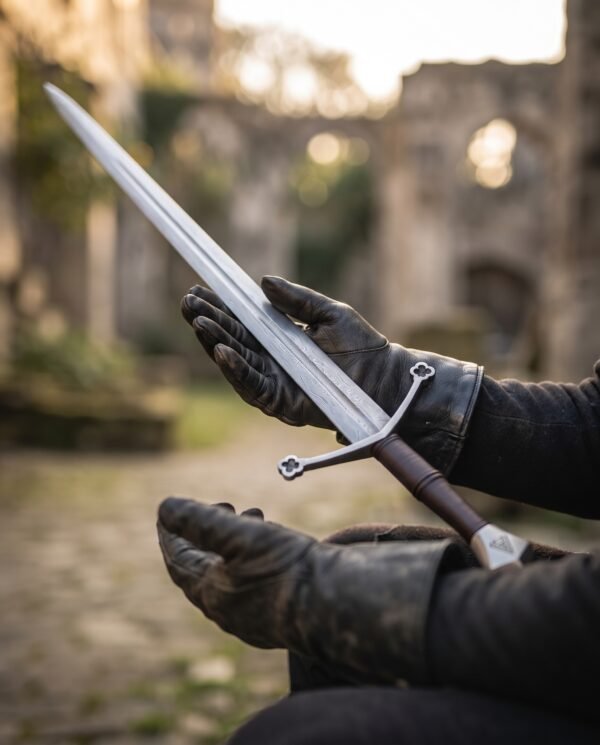
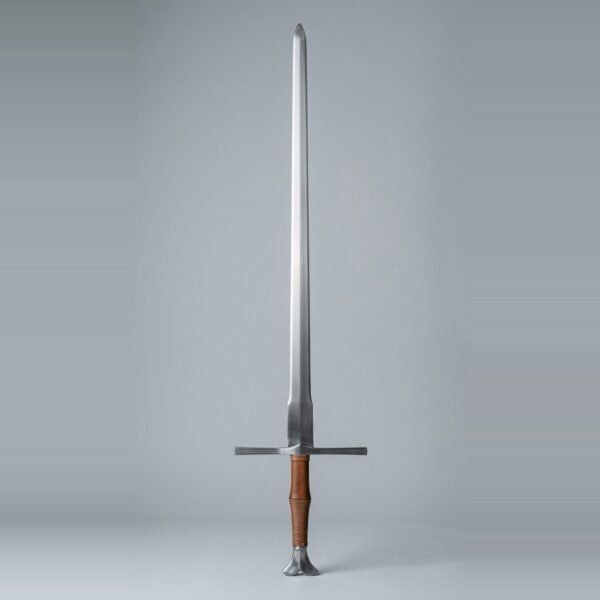
The main body of the page. Straight double edged blades of 31 to 35 inches with a central fuller through the upper half or a plain diamond section, a straight or slightly curved crossguard, and a wheel, disc or scent stopper pommel peened over the tang. Overall lengths run 41 to 45 inches, grips 6 to 9 inches. Listed weights are 3 lb 2 oz to 3 lb 9 oz. This is the shape most people picture when they hear the word, and it is the safest first longsword.
Flame bladed longswords
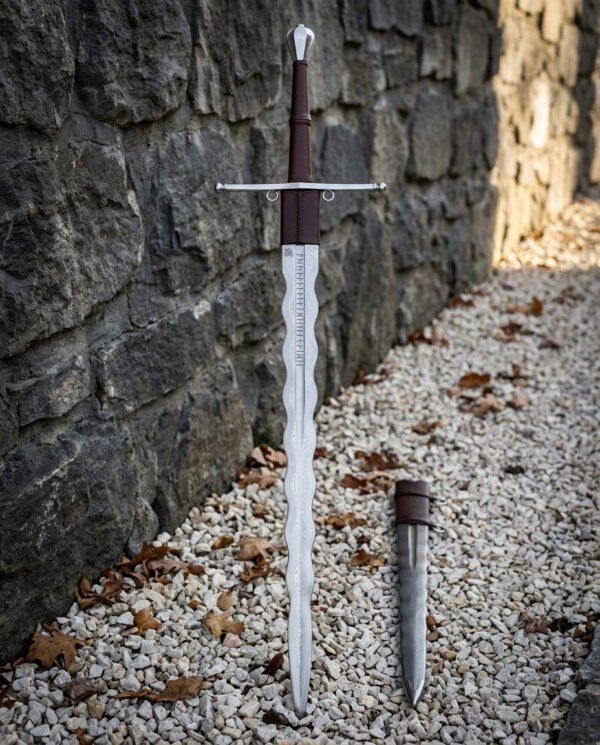
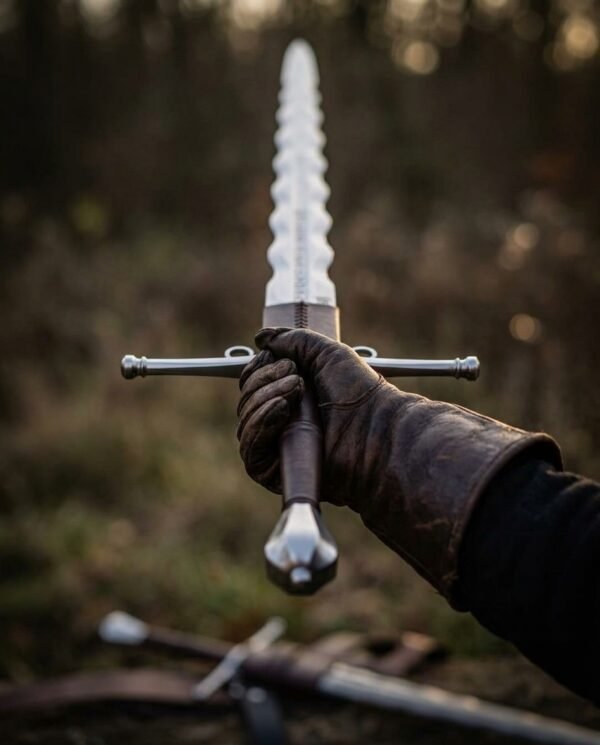
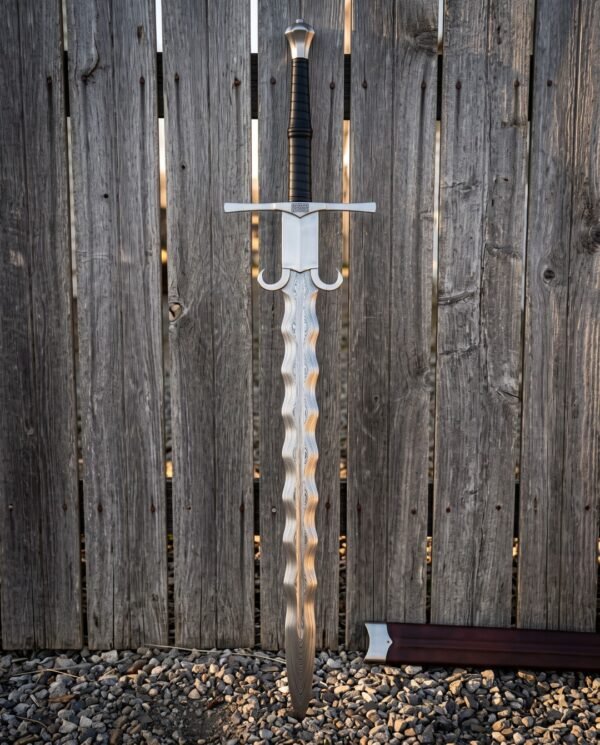
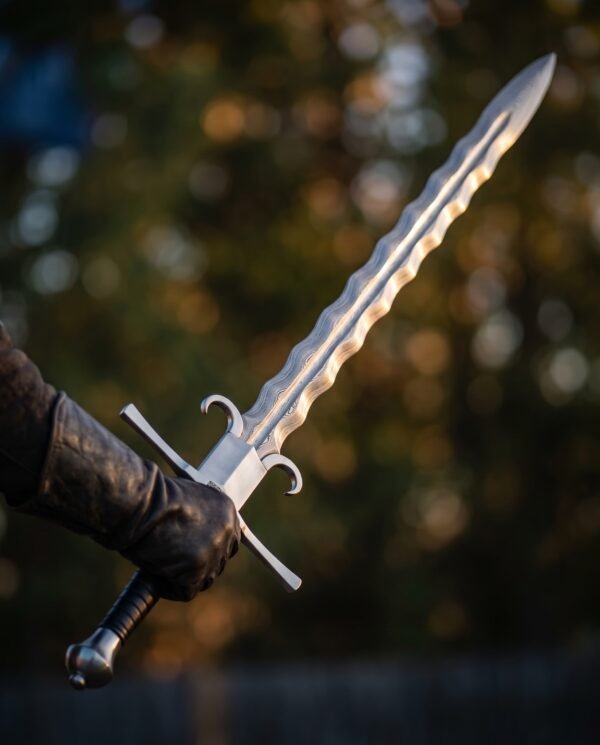
Undulating blades in the flamberge tradition, about 42 to 43 inches overall with 32 to 33 inch blades, some with an S curved crossguard and an engraved pommel, one supplied with a matching dagger. The waves add nothing to a cut, and the historical argument for them was that they caught and shivered against an opposing blade in a bind. On a wall they are the piece people ask about.
War swords and two handers with parrying hooks
The long end. Blades of 36 inches on a 48 inch overall length with a 10 inch grip and a stiff diamond section, and a pair of hooks set above the crossguard. The hooks let a fighter grip the flat of the blade above the guard, a technique called half swording, without the hand sliding down onto the edge. These need real wall space and a solid mount.
Fantasy, film and legend replicas
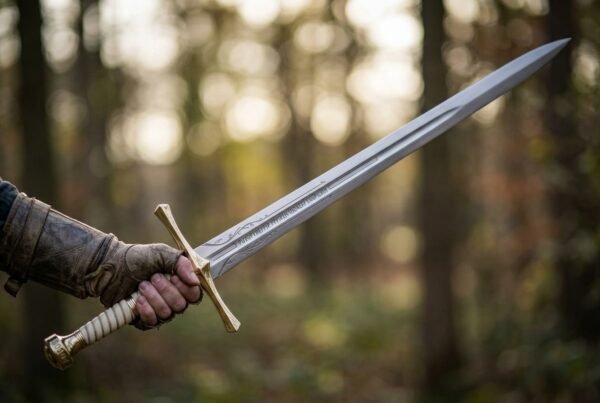
Elven style longswords, ranger swords, a Camelot king sword and an Excalibur replica, running 41 to 45 inches overall with 32 to 36 inch blades and listed weights from 2 lb 15 oz to 3 lb 12 oz. Most state a display edge as standard with sharpening available on request, which the product page says. Fittings lean towards engraved guards and risered leather grips stitched on the reverse.
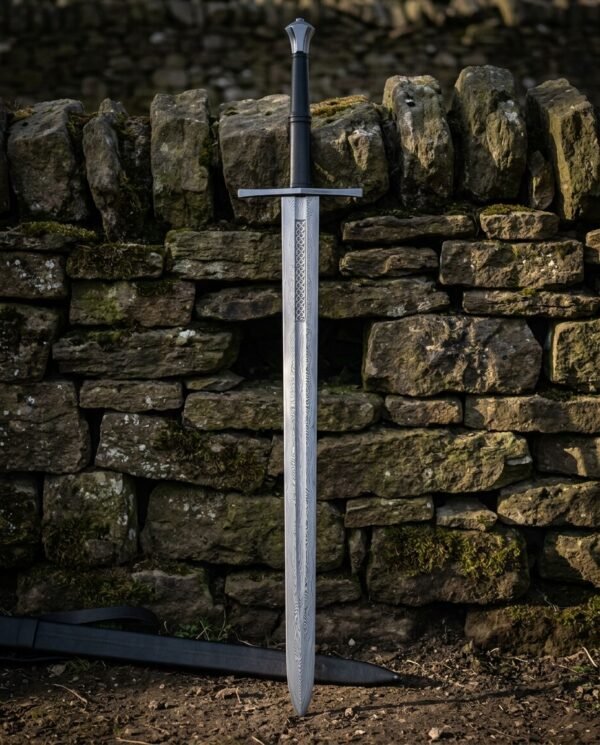
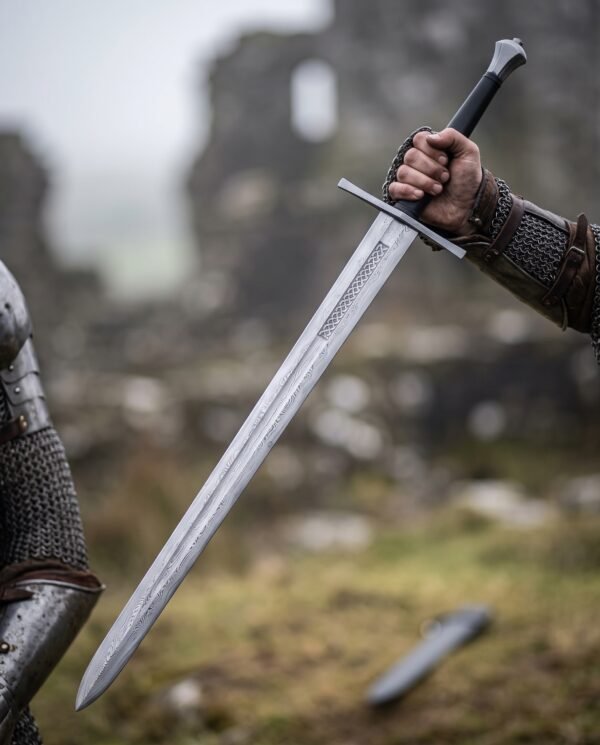
Damascus longswords
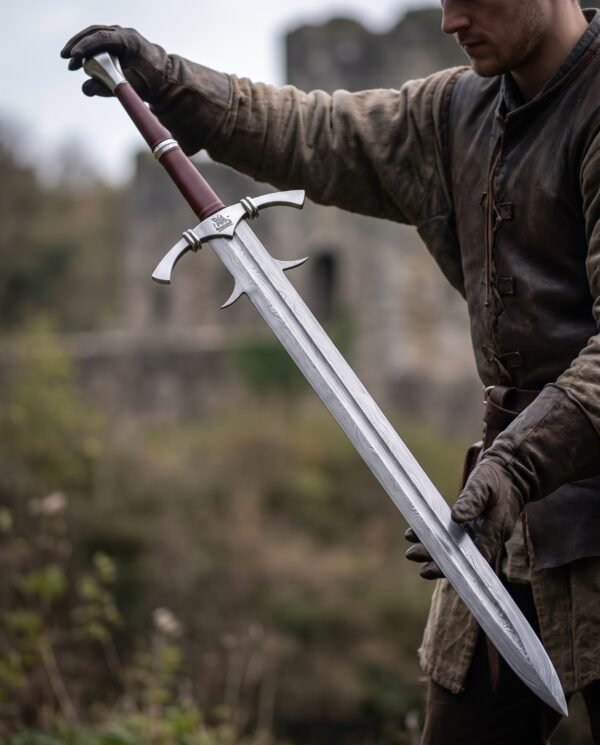
The pattern welded versions of everything above, at 44 to 46 inches overall with 33 to 35 inch blades, hardened to 58 to 60 HRC. Forge welding a billet long enough to draw into a 35 inch blade is a great deal of work, which is where the price difference sits. One piece here is listed as sharpened and ready to use at 3 lb 6 oz.
Lengths, weights and steel across the range
Every figure below is taken from the specification panel of a product on this page. Nothing is estimated, and a blank is shown as not listed rather than filled in.
| Piece | Overall length | Blade length | Steel and hardness | Bare weight | Grip and note |
|---|---|---|---|---|---|
| Palecourt medieval longsword | 41 in | 33 in | 1095 high carbon | About 3 lb 2 oz | 6 in cord bound grip |
| Thornwatch knight sword replica | 41 in | 32 in | 1095 high carbon | About 2 lb 15 oz | Display edge as standard, sharpened on request |
| Flamewake flame bladed longsword | About 42 in | About 32 in | 1095 at 54 to 58 HRC | Not listed | Two handed grip, unsharpened display edge |
| Valkhewn longsword | About 43 in | About 32 in | 1095 at 54 to 58 HRC | Not listed | About 9 in grip, central fuller |
| Shellcrown knotwork longsword | 43 in | 34 in | 1095 at 54 to 58 HRC | About 3 lb 4 oz | 7 in grip, sized for a hand and a half |
| Beakcrown Damascus longsword | About 44 in | About 33 in | Damascus at 58 to 60 HRC | Not listed | About 9 in grip, diamond section blade |
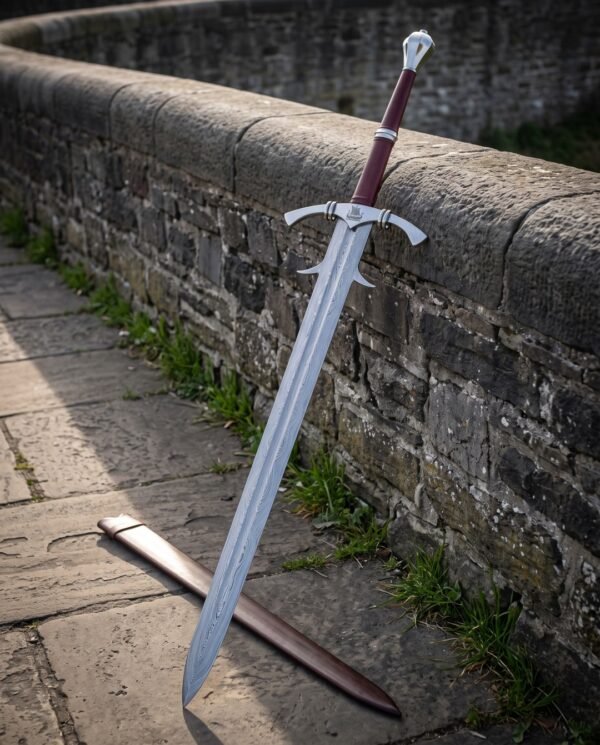
| Prowcrown Damascus longsword | About 44 in | About 34 in | Damascus at 58 to 60 HRC | Not listed | Burgundy leather grip divided by steel rings |
| Crownweave Damascus longsword | 45 in | 35 in | Damascus | About 3 lb 6 oz | About 8 in grip, sharpened and ready to use |
| Grailwarden Excalibur replica | 45 in | 36 in | 1095 high carbon | About 3 lb 12 oz | Deep red leather, cord risered, stitched reverse |
| Grimhook two handed war sword | About 48 in | About 36 in | 1095 at 54 to 58 HRC | Not listed | About 10 in grip, parrying hooks, stiff diamond section |
Overall length includes the pommel, and on a longsword the pommel and grip together account for eight to twelve inches. That is why a sword listed at 45 inches has a 35 inch blade while one listed at 41 inches has a 33 inch blade, a four inch gap in the total that shrinks to two inches in the steel that matters.
Balance, and why weight is not the only number
Two swords of identical weight can feel completely different in the hand, and the reason is where the mass sits. A blade that keeps its width far down its length carries weight forward and feels heavy and eager to swing. A blade that tapers hard from the shoulder carries weight back towards the hand and feels quick and pointy, at the cost of some authority in a cut. The pommel is the counterweight in both cases, which is why a longsword pommel is a solid lump of steel or brass rather than decoration.
None of the listings on this page state a point of balance, so the honest advice is to read the blade profile in the photographs. A wide blade with a fuller running most of its length is a cutter. A narrow blade in a diamond section with a hard taper is a thruster. Most of the knightly pieces here sit somewhere in the middle, which is exactly what the historical form was.
Grip length is the other half of feel. A long grip gives the rear hand more leverage against the front hand, which makes the sword change direction faster than its weight suggests. That is the whole argument for two handed swords and it is why an experienced person will pick up a 48 inch war sword and find it lively rather than ponderous.
Steel, edge, fittings and care
Two steels are presented as a house standard across this site. Plain 1095 hardened to 54 to 58 HRC, and Damascus of 1095 and 15N20 forge welded and etched at 58 to 60 HRC. On a blade this long the lower hardness range is the sensible default, because a 35 inch blade is a long lever and a blade taken too hard breaks instead of flexing. Where an older listing states a different grade in its own specification table, that table is the answer for that piece.
Read the edge line before you buy. Several pieces here state an unsharpened display edge with a rounded point. Several state a display edge as standard with sharpening available on request. One states sharpened and ready to use. Where nothing is said, assume a display grind. A blunt longsword is not a safe object. It is three pounds of hardened steel on a four foot lever and it will break bone through a coat.
Grips are leather or cord over a shaped hardwood core, often with raised cord risers under the wrap, and on the better pieces stitched down the reverse so the seam does not sit under the palm. Guards and pommels are steel or brass, peened over the tang, which makes the assembly permanent. Do not attempt to take one apart.
Keep a light film of oil on the blade, wipe fingerprints the same day, and store the sword out of any leather scabbard rather than in it. When you mount one on a wall, remember that these run three to four pounds on a 45 inch lever, so fix the brackets into studs rather than plasterboard anchors. Every sword on this page is made by hand in the Czech Republic, then imported, inspected and shipped by Ransack Viking from Chicago, Illinois, with engraving added after arrival.
Browse related sword categories
- Arming swords, the single handed medieval sword
- Bastard swords with hand and a half grips
- Zweihanders and true two handed greatswords
- Flamberges with undulating flame cut blades
- Damascus swords in forge welded 1095 and 15N20
- Viking swords, the broad single handed Norse blade
- The full sword range across every period and shape
- Sword stands and wall display racks
- HEMA longswords, blunt two handed trainers made for sparring
Guides worth reading first
- How to buy your first sword without wasting money
- Display sword or battle ready: what the terms actually mean
- Steel and hardness explained, from 1095 to Damascus
- How to display swords and axes on a wall safely
- Excalibur, the legend and the replicas it produced
- The Lord of the Rings swords and the real forms behind them
Frequently asked questions
What is a longsword?
A double edged sword with a grip long enough for two hands to work independently, generally 6 to 10 inches between guard and pommel, on a blade of roughly 30 to 36 inches. The form appears in Europe in the late thirteenth century and stays in use for around two hundred and fifty years. Grip length is what separates it from an arming sword.
What is a hand and a half sword?
The same family at the shorter end. A grip of roughly 5 to 7 inches lets you add a second hand for a heavy blow but still use the sword in one hand. Bastard sword is the period term for the same idea. On this page, check the stated grip length rather than the title.
How much does a longsword weigh?
The pieces here that state a weight run from 2 lb 15 oz to 3 lb 12 oz. Surviving medieval longswords sit in the same band. The idea that a two handed sword weighed eight or ten pounds is a Victorian invention and does not survive contact with a museum collection.
Are these longswords sharp?
It varies by piece and the product page states it. Some carry an unsharpened display edge with a rounded point. Several list a display edge as standard with sharpening available on request. One is listed as sharpened and ready to use. Where nothing is stated, treat it as a display grind, and treat a blunt longsword as dangerous regardless.
What is the difference between a longsword and a greatsword?
Size and grip. A zweihander or claymore has a longer blade, a longer grip and often a ricasso above the guard so it can be gripped part way up the blade. A longsword is used with the hands on the grip alone. The greatswords sit in their own categories rather than on this page.
Why do some of these have hooks above the crossguard?
Those are parrying hooks, and they belong to half swording, where a fighter grips the flat of the blade above the guard for a controlled thrust into a gap in armour. The hooks stop the hand sliding down onto the edge. They appear on the longest war sword patterns rather than on knightly longswords.
Which longsword should I buy first?
A knightly pattern of 41 to 44 inches overall with a 6 to 7 inch grip in 1095 covers more ground than anything else here. It hangs well, handles sensibly, and does not need a wall the size of a door. Move up to a 48 inch war sword or across to Damascus once you know which direction you want.
Where are these longswords made?
They are made by hand in the Czech Republic, then imported, inspected and shipped by Ransack Viking from Chicago, Illinois, with engraving added in the United States after arrival.
Sparring with a longsword
A longsword to own and a longsword to spar with are two different purchases, and the second one usually means a feder. Our HEMA feder trainers are blunt 51CrV4 spring steel at 49 to 52 HRC, and what a feder is for explains the odd shape in plain terms. The Brimhalt feder with its shield schilt is a good first look.