
Every Damascus knife on this page is forged from the same billet recipe: 1095 and 15N20 stacked, forge welded, drawn out, folded and etched so the two alloys read as light and dark layers down the blade. Hardness is 58 to 60 HRC on almost every piece, which is a step above the plain 1095 blades elsewhere on the site and buys longer edge retention.
The collection works as a hub over the whole knife range rather than as a single shape. Folding pocket knives, skinners, hunting and drop point blades, bowies, daggers, chef knives and kitchen sets, fillet knives, trackers, kukris, karambits, tantos and Norse seax shapes all appear here in Damascus steel. Overall lengths run from about 6 inches on the smallest folders to 16 inches on the kukris, with blades from 2.75 to 12 inches.
Pick the job first, then the size, then the handle. A Damascus steel knife is not a different tool from its plain carbon twin, it is the same tool with a harder edge and a pattern you can see.
Nearly every knife in this range takes a custom engraving, added on the product page before you check out.
You can also build a custom Damascus knife and pick the pattern, the profile, the handle material and the sheath yourself.
Buying for a wedding party? The groomsmen sets come as six matched knives, 15% less than buying them singly, and each one can carry its own engraved name.
Free US shipping
On most pieces. Heavier and oversized ones carry a flat charge.
Hand Forged
Heated, hammered and ground by hand.
Engraving available
Names, dates or Norse runes on most pieces.
Ships from Chicago
Inspected and dispatched from our Chicago warehouse. No import duty, no customs delay on US orders.
Damascus Knives
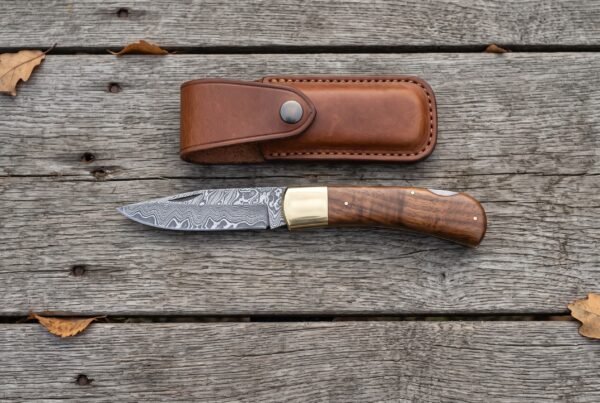
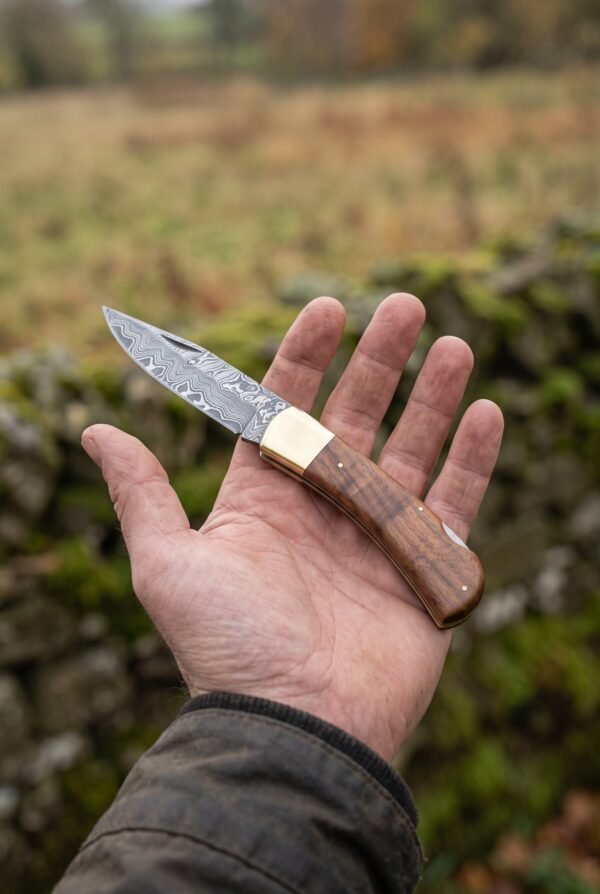
Walnutfold Hand Forged Damascus Folding Pocket Knife with Walnut Wood Handle and Brass Bolster & Handmade Leather Sheath | Everyday Carry Gift for Him | RK-1061
Original price was: $129.00.$103.20Current price is: $103.20.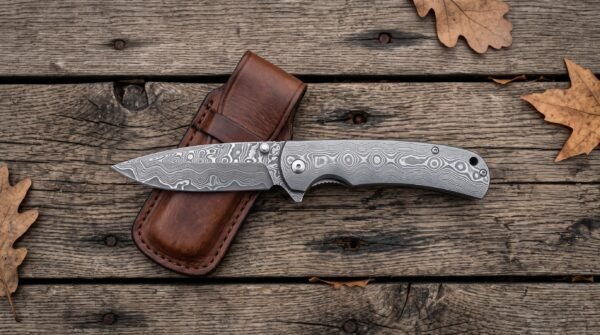
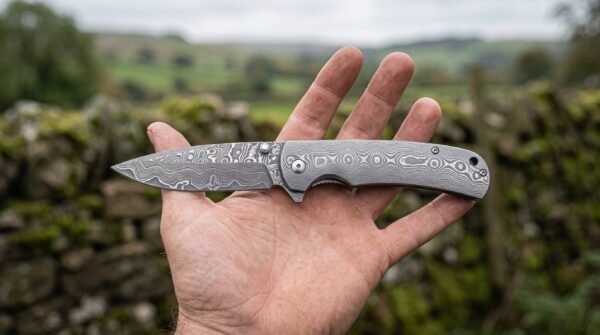
Leafcarry Hand Forged Damascus Folding Pocket Knife with Damascus Steel Handle Ready for Engraving & Cowhide Leather Sheath | Everyday Carry Collector Gift | RK-375
Original price was: $129.00.$103.20Current price is: $103.20.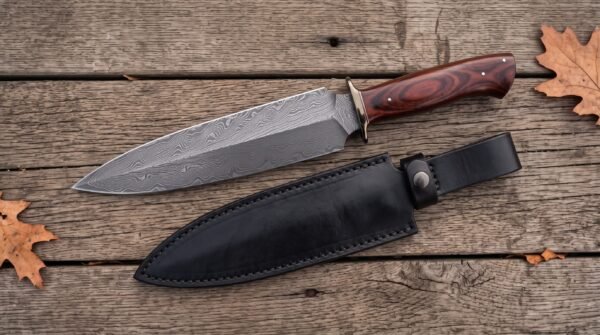
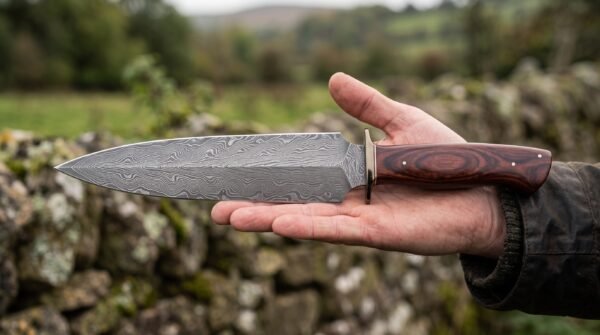
Inlayspire Hand Forged Damascus Dagger Knife with Rosewood Handle & Leather Sheath | Collector and Display Gift | RK-1069
Original price was: $229.00.$183.20Current price is: $183.20.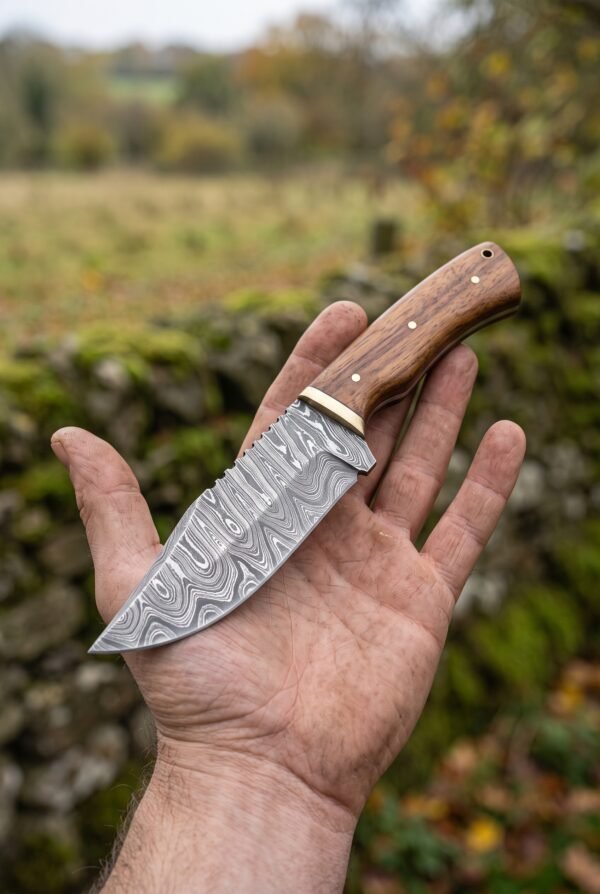
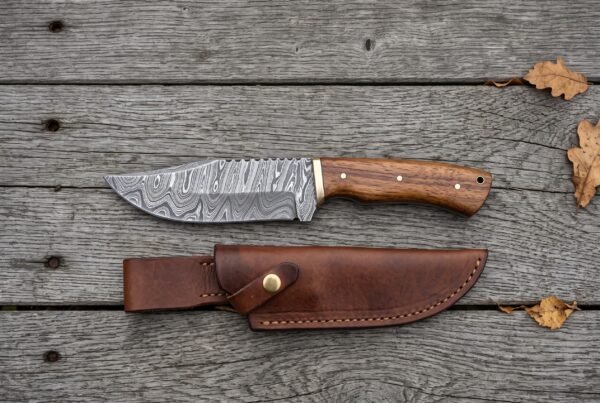
Woodgrain Hand Forged Damascus Skinner Knife with Wood Handle & Leather Sheath | Hunting Skinning and Camping Gift | RK-454
Original price was: $99.00.$79.20Current price is: $79.20.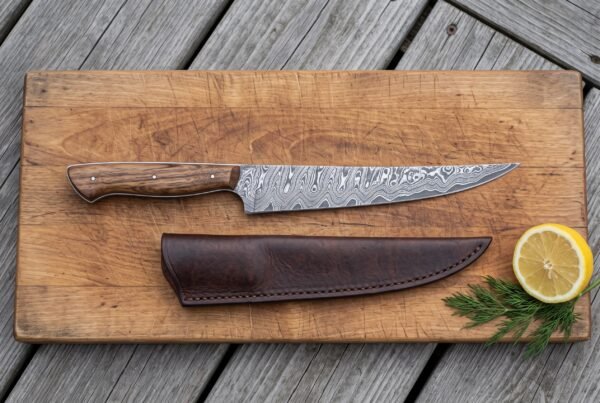
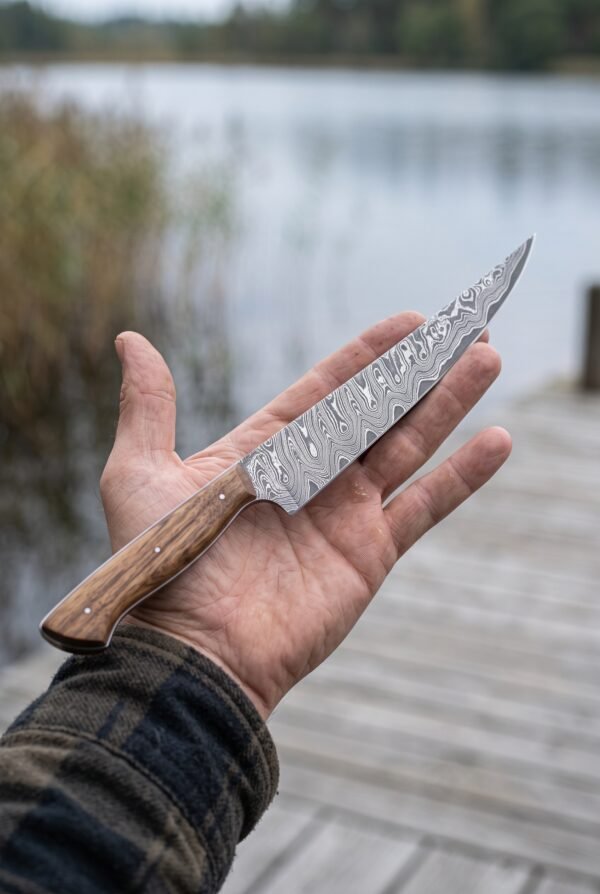
Streamwood Hand Forged Damascus Fish Fillet Knife with Wood Handle & Leather Sheath | Fishing Camping and Anglers Gift | RK-480
Original price was: $119.00.$95.20Current price is: $95.20.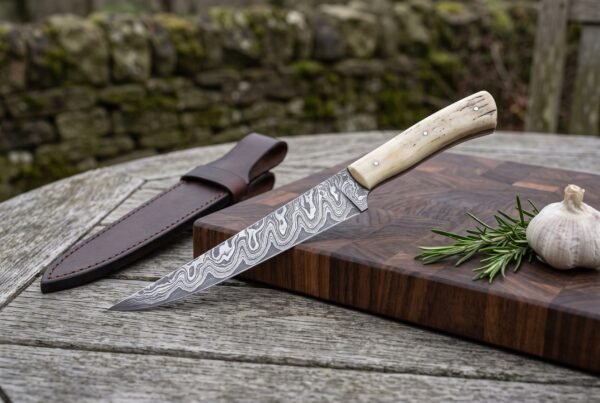
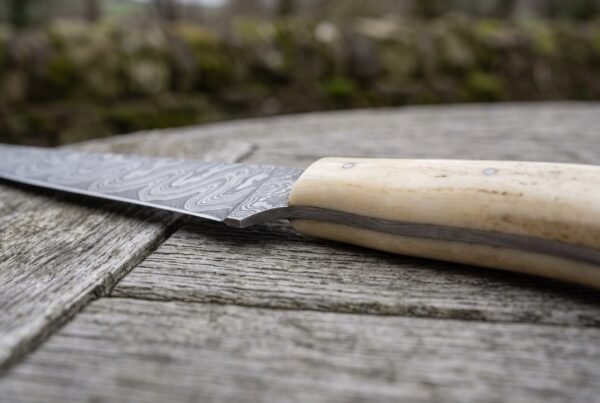
Palebone Hand Forged Damascus Fish Fillet Knife with Natural Bone Handle & Leather Sheath | Fishing Camping and Anglers Gift | RK-422
Original price was: $119.00.$95.20Current price is: $95.20.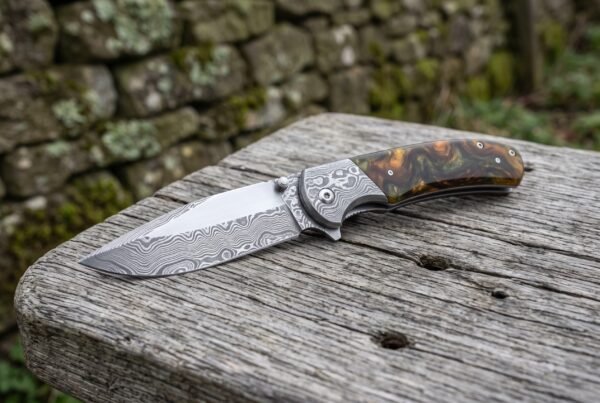
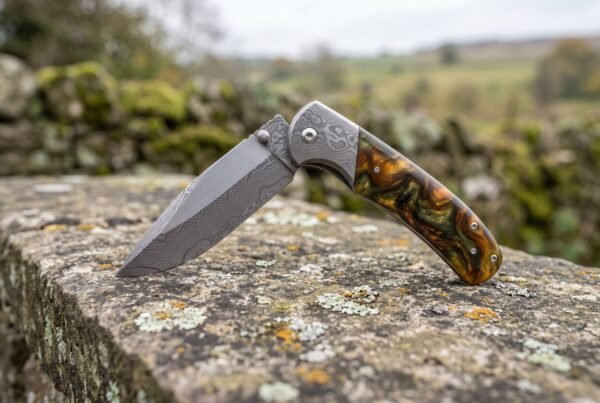
Resincarry Hand Forged Damascus Folding Pocket Knife with Resin Handle | Everyday Carry Collector Gift for Him | RK-10491
Original price was: $129.00.$103.20Current price is: $103.20.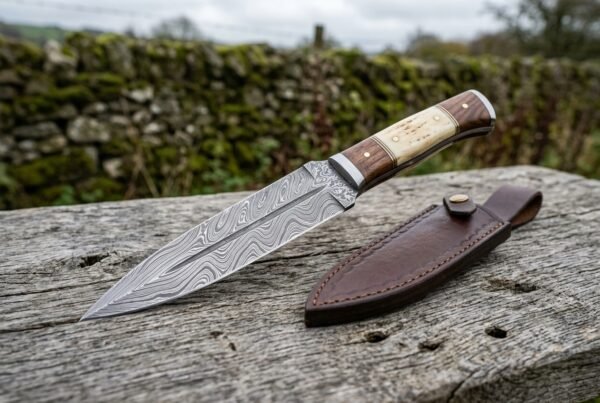
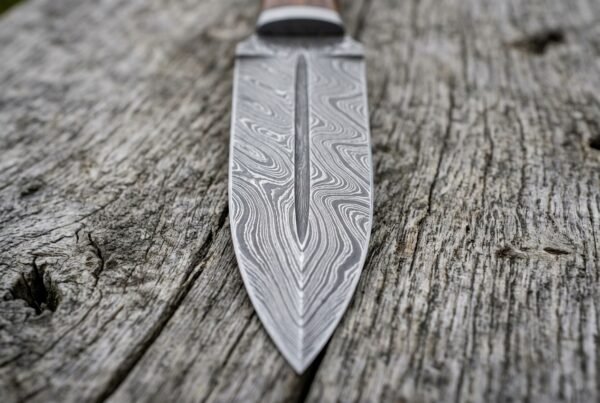
Bonespire Hand Forged Damascus Dagger Knife with Wood and Bone Handle & Leather Sheath | Collector and Display Gift | RK-474
Original price was: $229.00.$183.20Current price is: $183.20.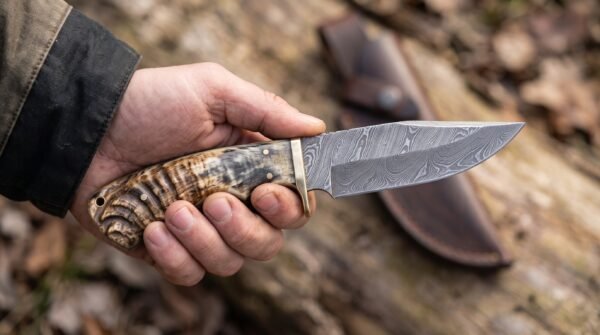
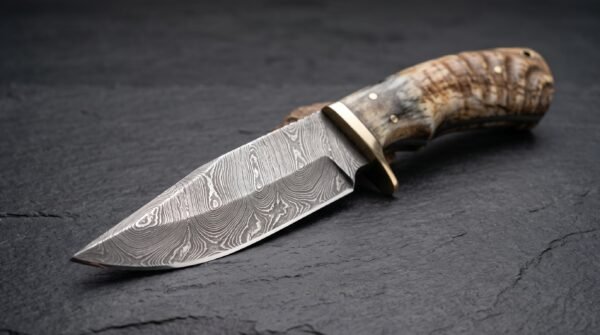
Ramcrown Hand Forged Damascus Hunting Knife with Ram Horn Handle | Hunting Camping and Collector Gift | RK-604
Original price was: $109.00.$87.20Current price is: $87.20.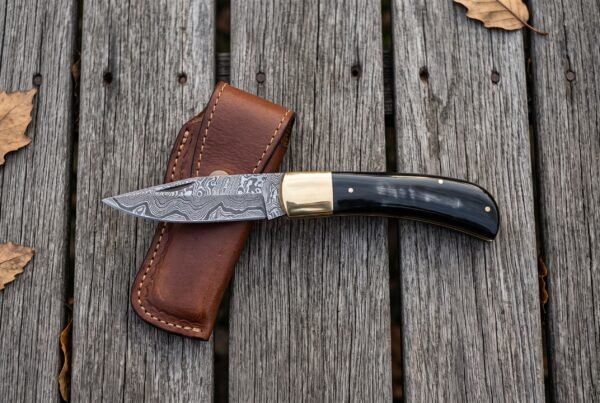
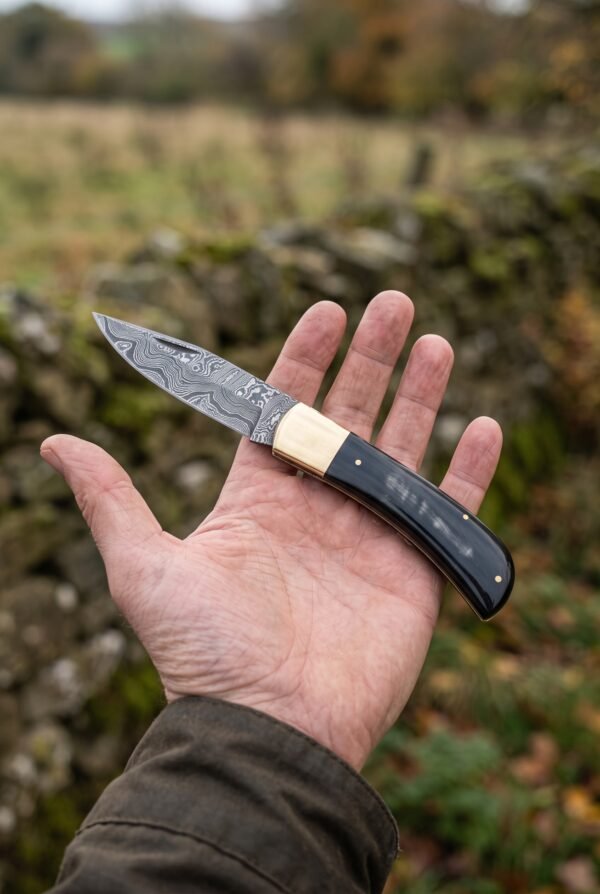
Hornedge Hand Forged Damascus Folding Pocket Knife with Buffalo Horn Handle and Brass Bolster & Handmade Leather Sheath | Everyday Carry Collector Gift | RK-1065
Original price was: $129.00.$103.20Current price is: $103.20.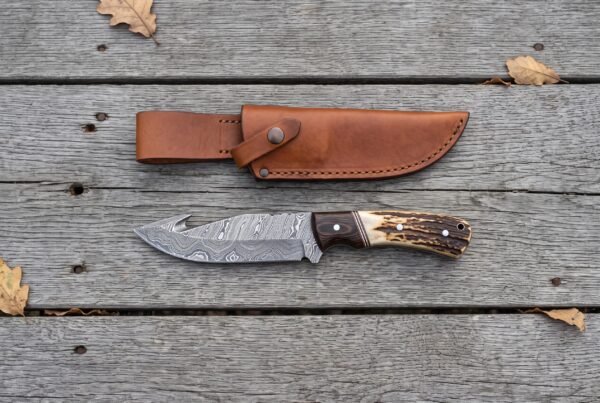
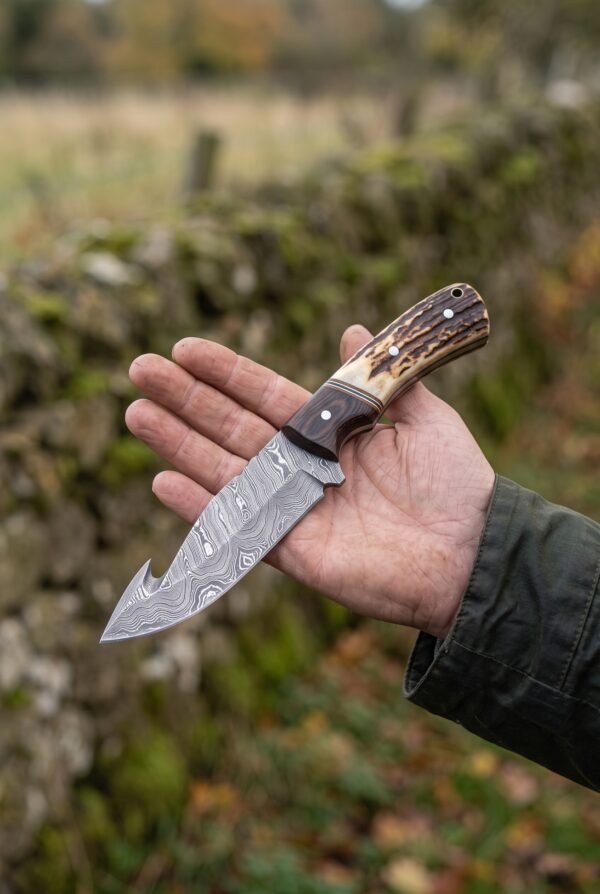
Wengehunter Hand Forged Damascus Gut Hook Hunting Knife with Stag Horn and Wenge Wood Handle | Deer Field Dressing Gift | RK-610
Original price was: $99.00.$79.20Current price is: $79.20.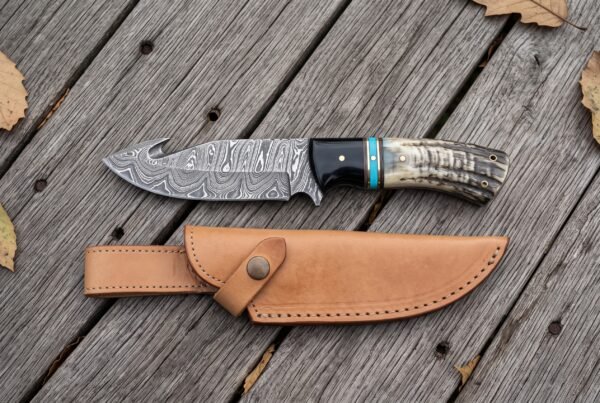
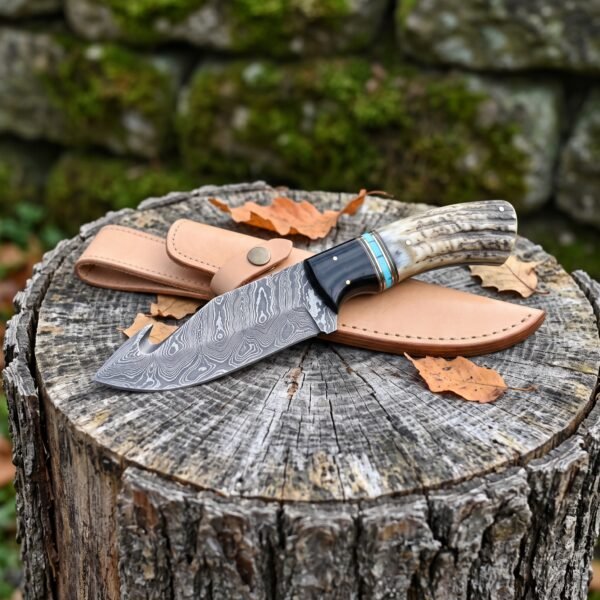
Hornreaver Hand Forged Damascus Gut Hook Hunting Knife with Buffalo Horn and Ram Horn Handle and Turquoise and Brass Spacers | Hunting Gift | RK-360
Original price was: $159.00.$127.20Current price is: $127.20.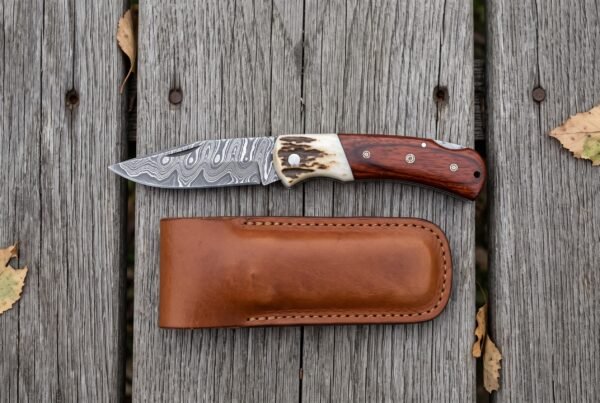
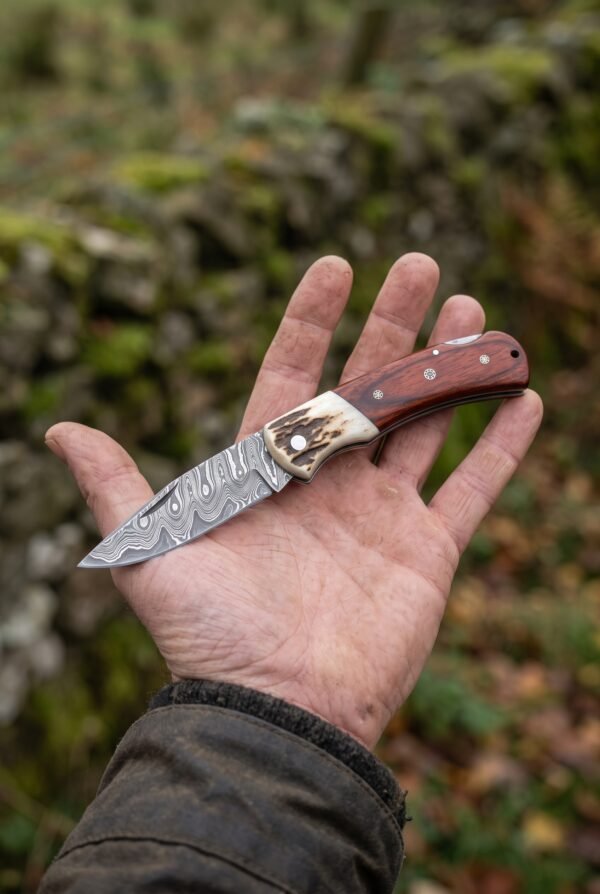
Rosecarry Hand Forged Damascus Folding Pocket Knife with Rosewood Handle and Stag Bolster & Cowhide Leather Sheath | Everyday Carry Gift for Him | RK-372
Original price was: $109.00.$87.20Current price is: $87.20.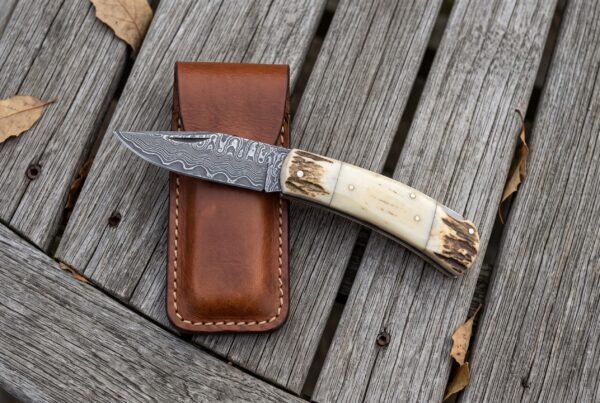
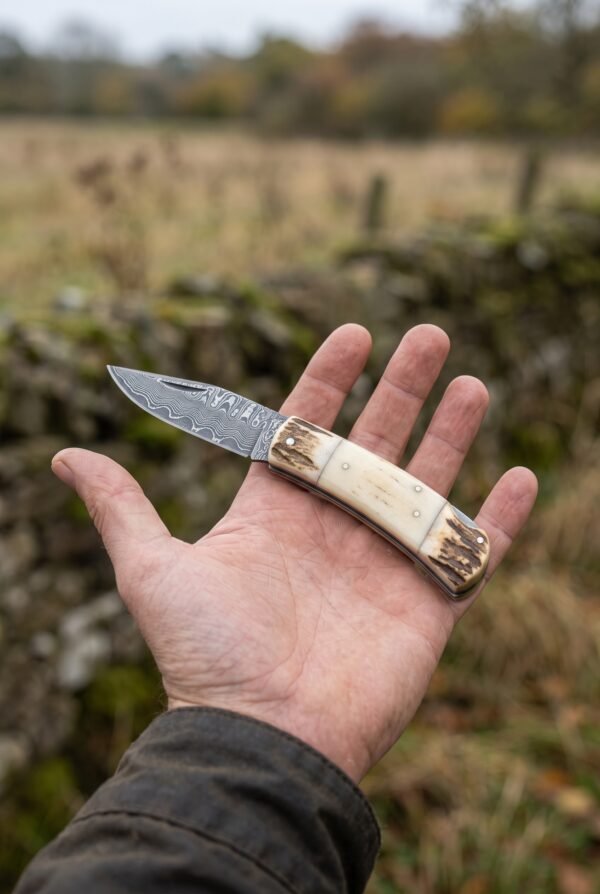
Bonecarry Hand Forged Damascus Folding Pocket Knife with Natural Bone Handle and Stag Bolsters & Cowhide Leather Sheath | Gentlemans Everyday Carry Gift | RK-373
Original price was: $89.00.$71.20Current price is: $71.20.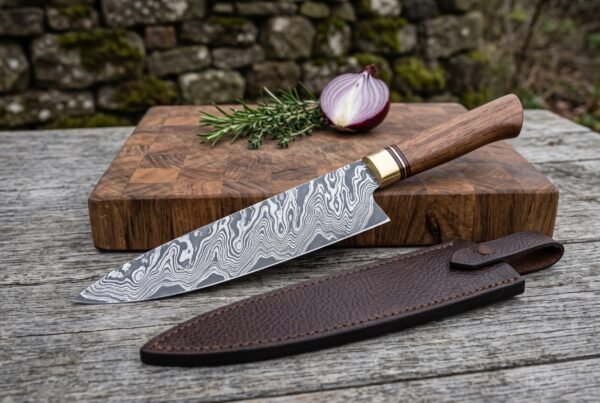
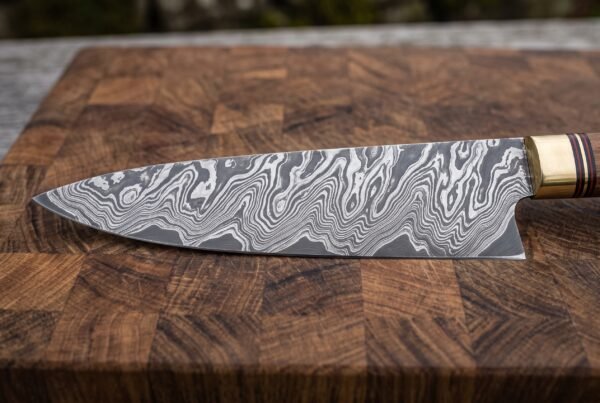
Brasshearth Hand Forged Damascus Chef Knife with Hardwood Handle and Brass Bolster and Fiber Spacers & Leather Sheath | Chef and Housewarming Gift | RK-396
Original price was: $139.00.$111.20Current price is: $111.20.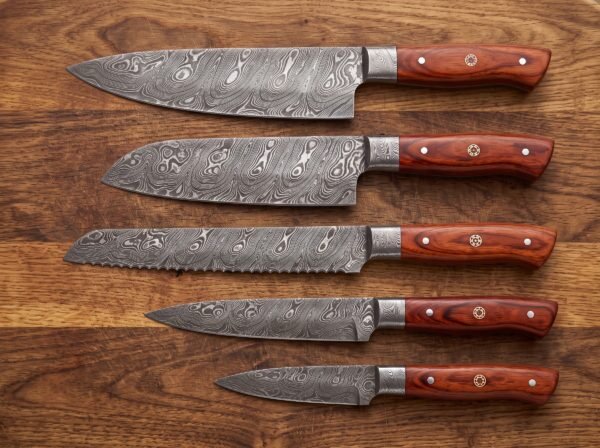
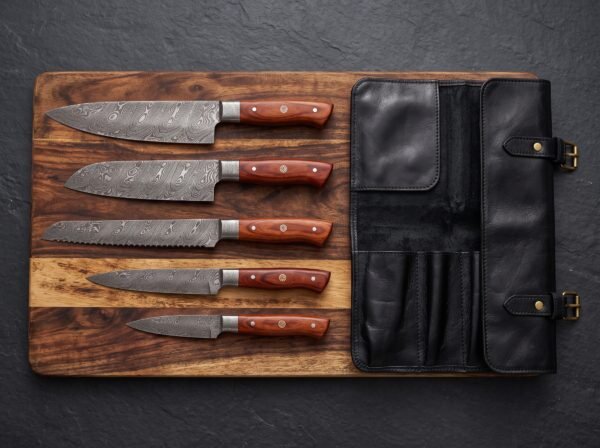
Rosechef Hand Forged Damascus 5 Piece Chef Knife Set with Rosewood Handles and Damascus Steel Bolsters and Mosaic Pins & Leather Knife Roll | Chef Kitchen and Wedding Gift | RK-10473
Original price was: $159.00.$127.20Current price is: $127.20.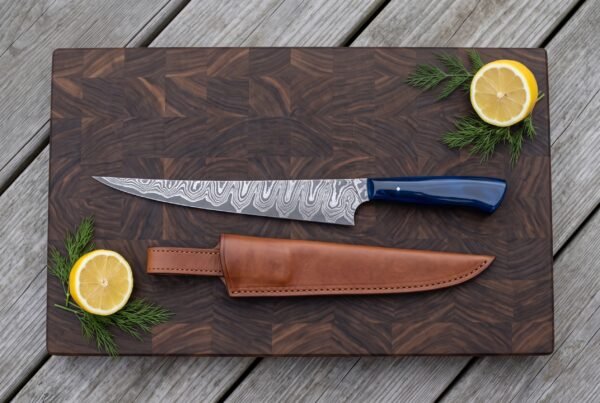
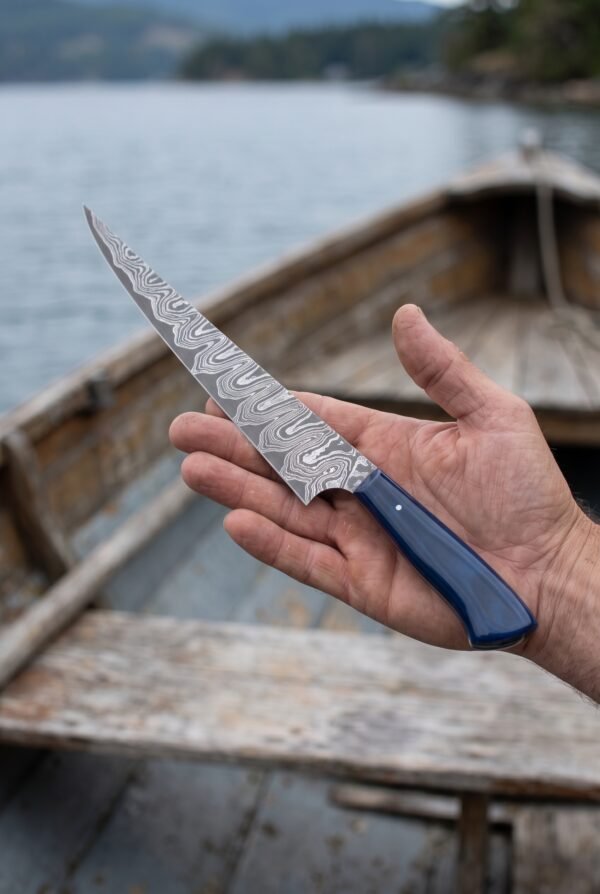
Bluetide Hand Forged Damascus Fish Fillet Knife with Blue Resin Handle & Leather Sheath | Fishing and Anglers Collector Gift | RK-481
Original price was: $119.00.$95.20Current price is: $95.20.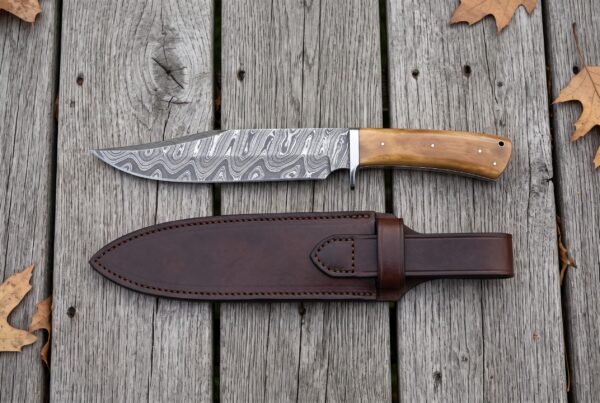
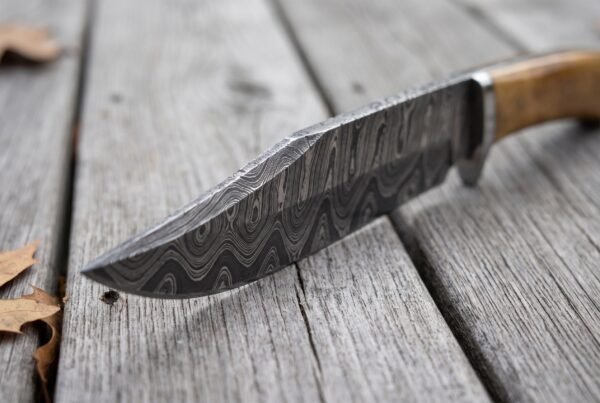
Sandbone Hand Forged Damascus Bowie Knife with Dyed Camel Bone Handle & Leather Sheath | Hunting and Camping Bowie Gift | RK-488
Original price was: $179.00.$143.20Current price is: $143.20.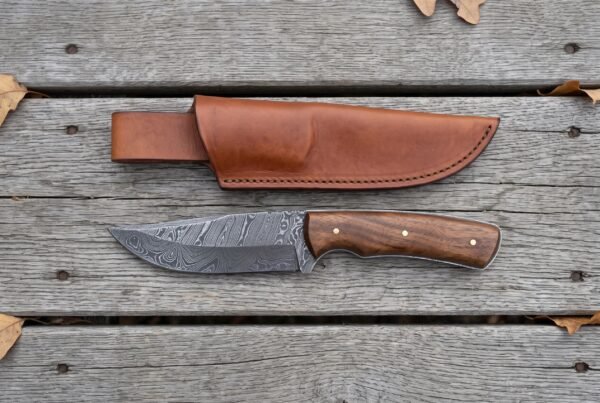
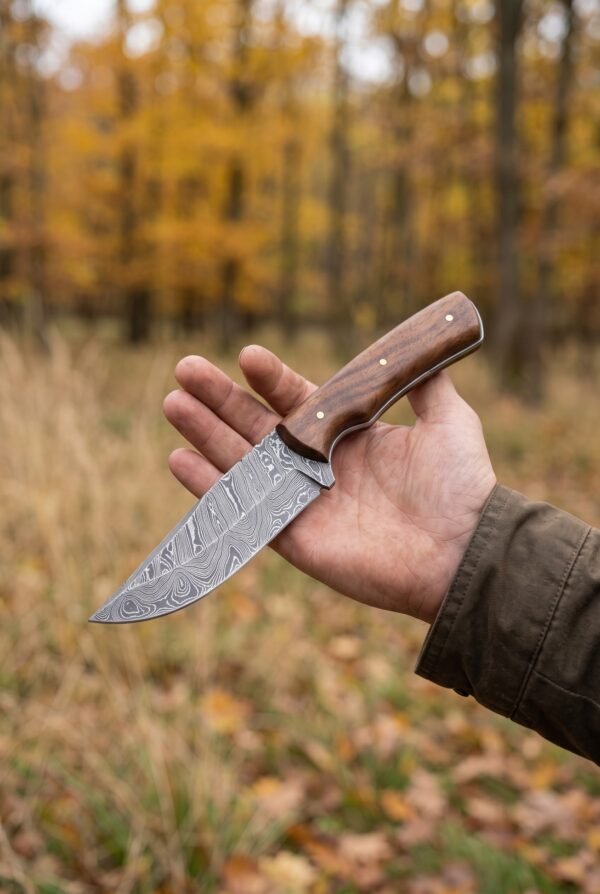
Bobcat Hand Forged Damascus Skinner Knife with Walnut Wood Handle & Leather Sheath | Full Tang Hunting and Skinning Gift | RK-331
Original price was: $109.00.$87.20Current price is: $87.20.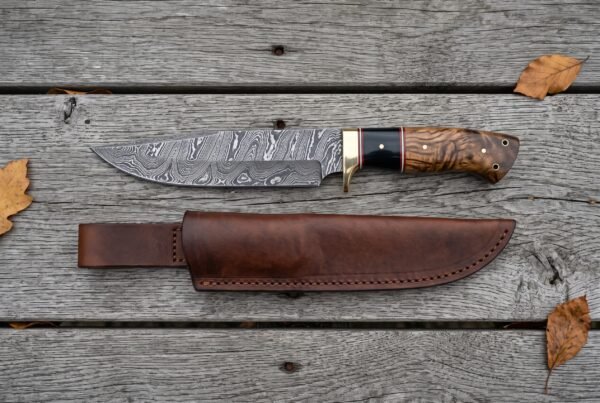
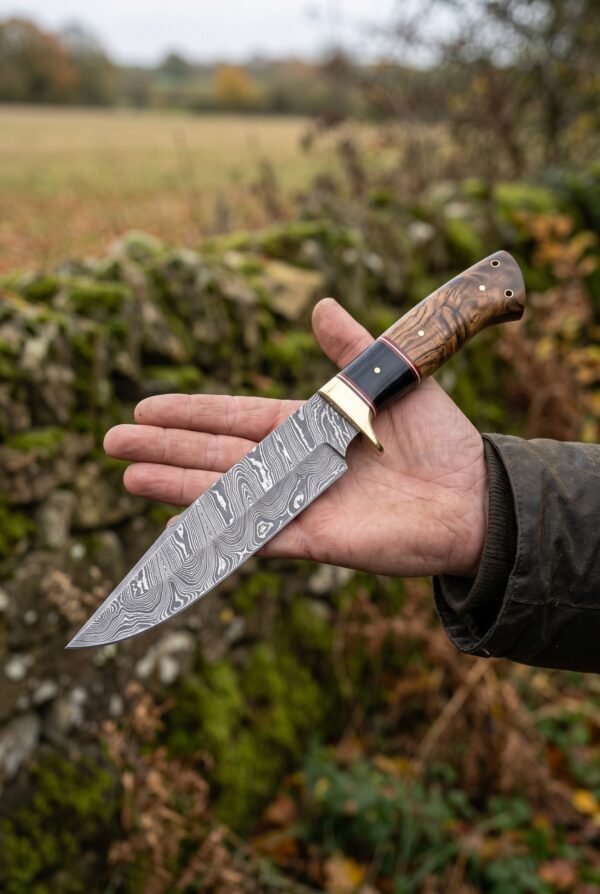
Hornreach Hand Forged Damascus Bowie Knife with Buffalo Horn and Stabilized Wood Handle and Brass Guard and Fiber Spacers | Hunting Bowie Gift | RK-394
Original price was: $149.00.$119.20Current price is: $119.20.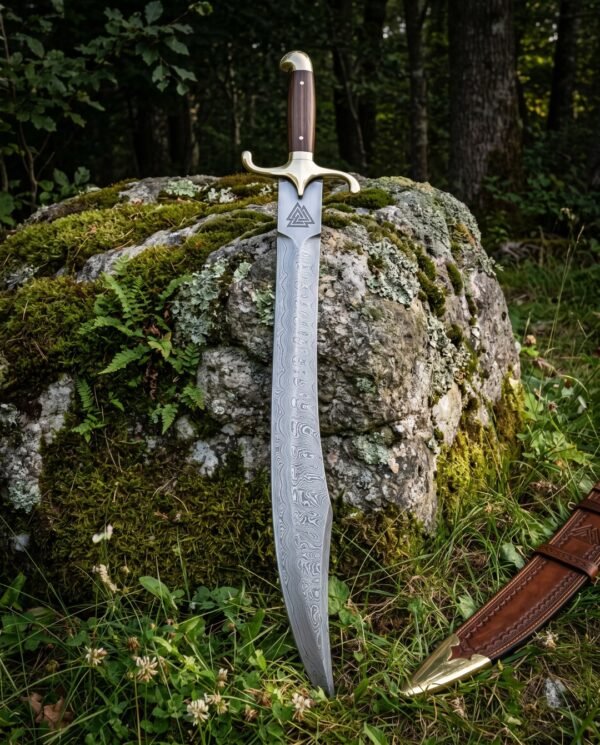
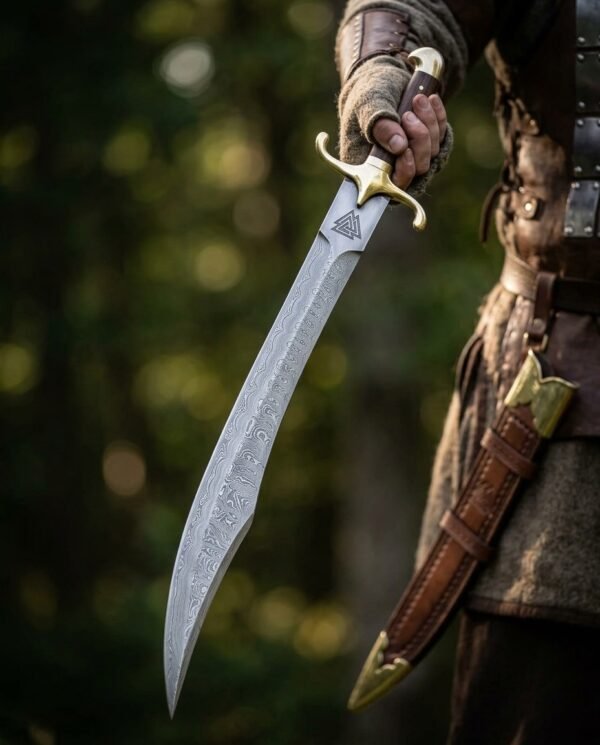
Wolfnotch Hand Forged Damascus Viking Long Seax with Rosewood Grip | Curved Clip Point Blade and Valknut Etch | Brass Guard and Tooled Leather Sheath | Norse Warrior Gift | RK-1613
Original price was: $299.00.$239.20Current price is: $239.20.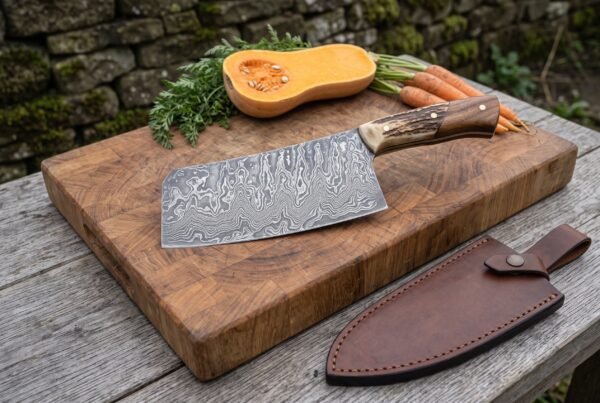
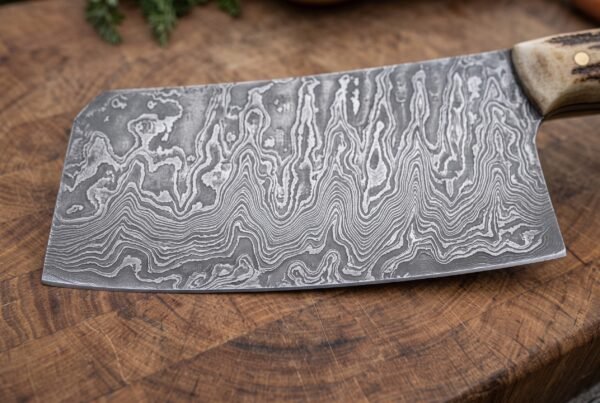
Blockbreaker Hand Forged Damascus Cleaver with Stag Horn and Walnut Wood Handle & Leather Sheath | Butcher Kitchen and Chef Gift | RK-436
Original price was: $139.00.$111.20Current price is: $111.20.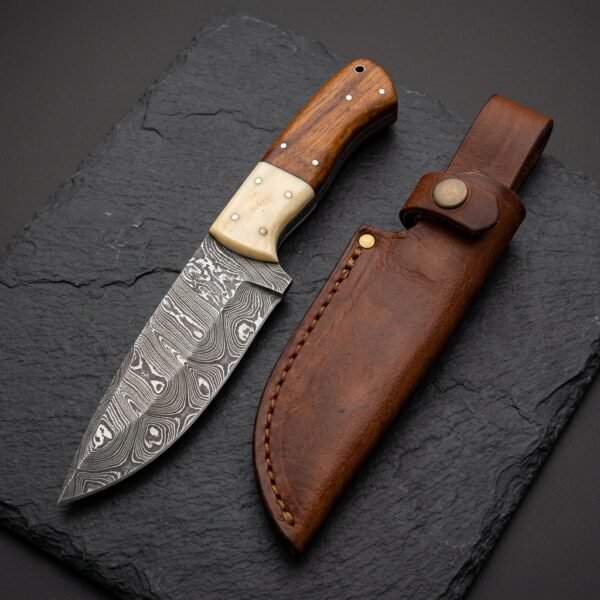
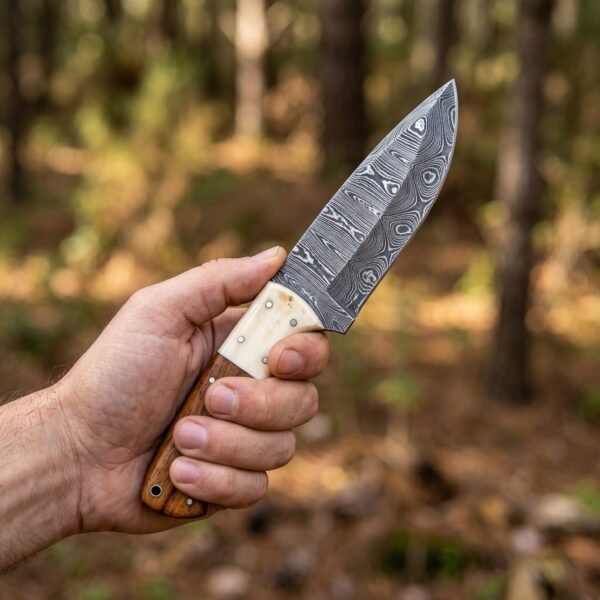
Camelbone Hand Forged Damascus Skinner Knife with Camel Bone and Hardwood Handle & Leather Sheath | Deer Skinning and Hunting Gift | RK-407
Original price was: $99.00.$79.20Current price is: $79.20.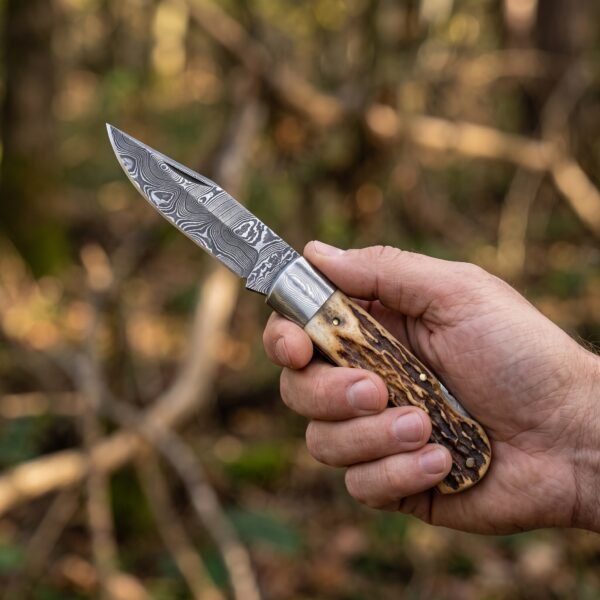
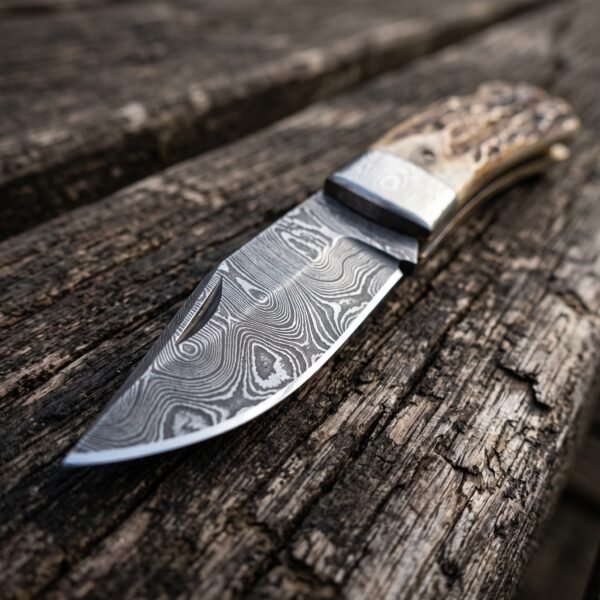
Antlerfold Hand Forged Damascus Folding Pocket Knife with Antler Stag Handle | Everyday Carry Personalised Gift for Him | RK-691
Original price was: $109.00.$87.20Current price is: $87.20.What Damascus steel is, and what it is not
Damascus on this site means pattern welded steel. Two alloys are stacked into a billet, brought to welding heat and hammered into one bar. That bar is drawn out, cut, folded back on itself and welded again, and the cycle repeats until the layer count is where the smith wants it. Only then does the bar get forged into a blade and ground.
The two alloys are 1095 and 15N20. Both are high carbon steels and both behave much the same under the hammer, which is what lets them weld together cleanly instead of splitting at the seams. The difference is nickel. 15N20 carries around two percent of it and 1095 carries none worth mentioning. Nickel shrugs off the acid used at the end of the process, so when the finished blade is etched the 15N20 layers stay bright and the 1095 layers go dark. What you are looking at is the cut edge of every fold.
Blades on this page are hardened to 58 to 60 HRC. Plain 1095 blades elsewhere on the site sit at 54 to 58 HRC. The harder steel holds an edge longer, takes a little more effort on a stone, and is less forgiving if you pry with it.
The word originally described something else. Wootz was a crucible steel from South Asia whose figure came from carbide banding inside one alloy rather than from welded layers, and it has not been made at scale for well over a century. Every modern Damascus knife is pattern welded.
The knife shapes in this collection
Nine or so families cover almost everything here. Once you know which one you want, the rest is size, handle material and how the bolster is finished.
Folding and pocket knives
The largest single group. These run 6.5 to 10 inches overall with 2.75 to 4 inches of blade, and the ones that list a weight come in around 6 oz. Handles are olive wood, rosewood, walnut, bone, buffalo horn and ram horn, usually with a brass bolster. A Damascus pocket knife is the easiest piece here to actually use every day, and the pattern picks up hand oil and looks better for it. Check your local rules on lock type and blade length before you carry one.
Skinners
Short, deep bellied blades built for one job: taking a hide off cleanly without holing it. The skinners here measure 6 to 10.5 inches overall with 3 to 5 inches of blade and weigh 5.5 to 10.5 oz. Handles include rosewood, stag, and dual resin with turquoise accents, often with a Damascus guard and bolster. The curve is the whole point, so sharpen along the sweep rather than pushing straight.
Hunting and drop point knives
The general purpose field blade. Sizes run 8 to 15 inches overall with 4 to 10 inches of blade, and weights from about 6.3 oz to 10.5 oz. Olive wood, coloured pakka wood, stag horn and wenge appear on the handles, usually with a steel bolster. If you want one Damascus knife to carry into the field and are not sure which, this is the group to start in.
Bowies
Clip point blades with a long belly and, on several pieces, a sharpened false edge along the swedge. They run 8.7 to 14 inches overall with 4.6 to 8.75 inches of blade and weigh 3.5 oz to 13 oz depending on size. Handles include natural banded ram horn with brass fittings, dyed camel bone, and rosewood over a steel bolster.
Daggers
Double edged and symmetrical, from small 7.5 inch pieces up to 19 inches overall with blades of 3.5 to 12 inches. One lists a weight of about 0.68 lb. Handles are carved bone with deep interlace, knurled blackened steel, turquoise and bull horn in resin, or micarta. A double edge is harder to sharpen and harder to carry safely, so most daggers here are bought as display and collecting pieces.
Chef knives and kitchen sets
Blades meant for a board rather than a belt: 11.5 to 14 inches overall with 7 to 8.5 inches of blade, weighing around 13 oz. Handles are rosewood, wenge, stag horn and walnut over a steel or Damascus bolster with fibre spacers. These are the knives that reward the harder heat treat most, because a kitchen edge does thousands of light cuts rather than a few heavy ones. High carbon in a kitchen has one rule, which is that it gets dried immediately after every use.
Fillet knives
Long, narrow and flexible, 11 to 13 inches overall with 7 to 8 inches of blade. Handles run from blue resin to natural bone, stag horn and acrylic. Flex is what you are buying, enough to follow a rib cage without the tip wandering.
Trackers, tantos and karambits
Three specialist shapes. The tracker blades here are 10 to 11 inches overall with 5 to 6 inches of blade, with a straight chopping section and a forward curve doing two jobs on one bar. The tanto is 9.5 inches overall with a 5.5 inch blade and a reinforced point. The karambits are 8 to 9 inches overall including the finger ring, with 3 to 4 inches of curved edge, at about 6 oz. A karambit pulls rather than pushes, which suits cord, boxes and packaging better than it suits anything dramatic.
Kukris and Norse shapes
The heavy end. Damascus kukris here are 15 to 16 inches overall with 10 to 11 inches of blade measured along the curve, weighing 1 lb 6 oz to 1 lb 8 oz, with buffalo horn, rosewood or stag and wood handles. The Norse shapes, mostly seax profiles, run 9.5 to 15 inches overall with 4 to 10 inches of blade, one listing about 11 oz. Weight sits ahead of the hand on both, so the blade does the work on a swing.
Sizes and weights across the range
Every figure below is taken from the specification panel of a knife on this page. These are forged and ground by hand, so two knives of the same name will differ a little. Read the ranges as what to expect.
| Type | Overall length | Blade length | Listed weight | Handle materials | Best for |
|---|---|---|---|---|---|
| Folding pocket knife | 6.5 to 10 in | 2.75 to 4 in | About 6 oz | Olive wood, rosewood, bone, ram horn, buffalo horn | Everyday carry where legal |
| Skinner | 6 to 10.5 in | 3 to 5 in | 5.5 to 10.5 oz | Rosewood, stag, resin with turquoise | Hide work and field dressing |
| Hunting and drop point | 8 to 15 in | 4 to 10 in | 6.3 to 10.5 oz | Olive wood, pakka wood, stag horn, wenge | General field use |
| Bowie | 8.7 to 14 in | 4.6 to 8.75 in | 3.5 to 13 oz | Ram horn, dyed camel bone, rosewood | Big cuts and camp work |
| Dagger | 7.5 to 19 in | 3.5 to 12 in | About 0.68 lb | Carved bone, blackened steel, bull horn, micarta | Display and collecting |
| Chef knife | 11.5 to 14 in | 7 to 8.5 in | About 13 oz | Rosewood, wenge, stag horn, walnut | Kitchen and board work |
| Fillet knife | 11 to 13 in | 7 to 8 in | Not listed | Blue resin, natural bone, stag horn, acrylic | Fish and flexible work |
| Tracker | 10 to 11 in | 5 to 6 in | Not listed | Rosewood, buffalo horn, hardwood | Bushcraft and chopping |
| Kukri | 15 to 16 in | 10 to 11 in along the curve | 1 lb 6 oz to 1 lb 8 oz | Buffalo horn, rosewood, stag and wood | Chopping and brush clearing |
| Karambit | 8 to 9 in | 3 to 4 in along the curve | About 6 oz | Rosewood, green micarta | Utility cutting and cord |
Two figures need reading carefully. Curved blades are measured along the curve, so a kukri listed at 11 inches has less straight line reach than a bowie listed at 8.75. And overall length on a karambit includes the finger ring, which is an inch of steel you never cut with.
Handles, bolsters and tang
Nearly everything here is full tang, with the steel running the whole length and width of the handle and the scales pinned through it. That is the construction you want in a fixed blade, because a partial tang glued into a drilled grip cuts happily and fails under a hard sideways load. The folders are a different structure entirely, where the blade pivots on a pin between liners and the lock takes the load.
Handle materials behave differently once you own them. Rosewood is dense and oily and polishes up on its own. Olive wood is harder, paler and heavily figured. Buffalo horn, camel bone and ram horn are the traditional choices and all three dislike dry heat, so keep them away from a radiator. Stag horn is the same but rougher in the hand, which is an advantage when wet. Micarta and resin are effectively waterproof. Wenge and pakka wood sit between the two.
Bolsters are steel, brass or Damascus. A Damascus bolster is a separate piece of pattern welded bar, so its figure will not line up with the blade and is not meant to. Brass darkens with time, and a metal polish on a cloth brings it back in a minute.
Sharpening at 58 to 60 HRC
A hand forged knife arrives sharp and gets dull. At 58 to 60 HRC expect a longer session on the coarse stone than plain carbon steel needs, and a longer interval before you have to do it again. A 1000 grit waterstone restores a working edge and a 3000 grit polishes it. Hold the angle you started with, work until you feel a burr along the full length of the edge, then knock the burr off with light alternating passes.
Curved blades need a different motion. On a skinner, a kukri or a karambit you sweep the blade across the stone so the contact point travels along the curve. Push it straight, as you would a chef knife, and you flatten the belly and lose the geometry that made the knife worth buying. A round rod is the right tool for the tight inner curve of a karambit.
Pattern welded steel does not sharpen differently from plain steel of the same hardness. The layers are welded into one bar, not laminated in a way you can feel on a stone.
Rust, patina and keeping the pattern
Damascus here is mostly 1095, so it rusts like carbon steel. Wipe the blade dry after use, leave a light film of oil on the steel, and store it out of a damp sheath if it is going to sit for months. Camellia, mineral and food safe oils all work. Fingerprints matter more on an etched blade than a polished one, because skin oil is mildly acidic and etched steel takes a mark faster.
Never take a metal polish, a buffing wheel or a scouring pad to the flat of a Damascus blade. The pattern lives in the top few microns of the etch, and polishing takes it straight off. If light rust appears, lift it with oil and the softest thing that will move it, working along the blade rather than across it.
A grey patina is not rust. It is a stable oxide that forms on carbon steel with use, does no harm, and often deepens the contrast between the layers.
Five checks before you buy a Damascus knife
The pattern should carry over the spine and around the edge bevel, because a forged bar is patterned all the way through rather than on the surface. It should be irregular in the small details even where the large pattern is regular. It should change where the geometry changes, at a bolster, a taper or a plunge line. The seller should name both alloys, and 1095 with 15N20 is the honest answer for this kind of work. And the hardness should be a number, not an adjective.
Laser etched and chemically printed imitations fail the first and third of those checks in a photograph.
Engraving and gifting
Most fixed blades here can be engraved after they arrive in the United States. The marks that get asked for most are a name, a date, an Elder Futhark line, a Valknut, a Vegvisir and a family crest, and the usual placements are the spine, the ricasso and the flat of the blade. Elder Futhark is phonetic rather than a cipher, so a name is transliterated by sound, and there is no rune for the letter C.
An engraved knife is permanent and cannot be returned, so send the exact spelling and read it back twice.
Where these knives are made
Every blade on this page is made by hand in the Czech Republic. Finished knives are imported to the United States, inspected by Ransack Viking in Chicago, Illinois, and shipped from there, with engraving cut after arrival. Because each billet is forged, folded and etched individually, no two blades carry the same pattern, and differences in figure, contrast and handle grain between two knives of the same name are expected rather than a fault.
Browse the Damascus knife range
- Hunting knives for field dressing and general field use
- Folding and pocket knives for everyday carry
- Damascus skinner knives with deep bellied blades
- Bowie knives with long clip points and deep bellies
- Double edged daggers and Norse dagger shapes
- Damascus chef knives and kitchen sets
- Fillet knives with long flexible blades
- Damascus tracker knives for bushcraft
- Kukri knives with forward curved chopping blades
- Karambit knives with ringed hawkbill blades
- Viking knives and seax shapes in the same steel
- Damascus swords forged from the same billet recipe
Guides worth reading first
- What is Damascus steel and how pattern welded blades are made
- Real vs fake Damascus steel: five checks before you buy
- Damascus vs high carbon steel: which blade should you buy
- The complete knife care guide: blade, handle and sheath
- Full tang vs partial tang: why it matters in a knife
- How to sharpen a knife with a whetstone
Frequently asked questions
What is a Damascus knife?
It is a knife whose blade is forged from a pattern welded bar. Two steels are forge welded together, folded, drawn out and etched in acid so the alloys show as light and dark layers. On this page the two steels are 1095 and 15N20, hardened to 58 to 60 HRC.
Is Damascus steel better than regular steel?
It is not automatically better. Pattern welding decorates steel, it does not add a property the alloys do not already have. What you gain here is the hardness, 58 to 60 HRC against 54 to 58 on the plain 1095 blades, which means longer edge retention and a slightly longer sharpening session. What you gain visually is a pattern no two blades share.
Will a Damascus knife rust?
Yes, if you let it. Most of the billet is 1095, so it behaves like carbon steel and not like stainless. Wipe it dry, keep a light film of oil on the blade, and do not store it in a damp sheath. A grey patina is stable and harmless, orange spotting is not.
How do I tell a real Damascus blade from a printed one?
Look at the spine and the edge bevel. On a forged bar the pattern runs all the way through the steel, so it continues around every ground surface and shifts where the geometry changes. A printed or laser etched pattern sits flat on the face and stops at the bevel. Small irregularities are a good sign, because a hand cut billet is never perfectly uniform.
Do more layers make a better knife?
No. Layer count changes how fine the pattern looks and nothing else. Past a point the layers are too thin to see without leaning in, so a very high count is a marketing number rather than a performance one. Heat treatment and geometry decide how the knife cuts.
Are these knives full tang?
Nearly all the fixed blades are, with the steel running the full length and width of the handle and the scales pinned through it. The folders are a different construction, where the blade pivots between liners. Each product page states the construction in its own specification table.
Can I have a Damascus knife engraved?
Yes, on most fixed blades. Engraving is cut in the United States after the knife arrives and passes inspection, so send the exact spelling you want. Elder Futhark works by sound rather than letter for letter, and there is no rune for the letter C. Engraved pieces cannot be returned.
Where are these knives made?
They are made by hand in the Czech Republic, then imported, inspected and shipped by Ransack Viking from Chicago, Illinois, with any engraving cut in the United States after arrival.
Featured pieces
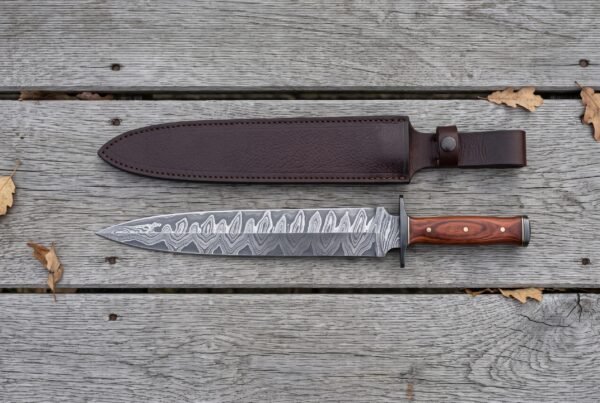 Longspire Hand Forged Damascus Dagger Knife with Rosewood Handle & Leather Sheath
Original price was: $159.00.$127.20Current price is: $127.20.
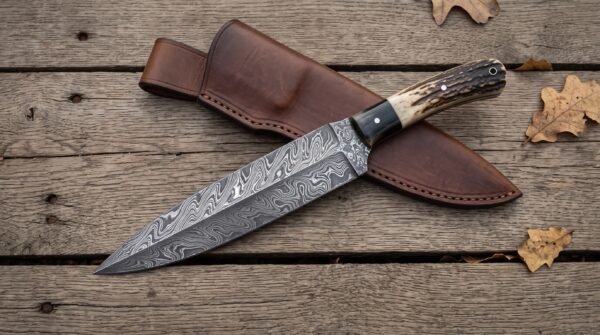 Hornspire Hand Forged Damascus Dagger Knife with Stag Horn and Bull Horn Handle & Leather Sheath
Original price was: $169.00.$135.20Current price is: $135.20.
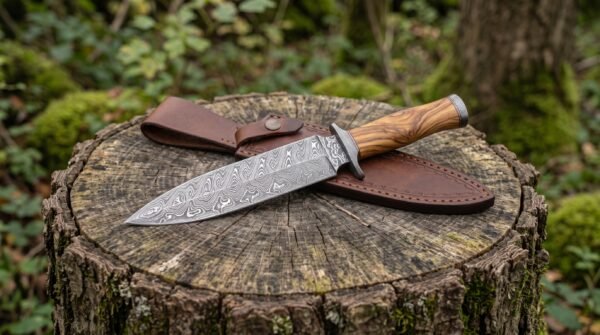 Olivespire Hand Forged Damascus Dagger Knife with Olive Wood Handle and Damascus Fittings & Leather Sheath
Original price was: $129.00.$103.20Current price is: $103.20.
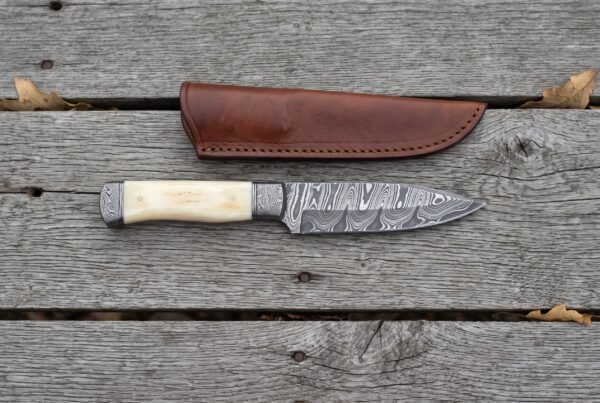 Sandspire Hand Forged Damascus Drop Point Hunting Knife with Camel Bone Handle and Damascus Bolsters & Leather Sheath
Original price was: $119.00.$95.20Current price is: $95.20.