
Anglo Saxon and Celtic covers a shared visual language rather than one object. Interlaced knotwork, the triple spiral, the ringed cross and the beast forms that grew out of them ran through Ireland, Pictish Scotland and Northumbria for centuries before the Norse arrived, and when Norse settlers took root in Dublin and York the two traditions mixed. What came out is usually called Hiberno Norse, and it is the thread holding this page together.
Eleven pieces. Six swords in 1095 high carbon steel hardened to 54 to 58 HRC, running 30 to 47 inches overall with blades of 24 to 36 inches. One 14 inch dagger in Damascus of 1095 and 15N20, forge welded and acid etched, hardened to 58 to 60 HRC, on a carved bone grip. Three pieces of jewellery, two pairs of earrings and a ringed Celtic cross pendant with an Elder Futhark line cut at the foot. And a 24 inch American hickory axe haft with a knotwork band cut around the shaft.
Start with the pommel. On this page it is where the design usually lives.
Free US shipping
On most pieces. Heavier and oversized ones carry a flat charge.
Hand Forged
Heated, hammered and ground by hand.
Engraving available
Names, dates or Norse runes on most pieces.
Ships from Chicago
Inspected and dispatched from our Chicago warehouse. No import duty, no customs delay on US orders.
Anglo-Saxon & Celtic
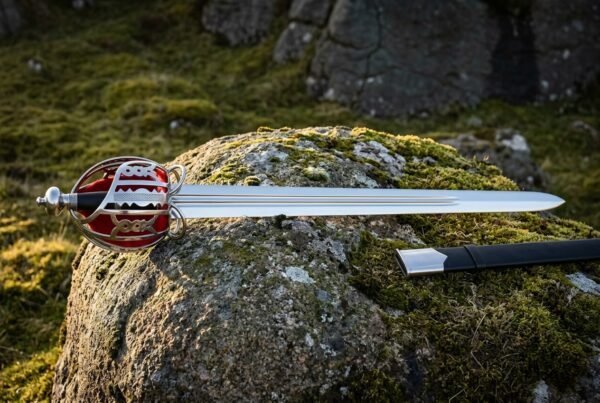
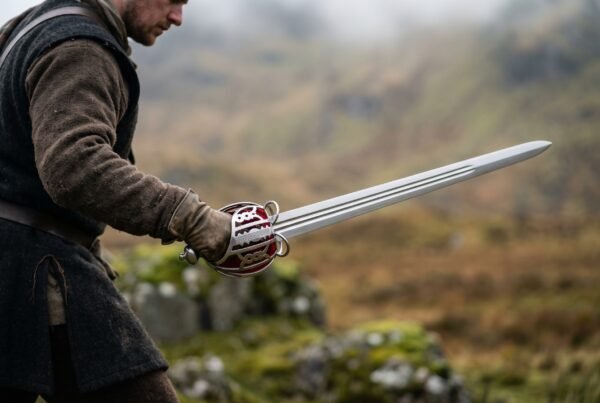
Bramblehilt Hand Forged 1095 Steel Basket Hilt Broadsword | 38 Inch Overall with a 32 Inch Blade | Pierced Steel Basket, Red Liner and Black Scabbard | Highland Collector Gift | RK-1738
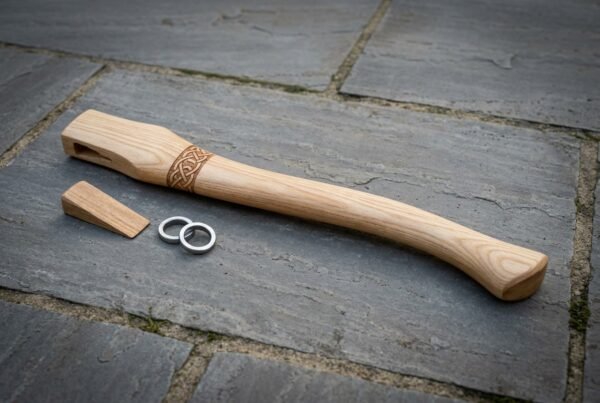
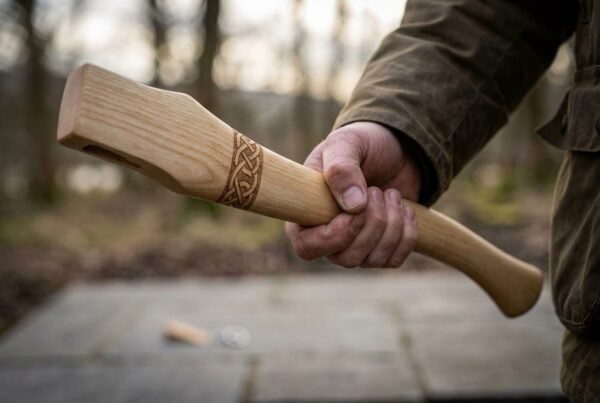
Knotgrain Hand Made Hickory Axe Haft with Celtic Knotwork Engraving | 16 Inch One Hand Length | Wooden Wedge and Two Steel Ring Wedges Included | Norse Rehandle Gift | RK-1742
Original price was: $129.00.$103.20Current price is: $103.20.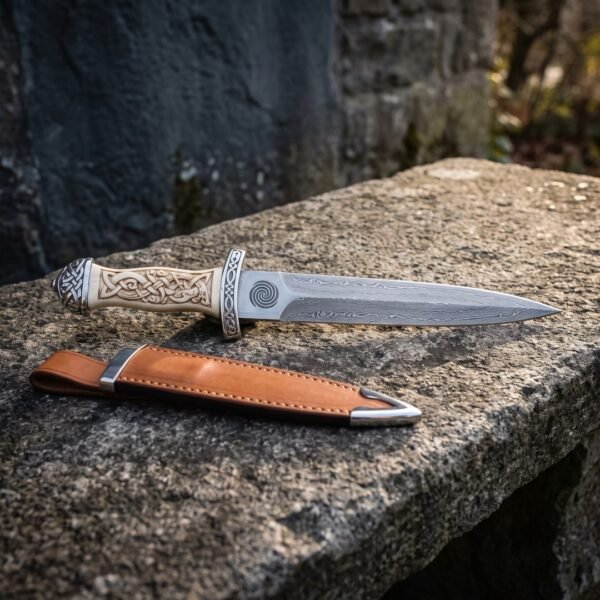
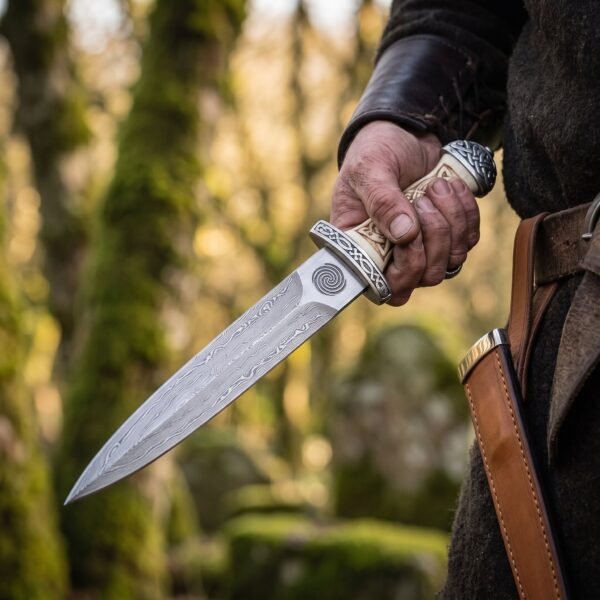
Knotbone Hand Forged Damascus Celtic Dagger | 14 Inch Overall | Carved Bone Handle and Spiral Etched Ricasso with Tan Leather Sheath | Highland Collector Gift | RK-1943
Original price was: $309.00.$247.20Current price is: $247.20.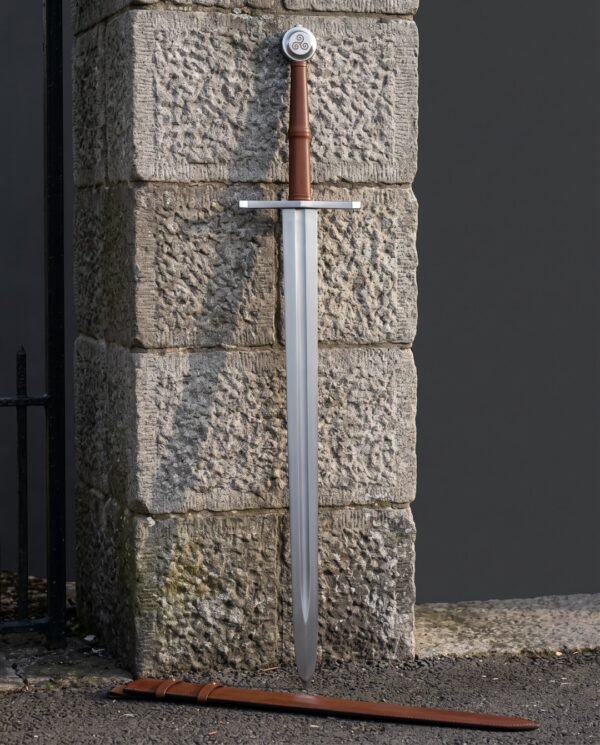
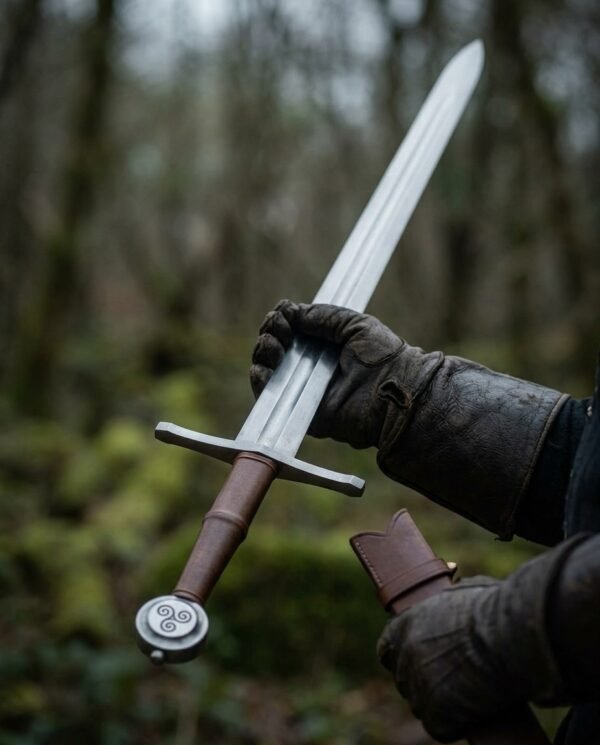
Whorlcrown Hand Forged 1095 Steel Triskele Sword | 38 Inch Overall | Wheel Pommel and Tooled Tan Leather Scabbard with Belt Loops | Celtic Reenactment Gift | RK-1936
Original price was: $469.00.$375.20Current price is: $375.20.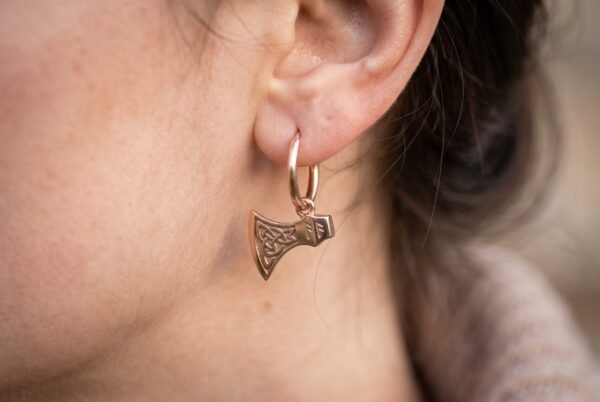
Axebloom Hand Made Rose Tone Viking Axe Hoop Earrings with Celtic Knotwork Heads & Hinged Snap Closures | Norse Jewellery Gift | RK-1615
Original price was: $119.00.$95.20Current price is: $95.20.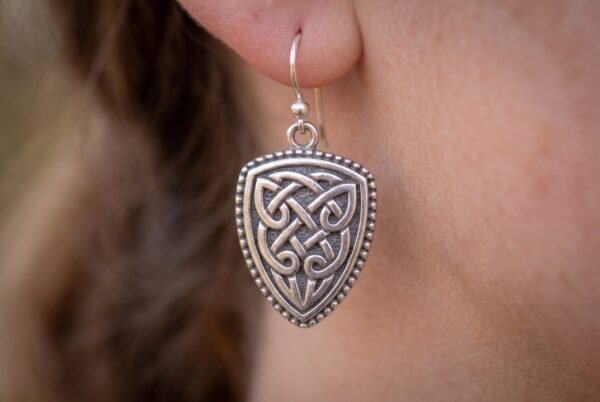
Knotbloom Hand Made Celtic Earrings with Shield Shaped Knotwork Drops & Beaded Borders | Silver Tone Hook Wires | Anniversary Gift | RK-1602
Original price was: $119.00.$95.20Current price is: $95.20.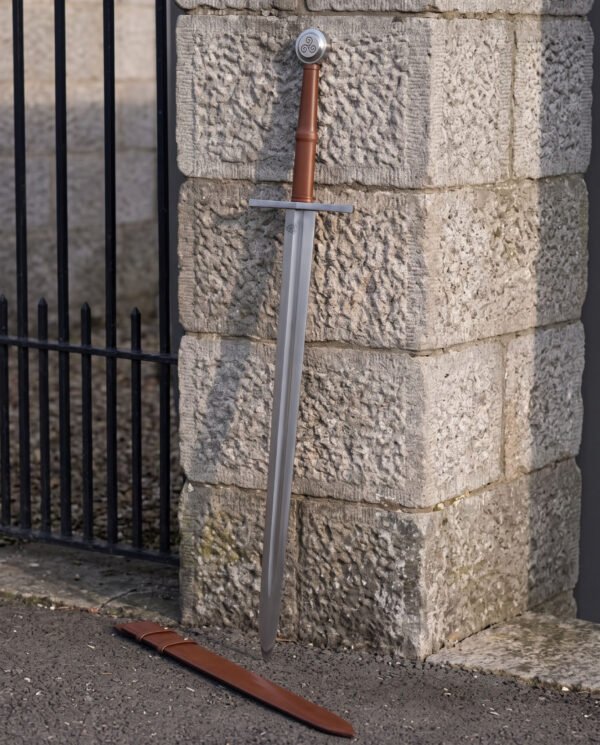
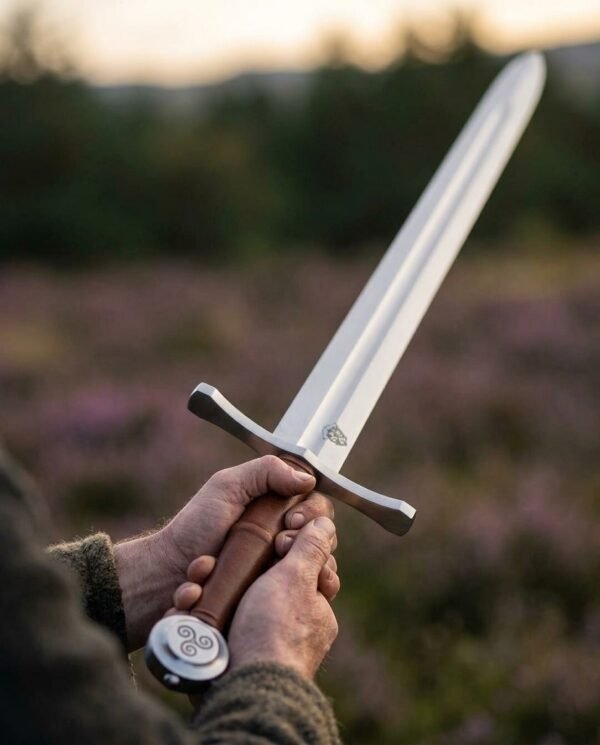
Oathstone Hand Forged Knightly Arming Sword | Broad Fullered Double Edged Blade | Triskele Engraved Disc Pommel with Russet Leather Grip and Matching Scabbard | Medieval Collector Gift | RK-2015
Original price was: $379.00.$303.20Current price is: $303.20.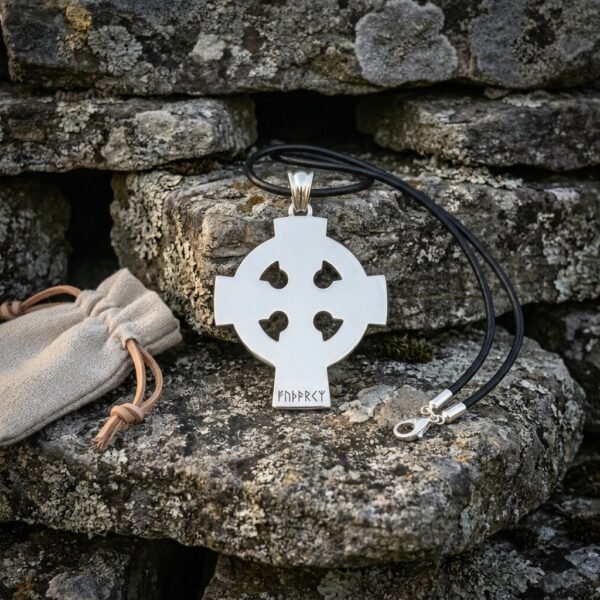
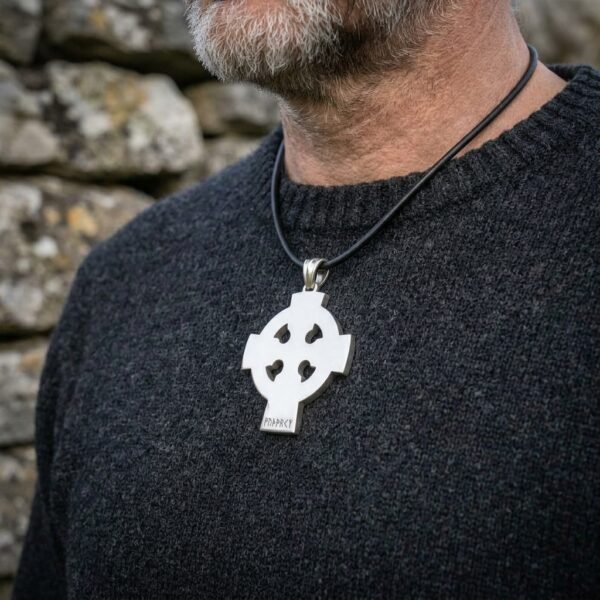
Stonecross Hand Made Steel Tone Celtic Cross Pendant with Rune Stamped Arm & Black Leather Cord | Norse Necklace Gift | RK-1620
Original price was: $139.00.$111.20Current price is: $111.20.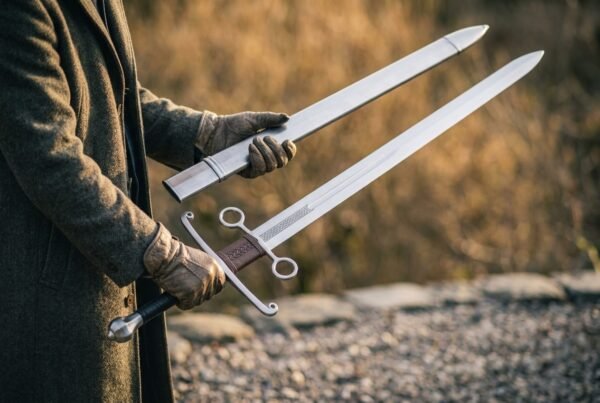
Ringwolf Hand Forged 1095 Steel Hand and a Half Sword | 47 Inch Overall | Side Ring Guard, Knotwork Ricasso Wrap and Steel Scabbard | Highland Collector Gift | RK-1735
Original price was: $549.00.$439.20Current price is: $439.20.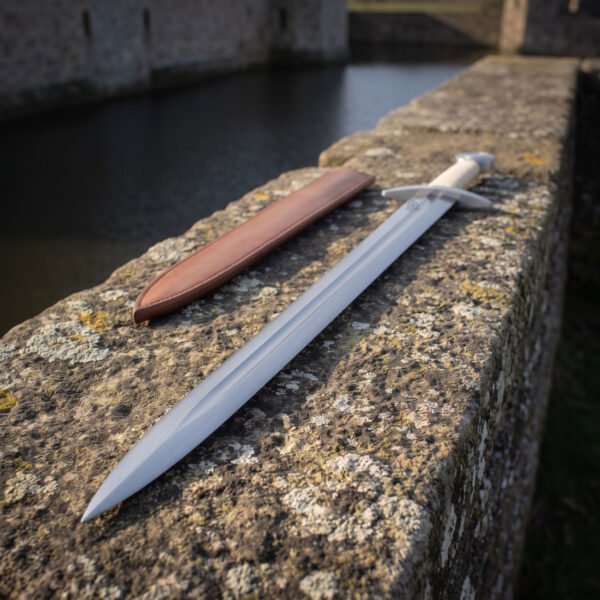
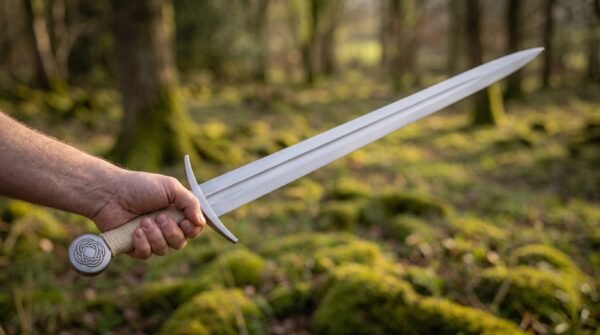
Flaxwhorl Hand Forged 1095 Carbon Steel Celtic Arming Sword | 31 Inch Overall | Cord Wrapped Grip and Tan Leather Scabbard | Norse Reenactment Gift | RK-2033
Original price was: $339.00.$271.20Current price is: $271.20.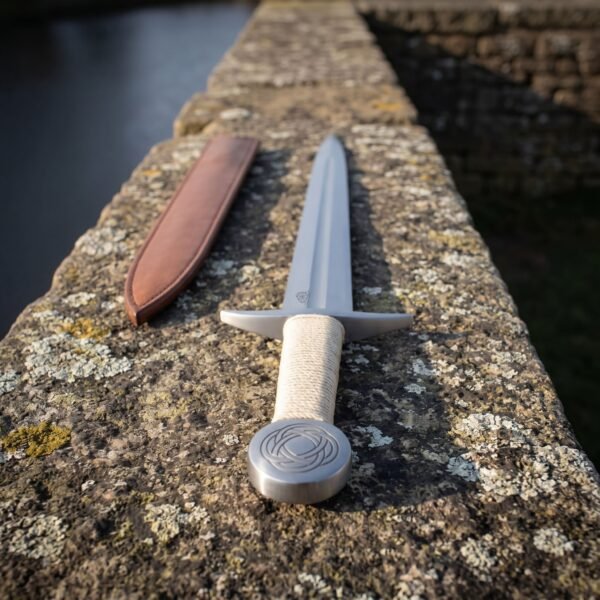
Cordcrown Hand Forged 1095 Steel Celtic Sword | 30 Inch Overall Length | Cord Wrapped Grip with Engraved Disc Pommel and Tan Leather Scabbard | Celtic Gift | RK-1916
Original price was: $329.00.$263.20Current price is: $263.20.What actually ties this collection together
People use Celtic as a decorative label, which is a shame, because the real thing has rules. Insular interlace is not freehand doodling. It is built on a grid, and the discipline of the form is that the line must never simply stop. A knot is one continuous strand that passes over and under itself and returns to where it began, and on a well cut piece you can trace it the whole way round. That is the difference between a knotwork band and a braid somebody drew to fill a space.
The tradition is older than the Norse. Irish and Northumbrian workshops had been cutting interlace into stone, metal and manuscript for two centuries before the first Scandinavian ships turned up, and the Book of Kells, the Pictish stones and the great Irish crosses all sit inside it. Norse settlers around the Irish Sea did not replace any of that. They absorbed it, mixed it with their own gripping beast and Urnes ornament, and the result runs through both cultures afterwards.
So a page that puts an arming sword next to a Celtic cross pendant and an engraved hickory haft is not being loose with the categories. They share a design vocabulary that genuinely crossed between them, and three motifs keep appearing: the interlace band, the triple spiral, and the ringed cross.
Where the motif sits on an object matters. On a sword the pommel is a flat disc facing the world, which makes it the natural place for a cut knot or a spiral, and five of the six swords here do exactly that. On a haft the band goes below the eye, where your hand does not sit. On jewellery the whole piece is the motif.
The pieces in this collection
Eleven items across four groups. The swords dominate by price and by size, but the small pieces are the ones people actually wear.
Celtic and Insular swords
Six swords, all in 1095 hardened to 54 to 58 HRC, covering a wide span. The smallest is a 30 inch single hand sword with a 24 inch blade, a narrow central fuller, a cord wrapped grip and a disc pommel with a Celtic knot cut into it, at about 1 lb 15 oz. Beside it sits a 31 inch arming sword with a 26 inch blade of flattened diamond section, no fuller and a raised central ridge, cream cord over the core and a brushed disc pommel with an engraved circular interlace knot. A third runs a broad shallow fuller most of the length, a russet grip with a raised riser band and a disc pommel cut with a triple spiral.
Above those, a 38 inch sword with a 31 inch flat ground blade, tan leather over a ribbed timber core and a wheel pommel with a recessed triple spiral, about 2 lb 10 oz, in a scabbard with two integral belt loops. Then a 38 inch Scottish basket hilt broadsword, 32 inch blade with twin narrow fullers, a pierced basket of wide flat bars and a red cloth liner behind it. And at the top a 47 inch hand and a half sword with a 36 inch blade, a guard with two closed ring terminals and a forward swept scrolled arm, a leather covered ricasso tooled with knotwork, and a polished steel tube scabbard.
The Damascus dagger
One piece is pattern welded rather than plain. A 14 inch dagger on a 9 inch double edged blade with a long taper, forge welded from 1095 and 15N20, acid etched and hand polished, hardened to 58 to 60 HRC, with a cut spiral worked above the guard. The handle is carved bone about 4.5 inches long with deep cut interlace, and the fittings are bright finished with a matching collar. It weighs about 11 ounces and ships in a tan leather sheath with a polished steel throat and a rounded chape. It is the only Damascus piece on the page.
Jewellery
Three pieces, and the listings are honest about what they are. A ringed Celtic cross pendant in sheet metal with a brushed steel tone finish, four pierced openings around the centre and an Elder Futhark rune line stamped into the foot, on a black leather cord with a steel lobster clasp. A pair of shield shaped drop earrings about 22mm by 18mm, a continuous interlace panel inside a beaded border, oxidised so the recesses hold shadow and the raised strands stay bright, on stainless hook wires at about 3 grams each. And a pair of small rose tone hoops with a bearded axe head hanging from each. All three are finished alloy rather than precious metal, and all three say so rather than implying a hallmark.
The engraved hickory haft
A replacement haft in American hickory, air dried and selected for straight grain, about 24 inches at a two hand working length. Straight through the middle with a swept curve and a swell at the butt, shouldered and kerfed at the eye end, and cut with a knotwork band below the eye. It ships with the matched wooden wedge and two steel ring wedges, which is everything needed to hang a head. The head itself is not included.
Sizes, materials and fittings across the range
Every figure comes from the specification panel of a piece on this page. These are made by hand, so several are given as approximate.
| Piece | Overall length | Blade or drop | Material and hardness | Detail | Included |
|---|---|---|---|---|---|
| Celtic sword, single hand | 30 in | 24 in, narrow central fuller | 1095 at 54 to 58 HRC | Cord wrap grip, disc pommel with a cut Celtic knot | Tan leather scabbard |
| Celtic arming sword | About 31 in | About 26 in, flattened diamond section | 1095 at 54 to 58 HRC | Cream cord grip, disc pommel with circular interlace | Tan veg tan scabbard, stitched welt |
| Knightly arming sword | Not listed | Broad shallow fuller most of the length | 1095 at 54 to 58 HRC | Russet grip with riser band, triple spiral disc pommel | Matched russet scabbard |
| Triskele sword | 38 in | 31 in, flat ground with a steady taper | 1095 at 54 to 58 HRC | Wheel pommel with recessed triple spiral, about 2 lb 10 oz | Scabbard with two integral belt loops |
| Basket hilt broadsword | About 38 in | About 32 in, twin narrow fullers | 1095 at 54 to 58 HRC | Pierced steel basket, red liner, bun pommel with capstan | Black scabbard, steel throat and chape |
| Hand and a half sword | About 47 in | About 36 in, flat central section | 1095 at 54 to 58 HRC | Ring terminal guard, knotwork tooled ricasso wrap | Polished steel tube scabbard |
| Celtic dagger | 14 in | 9 in, double edged long taper | Damascus at 58 to 60 HRC | Carved bone grip with deep interlace, about 11 oz | Tan sheath, steel throat and chape |
| Ringed cross pendant | Cord length | Pierced ringed cross | Sheet metal, brushed steel tone | Elder Futhark line stamped at the foot | Leather cord and linen pouch |
| Knotwork drop earrings | About 40mm with wire | Drop about 22mm by 18mm | Silver tone alloy, oxidised | Interlace panel in a beaded border, about 3g each | Pair, hook wires, pouch |
| Axe head hoop earrings | Small everyday hoop | Bearded axe head charm | Alloy, rose tone finish | Knotwork cut into the cheek of each axe | Pair and drawstring pouch |
| Hickory axe haft | About 24 in | Two hand working length | American hickory, air dried | Knotwork band below the eye, shouldered and kerfed | Wooden wedge and two steel ring wedges |
The haft row is the one to read twice. It is a haft, not an axe. No head is included.
Sizing and fit
The swords do not handle alike. A 24 or 26 inch blade on a single hand grip is a short sword by most measures, quick and easy to hang anywhere. A 31 or 32 inch blade is standard arming sword territory. The 36 inch hand and a half is a different animal, needs both hands, and wants about five feet of clear wall once you allow for a bracket.
For the jewellery, the numbers are small but they matter. The drop earrings are about 40mm overall including the hook, which is a noticeable drop but not a chandelier. The hoops are sized to sit against the lobe rather than swing wide. The pendant hangs on a round leather cord with a lobster clasp, so it sits at whatever length the cord gives rather than adjusting.
For the haft, measure the eye on your head before ordering. It suits bearded, Dane and medieval pattern heads with a standard oval eye, and 24 inches is a two hand working length rather than a one hand hatchet length.
Steel and hardness
The six swords are plain 1095 high carbon, hardened and tempered to 54 to 58 HRC. On a long blade that is where you want to be. It holds an edge through real use, it bends and returns rather than snapping, and it comes back on an ordinary stone without any special equipment. It has no chromium in it, so it rusts if you neglect it.
The dagger is Damascus, forge welded from 1095 and 15N20 and hardened to 58 to 60 HRC. The 15N20 carries nickel and resists the acid etch, so after etching the two steels sit at slightly different depths and read as light and dark layers. On a 9 inch blade the pattern is tight and legible, which is the best scale for it. Read what Damascus steel actually is if you want the process rather than the marketing, and steel and hardness for what those HRC figures measure.
The jewellery is alloy with a plated or oxidised finish, and the listings say so. Steel tone, silver tone and rose tone describe the finish, not the metal underneath. Nobody here is claiming sterling.
Knotwork, triskeles and the ringed cross
Interlace is the continuous over and under band, and it appears on four swords, on both pairs of earrings and around the haft. A well cut band is one strand you can follow the whole way. A badly cut one has ends that stop dead.
The triskele or triple spiral is the older motif, pre Celtic in origin and carved at Newgrange more than five thousand years ago before it was ever an Irish emblem. It appears on two of the swords here, once recessed into a wheel pommel and once engraved on a flat disc. It has picked up a great many modern meanings and almost none of them are documented, so pick the one you like.
The ringed cross joins a cross to a circle at the intersection. On a stone cross the ring supports the arms, and it also frames the interlace. Both are probably true. The pendant adds an Elder Futhark line at the foot, which is a modern combination rather than a historical one, and worth knowing before someone at a reenactment asks.
Care and storage
Blades want a wipe after handling and a thin film of mineral oil, applied and wiped almost dry. Skin acid marks a satin finish faster than anything else. Do not leave a blade in a leather scabbard for months, because leather holds humidity against the steel and a snug scabbard through a damp season will spot it. The knife care guide covers oiling and rust removal in full.
The carved bone handle on the dagger wants stable humidity and no soaking. Wipe it dry, do not put it near a radiator, and it will be fine for decades. The hickory haft is sanded bare of varnish on purpose, so it can take boiled linseed oil if you want it protected, and it should never be stored somewhere very dry before you hang a head on it.
The jewellery has a finish rather than a solid metal, so it will wear at the contact points over time. Keep it out of the shower and off the perfume, store it in its pouch, and clean it with a dry cloth rather than a silver dip, which strips an oxidised finish straight off.
Engraving
Most steel pieces here can be engraved after they arrive in the United States. On a sword the usable surfaces are the flat above the ricasso and the pommel, and several of these already carry cut work in exactly those places.
Text engraving is 19 dollars, a symbol is 39 dollars and a family crest is 49 dollars. Elder Futhark is a phonetic alphabet rather than a code, so a name is transliterated by sound and there is no rune for the letter C, which catches people out. Engraving is permanent and an engraved piece cannot be returned, so check the spelling twice before you order.
Where these come from and how they ship
Ransack Viking is a US company based in Chicago, Illinois. The pieces are handmade in the Czech Republic, then imported, inspected and shipped from Chicago. Engraving is done in the US after arrival.
Cut knotwork is done by hand, so the depth and crispness of a band varies between pieces, and so does the grain in a hickory haft or a carved bone grip. Swords ship in a long box that someone needs to sign for. Jewellery ships small and each piece comes with its own pouch.
How to choose
If you want one object that carries the whole idea, buy a sword with a cut pommel. The disc and wheel pommels here are where the interlace and the spirals actually live, and at arm's length that is what you see. Prices for the swords run from 329 to 529 dollars.
If you want something to wear rather than hang, the pendant and the two pairs of earrings sit between 119 and 139 dollars and are honest about being finished alloy. If you already own an axe head with a broken handle, the 129 dollar hickory haft is the most practical thing on this page and the only one you will actually use.
Browse related categories
- Arming swords, single handed and double edged
- Broadswords with basket and shell hilts
- Basket and shell hilt swords
- Daggers and double edged blades
- Damascus and Norse jewellery
- Axe handles and replacement hafts
Guides worth reading first
- Viking and Insular symbols and what they mean
- Elder Futhark runes explained
- How to buy your first sword
- What Damascus steel actually is
Frequently asked questions
Is Celtic knotwork actually Viking?
Not originally. Interlace was being cut in Ireland and Northumbria for around two centuries before the Norse arrived. What happened afterwards is that Norse settlers in Dublin and York absorbed it and blended it with their own ornament, which is the style usually called Hiberno Norse. So knotwork on a Norse object is authentic to the later period, just not to the earliest one.
What does the triple spiral mean?
Nobody knows. It is carved at Newgrange, which puts it more than five thousand years old and well before anything anyone would call Celtic, and no contemporary explanation survives. Modern readings are modern. Two swords here carry it, one recessed into a wheel pommel and one engraved on a flat disc.
Are the swords sharp?
Yes. The listings say sharpened, and these are hand ground blades in hardened 1095 sold as collector and display pieces. Treat them as sharp from the moment the box is open.
What is the leather covered section above the guard on the big sword?
That is the ricasso, and it is left unsharpened deliberately. Dropping your second hand onto the ricasso shortens the sword by about a foot instantly, which is what you want in a press where there is no room to swing. Scottish and German two hand swords of the sixteenth century almost all carried one.
Is the jewellery solid silver?
No, and the listings say so plainly. The pieces are alloy with a finish, described as silver tone, steel tone or rose tone. The drop earrings hang on stainless steel hook wires, with sterling wires available on request.
What is the difference between a broadsword and a backsword?
The blade, not the width. On a Scottish hilt, broadsword means the blade is double edged. Fit the same basket to a single edged blade with a thick back and it is a backsword. The two were made side by side in the same Glasgow and Stirling workshops through the seventeenth and eighteenth centuries, and nothing about the word refers to a wide blade.
Does the axe haft come with an axe head?
No. You get the 24 inch hickory haft, the matched wooden wedge cut for the kerf and two steel ring wedges. It suits bearded, Dane and medieval pattern heads with a standard oval eye. Measure your eye before ordering.
Which wedge goes in first?
The wooden one. It goes into the sawn kerf and spreads the haft along the length of the eye, and the two steel ring wedges are then driven across it at an angle to spread it the other way. Doing it in the other order does not work and will split the wood.
Featured pieces
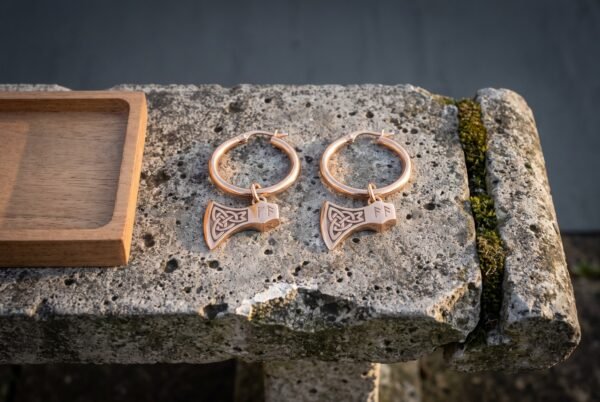 Axebloom Hand Made Rose Tone Viking Axe Hoop Earrings with Celtic Knotwork Heads & Hinged Snap Closures
Original price was: $119.00.$95.20Current price is: $95.20.
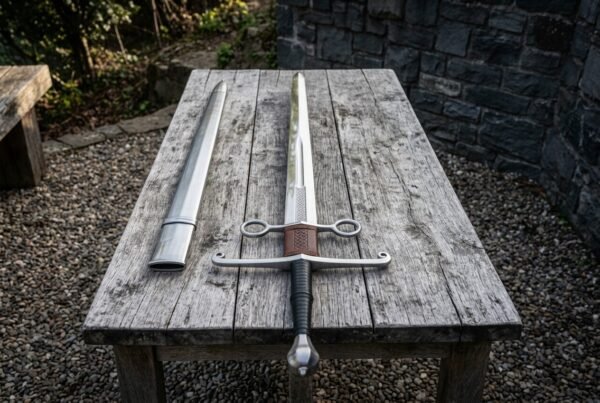 Ringwolf Hand Forged 1095 Steel Hand and a Half Sword
Original price was: $549.00.$439.20Current price is: $439.20.
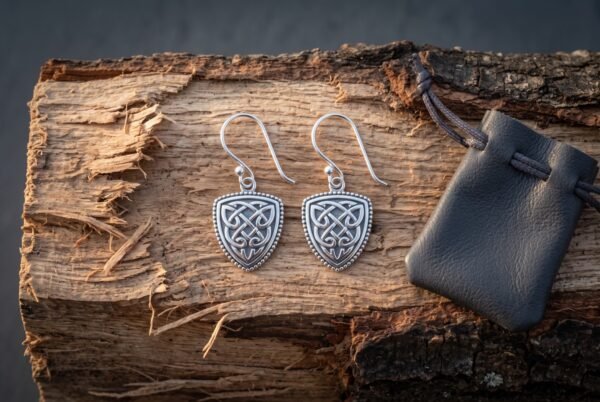 Knotbloom Hand Made Celtic Earrings with Shield Shaped Knotwork Drops & Beaded Borders
Original price was: $119.00.$95.20Current price is: $95.20.
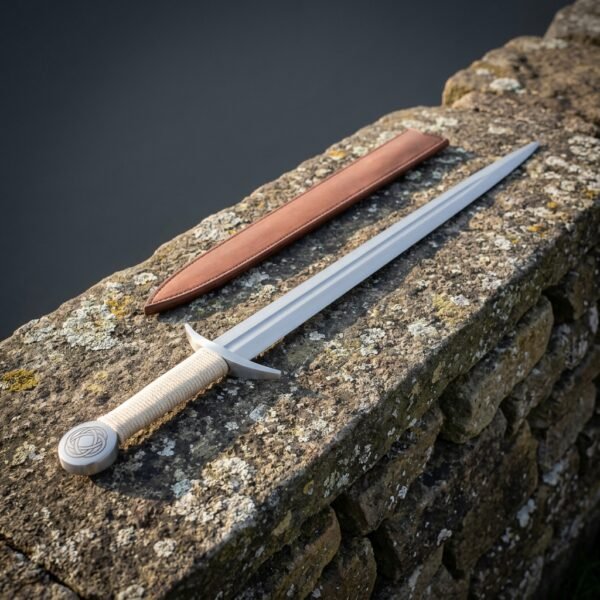 Cordcrown Hand Forged 1095 Steel Celtic Sword
Original price was: $329.00.$263.20Current price is: $263.20.