
Scale and lamellar solve the same problem in two different ways. Scale hangs small plates off a backing, each one riveted at the top so it overlaps the row beneath like roof tiles. Lamellar has no backing at all. The plates are drilled and laced to each other with cord, so the armour holds its own shape and flexes along the lines of the lacing. Scale is quicker to make and easy to repair one plate at a time. Lamellar is stiffer and carries its weight better on the shoulders than mail does.
This page runs from a pair of leather scale pauldrons at 299 dollars up to a full lacquered steel lamellar suit at 1650 dollars. Steel pieces are mild steel in 18 gauge, roughly 1.2 mm, which is display and light reenactment weight rather than combat plate. Leather pieces are vegetable tanned, with scales around 2 mm thick lapped two deep. One complete leather suit is listed at about 25 lb, and the two laced helmets at 5 to 7 lb with the crests fitted.
If this is your first piece, buy a shirt or a pair of pauldrons before you buy a suit.
Free US shipping
On most pieces. Heavier and oversized ones carry a flat charge.
Hand Forged
Heated, hammered and ground by hand.
Engraving available
Names, dates or Norse runes on most pieces.
Ships from Chicago
Inspected and dispatched from our Chicago warehouse. No import duty, no customs delay on US orders.
Scale & Lamellar Armor
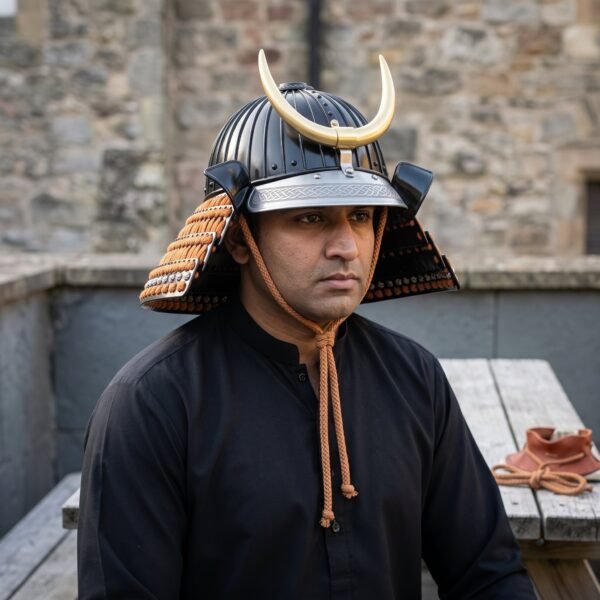
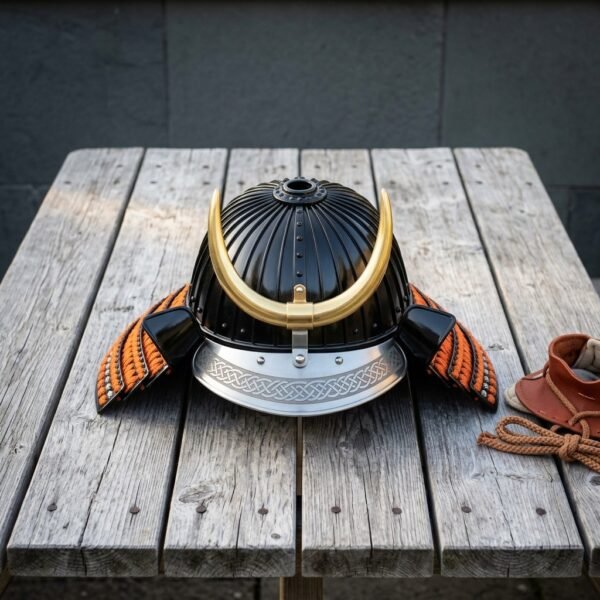
Nightcrest Hand Forged Steel Kabuto Samurai Helmet | Ribbed Black Lacquer Bowl | Brass Crescent Crest and Orange Laced Neck Guard | Display Gift | RK-1512
Original price was: $399.00.$319.20Current price is: $319.20.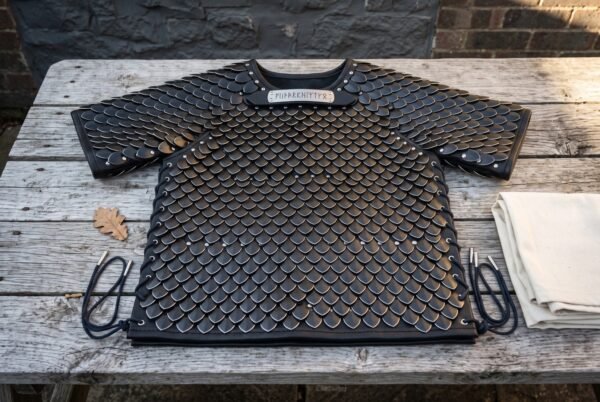
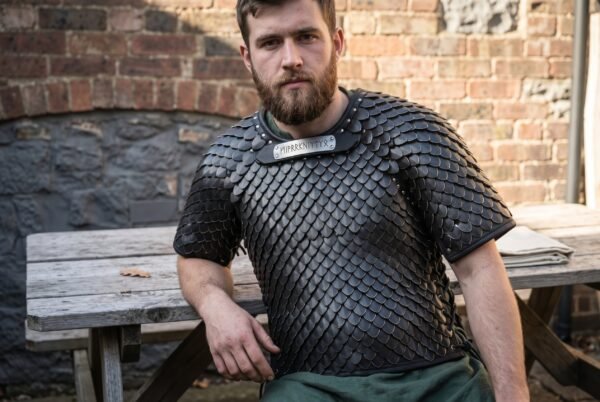
Ashscale Hand Made Blackened Steel Scale Armour Shirt | 18 Gauge Mild Steel Scales | Black Leather Binding and Rune Plaque | Norse Reenactment Gift | RK-1540
Original price was: $499.00.$399.20Current price is: $399.20.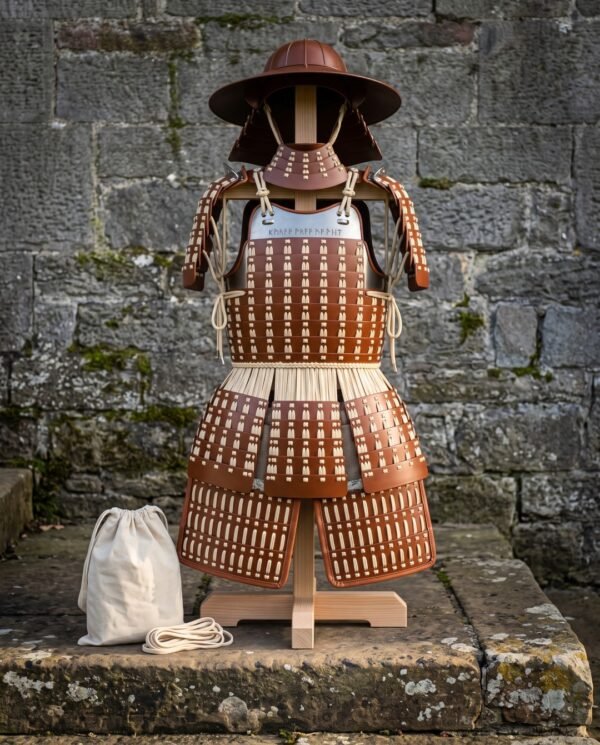
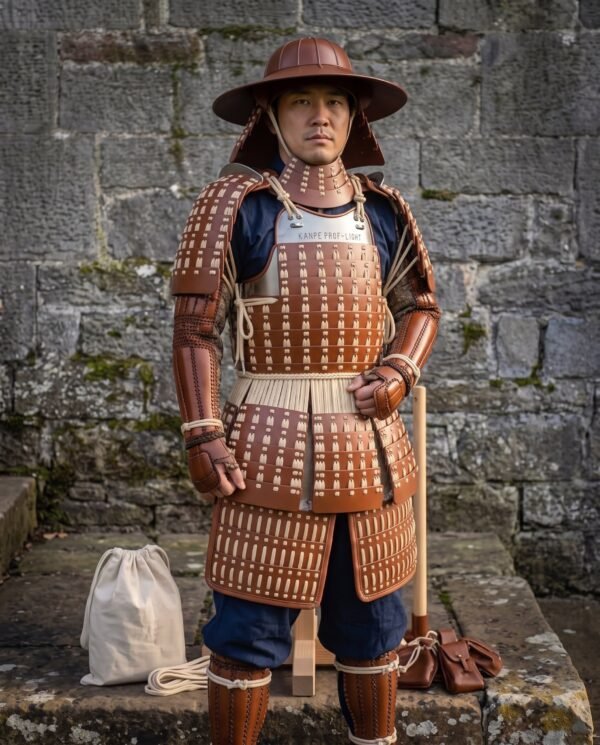
Silkscale Hand Made Leather Lamellar Samurai Armour Suit | Tan Hide with Cream Cord Lacing | Wide Brim Helmet Shoulder Guards Arm Guards Tassets Thigh and Shin Guards | Dojo Display Gift | RK-1556
Original price was: $1,290.00.$1,032.00Current price is: $1,032.00.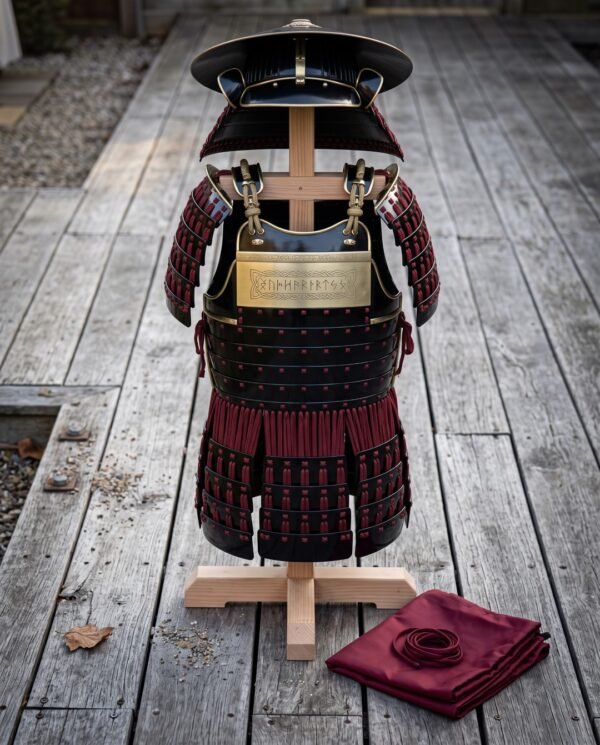
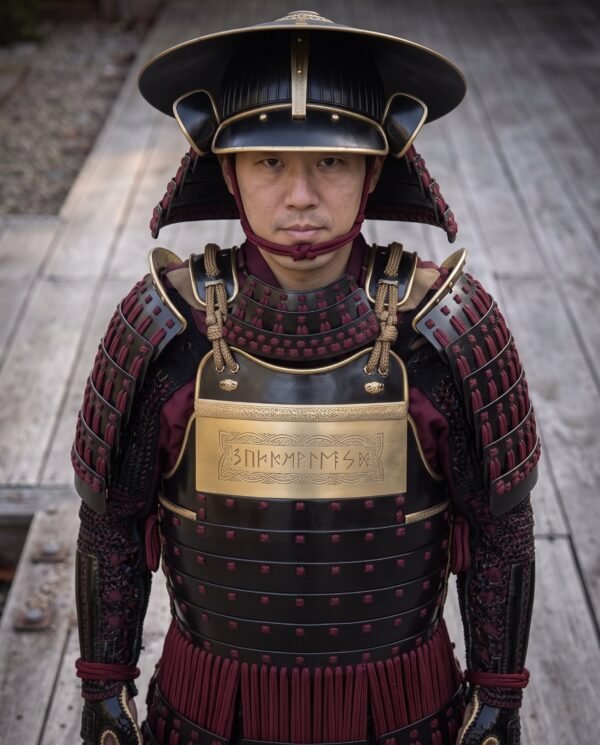
Crimsonlace Hand Made Lacquered Steel Samurai Lamellar Armour Suit | Full Do Sode and Kusazuri | Crimson Lacing Brass Plaque and Jingasa | Display Gift | RK-1543
Original price was: $1,650.00.$1,320.00Current price is: $1,320.00.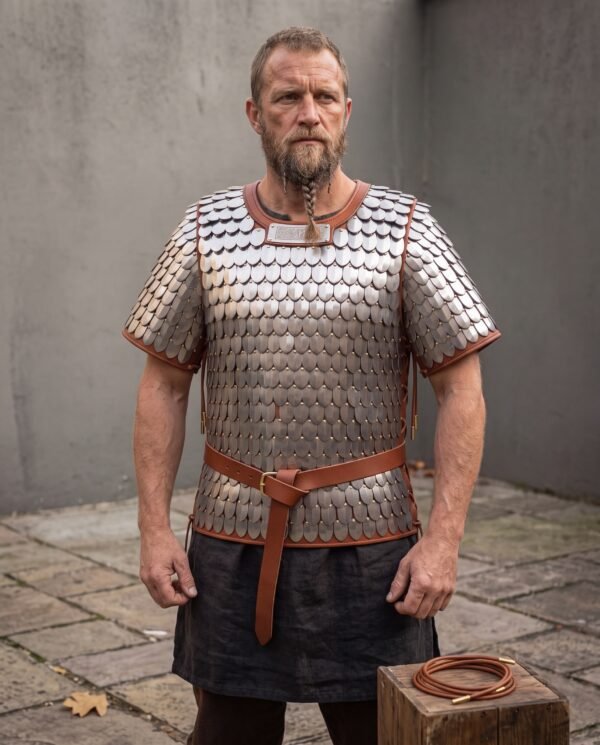
Wyrmscale Hand Made Steel Scale Armour Shirt | 18 Gauge Mild Steel Scales | Russet Leather Binding and Brass Rivets | Norse Reenactment Gift | RK-1531
Original price was: $529.00.$423.20Current price is: $423.20.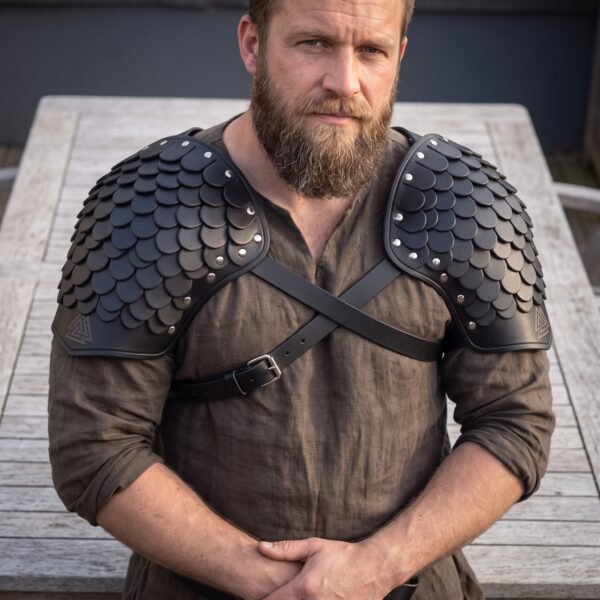
Nightscale Hand Made Black Leather Scale Pauldrons with Riveted Overlapping Scales & Valknut Panel | Norse Reenactment Gift | RK-1535
Original price was: $299.00.$239.20Current price is: $239.20.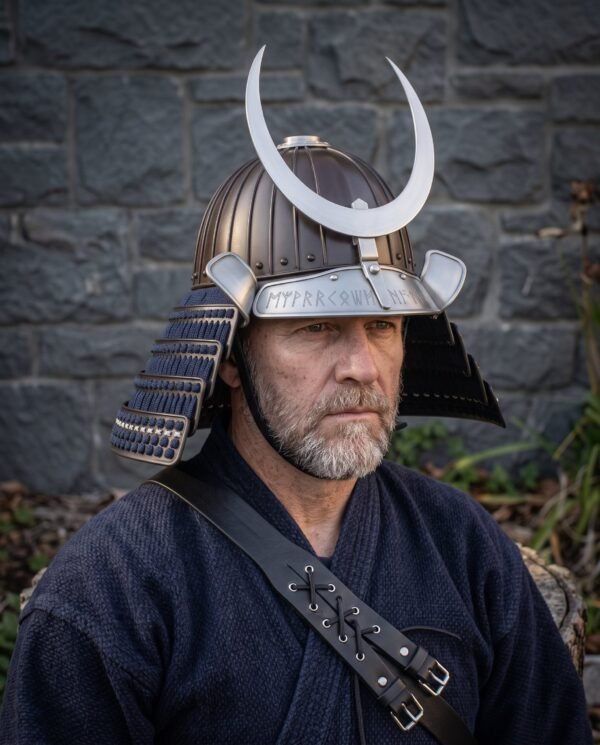
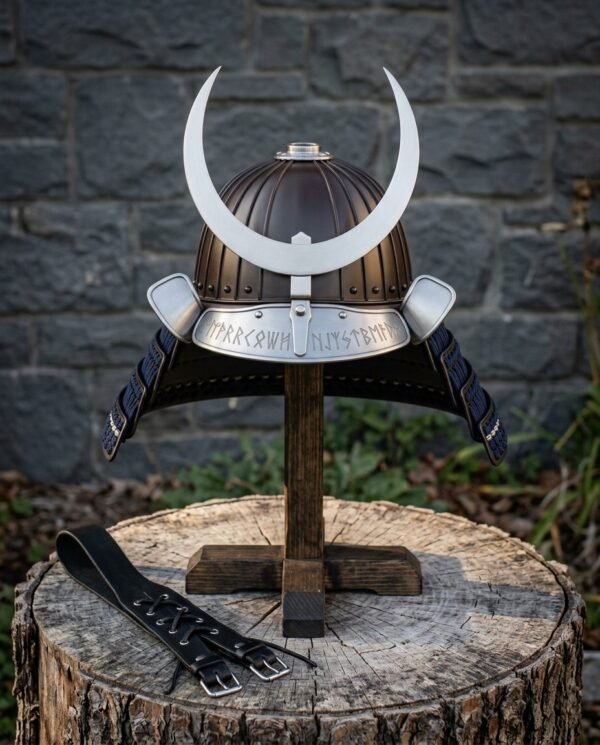
Moonhorn Hand Forged Steel Kabuto Helmet | Bronze Ribbed Bowl | Polished Crescent Crest and Rune Cut Brow Band | Norse Display Gift | RK-1514
Original price was: $429.00.$343.20Current price is: $343.20.How scale and lamellar actually work
Both systems exist because a big plate is hard to make and harder to wear. Cut that plate into a few hundred small ones and the armour bends where a body bends, which is the whole point. Where the two systems part company is in what holds the plates together.
Scale armour hangs its plates on a foundation. A shirt of leather faced canvas or plain hide carries rows of small plates, each fixed near its top edge and each overlapping the row below and the plate beside it. Everything sheds downward, so a stroke that lands on the outside slides off the surface rather than lifting a plate. The foundation carries the weight, and the plates only have to cover.
Lamellar has no foundation. Every plate is drilled along its edges and laced directly to its neighbours with cord, in rows that are then laced to the rows above and below. The result is a self supporting shell. It stands up on its own on a stand, it flexes along the lacing lines rather than everywhere at once, and it puts more of its weight onto the shoulders and the waist belt instead of dragging on a backing.
There is a practical difference too. A scale shirt is repaired one rivet at a time and you can do it at a table. Lamellar is repaired by unlacing a section, which means undoing rather more of the armour than you damaged. That is the price of a shell that holds its own shape.
The armour in this collection
Seven pieces, split between steel and leather, and between shirts you wear on their own and suits that cover you from the head to the thigh.
Steel scale shirts
Two short sleeved scale shirts, both in mild steel at 18 gauge. The first is bright satin steel with round bottomed domed scales, each held by a single solid brass rivet through the head, on a leather faced canvas backing. Binding is russet vegetable tanned leather at the neck, hem, armholes and cuffs, and it laces at both sides with brass aiglets on the cords. There is an engraved throat plaque with a knotwork border and a rune line.
The second is the same pattern in blackened steel with steel rivets, black leather binding and a black leather faced backing, closing with cord side lacing through metal aiglets. Its throat plaque is steel with an Elder Futhark rune line cut across it. The domed scale reads brighter under light and the blackened one reads flatter, which matters more than you would expect once a camera is involved.
Leather scale
A pair of scale pauldrons in vegetable tanned leather dyed black, made left and right. A heavy base plate carries lighter scales riveted over it, round bottomed and overlapping both down and across, one steel rivet per head. Each base plate has a valknut set into its lower point. They fasten with a buckled strap around the upper arm and a long buckled body strap, so they can be worn over a shirt, over a gambeson or over nothing but a tunic if you are only being photographed.
Lamellar suits
The lacquered steel suit is a samurai style set in do maru form. The body is a lacquered do with a solid upper breast and lacquered lamellar rows beneath it, all laced with crimson cord odoshi. It comes with a pair of sode for the shoulders, kusazuri skirt panels hanging from the waist line, and a broad brimmed lacquered jingasa with a brass finial and a lacquered neck guard. Fittings are brass throughout, including the shoulder mounts and an engraved brass breast plaque. It is built for display, costume and stage work.
The leather lamellar suit is the same idea in tan hide with cream cord lacing. Scales are roughly 2 mm thick, lapped two deep across most rows, over a leather ground. Coverage runs to a helmet with a neck guard and throat plate, a cuirass, shoulder guards, skirt plates and thigh guards. The chest carries a polished steel panel engraved with an Elder Futhark rune line. It is listed at about 25 lb complete and fits roughly a 36 to 44 inch chest, adjusted at the shoulder cords and the waist belt.
Laced helmets
Two kabuto helmets sit in this category because their neck guards are laced plate rather than a single shaped piece. Both are mild steel at 18 gauge, about 1.2 mm, with ribbed bowls and flared shikoro neck guards built from laced plates with upturned side flaps. One is finished in black lacquer with orange cord and a solid brass crescent crest in a riveted steel bracket, with an engraved knotwork band across the brow. The other has a bronze brown heat and lacquer tone, indigo cord, a large polished steel crescent in a break away brow bracket and an Elder Futhark rune line cut into the brow band. Both are built to a stated head circumference, worn over a padded cap, and both carry a suspension liner and chin tie.
Materials, gauges and weights across the range
Every figure below is taken from the specification panel of a piece on this page. These are made by hand, so read the numbers as what to expect rather than a promise to the millimetre. Where a listing gives no weight, the table says so instead of guessing one.
| Piece | Material and gauge | Plate form | Fixing and lacing | Binding and fittings | Listed weight |
|---|---|---|---|---|---|
| Scale shirt, bright satin | Mild steel, 18 gauge | Round bottomed domed scales on leather faced canvas | One solid brass rivet per scale head | Russet vegetable tanned binding, brass aiglets, engraved throat plaque | Not listed |
| Scale shirt, blackened | Mild steel, 18 gauge, blackened | Round bottomed scales on black leather faced backing | One steel rivet per scale head | Black leather binding, cord lacing, steel rune plaque | Not listed |
| Scale pauldrons, pair | Vegetable tanned leather, dyed black | Scales riveted over a heavy base plate | One steel rivet per scale head | Steel roller buckles, valknut at the lower point | Not listed |
| Lacquered lamellar suit | Mild steel, 18 gauge, black lacquered | Lamellar rows, do maru form with sode and kusazuri | Crimson cord odoshi throughout | Brass edging, brass shoulder mounts, engraved brass plaque | Not listed |
| Leather lamellar suit | Vegetable tanned leather over a leather ground | Scales about 2 mm thick, lapped two deep | Cream cord lacing | Steel chest panel with a rune line, buckled waist belt | About 25 lb complete |
| Lacquered kabuto helmet | Mild steel, 18 gauge, about 1.2 mm | Ribbed bowl with a laced plate shikoro | Orange cord lacing | Brass crescent crest, engraved knotwork brow band | About 5 to 6 lb |
| Bronze toned kabuto helmet | Mild steel, 18 gauge, about 1.2 mm | Ribbed bowl with a laced plate neck guard | Indigo cord lacing | Polished steel crescent crest, rune cut brow band | About 6 to 7 lb |
Eighteen gauge is the number to hold onto. At roughly 1.2 mm it is thick enough to look and sound like armour and to survive being worn, handled and packed, and it is thinner than the plate a full contact fighter would want. These pieces are made for display, costume, film work and light reenactment.
Sizing and fit
Scale shirts are sized by chest, and the side lacing gives you real adjustment on both sides. Lace it over whatever you intend to wear underneath, not over a bare shirt, because a padded layer adds a couple of inches all round and nobody wears scale directly against skin for long. The leather lamellar suit is listed for roughly a 36 to 44 inch chest and adjusts at the shoulder cords and the waist belt.
Helmets are built to a stated head circumference and are meant to be worn over a padded cap. Measure around your head just above the eyebrows and add room for that cap. A helmet that fits your bare head is a helmet that will give you a headache in twenty minutes, and the suspension liner is there to hold the shell off your skull rather than to make a tight one fit.
Length matters more than most people plan for. A scale shirt should end at the hip, not the thigh, or it will fight you every time you sit down or get on a horse. Skirt panels and thigh guards on a lamellar suit are laced to hang and swing, and if they are tied too tight to the body they stop working and start catching.
Weight, and where it lands
Armour weight is less about the total than about where it sits. A scale shirt hangs everything from your shoulders, which is fine for an hour and tiring for a day. Lamellar with a waist belt moves a share of the load onto your hips, which is why the leather suit at about 25 lb complete wears easier than the number suggests.
Helmets are the other half of the problem. Five to seven pounds is not much until it is on your head with a crest sticking off the front, and a crest changes the balance more than the weight does. The break away brow bracket on one of these exists for a reason. A crest that will not release is a crest that catches on a doorway and takes your neck with it.
Lacing, rivets and bindings
Rivets do the work on scale. One rivet per scale head means every plate can pivot slightly, which is what lets the shirt move at all. Brass rivets on the satin shirt and steel rivets on the blackened one behave the same way, and brass simply darkens more visibly over the years. Check the rivet line along the shoulders once a season, because that is where the load sits and where a head will eventually work loose.
Cord does the work on lamellar. Odoshi lacing is structural, so a cut or frayed run is not cosmetic damage. Keep the lacing dry, keep it out of long sun, and if a run starts to fuzz, replace that run rather than waiting for it to part. Coloured cord fades. Crimson and indigo both lose depth in a sunny window over a couple of years.
Binding is the quiet part that decides how long a shirt lasts. Leather at the neck, hem, armholes and cuffs stops the sharp edge of a steel plate from cutting into whatever is underneath, including you. If the binding wears through, deal with it before the plates start eating your padding.
Care and storage
Bright steel scale will rust. Wipe it down after wearing, keep a light film of oil on it, and store it dry. Blackened and lacquered finishes are more forgiving but not immune, and a scratch through the black is bare steel that will spot first. Touch up a lacquer chip rather than leaving it.
Leather wants the opposite treatment. Keep it out of direct heat, condition it once or twice a year with a leather dressing, and never dry it fast in front of a heater after it gets wet, because that shrinks and hardens the scales and pulls them off their rivets.
Store armour hanging or on a stand wherever you can. A scale shirt folded in a box creases along the same lines every time and loosens the rivets on those creases. Lamellar left in a heap crushes rows out of shape and the lacing takes the strain. A cheap dress form or a wooden stand is worth more to this armour than any polish you can buy.
Engraving and personalising
Several pieces here already carry cut decoration, from the knotwork brow band on the lacquered helmet to the rune plaques on both scale shirts and the valknut set into each pauldron. Steel plaques, brow bands and breast panels can be engraved after they arrive in the United States. Text engraving is 19 dollars, a symbol is 39 dollars and a family crest is 49 dollars.
Elder Futhark is a phonetic alphabet rather than a cipher, so a name is written out by sound rather than letter for letter, and there is no rune for the letter C. Send the exact spelling you want, because engraving is permanent and an engraved piece cannot be returned.
Where this armour comes from and how it ships
Ransack Viking is a US company based in Chicago, Illinois. The pieces are handmade in the Czech Republic, then imported, inspected and shipped from Chicago. Engraving is done in the US after arrival.
Suits and shirts are heavy and are packed accordingly. Expect a large box, expect the lacing to have been eased for packing rather than shipped at full tension, and expect to spend the first evening adjusting cords and straps to your own body rather than wearing it straight out of the carton.
How to choose
For a first piece, take a scale shirt. It reads as armour from across a room, it goes over a gambeson without any fitting problem, and it costs a fraction of a suit.
For a costume that has to photograph well, the blackened shirt or the lacquered lamellar suit hold up better under lights than bright steel, which blows out and loses its texture on camera.
For something you will wear for long days, take the leather lamellar. It is lighter than it looks, it carries its weight on the belt, and it does not need oiling every time the weather turns.
For a display stand or a shelf, either helmet does the job on its own, and the crested ones fill a lot more space than a plain bowl.
Browse related categories
- Chainmail armour, riveted and butted rings
- Plate armour and cuirasses
- Leather armour, bracers and body pieces
- Brigandines and gambesons to wear underneath
- Medieval helmets across the range
- Roman and Greek helmets
- Viking helmets, spangenhelms and nasal bars
- Round shields to carry with it
Guides worth reading first
- Viking armour explained, from mail to scale
- Chainmail vs plate vs lamellar
- Caring for mail and steel armour
- Gifts for reenactors
- Elder Futhark runes and how names are written
- The valknut and what it means
Frequently asked questions
What is the difference between scale and lamellar?
Scale plates hang off a backing of leather or canvas and overlap downward like tiles. Lamellar plates are laced directly to each other with cord and need no backing, so the armour supports its own shape. Scale is easier to repair. Lamellar carries its weight better.
Is this armour suitable for full contact reenactment?
No. The steel here is mild steel at 18 gauge, roughly 1.2 mm, which is display and light reenactment weight. It will survive being worn, packed and handled. Full contact fighting groups have their own thickness rules and this is below them.
What do I wear under a scale shirt?
A padded layer. A gambeson is the usual answer and even a thick quilted tunic is better than nothing. Padding takes the edge of the plates off your body, absorbs the load and stops the binding wearing through your clothes. Size the shirt over that padding, not without it.
How heavy are these pieces?
The leather lamellar suit is listed at about 25 lb complete. The two helmets run about 5 to 6 lb and about 6 to 7 lb with their crests fitted. The shirts and pauldrons are not given a listed weight, so no figure is quoted for them here.
Will the steel rust?
Bright steel will if you let it. Wipe it after wearing, keep a light film of oil on it and store it dry rather than in a sealed bag. Blackened and lacquered pieces resist better, but a scratch through the finish exposes bare steel and that is where a spot will start.
How do I size a helmet?
Measure around your head just above the eyebrows, then allow room for the padded cap these are meant to be worn over. Both helmets here are built to a stated head circumference and carry an adjustable suspension liner and a chin tie to hold the shell clear of your skull.
Can the lacing be replaced if it breaks?
Yes, and it should be. On lamellar the cord is structural rather than decorative, so a frayed run wants replacing before it parts. Unlace that run, match the cord thickness, and relace it the same way it came. Keep the armour out of long sun and it will happen far less often.
Where is this armour made?
It is handmade in the Czech Republic, then imported, inspected and shipped by Ransack Viking from Chicago, Illinois. Any engraving is added in the United States after arrival.
Featured pieces
 Nightcrest Hand Forged Steel Kabuto Samurai Helmet
Original price was: $399.00.$319.20Current price is: $319.20.
 Moonhorn Hand Forged Steel Kabuto Helmet
Original price was: $429.00.$343.20Current price is: $343.20.
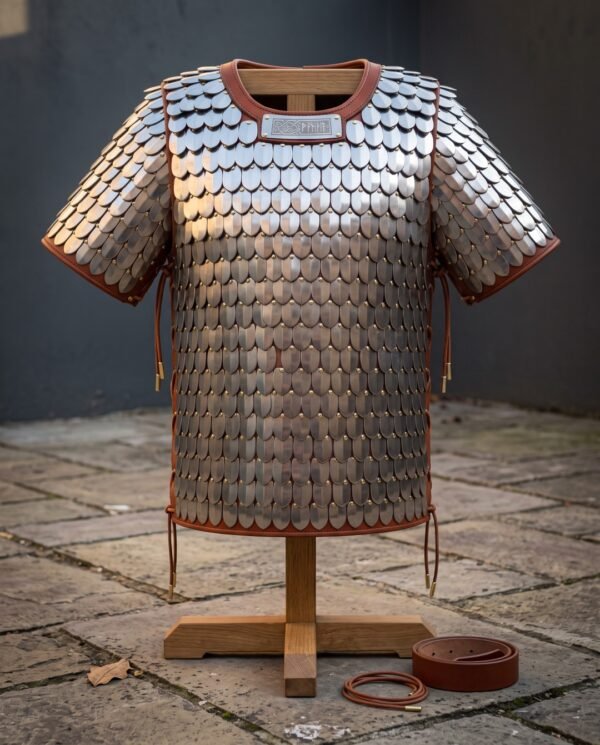 Wyrmscale Hand Made Steel Scale Armour Shirt
Original price was: $529.00.$423.20Current price is: $423.20.
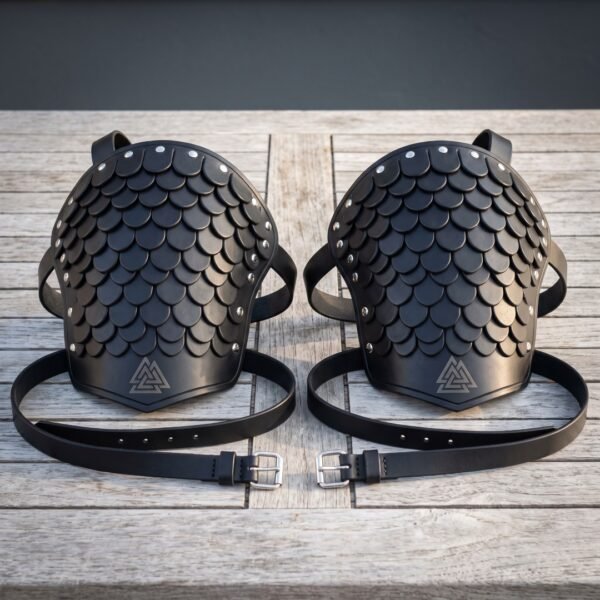 Nightscale Hand Made Black Leather Scale Pauldrons with Riveted Overlapping Scales & Valknut Panel
Original price was: $299.00.$239.20Current price is: $239.20.