
Blog
Caring for Chainmail and Steel Armour


Maille does not so much rust as patiently wait for you to forget about it. Keep it clean and dry, oil it lightly, and store it where air can reach it. When rust does take hold, the traditional fix is to tumble the shirt in a barrel or a bag with sand and a little vinegar or oil until the rings polish each other clean. Plate and helmets are simpler: wipe, dry, oil. What ruins maille is putting it away damp.
Armour steel behaves like any other steel, but a maille shirt has thousands of ring edges and overlaps that hold water where you cannot see or reach it. That is the whole difficulty. Everything below is aimed at the same three things: get the water out, keep a film of oil on, and give the metal air. Nothing else you read about maille care matters anywhere near as much.
First, know what your maille is made of
This changes the routine entirely, and most people have never been told. Maille sold for display, reenactment and film work is commonly made from mild steel, from galvanised or zinc coated steel, from stainless, or from aluminium. Each behaves differently:
- Mild steel rusts readily and needs the full routine below. This is the most common material for butted maille and the one that gives people trouble.
- Galvanised or zinc coated steel resists rust for a long time and looks slightly duller. It does not want aggressive abrasion, which strips the coating and leaves bare steel underneath.
- Stainless needs almost nothing beyond a wash and a dry, and stays bright.
- Aluminium does not rust at all, weighs a fraction of steel, and is common in film and stage maille. It can leave grey marks on light clothing.
The listing should say. If it does not say, assume mild steel and treat it accordingly, because that is the material that will punish you for guessing wrong. A magnet is a quick first test: steel of any kind pulls, aluminium does not.
After every wearing
 Grimhold Hand Forged Chainmail and Leather Gauntlets with Domed Steel Studs & Buckled Cuffs | Norse Reenactment Gift | RK-1450
 Hoodwarden Hand Forged Chainmail Coif | Butted Mild Steel Mail | Leather Bound Face Opening, Drawstring Throat and Shoulder Mantle | Viking Gift | RK-1473
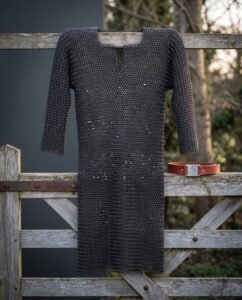 Nightweave Hand Made Blackened Mild Steel Chainmail Hauberk | 48 Inch Chest Knee Length | 9 mm Butted Rings in a 4 in 1 Weave | Viking Reenactment Gift | RK-1492
1. Get it off and get it dry
Sweat is salty and it is the single worst thing that happens to a maille shirt. As soon as you are out of it, hang the shirt somewhere with moving air rather than folding it into a bag. A broom handle across two chair backs works. Let it dry fully before anything else.
2. Brush the grit out
Field dirt, sand and grass hold moisture in the weave. A stiff brush over both faces, working in the direction of the rings, takes most of it out. Do this outside.
3. Wipe or oil
For steel maille, put a light oil through the weave. The easiest method is to lay the shirt on a sheet, apply oil to a cloth, and work it over the surface in sections, turning the shirt to reach the inside. A spray oil applied lightly and then worked in with a cloth covers the weave faster. What matters is a thin film everywhere, not a dripping shirt.
Mineral oil, a light machine oil or a purpose made rust preventative all work. Do not use vegetable or cooking oils, which go rancid and sticky and will glue rings together over a season.
The sand and vinegar barrel
This is the traditional method, and nothing modern has improved on it for a shirt that has gone rusty all over. The principle is simple: put the maille in a container with an abrasive medium, then agitate it so the rings scour each other and the medium scours the rings.
How to do it
- Find a container. A plastic barrel with a lid, a sturdy bucket you can seal, or a heavy canvas or sailcloth bag all work. A concrete mixer is the modern shortcut if you have access to one.
- Put the maille in, then add coarse dry sand until the shirt is well covered and can move.
- Add a small quantity of white vinegar, enough to dampen the sand rather than to soak it. The mild acid loosens the oxide; the sand does the mechanical work.
- Seal it and roll, shake or tumble it. Twenty minutes of vigorous work will show progress. A badly rusted shirt may need an hour or more, in stages.
- Open it, check, and keep going until the rings are bright.
The part people skip
Rinse thoroughly and dry completely, then oil at once. Vinegar left in the weave will start rusting the shirt again within a day, and it will do it faster than before because you have just stripped every trace of protective film off the metal. Rinse with clean water, shake the shirt hard, hang it in the sun or in front of a fan until it is bone dry, then oil.
If you would rather not use vinegar at all, dry sand alone in a barrel will do the same job more slowly and with none of the rinsing risk. For a lightly spotted shirt, that is the better choice. Skip the abrasive entirely on galvanised or coated maille, since tumbling will take the coating off.
Washing maille
Steel maille can be washed with warm water and a little dish soap when it has been worn hard, and it needs to be after a sweaty event. The rule is that washing is only ever half the job. Rinse, then dry aggressively: shake it out, hang it, use a fan, and if you have one, a warm airing cupboard. Only when it is completely dry does it get oiled. A shirt washed and left to dry in a heap will be orange in two days.
Never put maille in a washing machine. The weight destroys drums and the agitation opens butted rings.
Storing maille
Hang it if you can, on a broad shouldered hanger or a padded rail that spreads the load. Folded storage is acceptable for short periods but puts a crease line under permanent tension, and on butted maille that is where rings open.
Never store maille in a sealed plastic tub or a bin bag. Whatever moisture is in there when you close the lid stays in there against the steel. If you must use a box, leave it open, or drill it, or put a large silica gel pack in with the shirt and change it. A cotton or canvas bag is far better than plastic because it breathes.
Keep it off concrete floors, which wick moisture, and out of garages, sheds and basements where the temperature swings and condensation forms. An interior cupboard is fine, and dull, which is exactly what you want from storage.
Plate, helmets and other solid steel
All of this gets much easier when the surface is smooth. A breastplate, a helmet or a pair of gauntlets needs the same three steps in a fraction of the time: wipe off sweat and dirt, dry properly including inside the curves and under any liner, and put a light film of oil on the outside.
Liners and straps
The leather is what people forget. Liners and straps absorb sweat and hold it against the steel they are riveted to, and that is where a helmet rusts first. Take a liner out if it is removable, dry it separately, and treat leather with a proper leather conditioner two or three times a year. Check the stitching and the rivets each time.
Polishing
Decide what finish you want and stick to it. A mirror polish looks superb and shows every fingerprint, so it demands constant attention. A satin or brushed finish hides marks, needs far less work, and is what most owners settle on in the end. A blackened or blued finish is protective in itself and should be wiped and oiled but never abraded, since the finish is only a surface layer. Metal polish and a soft cloth suit bright steel; a non woven abrasive pad in a fine grade evens out a satin finish.
What ruins armour
Damp storage, in one form or another, accounts for nearly every ruined piece we hear about. A maille shirt sealed wet in a tub, a helmet put back in a kit bag after a rainy event, a breastplate left on a garage floor over a winter. Rust in a maille weave is worse than rust on a plate because it welds rings to each other, and a shirt that has locked solid may never move properly again. Deep pitting on plate cannot be polished out without thinning the steel.
The other destroyer is neglecting the leather. Straps rot, rivets pull through, and a helmet with a failed liner is a helmet that no longer fits or protects. Leather needs conditioning on a schedule whether or not it looks like it needs it.
A schedule that works
After each event: hang, dry, brush, oil. Every three months if it is stored and unused: take it out, look it over, re-oil if the film has gone. Twice a year: condition all leather, check straps, buckles and rivets, and look for any ring that has opened. Once a year or whenever rust has spread: the barrel treatment, followed by a thorough rinse, a complete dry and a fresh coat of oil.
What we carry
Our chainmail armour range covers coifs, gauntlets and hauberks including blackened finishes, and each listing states the material and the weave. Plate armour holds cuirasses and articulated gauntlets in 16 and 18 gauge steel, and there are helmets in both the medieval helmets and Viking helmet sections, several with leather liner rings that will want conditioning. The wider Viking armour category brings the whole kit together. Every piece is handmade in the Czech Republic the old way, then imported, inspected and shipped from Chicago, Illinois, with engraving done in the US after arrival.
The same principles apply to any carbon steel you own. Our knife care guide covers oiling and rust removal on blades, Viking armour explained sets out what the Norse actually wore, and what Viking helmets looked like deals with the piece that needs the most attention to its liner.
How mail compares with the alternatives is set out in chainmail, plate and lamellar. If a helmet is going with it, see buying a Viking helmet.
Questions people ask
What is my chainmail actually made of?
Check the listing first, since maille sold for display and reenactment is commonly mild steel, galvanised steel, stainless or aluminium. If nothing is stated, assume mild steel and treat it as rust prone. A magnet tells you whether it is steel or aluminium in a second, and aluminium maille is noticeably light for its bulk and can leave grey marks on pale clothing.
Does the sand and vinegar barrel really work?
Yes, which tends to disappoint people hoping for something more modern. It is the traditional answer for a shirt that has rusted all over. Tumbling maille with coarse sand and a little vinegar lets the rings and the sand scour each other far more thoroughly than hand cleaning ever could. The essential part is what comes after: rinse fully, dry completely, and oil at once, or the vinegar residue will restart the rust worse than before.
Can I wash chainmail in a washing machine?
No, for the sake of both of them. The weight will damage the drum, and the agitation opens butted rings and distorts the weave. Wash by hand in warm soapy water when the shirt has been worn hard, rinse it well, then dry it aggressively with air movement before oiling. A shirt left to dry in a heap will be orange within a couple of days.
What oil should I use on armour?
Mineral oil, a light machine oil or a purpose made rust preventative are all suitable. Apply a thin film with a cloth rather than soaking the piece. Avoid vegetable and cooking oils, which turn rancid and sticky and will eventually glue rings together in a maille weave, which is a genuinely miserable thing to undo. On blackened or blued finishes, oil only and never abrade.
How should I store a maille shirt?
Hang it on a broad shouldered hanger or a padded rail so the weight spreads, in an interior cupboard rather than a garage or basement. Never seal it in a plastic tub or bin bag, since any moisture inside stays against the steel. A breathable cotton or canvas bag is a far better choice, and a silica gel pack in with it helps.
Do helmets need different care from maille?
The steel is easier because the surface is smooth and you can wipe it dry in a minute. The leather is harder. Liners and straps soak up sweat and hold it against the rivets, which is where a helmet rusts first. Remove the liner if you can, dry it separately, and condition all leather two or three times a year.
Things you can actually hold
Closest to this in the shop, the Nightweave chainmail hauberk and the Hoodwarden chainmail coif. Alongside them, the Ringmantle butted chainmail shirt and the Ravenmail chainmail coif.
Shop the range
Grimhold Hand Forged Chainmail and Leather Gauntlets with Domed Steel Studs & Buckled Cuffs | Norse Reenactment Gift | RK-1450Hoodwarden Hand Forged Chainmail Coif | Butted Mild Steel Mail | Leather Bound Face Opening, Drawstring Throat and Shoulder Mantle | Viking Gift | RK-1473Nightweave Hand Made Blackened Mild Steel Chainmail Hauberk | 48 Inch Chest Knee Length | 9 mm Butted Rings in a 4 in 1 Weave | Viking Reenactment Gift | RK-1492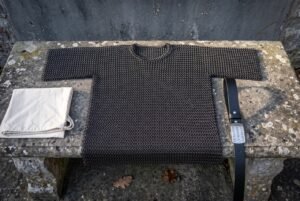 Ringmantle Hand Woven Butted Chainmail Shirt | Chest 46 Inch Short Sleeve | Blackened Mild Steel Rings with 4 in 1 European Weave | Norse Reenactment Gift | RK-1581
 Steelmarch Hand Forged Steel Full Plate Armour Suit | 18 Gauge Wearable Harness | Visored Close Helm with Articulated Limbs and Gauntlets | Medieval Display Gift | RK-1583
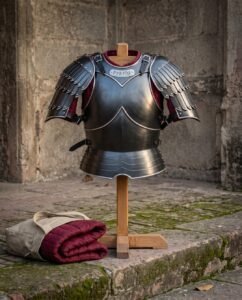 Nightplate Hand Forged Blackened Steel Cuirass with Pauldrons | 18 Gauge Mild Steel | Burgundy Wool Lining, Hooped Fauld and Rune Plaque | Norse Gift | RK-1479