
Blog
Buying a Viking Helmet: Fit, Steel Gauge and What to Avoid

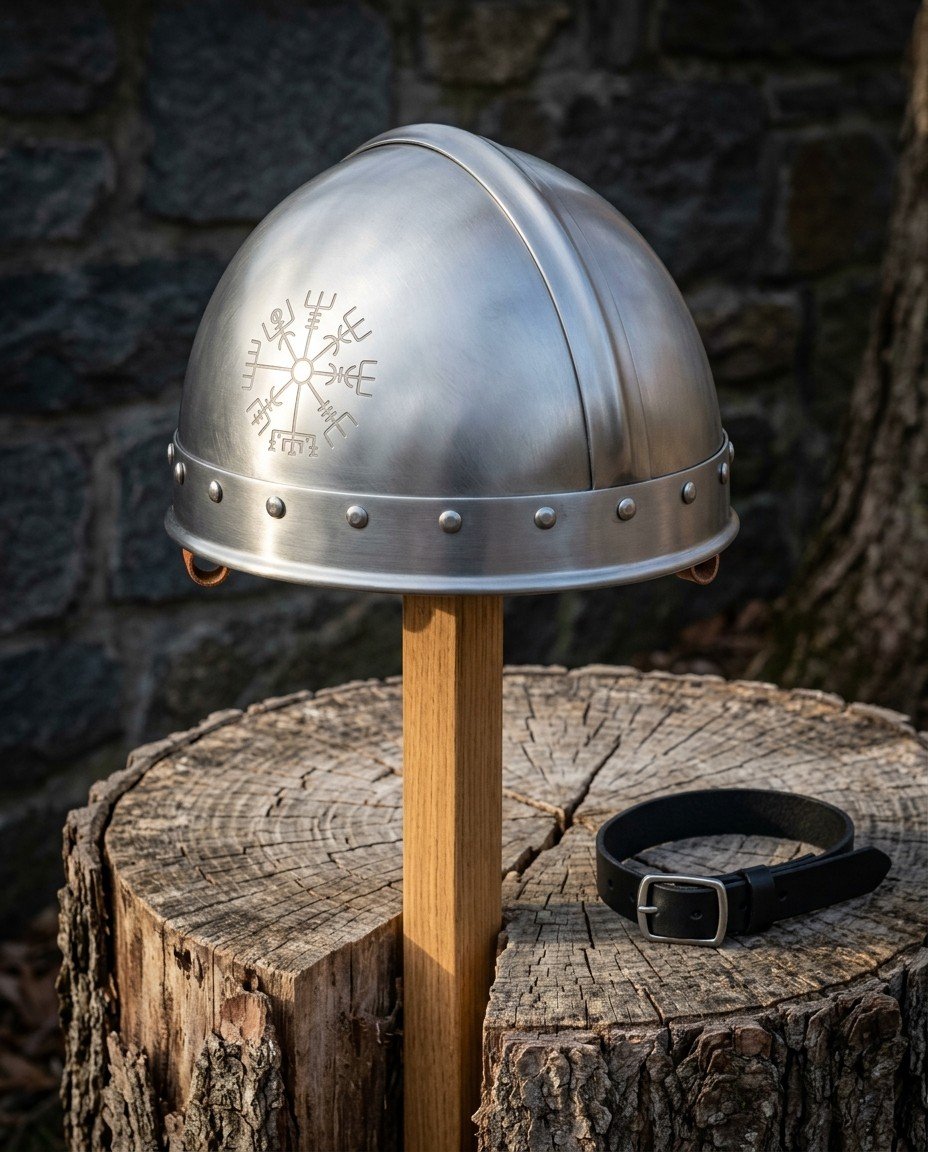
For nearly everyone, the right buy is a riveted spangenhelm or a one piece conical helm in 16 to 18 gauge mild steel, with a nasal bar, a leather liner and an adjustable chin strap, sized to your measured head circumference plus room for padding. It looks correct, it fits a real head, it hangs well, and it has no horns. And it is a display and costume piece, not protective gear.
That last point deserves saying properly before anything else, because it is where the most serious mistakes happen.
What a display helmet is and is not
A helmet sold for display or costume is not rated protective gear. It has not been tested against impact, carries no safety certification, and must not be used for contact reenactment, sparring, stage combat with strikes, or anything else where something might hit your head, unless it is specifically built and rated for that purpose by its maker and accepted by the organisation running the event.
This is not lawyer language. The difference is real. A combat rated helm is built from thicker steel, usually 14 gauge or heavier, with a suspension liner designed to hold the shell off the skull, reinforced attachment points and, in many federations, a documented specification the organisers check. A display helm has a thinner shell, a comfort liner set close to the steel, and rivets sized for looks rather than shear loads. Take a rattan blow in one and the shell can deform onto your head, which concentrates the strike rather than spreading it.
The helmets we sell are display and costume pieces. They are made to look right, wear comfortably for photographs and events without contact, and hang on a wall or a stand. If you need combat gear, buy from a maker who rates their helms for it and get your group to approve the model first.
The honest use cases
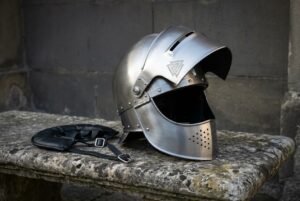 Ironvisor Hand Forged Steel Visored Medieval Helmet | 18 Gauge Mild Steel | Riveted Brow Band, Perforated Bevor and Padded Leather Liner | Reenactment Gift | RK-1451
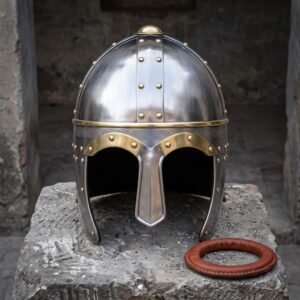 Vendelgaze Hand Forged Steel Viking Spectacle Helmet | 18 Gauge Mild Steel | Brass Rimmed Brow Band, Riveted Eye Guards and Leather Liner Ring | Norse Reenactment Gift | RK-1455
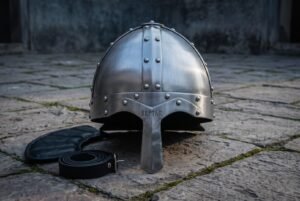 Kinhelm Hand Forged Steel Viking Nasal Helmet | 18 Gauge Mild Steel | Riveted Dome, Elder Futhark Brow Band and Padded Liner | Norse Reenactment Gift | RK-1459
Wall and shelf display
The most common reason people buy, and a good one. A helm on a stand is one of the strongest single objects you can put in a room, because it reads as a head and the eye goes straight to it. What matters is the shape of the bowl, the finish and the quality of the riveting. Fit does not matter at all, so you can buy on looks alone.
Costume, cosplay and photography
Here fit and weight suddenly matter a great deal, because you will wear it for hours. A helm that is a size too small becomes painful in twenty minutes. One that is too large slides and blocks your vision every time you turn. Weight sits entirely on the neck, so a lighter gauge is your friend, and a chin strap that actually holds is the difference between an evening and an ordeal.
Non-contact reenactment and living history
Many groups run displays, camps and drill where no blows land. A display helm is usually fine for that, and the group will care more about whether the shape suits the period than about gauge. Ask them, and ask before you buy rather than after. Some societies keep a list of accepted patterns and will tell you which finds a helm should follow.
Gifting
Helmets give well because they are dramatic and need no prior interest to appreciate. The sizing problem is real though. If you cannot measure the recipient’s head, buy for display and say so, or pick a piece with a generous adjustment range in the liner and strap.
The decisions you have to make
Which pattern
The Norse and early medieval options divide roughly like this. A spangenhelm is built from a frame of steel bands with plates riveted into the gaps, usually with a nasal bar down the front. It is the shape most people mean by Viking helmet and the safest choice for a Norse display. A one piece conical helm is raised from a single sheet, cleaner in line and quieter on a wall. A great helm is the later flat topped cylinder with a vision slit, wrong for a Norse impression but excellent for a knight look. Roman and Greek helms are a different world again.
Whatever you buy, no Viking helmet had horns. That is a nineteenth century stage invention and there is no archaeological support for it, only a persistent costume tradition. Our horned helmet myth piece explains where it came from, and what Viking helmets actually looked like covers the surviving evidence, which is thinner than most people assume.
Steel gauge
Gauge is thickness, and the number runs backwards: a lower number means thicker steel. For helmets you will see 20, 18, 16 and 14 gauge. Twenty is thin, light and cheap, and dents against a doorframe. Eighteen is the common display standard. Sixteen is noticeably heavier, holds its shape better, and is what you want if the helm will be handled or worn regularly. Fourteen and heavier is combat territory.
For a wall piece, 18 gauge is plenty. For something you will wear at events, 16 gauge is worth the extra weight because it survives being packed and stacked. Do not read a heavy gauge as a safety rating on its own, because the liner and rivet pattern matter as much as the shell.
Fit and sizing
Measure your head with a soft tape around the widest part, just above the ears and across the brow. Then add room, because a helm sits over padding, and one that only just fits your bare head becomes unwearable once an arming cap goes underneath. Roughly an inch of circumference is a fair allowance for a light liner.
Check the internal shape too. Human heads are longer front to back than side to side, and a helm raised as a near circle will pinch at the temples even when the circumference matches. Listings that give internal length as well as width are telling you something useful.
Liner and strap
The liner is what makes a helm wearable. A leather band riveted around the brow with a suspension cord works, so does a padded liner on leather backing. Bare steel against the skull does not. If a helm ships without a liner, budget for adding one and check there are rivet points for it. A chin strap should be leather, adjustable, and fixed at two points at least, since single point fixings let the helm rotate.
Finish
Polished steel looks bright and shows every fingerprint in the room. Blackened or antiqued finishes hide handling marks and read as older. Brass trim and applied decoration add cost and visual interest. None of it affects function on a display piece, so buy the finish you like looking at.
Traps and how to spot them
Horns are the first trap, and they say as much about the seller as the helm. Anyone fitting horns is selling fantasy, which is legitimate, but do not buy it believing it is historical.
Unstated gauge is the second. If a listing gives no gauge and no weight, assume thin. A helm at 20 gauge or lighter can look identical in a photograph to one at 16 and feel like a tin can in the hand.
Missing sizing is the third. A listing that gives no internal circumference is not expecting you to wear it. That is fine for a wall piece and a problem if you plan to put it on.
Decorative rivets are the fourth. On a real spangenhelm the rivets hold plates to the frame and pass right through. On some cheap pieces the plates are spot welded and the rivets are glued domes for looks. Look at the inside: real rivets show as heads or peened tails inside the bowl, and welds show as dull lines.
The fifth is safety language creep. Phrases like battle ready, functional, or combat grade get used loosely. None of them means tested or rated. If a helm were genuinely built for contact, the maker would state the gauge, the liner type and which rule sets it passes, because that is what buyers in that market ask for.
What to spend
Treat these as bands, since prices change. The lowest is thin gauge costume helms, often unlined, sold mainly for parties. They photograph adequately at a distance and dent easily. Above that sits the main display band: riveted mild steel at 16 to 18 gauge with a real leather liner and chin strap, in the recognisable Norse and medieval patterns. That is where most buyers should be, and where our own pieces sit.
Higher again you pay for hand chasing, applied brass work, engraved brow bands, blackening and better liner construction. At the top of the general market are helms with articulated visors, which are as much sculpture as gear. Combat rated helms are priced by a different logic, since certification and heavier stock cost real money.
Add a stand to the budget if the helm will be displayed. One resting straight on a shelf collapses visually and scratches at the rim.
What I would buy
A riveted spangenhelm with a nasal bar, 16 gauge, leather brow liner, adjustable chin strap, in a blackened or lightly antiqued finish. It fits a real head, it survives being packed for an event, it hangs beautifully, and the nasal gives the face something to sit behind in photographs. If it is purely for a wall, I would drop to 18 gauge and put the money saved into decoration, since nobody handles a helm on a bracket.
If your look is later medieval rather than Norse, the great helm is the more striking wall object and the more uncomfortable thing to wear, so decide which of those you care about.
What we stock follows that thinking. The Viking helmets cover the spangenhelm and nasal patterns, the medieval helmets run through great helms and later shapes, and there are Roman and Greek helmets for classical displays. A chainmail coif under a helm changes the silhouette considerably and is worth considering if you are building a whole impression, which our Viking armour explained guide walks through. Every piece is handmade in the Czech Republic the old way, then imported, inspected and shipped from Chicago; Ransack Viking is a US company in Chicago, Illinois, and engraving is done in the US after arrival. All of these are display and costume pieces and are not rated for contact.
Before you choose a style, our piece on the helmets the Norse actually wore is worth reading, and the horned question is settled in where the horns came from. If mail is going under it, see how mail compares with plate and lamellar.
Questions people ask
Can I wear a display helmet for reenactment fighting?
No. A display or costume helm is not rated protective gear, has no impact testing behind it and is not built for strikes. The shell is thinner than combat stock and the liner sits close to the steel, so a blow can push the shell onto your skull. Use a helm rated for contact by its maker and approved by the group running your event, and nothing else.
How do I work out my helmet size?
Run a soft tape around the widest part of your head, just above the ears and across the brow, and note the circumference. Add roughly an inch to allow for a liner or an arming cap. Then check the listing for internal length as well as width if it gives them, because heads are oval and a helm raised close to a circle can pinch at the temples even at the right circumference. A tape measure is cheaper than a return.
What steel gauge should I look for?
Sixteen to eighteen gauge covers almost every display and costume need. Eighteen is light and fine on a wall or for short wear. Sixteen is heavier, keeps its shape through packing and handling, and is the better choice if you will wear the helm at events. Twenty gauge and thinner dents easily. Fourteen gauge and heavier belongs to combat gear, which is a separate purchase with separate requirements.
Did Viking helmets have horns?
No. Not one horned helmet has been recovered from a Viking age grave or settlement, and the fighting disadvantage of horns is obvious once you think about it. The image comes from nineteenth century costume design for opera and from romantic painting, then spread through advertising and film. Surviving finds show plain bowls, sometimes with a nasal bar or spectacle guard, and nothing on the sides, however firmly the merchandise insists otherwise.
Do I need a liner and a chin strap?
If you will wear it, yes to both. Bare steel on a skull is uncomfortable within minutes and unsafe on stairs. A leather brow band with suspension, or a padded liner, holds the helm off your head and stops it rocking. A two point adjustable leather chin strap keeps it from rotating when you turn. If the helm is purely for a wall, neither matters, although a liner still improves how it sits on a stand.
How do I stop a mild steel helmet rusting?
Wipe it down after handling and keep a thin film of oil or a hard paste wax on the outside. Pay attention to the inside of the bowl, which people forget, and to the rivet heads where damp collects. Do not store a helm with a damp liner in it. If a blackened or antiqued finish starts to lift, oil it rather than polishing, since polishing removes the finish you paid for.
On the shelf
In the shop right now, the Vegcrown Viking Spangenhelm and the Brassbrow Viking Spangenhelm. The Thornpeak conical nasal helmet and the Gazeward Viking spectacle helmet sit next to them.
Sparring wants a different helmet
If the plan is sparring with swords, the answer is usually not a Viking helm at all but a fencing mask and whatever else the event asks for. HEMA tournament gear rules goes through that list, and the HEMA sword range covers the blades.
Shop the range
Ironvisor Hand Forged Steel Visored Medieval Helmet | 18 Gauge Mild Steel | Riveted Brow Band, Perforated Bevor and Padded Leather Liner | Reenactment Gift | RK-1451Vendelgaze Hand Forged Steel Viking Spectacle Helmet | 18 Gauge Mild Steel | Brass Rimmed Brow Band, Riveted Eye Guards and Leather Liner Ring | Norse Reenactment Gift | RK-1455Kinhelm Hand Forged Steel Viking Nasal Helmet | 18 Gauge Mild Steel | Riveted Dome, Elder Futhark Brow Band and Padded Liner | Norse Reenactment Gift | RK-1459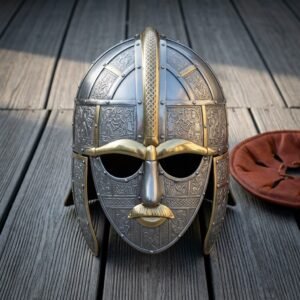 Wyrmgaze Hand Forged Mild Steel Sutton Hoo Viking Helmet | 18 Gauge Full Face Mask | Brass Crest Eyebrows and Embossed Panels | Norse Reenactment Gift | RK-1493
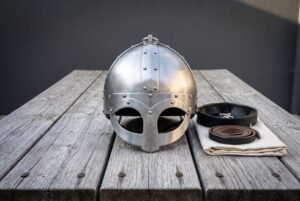 Skyglass Hand Forged Steel Viking Spectacle Helmet | 18 Gauge Mild Steel | Riveted Eye Guards and Padded Leather Liner | Norse Reenactment Gift | RK-1590
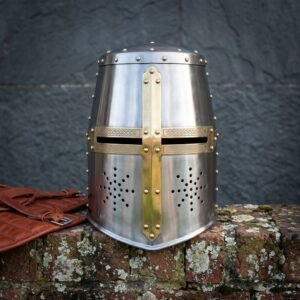 Cruxward Hand Forged Steel Great Helm | 16 Gauge Crusader Helmet | Brass Cross Reinforce, Etched Knotwork Sights and Domed Rivets | Medieval Gift | RK-1472