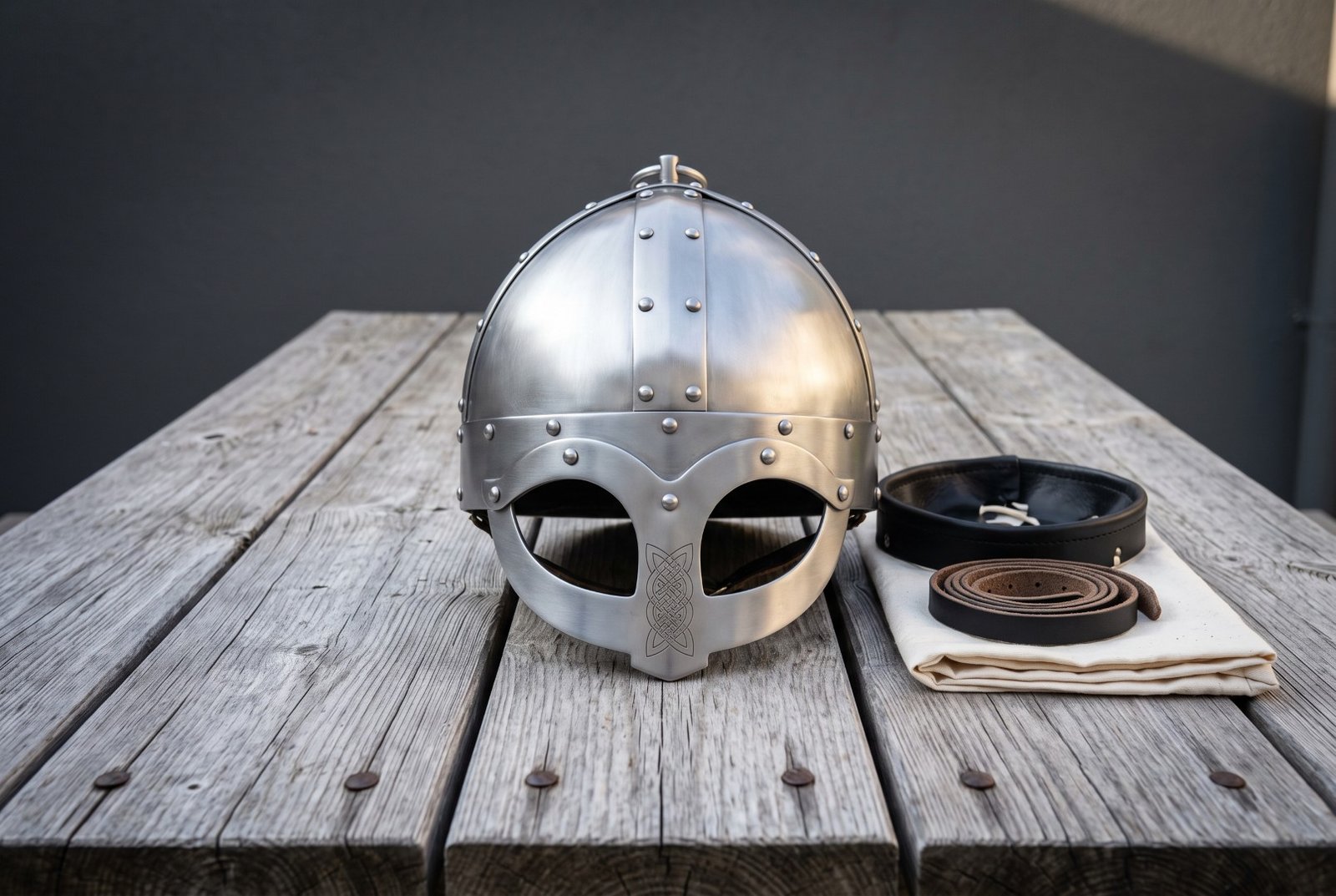
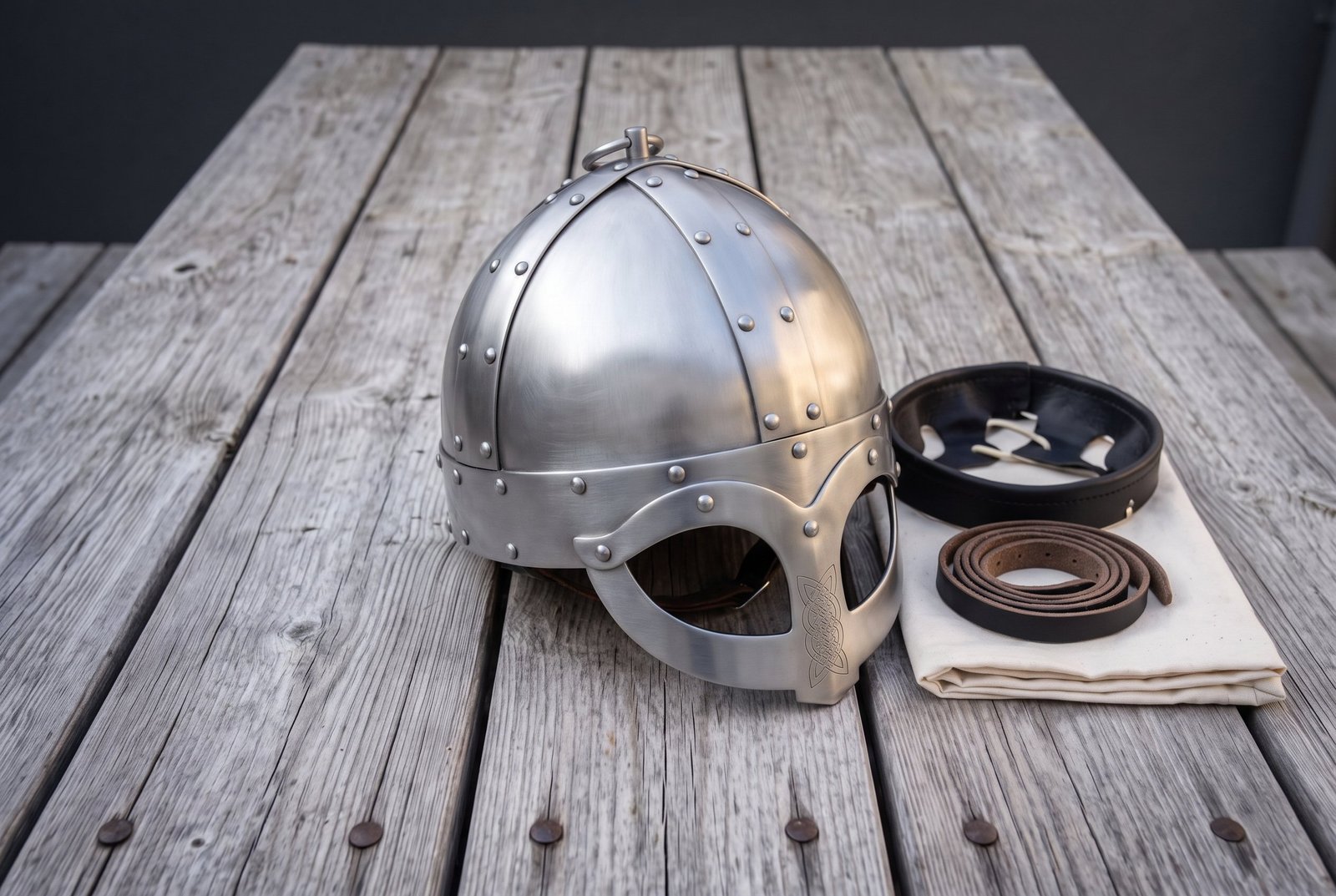
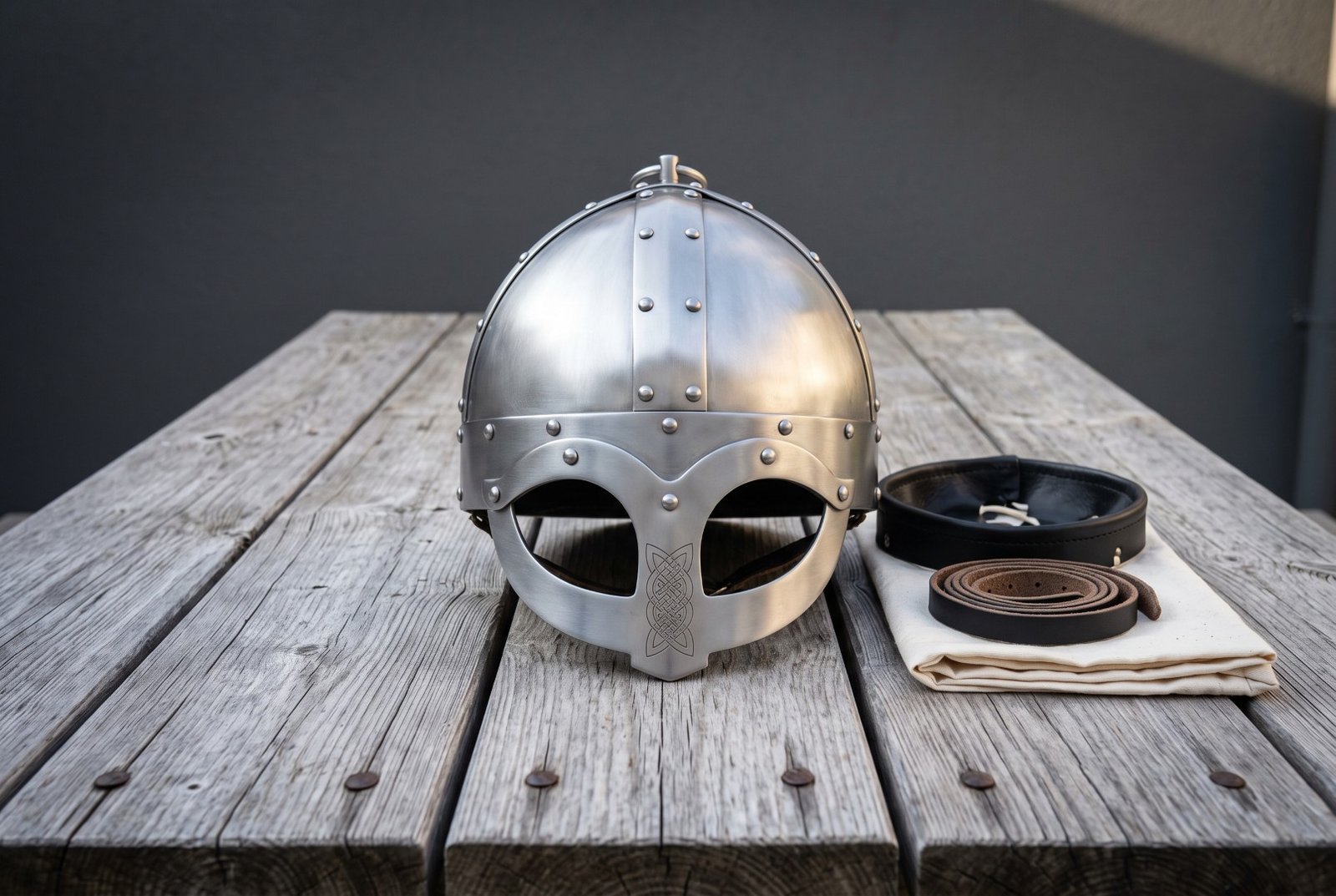
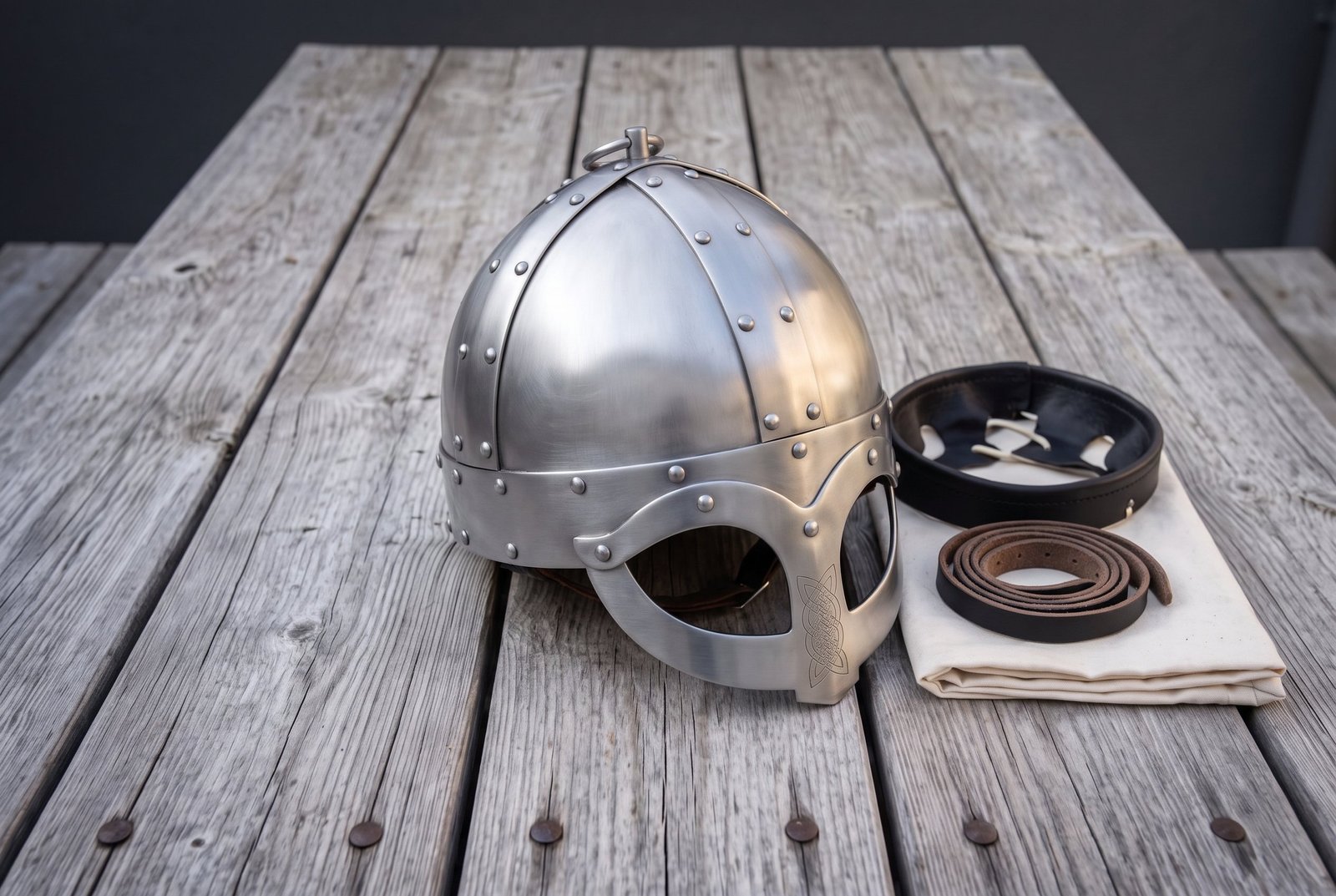
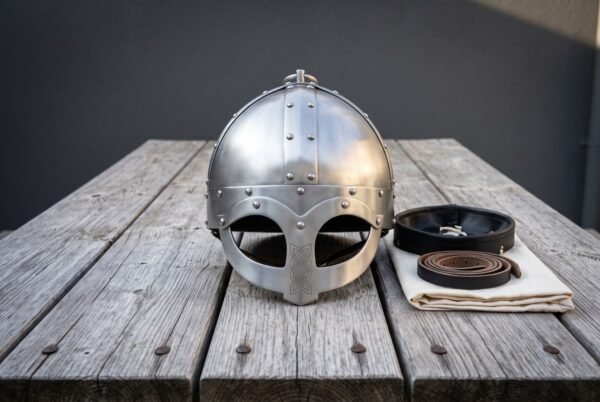
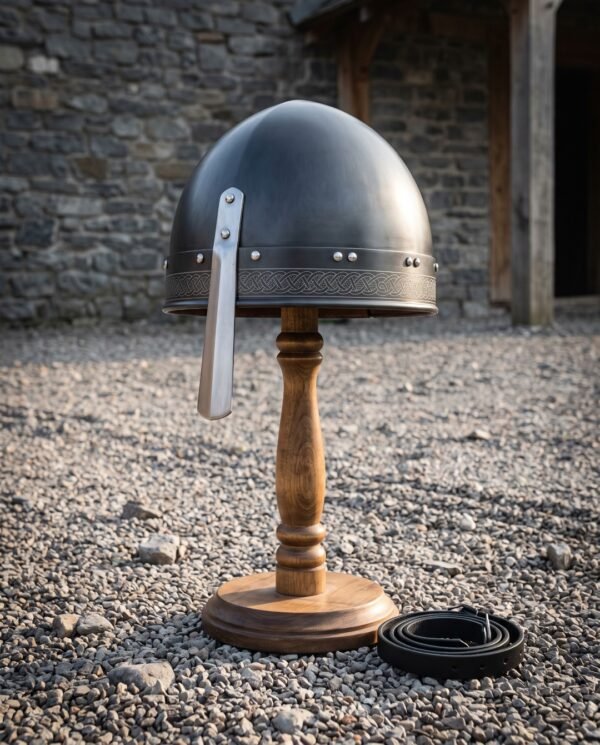
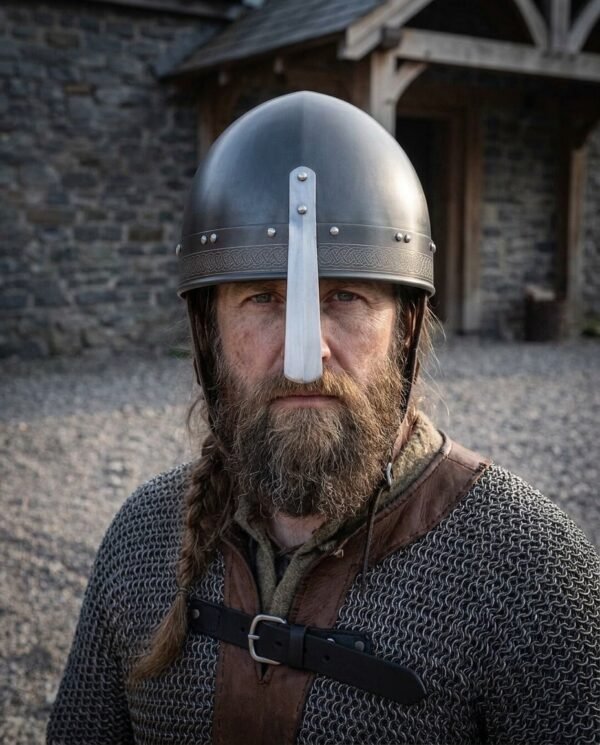
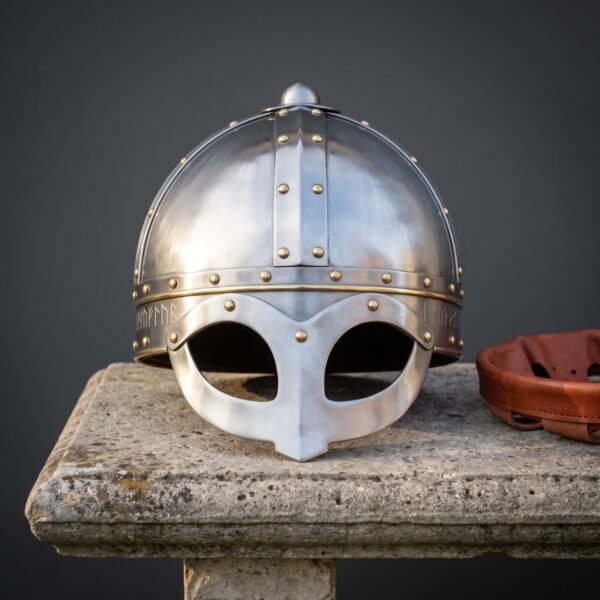
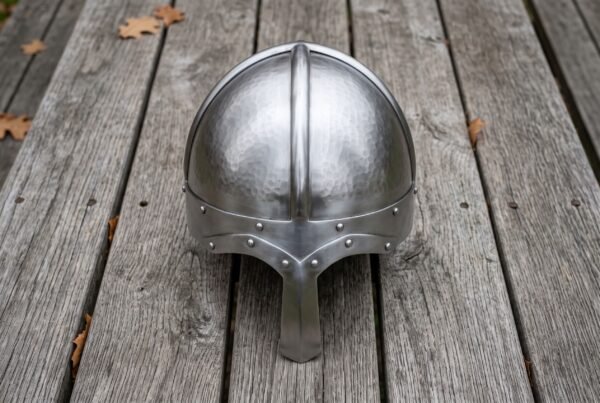
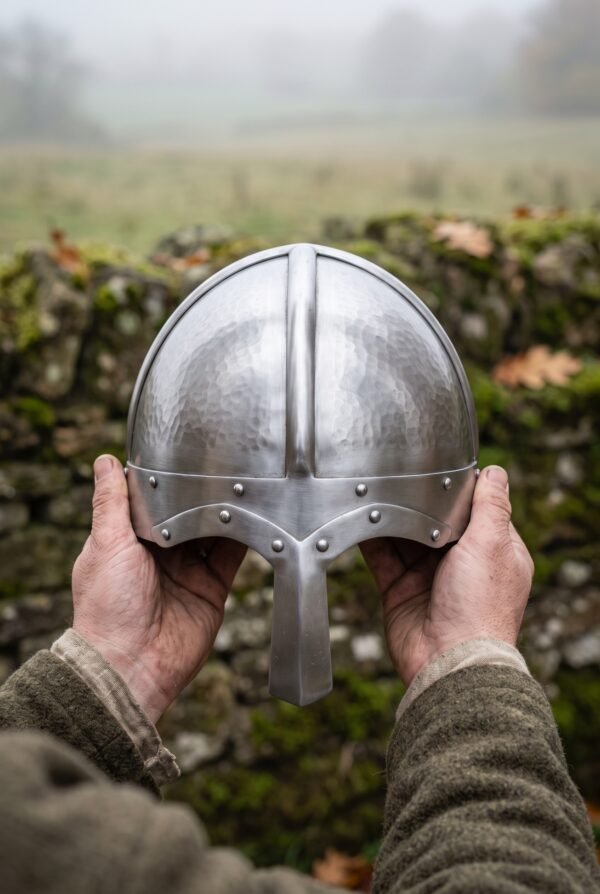
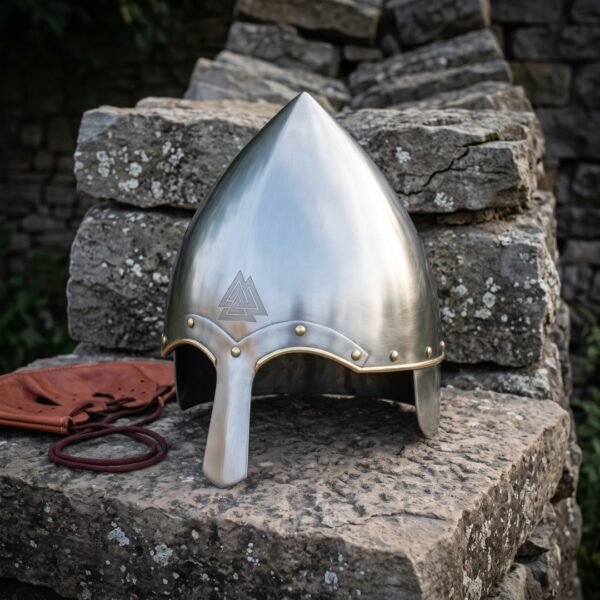
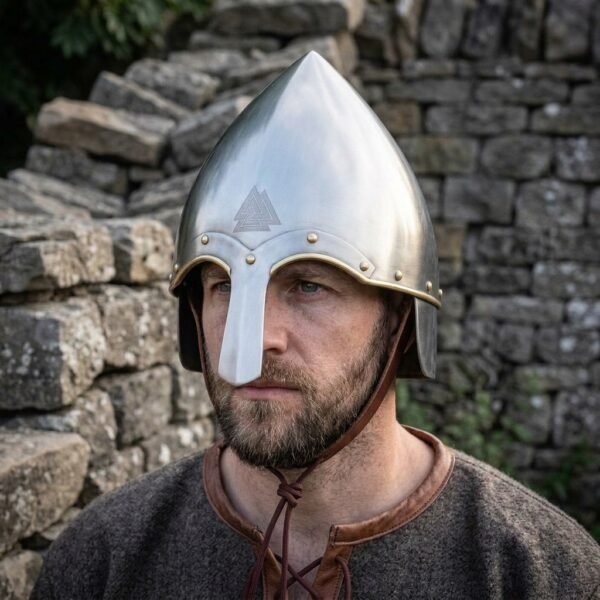
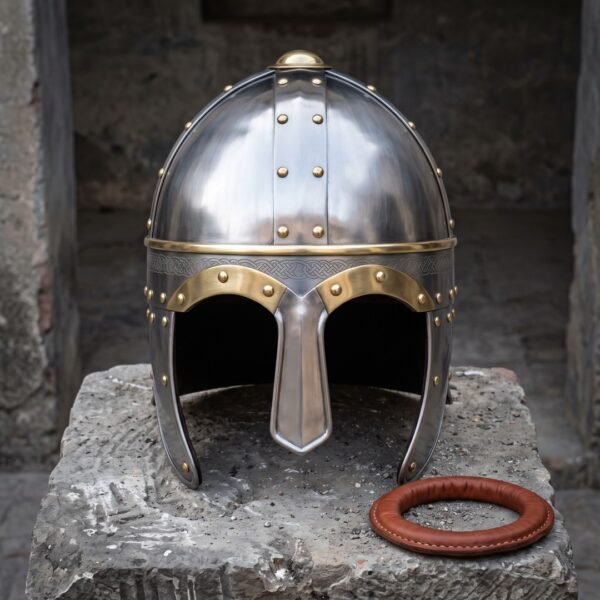
The spectacle helm is the most recognisable Norse helmet there is, and it is also the rarest. Only one near complete Viking Age helmet has ever been excavated, the Gjermundbu helm found in Norway in 1943, and it carries exactly this feature: a pair of forged steel eye guards riveted across the brow like a mask. Everything else you see in films is invention. The Skyglass follows the Gjermundbu pattern closely, in polished 18 gauge mild steel over a four panel skull with a riveted brow band.
It is raised, riveted and finished in the Czech Republic, and it ships with a padded leather liner and an adjustable chin strap. Only a handful of Viking age helmets survive, and what Viking helmets actually looked like goes through every one of them.
Specifications
| Material | Mild steel, polished finish |
|---|
| Gauge | 18 gauge, approximately 1.2 mm |
|---|
| Construction | Four panel skull joined by riveted spangen strips, with a riveted brow band |
|---|
| Crown | Small steel spike with a ring at the apex |
|---|
| Eye guards | Spectacle plate riveted across the brow, knotwork engraved on the nasal |
|---|
| Head fit | Approximately 22 to 24 inch circumference |
|---|
| Weight | Approximately 4 lb |
|---|
| Liner | Padded black leather band liner with lacing, removable |
|---|
| Strap | Brown leather chin strap |
|---|
| SKU | RK-1590 |
|---|
What the spectacles are actually for
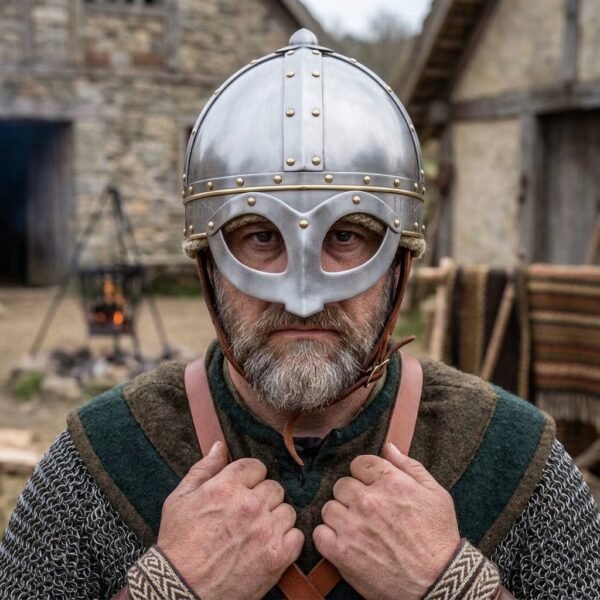
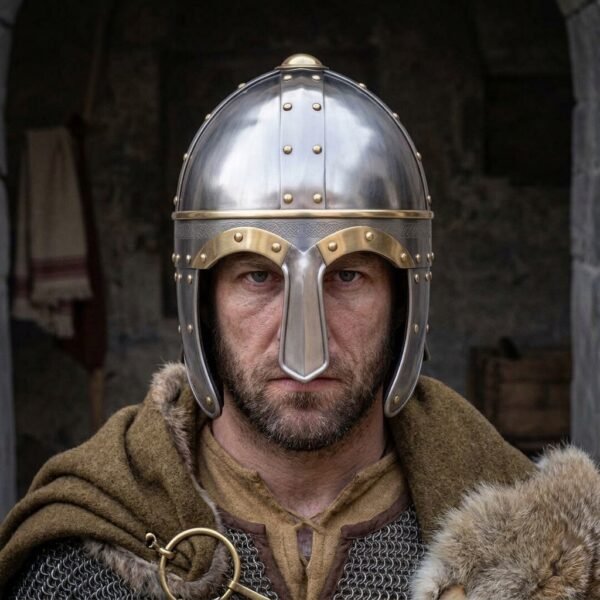
The eye guards are not decoration and they are not a mask. They are a structural answer to the one problem a nasal bar cannot solve. A nasal protects against a straight thrust down the centre line, but it leaves the eye sockets open to a cut coming in at an angle. Carrying the plate out sideways over both eyes closes that line without closing the field of view, because the guards sit forward of the face rather than against it. You lose almost nothing looking straight ahead and a little at the extreme edges, which is the trade a tenth century Norse fighter was evidently willing to make. Wearing one is the fastest way to understand why the design existed.
The steel and the gauge
18 gauge is roughly 1.2 mm, which is the standard weight for display and light reenactment. It holds its shape, it takes a polish, and it sits at a weight you can wear through an event without your neck complaining. It is not the 14 gauge that full contact organisations require, and we do not pretend otherwise. If you intend to be struck with steel in earnest, buy armour rated for it by the group you fight with.
Engraving, runes and your own design
Use the rune converter on this page to turn a name, a date or a short phrase into Elder Futhark and we will cut it into the steel or the leather. If you would rather have a Viking pattern than a rune line, choose your own design in the engraving option above the add to cart button and tell us where it goes. Where a piece already carries an engraved design, your chosen engraving replaces it rather than sitting alongside it. Full detail on the engraving page.
Fit and sizing
This helm is built to an approximate 22 to 24 inch head circumference, measured around the widest part of the skull just above the ears. Measure over whatever you intend to wear underneath, because an arming cap or a mail coif will take up a surprising amount of room. The padded liner can be shimmed with felt for a tighter fit or removed entirely if you are wearing a thick coif. A helm should sit level, cover the brow, and not rock when you shake your head.
Care
Polished mild steel will rust if you put it away damp, and the inside of a helmet is exactly where sweat collects. Wipe it dry after wearing, pull the liner out to air, and give the steel a light coat of mineral oil before it goes into storage for the season. Store it upright rather than face down so the eye guards take no weight. General guidance is in steel care. Fit, steel gauge and the shapes worth avoiding are covered in buying a Viking helmet.
Made in the Czech Republic
This is a handmade piece from the Czech Republic, made in a workshop that still forges, grinds and finishes by hand instead of stamping parts out. The smiths there have kept the older way of working, and the wood, horn and leather are shaped and fitted by hand as well. Two pieces of the same design will never be identical, and that is part of what you are buying.
Ransack Viking is a United States company. We handle the import ourselves, look over every piece when it lands and ship from our warehouse in Chicago, Illinois. Engraving is done in the United States after the piece arrives, so your design goes on before we send it out.
A note on handmade variation
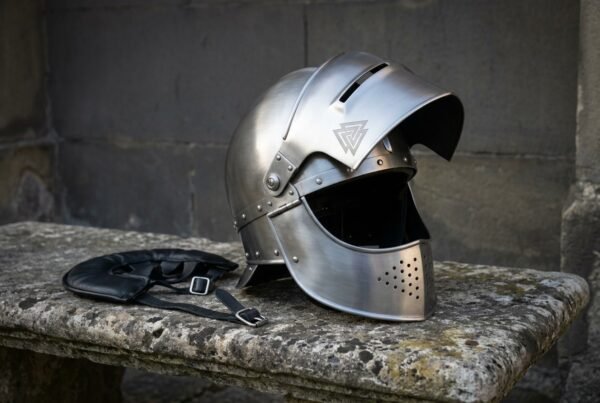
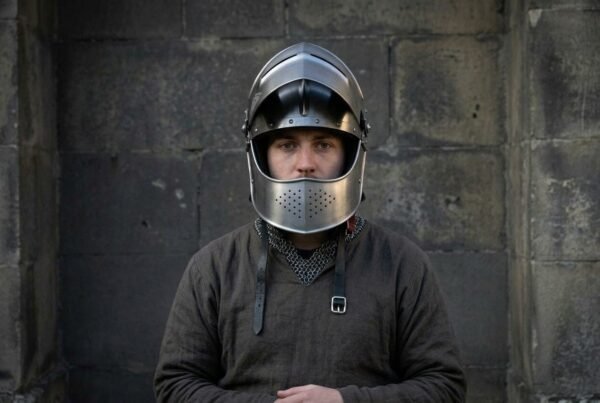
This is a hand made piece, not a machine made or bulk produced one, so the helmet that arrives will not be a pixel for pixel copy of the photograph. Hammer texture across the panels, the exact set of the eye guards, rivet spacing and the tone and grain of the leather liner all vary a little from one helm to the next, because each one is raised and riveted by hand from natural materials. The gauge, the pattern and the build are the same every time. The character is not. That variation is the point of buying hand made rather than pressed, and it is the one thing a factory cannot sell you.
Frequently asked questions
Is this a wearable helmet or a display piece?
Both, within limits. It is fully wearable for reenactment, living history, photography and costume. It is not rated for full contact combat, which needs 14 gauge.
How much can you see out of it?
More than people expect. Straight ahead vision is essentially unobstructed. You lose a little at the far edges of your peripheral vision, which is the trade the original design made.
Did Vikings really wear these?
At least one did. The Gjermundbu helm, found in Norway in 1943, is the only near complete Viking Age helmet ever excavated and it carries spectacle guards. Horned helmets, by contrast, come from a nineteenth century opera costume rather than any grave.
Will it fit over a mail coif?
It will fit over a thin coif or an arming cap if you remove or shim the padded liner. Measure over what you intend to wear before ordering.
Can I have runes cut into it?
Yes. Convert your text with the rune converter on this page, or choose your own Viking pattern in the engraving option, and tell us whether it goes on the brow band or the liner.
Will mine look exactly like the photograph?
Close, but not identical. It is raised and riveted by hand, so hammer texture, rivet spacing and the leather tone vary between helms.
What is in the box
- One Skyglass hand forged Viking spectacle helmet
- Padded leather liner, fitted and removable
- Brown leather chin strap
- Protective packaging
- Forged and finished in the Czech Republic
Explore the range
Compare it with the rest of the Viking helmets, the medieval helmets and the wider Viking armor range. Pair it with a round shield, and read the guides for the archaeology behind the build.
Worth a look beside this
Sitting beside it in the catalogue is the Ironvisor Viking helmet. Another in the same line is the Ironcrown Viking helmet. Next along the rack is the Gazeward Viking helmet.
Fitting out further, the Yggdrasil Viking shield belongs with it. Or start from a blank sheet on the design your own page.

Reviews
There are no reviews yet