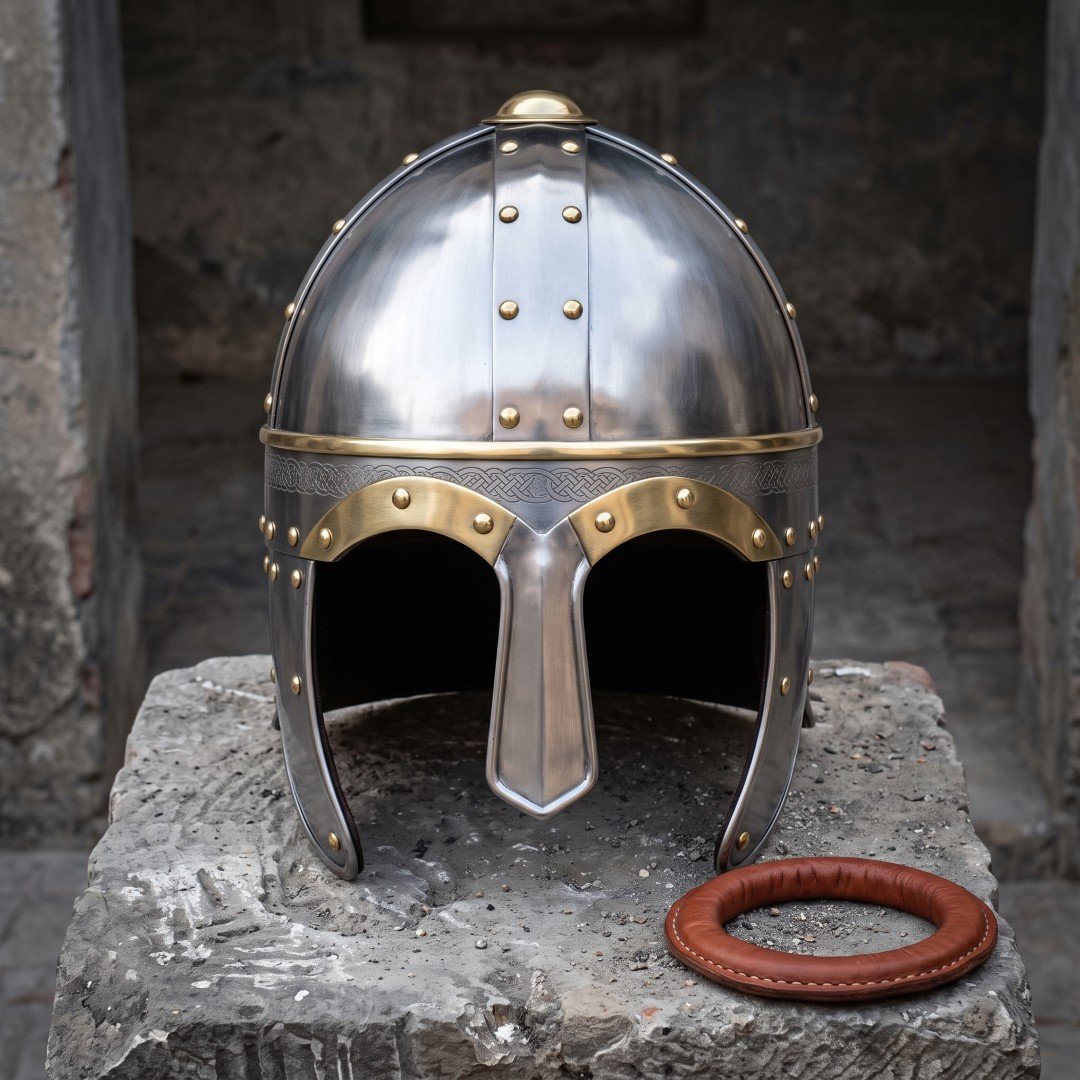
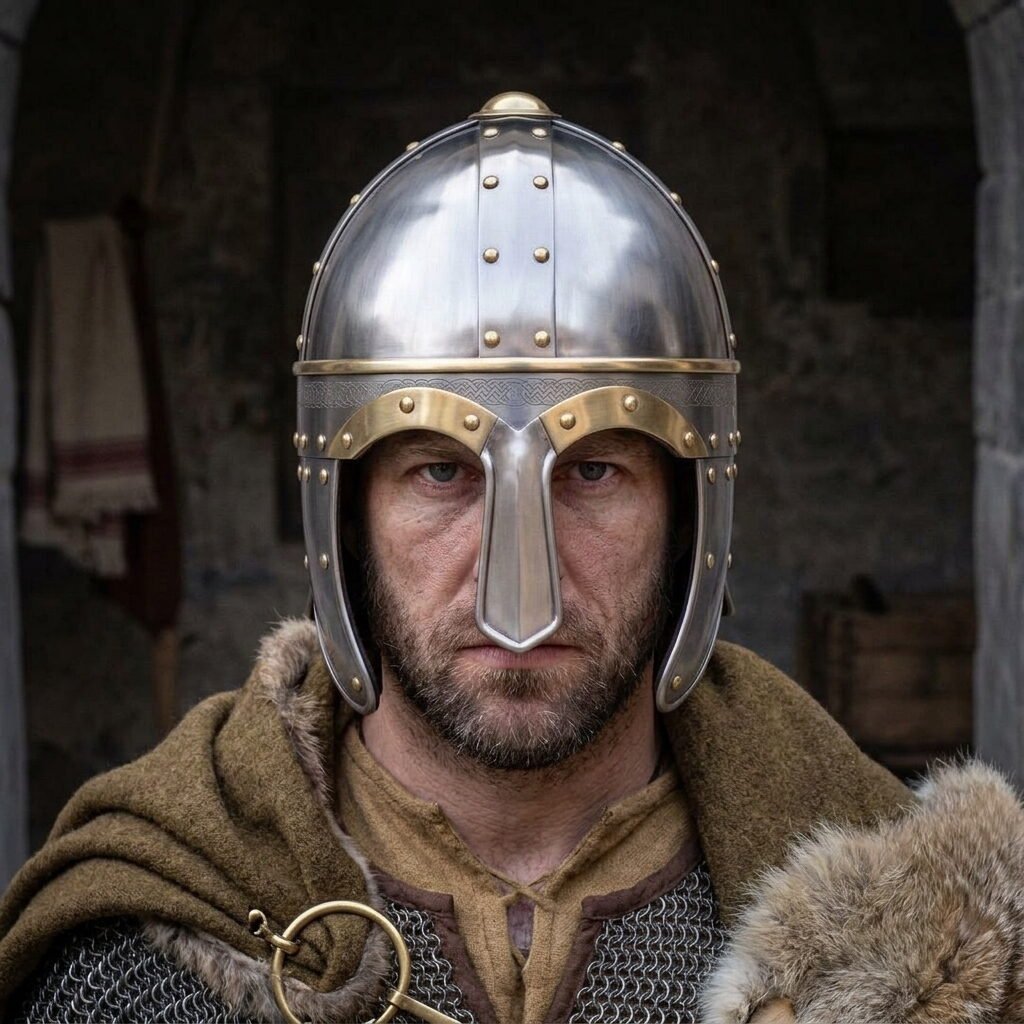
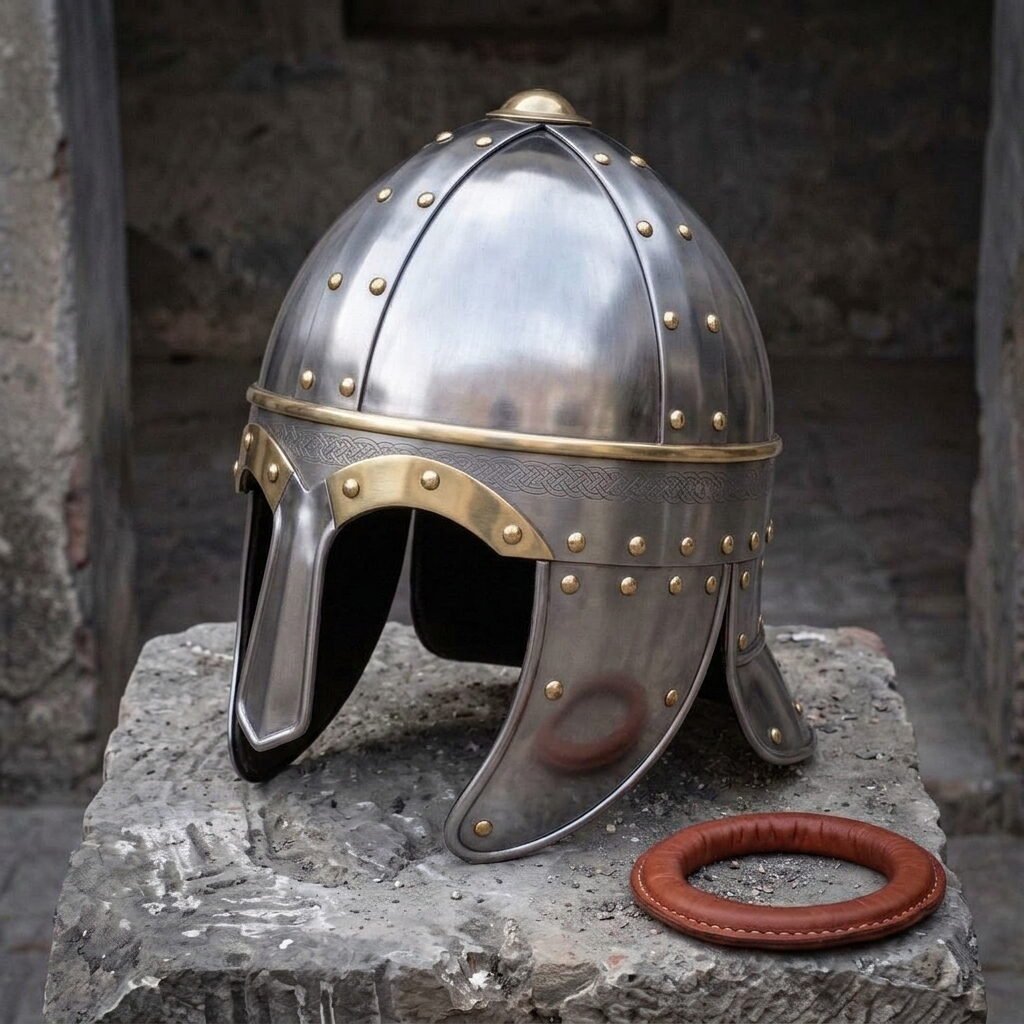
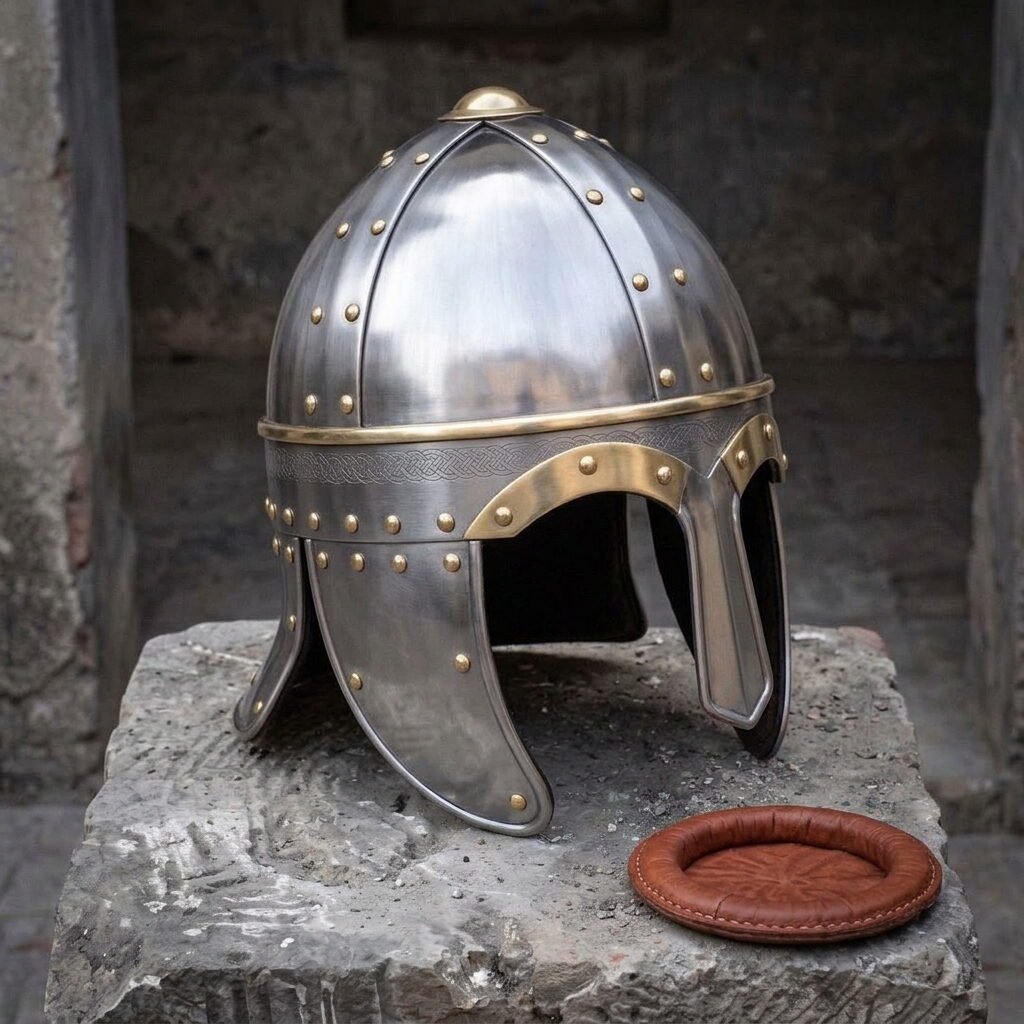
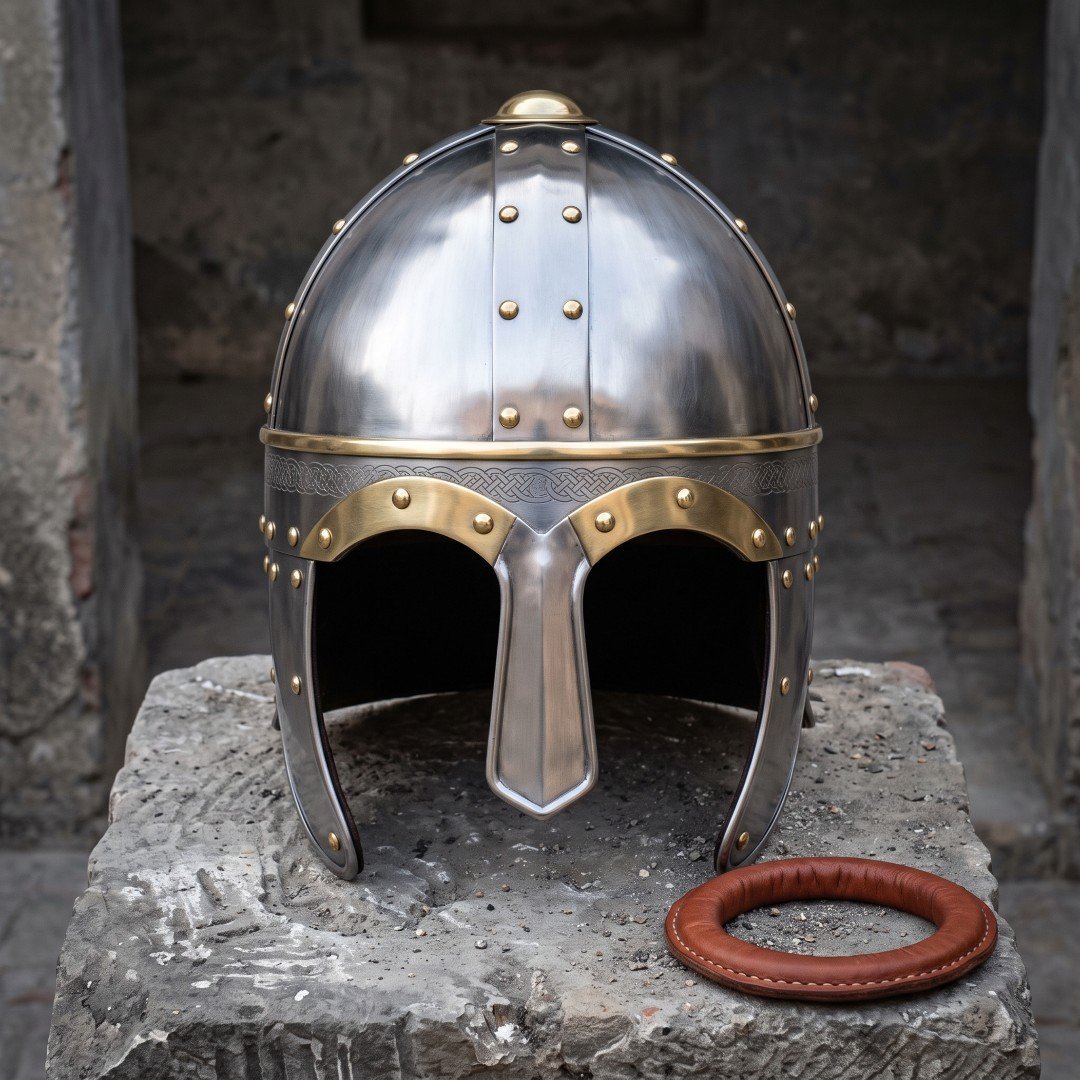
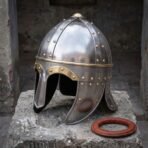
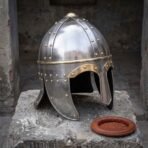
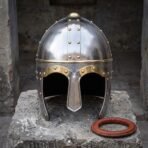
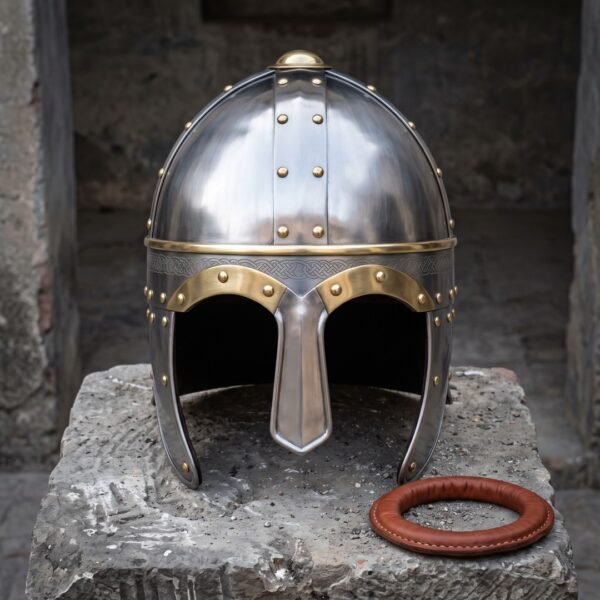
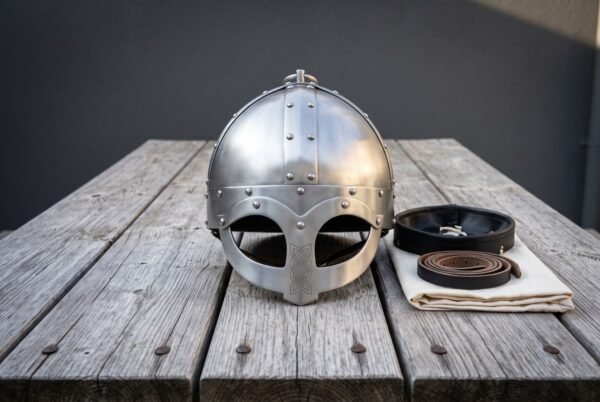
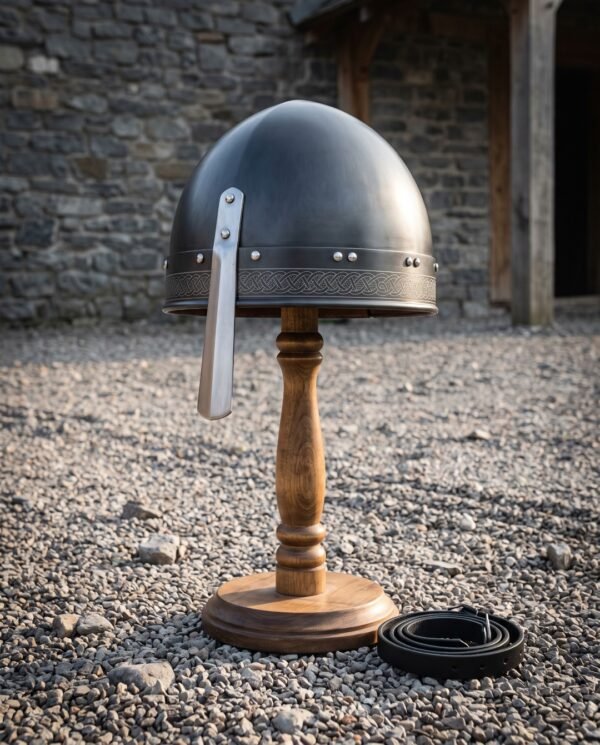
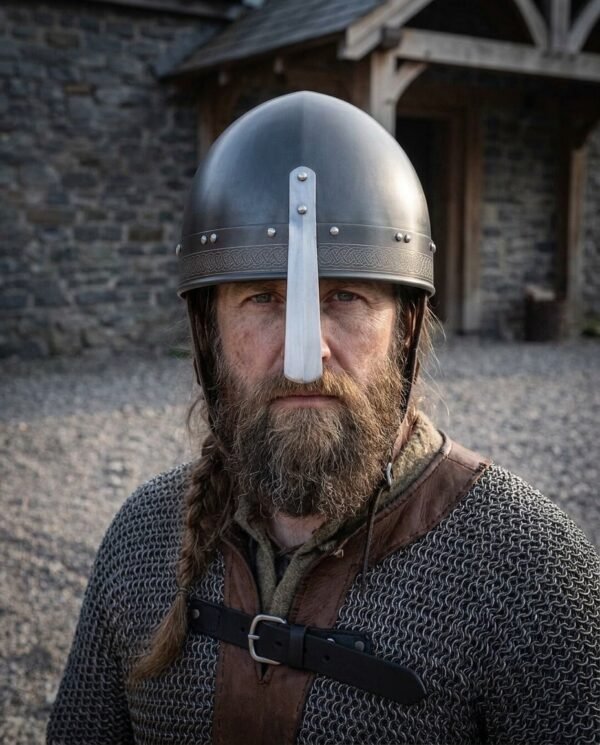
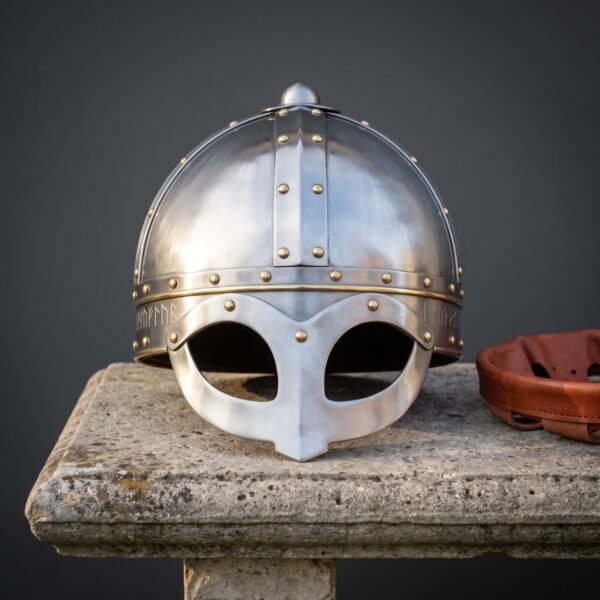
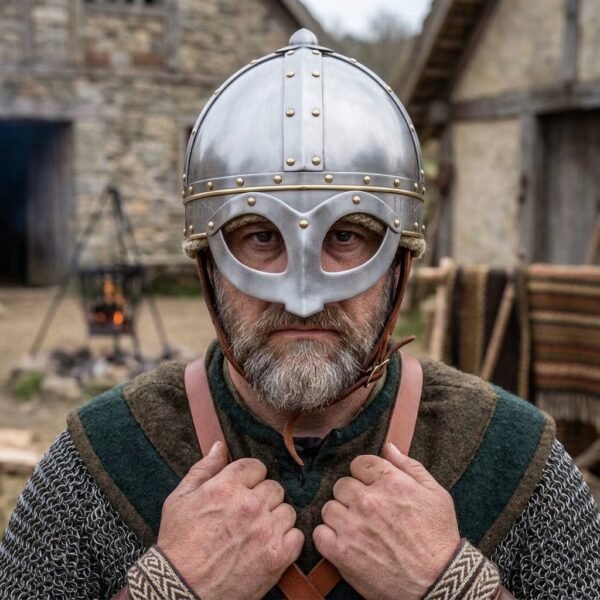
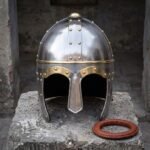
Vendelgaze is a spectacle helmet, the type that takes its name from the pair of brass eye guards arching over the eyes like a set of spectacles. The form comes from the Vendel period in Sweden, the two centuries before the Viking age proper, and the best known survivor of the same family is the helmet from the Anglo Saxon ship burial at Sutton Hoo. Here the dome is raised in steel with riveted bands, a steel brow band with a brass rim runs the full circumference carrying an engraved knotwork line, the eye guards are brass and riveted through with a broad steel nasal between them, a brass finial caps the apex and steel cheek plates hang either side.
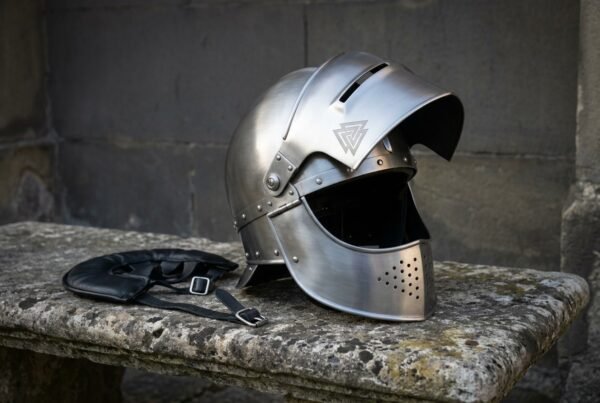
The eye guards are the part everyone asks about and they are more than decoration. A raised brow arch stiffens the front of the helmet exactly where a downward cut lands, it deflects a blade or a point outward away from the eye socket rather than letting it run down the face, and because it stands proud of the brow it keeps the impact off the bone. It is the same idea as the reinforcing brow on a modern crash helmet, worked out about fourteen hundred years earlier. Every one is raised, riveted and fitted by hand in the Czech Republic, and ships with the leather liner ring shown in the photograph. Free shipping inside the United States, one to two weeks processing, seven day returns, and a genuine lifetime warranty against defects in the forging, the grind, the heat treat and the fittings, with no end date and no receipt needed. Only a handful of Viking age helmets survive, and what Viking helmets actually looked like goes through every one of them.
Specifications
| Material | Mild steel dome and cheek plates with solid brass fittings |
|---|
| Gauge | 18 gauge mild steel |
|---|
| Finish | Polished bright steel |
|---|
| Construction | Raised dome with riveted reinforcing bands and a riveted brow band |
|---|
| Eye guards | Brass spectacle arches riveted through the brow band |
|---|
| Nasal | Broad polished steel nasal riveted between the eye guards |
|---|
| Cheek plates | Steel plates hanging either side of the face |
|---|
| Engraving | Knotwork line cut into the steel brow band below its brass rim |
|---|
| Finial | Brass cap at the apex of the dome |
|---|
| Lining | Padded tan leather liner ring, removable |
|---|
| Fittings | Domed brass rivets throughout |
|---|
| Size and fit | Made to a stated head circumference in inches |
|---|
| Intended use | Display, costume and light reenactment, not full contact steel |
|---|
| SKU | RK-1455 |
|---|
What the eye guards actually do
Spectacle helmets are unusual in the archaeology because so few of them survive. Fewer than a handful of complete Viking age helmets are known at all, and the spectacle form is reconstructed largely from the Gjermundbu helmet found in Norway in 1943, which carries a spectacle guard of iron over the eyes and the nose. Everything else about the type comes from picture stones, from Vendel and Valsgarde grave goods, and from the small metal pressed dies used to decorate helmet panels.
The guard works in three ways. It is a structural rib, so the thin front of the dome cannot fold inward under a blow. It is a deflector, because the curve is convex and a point sliding down the face of it goes outward rather than into the eye. And it protects the two most fragile things on the front of a skull, the eye socket rim and the bridge of the nose, without closing the face in the way a full visor does. That last part is why a Norse fighter wanted this rather than a closed helm. You can see, you can hear, you can breathe and you can shout, which mattered a great deal in a shield wall.
Steel, brass and how they are joined
The dome and cheek plates are mild steel at 18 gauge, which is the standard weight across the trade for display and light reenactment armour. It holds shape, it wears comfortably for a full day and it takes a knock. It is not full contact combat weight, and we will not tell you it is. Groups running heavy steel want 14 or 16 gauge on a helmet and their own certification. Vendelgaze is for display, costume, photography, living history and choreographed light work.
The brass is solid rather than plated, which is why it will patina rather than flake. Brass and steel together is a period correct combination and it is also a practical one, because brass is soft enough to be engraved crisply and to be dressed to a curve without cracking. Everything is riveted rather than welded, which is how a helmet of this type was assembled and which means any single component can be drilled out and replaced without destroying the rest.
Engraving, runes and your own design
Use the rune converter on this page to turn a name, a date or a short phrase into Elder Futhark and we will cut it into the steel or the leather. If you would rather have a Viking pattern than a rune line, choose your own design in the engraving option above the add to cart button and tell us where it goes. Where a piece already carries an engraved design, your chosen engraving replaces it rather than sitting alongside it. On Vendelgaze the brow band already carries a knotwork line, so a rune band ordered for the brow takes its place. Full detail is on the engraving page.
Fit and sizing
Measure the circumference of your head with a soft tape, level, just above the ears and around the widest part of the back of the skull, and order to that number. If you fall between sizes go up, because a helmet can be padded down and cannot be made bigger.
Remember what goes inside. Thick hair takes up room. An arming cap takes up more. A mail coif under the helm takes up a great deal, so if you plan to wear one, measure with it on. The leather liner ring is removable and can be shimmed with felt if the helm sits looser than you want, which is exactly what a period armourer would have done.
Care
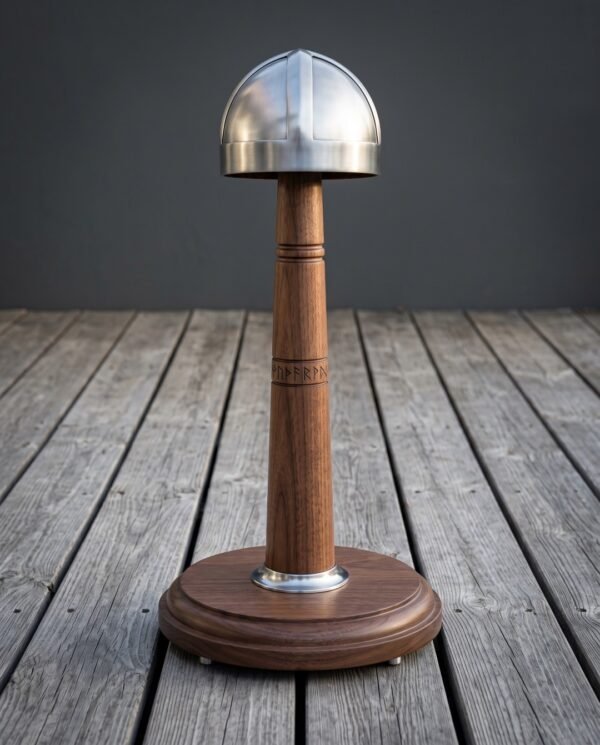
Sweat is harder on a helmet than weather is, so wipe the inside of the dome out after every wear and take the liner ring out to dry separately. When the steel is dry, put a light film of oil or paste wax over the outside and the inside. The brass will dull and warm to a patina, which most people want. If you would rather keep it bright, a wipe with a brass polish two or three times a year holds it. Store the helmet upright on a stand rather than face down. Feed the liner leather with a neutral conditioner a few times a year. Our steel care page covers oiling and rust removal. Fit, steel gauge and the shapes worth avoiding are covered in buying a Viking helmet.
Made in the Czech Republic
This is a handmade piece from the Czech Republic, made in a workshop that still forges, grinds and finishes by hand instead of stamping parts out. The smiths there have kept the older way of working, and the wood, horn and leather are shaped and fitted by hand as well. Two pieces of the same design will never be identical, and that is part of what you are buying.
Ransack Viking is a United States company. We handle the import ourselves, look over every piece when it lands and ship from our warehouse in Chicago, Illinois. Engraving is done in the United States after the piece arrives, so your design goes on before we send it out.
A note on handmade variation
This helmet is hand made and not machine made or bulk produced, so what arrives will not be a pixel for pixel copy of the photograph. The rise of the dome, the exact arc of the eye guards, rivet spacing, hammer texture and the tone of the brass all vary because each one is worked by hand from natural materials. The dimensions, the material and the build are the same every time. The character is not.
Frequently asked questions
Is this an accurate reproduction of a museum piece?
It is a spectacle helmet in the Vendel and Viking tradition rather than a line for line copy of a single excavated original. So few complete helmets survive that every spectacle helm on the market is a reconstruction of some kind, and this one is honest about being one.
Can I wear it for full contact reenactment?
No. At 18 gauge this is display and light reenactment weight. Full contact steel groups want a heavier skull and their own certification, and most will reject an 18 gauge helm at inspection.
Can I see and hear properly in it?
Yes, which is the whole advantage of the spectacle form over a closed helm. Your field of view is close to normal and your hearing is barely affected because the ears are not enclosed.
Is the brass solid or plated?
Solid brass. It will develop a warm patina over time rather than flaking, and you can polish it back to bright whenever you want.
Will it fit over a mail coif?
Only if you size for it. Measure your head with the coif on and order to that figure, because a coif takes up a surprising amount of room inside a dome.
How long does it take to ship?
One to two weeks, because each helmet is raised, riveted and lined to your size. Engraved orders sit at the longer end. Shipping inside the United States is free.
What is in the box
- One Viking spectacle helmet in 18 gauge mild steel with solid brass fittings
- Padded leather liner ring, fitted and removable
- Engraved steel brow band with brass rim, or your own Elder Futhark line in its place
- Brass finial and riveted eye guards fitted
- Care and oiling notes
- Forged and finished in the Czech Republic
Explore the range
See more in Viking helmets, medieval helmets and Viking armor, or read the guides for what the archaeology actually shows about Norse helmets.
Also in this part of the catalogue
Sitting beside it in the catalogue is the Skyglass Viking helmet. Another in the same line is the Kinhelm Viking helmet. Next along the rack is the Vegcrown Viking helmet.
Fitting out further, the Grimbeak Medieval helmet belongs with it. Or start from a blank sheet on the design your own page.


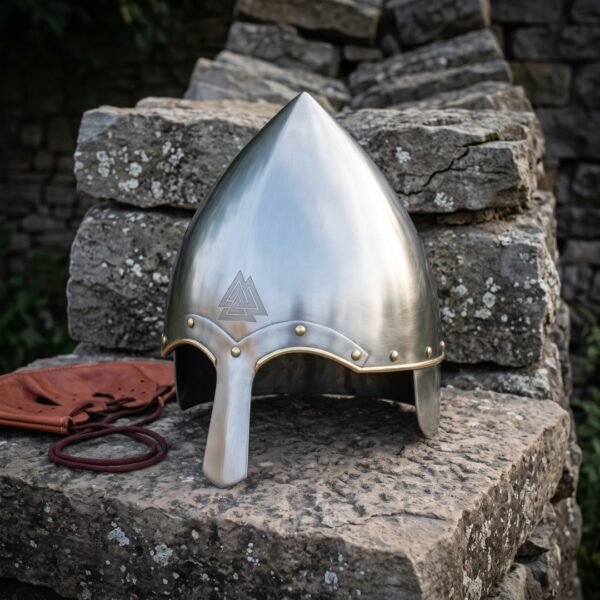
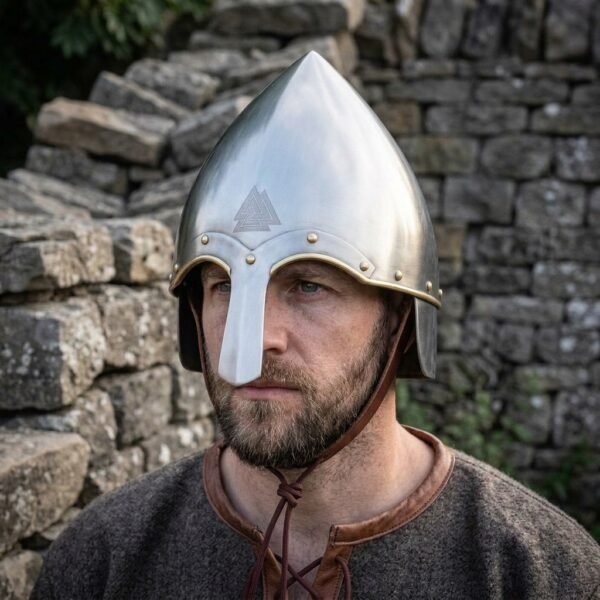
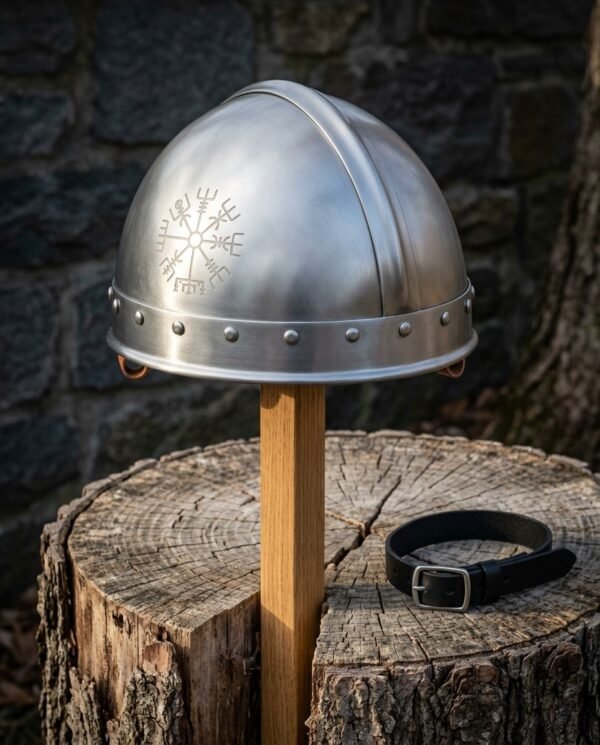
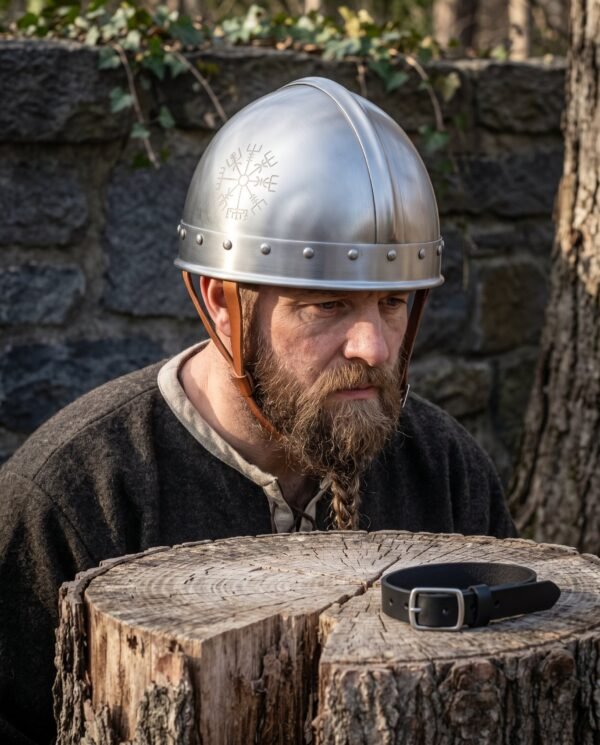
This helmet beat every expectation I had. Exactly the look I wanted for my collection. Looks incredible with the rest of my reenactment kit. Shipping was fast and everything arrived well packaged.
Should have read more reviews before ordering. Arrived with a dented section that shouldn’t have passed quality control. Considering asking for a return.
This helmet is a genuine work of art.
Got this as a gift and now I want one for myself too. Fit is excellent and the steel gauge feels genuinely protective. 10/10 would buy again.
Was nervous ordering something like this online but so glad I did. Rivets and trim are all solid. Nothing feels flimsy. Looks incredible with the rest of my reenactment kit. Exactly the look I wanted for my collection. This shop clearly takes pride in their work.