
A basket hilt is a cage of steel or brass bars wrapped around the hand. It exists because the sword changed. Once fighters stopped wearing gauntlets, the hand became the easiest thing on the body to hit, and a simple cross guard does very little to stop a cut sliding down the blade onto your fingers. The Scots, the Italians and half of Europe arrived at the same answer within about fifty years of each other in the sixteenth and seventeenth centuries. Wrap the hand in bars, back the gaps with plate, line the inside with cloth so the metal does not chew your knuckles.
The pieces here run 28 to 38 inches overall with blades of 22 to 32 inches, in 1095 high carbon at 54 to 58 HRC or pattern welded Damascus of 1095 and 15N20 at 58 to 60 HRC. Baskets are pierced steel, blackened bar work or solid engraved brass, most with a red cloth liner. Every one ships with a fitted scabbard.
Measure your wall before you buy a 38 inch broadsword.
Free US shipping
On most pieces. Heavier and oversized ones carry a flat charge.
Hand Forged
Heated, hammered and ground by hand.
Engraving available
Names, dates or Norse runes on most pieces.
Ships from Chicago
Inspected and dispatched from our Chicago warehouse. No import duty, no customs delay on US orders.
Basket & Shell Hilt Swords
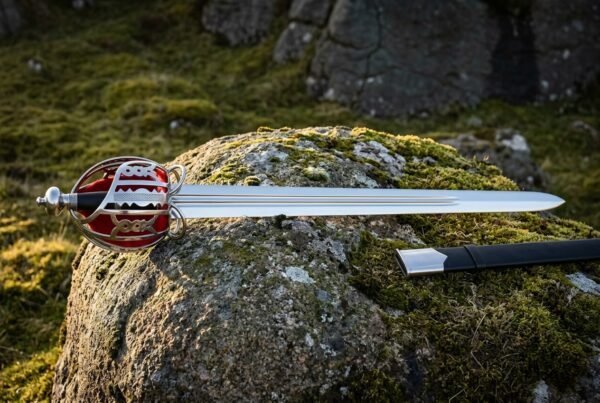
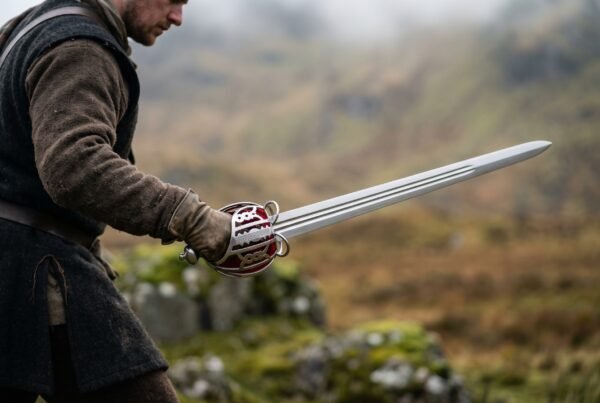
Bramblehilt Hand Forged 1095 Steel Basket Hilt Broadsword | 38 Inch Overall with a 32 Inch Blade | Pierced Steel Basket, Red Liner and Black Scabbard | Highland Collector Gift | RK-1738
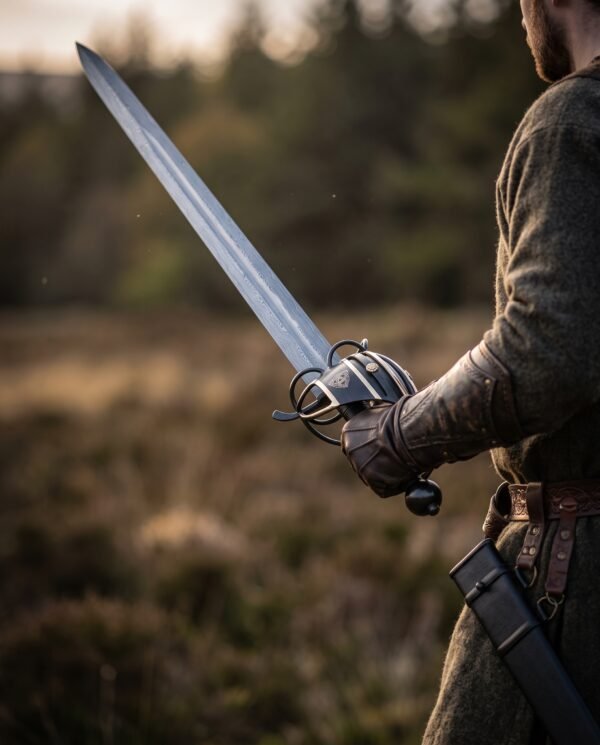
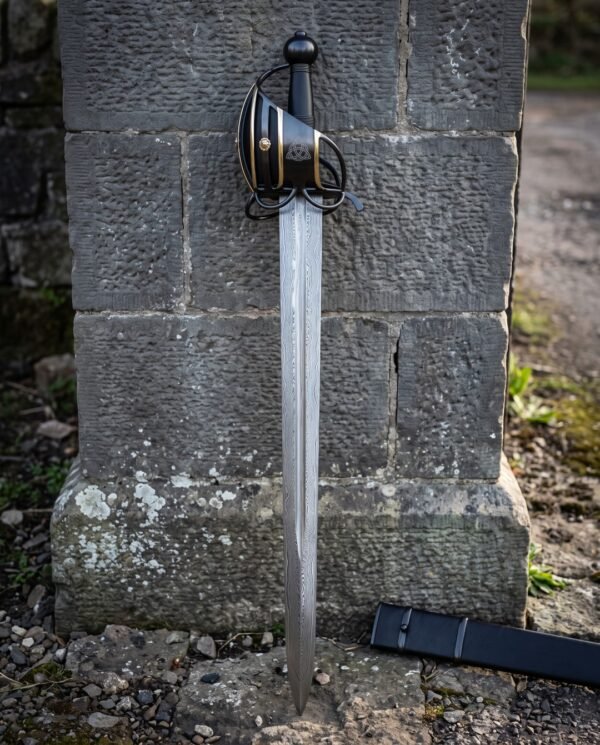
Cagebrand Hand Forged Damascus Basket Hilt Broadsword | 38 Inch Overall | Blackened Basket and Brass Banding with Etched Triquetra Panel and Black Scabbard | Highland Gift | RK-2104
Original price was: $549.00.$466.65Current price is: $466.65.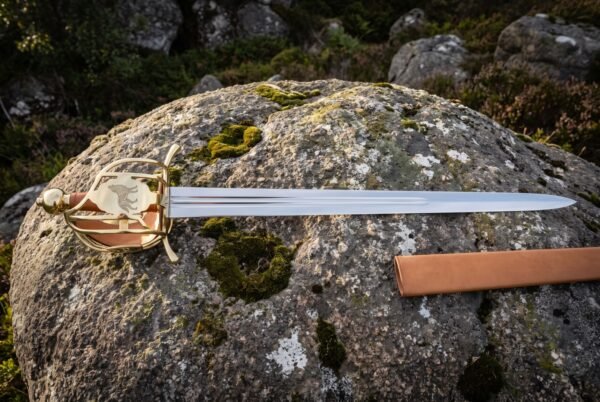
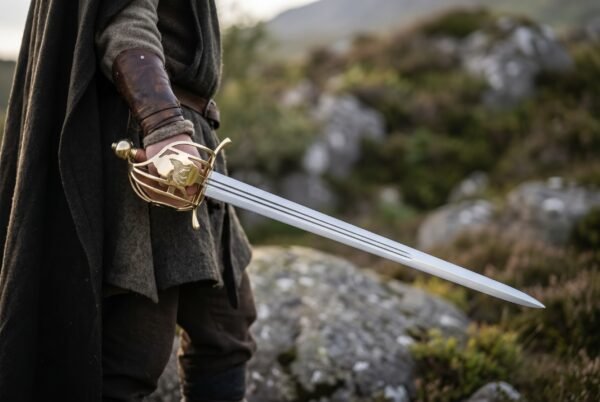
Gildwolf Hand Forged Hunting Hanger Short Sword with Engraved Brass Basket Hilt & Wolf Motif | About 28 Inches Overall | Leather Grip and Tan Scabbard | Display Gift | RK-2197
Original price was: $349.00.$296.65Current price is: $296.65.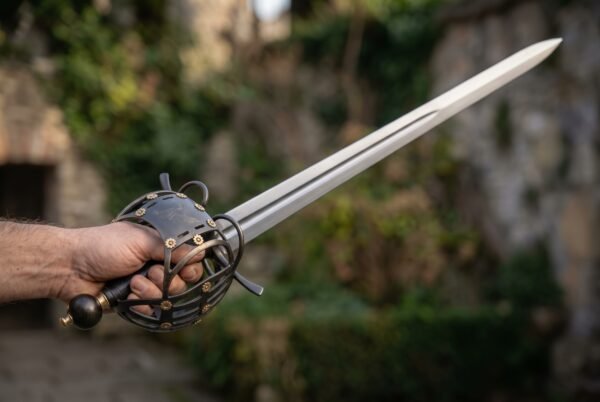
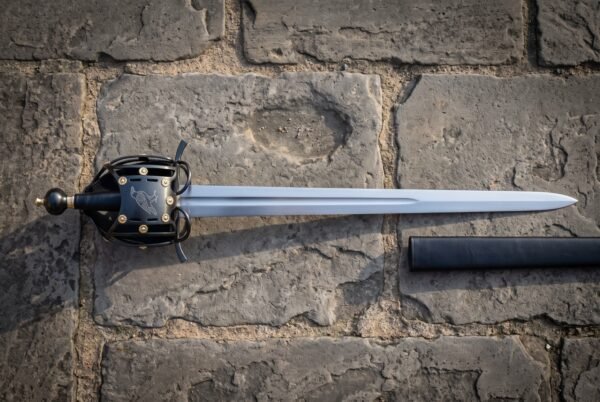
Nightcage Hand Forged 1095 Steel Basket Hilt Broadsword | 37 Inch Overall | Blackened Cage Guard and Brass Rosette Rivets with Etched Raven and Black Scabbard | Norse Gift | RK-2114
Original price was: $449.00.$381.65Current price is: $381.65.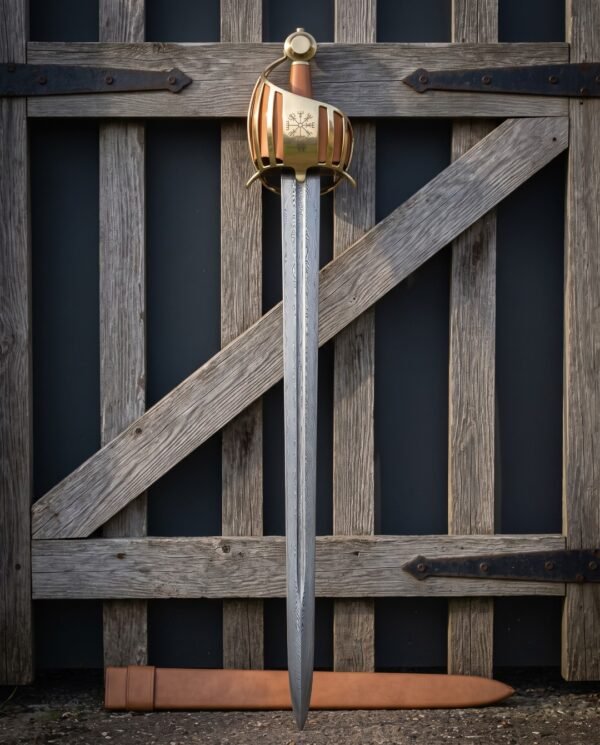
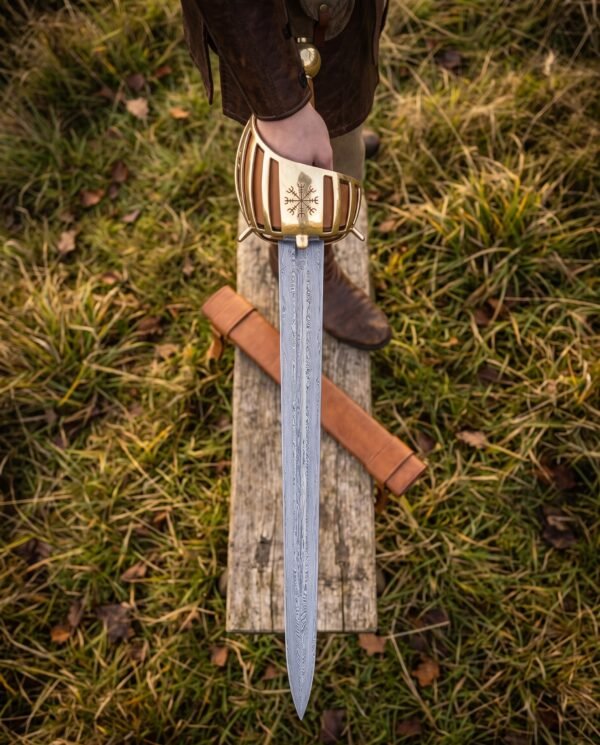
Vegcage Hand Forged Damascus Basket Hilt Short Sword with Vegvisir Engraved Brass Cage | Tan Leather Grip | Leather Scabbard Included | Norse Collector Gift | RK-2177
Original price was: $549.00.$466.65Current price is: $466.65.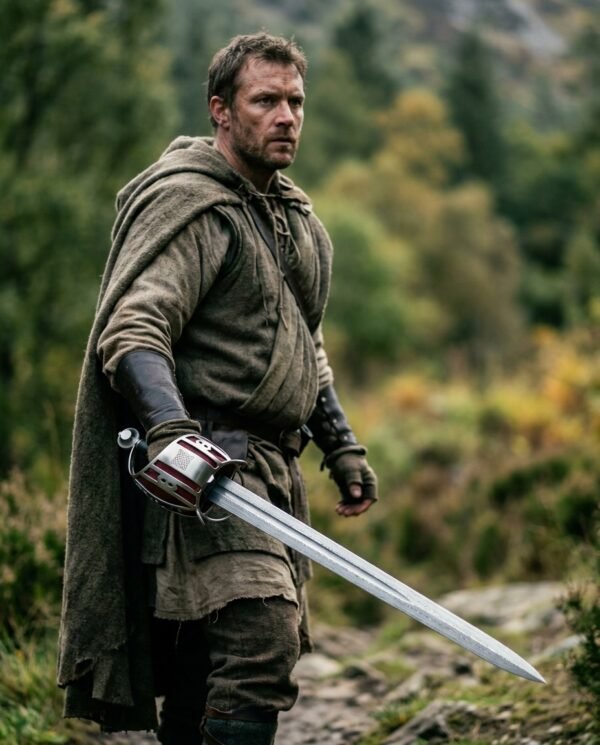
Shellwarden Hand Forged Damascus Short Sword with Pierced Shell Guard | 28 Inch Overall and 22 Inch Blade | Red Panels and Knotwork Boss and Leather Scabbard | Collector Gift | RK-2124
Original price was: $469.00.$398.65Current price is: $398.65.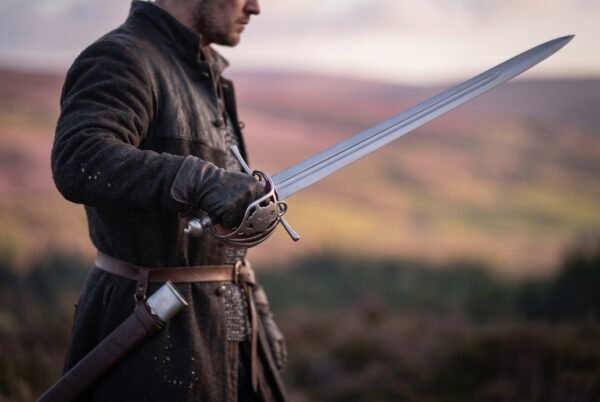
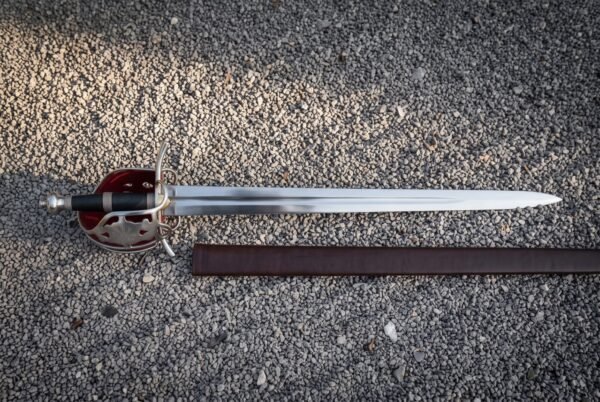
Crimsoncage Hand Forged 1095 Steel Basket Hilt Broadsword | 38 Inch Overall | Pierced Steel Shell Guard with Red Liner, Wire Bound Grip and Brown Leather Scabbard | Highland Gift | RK-2110
Original price was: $449.00.$381.65Current price is: $381.65.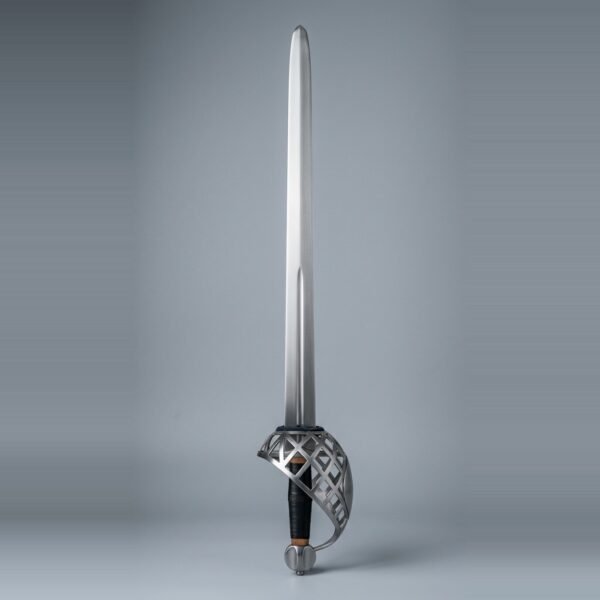
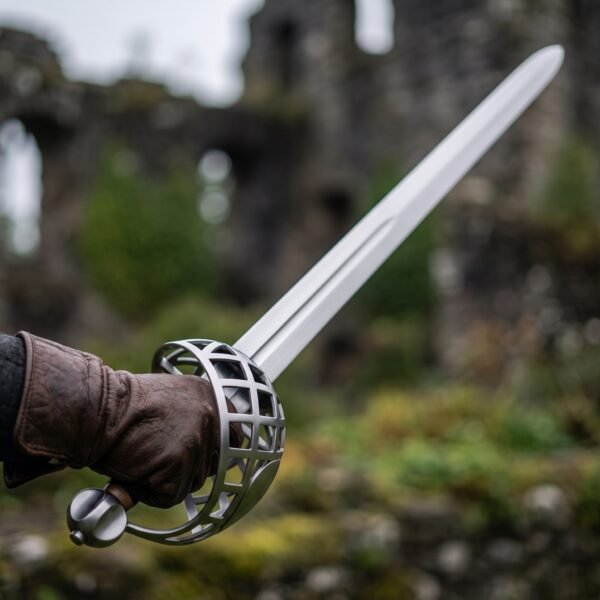
Brekavik Hand Forged 51CrV4 Schiavona Style Basket Hilt Sword with Bar Basket & Lobed Cap | About 41 Inches Overall | Wood Ferruled Grip and Care Card | Collector Gift | RK-3014
Original price was: $549.00.$466.65Current price is: $466.65.
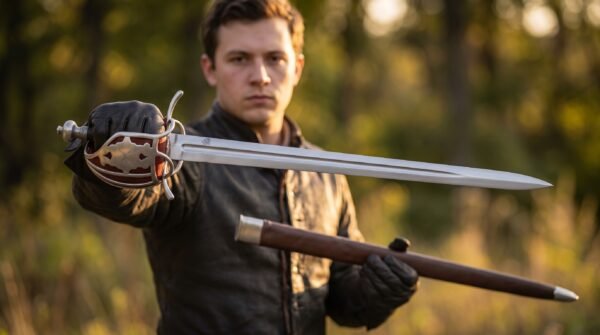
Emberguard Hand Forged 1095 Steel Broadsword with Pierced Shell Guard | 37 Inch Overall and 31 Inch Blade | Helm of Awe Cut Shell and Red Panels and Knuckle Bow | Collector Gift | RK-2135
Original price was: $449.00.$381.65Current price is: $381.65.Why the hilt grew a cage
For most of the medieval period a sword guard was a straight bar of steel at right angles to the blade. That works when the hand inside it is wearing a plate gauntlet, because the guard only has to stop a blade sliding down onto the fingers, and armour does the rest. Take the gauntlet away and the arithmetic changes. The hand is now the closest target to your opponent, it is unarmoured, and losing two fingers ends the fight as effectively as anything else.
The answer, arrived at independently across Europe through the sixteenth and seventeenth centuries, was to build the guard outward and around. First a knuckle bow, a single bar looping from the cross to the pommel. Then side rings. Then more bars, then plates filling the gaps between them, until the whole assembly enclosed the hand like a cage. Scottish broadswords, Italian schiavonas and English mortuary swords are all versions of the same idea reached by different routes.
The shell guard is the other branch of the same family. Instead of a woven cage of bars, a shell is a broad curved plate of steel or brass, usually pierced with a pattern so it drains water and sheds weight, set below the hand and backed with cloth. Shells appear on hunting hangers, on infantry hangers and on smallswords, and they are lighter and less bulky than a full basket while still covering the outside of the hand.
Both designs cost you something. A caged hand cannot change grip mid fight and cannot easily be shifted along the grip for leverage. A basket also puts a pound or so of steel right at the balance point, which is not entirely a loss because it counterweights the blade and brings the point of balance back toward the hand. That is why a basket hilt broadsword of 38 inches often feels quicker than a plain arming sword of the same length.
The swords in this collection
Eight pieces on this page. Four are full basket hilt broadswords, three carry shell guards, and one is a brass caged short sword. All of them arrive with a fitted scabbard.
Basket hilt broadswords
The largest group and the most traditional. All four are around 37 to 38 inches overall with double edged blades of 30 to 32 inches.
The pierced steel basket in 1095 at 54 to 58 HRC is the closest to the Highland pattern. The basket is built bar by bar, welded, filed and polished, the interior is lined with traditional red cloth over leather, and the blade carries twin narrow fullers that stiffen it without adding weight. Approximately 38 inches overall on a 32 inch blade, with a black scabbard on a steel throat and chape.
The blackened Damascus version is 1095 and 15N20 pattern welded at 58 to 60 HRC, approximately 38 inches overall on a 31 inch blade. The basket is blackened steel with polished brass banding and a rosette rivet, and the outer guard plate carries an etched triquetra. Black scabbard with banded fittings.
The bright polished 1095 broadsword runs approximately 38 inches overall on a 31 inch fullered blade, with a pierced and chiselled steel basket, a knuckle bow and side bars, a deep red liner behind the shell plates and a wire bound grip. Brown leather scabbard.
The blackened cage broadsword is the shortest of the four at approximately 37 inches overall on a 30 inch fullered blade, with a riveted bar basket, brass rosette rivet heads and an etched Norse raven on the guard plate. Black scabbard.
Shell guard swords
The full sized shell guard piece is 1095 at 54 to 58 HRC in a hand worked satin finish, approximately 37 inches overall with a 31 inch broad double edged blade. The guard is a pierced steel shell with red backing panels, a side ring and a knuckle bow, and a Helm of Awe stave is cut across the lower shell. The grip is black leather with two silver wire bands under a faceted ball pommel. Dark brown leather scabbard.
The Damascus shell guard short sword is 1095 and 15N20 at 58 to 60 HRC, approximately 28 inches overall with a 22 inch broad double edged blade ground with a raised central ridge. Pierced steel shell with red backing panels and a cut knotwork boss, steel knuckle bow, black grip and a polished steel disc pommel. Full tang, peened over the pommel. Brown leather scabbard.
The hunting hanger is the outlier. A 1095 blade at 54 to 58 HRC, broad and double edged with a narrow central fuller, about 28 inches overall, under a polished brass shell guard with a knuckle bow, collar and ball pommel and a running wolf cut into the brass. Read the finish line carefully on this one. It is supplied with an unsharpened display edge and a rounded point, which is exactly what you want for a piece that lives on a wall and gets handled by visitors.
Brass caged short sword
The brass basket short sword is Damascus at 58 to 60 HRC, etched and polished, with a hilt of curved solid brass bars springing from a wide engraved plate. A Vegvisir, the eight spoked Icelandic stave, is cut into the brass. The blade is a broad double edged short sword profile running to a leaf point, the grip is tan leather over a wooden core under a brass button pommel, and a fitted tan leather scabbard is included. Brass and Damascus together is a warmer looking combination than blackened steel, and it is the piece on this page that photographs best.
Lengths, steel and hilts across the range
Every figure below comes from a listing on this page. These are forged and assembled by hand, so lengths are approximate and small differences between two of the same model are normal.
| Piece | Steel and hardness | Overall length | Blade | Guard and grip | Scabbard |
|---|---|---|---|---|---|
| Basket hilt broadsword, pierced steel | 1095 at 54 to 58 HRC | About 38 in | 32 in, double edged, twin narrow fullers | Basket built bar by bar, red cloth over leather liner | Black, steel throat and chape |
| Basket hilt broadsword, blackened with brass banding | Damascus at 58 to 60 HRC | About 38 in | 31 in, double edged | Blackened basket, brass banding, etched triquetra plate | Black with banded fittings |
| Basket hilt broadsword, bright polished | 1095 at 54 to 58 HRC | About 38 in | 31 in, fullered | Pierced and chiselled basket, side bars, red liner, wire bound grip | Brown leather |
| Basket hilt broadsword, blackened cage | 1095 at 54 to 58 HRC | About 37 in | 30 in, fullered | Riveted bar basket, brass rosette rivets, etched raven plate | Black |
| Shell guard broadsword, satin finish | 1095 at 54 to 58 HRC | About 37 in | 31 in, broad double edged | Pierced shell, red panels, side ring, knuckle bow, cut Helm of Awe | Dark brown leather |
| Shell guard short sword | Damascus at 58 to 60 HRC | About 28 in | 22 in, broad, raised central ridge | Pierced shell, red panels, knotwork boss, steel disc pommel | Brown leather |
| Brass basket short sword | Damascus at 58 to 60 HRC | Not listed | Broad double edged to a leaf point | Solid brass curved bars on an engraved plate, cut Vegvisir | Tan leather |
| Hunting hanger, brass shell | 1095 at 54 to 58 HRC | About 28 in | Broad double edged, narrow central fuller | Polished brass shell, knuckle bow, collar and ball pommel, cut wolf | Tan leather |
The gap between 28 and 38 inches is larger than it sounds. A 38 inch broadsword needs about four feet of clear wall with the scabbard beside it, and it needs both hands to move around a room without hitting a light fitting. A 28 inch short sword sits comfortably above a doorway.
How these handle
A basket hilt broadsword is a one handed sword with a heavy hand end. The cage adds mass exactly where you grip, so the balance point sits closer to the hand than on a plain cross hilted sword of the same blade length. The practical effect is that the point comes up quickly and changes line easily, and the blade feels lighter than the total weight suggests.
It also means your hand is committed. You cannot slide the grip, you cannot choke up on the blade, and if the basket is too tight you will feel every knuckle. Baskets here are lined with cloth over leather for that reason, and the liner is not decoration. If you have large hands, check the internal width on the listing before you commit.
Shell guards behave differently. Less mass at the hand, less coverage, more room to move. A shell guard sword of the same blade length feels more blade heavy and more like a conventional sword. The hanger, at 28 inches with a broad blade, is the quickest of the lot in the hand and the least useful for anything except looking at.
Steel and hardness
Two steels run through this page and there are no others. Plain 1095 high carbon is hardened to 54 to 58 HRC and tempered to spring back rather than take a set. That is the correct hardness band for a long blade. Harder makes it more likely to snap, softer makes it bend and stay bent.
Damascus here is 1095 and 15N20 forge welded and acid etched, hardened to 58 to 60 HRC. The 15N20 has enough nickel to resist the etch, which is what gives you the light and dark banding across the blade. It is slightly harder and holds an edge a little longer, and the pattern is the main reason to choose it.
Neither steel is stainless. Both will rust if you leave them wet, and both take a patina over years. If you want the technical background, our notes on steel and hardness and on what Damascus steel actually is cover it properly.
Baskets, liners and grips
The baskets on this page are built three ways. Bar by bar construction means individual bars are forged, bent, welded at the junctions, then filed and polished back so the joins disappear. Riveted bar work joins the bars with rivets instead, which is faster and leaves visible rosette heads, often in brass against blackened steel for contrast. Pierced plate means the guard starts as sheet and the openings are cut and chiselled out of it.
Liners matter more than they look. A bare steel basket transfers every impact and every cold morning straight into your knuckles, and it also lets your hand slide against sharp interior edges. The red cloth over leather liner is traditional on Scottish baskets and it is the difference between a sword you can hold for ten minutes and one you cannot.
Grips are leather over a wooden core, some wire bound, some plain, with pommels ranging from a polished steel disc to a faceted ball to a brass button. A wire bound grip gives more purchase with a damp hand. A plain leather grip is more comfortable bare handed.
Care and storage
Wipe the blade dry, keep a light film of oil on it, and store the sword out of the scabbard if it is going to sit for months. Leather holds moisture against steel and a damp scabbard is the usual reason a well kept blade still comes out spotted.
Baskets need their own attention because they trap water in the corners where bars meet. After handling, run a dry cloth into the junctions. Blackened finishes are a surface treatment and they will wear at the high points where hands touch, which most people consider improvement rather than damage. Brass darkens over months and comes back with a metal polish on a cloth if you want it bright.
Cloth liners should be kept dry and should never be soaked when you clean the basket. If a liner gets wet, let it dry at room temperature away from a heater, with the sword out of the scabbard.
Mount long swords on a proper stand or a pair of horizontal hooks that support the blade, not on a single nail through the basket. Our guide to displaying swords and axes covers the mounting options.
Engraving
Several pieces here already carry cut or etched work as part of the build. A triquetra on one guard plate, a Norse raven on another, a Helm of Awe across a shell, a knotwork boss, a Vegvisir cut into brass and a running wolf on the hanger.
Additional personalisation is done in the United States after the sword arrives. Text engraving is 19 dollars, symbol engraving is 39 dollars and a family crest is 49 dollars. On these pieces the ricasso, the blade flat near the guard and the outer plate of the basket all take engraving well. Elder Futhark is a phonetic alphabet rather than a code, so a name transliterates by sound and there is no rune for the letter C. Our Elder Futhark guide explains it.
Engraving is permanent and an engraved piece cannot be returned. Send the exact spelling and check it twice.
Where these come from and how they ship
Ransack Viking is a US company based in Chicago, Illinois. The pieces are handmade in the Czech Republic, then imported, inspected and shipped from Chicago. Engraving is done in the US after arrival.
Because every basket is built and finished by hand, no two are identical. Bar spacing, the exact shape of a pierced opening, the depth of an etch and the figure of a Damascus pattern all vary. Listed lengths are approximate for the same reason.
How to choose
If you want the traditional Highland look, take one of the pierced steel baskets with the red liner. That is the pattern most people picture when they hear the phrase basket hilt.
If you want the piece to stand out on a dark wall, take a blackened basket with brass rivets or brass banding. The contrast reads from across a room in a way that polished steel does not.
If the pattern in the steel matters more to you than the hilt, take one of the three Damascus pieces and expect the etch to be the first thing anyone comments on.
If space is short, or the sword is for a hallway or an office rather than a hall, take one of the 28 inch short swords. And if the sword will be handled by people who are not used to sharp things, the hunting hanger with its unsharpened display edge and rounded point is the sensible answer.
Browse related categories
- Broadswords across the full range
- Arming swords on the Oakeshott outlines
- Short swords and hangers
- Damascus swords in 1095 and 15N20
- Rapiers with swept and cup hilts
- Sabres and curved cavalry blades
- Scabbards, sheaths and belt rigs
- Sword stands and display mounts
- HEMA sideswords, caged and ringed hilts built as training blades
Guides worth reading first
- How to buy your first sword
- Display sword or battle ready: what the terms mean
- Steel and hardness explained
- What Damascus steel actually is
- How to display swords and axes safely
Frequently asked questions
What is a basket hilt sword?
A sword whose guard is built outward into a cage of bars and plates that encloses the hand. It developed across Europe in the sixteenth and seventeenth centuries once fighters stopped wearing gauntlets and the unarmoured hand became the easiest target on the body.
What is the difference between a basket hilt and a shell guard?
A basket is a woven cage of bars that wraps the whole hand. A shell is a single broad curved plate, usually pierced, set below the hand and covering its outside. Shells are lighter and less bulky, baskets give far more coverage and add mass at the balance point.
Will my hand fit inside the basket?
Most hands do, but a basket cannot be adjusted, so check the internal dimensions on the listing if your hands are large. The cloth over leather liner takes up a little of the space and it is there to stop the interior edges chewing your knuckles.
Are these swords sharp?
Most arrive with a working edge. The brass shell hunting hanger is the exception and is listed with an unsharpened display edge and a rounded point, which is the sensible choice for a piece that gets handled. Each product page states the finish.
Which is better here, 1095 or Damascus?
1095 at 54 to 58 HRC is tempered to spring back and is the straightforward choice for a long blade. Damascus at 58 to 60 HRC is slightly harder, holds an edge a little longer and gives you the banded pattern. Neither is stainless and both need oiling.
Do they come with a scabbard?
Yes. Every piece on this page includes a fitted scabbard, black, brown or tan depending on the sword, with steel or banded fittings.
How do I clean the basket without wrecking the liner?
Work dry. Run a cloth into the junctions where bars meet, because that is where water sits, and keep liquid away from the cloth liner. Blackened finishes wear at the high points where hands touch, and brass darkens and comes back with a metal polish.
Where are these swords made?
Ransack Viking is a US company based in Chicago, Illinois. The pieces are handmade in the Czech Republic, then imported, inspected and shipped from Chicago. Engraving is done in the US after arrival.
Shell guards for sparring
Shell guards were built to protect the hand in thrusting fencing, and that style is still practiced with our HEMA rapier trainers. If you are unsure which blade fits you, rapier or sidesword lays out the difference. The Fenrholt rapier trainer has a dished shell guard and very long quillons.
Featured pieces
 Cagebrand Hand Forged Damascus Basket Hilt Broadsword
Original price was: $549.00.$466.65Current price is: $466.65.
 Crimsoncage Hand Forged 1095 Steel Basket Hilt Broadsword
Original price was: $449.00.$381.65Current price is: $381.65.
 Nightcage Hand Forged 1095 Steel Basket Hilt Broadsword
Original price was: $449.00.$381.65Current price is: $381.65.
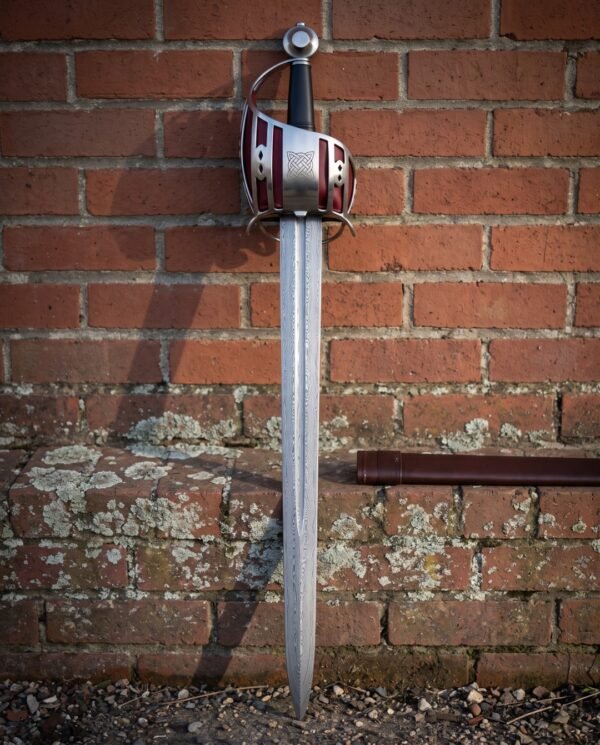 Shellwarden Hand Forged Damascus Short Sword with Pierced Shell Guard
Original price was: $469.00.$398.65Current price is: $398.65.