
A helmet is a curved plate held a short distance away from your skull. That gap is the whole idea. A blow lands on the dome, the curve turns it aside instead of stopping it dead, and the padded liner underneath keeps the steel from touching bone. Everything else on a medieval helmet, the brow band, the nasal, the eye slits, the visor, is an argument about how much of your face you are willing to give up in exchange for being able to see and breathe.
The helmets here run 279 to 429 dollars and cover spectacle helmets, spangenhelms, conical and rounded nasals, great helms, a pig faced bascinet, a sallet, two kabuto and a Roman Imperial Gallic. All are hand raised mild steel in 16 gauge at about 1.6mm or 18 gauge at about 1.2mm, riveted rather than welded, and most weigh about 4 to 5 pounds with the liner in. Standard fit is a head circumference of roughly 22 to 24 inches over the liner.
If this is your first helmet, measure your head before you look at anything.
Free US shipping
On most pieces. Heavier and oversized ones carry a flat charge.
Hand Forged
Heated, hammered and ground by hand.
Engraving available
Names, dates or Norse runes on most pieces.
Ships from Chicago
Inspected and dispatched from our Chicago warehouse. No import duty, no customs delay on US orders.
Medieval Helmets
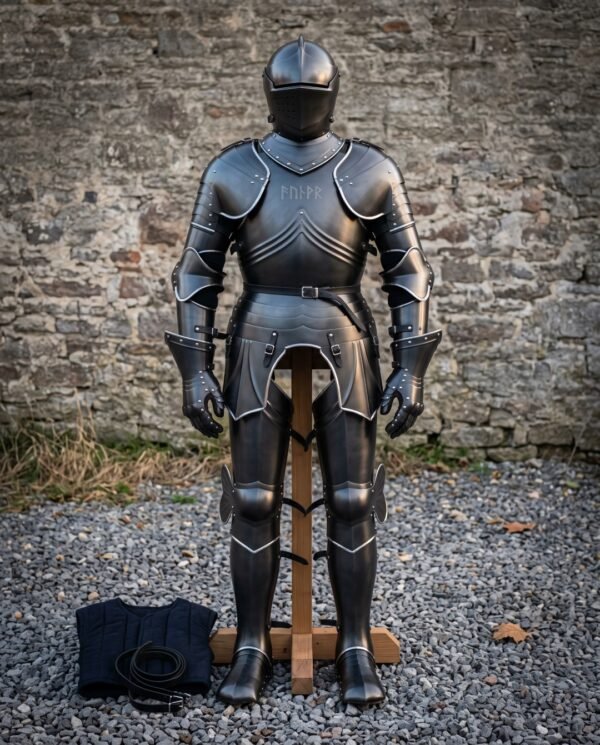
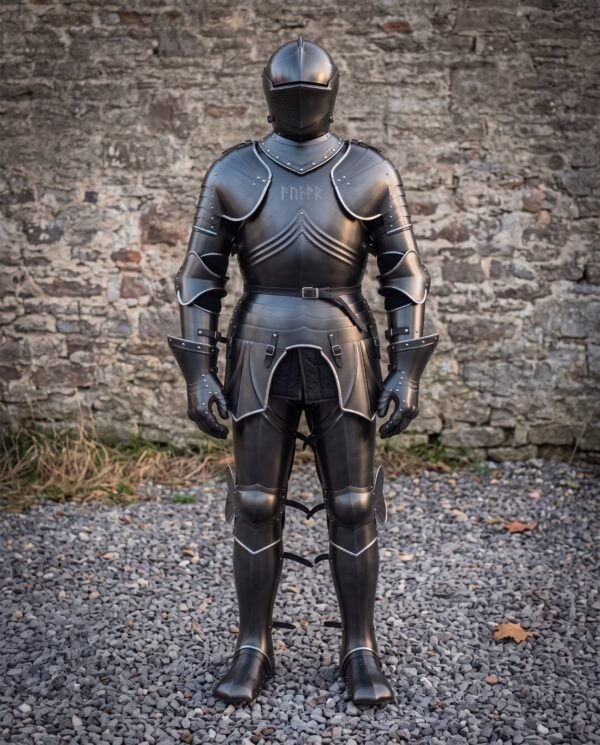
Nightplate Hand Forged Steel Full Suit of Plate Armour | Blackened 18 Gauge | Articulated Pauldrons Gauntlets and Sabatons | Medieval Display Gift | RK-1551
Original price was: $1,749.00.$1,399.20Current price is: $1,399.20.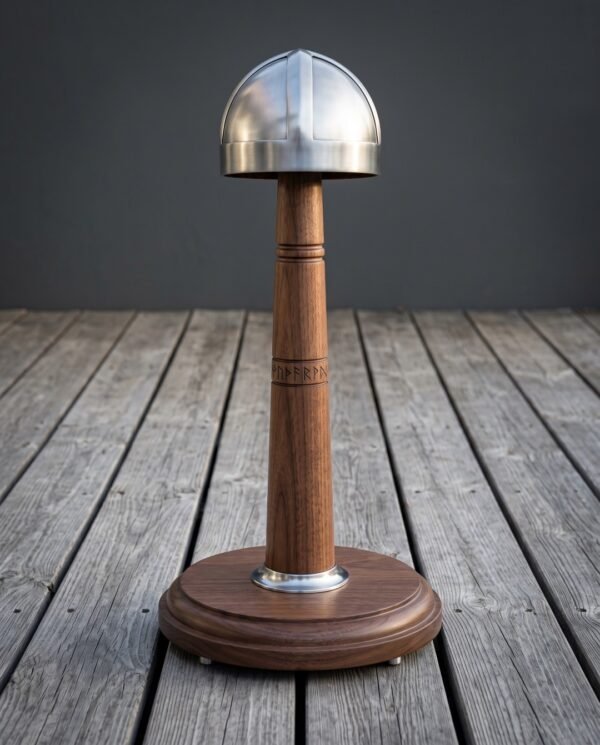
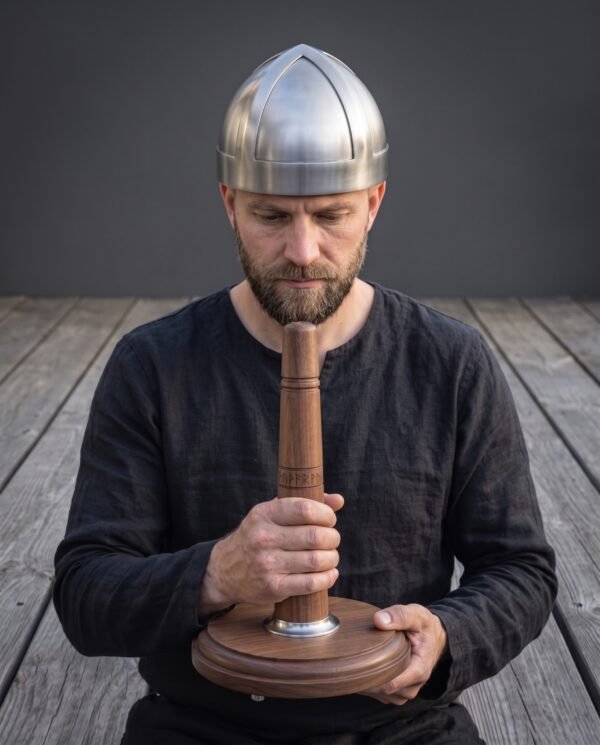
Cairnhelm Hand Forged Steel Viking Spangenhelm Cap | 16 Gauge Mild Steel | Four Panel Dome, Brow Band and Runed Walnut Display Stand | Norse Collector Gift | RK-1458
Original price was: $279.00.$223.20Current price is: $223.20.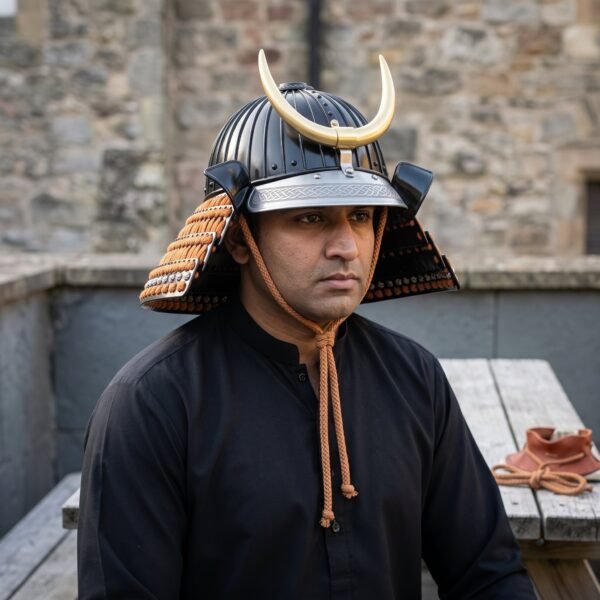
Nightcrest Hand Forged Steel Kabuto Samurai Helmet | Ribbed Black Lacquer Bowl | Brass Crescent Crest and Orange Laced Neck Guard | Display Gift | RK-1512
Original price was: $399.00.$319.20Current price is: $319.20.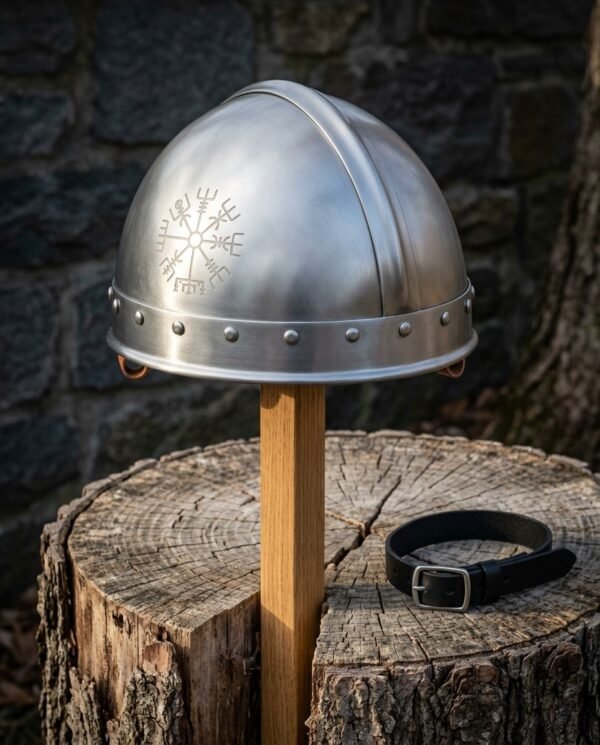
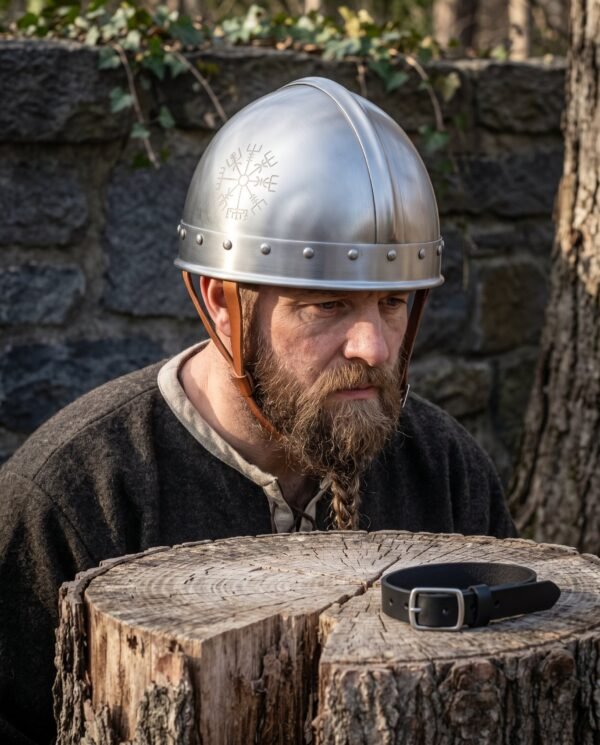
Vegcrown Hand Forged Steel Viking Spangenhelm | 16 Gauge Mild Steel | Riveted Brow Band Leather Liner and Chin Strap | Norse Reenactment Gift | RK-1539
Original price was: $329.00.$263.20Current price is: $263.20.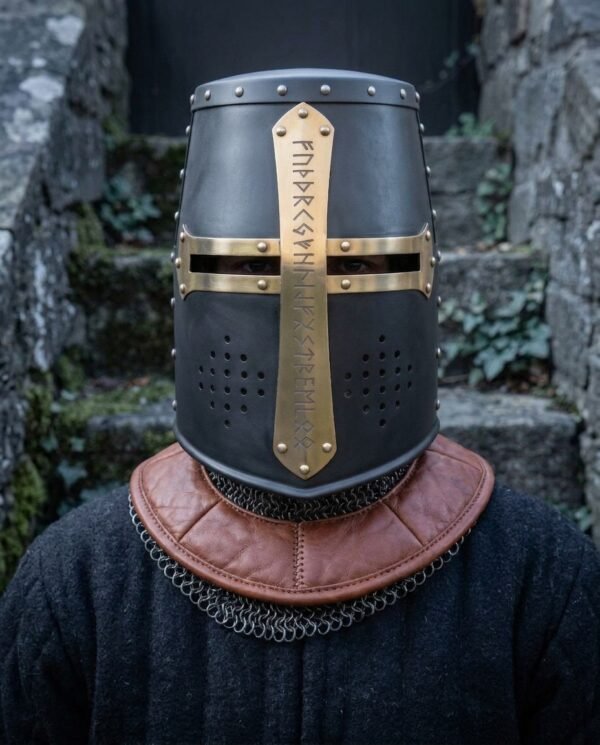
Duskwarden Hand Forged Blackened Steel Great Helm Crusader Helmet | 16 Gauge Flat Top | Brass Rune Cross Vision Slits and Drilled Breaths | Knight Display Gift | RK-1502
Original price was: $409.00.$327.20Current price is: $327.20.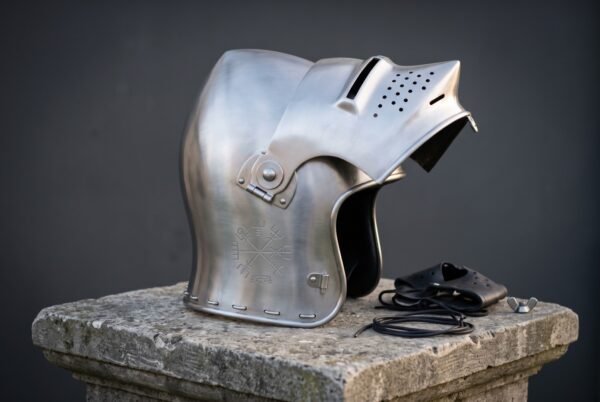
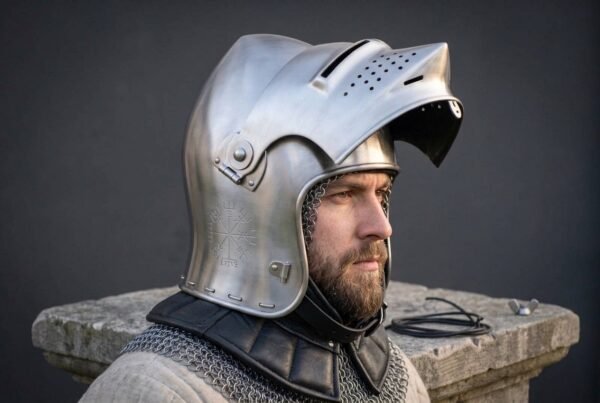
Ridgehelm Hand Forged Steel Sallet | 16 Gauge Visored Helmet | Hinged Temple Pivots, Flared Rear and Chased Vegvisir | Medieval Reenactment Gift | RK-1476
Original price was: $389.00.$311.20Current price is: $311.20.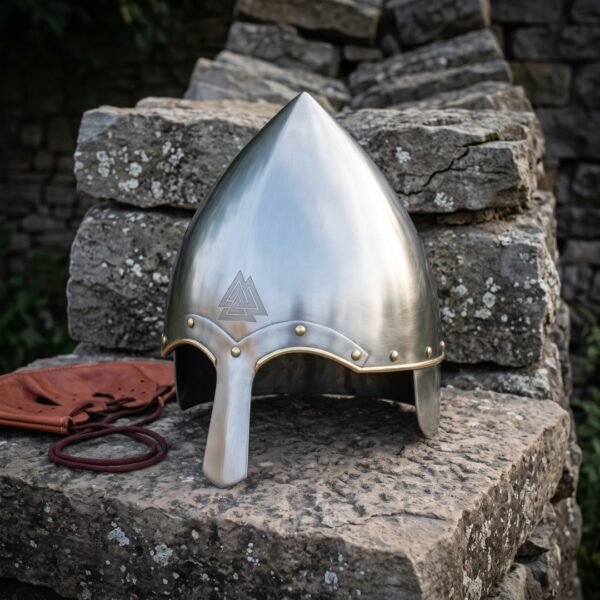
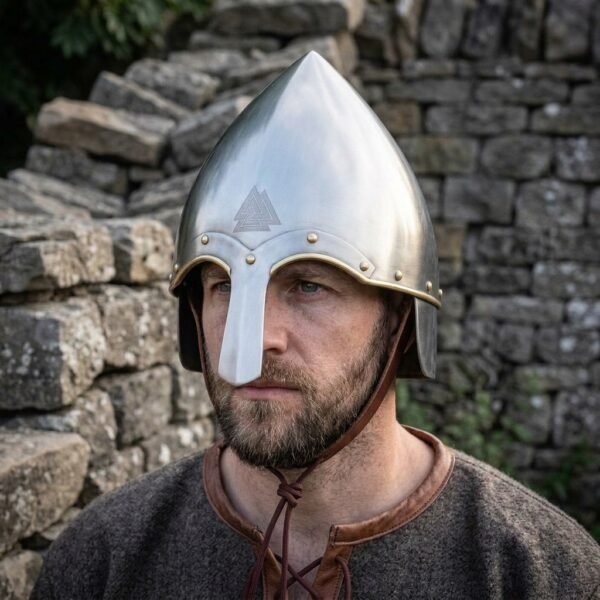
Thornpeak Hand Forged Steel Viking Conical Nasal Helmet | Pointed Skull | Brass Rivets and Valknut Engraving | Norse Reenactment Gift | RK-1443
Original price was: $329.00.$263.20Current price is: $263.20.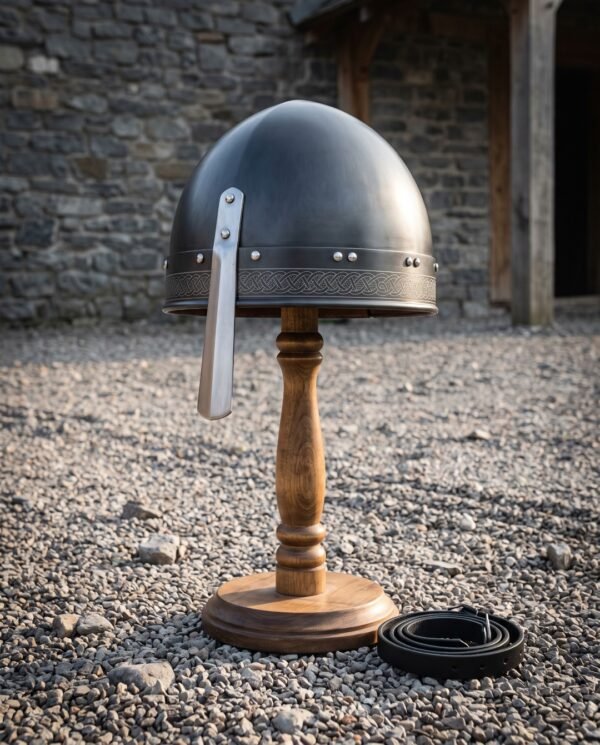
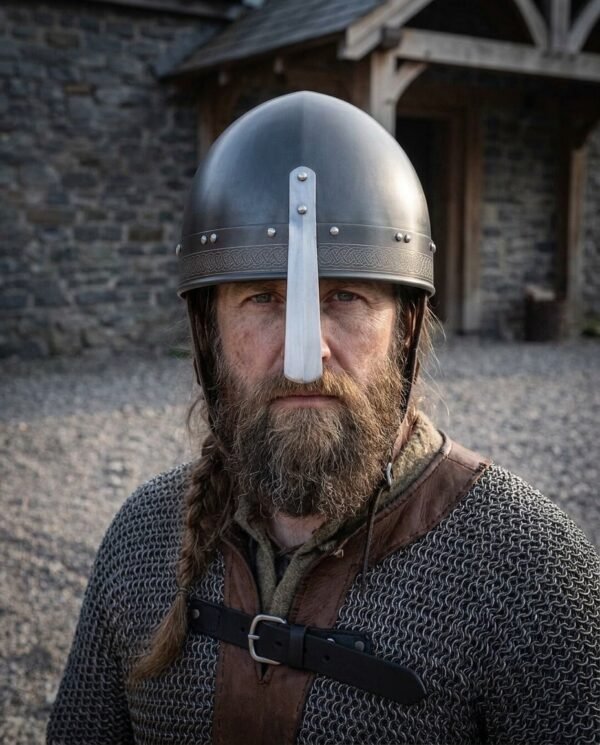
Browhold Hand Forged Steel Medieval Nasal Helmet | Rounded Skull | Knotwork Browband and Riveted Nasal Bar | Reenactment Display Gift | RK-1438
Original price was: $299.00.$239.20Current price is: $239.20.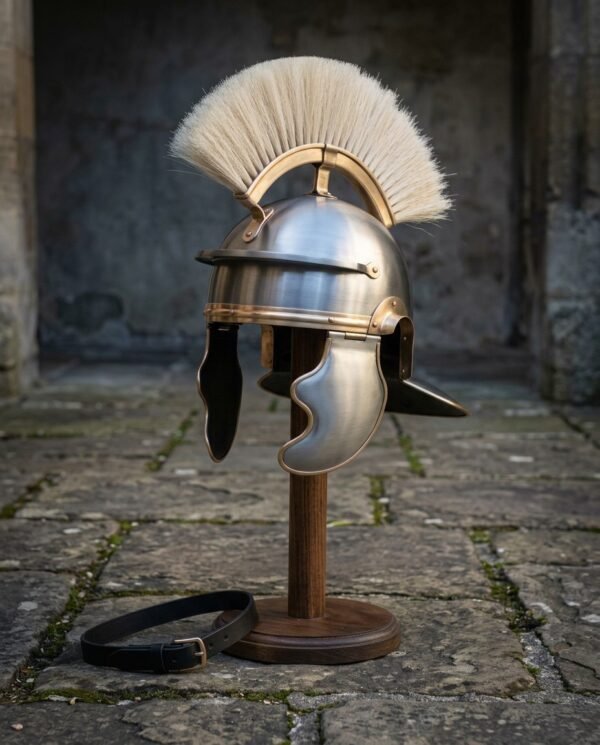
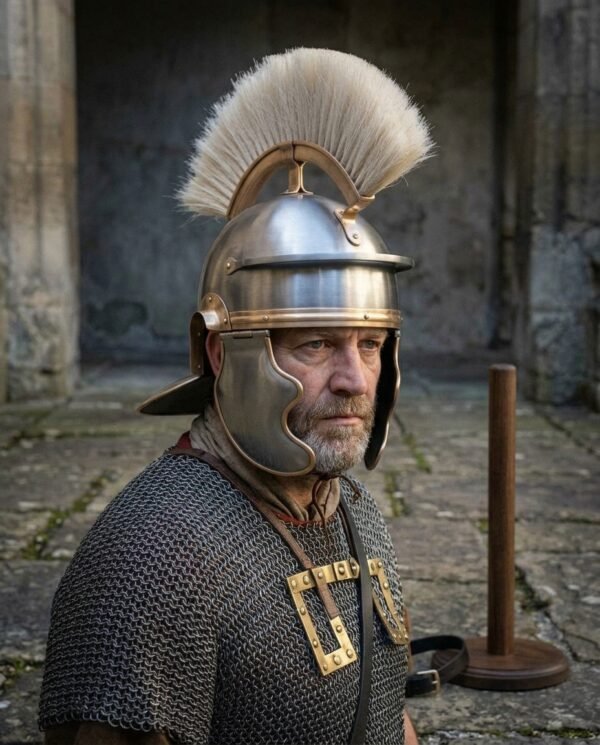
Legionplume Hand Forged Steel Roman Imperial Gallic Helmet | 18 Gauge Mild Steel | Brass Trim, Horsehair Crest and Hinged Cheek Guards | Roman Reenactment Gift | RK-1460
Original price was: $429.00.$343.20Current price is: $343.20.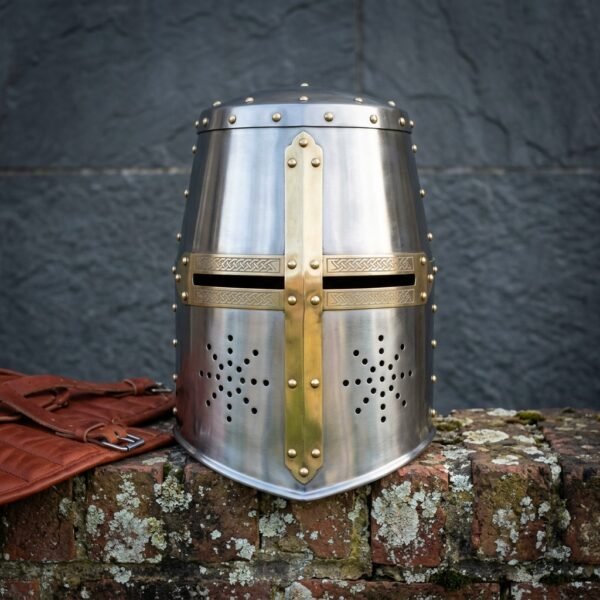
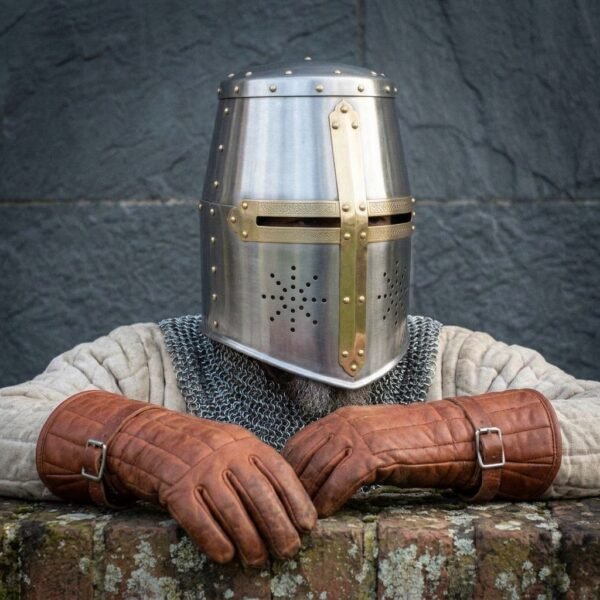
Cruxward Hand Forged Steel Great Helm | 16 Gauge Crusader Helmet | Brass Cross Reinforce, Etched Knotwork Sights and Domed Rivets | Medieval Gift | RK-1472
Original price was: $319.00.$255.20Current price is: $255.20.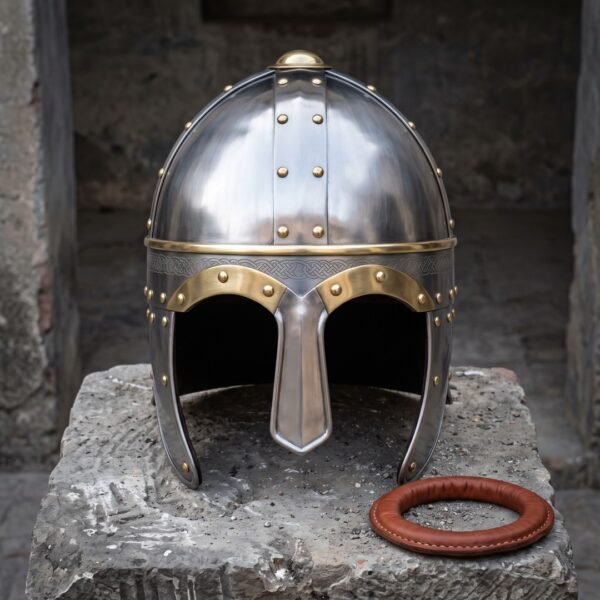
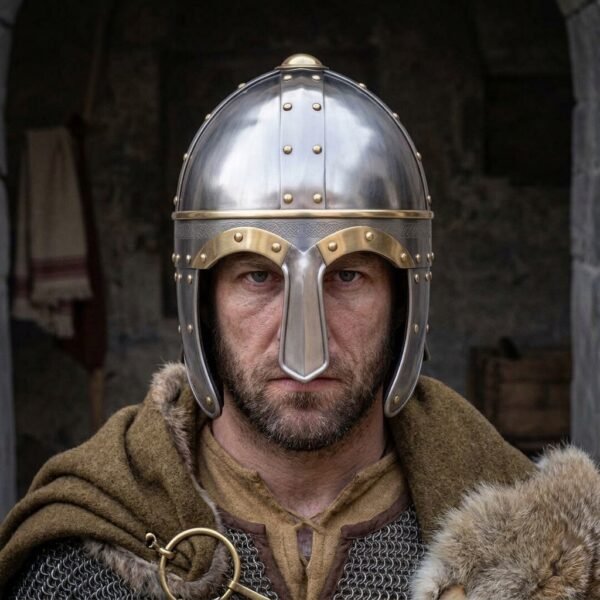
Vendelgaze Hand Forged Steel Viking Spectacle Helmet | 18 Gauge Mild Steel | Brass Rimmed Brow Band, Riveted Eye Guards and Leather Liner Ring | Norse Reenactment Gift | RK-1455
Original price was: $409.00.$327.20Current price is: $327.20.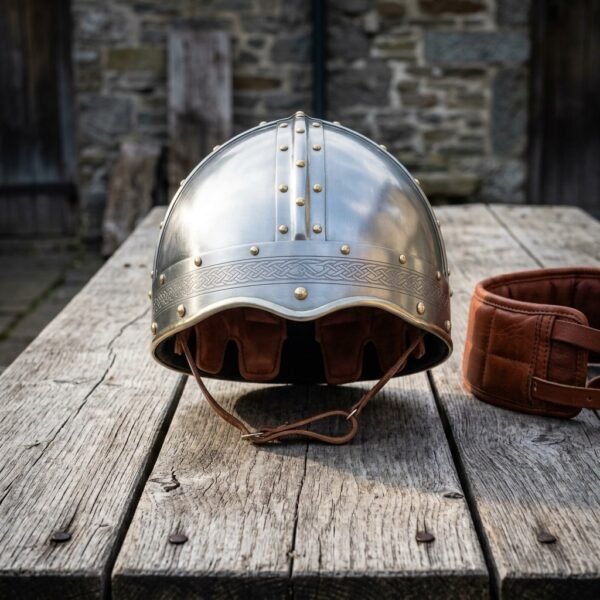
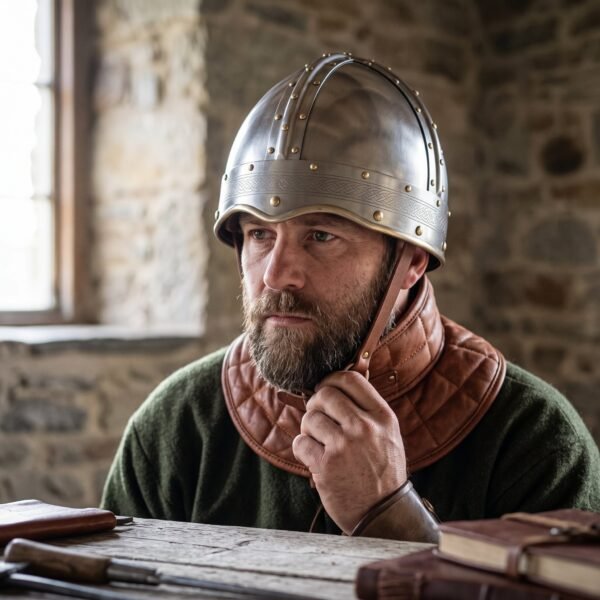
Brassbrow Hand Forged Steel Viking Spangenhelm | 16 Gauge Riveted Dome | Engraved Steel Browband and Brass Rivets with Suede Liner and Chin Strap | Norse Reenactment Gift | RK-1559
Original price was: $289.00.$231.20Current price is: $231.20.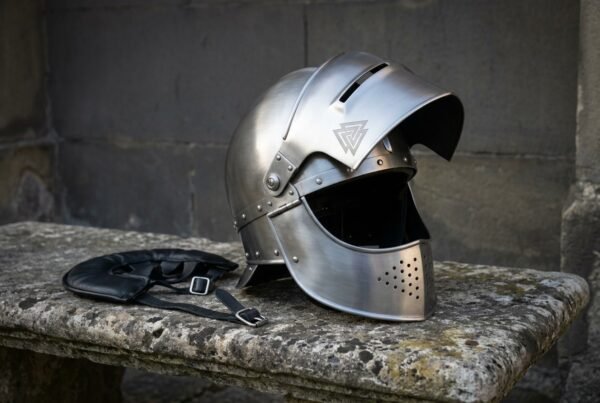
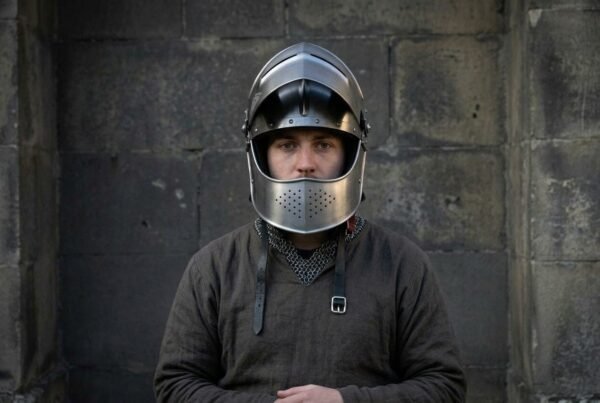
Ironvisor Hand Forged Steel Visored Medieval Helmet | 18 Gauge Mild Steel | Riveted Brow Band, Perforated Bevor and Padded Leather Liner | Reenactment Gift | RK-1451
Original price was: $369.00.$295.20Current price is: $295.20.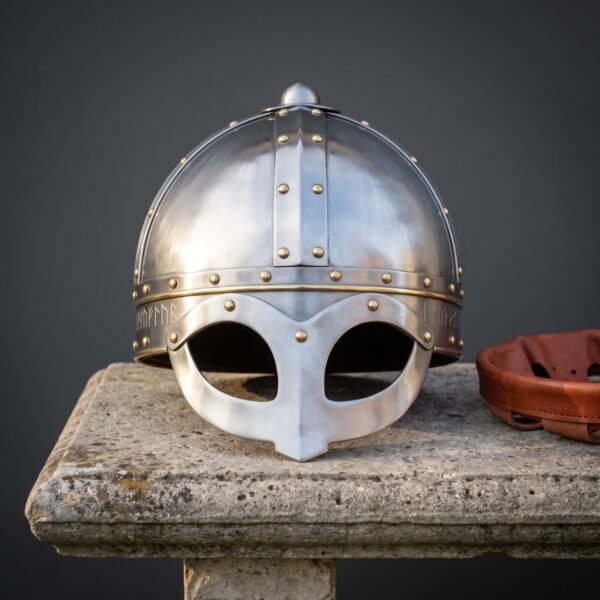
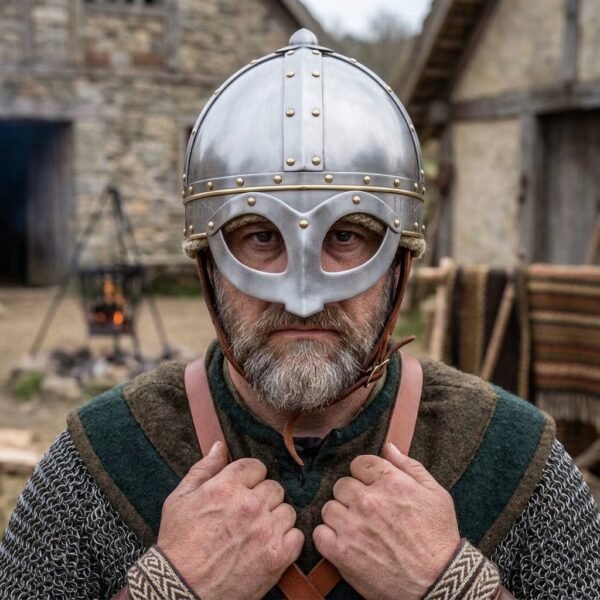
Gazeward Hand Forged Steel Viking Spectacle Helmet | Riveted Skull | Brass Browband and Elder Futhark Runes | Norse Reenactment Gift | RK-1431
Original price was: $349.00.$279.20Current price is: $279.20.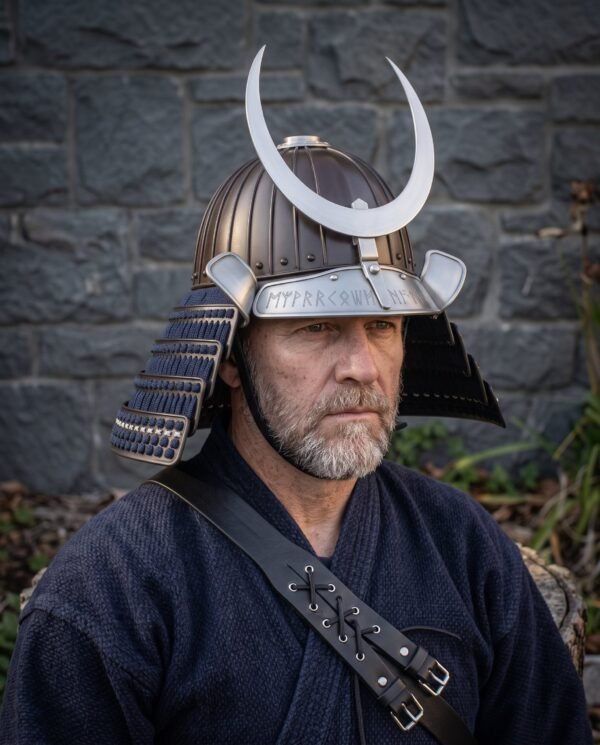
Moonhorn Hand Forged Steel Kabuto Helmet | Bronze Ribbed Bowl | Polished Crescent Crest and Rune Cut Brow Band | Norse Display Gift | RK-1514
Original price was: $429.00.$343.20Current price is: $343.20.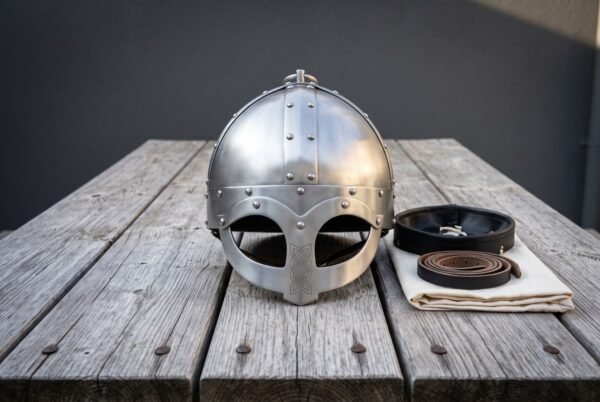
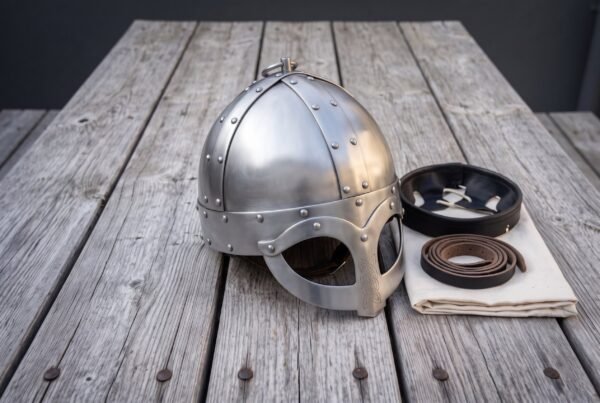
Skyglass Hand Forged Steel Viking Spectacle Helmet | 18 Gauge Mild Steel | Riveted Eye Guards and Padded Leather Liner | Norse Reenactment Gift | RK-1590
Original price was: $359.00.$287.20Current price is: $287.20.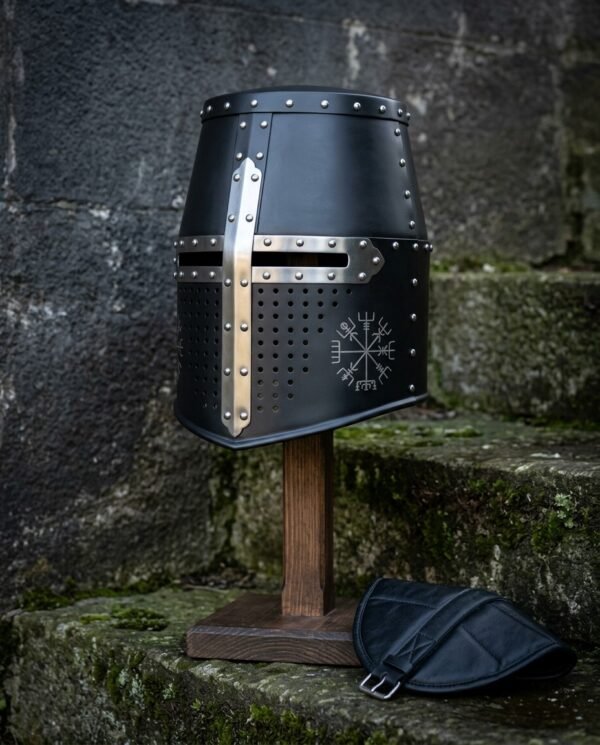
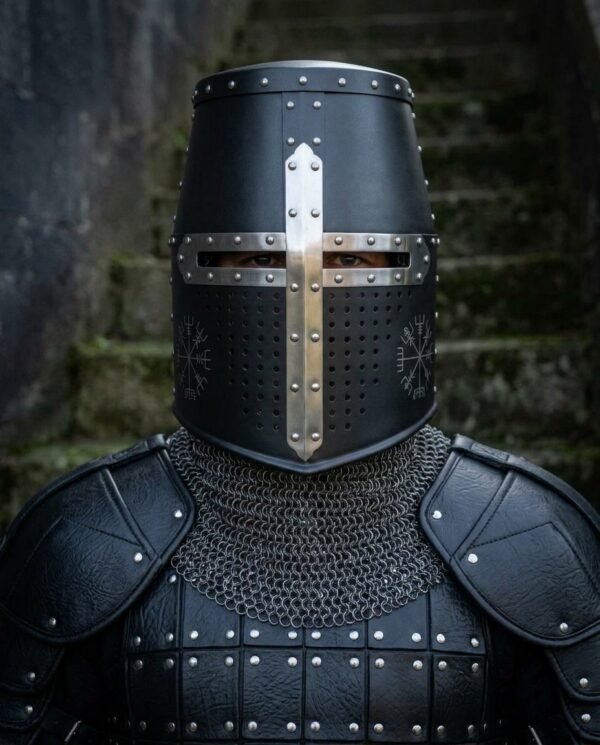
Nightcrux Hand Forged Blackened Great Helm | 16 Gauge Crusader Helmet | Polished Steel Cross Reinforce, Chased Vegvisir and Domed Rivets | Medieval Gift | RK-1483
Original price was: $349.00.$279.20Current price is: $279.20.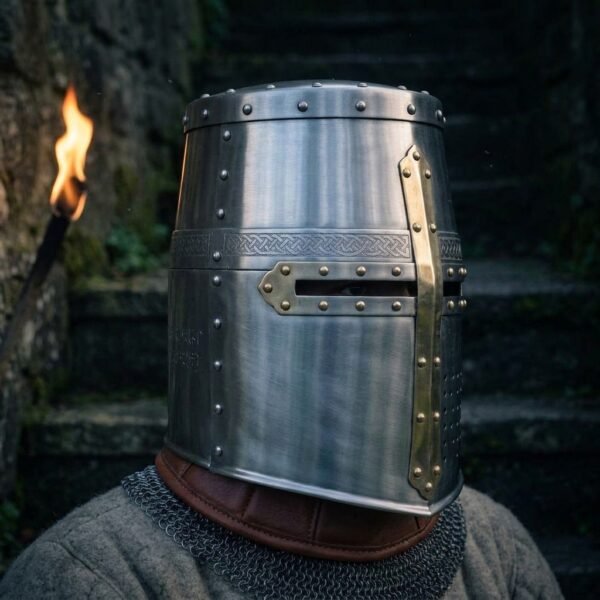
Grimward Hand Forged Steel Great Helm | 16 Gauge Riveted Crusader Helmet | Brass Cross Reinforce and Knotwork Engraved Band | Display Gift | RK-1523
Original price was: $409.00.$327.20Current price is: $327.20.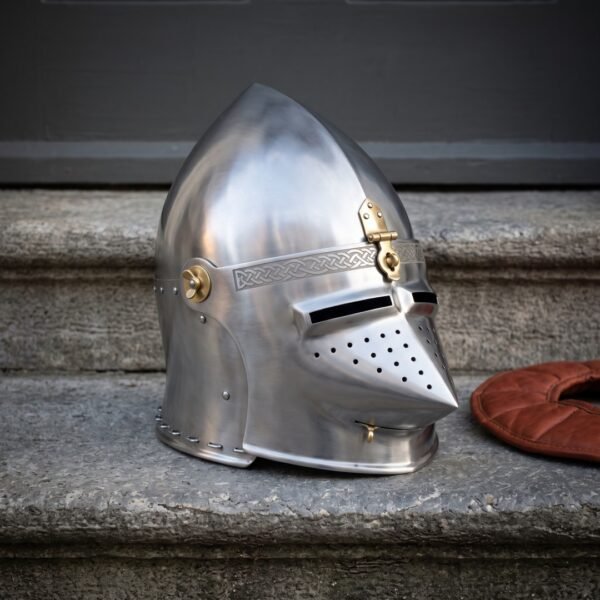
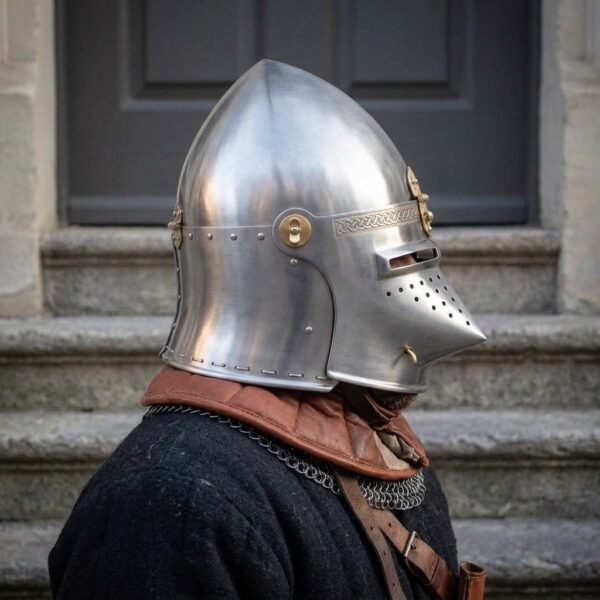
Grimbeak Hand Forged Mild Steel Pig Faced Bascinet Medieval Helmet | 18 Gauge Hounskull Visor | Brass Hinges and Knotwork Brow Band | Knight Reenactment Gift | RK-1495
Original price was: $389.00.$311.20Current price is: $311.20.How a helmet actually works
Steel does not stop a blow by being hard. It stops one by being curved and by being held away from your head. A domed skull deflects most of what lands on it, turning a perpendicular strike into a glancing one before the full force arrives. What gets through is spread across the whole shell rather than concentrated at the point of contact. Then the liner, a padded leather or suede band suspended inside the dome, takes what is left and keeps the metal from ever touching your skull. A helmet without a liner is not a helmet. It is a bell, and your head is the clapper.
That is why every piece here is riveted rather than welded. Rivets flex slightly under load and spread stress into the plates around them, and a riveted seam that fails does so gradually and visibly. It is also how the originals were built, so a riveted helmet looks right as well as behaving right.
The rest of the design is a series of trades. A nasal bar protects the middle of your face and costs almost nothing in vision. Spectacle plates cover the eyes and brows and cost you peripheral sight. A great helm encloses the whole head and reduces your world to two slits and a handful of drilled holes. A visored bascinet gives you enclosure when you want it and lifts clear when you do not, at the price of hinges that need looking after. Nobody ever solved this. They picked a side.
The helmets in this collection
Nineteen pieces are on this page, covering roughly seven centuries and three cultures. There is also one full suit of plate armour, which is not a helmet but comes with one.
Viking spectacle helmets
Three pieces. A four panel riveted skull on a banded frame with a forged one piece spectacle plate riveted across the brow, covering the eyes and the bridge of the nose. This is the Vendel type, and the surviving examples behind it are among the very few genuine Norse helmets ever found. All three are 18 gauge with padded leather liners, brass brow bands on two, and one carrying an Elder Futhark rune line. Prices run 349 to 409 dollars.
Spangenhelms and nasal helmets
Five pieces. A spangenhelm is built from separate plates held in a riveted frame of bands, which is how you make a helmet when you cannot raise a large dome from one sheet. Three here are 16 gauge, one with an engraved brass brow band, one with a runed walnut display stand. The two nasal helmets are single sheet raised skulls, one conical with brass rivets and Valknut engraving, one rounded with a knotwork brow band. These are the most wearable pieces here and start at 279 dollars.
Great helms
Four pieces, all 16 gauge, all riveted plate construction with domed steel rivets and no welded seams on show. Two horizontal eye slits under a reinforced brow, drilled breath holes in a panel on one cheek. Two are blackened, two bright, and all four carry a cross reinforce in brass or polished steel. Decoration includes a chased Vegvisir, etched knotwork around the sights and a brass rune cross. This is the crusader silhouette and the most enclosing thing here.
Visored helmets
Three pieces. A sallet in 16 gauge, hand raised and planished, with a swept rear tail and a visor pivoted on riveted hinges at both temples, a horizontal vision slit and a punched breath hole cluster on the right cheek. A pig faced bascinet in 18 gauge with a pointed hounskull visor side hinged on brass mounts and an engraved interlace band across the brow. And a visored helmet in 18 gauge with a riveted brow band and a perforated bevor.
Kabuto and Roman
Two Japanese kabuto, one with a ribbed black lacquer bowl, a brass crescent crest and an orange laced neck guard, one with a bronze ribbed bowl and a rune cut brow band. And a Roman Imperial Gallic in 18 gauge with solid brass trim, a brow reinforce, ear guards, a swept neck guard, hinged and leather lined cheek guards, and a natural horsehair crest set transversely in an arched brass crest box.
The suit
One full suit of plate armour in blackened 18 gauge, with articulated pauldrons, gauntlets and sabatons, at 1749 dollars. It sits on this page because the helmet is part of it. If you want plate on its own, the plate armour category is the place to look.
Gauges, weights and fit across the range
Every figure below comes from the specification panel of a piece on this page. These are raised and riveted by hand, so read the numbers as what to expect rather than a guarantee to the millimetre.
| Type | Construction | Gauge | Fittings and decoration | Liner | Price |
|---|---|---|---|---|---|
| Spangenhelm cap | Four panel dome with brow band | 16 gauge | Runed walnut display stand | Fitted | 279 dollars |
| Spangenhelm | Riveted brow band, ridge band and infill plates | 16 gauge | Engraved brass brow band | Suede, chin strap | 289 dollars |
| Nasal helmet | Skull raised from a single sheet | 18 gauge, about 1.2mm | Knotwork brow band, riveted nasal bar | Leather | 299 dollars |
| Spangenhelm | Riveted dome and brow band | 16 gauge | Riveted brow band | Leather, chin strap | 329 dollars |
| Conical nasal helmet | Conical skull, riveted nasal | 18 gauge, about 1.2mm | Brass brow band, brass rivets, Valknut engraving | Leather | 329 dollars |
| Great helm | Riveted plates, domed steel rivets | 16 gauge, about 1.6mm | Brass cross reinforce, etched knotwork sights | Fitted | 319 dollars |
| Spectacle helmet | Riveted skull, spectacle face guard | 18 gauge, about 1.2mm | Brass brow band, Elder Futhark runes | Leather | 349 dollars |
| Great helm, blackened | Riveted plates, domed rivets | 16 gauge | Polished steel cross reinforce, chased Vegvisir | Fitted | 349 dollars |
| Spectacle helmet | Four panel skull, spangen strips | 18 gauge, about 1.2mm | Forged spectacle plate riveted across the brow | Padded leather, removable | 359 dollars |
| Visored helmet | Riveted brow band, perforated bevor | 18 gauge, about 1.2mm | Riveted brow band | Padded leather | 369 dollars |
| Sallet | Hand raised and planished, hinged visor | 16 gauge, about 1.6mm | Swept rear tail, chased Vegvisir | Fitted | 389 dollars |
| Pig faced bascinet | Hand raised, side hinged hounskull visor | 18 gauge, about 1.2mm | Brass hinges, engraved interlace brow band | Fitted | 389 dollars |
| Kabuto | Ribbed black lacquer bowl, laced neck guard | Not listed | Brass crescent crest, orange lacing | Fitted | 399 dollars |
| Spectacle helmet | Riveted skull, eye guards, liner ring | 18 gauge, about 1.2mm | Brass brow band | Leather liner ring | 409 dollars |
| Great helm, blackened | Riveted flat top | 16 gauge | Brass rune cross, vision slits, drilled breaths | Fitted | 409 dollars |
| Great helm | Riveted plate, domed rivets | 16 gauge | Brass cross reinforce, knotwork engraved band | Fitted | 409 dollars |
| Kabuto | Bronze ribbed bowl | Not listed | Polished crescent crest, rune cut brow band | Fitted | 429 dollars |
| Roman Imperial Gallic | Bowl and neck guard, hinged cheek guards | 18 gauge | Brass trim, horsehair crest in a brass crest box | Leather lined cheeks | 429 dollars |
Listed weights on this page sit around 4 to 5 pounds with the liner fitted. That sounds like a lot until it is on, because a well balanced helmet sits on the crown of your skull rather than on your neck, and the load runs straight down your spine.
Sizing and fit
Measure before anything else. Run a tape around your head just above the eyebrows and around the widest part of the back. That number is your head circumference. The helmets here are standard adult, fitting roughly 22 to 24 inches over the liner, which covers most adults but not everyone.
Fit is adjusted by the liner rather than the shell. Most liners here are removable so you can add or take out padding. A helmet should sit level, rest on the crown rather than pinching the sides, and not rotate when you turn your head quickly. The chin strap stops it lifting off the back and does not carry the weight.
Wear a padded arming cap under it if you plan to be in the helmet for more than a few minutes. It absorbs sweat, adds a layer of shock absorption and stops your hair being torn out by the liner rivets, which is a lesson everyone learns exactly once.
Vision is the thing people underestimate. A nasal helmet costs you almost nothing. A spectacle helmet takes out your peripheral vision. A great helm reduces the world to two slits, and you will not see your own feet. If you are going to move around in a helmet, try the least enclosing option that gives you what you want.
Steel, gauge and what the numbers mean
These helmets are hand raised mild steel. Gauge is a thickness measure that runs backwards, so a smaller number means thicker metal. Sixteen gauge is about 1.6mm. Eighteen gauge is about 1.2mm. On this page the great helms and most spangenhelms are 16 gauge and the spectacle helmets and bascinet are 18.
The difference is real. Sixteen gauge is heavier, stiffer and the sensible choice for anything taking contact. Eighteen gauge is lighter on the neck through a long day and easier to raise into a complex shape, which is why the bascinet and the Roman helmet carry the detail they do. Neither is a licence to have someone hit you. These are reenactment and display pieces, not sports equipment.
Mild steel is not hardened and it will rust. That is a feature rather than a defect, because it can be reshaped, riveted, drilled and repaired. The blackened finishes on two of the great helms are surface treatments and will show wear on high points over time, which most people prefer to a helmet that looks moulded.
Liners, straps and fittings
Liners here are padded leather or suede, most of them removable, fixed either directly to the shell or to a liner ring riveted inside the dome. A liner ring is the older and more adjustable arrangement, with the liner suspended on a band rather than glued around the rim.
Chin straps are leather with a buckle. Adjust so the strap is snug but not tight, because a helmet held on by a throttling strap will still move and you will simply be uncomfortable as well.
Brass is used for brow bands, cross reinforces, hinges, crest boxes and trim, and it darkens into a warm brown over months. A metal polish on a cloth brings it back if that bothers you, or leave it and let it age against the steel, which frankly looks better.
Care and storage
Mild steel rusts. Wipe the helmet down inside and out after wearing it, because sweat is the worst thing that will ever happen to it, and keep a thin film of oil or a light wax on the outside. If it has been out in rain, dry it before it goes away and take the liner out so both sides can breathe.
Store it on a stand or a shelf with the liner loosened, never in a sealed box or a plastic bag, which traps moisture against steel and produces exactly the result you were trying to avoid. One helmet here ships with a runed walnut display stand.
Surface rust lifts with fine abrasive and oil before it pits. Grey patina on unfinished steel is stable and does no harm. On a blackened finish, work gently and accept that aggressive polishing will take the black off along with the rust.
Check the rivets once or twice a year, particularly on visor hinges and around the liner ring. A loose rivet is a five minute job and a torn rivet hole is not.
Engraving and gifting
Several helmets here already carry cut work: an Elder Futhark line around a brow band, a chased Vegvisir on a great helm and on a sallet, a Valknut on a conical nasal, engraved knotwork around vision slits. More can be added after the piece arrives in the United States.
Text engraving is 19 dollars, a symbol is 39 dollars and a family crest is 49 dollars. A crest on a brow band is the single most effective thing you can do to a helmet as a gift. Elder Futhark is a phonetic alphabet rather than a code, so a name is transliterated by sound and there is no rune for the letter C. See the symbol guide and the engraving page.
Engraving is permanent and an engraved piece cannot be returned, so send the exact spelling and read it twice before you order.
Where these come from and how they ship
Ransack Viking is a US company based in Chicago, Illinois. The pieces are handmade in the Czech Republic, then imported, inspected and shipped from Chicago. Engraving is done in the US after arrival.
Because every dome is raised and planished by hand, small differences in the sweep of a tail, in rivet spacing and in the exact line of a brow band between two helmets of the same name are normal. Helmets ship boxed with the liner fitted. Timelines are on the shipping information page and returns on the returns and warranty policy.
How to choose
Start with what you will do with it. A helmet for a shelf can be anything, and the great helms and the kabuto photograph better than everything else here. A helmet you will actually wear at an event wants a nasal or a spangenhelm, because you can see, hear and breathe in one and you can wear it for six hours.
Then pick the period, because a helmet dates a kit faster than anything else you own. Spectacle helmets and spangenhelms are Norse and early medieval. Great helms are thirteenth century. Bascinets and sallets are fourteenth and fifteenth. Mixing them is a choice, but make it on purpose.
Then measure your head. Then read our guide to buying a Viking helmet, which covers the fit questions in more detail than a category page can.
Browse related categories
- Viking helmets, the wider Norse range
- Roman and Greek helmets
- Chainmail hauberks, coifs and aventails
- Plate armour and articulated pieces
- Round shields for Norse kit
- Kite shields and bucklers
- Leather armour and bracers
- Everything in Viking armour
Guides worth reading first
- How to buy a Viking helmet that fits
- What Viking helmets actually looked like
- Where the horned helmet myth came from
- Viking armour explained
- Chainmail versus plate versus lamellar
Frequently asked questions
What size helmet do I need?
Measure your head circumference with a tape just above the eyebrows and around the widest part of the back. The helmets here are standard adult and fit roughly 22 to 24 inches over the liner. Fit is fine tuned with the liner padding rather than by changing the shell.
What is the difference between 16 and 18 gauge?
Thickness. Sixteen gauge is about 1.6mm and 18 gauge is about 1.2mm, so the smaller number is the thicker steel. Sixteen gauge is heavier and stiffer and suits anything taking contact. Eighteen gauge is lighter on the neck and takes finer raised detail.
Are these safe for combat reenactment?
They are reenactment and display pieces, not certified sports equipment, and none of them is rated for competitive combat. If your group has a safety standard, check the helmet against it before you take it to an event, and never rely on a helmet alone for protection.
Do they come with a liner and strap?
Yes. Every helmet on this page ships with a padded leather or suede liner and, on most, a leather chin strap with a buckle. Several liners are removable so you can add or take out padding to adjust the fit.
Did Vikings really wear horned helmets?
No. There is no archaeological evidence for horned helmets in the Viking age. The image comes from nineteenth century opera and romantic illustration. The surviving Norse helmets are plain domes with nasal bars or spectacle plates, which is what you will find on this page.
Will these helmets rust?
Yes, they are mild steel. Wipe the helmet inside and out after wearing it, because sweat causes more damage than weather, and keep a thin film of oil or light wax on the outside. Store it with the liner loosened and never in a sealed bag.
Can a helmet be engraved?
Yes. Brow bands and cheek plates take a cut well, and several pieces here already carry engraved knotwork, a Valknut or a chased Vegvisir. Text is 19 dollars, a symbol is 39 dollars and a family crest is 49 dollars, done in the United States after arrival. Engraved pieces cannot be returned.
Where are these helmets made?
They are handmade in the Czech Republic, then imported, inspected and shipped by Ransack Viking from Chicago, Illinois. Engraving is done in the US after arrival.
Featured pieces
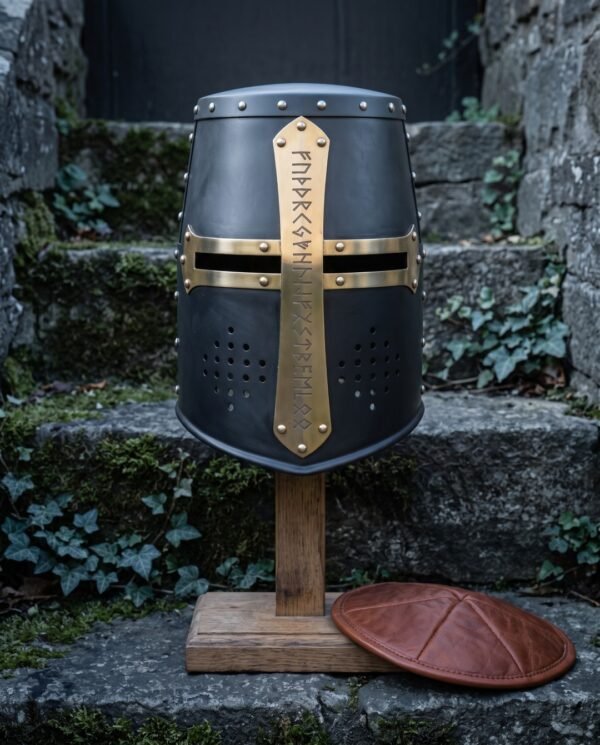 Duskwarden Hand Forged Blackened Steel Great Helm Crusader Helmet
Original price was: $409.00.$327.20Current price is: $327.20.
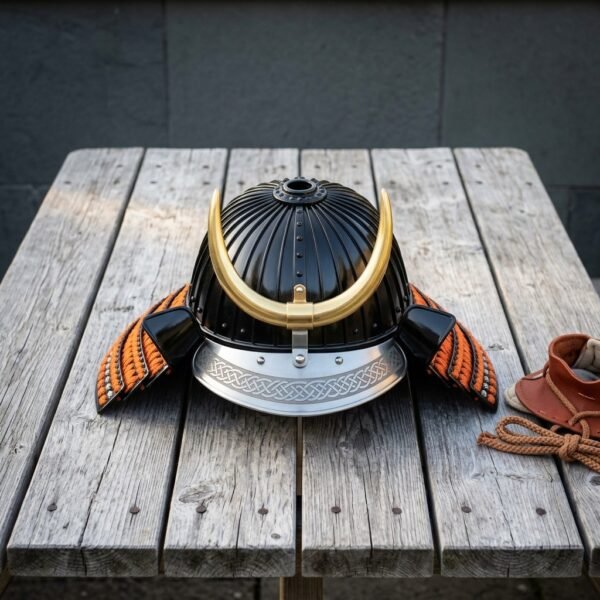 Nightcrest Hand Forged Steel Kabuto Samurai Helmet
Original price was: $399.00.$319.20Current price is: $319.20.
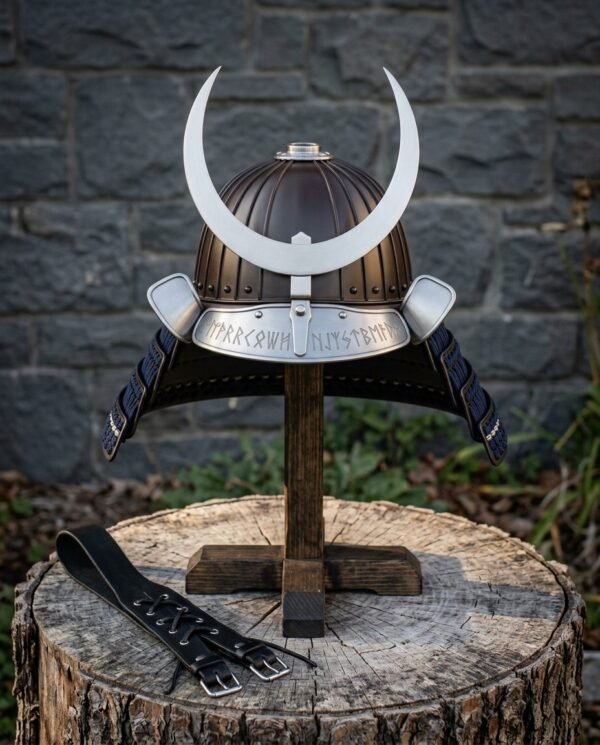 Moonhorn Hand Forged Steel Kabuto Helmet
Original price was: $429.00.$343.20Current price is: $343.20.
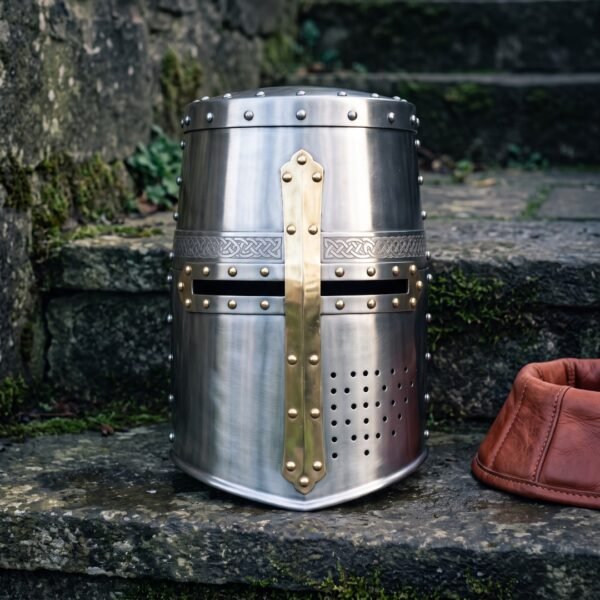 Grimward Hand Forged Steel Great Helm
Original price was: $409.00.$327.20Current price is: $327.20.