
Blog
Chainmail vs Plate vs Lamellar: Three Ways to Armour a Body

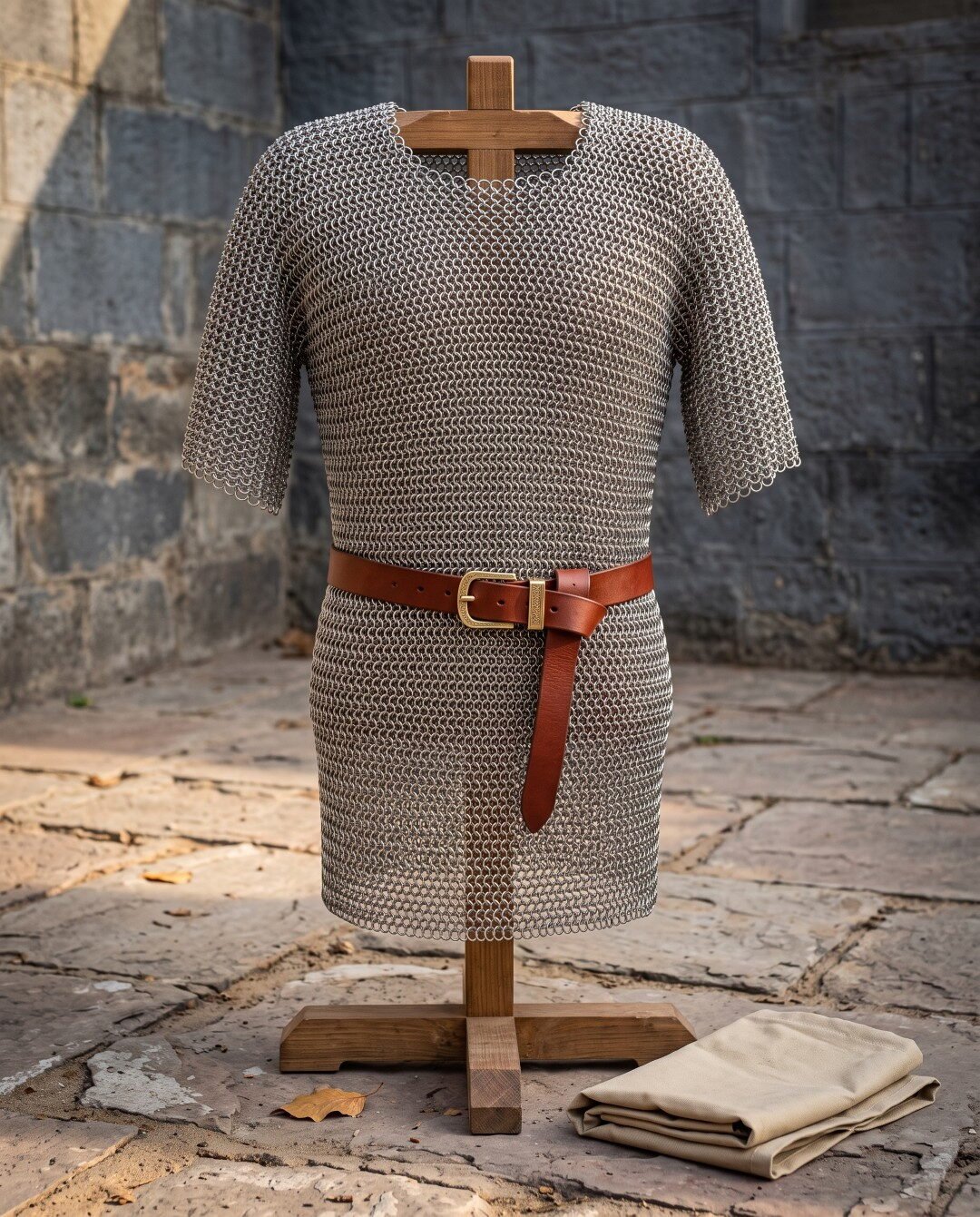
Chainmail is a mesh of rings that stops cuts and passes the shock straight through to you. Plate is a shaped shell that turns nearly everything and spreads impact, for considerably more money. Lamellar is a grid of small plates laced together, lighter than plate and stiffer than mail. For most buyers, mail is the right first purchase, and the other two are what you buy once you know why.
The longer answer depends on what you want the armour for, because a reenactment kit and a display piece pull in different directions. Below is a comparison by protection, weight, cost and upkeep, followed by a straight recommendation.
Quick comparison
| Chainmail | Plate | Lamellar and scale | |
|---|---|---|---|
| Construction | Interlinked rings, butted or riveted | Large shaped panels of sheet steel | Small plates laced or riveted into rows |
| Best against | Draw cuts and slashes | Cuts, thrusts and blunt force | Cuts and glancing thrusts |
| Weak against | Blunt impact and heavy thrusts | Little, but gaps open at the joints | Focused thrusts between plates |
| Fit | Forgiving, drapes to the body | Least forgiving, sized to a person | Fairly forgiving, adjusts by lacing |
| Movement | Very good | Good in a fitted harness, poor in a bad one | Good, stiffer at the waist |
| Cost | Lowest per square inch of cover | Highest | Middle |
| Rust risk | High, thousands of edges catch damp | Moderate, easy to wipe | High in the lacing channels |
| Best for | First kit, Norse and early medieval looks | Late medieval knight looks, display | Steppe, Byzantine and samurai looks |
Chainmail
Mail is the oldest of the three in European use and the most widely copied today. Each ring passes through four others in the standard four in one weave, so a cut on the surface has to break steel in several places at once before it reaches skin. That is why mail held its place for well over a thousand years, and why it looks right on almost any period from the Roman auxiliary through to the fifteenth century.
What it does well
Cutting attacks are what mail was built to defeat, and it does that job convincingly. A sword edge that would open an unarmoured arm skates across the rings instead. Mail also drapes, which means one hauberk fits a range of body shapes without a fitting session. For a first armour purchase this matters more than people expect, because a plate cuirass bought a size out is close to useless, while a mail shirt a size out is merely unflattering.
It is also easy to repair: a damaged section means opening a few rings and closing new ones, which anyone can learn in an afternoon with two pairs of pliers.
Where it falls down
Mail does nothing to spread impact. A mace or a hammer landing on a mail shoulder transmits almost the whole blow into the bone underneath, which the bone notices. This is why mail was always worn over padding, and why the padding was thick. A thrust from a narrow point can also push rings apart rather than cutting them, which is one reason the tapered thrusting sword and the armour piercing point became popular in the fourteenth century.
The other honest drawback is where the weight sits. A full hauberk hangs from the shoulders unless you belt it at the waist, and an hour unbelted will tell in your neck the next day.
Riveted against butted
Riveted mail has each ring closed with a small rivet through overlapping ends. Butted mail has ring ends pressed together with no fastening. Riveted is stronger, heavier, more expensive and historically correct. Butted is cheaper, lighter to make and fine for display, film work and events that do not allow contact. Many groups will not accept butted mail for combat, so check your society rules before buying if you intend to fight in it. Listings should state which weave they use, and if a listing does not say, assume butted. Nobody forgets to mention riveted.
Plate
Plate armour is what most people picture when they hear the word armour: a breastplate, a backplate, pauldrons over the shoulders, articulated arm and leg harness. It works on a different principle from mail. Instead of resisting the cut at the point of contact, a curved plate deflects the blow sideways and then spreads whatever energy is left across a wide area of the body.
What it does well
Nothing else on this list handles blunt force as well. A properly shaped cuirass takes a hammer blow and turns it into a bruise rather than a break. Glancing surfaces mean many strikes never bite at all. Plate also carries its own weight better than mail: a good harness rides on the hips and shoulders together, so a heavier suit can feel lighter over a long day than a lighter mail shirt. For display nothing else comes close. A polished cuirass on a stand fills a room in a way a folded mail shirt never will.
Where it falls down
Cost is the first problem. Plate takes far more skilled hours per square inch than mail, and the price says so plainly. Fit is the second. A breastplate is cut for a chest depth and a torso length, and a piece that does not match you will ride up, gap at the armpit or dig into the hip. Read the measurements on any listing and measure yourself rather than guessing from a shirt size. Heat is the third, because steel over padding traps everything your body produces.
Lamellar and scale
Lamellar is built from small rectangular plates, each pierced with holes and laced to its neighbours in overlapping rows. Scale is the close relative: small plates riveted or sewn to a backing so they overlap downwards like roof tiles. Both give you a stiff, layered surface without the cost of shaping large panels.
What it does well
Layering is the trick. Where two plates overlap you have double thickness, and a cut has to defeat both. Lamellar resists cuts about as well as mail and handles impact noticeably better, because each plate spreads the load across its own area before passing it on. Lose a plate and you relace it, rather than rebuilding a panel. Visually it is distinctive too: lamellar reads as steppe, Rus, Byzantine or samurai rather than western knight, so it is the obvious choice if that is the look you are after.
Where it falls down
The lacing is the weak point in every sense. Cords wear, they rot if stored damp, and they trap moisture against the steel. A lamellar shirt needs more attention than a cuirass and about the same as mail. A narrow thrust can also find the seam between plates in a way that it cannot on a solid breastplate. Fit is adjustable but fiddly, since most suits use side lacing and shoulder straps that take patience to set the first time.
The layer that goes under all three
None of these systems is meant to be worn against skin. A padded garment, called a gambeson or an aketon depending on period and cut, absorbs impact that the armour transmits, stops the metal chafing, and holds the armour off the body so air can move. Buying mail without padding is the most common mistake we see. If your budget is tight, buy a cheaper mail shirt and a good gambeson rather than the reverse.
Weight, cost and upkeep
Mail is heavy for what it protects, plate is heavy but protects everything, and lamellar sits between them. The figure on the listing matters less than where the weight sits: belt a hauberk at the waist, fit a cuirass to your actual chest depth, lace lamellar snug. Do that and an hour in armour is comfortable rather than an ordeal.
On cost, mail is the cheapest way to cover a large area of body and the most annoying to keep. Every ring is an edge that holds moisture, so a mail shirt left damp will bloom orange across a whole panel overnight. Plate is dearer to buy and easier to keep, because you can wipe a breastplate dry in two minutes. Lamellar sits between the two on price and closer to mail on upkeep, because the lacing channels stay wet. All three want the same treatment: dry after every use, a light film of oil, and storage somewhere with moving air. Our knife care guide covers the oiling principle in more depth, and it applies to armour steel exactly as it does to a blade.
What we carry
Ransack Viking stocks all three systems. The chainmail armour range runs from coifs and gauntlets up to knee length hauberks in butted mild steel, including blackened finishes. The plate armour range covers cuirasses in 16 and 18 gauge mild steel, some with articulated pauldrons and fauld, plus fully articulated gauntlets. Scale and lamellar armour holds scale shirts, pauldrons and full laced samurai suits. If you need the layer underneath, the brigandine and gambeson section has it, and the wider Viking armour category takes in medieval helmets and shields as well. Every piece is handmade in the Czech Republic the old way, then imported, inspected and shipped from our base in Memphis, Tennessee.
Choose this if
Choose chainmail if this is your first armour, you want Norse or early medieval, you are unsure of your exact measurements, or you want the most body covered for the money. Pair it with padding and a belt.
Choose plate if you want a late medieval knight look, you are building a display piece for a room, you know your chest and torso measurements, or you expect blunt impact and want it spread rather than transmitted.
Choose lamellar or scale if your impression is steppe, Rus, Byzantine or Japanese, or you want better impact handling than mail without the price and fitting demands of a harness.
The recommendation
Buy mail first. It fits almost anyone, it covers the most body for the money, it reads correctly across the widest range of periods, and it is the piece you will get the most use out of before you know exactly what direction your kit is going. Add a gambeson at the same time and treat that as one purchase. Then buy a helmet, because the head is the part everyone actually swings at and a bare head undoes everything else. Plate comes third, once you know your measurements and your period. Lamellar is a first purchase only if you already know your impression is eastern or Japanese, in which case skip straight to it.
For the background on how these systems were used, our piece on Viking armour explained covers the Norse end of it, what Viking helmets looked like deals with the head, and round shield against kite shield handles the piece of defensive kit that did more work than any of the three above.
Whichever you pick, mail is the one that punishes neglect, and the routine is in caring for mail. The head is usually the next purchase, covered in how to buy a Viking helmet.
Questions people ask
Is chainmail actually good protection?
Against cuts, yes, which was most of what it ever faced. A four in one weave forces an edge to break several rings at once, which most sword cuts cannot do. Against blunt impact it does very little on its own, which is why it was always worn over thick padding. Judge mail on cut resistance and treat the padding underneath as part of the same system.
What is the difference between butted and riveted mail?
Riveted mail closes each ring with a rivet through overlapping ends, so the ring resists being forced open. Butted mail simply presses the ends together. Riveted is stronger, heavier and dearer, and most combat societies require it. Butted is lighter on the wallet and perfectly good for display, photography and events with no contact. Check the listing, because the two look identical in a photograph taken from three feet away.
How heavy is a full plate harness?
Surviving field harnesses generally fall in a range that a fit adult can walk, run and mount a horse in, and the weight is spread across shoulders and hips rather than hanging from one point. That distribution is why plate often feels easier over a long day than a mail shirt covering less of the body. Fit matters far more than the figure on the label.
Do I need a gambeson under armour?
Yes, for any of the three. Padding absorbs the impact that mail and lamellar pass straight through, stops steel chafing your skin, and holds the armour away from the body so you do not overheat as fast. Wearing mail directly over a shirt is uncomfortable within minutes and offers a fraction of the real protection.
How do I stop armour rusting?
Dry it fully after every use, wipe a light film of oil over the surface, and store it somewhere with air movement rather than sealed in a bag. Mail and lamellar need more attention than plate because rings and lacing channels hold moisture. Never put damp armour away in a plastic tub, which is how most mail shirts are quietly ruined.
Which armour is best for reenactment?
Start with a mail shirt, a gambeson and a helmet, in that order of priority, then check your group rules on riveted mail before you buy. That combination covers the widest range of impressions from the eighth century to the thirteenth, fits without a fitting session, and can be added to later. Plate and lamellar are better second purchases once your period is settled.
Shop the range
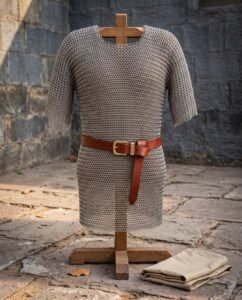 Ringmantle Hand Made Mild Steel Chainmail Hauberk | Butted Round Wire Rings | Short Sleeves and Thigh Length Skirt | Norse Reenactment Gift | RK-1435
 Ringward Hand Forged Chainmail Mitten Gauntlets with Tooled Leather Cuffs & Knotwork Buckle Plates | Norse Reenactment Gift | RK-1470
 Ravenmail Hand Forged Blackened Chainmail Coif | Butted Mild Steel Mail | Integral Ventail, Bright Ring Face Course and Raven Strap | Viking Gift | RK-1480
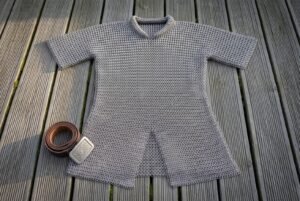 Ringwarden Hand Made Butted Chainmail Hauberk | Thigh Length with Short Sleeves | 9 mm Mild Steel Rings and Split Skirt | Norse Reenactment Gift | RK-1519
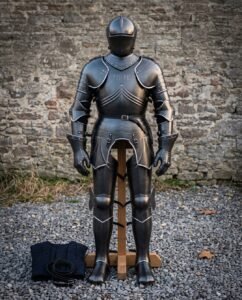 Nightplate Hand Forged Steel Full Suit of Plate Armour | Blackened 18 Gauge | Articulated Pauldrons Gauntlets and Sabatons | Medieval Display Gift | RK-1551
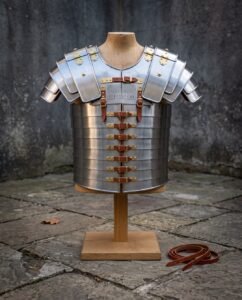 Legiondrake Hand Forged Steel Lorica Segmentata Cuirass | 18 Gauge Banded Plate | Brass Buckles and Leather Straps | Roman Reenactment Gift | RK-1510