
Broadsword is a word used loosely, so here is the honest version. In the sources that use it, a broadsword is a wide straight double edged blade meant for cutting, as against the narrow thrusting blades that came later. The Scots used the term for their basket hilted swords in the seventeenth and eighteenth centuries, and it was later applied backwards to the wide Viking and medieval blades that share the profile. Both sit on this page. They are different objects with the same job, which is putting a broad edge through a target with a swing rather than a poke.
Blades here run 27 to 34 inches with overall lengths of 34 to 43 inches, in 1095 high carbon hardened to 54 to 58 HRC or forge welded Damascus of 1095 and 15N20 at 58 to 60 HRC. Listed weights sit between 2 lb 12 oz and 3 lb 9 oz. Hilts split between short cruciform guards with brazil nut and lobed pommels, and full basket hilts in polished or blackened steel with red liners and brass rivets. Every one ships with a fitted scabbard.
Decide first whether you want a cage around your hand. Buying a first sword covers the rest. The rest follows.
Free US shipping
On most pieces. Heavier and oversized ones carry a flat charge.
Hand Forged
Heated, hammered and ground by hand.
Engraving available
Names, dates or Norse runes on most pieces.
Ships from Chicago
Inspected and dispatched from our Chicago warehouse. No import duty, no customs delay on US orders.
Broadswords
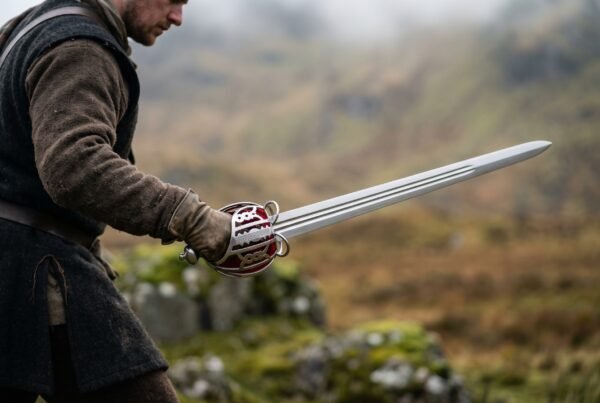
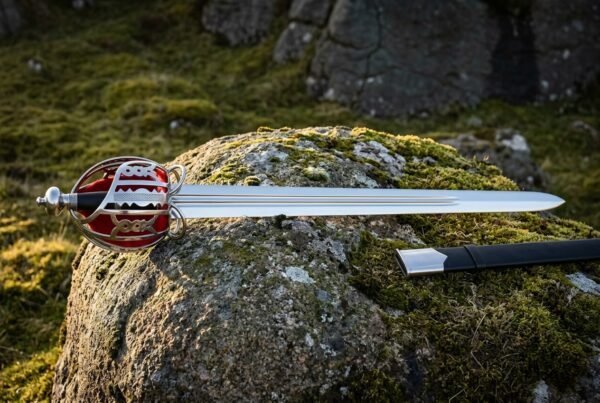
Bramblehilt Hand Forged 1095 Steel Basket Hilt Broadsword | 38 Inch Overall with a 32 Inch Blade | Pierced Steel Basket, Red Liner and Black Scabbard | Highland Collector Gift | RK-1738
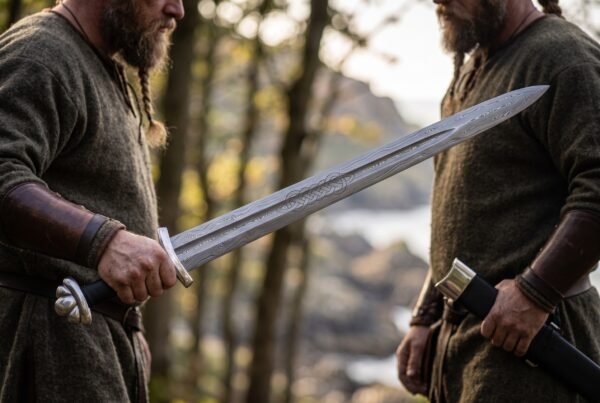
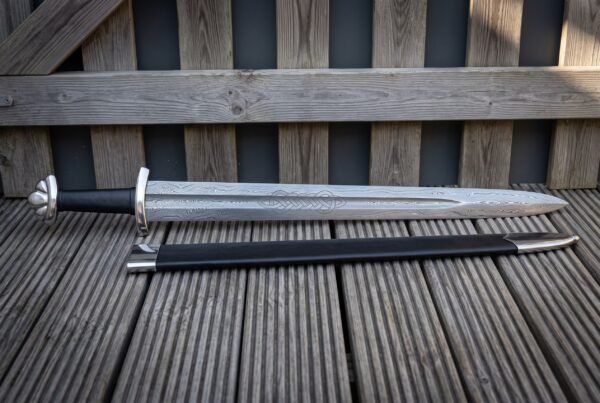
Knotwake Hand Forged Damascus Viking Broadsword | 34 Inch Overall Length | Etched Knotwork Blade with Black Grip and Lobed Pommel | Norse Collector Gift | RK-1922
Original price was: $619.00.$526.15Current price is: $526.15.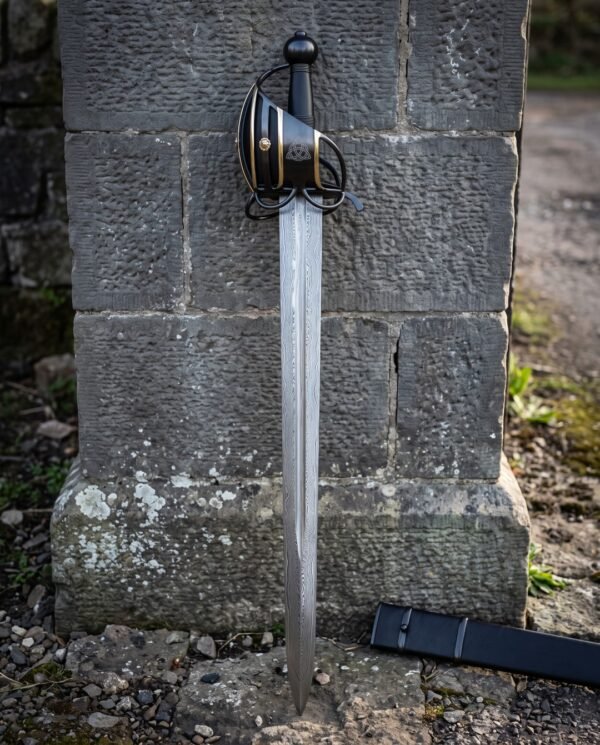
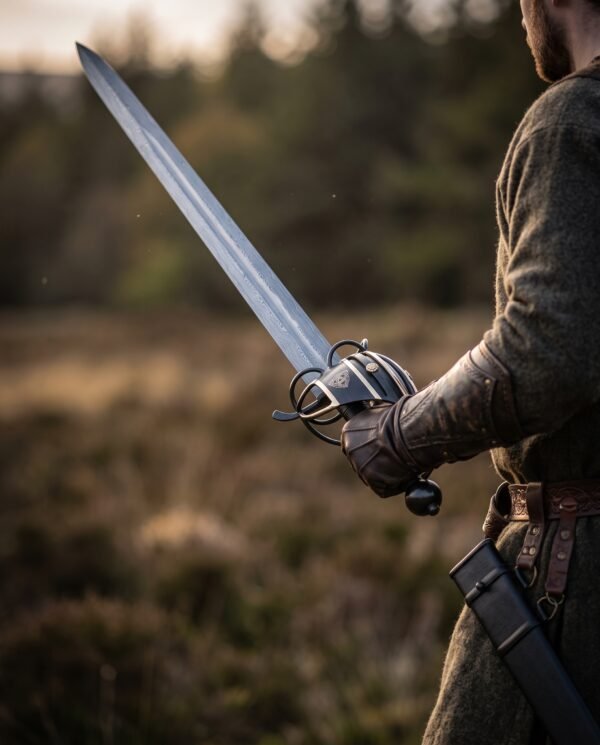
Cagebrand Hand Forged Damascus Basket Hilt Broadsword | 38 Inch Overall | Blackened Basket and Brass Banding with Etched Triquetra Panel and Black Scabbard | Highland Gift | RK-2104
Original price was: $549.00.$466.65Current price is: $466.65.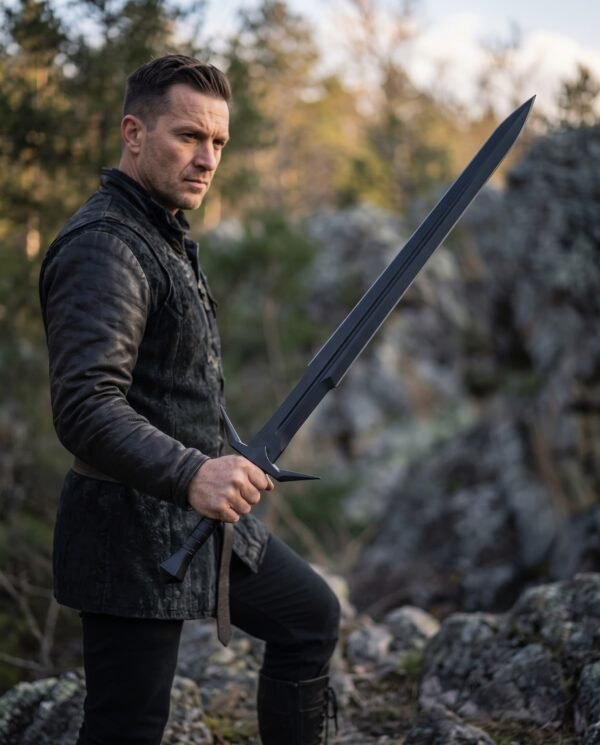
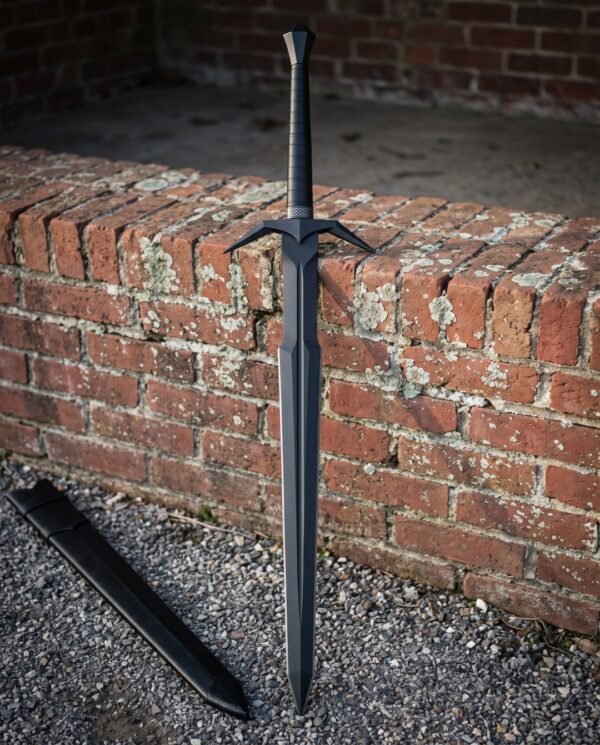
Gloomridge Hand Forged 1095 Steel Black Broadsword | 38 Inch Overall with 28 Inch Diamond Section Blade | Swept Guard, Ribbed Grip and Fitted Black Scabbard | Warrior Gift | RK-1959
Original price was: $449.00.$381.65Current price is: $381.65.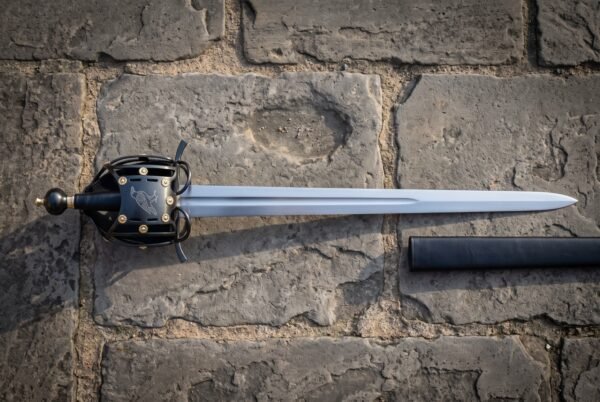
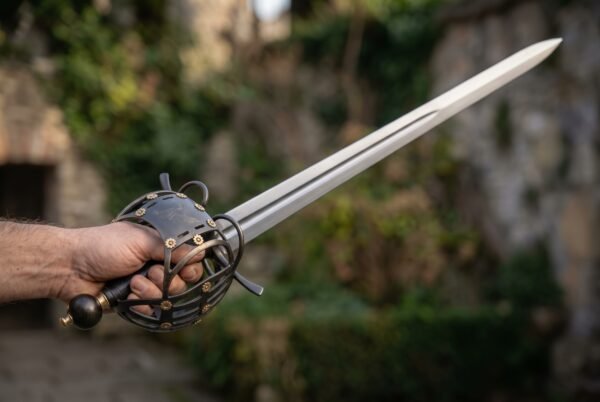
Nightcage Hand Forged 1095 Steel Basket Hilt Broadsword | 37 Inch Overall | Blackened Cage Guard and Brass Rosette Rivets with Etched Raven and Black Scabbard | Norse Gift | RK-2114
Original price was: $449.00.$381.65Current price is: $381.65.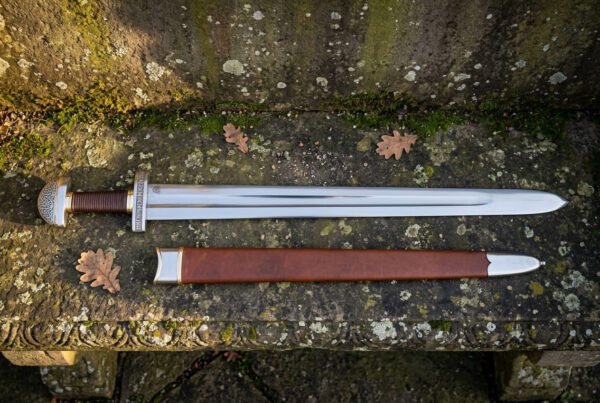
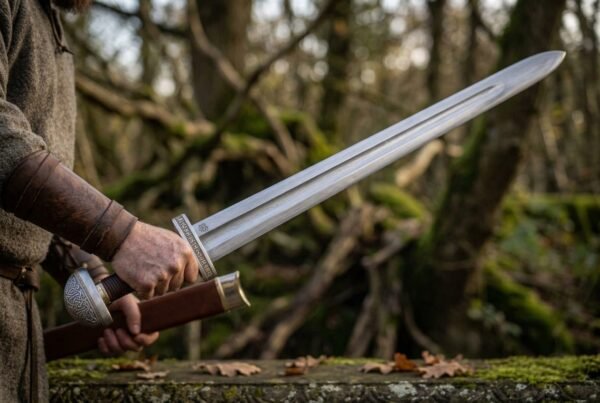
Wyrmcoil Hand Forged High Carbon Steel Viking Broadsword | 36 Inch Overall with 30 Inch Blade | Norse Collector Gift | RK-1240
Original price was: $465.00.$395.25Current price is: $395.25.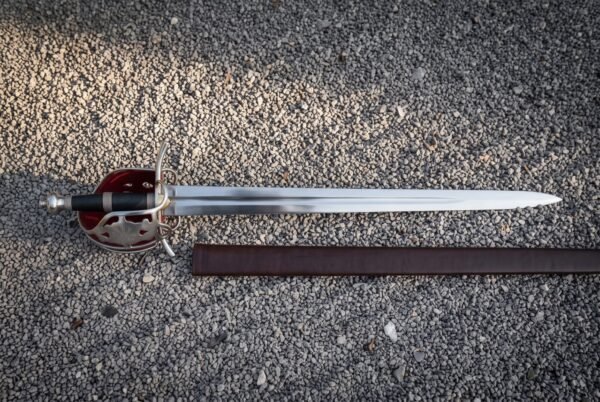
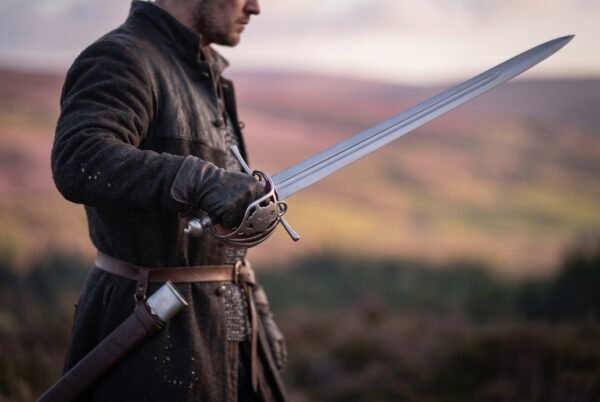
Crimsoncage Hand Forged 1095 Steel Basket Hilt Broadsword | 38 Inch Overall | Pierced Steel Shell Guard with Red Liner, Wire Bound Grip and Brown Leather Scabbard | Highland Gift | RK-2110
Original price was: $449.00.$381.65Current price is: $381.65.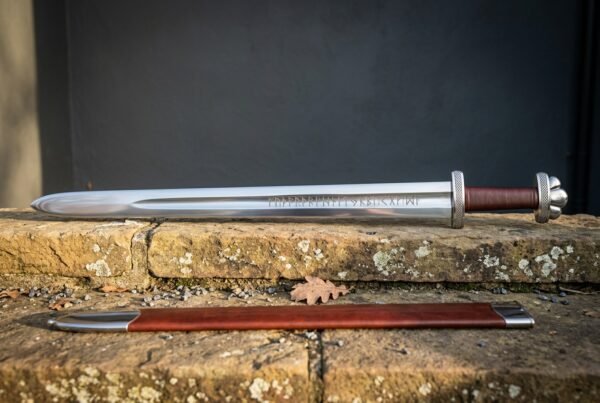
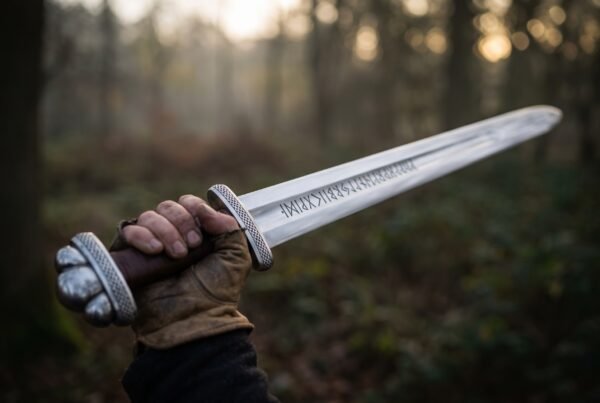
Stonerune Hand Forged 1095 High Carbon Steel Runic Broadsword | Norse Collector and Display Gift | RK-1258
Original price was: $565.00.$480.25Current price is: $480.25.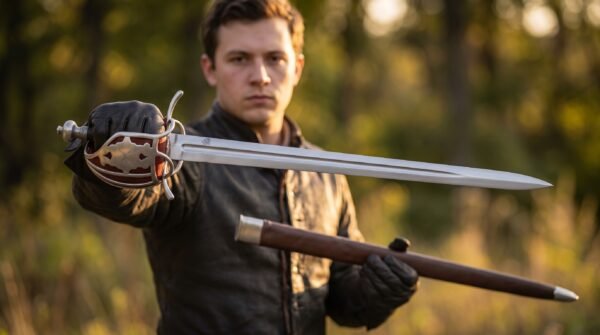
Emberguard Hand Forged 1095 Steel Broadsword with Pierced Shell Guard | 37 Inch Overall and 31 Inch Blade | Helm of Awe Cut Shell and Red Panels and Knuckle Bow | Collector Gift | RK-2135
Original price was: $449.00.$381.65Current price is: $381.65.What a broad blade is for
A wide blade cuts better than a narrow one and thrusts worse. That is the whole trade, and every broadsword on this page sits on the cutting side of it. Width does two things. It puts more steel behind the edge, so the edge is supported and does not fold when it meets bone or a shield rim. It also lets the smith grind a shallow bevel, and a shallow bevel with a broad body behind it is what separates a blade that bites from one that bounces.
The cost is mass in the wrong place. A wide blade that runs the same width to the tip would be exhausting to use, so every one of these tapers, some gently and some hard, and most have steel removed from the middle of the flat where it does the least work. That is the fuller, and it is the single most misunderstood feature on a sword. It is not a blood groove. It is a stiffening rib in reverse, the same trick as an I beam, taking weight out of the centre while leaving the edges and the spine where the strength is.
The basket hilt answers a different question. Once mail and plate stopped being worn on the arms, the hand became the easiest thing on a swordsman to hit, and a crossguard does little about that. So the Scots and the English built a cage. Bars, shell plates and a knuckle bow running from the guard to the pommel, enclosing the hand and adding enough weight at the hilt to balance a long blade back toward the grip.
The broadswords in this collection
Nine swords, splitting almost evenly between the cruciform Norse and medieval pattern and the Scottish basket hilt. Prices run from 389 to 619 dollars and the whole range ships with a fitted scabbard.
Cruciform blades
The longest sword on the page is a 43 inch runic broadsword with a 34 inch blade, 2.2 inches at the shoulder and 5.5 mm thick at the guard, carrying an engraved and darkened Elder Futhark inscription running along the fuller. Deep red leather over a hardwood core, a straight steel guard and a peened pommel, at about 3 lb 9 oz, and it is the heaviest thing here. Beside it sits a 36 inch Viking pattern with a 30 inch blade, 2.1 inches at the guard, a wide shallow fuller running most of the length, and a hilt in brown leather with a wound brass wire wrap over cord risers between a solid brass guard and a lobed brass pommel, at about 2 lb 13 oz.
Basket hilts
Five, and they are the reason this page exists. They run to 37 or 38 inches overall with blades of 30 to 32 inches, all with grips of about 4 inches enclosed by the cage. One is polished throughout with pierced and chiselled shell plates, a knuckle bow, side bars and a red liner behind the steel. Another blackens the bar basket and pommel, fits brass rosette rivets and a brass ferrule, and etches a Norse raven into the guard plate. A third uses a pierced shell with red backing panels and a side ring, a Helm of Awe stave cut into the lower shell, a black leather grip bound with two bands of silver wire and a faceted ball pommel. The red liners are not decoration. They are what a real basket hilt has, a lining that keeps the bars off your knuckles.
Damascus blades
Two, both forge welded from 1095 and 15N20 and hardened to 58 to 60 HRC. The shorter is a 34 inch Viking pattern with a 27 inch blade 2.2 inches at the guard, a smooth black single hand grip, a short straight guard and a polished brazil nut pommel, with a large cut interlace knot on the flat of the etched blade and both edges sharpened, at about 2 lb 12 oz. The other is a basket hilt at 38 inches with a 31 inch blade, blackened basket with polished brass banding, a brass rosette rivet, a ball pommel and an etched triquetra panel on the outer guard plate.
The blackened diamond section blade
One sword here has no fuller at all. Instead the blade is a flattened diamond with a raised central ridge running down it, 28 inches on a 38 inch overall length, blackened along with the guard and set against a contrasting pommel. The guard is a steel crossbar swept toward the hand with flared spade terminals, and the ribbed grip is sized for a hand and a half hold. A diamond section is stiffer than a fullered blade of the same weight and it thrusts better, which makes this the outlier on a page of cutters.
Sizes, steel and weights across the range
Every figure below comes from the specification panel of a piece on this page. These are forged and ground by hand, so read them as what to expect rather than as a guarantee to the millimetre.
| Hilt type | Overall length | Blade length | Steel and hardness | Blade section | Listed weight | Price |
|---|---|---|---|---|---|---|
| Pierced shell guard, knuckle bow | 37 in | 31 in | 1095 at 54 to 58 HRC | Broad straight double edge | Not listed | 389 dollars |
| Swept crossguard, hand and a half | 38 in | 28 in | 1095 at 54 to 58 HRC | Flattened diamond, no fuller | Not listed | 399 dollars |
| Blackened bar basket | 37 in | 30 in | 1095 at 54 to 58 HRC | Central fuller | Not listed | 409 dollars |
| Polished shell basket, red liner | 38 in | 31 in | 1095 at 54 to 58 HRC | Long fuller | Not listed | 429 dollars |
| Cruciform, brass fittings | 36 in | 30 in | 1095 at 56 to 58 HRC | Wide shallow fuller | About 2 lb 13 oz | 465 dollars |
| Pierced steel basket, red liner | 38 in | 32 in | 1095, hardness not listed | Not listed | Not listed | 529 dollars |
| Blackened basket, brass banding | 38 in | 31 in | Damascus at 58 to 60 HRC | Double edged, long taper | Not listed | 549 dollars |
| Cruciform, red leather grip | 43 in | 34 in | 1095 at 53 to 55 HRC | Fullered, 5.5 mm at the guard | About 3 lb 9 oz | 565 dollars |
| Cruciform, brazil nut pommel | 34 in | 27 in | Damascus at 58 to 60 HRC | Double edged, etched flat | About 2 lb 12 oz | 619 dollars |
Three listings give a weight and they bracket the page neatly. Around 2 lb 12 oz for a 34 inch sword, about 2 lb 13 oz for a 36 inch one and about 3 lb 9 oz for the 43 inch runic blade. Anything unlisted on this page sits inside that spread.
Reach, balance and how these handle
Total length is a poor guide to how a sword feels. The 43 inch runic sword is the longest and heaviest here and it swings like it, with the mass out along the blade and a long arc. The 34 inch Damascus is a foot shorter and nearly a pound lighter, and it turns in the wrist.
Basket hilts feel different again. All that steel around the hand sits behind the guard, which pulls the balance point back toward your fist and makes a 31 inch blade feel shorter than it is. The trade is total weight and a fixed hand position, because once your hand is inside a cage you cannot slide it, choke up on the grip or change the angle much.
Grip length tells you what the sword expects. Four inches inside a basket is a single hand grip and nothing else. The hand and a half grip on the diamond section blade gives you room to add a second hand for a heavy cut, which is where the extra leverage lives.
Steel and hardness
Two steels run through the page. Plain 1095 high carbon is hardened to 54 to 58 HRC, which is where a long blade wants to be, hard enough to hold an edge and soft enough to flex rather than crack. Damascus of 1095 and 15N20 is forge welded, folded, ground and acid etched, hardened to 58 to 60 HRC, so it keeps an edge slightly longer and takes a little more work to bring back.
Two blades here list a figure a shade outside those bands, one at 56 to 58 and one at 53 to 55. That is normal on hand heat treated steel and the panels state what each blade was measured at rather than what the range says it should be. Practically, a couple of points of hardness on a sword this size is not something you will feel.
Neither steel is stainless. Both rust if left wet and both take a grey patina over years that does no harm.
Fullers, ridges and edges
Most of these blades are fullered. The fuller is ground into the flat, usually running from just below the guard to somewhere short of the point, and it removes weight from the part of the cross section that contributes least to stiffness. A fullered blade of a given weight is wider and stiffer than an unfullered one, which is exactly what a cutting sword wants.
The exception is the diamond section blade, which puts a raised ridge down the centre instead. That is the opposite approach, adding thickness at the middle rather than removing it, and it produces a stiffer point at the cost of a heavier blade for the same width. Thrusting swords are built this way. So are stage and display blades that need to survive being dropped.
Edges arrive ground and finished by hand. One listing states both edges are sharpened. These are not razors, because a very thin edge on a sword chips against anything hard, and a few passes on a stone will take any of them further if that is what you want.
Hilts, grips and pommels
Every sword here is full tang with the pommel peened over the end. That is the only construction worth having on a sword, because a peened tang cannot unscrew itself loose the way a threaded pommel nut can.
Grips run to leather over a hardwood core, some plain, some ribbed, some wire bound. The brass wire wrap over cord risers on the Viking pattern is the traditional treatment and it is the best of the lot in the hand, because the risers give your fingers something to index against. Wire bound grips inside a basket do the same job in a smaller space.
Pommels are counterweights first and decoration second. The brazil nut and the lobed brass pommel are Norse and early medieval forms. The faceted block and the ball with a button belong to the basket hilts, where a heavy ball at the back of the hand balances a long blade. Blackened steel, polished steel and brass all appear, and brass will darken over months and come back with metal polish on a cloth.
Scabbards, care and storage
Every sword ships with a fitted scabbard, most leather over a wooden core with metal at the throat and chape. One carries a belt hanger. The wooden core holds the shape and keeps the blade off the stitching.
Carbon steel and leather are a poor long term pair, because leather holds moisture and its tanning agents are mildly acidic. Wipe the blade dry, put a light film of mineral or camellia oil on it, and if the sword is going to sit for months, store it out of the scabbard or on a horizontal rack with the scabbard beside it.
Fingerprints do more damage than weather. A print left on a polished blade will etch itself in over a few weeks, so handle the polished pieces with a cloth. Grey patina is stable and can be left alone. Orange spotting lifts with a light abrasive and oil before it pits. Blackened finishes should be left alone entirely, because polishing takes the finish off, and etched Damascus fades under hard polishing, so oil it and leave it.
Baskets need a look at from time to time. Dust collects inside a pierced shell and behind a liner, and a soft brush gets it out before it holds damp against the steel.
Engraving
Several of these already carry cut or etched work, from an Elder Futhark inscription along a fuller to a Helm of Awe on a shell guard, a raven on a guard plate and a triquetra panel on a basket. Further engraving is done in the United States after the piece arrives. The flat of the blade above the guard is the usual place on a cruciform sword, and on a basket hilt the outer guard plate is the obvious panel.
Text engraving is 19 dollars, a symbol is 39 dollars and a family crest is 49 dollars. Elder Futhark is a phonetic alphabet rather than a code, so a name is transliterated by sound and there is no rune for the letter C. Engraving is permanent and an engraved piece cannot be returned, so send the exact spelling and read it twice.
Where these come from and how they ship
Ransack Viking is a US company based in Chicago, Illinois. The pieces are handmade in the Czech Republic, then imported, inspected and shipped from Chicago. Engraving is done in the US after arrival.
Swords ship boxed with the scabbard. Two swords of the same name will differ slightly in grind, etch figure and leather colour, because two people made them on two different days.
How to choose
First sword and you want the Norse look? Take the 36 inch cruciform in 1095 with brass fittings. It is the classic profile, the wire wrapped grip is the best hilt on the page and it sits under three pounds.
Want a Scottish basket hilt? Start with the polished shell and red liner. Polished steel and a red lining photograph better than blackened work and the pierced shell plates are where the craft shows.
Buying a display piece where the blade is the point? The Damascus with the brazil nut pommel. Etched pattern welding with a cut interlace knot on the flat reads from across a room, and at 34 inches it fits a wall that a 43 inch sword will not.
Related collections
- Viking swords, the northern cruciform family
- Basket and shell hilt swords
- Arming swords, the single hand medieval blade
- Damascus swords in forge welded 1095 and 15N20
- Longswords for two hands
- Claymores
- Sword stands and display fittings
- Scabbards and replacement sheaths
Guides worth reading first
- How to buy your first sword
- Display sword or battle ready: what the difference is
- Viking swords worth collecting
- The Ulfberht sword
- Damascus or high carbon steel: which blade should you buy
- Steel and hardness: what HRC numbers mean
Frequently asked questions
What makes a sword a broadsword?
A wide straight double edged blade built to cut rather than to thrust. The term was used for Scottish basket hilted swords and later applied backwards to the wide Viking and medieval blades with the same profile. Both are on this page.
What is the difference between a broadsword and a longsword?
Grip length, mostly. A broadsword is used in one hand, so the grip is short and the pommel is a counterweight. A longsword has a grip long enough for two hands and a longer blade to match. One sword here has a hand and a half grip, which sits between the two.
How heavy are these?
The listings that state a weight give about 2 lb 12 oz for the 34 inch Damascus, about 2 lb 13 oz for the 36 inch cruciform and about 3 lb 9 oz for the 43 inch runic sword. Nothing on this page is the ten pound sword of films.
What is the fuller for?
Stiffness for the weight. It removes steel from the middle of the flat, where it contributes least, and leaves the edges and spine where the strength is. It is not a blood groove, whatever you have been told.
Are these sharp when they arrive?
They arrive with a working edge, ground by hand, and one listing states both edges are sharpened. They are not razors, because a very thin edge on a sword chips against anything hard. A stone will take them further.
Why do the baskets have red liners?
Because a real basket hilt has one. The lining sits behind the bars and shell plates and keeps the steel off your knuckles. On this page it also gives the pierced work something to read against.
Should I buy 1095 or Damascus?
Take 1095 for the plainer, more historically honest sword and an edge that comes back fast on a stone. Take Damascus for the etched pattern and slightly longer edge retention. Neither is stainless and both want oil.
Where are these made?
Ransack Viking is a US company based in Chicago, Illinois. The pieces are handmade in the Czech Republic, then imported, inspected and shipped from Chicago, with engraving added in the US after arrival.
Basket hilts and the sidesword
If you like a protected hand but want a blade you can fence with, our HEMA sideswords cover that ground with ringed and barred hilts. Rapier versus sidesword helps if you are stuck between the two. The Brekavik basket hilt sword is the schiavona style piece in the HEMA line, on 51CrV4 spring steel.
Featured pieces
 Knotwake Hand Forged Damascus Viking Broadsword
Original price was: $619.00.$526.15Current price is: $526.15.
 Gloomridge Hand Forged 1095 Steel Black Broadsword
Original price was: $449.00.$381.65Current price is: $381.65.
 Emberguard Hand Forged 1095 Steel Broadsword with Pierced Shell Guard
Original price was: $449.00.$381.65Current price is: $381.65.
 Bramblehilt Hand Forged 1095 Steel Basket Hilt Broadsword
Original price was: $529.00.$449.65Current price is: $449.65.