
A felling axe cuts across the grain. A splitting axe drives along it. The difference sits in the cheeks. A felling head stays thin behind the edge so the steel slices into standing wood and keeps going, while a splitting head swells fast into a wedge that levers a round apart. Most of the heads on this page are felling profiles, thin at the bit with a high centreline and a convex grind, and they will fell and limb far better than they will burst a knotty round.
Sizes run from a 14 inch hand axe to a 30 inch double bit, with 20 inch and 28 inch hafts in between. Hafts are American hickory, ash and walnut, hung on a drifted tapered eye with a wooden wedge and a steel cross wedge. Heads are 1095 high carbon at 54 to 58 HRC, plus one forge welded Damascus of 1095 and 15N20 at 58 to 60 HRC. Listed head weights sit near 1.5 to 2 pounds.
If you want one axe for camp, take the 20 inch and keep it sharp. If you are dropping standing timber, take a 28 inch. Anything under about 16 inches stops behaving like a felling axe, and the axe against hatchet comparison covers where that line sits.
Free US shipping
On most pieces. Heavier and oversized ones carry a flat charge.
Hand Forged
Heated, hammered and ground by hand.
Engraving available
Names, dates or Norse runes on most pieces.
Ships from Chicago
Inspected and dispatched from our Chicago warehouse. No import duty, no customs delay on US orders.
Splitting & Felling Axes
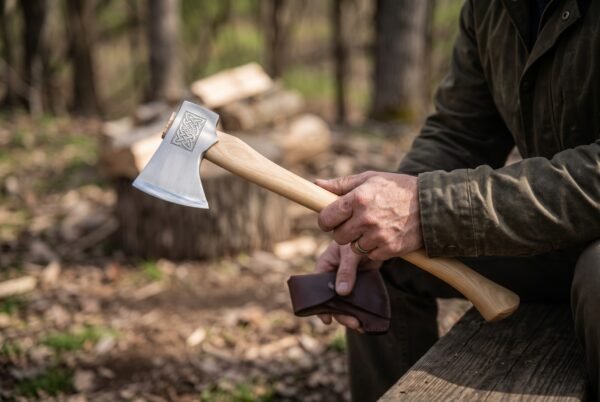
Timberrune Hand Forged 1095 Carbon Steel Felling Axe | 4 Inch Bit | Chased Knotwork Cheek, Hickory Haft and Leather Blade Mask | Woodsman Gift | RK-1482
Original price was: $189.00.$151.20Current price is: $151.20.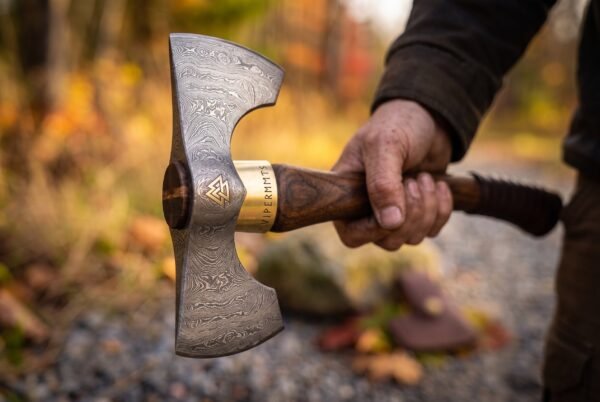
Twinbite Hand Forged Damascus Double Bit Felling Axe | 1095 and 15N20 at 58 to 60 HRC | Walnut Haft, Brass Collar and Leather Edge Cover | Woodsman Gift | RK-1453
Original price was: $289.00.$231.20Current price is: $231.20.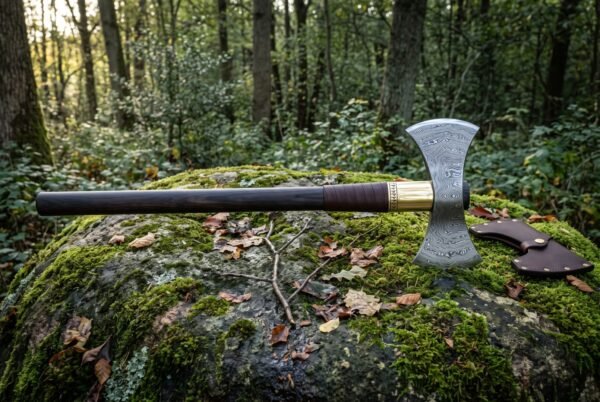
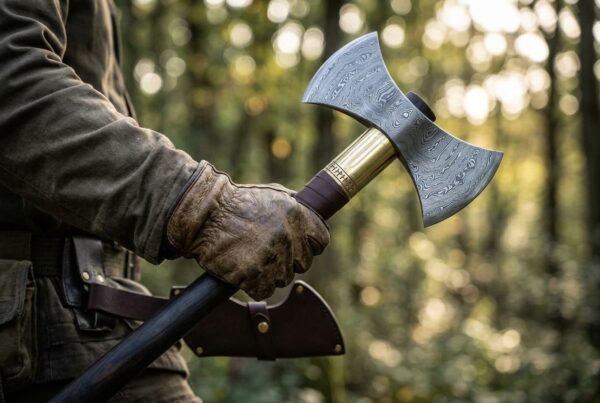
Twinbite Hand Forged Damascus Steel Double Bit Axe | 30 Inch Hardwood Haft | Damascus Head with Rune Engraved Brass Collar and Leather Sheath | Woodland Camp Gift | RK-1576
Original price was: $269.00.$215.20Current price is: $215.20.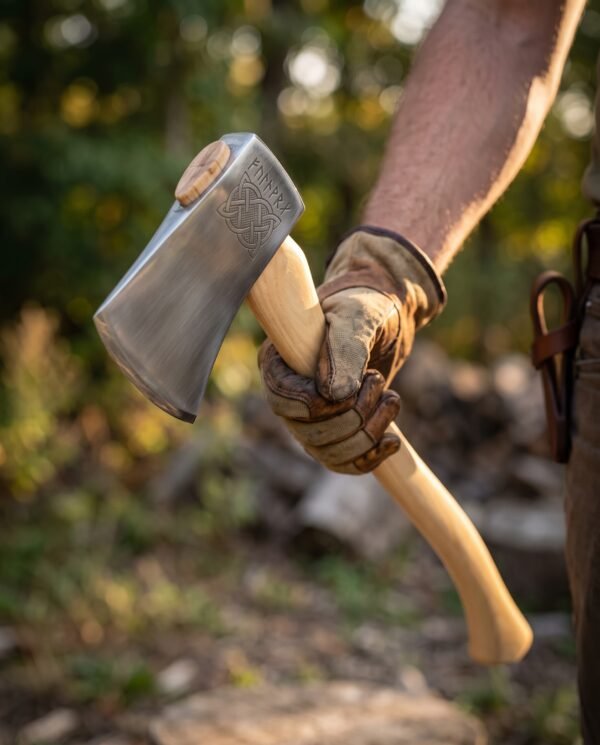
Ashfell Hand Forged 1095 Steel Felling Axe | Single Bit Forest Head | American Ash Handle, Knotwork Engraving and Leather Edge Cover | Woodsman Gift | RK-1464
Original price was: $229.00.$183.20Current price is: $183.20.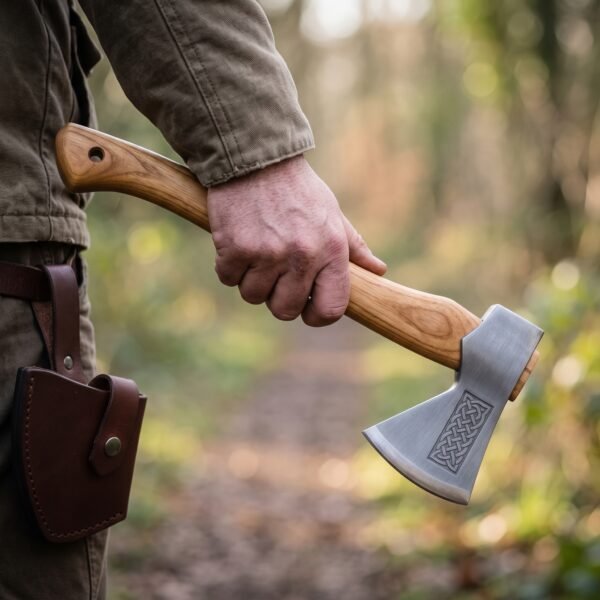
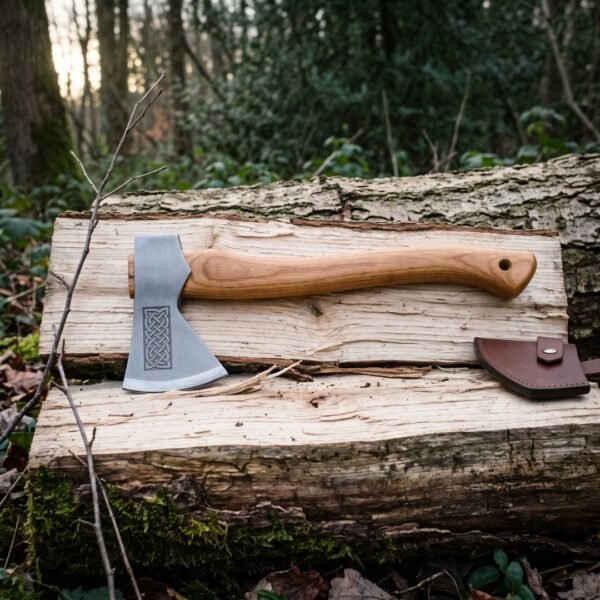
Birchbite Hand Forged 1095 Carbon Steel Viking Hand Axe | 14 Inch Hickory Handle | Celtic Knotwork Etched Cheek and Leather Blade Mask | Camp Craft Gift | RK-1490
Original price was: $169.00.$135.20Current price is: $135.20.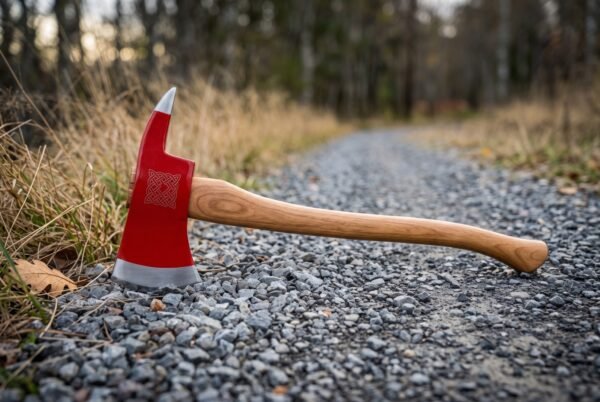
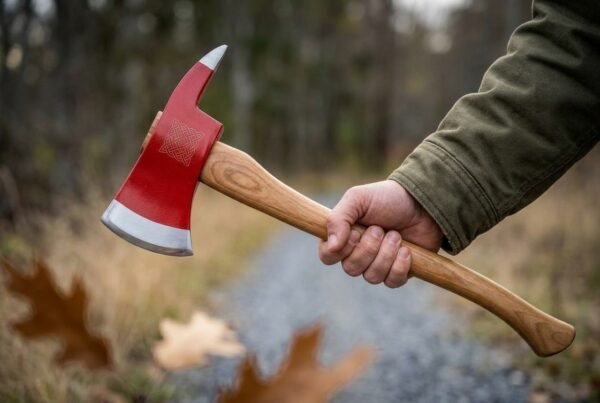
Emberbite Hand Forged 1095 Steel Pick Head Axe | 28 Inch Hickory Handle | Red Enamelled Head with Engraved Knotwork and Polished Bevel | Woodsman Camp Gift | RK-1555
Original price was: $189.00.$151.20Current price is: $151.20.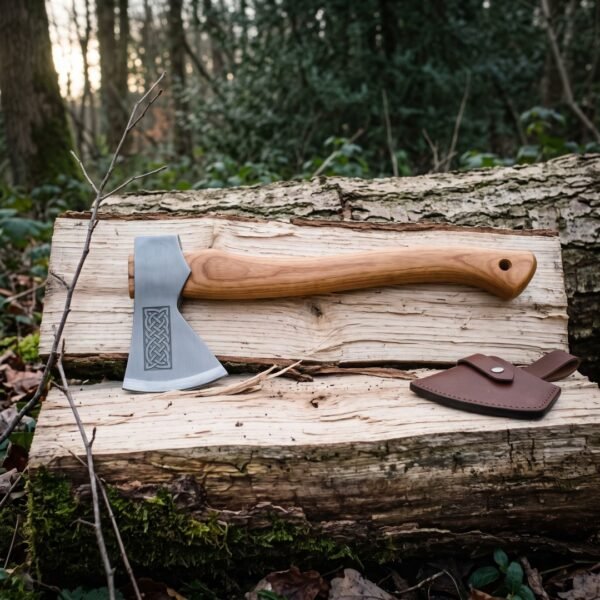
Barkbiter Hand Forged 1095 Steel Felling Axe | 20 Inch Hickory Handle | Knotwork Engraved Head and Leather Blade Mask | Camp and Bushcraft Gift | RK-1515
Original price was: $189.00.$151.20Current price is: $151.20.Why a felling head is thin and a splitting head is not
Wood does not resist an axe evenly. Across the grain it holds together and has to be severed fibre by fibre. Along the grain it is already half open and only needs to be pushed apart. Those are two different jobs, they want two different head shapes, and that is the whole reason axe patterns exist at all.
A felling head is thin behind the edge. The cheeks stay low and flat for an inch or more back from the bit, so the steel slices in and keeps travelling rather than stopping dead. Swung at a standing trunk it takes a clean chip out on every stroke. Put the same head into the end of a dry round and it buries itself, sticks, and leaves you levering it back out with your boot on the wood.
A splitting head does the opposite. It swells fast into a wedge, so the moment the edge is in the wood the cheeks start forcing the halves apart. It is poor at cross grain cutting for exactly the reason it is good at splitting. It stops early and spends its energy on friction.
The axes in this collection
Seven heads, hung on hafts from 14 to 30 inches. What separates them is length, whether the head carries one bit or two, and one piece that swaps plain carbon steel for pattern welded Damascus.
Short hafts and hand axes
The shortest piece here is a bearded hand axe on a 14 inch hickory haft, with roughly 4 inches of usable edge along the beard, satin flats and a bright edge bevel. A beard is the section of edge that hangs below the eye. It buys cutting length without adding head weight, and the hollow behind it lets you choke up and put a finger right under the head for close work. This is a camp axe. It limbs and points stakes, splits kindling well enough, and will not fell anything you would call a tree.
Above it sits a 20 inch hickory haft with a swell at the end and a lanyard hole, carrying a head of roughly 1.5 to 1.75 pounds with 4 to 4.5 inches of edge measured from the beard to the top corner. Overall it comes in near 20 to 21 inches. For anyone packing rather than working a woodlot, this is the most useful single axe on the page, because it is short enough to swing in one hand and heavy enough to mean it.
Full length felling axes
Two pieces sit at about 28 inches overall. The first is hickory hafted with a rounded bit of roughly 4 inches, a thin high cheek and a chased knotwork panel worked into the side of the head. The second has red enamelled cheeks with a polished bevel and horn tip, carries a head of about 2 pounds and about 5 inches of edge including the horn, and is differentially hardened so the bit runs 54 to 56 HRC while the body and eye stay softer.
There is also a felling axe on an American ash haft, left natural and unstained, with a single bit head that runs a thin high centreline into a bearded heel, polished cheeks and a bright ground bevel. Ash is springier than hickory and a little lighter for the same section. Some people prefer that on a long haft and some do not.
Double bit axes
Two axes here carry a bit at each end. The old argument for a double bit is simple. You grind one edge keen for clean wood and leave the other stouter for roots, dirty bark and anything you would rather not put a fine edge into, then swap ends instead of stopping to sharpen.
The plain steel double bit runs about 7 inches across both edges on a 30 inch dark stained hardwood haft of oval section, with a leather wrapped grip below the head, a brass collar at the eye and a head that is wedged and pinned. Complete weight is about 4 lb 6 oz, making it the heaviest piece on the page by a clear margin. Both cheeks carry acid etched knotwork and a rune band. That etch is a surface pattern in plain 1095 rather than pattern welded steel, and the listing says so plainly.
The Damascus head
One double bit head is forge welded Damascus of 1095 and 15N20, hardened to 58 to 60 HRC, layered and etched so the weld reads through the steel instead of sitting on the surface as a print. It is hung on a straight American walnut haft with a leather wrapped lower grip, a brass collar under the head engraved with an Elder Futhark line, and a brass valknut set into the cheek. One edge is ground keen and one is left stouter. At 289 dollars it is the most expensive piece here and the one most likely to end up on a wall.
Heads, hafts and lengths across the range
Every figure below comes from the specification panel of a piece on this page. Heads are forged and ground by hand and hafts are cut from natural timber, so read the numbers as what to expect rather than as a guarantee to the millimetre. Where a listing gives no figure, the table says so instead of filling the gap with a guess.
| Head steel and hardness | Head form | Overall length | Edge or bit width | Haft | Listed weight |
|---|---|---|---|---|---|
| 1095 at 54 to 58 HRC | Bearded hand axe, single bit, satin flats | About 14 in | About 4 in along the beard | American hickory, curved, swelled heel | Not listed |
| 1095 at 54 to 58 HRC at the edge | Single bit, satin ground bit, hammered upper cheek | About 20 to 21 in | About 4 to 4.5 in | American hickory, swell and lanyard hole | Head about 1.5 to 1.75 lb |
| 1095 at 54 to 58 HRC | Single bit felling, rounded bit, thin high cheek | About 28 in | About 4 in | American hickory, curved felling pattern | Not listed |
| 1095 at 54 to 56 HRC at the bit | Single bit felling, convex bit, red enamelled cheeks | About 28 in | About 5 in including the horn | Straight grain hickory | Head about 2 lb |
| 1095 at 54 to 58 HRC | Single bit felling, high centreline, bearded heel | Not listed | Not listed | American ash, curved forest axe pattern | Not listed |
| 1095 at 54 to 58 HRC at the edges | Double bit, etched knotwork and rune band | About 30 in | About 7 in across both edges | Dark stained hardwood, leather wrapped grip | About 4 lb 6 oz complete |
| Damascus of 1095 and 15N20 at 58 to 60 HRC | Double bit, one edge keen and one stouter | Not listed | Not listed | American walnut, leather wrapped lower grip | Not listed |
Picking a length you can actually swing
Haft length decides two things at once. It sets how much speed the head arrives with, and it sets how well you can place that head. Longer is faster and hits harder. Shorter is more accurate and much less tiring. Everything past that is preference.
A 14 inch haft is a one handed axe. Held near the end it works from a kneeling or crouching position for limbing and kindling, and it rides on the outside of a pack without anyone noticing the weight. A 20 inch haft is the awkward middle in the best sense. It is still swingable in one hand for someone with the shoulders for it, and it is far better with two hands on a stump.
At 28 to 30 inches you are into two handed work and standing timber. That length wants room around you and a clear arc, which is why a long axe is a bad idea in dense brush and a good one in a clearing. If you cannot take a full swing without touching a branch, you brought the wrong axe.
Steel and hardness
Two steels run through the range. The plain heads are 1095 high carbon hardened to 54 to 58 HRC, with one piece listed at 54 to 56 HRC at the bit and left softer through the body and eye. The Damascus head is forge welded 1095 and 15N20, hardened to 58 to 60 HRC. Neither steel is stainless and both take a grey patina that does no harm.
Fifty something on the Rockwell scale sounds low next to a pocket knife at 60, and it is deliberate. An axe edge takes impact rather than slicing pressure. Hardened much past 58 an axe bit stops rolling and starts chipping, and a chip is far worse than a roll. A rolled edge comes back with a file in a minute. A chip has to be ground out and takes real steel with it. Axe makers have been landing in the mid fifties for a century for that reason.
Hafts, eyes and wedges
Three timbers appear across these hafts. Hickory is the standard, being dense and stiff and hard to break while still absorbing shock. Ash is lighter and springier, which takes some of the sting out of a bad strike. Walnut is the softest of the three and sits on the piece least likely to be swung at a stump.
The heads are hung on a drifted tapered eye. The haft is driven through from below, a wooden wedge is driven down into the kerf to spread the wood against the walls of the eye, and a steel cross wedge is set across that to lock the lot in place. Two pieces here add a brass collar at the eye, which is partly decoration and partly a guard against the top of the haft splitting.
Sharpening a convex bit
An axe bit is not a knife edge and does not want a flat bevel. The grind is convex, curving from the cheek down to the edge, and that curve is what stops the head wedging in the cut. Grind a flat bevel onto it and the axe will feel sharper for a day and cut worse for the rest of its life.
Use a file for shaping and a stone for finishing. A ten inch bastard file, pushed from the cheek toward the edge with the head clamped or braced, takes out dings and restores the profile. Files cut on the push only, so lift on the return stroke. Once the edge is even, a round axe puck follows the same curve and takes the file marks out, coarse side first and fine side afterwards.
Do not put an axe head on a bench grinder unless you know exactly what you are doing. It is the fastest way to burn the temper out of a bit, and once the hardness has gone from the first two millimetres of edge no amount of sharpening brings it back. Heat is the enemy. Hand tools are slow, and slow is what keeps the heat treat intact.
Rust, masks and storage
Both steels here are carbon steel and both will corrode. Wipe the head dry when you finish, leave a light film of oil on the bare metal, and keep it out of the cover if the axe is going away for months. Leather holds damp against steel, which is the usual reason a carefully kept head still comes out spotted in spring. Most pieces here ship with a fitted leather mask or edge cover, and it is for transport and dry storage rather than for a wet axe.
The haft wants attention too. Boiled linseed oil, wiped on thin and left to soak in, keeps the wood from drying out and shrinking away from the eye. Do not varnish a haft. A sealed handle looks smart, then blisters your hands, because varnish is slick when wet and it hides the cracks you need to be able to see.
Engraving and gifting
Most of the heads here can be engraved after they arrive in the United States. Names, dates and short rune lines go onto the cheek or the flat of the poll, and several pieces already carry chased knotwork, an Elder Futhark band or an inlaid valknut. Text engraving is 19 dollars, a symbol is 39 dollars and a family crest is 49 dollars.
Elder Futhark is a phonetic alphabet rather than a cipher, so a name is written by sound rather than letter for letter, and there is no rune for the letter C. Send the exact spelling you want and read it back twice, because engraving is permanent and an engraved piece cannot be returned.
Where these axes come from and how they ship
Ransack Viking is a US company based in Chicago, Illinois. The pieces are handmade in the Czech Republic, then imported, inspected and shipped from Chicago. Engraving is done in the US after arrival.
How to choose
If you want one axe and you camp, take the 20 inch. It packs small, splits kindling and limbs cleanly, and it will handle a small standing tree if you are patient with it.
If you are cutting firewood from standing timber, take a 28 inch felling axe and accept that you also want a splitting maul for the rounds. One axe does not do both jobs well, whatever the sign on a hardware store rack says.
Browse related categories
- Bearded axes with the edge dropped below the eye
- Battle axes, lighter heads on longer hafts
- Dane axes, the long two handed Norse pattern
- Double headed axes across the wider range
- Throwing axes, light heads on plain hafts
- Tomahawks, the light American pattern
- Replacement axe handles and hafts
- Blacksmith tools for the shed
Guides worth reading first
- How to choose a Viking axe
- How to sharpen an axe with a file and a puck
- Axe care for the head, the haft and the edge
- How to remove rust from an axe head
- Damascus vs high carbon steel, and which to buy
- Steel and hardness explained
- Axe against hatchet, where the line actually falls
Frequently asked questions
What is the difference between a felling axe and a splitting axe?
A felling axe cuts across the grain and is thin behind the edge so it slices in and keeps moving. A splitting axe drives along the grain and swells fast into a wedge so it forces the halves apart. Most of the heads on this page are felling profiles.
Will these axes split logs?
Small dry rounds with straight grain, yes, especially if you strike near the edge of the round rather than the middle. A knotty round or a big green butt will bury a thin felling bit and leave you working it loose. For a winter of firewood you want a maul as well.
What haft length should I buy?
Fourteen inches for a packable camp axe used in one hand. Twenty inches for the best all round size if you carry it rather than work with it daily. Twenty eight to thirty inches for standing timber and two handed work, provided you have room for a full swing.
Why are the heads only hardened to the mid fifties?
Because an axe takes impact. Past about 58 HRC an edge stops rolling and starts chipping, and a chip costs you real steel to grind out while a roll comes back with a file in a minute. The mid fifties is where an axe bit holds an edge and survives a knot.
Do these axes arrive sharp?
Yes. Heads are ground and finished by hand and arrive with a working edge, and the covers are on for a reason. They are not shaving sharp, because a very thin edge on a chopping tool chips against a knot. A few passes with a puck will take any of them further.
How do I sharpen an axe without a grinder?
A ten inch bastard file for shaping, pushed from the cheek toward the edge, then a round axe puck to follow the convex curve and polish out the file marks. Keep the curve you find rather than filing a flat bevel onto it. Stay off powered wheels, which burn the temper.
Is the etched knotwork the same as Damascus?
No. On the etched heads the pattern is acid bitten into the surface of plain 1095, so it is decoration on top of the steel. On the Damascus head the pattern is the steel itself, made from layers of 1095 and 15N20 forge welded together, and it runs all the way through.
Where are these axes made?
They are handmade in the Czech Republic, then imported, inspected and shipped by Ransack Viking from Chicago, Illinois. Engraving is added in the United States after arrival.
Featured pieces
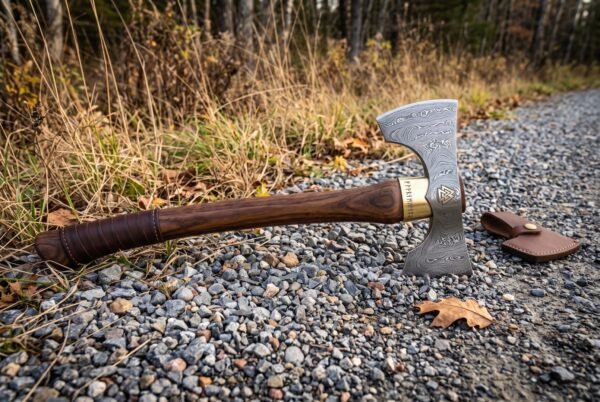 Twinbite Hand Forged Damascus Double Bit Felling Axe
Original price was: $289.00.$231.20Current price is: $231.20.
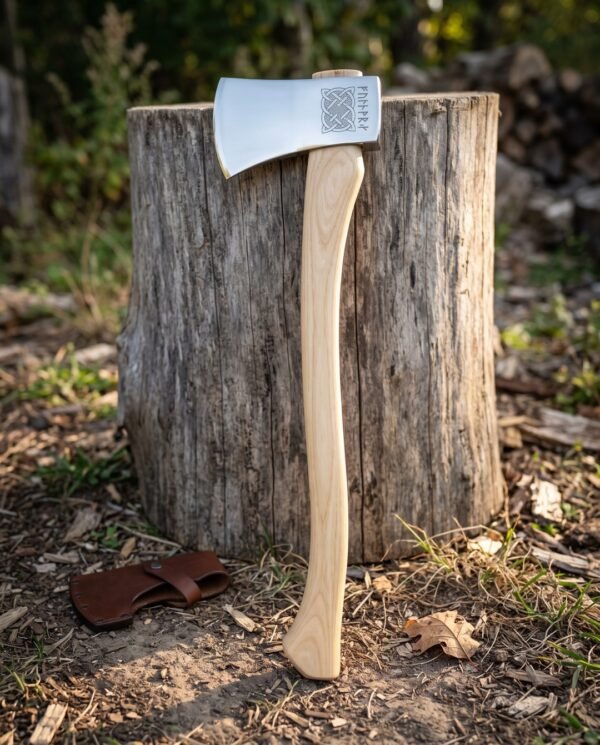 Ashfell Hand Forged 1095 Steel Felling Axe
Original price was: $229.00.$183.20Current price is: $183.20.
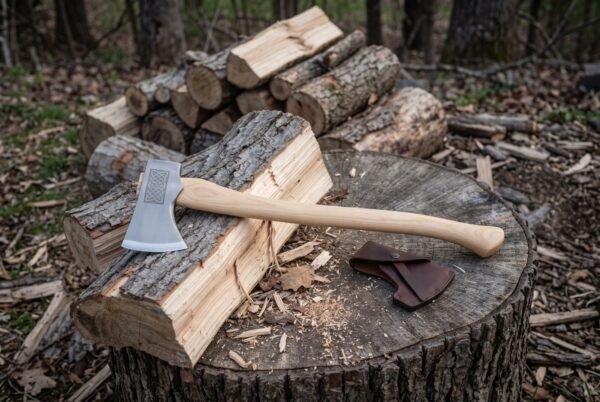 Timberrune Hand Forged 1095 Carbon Steel Felling Axe
Original price was: $189.00.$151.20Current price is: $151.20.
 Birchbite Hand Forged 1095 Carbon Steel Viking Hand Axe
Original price was: $169.00.$135.20Current price is: $135.20.