
Leather armour is cowhide thick enough to matter. Everything on this page is vegetable tanned cowhide, which is hide tanned with bark tannins rather than chromium salts, so it holds a moulded shape, takes dye and burnishing, and stiffens rather than going limp. Leather is sold by ounce weight, where one ounce is about 0.4 mm of thickness. The body pieces here run 8 to 10 ounce, which is roughly 3.2 to 4 mm, and the masks run 6 to 7 ounce because a face needs to be moulded rather than braced.
Eleven pieces. Four body armours, from a two plate cuirass through a studded version to a riveted brigandine with mild steel bands in 18 gauge behind the leather. Two pairs of pauldrons, two pairs of bracers, two plague doctor masks in brass mounted leather, and one complete lamellar suit of laced leather scales weighing about 25 pounds.
None of it is certified protective equipment. Every listing here says so, as they do across the armour range.
Free US shipping
On most pieces. Heavier and oversized ones carry a flat charge.
Hand Forged
Heated, hammered and ground by hand.
Engraving available
Names, dates or Norse runes on most pieces.
Ships from Chicago
Inspected and dispatched from our Chicago warehouse. No import duty, no customs delay on US orders.
Leather Armor
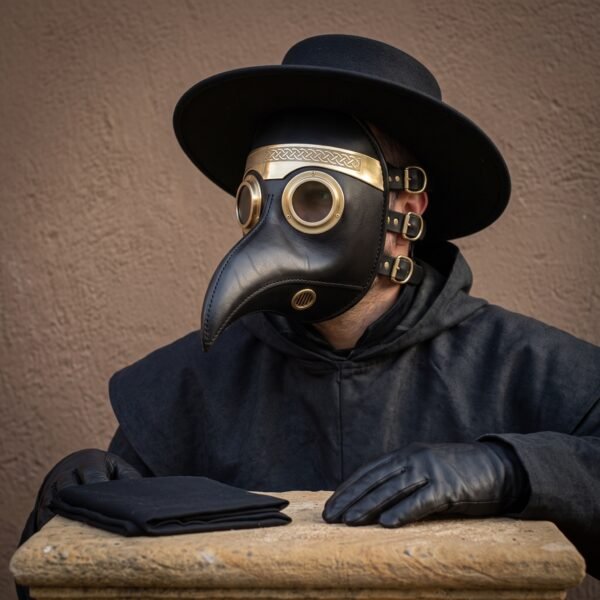
Ravenbeak Hand Made Leather Plague Doctor Mask with Brass Rimmed Lenses & Knotwork Brow Band | Halloween Costume Gift | RK-1524
Original price was: $189.00.$151.20Current price is: $151.20.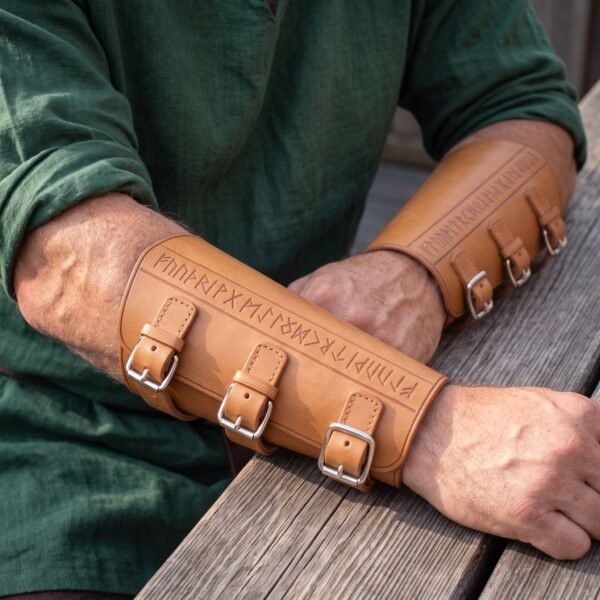
Runecuff Hand Made Leather Viking Bracers with Embossed Elder Futhark & Three Steel Roller Buckles | Norse Reenactment Gift | RK-1558
Original price was: $199.00.$159.20Current price is: $159.20.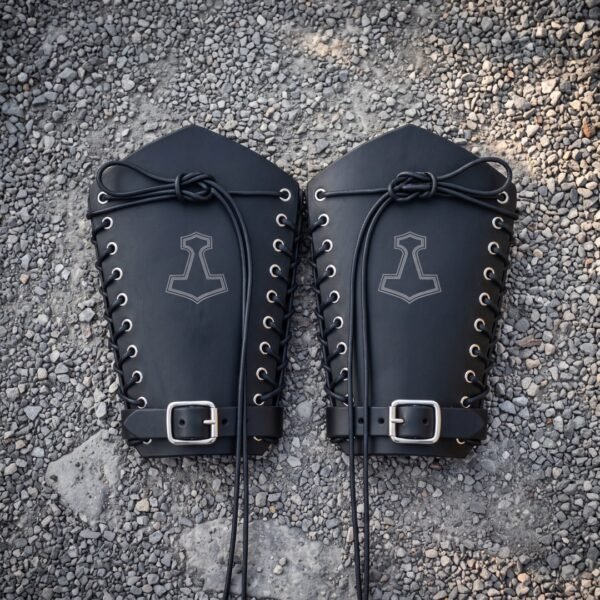
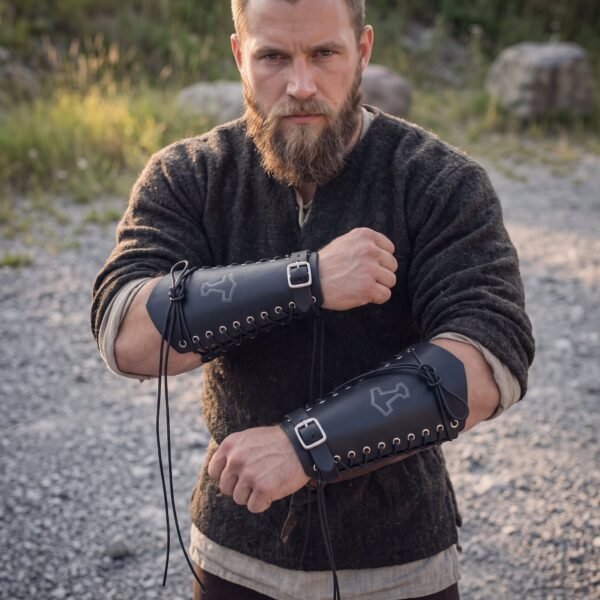
Stormcuff Hand Made Black Leather Viking Bracers with Mjolnir Engraving & Steel Eyelet Lacing | Norse Reenactment Gift | RK-1575
Original price was: $189.00.$151.20Current price is: $151.20.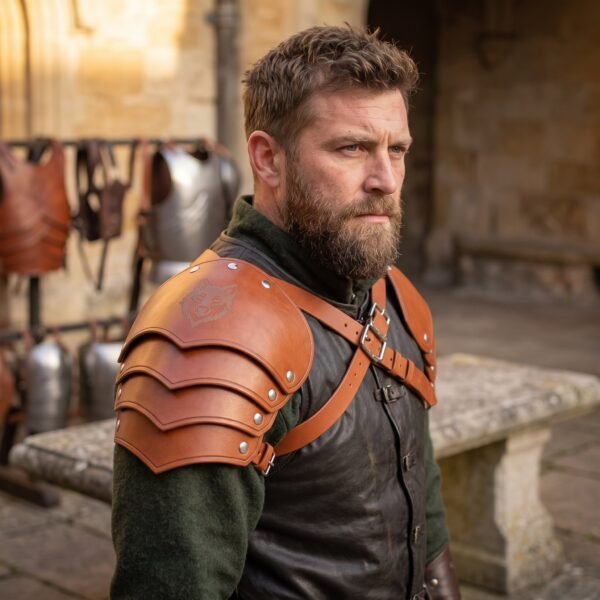
Wolfcrest Hand Made Veg Tanned Leather Pauldrons with Articulated Lames & Engraved Wolf Head Cap | Norse Reenactment Gift | RK-1574
Original price was: $229.00.$183.20Current price is: $183.20.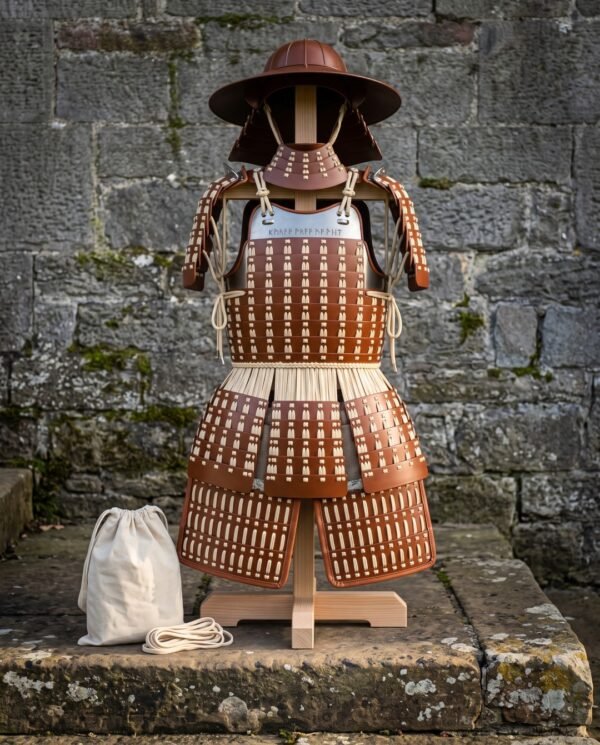
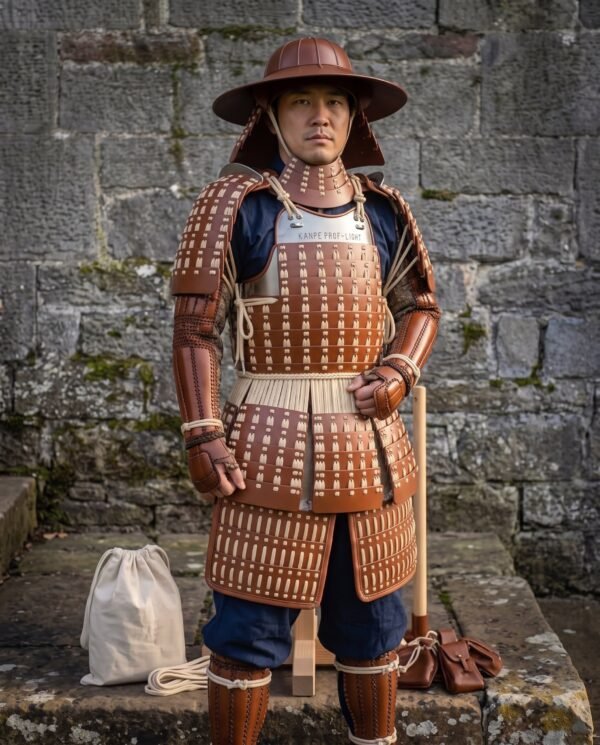
Silkscale Hand Made Leather Lamellar Samurai Armour Suit | Tan Hide with Cream Cord Lacing | Wide Brim Helmet Shoulder Guards Arm Guards Tassets Thigh and Shin Guards | Dojo Display Gift | RK-1556
Original price was: $1,290.00.$1,032.00Current price is: $1,032.00.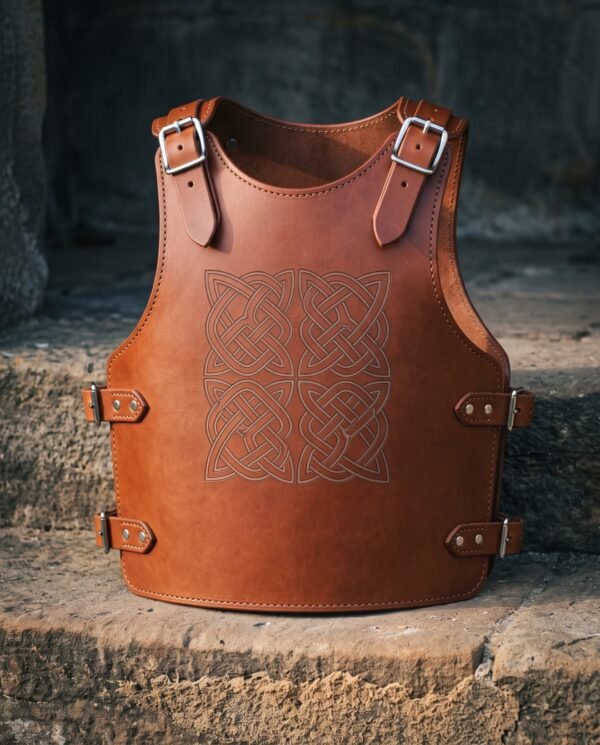
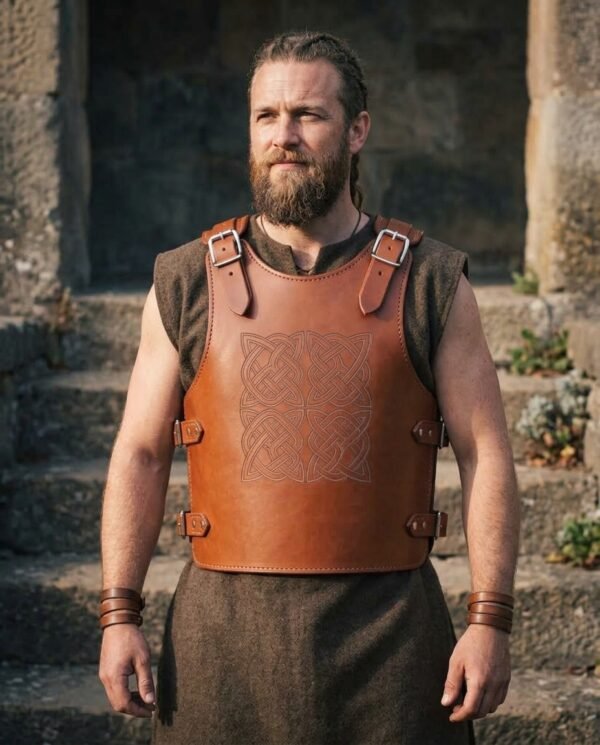
Knotwold Hand Made Tan Leather Medieval Cuirass | Celtic Knotwork Chest Panel | Buckled Shoulders and Side Straps | Larp Costume Gift | RK-1432
Original price was: $329.00.$263.20Current price is: $263.20.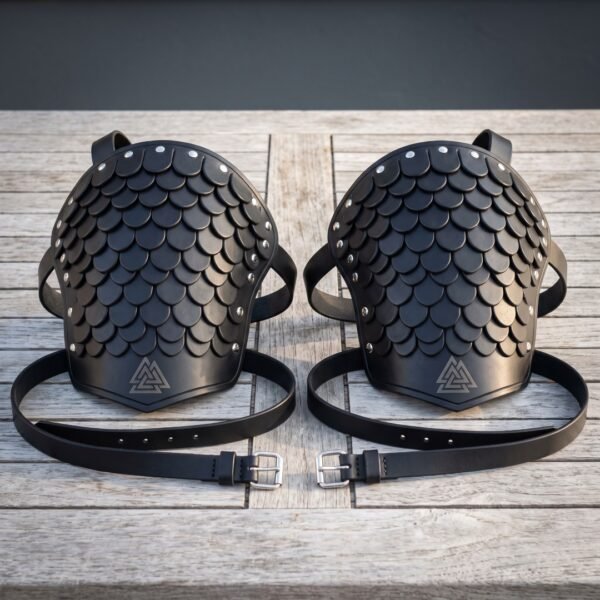
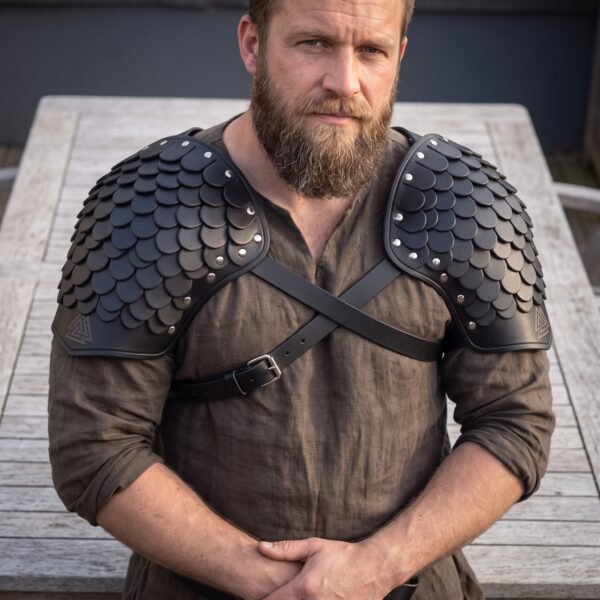
Nightscale Hand Made Black Leather Scale Pauldrons with Riveted Overlapping Scales & Valknut Panel | Norse Reenactment Gift | RK-1535
Original price was: $299.00.$239.20Current price is: $239.20.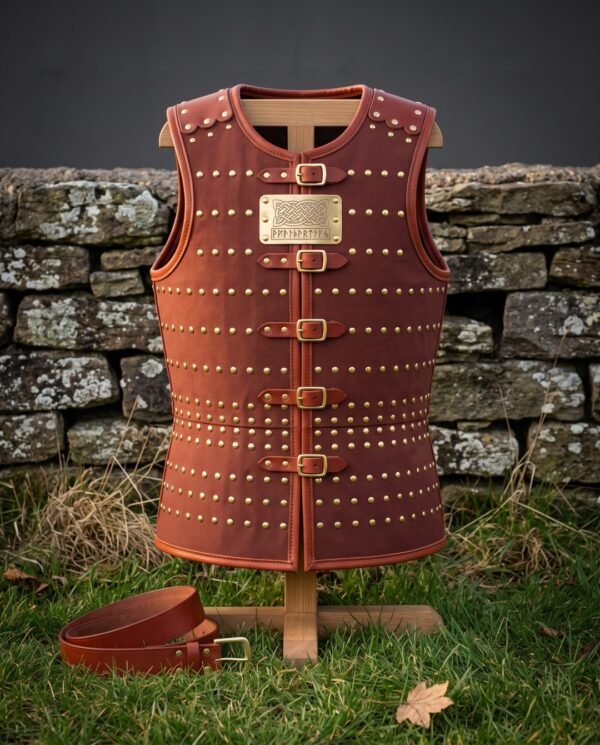
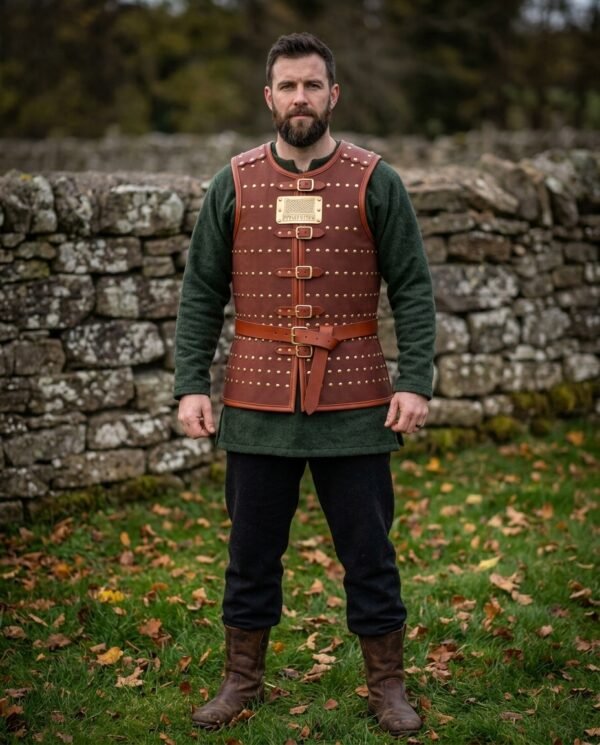
Roanward Hand Made Studded Leather Cuirass Body Armour | Fits 44 Inch Chest | Brass Domed Rivets Buckle Straps and Engraved Rune Plaque | Viking Reenactment Gift | RK-1501
Original price was: $429.00.$343.20Current price is: $343.20.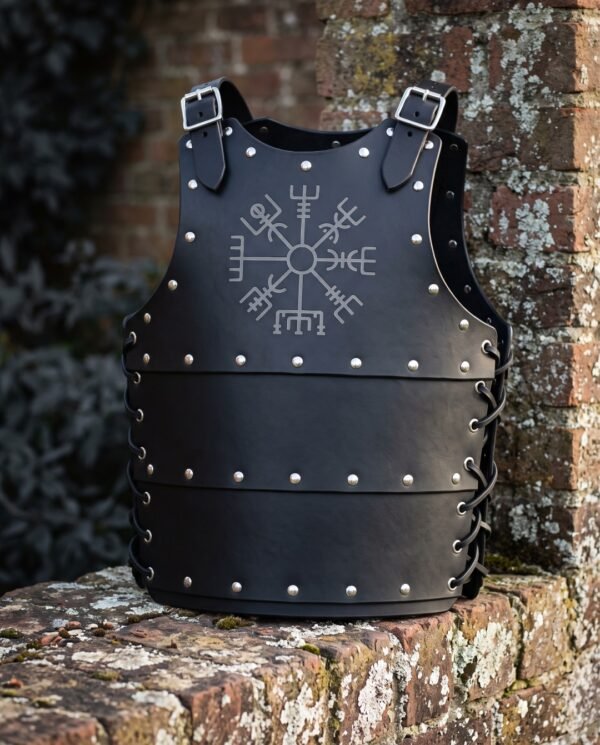
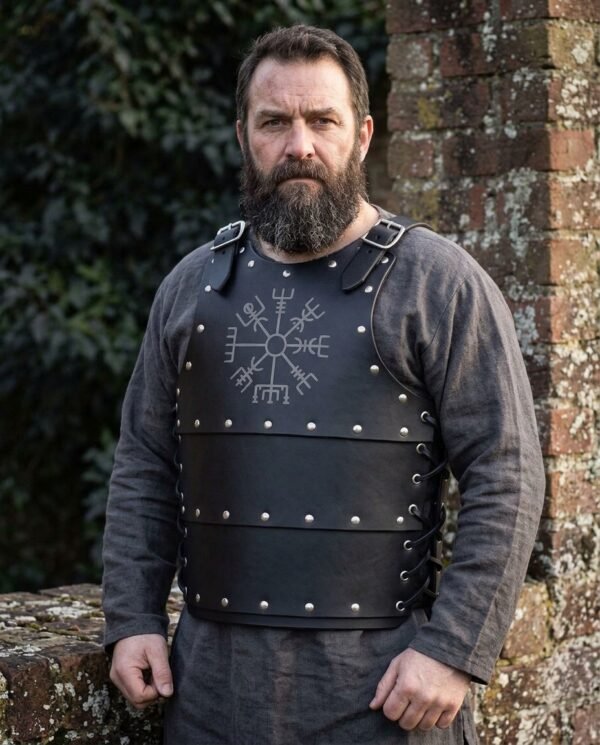
Nightvane Hand Made Black Leather Viking Cuirass | Vegvisir Engraved Chest Plate | Steel Studs and Side Lacing | Norse Reenactment Gift | RK-1430
Original price was: $379.00.$303.20Current price is: $303.20.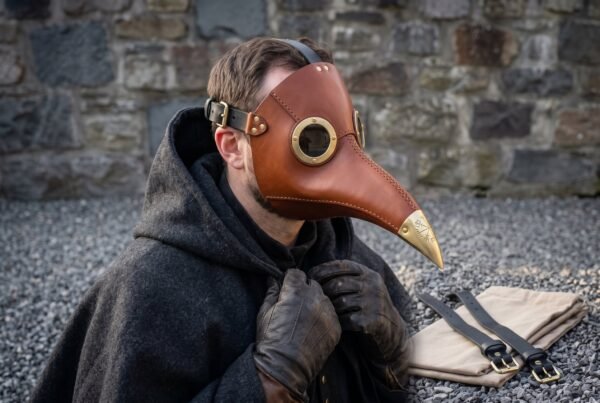
Beakshade Hand Stitched Leather Plague Doctor Mask with Brass Goggle Rims & Engraved Beak Tip | Halloween Costume Gift | RK-1552
Original price was: $229.00.$183.20Current price is: $183.20.What leather armour actually is
Start with the tanning, because it decides everything else. Chrome tanned leather is what most modern jackets and bags are made of. It stays soft, it drapes, and it will not hold a shape. Vegetable tanned leather is tanned with tannins drawn from bark, it takes weeks rather than hours, and it comes out firm, dense and able to be wet moulded. Soak a piece, form it over a shape, let it dry, and it keeps that form. Every item on this page is veg tan for that reason.
Then the thickness. Leather is sold by ounce weight, and one ounce means one sixty fourth of an inch, or about 0.4 mm. So 8 ounce hide is around 3.2 mm and 10 ounce is around 4 mm. That sounds trivial until you handle it. At 3.5 mm a cowhide plate is stiff enough to stand up on its own and heavy enough that you feel it across the shoulders after an hour. At 6 to 7 ounce, around 2.5 mm, the same hide is still firm but it will curve around a face, which is why both masks here sit in that range and the cuirasses do not.
Historically, hardened leather armour is real but not the fantasy version. Cuir bouilli, leather hardened with heat and wax or water, turns up across medieval Europe for limb defences and horse armour, and it was valued for being light rather than impenetrable. Nobody in a full harness chose leather over steel for the chest. They chose it where weight and cost mattered more, which is roughly the calculation people make today when buying something they have to walk around in.
The last variable is what sits behind the leather. One piece here is a brigandine, which means the leather is a shell and the real defence is a layer of overlapping mild steel bands riveted to the inside. That is a genuine medieval construction, and the rows of dome rivets you see on the outside are the heads of the rivets holding those plates in place. They are not decoration, whatever a costume shop will tell you.
The pieces in this collection
Eleven items across four groups, running from a 189 dollar pair of bracers to a 1290 dollar lamellar suit.
Cuirasses and body armour
Four pieces cover the torso. The simplest is a tan medieval cuirass in 8 to 10 ounce hide, two solid plates with no articulated lames, a four quarter Celtic interlace panel cut into the chest, and buckles at the shoulders and both flanks. A black Viking cuirass in 8 to 9 ounce adds three articulated belly lames so the front bends when you do, domed steel studs, laced flanks and a Vegvisir stave cut into the chest.
Above those, a russet studded cuirass in oil dyed 8 to 9 ounce hide, edge bound, with hand set brass domed rivets in rows, five brass buckles down the centre front and an engraved brass sternum plaque. It fits a chest up to about 44 inches over a padded garment, covers sternum to hip and weighs 7 to 9 pounds. And the riveted brigandine, a black cowhide shell over overlapping 18 gauge mild steel bands riveted inside, four steel roller buckles on leather billets down the front, an engraved plaque with an Elder Futhark line at the chest, built to a stated chest measurement with roughly three inches of buckle adjustment, at 9 to 12 pounds depending on size.
Pauldrons and bracers
Two pairs of shoulder pieces. One is a domed cap over three articulated lames per side in chestnut 8 to 9 ounce hide, riveted at the ends, a wolf head cut into each cap, about 2 lb 4 oz the pair. The other is a pair of scale pauldrons, a heavy black base plate with lighter round bottomed scales riveted over it at one rivet per scale, and a Valknut set into the lower point of each plate.
Two pairs of bracers. A tan pair about 7 inches on the forearm, 8 to 9 ounce hide at around 3.5 mm, three stitched straps per bracer on steel roller buckles, an embossed Elder Futhark rune line down the centre panel, fitting a forearm of roughly 8 to 12 inches and weighing about 10 ounces the pair. And a black pair about 9 inches tall in 7 to 8 ounce hide, closed with a full length lace through steel eyelets on both edges plus a buckled wrist strap, wrapping a forearm of roughly 9 to 13 inches, with a Mjolnir outline cut and burnished into each face.
The lamellar suit
One piece here is a complete kit rather than a component. A leather lamellar suit built from vegetable tanned scales about 2 mm each, laced with cream cord over a leather ground and lapped two deep across most rows. It covers a great deal: helmet with neck guard and throat plate, cuirass, shoulder guards, skirt plates and thigh guards, with a polished steel chest panel carrying an engraved Elder Futhark rune line. It fits roughly a 36 to 44 inch chest, adjusts at the shoulder and waist cords, and the whole thing weighs about 25 pounds. That is the number to think about before you order it.
Plague doctor masks
Two masks, both moulded from 6 to 7 ounce veg tan cowhide with brass fittings, both at about a pound. The black one has a brass brow band engraved with interlaced knotwork, clear glass discs in brass rims that come out for cleaning, a hollow stitched beak with a pierced brass vent at the tip, and straps at the temple and jaw. The chestnut one is hand saddle stitched with dark tinted lenses in solid brass rims and a brass beak cap with engraved detail. Neither is protective equipment of any kind, which should not need saying but does.
Leather weights, sizes and fittings across the range
Every figure comes from the specification panel of a piece on this page. Hide varies and these are cut and stitched by hand, so several are given as ranges.
| Piece | Leather weight | Construction | Closure | Cut detail | Weight |
|---|---|---|---|---|---|
| Tan medieval cuirass | 8 to 10 oz, 3.2 to 4 mm | Two solid plates, front and back | Two shoulder and four side buckles | Four quarter Celtic interlace on the chest | Not listed |
| Black Viking cuirass | 8 to 9 oz, 3.2 to 3.6 mm | Front and back plates, three belly lames, domed studs | Buckled shoulders, laced flanks through eyelets | Vegvisir stave on the chest plate | Not listed |
| Russet studded cuirass | 8 to 9 oz, oil dyed | Two piece, edge bound, brass domed rivets in rows | Five brass buckles down the centre front | Engraved brass sternum plaque | 7 to 9 lb |
| Riveted brigandine | 8 to 9 oz shell | 18 gauge mild steel bands riveted inside the shell | Four steel roller buckles on leather billets | Engraved plaque with an Elder Futhark line | 9 to 12 lb |
| Wolf head pauldrons | 8 to 9 oz, 3.2 to 3.6 mm | Domed cap over three articulated lames per side | Buckled chest strap, punched back straps | Wolf head cut into each shoulder cap | 2 lb 4 oz the pair |
| Scale pauldrons | Heavy base, lighter scales | Round bottomed scales riveted over a base plate | Buckled upper arm and body strap each side | Valknut at the lower point of each plate | Not listed |
| Tan bracers | 8 to 9 oz, about 3.5 mm | Single panel, about 7 in on the forearm | Three stitched straps and roller buckles each | Embossed Elder Futhark rune line | About 10 oz the pair |
| Black bracers | 7 to 8 oz, 2.8 to 3.2 mm | Single panel, about 9 in tall | Full length lace through eyelets, wrist buckle | Mjolnir outline cut and burnished | 1 lb 2 oz the pair |
| Leather lamellar suit | Scales about 2 mm each | Scales laced over a leather ground, two deep | Cord ties at the shoulders, buckled waist belt | Steel chest panel with an engraved rune line | About 25 lb complete |
| Black plague doctor mask | 6 to 7 oz, wet moulded | Moulded and stitched hollow beak, brass vent | Temple and jaw straps with brass buckles | Engraved knotwork across the brass brow band | 1 to 1.5 lb |
| Chestnut plague doctor mask | 6 to 7 oz, about 2.5 mm | Hand saddle stitched seams, riveted strap tabs | Adjustable head strap, one adult size | Tinted lenses in brass rims, brass beak cap | About 1 lb |
Two figures deserve attention. The brigandine is 9 to 12 pounds, and the lamellar suit is 25. Those are not display numbers. They are what you will be carrying on your shoulders all day.
Sizing and fit
Nothing here is worn against the skin. Every body piece is unlined, on purpose, and is meant to go over a padded garment or at minimum a heavy tunic. That is not a corner being cut. Unlined leather breathes, and a gambeson underneath is what takes the pressure off your collarbones and stops the edges chafing. Size everything with that layer already accounted for.
The cuirasses adjust at the buckles and the laced flanks, and the studded one is quoted to fit a chest up to about 44 inches over padding. The brigandine is built to a stated chest measurement with about three inches of movement in the buckles, so it is the one piece where you need to measure properly before ordering rather than after.
Bracers and pauldrons are more forgiving. The tan bracers cover a forearm of 8 to 12 inches, the black ones 9 to 13 inches because they lace rather than buckle, and both pairs of pauldrons adjust widely on the body straps. The lamellar suit fits roughly a 36 to 44 inch chest.
Hardware, rivets and stitching
Fittings are steel or brass, nickel plated in some cases, and the buckles are mostly roller buckles rather than plain frames. A roller turns as the strap passes over it, which sounds like a detail and is not. On a strap you pull tight every time, a plain buckle wears a line across the leather and eventually cuts it.
Rivets do the structural work on the studded cuirass, the brigandine and the scale pauldrons. On the brigandine every visible dome rivet corresponds to a steel plate behind the shell. On the scale pauldrons each scale is held by a single rivet at its head, which lets the scale pivot as your shoulder moves and is why scale armour flexes at all.
Stitching turns up where rivets cannot go. Both masks are stitched around the beak seam, and one is saddle stitched by hand, which uses two needles on one thread so a broken stitch does not unzip the seam. Slower, and better.
What this armour will and will not do
It will look right, hold its shape, take engraving well and survive years of costume, LARP, film, festival and light reenactment use. It will stop a knock and it will spread a blow. Leather over steel plates, in the brigandine, will do rather more than that.
It is not certified protective equipment and none of it is rated for full contact combat. Every listing on this page says so in the specification panel. If you fight in a group with safety standards, use what your group approves. If you want to know how the various armour types actually compare, chainmail versus plate versus lamellar lays it out, and Viking armour explained covers what the archaeology supports.
Care and storage
Veg tan leather hates soaking and it hates drying out. If a piece gets wet, let it dry at room temperature away from any heat. A radiator cooks the fibres and leaves you with something that cracks. Once dry, a conditioner brings the oils back, and once or twice a year is enough for a piece worn occasionally.
Store body armour on a hanger or a form rather than folded, because a fold in 3.5 mm hide becomes a permanent crease and then a crack line. Store the masks beak up with nothing resting on them. Metal fittings want a wipe and an occasional light oil, and if a nickel finish spots, deal with it before it pits.
Dye transfer is worth knowing about. Black and russet dyed veg tan can mark a pale shirt in hot weather, particularly when new. A wipe with a barely damp cloth over the inside face when the piece arrives takes off the loose surface dye.
Engraving
Most of these already carry cut work: a Vegvisir, a Valknut, wolf heads, a Mjolnir outline, Celtic interlace and two Elder Futhark rune lines. Leather takes a cut and burnish beautifully, and the brass and steel plaques on the cuirass and brigandine can be engraved after they arrive in the United States.
Text engraving is 19 dollars, a symbol is 39 dollars and a family crest is 49 dollars. Elder Futhark is a phonetic alphabet rather than a code, so a name is transliterated by sound and there is no rune for the letter C. Engraving is permanent and an engraved piece cannot be returned, so read the spelling back before you order.
Where these come from and how they ship
Ransack Viking is a US company based in Chicago, Illinois. The pieces are handmade in the Czech Republic, then imported, inspected and shipped from Chicago. Engraving is done in the US after arrival.
Hide is a natural material and no two pieces take dye identically, so colour varies a little between items and even across one panel. Grain, small scars and the burnish on an edge are part of the material rather than faults. Body armour ships bulky rather than heavy for its size, except the lamellar suit, which is both.
How to choose
Work out how long you will wear it. For a full day at a festival, take the bracers and pauldrons over a tunic, because 2 lb on the shoulders is a costume and 12 pounds across the chest is a commitment. For photography, take whichever cuirass has the cut work you like, since none of them is on you for more than the shoot.
If you want the piece that is genuinely closest to a historical construction, take the brigandine, because the steel plates behind the shell are the real thing rather than a stud pattern. If you want the most complete kit on the page and you know what 25 pounds feels like, the lamellar suit covers you from helmet to thigh. Prices run from 189 to 1290 dollars.
Browse related categories
- Brigandines and padded gambesons to wear underneath
- Chainmail hauberks and coifs
- Scale and lamellar armour
- Plate armour and steel body pieces
- Medieval helmets
- Round shields to complete the kit
Guides worth reading first
- Viking armour explained: what the finds actually show
- Chainmail versus plate versus lamellar
- Elder Futhark runes explained
- Gifts for reenactors and living history groups
Frequently asked questions
What does 8 to 9 ounce leather mean?
Thickness, not mass. One ounce of leather weight equals one sixty fourth of an inch, about 0.4 mm, so 8 to 9 ounce hide is roughly 3.2 to 3.6 mm thick. The body pieces here sit in that range and the masks are thinner at 6 to 7 ounce so they can be moulded around a face.
Why is vegetable tanned leather used rather than ordinary leather?
Because it holds a shape. Veg tan is tanned with bark tannins over weeks and comes out firm and dense, so it can be wet moulded, tooled, cut and burnished. Chrome tanned leather stays soft and drapes, which is right for a jacket and useless for a cuirass.
Can I wear this in a combat reenactment group?
Not as certified armour. Every listing here states display, costume, film and light reenactment, and none is rated for full contact. Fighting groups set their own construction standards and you should use kit they have approved.
Do I need to wear something underneath?
Yes. All the body pieces are unlined on purpose, and they are meant to go over a padded garment or a heavy tunic. That layer takes the load off your collarbones, stops the edges rubbing and makes the difference between wearable and miserable. Size the armour with it already on.
What makes a brigandine different from a studded cuirass?
What is behind the leather. A brigandine has overlapping steel plates riveted to the inside of the shell, and the dome rivets on the outside are the heads of the rivets holding them. A studded cuirass has studs and nothing behind them. The brigandine here uses 18 gauge mild steel bands and weighs 9 to 12 pounds as a result.
How heavy is the lamellar suit really?
About 25 pounds complete, and complete means helmet with neck guard and throat plate, cuirass, shoulder guards, skirt plates and thigh guards. It is well distributed across the body rather than hanging off one point, but it is still 25 pounds and you should be honest with yourself about that.
Will the black leather mark my clothes?
It can when new, particularly in hot weather. Wipe the inside face with a barely damp cloth when the piece arrives to lift the loose surface dye, and wear something dark underneath the first few times. It settles down quickly.
Are the plague doctor masks safe to wear for a long time?
They are costume pieces with a hollow beak, and one has a pierced brass vent at the tip. The lenses come out of the black mask for cleaning. They are not respiratory protection of any kind, so take the mask off periodically, and do not wear one where you need to see clearly at speed.
Featured pieces
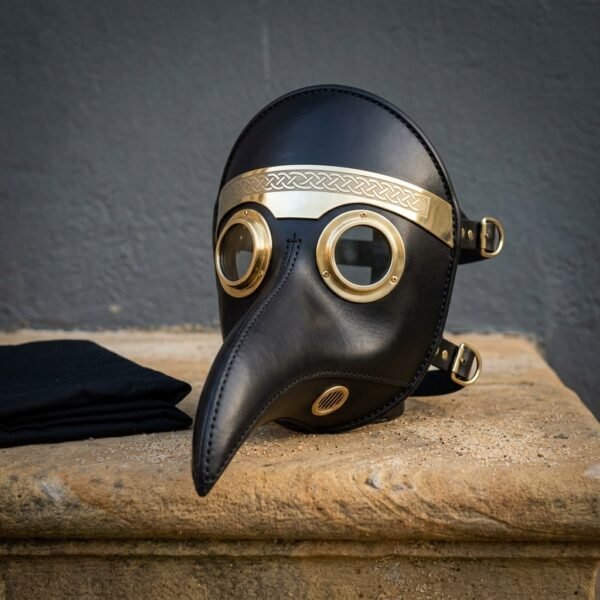 Ravenbeak Hand Made Leather Plague Doctor Mask with Brass Rimmed Lenses & Knotwork Brow Band
Original price was: $189.00.$151.20Current price is: $151.20.
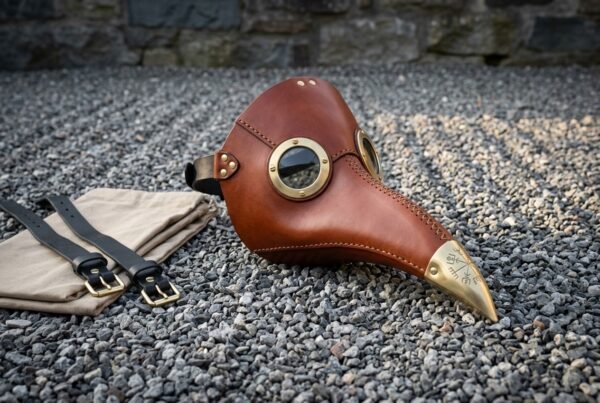 Beakshade Hand Stitched Leather Plague Doctor Mask with Brass Goggle Rims & Engraved Beak Tip
Original price was: $229.00.$183.20Current price is: $183.20.
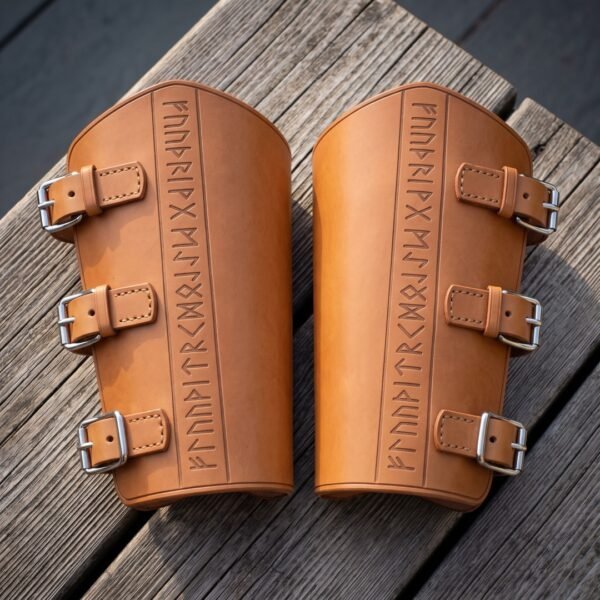 Runecuff Hand Made Leather Viking Bracers with Embossed Elder Futhark & Three Steel Roller Buckles
Original price was: $199.00.$159.20Current price is: $159.20.
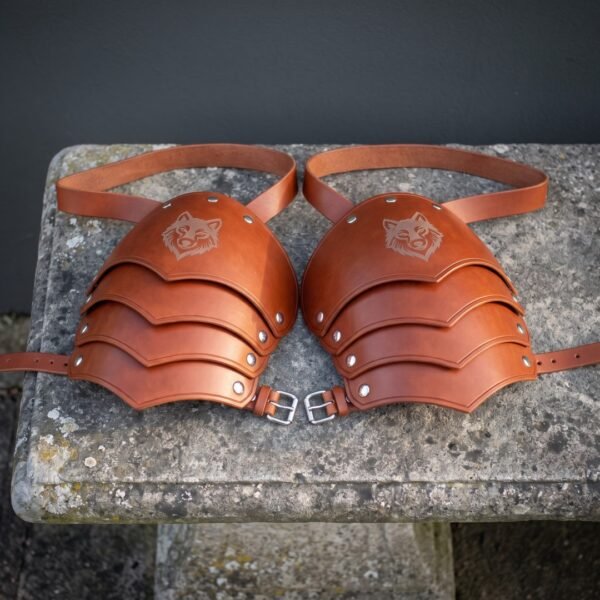 Wolfcrest Hand Made Veg Tanned Leather Pauldrons with Articulated Lames & Engraved Wolf Head Cap
Original price was: $229.00.$183.20Current price is: $183.20.