
Bearded axes are the Norse pattern where the cutting edge drops well below the line of the haft, leaving an open crescent behind it. That hook is what the word bearded means. It buys a long cutting edge on a light head, because the beard is thin steel rather than a solid block, and it leaves room to slide your leading hand up under the head for close work.
The collection runs from 15 inch hand axes up to 35 inch two handed pieces, the longest close to Dane axe length. Two steels run through the range. Plain 1095 high carbon is hardened to 54 to 58 HRC, sharpens quickly and comes back on a stone. Damascus of 1095 and 15N20 is forge welded, folded and etched, hardened to 58 to 60 HRC, and shows light and dark bands across the cheek. Hafts are ash, hickory, oak, birch, walnut or dark stained hardwood, wedged through the eye, and nearly every axe ships with a fitted leather edge cover.
If you want one axe to carry and use, take a 16 to 19 inch piece on an ash haft. For reach and wall presence, look at the long hafted heads. A short bearded head sits close to hatchet territory, so it is worth reading where the line between an axe and a hatchet actually falls before you settle on a length.
Free US shipping
On most pieces. Heavier and oversized ones carry a flat charge.
Hand Forged
Heated, hammered and ground by hand.
Engraving available
Names, dates or Norse runes on most pieces.
Ships from Chicago
Inspected and dispatched from our Chicago warehouse. No import duty, no customs delay on US orders.
Bearded Axes
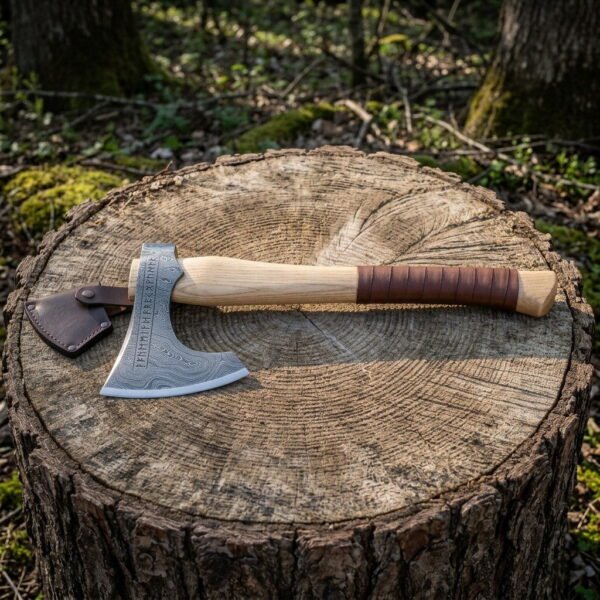
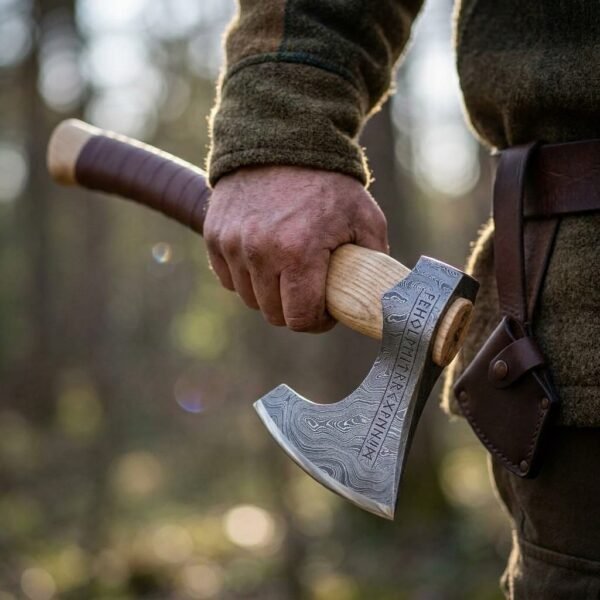
Whorlbeard Hand Forged Damascus Bearded Axe | 16 Inch Ash Haft | Rune Bordered Head with Leather Edge Cover | Norse Camp and Carving Gift | RK-1835
Original price was: $329.00.$263.20Current price is: $263.20.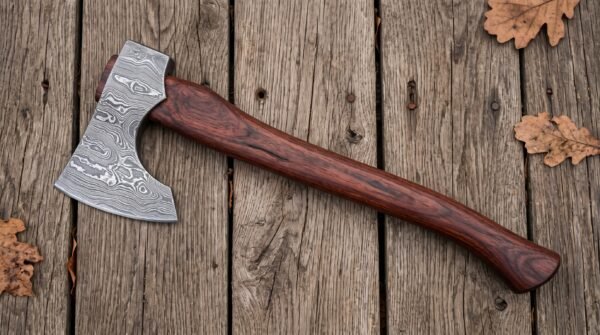
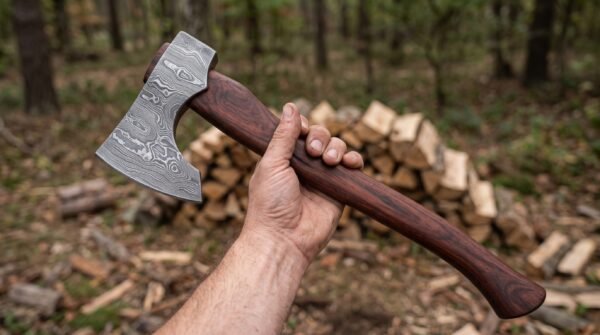
Emberhawk Hand Forged Damascus Bearded Axe | 20 Inch | Rosewood Handle with Leather Blade Cover and Gift Box | Hunting Camping Collector Gift | RK-404
Original price was: $159.00.$127.20Current price is: $127.20.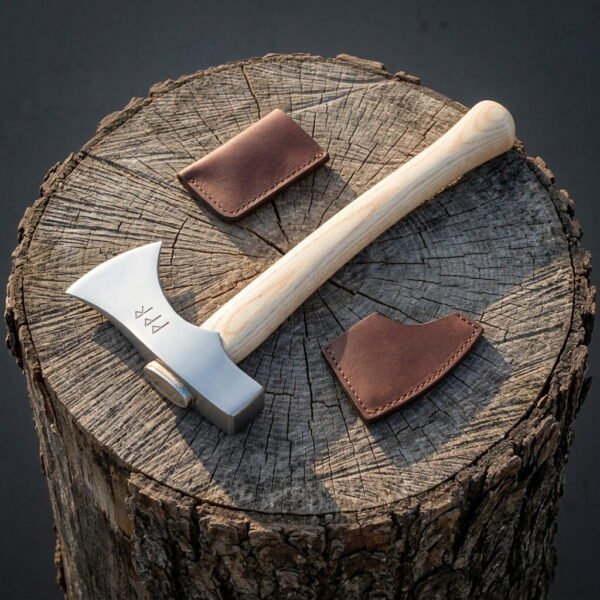
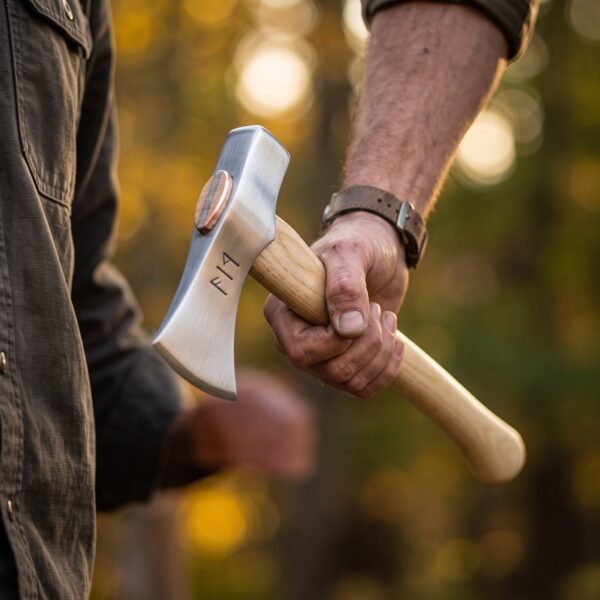
Ashbite Hand Forged Viking Hand Axe with Struck Rune Marks | 15 Inch Ash Handle | Polished Bearded Head, Leather Edge Sheath and Pouch | Camp and Bushcraft Gift | RK-1817
Original price was: $229.00.$183.20Current price is: $183.20.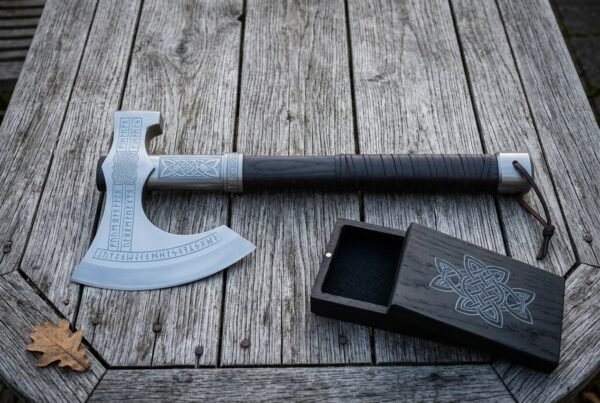
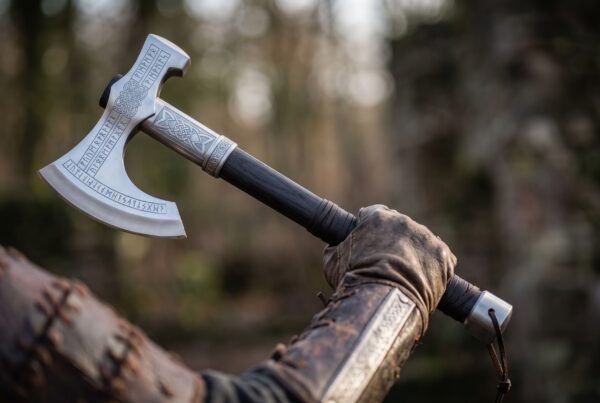
Runecask Hand Forged High Carbon Steel Norse Runic Bearded Axe with Knotwork Wooden Keepsake Box | Dark Leather Wrapped Ash Haft and 18 Inch Axe | Norse Bushcraft Gift | RK-1221
Original price was: $795.00.$636.00Current price is: $636.00.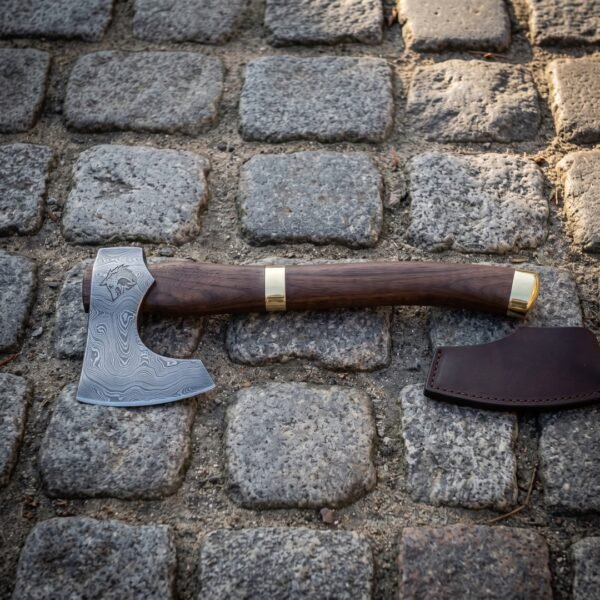
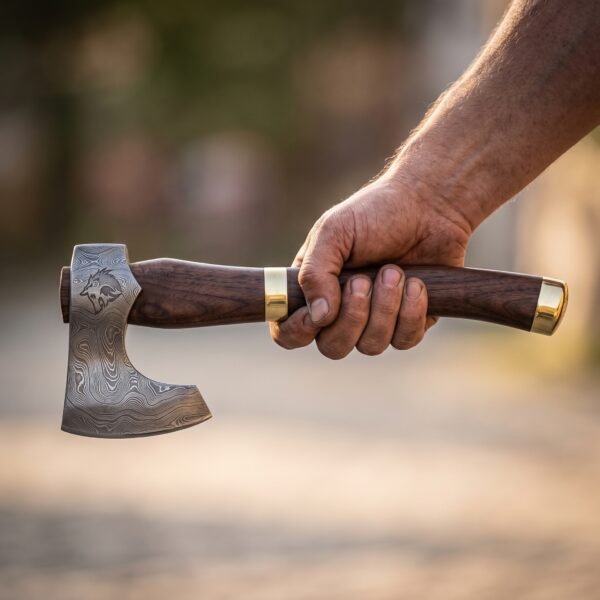
Grainbeard Hand Forged Damascus Bearded Axe with Etched Wolf Head | Walnut Haft, Brass Collar and Butt Cap | Brown Leather Edge Sheath | Norse Collector Gift | RK-2076
Original price was: $329.00.$263.20Current price is: $263.20.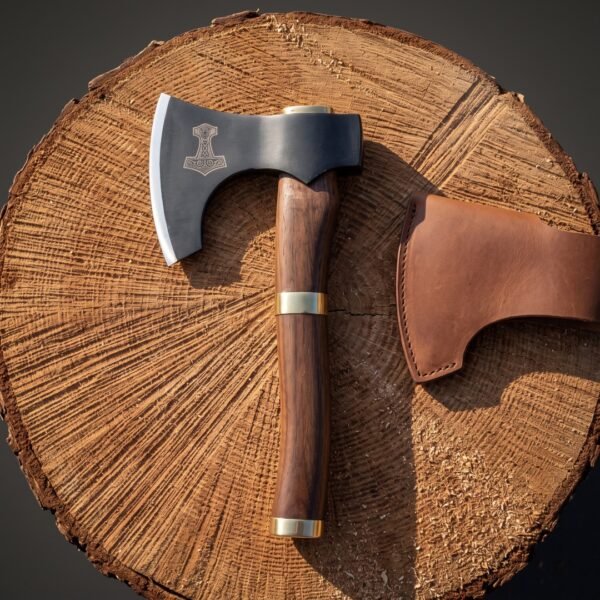
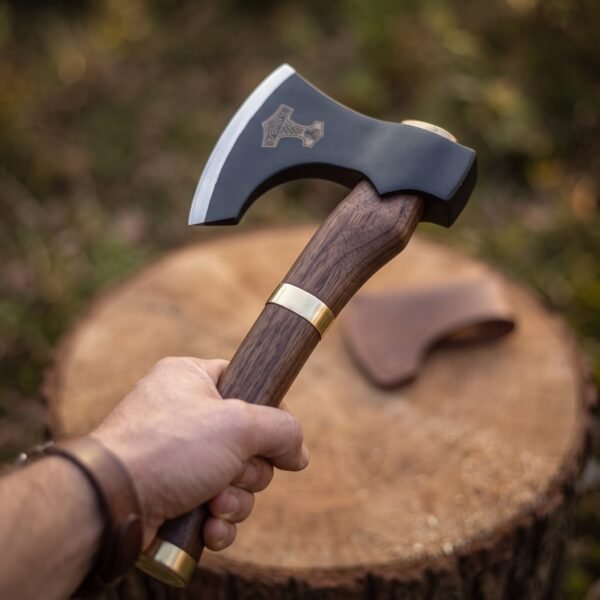
Hammerbeard Hand Forged 1095 Steel Bearded Axe | 16 Inch Rosewood Haft | Blackened Head with Etched Mjolnir, Brass Collar and Leather Blade Cover | Viking Camp Gift | RK-2105
Original price was: $239.00.$191.20Current price is: $191.20.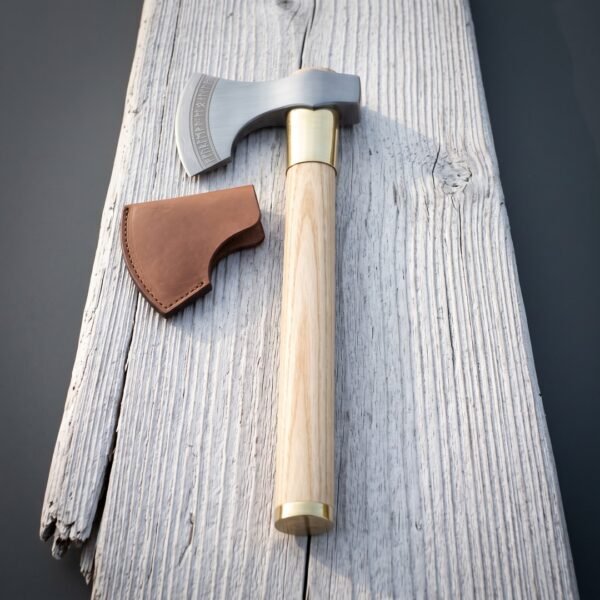
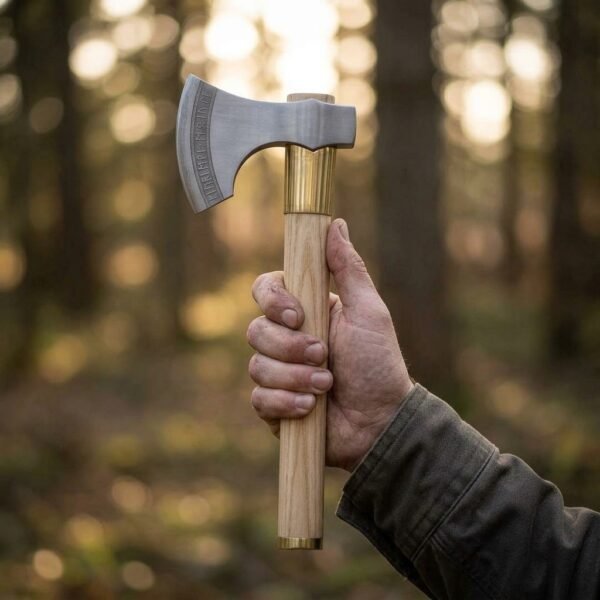
Runebite Hand Forged High Carbon Bearded Axe with Elder Futhark Engraved Cheek | Ash Haft and Brass Collar | Leather Blade Sheath | Norse Woodsman Gift | RK-2175
Original price was: $229.00.$183.20Current price is: $183.20.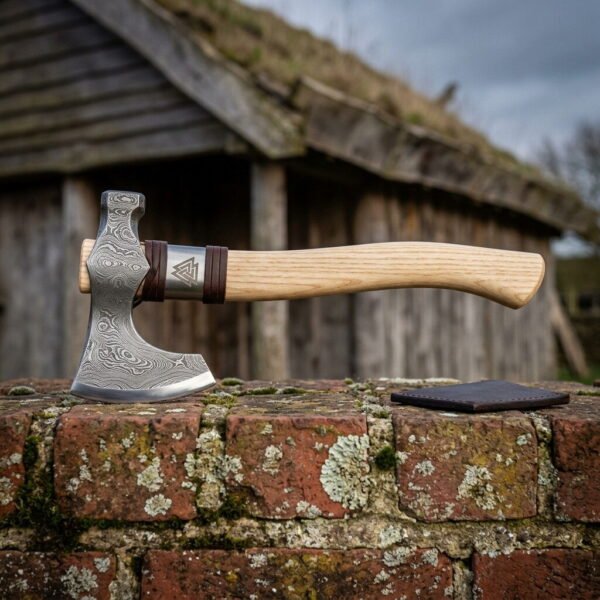
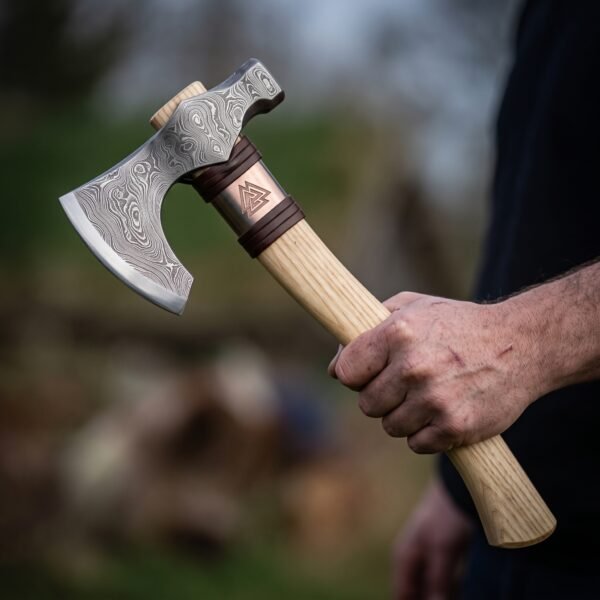
Knotwarden Hand Forged Damascus Valknut Axe | Pattern Welded Head with Hammer Poll | Engraved Valknut Collar and Curved Ash Haft | Norse Collector Gift | RK-1804
Original price was: $379.00.$303.20Current price is: $303.20.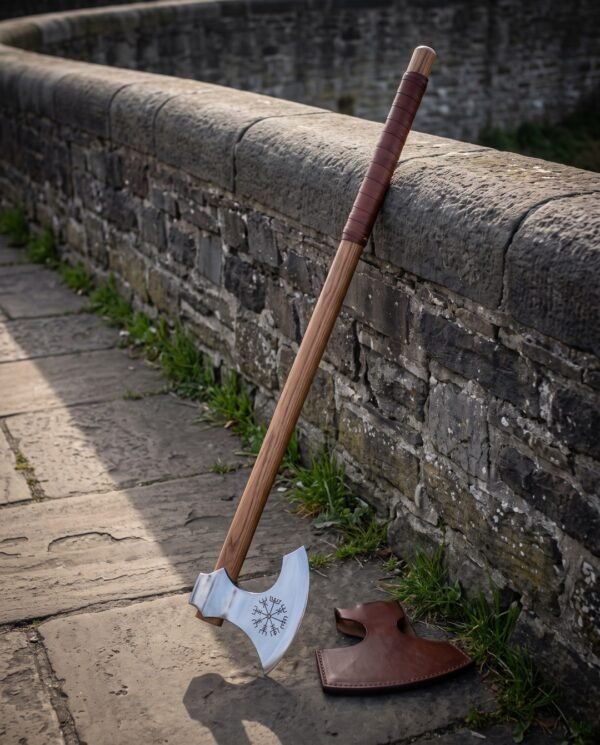
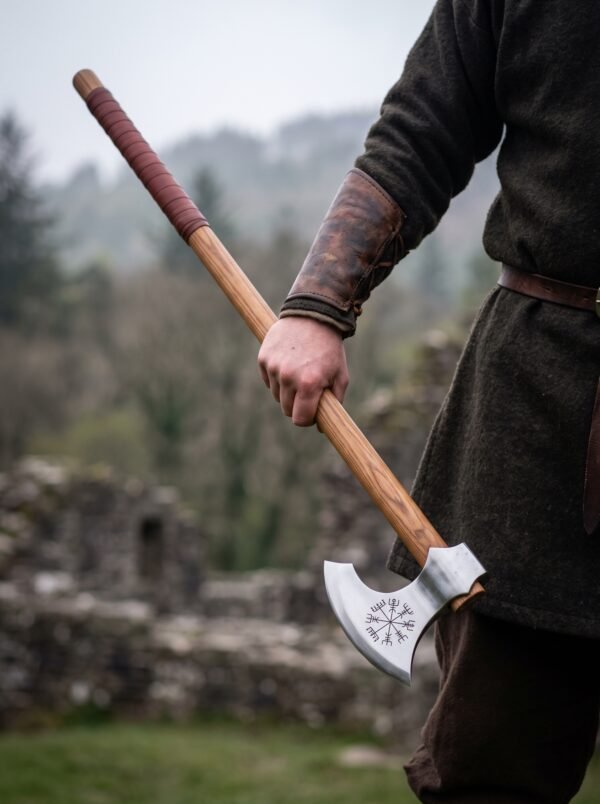
Wayfarrow Hand Forged Long Handled Viking Axe with Bearded Head & Etched Vegvisir | About 35 Inch Haft | Leather Grip Wrap and Fitted Leather Blade Cover | Norse Gift | RK-2204
Original price was: $329.00.$263.20Current price is: $263.20.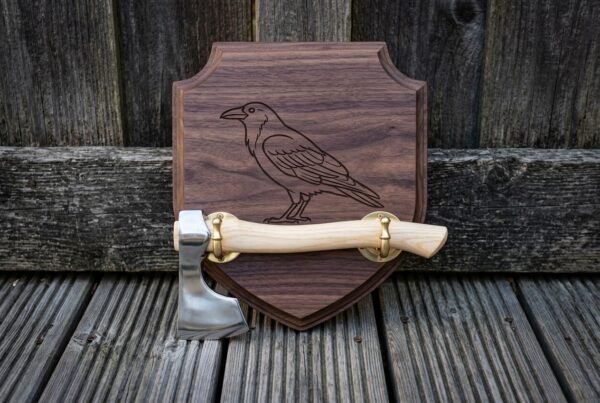
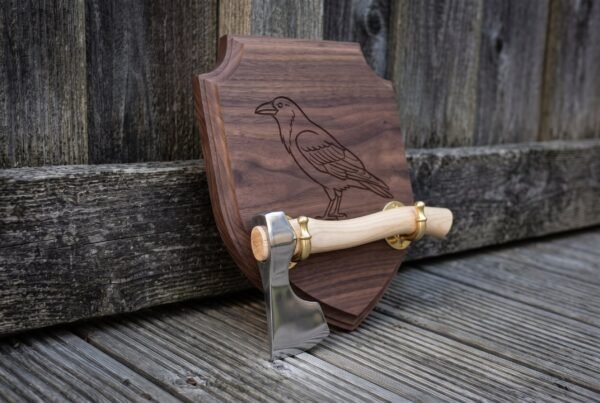
Rookhelm Hand Forged Bearded Axe on Walnut Raven Wall Plaque | 14 Inch Ash Haft and 5 Inch Cutting Edge | Solid Brass Mounting Brackets | Norse Wall Display Gift | RK-1712
Original price was: $329.00.$263.20Current price is: $263.20.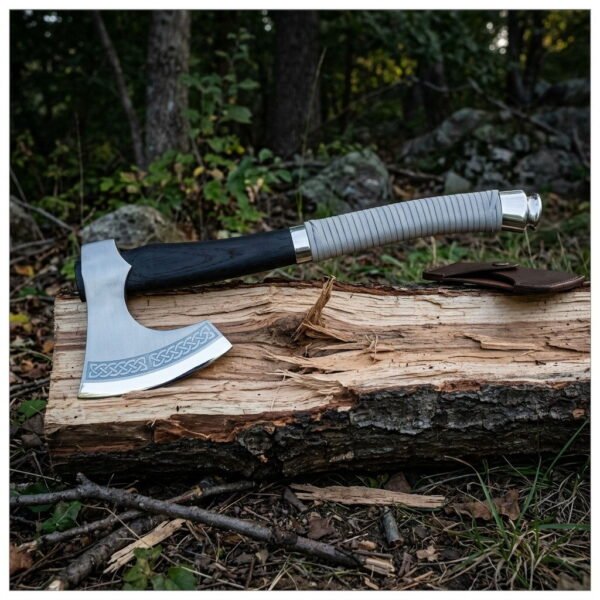
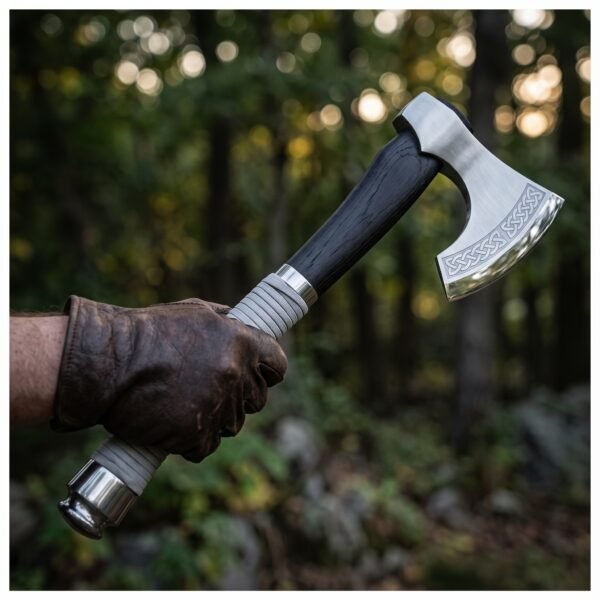
Braidhewn Hand Forged 1095 Steel Bearded Axe | 20 Inch Haft | Celtic Knotwork Etched Head and Leather Edge Cover | Norse Woodcraft Gift | RK-1832
Original price was: $239.00.$191.20Current price is: $191.20.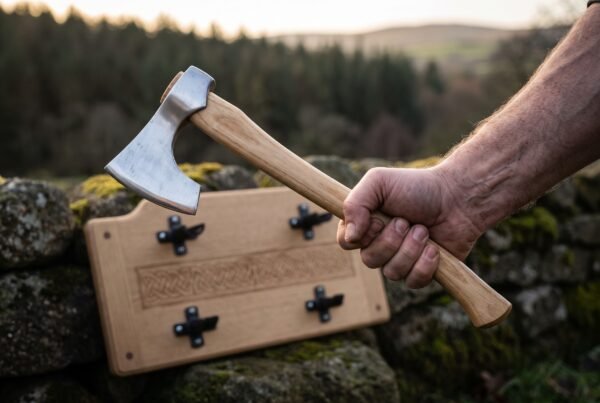
Oakhewn Hand Forged Viking Axe Wall Plaque | Bearded Axe on Carved Oak Board | Celtic Knotwork Band and Leather Lined Steel Cradles | Norse Wall Gift | RK-1683
Original price was: $329.00.$263.20Current price is: $263.20.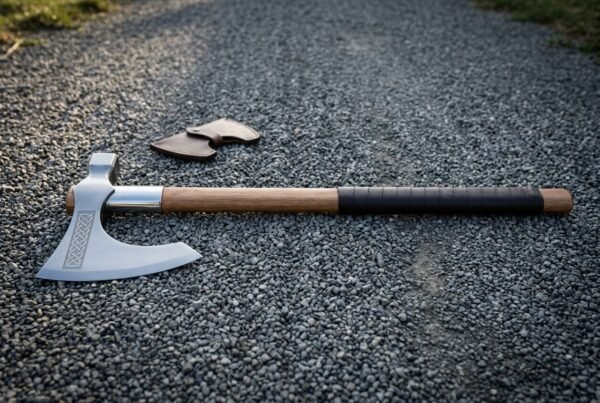
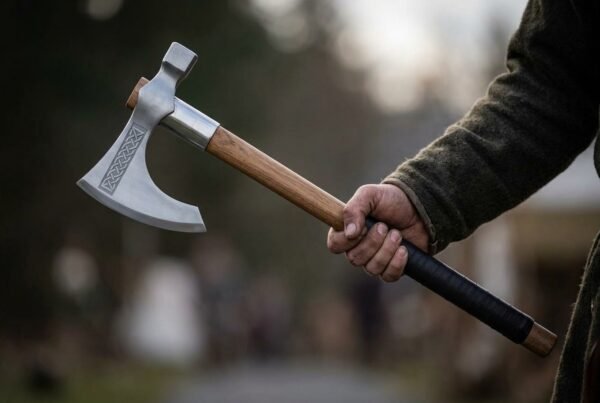
Langbeard Hand Forged 1095 Steel Bearded Axe | 21 Inch Ash Haft | Knotwork Engraved Head with Steel Collar and Leather Edge Guard | Norse Reenactment Gift | RK-1914
Original price was: $299.00.$239.20Current price is: $239.20.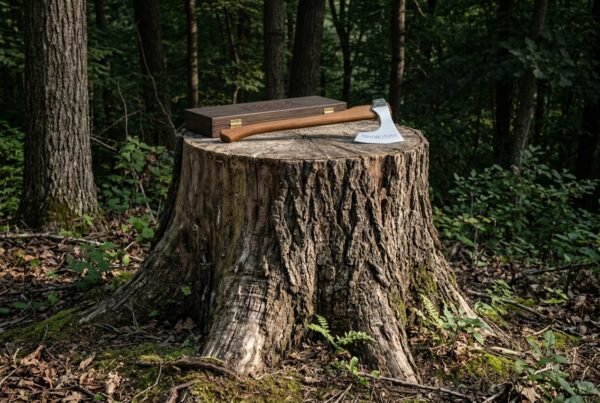
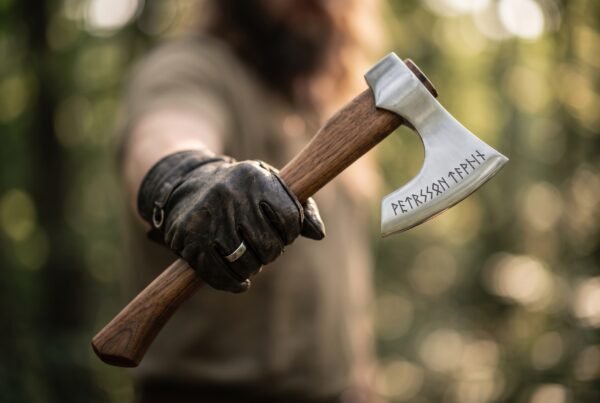
Walnutskeg Hand Forged 1095 Steel Bearded Axe | Rune Engraved Head | Hickory Haft with Carved Hardwood Presentation Box | Groomsman Gift | RK-1877
Original price was: $329.00.$263.20Current price is: $263.20.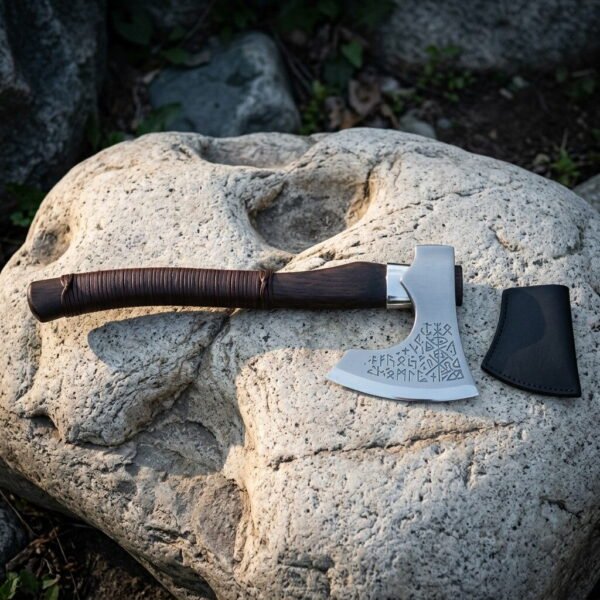
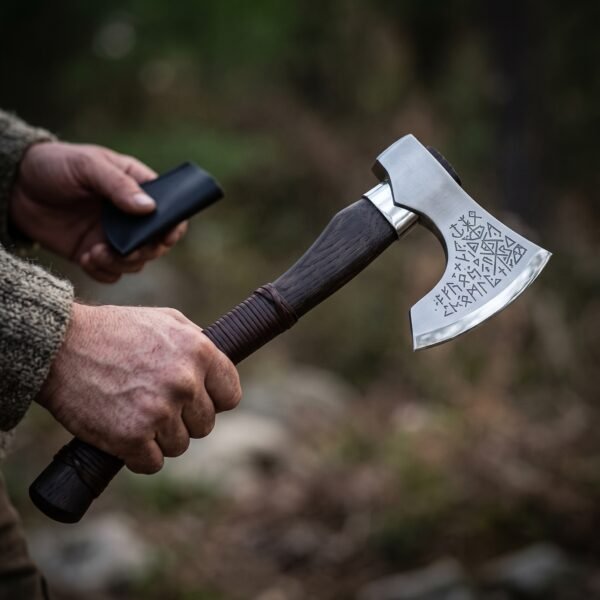
Stavebeard Hand Forged 1095 Steel Viking Axe | 19 Inch Walnut Haft | Rune and Stave Etched Head with Black Leather Cover | Norse Camp Gift | RK-1844
Original price was: $269.00.$215.20Current price is: $215.20.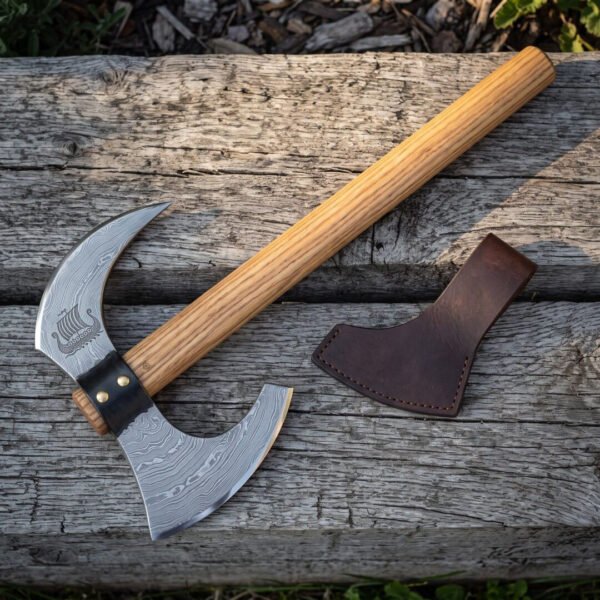
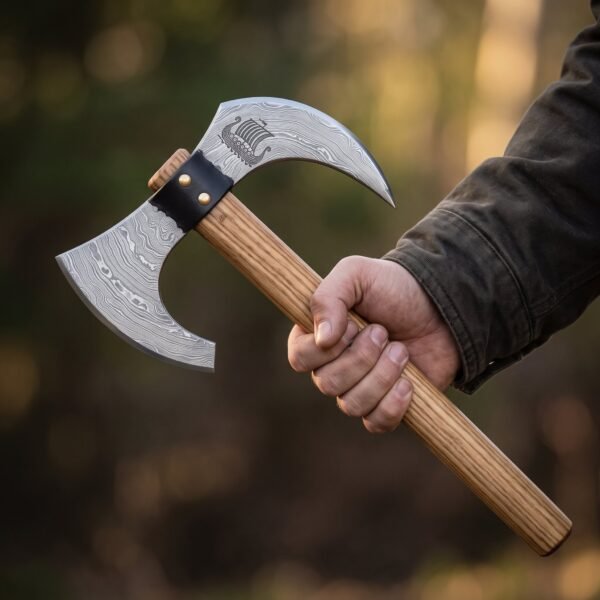
Prowshear Hand Forged Damascus Bearded Axe with Engraved Longship | 20 Inch Haft and 7 Inch Edge | Hooked Horn and Riveted Leather Collar and Blade Mask | Norse Gift | RK-2134
Original price was: $359.00.$287.20Current price is: $287.20.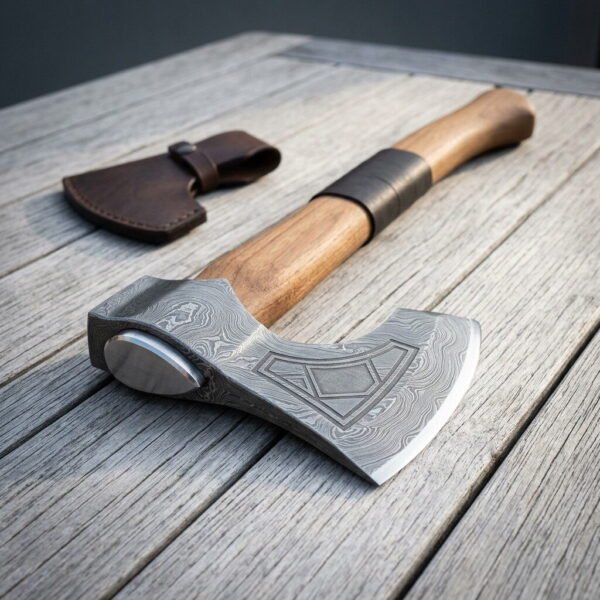
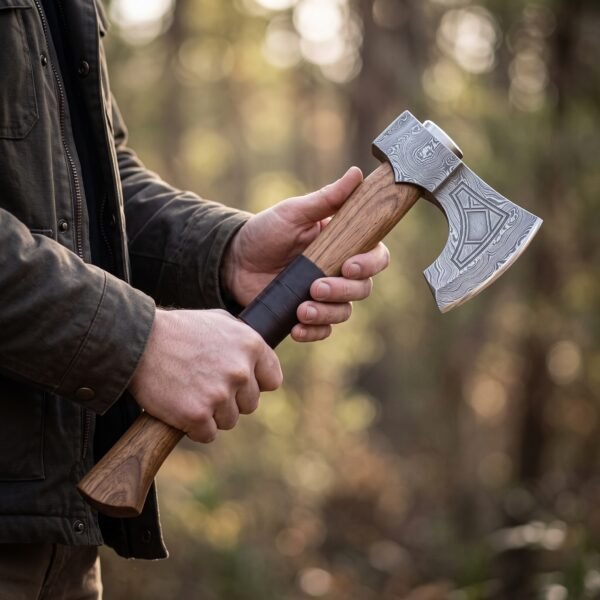
Grainwhorl Hand Forged Damascus Bearded Axe | 1095 and 15N20 Pattern Welded Head | Walnut Haft with Leather Collar and Stitched Edge Sheath | Norse Woodsman Gift | RK-1803
Original price was: $349.00.$279.20Current price is: $279.20.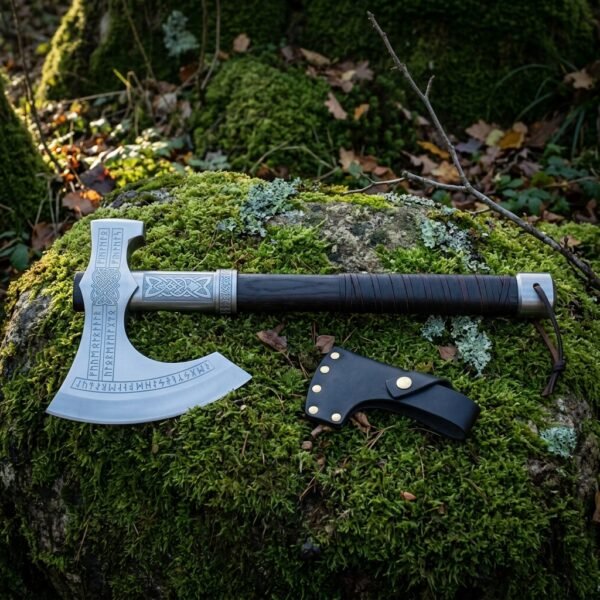
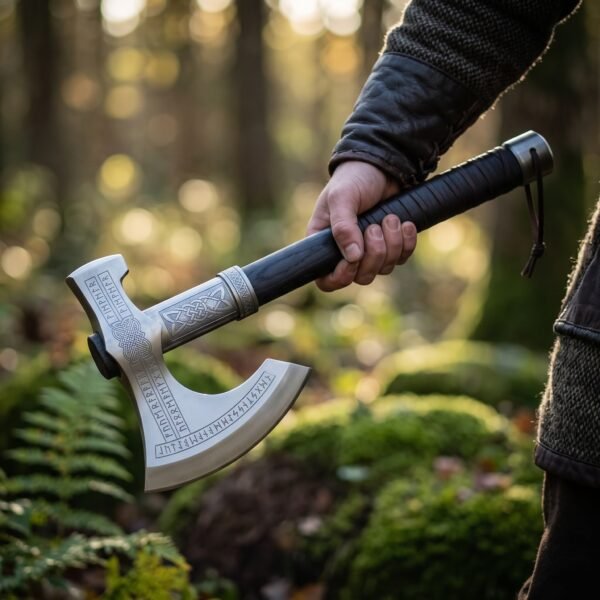
Frostrune Hand Forged High Carbon Steel Norse Runic Bearded War Axe | 24 Inch Overall with 10 Inch Cutting Edge | Norse Battle Collector Gift | RK-1220
Original price was: $645.00.$516.00Current price is: $516.00.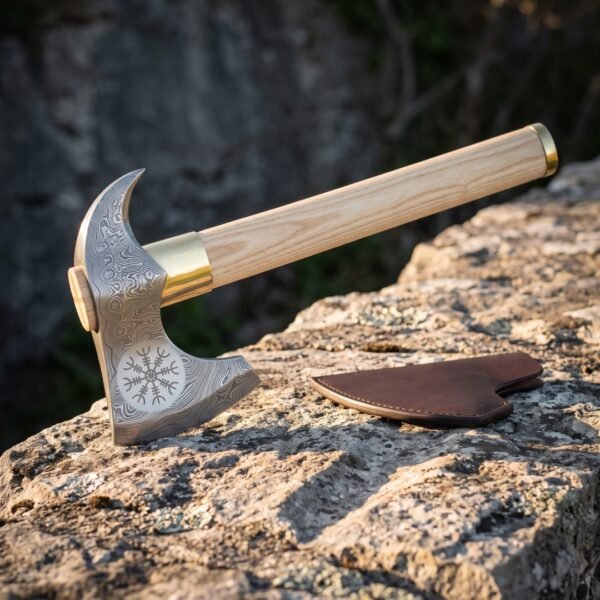
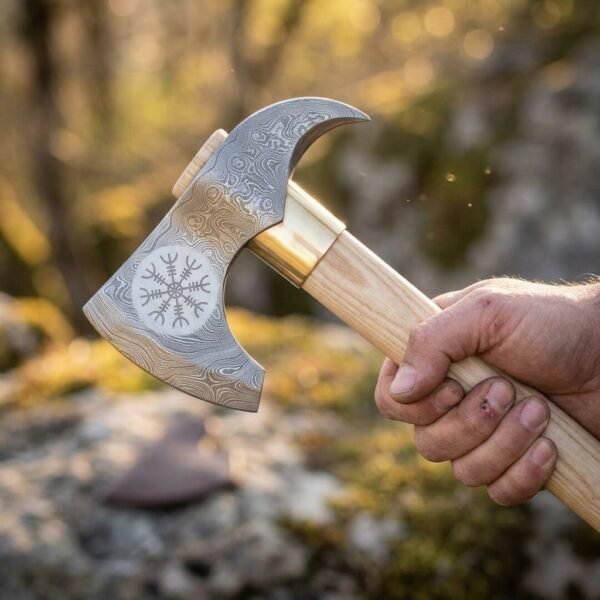
Brasshelm Hand Forged Damascus Steel Viking Bearded Axe | 19 Inch Ash Haft | Helm of Awe Etched Head with Brass Collar and Butt Cap | Norse Collector Gift | RK-2158
Original price was: $339.00.$271.20Current price is: $271.20.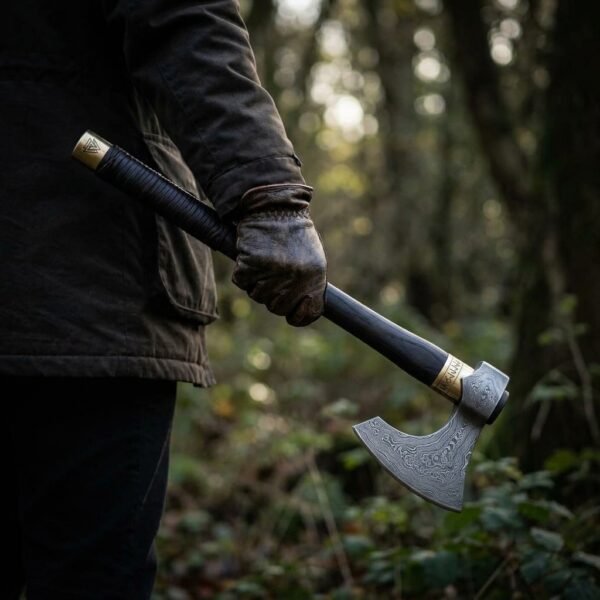
Ravenskegg Hand Forged Damascus Steel Ragnar Style Viking Bearded Axe | 20 Inch Overall with 5 Inch Cutting Edge | Norse Bushcraft Gift | RK-1216
Original price was: $275.00.$220.00Current price is: $220.00.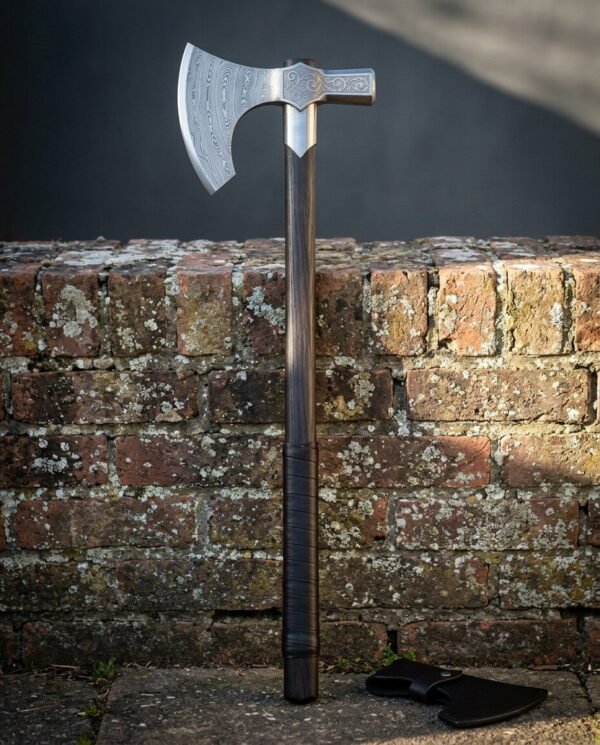
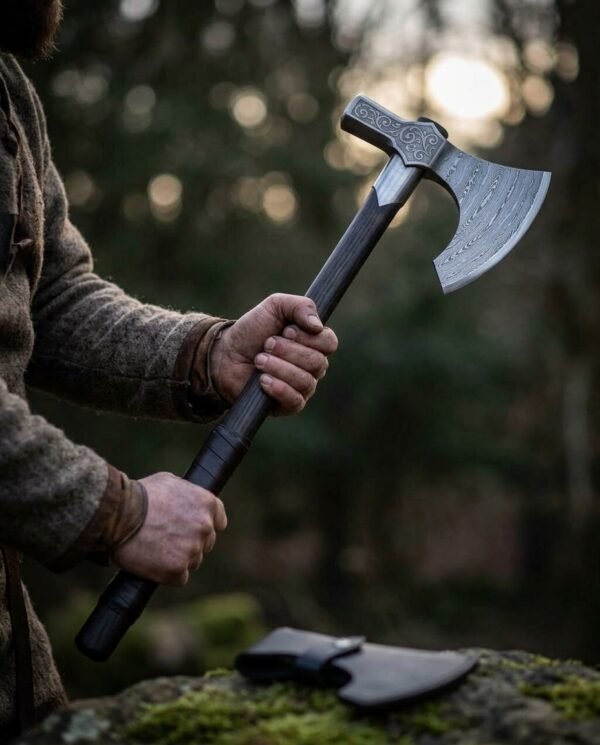
Stormcleft Hand Forged Damascus Bearded Axe with Hammer Poll | 28 Inch Overall Length | Engraved Head and Leather Wrapped Hardwood Haft | Norse Woodsman Gift | RK-1811
Original price was: $369.00.$295.20Current price is: $295.20.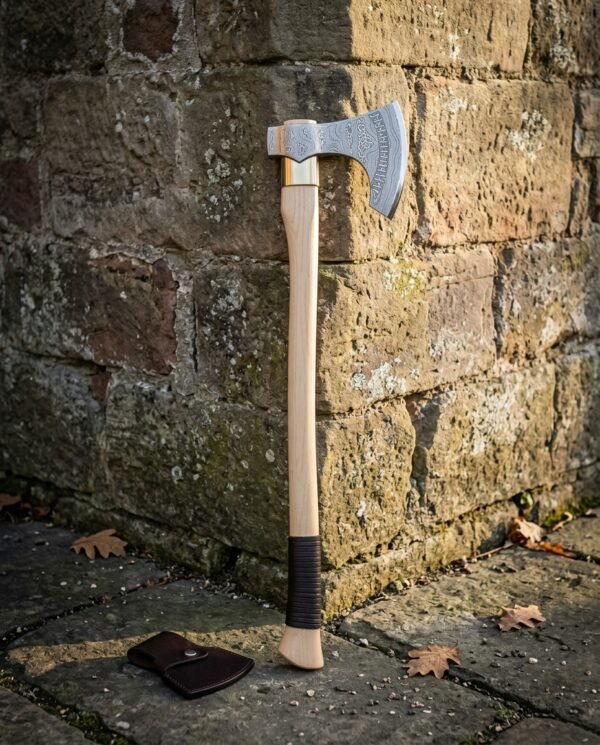
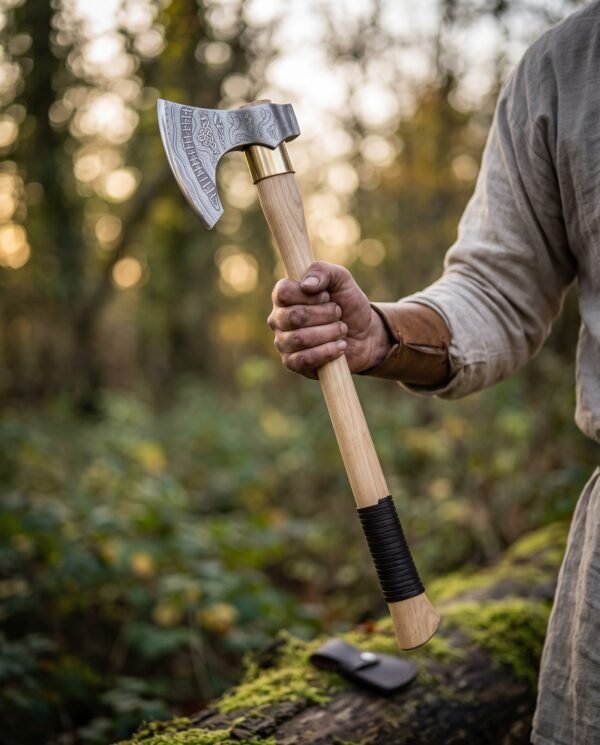
Ashwarden Hand Forged Damascus Viking Battle Axe | 21 Inch Overall with 5 Inch Cutting Edge | Pale Ash Haft and Straight Grain and Oil Finish | Norse Battle Collector Gift | RK-1212
Original price was: $165.00.$132.00Current price is: $132.00.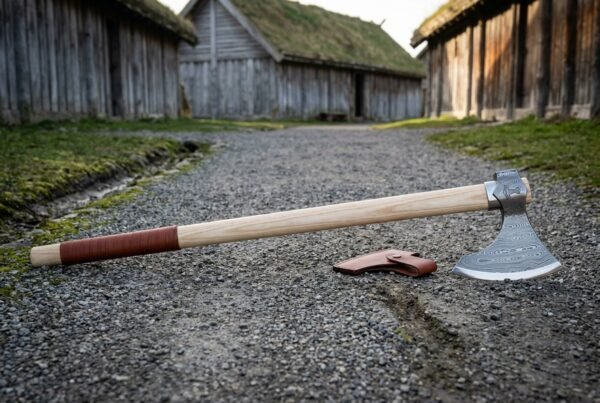
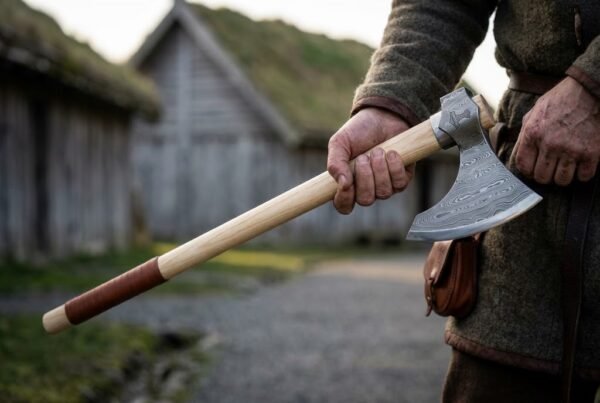
Hammerpoll Hand Forged Damascus Viking Axe | 32 Inch Ash Haft | Mjolnir Stamped Poll and Bearded Bit with Leather Edge Cover | Norse Collector Gift | RK-1906
Original price was: $389.00.$311.20Current price is: $311.20.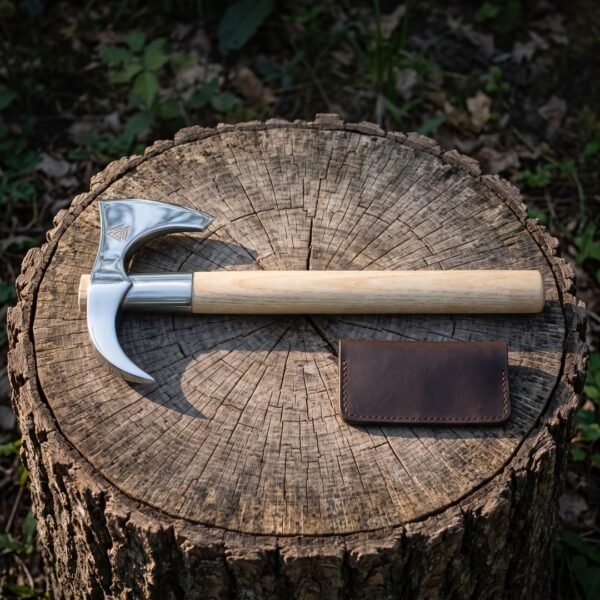
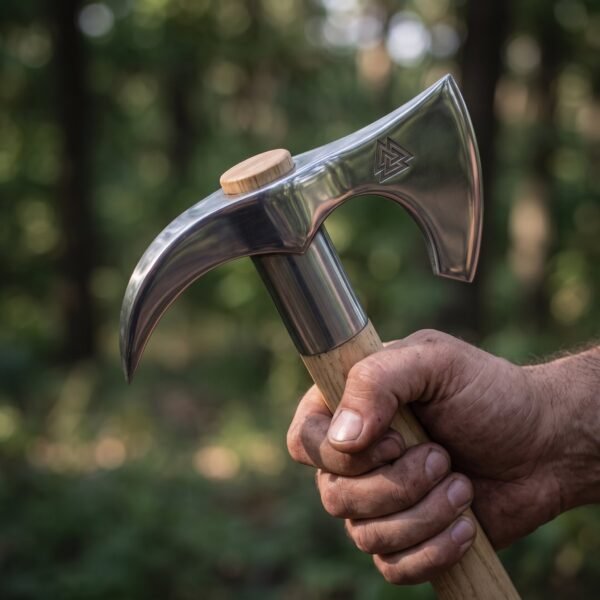
Gleambeard Hand Forged 1095 Steel Bearded Axe with Engraved Valknut | 17 Inch Ash Haft and 6 Inch Edge | Mirror Polished Head and Leather Blade Cover | Norse Gift | RK-2131
Original price was: $249.00.$199.20Current price is: $199.20.What the beard actually does
Hold a bearded head side on and the shape explains itself. The edge sweeps down past the eye, so the steel hangs below the haft rather than sitting square on it. The Norse called this form the skeggox, and it turns up across Scandinavia and the North Sea trading world in sizes from small belt tools to heads a foot across.
Three things come out of that shape, and all of them are practical rather than decorative. Edge length is the first. A bearded head gives five or six inches of cutting edge for the weight of a compact head half as deep, because the beard is drawn thin. Grip is the second. The open crescent behind the beard lets you choke right up under the head and use the axe like a large knife for carving, shaping and fine splitting, which is why green woodworkers still buy the pattern. The hook is the third. A curved lower horn catches and pulls, whether that is the rim of a shield in a living history display or a branch you are dragging clear of a path.
Set against a straight felling head, a bearded axe is lighter in the hand for the same amount of edge and far better at controlled work close to the head. Set against a hatchet, it has more reach along the edge and more bite at the toe.
The sizes on this page
Overall length is the figure that changes how an axe behaves, more than head shape or steel. Three bands cover everything here.
Hand axes, 15 to 16 inches
One handed pieces with cutting edges around 4 to 4.5 inches. These are belt and pack axes. Listed weights sit near 1 lb 10 oz to 1 lb 14 oz complete, which is light enough to carry all day and heavy enough to bite. Several carry a squared hammer poll behind the eye for driving pegs and tent stakes. Hafts are pale ash, hickory or rosewood, some with a leather wrapped grip band.
Belt and camp axes, 19 to 22 inches
The middle of the range and the size most buyers end up with. Cutting edges run 4.5 to 5 inches, hafts are ash, birch, oak or dark stained hardwood, and the extra shaft turns the axe from a wrist tool into a forearm tool. A 19 inch axe at about 1 lb 14 oz splits kindling, limbs a fallen branch and still hangs on a belt without dragging.
Long hafted axes, 26 to 35 inches
Two handed pieces. Cutting edges here reach 5, 7 and in the largest heads 10 inches along the crescent, and complete weights run past 3 lb and up to about 4 lb 6 oz. The swing comes from the shoulders rather than the wrists. These are display and living history pieces first, and a 34 inch haft with an 11 inch head hanging on a wall reads very differently from a hand axe in a drawer.
Sizes, steel and weights across the range
Every figure below is taken from the specification panel of a piece on this page. Heads are forged and ground by hand, so read the numbers as what to expect rather than as a guarantee to the millimetre.
| Size class | Overall length | Cutting edge | Head steel and hardness | Haft | Listed weight |
|---|---|---|---|---|---|
| Hand axe | 15 in | 4.5 in horn to beard | 1095 at 54 to 58 HRC | Pale ash with a leather wrapped grip | About 1 lb 10 oz complete |
| Hand axe with hammer poll | 16 in | 4 in across the bit | 1095 at 54 to 58 HRC | White ash with a leather centre band | About 1 lb 14 oz |
| Belt axe | 16 in | 4.5 in horn to beard | 1095 at 54 to 58 HRC | Straight grained hickory | Not listed |
| Camp axe | 19 in | 5 in horn to beard | 1095 at 54 to 58 HRC | Dark stained hardwood with a wrist thong | About 1 lb 14 oz complete |
| Damascus camp axe | 19 in | 4.5 in horn to beard | Damascus at 52 to 55 HRC on this older listing | Light birch, wedged in the eye | Head about 1.5 lb |
| Damascus mid length | 22 in | 4.5 in along the curve | Damascus at 58 to 60 HRC | Pale ash with a leather grip wrap | Not listed |
| Damascus two hand | 28 in | 5 in of curved bearded edge | Damascus at 58 to 60 HRC | Dark hardwood, oval section | Not listed |
| Long hafted Dane style | 32 in | 7 in horn to beard | 1095 at 54 to 58 HRC | Ash with a black cord wrap | About 2 lb 6 oz complete |
| Long hafted with hammer poll | 32 in | 5 in along the bearded bit | Damascus at 58 to 60 HRC | White ash with a leather wrapped butt | About 3 lb 4 oz |
| Two handed war axe | 34 in | 10 in along the crescent | 1095 at 56 to 58 HRC | Dark stained ash wrapped in leather cord | About 4 lb 6 oz |
Two figures deserve a second look. Cutting edge is measured around the curve on a bearded head, so a 5 inch bearded edge covers less straight line width than a 5 inch felling bit. And listed weight is sometimes given for the head alone and sometimes for the complete axe, so check which one a product page states before comparing two pieces.
1095 and Damascus in an axe head
Two steels are presented as a house standard and no others. A few older listings state a different hardness in their own specification table, and where they do, that table is the accurate answer for that piece rather than the range quoted here.
Plain 1095 is a simple high carbon steel hardened to 54 to 58 HRC at the edge, with the eye and poll left softer so the head can take a hit without cracking. It takes a keen edge, files and stones easily, and forgives a beginner because you can feel the burr forming. It also rusts, and a head left wet overnight will show orange spotting by morning.
Damascus here is 1095 and 15N20 forge welded in alternating layers, drawn out, folded and acid etched so the nickel bearing 15N20 reads as bright lines against darker 1095. Hardened to 58 to 60 HRC, it holds an edge a little longer and takes a little more work to bring back. Most of the billet is still 1095, so it rusts on the same schedule and wants the same wipe and the same film of oil. Choose 1095 if the axe will be used hard and sharpened often. Choose Damascus if the piece is a gift, a display item or something you want to look at.
Hafts, hanging and fittings
Heads on this page are hung through a drifted eye and locked with a wooden wedge, and several add a steel cross wedge driven at right angles to it. That is the construction you want. A hung head tightens as the wedge compresses and loosens if the wood dries out, so keep an axe out of direct heat and away from a radiator over winter.
Haft timbers behave differently. Ash is the traditional choice, springy and straight grained, and it takes shock well. Hickory is denser and stiffer. Oak is heavy and hard. Birch is light and pale. Walnut and dark stained hardwoods are chosen for looks on the display pieces rather than for shock absorption. Several hafts carry a leather wrap, a cord grip or a brass or steel collar behind the head, which protects the shoulder of the shaft from an overstrike.
Brass fittings darken over months. A metal polish on a cloth brings them back in a minute, or leave them alone if you prefer the aged look. Leather edge covers arrive stiff and take the shape of the head over a few weeks.
Sharpening, rust and storage
A hand forged axe arrives with a working edge and will dull. For 1095 at 54 to 58 HRC, a bastard file followed by a round axe stone restores the bevel quickly, and a fine stone or a strop finishes it. Work with the curve, moving the contact point along the crescent from the toe to the beard rather than pushing straight across, because a flat stroke on a curved edge flattens the belly and ruins the geometry. Damascus at 58 to 60 HRC wants a stone rather than a file, and takes longer for the same result.
Rust prevention is one habit repeated. Wipe the head dry, leave a light film of oil on the steel, and do not store a carbon steel head inside a damp leather cover for months at a time. Leather holds moisture against steel, which is the most common way a well cared for axe still ends up spotted. Camellia, mineral or food safe oil all work. A grey patina is stable and does no harm.
How the bearded axe sits against the other Norse patterns
A bearded axe and a Dane axe overlap at the long end of this page. The Dane axe is the two handed form with a broad thin crescent on a shaft of three feet or more, built for reach. Several of the long hafted pieces here are effectively both, a bearded head on a Dane length haft.
A throwing axe is a different tool with a compact head, a plain edge and a haft meant to be replaced. A splitting or felling axe carries a thick wedge shaped bit that pushes wood apart instead of slicing it. A tomahawk has a light head and a friction fitted haft that drops out for replacement. If you want one Norse axe that looks right and works, the bearded pattern is the answer, and that is why it outsells the rest.
Engraving and gifting
Most heads on this page can be engraved after the axe arrives in the United States. Names, dates, rune lines and Norse symbols go onto the cheek of the head or the collar, which is the flat area a bearded profile gives you plenty of. Elder Futhark is a phonetic alphabet rather than a cipher, so a name is transliterated by sound, and there is no rune for the letter C.
Engraving is permanent and an engraved piece cannot be returned, so send the exact spelling and read it twice before you order. A bearded axe with a date on the cheek is one of the few gifts that neither wears out nor gets put in a drawer.
Where these axes are made
Every head on this page is made by hand in the Czech Republic. Finished pieces are imported to the United States, inspected by Ransack Viking in Chicago, Illinois, and shipped from there, with engraving added after arrival. Head seating on the haft, the edge and the fit of the leather cover are checked before an axe goes out. Small differences in grind, etch figure and haft colour between two axes of the same name are normal, because two people made them on two different days.
Browse related axe categories
- Dane axes, the long hafted two handed crescent
- Battle axes across the Norse and medieval patterns
- Throwing axes built for target work
- Splitting and felling axes for firewood
- Tomahawks with light heads and friction fitted hafts
- Norse arms, the full range of hafted pieces
- Viking axes across every head shape we carry
- Axe handles and replacement hafts
Guides worth reading first
- What is a bearded axe and why the beard is there
- Battle axe vs bearded axe: two different jobs
- How to choose a Viking axe: head, haft and length
- How to sharpen an axe with a file and a stone
- Axe care: keeping a head tight, sharp and rust free
- Axe against hatchet, where the line actually falls
Frequently asked questions
What is a bearded axe?
It is an axe whose cutting edge drops below the line of the haft, leaving an open crescent behind the beard. The Norse name is skeggox. The shape gives a long cutting edge on a light head and lets you choke up under the head for close carving work.
What was a bearded axe used for?
Mostly ordinary work. It split and shaped wood, trimmed timber and did farm jobs, and the same head served as an arm when it had to. The beard was a woodworking feature first, which is why the pattern survived long after the Norse period in carpenters' tool chests.
Are these bearded axes sharp when they arrive?
Yes. Heads are ground and finished by hand and arrive with a working edge, protected by a fitted leather cover. They are not razors out of the box, because a very thin edge on an axe chips against a knot. A file and a stone will take any of them further.
What size bearded axe should I buy?
For carrying and camp work, take something between 16 and 19 inches overall with a 4.5 to 5 inch edge. For splitting and two handed use, go to 26 inches or more. For a wall, the 32 to 35 inch pieces have the presence that a hand axe never will.
Will the head rust?
Both steels here will if you let them. Damascus on this page is mostly 1095 with 15N20 layers, so it behaves like carbon steel rather than stainless. Wipe the head dry, keep a light film of oil on it, and do not leave it stored inside a damp leather cover.
Can the haft be replaced?
Yes. Heads are hung on a wedged eye, so a broken shaft can be drilled and driven out and a new one fitted and wedged. Replacement hafts are stocked separately. Fit the new shaft dry, wedge it, then oil the wood.
Can I have runes or a name engraved on the head?
Yes, on most heads here. Engraving is carried out in the United States after the axe arrives, so send the exact spelling you want. Elder Futhark works phonetically, and there is no rune for the letter C, so names are transliterated by sound.
Where are these axes made?
They are made by hand in the Czech Republic, then imported, inspected and shipped by Ransack Viking from Chicago, Illinois, with engraving added in the United States after arrival.
Featured pieces
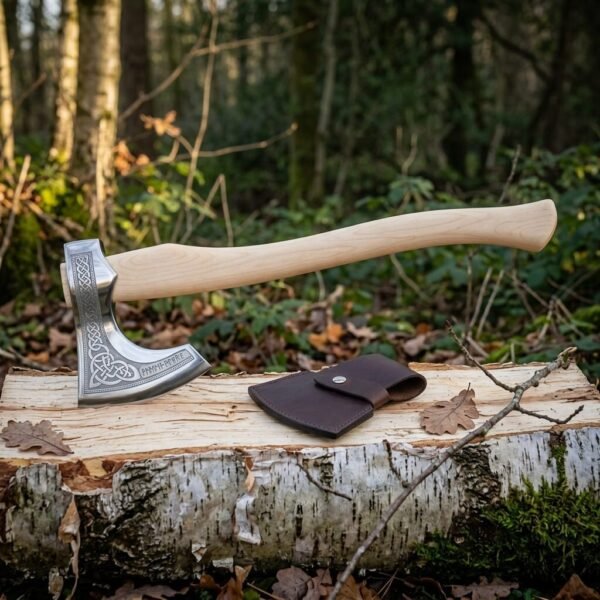 Birchskeg Hand Forged High Carbon Steel Viking Bearded Axe
Original price was: $189.00.$151.20Current price is: $151.20.
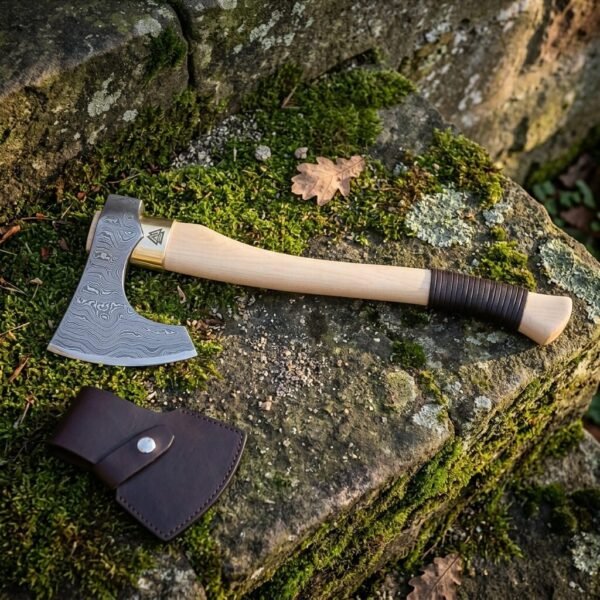 Wyrmskegg Hand Forged Damascus Steel Viking Bearded Axe
Original price was: $249.00.$199.20Current price is: $199.20.
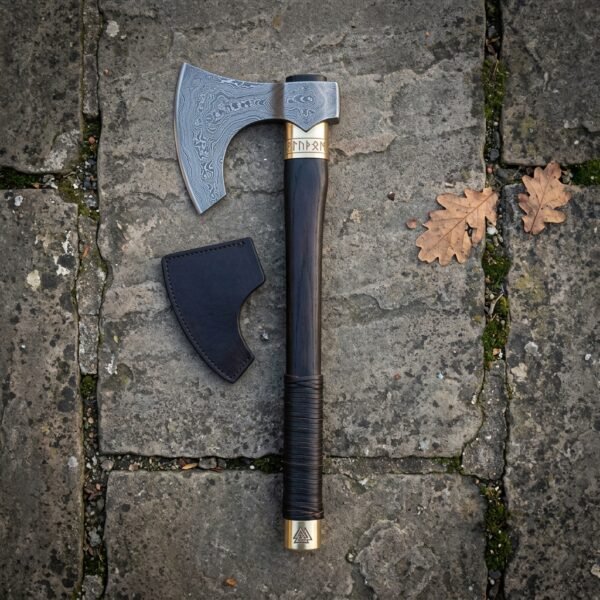 Ravenskegg Hand Forged Damascus Steel Ragnar Style Viking Bearded Axe
Original price was: $275.00.$220.00Current price is: $220.00.
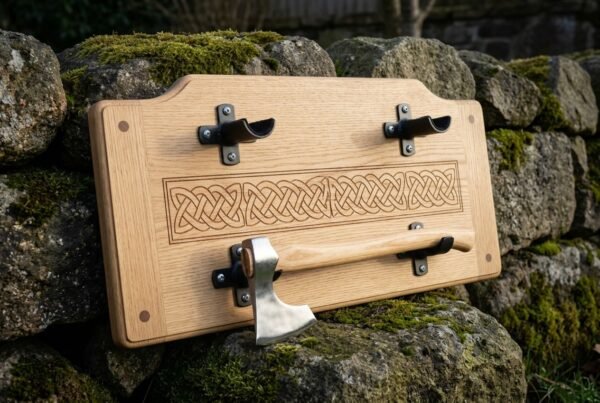 Oakhewn Hand Forged Viking Axe Wall Plaque
Original price was: $329.00.$263.20Current price is: $263.20.