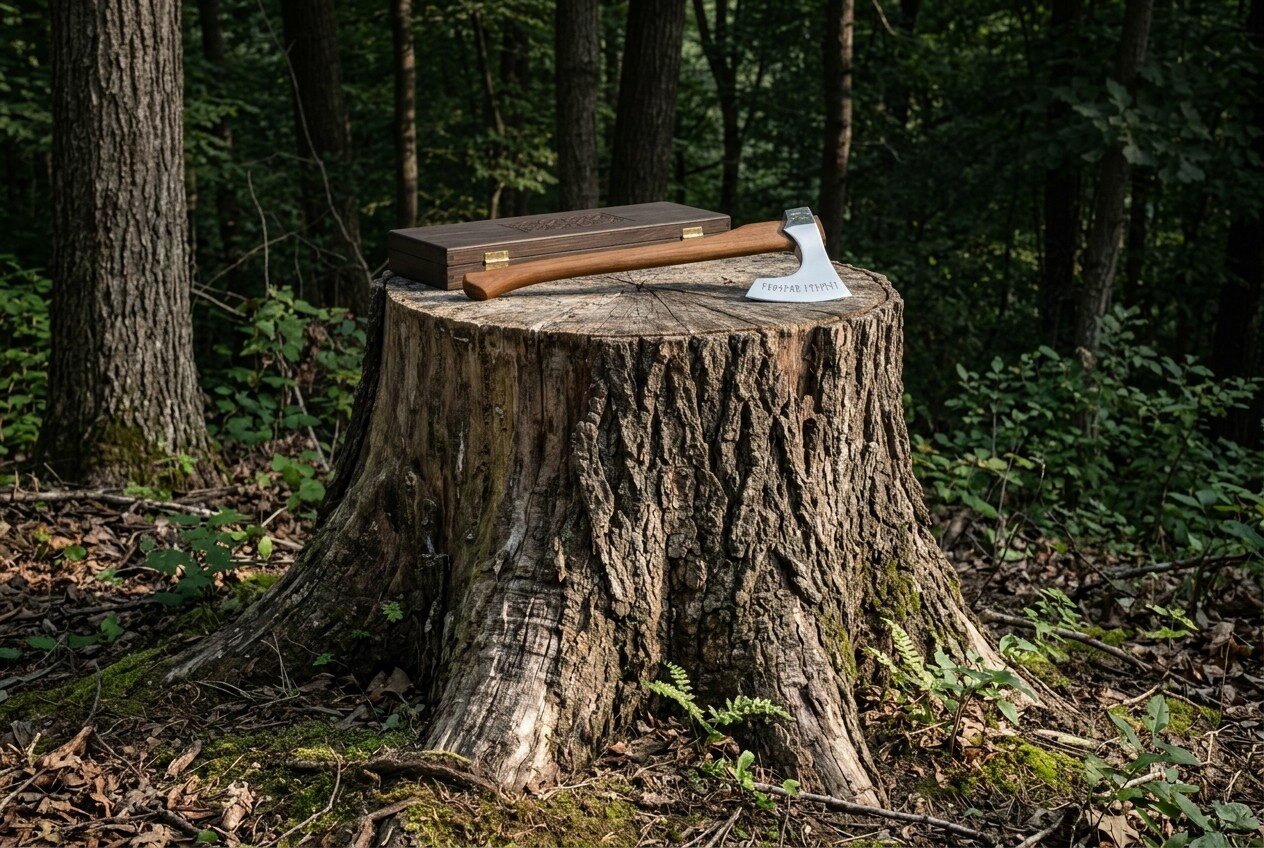
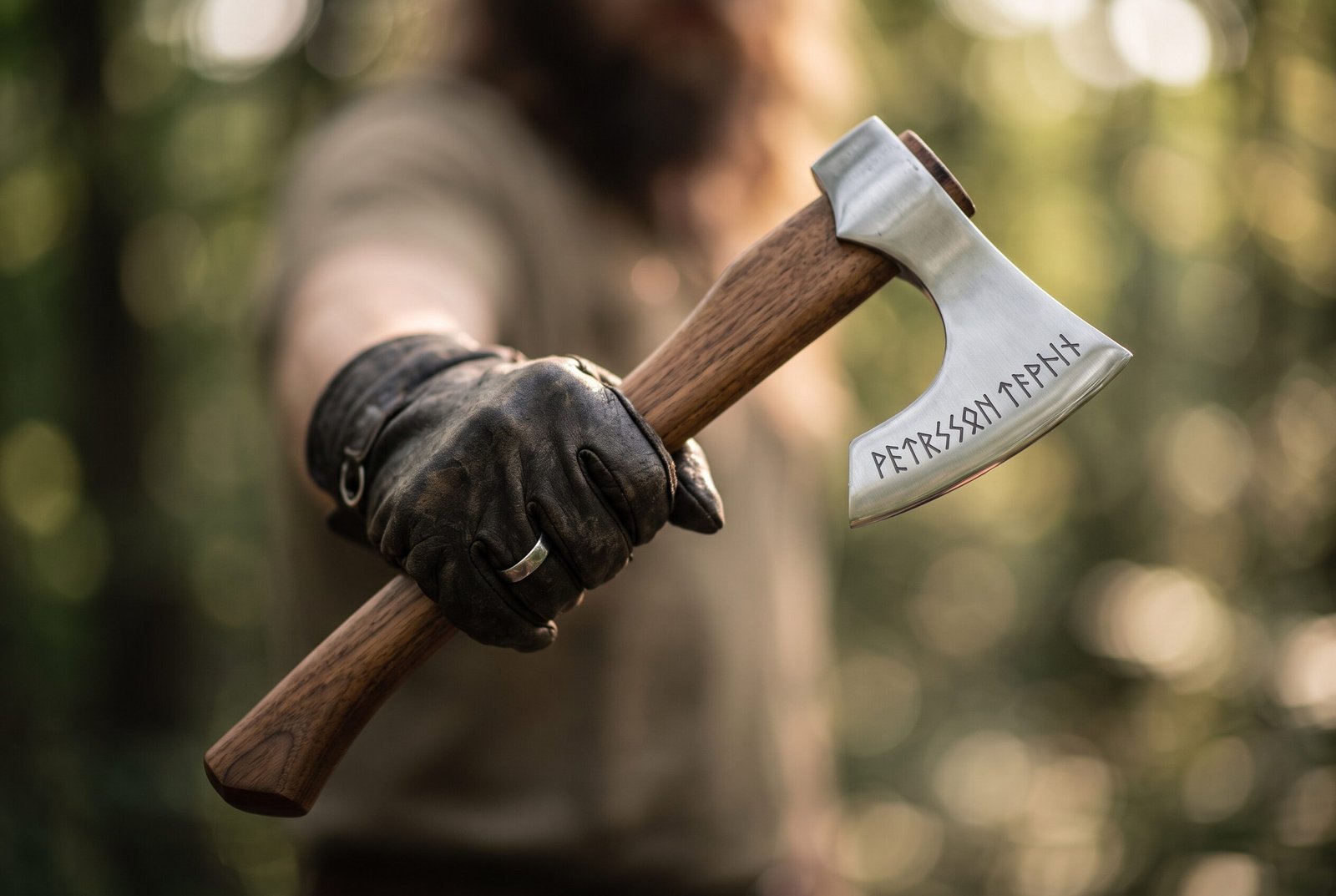
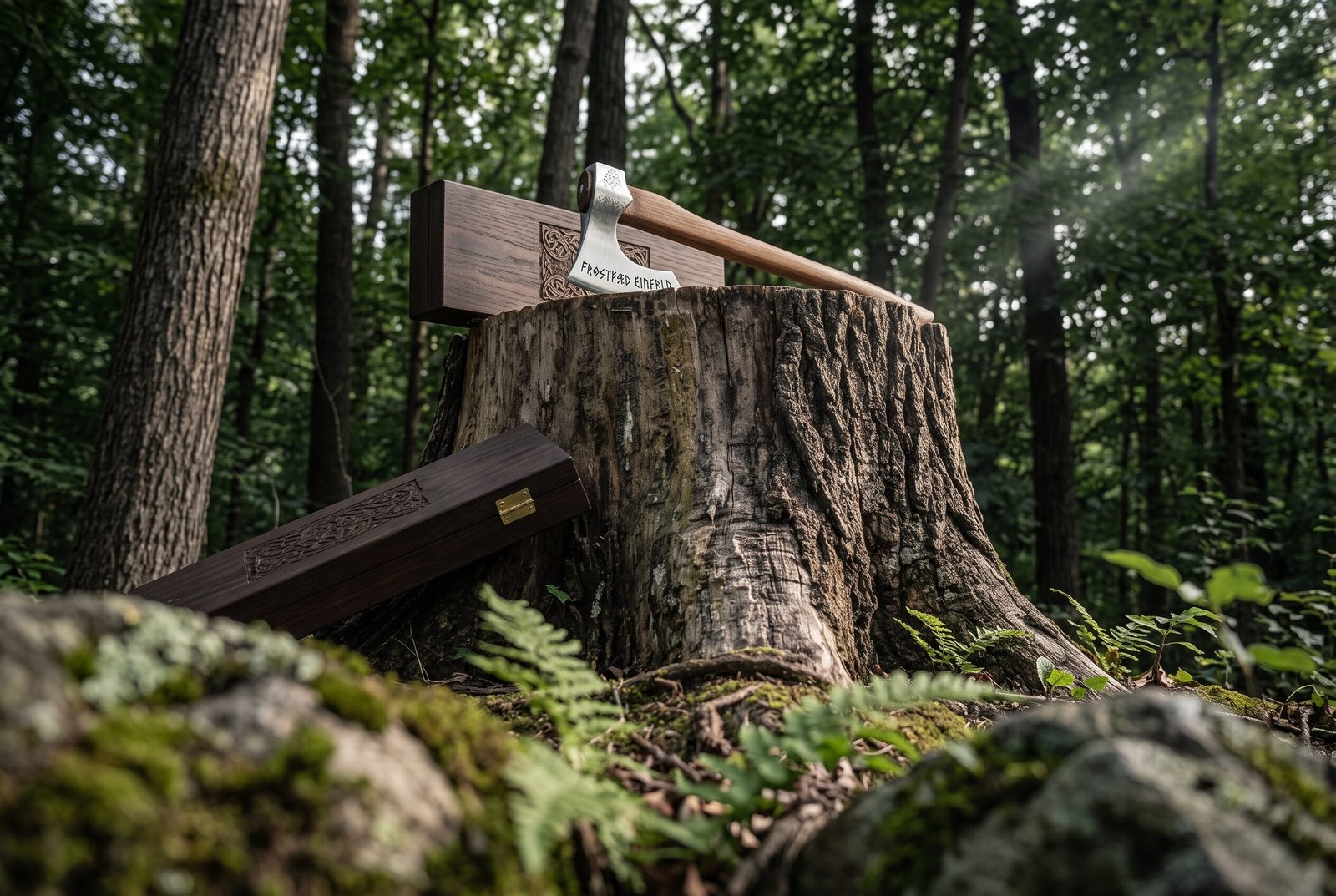
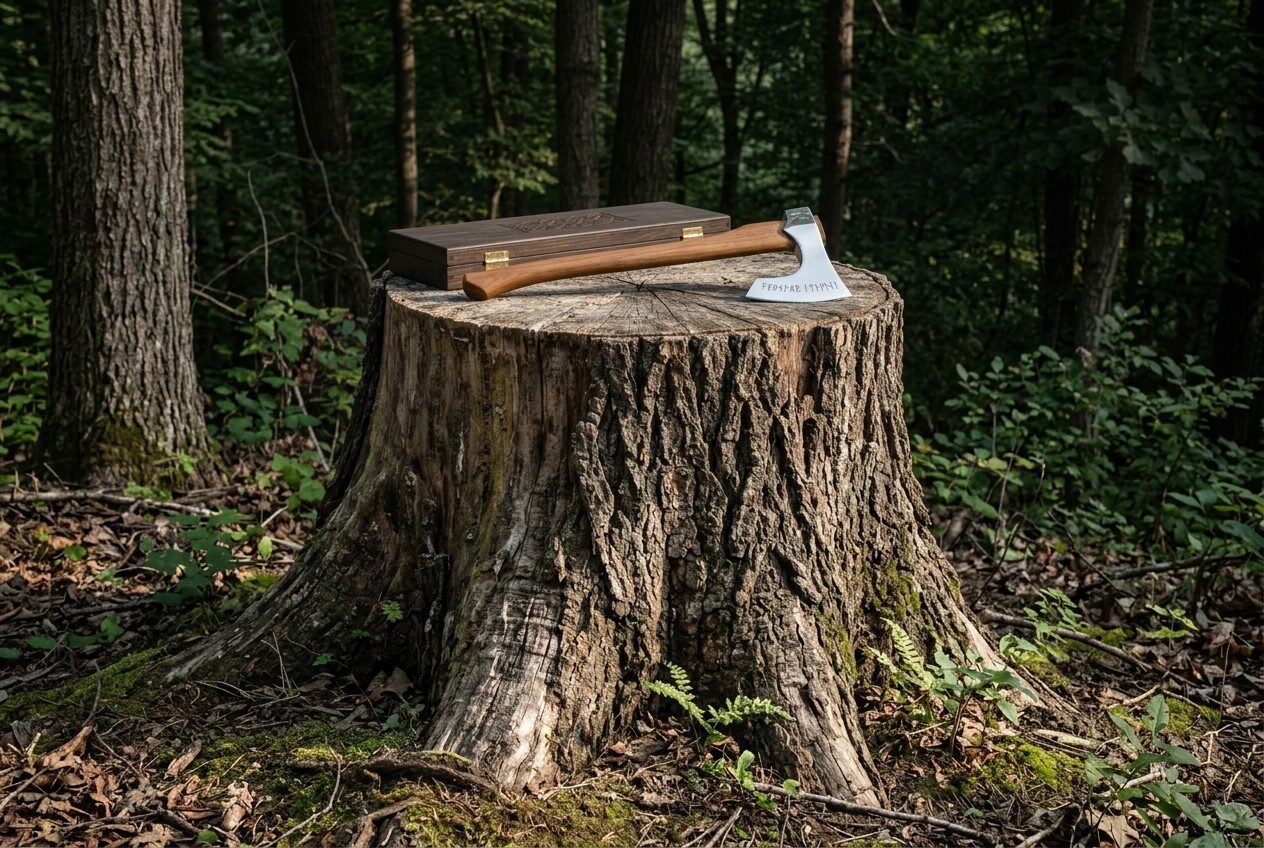
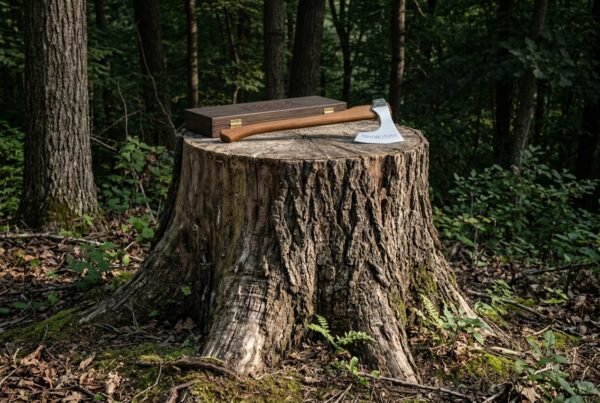
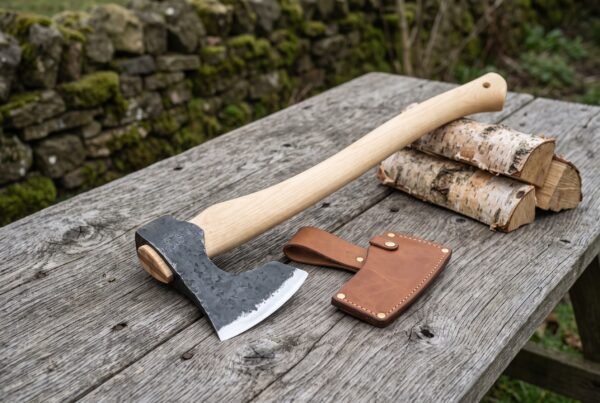
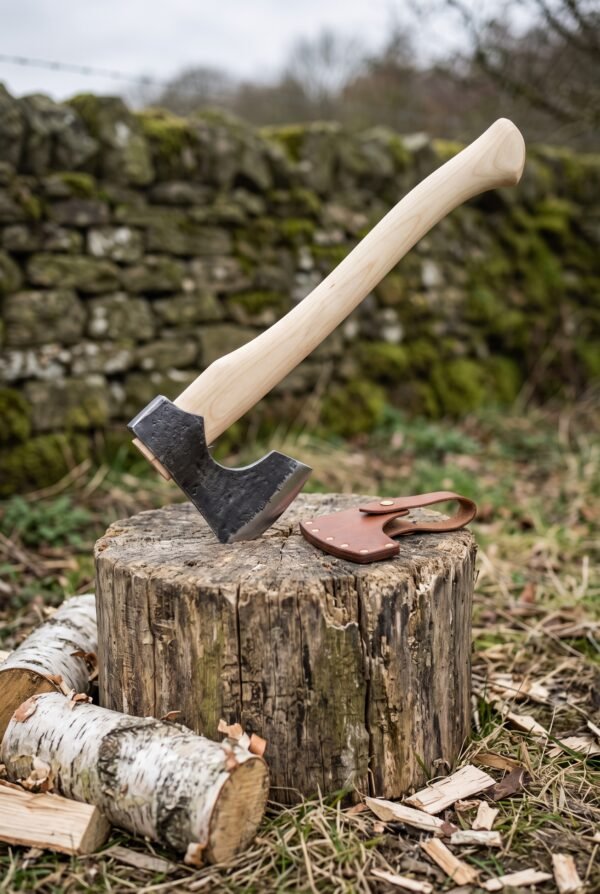
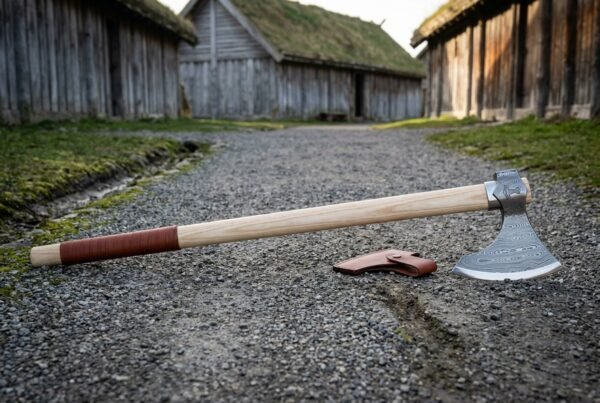
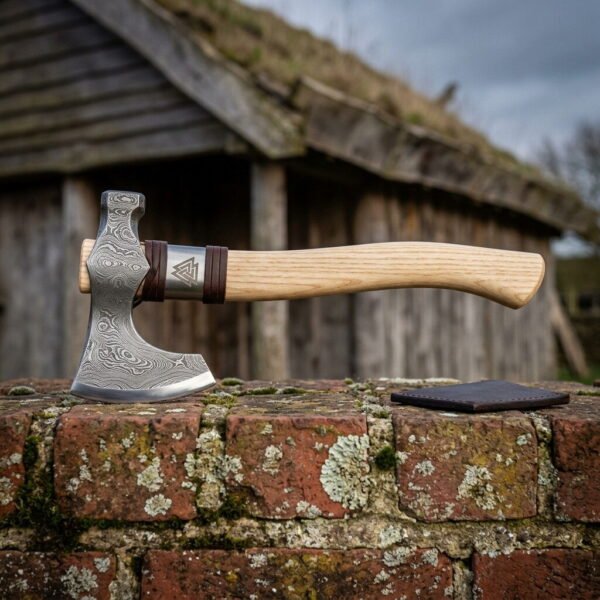
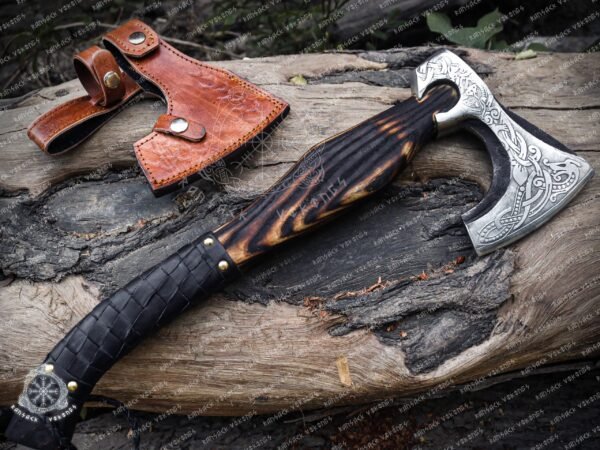
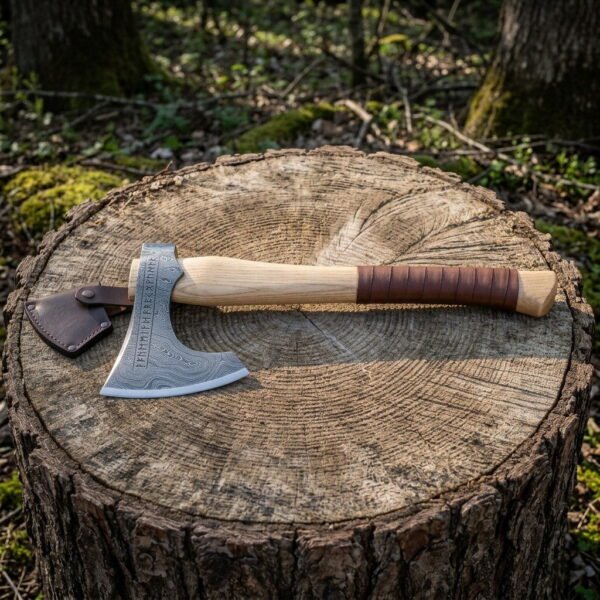
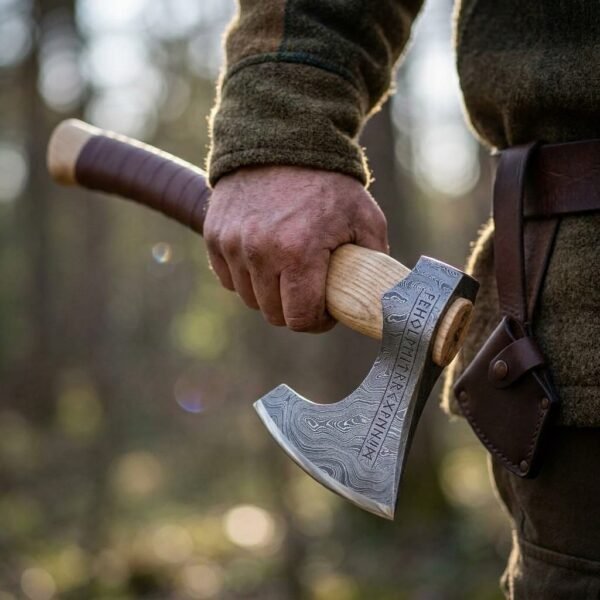
The Walnutskeg is a Norse bearded hand axe supplied in a carved hardwood presentation box. The head is 1095 high carbon steel with a polished face, a small upper horn and a long drooping beard below the eye, and a line of Elder Futhark runes is cut across the cheek. The haft is straight grained hickory, left in a clear finish so the grain shows. The box is dark hardwood with brass hinges and a carved panel on the lid, sized so the axe lies inside it.
The Old Norse word is skeggox, literally beard axe, and the shape is one of the most efficient things the Viking age produced. The beard is the part of the edge that hangs down below the eye of the axe, and it does three separate jobs at once. It gives you a long cutting edge without the weight of a long head, because the steel is spread downward instead of forward. It leaves an open gap behind the beard where a hand can choke right up under the head for controlled carving and shaping work. And it gives you a hook. A beard can catch a shield rim and pull it aside, and Norse boatbuilders used the same feature to hook and hold a plank while working it. This axe is forged and finished in the Czech Republic.
If you are weighing this against something lighter to carry, a Viking axe against a tomahawk compares the two. Elder Futhark is where these marks come from, and the full rune chart tells you what is actually cut into the steel. Lighter heads meant for a target sit in the throwing axes.
Specifications
| Head | 1095 high carbon steel, hardened to 54 to 58 HRC |
|---|
| Head profile | Bearded with a small upper horn, a long lower beard and an open hollow behind it |
|---|
| Cutting edge | Approximately 4.5 inches from horn to beard |
|---|
| Overall length | Approximately 16 inches |
|---|
| Haft | Straight grained hickory in a clear finish, gently curved with a flared foot, haft end standing just proud of the eye |
|---|
| Engraving | Elder Futhark rune line cut along the cheek just above the edge |
|---|
| Finish | Polished head, natural haft |
|---|
| Presentation box | Dark hardwood with brass hinges and clasp and a carved knotwork panel |
|---|
| Included | Axe and hardwood presentation box |
|---|
| SKU | RK-1877 |
|---|
What the beard is for and why the head is thin
Pick up an original Viking axe in a museum case and the first thing that surprises people is how little metal is in it. Heads from the ninth and tenth centuries frequently weigh under two pounds, and some of the big Dane axes weigh barely more despite being enormous. The reason is economic. Smelted steel was expensive and slow to make, so smiths used as little as they could get away with. A typical head was forged from a wrapped body of softer iron with a hardened steel bit forge welded in along the edge, so only the part that actually cuts was made of the expensive material.
That is why the bearded profile makes sense. Spreading the edge downward into a beard gets you a long cutting edge from a small amount of steel, and a light head on a long haft moves fast. Speed matters more than mass in a cutting blade, because energy scales with the square of velocity. The gap behind the beard is a genuine working feature and not a stylistic flourish: put your hand up under the head and you have a controllable carving tool, then slide back down the haft and you have a felling axe.
The steel and the hickory
The head is 1095 high carbon steel hardened to 54 to 58 HRC. That is deliberately a touch softer than we take a knife blade, because an axe edge has to survive impact. Too hard and the edge chips out on the first knot; in this range it deforms slightly and can be steeled or filed back rather than lost.
The haft is hickory, and there is no better choice. Hickory is ring porous, with long stiff fibres and an unusually high shock resistance for its weight, which is exactly why it has been the American standard for axe and hammer handles for two hundred years. What matters more than species is grain direction: the growth rings should run parallel with the plane of the axe head so the handle flexes the right way. We select hafts for straight grain rather than for figure, so a plainer looking handle is usually the stronger one.
Engraving, runes and your own design
Use the rune converter on this page to turn a name, a date or a short phrase into Elder Futhark and we will cut it into the steel or the wood. If you would rather have a Viking pattern than a rune line, choose your own design in the engraving option above the add to cart button and tell us where it goes. Where a piece already carries an engraved design, your chosen engraving replaces it rather than sitting alongside it. On this axe the cheek of the head carries the rune line, and the lid of the presentation box will take a second engraved line or a name, which is what most people order it for. See the engraving page.
Handling and balance
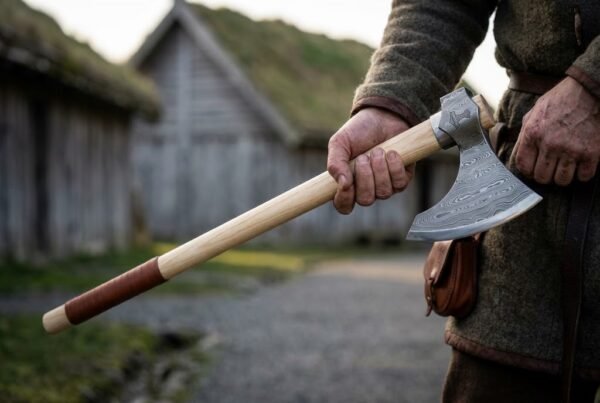
At around sixteen inches this is a one hand axe. Held at the end of the haft it swings like a hatchet and will cut kindling and limb small timber. Choked up behind the beard it becomes a carving tool with the edge only a few inches from the hand, which is how Norse woodworkers actually used them for hewing and shaping.
The balance sits close to the head, as it should on any axe. Check the head seating before every use, because wooden hafts move with humidity, and if there is any looseness at all stop and deal with it rather than swinging it. A head that comes off a haft in mid swing is genuinely dangerous.
Care
Wipe the head dry after use and keep a light film of oil on the polished steel. 1095 is not stainless and it will spot if it is left damp or fingerprinted. Do not put the axe away wet, and do not leave it out in a shed over a wet winter. Oil the hickory haft once or twice a year with boiled linseed oil, worked in with a cloth and wiped back, which keeps the wood from drying out and shrinking away from the eye. The presentation box is a finished hardwood item: dust it, keep it out of direct sunlight and away from radiators, and wipe up any spill quickly. Our steel care page covers rust removal on a head.
Keep the head dry and the edge oiled, and the axe care guide covers sharpening and haft upkeep.
Made in the Czech Republic
This is a handmade piece from the Czech Republic, made in a workshop that still forges, grinds and finishes by hand instead of stamping parts out. The smiths there have kept the older way of working, and the wood, horn and leather are shaped and fitted by hand as well. Two pieces of the same design will never be identical, and that is part of what you are buying.
Ransack Viking is a United States company. We handle the import ourselves, look over every piece when it lands and ship from our warehouse in Chicago, Illinois. Engraving is done in the United States after the piece arrives, so your design goes on before we send it out.
A note on handmade variation
This is hand made, not machine made or bulk produced, so what arrives will not be a pixel for pixel copy of the photograph. Hammer texture on the head varies because each one is drawn out under the hammer by hand. Hickory grain and colour differ from haft to haft, and hickory naturally ranges from near white sapwood to a warm brown heartwood. The hardwood box is a natural material too, so its tone and figure change from box to box. The dimensions, the material and the build are the same every time. The character is not.
Frequently asked questions
Is this a working axe or a display piece
It is a working axe. The head is properly forged and heat treated 1095 and the haft is hickory. It will cut. Plenty of people buy it as a gift and it never leaves the box, and that is fine too.
Is it sharp out of the box
Yes, it comes with a working edge that will cut wood straight away. Ask in the order notes if you would rather it arrived blunt.
Is the presentation box included in the price
Yes. The axe and the carved hardwood box are one product and one price. The box is sized for the axe and holds it securely.
Can I have a name or a date on it
Yes, and this is the most popular option on this piece. Runes on the head, or a name on the lid of the box, or both. Use the rune converter on this page and tell us in the order notes where you want each line.
Does it come with a sheath
No sheath is included with this set, because it is built around the box rather than around carrying it on a belt. We sell leather axe sheaths separately if you want one.
How long does it take
One to two weeks of processing, then free US shipping. Engraving does not usually add time, but if you are buying for a wedding or a specific date, put the date in the order notes before you order.
What is in the box
- Walnutskeg rune engraved 1095 steel bearded axe on a hickory haft
- Carved hardwood presentation box with brass hinges
- Care card for carbon steel and hickory
- Lifetime warranty against defects in forging, grind, heat treat and fittings
- Forged and finished in the Czech Republic
Explore the range
See more in bearded axes, Viking axes and wedding and groomsmen gifts, or read the guides on sharpening an axe and choosing a haft.
Also in this part of the catalogue
Worth putting side by side with this is the Grainbeard bearded axe, pattern welded Damascus. In the same category sits the Whorlbeard bearded axe, pattern welded Damascus. A near match for this one is the Braidhewn bearded axe, forged from 1095.
For a different piece from the same family, look at the Hallwarden Dane axe. Or start from a blank sheet on the custom Viking axe page.


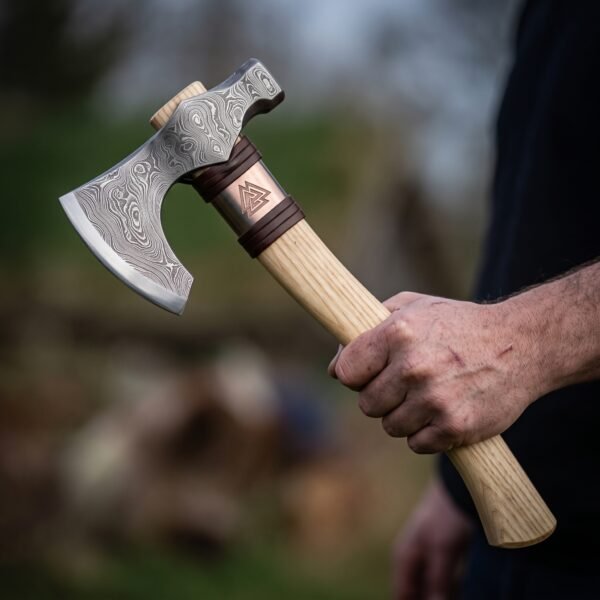
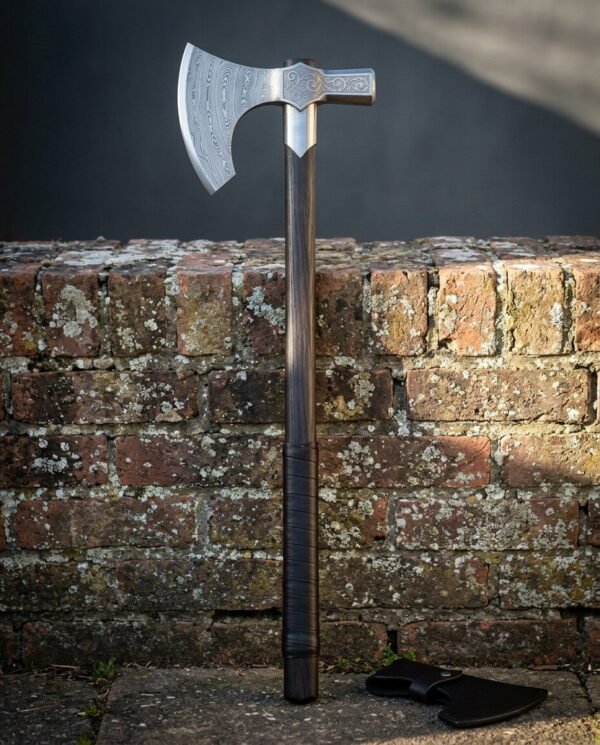
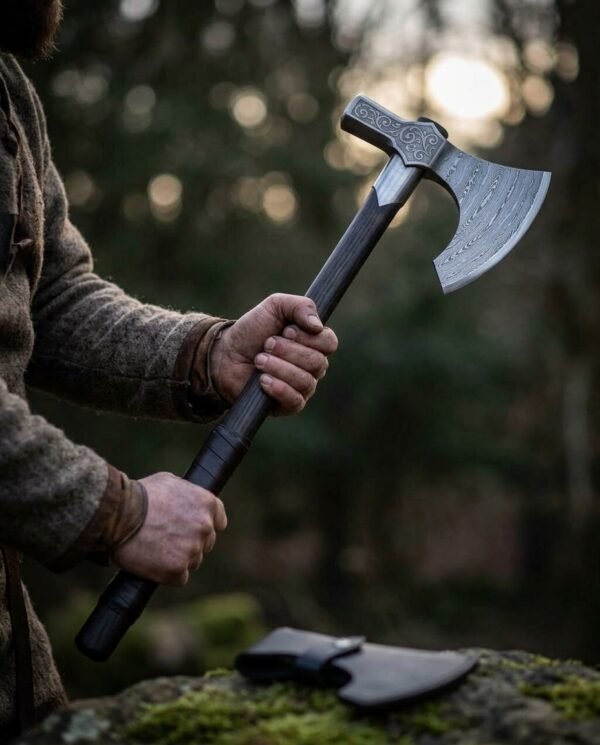
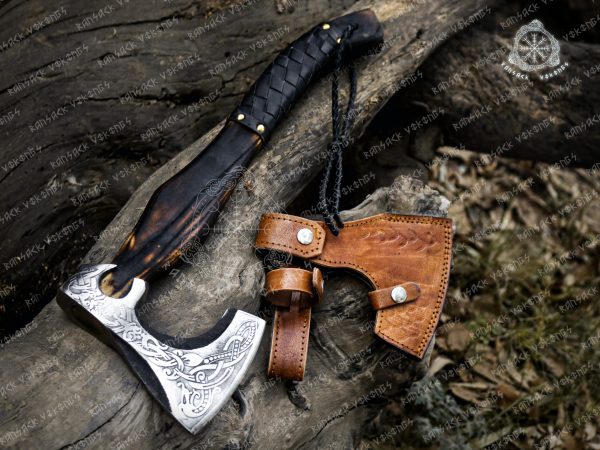
Got this as a birthday gift and the reaction was priceless. 1095 Steel blade holds a razor edge right out of the box. The walnut handle feels amazing and the balance is perfect. Came in a nice gift box which made it feel even more special. Will definitely order again for another gift.