Bearded axes: the skeggöx, forged the old way
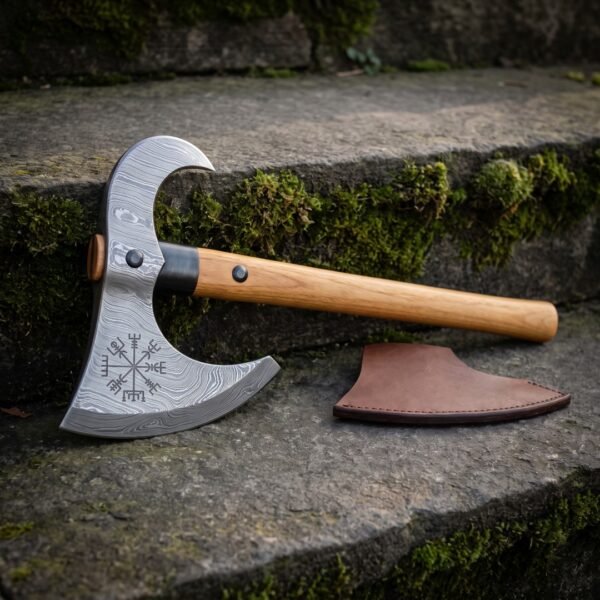
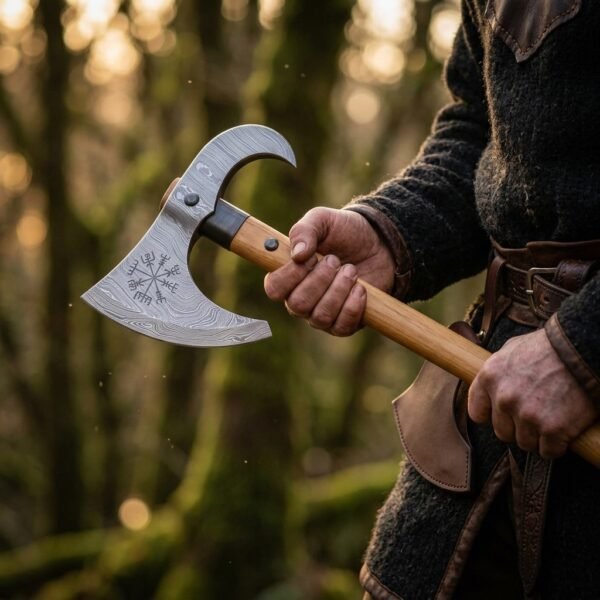
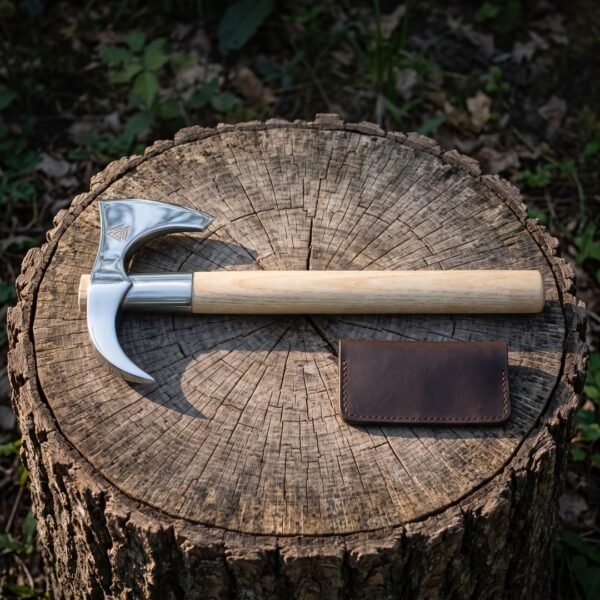
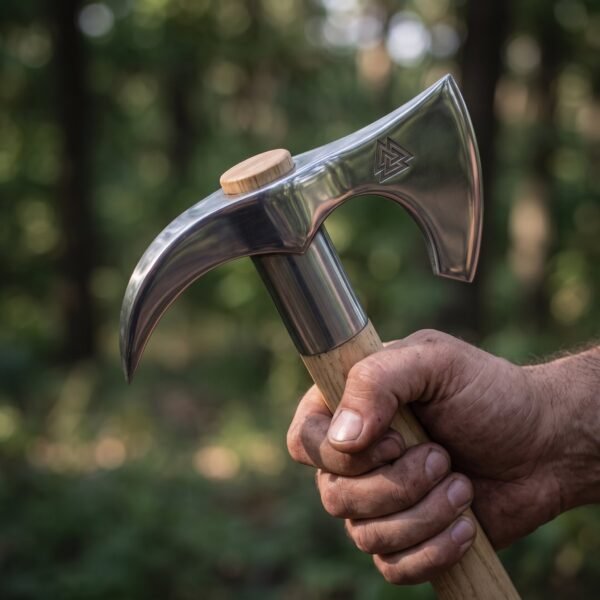
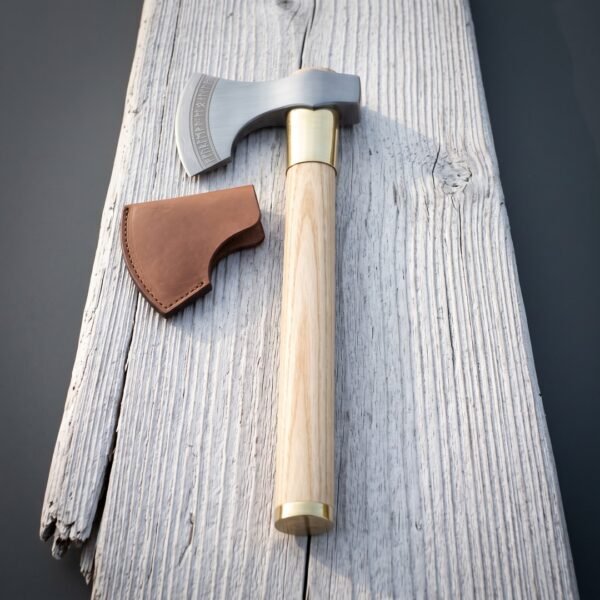
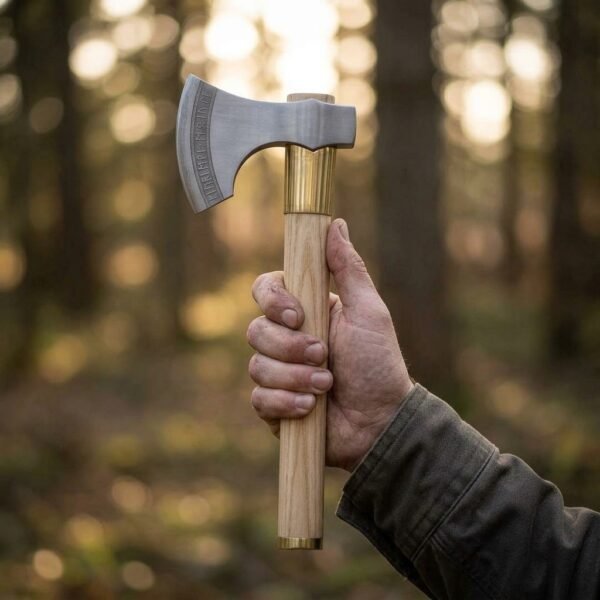
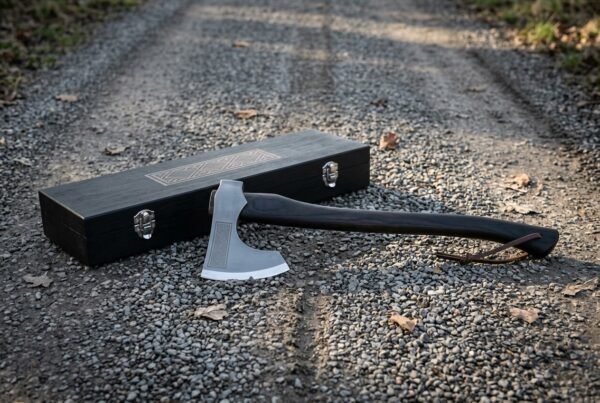
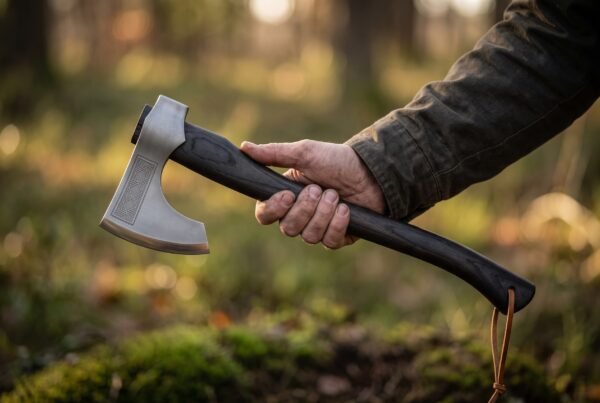
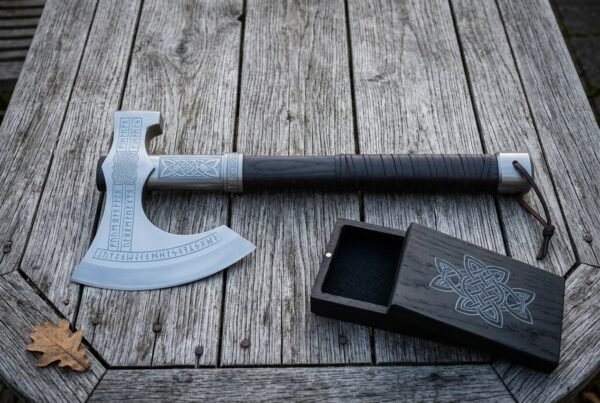
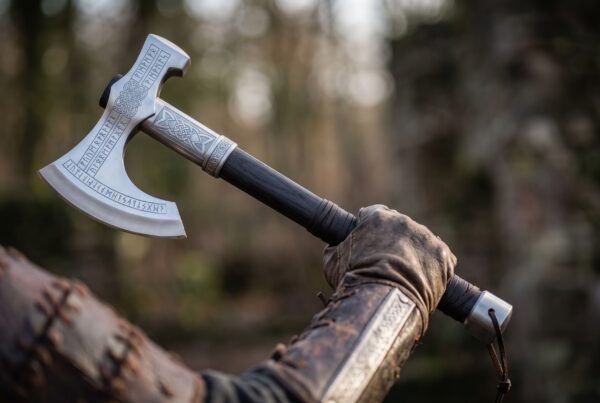
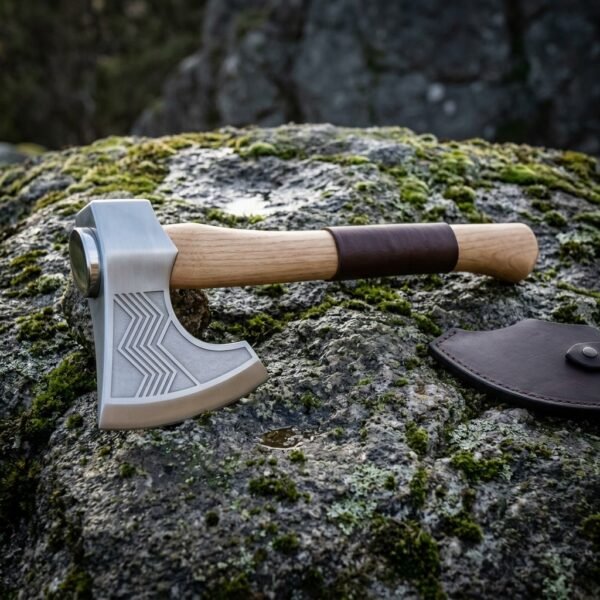
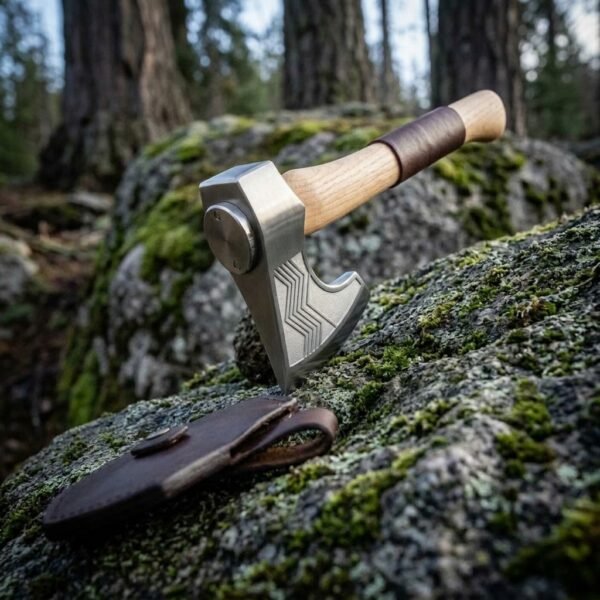
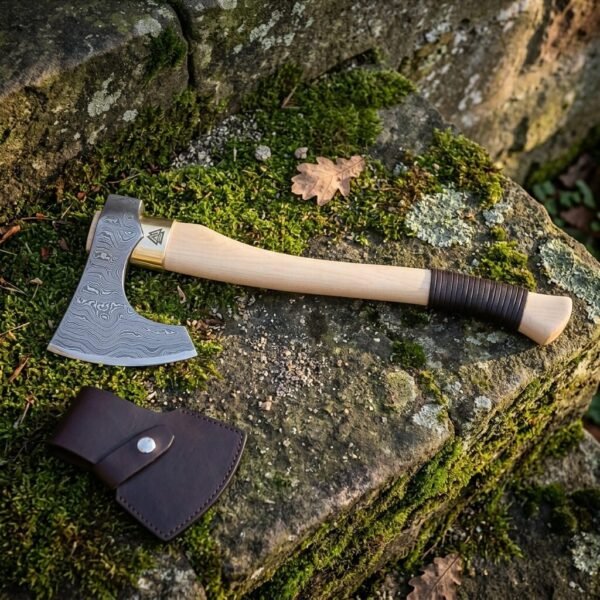
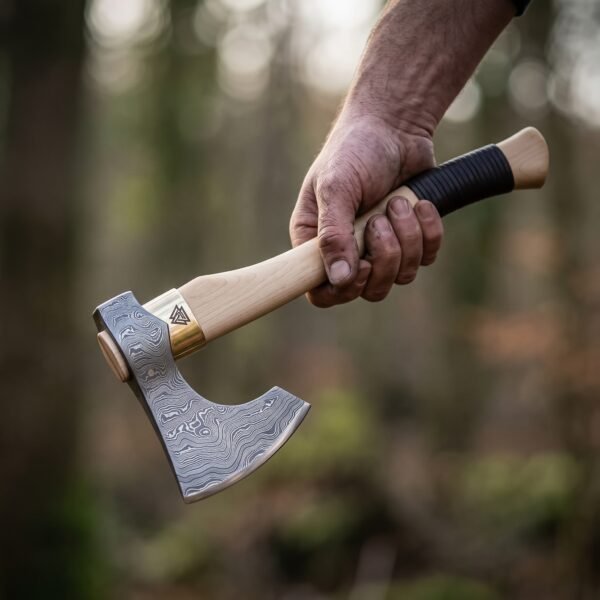
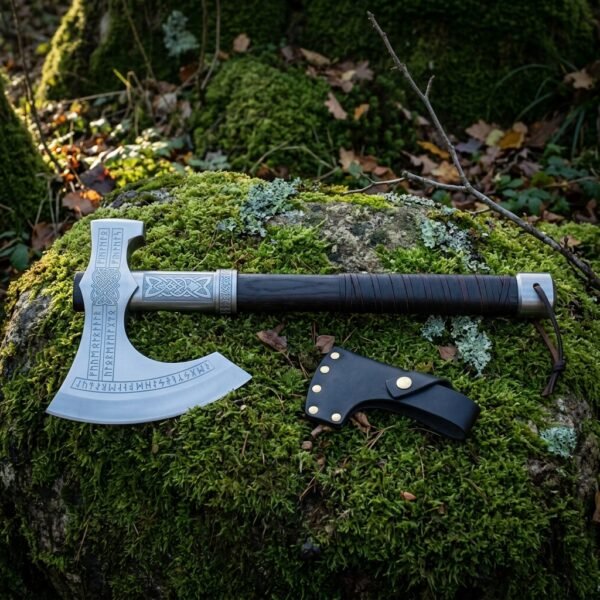
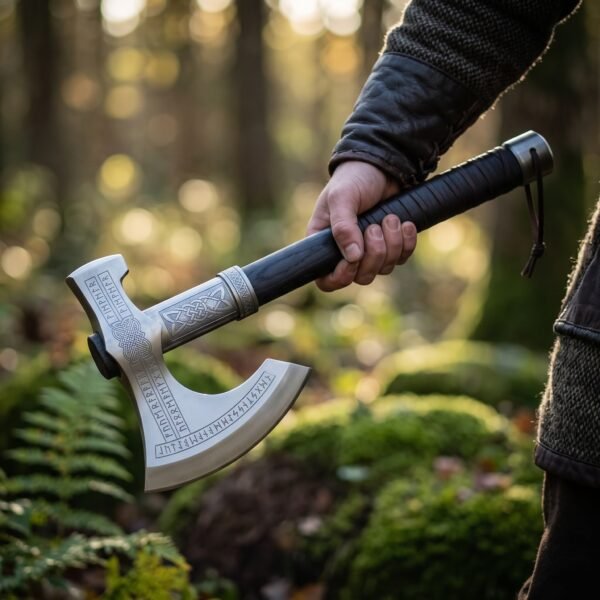
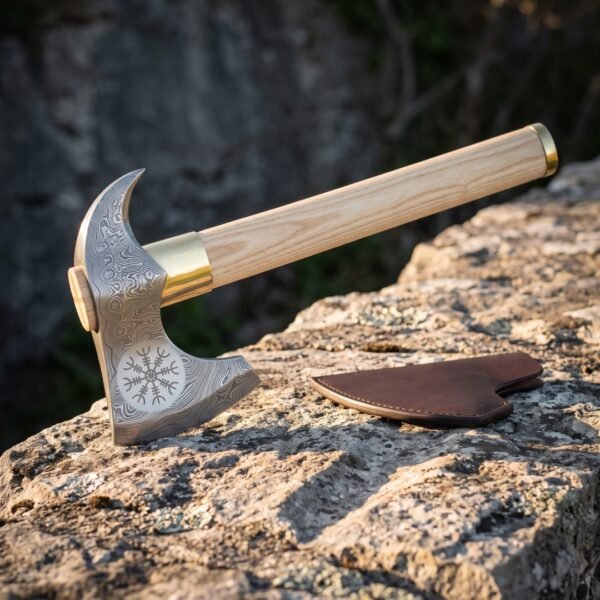
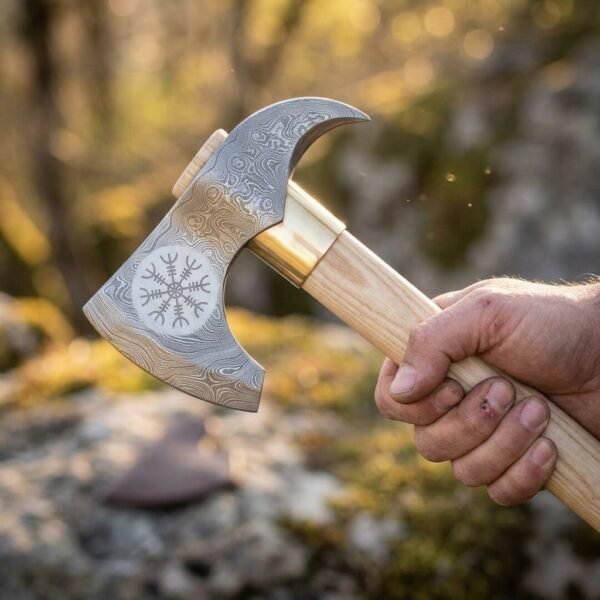
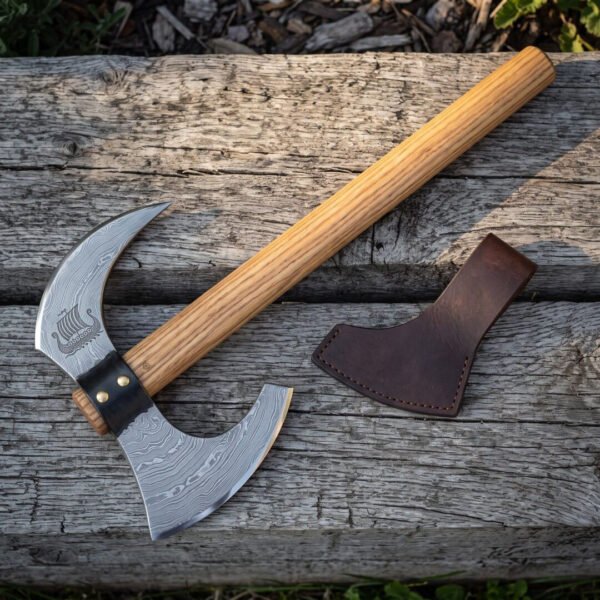
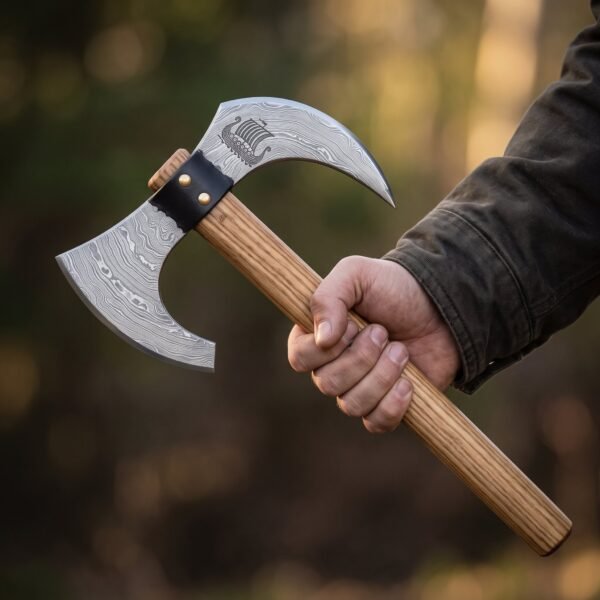
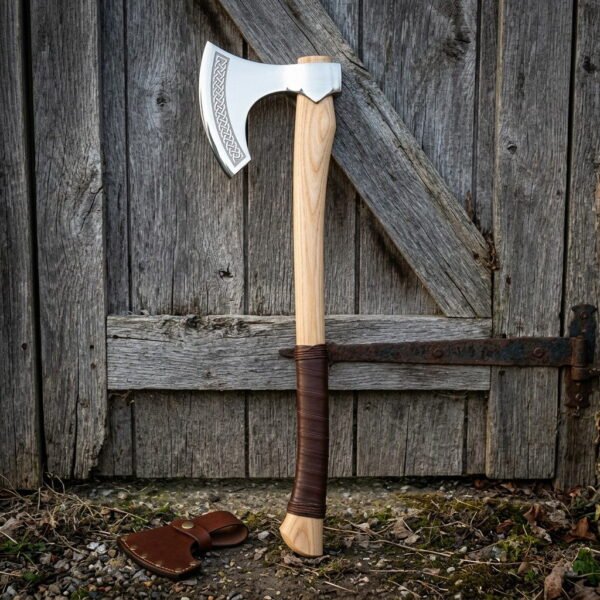
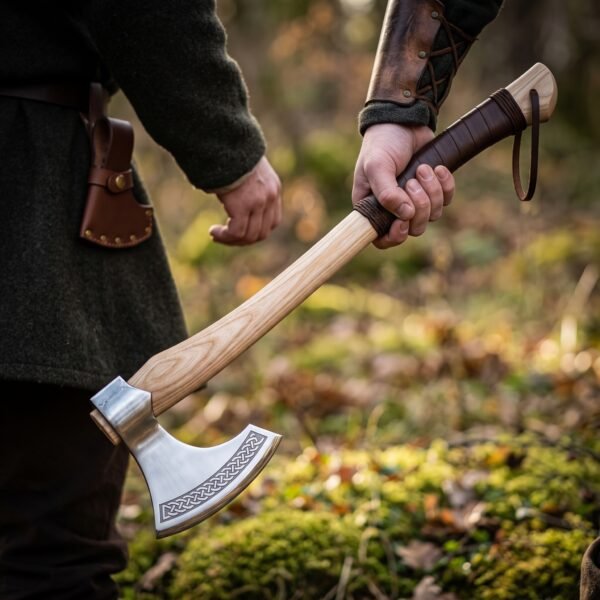
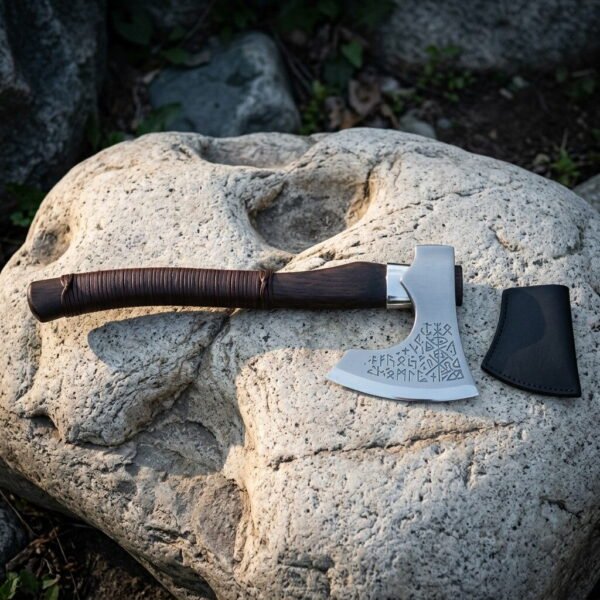
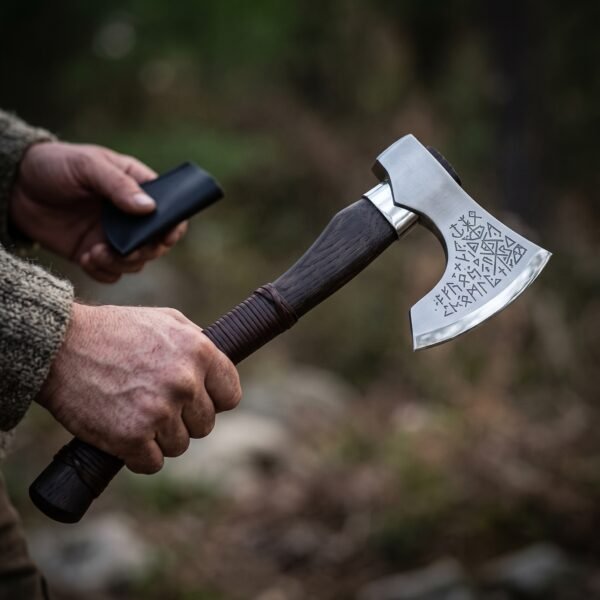
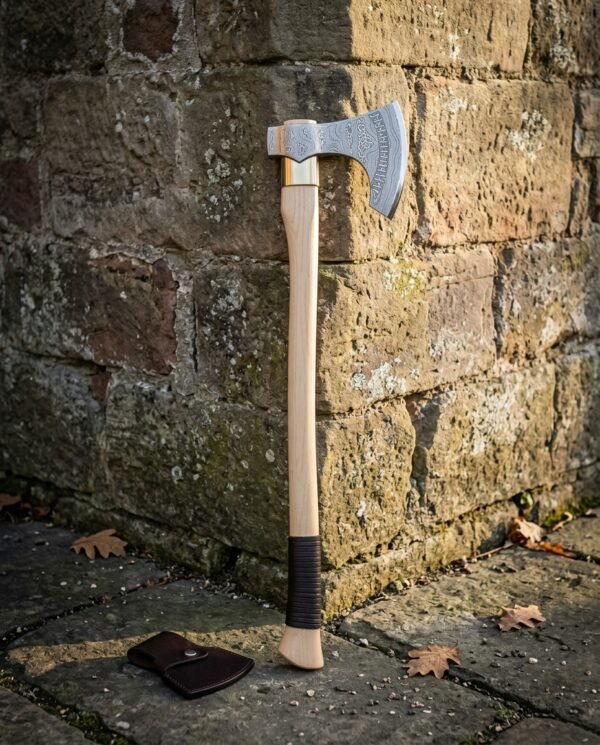
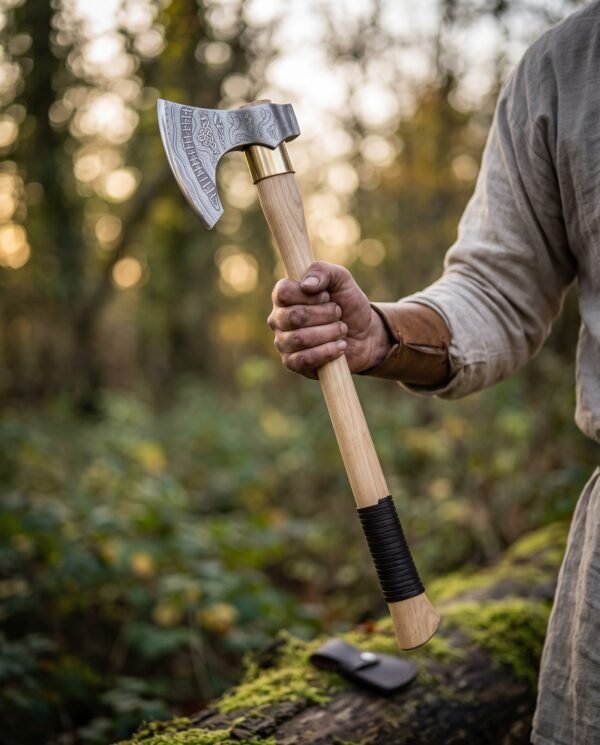
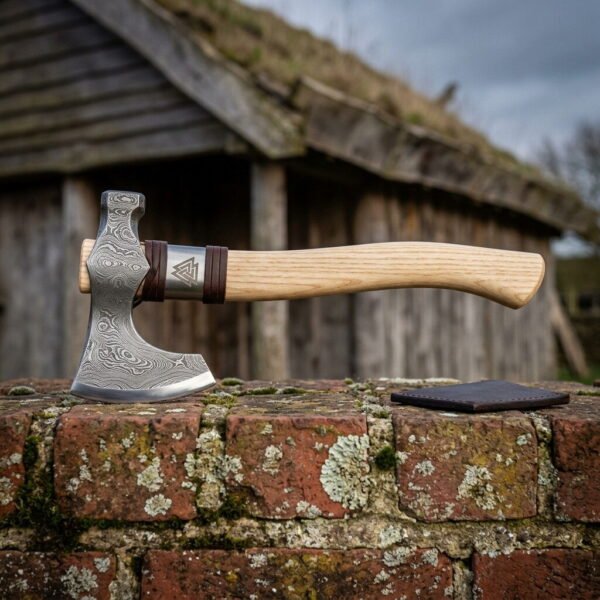
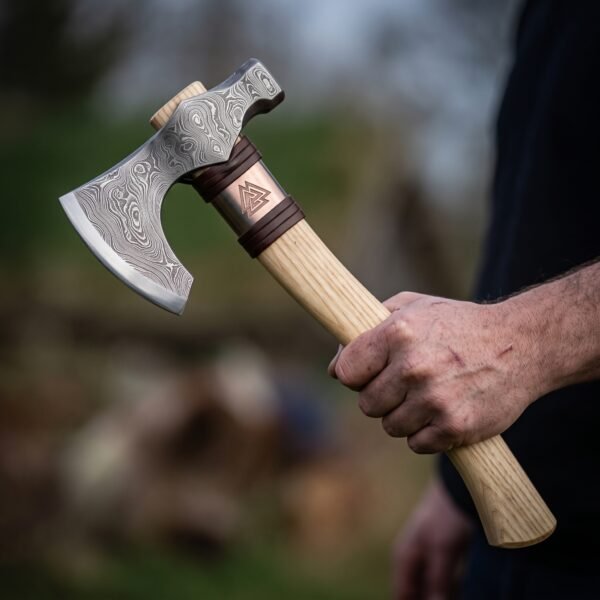
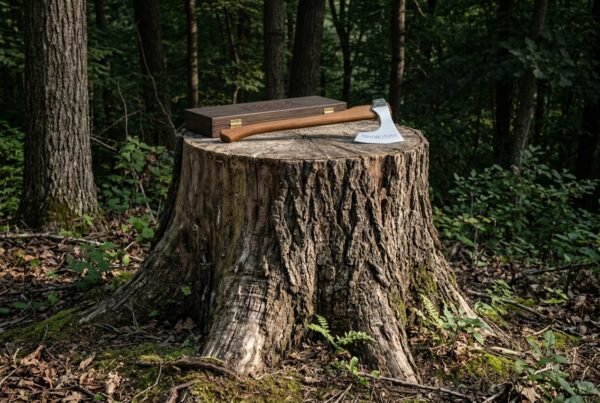
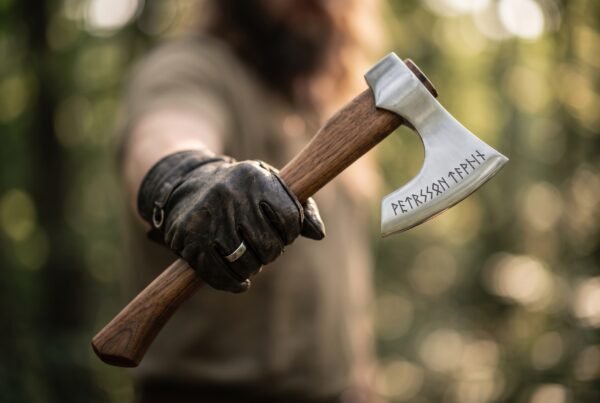
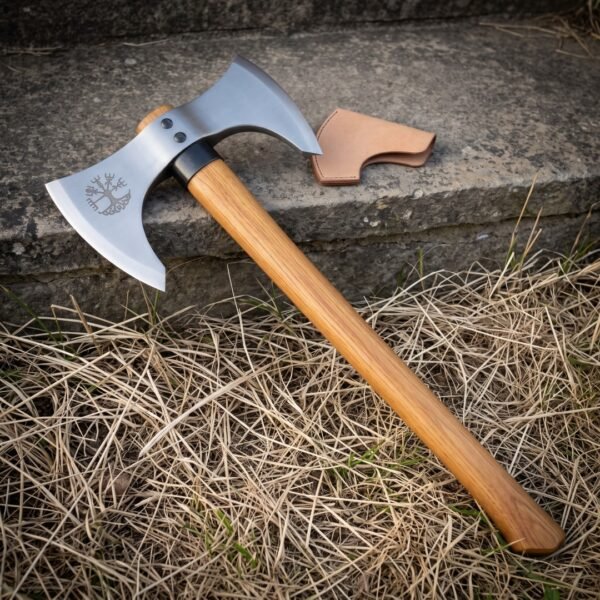
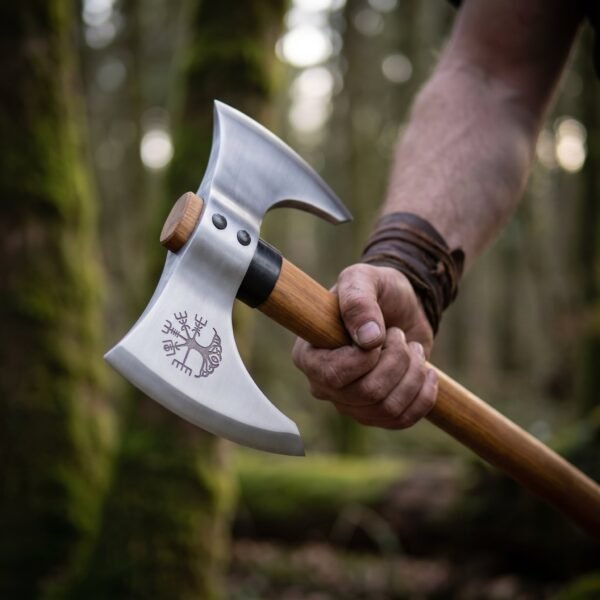
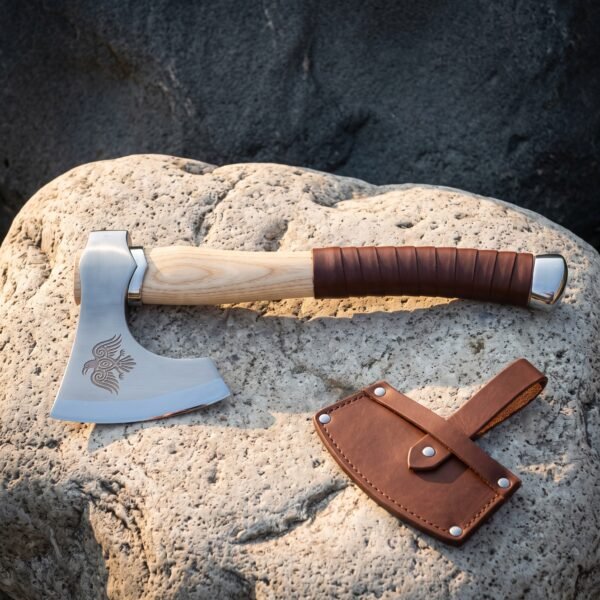
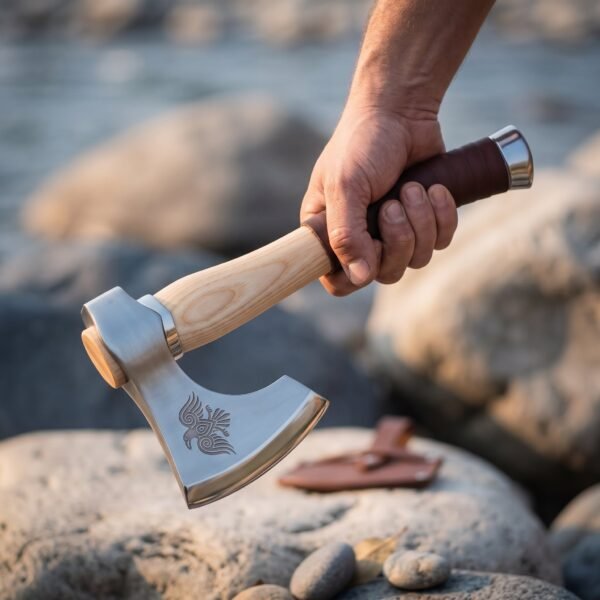
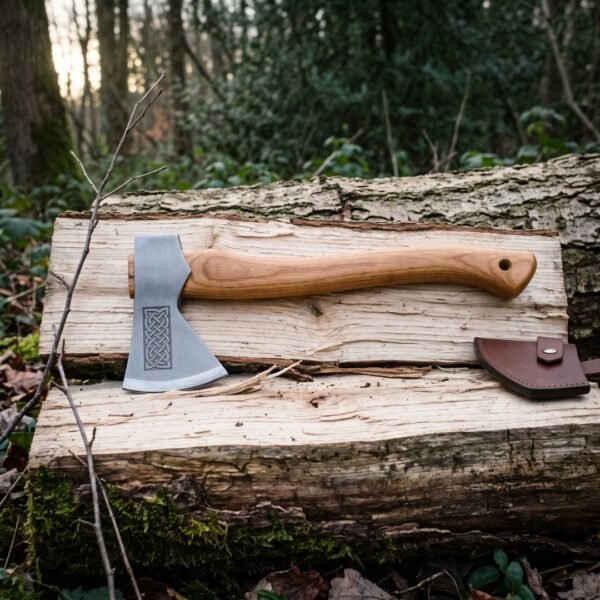
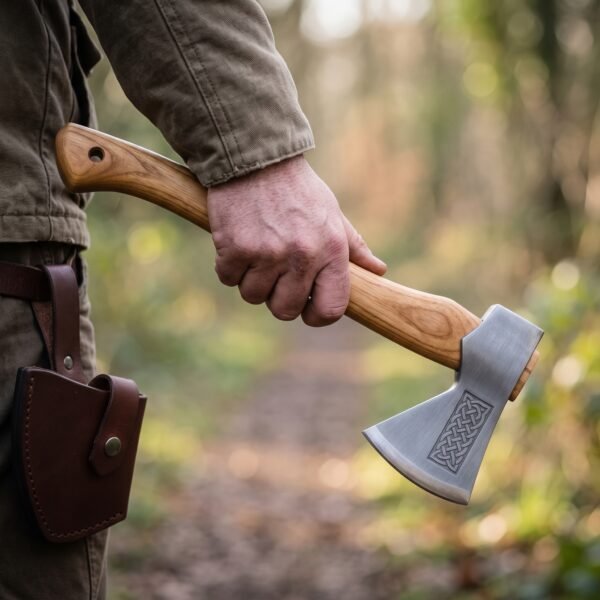
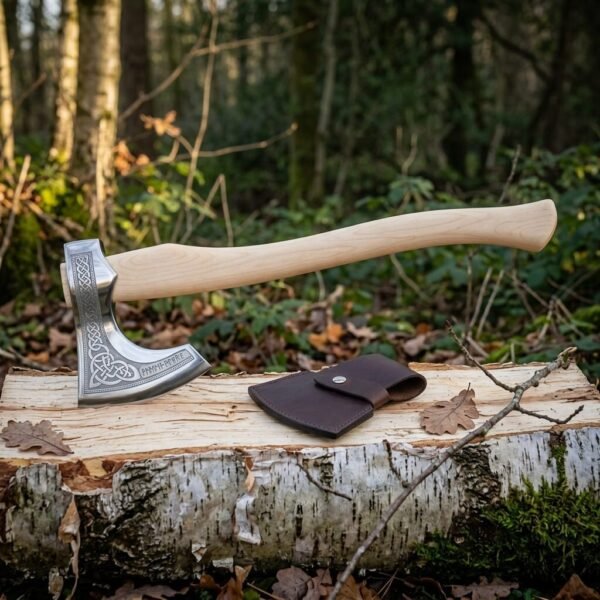
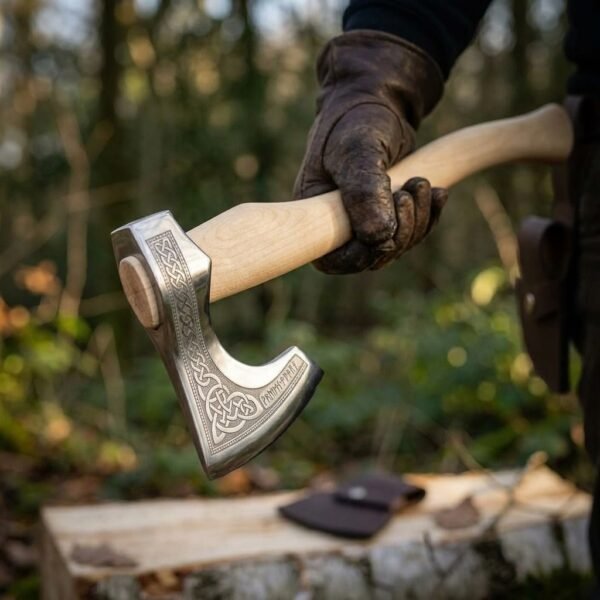
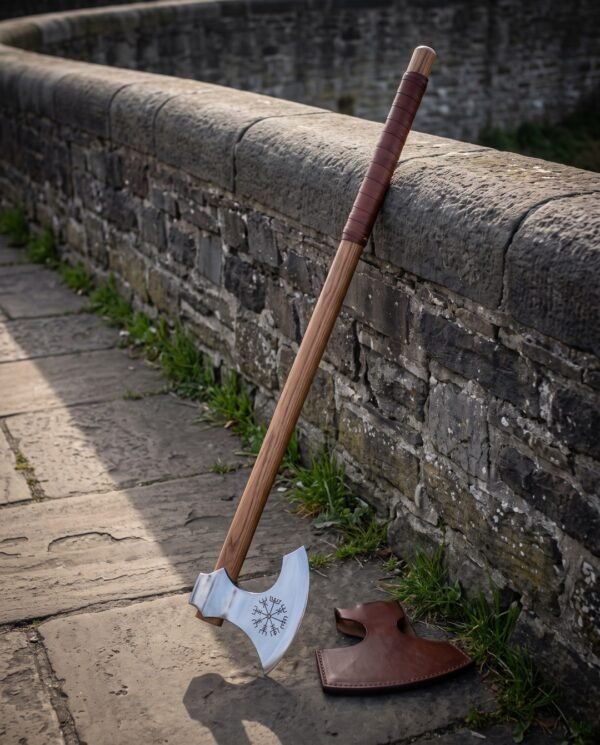
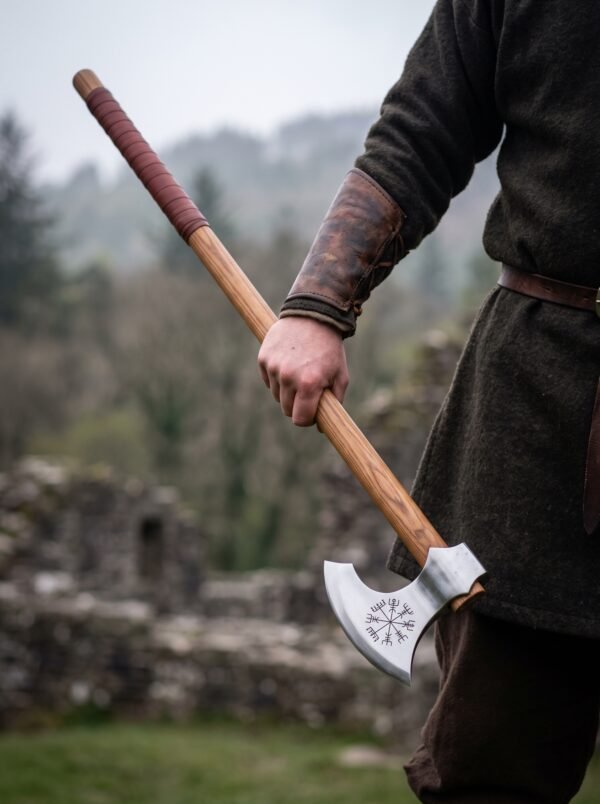
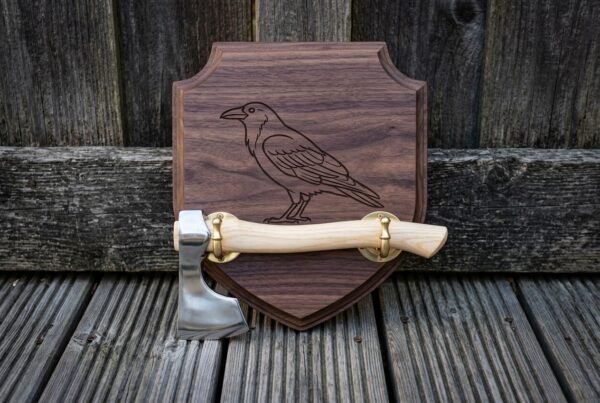
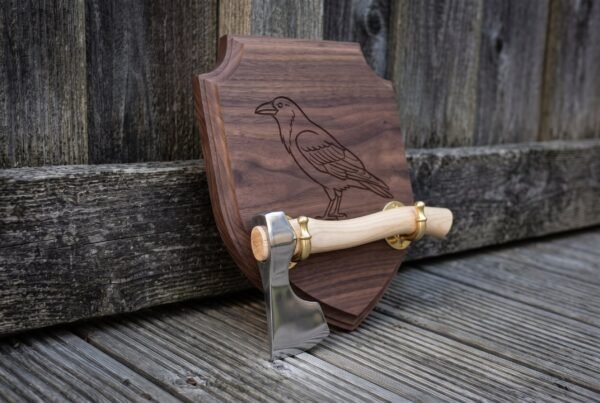
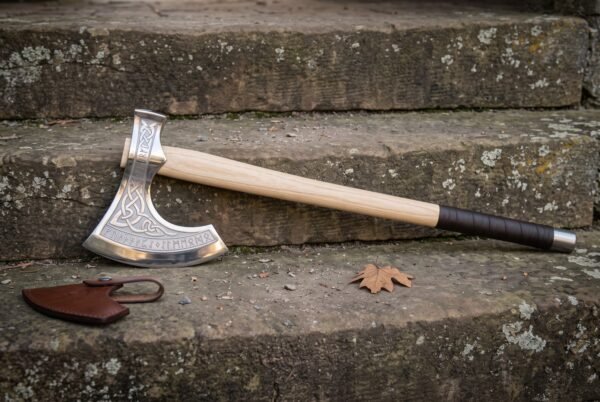
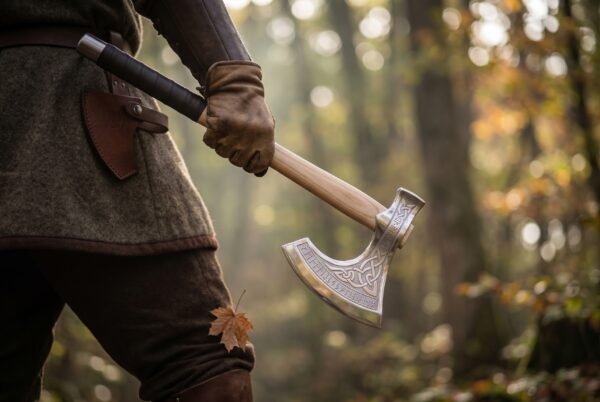
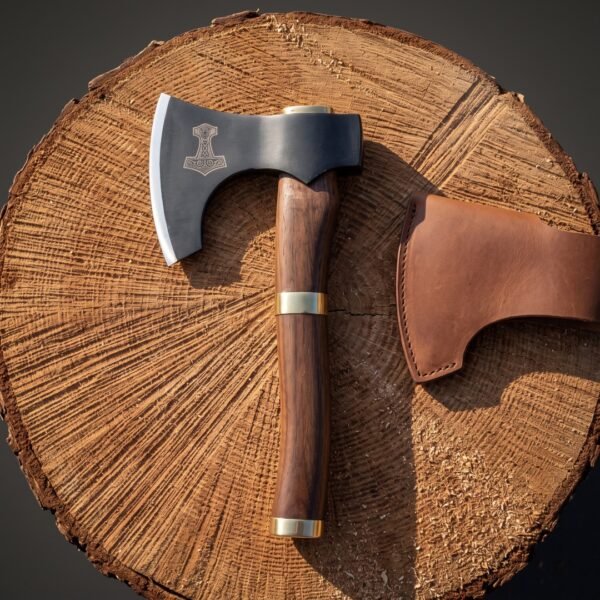
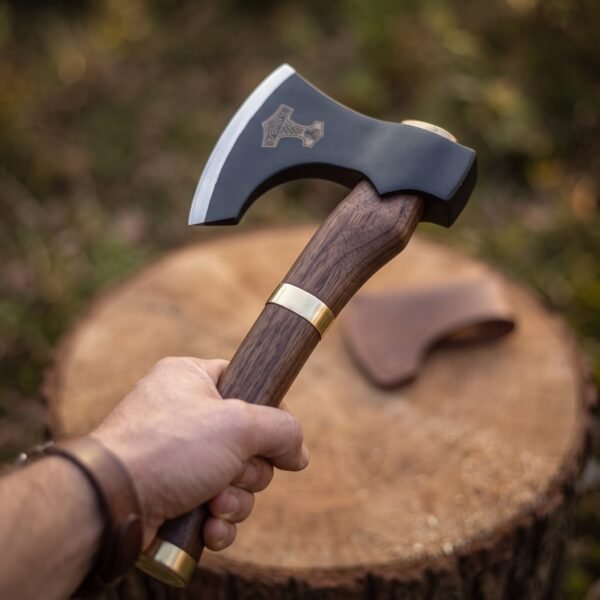
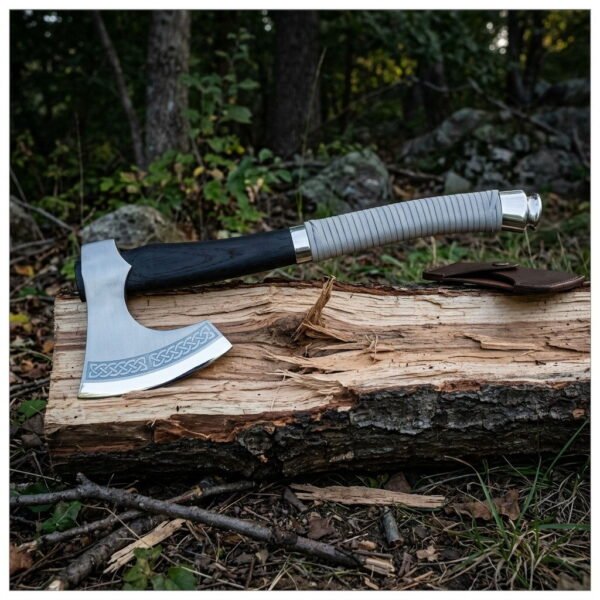
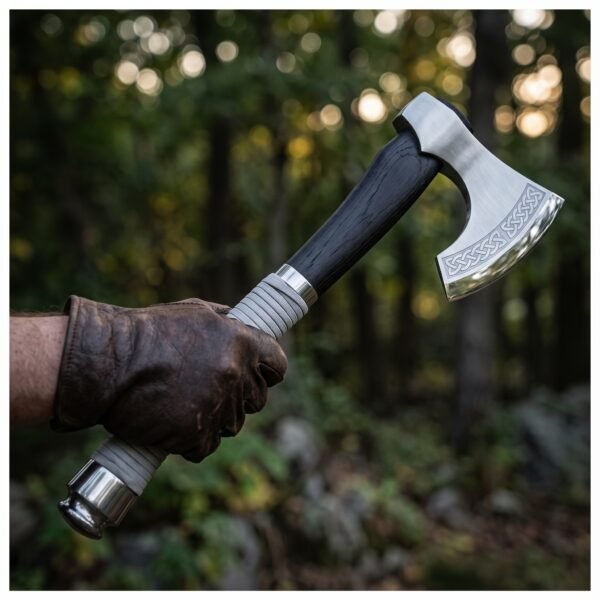
The bearded axe, skeggöx in Old Norse, is the axe with the lower edge drawn down well below the eye so that the cutting edge is long while the head stays light. That beard is the whole point of the pattern. You can choke up and wrap your fingers behind the edge for carving and skinning, hook a shield rim or a branch, and still swing a full edge at wood. The axes in this archive run from a 14 inch hand axe to a 32 inch Dane axe on an ash haft, in plain 1095 or 1095 and 15N20 Damascus, with heads that are plain, rune cut, knotwork etched or Valknut engraved. One sits on a walnut raven wall plaque.
It is for the bushcrafter and camper who wants a working bearded head, the collector who wants the correct Viking pattern rather than a fantasy shape, the reenactor filling a Norse kit, and anyone buying a groomsman or milestone gift with a name to go on the head.
What to look for
Length first. A 14 to 16 inch hand axe is for a pack and one hand, a 19 to 22 inch axe is the classic one or two handed size, and a 26 inch and longer haft is a two hander for display or reenactment. Then the beard: a deeper beard gives more edge behind the grip for carving, a shallower one a stouter head for chopping. Choose plain 1095 at 54 to 58 HRC for a tool that will hit knots and be sharpened with a file, or Damascus at 58 to 60 HRC for edge holding and the pattern. Hafts are ash, hickory, walnut and hardwood; ash and hickory take shock best.
How the axes are made and where
Ransack Viking is a Chicago, Illinois company. Every bearded axe here is made by hand in the Czech Republic the old way. The head is forged and ground, the eye is drifted, the edge is hardened, and the haft is shaped, fitted and wedged in the same workshop. Engraving that is part of the design is cut there too. The axe is imported, inspected at our Chicago warehouse and shipped from Chicago, and any name, date or rune line you add is engraved in the United States before dispatch.
Care is a wipe and a coat of oil on the head after use, and a rub of oil or wax on the haft each year. Keep the leather cover off the edge in long storage.
Related archives
The category page for this pattern is bearded axes, and the longer two handed heads are gathered in battle axes. The whole axe range, hatchets and felling axes included, is in Viking axes. A seax to carry alongside a bearded axe is in Viking seax. For where the skeggöx came from and how it differs from the breiðöx, read our Viking axe history.
What the beard is actually for is explained in what makes an axe bearded, and the two Norse heads are put side by side in battle axe against bearded axe.
Frequently asked questions
What is a bearded axe used for?
Carving, splitting, limbing and, historically, fighting. The beard lets you grip behind the edge for fine work and gives a long edge from a light head, which is why Norse woodworkers and warriors both used it.
What does skeggöx mean?
Skegg is beard and öx is axe in Old Norse. The name describes the drooping lower edge of the head.
Are these bearded axes functional?
Yes. They are forged, hardened steel on wedged hardwood hafts, sharpened before shipping. They are not certified for contact reenactment or combat sport.
Which steel should I choose?
Plain 1095 for a working axe that will be resharpened with a file. Damascus if you want the pattern and a harder edge for lighter use and display.
Can I engrave a bearded axe?
Yes. Most heads take a name, date or rune line on the cheek, cut in the United States before the axe ships.
Free US shipping
On most pieces. Heavier and oversized ones carry a flat charge.
Hand Forged
Heated, hammered and ground by hand.
Engraving available
Names, dates or Norse runes on most pieces.