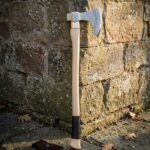
Most people picture a Viking battle axe as something enormous. The finds say otherwise. The everyday Norse fighting axe was a light, fast, deeply bearded head on a haft of roughly two feet, closer in weight to a modern hand axe than to a woodsman felling axe. The reason is reach and recovery. A head of about a pound and three quarters on a 21 inch haft can be thrown into a strike and pulled back into guard before a heavier weapon has finished its arc, and it stays useful all day for camp work. This axe is built to that pattern rather than to the film version of it.
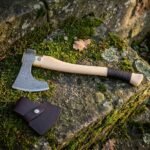
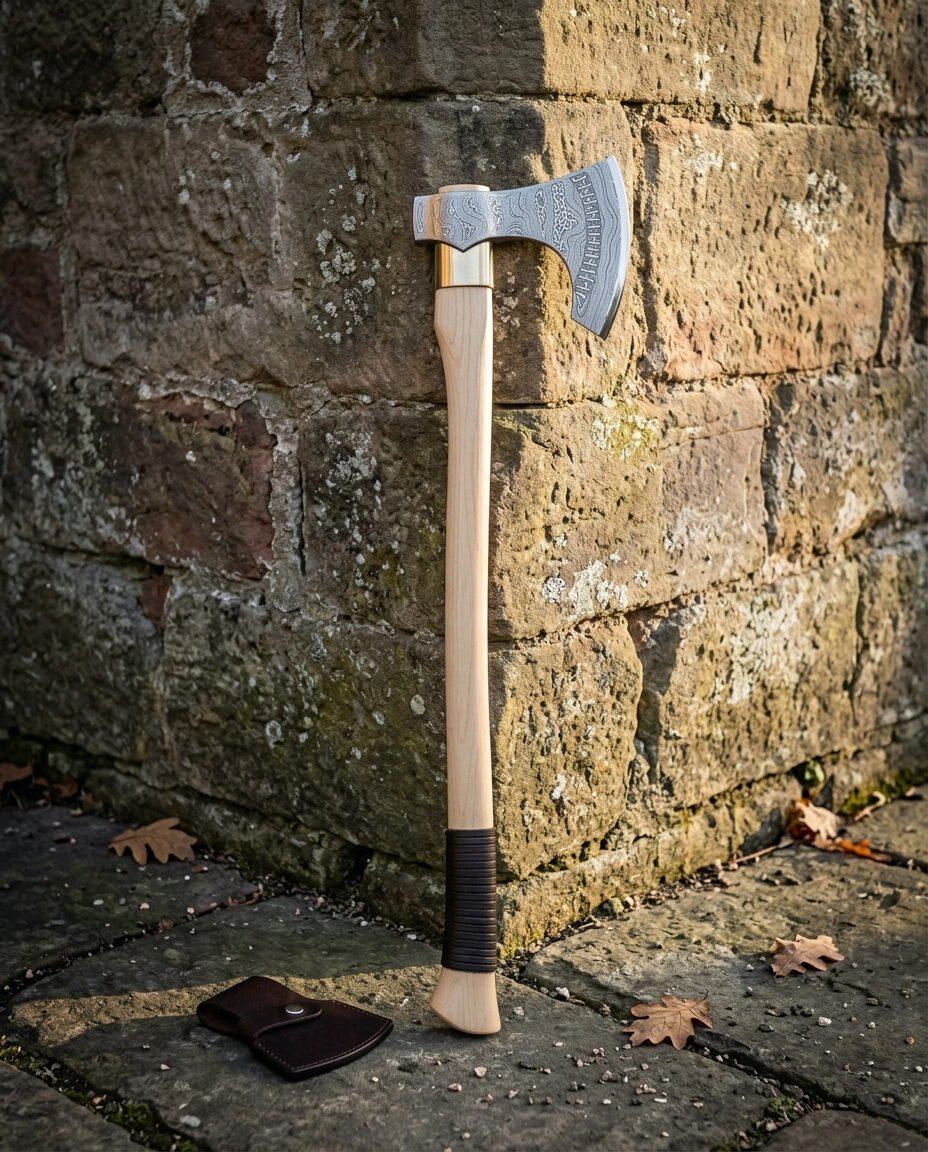
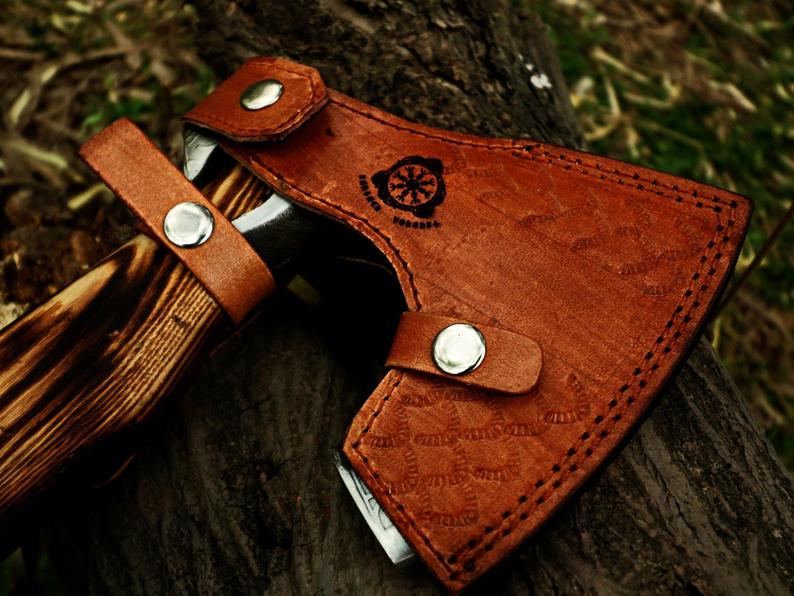
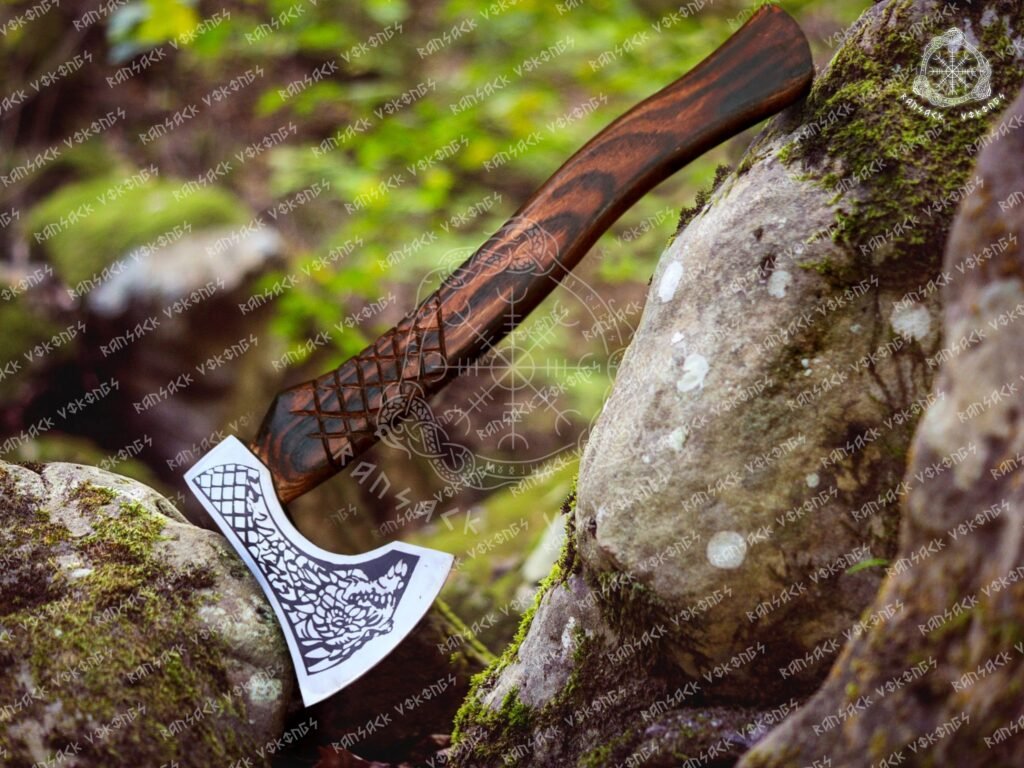
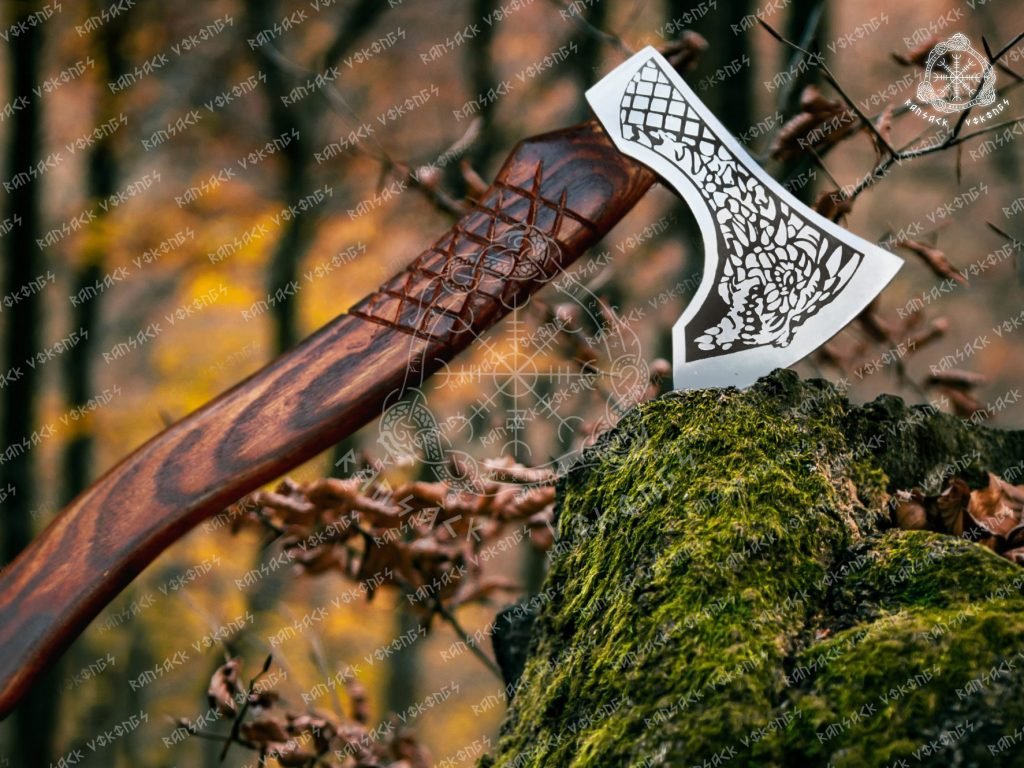
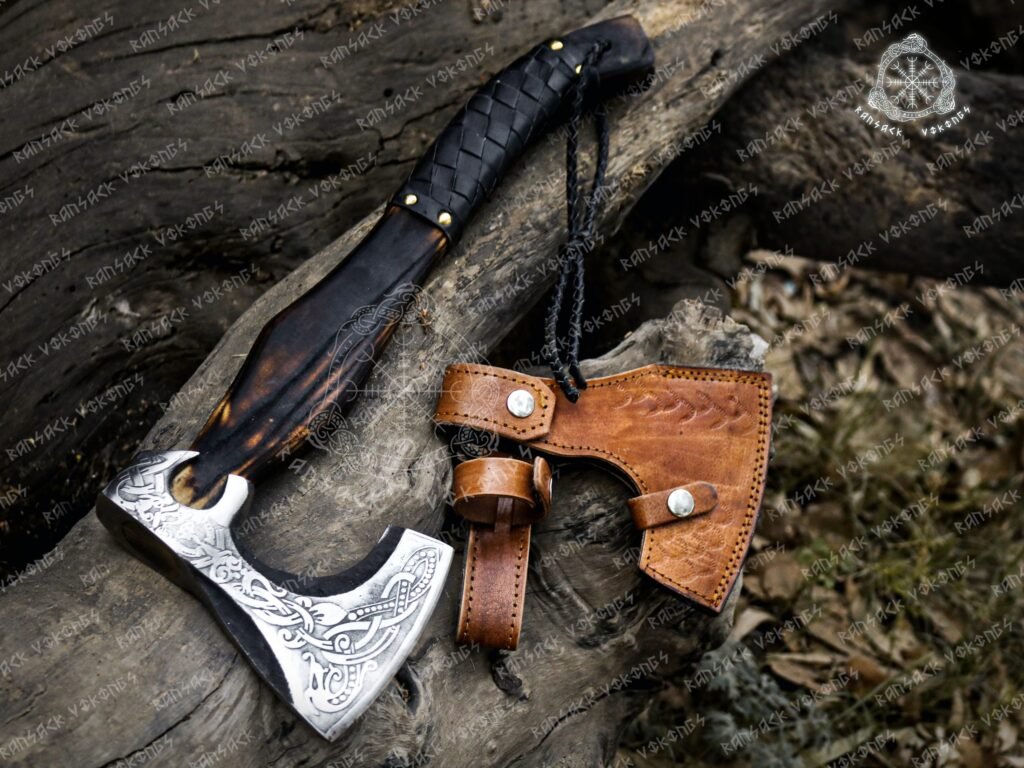
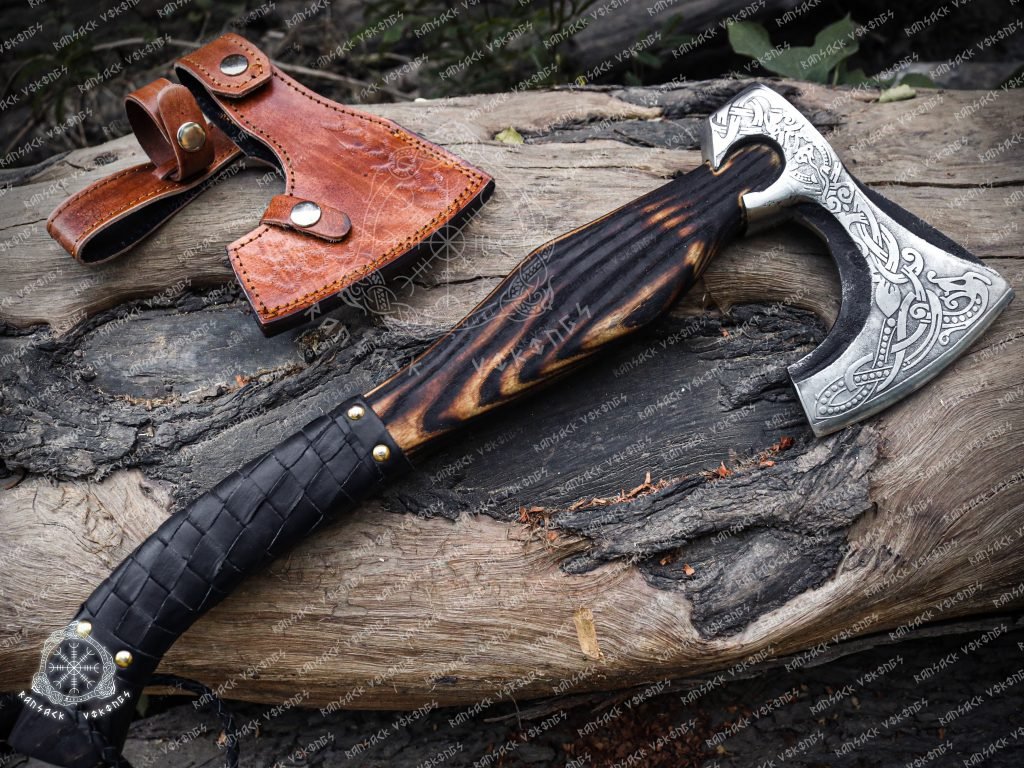
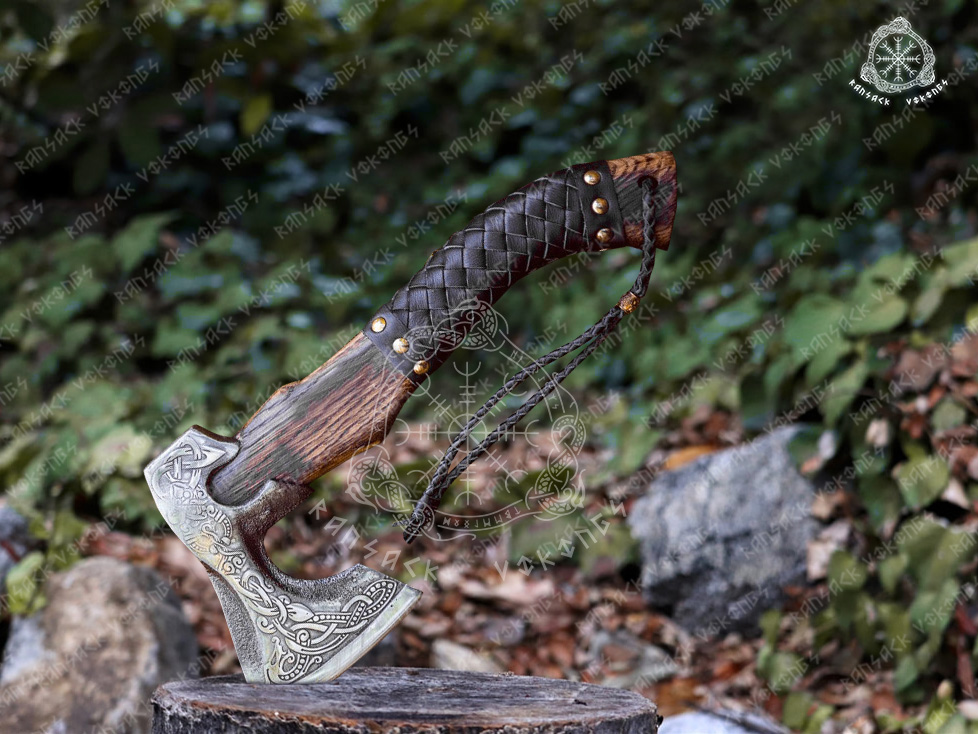
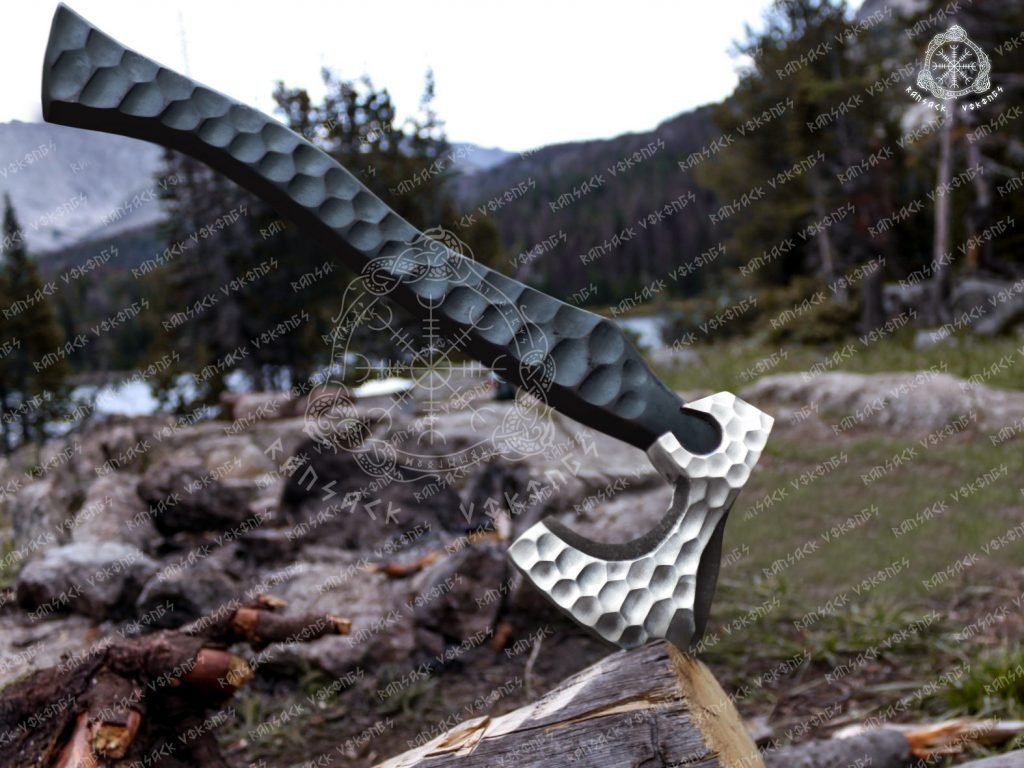
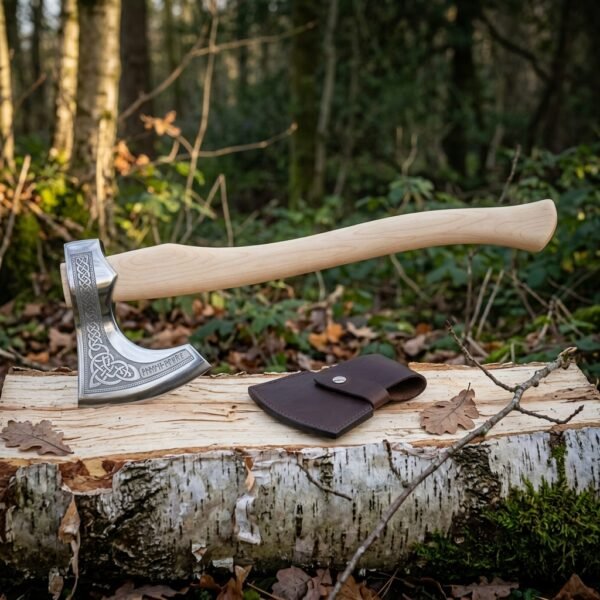
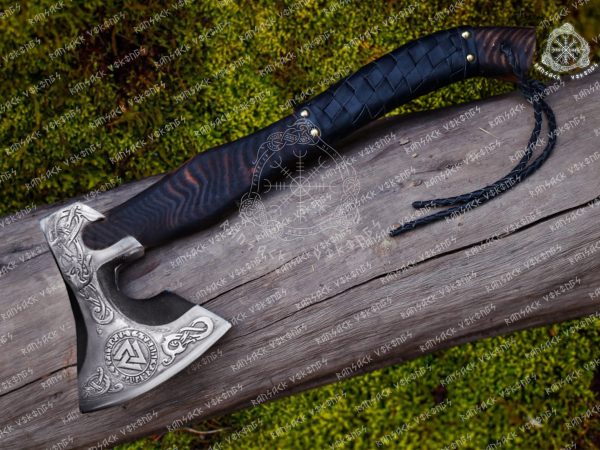
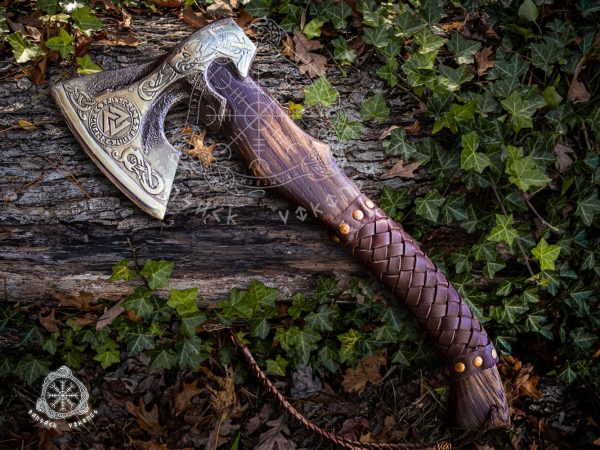
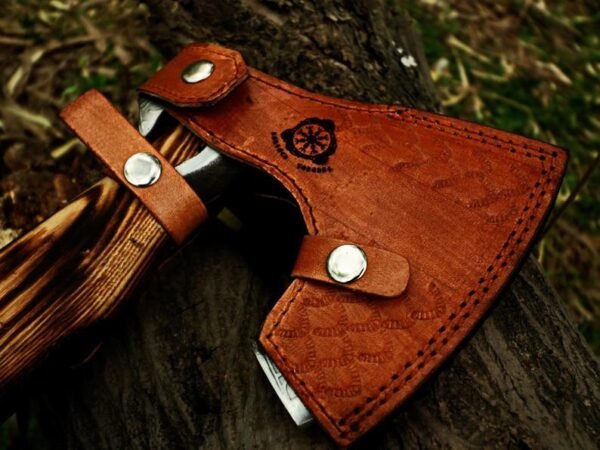
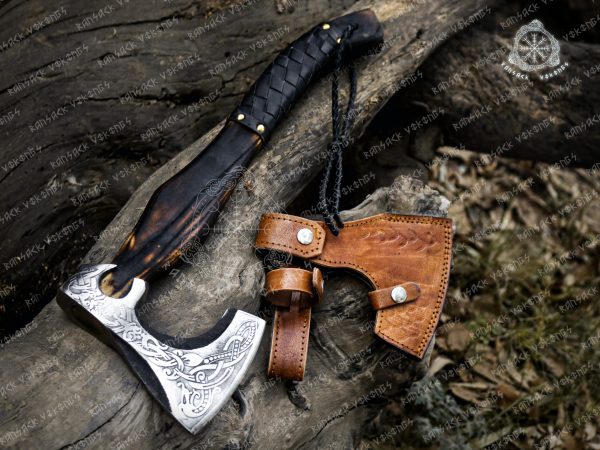
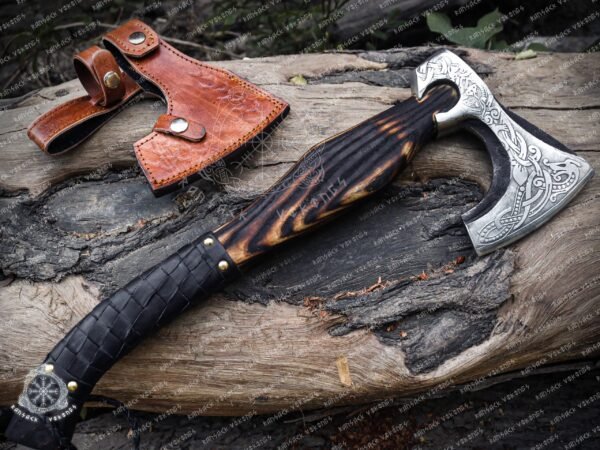
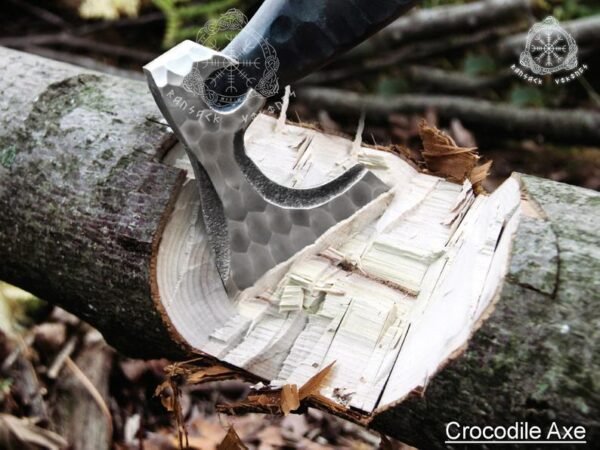
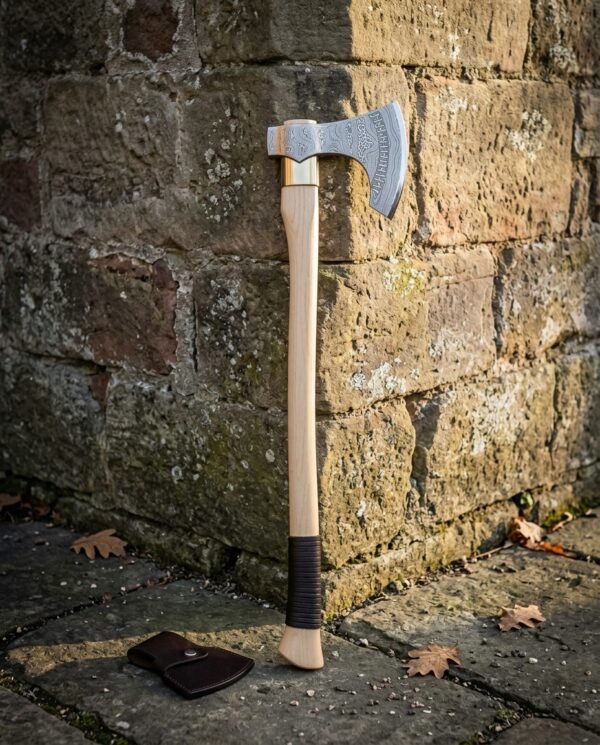
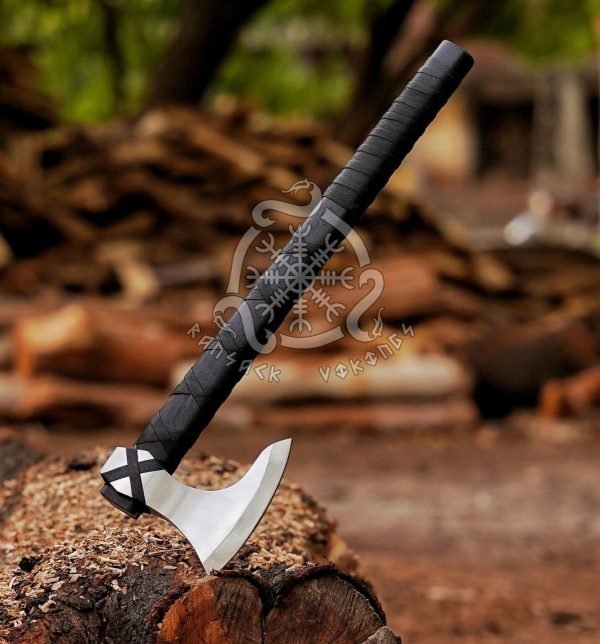
It is forged and finished in Memphis, Tennessee. The head is high carbon steel with the hammer finish left visible across the cheeks, the eye drifted rather than punched flat, and the cutting edge running five inches from the upswept horn down to the tip of the beard. The haft is pale ash, selected for straight grain running along the length, and the axe ships with a leather edge guard so it can be stored and carried without the edge finding anything it should not.
Specifications
| Steel | High carbon steel, hand forged with a hammer finished surface |
|---|
| Hardness | 52 to 55 HRC at the edge, soft eye and poll |
|---|
| Overall length | 21 inches |
|---|
| Cutting edge | 5 inches from horn to beard tip |
|---|
| Head weight | Approximately 1.75 lb |
|---|
| Haft | Pale ash, straight grained, hand shaped, oil finished, wedged |
|---|
| Edge protection | Leather edge guard, stitched and riveted |
|---|
| SKU | RK-1212 |
|---|
Why a Viking battle axe is lighter than you expect
Weight in an axe head is only useful if it is moving. Beyond a certain point extra mass costs you more in acceleration and recovery than it gives back in impact, and a fighting axe is judged on how quickly it can be brought back on line after a miss. Norse smiths solved that by thinning the head dramatically behind the edge. The cheeks on a fighting axe are often only a few millimetres thick where a woodcutting axe would be a centimetre or more, and the mass that is left is concentrated right at the edge where it does work.
That thin section is also why the beard exists. Dropping the edge into a long lower lug adds cutting length without adding a gram of steel behind it. The upswept horn at the top completes the arc so that a draw cut works along the whole edge rather than only at the belly. Put those three ideas together, thin cheeks, deep beard, upswept horn, and you have the outline that dominated northern Europe for three hundred years.
Why high carbon steel and not stainless
An axe edge lands hard, sometimes on something that does not give. Stainless steels are made corrosion resistant by adding chromium, and the same chromium reduces toughness at the hardness an axe edge needs, so a stainless axe tends to chip where a carbon steel axe rolls and comes back. High carbon steel also responds to differential heat treatment in a way stainless does not, which is what lets us run the edge hard for edge holding while leaving the eye and poll soft enough to take shock without cracking. The comparison is set out in full on Damascus versus stainless.
Carbon steel rusts if neglected. A wiped and oiled head does not.
The ash haft and how to keep it
Ash is the classic axe haft wood and it earns the reputation. Its long, springy fibres flex slightly under impact and hand the shock back to the head instead of into your wrist, and its open ring porous grain is easy to read, which means we can select blanks where the growth rings run straight down the length rather than running out the side. A haft with grain running out the side is a haft that breaks.
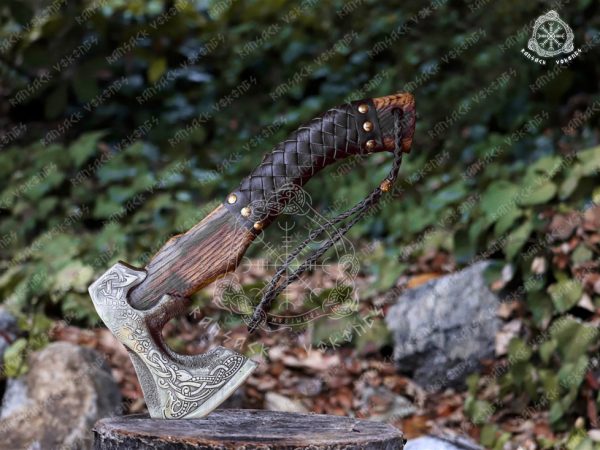
This one is hand shaped to an oval section, swelling slightly at the knob so the hand has something to hold against on a hard swing, and finished with oil rather than lacquer. Feed it once or twice a year, keep it out of standing water and away from direct heat, and check the wedge every so often. Full detail is on our wooden handle care page.
Engraving, runes and your own design
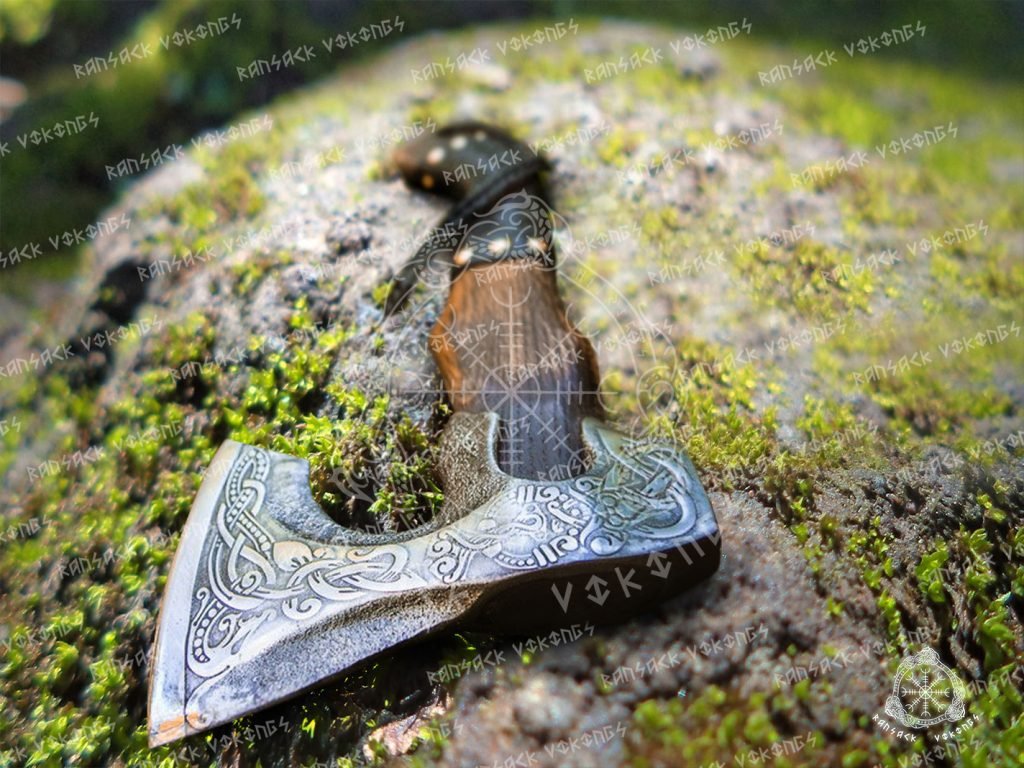
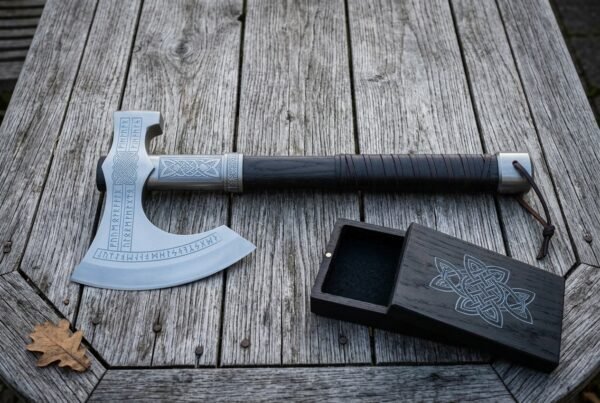
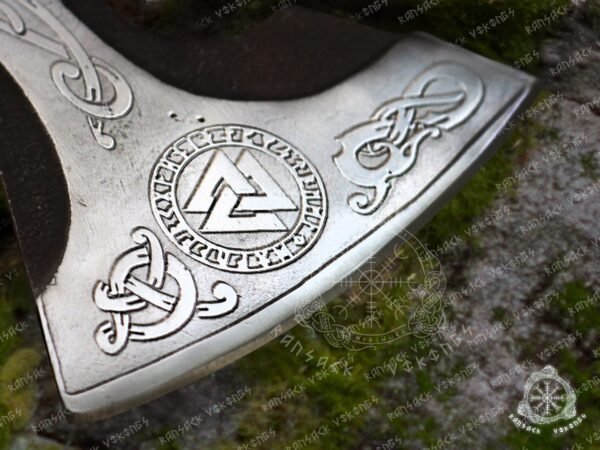
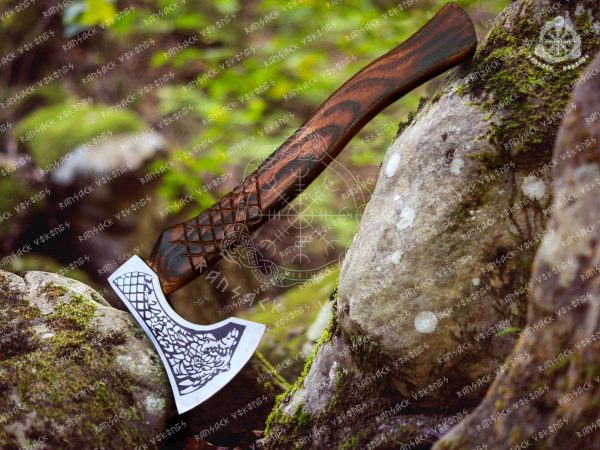
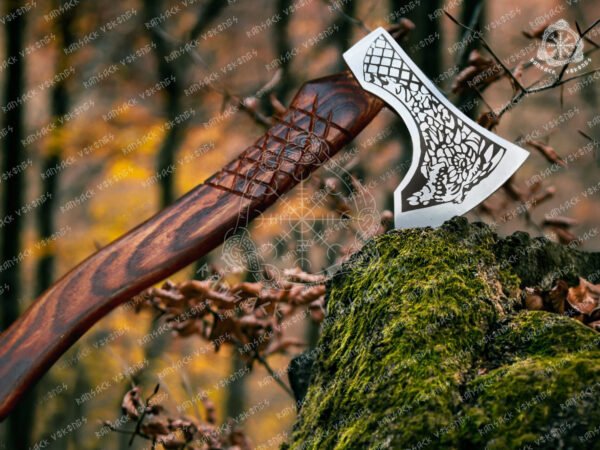
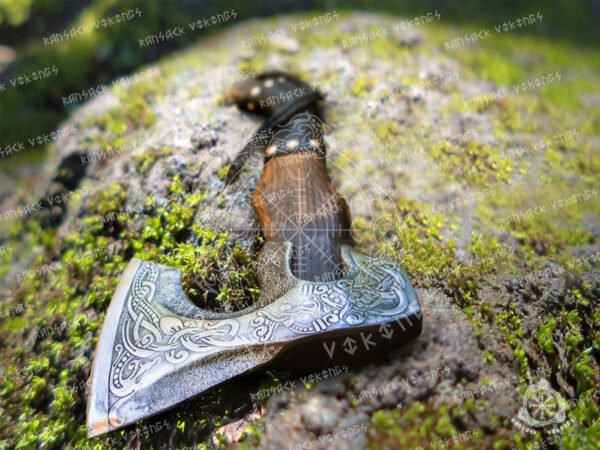
Use the rune converter on this page to turn a name, a date or a short phrase into Elder Futhark and we will cut it into the steel or the handle. If you would rather have a Viking pattern than a rune line, choose your own design in the engraving option above the add to cart button and tell us whether it goes on the blade or the handle. Where a piece already carries an engraved design, your chosen engraving replaces it rather than sitting alongside it. This head is left plain and hammer finished, so it is a good canvas for a long rune line across the cheek or a knotwork panel behind the edge. See the engraving page for what fits in the space.
Care and sharpening
Dry the head after use and put a light film of oil on it before the edge guard goes back on. Leather holds moisture against steel, so a wet head inside a guard is asking for spotting. If a spot does appear, steel care covers how to take it off without dulling the hammer finish.
Sharpen with a coarse puck worked in small overlapping circles along the convex bevel, then a fine stone, then a strop. Do not try to grind it into a flat V bevel, because the convex geometry is what stops the edge chipping on impact. The technique in sharpening with a whetstone applies with a slightly more open angle.
Forged in Memphis
Every part of this axe happens in our Memphis, Tennessee shop. The head is drawn out under the hammer, the eye is drifted, the edge is hardened and tempered, the haft is shaped and fitted, and the leather is cut and stitched here. Nothing is drop shipped from an importer catalogue with a label added afterwards. That means honest lead times rather than optimistic ones. Stock axes ship in two to three business days. Engraved orders take one to two weeks depending on the queue, and we will tell you where you sit in it.
A note on handmade variation
This piece is hand forged. It is not machine made and it is not bulk produced, so what arrives will not be a pixel for pixel copy of the photograph. Grain, tone, pattern and exact profile vary because each one is worked by hand from natural materials. Ash runs from near white to pale straw depending on the board, the hammer texture across the cheeks is different on every head, and the exact sweep from horn to beard shifts by a millimetre or two. Dimensions, steel and build are the same every time. The character is not.
Frequently asked questions
Is it sharp enough to use straight away?
Yes. It ships with a working convex edge that will cut seasoned wood on arrival. It is deliberately not a razor edge, because a razor edge on an axe rolls the first time it meets a knot.
Can I spar or do reenactment with it?
It is built to the weight and balance of a historical fighting axe and it is properly heat treated, but a live edge has no place in contact sparring. If you want it for a reenactment line, ask us to ship it with a blunted edge and we will do that at no extra cost.
Can I have runes engraved on it?
Yes. The plain hammer finished cheek takes a rune line well. Use the converter above for Elder Futhark, or send us a knotwork design and tell us whether it goes on the head or the haft.
Will mine look exactly like the photograph?
The size, weight and profile will match. The ash grain and the hammer texture will not, because both are natural to the individual piece.
What is the difference between this and a Dane axe?
A Dane axe is a two handed weapon with a much wider, thinner head on a haft of four to five feet. This is a one handed 21 inch axe with a heavier section and a shorter edge, meant to be used with a shield or as a working camp axe.
How long does shipping take?
Free shipping across the United States, leaving the shop in two to three business days on a stock piece. Engraving adds one to two weeks before dispatch.
What is in the box
- One Ashwarden hand forged high carbon steel Viking battle axe
- Leather edge guard
- Care and sharpening card
- Certificate of hand forging with the SKU recorded on it
- Forged and finished in Memphis, Tennessee
Explore the range
See the rest of the battle axes, the bearded axes, the wider Viking axes range and the full Viking weapons collection, or read the guides for haft care and sharpening.




Reviews
There are no reviews yet