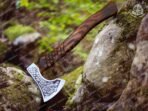
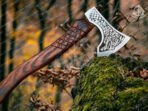
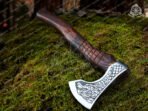
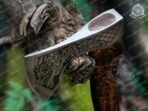
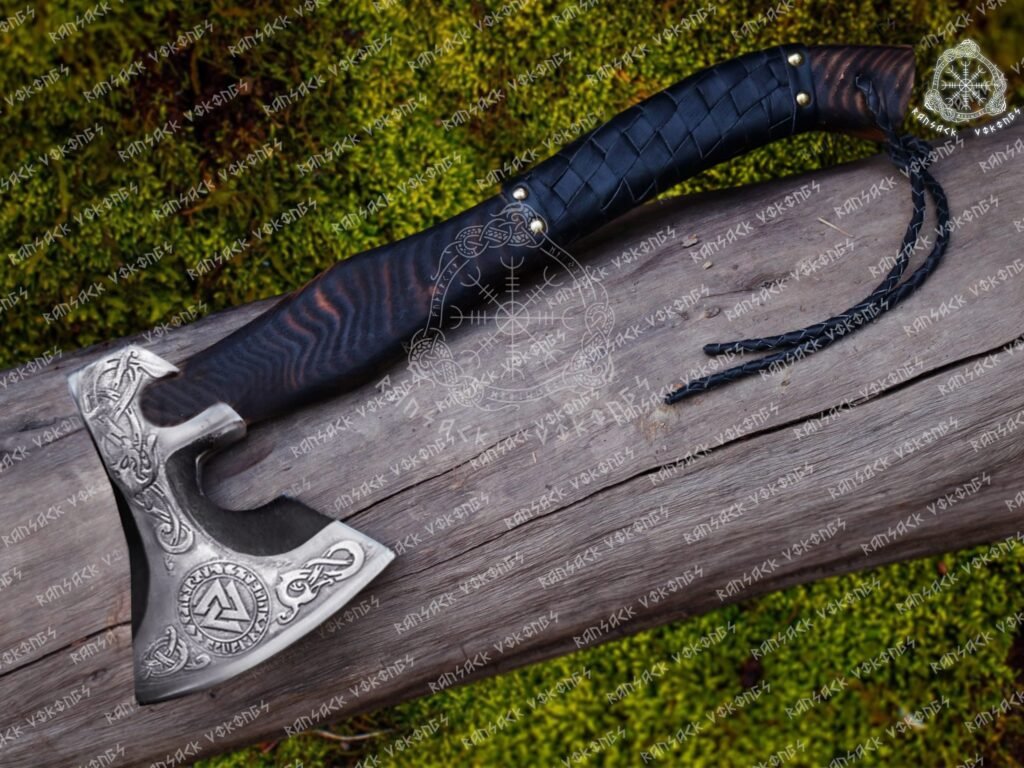
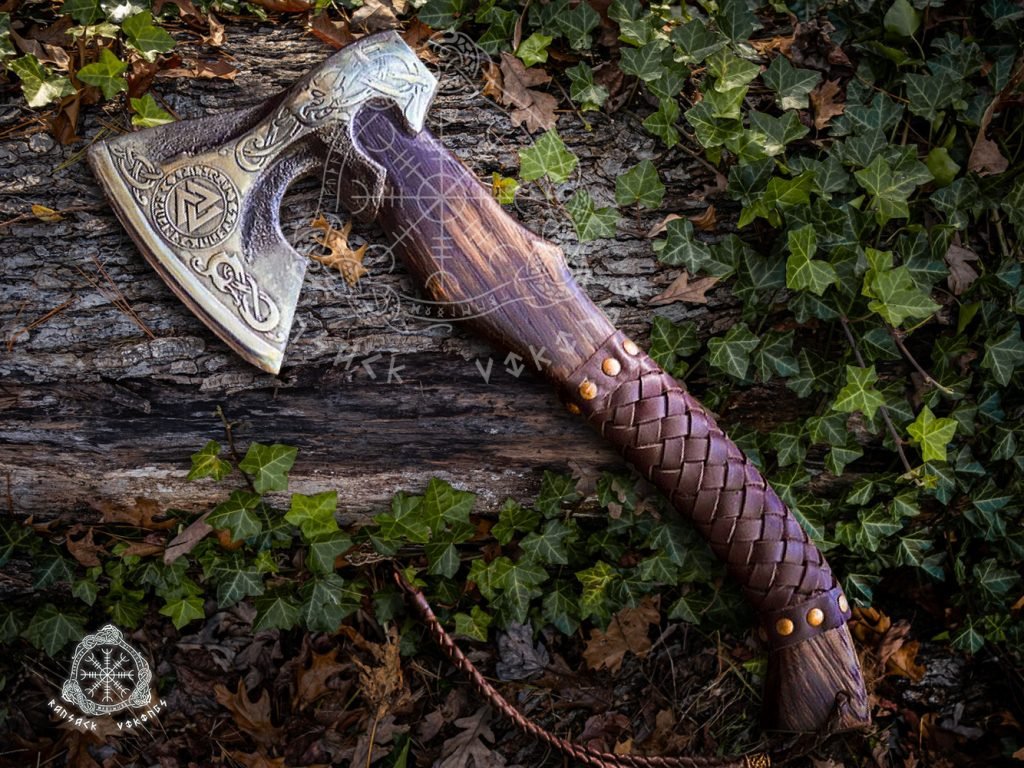
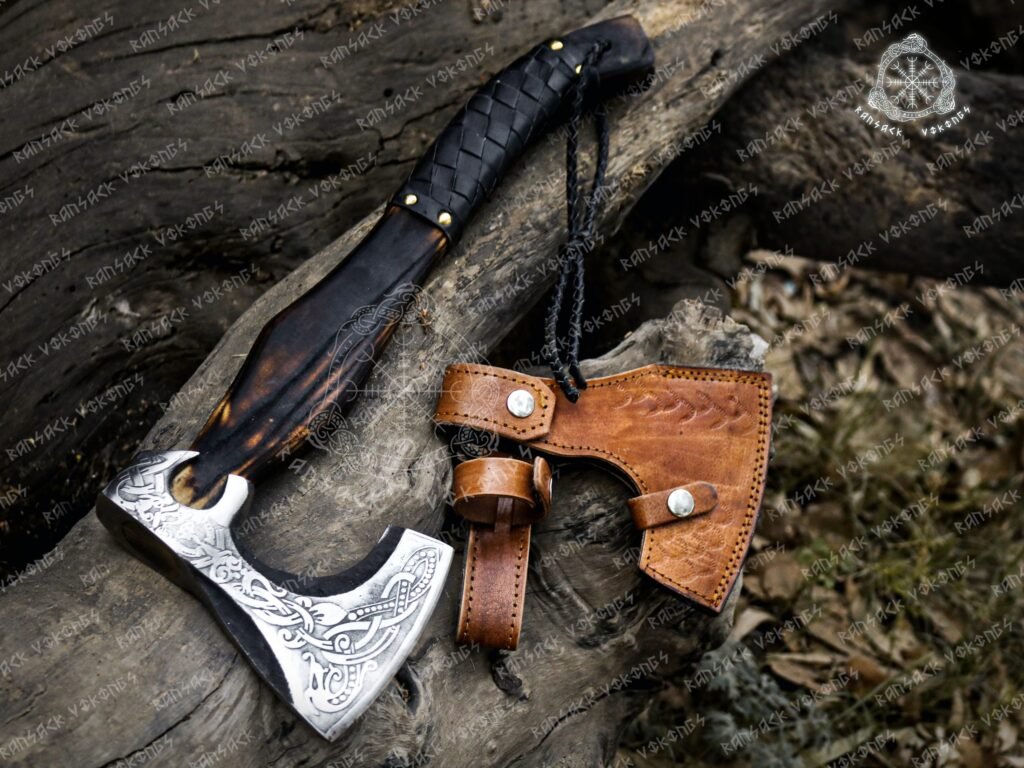
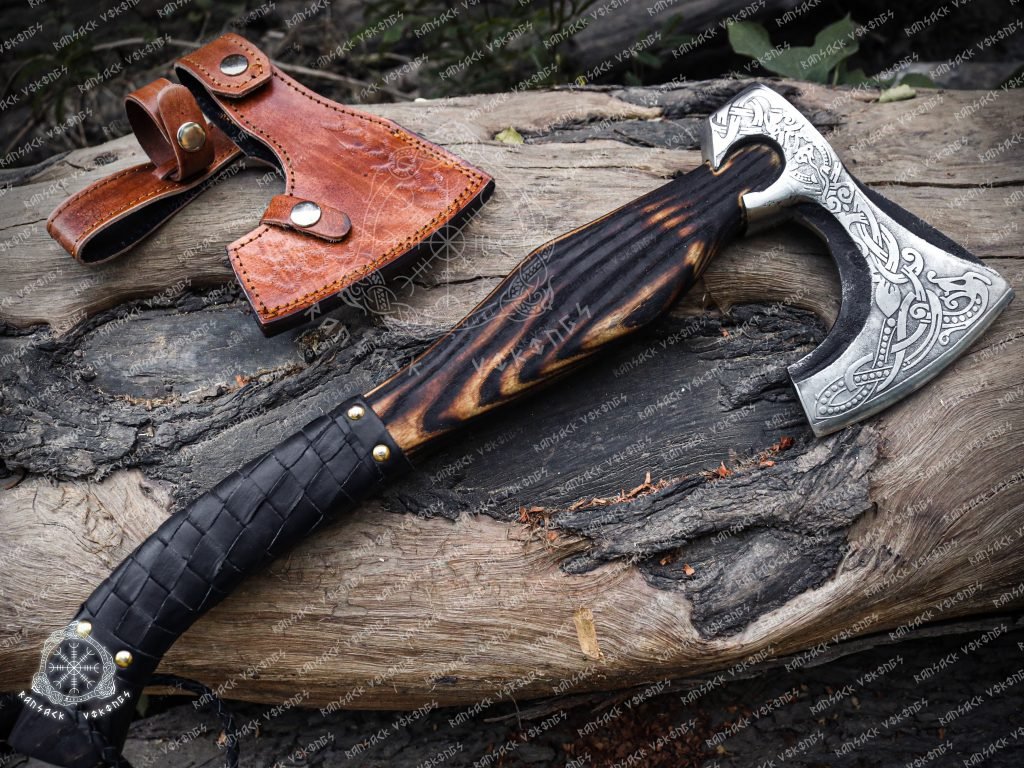
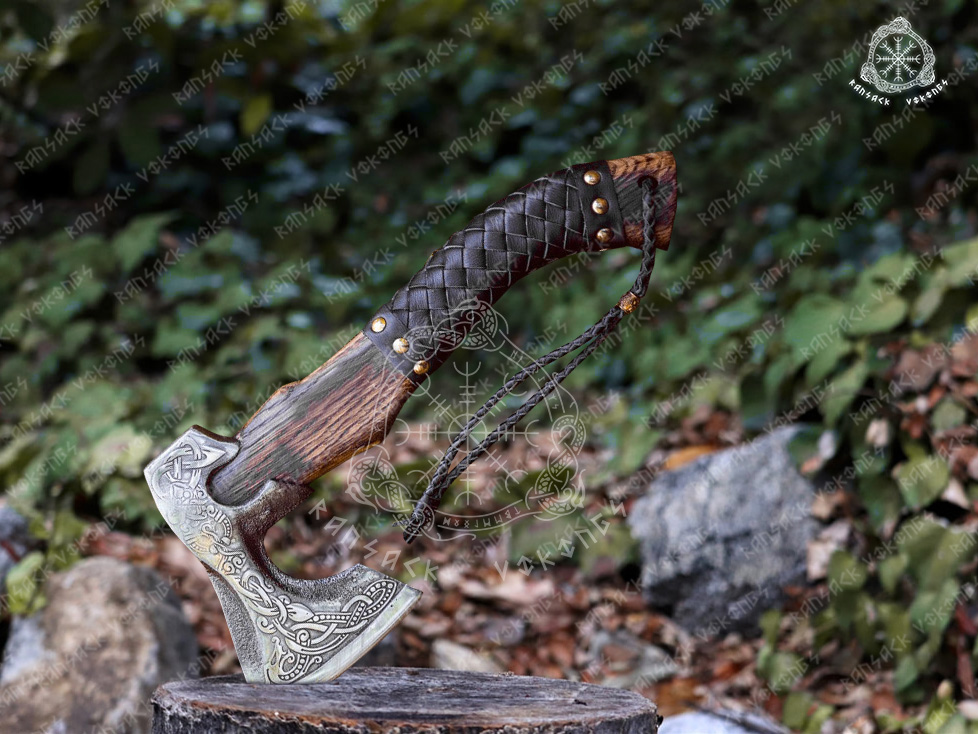
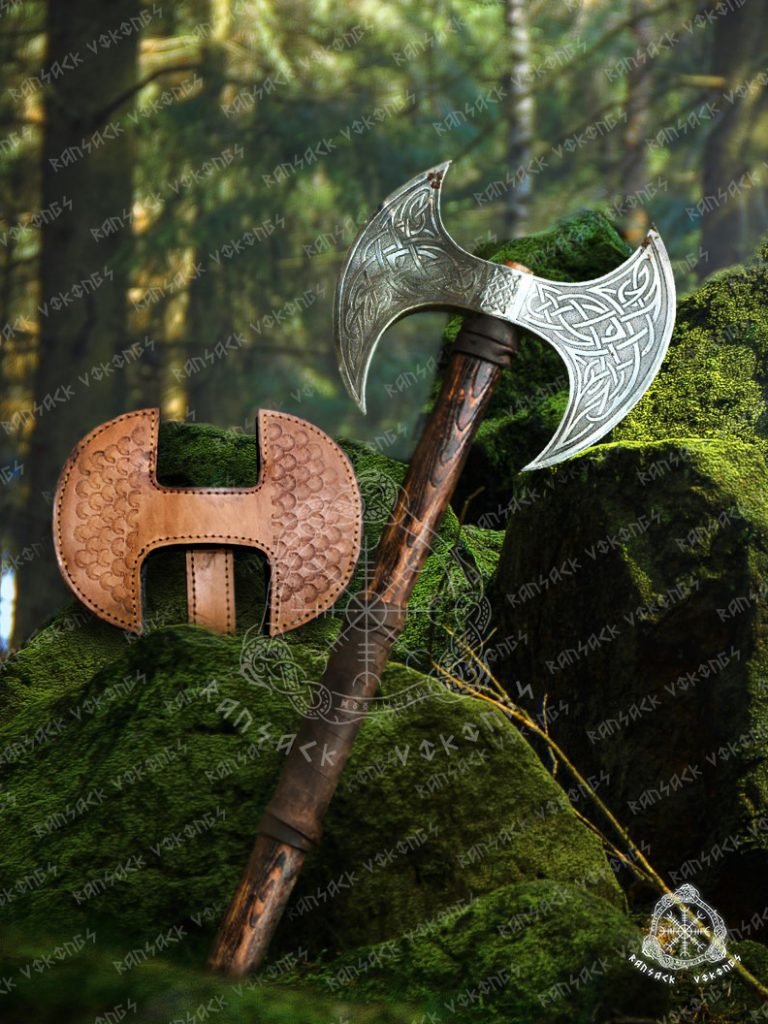
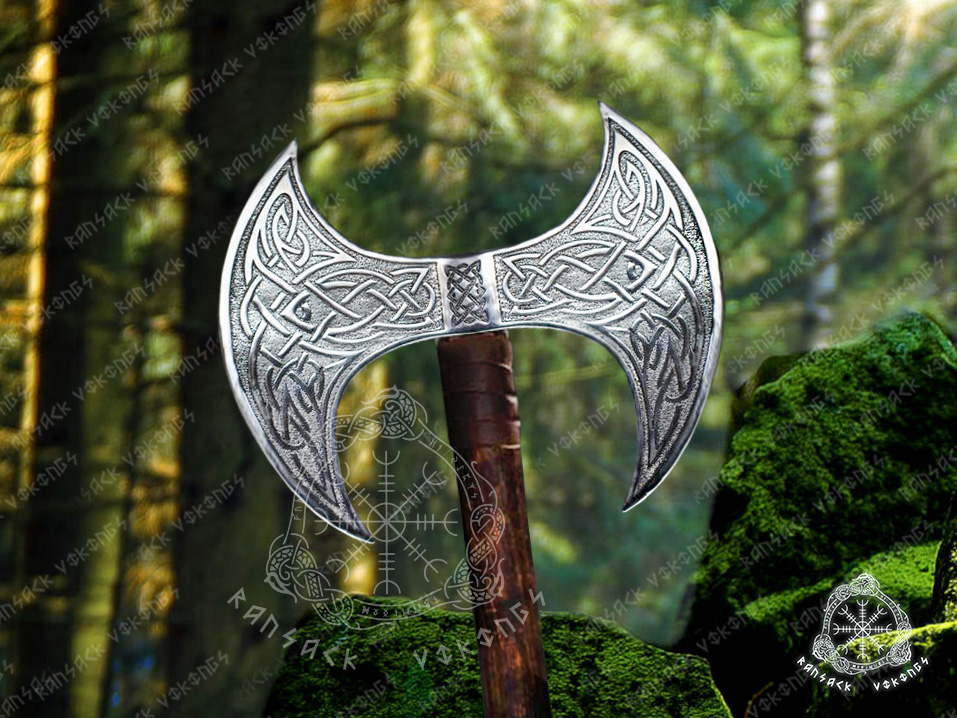
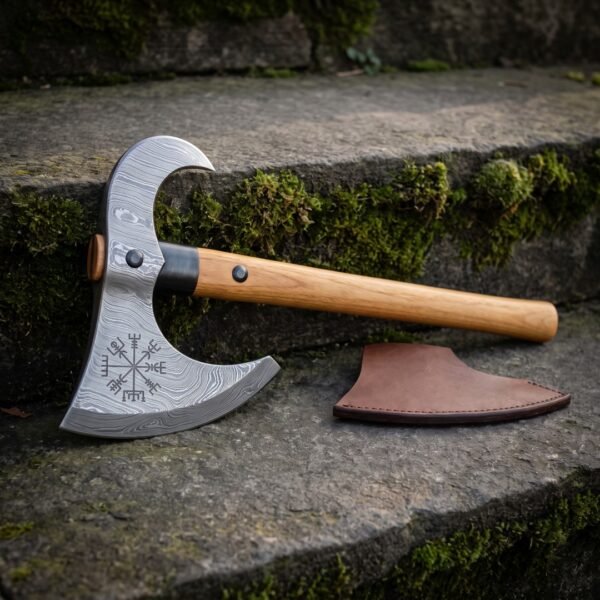
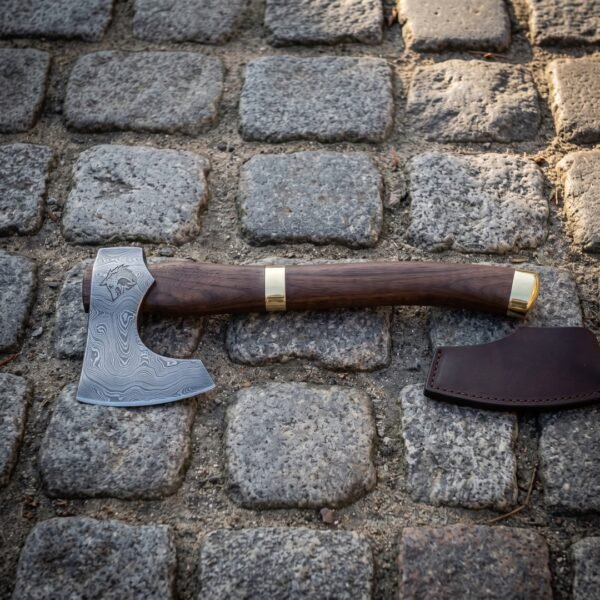
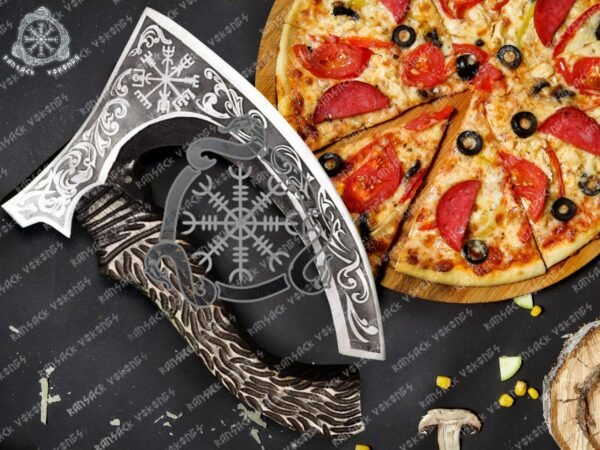
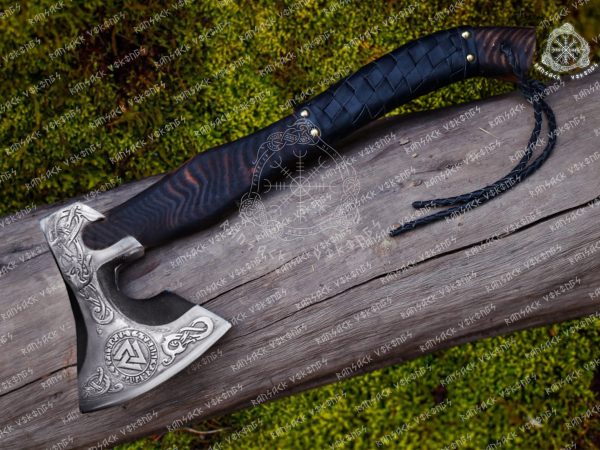
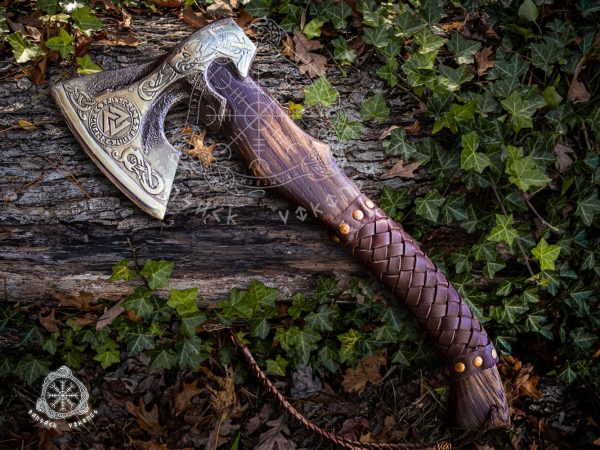
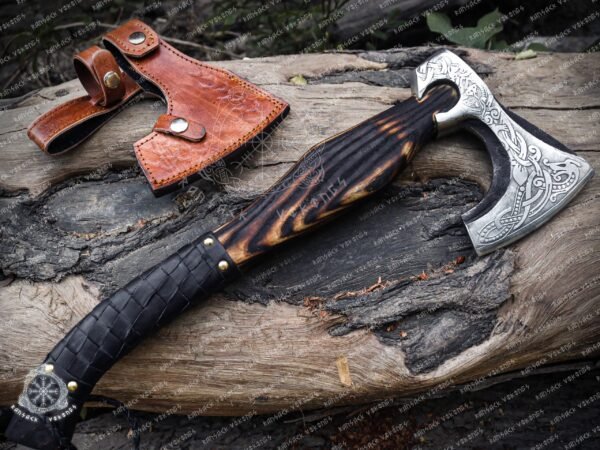
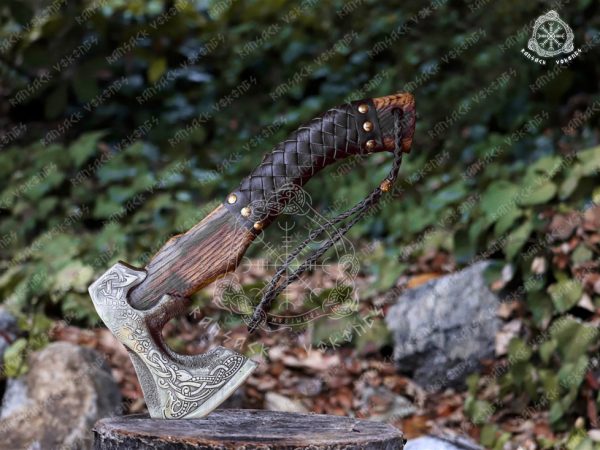
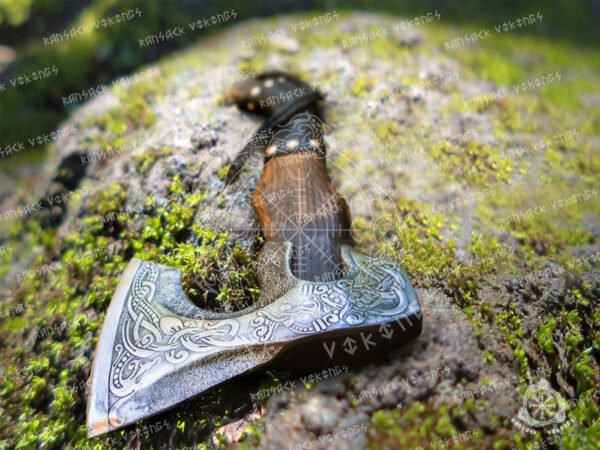
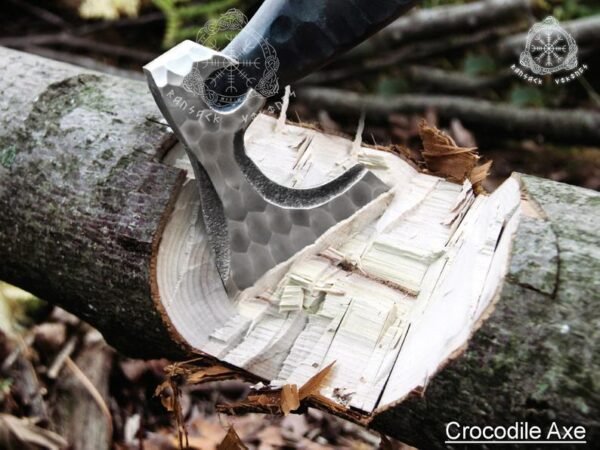
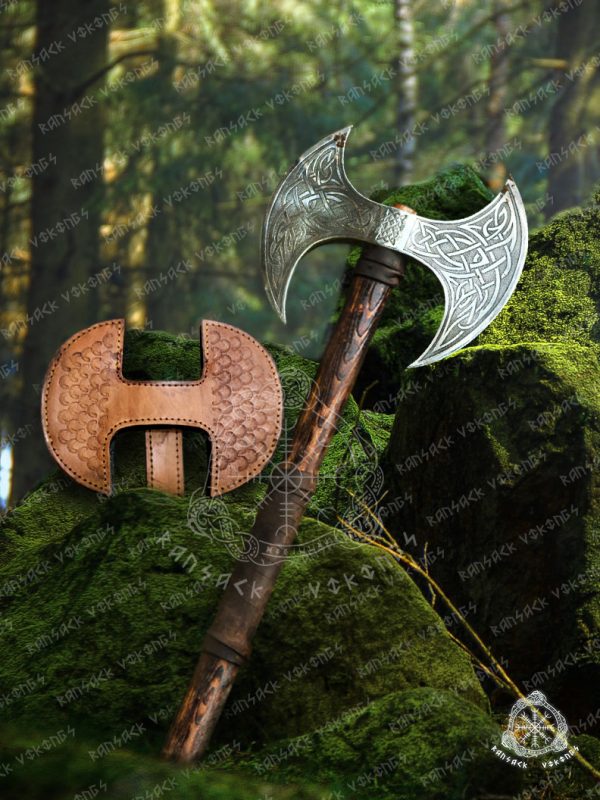
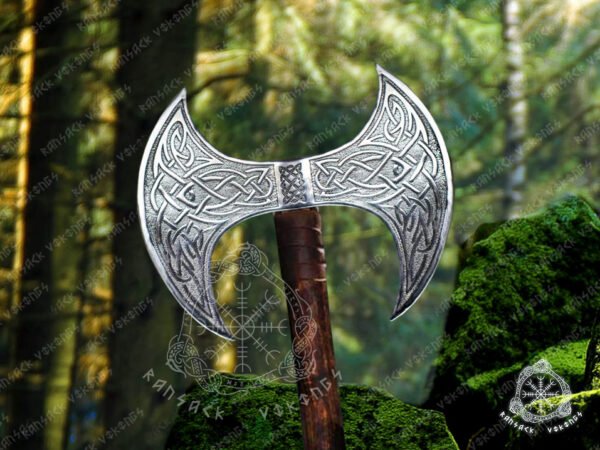
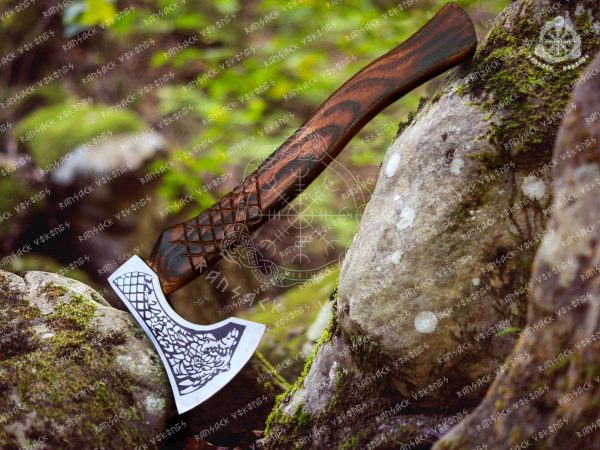
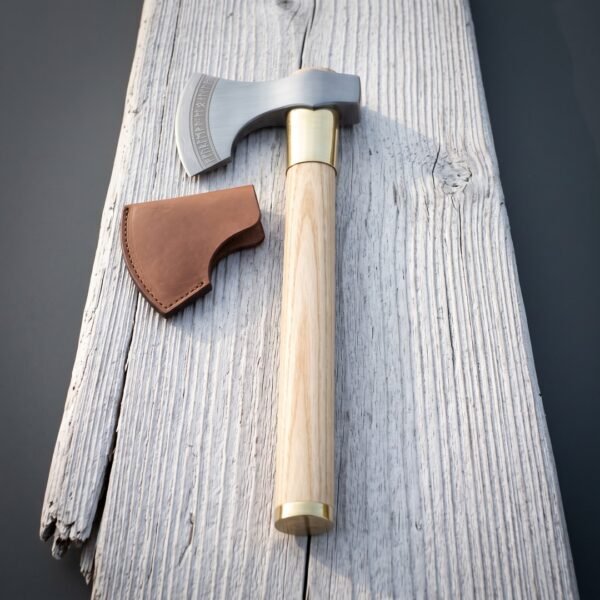
Hand forged from high carbon steel and hung on a wood handle, the Dragon is a Viking bearded axe built for the woodpile, the camp and the target board. It carries a 5.3 inch cutting edge on a 19 inch haft and weighs 1.23kg, which is the size range where an axe is light enough to use one handed all day and still heavy enough to mean something when it lands. Head weight, haft length and what you actually intend to do with it are worked through in how to choose a Viking axe.
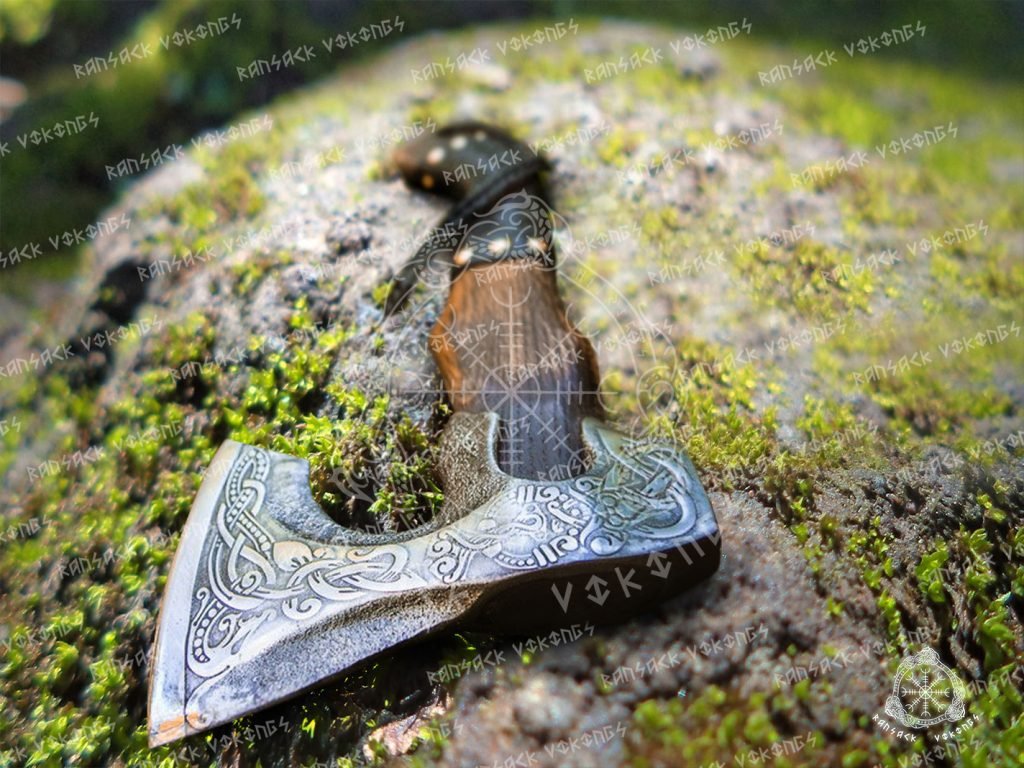
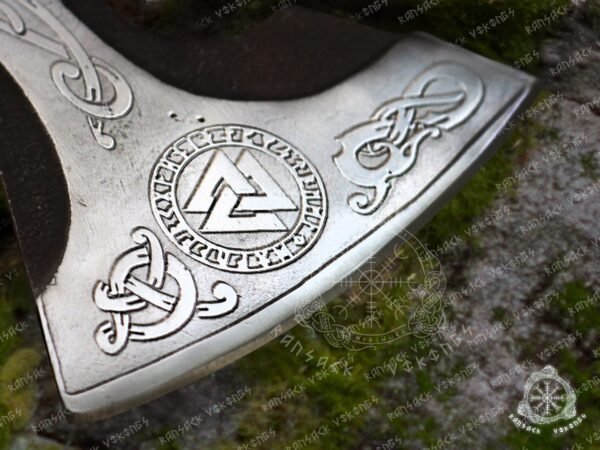
The dragon is the right motif for a Norse piece, and the reason is better than decoration. Norse ships carried carved beast heads on the prow, and Icelandic law recorded in the settlement period required that those heads be taken down before a ship came in sight of land, so that the gaping mouths would not frighten the land spirits and turn them against the country. Later Norse art pushed the same creature into the Urnes style, where dragons and serpents were stretched into long ribbon like beasts knotted through each other, which is the interlace people still recognise as Viking today. A dragon axe is not a fantasy invention. It is the oldest advertising campaign in northern Europe.
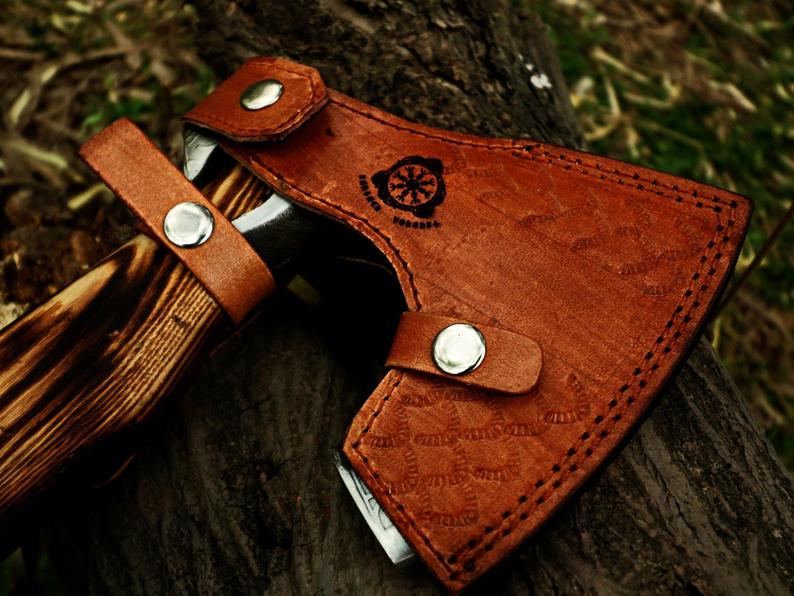
This axe is forged, ground, hung and covered in the Czech Republic. It ships with a leather blade cover and a gift box, free within the United States, with the edge already set.
Specifications
| Steel | Hand forged high carbon steel |
|---|
| Hardness | 58 to 60 HRC |
|---|
| Overall length | 19 inches |
|---|
| Cutting edge | 5.3 inches |
|---|
| Weight | 1.23kg |
|---|
| Handle | Wood, hand fitted and wedged |
|---|
| Sheath | Leather blade cover, gift box included |
|---|
| SKU | RK-355 |
|---|
The eye, the wedge, and why a Viking axe head stays on
Everyone looks at the bit. The part that decides whether an axe survives twenty years of use is the eye, and it is the part nobody photographs.
The eye on this head is punched and drifted, which means a hole is driven through hot steel and then progressively opened with a tapered drift until it reaches shape and size. Drifting does not remove metal, it moves it, so the grain of the steel flows around the opening instead of being cut across. The result is an eye with material packed around it and no sharp internal corners for a crack to start from. Drilling or milling an eye out of cold stock does the opposite: it severs the grain and leaves square corners, which is exactly where a head under repeated shock will eventually split. A punched and drifted eye is also slightly waisted through its depth, narrower in the middle than at either end, and that is what makes wedging work.
The handle is driven in from below, the kerf at the top is opened with a wooden wedge driven down the length of the eye, and a second metal wedge is set across it. The wood is forced outwards into the flared upper part of the eye and locked against the waist. Done properly the head cannot travel in either direction. Done badly, by pressing a head onto a machined stick and relying on friction, it works loose in the first dry winter.
The beard above all of this hangs the cutting edge below the eye, so you get a longer edge without a heavier head, and it leaves a gap under the bit where your hand can sit for choked up carving work. That combination of a securely drifted eye and a light bearded bit is the whole Norse design in one sentence.
Why high carbon steel and not stainless
Plain high carbon steel is what working blades were made from long before stainless existed, and for a striking tool it is still the better answer. It hardens deeply, sharpens quickly and greys over with a patina that protects the surface rather than damaging it.
Stainless has one real advantage, which is that it resists rust with no attention from you. Against that, the chromium content makes it slower to bring back with a file, and at the hardness an axe bit needs it is more inclined to chip when the edge meets a knot, a stone or an old fence staple. Carbon steel rolls instead, and a rolled edge straightens under a file in a couple of minutes anywhere, including in a field with the axe clamped between your knees. What carbon asks in return is that you dry it and oil it. The comparison in full, and the cases where stainless is genuinely the better buy, are in Damascus versus stainless.
The wood handle
The handle is shaped and sanded to sit in the palm rather than to photograph well, then fitted and wedged to this individual head. It is finished with oil rather than lacquer, because lacquer chips, lifts at the edges and traps moisture underneath where you cannot reach it, whereas an oiled handle can be brought back at home with a cloth in five minutes.
Wood moves with temperature and humidity. A light coat of boiled linseed or plain mineral oil once or twice a year keeps the fibres fed and the wedge tight, and that single habit prevents most loose head problems. If it ever does move, wedge it again rather than soaking the axe in a bucket, which is an old shortcut that swells the wood briefly and rots the fit permanently. The method is written up in wooden handle care.
Engraving, runes and your own design
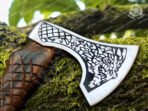
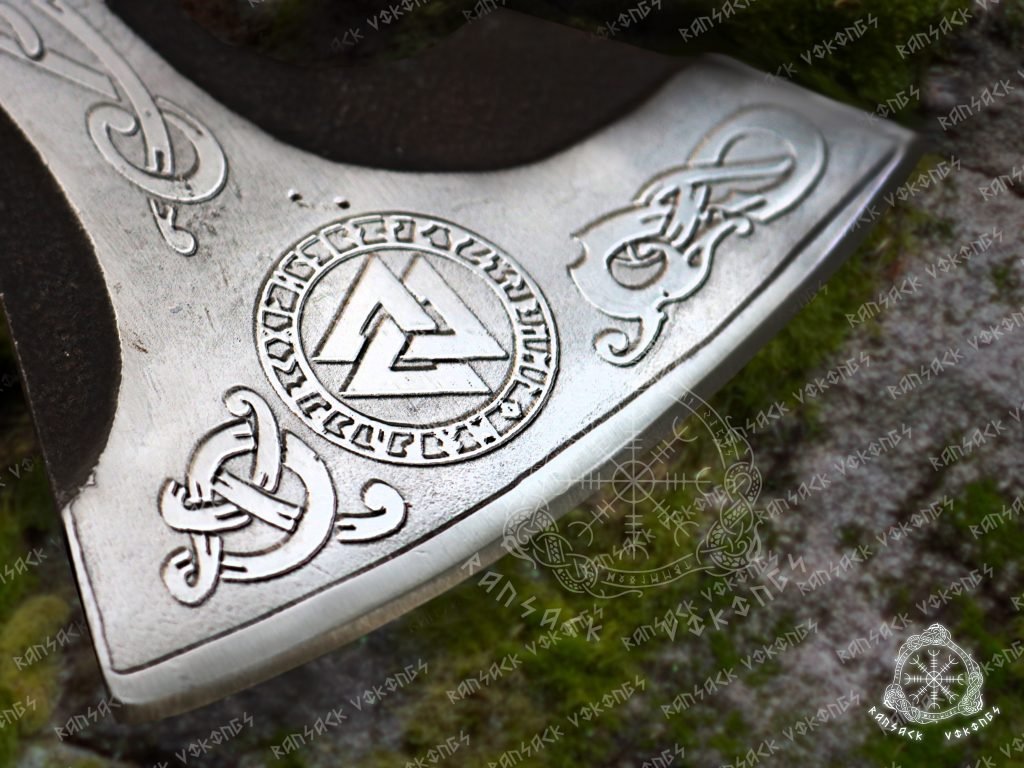
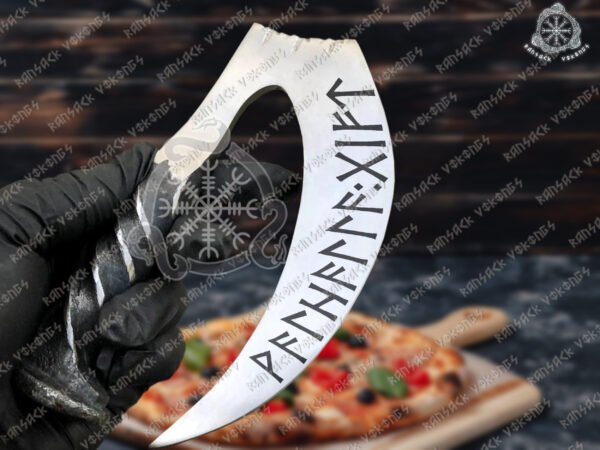
Use the rune converter on this page to turn a name, a date or a short phrase into Elder Futhark and we will cut it into the steel or the handle. If you would rather have a Viking pattern than a rune line, choose your own design in the engraving option above the add to cart button and tell us whether it goes on the blade or the handle. Where a piece already carries an engraved design, your chosen engraving replaces it rather than sitting alongside it. On this model the most requested work is an interlaced dragon or serpent across the cheek with a name and date down the handle, which is close to what a tenth century owner would have paid a smith for. Sizes and placement are on the engraving page.
Care and sharpening
File first, stone second, strop only if you are carving with it. Clamp the head, run a mill file from the toe of the bit towards the beard along the bevel already there, keep the bevel convex, then refine with a puck or a coarse stone and finish fine. Do not put an axe on a bench grinder unless you can keep the steel cool, because bluing it draws the temper and that steel has to be filed away before the edge will hold again.
Keep the bit dry, especially after green wood, oil the head before the cover goes on and store the axe hanging or on its side rather than standing on the edge. Rust removal and the oils worth using are covered in steel care, and the edge geometry behind all of it is in sharpening with a whetstone.
Made in the Czech Republic
This is a handmade piece from the Czech Republic, made in a workshop that still forges, grinds and finishes by hand instead of stamping parts out. The smiths there have kept the older way of working, and the wood, horn and leather are shaped and fitted by hand as well. Two pieces of the same design will never be identical, and that is part of what you are buying.
Ransack Viking is a United States company. We handle the import ourselves, look over every piece when it lands and ship from our warehouse in Memphis, Tennessee. Engraving is done in the United States after the piece arrives, so your design goes on before we send it out.
A note on handmade variation
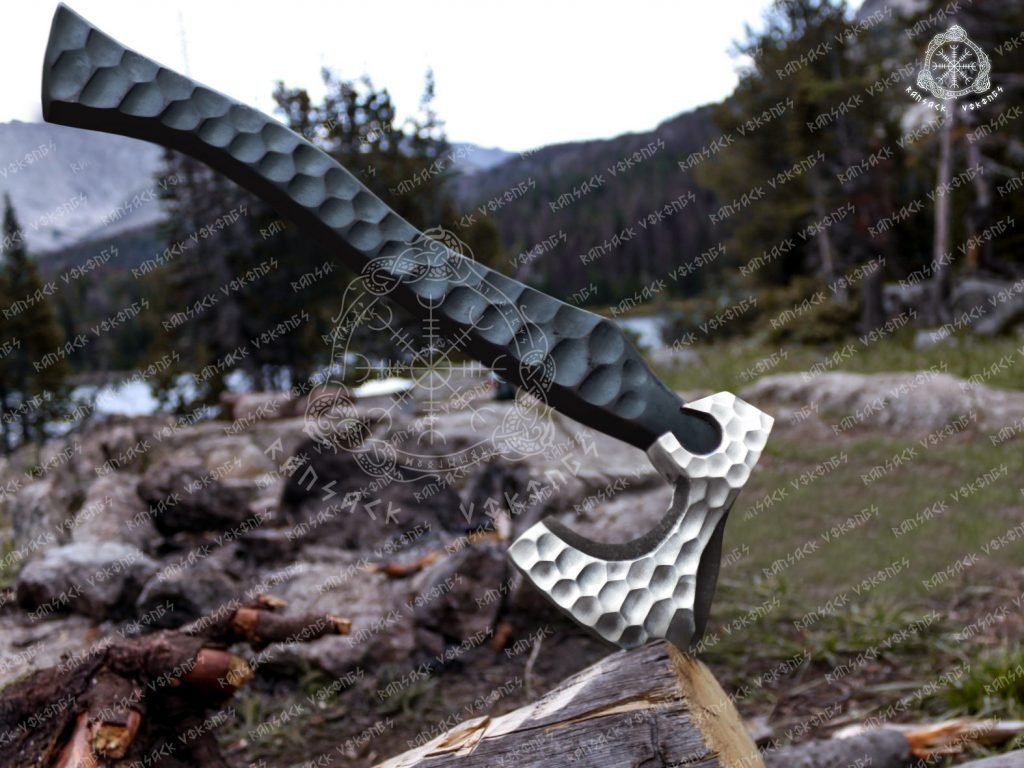
This is a hand forged axe rather than a machine made or bulk produced one, so the axe that arrives will not be a pixel for pixel copy of the photograph on this page. The forge finish across the cheeks changes in tone with how the scale released. Hammer marks sit where the smith placed them. The handle is cut from a natural board and its grain, colour and figure are its own, so one may run pale and even while the next carries darker streaking. The exact curve of the beard and the width of the bevel vary by a hair, because both are worked by eye against the shape rather than by a machine against a stop.
The dimensions, the steel and the build are identical every time. The character is not. That is what you are choosing when you buy a forged piece instead of a moulded one.
Frequently asked questions
Does the head come loose over time?
Not if the handle is fed. The eye is punched and drifted and the head is wedged with a wooden wedge and a cross wedge, which locks it in both directions. Oil the handle once or twice a year, particularly through a dry heated winter, and it stays put.
Is it sharpened before it ships?
Yes, and it will cut wood the day it arrives. The edge is set as a working axe edge rather than a razor edge, because a bit ground too fine folds on the first knot.
Can I use it for throwing?
Into softwood targets, yes. Inspect the handle after every session and replace it when it shows cracks. Any thrown axe eventually needs a new haft, and that is normal rather than a fault.
Can a dragon design be engraved on the head?
Yes. Choose your own design in the engraving option above the add to cart button and tell us whether it goes on the cheek or on the handle. An interlaced beast in the Urnes manner is the most requested pattern on this axe.
Will my axe look like the photograph?
It will match on size, steel and build. It will not match on forge finish, hammer marks or the grain of the handle, all of which are individual.
What is the delivery time?
One to two weeks of processing plus transit. Shipping is free inside the United States and returns are open for 7 days from delivery.
What is in the box
- One Dragon high carbon steel Viking bearded axe, 19 inches overall
- Leather blade cover
- Gift box
- Protective packaging
- Forged and finished in the Czech Republic
Explore the range
Nearby in the range are Viking axes, bearded axes, battle axes and Norse arms. Everything else worth knowing about the steel and the build is in the guides.

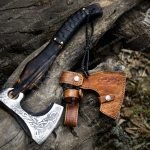
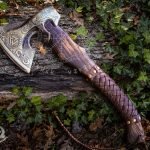







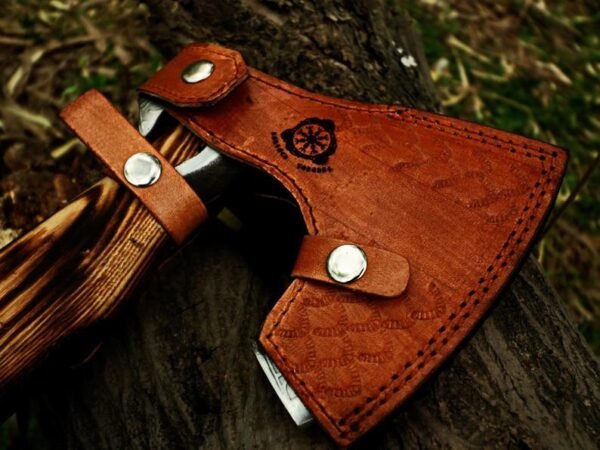
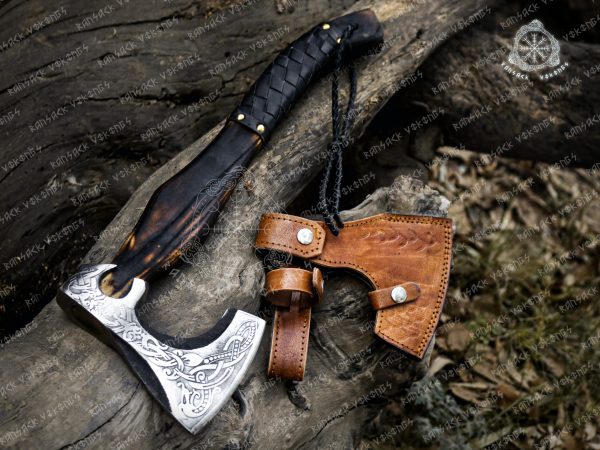

Incredible craftsmanship on this one. Leather sheath is thick and well stitched. Not the cheap stuff you usually get. Already telling my friends to check this out.
Was nervous ordering something like this online but so glad I did.
Knew this axe was special the second I opened the box. High Carbon Steel blade holds a razor edge right out of the box. This shop clearly takes pride in their work.