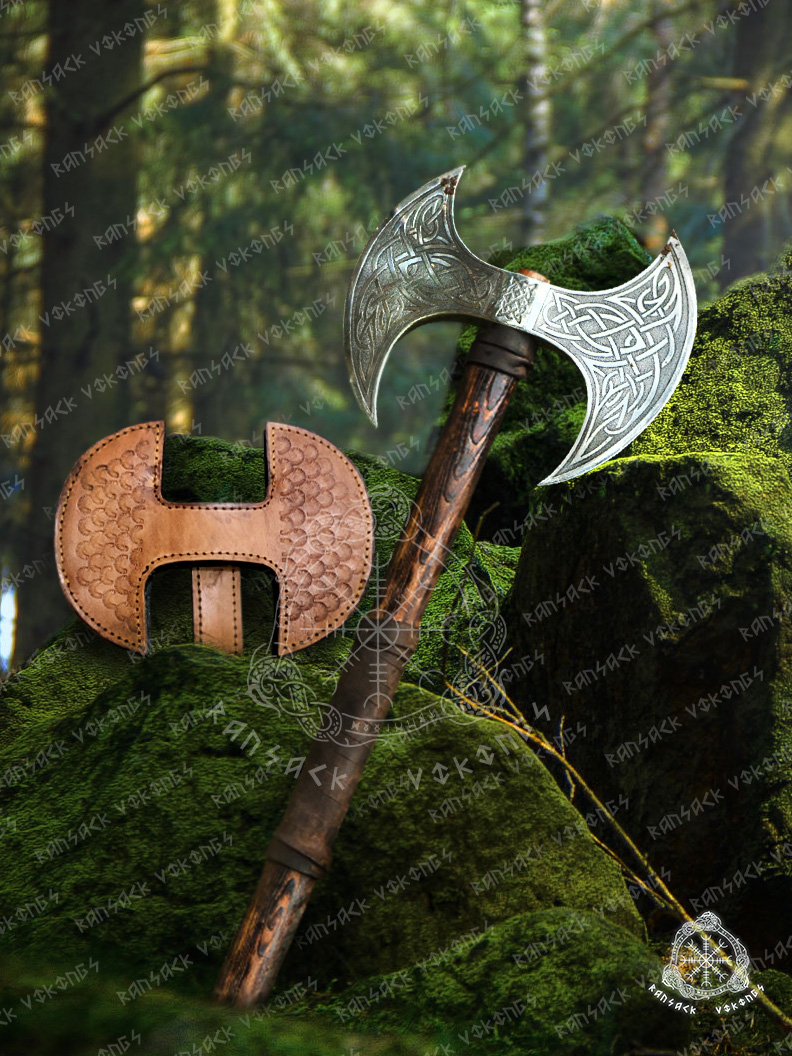
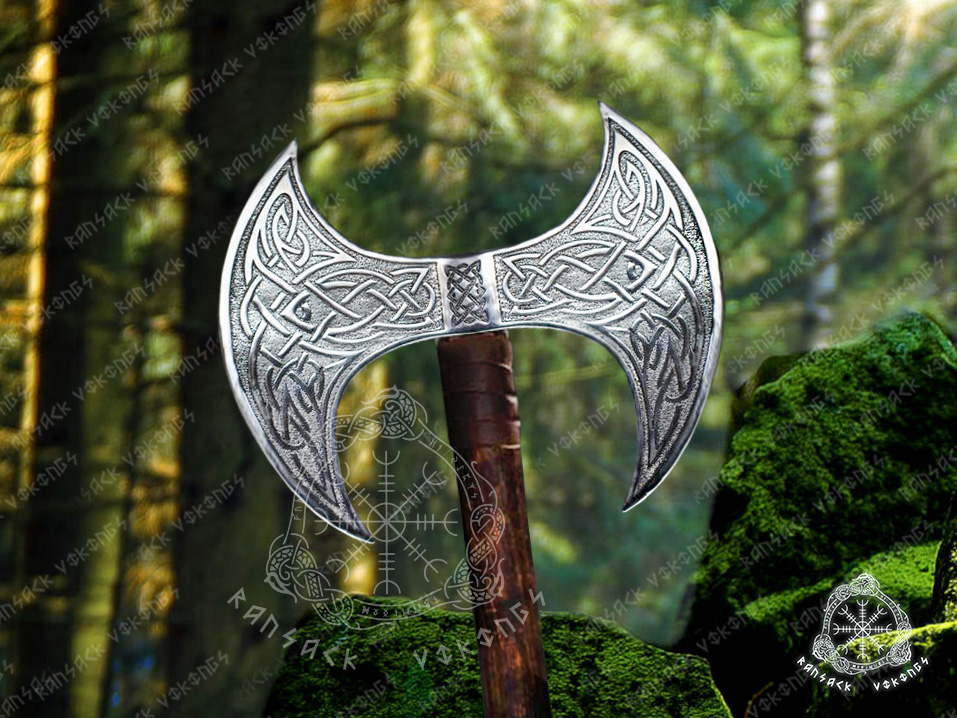
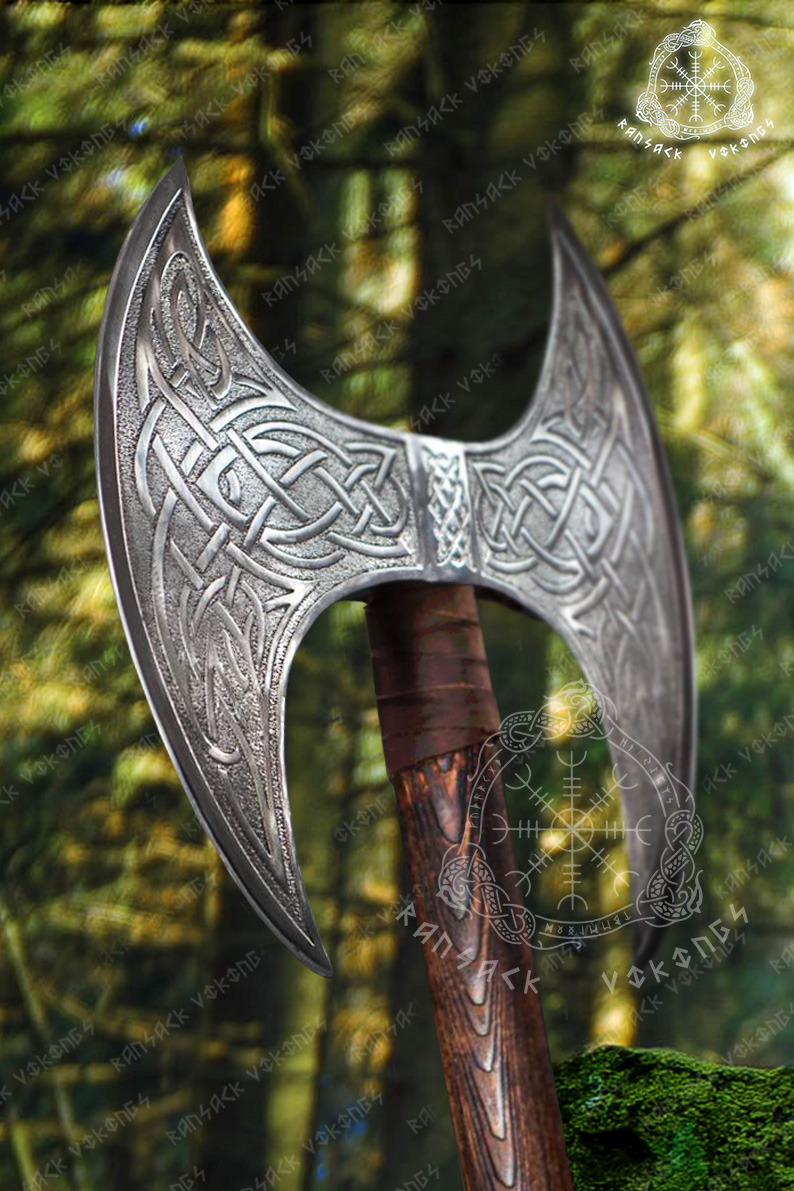
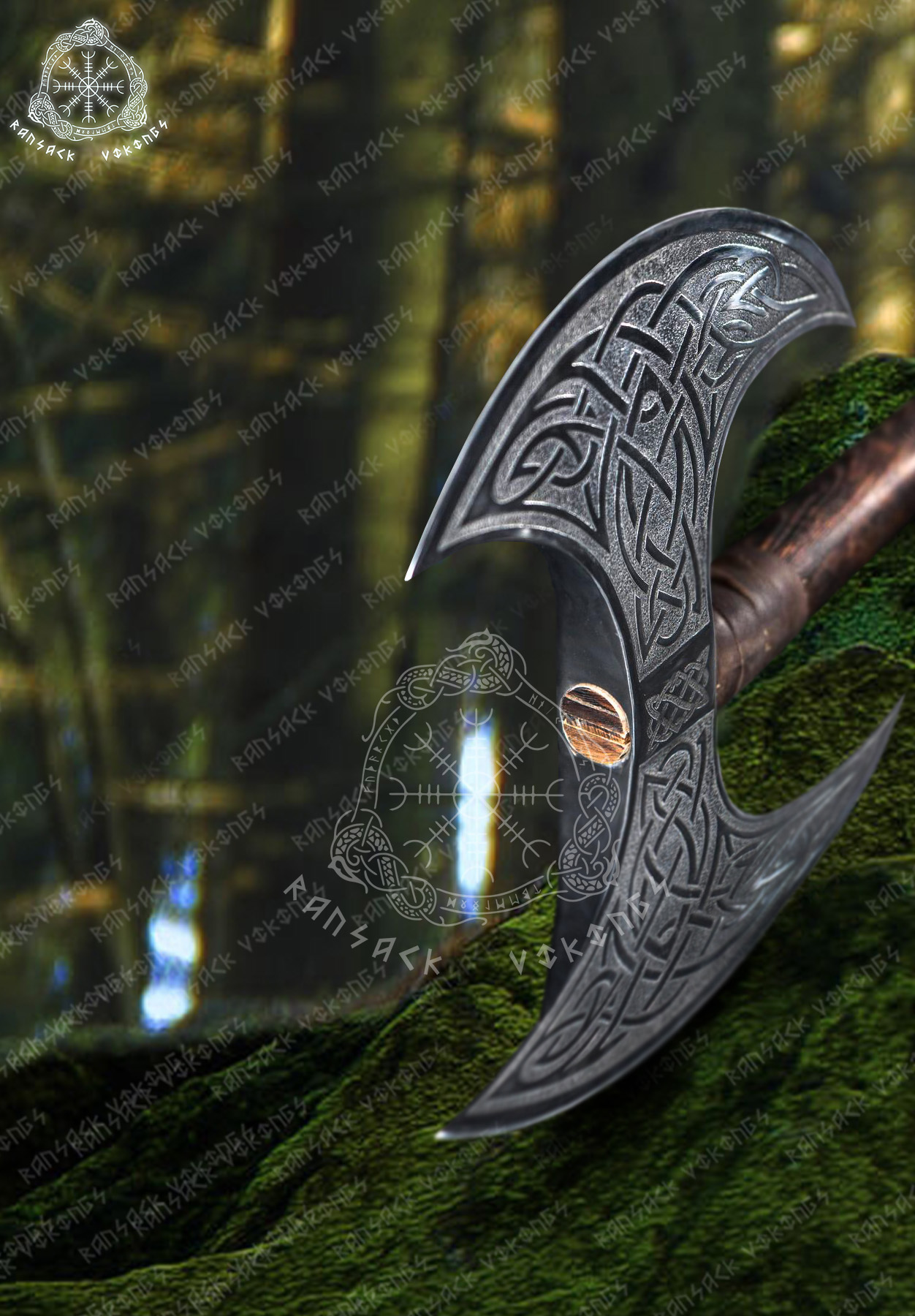
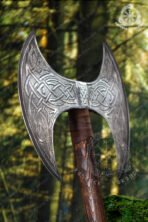
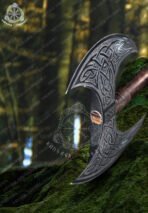
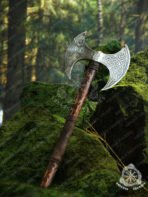
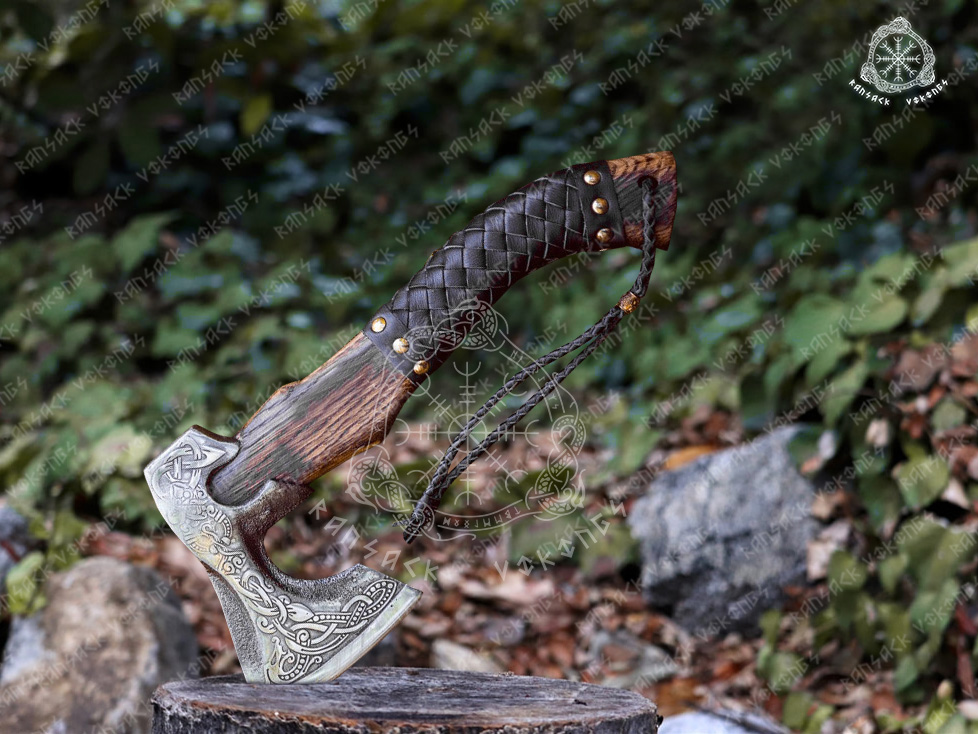
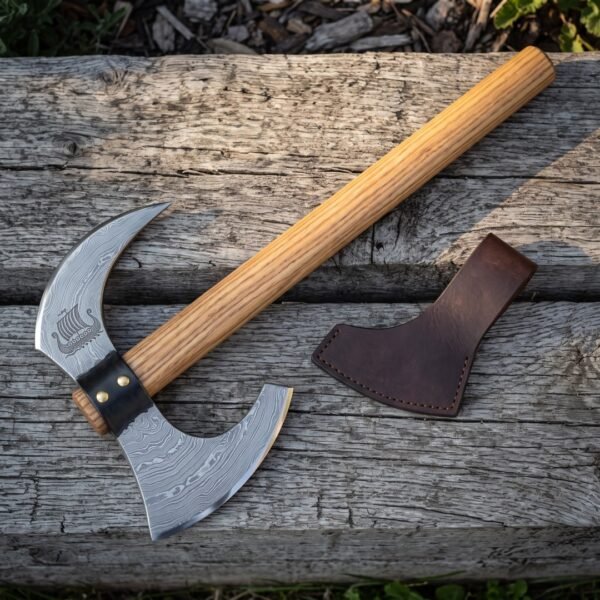
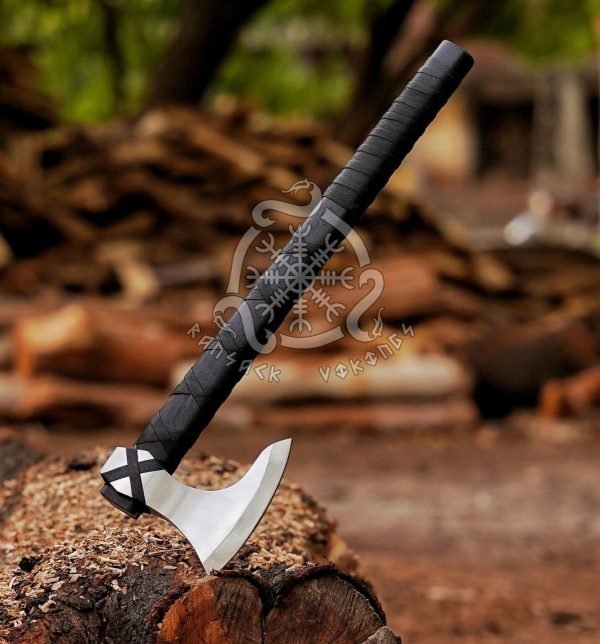
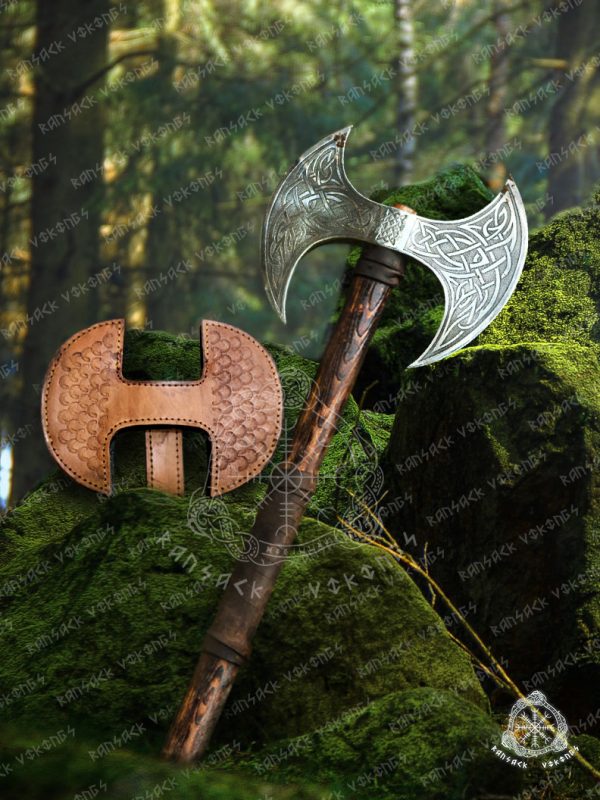
The Twinfang is a double headed Viking axe with a hand forged high carbon steel head, a 9 inch cutting edge and an ash wood handle that brings the whole tool to 19 inches. The head is drawn out under the hammer, the eye is punched and drifted rather than drilled, and the haft is fitted and wedged so the mass sits where a swinging tool needs it. What the Norse actually carried, and how the heads were built, is covered in Viking axe history.
The twin bit head is worth explaining, because it is not a Norse shape. Viking age axes were nearly always single bit, and many of them had a body of soft wrought iron with a hardened steel edge forge welded into the bit, because good steel was scarce and expensive enough to be used only where it did the cutting. The double bit belongs to the North American logging camps of the nineteenth century, where a feller carried one axe with two edges: one kept keen for clean cuts into standing timber, the other ground a little steeper for the rough work near the ground where a buried stone would ruin a fine edge. The Twinfang puts that arrangement on a Norse profile, which is why it reads as a display piece and behaves like a working one.
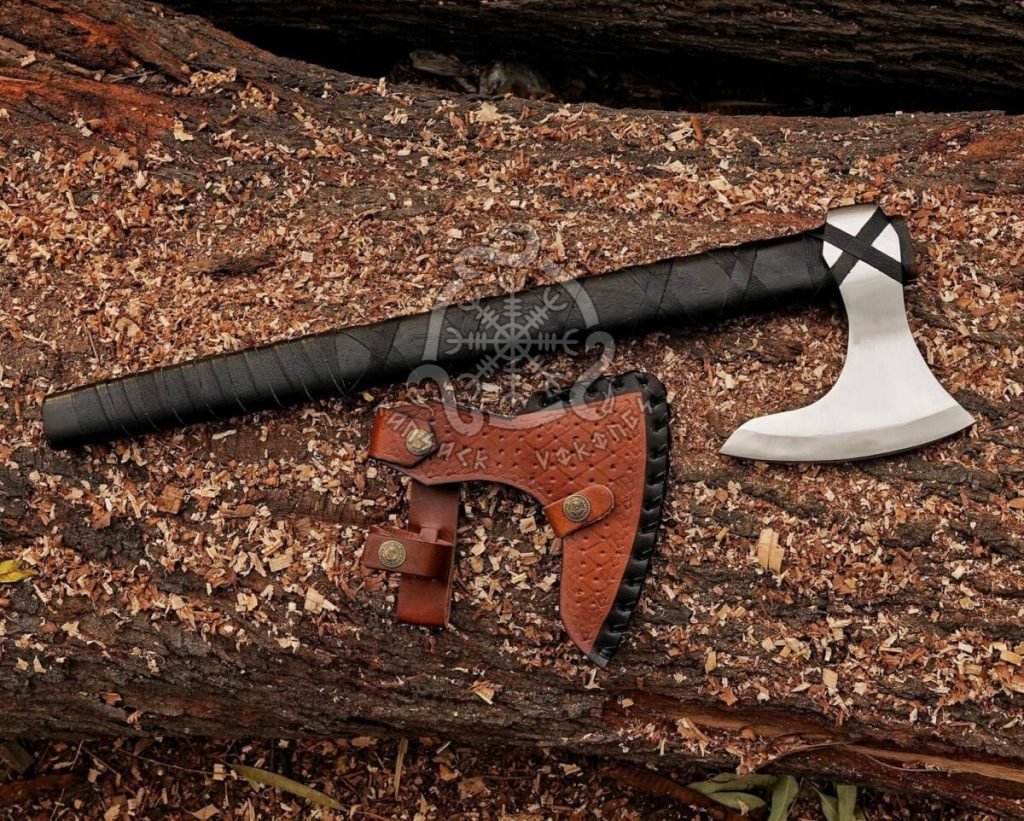
Every stage of this axe happens in the Czech Republic. It ships with a leather blade cover and a gift box, free within the United States, and it leaves the shop with the edge already set rather than needing a first grind at your end.
Specifications
| Steel | Hand forged 1095 high carbon steel |
|---|
| Hardness | 54 to 58 HRC |
|---|
| Overall length | 19 inches |
|---|
| Cutting edge | 9 inches |
|---|
| Weight | 1.53kg |
|---|
| Handle | Ash wood |
|---|
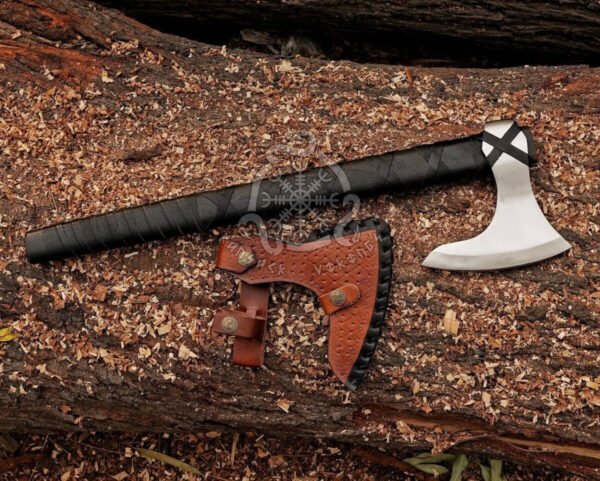
| Sheath | Leather blade cover, gift box included |
|---|
| SKU | RK-366 |
|---|
What the second bit is actually for
A twin bit head changes how an axe behaves in three ways, and none of them are cosmetic. The first is balance. Because the mass is arranged symmetrically either side of the eye, the head has no natural tendency to roll in flight or twist in the cut. A single bit axe carries its weight to one side of the handle and you learn to correct for it without noticing. A double bit tracks straight, which is why throwers who care about consistency often prefer one.
The second is edge economy. You have two working edges and nine inches of cutting edge between them. When one bit dulls on knotty wood or a hidden nail, you turn the axe over and keep going instead of stopping to file. On a long day of camp wood that is the difference between working and maintaining.
The third is grip. With no beard and no shoulder on either side, you can choke right up under the head for controlled carving and shaping, then slide back to the end of the ash for a full swing. The trade off is honest and worth stating: there is a live edge behind you as well as in front of you, so a double bit demands more respect when you are limbing close to your own legs, and it does not have the hook a bearded axe gives you for drawing a log towards you.
Why 1095 high carbon and not stainless
This head is plain 1095 high carbon steel, hardened and tempered to sit between 54 and 58 HRC. That is deliberately a little softer than a knife blade. An axe takes shock loads that a knife never sees, and a head run too hard will chip along the edge the first time it meets a knot. Held in this band the bit takes a keen edge, deforms rather than fractures when it hits something it should not, and comes back with a file in a couple of minutes.
Stainless would resist rust better and that is the whole of its advantage here. The chromium that makes steel stainless also makes it harder to sharpen in the field and, at the toughness an axe needs, generally less able to hold a fine edge under impact. If you have been looking at a medieval axe for sale and comparing steels, the trade off is set out in full in our guide to Damascus versus stainless, and the same reasoning applies to plain carbon. Carbon steel asks for a wipe of oil. In return it gives you an edge you can restore anywhere with a file and a stone.
The ash handle and how to hold it
Ash is the traditional choice for striking tools and it has held that position for a reason. The grain is long and springy, so it absorbs shock through the hand instead of transmitting all of it, and it fails slowly and visibly rather than snapping without warning. The handle here is shaped and sanded by hand, then fitted and wedged into the drifted eye.
Wood moves with humidity. In a dry heated house through winter, an unfed handle shrinks and the head starts to feel loose. A light coat of boiled linseed or plain mineral oil once or twice a year keeps the fibres fed and the fit tight. The method takes five minutes and is written up in our guide to wooden handle care. If the head ever does move, do not soak the whole axe in water as an old shortcut suggests. Wedge it again properly.
Engraving, runes and your own design
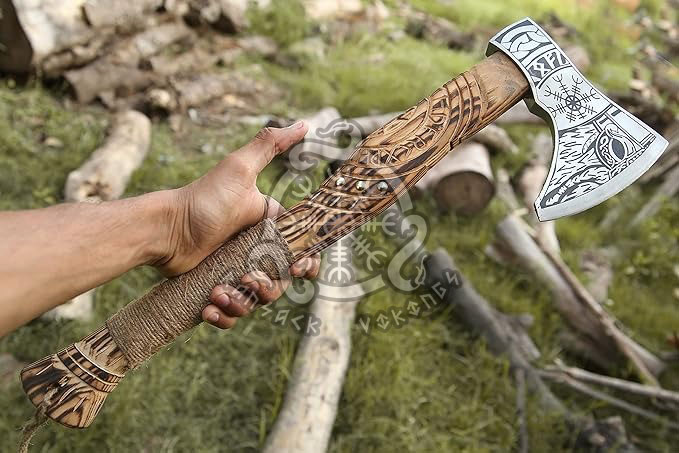
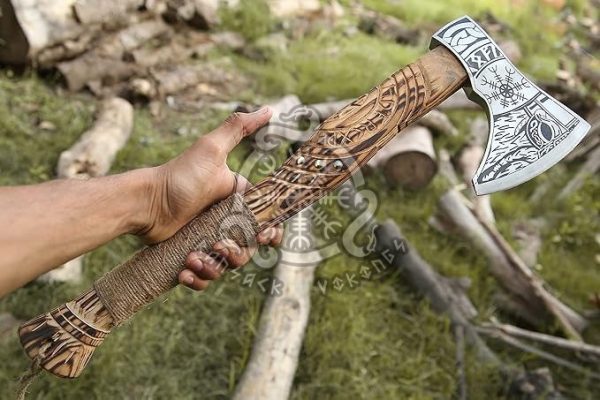
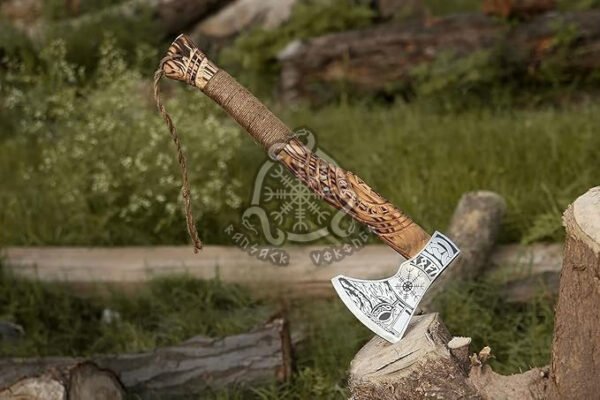
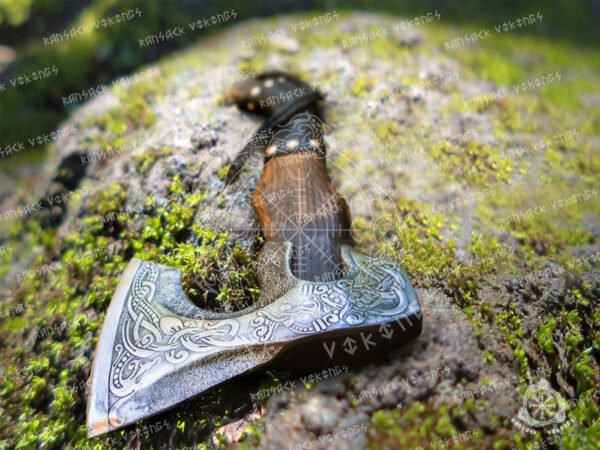
An axe like this is often bought as a gift, and personalisation is what turns it into one. Use the rune converter on this page to turn a name, a date or a short phrase into Elder Futhark and we will cut it into the steel or the handle. If you would rather have a Viking pattern than a rune line, choose your own design in the engraving option above the add to cart button and tell us whether it goes on the blade or the handle. Where a piece already carries an engraved design, your chosen engraving replaces it rather than sitting alongside it. Everything is cut here in the same shop that forged the head, not sent out to a third party, and the detail of what fits where is on the engraving page.
Care and sharpening
An axe edge is restored with a file first and a stone second. Clamp the head, run a mill file from the corner of the bit towards the centre following the existing bevel, then refine with a puck or a coarse stone and finish on the fine side. A strop is optional and only worth it if you are carving with it. Do not take an axe to a bench grinder unless you know how to keep it cool, because bluing the edge means you have drawn the temper out of it and you will have to file that steel away.
For rust, dry the head after use, especially after cutting green wood, and put a thin film of oil on it before it goes into the cover. Carbon steel will grey over with a patina and that is protection, not damage. Active orange rust is different and should be taken off. Our guide to steel care covers the oils that work and the ones that go sticky, and if you want the geometry behind a good edge, read sharpening with a whetstone.
Made in the Czech Republic
Every piece we sell is made by hand in the Czech Republic. The smiths there work the way the trade has been worked for a long time, heating and hammering the steel, taking the bevels down by eye, and fitting the handle and the leather one at a time. There is no automated line anywhere in it, so small differences from one piece to the next are normal and expected.
Ransack Viking is a United States company based in Memphis, Tennessee. We bring the pieces in ourselves, inspect them on arrival and ship them from our own warehouse. If you add engraving, that is carried out here in the United States before your order goes out.
A note on handmade variation
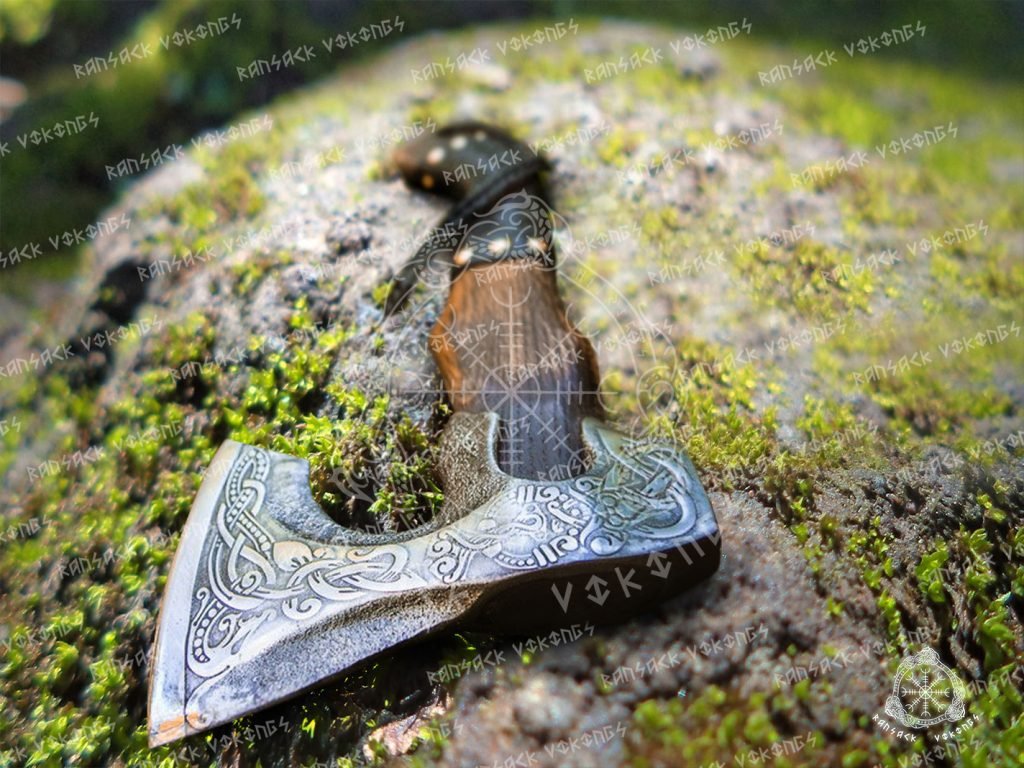
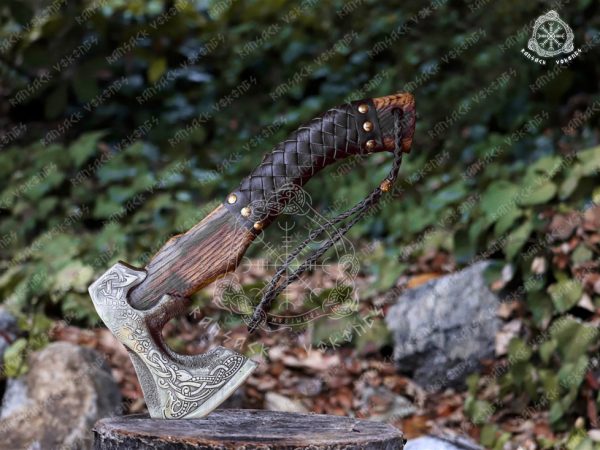
This axe is hand forged. It is not machine made and it is not bulk produced, so what arrives will not be a pixel for pixel copy of the photograph on this page. Hammer marks fall where the smith put them. The forge finish on the cheeks varies in tone. The ash handle comes from a board with its own grain and takes the oil at its own rate, so one may run pale and straight and the next may carry darker figure. The exact profile of the bits varies by a hair because they are ground by eye against a bevel rather than by a machine against a stop.
What does not vary is the part that matters. The dimensions are the same every time, the steel is the same every time, the heat treat is the same every time and the build is the same every time. The character is what changes, and that is the point of buying from a forge rather than a factory.
Frequently asked questions
Is the Twinfang sharp when it arrives?
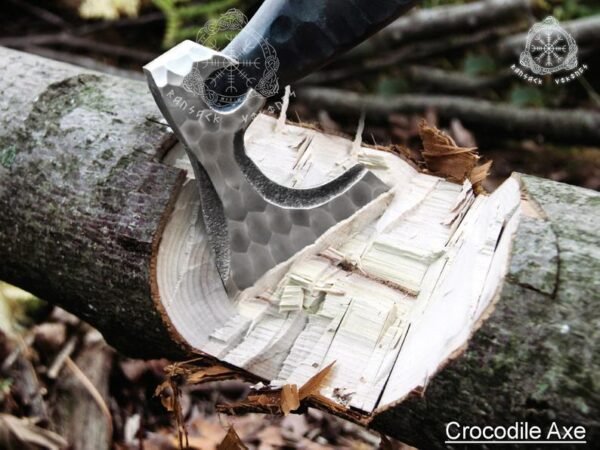
Yes. Both bits are sharpened before the axe is boxed and it will cut wood the day it lands. It is put on as a working axe edge rather than a razor edge, because an axe edge that is too thin folds on the first knot.
Can I throw a double headed axe?
You can, and the symmetry actually helps it fly true. Throw it into softwood targets, check the handle for cracks after every session, and accept that any thrown axe will eventually need a new haft. Never throw at a target with a hard backstop that can bounce it.
Is the head forged in one piece?
Yes. It is drawn from a single bar of 1095, with the eye punched and drifted rather than folded or welded from separate parts. There is no cast head and no bolted assembly.
Can runes be cut into a head this shape?
They can. The flat cheek either side of the eye gives a good clean field for a short rune line, initials or a date. Longer phrases usually sit better down the ash handle, and we will tell you which suits the text you send.
Will mine look exactly like the photograph?
No, and it is not meant to. The dimensions and the steel match, but the forge finish, the grain of the ash and the small marks of the hammer are particular to each axe.
How long before it ships?
Processing is one to two weeks, plus a little more if engraving is added. Shipping inside the United States is free and returns are open for 7 days from delivery.
What is in the box
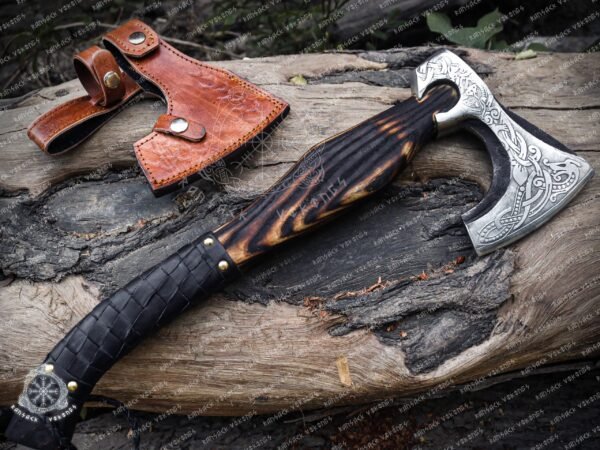
- One Twinfang double headed Viking axe, 19 inches overall
- Leather blade cover
- Gift box
- Protective packaging
- Forged and finished in the Czech Republic
Explore the range
If you are still comparing shapes, look through Viking axes, double headed axes, battle axes and throwing axes. The reasoning behind the steel, the heat treat and the leather is written up in the guides.







Reviews
There are no reviews yet