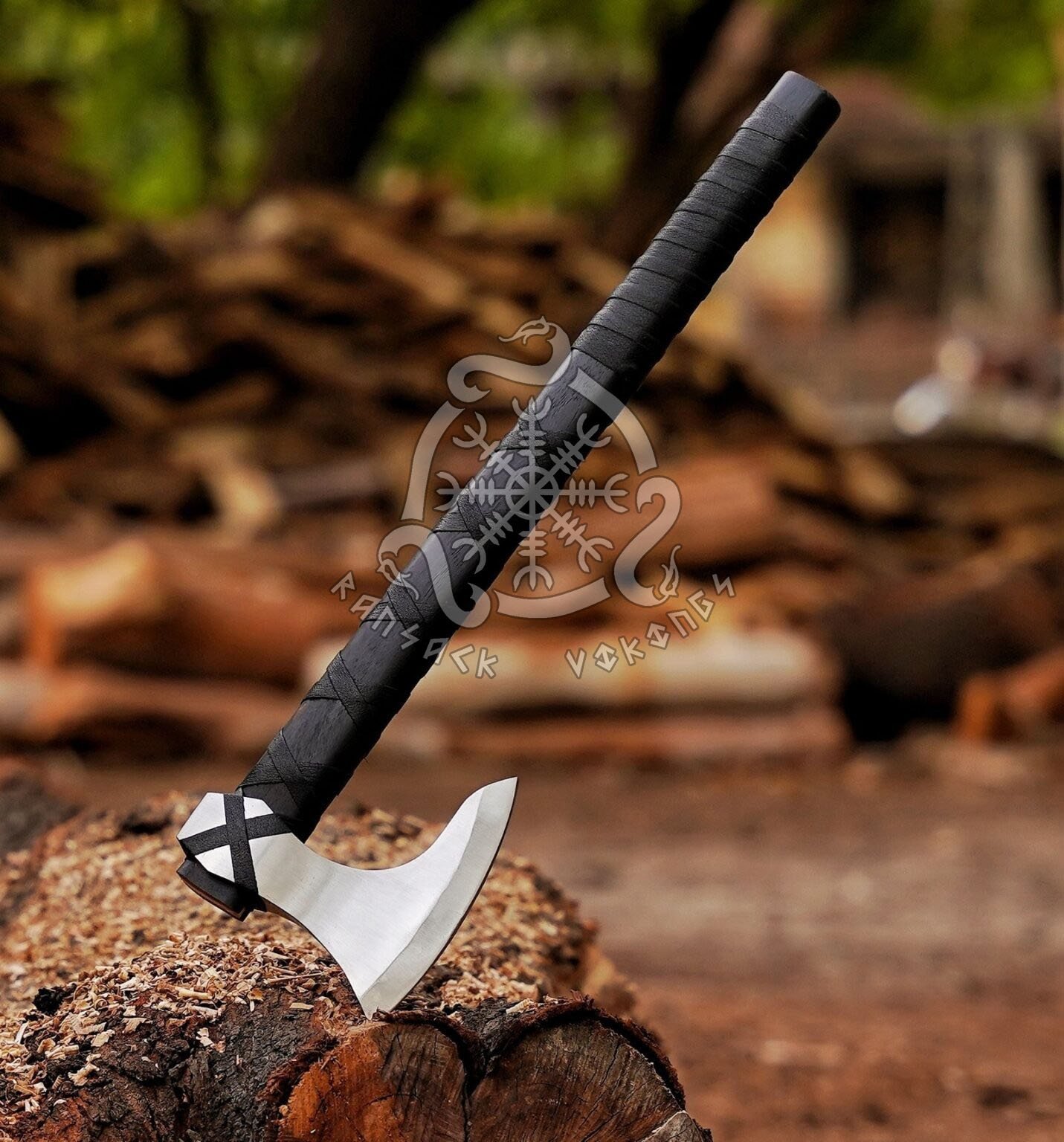
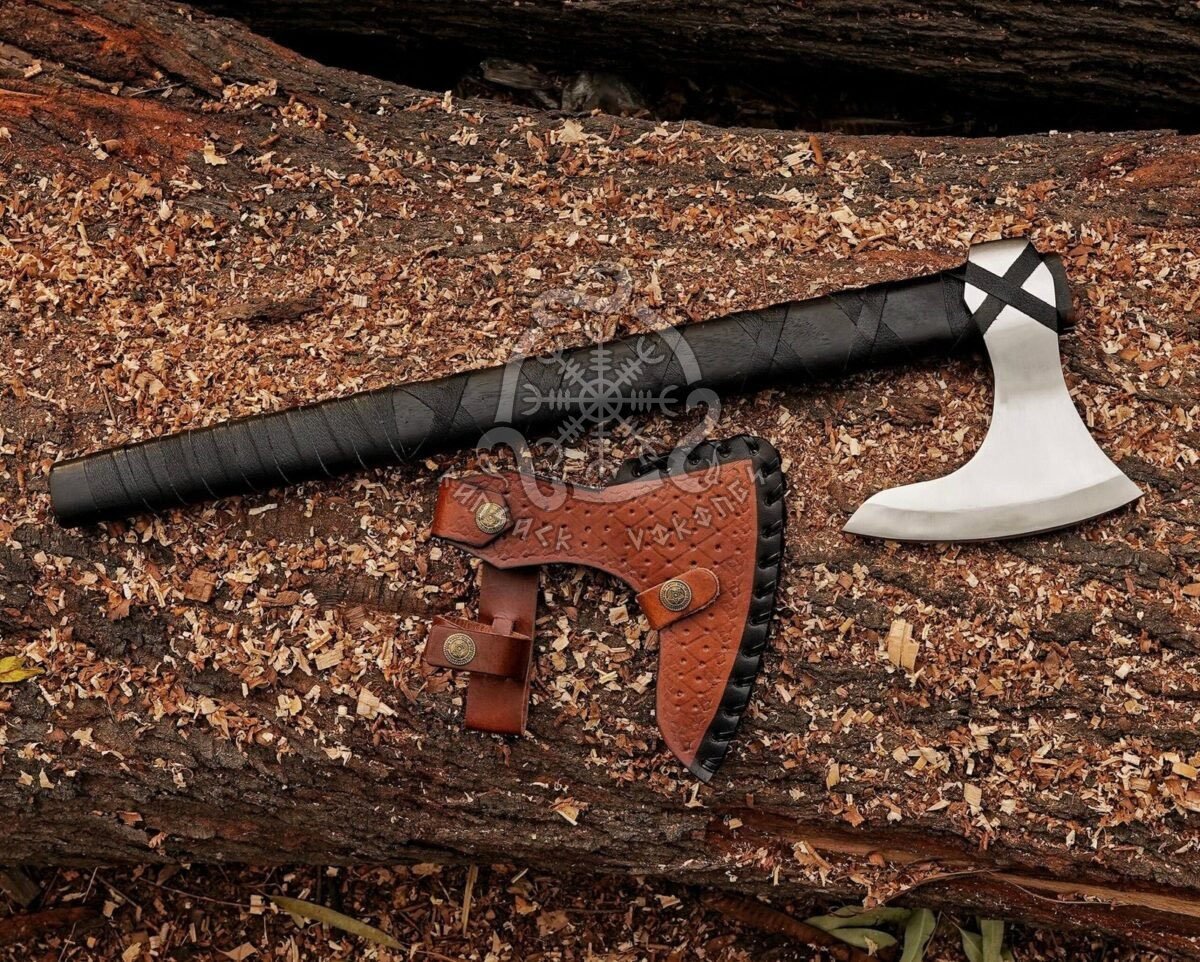
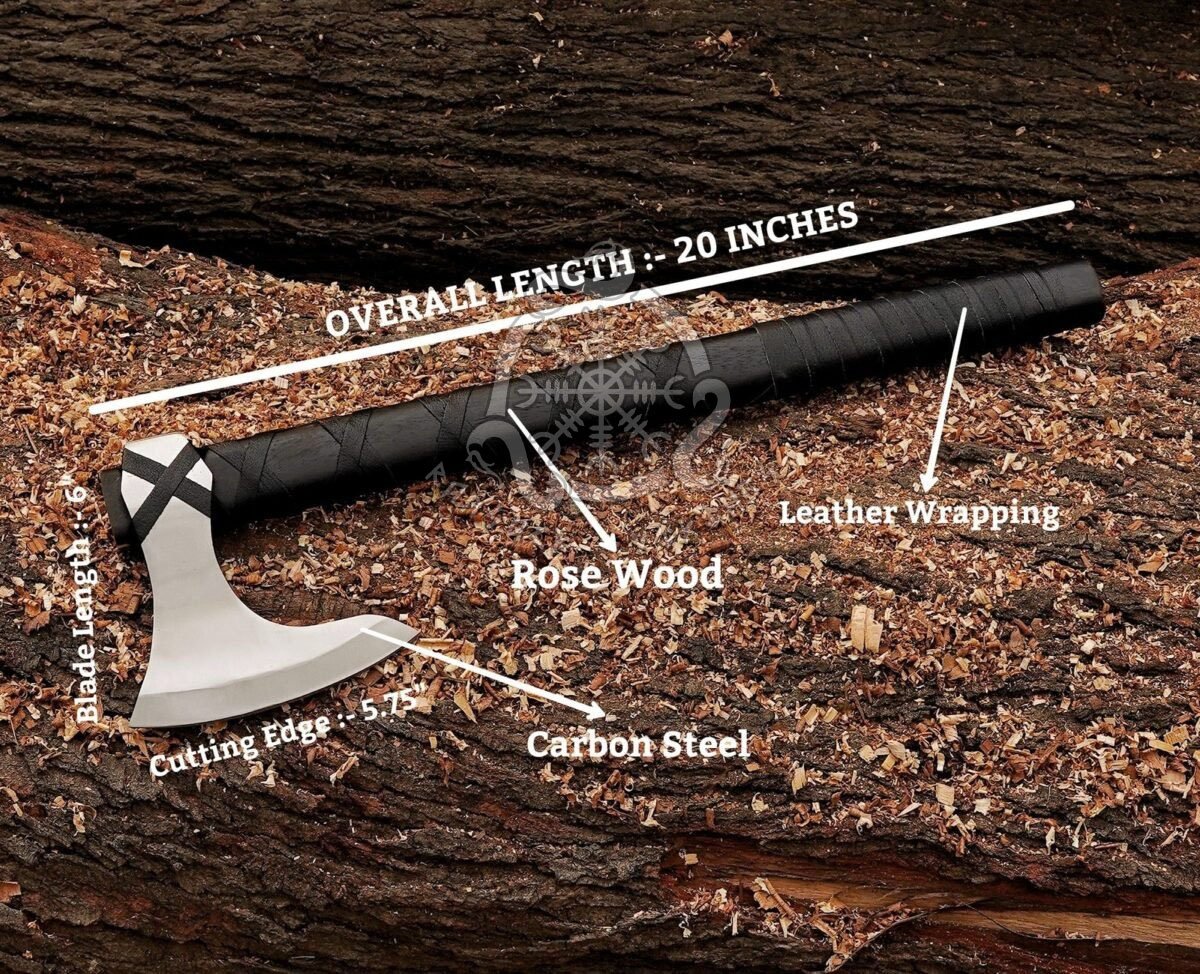
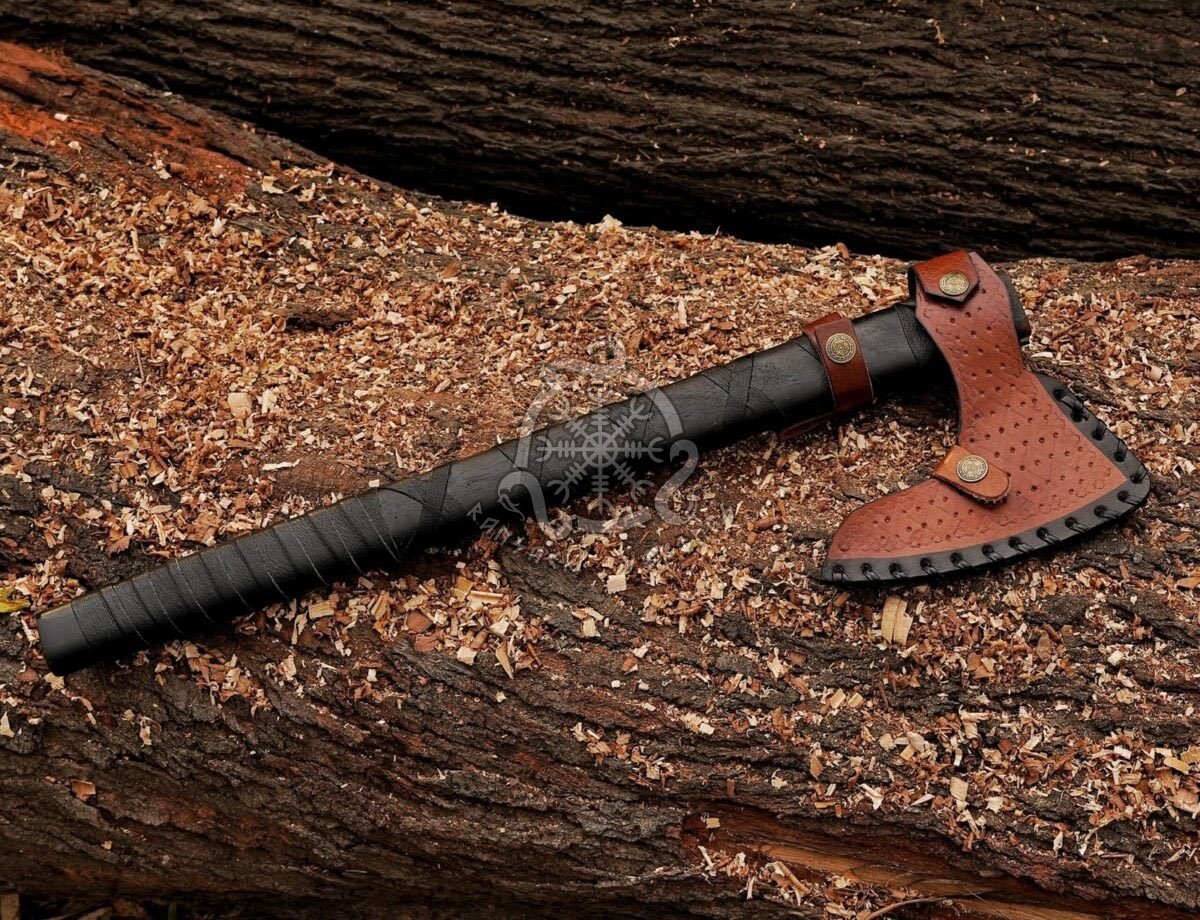
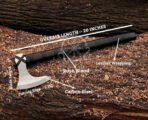
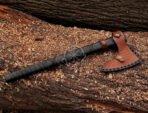
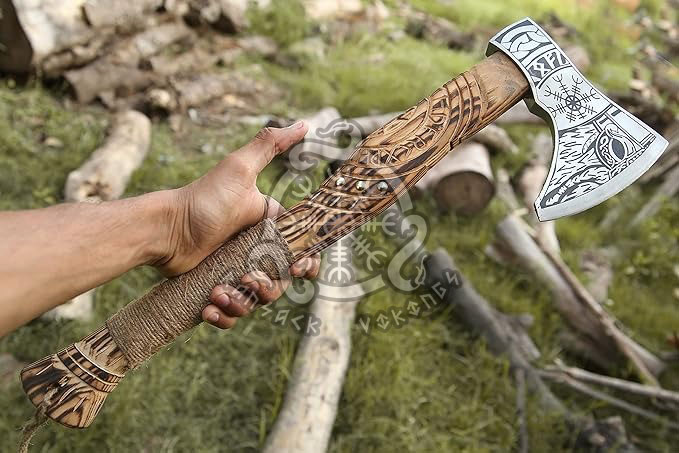
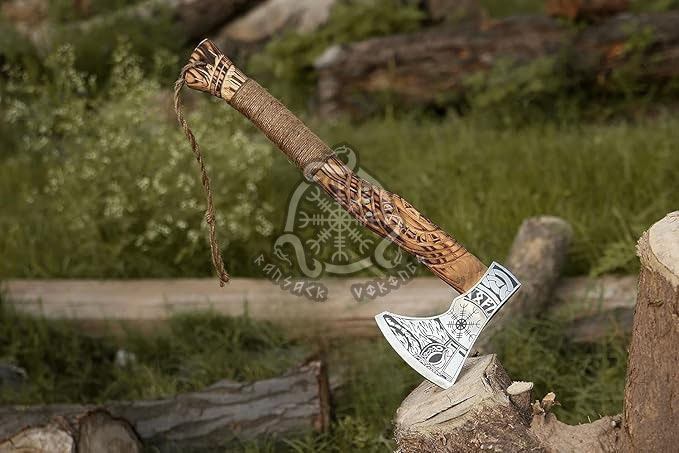
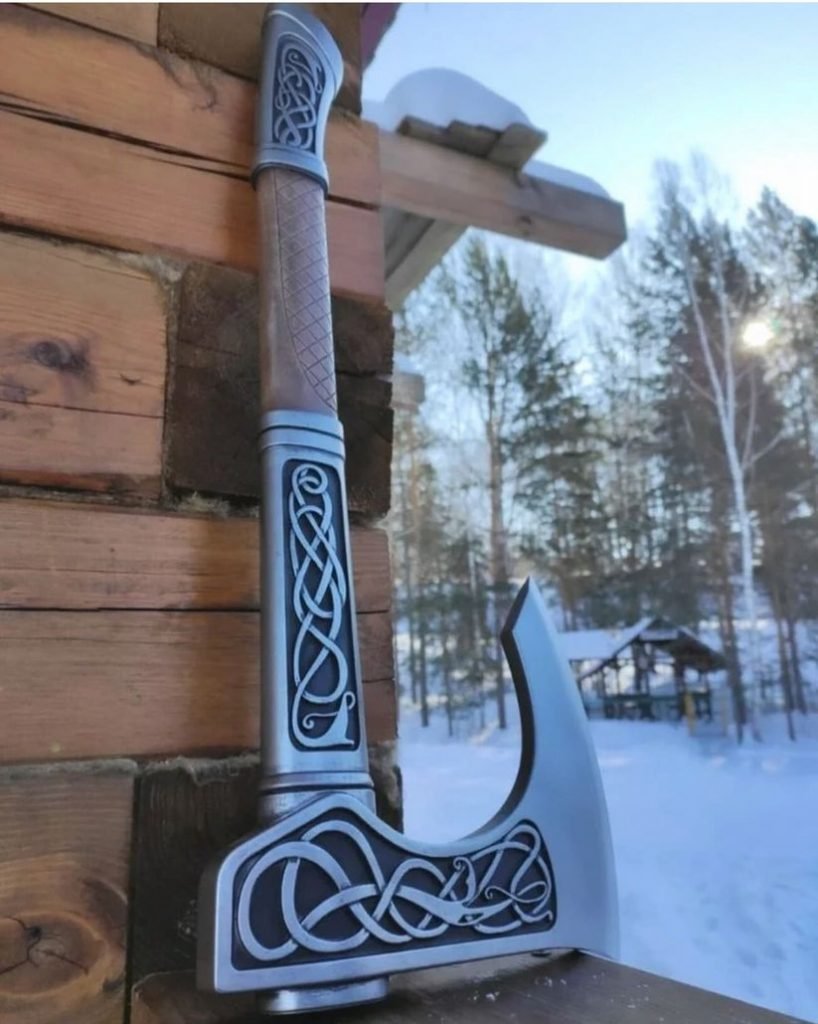
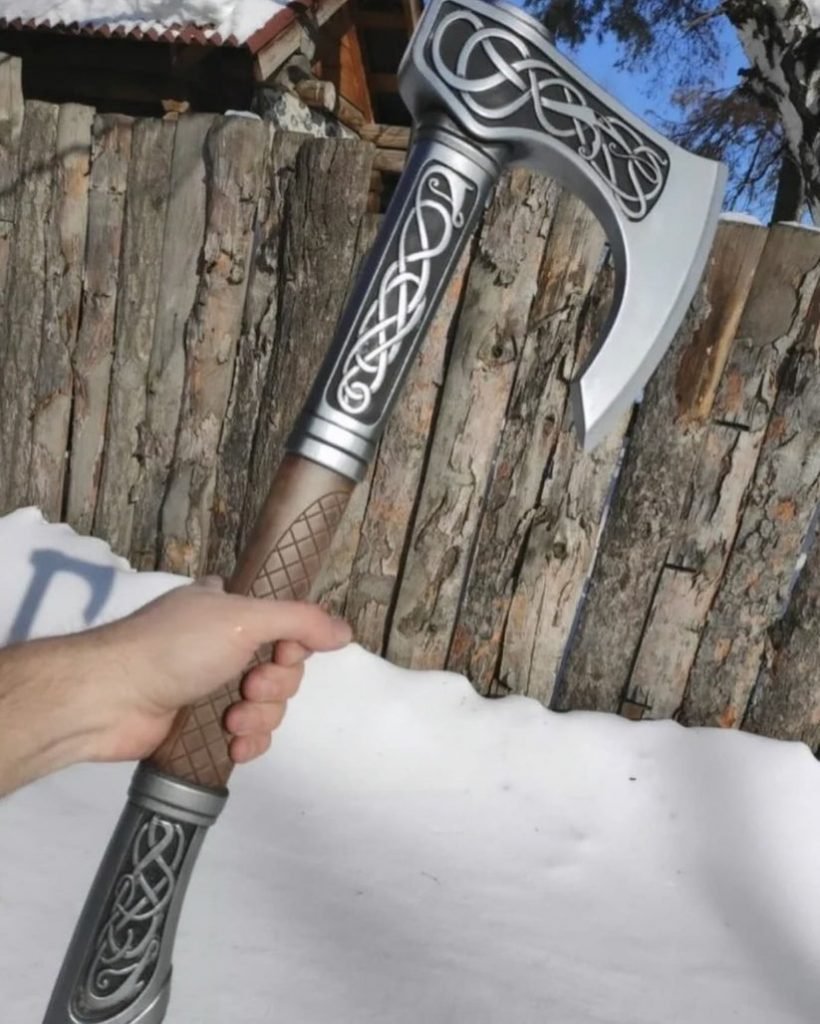
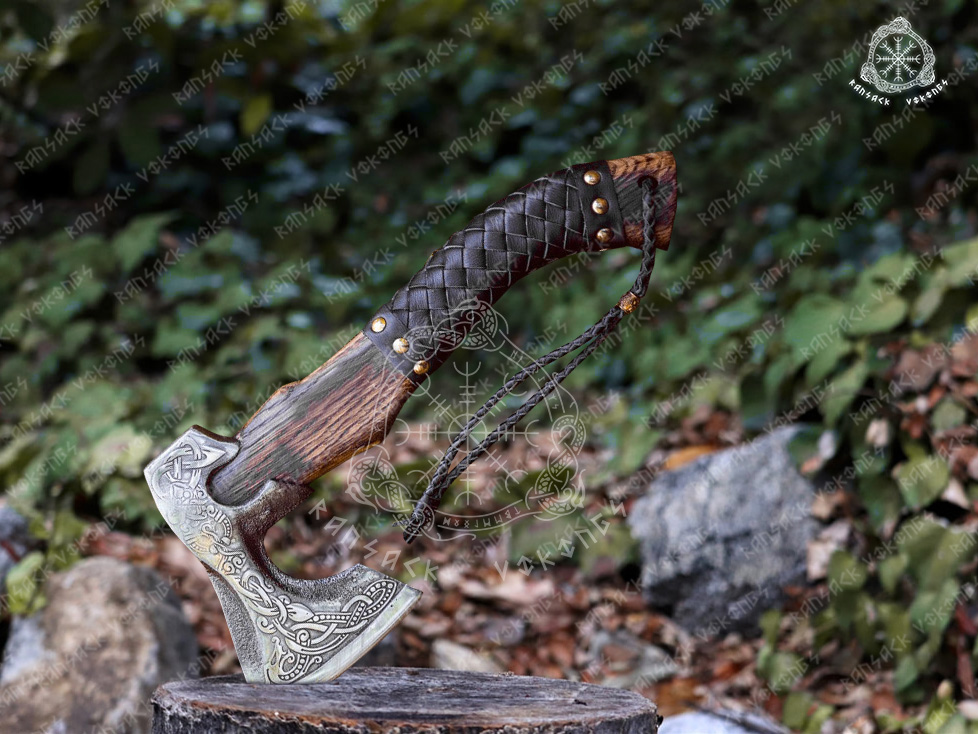
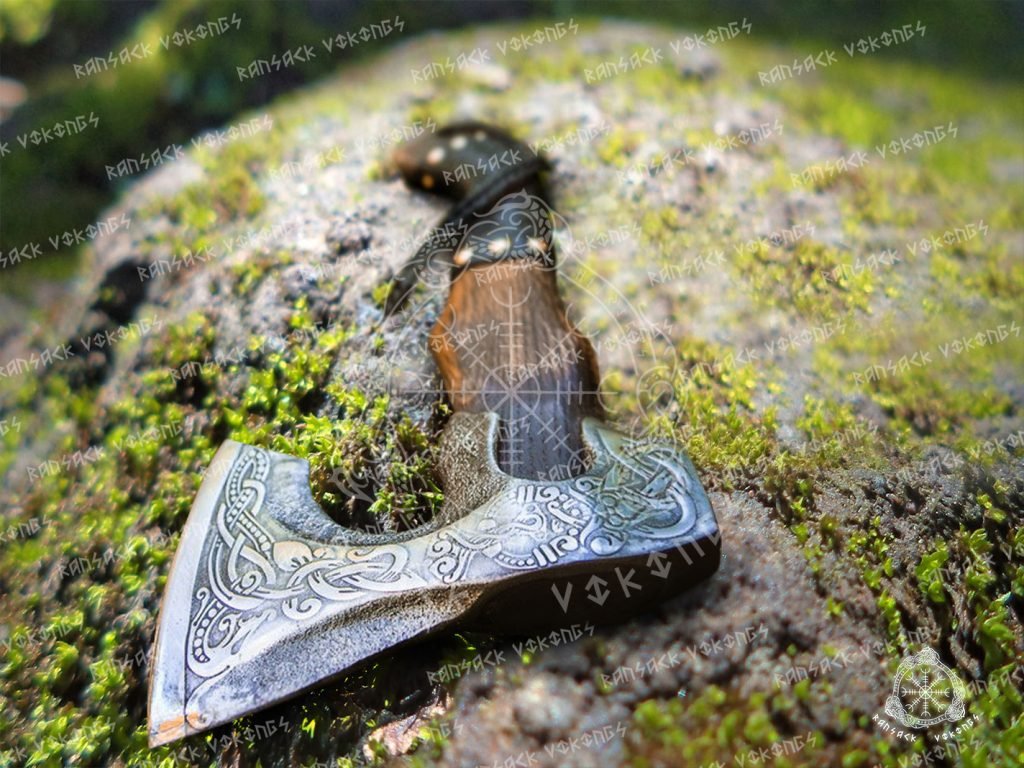
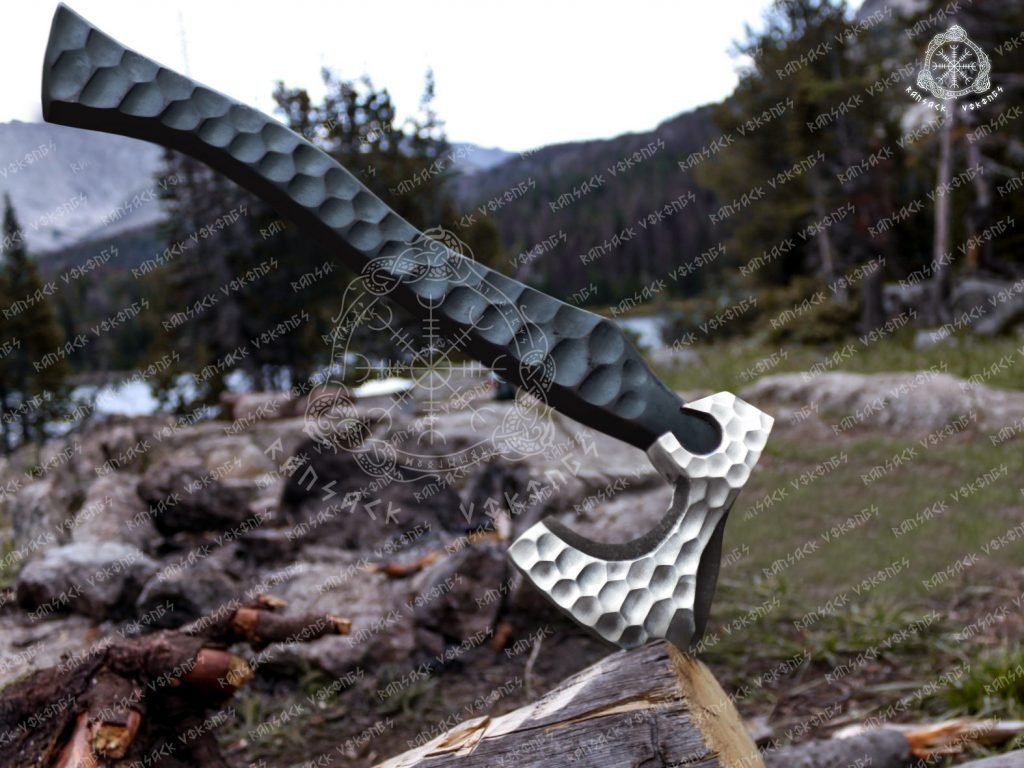
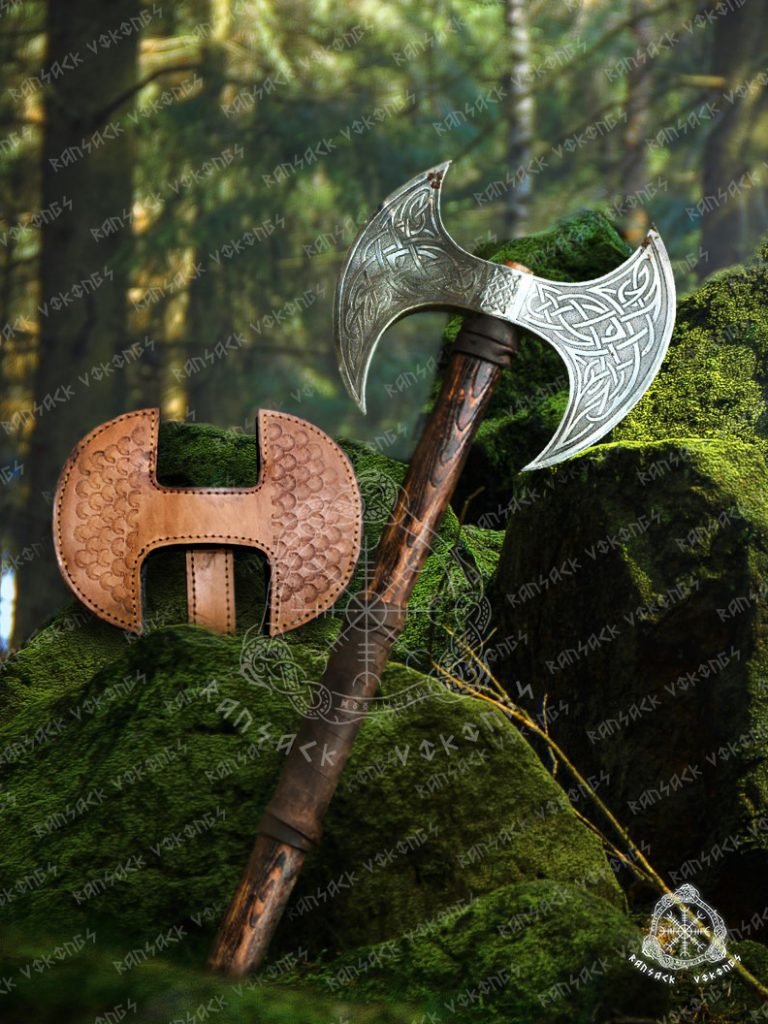
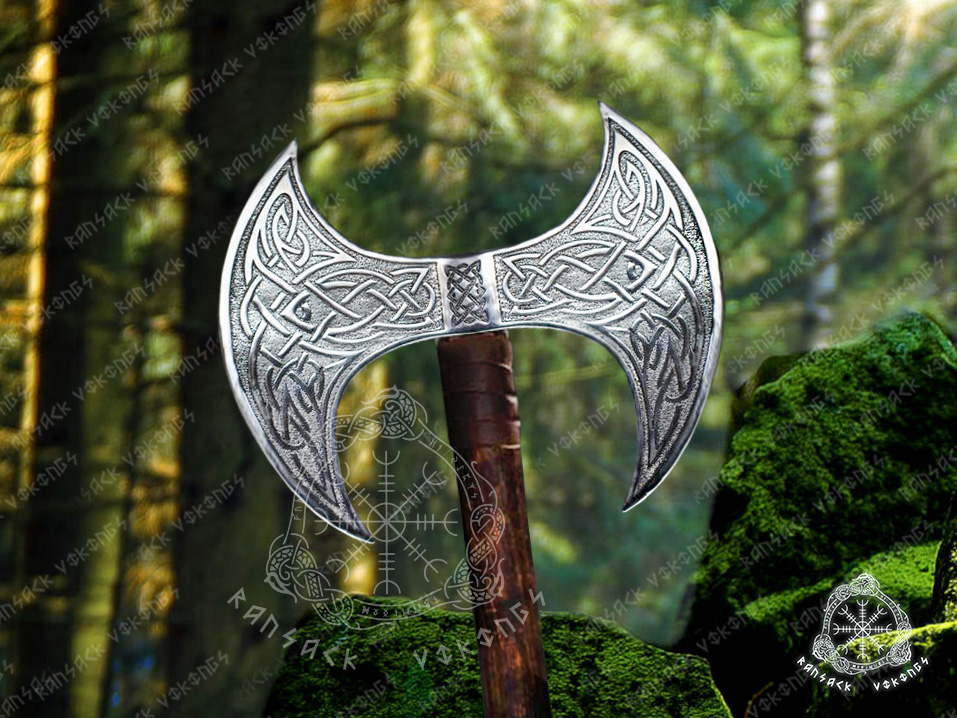
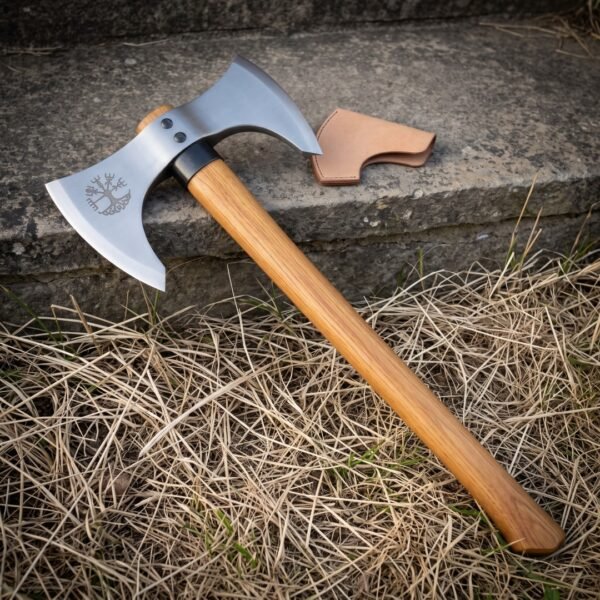
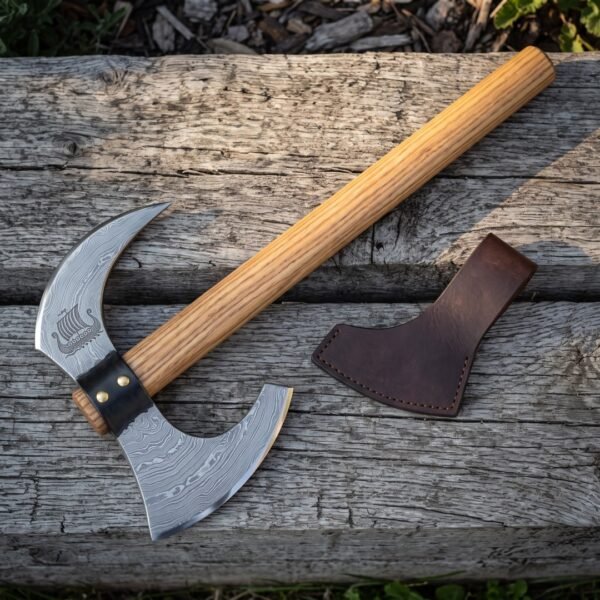
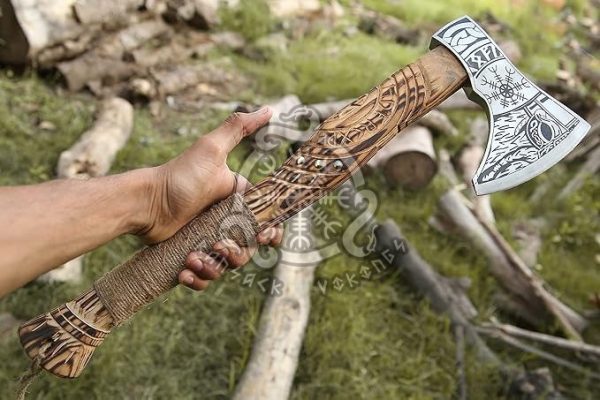
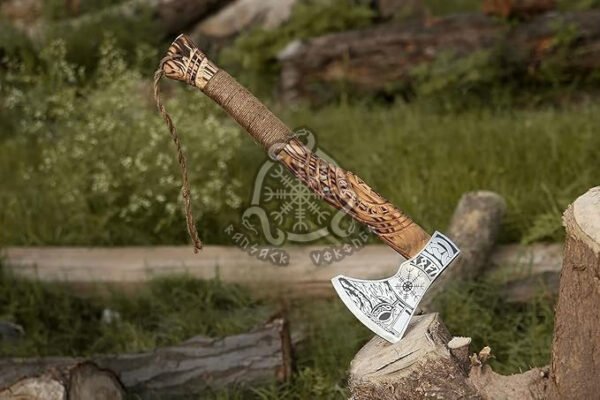
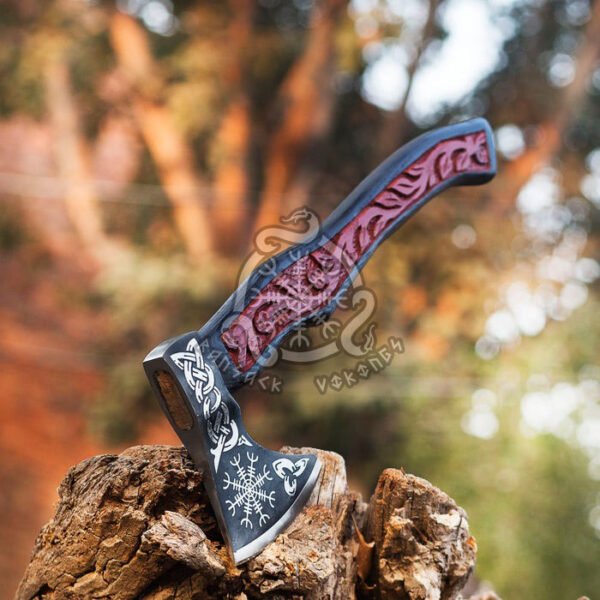
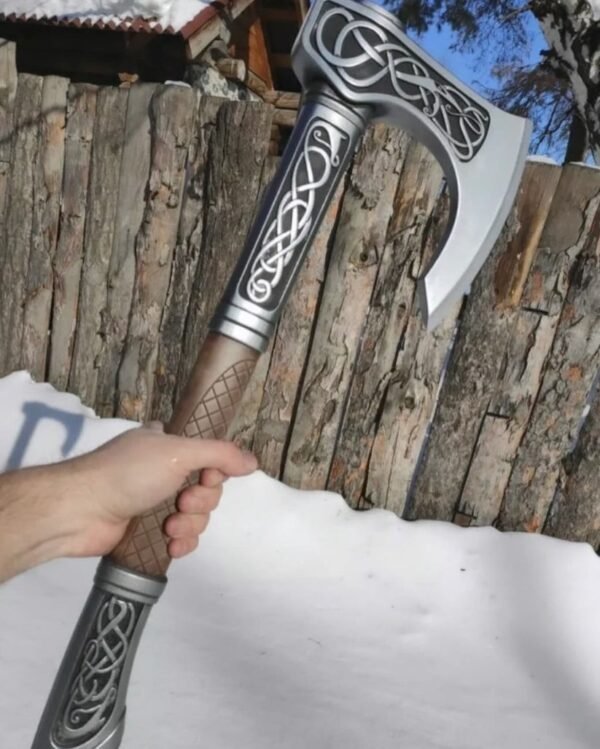
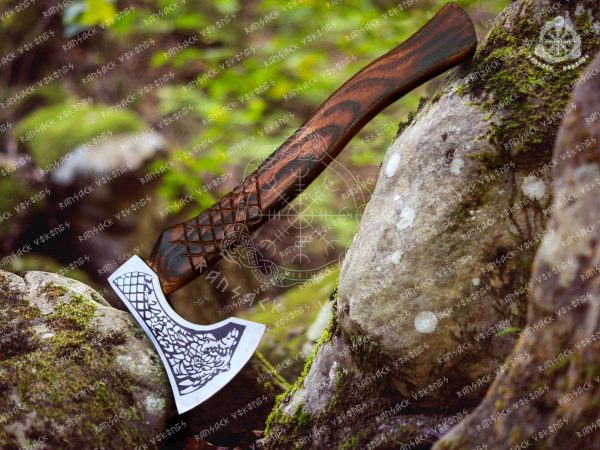
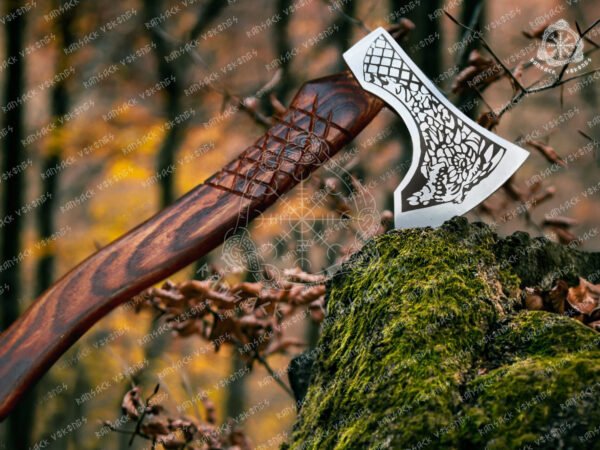
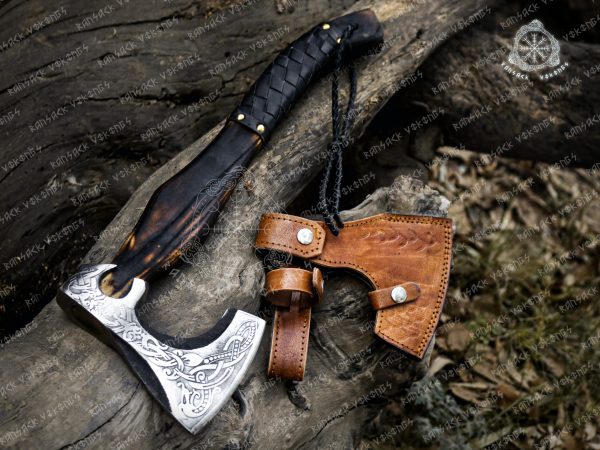
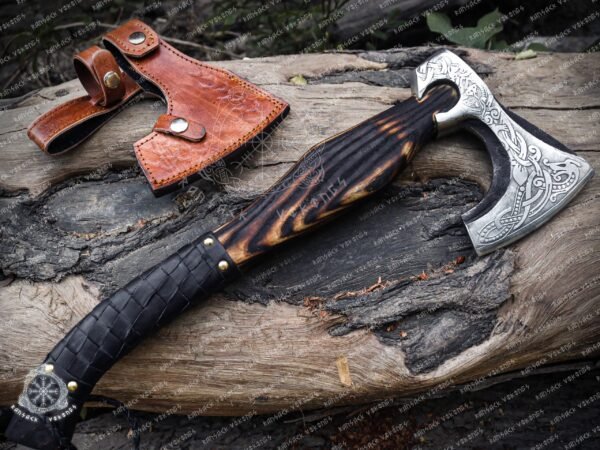
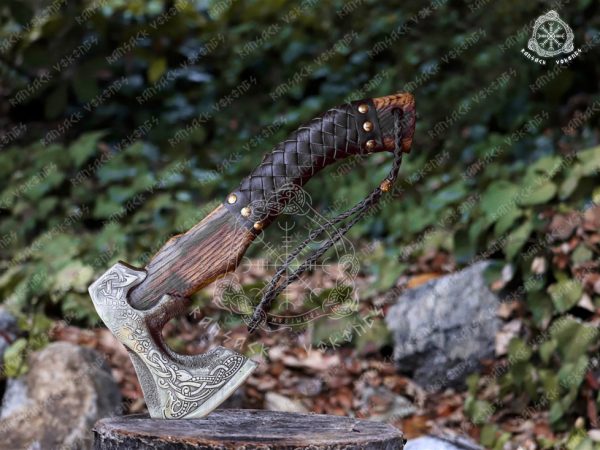
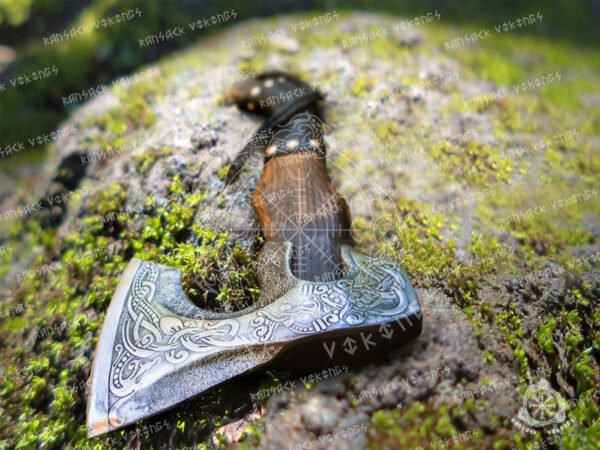
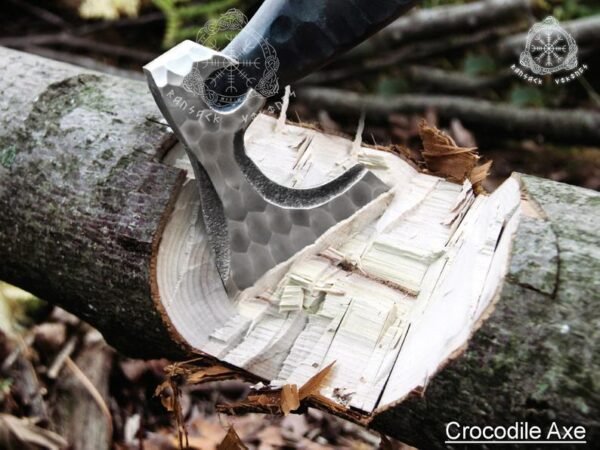
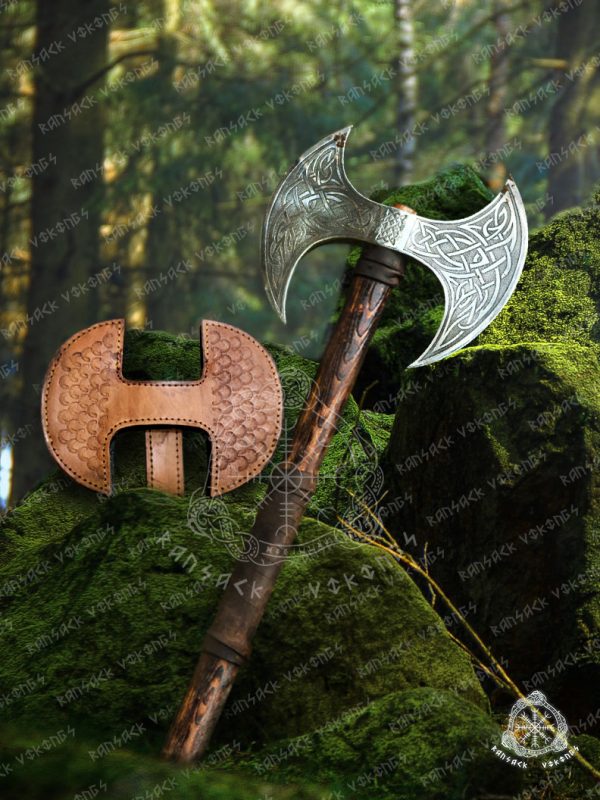
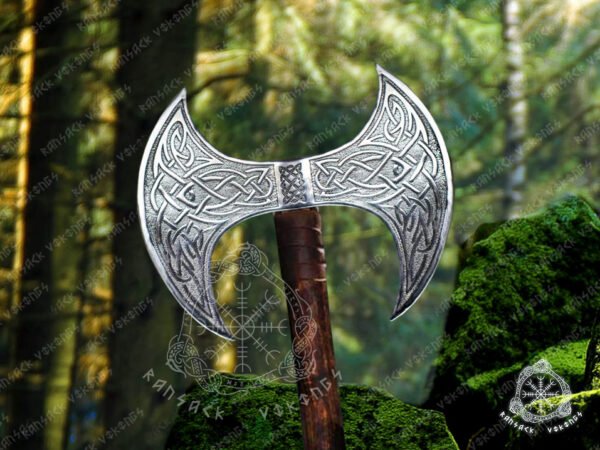
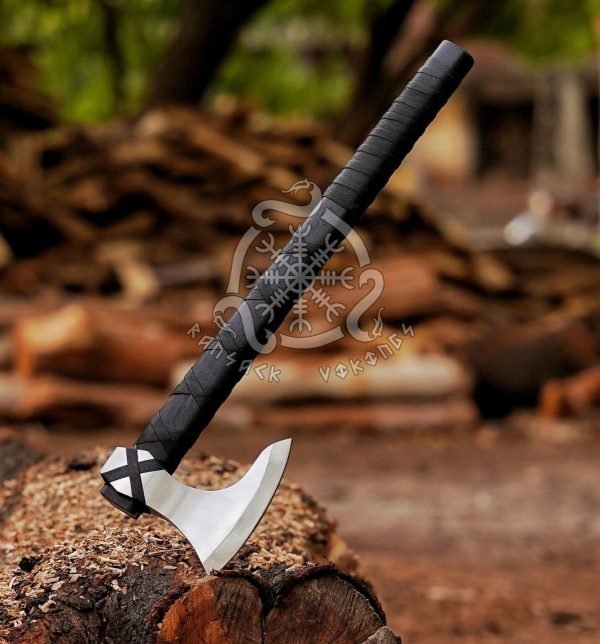
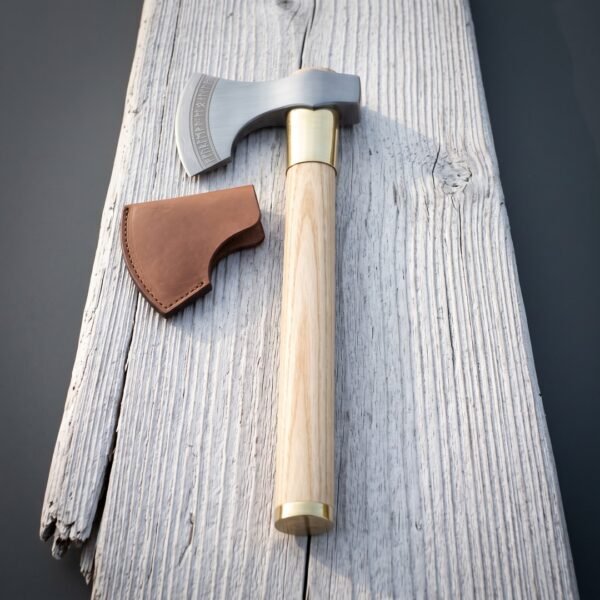
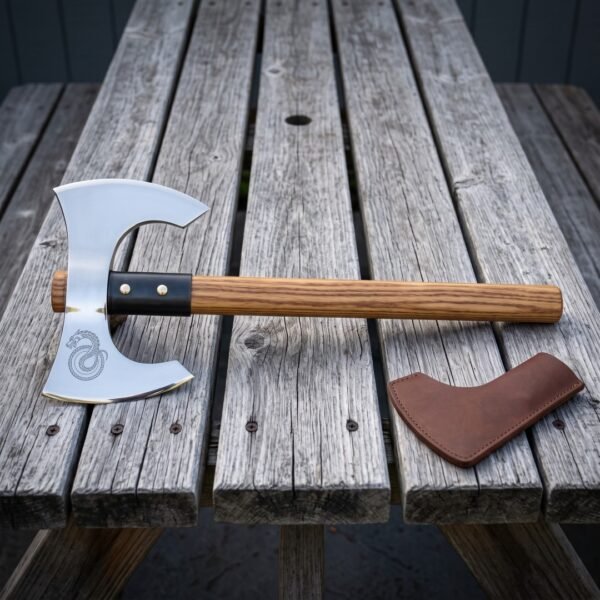
Six inches of head, a 5.75 inch cutting edge and an 18 inch haft give the Ragnar Warlord a total length of 20 inches. The head is hand forged 1095 high carbon steel, drawn out and shaped under the hammer rather than cast, and the haft is rosewood wrapped along its length in coloured leather. It is built to be swung rather than only hung. The televised axe and the archaeological one are compared in the Ragnar Lothbrok axe.
The name comes from Ragnar Lothbrok, and it is worth knowing what is actually known about him, which is less than television suggests. He appears as a Norse king and raider in Ragnars saga lodbrokar, in the Tale of Ragnar Sons and in Saxo Grammaticus, and the byname Lothbrok means something like hairy breeches, from a story about tarred and furred trousers he supposedly wore to fight a venomous serpent. The legend has him die in a snake pit at the hands of King Aella of Northumbria, and has his sons, Ivar the Boneless, Halfdan and Ubba, bring the Great Heathen Army to England in 865 to avenge him. The army is unquestionably real and is recorded in the Anglo Saxon Chronicle. Ragnar himself is much shakier, and most historians now read him as a legendary composite assembled from several ninth century Danish leaders. That does not make him less interesting. It makes him a story the Norse told about themselves.
Every Ragnar Warlord is forged, heat treated, hafted, wrapped and finished in a Czech Republic workshop, then boxed for shipping. Shipping in the United States is free, processing takes one to two weeks, and returns are accepted within seven days.
Specifications
| Steel | Hand forged 1095 high carbon steel |
|---|
| Hardness | 54 to 58 HRC |
|---|
| Overall length | 20 inches |
|---|
| Head width | 6 inches |
|---|
| Cutting edge | 5.75 inches |
|---|
| Handle length | 18 inches |
|---|
| Handle | Rosewood wrapped in coloured leather |
|---|
| SKU | RK-641 |
|---|
Why a forged head beats a cast one
The difference between a forged axe head and a cast one is not a marketing distinction, it is a difference in the internal structure of the metal, and it decides whether an axe is a tool or an ornament.
Casting means pouring molten steel into a mould. The grain that forms as it cools is random, and any porosity or inclusion that gets trapped stays trapped exactly where it formed. In the thin section of an axe bit, a trapped void is a crack waiting for its first hard impact.
Forging means taking solid bar and moving it while it is hot. As the steel is drawn out under the hammer, its internal grain stretches and aligns with the direction of the work, so the fibres run along the length of the bit and wrap around the eye rather than stopping dead at it. That aligned grain is what stops an edge chipping out when it lands on a knot, and it is why a forged head can be ground thinner without becoming fragile.
You can also see it. A forged head carries the marks of the hammer and slight asymmetries from the drift going through the eye. A cast head has a mould seam and identical dimensions to every other head from that mould. At 6 inches of head width with a 5.75 inch edge, this is a broad enough bit that the difference matters in use.
Why 1095 high carbon and not stainless
1095 is a simple steel. Roughly one percent carbon, a little manganese, and effectively nothing else. That simplicity is the reason it has been the default for working blades and tools for over a century. It hardens deeply and predictably, it takes a fine edge on a plain stone, and it is easy to bring back with a file when there is no power available.
Heat treated to 54 to 58 HRC it sits in the right window for an axe. Harder than that and a bit chips against a knot. Softer and the edge rolls under load. The one thing 1095 will not do is ignore water. Chromium is what makes stainless stainless, and 1095 has none, so it will spot within a day if it is left wet and it will develop a grey patina over time whether you want one or not. That patina is a stable oxide layer and it protects the steel underneath, so leave it alone rather than polishing it off. Stainless would trade all of that edge behaviour for corrosion resistance you do not need on a tool that lives indoors. The trade offs are set out in Damascus versus stainless.
Rosewood under a leather wrap
The haft here is two materials working together and each needs different treatment. Underneath is rosewood, a dense and heavy tropical hardwood with a high natural oil content and a dark red brown colour. Density is the point on an axe haft. Mass behind your hands balances the head and keeps the axe from feeling top heavy at the end of a swing.
Over the rosewood runs a coloured leather wrap. Leather does three things a bare haft cannot. It grips better than polished wood when your hands are cold, damp or sweaty. It adds a layer of cushioning that takes some of the sting out of an impact. And it puts a hard wearing surface over the part of the haft that gets handled most, so the wood underneath stays protected.
Care differs for the two. The exposed rosewood at the ends takes a light wipe of oil once or twice a year, as described in wooden handle care. The leather does not want that treatment. Too much oil on leather softens it and lets the wrap slacken. Keep the leather dry, wipe it clean with a barely damp cloth, and use a small amount of proper leather conditioner once a year at most. If the wrap ever loosens, tell us rather than trying to glue it.
Engraving, runes and your own design
Use the rune converter on this page to turn a name, a date or a short phrase into Elder Futhark and we will cut it into the steel or the handle. If you would rather have a Viking pattern than a rune line, choose your own design in the engraving option above the add to cart button and tell us whether it goes on the blade or the handle. Where a piece already carries an engraved design, your chosen engraving replaces it rather than sitting alongside it. On this axe the wide cheek of the head is the natural surface, since the haft is covered by the leather wrap for most of its length. Detail on the engraving page.
Care and sharpening
Dry the head after use and wipe a thin film of oil across the steel before it goes away, paying attention to the area right at the eye where water collects. Do not store it in a damp shed or a basement. Rust spots lift with fine abrasive and oil, and the full routine is in steel care.
An axe is sharpened with a file first and a stone second. Follow the existing bevel, work in short strokes toward the edge, then refine on a coarse stone and finish on a fine one at the same angle. The stone technique is the same one described in sharpening with a whetstone. Stay away from bench grinders. If you see the steel turn blue at the edge, the temper is gone from that section for good.
Made in the Czech Republic
Every piece we sell is made by hand in the Czech Republic. The smiths there work the way the trade has been worked for a long time, heating and hammering the steel, taking the bevels down by eye, and fitting the handle and the leather one at a time. There is no automated line anywhere in it, so small differences from one piece to the next are normal and expected.
Ransack Viking is a United States company based in Memphis, Tennessee. We bring the pieces in ourselves, inspect them on arrival and ship them from our own warehouse. If you add engraving, that is carried out here in the United States before your order goes out.
A note on handmade variation
The Ragnar Warlord is hand forged. It is not machine made and it is not bulk produced, so what arrives will not be a pixel for pixel copy of the photograph. The hammer texture on the head, the exact profile of the bit, the grain and tone of the rosewood and the way the leather wrap sits and takes its colour all vary, because each piece is worked by hand from natural materials. The dimensions, the steel, the hardness and the build are the same every time. The character is not.
Frequently asked questions
Is the bit sharp on arrival?
Yes. It is sharpened by hand before packing and will cut on the day it lands. It carries a working axe edge, not a razor edge, which is what a tool that meets wood should have.
Can I throw this axe?
You can throw it into proper end grain target boards. Check the head and the wrap after every session, and be aware that repeated hard throws are harder on a leather wrapped haft than on a bare one.
How do I look after the leather wrap?
Keep it dry and wipe it with a barely damp cloth. Use leather conditioner sparingly, once a year at most, and do not treat it with the same oil you use on the exposed wood.
Is it Damascus?
No, and it does not claim to be. This is plain 1095 high carbon steel, forged and heat treated. If you want a layered pattern in the steel, look at the Damascus axes in the same category.
Was Ragnar Lothbrok a real person?
Probably not as a single individual. He appears in later Norse sagas and in Saxo Grammaticus, but most historians read him as a legendary composite of several ninth century Danish leaders. The Great Heathen Army attributed to his sons is very well documented.
What is the delivery time?
One to two weeks of processing because it is forged to order, then free shipping inside the United States. Engraving normally fits inside the same window.
What is in the box
- One Ragnar Warlord 1095 high carbon Viking axe
- Gift box
- Forged and finished in the Czech Republic
Explore the range
Related collections: Viking Axes, Viking Hammers, Swords and Viking Shields. Sharpening, steel and history are covered in the guides.