
A helmet is a bowl that has to do two jobs at once. It must turn a strike away from the skull, and it must let you see and hear well enough to be worth wearing. Roman and Greek smiths answered that in opposite ways, and medieval smiths in a third. The Corinthian covers the whole face and gives up hearing and peripheral vision for it. The Roman legionary helmet leaves the face open, then adds hinged cheek guards, a brow reinforce and a swept neck guard to cover everything except the part you look through.
This page holds seven of them: three Imperial Gallic legionary helmets, a cavalry pattern with pierced ear discs, a murmillo arena helmet with a full brass grilled visor, and two Corinthian hoplite helmets, one hand raised in brass and one in bronze toned steel, to go with the hoplons and scutums. Most are mild steel at 18 gauge, roughly 1.2 mm, with one at 16 gauge. Listed weights run from about 4 lb 2 oz to about 7 to 8 lb for the arena helmet.
All of them are sized to be worn over a padded cap. Measure your head before you order.
Free US shipping
On most pieces. Heavier and oversized ones carry a flat charge.
Hand Forged
Heated, hammered and ground by hand.
Engraving available
Names, dates or Norse runes on most pieces.
Ships from Chicago
Inspected and dispatched from our Chicago warehouse. No import duty, no customs delay on US orders.
Roman & Greek Helmets
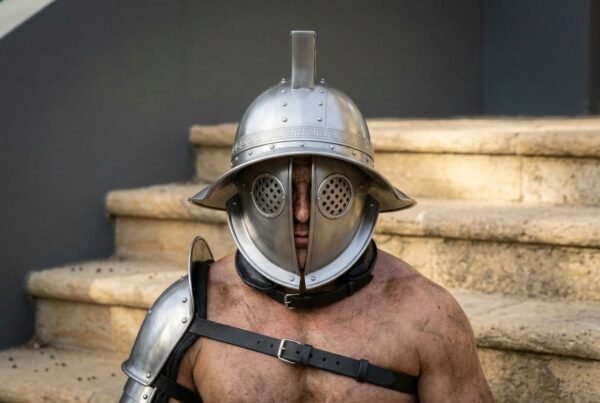
Eaglecrest Hand Forged Steel Roman Gladiator Helmet | 16 Gauge Full Face Helm | Greek Key Brow Band, Pierced Eye Grilles and Crest Fin | Arena Reenactment Gift | RK-1484
Original price was: $399.00.$319.20Current price is: $319.20.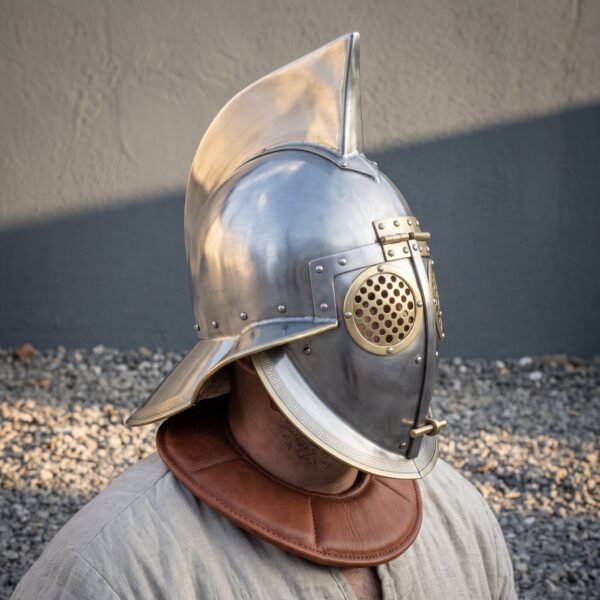
Arenaward Hand Forged Mild Steel Roman Gladiator Helmet | 18 Gauge Murmillo Pattern | Brass Grille Eye Discs and Wide Neck Guard | Arena Display Gift | RK-1499
Original price was: $429.00.$343.20Current price is: $343.20.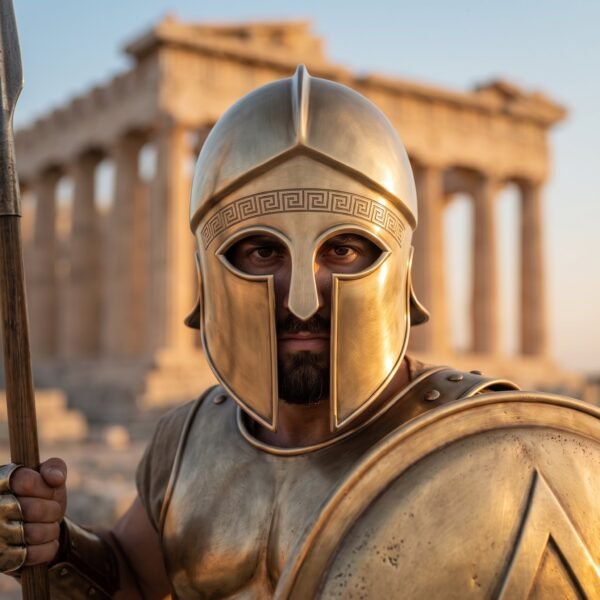
Aegiscrest Hand Raised Brass Corinthian Greek Helmet | Full Face Hoplite Pattern | Engraved Meander Brow Band and Crest Ridge | Ancient History Gift | RK-1542
Original price was: $399.00.$319.20Current price is: $319.20.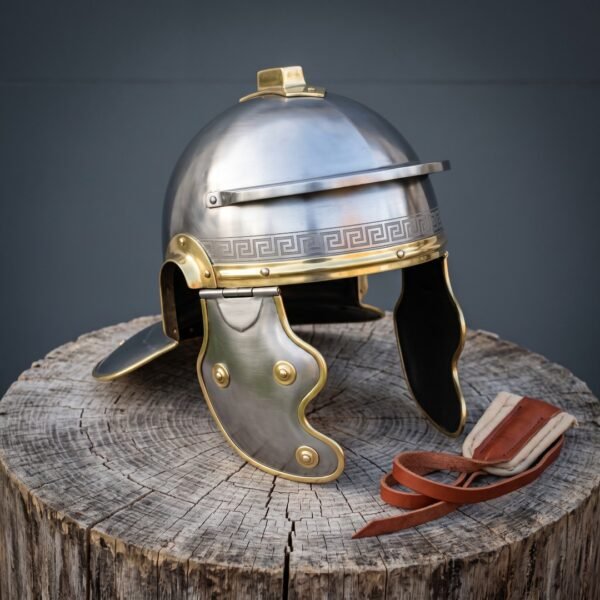
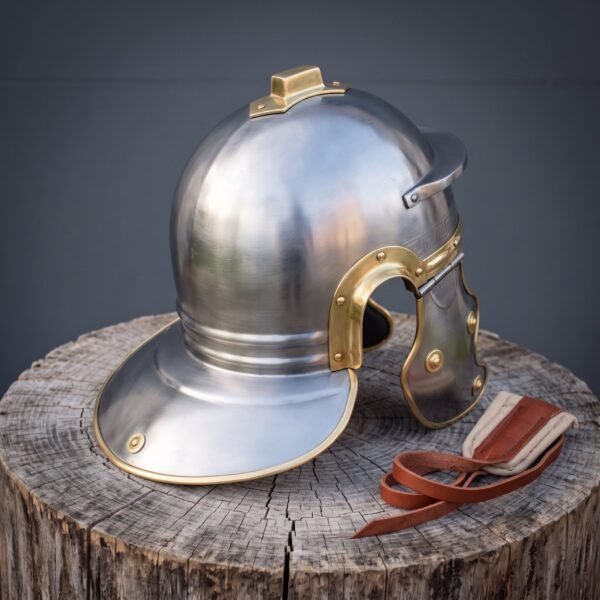
Eaglemarch Hand Forged Steel Roman Imperial Gallic Helmet | 18 Gauge Bowl | Engraved Meander Brow Band with Hinged Cheek Guards | Legionary Reenactment Gift | RK-1571
Original price was: $349.00.$279.20Current price is: $279.20.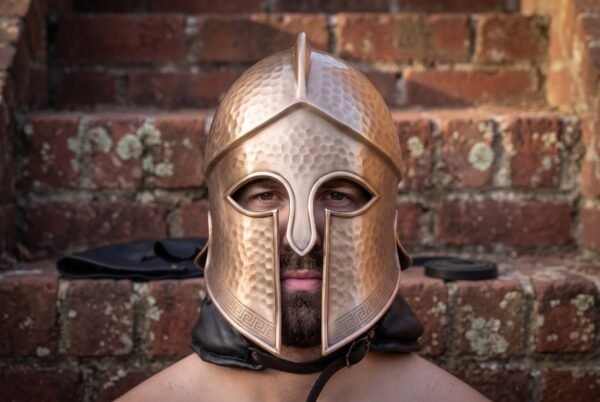
Bronzecrest Hand Forged Steel Corinthian Greek Helmet | 18 Gauge Bronze Tone Finish | Hammered Crown and Greek Key Border | Hoplite Reenactment Gift | RK-1550
Original price was: $339.00.$271.20Current price is: $271.20.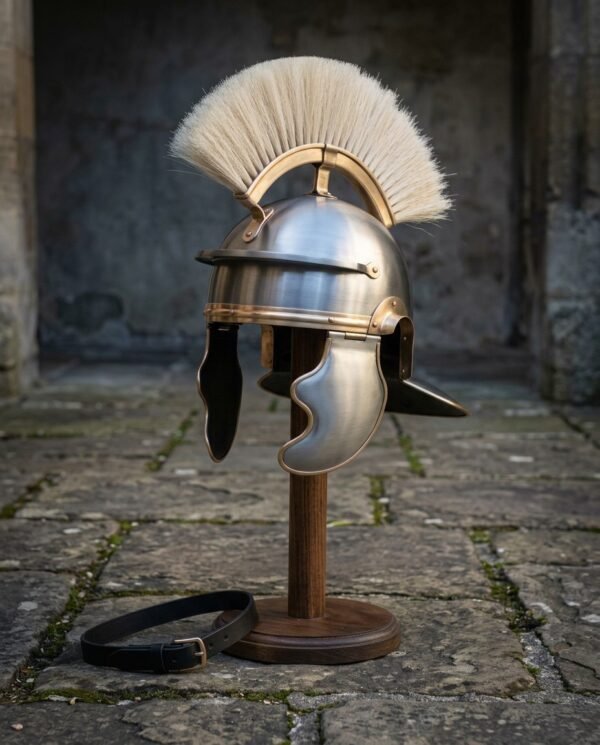
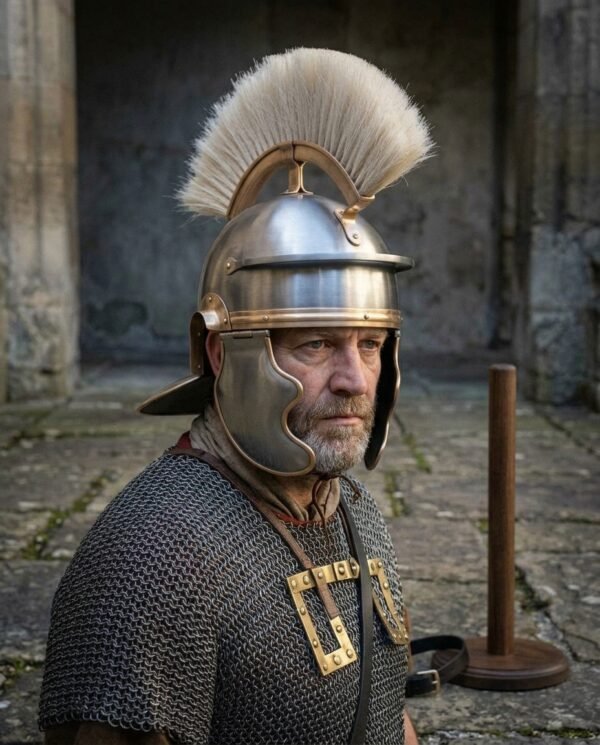
Legionplume Hand Forged Steel Roman Imperial Gallic Helmet | 18 Gauge Mild Steel | Brass Trim, Horsehair Crest and Hinged Cheek Guards | Roman Reenactment Gift | RK-1460
Original price was: $429.00.$343.20Current price is: $343.20.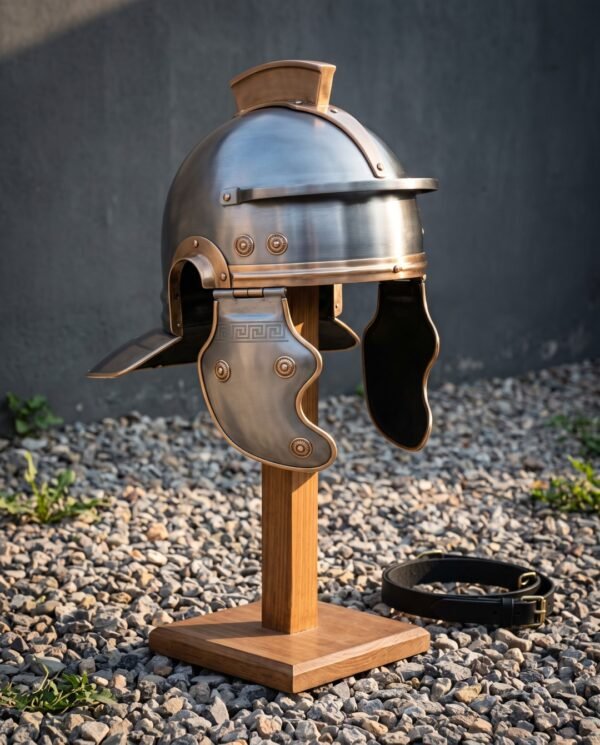

Coppercrest Hand Forged Steel Roman Legionary Helmet | 18 Gauge Bowl | Bronze Tone Trim with Engraved Meander Cheek Guards | Living History Gift | RK-1579
Original price was: $329.00.$263.20Current price is: $263.20.Two answers to the same problem
Everything about a helmet is a trade. Steel over your face keeps a point out of it and also stops you hearing an order, seeing a flanking move or breathing easily on a hot day. Where a culture landed on that trade tells you how it fought.
The Greek hoplite fought shoulder to shoulder in a phalanx. He did not need to see sideways, because the man beside him was the flank, and he did not need to hear much beyond a shouted line. So the Corinthian helmet closes the whole head into a single raised bowl with almond eye slots and a nasal running down between them. Raised from one sheet, with no seams, it is the most protective head covering in the ancient world and the least comfortable. Hoplites are shown wearing them pushed up on the crown when not actually fighting, which tells you plenty.
The Roman legionary fought in a formation that moved, turned and took orders constantly. The Imperial Gallic helmet leaves the face wide open and covers the rest. A brow reinforce takes a downward cut across the forehead. Hinged cheek guards fold in over the jaw and can be tied under the chin or left swinging. A neck guard sweeps out and down at the back so a strike aimed at the neck skids off the flare rather than landing. Ear openings are cut and often edged, because a legionary needed to hear.
The arena helmet is a third thing again. A murmillo fought a single opponent in front of a crowd, on sand, with no formation to hold. So it closes the face completely with a hinged visor and two perforated eye discs, carries a wide brim running the full way around to keep a strike off the shoulders, and weighs more than either of the others because the man wearing it only had to last a few minutes at a time.
The helmets in this collection
Seven helmets across three traditions. Six are mild steel, hand raised and planished. One is raised in brass.
Imperial Gallic legionary helmets
Three helmets follow the Imperial Gallic pattern, all in 18 gauge steel at roughly 1.2 mm. The first pairs a brushed satin bowl with solid brass trim, a brow reinforce, ear guards and a swept neck guard, and carries natural horsehair set transversely in an arched brass crest box. Its cheek guards are steel with brass edging, hinged at the brow band and leather lined, and it closes with a black leather chin strap and a brass buckle.
The second is the crestless version of the same idea, with brass edging, a brass brow band engraved with a running meander, brass domed bosses and brass hinges on both cheek guards. It has a padded liner fitted inside the bowl, leather chin ties on the cheek guards and a crest holder on the crown for a crest you supply. Listed at about 4 lb 4 oz complete.
The third swaps brass for a warm bronze tone across the edging, reinforce and bosses, over a satin steel bowl, with the meander engraved onto the cheek guards instead of the brow band and ringed rosette bosses in place of plain domes. It also carries a fitted padded liner, leather chin ties and a crest holder plate, and it is the lightest helmet on the page at about 4 lb 2 oz complete.
The cavalry helmet
One helmet is a Roman cavalry pattern, hand raised and planished in 16 gauge steel at roughly 1.6 mm, which makes it the heaviest gauge here. It has a flared neck guard, deep hinged cheek pieces with pierced ear discs on both sides, and a riveted brow band chased with a Greek key meander. There is an upright crest holder on the crown, though no crest is supplied with it. It fits roughly a 22 to 24 inch head over a padded cap, weighs about 5 lb, and comes without a fitted liner.
The arena helmet
The murmillo pattern is the most theatrical piece here and the most demanding to wear. Mild steel at 18 gauge, hand raised, with brass edging and brass grille rims, an angular crest fin on the crown, and a full face visor hinged at the brow carrying two perforated brass rimmed eye discs. The neck guard is a wide flared brim that runs the full circumference and is bound in brass. It fits a 22 to 24 inch head, weighs about 7 to 8 pounds and comes unlined, so a padded arming cap is not optional.
Corinthian Greek helmets
Two Corinthian helmets, built differently. The brass one is hand raised from sheet as a single piece, bowl, nasal and cheek pieces together with no seams, with a raised crest ridge running front to back over the crown, a Greek key meander engraved around the brow and almond eye slots with dressed and rolled edges. It is finished in hand polished satin brass.
The steel one is hand raised and planished in 18 gauge with a warm bronze tone over polished steel and a hammer textured crown, so it reads as bronze from a distance and as steel up close. It has an engraved Greek key border on both cheeks and a raised crest rail. There is no chin strap, because on a Corinthian the cheek pieces and the neck flare hold it on your head. It fits roughly a 23 to 24 inch head and weighs about 4 lb 8 oz.
Gauges, sizes and weights across the range
Every figure below is taken from the specification panel of a piece on this page. These are raised and planished by hand, so read the numbers as what to expect rather than as a guarantee to the millimetre. Where a listing gives no figure, the table says so rather than filling the gap.
| Pattern | Material and gauge | Face and neck | Crest | Head size | Listed weight |
|---|---|---|---|---|---|
| Imperial Gallic, brass trimmed | Mild steel, 18 gauge, solid brass fittings | Hinged leather lined cheek guards, swept neck guard | Horsehair set transversely in a brass crest box | Made to a stated circumference | Not listed |
| Imperial Gallic, meander brow band | Mild steel, 18 gauge, about 1.2 mm | Brass hinged cheek guards, leather chin ties | Crest holder on the crown, crest not supplied | About 22 to 23 in | About 4 lb 4 oz |
| Imperial Gallic, bronze tone trim | Mild steel, 18 gauge, about 1.2 mm | Hinged cheek guards with engraved meander | Crest holder plate on the crown | About 22 to 23 in | About 4 lb 2 oz |
| Roman cavalry | Mild steel, 16 gauge, about 1.6 mm | Deep hinged cheek pieces, pierced ear discs, flared neck guard | Upright crest holder, crest not supplied | About 22 to 24 in | About 5 lb |
| Murmillo arena | Mild steel, 18 gauge, brass edging and grille rims | Full face hinged visor, two eye discs, brim all round | Angular crest fin on the crown | About 22 to 24 in | About 7 to 8 lb |
| Corinthian, hand raised brass | Brass, raised from sheet in one piece | Full face with nasal and integral cheek pieces | Raised crest ridge, front to back | Not listed | Not listed |
| Corinthian, bronze toned steel | Mild steel, 18 gauge, bronze tone finish | Full face with nasal, no chin strap fitted | Raised crest rail | About 23 to 24 in | About 4 lb 8 oz |
Gauge is the number worth understanding. Eighteen gauge is roughly 1.2 mm and 16 gauge is roughly 1.6 mm, so the cavalry helmet carries about a third more steel over the same area and feels it. Everything on this page is display and light reenactment weight. Full contact fighting societies set their own minimum thicknesses and these sit below them.
Sizing and fit
Measure around your head with a tape, level, just above the eyebrows and around the widest part at the back. That circumference is what these are sized against. Then add room for the padded cap, because every helmet here is built to be worn over one and several are supplied unlined.
The cap is not a comfort item. It holds the shell off your skull so a strike loads the padding rather than your head, it stops the helmet turning on you, and it soaks up the sweat that would otherwise sit against bare steel all afternoon. A helmet that fits snugly on a bare head is a helmet that will not go on at all once the cap is under it.
Fit differs by pattern. A legionary helmet should sit level with the brow reinforce just above your eyebrows, the neck guard clear of your shoulders, and the cheek guards closing onto the jaw without pressing on the ear. A Corinthian sits deeper, and the eye slots have to line up with your eyes rather than your cheekbones, which is why head length matters as much as circumference on that pattern. If a Corinthian is too small it rides high and you look out of the nasal.
Crests, cheek guards and fittings
Crests were rank, unit and theatre rather than protection. Only one helmet here ships with a crest, the horsehair set transversely in an arched brass box on the brass trimmed Gallic. The two other Gallic helmets and the cavalry helmet carry crest holders and no crest, so you can fit one later or leave the crown clean. Fitting a crest raises the apparent height of the helmet by a lot and changes the balance forward, which matters more than the added weight.
Cheek guards hinge at the brow band and are the part most likely to need attention over time. The hinges take every open and close, and the leather ties and linings wear before the steel does. Keep the hinge pins seated and replace a tie when it starts to fray rather than after it parts in front of a camera.
Brass and steel together is the signature of the Roman pieces here, and the two metals age differently. Brass darkens steadily and comes back with a metal polish on a cloth. Satin steel dulls and wants oil. Polish the brass and oil the steel, and try not to work polish into the joint between them, because it dries white in the seam and looks worse than the tarnish did.
Care and storage
Mild steel rusts and these are mild steel. Wipe the inside of the bowl out after wearing, because sweat is the worst thing that happens to a helmet and it happens on the inside where nobody looks. Leave a light film of oil on bare steel and store the helmet somewhere with stable humidity rather than in a garage that swings from cold to warm.
Brass does not rust but it does tarnish, and the hand raised brass Corinthian will go from bright to deep gold over a year in open air. That is not damage. Polish it if you prefer it bright, or let it go and it will look considerably more convincing.
Store a helmet on a stand or on a shelf where it will not be knocked onto a hard floor. A raised bowl dents on the crown and a dent in the crown is the one that is hardest to take out without leaving a mark. Do not stack anything inside it, and do not store it in a sealed bag, which traps moisture against the steel and rewards you with orange spots.
Engraving
Several of these already carry cut decoration, including the Greek key meander on the cavalry brow band and on the Corinthian brass, and the engraved meander on two sets of cheek guards. Brow bands, cheek guards and neck guards can be engraved after they arrive in the United States. Text engraving is 19 dollars, a symbol is 39 dollars and a family crest is 49 dollars.
Where these helmets come from and how they ship
Ransack Viking is a US company based in Chicago, Illinois. The pieces are handmade in the Czech Republic, then imported, inspected and shipped from Chicago. Engraving is done in the US after arrival.
Every bowl here is raised and planished by hand, so the hammer texture, the exact line of a brow band and the depth of an engraved meander vary between two helmets of the same name. Helmets ship in a large box with the cheek guards folded in. Check the hinges and the liner before your first wear.
How to choose
For a legionary impression, take one of the Imperial Gallic helmets. The brass trimmed one with the horsehair crest is the parade version, the meander brow band is the plainer ranker, and the bronze toned one is the lightest of the three on your neck.
For a hoplite impression, decide first whether you want brass or the look of bronze. The hand raised brass Corinthian is the real metal and will tarnish into something very convincing. The bronze toned steel one is lighter on the wallet and easier to keep looking the same year to year.
For long days on your feet, take the bronze tone Gallic at about 4 lb 2 oz with its fitted padded liner, and put a proper arming cap under it anyway.
Browse related categories
- Roman and Greek shields to carry with these
- Medieval helmets, from nasals to great helms
- Viking helmets and spangenhelms
- Scale and lamellar armour
- Chainmail armour to wear underneath
- Plate armour and cuirasses
- Gladius short swords of the legions
- Short swords across the wider range
Guides worth reading first
- Buying a helmet, sizing and padding explained
- Armour explained, from mail to plate
- The horned helmet myth and where it came from
- Gifts for reenactors
- How to display arms and armour at home
- Caring for steel armour and mail
Frequently asked questions
Are these helmets safe for full contact reenactment?
No. These are display and light reenactment weight, mostly 18 gauge mild steel at about 1.2 mm with one at 16 gauge. Full contact societies publish their own minimum thicknesses and these sit below them. They are built for display, living history, film and photography.
How do I know what size to order?
Run a tape around your head just above the eyebrows and around the widest part at the back, then allow room for the padded cap these are meant to be worn over. Listed fits here run from about 22 to 24 inches depending on the pattern, and several are made to a stated circumference.
Do I need a padded cap?
Yes. Several of these are supplied unlined and even the lined ones assume a cap under them. The cap holds the shell off your skull, stops the helmet turning, and keeps sweat off bare steel. Without one a helmet is uncomfortable in minutes and rusts from the inside.
Which of these comes with a crest?
Only the brass trimmed Imperial Gallic, which carries natural horsehair set transversely in an arched brass crest box. The other Gallic helmets and the cavalry helmet have crest holders fitted but no crest supplied. The murmillo has an angular fin rather than a crest.
How well can you see out of a Corinthian helmet?
Straight ahead, well enough. Sideways, barely. That is the design rather than a fault, because a hoplite in a phalanx had a man on each side and did not need peripheral vision. Get the fit right so the eye slots line up with your eyes, and remember you will not hear much either.
What is the difference between the brass Corinthian and the steel one?
The brass one is raised from a single sheet of brass with no seams, so it is real brass throughout and will tarnish to a deeper gold. The steel one is 18 gauge mild steel finished in a warm bronze tone over polished steel, lighter on price, and it keeps its colour rather than ageing.
How heavy are they?
Listed weights run from about 4 lb 2 oz for the bronze toned Gallic to about 7 to 8 lb for the murmillo arena helmet, with the cavalry helmet at about 5 lb and the steel Corinthian at about 4 lb 8 oz. Two pieces have no listed weight, so none is quoted here.
Where are these helmets made?
They are handmade in the Czech Republic, then imported, inspected and shipped by Ransack Viking from Chicago, Illinois. Any engraving is added in the United States after arrival.
Featured pieces
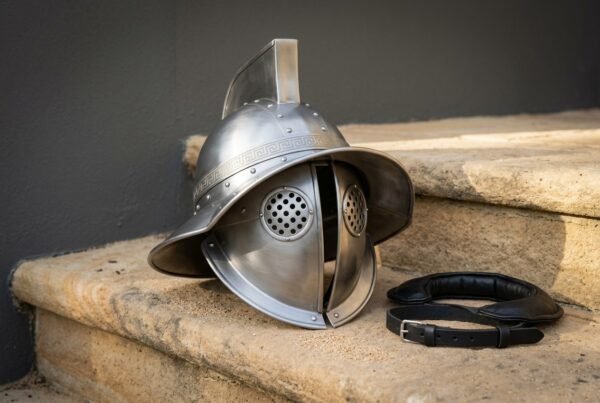 Eaglecrest Hand Forged Steel Roman Gladiator Helmet
Original price was: $399.00.$319.20Current price is: $319.20.
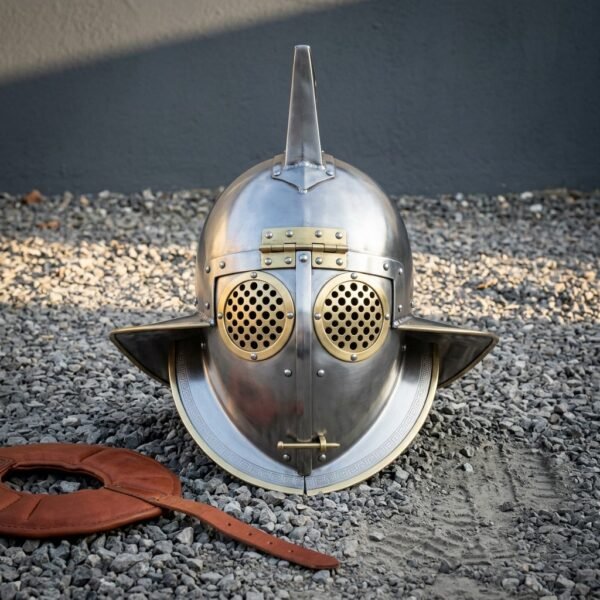 Arenaward Hand Forged Mild Steel Roman Gladiator Helmet
Original price was: $429.00.$343.20Current price is: $343.20.
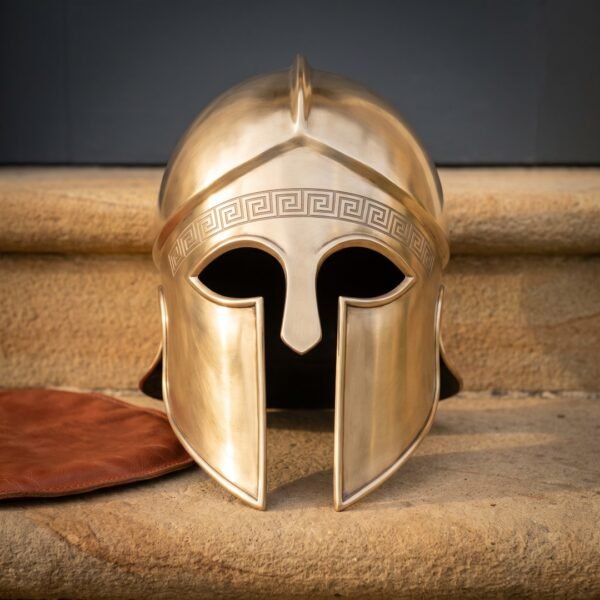 Aegiscrest Hand Raised Brass Corinthian Greek Helmet
Original price was: $399.00.$319.20Current price is: $319.20.
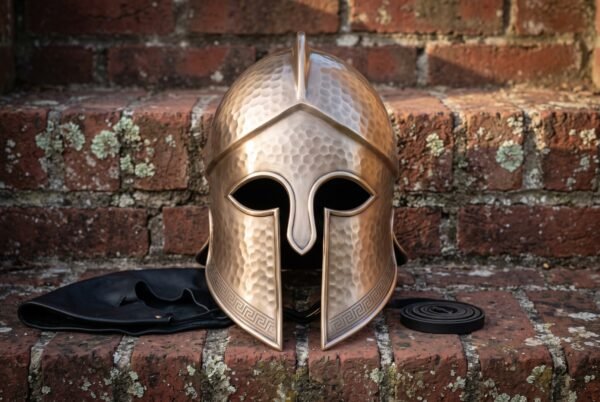 Bronzecrest Hand Forged Steel Corinthian Greek Helmet
Original price was: $339.00.$271.20Current price is: $271.20.