
A halberd is an axe, a spike and a hook mounted on the same head at the end of a long pole. It exists because infantry on foot needed one pole arm that could do everything a horseman forced them to do. The crescent edge cuts, the axial spike at the top gives reach and thrusts, and the rear fluke hooks a rim, a strap or a rider and pulls. Swiss and German foot soldiers made the shape famous through the fourteenth and fifteenth centuries, and it stayed in service as a guard piece long after it stopped being carried into a field.
The pieces here run 60 to 66 inches overall with heads of 15 to 19 inches, weighing about 5.2 to 6.2 lb complete. Steel is 1095 high carbon at 54 to 58 HRC in polished, satin or black oxide finishes, or forge welded Damascus of 1095 and 15N20 at 58 to 60 HRC. Hafts are American ash, walnut or close grained hardwood with brass or steel langets, the same build as the poleaxes. Three heads are sold without a haft.
Measure your ceiling before you order 66 inches of pole.
Free US shipping
On most pieces. Heavier and oversized ones carry a flat charge.
Hand Forged
Heated, hammered and ground by hand.
Engraving available
Names, dates or Norse runes on most pieces.
Ships from Chicago
Inspected and dispatched from our Chicago warehouse. No import duty, no customs delay on US orders.
Halberds
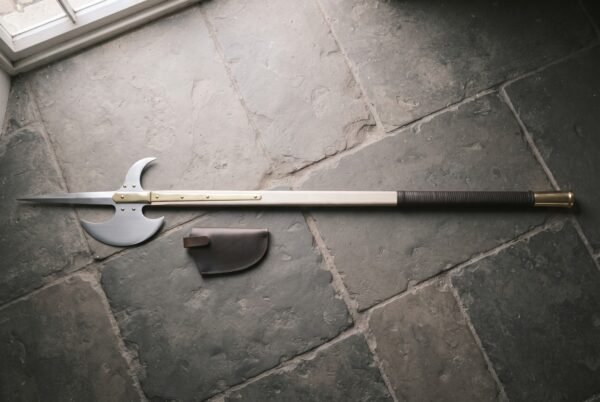
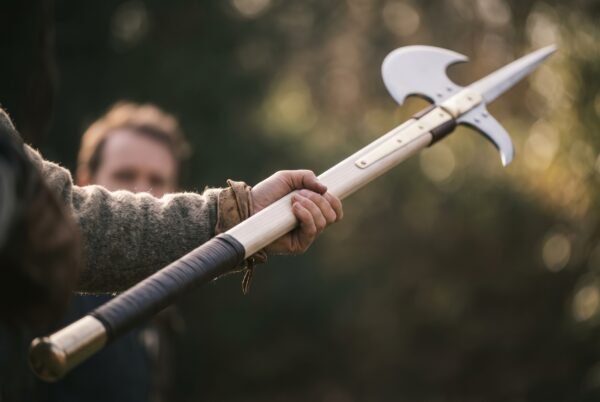
Wardenpike Hand Forged High Carbon Steel Halberd | 60 Inch Overall with a 16 Inch Head | Reenactment Display Gift | RK-1363
Original price was: $749.00.$599.20Current price is: $599.20.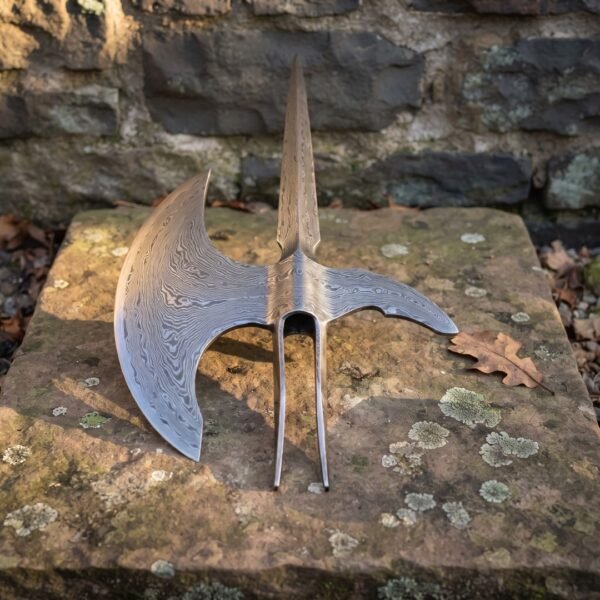
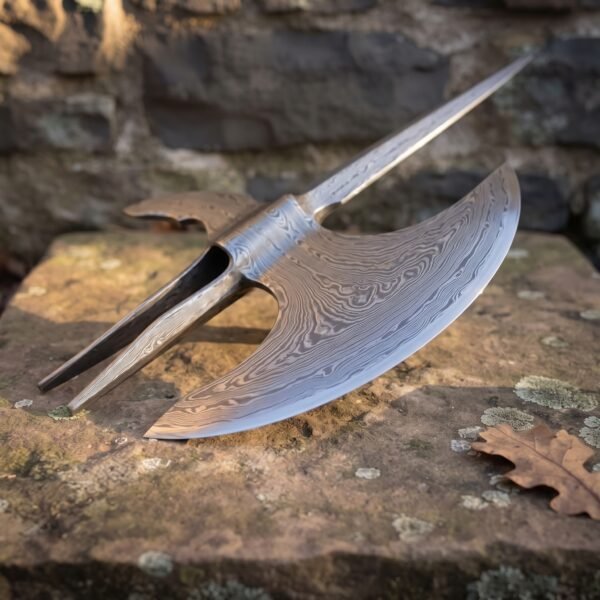
Emberhook Hand Forged Damascus Steel Halberd Head | Twin Forged Langet Straps Drilled for Rivets No Haft Supplied | Reenactment Display Gift | RK-1370
Original price was: $279.00.$223.20Current price is: $223.20.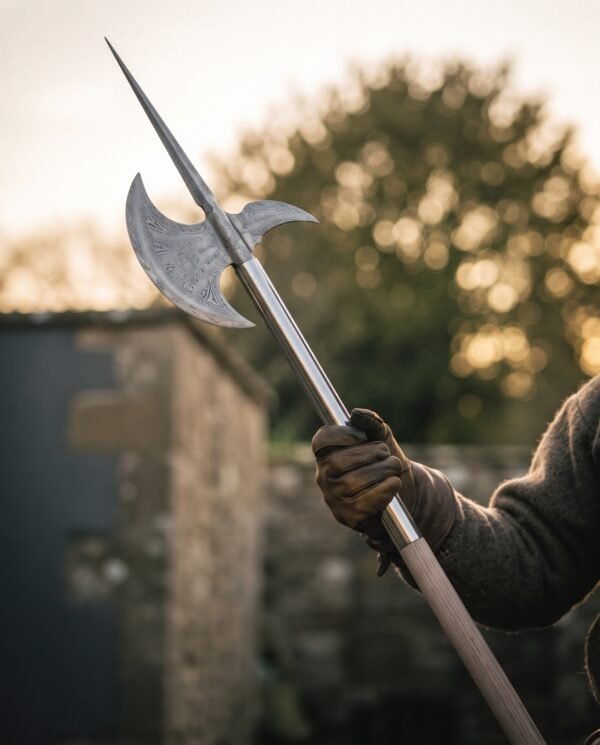
Frostward Hand Forged Damascus Steel Halberd | 66 Inch Overall with an 18 Inch Head | Reenactment Display Gift | RK-1367
Original price was: $749.00.$599.20Current price is: $599.20.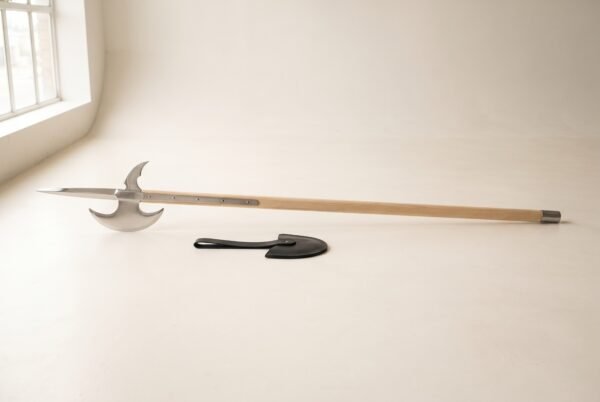
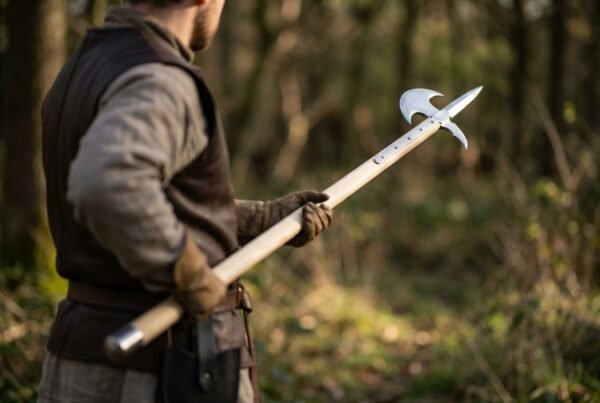
Ashwarden Hand Forged High Carbon Steel Medieval Halberd | 62 Inch Overall with a 17 Inch Head | Reenactment Display Gift | RK-1364
Original price was: $749.00.$599.20Current price is: $599.20.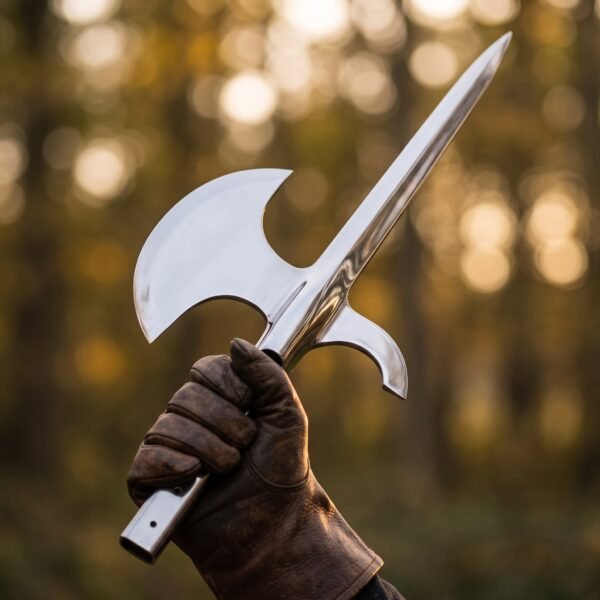
Cleftcrown Hand Forged High Carbon Steel Halberd Head | Seven Inch Closed Socket Drilled for Rivets No Haft Supplied with Fitted Leather Blade Cover | Reenactment Display Gift | RK-1368
Original price was: $185.00.$148.00Current price is: $148.00.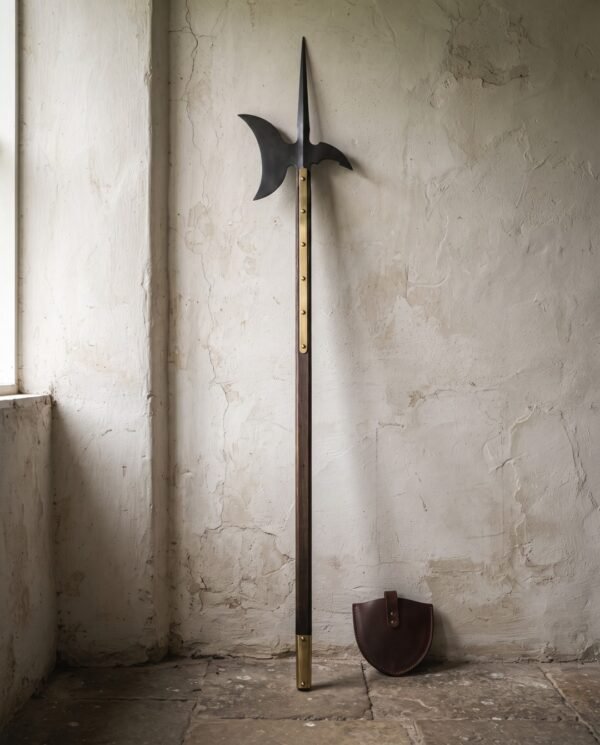
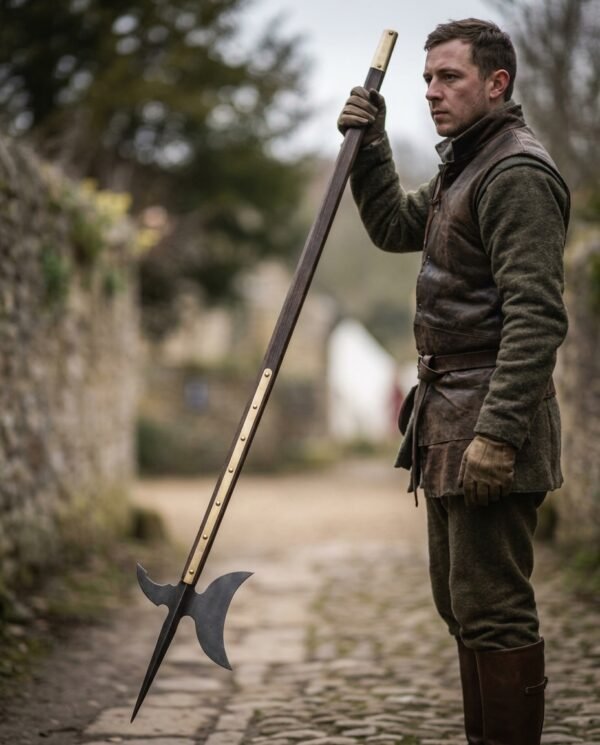
Nightward Hand Forged High Carbon Steel Halberd Polearm | 66 Inch Overall with an 18 Inch Head | Reenactment Display Gift | RK-1365
Original price was: $749.00.$599.20Current price is: $599.20.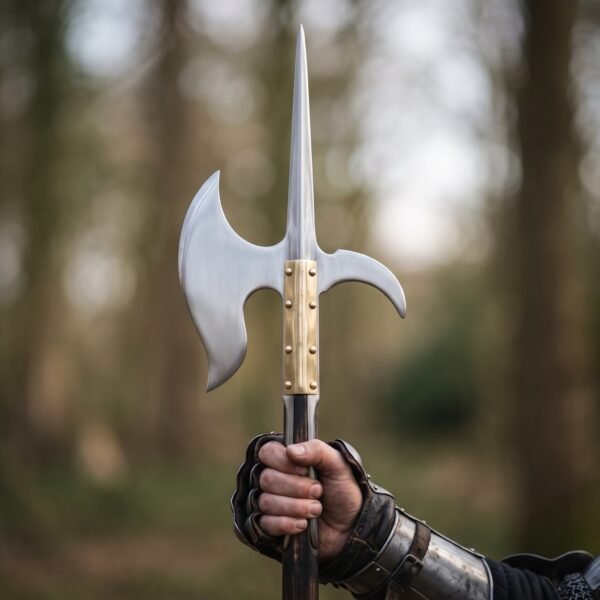
Brasscrest Hand Forged High Carbon Steel Polearm Head | Brass Langet Plates with Twin Steel Straps No Haft Supplied | Reenactment Display Gift | RK-1369
Original price was: $219.00.$175.20Current price is: $175.20.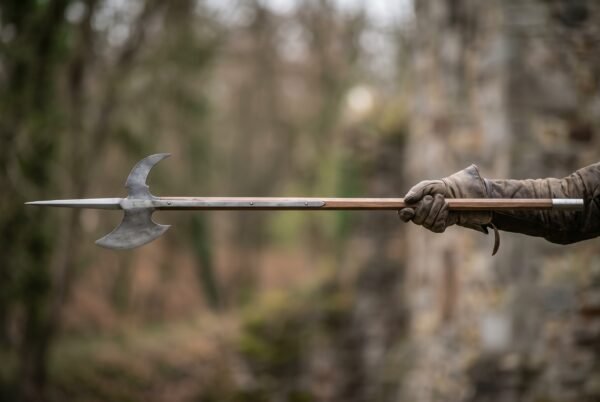
Grimhook Hand Forged High Carbon Steel Battle Halberd | 64 Inch Overall with a 15 Inch Head | Hardwood Haft and Riveted Steel Langets and No Sheath Required | Reenactment Display Gift | RK-1366
Original price was: $749.00.$599.20Current price is: $599.20.Why the head has so much going on
Most pole arms do one thing. A spear thrusts. A pole axe chops. The halberd is what you get when a body of infantry, standing in a line against horsemen and against other infantry in armour, refuses to choose. The result is a head with three working parts pointing in three different directions, and every one of them earns its place.
The axial spike sits at the top, in line with the haft, and it has the longest reach. A spike concentrates the force of a thrust into a point small enough to find a gap or punch through a mail ring, which a broad edge cannot do.
The crescent edge is the axe part, mounted on the side, and on the pieces here it runs 6 to 7 inches along the curve. An edge on the end of a five foot lever moves fast, and speed at the head is what turns a light blade into a heavy cut.
The rear fluke is the hook opposite the edge, and its job is to catch and pull. A shield rim, a strap, a rider on a horse. On some of these it is a straight rear spike and on others a proper hooked fluke, and the listings say which.
All three parts are useless without the fourth: the langets. Those are the metal straps that run down the haft from the head and are riveted through it. Without them, the first hard cut shears the wood right under the head, because a blade taking impact on a long lever puts enormous stress on the joint. Every complete piece on this page has langets, and every head sold loose is drilled to take them.
The halberds in this collection
Eight pieces. Five are complete on a haft. Three are heads sold on their own, for people who want to fit their own stave.
Complete halberds in 1095 high carbon
Four of these, and the differences between them are finish, head size and haft.
The polished 60 inch piece is the shortest and lightest of the group at approximately 5.4 lb, with a 16 inch head carrying an axial spike, a 6.5 inch crescent edge and a rear fluke. American ash haft with brass langets and a leather wrapped rear grip, which is the only leather grip in the group and the most comfortable to hold for any length of time.
The satin polished 62 inch piece runs approximately 5.6 lb on a 17 inch head with a 7 inch crescent edge and a hooked fluke. The haft is American ash with four riveted steel langets and a butt ferrule, which is the most heavily strapped head fixing here.
The black oxide 66 inch piece is the largest of the 1095 group at approximately 6 lb, on an 18 inch head with a 7 inch crescent edge and a hooked fluke. The haft is American walnut with brass langets and a turned brass butt ferrule. Black oxide against brass and dark walnut is the strongest look on the page if the piece is going on a pale wall.
The compact 64 inch piece has the smallest head at 15 inches with a 6 inch edge and a hooked fluke, and at approximately 5.2 lb it is the lightest complete halberd here. Close grained hardwood haft with riveted steel langets. A shorter head on a longer haft moves faster and is easier to handle in a confined space.
The Damascus halberd
One complete piece in pattern welded 1095 and 15N20, forge welded and etched, hardened to 58 to 60 HRC. It is the largest and heaviest here at approximately 66 inches and 6.2 lb, on an 18 inch head with a spike, a 7 inch crescent edge and a hooked fluke. American ash haft with polished steel langets and a butt ferrule, and it ships with a fitted leather head cover and Damascus specific care notes.
Damascus on a head this size is a lot of forge welding. The etch runs across the flat of the crescent and around the spike, and that pattern is the whole reason to choose it over the black oxide version.
Heads sold without a haft
Three heads, for anyone who wants to fit a stave of their own length, or who needs to ship something that is not five and a half feet long.
The polished 17 inch head has an axial spike, a 6.5 inch crescent edge and a rear fluke, and weighs approximately 2.6 lb. It has a 7 inch open socket drilled for two rivets, so it slides over the top of a stave rather than being strapped to the sides. A fitted leather blade cover and hafting notes come with it.
The mirror polished 19 inch head is the largest head on the page and weighs approximately 2.9 lb, with an axial spike, a 6 inch crescent edge and a hooked fluke. It uses brass langet plates and twin steel straps drilled for through rivets rather than a socket.
The Damascus 18 inch head weighs approximately 2.8 lb, with a spike, a 6.5 inch crescent edge and a hooked fluke, on twin forged langet straps drilled for through rivets. Damascus care, oiling and hafting notes are included.
Head sizes, lengths and weights
Every figure below comes from a listing on this page. Heads are forged and ground by hand and weights are approximate.
| Piece and finish | Steel and hardness | Head | Edge and fluke | Overall and weight | Haft and langets |
|---|---|---|---|---|---|
| Halberd, polished | 1095 at 54 to 58 HRC | 16 in | Axial spike, 6.5 in crescent edge, rear fluke | 60 in, about 5.4 lb | American ash, brass langets, leather wrapped rear grip |
| Halberd, satin polished | 1095 at 54 to 58 HRC | 17 in | Axial spike, 7 in crescent edge, hooked fluke | 62 in, about 5.6 lb | American ash, four riveted steel langets, butt ferrule |
| Halberd, black oxide | 1095 at 54 to 58 HRC | 18 in | Axial spike, 7 in crescent edge, hooked fluke | 66 in, about 6 lb | American walnut, brass langets, turned brass butt ferrule |
| Halberd, satin, compact head | 1095 at 54 to 58 HRC | 15 in | Axial spike, 6 in edge, hooked fluke | 64 in, about 5.2 lb | Close grained hardwood, riveted steel langets |
| Halberd, Damascus | Damascus at 58 to 60 HRC | 18 in | Spike, 7 in crescent edge, hooked fluke | 66 in, about 6.2 lb | American ash, polished steel langets, butt ferrule |
| Head only, polished | 1095 at 54 to 58 HRC | 17 in | Axial spike, 6.5 in crescent edge, rear fluke | Head only, about 2.6 lb | 7 in open socket drilled for two rivets, no haft |
| Head only, mirror polished | 1095 at 54 to 58 HRC | 19 in | Axial spike, 6 in crescent edge, hooked fluke | Head only, about 2.9 lb | Brass langet plates and twin steel straps, no haft |
| Head only, Damascus | Damascus at 58 to 60 HRC | 18 in | Spike, 6.5 in crescent edge, hooked fluke | Head only, about 2.8 lb | Twin forged langet straps drilled for rivets, no haft |
Note the weight split. On a complete halberd of about 5.5 lb, roughly half of that is head. All of that mass sits at the far end of a lever, which is why a halberd feels far heavier than a 6 lb dumbbell and why two hands are not optional.
Length, weight and where it will actually fit
Sixty six inches is five and a half feet. That is taller than a lot of people, so think about the route from the front door to the wall before you order. An eight foot ceiling takes any of these vertically with room to spare. A seven foot basement ceiling does not take the 66 inch pieces on a stand.
Mounted horizontally, allow the full length plus a few inches at each end for brackets. Two hooks are the minimum and three is better, because a haft supported at only two points over five and a half feet will slowly take a set.
If you want to handle it, distribution matters more than total weight. The 15 inch head on the 64 inch haft is the fastest of these because it has the least mass at the far end. The 18 inch Damascus head on 66 inches is the most tiring to hold out at arm's length.
Steel and hardness
Two steels only. Plain 1095 high carbon is hardened to 54 to 58 HRC. That band is deliberately below knife hardness, because a head on the end of a long lever takes shock loads that a brittle edge would not survive. At 54 to 58 the edge holds but the body of the head absorbs impact and bends rather than snaps.
Damascus here is 1095 and 15N20 forge welded and acid etched, hardened to 58 to 60 HRC. The nickel in the 15N20 resists the etch, which is what produces the light and dark banding across the flats. It is harder, holds an edge a little longer and is the choice for a piece that will be looked at rather than swung.
Finishes on the 1095 pieces are polished, satin polished, mirror polished or black oxide. Black oxide is a conversion coating rather than a paint, so it is thin, it does not chip off, and it slows rust rather than preventing it. Everything here is carbon steel. None of it is stainless. Our notes on steel and hardness cover the numbers, and what Damascus steel actually is covers the pattern welding.
Hafts, langets and fixing
American ash is the standard haft wood for good reason. Ring porous, long fibred and springy, it flexes under shock instead of transmitting all of it. Walnut is denser and darker and holds a turned detail better, which is why it is on the black oxide piece with the brass ferrule.
Langets are the metal straps running down the haft from the head, riveted through the wood. They exist because the joint just under a head is the highest stress point on the whole piece. The four riveted steel langets on the satin 62 inch piece are the most thorough fixing here. Brass langets on the other pieces do the same job and look warmer against wood.
A butt ferrule is the metal cap on the bottom end. It stops the haft bruising and splitting when the piece is stood upright on a stone floor.
Hafting a head yourself
The three loose heads take different approaches and it changes what stave you need.
The socketed head has a 7 inch open socket drilled for two rivets. Taper the top of your stave to a tight push fit inside that socket, mark and drill through both holes, then rivet through. A socket carries load in compression along the whole 7 inches, so a good fit matters more than the rivets do.
The two strapped heads use langet plates and straps drilled for through rivets instead. Here the head sits on the top of the stave and the straps lie along the sides. Clamp everything dry first, drill through the stave using the strap holes as your guide, and rivet through with the head under tension against the top of the stave.
Use straight grained ash or hickory, not a broom handle. Run the grain along the stave with no runout, because grain that exits the side of a haft is where it breaks. Finish with oil, not varnish, since a varnished haft is slippery in a damp hand.
Care and storage
The heads are carbon steel and they rust. Wipe the head after handling, keep a light film of oil on it, and use the fitted leather cover for transport rather than for storage, because leather traps moisture against steel.
Fingerprints are the main enemy on a polished or mirror finish. Sweat is mildly acidic and prints etch in within days on bare steel. On a Damascus head, go gently with abrasives, because polishing hard enough to remove rust also removes the etch and kills the contrast.
Oil the wooden haft once or twice a year. Keep the piece out of dry heat, since a haft that dries out shrinks and loosens the rivets through the langets. If a head starts to move on the haft, stop handling it and have the rivets reset. Our care notes for hafted pieces and the display guide cover the rest.
Engraving
Personalisation is done in the United States after the piece arrives. Text engraving is 19 dollars, symbol engraving is 39 dollars and a family crest is 49 dollars. On a halberd the flat of the crescent below the edge and the langet plates are the surfaces that take engraving best, and both are visible when the piece is mounted.
Elder Futhark is a phonetic alphabet rather than a cipher, so a name transliterates by sound and there is no rune for the letter C. Read our Elder Futhark guide before you send a name.
Engraving is permanent and an engraved piece cannot be returned. Send the exact spelling and check it twice.
Where these come from and how they ship
Ransack Viking is a US company based in Chicago, Illinois. The pieces are handmade in the Czech Republic, then imported, inspected and shipped from Chicago. Engraving is done in the US after arrival.
Complete halberds ship long, so allow for a large carton and check that someone can receive it. The three loose heads ship in a normal box, which is the practical reason many buyers fit their own stave. Because every head is forged and ground by hand, edge profile and etch figure vary slightly between two of the same model.
How to choose
If you want one complete halberd and you want it to look like the thing in the museum case, take the black oxide 66 inch piece on walnut with brass langets. It has the largest 1095 head and the most contrast.
If the piece will be handled at events rather than hung on a wall, take the 60 inch polished one with the leather wrapped rear grip, or the 64 inch compact head if you want the fastest of them.
If the pattern in the steel is the point, take the Damascus halberd and accept that at 6.2 lb and 66 inches it is the biggest thing here.
If your ceiling is low, your courier is difficult or you already own a stave you like, take one of the three heads and fit it yourself. The socketed head is the easier of the two fixings to get right.
Browse related categories
- Glaives and other pole arms
- Pole axes on long hafts
- Dane axes, the two handed Norse axe
- Viking spears and spear heads
- Battle axes in 1095 and Damascus
- Replacement handles and hafts
- Plate armour and harness
- Stands and display mounts
Guides worth reading first
- Steel and hardness explained
- What Damascus steel actually is
- How to display swords and axes safely
- Axe care: heads, hafts and edges
- How to sharpen an axe edge
Frequently asked questions
What is a halberd?
A pole arm with three working parts on one head: an axial spike at the top for reach and thrusting, a crescent axe edge on the side for cutting, and a rear fluke for hooking and pulling. Swiss and German infantry made it standard through the fourteenth and fifteenth centuries.
How long are these and how much do they weigh?
The complete pieces run 60 to 66 inches overall and approximately 5.2 to 6.2 lb. Heads are 15 to 19 inches. Roughly half the total weight sits in the head, which is why they feel much heavier than the number suggests.
What are the langets for?
They are the metal straps running down the haft from the head, riveted through the wood. The joint under the head is the highest stress point on the whole piece, and without langets a hard cut shears the haft right below the steel.
Can I buy just the head?
Yes. Three heads here are sold without a haft, weighing approximately 2.6, 2.8 and 2.9 lb. One uses a 7 inch open socket drilled for two rivets, the other two use langet straps drilled for through rivets. All three come with hafting notes.
What stave should I use if I haft one myself?
Straight grained ash or hickory with the grain running the full length and no runout at the sides. Fit it dry first, drill using the socket or strap holes as your guide, then rivet through. Finish with oil, not varnish, because varnish gets slippery.
Are these sharp?
The crescent edges arrive with a working edge and the spikes are pointed. These are large and heavy, so treat them as sharp objects and mount them out of reach of anyone who does not know what they are holding.
Will the black oxide finish stop rust?
It slows it. Black oxide is a conversion coating rather than a paint, so it is thin and it will not chip off, but it is not a rust barrier on its own. Keep a light film of oil on the head whatever the finish, because none of this steel is stainless.
Where are these made?
Ransack Viking is a US company based in Chicago, Illinois. The pieces are handmade in the Czech Republic, then imported, inspected and shipped from Chicago. Engraving is done in the US after arrival.
Featured pieces
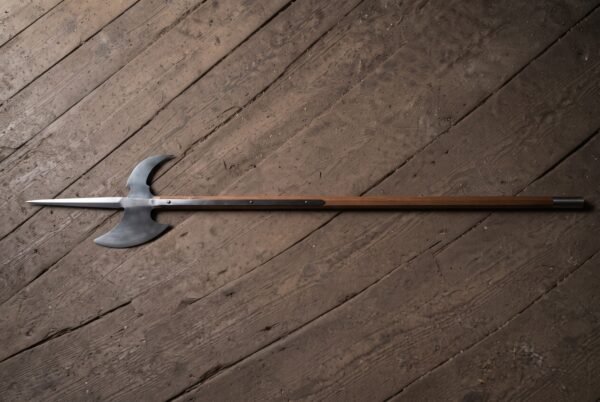 Grimhook Hand Forged High Carbon Steel Battle Halberd
Original price was: $749.00.$599.20Current price is: $599.20.
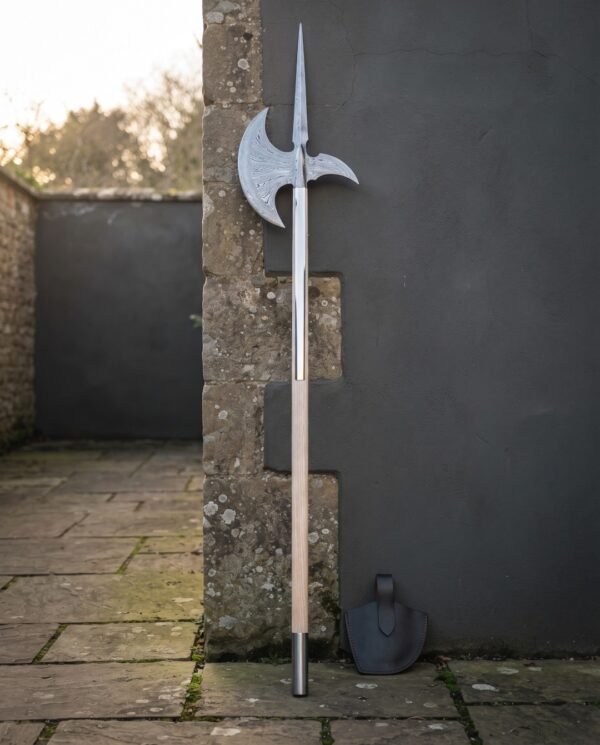 Frostward Hand Forged Damascus Steel Halberd
Original price was: $749.00.$599.20Current price is: $599.20.
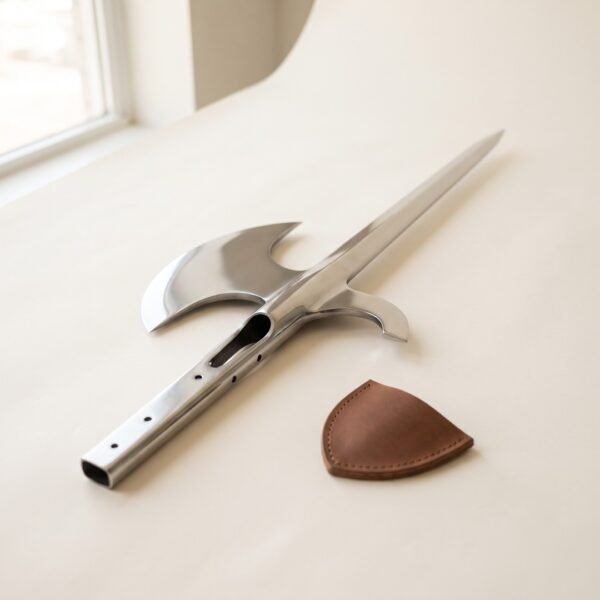 Cleftcrown Hand Forged High Carbon Steel Halberd Head
Original price was: $185.00.$148.00Current price is: $148.00.
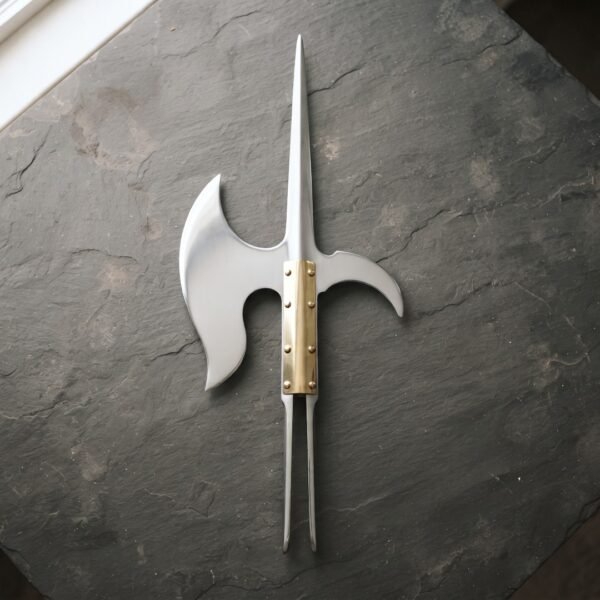 Brasscrest Hand Forged High Carbon Steel Polearm Head
Original price was: $219.00.$175.20Current price is: $175.20.