
A polearm is a blade on a pole, and everything interesting about it follows from that. Length gives reach, the haft gives leverage, and the mass concentrated at the far end turns a modest swing into something a hand held blade cannot match. The glaive is the cleanest example: a single edged blade, usually curved, socketed onto a shaft of six feet or so, cutting on the sweep rather than the thrust.
This page covers the wider family, with the halberds kept separate. Glaives, a bardiche, two war scythes, winged and leaf bladed spears, a pair of tridents and boar spears with crossbars. Overall lengths run 30 to 72 inches with heads of 12 to 26 inches, and assembled weights sit between 2 lb 4 oz and about 5.4 lb. Steel is plain 1095 hardened to 54 to 58 HRC or forge welded Damascus of 1095 and 15N20 at 58 to 60 HRC. Hafts are ash, dark hardwood, ebony, or olive and walnut.
Measure your ceiling and your wall before you buy anything past five feet.
Free US shipping
On most pieces. Heavier and oversized ones carry a flat charge.
Hand Forged
Heated, hammered and ground by hand.
Engraving available
Names, dates or Norse runes on most pieces.
Ships from Chicago
Inspected and dispatched from our Chicago warehouse. No import duty, no customs delay on US orders.
Glaives & Polearms
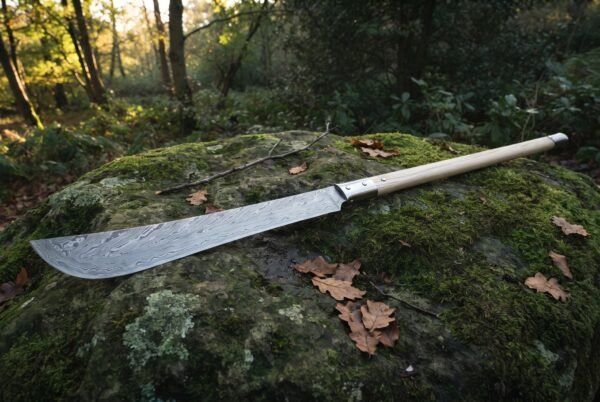
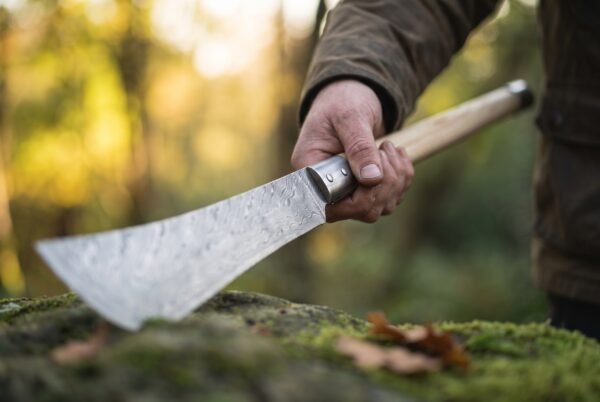
Wildcleave Hand Forged Damascus Steel Polearm | 45 Inch Overall with a 26 Inch Blade | Reenactment Display Gift | RK-1375
Original price was: $625.00.$500.00Current price is: $500.00.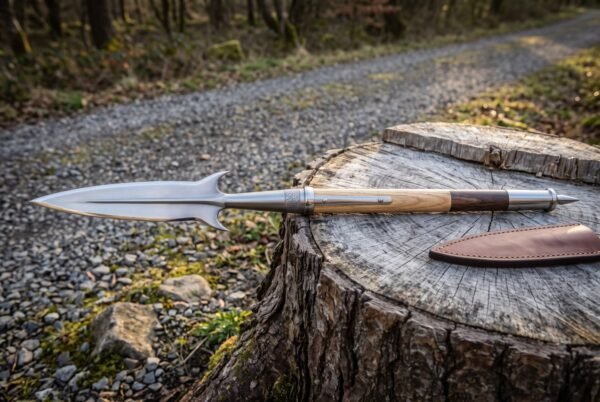
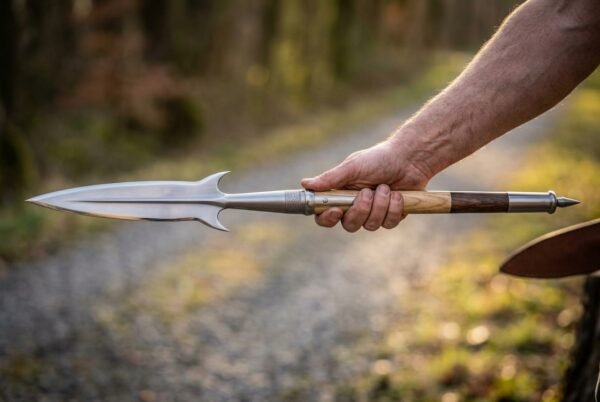
Boarhelm Hand Forged 1095 Boar Spear | 24 Inch Overall with 13 Inch Lugged Head on an Olive and Walnut Haft | Steel Butt Spike and Leather Sheath | Hunting Gift | RK-1593
Original price was: $349.00.$279.20Current price is: $279.20.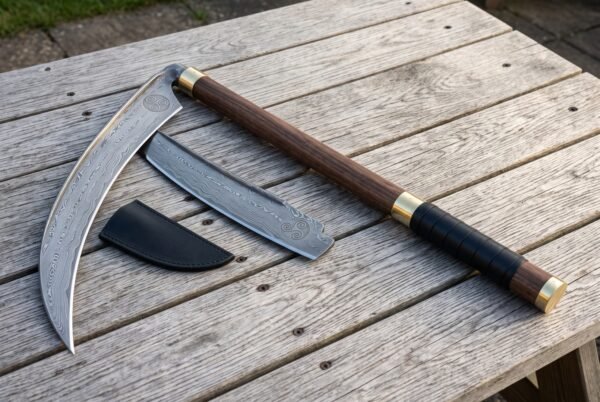
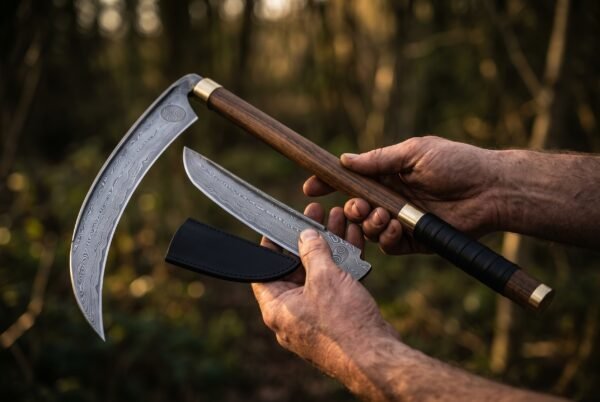
Reapcurve Hand Forged Damascus War Scythe Two Piece Set | 30 Inch Haft | Curved Damascus Head and Companion Blade with Black Leather Sheath | Norse Harvest Gift | RK-1941
Original price was: $449.00.$359.20Current price is: $359.20.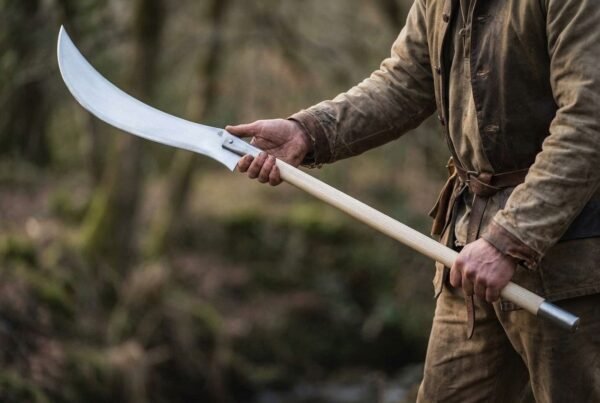
Whitecrest Hand Forged High Carbon Steel Glaive Polearm | 56 Inch Overall with a 20 Inch Blade | Reenactment Display Gift | RK-1372
Original price was: $599.00.$479.20Current price is: $479.20.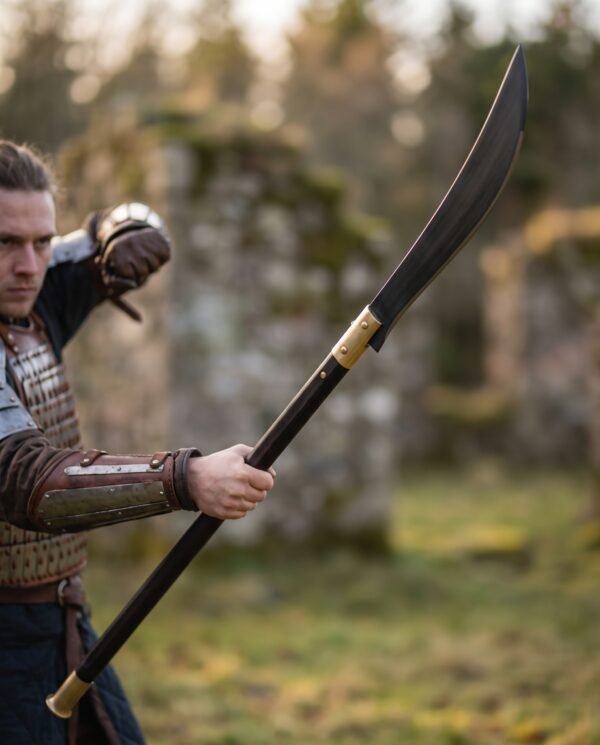
Ravenreave Hand Forged High Carbon Steel Medieval Glaive | 62 Inch Overall with a 24 Inch Blade | Reenactment Display Gift | RK-1373
Original price was: $749.00.$599.20Current price is: $599.20.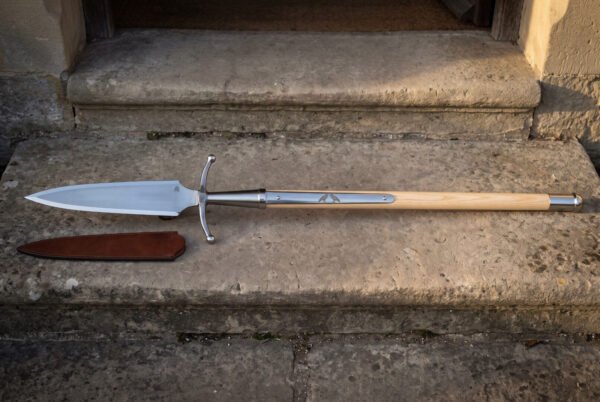
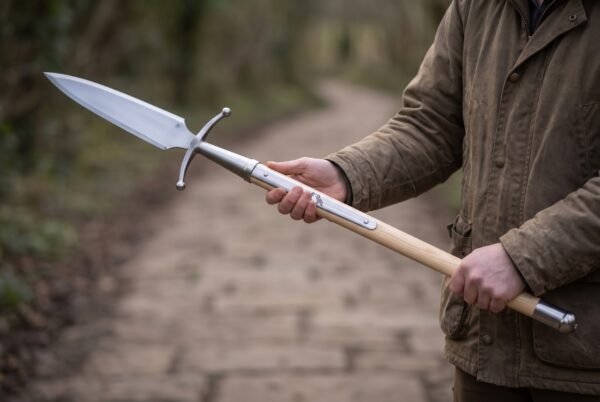
Tuskward Hand Forged 1095 Steel Boar Spear | Broad Leaf Blade with Curved Steel Crossbar | Ash Haft, Riveted Socket and Leather Blade Sheath | Norse Hunting Gift | RK-1636
Original price was: $349.00.$279.20Current price is: $279.20.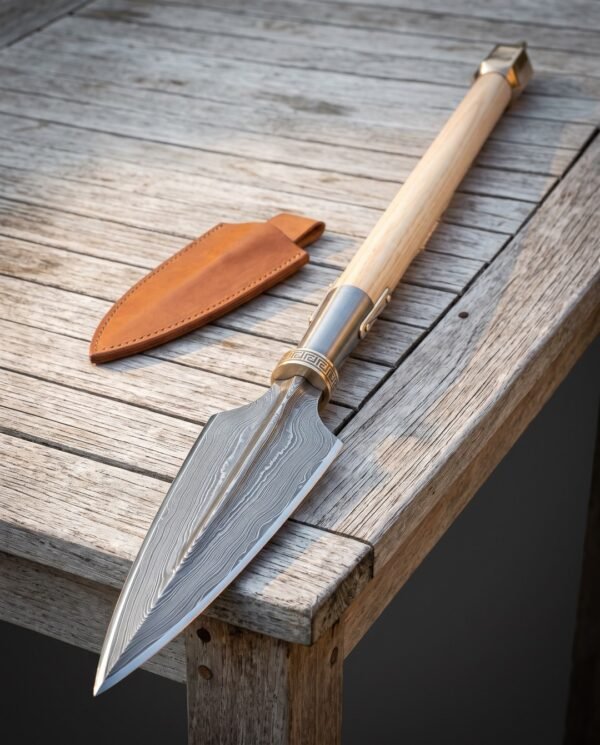
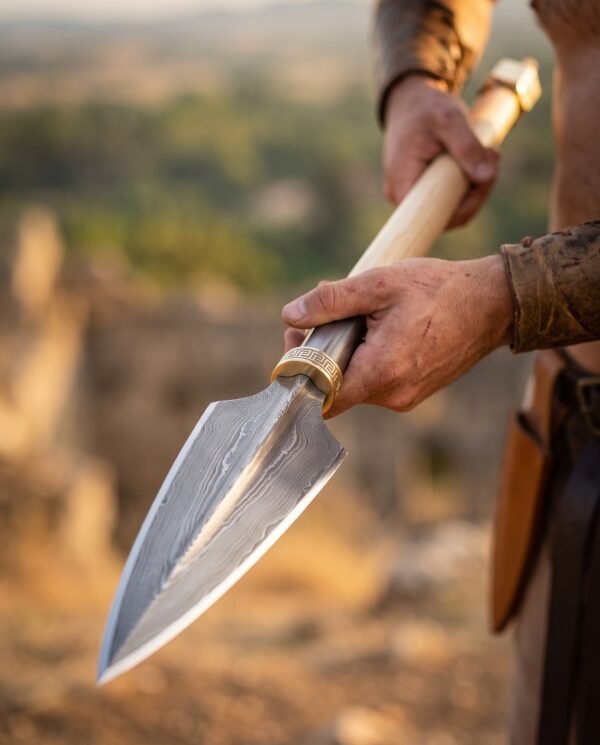
Dawnleaf Hand Forged Damascus Viking Spear | 28 Inch Overall with a 12 Inch Leaf Blade | Ash Shaft, Riveted Socket, Brass Collar and Leather Blade Cover | Norse Collector Gift | RK-1744
Original price was: $399.00.$319.20Current price is: $319.20.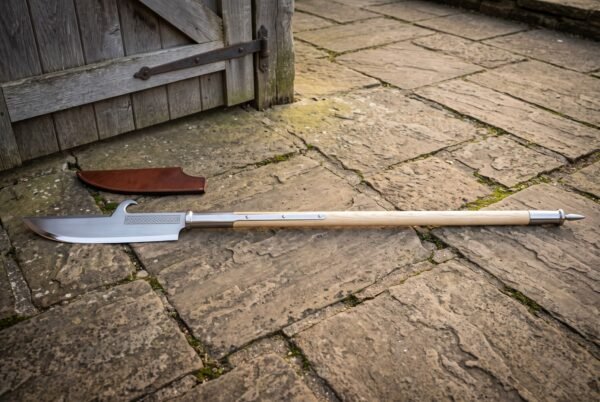
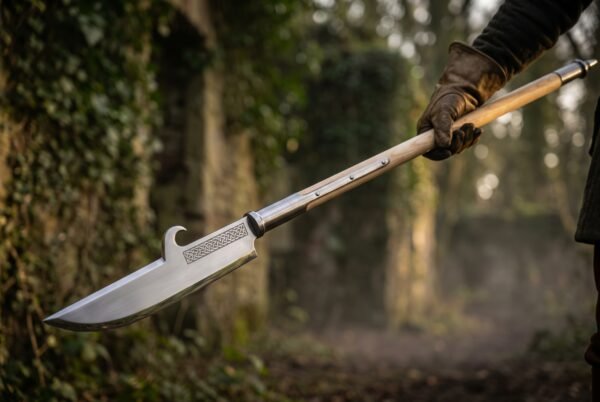
Reaphook Hand Forged 1095 Steel Glaive Polearm | 50 Inch Overall Length | Hooked Single Edge Head with Ash Haft and Steel Langets | Norse Display Gift | RK-1776
Original price was: $599.00.$479.20Current price is: $479.20.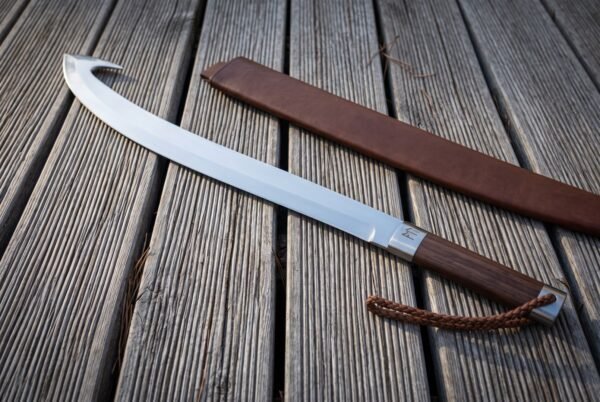
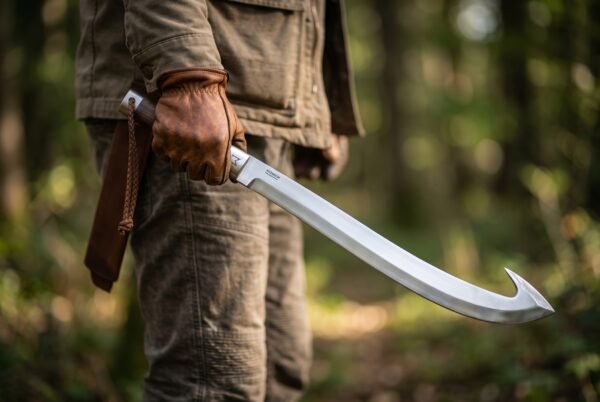
Talonreave Hand Forged Hooked Glaive Blade | 30 Inch Overall with 22 Inch Blade | Walnut Grip, Steel Collar and Brown Leather Scabbard | Norse Collector Gift | RK-1973
Original price was: $339.00.$271.20Current price is: $271.20.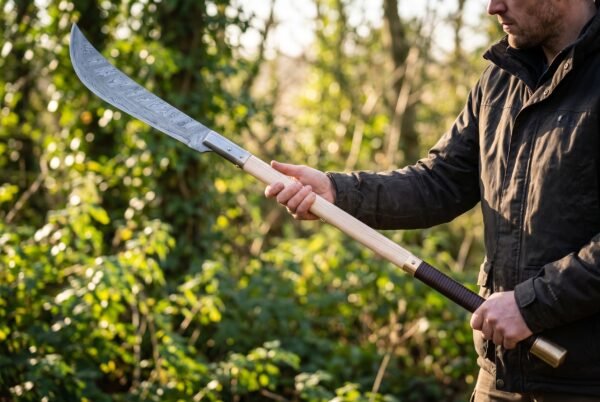
Tidecleave Hand Forged Damascus Steel Glaive | 54 Inch Overall with a 20 Inch Blade | Reenactment Display Gift | RK-1374
Original price was: $599.00.$479.20Current price is: $479.20.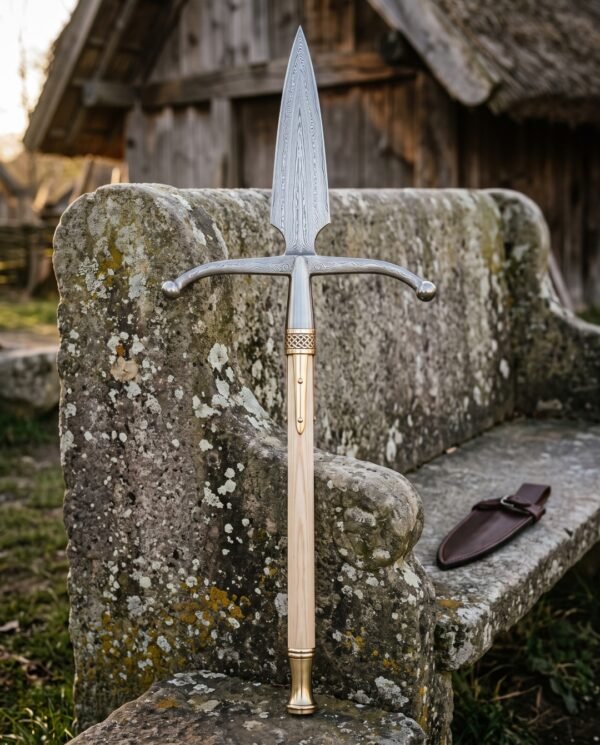
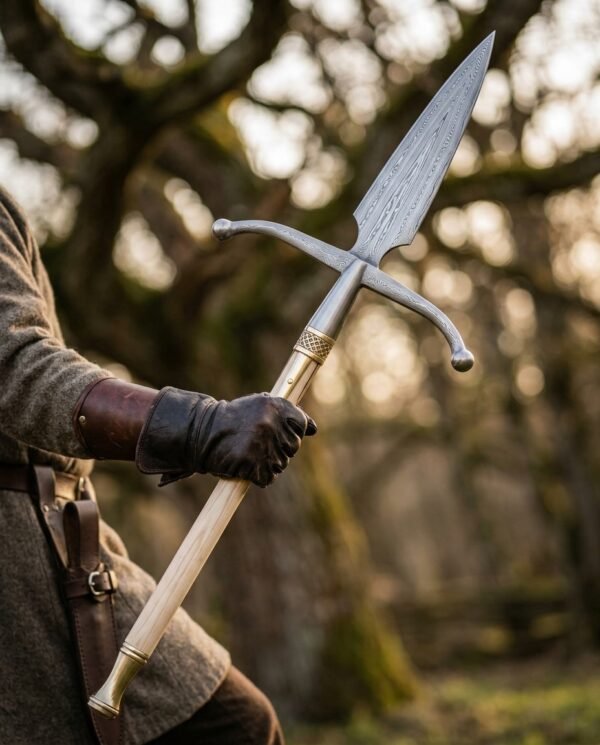
Boarcleft Hand Forged Damascus Winged Boar Spear with Ash Haft | Swept Crossbar and Brass Knotwork Ferrule | Leather Blade Cover Included | Norse Hunting Gift | RK-1612
Original price was: $399.00.$319.20Current price is: $319.20.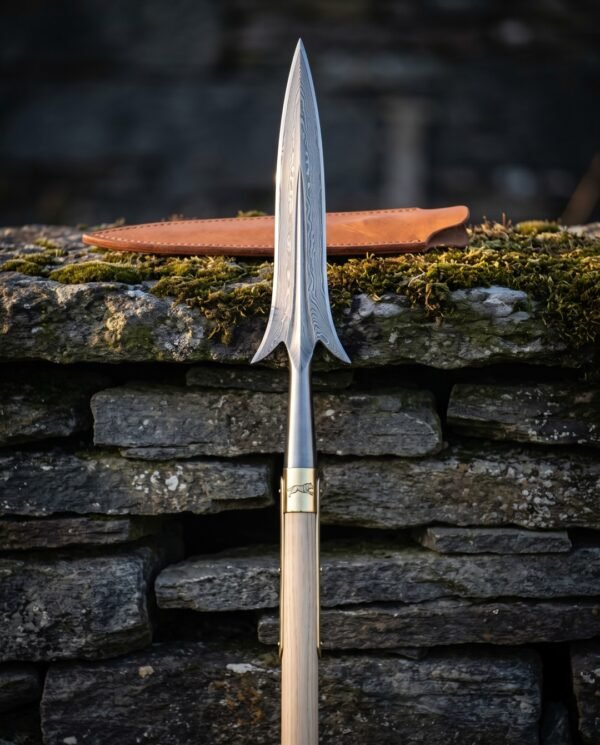
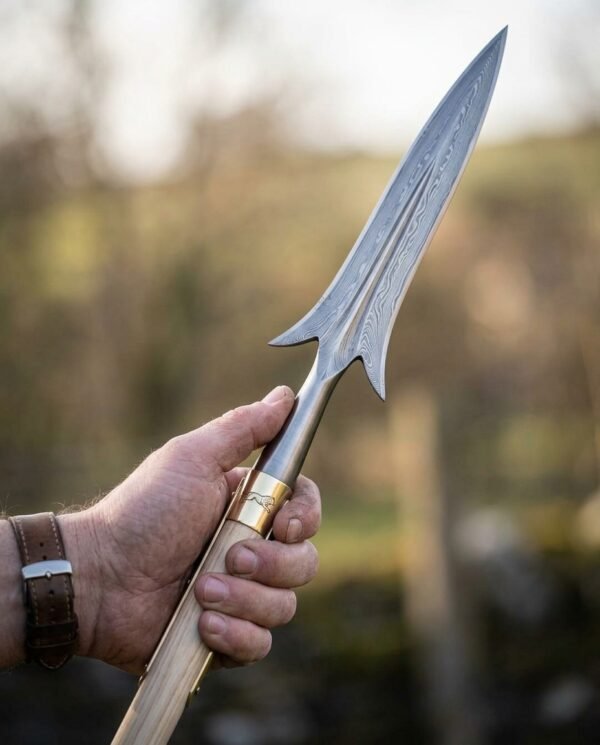
Thornwake Hand Forged Damascus Winged Spear | 12 Inch Head on a 72 Inch Ash Haft | Brass Ferrule and Leather Head Sheath | Norse Reenactment Gift | RK-1591
Original price was: $429.00.$343.20Current price is: $343.20.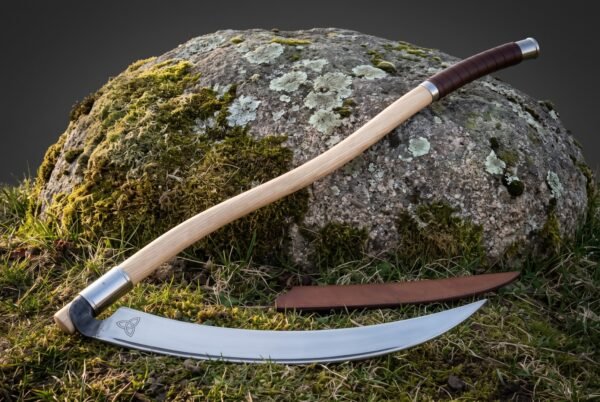
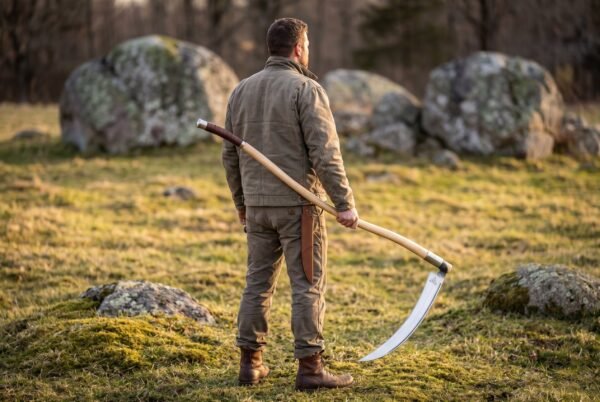
Harrowsweep Hand Forged 1095 Steel War Scythe | 60 Inch Ash Haft with 25 Inch Sweeping Blade | Triquetra Etched Steel, Leather Grip and Blade Cover | Norse Display Gift | RK-1953
Original price was: $749.00.$599.20Current price is: $599.20.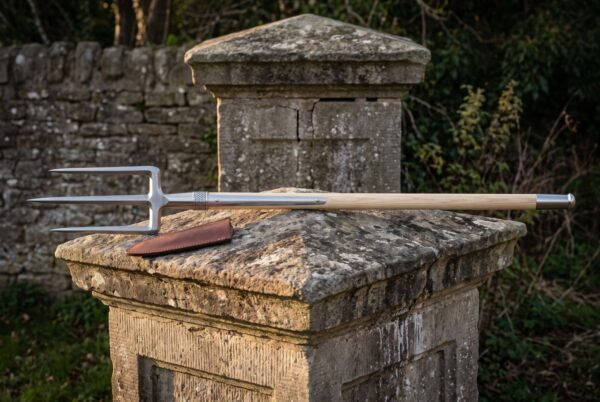
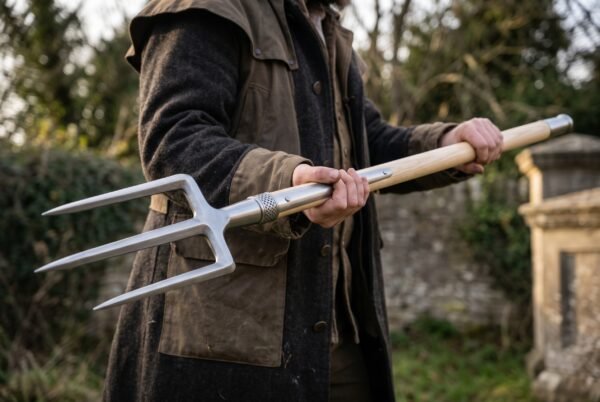
Reedfork Hand Forged 1095 Viking Trident | 12 Inch Three Prong Head on a 66 Inch Ash Haft | Knotwork Collar and Leather Sheath | Norse Fishing Gift | RK-1595
Original price was: $319.00.$255.20Current price is: $255.20.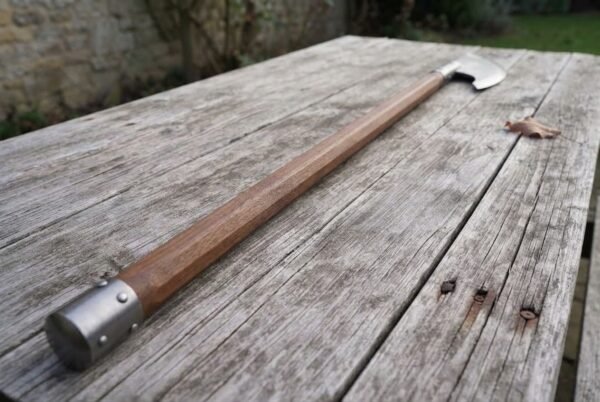
Moonreave Hand Forged High Carbon Steel Bardiche | 54 Inch Overall with an 18 Inch Cutting Edge | Hardwood Haft and Steel Butt Cap and No Sheath Required | Reenactment Display Gift | RK-1371
Original price was: $599.00.$479.20Current price is: $479.20.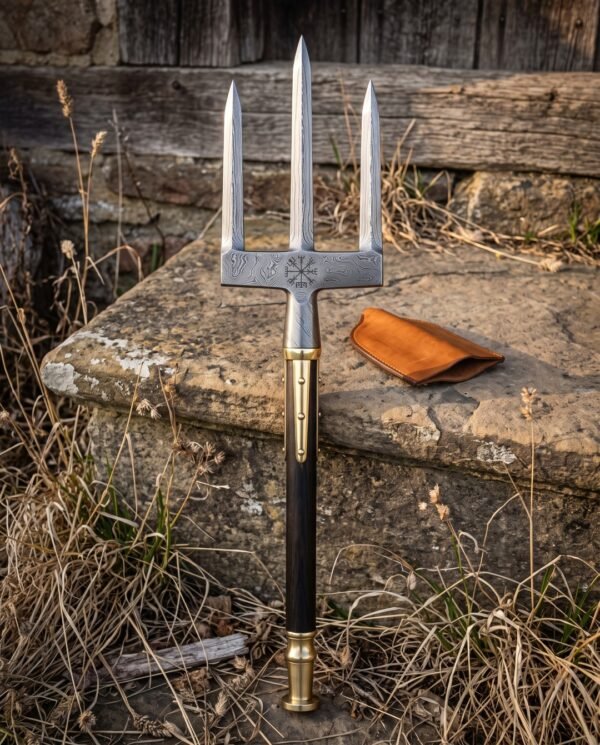
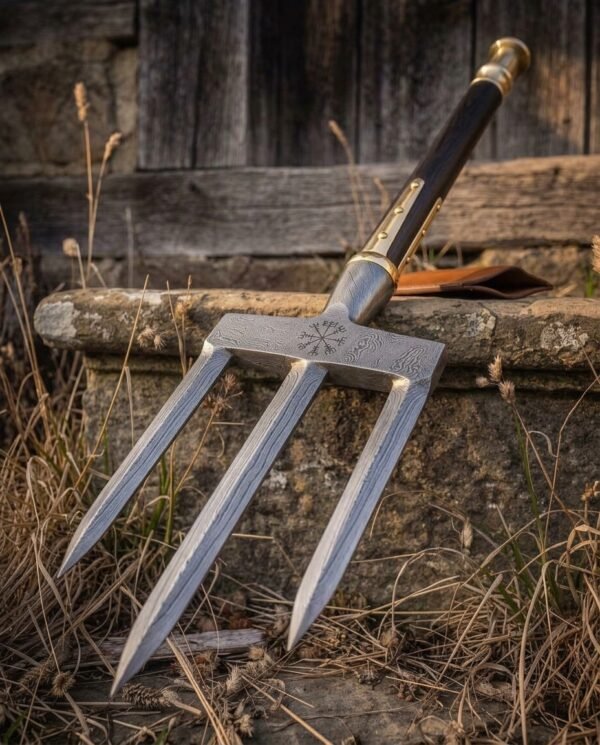
Tidefork Hand Forged Damascus War Trident | 14 Inch Three Prong Head | Ebony Haft with Brass Collar and Butt Cap | Norse Display Gift | RK-1592
Original price was: $449.00.$359.20Current price is: $359.20.Why put a blade on a stick
Reach is the obvious answer and it is not the whole one. A blade on a six foot haft lets you keep distance, but the more useful property is leverage. Your hands sit apart on the shaft, so one hand pulls while the other pushes, and the head travels a long arc for a small movement at the grip. That is why a glaive with a 4 pound head can be moved faster than the arithmetic suggests, and why a bardiche with an 18 inch crescent cuts the way it does.
The second answer is that polearms were cheap. A sword is several pounds of good steel worked from end to end. A polearm is a small amount of steel on a length of ash, which is why they filled the ranks of every medieval army in Europe while swords stayed with the people who could afford them. The forms on this page are what happens when that basic idea meets different problems. A curved glaive blade for cutting on the sweep. A bardiche crescent fixed at two points so it does not twist. A spear head narrowed to a stiff point for thrusting. A boar spear with a crossbar so the animal does not run up the shaft at you.
Balance is what separates a good polearm from a pole with a blade on it. Too much head and the piece drops out of line and takes effort to bring back. Too little and it feels like a broom. The pieces here sit between about 2 lb 4 oz and 5.4 lb assembled, and that spread is mostly head mass rather than haft length.
The polearms in this collection
Sixteen pieces sit on this page across five distinct forms. Steel splits them the same way it splits everything else here, into plain 1095 and forge welded Damascus.
Glaives and the bardiche
Five pieces carry the classic single edged head on a long haft. Blade lengths run 20 to 26 inches, overall lengths 54 to 62 inches, and assembled weights 4.4 to 5.4 lb. Two are Damascus at 58 to 60 HRC, one in a random pattern with a swept tip and one in a ladder pattern with a clipped point. Two are 1095 at 54 to 58 HRC, one polished bright and one finished in black oxide with the bevel left bright, which is the best looking piece on the page under a spotlight. The bardiche is the odd one out. Its 18 inch crescent is fixed at two points, an upper socket and a lower riveted strap, because a blade that deep will try to rotate on a single fixing.
Spears, winged and leaf bladed
Four spears, all built on the same principle and finished differently. The leaf bladed heads are broad with a raised central rib, double edged, and run about 12 inches including the socket on hafts of 68 to 72 inches. Two are Damascus at 58 to 60 HRC, one with a brass collar cut with a running knotwork band, one with a turned brass ferrule and copper rivets. The winged and boar spear heads add a steel crossbar below the blade with rounded finials, which is a hunting feature rather than a decorative one.
War scythes
Two pieces, both on 60 inch hafts, with the blade set to sweep and the edge on the outer curve rather than the inner. One is 1095 at 54 to 58 HRC on a straight grained ash haft with a leather grip wrap and a triquetra etched near the socket. The other is a Damascus set at 58 to 60 HRC, with a 22 inch head measured along the curve, brass collars at head and butt, a black leather wrap between two brass bands, and a 12 inch companion blade with its own stitched sheath.
Tridents
Two three prong heads, one in 1095 on a 66 inch ash haft with a riveted steel collar and a cut knotwork band, at about 2 lb 14 oz assembled. The other is Damascus on a 36 inch ebony haft with turned brass fittings, a Vegvisir stave and an Elder Futhark line cut into the base plate, at about 2 lb 12 oz. Prong spread is 5.5 and 6 inches across the outer points.
Lengths, steel and fittings across the range
Every figure below comes from the specification panel of a piece on this page. Hafts are cut and fitted by hand, so treat overall lengths as nominal rather than exact.
| Form | Overall length | Head or blade | Steel and hardness | Haft and fittings | Assembled weight |
|---|---|---|---|---|---|
| Hooked glaive blade | 34 in | 22 in along the curve | 1095 at 54 to 58 HRC | Octagonal walnut grip, steel collar and butt cap | 2 lb 4 oz |
| Bardiche | 54 in | 18 in cutting crescent | 1095 at 54 to 58 HRC | Close grained hardwood, steel butt cap | About 5 lb |
| Glaive | 54 in | 20 in, clipped point | Damascus at 58 to 60 HRC | Ash with leather grip, steel butt ferrule | About 4.6 lb |
| Glaive polearm | 56 in | 20 in, curved | 1095 at 54 to 58 HRC | American ash, steel socket and butt ferrule | About 4.4 lb |
| Polearm | 60 in | 26 in, swept tip | Damascus at 58 to 60 HRC | American ash, steel collar and butt ferrule | About 5.2 lb |
| Medieval glaive | 62 in | 24 in, deeply curved | 1095 at 54 to 58 HRC | Dark hardwood, brass langets and butt ferrule | About 5.4 lb |
| Glaive with spine hook | 72 in | 18 in including socket | 1095 at 54 to 58 HRC | Ash, steel langets, steel butt spike | Not listed |
| War scythe | 60 in | 20 in along the curve | 1095 at 54 to 58 HRC | Ash, leather grip, steel socket ferrule | Not listed |
| War scythe set with companion blade | 60 in haft | 22 in head, 12 in companion | Damascus at 58 to 60 HRC | Turned hardwood, brass collars and bands | Not listed |
| Leaf bladed spear | 68 in | 12 in including socket | Damascus at 58 to 60 HRC | Ash, riveted steel socket, brass collar | Not listed |
| Winged spear | 72 in | 12 in head, 8 in blade | Damascus at 58 to 60 HRC | American ash, brass ferrule, copper rivets | 3 lb 4 oz |
| Winged boar spear | Cut to fit by hand | Broad leaf with crossbar | Damascus at 58 to 60 HRC | Ash, brass ferrule, collar and butt cap | Not listed |
| Boar spear with crossbar | Cut to fit by hand | Broad leaf, long socket | 1095 at 54 to 58 HRC | Pale ash, steel butt ferrule | Not listed |
| Lugged boar spear | 30 in | 13 in including socket | 1095 at 54 to 58 HRC | Olive and walnut, steel butt spike | 2 lb 6 oz |
| Trident | 36 in | 14 in head, 6 in spread | Damascus at 58 to 60 HRC | Ebony, turned brass collar and butt cap | 2 lb 12 oz |
| Trident | 66 in | 12 in head, 5.5 in spread | 1095 at 54 to 58 HRC | American ash, riveted steel collar | 2 lb 14 oz |
The two boar spears with a listed length of cut to fit are not vague for the sake of it. Those heads are socketed onto hafts that are shaped, pinned and trimmed individually, so the finished length moves an inch or two between pieces.
How the head is fixed to the haft
This is the part that decides whether a polearm is a real piece of work or a prop. There are three fixings on this page and each one tells you something.
A socket is a steel cone forged onto the base of the head that swallows the top of the shaft. It is the strongest and the oldest arrangement, and every spear and trident here uses one, riveted or pinned through the wood. Load goes into compression along the grain, which is what ash is good at.
Langets are steel or brass straps that run down the sides of the haft below the head and are riveted through. They stop a cut travelling into the shaft and they stop the head twisting. Two glaives here carry them, one in steel and one in brass. On a piece meant to be handled rather than hung, langets are worth having.
The bardiche uses a two point fixing, an upper socket and a lower riveted strap. That is not decoration. An 18 inch crescent puts a long lever on the mounting every time it lands, and a single socket would work loose. Check any riveted fixing once a year and have it re set if it moves.
Hafts, wood and grain
Ash is the default here and there is a reason it has been the default for two thousand years. It is stiff, it flexes without splintering, and straight grained ash fails slowly rather than suddenly. Most of the hafts on this page are American ash, sanded and oiled, with a steel or brass ferrule at the heel.
The other woods are choices about looks. Dark close grained hardwood on the bardiche and one glaive, ebony on the short trident, and one boar spear built from an olive wood forward section joined to a walnut rear. Ebony and olive are dense and handsome and neither is as forgiving as ash under a hard impact.
Oil the wood once or twice a year with boiled linseed or a hardwax oil. A dry haft raises grain and eventually cracks along it, and a cracked haft on a five pound head is not a small problem. Leather grip wraps, where fitted, want a wipe of leather conditioner at the same time.
Steel, edges and finishes
Plain 1095 hardened to 54 to 58 HRC covers most of the page. On a polearm that hardness is the right answer rather than a compromise, because a long blade on a lever wants toughness more than it wants extreme edge retention. Finishes here include bright polish, satin, mirror polish and one black oxide head with the bevel left bright.
Damascus of 1095 and 15N20 at 58 to 60 HRC covers the rest. Forge welded, folded and acid etched, so the nickel bearing 15N20 stays bright and the 1095 darkens. On a 26 inch glaive blade there is a lot of surface for that pattern to run across, which is why the Damascus pieces are the ones people buy for a wall.
Several heads carry cut or etched work: knotwork bands along the flat above the socket and around collars, a triquetra near a scythe socket, a triple spiral at the base of the Damascus scythe blades, and a Vegvisir stave with an Elder Futhark line on the trident base plate.
Care, rust and storage
Both steels are carbon steel and both will rust. Wipe the head down after handling and keep a light film of oil on it. Camellia, mineral or food safe oil all work, and the etched Damascus pieces benefit from a slightly heavier film because the etch leaves a textured surface that holds moisture.
Store a polearm horizontal on two brackets, or vertical in a corner with the butt on something that is not concrete. Leaning a long haft against a wall at an angle for years puts a permanent bend in it. Where a leather blade cover or sheath is supplied, use it for transport but not for long storage, because leather traps damp against steel.
Display, handling and the practical bit
Most of these are 54 inches or longer, and several are six feet. That is taller than a standard door is wide, so measure the room before you order, and think about how the piece gets from the front door to the wall. Two horizontal brackets set at roughly a third and two thirds along the haft will hold any of them without stressing the wood.
If you plan to handle it rather than hang it, the shorter pieces are the sensible ones. The 34 inch hooked glaive blade and the 30 inch lugged boar spear both work in a normal room. Anything from 54 inches up needs outdoor space and a clear arc.
Engraving and gifting
Most pieces here can be engraved after they arrive in the United States. Names, dates and rune lines go along the flat of the head or onto a collar where there is room. Text engraving is 19 dollars, a symbol is 39 dollars and a family crest is 49 dollars. Elder Futhark is a phonetic alphabet rather than a cipher, so a name is transliterated by sound, and there is no rune for the letter C.
Engraving is permanent and an engraved piece cannot be returned. Send the exact spelling and read it back twice.
Where these come from and how they ship
Ransack Viking is a US company based in Chicago, Illinois. The pieces are handmade in the Czech Republic, then imported, inspected and shipped from Chicago. Engraving is done in the US after arrival. Long hafted pieces travel in a long box and the head is protected separately.
Small differences between two pieces of the same name are normal. Grain in the ash, depth of etch, and the exact length of a hand fitted haft all vary between one and the next.
How to choose
Decide the room first. Under six feet of wall means a glaive at 54 to 56 inches or one of the short pieces. A long wall or a stairwell takes the 72 inch spears and the hooked glaive comfortably.
Then decide steel. Plain 1095 costs less, takes a knock better and is the right pick for anything you intend to carry to an event. Damascus is for the wall, where the pattern across a 20 to 26 inch head is doing the work. If the piece is a gift, the war scythe set and the ebony hafted trident are the two that get the strongest reaction out of a box.
Browse related categories
- Halberds, axe head and spike on one haft
- Poleaxes with hammer and spike heads
- Viking spears, leaf and winged heads
- Dane axes, the long hafted Norse axe
- Battle axes across every Norse and medieval pattern
- Replacement handles and hafts
Guides worth reading first
- The Viking spear and why it beat the sword on numbers
- Display or battle ready: what the terms actually mean
- How to display swords, axes and long hafted pieces
- Damascus vs high carbon steel: which should you buy
Frequently asked questions
What is a glaive?
A single edged blade, usually curved, socketed onto a long haft. The cut happens on the sweep rather than the thrust, which is what separates it from a spear. The glaives on this page carry 20 to 26 inch heads on hafts of 54 to 72 inches.
How long are these pieces?
Overall lengths run 30 to 72 inches. The short end is the lugged boar spear and the hooked glaive blade, both of which work indoors. Most of the glaives sit at 54 to 62 inches, and the winged spears reach 72.
Do they arrive assembled?
Yes. Heads are socketed, pinned or riveted to the haft by hand before the piece ships, and hafts are cut and fitted individually. That last part is why two pieces of the same name can differ by an inch in overall length.
Are the blades sharp?
They arrive with a working edge, ground and finished by hand. They are not razors, because a very thin edge on a long blade chips against anything hard. If you want more, match the existing bevel angle on a coarse stone and work along the curve.
What is a bardiche and how is it different?
A bardiche carries a long sweeping crescent instead of a compact head, fixed to the haft at two points rather than one. The one here has an 18 inch cutting edge, an upper socket and a lower riveted strap. The double fixing stops the blade rotating under load.
Why do the boar spears have a crossbar?
To stop the animal driving itself up the shaft. The bar sits below the blade and limits how deep the head goes. It is a hunting feature that dates back centuries and its purpose is completely unambiguous.
How do I look after the haft?
Oil it once or twice a year with boiled linseed or a hardwax oil, keep it out of direct sun and do not lean it against a wall at an angle for years. Ash is stiff and forgiving, but a dry haft raises grain and eventually cracks along it.
Where are these made?
They are handmade in the Czech Republic, then imported, inspected and shipped by Ransack Viking from Chicago, Illinois. Engraving is added in the United States after arrival.
Featured pieces
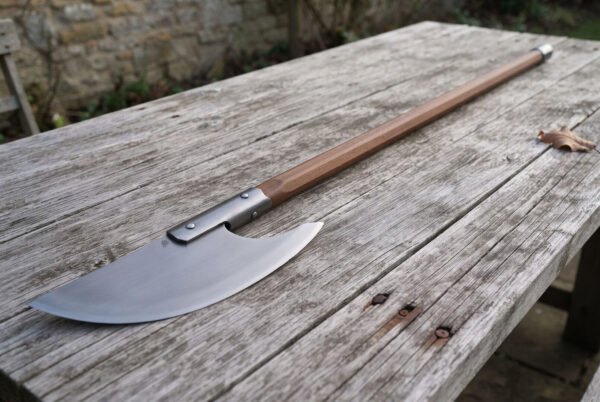 Moonreave Hand Forged High Carbon Steel Bardiche
Original price was: $599.00.$479.20Current price is: $479.20.
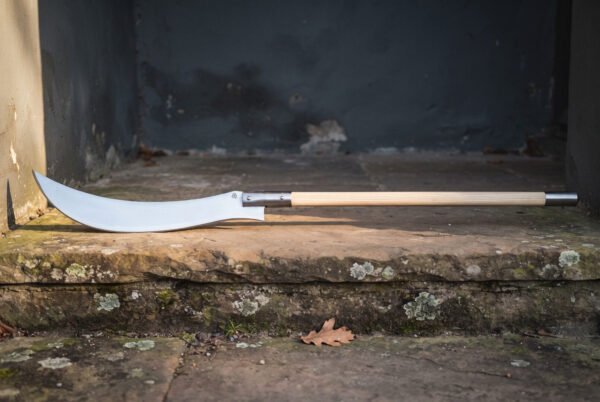 Whitecrest Hand Forged High Carbon Steel Glaive Polearm
Original price was: $599.00.$479.20Current price is: $479.20.
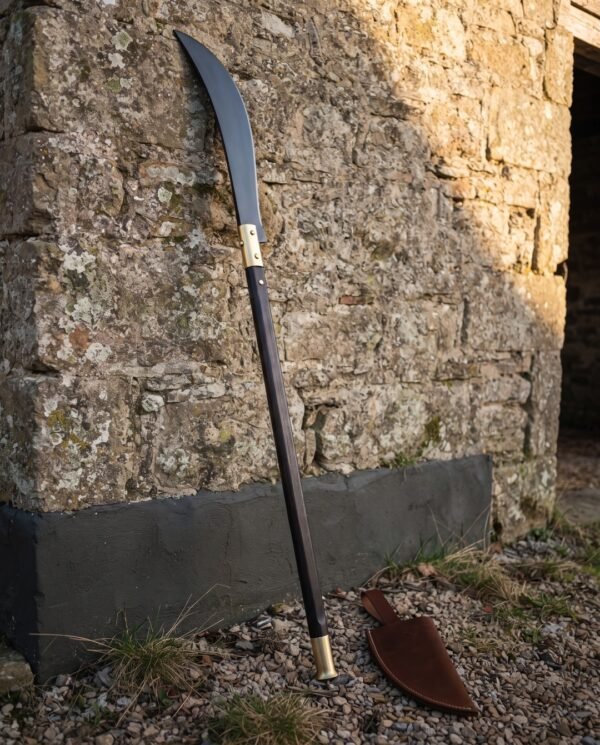 Ravenreave Hand Forged High Carbon Steel Medieval Glaive
Original price was: $749.00.$599.20Current price is: $599.20.
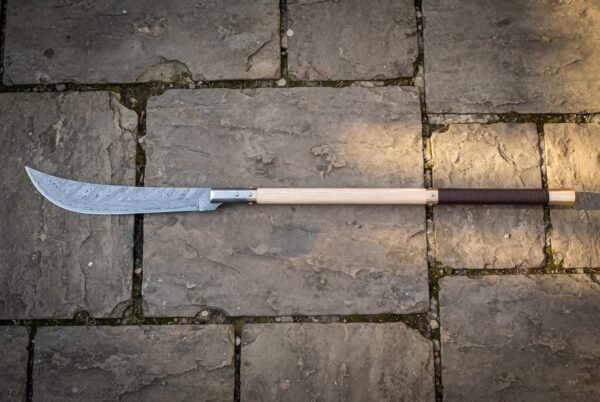 Tidecleave Hand Forged Damascus Steel Glaive
Original price was: $599.00.$479.20Current price is: $479.20.