
Blog
The Viking Spear: The Most Common Arm in the North

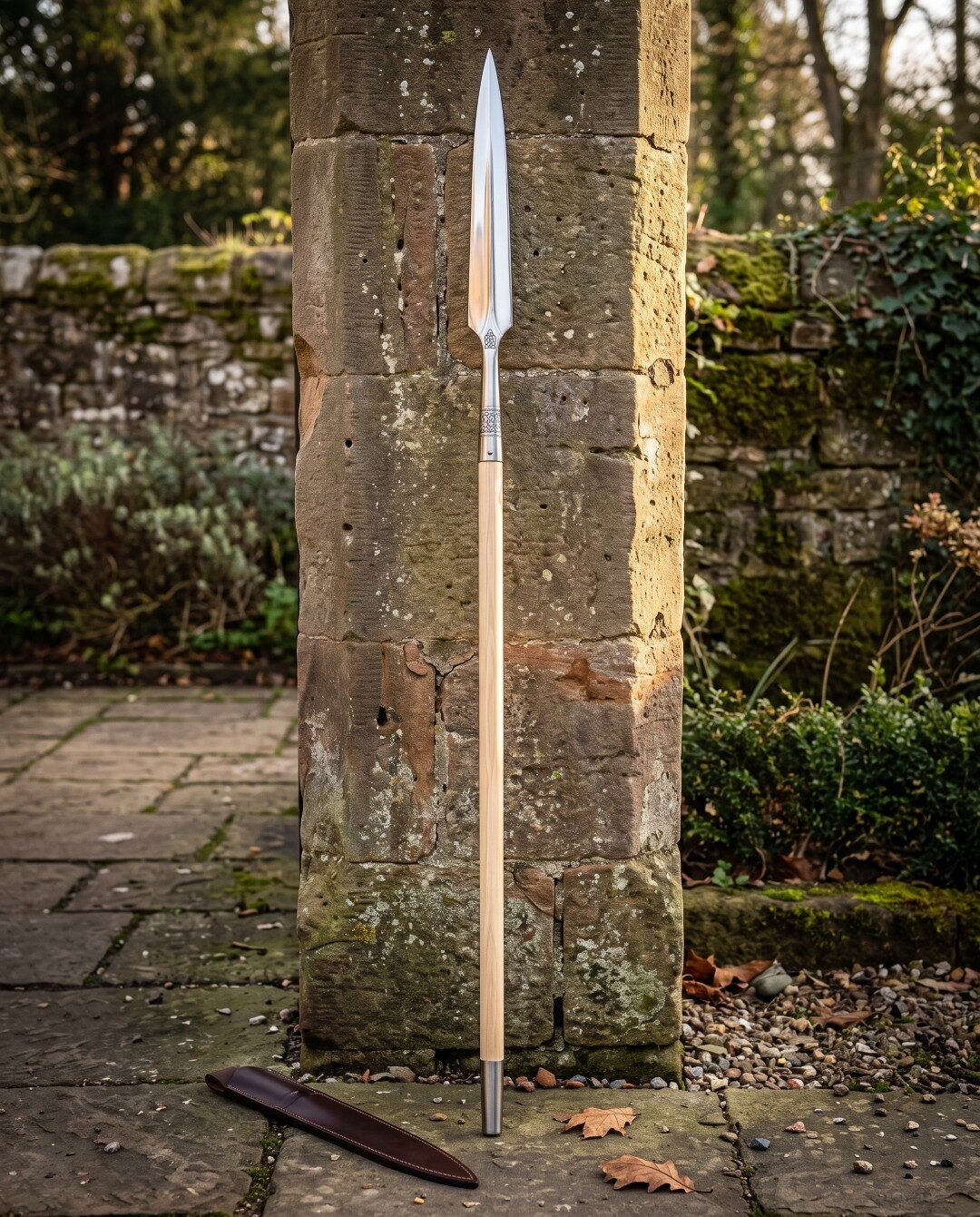
The spear was the arm a Norseman was most likely to own. It shows up in more graves than the sword, it cost a fraction as much, it worked from behind a shield wall, and it was tied to Odin in a way no other piece of kit was. If you want to picture a Viking honestly, put a spear in his hand and a shield on his arm. The sword is what he wanted, not what he had.
Why the spear and not the sword
Money. A sword is a long bar of good iron, worked for days, with a hilt, a guard and a scabbard to follow. A spear is a modest lump of iron shaped into a socket and a blade, then fitted to a length of wood any farm could supply. The head might weigh a few hundred grams. One smith could turn out several in the time it took to make one blade for a sword.
That price difference shows in the ground. Across Scandinavian grave finds, spearheads outnumber swords by a wide margin, and in many regions a man buried with arms is buried with a spear and an axe and nothing else. Swords appear in the graves of people who could afford them, which is why a sword like the Ulfberht group carries so much meaning. Our post on the Ulfberht sword gets into what that name meant and why the good ones were worth a small fortune.
The head
 Skyrend Hand Forged Damascus Viking Spear | 1095 and 15N20 Leaf Blade | Rune Cut Brass Socket, Ash Shaft and Leather Sheath | Norse Reenactment Gift | RK-1481
 Ashreaver Hand Forged 1095 Steel Viking Spear | 6 Foot Overall on an Ash Shaft | Knotwork Cut Socket and Steel Butt Ferrule | Norse Reenactment Gift | RK-1518
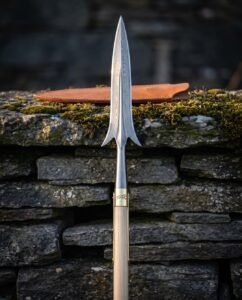 Thornwake Hand Forged Damascus Winged Spear | 12 Inch Head on a 72 Inch Ash Haft | Brass Ferrule and Leather Head Sheath | Norse Reenactment Gift | RK-1591
How it was made
A Viking Age spearhead is socketed rather than tanged. The smith took a flat bar, drew out the blade at one end, then flattened and wrapped the other end around a mandrel to form a cone. The seam of that cone is visible on most surviving heads, sometimes forge welded shut, sometimes closed and left to its own devices. A hole through the socket takes a rivet or a nail that pins the head to the shaft.
Blade sections vary from a flat leaf with a low midrib to a stiff diamond with a pronounced spine. The stiffer sections push through resistance better. Better heads carry a proper central rib running the length of the blade, which is the difference between something that holds its line in a thrust and something that waves at the target.
The finest examples are dressed up. Pattern welded panels in the blade, silver and copper wire inlaid in bands around the socket, punched geometric patterns. Those were the property of people with status, and they show that a spear was not simply the cheap option.
Shapes and typology
Jan Petersen’s 1919 study of Norwegian Viking Age arms is still the reference. Alongside his well known sword classification he set out a lettered series for spearheads, and archaeologists still write of a type E or a type K head when they publish a find. The series tracks how blades grew longer and narrower through the period and how socket decoration came and went.
Two broad families are worth knowing as a buyer. The plain leaf or lozenge head is the common Norse shape, anything from a hand span to well over a foot of blade. The winged or lugged head, sometimes called a Frankish or Carolingian spear, carries a pair of bars projecting from the base of the blade. Those wings stop the head sinking in past the point of usefulness, give you something to hook and lever with, and turn up in hunting contexts as often as fighting ones. Winged heads spread into Scandinavia from the Frankish lands and stayed in use for centuries afterwards.
The shaft
Wood rots, so this is the part where honest sources go quiet. Complete Viking Age shafts are rare. What we do have comes largely from bog deposits, where waterlogged ground preserved wood that would otherwise have gone. The great Danish deposits at Nydam, Illerup and Vimose sit a few centuries earlier than the Viking Age, and they hold hundreds of shafts, which gives a solid picture of what a northern European spear looked like before the Norse period and a reasonable basis for what came after.
Those finds show shafts of ash and hazel, generally in the range of two to three metres, turned round and tapered rather than left as raw poles. Ash is the wood most people name today, and there is good reason for it beyond tradition: ash is springy, takes shock without splintering into needles, and grows straight. Some heads have a matching iron ferrule or butt spike from the other end of the shaft, which balances the piece and gives you a second point when the head is fouled.
How it was used
In the line
A spear is the arm that makes a shield wall work. Standing shoulder to shoulder, a man with a spear can reach past his own shield and past his neighbour’s, hitting a target he could never touch with a sword. The second rank can thrust over the shoulders of the first. That geometry is the whole reason massed formations kept spears at the centre of European fighting for another eight hundred years.
Sagas describe both thrusting and throwing. Lighter heads on lighter shafts were clearly thrown, and a few graves hold several spearheads together, which reads as a set to be launched before contact. Heavier heads with long stiff blades were made to be held.
Odin’s arm
The spear carries a religious weight in Norse sources that no other piece of kit does. Odin owns Gungnir, a spear that is said never to miss. In Havamal, Odin describes hanging on the world tree for nine nights, wounded with a spear and given to himself. Several saga passages describe a spear thrown over an enemy army before a battle, an act read as dedicating those men to Odin.
Set that against the archaeology. Spearheads turn up in bog deposits and in rivers, deliberately bent or broken in some cases, which looks a great deal like sacrifice rather than loss. Read the two bodies of evidence together and the spear stops being just the cheap option and starts looking like the arm with the deepest meaning attached to it.
What survives and what does not
Iron heads survive in the hundreds. Shafts survive almost never. Ship burials such as the Ladby vessel in Denmark, where the timber itself had rotted away and only the iron rivets and a scatter of grave goods remained, show how selective preservation is: metal endures, wood leaves a stain in the soil.
The result is that a museum spear is usually a modern shaft with an ancient head on it, and the length of that shaft is a curator’s best estimate. Anyone quoting an exact figure for the standard Viking spear is quoting a convention, not a measurement from the ground.
What to look for in a modern spear
The socket and the fit
This is where cheap pieces fail. The socket should grip the shaft along its full depth with no rattle, and it should be pinned or riveted rather than glued. A head that spins on the haft is worse than useless. Check whether the maker supplies the shaft with the head fitted or leaves you to fit it yourself, because a raw socket and a hardware store dowel almost never marry up.
Blade steel and finish
For a piece you intend to hang on a wall or carry at an event, a plain high carbon head is the sensible choice. It sharpens easily, it takes a knock, and it does not cost what a patterned blade costs. Damascus heads are bought for the pattern and for gifting rather than for hard use, and there is no shame in that as long as nobody pretends otherwise. If you want the background on how those layers are made and what the pattern actually tells you, our guide to Damascus steel lays it out.
Length and storage
A seven foot spear is a serious object to own, and it does not tuck away anywhere. Measure the wall or the corner it will live in before you buy, and check whether the shaft ships in one piece or in two with a joining ferrule. Many people buy the head alone, mount it on a plaque, and fit a full shaft later.
Care
Carbon steel rusts, and it will not wait for you to get round to it. Wipe the head with an oiled cloth after handling it, keep it out of a damp garage, and give the wood a coat of oil once a year. A leather blade cover is worth having if the spear will be moved about.
The spears we make
Our spearheads and complete spears sit in the Norse arms range, alongside the pole arms and hafted pieces that share the same construction. You will find plain 1095 leaf heads with rune cut sockets, winged and lugged heads in the Frankish pattern, Damascus heads forge welded from 1095 and 15N20, and full spears on ash hafts running from around five feet to seven with brass ferrules or steel butt spikes. Plain 1095 blades are finished at 54 to 58 HRC and the Damascus at 58 to 60 HRC, and most heads ship with a leather cover. If you are putting a kit together, the Viking axe range covers the other arm most Norsemen carried and our Viking axe history post explains why, while the armour range and the seax range fill in the rest. Ransack Viking is a US company in Chicago, Illinois. Every piece is handmade in the Czech Republic the old way, then imported, inspected and shipped from Chicago. Engraving is done in the US after arrival.
The heavier heads that shared the same shaft are covered in the war hammer and mace, and all three are compared directly in mace against war hammer against flail.
Questions people ask
Was the spear really more common than the sword?
Yes, by a wide margin in the grave evidence. Spearheads are among the most frequent finds in Scandinavian burials that contain arms, while swords appear far less often and cluster in the richer graves. The reason is cost: a spearhead uses a fraction of the iron and a fraction of the smith’s time that a sword blade demands, and the shaft was wood anyone could cut on the way to the boat.
How long was a Viking spear?
Nobody can give you an exact figure, because shafts almost never survive. The best evidence comes from earlier Danish bog deposits at Nydam, Illerup and Vimose, where waterlogged ground preserved shafts in the range of two to three metres. Viking Age spears are usually reconstructed in that bracket. Any single number quoted as the standard length is a convention that somebody repeated until it sounded official.
What are the wings on a winged spear for?
The bars at the base of the blade stop the head from sinking in too far, which keeps it from becoming stuck. They also give you a bar to catch and lever an opponent’s shield or a boar’s charge. The shape came out of the Frankish lands and spread north, and it stayed in use in European hunting spears long after the Viking Age ended.
Did Vikings throw their spears?
The sagas describe both throwing and thrusting, and some graves hold several heads together, which suggests a set meant to be launched before the lines met. Lighter heads on lighter shafts suit throwing. Heavier heads with long stiff blades were made to be held in two hands. Treat a modern spear as a display and drill piece rather than something to throw, unless you enjoy replacing shafts.
Why is the spear connected to Odin?
Odin carries Gungnir, the spear said never to miss, and Havamal has him wounded with a spear and given to himself on the world tree. Several sagas describe a spear cast over an enemy army to dedicate those men to him. Bent and broken spearheads recovered from bogs and rivers look like offerings rather than losses, so the written and the dug evidence point the same way.
What steel do you use for your spearheads?
Plain heads are 1095 high carbon steel finished at 54 to 58 HRC. Damascus heads are forge welded from 1095 and 15N20 and finished at 58 to 60 HRC. Every piece is handmade in the Czech Republic the old way, then imported, inspected and shipped from our base in Chicago, Illinois, with any engraving done in the US after arrival.
If nothing on the shelf is quite right, build a custom spear, hammer or polearm and choose the head, the steel, the shaft timber and the shaft length.
On the shelf
In the shop right now, the Ashfang Viking spear and the Ashgleam Viking spear. The Ashreaver Viking spear and the Ashpoint Viking spearhead six sit next to them.
Shop the range
Skyrend Hand Forged Damascus Viking Spear | 1095 and 15N20 Leaf Blade | Rune Cut Brass Socket, Ash Shaft and Leather Sheath | Norse Reenactment Gift | RK-1481Ashreaver Hand Forged 1095 Steel Viking Spear | 6 Foot Overall on an Ash Shaft | Knotwork Cut Socket and Steel Butt Ferrule | Norse Reenactment Gift | RK-1518Thornwake Hand Forged Damascus Winged Spear | 12 Inch Head on a 72 Inch Ash Haft | Brass Ferrule and Leather Head Sheath | Norse Reenactment Gift | RK-1591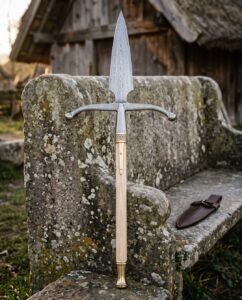 Boarcleft Hand Forged Damascus Winged Boar Spear with Ash Haft | Swept Crossbar and Brass Knotwork Ferrule | Leather Blade Cover Included | Norse Hunting Gift | RK-1612
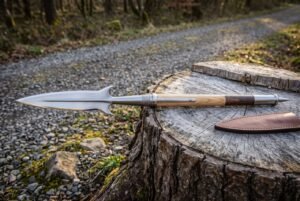 Boarhelm Hand Forged 1095 Boar Spear | 24 Inch Overall with 13 Inch Lugged Head on an Olive and Walnut Haft | Steel Butt Spike and Leather Sheath | Hunting Gift | RK-1593
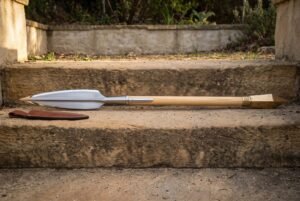 Ashfang Hand Forged 1095 Steel Viking Spear | 40 Inch Overall Length | Broad Leaf Head on an Ash Haft with Brass Butt Spike | Norse Reenactment Gift | RK-1773